
Michigan 1
33 Публикации

Michigan 1
Отправить жалобу
Заблокировать пользователя
Web3 BigFish || I help scale Web3 brands ||
0 подписок(и/а)
0 подписчиков(а)
0 понравилось
Посты
·
--
$AKE just did +149% in 24 hours while $BTC bled under $70K.
@akedofun is the AI engine that turns a text prompt into a playable game.
$0.0063 now. $145M market cap.
$138M traded in a day. That's almost the whole market cap changing hands.
Still -95% from its $0.14 high in July.
My take:
This is the one chart flexing on a red day, and that gets attention fast.
But only 23% of the supply is out, so the fully diluted value is $635M. Liquidity is thin, and about 2.1B tokens reportedly unlock on Nov 21.
Volume this hot cuts both ways.
I'd ride it with a stop, not marry it.
Real comeback or the exit pump before the unlock?
60
·
--
$BTC at $68.6K means Saylor's stack is now roughly $5.8B underwater.
Strategy holds 850,364 BTC at a $75,456 average cost.
Last week only 29% of its stock-sale money went to buying BTC. 66% went to propping up its preferred stock. MSCI also removes it from its index after Nov 30.
My take:
No margin call is coming. Their debt has no BTC price trigger.
But the biggest buyer in this market is spending more on its own paper than on coins.
When the whale that buys every dip starts slowing down, you feel it in the price.
Saylor bottom or Saylor problem?
62
·
--
$BTC printed $72,727 after CPI.
Lowest since August.
Now sitting at ~$73.7K, down 5% on the week, with spot ETFs bleeding for 4 days straight.
My take:
This is a boring grind, not a crash.
Whales are sitting on their hands while leveraged longs keep paying the bill.
Lose $72.7K and the 2021 top near $69K comes into view. Hold it and the shorts get greedy.
Bounce loading or more pain first?
51
·
--
Capital efficiency is also about knowing when NOT to move money.
That’s what #Brickken is bringing with OnCall.
Instead of investors transferring capital upfront, they commit directly from their wallets while their assets remain locked until the fund manager actually calls for the capital.
Think about the flexibility that creates. Less idle capital, better liquidity management and the ability to deploy funds exactly when they’re needed.
Brickken is taking RWA infrastructure beyond tokenization, and OnCall is a good example of what that evolution looks like.
Commit. Call. Deploy. $BKN
66
·
--
$BTC wicked to $73.5K overnight.
Lowest since August.
$1B liquidated. 90% were longs.
My take:
This wasn't the market crashing.
It was leverage getting cleaned out.
The ones who got wiped were borrowing to be brave.
Spot holders are still standing.
Shakeout or the start of something worse?
$BTC wicked to $73.5K overnight.
Lowest since August.
$1B liquidated. 90% were longs.
My take:
This wasn't the market crashing.
It was leverage getting cleaned out.
The ones who got wiped were borrowing to be brave.
Spot holders are still standing.
Shakeout or the start of something worse?
Lowest since August.
$1B liquidated. 90% were longs.
My take:
This wasn't the market crashing.
It was leverage getting cleaned out.
The ones who got wiped were borrowing to be brave.
Spot holders are still standing.
Shakeout or the start of something worse?
51
·
--
Crypto check. Nov 9.
$BTC $74.1K (-2%)
$ETH $2,107 (-6%)
$SOL $85.9 (-4%)
$BNB $681 (-2%)
$HYPE $73 (-5%)
$1B liquidated overnight.
CPI tomorrow.
Which coin are you watching?
Crypto check. Nov 9.
$BTC $74.1K (-2%)
$ETH $2,107 (-6%)
$SOL $85.9 (-4%)
$BNB $681 (-2%)
$HYPE $73 (-5%)
$1B liquidated overnight.
CPI tomorrow.
Which coin are you watching?
$BTC $74.1K (-2%)
$ETH $2,107 (-6%)
$SOL $85.9 (-4%)
$BNB $681 (-2%)
$HYPE $73 (-5%)
$1B liquidated overnight.
CPI tomorrow.
Which coin are you watching?
67
·
--
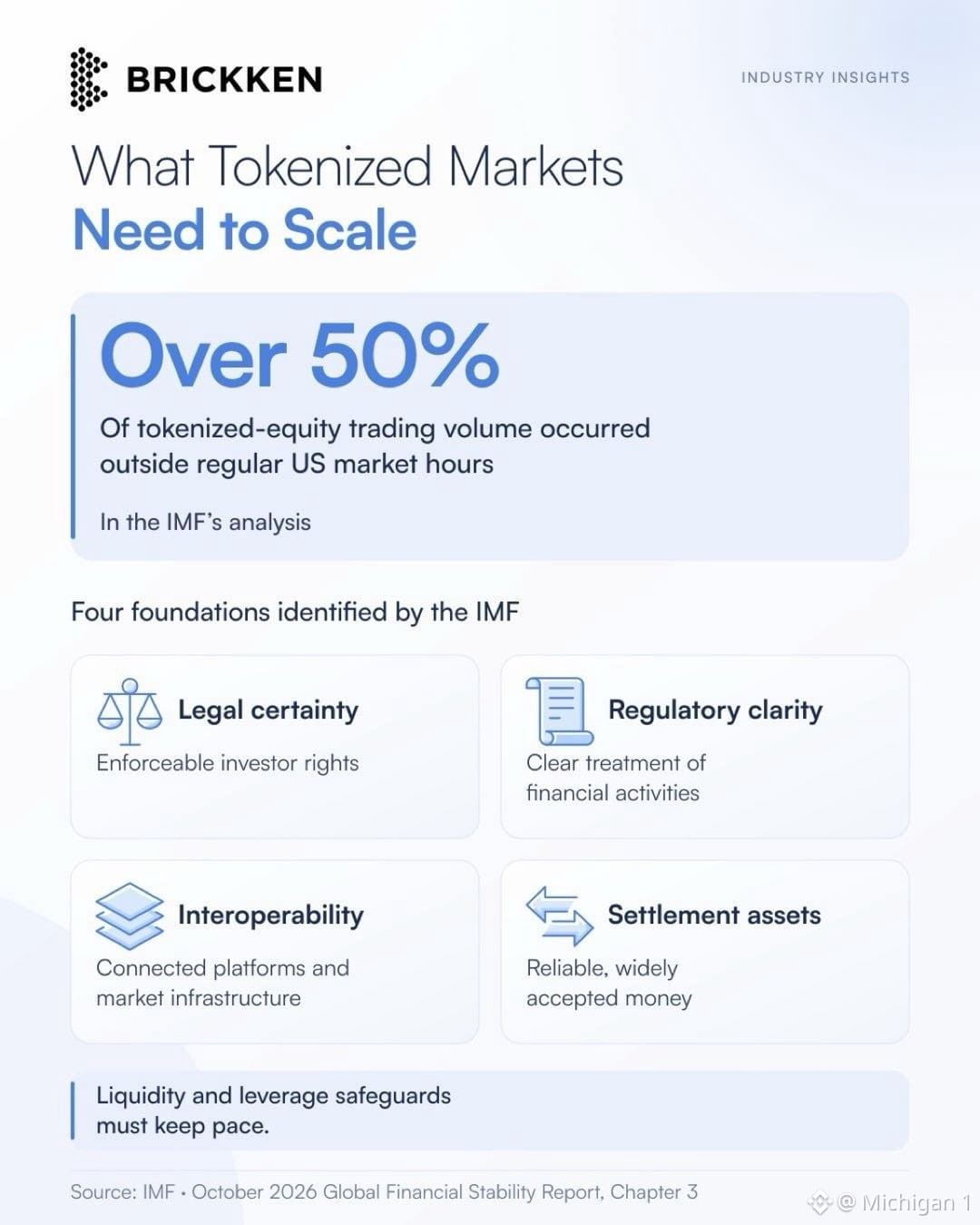
Over half of tokenized-stock trading happens outside US market hours 🌍
Let that sink in
Markets that never close need systems that never clock out
Speed was never the real problem
The real questions are simple:
What do investors actually own?
How do trades get settled?
What happens when the market gets rough?
This is exactly what @Brickken has been building for
Tokens issued the right way
Clear investor rights
Settlement built in from day one
Not added as an afterthought
Getting the basics right early is what makes tokenization grow
Instead of falling apart the first time the market shakes
The teams that build strong foundations will win what comes next
$BKN
72
·
--
ngl, the RWA conversation gets interesting when we stop talking about putting assets onchain and start asking what happens after.
who gets access, how capital flows, where distribution comes from, and what makes institutions trust the rails enough to use them.
that’s the part of tokenization that actually matters.
@Brickken is building in that direction. the goal isn’t just digitized ownership, it’s making tokenized assets fit into how real capital markets operate.
$BKN
60
·
--
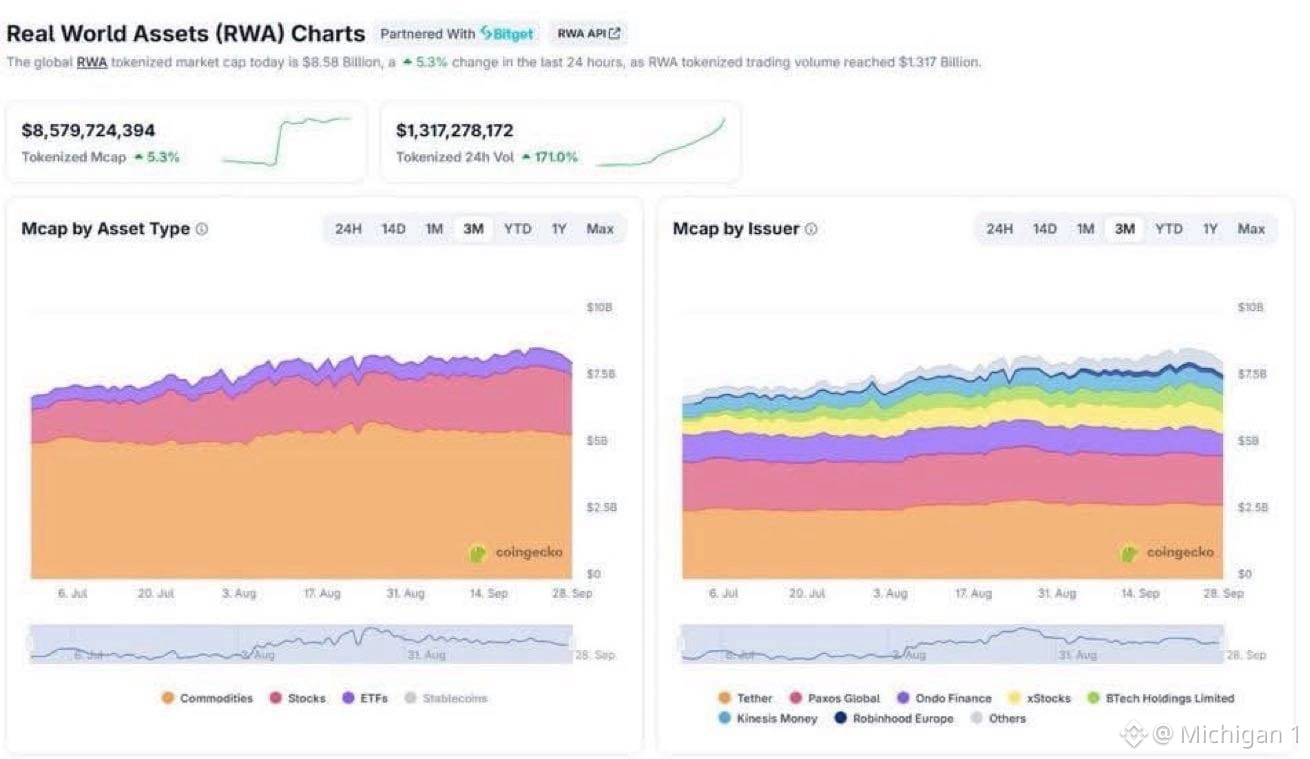
RWA quietly crossed $8.5B while everyone was watching everything else.
I was looking through the 3-month RWA data, and what caught my attention was the activity underneath it.
Tokenized assets are growing, liquidity is moving, and more infrastructure is being built around bringing real-world value onchain.
That’s the part I find interesting.
Because the bigger opportunity isn’t just putting assets on a blockchain.
It’s making those assets accessible, manageable, and useful in a market that never really sleeps.
That’s why I’m watching @Brickken .
With 150+ clients, $660M+ in tokenized value, and a presence across 40+ countries, the focus goes beyond the narrative. There’s infrastructure being built around how real-world assets enter the digital economy.
The $8.58B headline is nice.
But honestly, I’m more interested in what gets built around that number next.
$BKN
72
·
--
RWA tokenization is still in its early innings.
Most assets are basically just being wrapped and put onchain.
That’s cool, but the real alpha is what happens next.
Can these assets move permissionlessly?
Can they access deeper liquidity?
Can they be used as collateral, plugged into DeFi and become composable onchain?
That’s where tokenization starts becoming more than just putting a tokenized receipt on a blockchain.
The next phase is infrastructure.
And that’s why what @Brickken is building around RWA tokenization matters.
The goal shouldn’t just be to tokenize more assets.
It should be to make those assets actually useful once they’re onchain.
Tokenization gets the asset onchain.
Composability puts it to work.
$BKN
58
·
--
Tokenized stocks growing 150% YoY is crazy, but the part I find more interesting is what these tokens actually represent.
4,123 tokenized stock products are now worth around $1.7B, yet 59% of them only give you synthetic price exposure.
That means you might be tracking the stock price without actually owning the underlying asset or getting the rights that come with ownership.
This is why I think the infrastructure behind tokenization matters so much.
It’s not just about putting an asset onchain.
It’s about creating compliant digital ownership, clear legal rights and a structure that makes tokenized assets actually useful.
That’s one reason I like what @Brickken is building.
The real RWA opportunity isn’t simply tokenizing everything.
It’s making those tokens represent something meaningful in the real world.
$BKN
107
·
--
Tokenizing an asset doesn’t automatically make it investable.
The real game is what happens after.
Who selects the assets?
Where does the risk sit?
How is liquidity managed when investors want to exit?
Clean code + weak assets is still a weak product.
It’s not just about putting assets onchain, but building the structure that makes capital actually flow into them.
That’s also why @Brickken’s approach stands out to me.
Connecting issuance, vaults and regulated allocation in one stack gives it a bigger role than just being another tokenization platform.
It’s positioning itself around the full infrastructure needed for tokenized capital to actually work.
#BKN
43
·
--
RWAs are slowly becoming one of the biggest narratives in crypto.
We’ve spent years talking about tokenizing real world assets, but we’re now starting to see more actual adoption, better infrastructure and clearer standards around how these assets can exist onchain.
From tokenized treasuries and private credit to real estate, the use cases are getting harder to ignore.
The bigger question now isn’t whether RWAs will become a thing.
It’s how big this market can become as the infrastructure and regulatory framework continue to mature.
This is also why developments like ERC-7943 are worth paying attention to.
And with @Brickken doing work around the infrastructure side of tokenization, it’s interesting to watch how the space evolves from here.
I’ll be sharing more thoughts on RWAs, adoption and the projects building this next phase of the market.
$BKN

72
·
--
This is the part of @Brickken that deserves more attention.
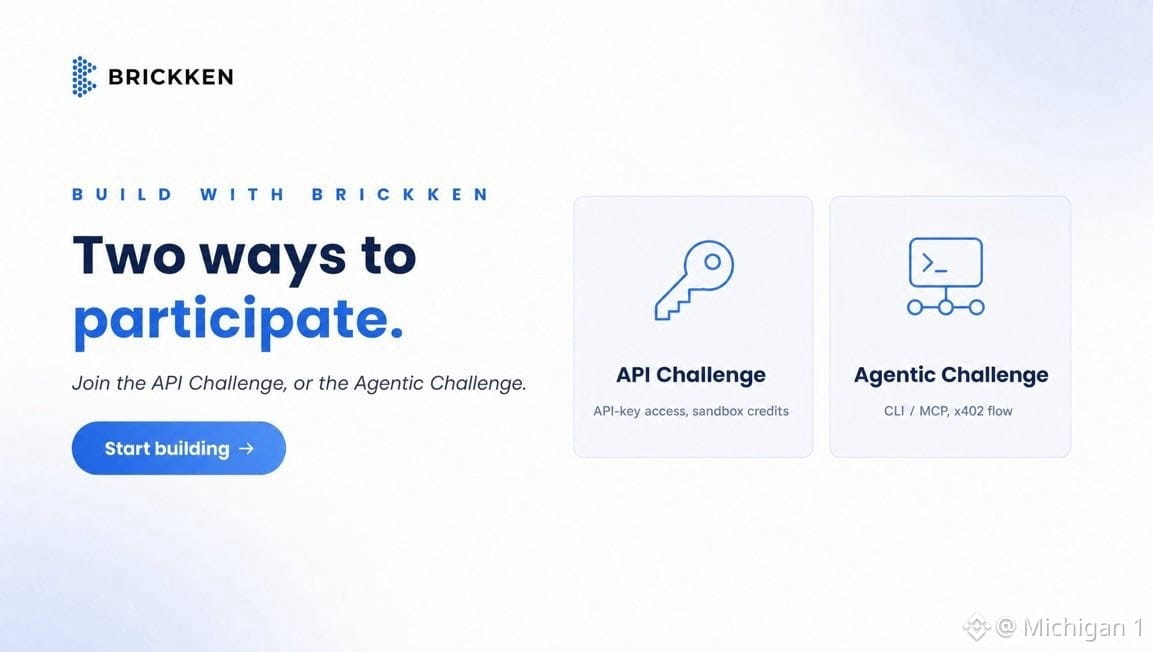
Brickken isn’t just giving developers another tokenization API. It’s building the infrastructure layer where both traditional integrations and agentic applications can plug into the same tokenization stack.
You can build directly with APIs, test the full workflow in a sandbox, or go deeper through the CLI/MCP and tap into the Agentic APIs.
Different entry points, same underlying infrastructure.
That flexibility matters because tokenization won’t be built by one type of developer or one type of application. The winners will be the platforms that make it easy for both humans and AI agents to build, automate and interact with tokenized assets.
This is exactly the direction infrastructure needs to be heading.
Build once. Access it your way. Scale from there.
66
·
--
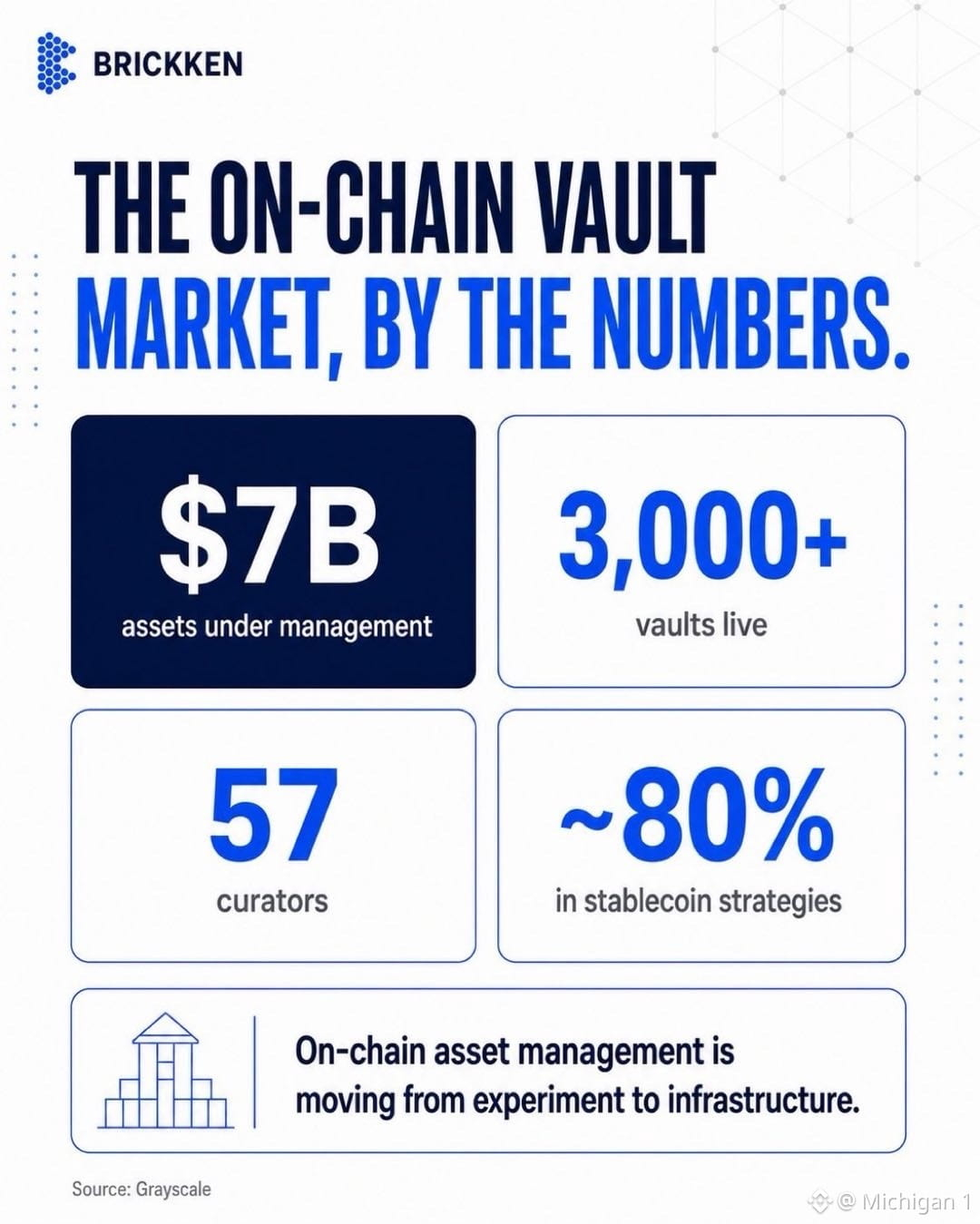
$7B sitting across 3,000+ on-chain vaults is a pretty clear signal.
This market is already attracting real capital, but the fact that nearly 80% is still concentrated in stablecoin strategies tells me we are nowhere near the end of the growth curve.
The next phase is not just more vaults.
It is better infrastructure, stronger compliance and more real-world assets moving on-chain.
That is where #Brickken becomes interesting.
The market is growing. Now the rails need to catch up.
$BKN
70
·
--
Too many projects talk about tokenization. Very few actually give builders something to build with.
This is why I like what #Brickken is doing. They’re not just dropping docs and hoping for the best. They’re giving developers different ways to build, whether you prefer APIs, CLI or MCP, and letting real use cases lead the way.
That’s how better infrastructure gets tested. Not through hype, but by seeing what builders create when the tools are actually in their hands.
78
·
--
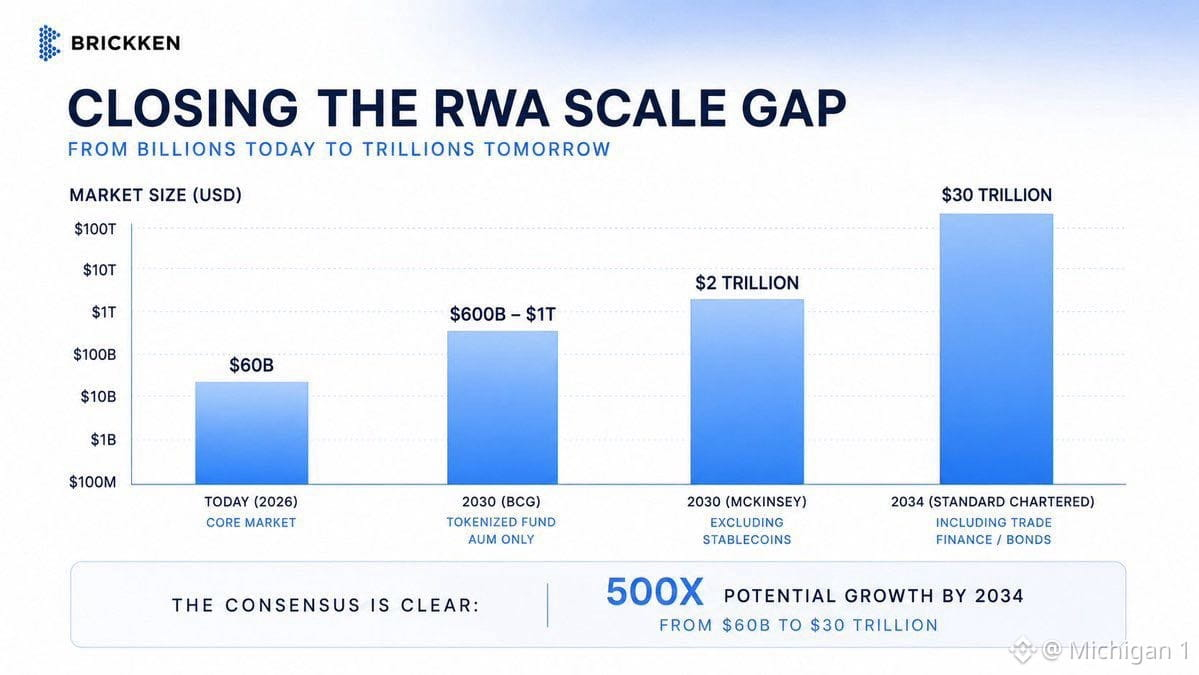
Everyone has a different forecast for tokenized RWAs, and teams like #Brickken are helping shape what that future could look like.
The numbers may vary, but the direction is clear.
This market is expected to grow significantly over the next decade.
But forecasts are the easy part.
The real challenge is bringing more assets, institutions, and users on-chain through compliant infrastructure.
Keen to see how #Brickken and other players continue to deliver.
$BKN #RWA #Tokenization
90
·
--
Infrastructure always comes before mass adoption.
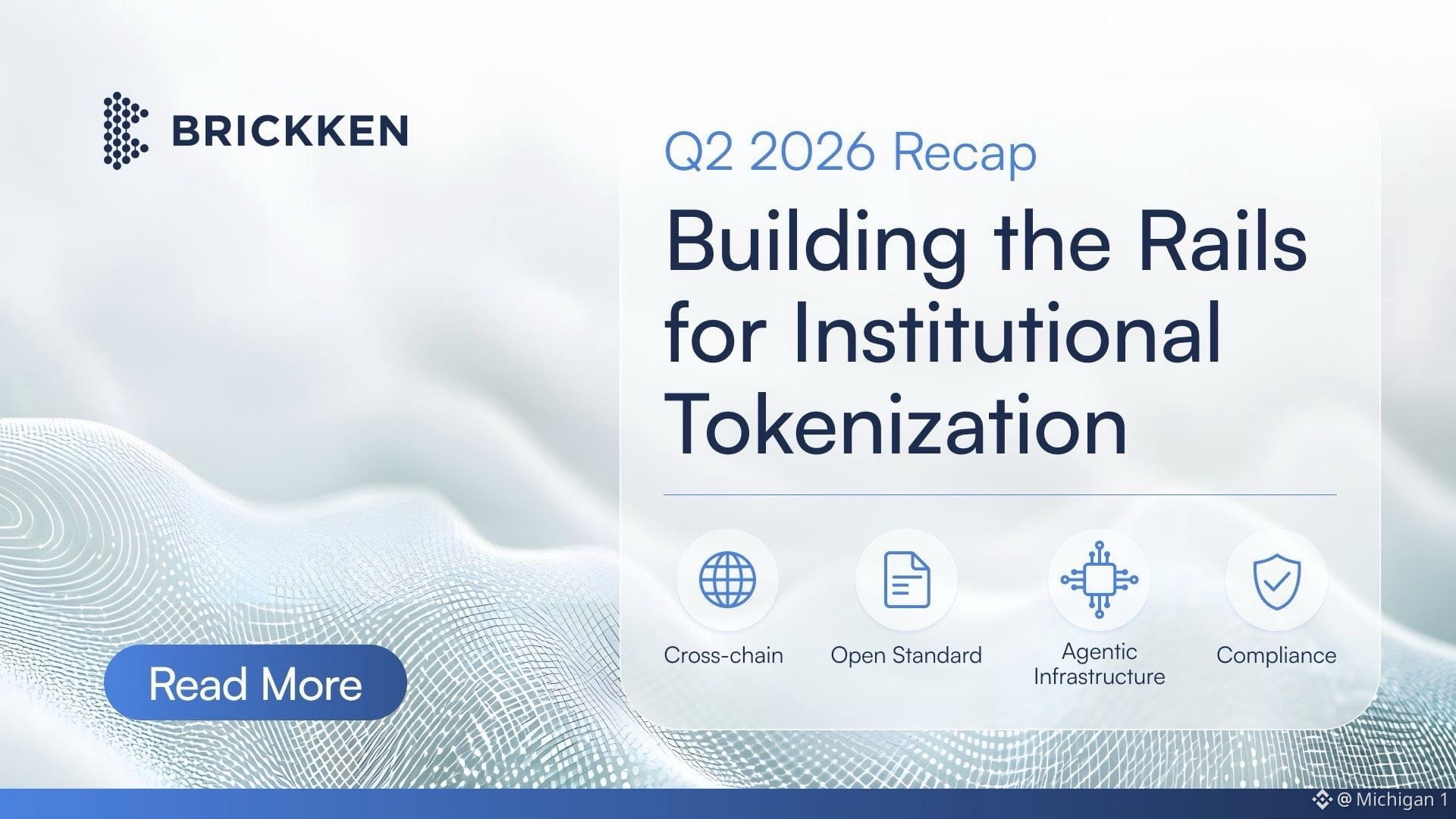
Everyone talks about tokenizing real world assets, but very few are focused on building the rails that institutions can confidently trust and deploy. That’s where @Brickken continues to separate itself.
This quarter wasn’t just about growing to $660M+ in tokenized assets. It was about strengthening the foundations through open standards, cross chain infrastructure, institutional-grade compliance, and tools that make tokenization more scalable and practical for real businesses.
The market doesn’t need more promises. It needs infrastructure that is secure, compliant, interoperable, and ready for production. That’s exactly the direction @Brickken is taking.
As the RWA sector matures, I believe the biggest winners won’t simply be the platforms with the most assets. They’ll be the ones building the standards and infrastructure that everyone else depends on. @Brickken is positioning itself to be one of those key players, and I’m looking forward to seeing what Q3 brings.
69
·
--
Everyone is focused on the token, but I think the infrastructure is the real headline.
A token upgrade can improve utility, but what @Brickken shipped around BKN 2.0 is what gives it real weight.
Native multichain architecture, stronger privacy standards, and a clear focus on regulatory readiness are the kind of foundations that outlast hype.
That’s what stood out to me this week.
$BKN 2.0 wasn’t just a contract migration. It was another step toward building infrastructure institutions can actually rely on. Features get attention, but trust, interoperability, and compliance are what drive long-term adoption.
In the end, tokens attract the spotlight, but infrastructure is what keeps an ecosystem relevant.
78
·
--
Everyone talks about bringing RWAs onchain.
Very few talk about what happens after that.
The biggest bottleneck has never been tokenization itself. It’s liquidity fragmentation, wrapped assets, bridge risks and the poor user experience that comes with moving value across ecosystems.
That’s why @Brickken $BKN upgrade caught my attention.
A natively multi chain $BKN isn’t just another deployment on multiple networks. It’s a shift in architecture.
One asset.
Unified liquidity.
No dependence on the old lock and mint bridge model.
That matters because institutional capital doesn’t care about blockchain tribalism. It cares about efficiency, security and seamless settlement.
If RWAs are going to become a global market, interoperability can’t be an afterthought. It has to be built into the foundation.
This feels like the direction the industry was always supposed to move toward, and I’m interested to see how Brickken executes from here.
68
Войдите, чтобы посмотреть больше материала
Присоединяйтесь к пользователям криптовалют по всему миру на Binance Square
⚡️ Получайте новейшую и полезную информацию о криптоактивах.
💬 Нам доверяет крупнейшая в мире криптобиржа.
👍 Получите достоверные аналитические данные от верифицированных создателей контента.
Эл. почта/номер телефона
В тренде
CryptoSelloffTriggersMultipleWhaleLiquidations
Просмотров: 85,411
1,000 обсуждают
Crypto Liquidations Top $2B in 24 Hours as 329,000 Traders Are Wiped Out
Binance News
·Лайков: 31
·Просмотров: 32.7k
USSpotXRPETFsSeeLargestWeeklyOutflowIn8Months
Просмотров: 98,905
1,112 обсуждают
WillFOMCMinutesReinforceRateHikeExpectations?
Просмотров: 20,127
410 обсуждают