

Salvia XPSR
242 Публикации

Salvia XPSR
Отправить жалобу
Заблокировать пользователя
Bringing you the latest in crypto, gaming, and AI 🤖🔥 Stay ahead of the curve.
0 подписок(и/а)
14 подписчиков(а)
11 понравилось
Посты
·
--
Better Data Paths Become More Valuable In Faster Markets ⚡
$2Z gives distributed systems purpose-built routes for time-sensitive traffic. $SOL shows why the path between machines matters once everything above it is optimized for performance.
You can upgrade hardware.
You can optimize software.
You can improve execution.
But data still needs to travel.
DoubleZero optimizes that journey with specialized network infrastructure.
As crypto markets become faster and more competitive, reducing unnecessary friction underneath them becomes increasingly valuable.
The next performance battle is not only inside the machine.
It is between the machines too.
#Macro Insights# #Altcoin Season#
Better Data Paths Become More Valuable In Faster Markets ⚡
$2Z gives distributed systems purpose-built routes for time-sensitive traffic. $SOL shows why the path between machines matters once everything above it is optimized for performance.
You can upgrade hardware.
You can optimize software.
You can improve execution.
But data still needs to travel.
DoubleZero optimizes that journey with specialized network infrastructure.
As crypto markets become faster and more competitive, reducing unnecessary friction underneath them becomes increasingly valuable.
The next performance battle is not only inside the machine.
It is between the machines too.
#Macro Insights# #Altcoin Season#
$2Z gives distributed systems purpose-built routes for time-sensitive traffic. $SOL shows why the path between machines matters once everything above it is optimized for performance.
You can upgrade hardware.
You can optimize software.
You can improve execution.
But data still needs to travel.
DoubleZero optimizes that journey with specialized network infrastructure.
As crypto markets become faster and more competitive, reducing unnecessary friction underneath them becomes increasingly valuable.
The next performance battle is not only inside the machine.
It is between the machines too.
#Macro Insights# #Altcoin Season#
79
·
--
Institutional attention needs crypto-native depth 🥷
RWA narratives around $ONDO attract one type of audience, while trading ecosystems around $HYPE attract another, and most projects are still strongly associated with only one side of that market.
I think the strongest onchain finance ecosystems will connect institutional credibility with products that crypto-native users actually want to explore.
Injective has been building both sides of that equation.
Injective is leading with tokenization, RWAs, and institutional adoption, then gives users an active ecosystem to enter once that narrative catches their attention.
That depth takes much longer to build than a single announcement or partnership.
For me, this combination is what makes Injective’s position in onchain finance more interesting than a standalone RWA thesis 🔥
#Altcoin Season#
Institutional attention needs crypto-native depth 🥷
RWA narratives around $ONDO attract one type of audience, while trading ecosystems around $HYPE attract another, and most projects are still strongly associated with only one side of that market.
I think the strongest onchain finance ecosystems will connect institutional credibility with products that crypto-native users actually want to explore.
Injective has been building both sides of that equation.
Injective is leading with tokenization, RWAs, and institutional adoption, then gives users an active ecosystem to enter once that narrative catches their attention.
That depth takes much longer to build than a single announcement or partnership.
For me, this combination is what makes Injective’s position in onchain finance more interesting than a standalone RWA thesis 🔥
#Altcoin Season#
RWA narratives around $ONDO attract one type of audience, while trading ecosystems around $HYPE attract another, and most projects are still strongly associated with only one side of that market.
I think the strongest onchain finance ecosystems will connect institutional credibility with products that crypto-native users actually want to explore.
Injective has been building both sides of that equation.
Injective is leading with tokenization, RWAs, and institutional adoption, then gives users an active ecosystem to enter once that narrative catches their attention.
That depth takes much longer to build than a single announcement or partnership.
For me, this combination is what makes Injective’s position in onchain finance more interesting than a standalone RWA thesis 🔥
#Altcoin Season#
60
·
--
ZK Is Bigger Than Privacy 🔍
Something I find fascinating about zero-knowledge technology is how far its applications extend beyond private transactions.
Take Space and Time's Proof of SQL.
Imagine a DeFi application needs to analyze thousands of historical transactions before executing a smart contract.
Rather than performing that entire calculation onchain, Space and Time allows supported SQL queries to be executed offchain while generating cryptographic proofs of correctness.
The process is relatively straightforward:
1️⃣ Execute the query against committed data.
2️⃣ Generate a proof that the computation was performed correctly.
3️⃣ Verify the result before the application uses it.
For developers building on $POL , this approach could support more sophisticated applications without requiring expensive onchain data processing.
I think verifiable computation is one of the more interesting applications of ZK technology.
It's not just about hiding information. It's also about proving that calculations can be trusted.
#Altcoin Season#
ZK Is Bigger Than Privacy 🔍
Something I find fascinating about zero-knowledge technology is how far its applications extend beyond private transactions.
Take Space and Time's Proof of SQL.
Imagine a DeFi application needs to analyze thousands of historical transactions before executing a smart contract.
Rather than performing that entire calculation onchain, Space and Time allows supported SQL queries to be executed offchain while generating cryptographic proofs of correctness.
The process is relatively straightforward:
1️⃣ Execute the query against committed data.
2️⃣ Generate a proof that the computation was performed correctly.
3️⃣ Verify the result before the application uses it.
For developers building on $POL , this approach could support more sophisticated applications without requiring expensive onchain data processing.
I think verifiable computation is one of the more interesting applications of ZK technology.
It's not just about hiding information. It's also about proving that calculations can be trusted.
#Altcoin Season#
Something I find fascinating about zero-knowledge technology is how far its applications extend beyond private transactions.
Take Space and Time's Proof of SQL.
Imagine a DeFi application needs to analyze thousands of historical transactions before executing a smart contract.
Rather than performing that entire calculation onchain, Space and Time allows supported SQL queries to be executed offchain while generating cryptographic proofs of correctness.
The process is relatively straightforward:
1️⃣ Execute the query against committed data.
2️⃣ Generate a proof that the computation was performed correctly.
3️⃣ Verify the result before the application uses it.
For developers building on $POL , this approach could support more sophisticated applications without requiring expensive onchain data processing.
I think verifiable computation is one of the more interesting applications of ZK technology.
It's not just about hiding information. It's also about proving that calculations can be trusted.
#Altcoin Season#
70
·
--
The L1 race is becoming financial ⚡️
As $AVAX and $SUI compete for onchain financial activity, I think the real differentiator will be what happens after an asset is created.
Issuance gives an asset an onchain representation, but it still needs markets, liquidity, settlement, and applications before people can use it productively.
Injective takes a more connected approach to that lifecycle.
Assets issued on the network can move into its spot and perpetual markets while remaining available across apps throughout the ecosystem.
For me, this is the part of the finance-native L1 thesis that matters most.
The value of financial infra grows when every new asset can strengthen the markets and applications already operating around it.
This is why Injective’s connected financial stack makes sense to me as a long-term ecosystem thesis 🥷
#Altcoin Season#
The L1 race is becoming financial ⚡️
As $AVAX and $SUI compete for onchain financial activity, I think the real differentiator will be what happens after an asset is created.
Issuance gives an asset an onchain representation, but it still needs markets, liquidity, settlement, and applications before people can use it productively.
Injective takes a more connected approach to that lifecycle.
Assets issued on the network can move into its spot and perpetual markets while remaining available across apps throughout the ecosystem.
For me, this is the part of the finance-native L1 thesis that matters most.
The value of financial infra grows when every new asset can strengthen the markets and applications already operating around it.
This is why Injective’s connected financial stack makes sense to me as a long-term ecosystem thesis 🥷
#Altcoin Season#
As $AVAX and $SUI compete for onchain financial activity, I think the real differentiator will be what happens after an asset is created.
Issuance gives an asset an onchain representation, but it still needs markets, liquidity, settlement, and applications before people can use it productively.
Injective takes a more connected approach to that lifecycle.
Assets issued on the network can move into its spot and perpetual markets while remaining available across apps throughout the ecosystem.
For me, this is the part of the finance-native L1 thesis that matters most.
The value of financial infra grows when every new asset can strengthen the markets and applications already operating around it.
This is why Injective’s connected financial stack makes sense to me as a long-term ecosystem thesis 🥷
#Altcoin Season#
64
·
--
The biggest USDC reward still out there? 👀
The rise of $HYPE and $LIT showed how strongly rewards can influence where traders place volume and I understand why points work early on.
They give traders something to accumulate before the final economics are known.
But that also means farming without knowing what each point will eventually become.
For me, the better question is simple: what am I actually building toward? And Aevo’s year-end reward already has an answer.
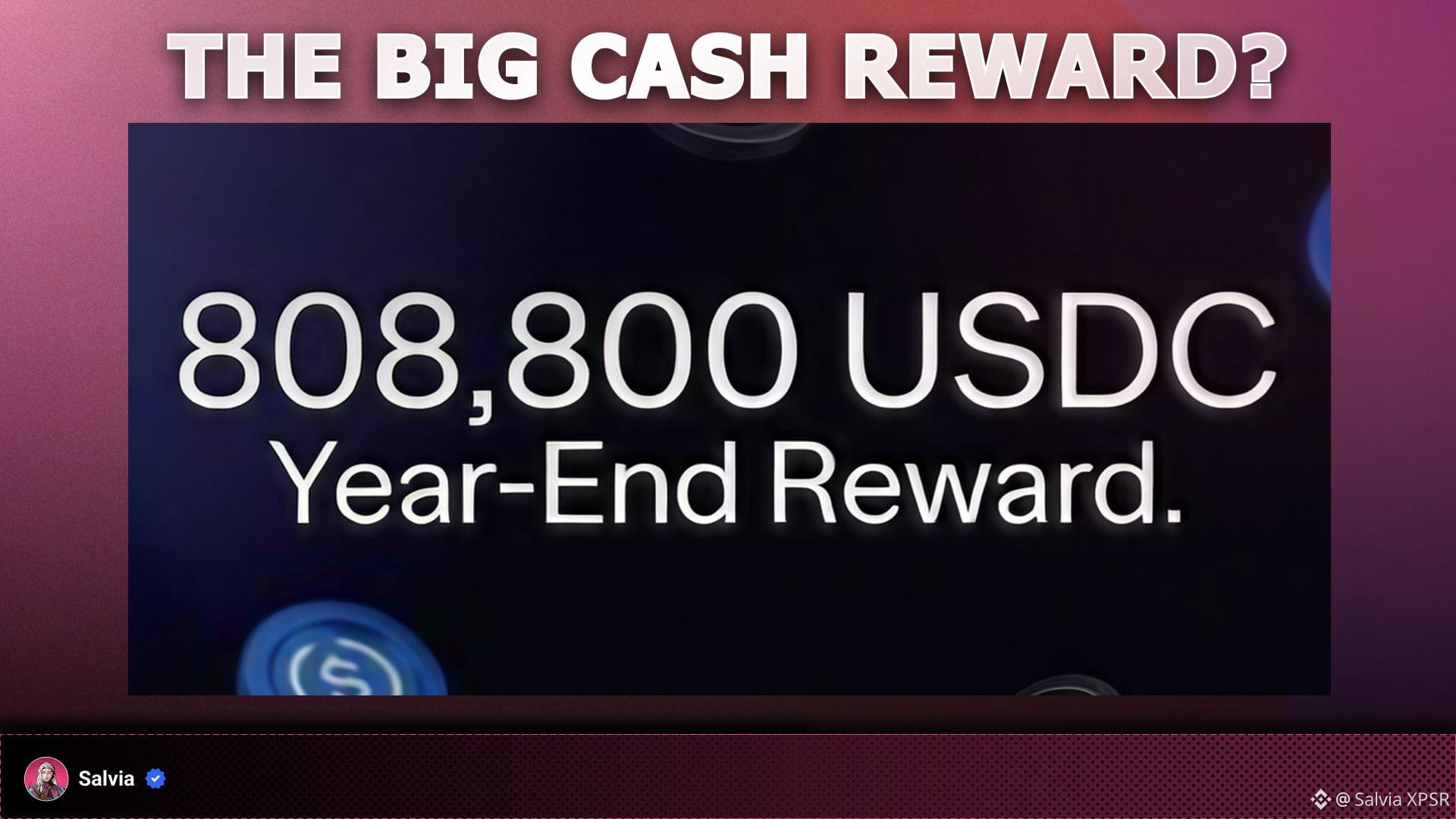
The projected distribution is 808,800 USDC, with every qualifying trader’s expected share visible on the permanent leaderboard.
Qualification requires an active COMMANDER or LEGEND stake and 10m in cumulative eligible options and Perp Majors volume.
I would rather build toward a visible USDC distribution than guess what another points balance may become 🔥
#Altcoin Season#
The biggest USDC reward still out there? 👀
The rise of $HYPE and $LIT showed how strongly rewards can influence where traders place volume and I understand why points work early on.
They give traders something to accumulate before the final economics are known.
But that also means farming without knowing what each point will eventually become.
For me, the better question is simple: what am I actually building toward? And Aevo’s year-end reward already has an answer.
The projected distribution is 808,800 USDC, with every qualifying trader’s expected share visible on the permanent leaderboard.
Qualification requires an active COMMANDER or LEGEND stake and 10m in cumulative eligible options and Perp Majors volume.
I would rather build toward a visible USDC distribution than guess what another points balance may become 🔥
#Altcoin Season#
The rise of $HYPE and $LIT showed how strongly rewards can influence where traders place volume and I understand why points work early on.
They give traders something to accumulate before the final economics are known.
But that also means farming without knowing what each point will eventually become.
For me, the better question is simple: what am I actually building toward? And Aevo’s year-end reward already has an answer.
The projected distribution is 808,800 USDC, with every qualifying trader’s expected share visible on the permanent leaderboard.
Qualification requires an active COMMANDER or LEGEND stake and 10m in cumulative eligible options and Perp Majors volume.
I would rather build toward a visible USDC distribution than guess what another points balance may become 🔥
#Altcoin Season#
87
·
--
Your Portfolio. Pro Research. Automated Management 🤖
Citrini Research just published a 15-token crypto basket built around its thesis on AI, tradfi and the growing onchain economy.
Now with Agent Pear, traders can turn that professionally researched thesis into a customized strategy with AI-assisted execution and ongoing monitoring.
You can take Citrini's research basket, customize your exposure to assets like $LINK and $HYPE , and execute your strategy in one click through Pear Protocol.
From there, Agent Pear can help monitor positions, assess changing market conditions and support systematic rebalancing to keep your allocations aligned with your strategy.
Instead of spending hours constructing and manually adjusting multiple positions, you get a professionally researched starting point with tools that help you stay on top of your strategy as markets shift.
The research is already done. The trading tools are ready. And Agent Pear is free to use. It's a no-brainer to me, tbh.
Explore at app.pear.garden/trade
#Altcoin Season#
Your Portfolio. Pro Research. Automated Management 🤖
Citrini Research just published a 15-token crypto basket built around its thesis on AI, tradfi and the growing onchain economy.
Now with Agent Pear, traders can turn that professionally researched thesis into a customized strategy with AI-assisted execution and ongoing monitoring.
You can take Citrini's research basket, customize your exposure to assets like $LINK and $HYPE , and execute your strategy in one click through Pear Protocol.
From there, Agent Pear can help monitor positions, assess changing market conditions and support systematic rebalancing to keep your allocations aligned with your strategy.
Instead of spending hours constructing and manually adjusting multiple positions, you get a professionally researched starting point with tools that help you stay on top of your strategy as markets shift.
The research is already done. The trading tools are ready. And Agent Pear is free to use. It's a no-brainer to me, tbh.
Explore at app.pear.garden/trade
#Altcoin Season#
Citrini Research just published a 15-token crypto basket built around its thesis on AI, tradfi and the growing onchain economy.
Now with Agent Pear, traders can turn that professionally researched thesis into a customized strategy with AI-assisted execution and ongoing monitoring.
You can take Citrini's research basket, customize your exposure to assets like $LINK and $HYPE , and execute your strategy in one click through Pear Protocol.
From there, Agent Pear can help monitor positions, assess changing market conditions and support systematic rebalancing to keep your allocations aligned with your strategy.
Instead of spending hours constructing and manually adjusting multiple positions, you get a professionally researched starting point with tools that help you stay on top of your strategy as markets shift.
The research is already done. The trading tools are ready. And Agent Pear is free to use. It's a no-brainer to me, tbh.
Explore at app.pear.garden/trade
#Altcoin Season#
84
·
--
Your Inference Bill Has A Routing Layer Now 🧮
$NEAR is doing the private-execution work in this corner of the market and $RENDER made distributed compute a thing people price. The missing piece was always the invoice.
Bankr's LLM gateway now passes routing savings through to the user, with a usage page showing what a request cost against what it would have cost.
That sounds like a billing footnote. It is closer to a market structure change.
Model pricing has been opaque in the ordinary way that intermediated markets are opaque. You pay a provider, the provider pays for compute, and the spread between those two numbers is nobody's business but theirs. A gateway that routes to the cheapest acceptable path and then shows you the difference turns that spread into a visible number.
Visible numbers get competed down. That is the whole history of brokerage.
The practical read for anyone running an agent continuously is that inference is a recurring cost line, not a one-off, and recurring costs are where routing compounds.
Two caveats. Routing between providers means your request lands wherever the router sends it, so provider-side policies still apply to whatever you send. And a saving against a reference price is only as meaningful as the reference.
The thing to watch is whether other gateways start showing the same number. Once one does, hiding it stops being an option.
#AI #DeFi
Your Inference Bill Has A Routing Layer Now 🧮
$NEAR is doing the private-execution work in this corner of the market and $RENDER made distributed compute a thing people price. The missing piece was always the invoice.
Bankr's LLM gateway now passes routing savings through to the user, with a usage page showing what a request cost against what it would have cost.
That sounds like a billing footnote. It is closer to a market structure change.
Model pricing has been opaque in the ordinary way that intermediated markets are opaque. You pay a provider, the provider pays for compute, and the spread between those two numbers is nobody's business but theirs. A gateway that routes to the cheapest acceptable path and then shows you the difference turns that spread into a visible number.
Visible numbers get competed down. That is the whole history of brokerage.
The practical read for anyone running an agent continuously is that inference is a recurring cost line, not a one-off, and recurring costs are where routing compounds.
Two caveats. Routing between providers means your request lands wherever the router sends it, so provider-side policies still apply to whatever you send. And a saving against a reference price is only as meaningful as the reference.
The thing to watch is whether other gateways start showing the same number. Once one does, hiding it stops being an option.
#AI #DeFi
$NEAR is doing the private-execution work in this corner of the market and $RENDER made distributed compute a thing people price. The missing piece was always the invoice.
Bankr's LLM gateway now passes routing savings through to the user, with a usage page showing what a request cost against what it would have cost.
That sounds like a billing footnote. It is closer to a market structure change.
Model pricing has been opaque in the ordinary way that intermediated markets are opaque. You pay a provider, the provider pays for compute, and the spread between those two numbers is nobody's business but theirs. A gateway that routes to the cheapest acceptable path and then shows you the difference turns that spread into a visible number.
Visible numbers get competed down. That is the whole history of brokerage.
The practical read for anyone running an agent continuously is that inference is a recurring cost line, not a one-off, and recurring costs are where routing compounds.
Two caveats. Routing between providers means your request lands wherever the router sends it, so provider-side policies still apply to whatever you send. And a saving against a reference price is only as meaningful as the reference.
The thing to watch is whether other gateways start showing the same number. Once one does, hiding it stops being an option.
#AI #DeFi
80
·
--
Your Bid Shouldn't Reveal How Rich You Are 🎨
$APE helped make digital ownership mainstream. $NIGHT introduces an interesting privacy primitive for the markets around those assets: proving purchasing power without exposing total wealth.
Imagine walking into an auction and showing the seller your bank balance before making an offer.
It sounds ridiculous.
Public wallets can create something surprisingly similar.
If a bidder uses a transparent wallet, another participant may be able to inspect what that wallet owns and how it has behaved historically.
A privacy-preserving auction can work differently:
Bidder offers $50,000
→ Application verifies sufficient funds privately
→ Seller receives a valid funded bid
→ Bidder's total balance remains protected
The seller gets the information they actually need: The bid is real and funded.
Whether the bidder has $60,000 or $60M isn't part of that question.
That's programmable privacy in a very practical form.
#Privacy #Web3
Your Bid Shouldn't Reveal How Rich You Are 🎨
$APE helped make digital ownership mainstream. $NIGHT introduces an interesting privacy primitive for the markets around those assets: proving purchasing power without exposing total wealth.
Imagine walking into an auction and showing the seller your bank balance before making an offer.
It sounds ridiculous.
Public wallets can create something surprisingly similar.
If a bidder uses a transparent wallet, another participant may be able to inspect what that wallet owns and how it has behaved historically.
A privacy-preserving auction can work differently:
Bidder offers $50,000
→ Application verifies sufficient funds privately
→ Seller receives a valid funded bid
→ Bidder's total balance remains protected
The seller gets the information they actually need: The bid is real and funded.
Whether the bidder has $60,000 or $60M isn't part of that question.
That's programmable privacy in a very practical form.
#Privacy #Web3
$APE helped make digital ownership mainstream. $NIGHT introduces an interesting privacy primitive for the markets around those assets: proving purchasing power without exposing total wealth.
Imagine walking into an auction and showing the seller your bank balance before making an offer.
It sounds ridiculous.
Public wallets can create something surprisingly similar.
If a bidder uses a transparent wallet, another participant may be able to inspect what that wallet owns and how it has behaved historically.
A privacy-preserving auction can work differently:
Bidder offers $50,000
→ Application verifies sufficient funds privately
→ Seller receives a valid funded bid
→ Bidder's total balance remains protected
The seller gets the information they actually need: The bid is real and funded.
Whether the bidder has $60,000 or $60M isn't part of that question.
That's programmable privacy in a very practical form.
#Privacy #Web3
76
·
--
Two Problems. Same Cryptography. 🔐
I've been thinking about how differently zero-knowledge technology can be applied.
With ecosystems such as $ZEC , the conversation naturally centers around privacy.
But Space and Time shows another side of the equation.
Not:
"Can I hide this information?"
But:
"Can I prove this computation was correct?"
That's a completely different infrastructure problem.
Proof of SQL allows computation over committed data to be verified cryptographically without asking the application to simply trust whoever produced the result.
Privacy protects information.
Verifiable computation protects confidence in what was done with information.
Same broad cryptographic revolution.
Very different jobs.
#Altcoin Season#
Two Problems. Same Cryptography. 🔐
I've been thinking about how differently zero-knowledge technology can be applied.
With ecosystems such as $ZEC , the conversation naturally centers around privacy.
But Space and Time shows another side of the equation.
Not:
"Can I hide this information?"
But:
"Can I prove this computation was correct?"
That's a completely different infrastructure problem.
Proof of SQL allows computation over committed data to be verified cryptographically without asking the application to simply trust whoever produced the result.
Privacy protects information.
Verifiable computation protects confidence in what was done with information.
Same broad cryptographic revolution.
Very different jobs.
#Altcoin Season#
I've been thinking about how differently zero-knowledge technology can be applied.
With ecosystems such as $ZEC , the conversation naturally centers around privacy.
But Space and Time shows another side of the equation.
Not:
"Can I hide this information?"
But:
"Can I prove this computation was correct?"
That's a completely different infrastructure problem.
Proof of SQL allows computation over committed data to be verified cryptographically without asking the application to simply trust whoever produced the result.
Privacy protects information.
Verifiable computation protects confidence in what was done with information.
Same broad cryptographic revolution.
Very different jobs.
#Altcoin Season#
82
·
--
Most People Are Using The Old Version Of Bankr 🖥️
$ENS normalised the idea that your wallet carries an identity, and $TON proved people will transact inside an app they already have open. Bankr's terminal is now the version of that nobody has opened.
If the way you use it is tagging a bot on X, you are using the 2025 product.
The newest addition is the one that should change who tries it. You can connect the wallet you already use, switch the chat to External, and tell Bankr what to do. The transaction comes back for you to sign in your own wallet.
Swaps, transfers, NFT mints, staking, fee claims, arbitrary contract calls. All of it against your existing address rather than a new one you have to fund and remember.
0xDeployer put it plainly, saying Bankr has always been able to control the wallet you already use and they just made it easier.
The reason this matters is smaller than it sounds and more important than it sounds.
The single biggest friction in agent products has been the custody question. Using one meant moving funds into something new, which is a decision people put off indefinitely. Removing that step removes the reason most of the hesitation existed.
The honest limit is that signing in your own wallet means the responsibility stays with you. An agent that proposes transactions is still proposing transactions against your main address, so read what you sign.
Thirty seconds in the terminal will tell you more than a month of timeline posts about it. Most people reading this have never opened it.
#DeFi #Base
Most People Are Using The Old Version Of Bankr 🖥️
$ENS normalised the idea that your wallet carries an identity, and $TON proved people will transact inside an app they already have open. Bankr's terminal is now the version of that nobody has opened.
If the way you use it is tagging a bot on X, you are using the 2025 product.
The newest addition is the one that should change who tries it. You can connect the wallet you already use, switch the chat to External, and tell Bankr what to do. The transaction comes back for you to sign in your own wallet.
Swaps, transfers, NFT mints, staking, fee claims, arbitrary contract calls. All of it against your existing address rather than a new one you have to fund and remember.
0xDeployer put it plainly, saying Bankr has always been able to control the wallet you already use and they just made it easier.
The reason this matters is smaller than it sounds and more important than it sounds.
The single biggest friction in agent products has been the custody question. Using one meant moving funds into something new, which is a decision people put off indefinitely. Removing that step removes the reason most of the hesitation existed.
The honest limit is that signing in your own wallet means the responsibility stays with you. An agent that proposes transactions is still proposing transactions against your main address, so read what you sign.
Thirty seconds in the terminal will tell you more than a month of timeline posts about it. Most people reading this have never opened it.
#DeFi #Base
$ENS normalised the idea that your wallet carries an identity, and $TON proved people will transact inside an app they already have open. Bankr's terminal is now the version of that nobody has opened.
If the way you use it is tagging a bot on X, you are using the 2025 product.
The newest addition is the one that should change who tries it. You can connect the wallet you already use, switch the chat to External, and tell Bankr what to do. The transaction comes back for you to sign in your own wallet.
Swaps, transfers, NFT mints, staking, fee claims, arbitrary contract calls. All of it against your existing address rather than a new one you have to fund and remember.
0xDeployer put it plainly, saying Bankr has always been able to control the wallet you already use and they just made it easier.
The reason this matters is smaller than it sounds and more important than it sounds.
The single biggest friction in agent products has been the custody question. Using one meant moving funds into something new, which is a decision people put off indefinitely. Removing that step removes the reason most of the hesitation existed.
The honest limit is that signing in your own wallet means the responsibility stays with you. An agent that proposes transactions is still proposing transactions against your main address, so read what you sign.
Thirty seconds in the terminal will tell you more than a month of timeline posts about it. Most people reading this have never opened it.
#DeFi #Base
74
·
--
There's A Missing DeFi Layer 🧩
Protocols create markets.
Investors provide capital.
But who actually decides how that capital should move between opportunities?
That's the layer I've become increasingly interested in.
Theoriq positions itself as the curator between the underlying DeFi venues and the allocator.
Its job isn't simply to find a yield number.
It's deciding:
→ Which venues qualify
→ Which strategies make sense
→ How much risk is acceptable
→ When capital should move
→ When exposure should be reduced
That becomes increasingly important as ecosystems such as $BNB mature beyond simple token trading into broader financial infrastructure.
Institutions don't necessarily need another protocol.
They need someone making sense of the protocols already there.
That's the curator thesis.
#Altcoin Season#
There's A Missing DeFi Layer 🧩
Protocols create markets.
Investors provide capital.
But who actually decides how that capital should move between opportunities?
That's the layer I've become increasingly interested in.
Theoriq positions itself as the curator between the underlying DeFi venues and the allocator.
Its job isn't simply to find a yield number.
It's deciding:
→ Which venues qualify
→ Which strategies make sense
→ How much risk is acceptable
→ When capital should move
→ When exposure should be reduced
That becomes increasingly important as ecosystems such as $BNB mature beyond simple token trading into broader financial infrastructure.
Institutions don't necessarily need another protocol.
They need someone making sense of the protocols already there.
That's the curator thesis.
#Altcoin Season#
Protocols create markets.
Investors provide capital.
But who actually decides how that capital should move between opportunities?
That's the layer I've become increasingly interested in.
Theoriq positions itself as the curator between the underlying DeFi venues and the allocator.
Its job isn't simply to find a yield number.
It's deciding:
→ Which venues qualify
→ Which strategies make sense
→ How much risk is acceptable
→ When capital should move
→ When exposure should be reduced
That becomes increasingly important as ecosystems such as $BNB mature beyond simple token trading into broader financial infrastructure.
Institutions don't necessarily need another protocol.
They need someone making sense of the protocols already there.
That's the curator thesis.
#Altcoin Season#
68
·
--
Your Assistant Remembers More Than You 🧠
Assistants stopped being stateless this year, and the pitch for every one of them now is that it remembers your projects, your preferences and the things you told it last month.
That memory is a file, it sits with the company running the model, and it is a better description of you than anything you have ever filled in on a form.
$VVV built a business on people being uncomfortable with that, running inference for around 3.5 million users while keeping nothing on file, and apps on $SOL inherit the same shape, because a Solana program has to be handed a whole input before it can return anything.
Not storing a memory and not reading one are still two different commitments, and the second is the one that matters once an assistant holds years of context.
Arcium moves the guarantee into the arithmetic, splitting what gets recalled into fragments across a cluster of nodes where no single node holds a readable copy, while the correct answer still comes back.
That answer settles on Solana as an ordinary public transaction, so the app calling it behaves exactly as it did before.
Mainnet Alpha has run since February 2, and Blackthorn, the AI protocol built on the same backend, has not shipped yet.
Everyone is racing to build the assistant that knows you best, and the one I would actually use is the one that cannot read what it remembers.
#AI #Solana
Your Assistant Remembers More Than You 🧠
Assistants stopped being stateless this year, and the pitch for every one of them now is that it remembers your projects, your preferences and the things you told it last month.
That memory is a file, it sits with the company running the model, and it is a better description of you than anything you have ever filled in on a form.
$VVV built a business on people being uncomfortable with that, running inference for around 3.5 million users while keeping nothing on file, and apps on $SOL inherit the same shape, because a Solana program has to be handed a whole input before it can return anything.
Not storing a memory and not reading one are still two different commitments, and the second is the one that matters once an assistant holds years of context.
Arcium moves the guarantee into the arithmetic, splitting what gets recalled into fragments across a cluster of nodes where no single node holds a readable copy, while the correct answer still comes back.
That answer settles on Solana as an ordinary public transaction, so the app calling it behaves exactly as it did before.
Mainnet Alpha has run since February 2, and Blackthorn, the AI protocol built on the same backend, has not shipped yet.
Everyone is racing to build the assistant that knows you best, and the one I would actually use is the one that cannot read what it remembers.
#AI #Solana
Assistants stopped being stateless this year, and the pitch for every one of them now is that it remembers your projects, your preferences and the things you told it last month.
That memory is a file, it sits with the company running the model, and it is a better description of you than anything you have ever filled in on a form.
$VVV built a business on people being uncomfortable with that, running inference for around 3.5 million users while keeping nothing on file, and apps on $SOL inherit the same shape, because a Solana program has to be handed a whole input before it can return anything.
Not storing a memory and not reading one are still two different commitments, and the second is the one that matters once an assistant holds years of context.
Arcium moves the guarantee into the arithmetic, splitting what gets recalled into fragments across a cluster of nodes where no single node holds a readable copy, while the correct answer still comes back.
That answer settles on Solana as an ordinary public transaction, so the app calling it behaves exactly as it did before.
Mainnet Alpha has run since February 2, and Blackthorn, the AI protocol built on the same backend, has not shipped yet.
Everyone is racing to build the assistant that knows you best, and the one I would actually use is the one that cannot read what it remembers.
#AI #Solana
65
·
--
Crypto communities need non-crypto moments 🤝
Most interaction around $LINK and $AAVE begins with the project itself, which gives people a reason to gather but can keep every conversation inside the same frame.
When the subject never changes, members may know each other’s opinions without knowing much about the people behind them.
I think stronger relationships form when a community has something else to experience together.
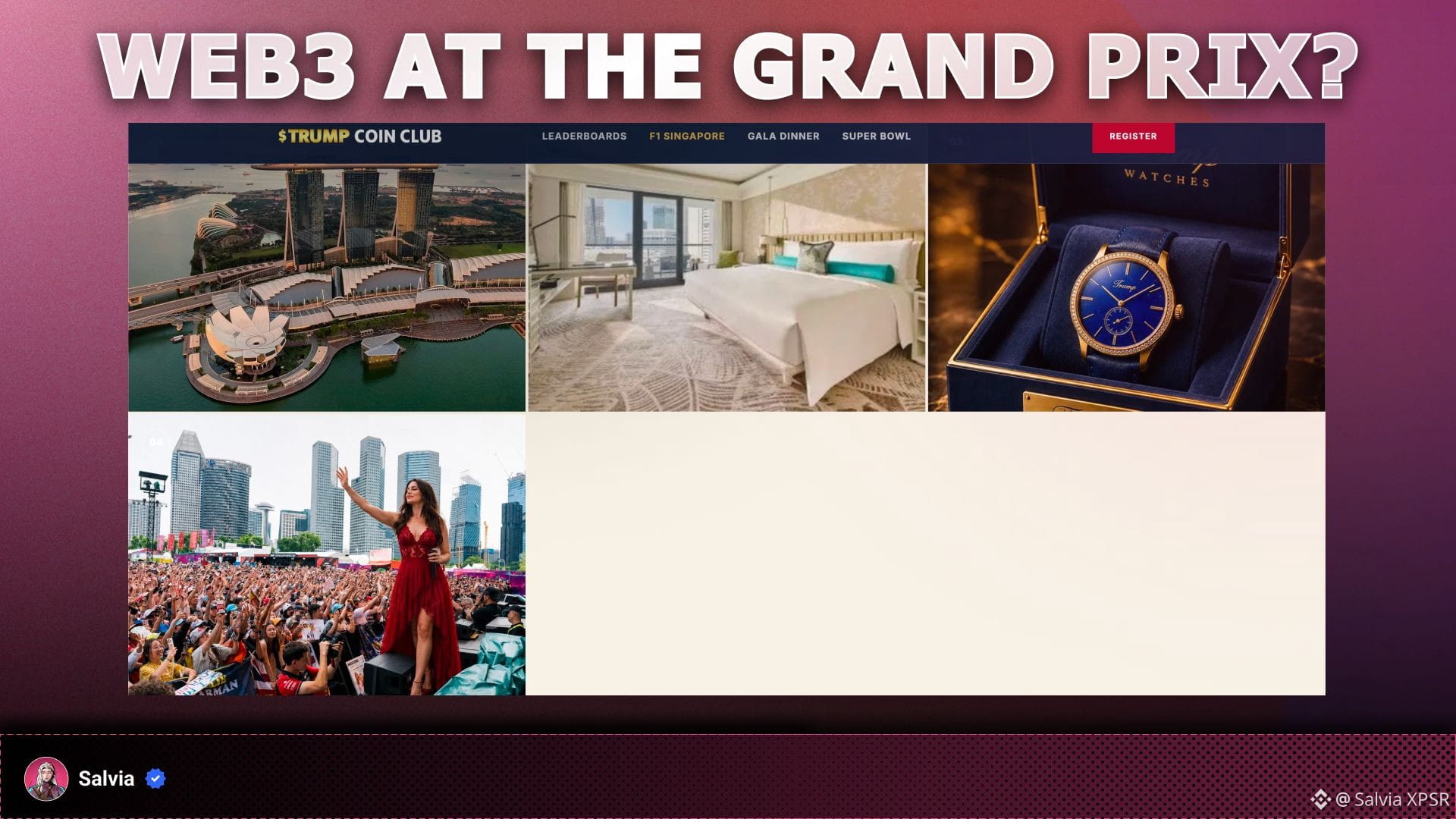
That is why the planned $Trump Coin Club Singapore programme interests me.
Private race-viewing hospitality gives members an immediate shared moment outside the usual crypto conversation.
People may arrive because they share an online identity, but the experience can reveal what else they have in common.
That is often when a community begins to feel human.
#Macro Insights#
Crypto communities need non-crypto moments 🤝
Most interaction around $LINK and $AAVE begins with the project itself, which gives people a reason to gather but can keep every conversation inside the same frame.
When the subject never changes, members may know each other’s opinions without knowing much about the people behind them.
I think stronger relationships form when a community has something else to experience together.
That is why the planned $Trump Coin Club Singapore programme interests me.
Private race-viewing hospitality gives members an immediate shared moment outside the usual crypto conversation.
People may arrive because they share an online identity, but the experience can reveal what else they have in common.
That is often when a community begins to feel human.
#Macro Insights#
Most interaction around $LINK and $AAVE begins with the project itself, which gives people a reason to gather but can keep every conversation inside the same frame.
When the subject never changes, members may know each other’s opinions without knowing much about the people behind them.
I think stronger relationships form when a community has something else to experience together.
That is why the planned $Trump Coin Club Singapore programme interests me.
Private race-viewing hospitality gives members an immediate shared moment outside the usual crypto conversation.
People may arrive because they share an online identity, but the experience can reveal what else they have in common.
That is often when a community begins to feel human.
#Macro Insights#
70
·
--
Stocks can do more onchain 📈
Across the RWA market around $ONDO and trading ecosystems such as $HYPE tokenized equities are usually discussed through access and trading volume, but I think that only covers the first layer of what stocks can become once the infrastructure around them is programmable.
Bringing equities onchain should make them usable inside new products, treasury strategies, and community incentives.
The Injective ecosystem is already testing that.
RunUp lets creators launch tokens powered by stock perpetuals, with each launch receiving a treasury that can deploy trading fees into selected stock-perp strategies, while Injective Stockdrop takes the thesis in another direction through community participation as participants commit INJ for a pro rata share of ecosystem revenue, while Stockdrop gives each participating address a chance to receive a tokenized stock on Robinhood Chain.
Together, these models show how tokenized stocks can support launches, treasury activity, and community rewards.
For me, this is what using stocks closer to their full potential onchain looks like 🔥
#Macro Insights#
Stocks can do more onchain 📈
Across the RWA market around $ONDO and trading ecosystems such as $HYPE tokenized equities are usually discussed through access and trading volume, but I think that only covers the first layer of what stocks can become once the infrastructure around them is programmable.
Bringing equities onchain should make them usable inside new products, treasury strategies, and community incentives.
The Injective ecosystem is already testing that.
RunUp lets creators launch tokens powered by stock perpetuals, with each launch receiving a treasury that can deploy trading fees into selected stock-perp strategies, while Injective Stockdrop takes the thesis in another direction through community participation as participants commit INJ for a pro rata share of ecosystem revenue, while Stockdrop gives each participating address a chance to receive a tokenized stock on Robinhood Chain.
Together, these models show how tokenized stocks can support launches, treasury activity, and community rewards.
For me, this is what using stocks closer to their full potential onchain looks like 🔥
#Macro Insights#
Across the RWA market around $ONDO and trading ecosystems such as $HYPE tokenized equities are usually discussed through access and trading volume, but I think that only covers the first layer of what stocks can become once the infrastructure around them is programmable.
Bringing equities onchain should make them usable inside new products, treasury strategies, and community incentives.
The Injective ecosystem is already testing that.
RunUp lets creators launch tokens powered by stock perpetuals, with each launch receiving a treasury that can deploy trading fees into selected stock-perp strategies, while Injective Stockdrop takes the thesis in another direction through community participation as participants commit INJ for a pro rata share of ecosystem revenue, while Stockdrop gives each participating address a chance to receive a tokenized stock on Robinhood Chain.
Together, these models show how tokenized stocks can support launches, treasury activity, and community rewards.
For me, this is what using stocks closer to their full potential onchain looks like 🔥
#Macro Insights#
82
·
--
AI Audits Still Depend On Trust 🤖
$FET made autonomous agents a serious crypto narrative. $VFY sits beside the harder question of how their behaviour gets independently checked.
OpenAI, Google, Meta, Anthropic, Nvidia and xAI have signed a voluntary White House agreement covering AI safety reviews.
The accord calls for internal controls and outside audits.
Reporting also notes that it has no enforcement mechanism, public disclosure requirement or implementation deadline.
I do not think that makes audits pointless.
It shows why an auditor’s conclusion can still leave users trusting another institution’s process. ZK introduces a different form of evidence. An AI application could generate proof that an agent operated within encoded limits without revealing proprietary models, private inputs or the strategy behind its actions.
zkVerify checks whether that submitted proof is cryptographically valid.
The network does not decide whether the policy was intelligent, and the proof only covers the rules encoded into it.
A badly designed rule can still be followed perfectly.
But for measurable requirements, verifiable execution can strengthen the evidence behind an audit.
As agents gain authority over wallets, payments and business systems, reports written after the event will face growing pressure from proofs produced alongside execution.
That verification workload is where VFY’s utility becomes especially relevant.
#AI #Altcoin Season#
AI Audits Still Depend On Trust 🤖
$FET made autonomous agents a serious crypto narrative. $VFY sits beside the harder question of how their behaviour gets independently checked.
OpenAI, Google, Meta, Anthropic, Nvidia and xAI have signed a voluntary White House agreement covering AI safety reviews.
The accord calls for internal controls and outside audits.
Reporting also notes that it has no enforcement mechanism, public disclosure requirement or implementation deadline.
I do not think that makes audits pointless.
It shows why an auditor’s conclusion can still leave users trusting another institution’s process. ZK introduces a different form of evidence. An AI application could generate proof that an agent operated within encoded limits without revealing proprietary models, private inputs or the strategy behind its actions.
zkVerify checks whether that submitted proof is cryptographically valid.
The network does not decide whether the policy was intelligent, and the proof only covers the rules encoded into it.
A badly designed rule can still be followed perfectly.
But for measurable requirements, verifiable execution can strengthen the evidence behind an audit.
As agents gain authority over wallets, payments and business systems, reports written after the event will face growing pressure from proofs produced alongside execution.
That verification workload is where VFY’s utility becomes especially relevant.
#AI #Altcoin Season#
$FET made autonomous agents a serious crypto narrative. $VFY sits beside the harder question of how their behaviour gets independently checked.
OpenAI, Google, Meta, Anthropic, Nvidia and xAI have signed a voluntary White House agreement covering AI safety reviews.
The accord calls for internal controls and outside audits.
Reporting also notes that it has no enforcement mechanism, public disclosure requirement or implementation deadline.
I do not think that makes audits pointless.
It shows why an auditor’s conclusion can still leave users trusting another institution’s process. ZK introduces a different form of evidence. An AI application could generate proof that an agent operated within encoded limits without revealing proprietary models, private inputs or the strategy behind its actions.
zkVerify checks whether that submitted proof is cryptographically valid.
The network does not decide whether the policy was intelligent, and the proof only covers the rules encoded into it.
A badly designed rule can still be followed perfectly.
But for measurable requirements, verifiable execution can strengthen the evidence behind an audit.
As agents gain authority over wallets, payments and business systems, reports written after the event will face growing pressure from proofs produced alongside execution.
That verification workload is where VFY’s utility becomes especially relevant.
#AI #Altcoin Season#
72
·
--
Don't Get Tricked By The Pump 📈
We've all seen a token pumping, felt like we were missing out and considered jumping in before the move got away from us.
That's exactly where having automated decision tools can save you from a bad trade.
$QNT has plenty of reasons to look interesting right now, with recent institutional announcements helping create buzz around the token.
But when Pear Protocol's free Agent Pear checked the actual setup, the data wasn't nearly as exciting.
QNT was trading below its 50-day moving average, RSI was sitting around 43, and Pear's pair-signal engine couldn't find a reliable mean-reverting hedge with enough statistical evidence to recommend a high-conviction pair trade.
So instead of seeing a hot token and automatically finding a reason to trade it, Pear found a reason not to.
I'd much rather have an AI that does that instead of telling me what it thinks I want to hear.
And when the data does support a trade, non-custodial execution happens through $HYPE .
Make smarter trading decisions at app.pear.garden
#Altcoin Season#
Don't Get Tricked By The Pump 📈
We've all seen a token pumping, felt like we were missing out and considered jumping in before the move got away from us.
That's exactly where having automated decision tools can save you from a bad trade.
$QNT has plenty of reasons to look interesting right now, with recent institutional announcements helping create buzz around the token.
But when Pear Protocol's free Agent Pear checked the actual setup, the data wasn't nearly as exciting.
QNT was trading below its 50-day moving average, RSI was sitting around 43, and Pear's pair-signal engine couldn't find a reliable mean-reverting hedge with enough statistical evidence to recommend a high-conviction pair trade.
So instead of seeing a hot token and automatically finding a reason to trade it, Pear found a reason not to.
I'd much rather have an AI that does that instead of telling me what it thinks I want to hear.
And when the data does support a trade, non-custodial execution happens through $HYPE .
Make smarter trading decisions at app.pear.garden
#Altcoin Season#
We've all seen a token pumping, felt like we were missing out and considered jumping in before the move got away from us.
That's exactly where having automated decision tools can save you from a bad trade.
$QNT has plenty of reasons to look interesting right now, with recent institutional announcements helping create buzz around the token.
But when Pear Protocol's free Agent Pear checked the actual setup, the data wasn't nearly as exciting.
QNT was trading below its 50-day moving average, RSI was sitting around 43, and Pear's pair-signal engine couldn't find a reliable mean-reverting hedge with enough statistical evidence to recommend a high-conviction pair trade.
So instead of seeing a hot token and automatically finding a reason to trade it, Pear found a reason not to.
I'd much rather have an AI that does that instead of telling me what it thinks I want to hear.
And when the data does support a trade, non-custodial execution happens through $HYPE .
Make smarter trading decisions at app.pear.garden
#Altcoin Season#
46
·
--
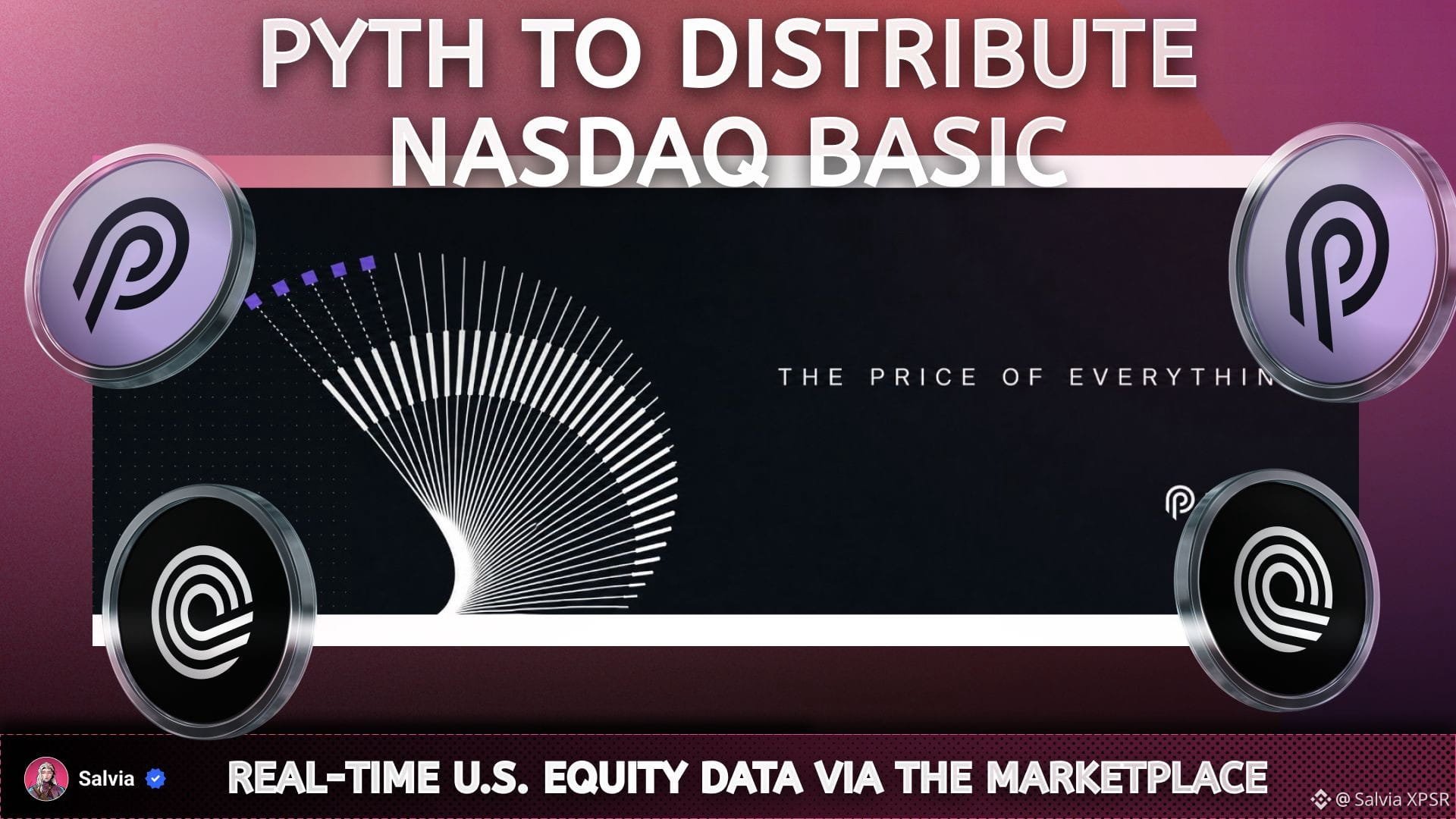
Nasdaq Basic is headed through Pyth 🔥
$ONDO has brought tokenized U.S. stocks into the crypto conversation. $PYTH now has a different role in that market: Pyth has been approved to distribute Nasdaq Basic through its Data Marketplace.
Nasdaq Basic carries live bids, offers and trades for U.S. equities, along with official opening and closing prices. Those reference prices caught my eye.
They are used to value positions at the start and end of the trading day.
There is a licensing process behind the headline.
Clients contract directly with Nasdaq and need written approval before receiving the feed through Pyth. Nasdaq controls access to its data; Pyth gives it another route into financial software and blockchain-native applications.
I’d call the approval a meaningful distribution win.
I want to see which clients choose Pyth as their Nasdaq Basic provider next. That will show us how much demand this new route attracts.
#Altcoin Season#
Nasdaq Basic is headed through Pyth 🔥
$ONDO has brought tokenized U.S. stocks into the crypto conversation. $PYTH now has a different role in that market: Pyth has been approved to distribute Nasdaq Basic through its Data Marketplace.
Nasdaq Basic carries live bids, offers and trades for U.S. equities, along with official opening and closing prices. Those reference prices caught my eye.
They are used to value positions at the start and end of the trading day.
There is a licensing process behind the headline.
Clients contract directly with Nasdaq and need written approval before receiving the feed through Pyth. Nasdaq controls access to its data; Pyth gives it another route into financial software and blockchain-native applications.
I’d call the approval a meaningful distribution win.
I want to see which clients choose Pyth as their Nasdaq Basic provider next. That will show us how much demand this new route attracts.
#Altcoin Season#
$ONDO has brought tokenized U.S. stocks into the crypto conversation. $PYTH now has a different role in that market: Pyth has been approved to distribute Nasdaq Basic through its Data Marketplace.
Nasdaq Basic carries live bids, offers and trades for U.S. equities, along with official opening and closing prices. Those reference prices caught my eye.
They are used to value positions at the start and end of the trading day.
There is a licensing process behind the headline.
Clients contract directly with Nasdaq and need written approval before receiving the feed through Pyth. Nasdaq controls access to its data; Pyth gives it another route into financial software and blockchain-native applications.
I’d call the approval a meaningful distribution win.
I want to see which clients choose Pyth as their Nasdaq Basic provider next. That will show us how much demand this new route attracts.
#Altcoin Season#
63
·
--
Don't Get Tricked By The Pump 📈
We've all seen a token pumping, felt like we were missing out and considered jumping in before the move got away from us.
That's exactly where having automated decision tools can save you from a bad trade.
$QNT has plenty of reasons to look interesting right now, with recent institutional announcements helping create buzz around the token.
But when Pear Protocol's free Agent Pear checked the actual setup, the data wasn't nearly as exciting.
QNT was trading below its 50-day moving average, RSI was sitting around 43, and Pear's pair-signal engine couldn't find a reliable mean-reverting hedge with enough statistical evidence to recommend a high-conviction pair trade.
So instead of seeing a hot token and automatically finding a reason to trade it, Pear found a reason not to.
I'd much rather have an AI that does that instead of telling me what it thinks I want to hear.
And when the data does support a trade, non-custodial execution happens through $HYPE .
Make smarter trading decisions at app.pear.garden
#Altcoin Season#
Don't Get Tricked By The Pump 📈
We've all seen a token pumping, felt like we were missing out and considered jumping in before the move got away from us.
That's exactly where having automated decision tools can save you from a bad trade.
$QNT has plenty of reasons to look interesting right now, with recent institutional announcements helping create buzz around the token.
But when Pear Protocol's free Agent Pear checked the actual setup, the data wasn't nearly as exciting.
QNT was trading below its 50-day moving average, RSI was sitting around 43, and Pear's pair-signal engine couldn't find a reliable mean-reverting hedge with enough statistical evidence to recommend a high-conviction pair trade.
So instead of seeing a hot token and automatically finding a reason to trade it, Pear found a reason not to.
I'd much rather have an AI that does that instead of telling me what it thinks I want to hear.
And when the data does support a trade, non-custodial execution happens through $HYPE .
Make smarter trading decisions at app.pear.garden
#Altcoin Season#
We've all seen a token pumping, felt like we were missing out and considered jumping in before the move got away from us.
That's exactly where having automated decision tools can save you from a bad trade.
$QNT has plenty of reasons to look interesting right now, with recent institutional announcements helping create buzz around the token.
But when Pear Protocol's free Agent Pear checked the actual setup, the data wasn't nearly as exciting.
QNT was trading below its 50-day moving average, RSI was sitting around 43, and Pear's pair-signal engine couldn't find a reliable mean-reverting hedge with enough statistical evidence to recommend a high-conviction pair trade.
So instead of seeing a hot token and automatically finding a reason to trade it, Pear found a reason not to.
I'd much rather have an AI that does that instead of telling me what it thinks I want to hear.
And when the data does support a trade, non-custodial execution happens through $HYPE .
Make smarter trading decisions at app.pear.garden
#Altcoin Season#
56
·
--
The strongest IP doesn't need introducing.
There's a version of cultural IP that has to earn attention. Build the community. Develop the brand. Expand slowly into new markets.
And then there's the DeLorean.
$PENGU holders know what strong IP looks like. They've lived the expansion firsthand.
$DMC skips the building phase entirely. 40 years of global recognition arrived before the token did. Every market. Every generation. No community building required to make people care.
The kind of starting position most brands spend decades trying to reach.
#Altcoin Season#
The strongest IP doesn't need introducing.
There's a version of cultural IP that has to earn attention. Build the community. Develop the brand. Expand slowly into new markets.
And then there's the DeLorean.
$PENGU holders know what strong IP looks like. They've lived the expansion firsthand.
$DMC skips the building phase entirely. 40 years of global recognition arrived before the token did. Every market. Every generation. No community building required to make people care.
The kind of starting position most brands spend decades trying to reach.
#Altcoin Season#
There's a version of cultural IP that has to earn attention. Build the community. Develop the brand. Expand slowly into new markets.
And then there's the DeLorean.
$PENGU holders know what strong IP looks like. They've lived the expansion firsthand.
$DMC skips the building phase entirely. 40 years of global recognition arrived before the token did. Every market. Every generation. No community building required to make people care.
The kind of starting position most brands spend decades trying to reach.
#Altcoin Season#
1
1.2k
·
--
The SEC Just Reframed Financial Privacy 🔐
$ZEC made selective privacy understandable to crypto markets. $VFY sits on the verification side of that same shift.
On September 23, SEC Commissioner Hester Peirce argued that Americans deserve both security and privacy.
These were her personal views rather than formal SEC policy, but the use cases were remarkably specific.
She described financial institutions collecting larger stores of names, addresses and transaction data while struggling to isolate illegal activity. Her alternative was attribute-based verification.
A customer could prove accredited-investor status or successful sanctions screening without exposing the private data behind that answer.
The identity application would create the credential and Zero Knowledge proof.
zkVerify could independently check whether that submitted proof is cryptographically valid.
The institution would receive a usable result without adding another copy of the customer’s documents to its database. The privacy comes from the credential system and proof design. zkVerify makes the resulting evidence practical to verify at scale.
VFY is used when that checking work is submitted to the network.
I think the regulatory conversation is moving closer to the problem zkVerify was designed to address.
If finance adopts proof-based compliance, independent verification becomes part of the institutional stack.
#Privacy #Altcoin Season#
The SEC Just Reframed Financial Privacy 🔐
$ZEC made selective privacy understandable to crypto markets. $VFY sits on the verification side of that same shift.
On September 23, SEC Commissioner Hester Peirce argued that Americans deserve both security and privacy.
These were her personal views rather than formal SEC policy, but the use cases were remarkably specific.
She described financial institutions collecting larger stores of names, addresses and transaction data while struggling to isolate illegal activity. Her alternative was attribute-based verification.
A customer could prove accredited-investor status or successful sanctions screening without exposing the private data behind that answer.
The identity application would create the credential and Zero Knowledge proof.
zkVerify could independently check whether that submitted proof is cryptographically valid.
The institution would receive a usable result without adding another copy of the customer’s documents to its database. The privacy comes from the credential system and proof design. zkVerify makes the resulting evidence practical to verify at scale.
VFY is used when that checking work is submitted to the network.
I think the regulatory conversation is moving closer to the problem zkVerify was designed to address.
If finance adopts proof-based compliance, independent verification becomes part of the institutional stack.
#Privacy #Altcoin Season#
$ZEC made selective privacy understandable to crypto markets. $VFY sits on the verification side of that same shift.
On September 23, SEC Commissioner Hester Peirce argued that Americans deserve both security and privacy.
These were her personal views rather than formal SEC policy, but the use cases were remarkably specific.
She described financial institutions collecting larger stores of names, addresses and transaction data while struggling to isolate illegal activity. Her alternative was attribute-based verification.
A customer could prove accredited-investor status or successful sanctions screening without exposing the private data behind that answer.
The identity application would create the credential and Zero Knowledge proof.
zkVerify could independently check whether that submitted proof is cryptographically valid.
The institution would receive a usable result without adding another copy of the customer’s documents to its database. The privacy comes from the credential system and proof design. zkVerify makes the resulting evidence practical to verify at scale.
VFY is used when that checking work is submitted to the network.
I think the regulatory conversation is moving closer to the problem zkVerify was designed to address.
If finance adopts proof-based compliance, independent verification becomes part of the institutional stack.
#Privacy #Altcoin Season#
59
Войдите, чтобы посмотреть больше материала
Присоединяйтесь к пользователям криптовалют по всему миру на Binance Square
⚡️ Получайте новейшую и полезную информацию о криптоактивах.
💬 Нам доверяет крупнейшая в мире криптобиржа.
👍 Получите достоверные аналитические данные от верифицированных создателей контента.
Эл. почта/номер телефона
В тренде
BinancekzWin
Просмотров: 32,422
93 обсуждают
МЕН ЧАТТА ЖАЙ ҒАНА ОТЫРЫП, 10 BNB ҰТЫП АЛДЫМ 😭🔥
Деп айтқым келеді, бірақ бұл шындық емес, Бірақ шындықтың өзі де керемет 💅
Жеңіл, танымдық, қызықты белсенділіктерге қатысып, қомақты сыйлықтар ұтып алу? Оңай, Binance KZ мүмкіндікке толы!
Чатта үнемі розыгрыштар болып тұрады, мен де жиі ұтып аламын. Бірақ ең басты жеңіс- өзіңе жайлы, адекватты комьюнити табу. Араласу барысында көп пайдалы нәрсе үйренесің, саудада көмектесетін білім аласың.
Тегін $50 алу приятно, ал сол білімнің арқасында оны көбейту ол менің жеңісім 💅
#BinancekzWin
Cabbage hater
·Лайков: 0
·Просмотров: 65
BinancePick
Просмотров: 2.8M
146,131 обсуждают
EarningsSeason
Просмотров: 5.1M
24,994 обсуждают