

Cryptodonia
392 Публикации
Cryptodonia
Отправить жалобу
Заблокировать пользователя
Building in Web3 | DeFi Enthusiast | Believer in decentralization & digital freedom
0 подписок(и/а)
10 подписчиков(а)
48 понравилось
Посты
·
--
#SHIB just saw a major burn spike. 🔥 297.68M $SHIB removed in 24 hours, pushing the burn rate up 6,847%. Burns reduce supply, but supply reduction alone doesn’t guarantee price growth. Now I am watching whether $SHIB can turn this momentum into real demand and stronger price action.
#SHIB just saw a major burn spike. 🔥 297.68M $SHIB removed in 24 hours, pushing the burn rate up 6,847%. Burns reduce supply, but supply reduction alone doesn’t guarantee price growth. Now I am watching whether $SHIB can turn this momentum into real demand and stronger price action.
54
·
--
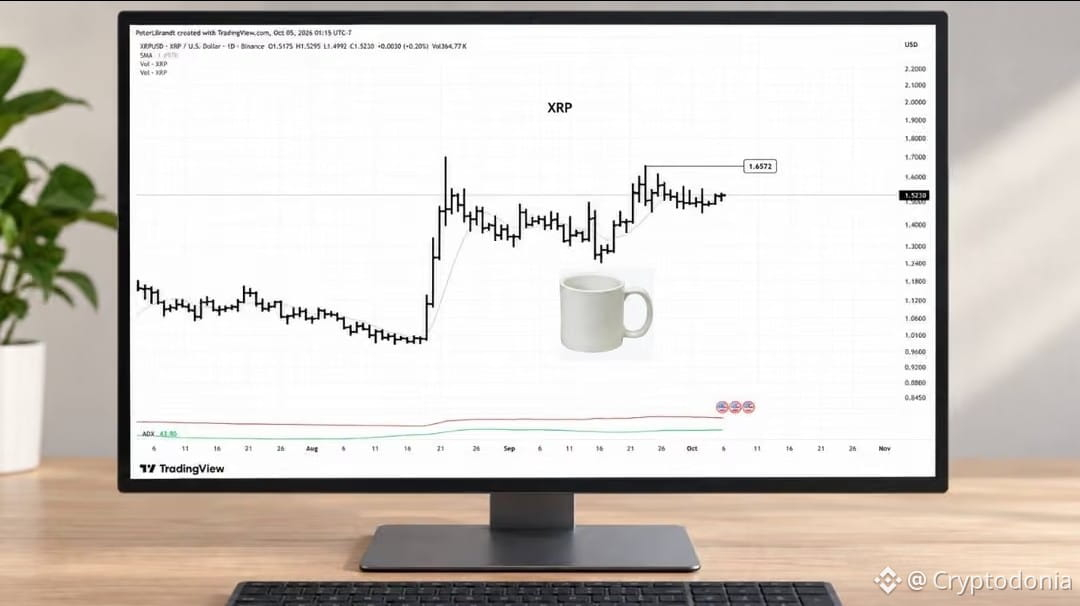
Peter Brandt just hinted at a possible cup-and-handle setup for $XRP ☕️📈 The key level is $1.6572. A clean breakout above it could strengthen the bullish setup, while rejection keeps $XRP in consolidation. For me, $1.65–$1.66 is the level to watch. #XRP #Crypto
Peter Brandt just hinted at a possible cup-and-handle setup for $XRP ☕️📈 The key level is $1.6572. A clean breakout above it could strengthen the bullish setup, while rejection keeps $XRP in consolidation. For me, $1.65–$1.66 is the level to watch. #XRP #Crypto
95
·
--
$XRP is showing a setup traders should watch 👀 Peter Brandt has highlighted a possible cup-and-handle formation on the daily chart. The key level is around $1.6572. A clean breakout and close above it could confirm the pattern and open the door toward the $2 area. But I wouldn’t chase the move before confirmation. For me: 🔹 Resistance: $1.6572 🔹 Breakout trigger: Daily close above $1.6572 🔹 Target: ~$2.05 🔹 Invalidation: Loss of the handle/support structure Now the question is simple: can $XRP break the rim?
$XRP is showing a setup traders should watch 👀 Peter Brandt has highlighted a possible cup-and-handle formation on the daily chart. The key level is around $1.6572. A clean breakout and close above it could confirm the pattern and open the door toward the $2 area. But I wouldn’t chase the move before confirmation. For me: 🔹 Resistance: $1.6572 🔹 Breakout trigger: Daily close above $1.6572 🔹 Target: ~$2.05 🔹 Invalidation: Loss of the handle/support structure Now the question is simple: can $XRP break the rim?
49
·
--
$NEAR is showing an interesting reversal after the recent pullback. Price bounced from around $4.70 and reclaimed $5.00. The key level I’m watching now is $5.60. 🔹 Break & hold above $5.60 → $6.00 becomes the next target 🔹 Support: $4.60 🔹 Lose $4.60 → $4.20 could come into play After a 200%+ move from the August lows, I’d rather wait for confirmation than chase.
$NEAR is showing an interesting reversal after the recent pullback. Price bounced from around $4.70 and reclaimed $5.00. The key level I’m watching now is $5.60. 🔹 Break & hold above $5.60 → $6.00 becomes the next target 🔹 Support: $4.60 🔹 Lose $4.60 → $4.20 could come into play After a 200%+ move from the August lows, I’d rather wait for confirmation than chase.
75
·
--
$DOGE is getting interesting here 👀 The chart is tightening inside a descending triangle, with $0.095 acting as the key breakout level. A confirmed 4H close above $0.095 could open the way toward $0.106. There’s also a fundamental catalyst: DogeOS has launched its public testnet, bringing EVM-compatible apps to the $DOGE ecosystem. For me, $0.095 is the level to watch. No breakout, no chase. #DOGE #Dogecoin
$DOGE is getting interesting here 👀 The chart is tightening inside a descending triangle, with $0.095 acting as the key breakout level. A confirmed 4H close above $0.095 could open the way toward $0.106. There’s also a fundamental catalyst: DogeOS has launched its public testnet, bringing EVM-compatible apps to the $DOGE ecosystem. For me, $0.095 is the level to watch. No breakout, no chase. #DOGE #Dogecoin
65
·
--
October is here, and #Bitcoin traders have several macro events to keep an eye on. The big ones: • Oct 7 — Fed meeting minutes • Oct 14 — U.S. CPI • Oct 15 — PPI + retail sales • Oct 28 — FOMC decision • Oct 29 — GDP + PCE data These releases could bring serious volatility to $BTC and the wider crypto market. For me, the key isn’t predicting the direction. It’s watching how $BTC reacts to the data. Volatility creates opportunities, but also traps. Manage risk and let price confirm the move.
October is here, and #Bitcoin traders have several macro events to keep an eye on. The big ones: • Oct 7 — Fed meeting minutes • Oct 14 — U.S. CPI • Oct 15 — PPI + retail sales • Oct 28 — FOMC decision • Oct 29 — GDP + PCE data These releases could bring serious volatility to $BTC and the wider crypto market. For me, the key isn’t predicting the direction. It’s watching how $BTC reacts to the data. Volatility creates opportunities, but also traps. Manage risk and let price confirm the move.
76
·
--
#Bitcoin back near $87K, and the $100K level is coming back into focus. Mike Novogratz says he wouldn’t be surprised to see $BTC reach $100K by year-end. For traders, the key question isn’t the prediction, it’s whether $BTC can hold the current breakout and push through $87K–$90K resistance. $100K is still a target, not a guarantee. I am watching price action, volume and key support levels before chasing the move.
#Bitcoin back near $87K, and the $100K level is coming back into focus. Mike Novogratz says he wouldn’t be surprised to see $BTC reach $100K by year-end. For traders, the key question isn’t the prediction, it’s whether $BTC can hold the current breakout and push through $87K–$90K resistance. $100K is still a target, not a guarantee. I am watching price action, volume and key support levels before chasing the move.
60
·
--
$SOL is back around $121, but the bigger story is what’s happening underneath. • $271M monthly inflow into U.S. spot SOL ETFs • Alpenglow is now being tested, targeting sub-100ms finality • SOL recently rejected the $120–$126 area • Key support: $110–$112 For me, $120–$126 is the zone to watch. A clean breakout and hold above it could open the door toward $140–$150. If buyers lose $110, the bullish setup weakens. No chasing , I would rather wait for confirmation.
$SOL is back around $121, but the bigger story is what’s happening underneath. • $271M monthly inflow into U.S. spot SOL ETFs • Alpenglow is now being tested, targeting sub-100ms finality • SOL recently rejected the $120–$126 area • Key support: $110–$112 For me, $120–$126 is the zone to watch. A clean breakout and hold above it could open the door toward $140–$150. If buyers lose $110, the bullish setup weakens. No chasing , I would rather wait for confirmation.
71
·
--
Ripple just unlocked 1 billion $XRP worth roughly $1.49B from escrow. But the headline number isn’t the whole story. This is part of Ripple’s scheduled monthly escrow process, and historically a large portion can be moved back into escrow. So I wouldn’t treat the full $1.49B as immediate selling pressure. For $XRP traders, the real thing to watch now is how much supply actually reaches the market and whether XRP can hold the $1.46–$1.50 area. The unlock is important. The follow-through matters more.
Ripple just unlocked 1 billion $XRP worth roughly $1.49B from escrow. But the headline number isn’t the whole story. This is part of Ripple’s scheduled monthly escrow process, and historically a large portion can be moved back into escrow. So I wouldn’t treat the full $1.49B as immediate selling pressure. For $XRP traders, the real thing to watch now is how much supply actually reaches the market and whether XRP can hold the $1.46–$1.50 area. The unlock is important. The follow-through matters more.
36
·
--
Privacy coins just had a month worth watching. $ZEC gained 64% in September and briefly pushed above $1,680, while $NEAR more than doubled. That tells me this isn’t only about one coin, there’s been a clear rotation into the privacy narrative. Now the important part is what happens after the breakout. For $ZEC , I am watching the $1,400 area closely. 📍 Entry: $1,410–$1,450 after confirmation 🎯 TP1: $1,520 🎯 TP2: $1,650 🛑 Invalidation: clean break below $1,360 The idea is simple: I would rather trade the confirmation of support than chase another vertical candle. If $1,400 keeps holding, the recent high comes back into focus. If it fails, I would step aside and wait for a better structure. Privacy narrative is strong, but price still decides the trade.
Privacy coins just had a month worth watching. $ZEC gained 64% in September and briefly pushed above $1,680, while $NEAR more than doubled. That tells me this isn’t only about one coin, there’s been a clear rotation into the privacy narrative. Now the important part is what happens after the breakout. For $ZEC , I am watching the $1,400 area closely. 📍 Entry: $1,410–$1,450 after confirmation 🎯 TP1: $1,520 🎯 TP2: $1,650 🛑 Invalidation: clean break below $1,360 The idea is simple: I would rather trade the confirmation of support than chase another vertical candle. If $1,400 keeps holding, the recent high comes back into focus. If it fails, I would step aside and wait for a better structure. Privacy narrative is strong, but price still decides the trade.
51
·
--
$SOL looks interesting here, but I wouldn’t chase the move. The Elliott Wave setup suggests a potential Wave 4 pullback toward the $110–$95 support zone before another bullish leg. My trading map: 📍 Entry: $100–$95 after a clear bullish reaction 🎯 TP1: $110 🎯 TP2: $120 🛑 Invalidation: Strong break below $95 The key is patience. If SOL pulls back into support and buyers step in, the setup becomes more interesting. If $95 fails decisively, I would step aside and wait for a new structure. Not financial advice. Trade your own plan.
$SOL looks interesting here, but I wouldn’t chase the move. The Elliott Wave setup suggests a potential Wave 4 pullback toward the $110–$95 support zone before another bullish leg. My trading map: 📍 Entry: $100–$95 after a clear bullish reaction 🎯 TP1: $110 🎯 TP2: $120 🛑 Invalidation: Strong break below $95 The key is patience. If SOL pulls back into support and buyers step in, the setup becomes more interesting. If $95 fails decisively, I would step aside and wait for a new structure. Not financial advice. Trade your own plan.
67
·
--
Prediction markets are entering a new phase. Congress expanding its probe to $HYPE , Crypto.com and PredictIt is something traders should pay attention to. The investigation does not prove wrongdoing. But for traders, the bigger question is what comes next. If regulators push for tighter KYC, stronger surveillance, or new rules around event-based markets, that could directly affect liquidity, access, leverage and trading opportunities. Trader takeaway: don’t trade the headline watch the policy response. If the rules change, market structure can change with them. That means traders should be watching volume, liquidity, platform restrictions and regulatory announcements rather than simply reacting to the investigation itself. This is one of those stories where the second-order effects may matter more than the headline.
Prediction markets are entering a new phase. Congress expanding its probe to $HYPE , Crypto.com and PredictIt is something traders should pay attention to. The investigation does not prove wrongdoing. But for traders, the bigger question is what comes next. If regulators push for tighter KYC, stronger surveillance, or new rules around event-based markets, that could directly affect liquidity, access, leverage and trading opportunities. Trader takeaway: don’t trade the headline watch the policy response. If the rules change, market structure can change with them. That means traders should be watching volume, liquidity, platform restrictions and regulatory announcements rather than simply reacting to the investigation itself. This is one of those stories where the second-order effects may matter more than the headline.
41
·
--
$RLUSD keeps hitting new milestones. Ripple’s stablecoin has now reached a major supply milestone, with $2.5B+ in RLUSD supply unlocked as adoption continues to expand across the $XRP Ledger and Ethereum. The bigger story isn’t just the number. Growing stablecoin liquidity could bring more activity to payments, DeFi and other applications across the ecosystem. Worth watching how far RLUSD can scale from here. #RLUSD #XRP #XRPL #Ripple
$RLUSD keeps hitting new milestones. Ripple’s stablecoin has now reached a major supply milestone, with $2.5B+ in RLUSD supply unlocked as adoption continues to expand across the $XRP Ledger and Ethereum. The bigger story isn’t just the number. Growing stablecoin liquidity could bring more activity to payments, DeFi and other applications across the ecosystem. Worth watching how far RLUSD can scale from here. #RLUSD #XRP #XRPL #Ripple
56
·
--
The SEC’s latest crypto guidance adds more clarity around how digital assets are treated under U.S. securities laws. $XRP is specifically listed as a digital commodity, reinforcing the regulatory framework introduced earlier this year. For $XRP , clearer rules could matter as much as price action. The next question is how institutions and the broader market respond.
The SEC’s latest crypto guidance adds more clarity around how digital assets are treated under U.S. securities laws. $XRP is specifically listed as a digital commodity, reinforcing the regulatory framework introduced earlier this year. For $XRP , clearer rules could matter as much as price action. The next question is how institutions and the broader market respond.
79
·
--
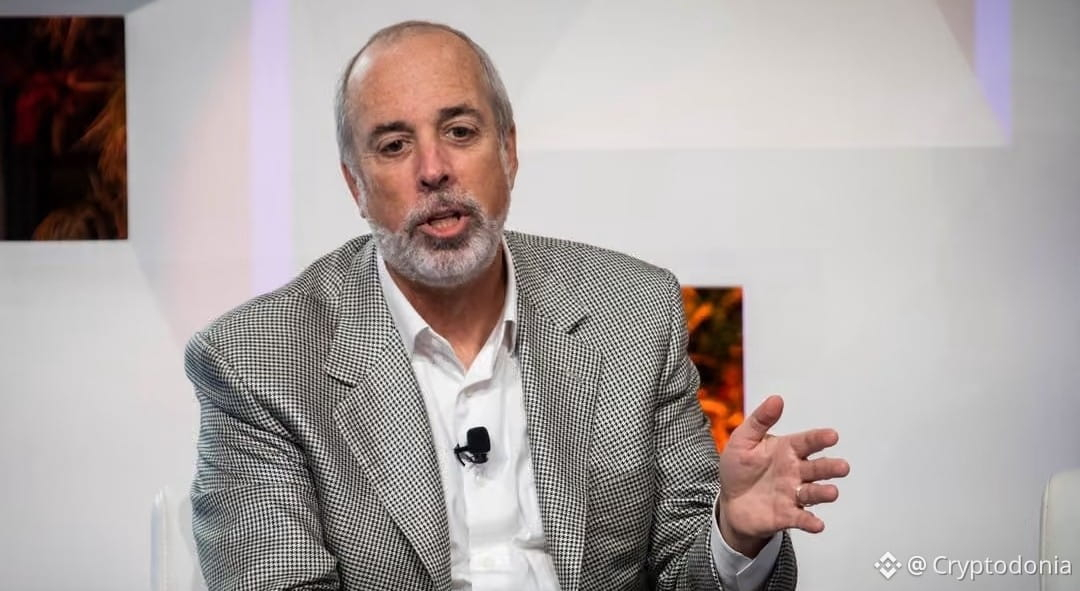
#Bitcoin at $500,000 by 2030? 👀 Financial adviser Ric Edelman is urging investors to consider allocating 10%–40% of their portfolios to $BTC , depending on their risk tolerance. He also believes $BTC could reach $500K by 2030 as global adoption grows. That’s a bold outlook, but price targets are never guarantees. Adoption, market conditions, and risk management still matter. How realistic do you think $500K Bitcoin is by 2030?
#Bitcoin at $500,000 by 2030? 👀 Financial adviser Ric Edelman is urging investors to consider allocating 10%–40% of their portfolios to $BTC , depending on their risk tolerance. He also believes $BTC could reach $500K by 2030 as global adoption grows. That’s a bold outlook, but price targets are never guarantees. Adoption, market conditions, and risk management still matter. How realistic do you think $500K Bitcoin is by 2030?
47
·
--
$XRP : Can It Hold $1.52? $XRP is holding around $1.52, but Binance data reportedly shows $3.9 billion in selling pressure. The key question now is whether buyers can absorb that pressure and keep the price above support. I am watching how $XRP reacts around $1.52 before considering any move. A support breakdown could change the picture, while a strong recovery may signal that buyers are stepping back in.
$XRP : Can It Hold $1.52? $XRP is holding around $1.52, but Binance data reportedly shows $3.9 billion in selling pressure. The key question now is whether buyers can absorb that pressure and keep the price above support. I am watching how $XRP reacts around $1.52 before considering any move. A support breakdown could change the picture, while a strong recovery may signal that buyers are stepping back in.
110
·
--
What will Ethereum look like by 2030? 👀 Vitalik Buterin envisions $ETH evolving into a cryptographic world computer, using advanced cryptographic proofs to improve scalability, privacy, and transaction verification. The goal is to make Ethereum faster, more efficient, and more secure without forcing every node to repeat the same computational work. If this vision becomes reality, Ethereum could look very different from what we know today. The big question is: Can Ethereum turn this ambitious vision into reality by 2030? $ETH #Ethereum #Crypto
What will Ethereum look like by 2030? 👀 Vitalik Buterin envisions $ETH evolving into a cryptographic world computer, using advanced cryptographic proofs to improve scalability, privacy, and transaction verification. The goal is to make Ethereum faster, more efficient, and more secure without forcing every node to repeat the same computational work. If this vision becomes reality, Ethereum could look very different from what we know today. The big question is: Can Ethereum turn this ambitious vision into reality by 2030? $ETH #Ethereum #Crypto
66
·
--
What if Satoshi Nakamoto moved his 1.1 million $BTC ? 👀 Even a small movement could trigger market speculation, but moving Bitcoin doesn't mean selling. Would you buy the dip or stay cautious?
What if Satoshi Nakamoto moved his 1.1 million $BTC ? 👀 Even a small movement could trigger market speculation, but moving Bitcoin doesn't mean selling. Would you buy the dip or stay cautious?
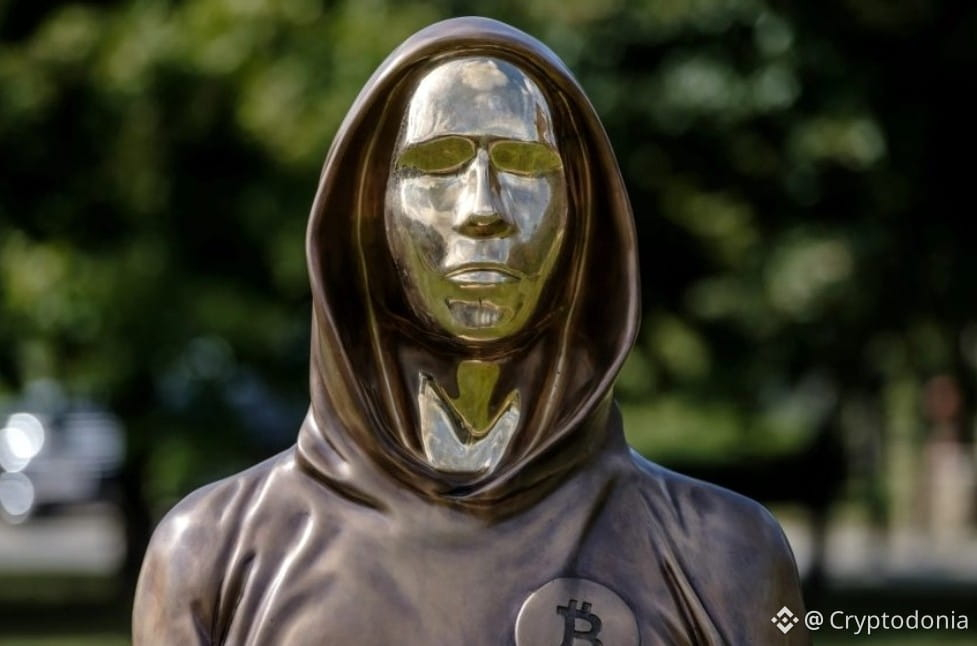
29
·
--
The interesting part of $HBAR move isn’t just the 26% rally, it’s what’s driving the narrative. IBM is expanding its digital-asset infrastructure, while BlackRock continues pushing deeper into tokenized financial products. That puts real-world asset tokenization back in focus, and $HBAR is getting attention because of its existing enterprise and RWA connections. For me, the bigger question isn’t “How high can HBAR go?” It’s whether this institutional tokenization trend can translate into real network usage and sustained demand for HBAR. That’s the part I’ll be watching next. $HBAR
The interesting part of $HBAR move isn’t just the 26% rally, it’s what’s driving the narrative. IBM is expanding its digital-asset infrastructure, while BlackRock continues pushing deeper into tokenized financial products. That puts real-world asset tokenization back in focus, and $HBAR is getting attention because of its existing enterprise and RWA connections. For me, the bigger question isn’t “How high can HBAR go?” It’s whether this institutional tokenization trend can translate into real network usage and sustained demand for HBAR. That’s the part I’ll be watching next. $HBAR
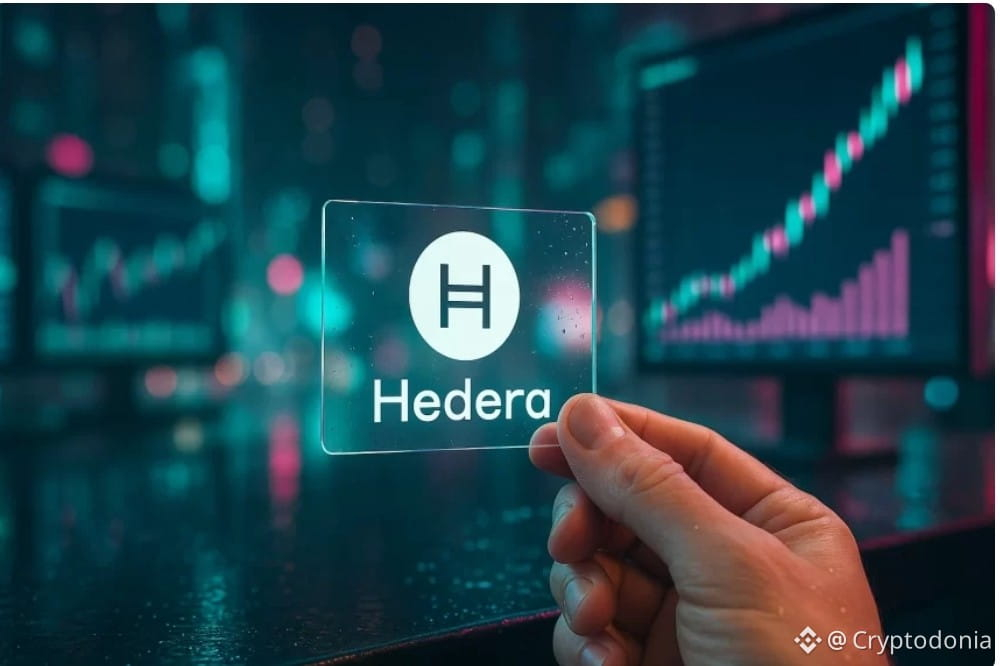
154
·
--
What if the real test of security isn't preventing every mistake, but making sure one mistake doesn't bring down the entire system? A server gets misconfigured. A permission gets exposed. A developer misses a vulnerability. Sometimes, it takes just one mistake to create a problem affecting thousands of users. That's why I believe security isn't just about stopping hackers. It's also about how a system is designed to handle failure. Because mistakes are inevitable. Catastrophic failure shouldn't be the default. This is where decentralization becomes an interesting conversation. Distributing infrastructure can reduce certain points of concentration, but it doesn't make a system invulnerable. Bugs, compromised nodes, and human errors can still happen. That's one reason @Liberdus interests me. Decentralized communication raises an important question: how do we build systems that give people more control while remaining resilient when things go wrong? I don't believe in selling perfection. I believe in understanding the architecture, acknowledging the trade-offs, and asking the right questions. Because real trust isn't built on promises of perfect security. It's built on systems designed with failure in mind. Less hype. More resilience. More understanding. #Security $KII #Privacy $QNT
What if the real test of security isn't preventing every mistake, but making sure one mistake doesn't bring down the entire system? A server gets misconfigured. A permission gets exposed. A developer misses a vulnerability. Sometimes, it takes just one mistake to create a problem affecting thousands of users. That's why I believe security isn't just about stopping hackers. It's also about how a system is designed to handle failure. Because mistakes are inevitable. Catastrophic failure shouldn't be the default. This is where decentralization becomes an interesting conversation. Distributing infrastructure can reduce certain points of concentration, but it doesn't make a system invulnerable. Bugs, compromised nodes, and human errors can still happen. That's one reason @Liberdus interests me. Decentralized communication raises an important question: how do we build systems that give people more control while remaining resilient when things go wrong? I don't believe in selling perfection. I believe in understanding the architecture, acknowledging the trade-offs, and asking the right questions. Because real trust isn't built on promises of perfect security. It's built on systems designed with failure in mind. Less hype. More resilience. More understanding. #Security $KII #Privacy $QNT

39
Войдите, чтобы посмотреть больше материала
Присоединяйтесь к пользователям криптовалют по всему миру на Binance Square
⚡️ Получайте новейшую и полезную информацию о криптоактивах.
💬 Нам доверяет крупнейшая в мире криптобиржа.
👍 Получите достоверные аналитические данные от верифицированных создателей контента.
Эл. почта/номер телефона
В тренде
BinanceLaunchesBinanceIntelligence
Просмотров: 613,876
3,791 обсуждают
🧠 ¿Hacer trading como un fondo de inversión experto? ¡Ahora la IA lo hace gratis por ti! 🤖📈
Wilsontrader97
·Лайков: 9
·Просмотров: 10k
BTCFallsBelow$84K
Просмотров: 1,423
24 обсуждают
WinklevossFilesSpotZcashETFApplication
Просмотров: 3,653
96 обсуждают