
ASHUTOSH PATI
6.6k Публикации

ASHUTOSH PATI
Отправить жалобу
Заблокировать пользователя
🚀 Research First 📊 On-Chain Analysis 💡 Think Beyond the Hype 📈 Long-Term Conviction

Владелец BTC
Трейдер с частыми сделками
1.6 г
6 подписок(и/а)
5.9K+ подписчиков(а)
3.7K+ понравилось
Посты
Все
Цитирования
Видео
Активно
🔥 OIL ABOVE $100: GOLD FACES THE FED TEST
Brent crude is holding above $107, keeping inflation pressure elevated.
That creates a tricky setup for Gold as traders await the Fed decision.
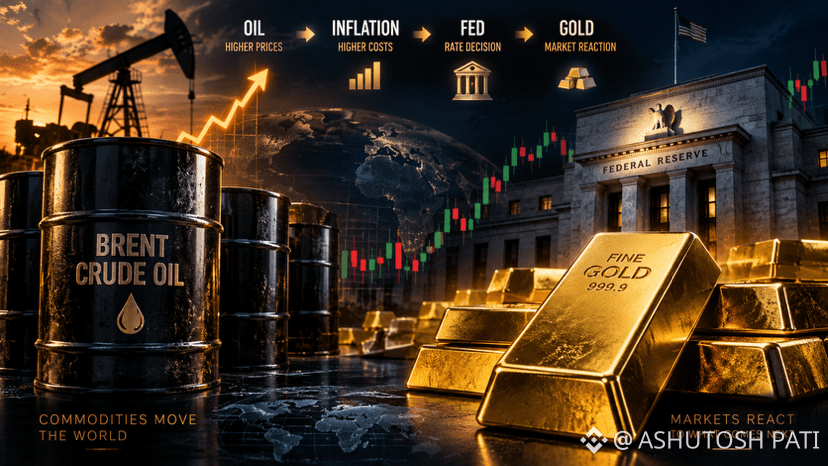
Higher oil → inflation risk → yields can stay elevated → pressure on Gold.
But a softer Fed signal could quickly shift the reaction.
📌 Key focus: Oil, yields and $XAU momentum after the Fed decision.
Are you watching Gold for a breakout or another pullback? #Gold #Oil #XAU #Brent #Fed
🔥 OIL ABOVE $100: GOLD FACES THE FED TEST
Brent crude is holding above $107, keeping inflation pressure elevated.
That creates a tricky setup for Gold as traders await the Fed decision.
Higher oil → inflation risk → yields can stay elevated → pressure on Gold.
But a softer Fed signal could quickly shift the reaction.
📌 Key focus: Oil, yields and $XAU momentum after the Fed decision.
Are you watching Gold for a breakout or another pullback? #Gold #Oil #XAU #Brent #Fed
Brent crude is holding above $107, keeping inflation pressure elevated.
That creates a tricky setup for Gold as traders await the Fed decision.
Higher oil → inflation risk → yields can stay elevated → pressure on Gold.
But a softer Fed signal could quickly shift the reaction.
📌 Key focus: Oil, yields and $XAU momentum after the Fed decision.
Are you watching Gold for a breakout or another pullback? #Gold #Oil #XAU #Brent #Fed
2
242
🇺🇸 CLARITY ACT: A BIG TEST FOR CRYPTO
🚨 The U.S. Senate faces a critical vote today on the CLARITY Act.
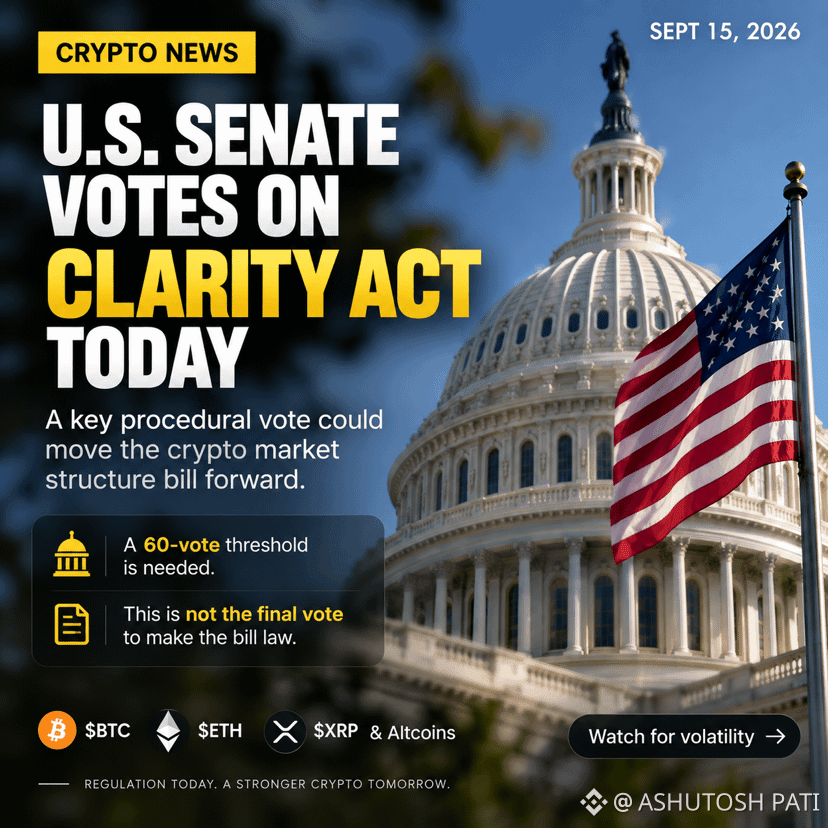
A 60-vote threshold is needed to move the crypto market-structure bill forward.
A successful vote could improve regulatory clarity and boost sentiment across $BTC, $ETH and altcoins.
But remember: this is not the final vote to make the bill law.
For traders, the key is simple: expect volatility around the vote.
Will the CLARITY Act become the next catalyst for crypto?
#crypto #BTC #ETH #CLARITYAct
🇺🇸 CLARITY ACT: A BIG TEST FOR CRYPTO
🚨 The U.S. Senate faces a critical vote today on the CLARITY Act.
A 60-vote threshold is needed to move the crypto market-structure bill forward.
A successful vote could improve regulatory clarity and boost sentiment across $BTC, $ETH and altcoins.
But remember: this is not the final vote to make the bill law.
For traders, the key is simple: expect volatility around the vote.
Will the CLARITY Act become the next catalyst for crypto?
#crypto #BTC #ETH #CLARITYAct
🚨 The U.S. Senate faces a critical vote today on the CLARITY Act.
A 60-vote threshold is needed to move the crypto market-structure bill forward.
A successful vote could improve regulatory clarity and boost sentiment across $BTC, $ETH and altcoins.
But remember: this is not the final vote to make the bill law.
For traders, the key is simple: expect volatility around the vote.
Will the CLARITY Act become the next catalyst for crypto?
#crypto #BTC #ETH #CLARITYAct
2
3
88
🔥 OIL IS MOVING THE MACRO MARKET
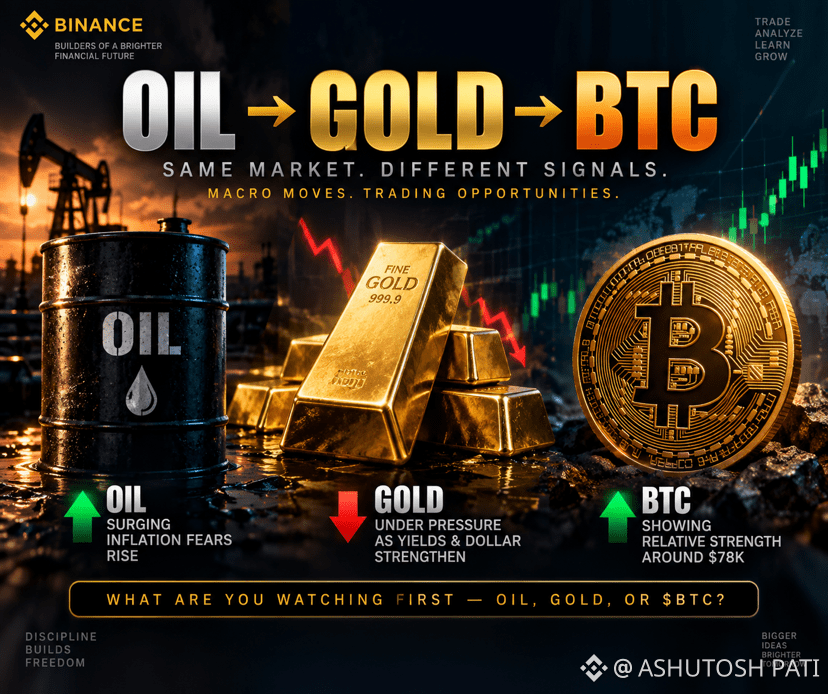
Crude oil is surging, pushing inflation fears higher.
That’s putting pressure on Gold as yields and the Dollar strengthen.
But $BTC is showing relative strength around the $78K zone.
The key question now: can Bitcoin hold above $77K while oil stays elevated?
If BTC holds, a move back toward $80K–$82K could come next.
If $77K breaks, risk-off pressure may accelerate.
What are you watching first — Oil, Gold, or $BTC?
#bitcoin #GOLD #Oil
🔥 OIL IS MOVING THE MACRO MARKET
Crude oil is surging, pushing inflation fears higher.
That’s putting pressure on Gold as yields and the Dollar strengthen.
But $BTC is showing relative strength around the $78K zone.
The key question now: can Bitcoin hold above $77K while oil stays elevated?
If BTC holds, a move back toward $80K–$82K could come next.
If $77K breaks, risk-off pressure may accelerate.
What are you watching first — Oil, Gold, or $BTC?
#bitcoin #GOLD #Oil
Crude oil is surging, pushing inflation fears higher.
That’s putting pressure on Gold as yields and the Dollar strengthen.
But $BTC is showing relative strength around the $78K zone.
The key question now: can Bitcoin hold above $77K while oil stays elevated?
If BTC holds, a move back toward $80K–$82K could come next.
If $77K breaks, risk-off pressure may accelerate.
What are you watching first — Oil, Gold, or $BTC?
#bitcoin #GOLD #Oil
1
3
338
🔥 GOLD & SILVER: THE NEXT MOVE
Gold is holding strong, while Silver is showing stronger momentum.
The important part now is not chasing the move. Watch the key resistance and wait for confirmation.
If buyers stay in control, both metals could continue attracting attention.
But a rejection at resistance could trigger a short-term pullback.
For me, Silver looks more aggressive, while Gold remains the stronger defensive play.
Which one are you watching tonight — Gold or Silver?
#GOLD #Silver #XAU #XAG
🔥 GOLD & SILVER: THE NEXT MOVE
Gold is holding strong, while Silver is showing stronger momentum.
The important part now is not chasing the move. Watch the key resistance and wait for confirmation.
If buyers stay in control, both metals could continue attracting attention.
But a rejection at resistance could trigger a short-term pullback.
For me, Silver looks more aggressive, while Gold remains the stronger defensive play.
Which one are you watching tonight — Gold or Silver?
#GOLD #Silver #XAU #XAG
Gold is holding strong, while Silver is showing stronger momentum.
The important part now is not chasing the move. Watch the key resistance and wait for confirmation.
If buyers stay in control, both metals could continue attracting attention.
But a rejection at resistance could trigger a short-term pullback.
For me, Silver looks more aggressive, while Gold remains the stronger defensive play.
Which one are you watching tonight — Gold or Silver?
#GOLD #Silver #XAU #XAG

3
1
4
493
🚨 SMART MONEY IS WATCHING METALS — NOT JUST CRYPTO
GOLD, SILVER AND STOCKS ARE TELLING THREE DIFFERENT STORIES.
Gold is attracting defensive flows, while Silver is showing stronger momentum.
Meanwhile, stocks remain sensitive to yields, rates and global risk sentiment.
This is where traders should watch PRICE ACTION, not emotions.
A breakout with volume can confirm momentum. A rejection can signal caution.
WHICH MARKET ARE YOU WATCHING TONIGHT — GOLD, SILVER OR STOCKS?
#GOLD #Silver #Stocks
🚨 SMART MONEY IS WATCHING METALS — NOT JUST CRYPTO
GOLD, SILVER AND STOCKS ARE TELLING THREE DIFFERENT STORIES.
Gold is attracting defensive flows, while Silver is showing stronger momentum.
Meanwhile, stocks remain sensitive to yields, rates and global risk sentiment.
This is where traders should watch PRICE ACTION, not emotions.
A breakout with volume can confirm momentum. A rejection can signal caution.
WHICH MARKET ARE YOU WATCHING TONIGHT — GOLD, SILVER OR STOCKS?
#GOLD #Silver #Stocks
GOLD, SILVER AND STOCKS ARE TELLING THREE DIFFERENT STORIES.
Gold is attracting defensive flows, while Silver is showing stronger momentum.
Meanwhile, stocks remain sensitive to yields, rates and global risk sentiment.
This is where traders should watch PRICE ACTION, not emotions.
A breakout with volume can confirm momentum. A rejection can signal caution.
WHICH MARKET ARE YOU WATCHING TONIGHT — GOLD, SILVER OR STOCKS?
#GOLD #Silver #Stocks

4
231
🚨 BTC Support & Resistance: Don’t Trade the Wick!
One of the biggest mistakes beginners make is entering a trade just because price touches Support or Resistance.
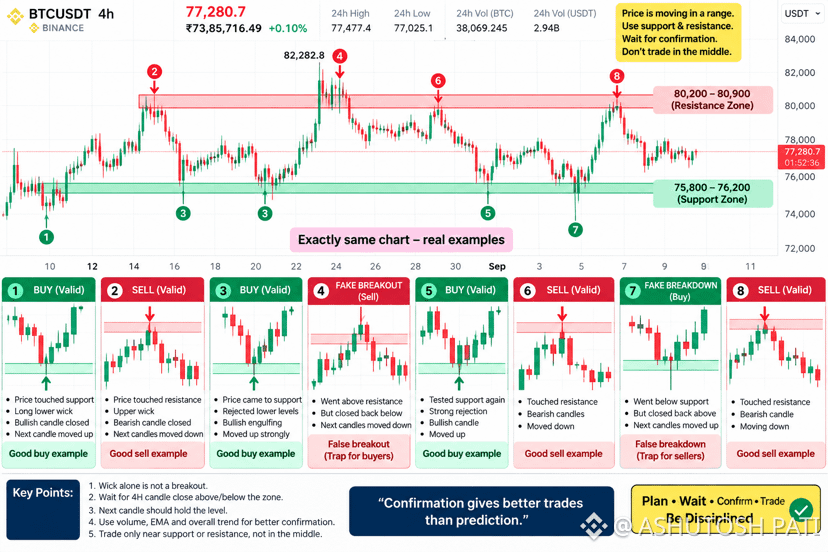
On the 4H BTC chart:
🟢 Support: Look for rejection, a lower wick and a bullish candle close.
🔴 Resistance: Look for rejection and a bearish candle close.
⚠️ Breakout: A wick above Resistance is NOT enough. Wait for the candle to close above and see if the next candle holds the level.
Remember:
Wick ≠ Breakout
Candle Close + Follow-through = Better Confirmation.
The goal is not to predict every move.
Plan → Wait → Confirm → Trade.
What do you look for first on a $BTC chart — Support or Resistance? 👇
#BTC #bitcoin #CryptoTrading
🚨 BTC Support & Resistance: Don’t Trade the Wick!
One of the biggest mistakes beginners make is entering a trade just because price touches Support or Resistance.
On the 4H BTC chart:
🟢 Support: Look for rejection, a lower wick and a bullish candle close.
🔴 Resistance: Look for rejection and a bearish candle close.
⚠️ Breakout: A wick above Resistance is NOT enough. Wait for the candle to close above and see if the next candle holds the level.
Remember:
Wick ≠ Breakout
Candle Close + Follow-through = Better Confirmation.
The goal is not to predict every move.
Plan → Wait → Confirm → Trade.
What do you look for first on a $BTC chart — Support or Resistance? 👇
#BTC #bitcoin #CryptoTrading
One of the biggest mistakes beginners make is entering a trade just because price touches Support or Resistance.
On the 4H BTC chart:
🟢 Support: Look for rejection, a lower wick and a bullish candle close.
🔴 Resistance: Look for rejection and a bearish candle close.
⚠️ Breakout: A wick above Resistance is NOT enough. Wait for the candle to close above and see if the next candle holds the level.
Remember:
Wick ≠ Breakout
Candle Close + Follow-through = Better Confirmation.
The goal is not to predict every move.
Plan → Wait → Confirm → Trade.
What do you look for first on a $BTC chart — Support or Resistance? 👇
#BTC #bitcoin #CryptoTrading
3
96
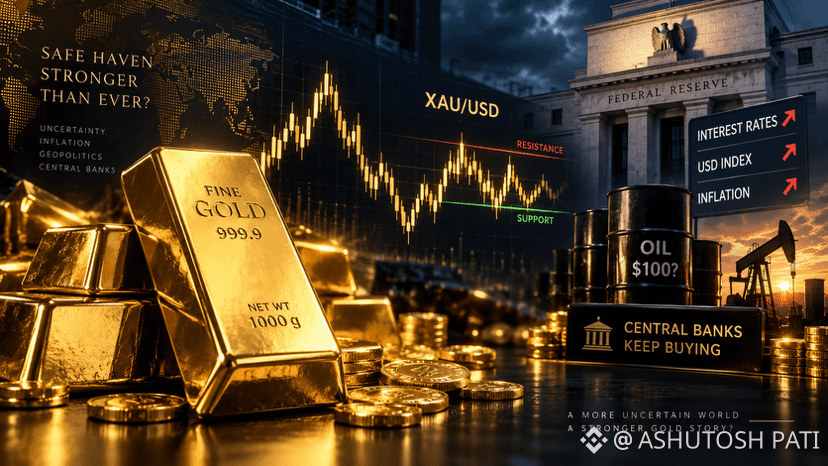
🚨 GOLD IS FACING A MAJOR BATTLE
Oil above $100 is pushing inflation fears higher, while rising rate expectations are creating short-term pressure on Gold.
But the bigger picture is more complicated.
Central banks continue to build their Gold reserves, keeping long-term demand strong.
So the real battle is clear:
Higher rates vs. safe-haven demand.
For traders, the next major signal is how the Fed reacts to persistent inflation and elevated oil prices.
Do you think Gold rebounds from here, or is another correction coming?
#GOLD #XAU
🚨 GOLD IS FACING A MAJOR BATTLE
Oil above $100 is pushing inflation fears higher, while rising rate expectations are creating short-term pressure on Gold.
But the bigger picture is more complicated.
Central banks continue to build their Gold reserves, keeping long-term demand strong.
So the real battle is clear:
Higher rates vs. safe-haven demand.
For traders, the next major signal is how the Fed reacts to persistent inflation and elevated oil prices.
Do you think Gold rebounds from here, or is another correction coming?
#GOLD #XAU
Oil above $100 is pushing inflation fears higher, while rising rate expectations are creating short-term pressure on Gold.
But the bigger picture is more complicated.
Central banks continue to build their Gold reserves, keeping long-term demand strong.
So the real battle is clear:
Higher rates vs. safe-haven demand.
For traders, the next major signal is how the Fed reacts to persistent inflation and elevated oil prices.
Do you think Gold rebounds from here, or is another correction coming?
#GOLD #XAU
1
4
243
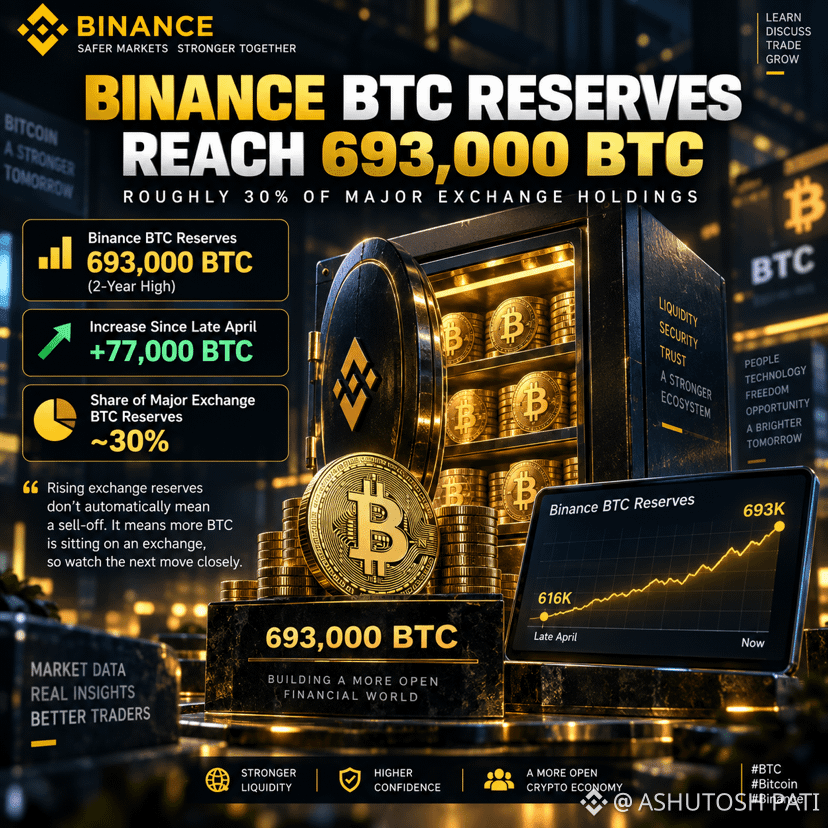
🚨 BINANCE BTC RESERVES REACH 693,000 BTC
Binance’s Bitcoin reserves have crossed 693,000 BTC, increasing by around 77,000 BTC since late April.
This represents roughly 30% of BTC reserves held across major exchanges.
But the key point 👇
Higher exchange reserves don’t always mean a sell-off is coming.
It means more BTC is currently available on exchanges, so traders should watch whether selling pressure follows.
For BTC, the next move may depend on price action + exchange flows together.
Is this a warning signal or just stronger market liquidity? 👀
#BTC #bitcoin #Binance
🚨 BINANCE BTC RESERVES REACH 693,000 BTC
Binance’s Bitcoin reserves have crossed 693,000 BTC, increasing by around 77,000 BTC since late April.
This represents roughly 30% of BTC reserves held across major exchanges.
But the key point 👇
Higher exchange reserves don’t always mean a sell-off is coming.
It means more BTC is currently available on exchanges, so traders should watch whether selling pressure follows.
For BTC, the next move may depend on price action + exchange flows together.
Is this a warning signal or just stronger market liquidity? 👀
#BTC #bitcoin #Binance
Binance’s Bitcoin reserves have crossed 693,000 BTC, increasing by around 77,000 BTC since late April.
This represents roughly 30% of BTC reserves held across major exchanges.
But the key point 👇
Higher exchange reserves don’t always mean a sell-off is coming.
It means more BTC is currently available on exchanges, so traders should watch whether selling pressure follows.
For BTC, the next move may depend on price action + exchange flows together.
Is this a warning signal or just stronger market liquidity? 👀
#BTC #bitcoin #Binance
1
3
136
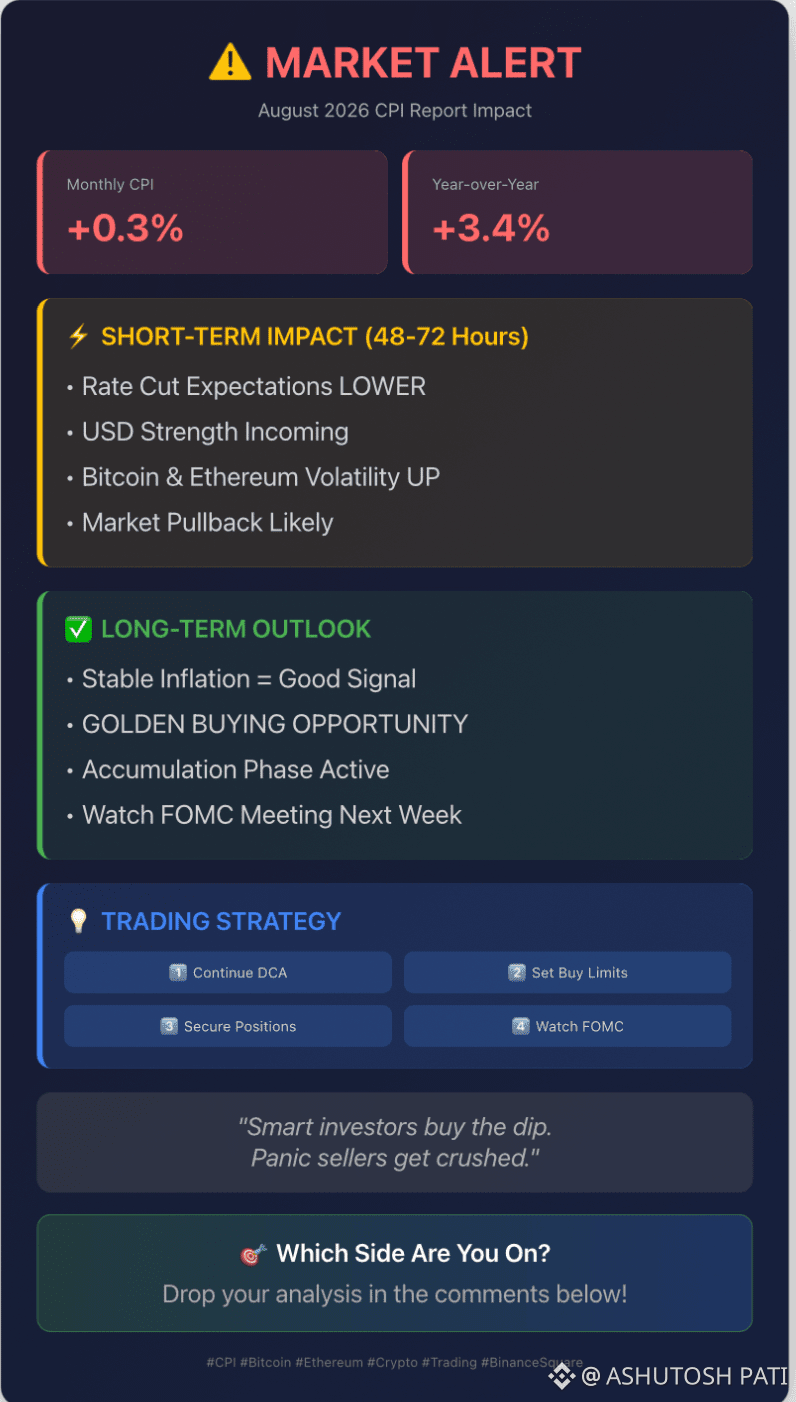
🚨 BREAKING: August CPI Report - Market Alert!
📊 INFLATION DATA RELEASED:
• Monthly CPI: +0.3%
• Year-over-Year: +3.4%
• Core CPI: +0.3% (Inflation STEADY!)
⚡ CRYPTO MARKET IMPACT:
🔴 SHORT-TERM EFFECTS (Next 48-72 Hours):
❌ Federal Reserve Rate Cut Expectations LOWER
❌ USD Strengthening Signal
❌ Bitcoin & Ethereum Volatility INCOMING
❌ Market Pullback Likely
🟢 LONG-TERM PERSPECTIVE:
✅ Stable Inflation = Positive Signal
✅ Watch Fed's Next Move Closely
✅ GOLDEN BUYING OPPORTUNITY
✅ Accumulation Phase for HODLers
💡 SMART TRADING STRATEGY:
1️⃣ Continue DCA (Dollar Cost Averaging)
2️⃣ Set Buy Limit Orders at Support Levels
3️⃣ Secure Your Long Positions
4️⃣ Wait for FOMC Meeting Announcement
📅 UPCOMING CATALYST EVENTS:
🔔 FOMC Meeting (Next Week)
🔔 Employment Data Release
🔔 Fed Interest Rate Decision
🎯 REMEMBER:
"Smart investors buy the dip. Panic sellers get crushed."
The market is separating winners from losers RIGHT NOW.
Which side are you on? 👇
Drop your analysis in the comments below!
#CPI
#cpiwatch
🚨 BREAKING: August CPI Report - Market Alert!
📊 INFLATION DATA RELEASED:
• Monthly CPI: +0.3%
• Year-over-Year: +3.4%
• Core CPI: +0.3% (Inflation STEADY!)
⚡ CRYPTO MARKET IMPACT:
🔴 SHORT-TERM EFFECTS (Next 48-72 Hours):
❌ Federal Reserve Rate Cut Expectations LOWER
❌ USD Strengthening Signal
❌ Bitcoin & Ethereum Volatility INCOMING
❌ Market Pullback Likely
🟢 LONG-TERM PERSPECTIVE:
✅ Stable Inflation = Positive Signal
✅ Watch Fed's Next Move Closely
✅ GOLDEN BUYING OPPORTUNITY
✅ Accumulation Phase for HODLers
💡 SMART TRADING STRATEGY:
1️⃣ Continue DCA (Dollar Cost Averaging)
2️⃣ Set Buy Limit Orders at Support Levels
3️⃣ Secure Your Long Positions
4️⃣ Wait for FOMC Meeting Announcement
📅 UPCOMING CATALYST EVENTS:
🔔 FOMC Meeting (Next Week)
🔔 Employment Data Release
🔔 Fed Interest Rate Decision
🎯 REMEMBER:
"Smart investors buy the dip. Panic sellers get crushed."
The market is separating winners from losers RIGHT NOW.
Which side are you on? 👇
Drop your analysis in the comments below!
#CPI
#cpiwatch
📊 INFLATION DATA RELEASED:
• Monthly CPI: +0.3%
• Year-over-Year: +3.4%
• Core CPI: +0.3% (Inflation STEADY!)
⚡ CRYPTO MARKET IMPACT:
🔴 SHORT-TERM EFFECTS (Next 48-72 Hours):
❌ Federal Reserve Rate Cut Expectations LOWER
❌ USD Strengthening Signal
❌ Bitcoin & Ethereum Volatility INCOMING
❌ Market Pullback Likely
🟢 LONG-TERM PERSPECTIVE:
✅ Stable Inflation = Positive Signal
✅ Watch Fed's Next Move Closely
✅ GOLDEN BUYING OPPORTUNITY
✅ Accumulation Phase for HODLers
💡 SMART TRADING STRATEGY:
1️⃣ Continue DCA (Dollar Cost Averaging)
2️⃣ Set Buy Limit Orders at Support Levels
3️⃣ Secure Your Long Positions
4️⃣ Wait for FOMC Meeting Announcement
📅 UPCOMING CATALYST EVENTS:
🔔 FOMC Meeting (Next Week)
🔔 Employment Data Release
🔔 Fed Interest Rate Decision
🎯 REMEMBER:
"Smart investors buy the dip. Panic sellers get crushed."
The market is separating winners from losers RIGHT NOW.
Which side are you on? 👇
Drop your analysis in the comments below!
#CPI
#cpiwatch
1
3
67
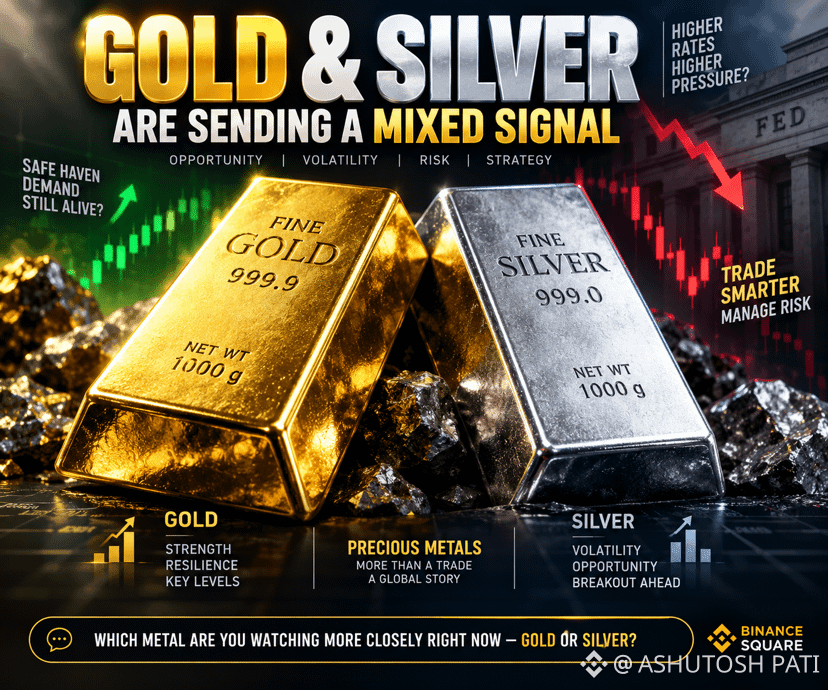
🚨GOLD & SILVER ARE SENDING A MIXED SIGNAL
Gold is showing resilience, but rising U.S. rate expectations are keeping pressure on precious metals.
Silver remains more volatile, making the next breakout important for traders.
This is not a market to chase blindly.
Watch key levels, wait for confirmation, and manage risk.
Which metal are you watching more closely right now — GOLD or SILVER? #gold #Silver $XAU $XAG
🚨GOLD & SILVER ARE SENDING A MIXED SIGNAL
Gold is showing resilience, but rising U.S. rate expectations are keeping pressure on precious metals.
Silver remains more volatile, making the next breakout important for traders.
This is not a market to chase blindly.
Watch key levels, wait for confirmation, and manage risk.
Which metal are you watching more closely right now — GOLD or SILVER? #gold #Silver $XAU $XAG
Gold is showing resilience, but rising U.S. rate expectations are keeping pressure on precious metals.
Silver remains more volatile, making the next breakout important for traders.
This is not a market to chase blindly.
Watch key levels, wait for confirmation, and manage risk.
Which metal are you watching more closely right now — GOLD or SILVER? #gold #Silver $XAU $XAG
4
6
327
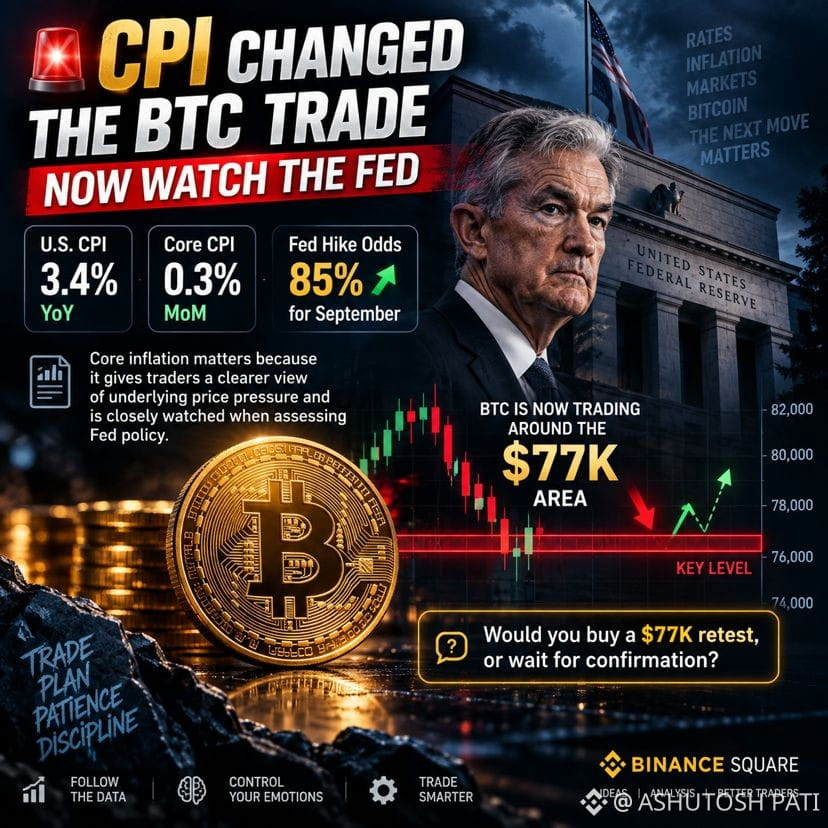
🚨 CPI CHANGED THE BTC TRADE — NOW WATCH THE FED
U.S. inflation stayed at 3.4% YoY, while Core CPI rose 0.3% MoM.
Core inflation matters because it gives traders a clearer view of underlying price pressure and is closely watched when assessing Fed policy.
After the report, September rate-hike expectations jumped to around 85%.
BTC is now trading around the $77K area, making this a level I’m watching closely.
I’m not chasing the move. I’m waiting to see whether BTC holds $77K or loses it with confirmation.
Would you buy a $77K retest, or wait for confirmation?
#cpiwatch
🚨 CPI CHANGED THE BTC TRADE — NOW WATCH THE FED
U.S. inflation stayed at 3.4% YoY, while Core CPI rose 0.3% MoM.
Core inflation matters because it gives traders a clearer view of underlying price pressure and is closely watched when assessing Fed policy.
After the report, September rate-hike expectations jumped to around 85%.
BTC is now trading around the $77K area, making this a level I’m watching closely.
I’m not chasing the move. I’m waiting to see whether BTC holds $77K or loses it with confirmation.
Would you buy a $77K retest, or wait for confirmation?
#cpiwatch
U.S. inflation stayed at 3.4% YoY, while Core CPI rose 0.3% MoM.
Core inflation matters because it gives traders a clearer view of underlying price pressure and is closely watched when assessing Fed policy.
After the report, September rate-hike expectations jumped to around 85%.
BTC is now trading around the $77K area, making this a level I’m watching closely.
I’m not chasing the move. I’m waiting to see whether BTC holds $77K or loses it with confirmation.
Would you buy a $77K retest, or wait for confirmation?
#cpiwatch
3
53
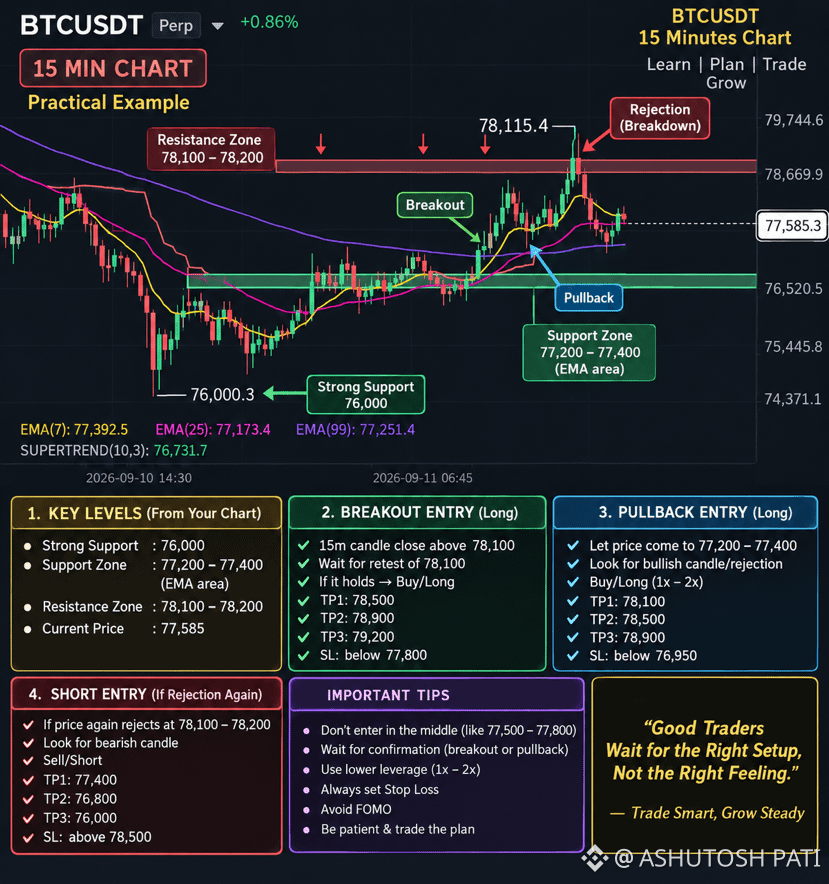
🚨 DON’T CHASE THE BTC BREAKOUT — WATCH THE RETEST
$BTC recently pushed toward the $78.1K–$78.2K resistance zone, but faced rejection.
The key lesson: a breakout alone is not enough.
If BTC reclaims $78.1K and successfully retests it as support, the breakout becomes more convincing.
If price pulls back toward the $77.2K–$77.4K support/EMA area and holds, that can offer another potential long setup.
The important part is confirmation, not FOMO.
I’m watching the reaction around these levels before taking the next trade.
Would you prefer a breakout entry or a pullback entry?
#BTC #bitcoin #Trading
🚨 DON’T CHASE THE BTC BREAKOUT — WATCH THE RETEST
$BTC recently pushed toward the $78.1K–$78.2K resistance zone, but faced rejection.
The key lesson: a breakout alone is not enough.
If BTC reclaims $78.1K and successfully retests it as support, the breakout becomes more convincing.
If price pulls back toward the $77.2K–$77.4K support/EMA area and holds, that can offer another potential long setup.
The important part is confirmation, not FOMO.
I’m watching the reaction around these levels before taking the next trade.
Would you prefer a breakout entry or a pullback entry?
#BTC #bitcoin #Trading
$BTC recently pushed toward the $78.1K–$78.2K resistance zone, but faced rejection.
The key lesson: a breakout alone is not enough.
If BTC reclaims $78.1K and successfully retests it as support, the breakout becomes more convincing.
If price pulls back toward the $77.2K–$77.4K support/EMA area and holds, that can offer another potential long setup.
The important part is confirmation, not FOMO.
I’m watching the reaction around these levels before taking the next trade.
Would you prefer a breakout entry or a pullback entry?
#BTC #bitcoin #Trading
1
4
75
🚨 AI slop is becoming the new noise in crypto.
Same hooks. Same emojis. Same “$BTC to the moon” predictions.
Different accounts, but somehow the posts feel identical.
AI itself isn’t the problem.
The problem is using AI without adding your own thinking.
Research + personal insight + real experience = valuable content.
If everyone sounds the same, who are you actually following?
Do you think AI slop is already taking over Binance Square?
#BinanceSquare#AI #Crypto
🚨 AI slop is becoming the new noise in crypto.
Same hooks. Same emojis. Same “$BTC to the moon” predictions.
Different accounts, but somehow the posts feel identical.
AI itself isn’t the problem.
The problem is using AI without adding your own thinking.
Research + personal insight + real experience = valuable content.
If everyone sounds the same, who are you actually following?
Do you think AI slop is already taking over Binance Square?
#BinanceSquare#AI #Crypto
Same hooks. Same emojis. Same “$BTC to the moon” predictions.
Different accounts, but somehow the posts feel identical.
AI itself isn’t the problem.
The problem is using AI without adding your own thinking.
Research + personal insight + real experience = valuable content.
If everyone sounds the same, who are you actually following?
Do you think AI slop is already taking over Binance Square?
#BinanceSquare#AI #Crypto

2
2
109
🚨 TODAY COULD BE A BIG TEST FOR $BTC
Bitcoin is holding near the $76K–$78K zone, but today’s real catalyst is U.S. inflation.
Oil has pushed back above $100, raising fresh inflation concerns.
If CPI comes in hotter than expected, risk assets could face another wave of selling.
If inflation cools, Bitcoin could finally get room to reclaim $78K–$80K.
I’m watching CPI → yields → $BTC in that order.
Would you trade the CPI reaction or wait for confirmation?
#BTC #Crypto
🚨 TODAY COULD BE A BIG TEST FOR $BTC
Bitcoin is holding near the $76K–$78K zone, but today’s real catalyst is U.S. inflation.
Oil has pushed back above $100, raising fresh inflation concerns.
If CPI comes in hotter than expected, risk assets could face another wave of selling.
If inflation cools, Bitcoin could finally get room to reclaim $78K–$80K.
I’m watching CPI → yields → $BTC in that order.
Would you trade the CPI reaction or wait for confirmation?
#BTC #Crypto
Bitcoin is holding near the $76K–$78K zone, but today’s real catalyst is U.S. inflation.
Oil has pushed back above $100, raising fresh inflation concerns.
If CPI comes in hotter than expected, risk assets could face another wave of selling.
If inflation cools, Bitcoin could finally get room to reclaim $78K–$80K.
I’m watching CPI → yields → $BTC in that order.
Would you trade the CPI reaction or wait for confirmation?
#BTC #Crypto

2
3
267
🚨 YOUR BIGGEST CRYPTO RISK MAY NOT BE THE MARKET
A bad trade can cost you money.
A fake link or fake support account can cost you everything.
That’s why crypto security matters as much as trading strategy.
Binance and Thailand’s TCSD were recently recognized for their continued fight against cybercrime.
Before your next trade, ask yourself: is your account actually secure?
#Binance #crypto #Security
🚨 YOUR BIGGEST CRYPTO RISK MAY NOT BE THE MARKET
A bad trade can cost you money.
A fake link or fake support account can cost you everything.
That’s why crypto security matters as much as trading strategy.
Binance and Thailand’s TCSD were recently recognized for their continued fight against cybercrime.
Before your next trade, ask yourself: is your account actually secure?
#Binance #crypto #Security
A bad trade can cost you money.
A fake link or fake support account can cost you everything.
That’s why crypto security matters as much as trading strategy.
Binance and Thailand’s TCSD were recently recognized for their continued fight against cybercrime.
Before your next trade, ask yourself: is your account actually secure?
#Binance #crypto #Security

4
1
4
216
🚨 GOLD IS NEAR $4,400 — BUT BTC IS STILL BELOW $80K
Gold is holding near $4,400 and Silver around $67.5.
At the same time, Brent crude is staying above $100, keeping inflation pressure alive.
But here’s the interesting part:
$BTC is still struggling around the $79K zone.
The market isn’t simply moving into every traditional safe-haven asset.
Right now, oil → inflation → Fed expectations → liquidity → BTC is the chain I’m watching.
If inflation stays hot, BTC may need stronger liquidity before its next major breakout.
Does BTC break $80K first, or does macro pressure pull it lower?
#BTC #GOLD #Crypto #Silver
🚨 GOLD IS NEAR $4,400 — BUT BTC IS STILL BELOW $80K
Gold is holding near $4,400 and Silver around $67.5.
At the same time, Brent crude is staying above $100, keeping inflation pressure alive.
But here’s the interesting part:
$BTC is still struggling around the $79K zone.
The market isn’t simply moving into every traditional safe-haven asset.
Right now, oil → inflation → Fed expectations → liquidity → BTC is the chain I’m watching.
If inflation stays hot, BTC may need stronger liquidity before its next major breakout.
Does BTC break $80K first, or does macro pressure pull it lower?
#BTC #GOLD #Crypto #Silver
Gold is holding near $4,400 and Silver around $67.5.
At the same time, Brent crude is staying above $100, keeping inflation pressure alive.
But here’s the interesting part:
$BTC is still struggling around the $79K zone.
The market isn’t simply moving into every traditional safe-haven asset.
Right now, oil → inflation → Fed expectations → liquidity → BTC is the chain I’m watching.
If inflation stays hot, BTC may need stronger liquidity before its next major breakout.
Does BTC break $80K first, or does macro pressure pull it lower?
#BTC #GOLD #Crypto #Silver

5
452
Проверено
🚨 BTC ISN’T THE ONLY CHART I’M WATCHING TODAY
$BTC is holding around the $79K zone.
But the bigger signal may be coming from oil.
Brent is back above $100, while inflation pressure and Treasury yields remain elevated.
If oil stays high, risk assets could face another test.
For BTC, I’m watching $80K as the reclaim zone and $78K as the key downside area.
No blind long. No panic short.
Price + volume + macro confirmation first.
What are you watching more closely today — BTC or oil?
#BTC #CryptoTrading #Binance
🚨 BTC ISN’T THE ONLY CHART I’M WATCHING TODAY
$BTC is holding around the $79K zone.
But the bigger signal may be coming from oil.
Brent is back above $100, while inflation pressure and Treasury yields remain elevated.
If oil stays high, risk assets could face another test.
For BTC, I’m watching $80K as the reclaim zone and $78K as the key downside area.
No blind long. No panic short.
Price + volume + macro confirmation first.
What are you watching more closely today — BTC or oil?
#BTC #CryptoTrading #Binance
$BTC is holding around the $79K zone.
But the bigger signal may be coming from oil.
Brent is back above $100, while inflation pressure and Treasury yields remain elevated.
If oil stays high, risk assets could face another test.
For BTC, I’m watching $80K as the reclaim zone and $78K as the key downside area.
No blind long. No panic short.
Price + volume + macro confirmation first.
What are you watching more closely today — BTC or oil?
#BTC #CryptoTrading #Binance

2
1
5
760
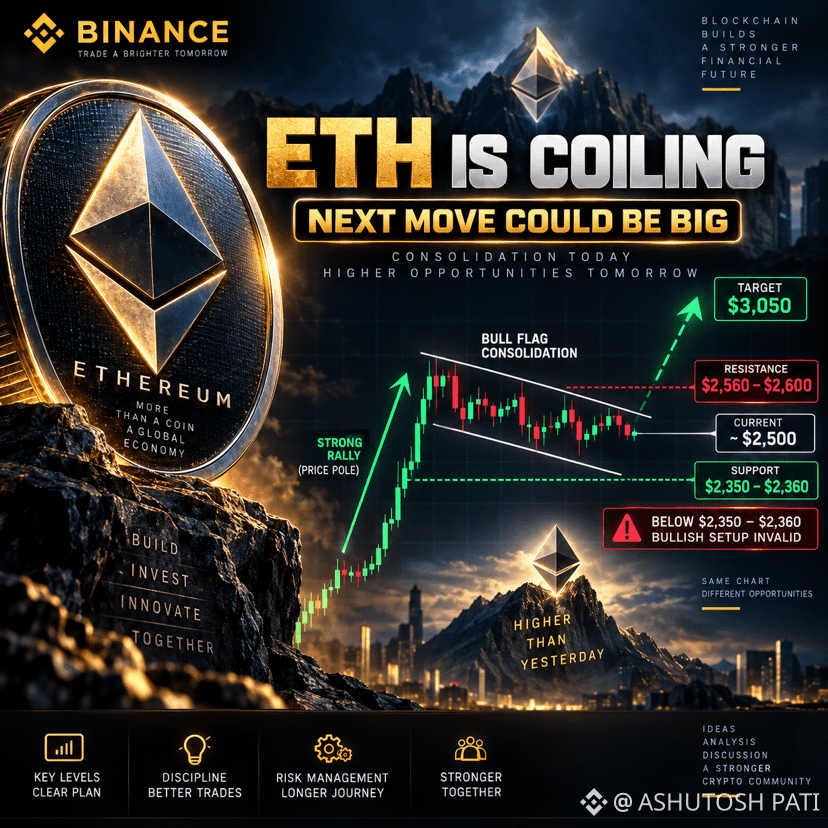
🚨 ETH IS COILING — THE NEXT MOVE COULD BE BIG
$ETH just completed a strong rally and is now consolidating instead of giving back the move.
That’s interesting because price is forming a potential bull-flag structure.
Key levels I’m watching:
🔹 Support: $2,350–$2,360
🔹 Resistance: $2,560–$2,600
🔹 Breakout target: around $3,050
If ETH holds support and breaks the range with volume, momentum could accelerate.
But if $2,350 fails, the bullish setup needs to be reconsidered.
Would you trade the breakout or wait for the retest?
#ETH #Crypto
🚨 ETH IS COILING — THE NEXT MOVE COULD BE BIG
$ETH just completed a strong rally and is now consolidating instead of giving back the move.
That’s interesting because price is forming a potential bull-flag structure.
Key levels I’m watching:
🔹 Support: $2,350–$2,360
🔹 Resistance: $2,560–$2,600
🔹 Breakout target: around $3,050
If ETH holds support and breaks the range with volume, momentum could accelerate.
But if $2,350 fails, the bullish setup needs to be reconsidered.
Would you trade the breakout or wait for the retest?
#ETH #Crypto
$ETH just completed a strong rally and is now consolidating instead of giving back the move.
That’s interesting because price is forming a potential bull-flag structure.
Key levels I’m watching:
🔹 Support: $2,350–$2,360
🔹 Resistance: $2,560–$2,600
🔹 Breakout target: around $3,050
If ETH holds support and breaks the range with volume, momentum could accelerate.
But if $2,350 fails, the bullish setup needs to be reconsidered.
Would you trade the breakout or wait for the retest?
#ETH #Crypto
4
63
🚨 Binance Just Expanded Stock Access
Binance has announced new bStock listings for $CRMB /USDT and $HIMSB /USDT.
The interesting part isn’t just the new tickers.
It’s the ability to access tokenized stock exposure through Binance with 24/7 trading and 1:1 exchange for the underlying stocks.
This is another step toward bringing traditional markets closer to crypto.
But as always, understand the product and risk before trading.
Would you trade tokenized stocks on Binance?
#Binance #BStocks #Crypto
🚨 Binance Just Expanded Stock Access
Binance has announced new bStock listings for $CRMB /USDT and $HIMSB /USDT.
The interesting part isn’t just the new tickers.
It’s the ability to access tokenized stock exposure through Binance with 24/7 trading and 1:1 exchange for the underlying stocks.
This is another step toward bringing traditional markets closer to crypto.
But as always, understand the product and risk before trading.
Would you trade tokenized stocks on Binance?
#Binance #BStocks #Crypto
Binance has announced new bStock listings for $CRMB /USDT and $HIMSB /USDT.
The interesting part isn’t just the new tickers.
It’s the ability to access tokenized stock exposure through Binance with 24/7 trading and 1:1 exchange for the underlying stocks.
This is another step toward bringing traditional markets closer to crypto.
But as always, understand the product and risk before trading.
Would you trade tokenized stocks on Binance?
#Binance #BStocks #Crypto

3
5
290
🚨 BTC IS HOLDING — BUT OIL IS THE REAL WARNING
$BTC is hovering around $79K, but Brent crude is pushing toward $100.
That matters because higher oil can bring inflation pressure back and keep liquidity tight.
Friday’s U.S. CPI could be the next big volatility trigger.
My levels are simple:
🟢 Above $80K → momentum can strengthen
🔴 Below $78K → downside risk increases
I’m not chasing the candle. I’m watching BTC + oil + macro together.
Does BTC break $80K first, or does macro pressure win?
#BTC #Crypto
🚨 BTC IS HOLDING — BUT OIL IS THE REAL WARNING
$BTC is hovering around $79K, but Brent crude is pushing toward $100.
That matters because higher oil can bring inflation pressure back and keep liquidity tight.
Friday’s U.S. CPI could be the next big volatility trigger.
My levels are simple:
🟢 Above $80K → momentum can strengthen
🔴 Below $78K → downside risk increases
I’m not chasing the candle. I’m watching BTC + oil + macro together.
Does BTC break $80K first, or does macro pressure win?
#BTC #Crypto
$BTC is hovering around $79K, but Brent crude is pushing toward $100.
That matters because higher oil can bring inflation pressure back and keep liquidity tight.
Friday’s U.S. CPI could be the next big volatility trigger.
My levels are simple:
🟢 Above $80K → momentum can strengthen
🔴 Below $78K → downside risk increases
I’m not chasing the candle. I’m watching BTC + oil + macro together.
Does BTC break $80K first, or does macro pressure win?
#BTC #Crypto

5
1
4
490
Войдите, чтобы посмотреть больше материала
Присоединяйтесь к пользователям криптовалют по всему миру на Binance Square
⚡️ Получайте новейшую и полезную информацию о криптоактивах.
💬 Нам доверяет крупнейшая в мире криптобиржа.
👍 Получите достоверные аналитические данные от верифицированных создателей контента.
Эл. почта/номер телефона
В тренде
FedRateWatch
Просмотров: 725,742
3,458 обсуждают
Share & Win Traffic Reward in our Trending Hashtag Campaign
✨Topic: FOMC September, What's The Fed's Next Move?
👉How to Join:
Publish a short post or article with hashtag #FedRateWatch
Create content based on the below angles:
- August core CPI rose 0.3% month-over-month, and the odds of a 25bp hike this week are now close to 90%. Do you anticipate a rate hike this week? Is it a one-off, or the start of a longer hiking cycle?
- If the hike lands, how does it play out for BTC, tech stocks, and gold? Bullish or bearish?
- How are you planning to trade next? Share your BTC, stocks or gold trade/holdings with our trade sharing widget.
⏰Campaign Period:
- 2026-09-15 11:00 - 2026-09-17 3:00 UTC
🎁Reward:
- Qualified posts that comply with the above guidelines and contain more than 100 words will be reviewed and may receive a random traffic boost of 500 to 3,000 views. You will receive a notification from your feed secretary if your post is selected.
- Get a chance to have your article featured on Binance Square Official
Need ideas for your post? Visit the topic page #FedRateWatch or the Square Guide on How to Post for Better Reach.
Binance Square Official
·Лайков: 433
·Просмотров: 996.4k
ArgentinaCommitsToOECDCryptoReportingBy2029
Просмотров: 1,616
68 обсуждают
EthereumFallsBelow$2400
Просмотров: 1,552
45 обсуждают