

Shehab Goma
15.9k Публикации

Shehab Goma
 Square Verified
Отправить жалобу
Заблокировать пользователя
Crypto enthusiast exploring the world of blockchain, DeFi, and NFTs. Always learning and connecting with others in the space. Let’s build the future of finance
Открытая сделка
Трейдер с частыми сделками
4.7 г
644 подписок(и/а)
37.7K+ подписчиков(а)
38.1K+ понравилось
Посты
Портфель
Все
Цитирования
Активно
PINNED
·
--
What if your AI agent could spend your money while you sleep?
Sounds useful… until you ask one important question:
How much control should an AI agent actually have?
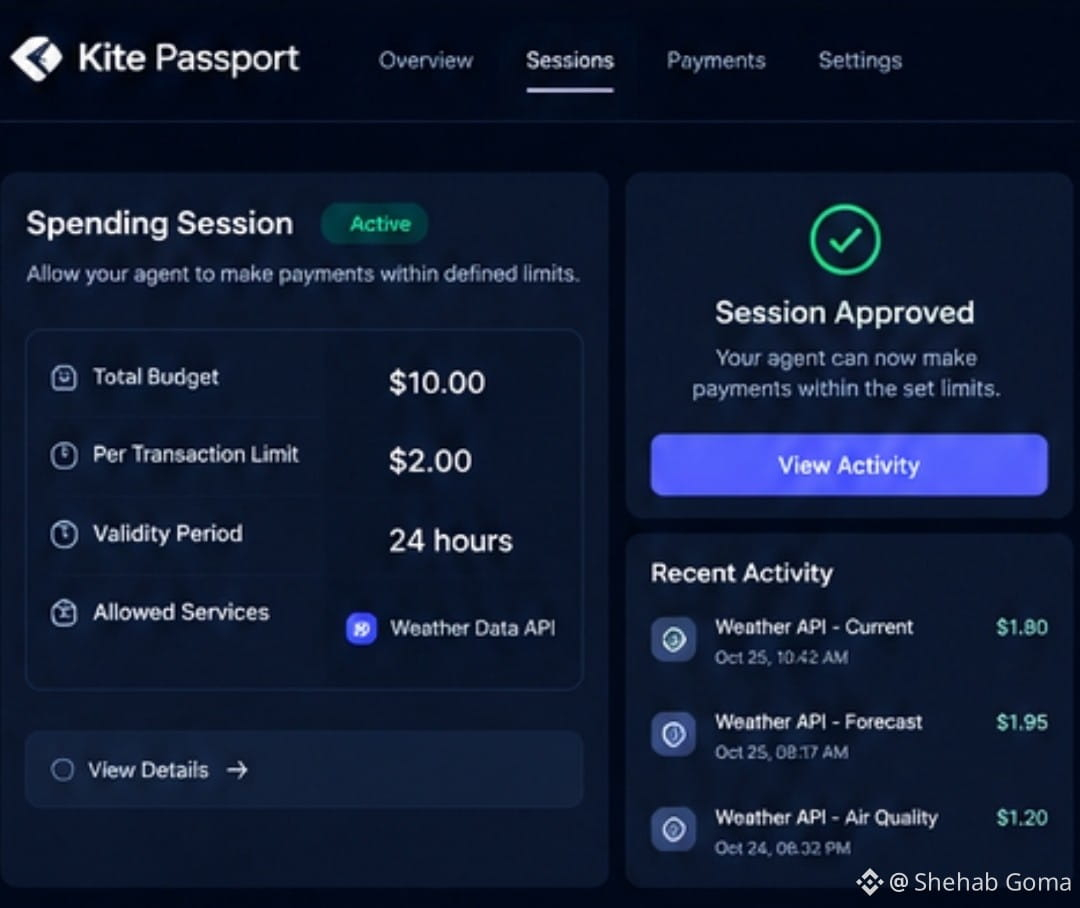
While exploring @GoKiteAI , one concept caught my attention: Kite Passport and its spending-session approach.
Imagine asking an AI agent to fetch data from a paid weather API.
Instead of giving it unrestricted access to your money, you authorize a spending session with:
💰 $10 total budget
🔒 $2 maximum per transaction
⏱️ 24-hour validity
The agent can make eligible payments within those limits, without requiring your approval for every transaction.
That’s a simple example, but it raises a much bigger question.
The agent economy isn't just about building smarter AI. It's about three things:
Capability: Can the agent complete the task?
Permission: Is it authorized to take the action?
Accountability: Can we verify what happened afterward?
Because autonomy without boundaries creates new risks.
An agent could choose the wrong service. A task could fail. And even a strict spending limit won't resolve every dispute.
That’s why controlled permissions are an important part of building trust in AI-driven payments.
My takeaway?
The future isn't just AI that can act on our behalf.
It's AI that can act on our behalf within limits we choose.
Now, here's a question worth debating:
If your AI agent pays another agent to complete a task, but the result is wrong, who's responsible?
The user who authorized the payment, the developer who built the agent, or the service provider who delivered the result?
And would you trust an agent with a strict spending limit, or would you rather give it no financial access at all?
#KiteBBW $KITE
What if your AI agent could spend your money while you sleep?
Sounds useful… until you ask one important question:
How much control should an AI agent actually have?
While exploring @KITE AI 中文 , one concept caught my attention: Kite Passport and its spending-session approach.
Imagine asking an AI agent to fetch data from a paid weather API.
Instead of giving it unrestricted access to your money, you authorize a spending session with:
💰 $10 total budget
🔒 $2 maximum per transaction
⏱️ 24-hour validity
The agent can make eligible payments within those limits, without requiring your approval for every transaction.
That’s a simple example, but it raises a much bigger question.
The agent economy isn't just about building smarter AI. It's about three things:
Capability: Can the agent complete the task?
Permission: Is it authorized to take the action?
Accountability: Can we verify what happened afterward?
Because autonomy without boundaries creates new risks.
An agent could choose the wrong service. A task could fail. And even a strict spending limit won't resolve every dispute.
That’s why controlled permissions are an important part of building trust in AI-driven payments.
My takeaway?
The future isn't just AI that can act on our behalf.
It's AI that can act on our behalf within limits we choose.
Now, here's a question worth debating:
If your AI agent pays another agent to complete a task, but the result is wrong, who's responsible?
The user who authorized the payment, the developer who built the agent, or the service provider who delivered the result?
And would you trust an agent with a strict spending limit, or would you rather give it no financial access at all?
#KiteBBW $KITE
Sounds useful… until you ask one important question:
How much control should an AI agent actually have?
While exploring @KITE AI 中文 , one concept caught my attention: Kite Passport and its spending-session approach.
Imagine asking an AI agent to fetch data from a paid weather API.
Instead of giving it unrestricted access to your money, you authorize a spending session with:
💰 $10 total budget
🔒 $2 maximum per transaction
⏱️ 24-hour validity
The agent can make eligible payments within those limits, without requiring your approval for every transaction.
That’s a simple example, but it raises a much bigger question.
The agent economy isn't just about building smarter AI. It's about three things:
Capability: Can the agent complete the task?
Permission: Is it authorized to take the action?
Accountability: Can we verify what happened afterward?
Because autonomy without boundaries creates new risks.
An agent could choose the wrong service. A task could fail. And even a strict spending limit won't resolve every dispute.
That’s why controlled permissions are an important part of building trust in AI-driven payments.
My takeaway?
The future isn't just AI that can act on our behalf.
It's AI that can act on our behalf within limits we choose.
Now, here's a question worth debating:
If your AI agent pays another agent to complete a task, but the result is wrong, who's responsible?
The user who authorized the payment, the developer who built the agent, or the service provider who delivered the result?
And would you trust an agent with a strict spending limit, or would you rather give it no financial access at all?
#KiteBBW $KITE
12
1
21
3.4k
PINNED
·
--
Падение
Проверено
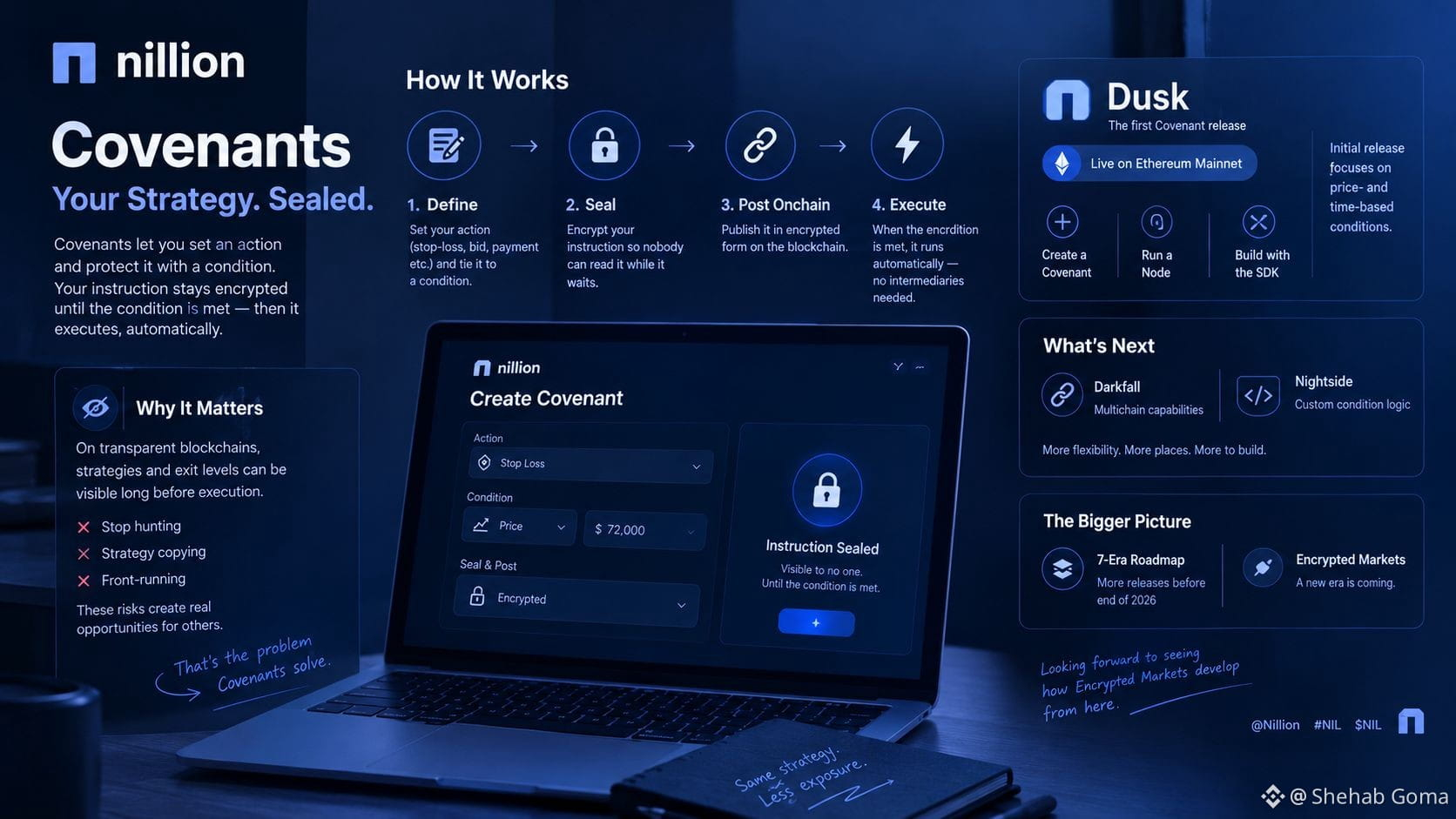
#nil $NIL @nillionnetwork I’ve been reading about Nillion and its Covenants, and one thing I like is the idea of keeping trading plans private until they’re actually needed.
On public blockchains, trading strategies and exit levels can sometimes be spotted before a trade happens. That can make it easier for others to copy a strategy or try to trade ahead of a large order.
Covenants are designed to address this. You set an instruction, such as a stop-loss or an auction bid, encrypt it, and link it to a condition. It stays unreadable while it waits, without needing a separate keeper to trigger it.
Dusk is now live on Ethereum mainnet, with its first release focused on price- and time-based conditions. That gives developers something real to start exploring.
I’m also interested in what comes next. Darkfall is planned to bring multichain support, while Nightside is expected to introduce custom conditions. If these features roll out as planned, they could open up more ways to use Covenants.
There’s still a lot to come in Nillion’s seven-era roadmap, and I’ll be interested to see how it develops.
For me, the main benefit is simple: keeping your intentions private instead of showing everyone your plan before it executes.
$NIL
#nil $NIL @Nillion I’ve been reading about Nillion and its Covenants, and one thing I like is the idea of keeping trading plans private until they’re actually needed.
On public blockchains, trading strategies and exit levels can sometimes be spotted before a trade happens. That can make it easier for others to copy a strategy or try to trade ahead of a large order.
Covenants are designed to address this. You set an instruction, such as a stop-loss or an auction bid, encrypt it, and link it to a condition. It stays unreadable while it waits, without needing a separate keeper to trigger it.
Dusk is now live on Ethereum mainnet, with its first release focused on price- and time-based conditions. That gives developers something real to start exploring.
I’m also interested in what comes next. Darkfall is planned to bring multichain support, while Nightside is expected to introduce custom conditions. If these features roll out as planned, they could open up more ways to use Covenants.
There’s still a lot to come in Nillion’s seven-era roadmap, and I’ll be interested to see how it develops.
For me, the main benefit is simple: keeping your intentions private instead of showing everyone your plan before it executes.
$NIL
On public blockchains, trading strategies and exit levels can sometimes be spotted before a trade happens. That can make it easier for others to copy a strategy or try to trade ahead of a large order.
Covenants are designed to address this. You set an instruction, such as a stop-loss or an auction bid, encrypt it, and link it to a condition. It stays unreadable while it waits, without needing a separate keeper to trigger it.
Dusk is now live on Ethereum mainnet, with its first release focused on price- and time-based conditions. That gives developers something real to start exploring.
I’m also interested in what comes next. Darkfall is planned to bring multichain support, while Nightside is expected to introduce custom conditions. If these features roll out as planned, they could open up more ways to use Covenants.
There’s still a lot to come in Nillion’s seven-era roadmap, and I’ll be interested to see how it develops.
For me, the main benefit is simple: keeping your intentions private instead of showing everyone your plan before it executes.
$NIL
18
1
15
223
·
--
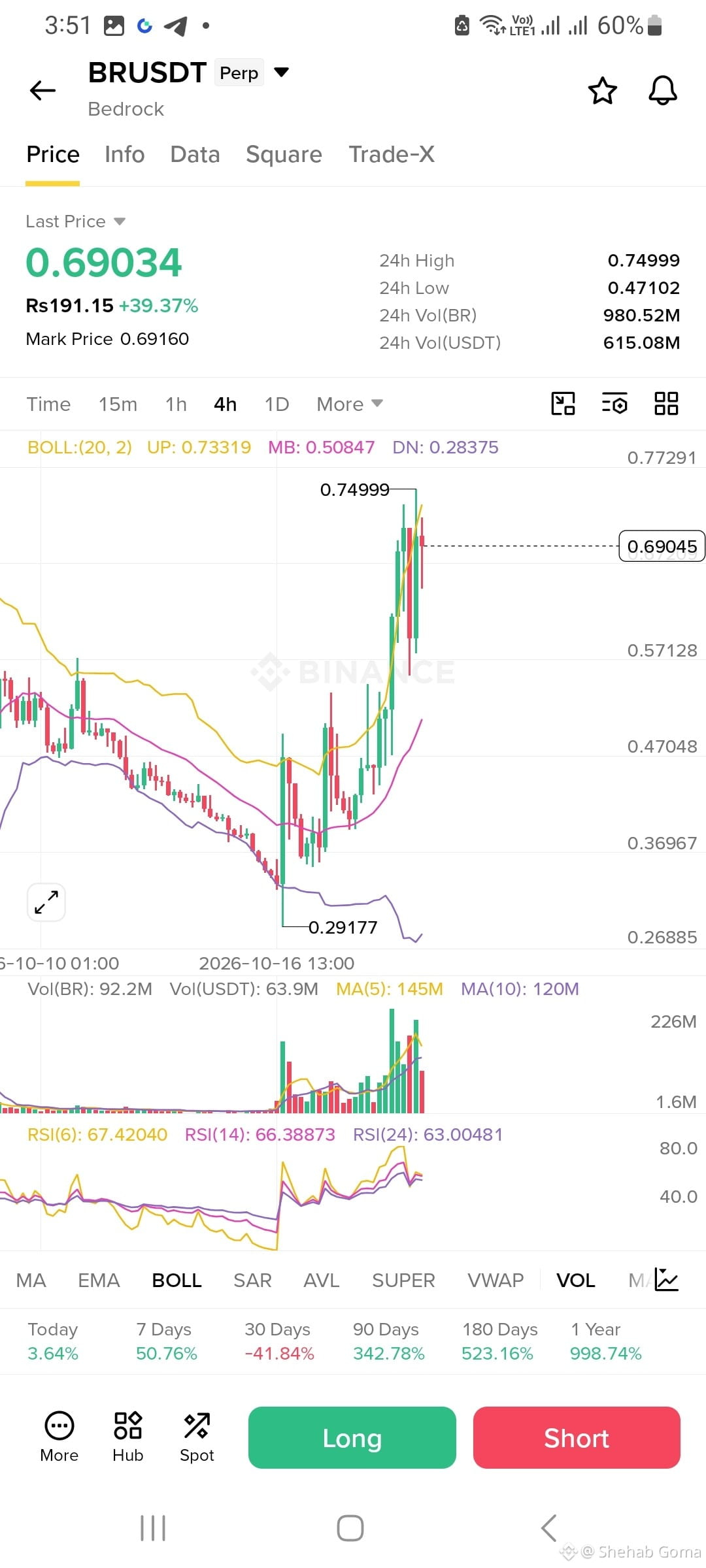
$BRU is going absolutely parabolic right now (+39% today), but DO NOT click market buy. 🛑
If you look at the 4H chart, we just printed a massive wick up to $0.75 and got immediately rejected. The RSI is cooling off, and it’s clear the early birds are taking profits.
But, I’m still heavily bullish on the overall trend (up 342% in 90 days!). The volume is there, and the momentum is insane.
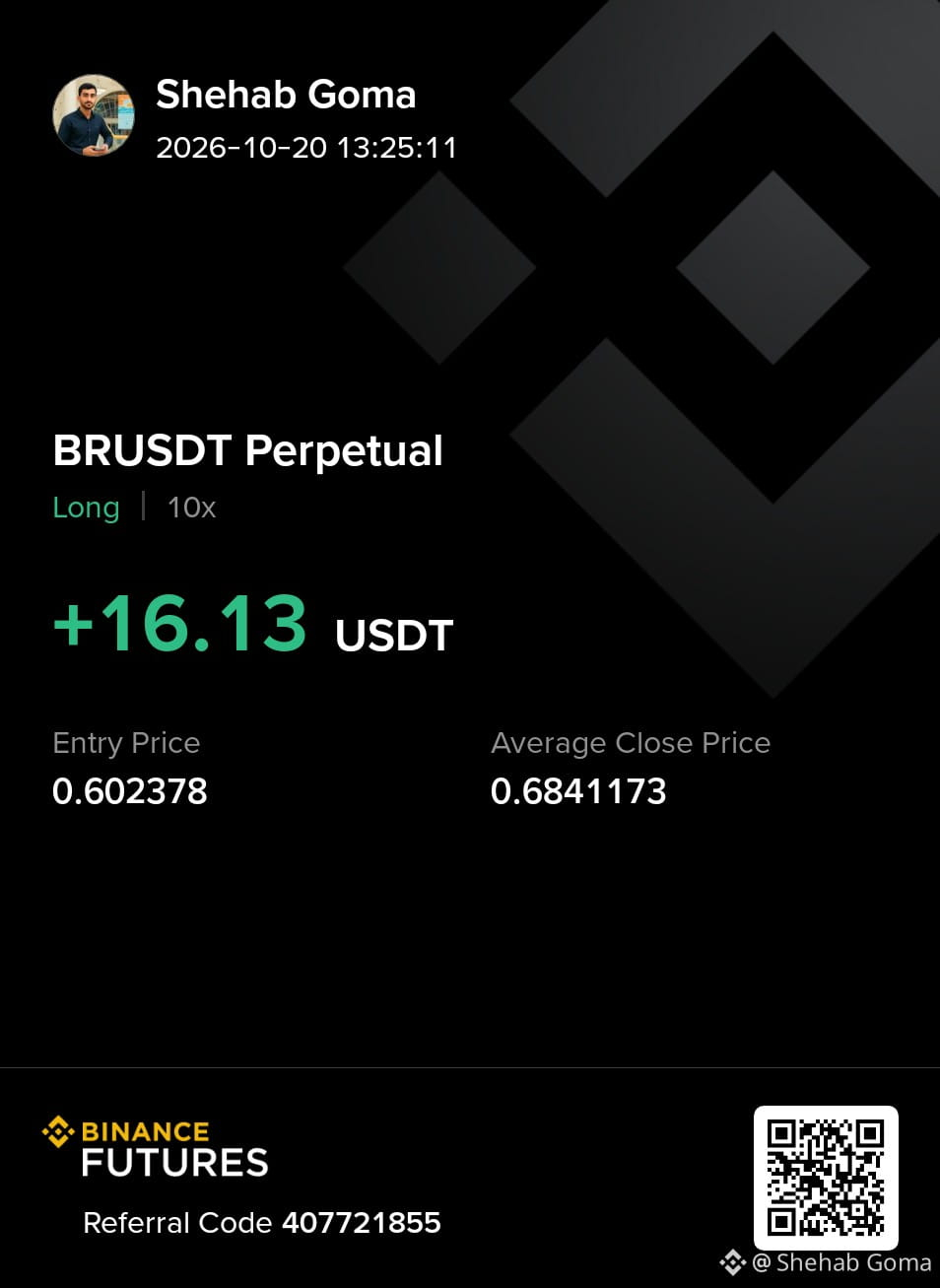
So, instead of FOMO-ing at the top, I’m looking for an aggressive dip-buy (Long) right near current price to catch the next leg up.
Here is my personal game plan for this scalp:
🟢 My Entry Zone: $0.665 - $0.685
(I'm setting limit orders here. I want to catch a quick 15-minute wick down to grab liquidity before the bounce. Don't buy a green candle, wait for a little red).
🎯 Take Profit 1: $0.715 (Taking off 50% of my bag here to secure profit).
🎯 Take Profit 2: $0.749 (Letting the rest ride for a retest of the 24h high).
🔴 Stop Loss: $0.645
(Strict SL. If we lose this level on the 4H, the short-term momentum is dead, and I expect a deeper flush down to the $0.57 area).
$BR
$BRU is going absolutely parabolic right now (+39% today), but DO NOT click market buy. 🛑
If you look at the 4H chart, we just printed a massive wick up to $0.75 and got immediately rejected. The RSI is cooling off, and it’s clear the early birds are taking profits.
But, I’m still heavily bullish on the overall trend (up 342% in 90 days!). The volume is there, and the momentum is insane.
So, instead of FOMO-ing at the top, I’m looking for an aggressive dip-buy (Long) right near current price to catch the next leg up.
Here is my personal game plan for this scalp:
🟢 My Entry Zone: $0.665 - $0.685
(I'm setting limit orders here. I want to catch a quick 15-minute wick down to grab liquidity before the bounce. Don't buy a green candle, wait for a little red).
🎯 Take Profit 1: $0.715 (Taking off 50% of my bag here to secure profit).
🎯 Take Profit 2: $0.749 (Letting the rest ride for a retest of the 24h high).
🔴 Stop Loss: $0.645
(Strict SL. If we lose this level on the 4H, the short-term momentum is dead, and I expect a deeper flush down to the $0.57 area).
$BR
If you look at the 4H chart, we just printed a massive wick up to $0.75 and got immediately rejected. The RSI is cooling off, and it’s clear the early birds are taking profits.
But, I’m still heavily bullish on the overall trend (up 342% in 90 days!). The volume is there, and the momentum is insane.
So, instead of FOMO-ing at the top, I’m looking for an aggressive dip-buy (Long) right near current price to catch the next leg up.
Here is my personal game plan for this scalp:
🟢 My Entry Zone: $0.665 - $0.685
(I'm setting limit orders here. I want to catch a quick 15-minute wick down to grab liquidity before the bounce. Don't buy a green candle, wait for a little red).
🎯 Take Profit 1: $0.715 (Taking off 50% of my bag here to secure profit).
🎯 Take Profit 2: $0.749 (Letting the rest ride for a retest of the 24h high).
🔴 Stop Loss: $0.645
(Strict SL. If we lose this level on the 4H, the short-term momentum is dead, and I expect a deeper flush down to the $0.57 area).
$BR
2
369
·
--
Рост
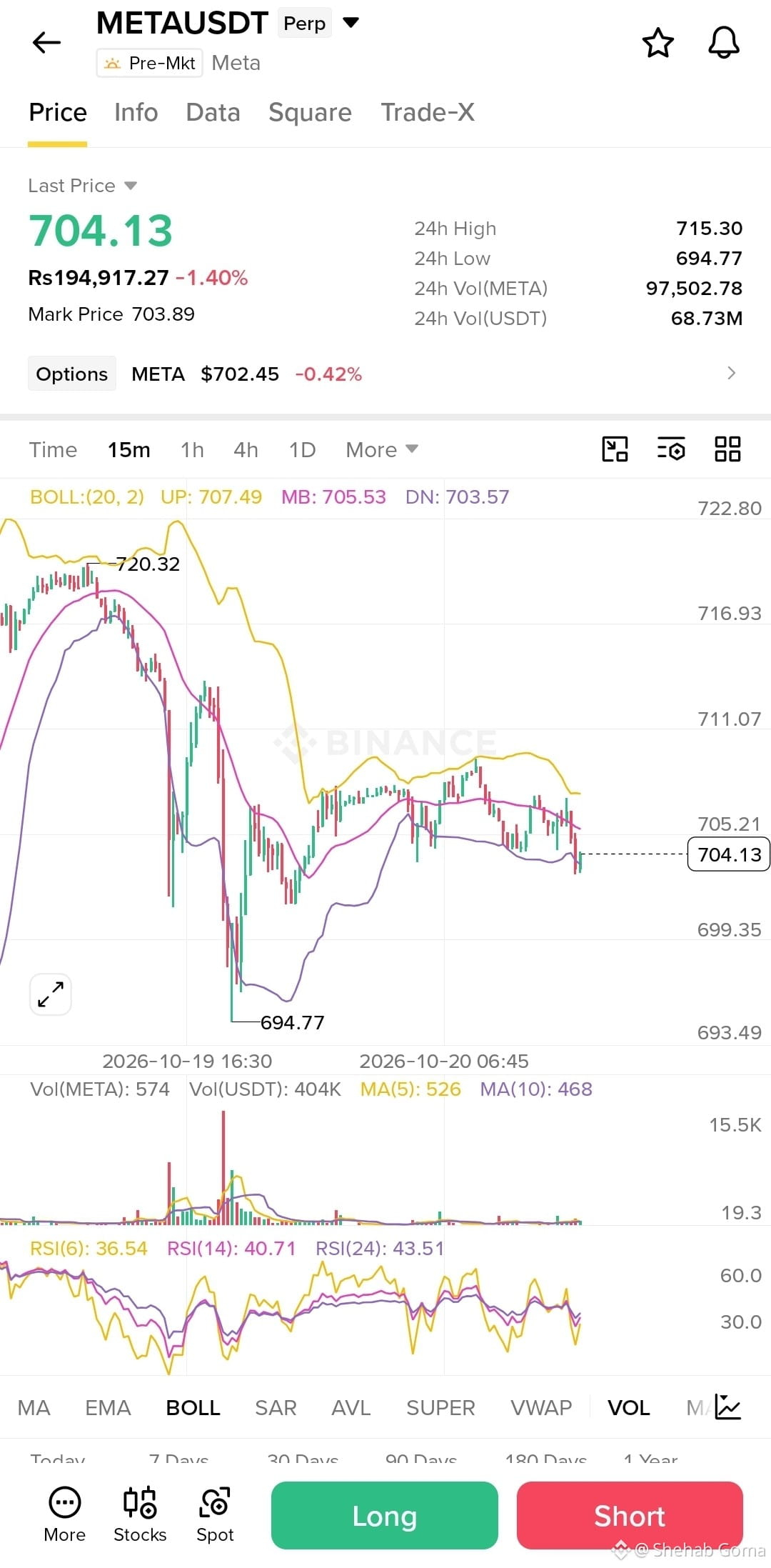
Earnings Season Session 2: $META vs. $TSLA — My Bullish Pick!
As the Magnificent 7 earnings season begins, I'm more bullish on $META than $TSLA.
🤖 Why Meta? Meta has a direct path to monetizing AI through advertising. Better ad targeting, personalized recommendations, and its Muse AI agent could improve engagement and create new revenue opportunities.
📈 Will AI investment pay off? I'm optimistic, but this earnings report needs to show that AI spending is translating into stronger revenue and sustainable profits. Rising infrastructure costs remain a major risk.
🚗 What about Tesla? The next-generation Roadster is exciting, but I see its near-term earnings contribution as uncertain. For Tesla, I'll be watching EV margins, deliveries, autonomous-driving progress, and cash flow.
🎯 My trade strategy: I'm taking a bullish view on $META with a $500 trading budget. I'll watch the daily trend, support and resistance, and volume for a confirmed bullish breakout. I'll manage risk carefully and reassess after earnings rather than blindly holding through volatility.
My verdict: $META has the clearer near-term AI monetization opportunity in my view, but management's guidance and the market's reaction will determine whether the bullish thesis holds.
What is your pick for this earnings season $META or $TSLA?
#EarningsSeason #meta #TSLA #Mag7 #stockmarket
Earnings Season Session 2: $META vs. $TSLA — My Bullish Pick!
As the Magnificent 7 earnings season begins, I'm more bullish on $META than $TSLA.
🤖 Why Meta? Meta has a direct path to monetizing AI through advertising. Better ad targeting, personalized recommendations, and its Muse AI agent could improve engagement and create new revenue opportunities.
📈 Will AI investment pay off? I'm optimistic, but this earnings report needs to show that AI spending is translating into stronger revenue and sustainable profits. Rising infrastructure costs remain a major risk.
🚗 What about Tesla? The next-generation Roadster is exciting, but I see its near-term earnings contribution as uncertain. For Tesla, I'll be watching EV margins, deliveries, autonomous-driving progress, and cash flow.
🎯 My trade strategy: I'm taking a bullish view on $META with a $500 trading budget. I'll watch the daily trend, support and resistance, and volume for a confirmed bullish breakout. I'll manage risk carefully and reassess after earnings rather than blindly holding through volatility.
My verdict: $META has the clearer near-term AI monetization opportunity in my view, but management's guidance and the market's reaction will determine whether the bullish thesis holds.
What is your pick for this earnings season $META or $TSLA?
#EarningsSeason #meta #TSLA #Mag7 #stockmarket
As the Magnificent 7 earnings season begins, I'm more bullish on $META than $TSLA.
🤖 Why Meta? Meta has a direct path to monetizing AI through advertising. Better ad targeting, personalized recommendations, and its Muse AI agent could improve engagement and create new revenue opportunities.
📈 Will AI investment pay off? I'm optimistic, but this earnings report needs to show that AI spending is translating into stronger revenue and sustainable profits. Rising infrastructure costs remain a major risk.
🚗 What about Tesla? The next-generation Roadster is exciting, but I see its near-term earnings contribution as uncertain. For Tesla, I'll be watching EV margins, deliveries, autonomous-driving progress, and cash flow.
🎯 My trade strategy: I'm taking a bullish view on $META with a $500 trading budget. I'll watch the daily trend, support and resistance, and volume for a confirmed bullish breakout. I'll manage risk carefully and reassess after earnings rather than blindly holding through volatility.
My verdict: $META has the clearer near-term AI monetization opportunity in my view, but management's guidance and the market's reaction will determine whether the bullish thesis holds.
What is your pick for this earnings season $META or $TSLA?
#EarningsSeason #meta #TSLA #Mag7 #stockmarket
3
233
·
--
Проверено
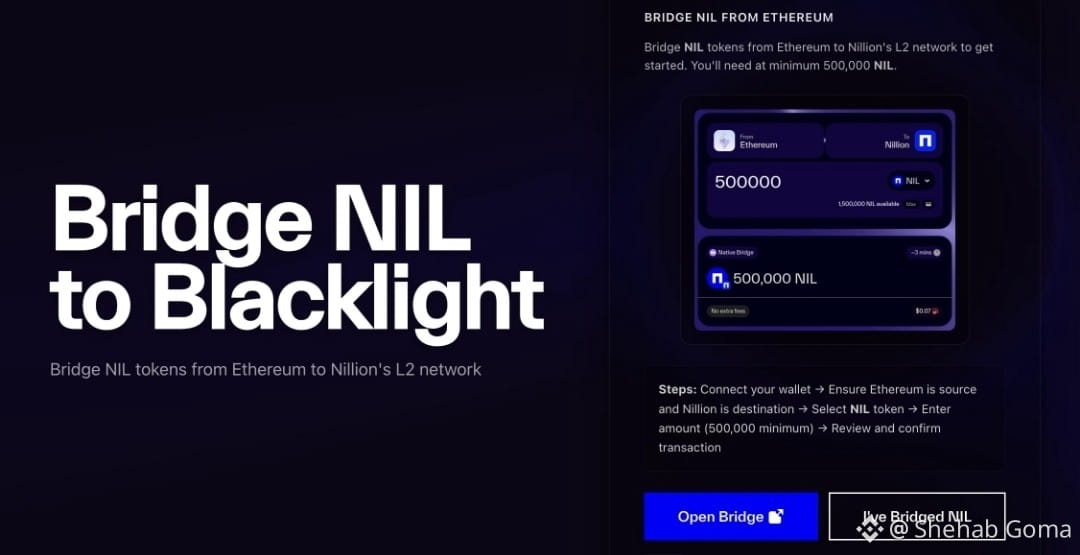
After looking into Nillion, what stands out to me about Covenants is how they can protect trading strategies before execution.
A Covenant is an instruction nobody can read while it waits for its conditions to be met. You define an action—a stop-loss, sealed auction bid, or time-based payment—seal it to a condition and post it onchain in encrypted form. When the condition is met, it can execute without relying on a bot, keeper.... or third party to hold your instruction.
This addresses a real problem with transparent blockchains: strategies and exit levels can be visible long before execution, creating opportunities for stop hunting, strategy copying, and front-running large orders.
Dusk, the first Covenant release, is now live on Ethereum mainnet—not just a testnet. Anyone can create a Covenant, run a node or build with the SDK. The initial release focuses on price- and time-based conditions.
What excites me most about what comes next is Darkfall’s planned multichain capabilities and Nightside’s planned custom condition logic. If delivered as outlined, these could expand where Covenants operate and what developers can build with them.
Dusk is just the first era in Nillion’s seven-era roadmap, with more releases planned before the end of 2026. I’m looking forward to seeing how Encrypted Markets develop from here.
@nillionnetwork #NIL $NIL
After looking into Nillion, what stands out to me about Covenants is how they can protect trading strategies before execution.
A Covenant is an instruction nobody can read while it waits for its conditions to be met. You define an action—a stop-loss, sealed auction bid, or time-based payment—seal it to a condition and post it onchain in encrypted form. When the condition is met, it can execute without relying on a bot, keeper.... or third party to hold your instruction.
This addresses a real problem with transparent blockchains: strategies and exit levels can be visible long before execution, creating opportunities for stop hunting, strategy copying, and front-running large orders.
Dusk, the first Covenant release, is now live on Ethereum mainnet—not just a testnet. Anyone can create a Covenant, run a node or build with the SDK. The initial release focuses on price- and time-based conditions.
What excites me most about what comes next is Darkfall’s planned multichain capabilities and Nightside’s planned custom condition logic. If delivered as outlined, these could expand where Covenants operate and what developers can build with them.
Dusk is just the first era in Nillion’s seven-era roadmap, with more releases planned before the end of 2026. I’m looking forward to seeing how Encrypted Markets develop from here.
@Nillion #NIL $NIL
A Covenant is an instruction nobody can read while it waits for its conditions to be met. You define an action—a stop-loss, sealed auction bid, or time-based payment—seal it to a condition and post it onchain in encrypted form. When the condition is met, it can execute without relying on a bot, keeper.... or third party to hold your instruction.
This addresses a real problem with transparent blockchains: strategies and exit levels can be visible long before execution, creating opportunities for stop hunting, strategy copying, and front-running large orders.
Dusk, the first Covenant release, is now live on Ethereum mainnet—not just a testnet. Anyone can create a Covenant, run a node or build with the SDK. The initial release focuses on price- and time-based conditions.
What excites me most about what comes next is Darkfall’s planned multichain capabilities and Nightside’s planned custom condition logic. If delivered as outlined, these could expand where Covenants operate and what developers can build with them.
Dusk is just the first era in Nillion’s seven-era roadmap, with more releases planned before the end of 2026. I’m looking forward to seeing how Encrypted Markets develop from here.
@Nillion #NIL $NIL
19
21
531
·
--
🎓📚 Happy to share that I’ve successfully completed “Understanding Bonds” by Binance Academy! 💛
Through this course, I’ve gained valuable knowledge about how bonds work, the different types of bonds, credit ratings, and the relationship between interest rates and bond prices. I’ve also learned about bond-related risks and how bonds can fit alongside other assets to build a more balanced and diversified investment portfolio.
One of my biggest takeaways is that understanding bonds is essential to understanding financial markets, managing investment risks, and making more informed financial decisions.
Now, I’m excited to share this knowledge with you all.
Here’s something worth learning: When interest rates rise, existing bond prices generally fall. Understanding why this happens can help us better interpret financial news and market movements.
Keep learning, keep sharing, and keep growing your financial knowledge!
A big thank you to Binance Academy for making financial education accessible to everyone.
#BinanceAcademyCourse
🎓📚 Happy to share that I’ve successfully completed “Understanding Bonds” by Binance Academy! 💛
Through this course, I’ve gained valuable knowledge about how bonds work, the different types of bonds, credit ratings, and the relationship between interest rates and bond prices. I’ve also learned about bond-related risks and how bonds can fit alongside other assets to build a more balanced and diversified investment portfolio.
One of my biggest takeaways is that understanding bonds is essential to understanding financial markets, managing investment risks, and making more informed financial decisions.
Now, I’m excited to share this knowledge with you all.
Here’s something worth learning: When interest rates rise, existing bond prices generally fall. Understanding why this happens can help us better interpret financial news and market movements.
Keep learning, keep sharing, and keep growing your financial knowledge!
A big thank you to Binance Academy for making financial education accessible to everyone.
#BinanceAcademyCourse
Through this course, I’ve gained valuable knowledge about how bonds work, the different types of bonds, credit ratings, and the relationship between interest rates and bond prices. I’ve also learned about bond-related risks and how bonds can fit alongside other assets to build a more balanced and diversified investment portfolio.
One of my biggest takeaways is that understanding bonds is essential to understanding financial markets, managing investment risks, and making more informed financial decisions.
Now, I’m excited to share this knowledge with you all.
Here’s something worth learning: When interest rates rise, existing bond prices generally fall. Understanding why this happens can help us better interpret financial news and market movements.
Keep learning, keep sharing, and keep growing your financial knowledge!
A big thank you to Binance Academy for making financial education accessible to everyone.
#BinanceAcademyCourse

3
184
·
--
Will September CPI Shake Oil & Treasuries? 🛢️📉
Markets are facing a critical inflation test! With Middle East tensions escalating, energy prices are putting fresh pressure on the US inflation outlook.
📌 Key data to watch:
• 🇺🇸 September headline CPI forecast: +0.6% MoM, +3.6% YoY
• Core CPI forecast: +0.2% MoM
• 🛢️ Brent crude recently traded around $105–106/barrel, amid growing supply-disruption risks.
Sources: Reuters, October 14, 2026. Forecasts are estimates, not actual CPI results.
🔥 My market outlook:
Oil (BZUSDT): If CPI surprises to the upside and Middle East supply risks persist, crude could remain supported. However, easing tensions or weaker demand could trigger a sharp pullback. I’m watching price action before adding exposure.
Treasuries (TMFUSDT / TBT): A hotter CPI print could revive expectations of tighter Fed policy, pushing Treasury yields higher and bond prices lower. That could favor TBT over TMF in the short term. But softer core inflation could reverse this move.
RWUSD: I’ll monitor liquidity, stability, and its specific market exposure before considering any position.
My trading plan: Avoid chasing the headline. Compare actual CPI with consensus, watch core inflation and Treasury yields, and manage position sizes with clear stop-loss levels.
The key question: Is this an energy-driven inflation spike, or the beginning of broader price pressure?
👇 What’s your call?
🛢️ Bullish on oil?
📉 Bearish on Treasuries?
📊 Or will cooler core CPI surprise the market?
#CPIWatch
$BZ $TMF $TBT
Will September CPI Shake Oil & Treasuries? 🛢️📉
Markets are facing a critical inflation test! With Middle East tensions escalating, energy prices are putting fresh pressure on the US inflation outlook.
📌 Key data to watch:
• 🇺🇸 September headline CPI forecast: +0.6% MoM, +3.6% YoY
• Core CPI forecast: +0.2% MoM
• 🛢️ Brent crude recently traded around $105–106/barrel, amid growing supply-disruption risks.
Sources: Reuters, October 14, 2026. Forecasts are estimates, not actual CPI results.
🔥 My market outlook:
Oil (BZUSDT): If CPI surprises to the upside and Middle East supply risks persist, crude could remain supported. However, easing tensions or weaker demand could trigger a sharp pullback. I’m watching price action before adding exposure.
Treasuries (TMFUSDT / TBT): A hotter CPI print could revive expectations of tighter Fed policy, pushing Treasury yields higher and bond prices lower. That could favor TBT over TMF in the short term. But softer core inflation could reverse this move.
RWUSD: I’ll monitor liquidity, stability, and its specific market exposure before considering any position.
My trading plan: Avoid chasing the headline. Compare actual CPI with consensus, watch core inflation and Treasury yields, and manage position sizes with clear stop-loss levels.
The key question: Is this an energy-driven inflation spike, or the beginning of broader price pressure?
👇 What’s your call?
🛢️ Bullish on oil?
📉 Bearish on Treasuries?
📊 Or will cooler core CPI surprise the market?
#CPIWatch
$BZ $TMF $TBT
Markets are facing a critical inflation test! With Middle East tensions escalating, energy prices are putting fresh pressure on the US inflation outlook.
📌 Key data to watch:
• 🇺🇸 September headline CPI forecast: +0.6% MoM, +3.6% YoY
• Core CPI forecast: +0.2% MoM
• 🛢️ Brent crude recently traded around $105–106/barrel, amid growing supply-disruption risks.
Sources: Reuters, October 14, 2026. Forecasts are estimates, not actual CPI results.
🔥 My market outlook:
Oil (BZUSDT): If CPI surprises to the upside and Middle East supply risks persist, crude could remain supported. However, easing tensions or weaker demand could trigger a sharp pullback. I’m watching price action before adding exposure.
Treasuries (TMFUSDT / TBT): A hotter CPI print could revive expectations of tighter Fed policy, pushing Treasury yields higher and bond prices lower. That could favor TBT over TMF in the short term. But softer core inflation could reverse this move.
RWUSD: I’ll monitor liquidity, stability, and its specific market exposure before considering any position.
My trading plan: Avoid chasing the headline. Compare actual CPI with consensus, watch core inflation and Treasury yields, and manage position sizes with clear stop-loss levels.
The key question: Is this an energy-driven inflation spike, or the beginning of broader price pressure?
👇 What’s your call?
🛢️ Bullish on oil?
📉 Bearish on Treasuries?
📊 Or will cooler core CPI surprise the market?
#CPIWatch
$BZ $TMF $TBT

1
3
316
·
--
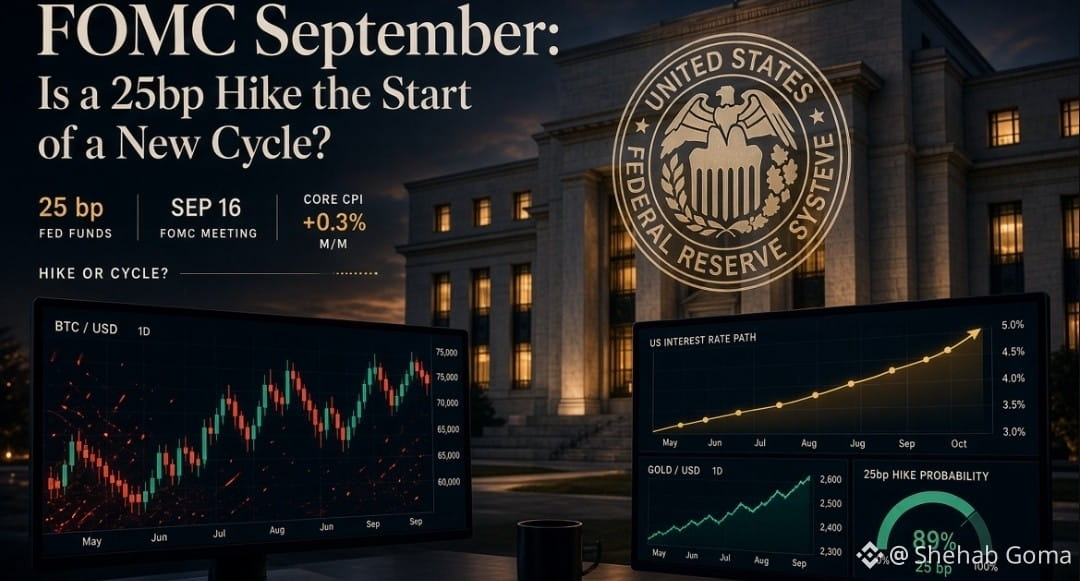
FOMC September: Is a 25bp Hike the Start of a New Cycle?
The crypto and traditional markets are holding their breath as FOMC September approaches! With August core CPI rising 0.3% month-over-month, the odds of a 25bp hike this week have skyrocketed to nearly 90%. The burning question on everyone's mind: Is this a one-off adjustment, or the start of a longer hiking cycle?
If the hike lands, how does it play out across markets? For BTC, I expect short-term volatility. If the hike is fully priced in, we might see a "sell the news" relief bounce. Tech stocks will likely face continued pressure from higher borrowing costs. Meanwhile, gold might initially dip but could quickly shine as a safe-haven asset if recession fears spike.
Personally, my bias leans cautiously bearish short-term but bullish long-term for crypto.
My next move: I’m not going all-in. I’m holding my core BTC spot positions but keeping dry powder ready to buy the dip if the Fed's announcement causes a flush. I’ll be using the Trade Sharing Widget to log my exact entries and stay fully transparent.
Are you anticipating a hike, and how are you trading it?
Are you bullish or bearish? Drop your charts and trade setups in the comments! 👇
#FedRateWatch
FOMC September: Is a 25bp Hike the Start of a New Cycle?
The crypto and traditional markets are holding their breath as FOMC September approaches! With August core CPI rising 0.3% month-over-month, the odds of a 25bp hike this week have skyrocketed to nearly 90%. The burning question on everyone's mind: Is this a one-off adjustment, or the start of a longer hiking cycle?
If the hike lands, how does it play out across markets? For BTC, I expect short-term volatility. If the hike is fully priced in, we might see a "sell the news" relief bounce. Tech stocks will likely face continued pressure from higher borrowing costs. Meanwhile, gold might initially dip but could quickly shine as a safe-haven asset if recession fears spike.
Personally, my bias leans cautiously bearish short-term but bullish long-term for crypto.
My next move: I’m not going all-in. I’m holding my core BTC spot positions but keeping dry powder ready to buy the dip if the Fed's announcement causes a flush. I’ll be using the Trade Sharing Widget to log my exact entries and stay fully transparent.
Are you anticipating a hike, and how are you trading it?
Are you bullish or bearish? Drop your charts and trade setups in the comments! 👇
#FedRateWatch
The crypto and traditional markets are holding their breath as FOMC September approaches! With August core CPI rising 0.3% month-over-month, the odds of a 25bp hike this week have skyrocketed to nearly 90%. The burning question on everyone's mind: Is this a one-off adjustment, or the start of a longer hiking cycle?
If the hike lands, how does it play out across markets? For BTC, I expect short-term volatility. If the hike is fully priced in, we might see a "sell the news" relief bounce. Tech stocks will likely face continued pressure from higher borrowing costs. Meanwhile, gold might initially dip but could quickly shine as a safe-haven asset if recession fears spike.
Personally, my bias leans cautiously bearish short-term but bullish long-term for crypto.
My next move: I’m not going all-in. I’m holding my core BTC spot positions but keeping dry powder ready to buy the dip if the Fed's announcement causes a flush. I’ll be using the Trade Sharing Widget to log my exact entries and stay fully transparent.
Are you anticipating a hike, and how are you trading it?
Are you bullish or bearish? Drop your charts and trade setups in the comments! 👇
#FedRateWatch
3
272
·
--
Проверено
NFP already beat and now CPI is out. Core came in at 0.3% instead of 0.2%. That’s the number the Fed actually watches.
Jobs were strong (162k vs the low 50s they expected) and they revised the previous months higher too. Labor is not breaking. Inflation is not cleanly falling either. After sitting at 3.50–3.75% all year, a hold next week looks weak. I think they hike 25bps on the 15th–16th.
Not chasing risk into the meeting. I’m long gold on futures instead.
Why:
Energy is still high and that keeps inflation sticky
Geopolitics is messy, so gold still has a bid
If they hike but don’t crush inflation, gold holds up better than growth names
Live trade below. If they hike and the statement isn’t extra hawkish, I’ll add risk later.
Until then I’m staying defensive on stocks and holding this gold long.If this logic makes sense, drop a follow. What’s your call — hike or hold?
#CPIWatch
NFP already beat and now CPI is out. Core came in at 0.3% instead of 0.2%. That’s the number the Fed actually watches.
Jobs were strong (162k vs the low 50s they expected) and they revised the previous months higher too. Labor is not breaking. Inflation is not cleanly falling either. After sitting at 3.50–3.75% all year, a hold next week looks weak. I think they hike 25bps on the 15th–16th.
Not chasing risk into the meeting. I’m long gold on futures instead.
Why:
Energy is still high and that keeps inflation sticky
Geopolitics is messy, so gold still has a bid
If they hike but don’t crush inflation, gold holds up better than growth names
Live trade below. If they hike and the statement isn’t extra hawkish, I’ll add risk later.
Until then I’m staying defensive on stocks and holding this gold long.If this logic makes sense, drop a follow. What’s your call — hike or hold?
#CPIWatch
Jobs were strong (162k vs the low 50s they expected) and they revised the previous months higher too. Labor is not breaking. Inflation is not cleanly falling either. After sitting at 3.50–3.75% all year, a hold next week looks weak. I think they hike 25bps on the 15th–16th.
Not chasing risk into the meeting. I’m long gold on futures instead.
Why:
Energy is still high and that keeps inflation sticky
Geopolitics is messy, so gold still has a bid
If they hike but don’t crush inflation, gold holds up better than growth names
Live trade below. If they hike and the statement isn’t extra hawkish, I’ll add risk later.
Until then I’m staying defensive on stocks and holding this gold long.If this logic makes sense, drop a follow. What’s your call — hike or hold?
#CPIWatch

2
6
960
·
--
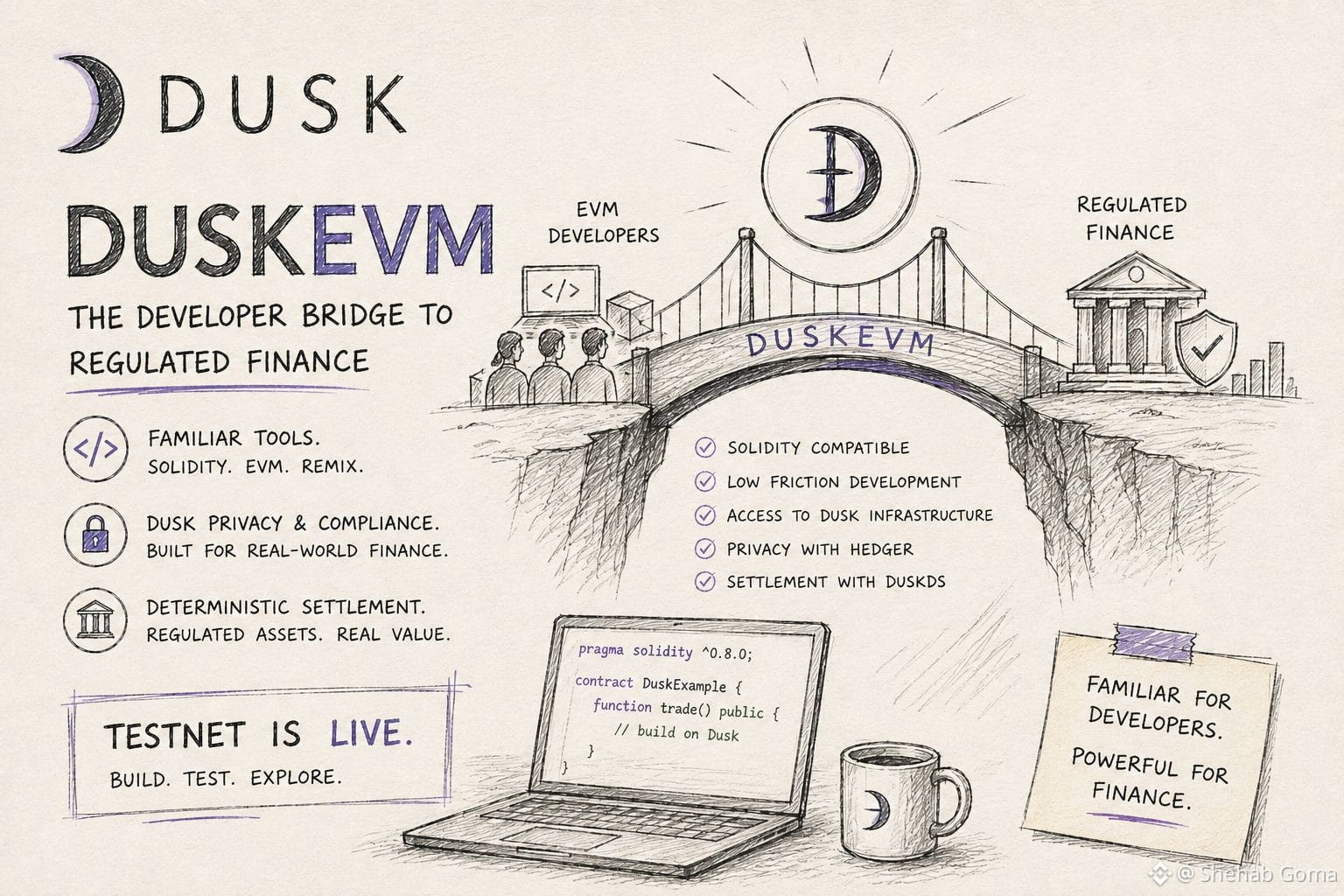
Dusk may have solved one of the biggest problems facing specialized L1s: getting developers to care.
DuskEVM is now live on testnet.
At first glance, “EVM compatibility” sounds like another blockchain feature.
I think the bigger story is what Dusk is doing with it.
Developers can use familiar Solidity and EVM tooling, while Dusk keeps its focus on something most general-purpose chains aren't specifically designed around:
regulated financial markets.
That creates an interesting combination.
On one side, you have the existing EVM developer ecosystem.
On the other, you have Dusk's infrastructure for privacy, compliance, deterministic settlement and regulated assets.
And DuskEVM sits between them.
The important part is that this isn't just about attracting more smart contracts.
If developers can build tokenized assets, trading applications and financial infrastructure using familiar tools — while accessing Dusk's privacy and settlement capabilities — the addressable builder market becomes much larger.
But here's the part I'm watching closely:
Testnet activity is not adoption.
The real milestone won't be how many contracts get deployed.
It will be whether developers turn those contracts into applications that attract real users, real assets and real financial activity.
If that happens, DuskEVM could become more than an EVM layer.
It could become the developer gateway into Dusk's regulated-finance ecosystem.
Do you think EVM compatibility can be the catalyst that finally brings serious builders into Dusk?
@Dusk_Foundation #dusk $DUSK
{future}(DUSKUSDT)
Dusk may have solved one of the biggest problems facing specialized L1s: getting developers to care.
DuskEVM is now live on testnet.
At first glance, “EVM compatibility” sounds like another blockchain feature.
I think the bigger story is what Dusk is doing with it.
Developers can use familiar Solidity and EVM tooling, while Dusk keeps its focus on something most general-purpose chains aren't specifically designed around:
regulated financial markets.
That creates an interesting combination.
On one side, you have the existing EVM developer ecosystem.
On the other, you have Dusk's infrastructure for privacy, compliance, deterministic settlement and regulated assets.
And DuskEVM sits between them.
The important part is that this isn't just about attracting more smart contracts.
If developers can build tokenized assets, trading applications and financial infrastructure using familiar tools — while accessing Dusk's privacy and settlement capabilities — the addressable builder market becomes much larger.
But here's the part I'm watching closely:
Testnet activity is not adoption.
The real milestone won't be how many contracts get deployed.
It will be whether developers turn those contracts into applications that attract real users, real assets and real financial activity.
If that happens, DuskEVM could become more than an EVM layer.
It could become the developer gateway into Dusk's regulated-finance ecosystem.
Do you think EVM compatibility can be the catalyst that finally brings serious builders into Dusk?
@Dusk #dusk $DUSK
DuskEVM is now live on testnet.
At first glance, “EVM compatibility” sounds like another blockchain feature.
I think the bigger story is what Dusk is doing with it.
Developers can use familiar Solidity and EVM tooling, while Dusk keeps its focus on something most general-purpose chains aren't specifically designed around:
regulated financial markets.
That creates an interesting combination.
On one side, you have the existing EVM developer ecosystem.
On the other, you have Dusk's infrastructure for privacy, compliance, deterministic settlement and regulated assets.
And DuskEVM sits between them.
The important part is that this isn't just about attracting more smart contracts.
If developers can build tokenized assets, trading applications and financial infrastructure using familiar tools — while accessing Dusk's privacy and settlement capabilities — the addressable builder market becomes much larger.
But here's the part I'm watching closely:
Testnet activity is not adoption.
The real milestone won't be how many contracts get deployed.
It will be whether developers turn those contracts into applications that attract real users, real assets and real financial activity.
If that happens, DuskEVM could become more than an EVM layer.
It could become the developer gateway into Dusk's regulated-finance ecosystem.
Do you think EVM compatibility can be the catalyst that finally brings serious builders into Dusk?
@Dusk #dusk $DUSK
2
215
·
--
One thing about Dusk caught my attention today:
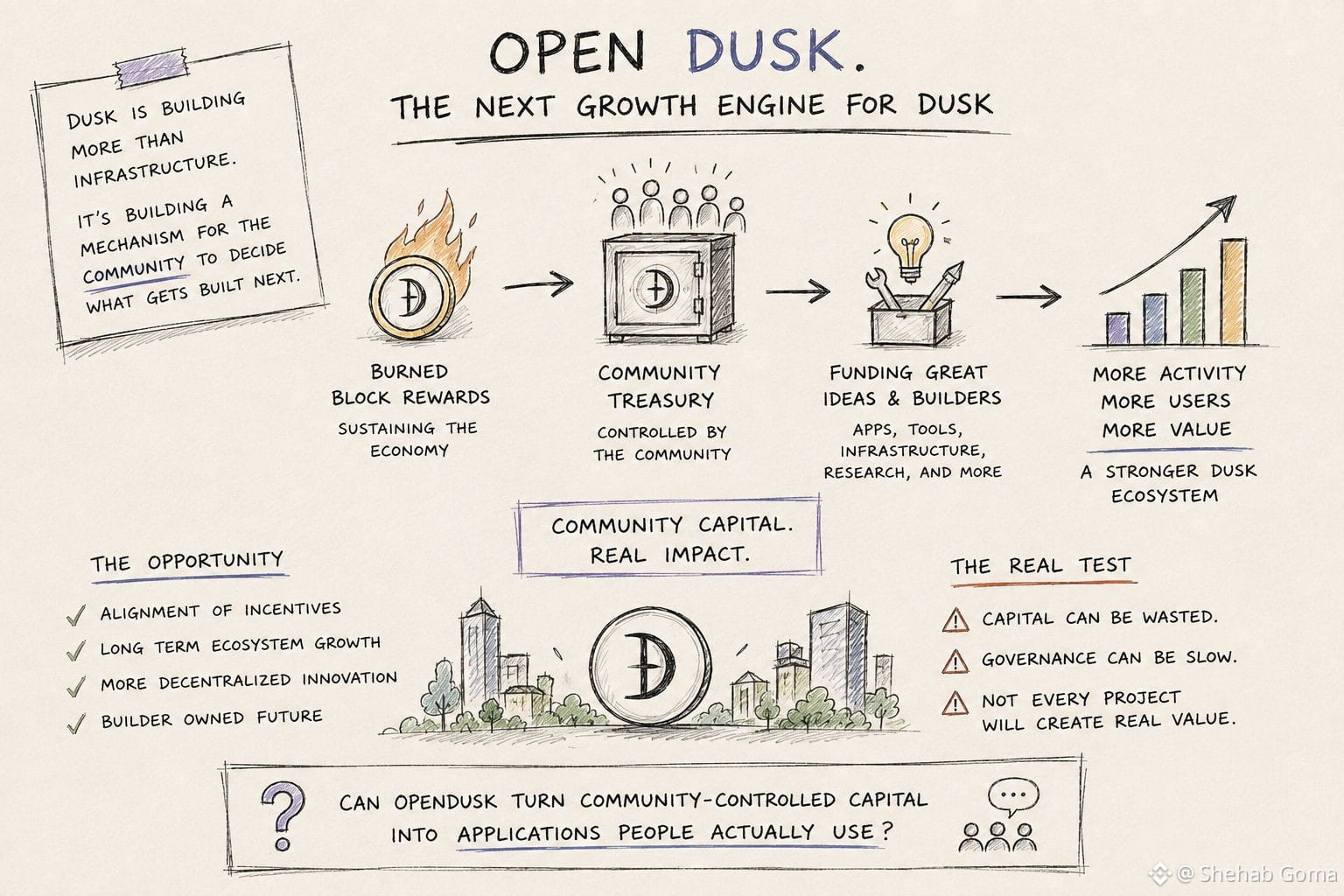
The next growth phase may depend less on what Dusk builds itself — and more on what the community is able to build around it.
That’s why I’m watching OpenDusk closely.
Imagine a simple example:
If a community treasury eventually has enough resources to fund 10 serious teams — developers, tooling, research, financial applications, infrastructure — the value isn’t just the money being distributed.
It’s the number of new reasons people have to use Dusk.
More builders → more applications → more activity → more demand for the underlying network.
And that creates something I think is more important than another short-term narrative:
an ecosystem that can compound from within.
But there’s a real tension here.
A treasury alone doesn’t create growth.
Capital can be wasted.
Governance can become slow.
Funding can go to projects that look impressive but generate no users.
So for me, the real OpenDusk test isn’t:
“Did the community approve a treasury?”
It’s:
Can community-controlled capital turn into applications people actually use?
If Dusk gets that part right, could decentralized ecosystem funding become one of its biggest growth catalysts?
@Dusk_Foundation #dusk
$DUSK
{future}(DUSKUSDT)
$TAC
{future}(TACUSDT)
$MAGMA
{future}(MAGMAUSDT)
One thing about Dusk caught my attention today:
The next growth phase may depend less on what Dusk builds itself — and more on what the community is able to build around it.
That’s why I’m watching OpenDusk closely.
Imagine a simple example:
If a community treasury eventually has enough resources to fund 10 serious teams — developers, tooling, research, financial applications, infrastructure — the value isn’t just the money being distributed.
It’s the number of new reasons people have to use Dusk.
More builders → more applications → more activity → more demand for the underlying network.
And that creates something I think is more important than another short-term narrative:
an ecosystem that can compound from within.
But there’s a real tension here.
A treasury alone doesn’t create growth.
Capital can be wasted.
Governance can become slow.
Funding can go to projects that look impressive but generate no users.
So for me, the real OpenDusk test isn’t:
“Did the community approve a treasury?”
It’s:
Can community-controlled capital turn into applications people actually use?
If Dusk gets that part right, could decentralized ecosystem funding become one of its biggest growth catalysts?
@Dusk #dusk
$DUSK
$TAC
$MAGMA
The next growth phase may depend less on what Dusk builds itself — and more on what the community is able to build around it.
That’s why I’m watching OpenDusk closely.
Imagine a simple example:
If a community treasury eventually has enough resources to fund 10 serious teams — developers, tooling, research, financial applications, infrastructure — the value isn’t just the money being distributed.
It’s the number of new reasons people have to use Dusk.
More builders → more applications → more activity → more demand for the underlying network.
And that creates something I think is more important than another short-term narrative:
an ecosystem that can compound from within.
But there’s a real tension here.
A treasury alone doesn’t create growth.
Capital can be wasted.
Governance can become slow.
Funding can go to projects that look impressive but generate no users.
So for me, the real OpenDusk test isn’t:
“Did the community approve a treasury?”
It’s:
Can community-controlled capital turn into applications people actually use?
If Dusk gets that part right, could decentralized ecosystem funding become one of its biggest growth catalysts?
@Dusk #dusk
$DUSK
$TAC
$MAGMA
2
4
515
·
--
Проверено
I used to check rates three or four times a day.Not because I wanted to. Because I had to.
One spike and the loop I carefully built would start bleeding. I would sit there calculating whether to unwind early or gamble that the rate would come back down. It never felt like investing. It felt like babysitting a position that could turn on me at any moment. That constant low-level anxiety is what most of DeFi still runs on. @termmax is the first protocol that made me stop doing it.
You pick the rate and the term at the start. Then you close the tab. The number you locked is the number you get. No mid-term surprises. No sudden jumps that force you to react.What I find more interesting than the marketing is how this changes behavior. When the cost of capital is known in advance, people size positions differently.
They stay longer. They stop treating every market as a short-term farm that has to be monitored like a restless child. The protocol didn’t just add fixed rates on top of the old system. It rebuilt the credit position itself so both sides become clear and tradable from day one. That single design choice is why capital can sit with more confidence instead of constantly looking for the exit.We’re four days from the TMX TGE.
I’m curious how many people will still keep refreshing rates out of habit… and how many will finally start treating on-chain credit like something they can actually plan around.What would change in your own size and holding period if you never had to worry about the rate moving against you again?
#TermMax
$BLESS
{alpha}(560x7c8217517ed4711fe2deccdfeffe8d906b9ae11f)
$BTW
{alpha}(560x444045b0ee1ee319a660a5e3d604ca0ffa35acaa)
$APR
{alpha}(560x299ad4299da5b2b93fba4c96967b040c7f611099)
What bothers you more in DeFi lending?
I used to check rates three or four times a day.Not because I wanted to. Because I had to.
One spike and the loop I carefully built would start bleeding. I would sit there calculating whether to unwind early or gamble that the rate would come back down. It never felt like investing. It felt like babysitting a position that could turn on me at any moment. That constant low-level anxiety is what most of DeFi still runs on. @TermMax is the first protocol that made me stop doing it.
You pick the rate and the term at the start. Then you close the tab. The number you locked is the number you get. No mid-term surprises. No sudden jumps that force you to react.What I find more interesting than the marketing is how this changes behavior. When the cost of capital is known in advance, people size positions differently.
They stay longer. They stop treating every market as a short-term farm that has to be monitored like a restless child. The protocol didn’t just add fixed rates on top of the old system. It rebuilt the credit position itself so both sides become clear and tradable from day one. That single design choice is why capital can sit with more confidence instead of constantly looking for the exit.We’re four days from the TMX TGE.
I’m curious how many people will still keep refreshing rates out of habit… and how many will finally start treating on-chain credit like something they can actually plan around.What would change in your own size and holding period if you never had to worry about the rate moving against you again?
#TermMax
$BLESS
$BTW
$APR
What bothers you more in DeFi lending?
One spike and the loop I carefully built would start bleeding. I would sit there calculating whether to unwind early or gamble that the rate would come back down. It never felt like investing. It felt like babysitting a position that could turn on me at any moment. That constant low-level anxiety is what most of DeFi still runs on. @TermMax is the first protocol that made me stop doing it.
You pick the rate and the term at the start. Then you close the tab. The number you locked is the number you get. No mid-term surprises. No sudden jumps that force you to react.What I find more interesting than the marketing is how this changes behavior. When the cost of capital is known in advance, people size positions differently.
They stay longer. They stop treating every market as a short-term farm that has to be monitored like a restless child. The protocol didn’t just add fixed rates on top of the old system. It rebuilt the credit position itself so both sides become clear and tradable from day one. That single design choice is why capital can sit with more confidence instead of constantly looking for the exit.We’re four days from the TMX TGE.
I’m curious how many people will still keep refreshing rates out of habit… and how many will finally start treating on-chain credit like something they can actually plan around.What would change in your own size and holding period if you never had to worry about the rate moving against you again?
#TermMax
$BLESS
$BTW
$APR
What bothers you more in DeFi lending?
🔵 Rate suddenly spiking
40%
🟢 Constantly checking rates
20%
🟡 Liquidation risk
40%
⚪️ Nothing I just farm
0%
5 проголосовали • Голосование закрыто
3
6
1.4k
·
--
For a long time I treated tokenization like the destination.
Get the asset onchain and the hard work was done. I was wrong.The real bottleneck is everything that comes after. Ownership records, eligibility checks, transfer restrictions, matching payment with delivery, then the ongoing work of dividends, voting and corporate actions. Most tokenized assets still leave all of that scattered across separate systems that constantly need reconciling.
@Dusk_Foundation approaches it differently. The goal is not just to represent the asset — it is to run the full ownership lifecycle on one shared record. Issuance, eligibility, settlement and servicing stay connected. Sensitive information stays controlled. The handoffs that create cost and delay simply disappear.
This is the quiet difference between a digital wrapper and real market infrastructure.When the entire path from issuance to servicing no longer needs five different ledgers talking to each other, what percentage of private and regulated markets do you think finally becomes practical to move onchain?
#dusk
$DUSK
{future}(DUSKUSDT)
$AVAAI
{future}(AVAAIUSDT)
$BLESS
{future}(BLESSUSDT)
Biggest challenge for regulated assets onchain?
For a long time I treated tokenization like the destination.
Get the asset onchain and the hard work was done. I was wrong.The real bottleneck is everything that comes after. Ownership records, eligibility checks, transfer restrictions, matching payment with delivery, then the ongoing work of dividends, voting and corporate actions. Most tokenized assets still leave all of that scattered across separate systems that constantly need reconciling.
@Dusk approaches it differently. The goal is not just to represent the asset — it is to run the full ownership lifecycle on one shared record. Issuance, eligibility, settlement and servicing stay connected. Sensitive information stays controlled. The handoffs that create cost and delay simply disappear.
This is the quiet difference between a digital wrapper and real market infrastructure.When the entire path from issuance to servicing no longer needs five different ledgers talking to each other, what percentage of private and regulated markets do you think finally becomes practical to move onchain?
#dusk
$DUSK
$AVAAI
$BLESS
Biggest challenge for regulated assets onchain?
Get the asset onchain and the hard work was done. I was wrong.The real bottleneck is everything that comes after. Ownership records, eligibility checks, transfer restrictions, matching payment with delivery, then the ongoing work of dividends, voting and corporate actions. Most tokenized assets still leave all of that scattered across separate systems that constantly need reconciling.
@Dusk approaches it differently. The goal is not just to represent the asset — it is to run the full ownership lifecycle on one shared record. Issuance, eligibility, settlement and servicing stay connected. Sensitive information stays controlled. The handoffs that create cost and delay simply disappear.
This is the quiet difference between a digital wrapper and real market infrastructure.When the entire path from issuance to servicing no longer needs five different ledgers talking to each other, what percentage of private and regulated markets do you think finally becomes practical to move onchain?
#dusk
$DUSK
$AVAAI
$BLESS
Biggest challenge for regulated assets onchain?
🔵 Tokenizing the asset
25%
🟢 Full lifecycle
50%
🟡 Privacy & compliance
0%
⚪️ Liquidity
25%
4 проголосовали • Голосование закрыто
4
4
1.3k
·
--
Проверено
TermMax isn’t really solving a lending problem. It’s solving a rate-certainty problem.
I went through the March 2026 TMX whitepaper and one detail stood out: TermMax is building around fixed-rate fixed-term DeFi, rather than accepting variable rates as the default.
FT = fixed-rate exposure.
Lenders buy FT below face value and redeem it at maturity locking in the yield when they enter.
XT = the other side of the debt.
Borrowers receive XT and can sell it for liquidity, locking their borrowing economics.
Then there’s GT an NFT that packages collateral and debt into a leveraged position. Instead of manually looping borrow → collateral → borrow the position can be created through a single transaction.
@termmax uses a custom Range Order AMM where curators work with target APR ranges rather than conventional price ranges.
The whitepaper says unused funds can be deployed into floating-rate protocols such as Aave, Morpho and Venus while waiting for fixed-rate demand.
That creates an interesting trade-off
Fixed-rate markets need liquidity.
But liquidity providers also need capital efficiency.
TermMax is attempting to address both through atomic orders + idle-fund deployment.
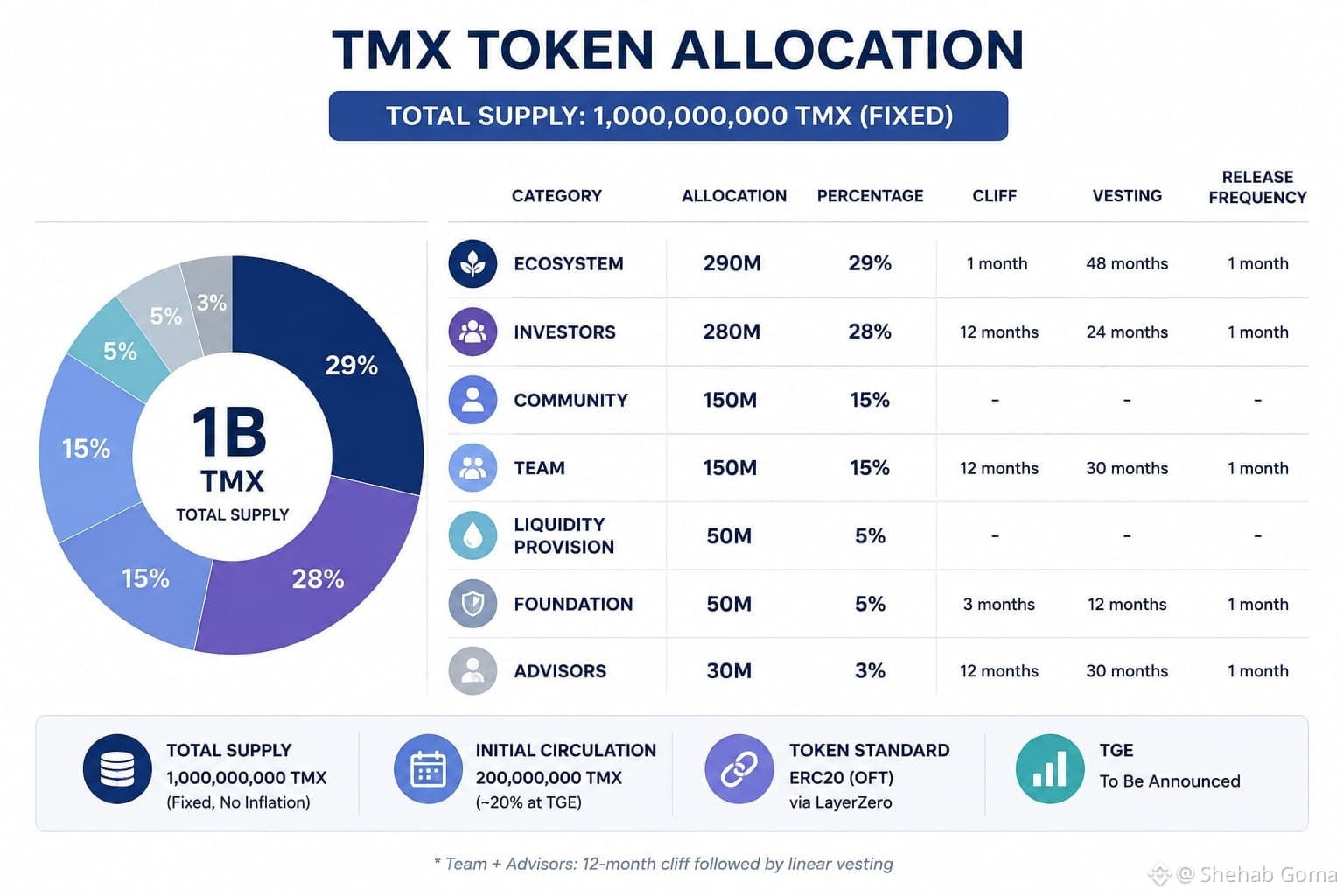
The tokenomics deserve a closer look too.
1B TMX maximum supply
200M initial circulation
29% ecosystem allocation
28% investors
15% team
15% community
The ecosystem allocation vests over 48 months, while team and investor allocations have 12-month cliffs followed by vesting.
TMX itself is designed around governance and staking, with treasury revenues potentially coming from trading, borrowing and liquidation fees.
The bigger question isn’t whether fixed rates sound useful.
It’s whether #TermMax can generate enough real fixed-rate demand to make this market structure economically meaningful.
The whitepaper reports $64M+ TVL 837K+ registered wallets and 170K+ peak daily active users.
Can that activity translate into durable demand for fixed-rate borrowing and structured products?
{alpha}(560xbeea1d618e533a387d941f58a7d4c9b7bd377777)
$ONG
{future}(ONGUSDT)
{future}(BTWUSDT)
TermMax isn’t really solving a lending problem. It’s solving a rate-certainty problem.
I went through the March 2026 TMX whitepaper and one detail stood out: TermMax is building around fixed-rate fixed-term DeFi, rather than accepting variable rates as the default.
FT = fixed-rate exposure.
Lenders buy FT below face value and redeem it at maturity locking in the yield when they enter.
XT = the other side of the debt.
Borrowers receive XT and can sell it for liquidity, locking their borrowing economics.
Then there’s GT an NFT that packages collateral and debt into a leveraged position. Instead of manually looping borrow → collateral → borrow the position can be created through a single transaction.
@TermMax uses a custom Range Order AMM where curators work with target APR ranges rather than conventional price ranges.
The whitepaper says unused funds can be deployed into floating-rate protocols such as Aave, Morpho and Venus while waiting for fixed-rate demand.
That creates an interesting trade-off
Fixed-rate markets need liquidity.
But liquidity providers also need capital efficiency.
TermMax is attempting to address both through atomic orders + idle-fund deployment.
The tokenomics deserve a closer look too.
1B TMX maximum supply
200M initial circulation
29% ecosystem allocation
28% investors
15% team
15% community
The ecosystem allocation vests over 48 months, while team and investor allocations have 12-month cliffs followed by vesting.
TMX itself is designed around governance and staking, with treasury revenues potentially coming from trading, borrowing and liquidation fees.
The bigger question isn’t whether fixed rates sound useful.
It’s whether #TermMax can generate enough real fixed-rate demand to make this market structure economically meaningful.
The whitepaper reports $64M+ TVL 837K+ registered wallets and 170K+ peak daily active users.
Can that activity translate into durable demand for fixed-rate borrowing and structured products?
$ONG
I went through the March 2026 TMX whitepaper and one detail stood out: TermMax is building around fixed-rate fixed-term DeFi, rather than accepting variable rates as the default.
FT = fixed-rate exposure.
Lenders buy FT below face value and redeem it at maturity locking in the yield when they enter.
XT = the other side of the debt.
Borrowers receive XT and can sell it for liquidity, locking their borrowing economics.
Then there’s GT an NFT that packages collateral and debt into a leveraged position. Instead of manually looping borrow → collateral → borrow the position can be created through a single transaction.
@TermMax uses a custom Range Order AMM where curators work with target APR ranges rather than conventional price ranges.
The whitepaper says unused funds can be deployed into floating-rate protocols such as Aave, Morpho and Venus while waiting for fixed-rate demand.
That creates an interesting trade-off
Fixed-rate markets need liquidity.
But liquidity providers also need capital efficiency.
TermMax is attempting to address both through atomic orders + idle-fund deployment.
The tokenomics deserve a closer look too.
1B TMX maximum supply
200M initial circulation
29% ecosystem allocation
28% investors
15% team
15% community
The ecosystem allocation vests over 48 months, while team and investor allocations have 12-month cliffs followed by vesting.
TMX itself is designed around governance and staking, with treasury revenues potentially coming from trading, borrowing and liquidation fees.
The bigger question isn’t whether fixed rates sound useful.
It’s whether #TermMax can generate enough real fixed-rate demand to make this market structure economically meaningful.
The whitepaper reports $64M+ TVL 837K+ registered wallets and 170K+ peak daily active users.
Can that activity translate into durable demand for fixed-rate borrowing and structured products?
$ONG
1
7
1k
·
--
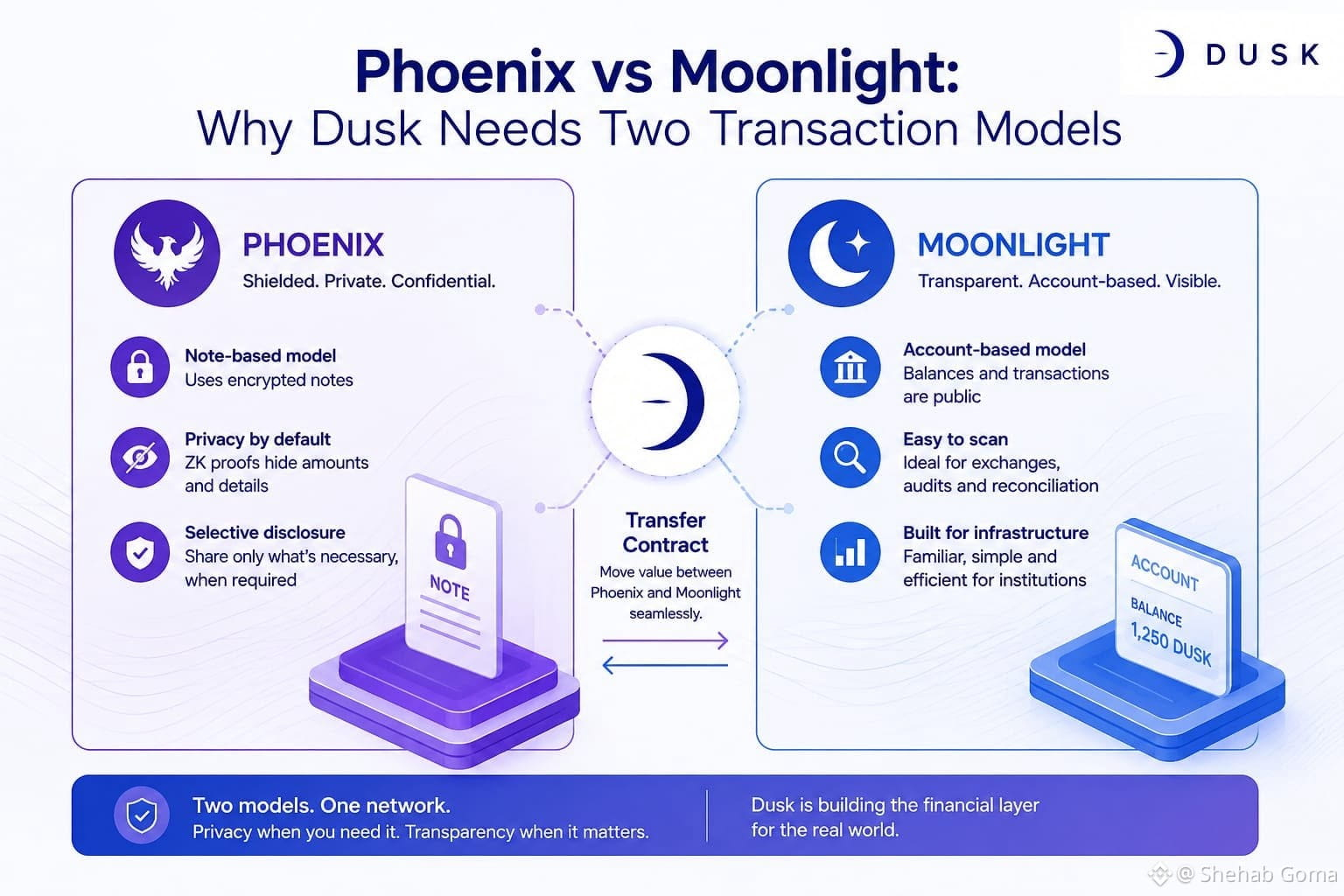
Phoenix vs Moonlight: Why Dusk Needed Two Transaction Models
I think the most misunderstood part of @Dusk_Foundation is not its privacy layer.
It is why Dusk built a transparent transaction model beside Phoenix in the first place.
The answer is simple: financial markets do not operate with one privacy requirement.
The 2024 Dusk whitepaper describes Moonlight as the public transaction layer added alongside Phoenix. Moonlight uses an account-based model, where addresses and balances are visible. Phoenix takes the opposite route: shielded, note-based transactions using zero-knowledge proofs.
With Moonlight, an exchange can scan accounts, reconcile balances and process deposits using a familiar public ledger model. Dusk's current integration documentation actually recommends Moonlight for exchange deposits and withdrawals because Phoenix requires a different custody and scanning architecture.
Its notes are encrypted, while ZK proofs let the network verify things like validity and double-spend protection without revealing the transaction amount or the specific notes being spent. Dusk also designed selective disclosure so privacy doesn't automatically mean “no accountability.”
So the original design choice was not:
Phoenix vs Moonlight.
It was:
privacy when needed + transparency when required.
And there is an important 2026 update here.
Dusk's AEGIS hard fork addressed 39 findings, including 7 critical issues, with one critical root cause involving Phoenix fee/refund binding.
More importantly, the latest network documentation says the Boreas upgrade retires Phoenix transactions on the network, while canonical transaction handling has moved forward.
Phoenix was not simply a privacy feature. It was an experiment in making confidential settlement work alongside a public financial rail.
They are different settlement requirements.
Dusk's evolution is interesting precisely because the protocol is now refining which parts of that original dual-model architecture still belong in the production stack.
#dusk
$DUSK
Phoenix vs Moonlight: Why Dusk Needed Two Transaction Models
I think the most misunderstood part of @Dusk is not its privacy layer.
It is why Dusk built a transparent transaction model beside Phoenix in the first place.
The answer is simple: financial markets do not operate with one privacy requirement.
The 2024 Dusk whitepaper describes Moonlight as the public transaction layer added alongside Phoenix. Moonlight uses an account-based model, where addresses and balances are visible. Phoenix takes the opposite route: shielded, note-based transactions using zero-knowledge proofs.
With Moonlight, an exchange can scan accounts, reconcile balances and process deposits using a familiar public ledger model. Dusk's current integration documentation actually recommends Moonlight for exchange deposits and withdrawals because Phoenix requires a different custody and scanning architecture.
Its notes are encrypted, while ZK proofs let the network verify things like validity and double-spend protection without revealing the transaction amount or the specific notes being spent. Dusk also designed selective disclosure so privacy doesn't automatically mean “no accountability.”
So the original design choice was not:
Phoenix vs Moonlight.
It was:
privacy when needed + transparency when required.
And there is an important 2026 update here.
Dusk's AEGIS hard fork addressed 39 findings, including 7 critical issues, with one critical root cause involving Phoenix fee/refund binding.
More importantly, the latest network documentation says the Boreas upgrade retires Phoenix transactions on the network, while canonical transaction handling has moved forward.
Phoenix was not simply a privacy feature. It was an experiment in making confidential settlement work alongside a public financial rail.
They are different settlement requirements.
Dusk's evolution is interesting precisely because the protocol is now refining which parts of that original dual-model architecture still belong in the production stack.
#dusk
$DUSK
I think the most misunderstood part of @Dusk is not its privacy layer.
It is why Dusk built a transparent transaction model beside Phoenix in the first place.
The answer is simple: financial markets do not operate with one privacy requirement.
The 2024 Dusk whitepaper describes Moonlight as the public transaction layer added alongside Phoenix. Moonlight uses an account-based model, where addresses and balances are visible. Phoenix takes the opposite route: shielded, note-based transactions using zero-knowledge proofs.
With Moonlight, an exchange can scan accounts, reconcile balances and process deposits using a familiar public ledger model. Dusk's current integration documentation actually recommends Moonlight for exchange deposits and withdrawals because Phoenix requires a different custody and scanning architecture.
Its notes are encrypted, while ZK proofs let the network verify things like validity and double-spend protection without revealing the transaction amount or the specific notes being spent. Dusk also designed selective disclosure so privacy doesn't automatically mean “no accountability.”
So the original design choice was not:
Phoenix vs Moonlight.
It was:
privacy when needed + transparency when required.
And there is an important 2026 update here.
Dusk's AEGIS hard fork addressed 39 findings, including 7 critical issues, with one critical root cause involving Phoenix fee/refund binding.
More importantly, the latest network documentation says the Boreas upgrade retires Phoenix transactions on the network, while canonical transaction handling has moved forward.
Phoenix was not simply a privacy feature. It was an experiment in making confidential settlement work alongside a public financial rail.
They are different settlement requirements.
Dusk's evolution is interesting precisely because the protocol is now refining which parts of that original dual-model architecture still belong in the production stack.
#dusk
$DUSK
1
3
150
·
--
Проверено
TermMax Runs on 3 Tokens — Here's What Each One Actually Does.
I had to read this three times before it clicked:
FT = A discount bond. Buy below par, redeem 1:1 at maturity.
GT = An NFT for your debt position.
XT = The interest obligation that pairs with FT.
My first reaction? Jargon overload.
But then it hit me.
Most DeFi lending protocols treat everything as one big pool. One rate. One risk profile. One size fits all.
TermMax flips that. It splits lending into three separate pieces:
FT – You buy it for less than $1. At maturity, it redeems 1:1. The gap? That's your fixed yield. No surprises.
XT – This pairs with FT. 1 FT + 1 XT = 1 debt token. When the loan matures, FT redeems and XT becomes worthless. This separates principal from interest.
GT – An NFT for your leveraged position. No liquidation anxiety. No oracle constantly watching.
Here's what stood out to me:
most projects just add features. @termmax actually rethinks how lending itself works under the hood.
One pool becomes three markets. Each with its own pricing. Each with its own risk.
And the timing? TGE is in 6 days.
So here's what I keep coming back to:
If #TermMax can split lending into three tradable pieces — what else in DeFi is currently bundled together that probably shouldn't be?
Which split matters most?
TermMax Runs on 3 Tokens — Here's What Each One Actually Does.
I had to read this three times before it clicked:
FT = A discount bond. Buy below par, redeem 1:1 at maturity.
GT = An NFT for your debt position.
XT = The interest obligation that pairs with FT.
My first reaction? Jargon overload.
But then it hit me.
Most DeFi lending protocols treat everything as one big pool. One rate. One risk profile. One size fits all.
TermMax flips that. It splits lending into three separate pieces:
FT – You buy it for less than $1. At maturity, it redeems 1:1. The gap? That's your fixed yield. No surprises.
XT – This pairs with FT. 1 FT + 1 XT = 1 debt token. When the loan matures, FT redeems and XT becomes worthless. This separates principal from interest.
GT – An NFT for your leveraged position. No liquidation anxiety. No oracle constantly watching.
Here's what stood out to me:
most projects just add features. @TermMax actually rethinks how lending itself works under the hood.
One pool becomes three markets. Each with its own pricing. Each with its own risk.
And the timing? TGE is in 6 days.
So here's what I keep coming back to:
If #TermMax can split lending into three tradable pieces — what else in DeFi is currently bundled together that probably shouldn't be?
Which split matters most?
I had to read this three times before it clicked:
FT = A discount bond. Buy below par, redeem 1:1 at maturity.
GT = An NFT for your debt position.
XT = The interest obligation that pairs with FT.
My first reaction? Jargon overload.
But then it hit me.
Most DeFi lending protocols treat everything as one big pool. One rate. One risk profile. One size fits all.
TermMax flips that. It splits lending into three separate pieces:
FT – You buy it for less than $1. At maturity, it redeems 1:1. The gap? That's your fixed yield. No surprises.
XT – This pairs with FT. 1 FT + 1 XT = 1 debt token. When the loan matures, FT redeems and XT becomes worthless. This separates principal from interest.
GT – An NFT for your leveraged position. No liquidation anxiety. No oracle constantly watching.
Here's what stood out to me:
most projects just add features. @TermMax actually rethinks how lending itself works under the hood.
One pool becomes three markets. Each with its own pricing. Each with its own risk.
And the timing? TGE is in 6 days.
So here's what I keep coming back to:
If #TermMax can split lending into three tradable pieces — what else in DeFi is currently bundled together that probably shouldn't be?
Which split matters most?
Principal (FT)
0%
Interest (XT)
100%
Leverage (GT)
0%
1 проголосовали • Голосование закрыто
1
3
139
·
--
Проверено
I remember staring at Dusk's documentation, trying to understand what made it different.
Everyone talks about tokenization. Settlement speed. Compliance. But @Dusk_Foundation is testing something else entirely: regulator-readable privacy.
Traditional blockchains give you a binary choice. Everything public. Or everything hidden. Neither works for regulated finance.
Dusk's solution is selective disclosure. Transactions stay private by default. But regulators can verify compliance when needed—revealing only what's required, nothing more.
Zero-knowledge proofs let you prove a transaction is valid without exposing who, how much, or to whom. Privacy designed for trust, not opacity.
The traction is already visible. Sozu holds $26M in staked assets. NPEX is bringing €300M in tokenized securities through #dusk . And 21X, the first EU DLT-TSS license holder, has integrated Dusk as an active partner.
Here's what I keep coming back to: If the technology for private, compliant finance has existed for years, why has it taken this long to get here?
Maybe because we focused on building faster chains instead of building chains regulators can trust. Dusk didn't just launch another L1. They built one where privacy and compliance aren't trade-offs—they're features.
What's holding your industry back—technology, or trust?
$DUSK
{future}(DUSKUSDT)
I remember staring at Dusk's documentation, trying to understand what made it different.
Everyone talks about tokenization. Settlement speed. Compliance. But @Dusk is testing something else entirely: regulator-readable privacy.
Traditional blockchains give you a binary choice. Everything public. Or everything hidden. Neither works for regulated finance.
Dusk's solution is selective disclosure. Transactions stay private by default. But regulators can verify compliance when needed—revealing only what's required, nothing more.
Zero-knowledge proofs let you prove a transaction is valid without exposing who, how much, or to whom. Privacy designed for trust, not opacity.
The traction is already visible. Sozu holds $26M in staked assets. NPEX is bringing €300M in tokenized securities through #dusk . And 21X, the first EU DLT-TSS license holder, has integrated Dusk as an active partner.
Here's what I keep coming back to: If the technology for private, compliant finance has existed for years, why has it taken this long to get here?
Maybe because we focused on building faster chains instead of building chains regulators can trust. Dusk didn't just launch another L1. They built one where privacy and compliance aren't trade-offs—they're features.
What's holding your industry back—technology, or trust?
$DUSK
Everyone talks about tokenization. Settlement speed. Compliance. But @Dusk is testing something else entirely: regulator-readable privacy.
Traditional blockchains give you a binary choice. Everything public. Or everything hidden. Neither works for regulated finance.
Dusk's solution is selective disclosure. Transactions stay private by default. But regulators can verify compliance when needed—revealing only what's required, nothing more.
Zero-knowledge proofs let you prove a transaction is valid without exposing who, how much, or to whom. Privacy designed for trust, not opacity.
The traction is already visible. Sozu holds $26M in staked assets. NPEX is bringing €300M in tokenized securities through #dusk . And 21X, the first EU DLT-TSS license holder, has integrated Dusk as an active partner.
Here's what I keep coming back to: If the technology for private, compliant finance has existed for years, why has it taken this long to get here?
Maybe because we focused on building faster chains instead of building chains regulators can trust. Dusk didn't just launch another L1. They built one where privacy and compliance aren't trade-offs—they're features.
What's holding your industry back—technology, or trust?
$DUSK

15
8
187
·
--
Рост
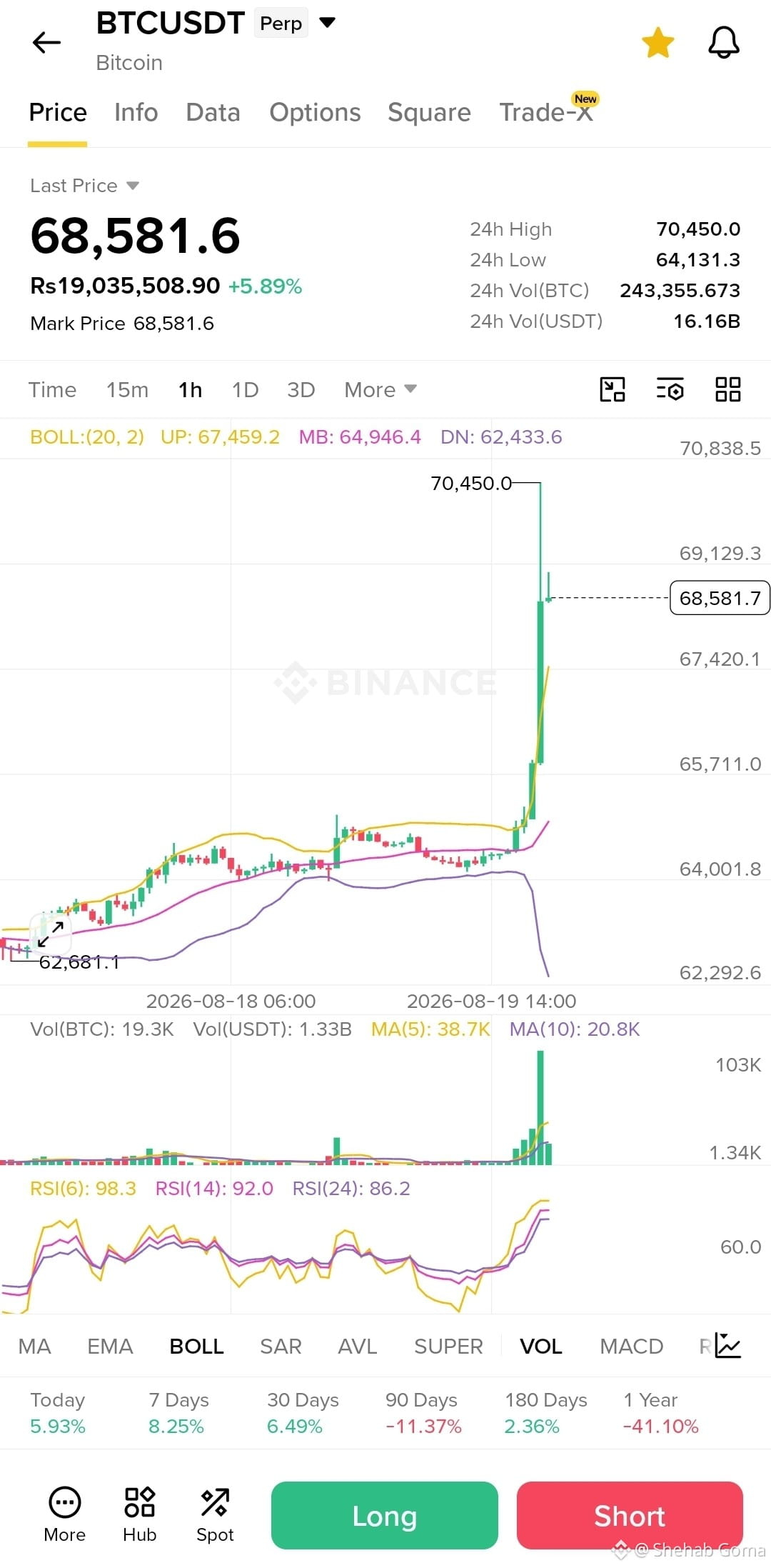
After such a long wait, BTC finally decided to wake up! Seeing some green again feels so good. Let’s hope this is just the beginning. 💚
#CryptoRally
#FOMCWatch
#btc70k
$BTC
{future}(BTCUSDT)
$ETH
{future}(ETHUSDT)
$BNB
{future}(BNBUSDT)
After such a long wait, BTC finally decided to wake up! Seeing some green again feels so good. Let’s hope this is just the beginning. 💚
#CryptoRally
#FOMCWatch
#btc70k
$BTC
$ETH
$BNB
#CryptoRally
#FOMCWatch
#btc70k
$BTC
$ETH
$BNB
1
202
·
--
Частичная правда
I learned this the hard way.
Last year, I jumped into a variable pool at 18% APY. Three weeks later? 4%. No warning. Just less.
That's not planning. That's guessing with a percentage sign on it.
What I actually needed was simple: to know what I'd earn next month, not chase what I might earn today.
That's where @termmax clicked for me.
One live example hit home:
Aave recently posted a 24-hour borrowing cost spike of over 40% in certain markets. Imagine trying to run a treasury on that. You can't.
#TermMax launched on HyperEVM just 2 days ago — its 9th chain. Users can borrow USDC against HyperUSD with the rate locked at entry. That's the difference: the terms are known from the start.
The broader takeaway is even more interesting.
TermPrime — its institutional fixed-rate venue — went live on Canton Network. That's not just DeFi natives experimenting. That's infrastructure for participants who care about term, cost, and predictability.
This may be the bigger shift: DeFi becoming something users can actually structure around, not just speculate inside.
So the question is If fixed rates existed for every asset tomorrow — would you still chase variable yields?
I learned this the hard way.
Last year, I jumped into a variable pool at 18% APY. Three weeks later? 4%. No warning. Just less.
That's not planning. That's guessing with a percentage sign on it.
What I actually needed was simple: to know what I'd earn next month, not chase what I might earn today.
That's where @TermMax clicked for me.
One live example hit home:
Aave recently posted a 24-hour borrowing cost spike of over 40% in certain markets. Imagine trying to run a treasury on that. You can't.
#TermMax launched on HyperEVM just 2 days ago — its 9th chain. Users can borrow USDC against HyperUSD with the rate locked at entry. That's the difference: the terms are known from the start.
The broader takeaway is even more interesting.
TermPrime — its institutional fixed-rate venue — went live on Canton Network. That's not just DeFi natives experimenting. That's infrastructure for participants who care about term, cost, and predictability.
This may be the bigger shift: DeFi becoming something users can actually structure around, not just speculate inside.
So the question is If fixed rates existed for every asset tomorrow — would you still chase variable yields?
Last year, I jumped into a variable pool at 18% APY. Three weeks later? 4%. No warning. Just less.
That's not planning. That's guessing with a percentage sign on it.
What I actually needed was simple: to know what I'd earn next month, not chase what I might earn today.
That's where @TermMax clicked for me.
One live example hit home:
Aave recently posted a 24-hour borrowing cost spike of over 40% in certain markets. Imagine trying to run a treasury on that. You can't.
#TermMax launched on HyperEVM just 2 days ago — its 9th chain. Users can borrow USDC against HyperUSD with the rate locked at entry. That's the difference: the terms are known from the start.
The broader takeaway is even more interesting.
TermPrime — its institutional fixed-rate venue — went live on Canton Network. That's not just DeFi natives experimenting. That's infrastructure for participants who care about term, cost, and predictability.
This may be the bigger shift: DeFi becoming something users can actually structure around, not just speculate inside.
So the question is If fixed rates existed for every asset tomorrow — would you still chase variable yields?
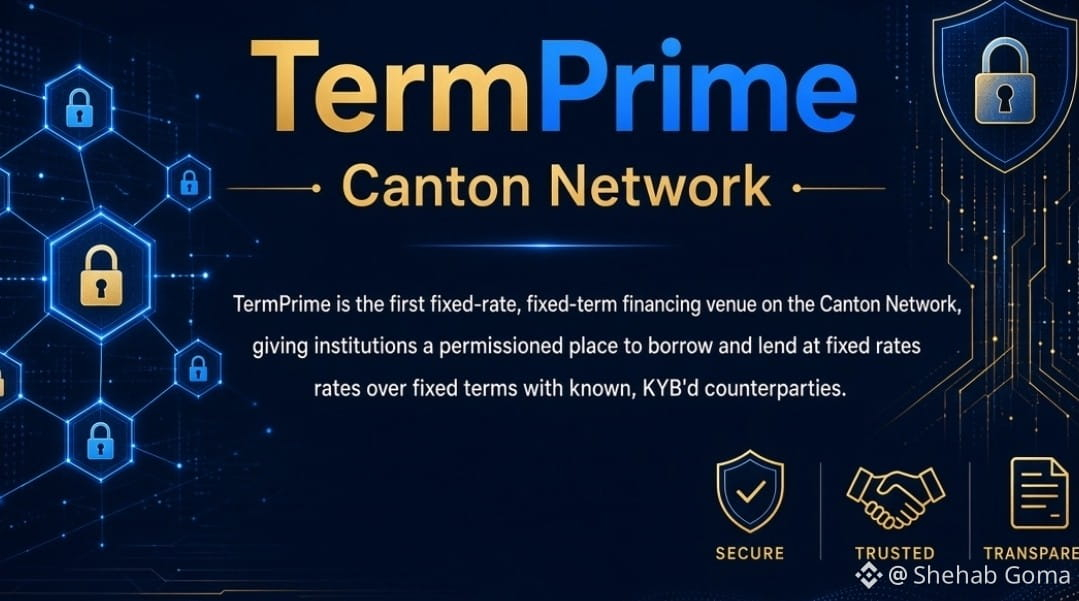
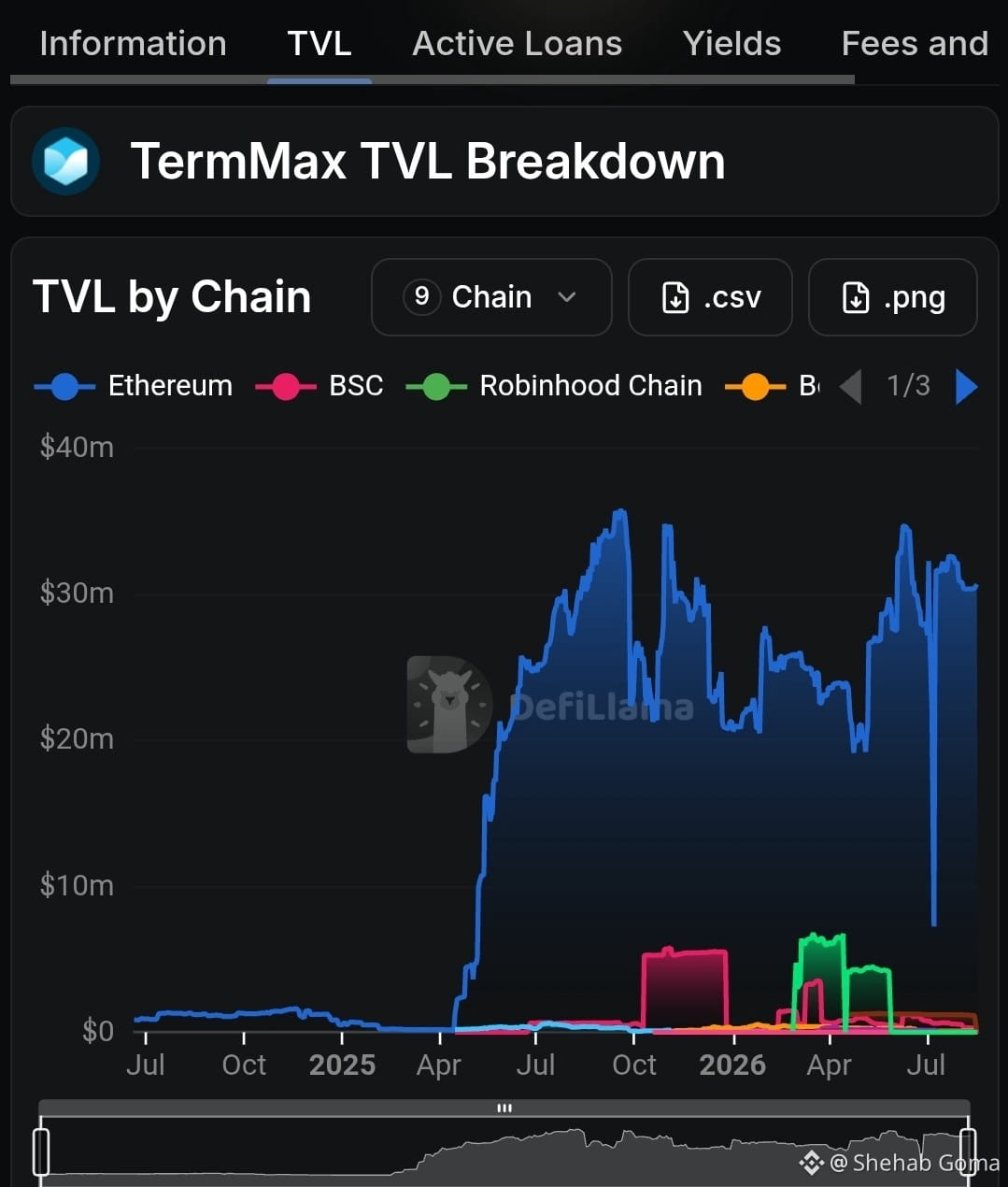
13
9
300
·
--
I used to think tokenization was the answer. Put every real-world asset onchain, and suddenly everything becomes liquid and accessible.
Then I looked at the numbers.
For every dollar of tokenized value you can actually trade, there's roughly $10 that just sits there as a digital receipt. According to RWA.xyz data, over 900 out of 1,300 assets went an entire week without a single trade. That's $33 billion sitting frozen.
Tokenization didn't solve liquidity. It just created digital wrappers around illiquid assets.
The real problem was never putting assets onchain. It was making them actually tradeable—with legal finality, compliance built in, and settlement that counts.
@Dusk_Foundation takes a different approach. Through NPEX, a Dutch AFM-regulated exchange, they're bringing over €300 million in tokenized securities onchain. Real equities and bonds, settling in seconds rather than days. Through 21X, trading and settlement are merged into a single atomic action—recognized by EU law.
Quantoz provides the settlement asset: EURQ, a MiCA-compliant digital euro. Regulated fiat, onchain.
The infrastructure is there. And the activity suggests it's resonating—Sozu, Dusk's liquid staking protocol, already holds over $26 million in staked assets. That's real participation, not speculation.
so If tokenization was supposed to unlock liquidity, why are most tokenized assets barely trading?
Maybe because we focused on wrapping assets instead of rebuilding settlement infrastructure. #dusk is building something regulators can actually work with.
What's the one thing holding your industry back from moving onchain?
$DUSK
{future}(DUSKUSDT)
I used to think tokenization was the answer. Put every real-world asset onchain, and suddenly everything becomes liquid and accessible.
Then I looked at the numbers.
For every dollar of tokenized value you can actually trade, there's roughly $10 that just sits there as a digital receipt. According to RWA.xyz data, over 900 out of 1,300 assets went an entire week without a single trade. That's $33 billion sitting frozen.
Tokenization didn't solve liquidity. It just created digital wrappers around illiquid assets.
The real problem was never putting assets onchain. It was making them actually tradeable—with legal finality, compliance built in, and settlement that counts.
@Dusk takes a different approach. Through NPEX, a Dutch AFM-regulated exchange, they're bringing over €300 million in tokenized securities onchain. Real equities and bonds, settling in seconds rather than days. Through 21X, trading and settlement are merged into a single atomic action—recognized by EU law.
Quantoz provides the settlement asset: EURQ, a MiCA-compliant digital euro. Regulated fiat, onchain.
The infrastructure is there. And the activity suggests it's resonating—Sozu, Dusk's liquid staking protocol, already holds over $26 million in staked assets. That's real participation, not speculation.
so If tokenization was supposed to unlock liquidity, why are most tokenized assets barely trading?
Maybe because we focused on wrapping assets instead of rebuilding settlement infrastructure. #dusk is building something regulators can actually work with.
What's the one thing holding your industry back from moving onchain?
$DUSK
Then I looked at the numbers.
For every dollar of tokenized value you can actually trade, there's roughly $10 that just sits there as a digital receipt. According to RWA.xyz data, over 900 out of 1,300 assets went an entire week without a single trade. That's $33 billion sitting frozen.
Tokenization didn't solve liquidity. It just created digital wrappers around illiquid assets.
The real problem was never putting assets onchain. It was making them actually tradeable—with legal finality, compliance built in, and settlement that counts.
@Dusk takes a different approach. Through NPEX, a Dutch AFM-regulated exchange, they're bringing over €300 million in tokenized securities onchain. Real equities and bonds, settling in seconds rather than days. Through 21X, trading and settlement are merged into a single atomic action—recognized by EU law.
Quantoz provides the settlement asset: EURQ, a MiCA-compliant digital euro. Regulated fiat, onchain.
The infrastructure is there. And the activity suggests it's resonating—Sozu, Dusk's liquid staking protocol, already holds over $26 million in staked assets. That's real participation, not speculation.
so If tokenization was supposed to unlock liquidity, why are most tokenized assets barely trading?
Maybe because we focused on wrapping assets instead of rebuilding settlement infrastructure. #dusk is building something regulators can actually work with.
What's the one thing holding your industry back from moving onchain?
$DUSK
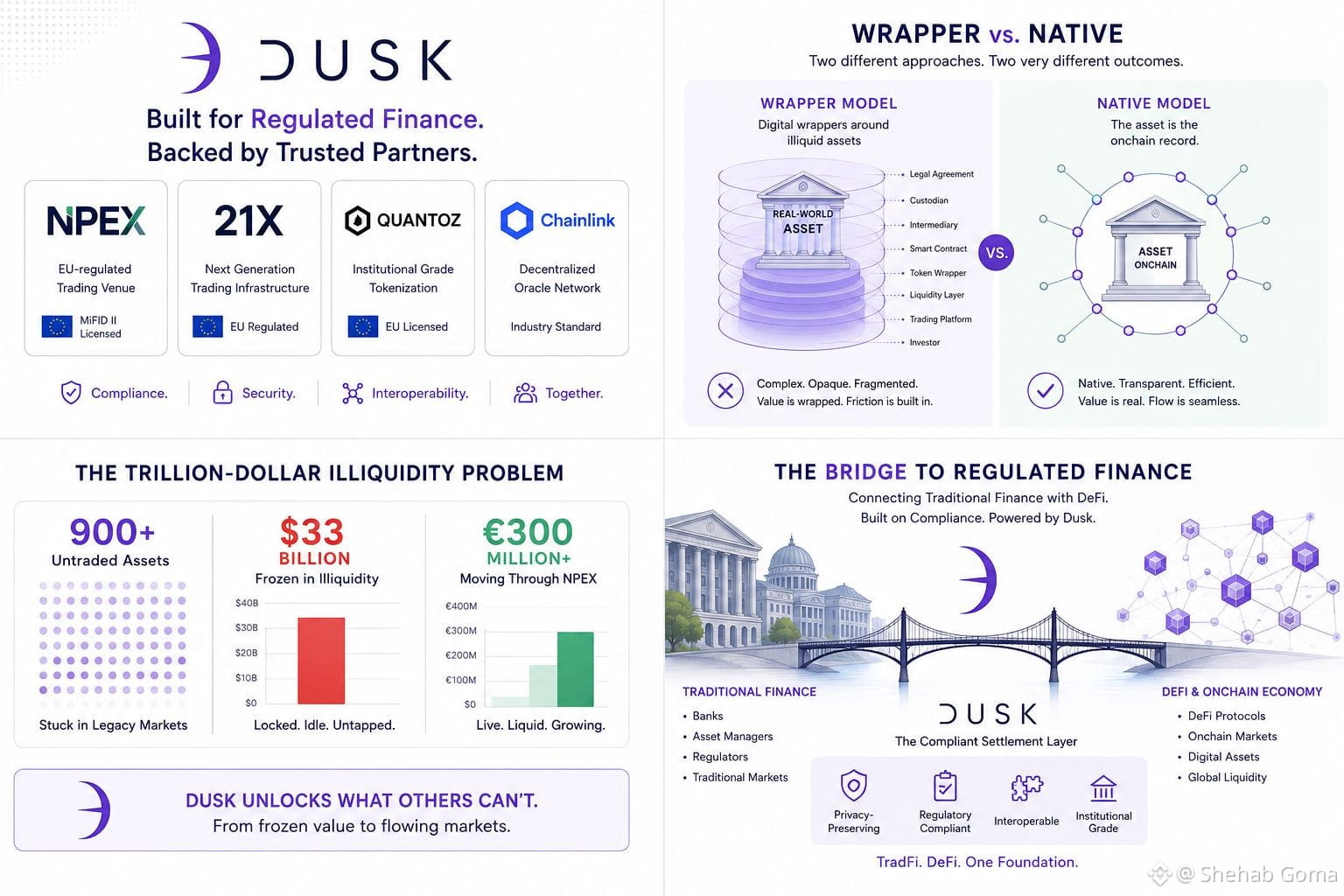
3
4
213
Войдите, чтобы посмотреть больше материала
Присоединяйтесь к пользователям криптовалют по всему миру на Binance Square
⚡️ Получайте новейшую и полезную информацию о криптоактивах.
💬 Нам доверяет крупнейшая в мире криптобиржа.
👍 Получите достоверные аналитические данные от верифицированных создателей контента.
Эл. почта/номер телефона