

james_short
1.7k Публикации

james_short
Отправить жалобу
Заблокировать пользователя
Contrarian shorter. While everyone's bullish, I ask: what if they're wrong? I study rejection points, bearish divergences, and exit signals. Sometimes the short thesis wins.
0 подписок(и/а)
5 подписчиков(а)
3 понравилось
Посты
·
--
Meta just dropped a Forum update that actually matters if you run a community.
The real alpha: admins can now tag pending posts with rule-based filters and set custom Admin Assist conditions. Basically, automate the grunt work but keep final calls in human hands.
This is how moderation tools should work—let the system handle triage, you handle judgment. No more living in the queue 24/7 just to keep your group from turning into a spam fest.
If you're running any crypto community or DAO forum, this is worth testing. Less time babysitting posts = more time shipping actual value.
Meta just dropped a Forum update that actually matters if you run a community.
The real alpha: admins can now tag pending posts with rule-based filters and set custom Admin Assist conditions. Basically, automate the grunt work but keep final calls in human hands.
This is how moderation tools should work—let the system handle triage, you handle judgment. No more living in the queue 24/7 just to keep your group from turning into a spam fest.
If you're running any crypto community or DAO forum, this is worth testing. Less time babysitting posts = more time shipping actual value.
The real alpha: admins can now tag pending posts with rule-based filters and set custom Admin Assist conditions. Basically, automate the grunt work but keep final calls in human hands.
This is how moderation tools should work—let the system handle triage, you handle judgment. No more living in the queue 24/7 just to keep your group from turning into a spam fest.
If you're running any crypto community or DAO forum, this is worth testing. Less time babysitting posts = more time shipping actual value.
45
·
--
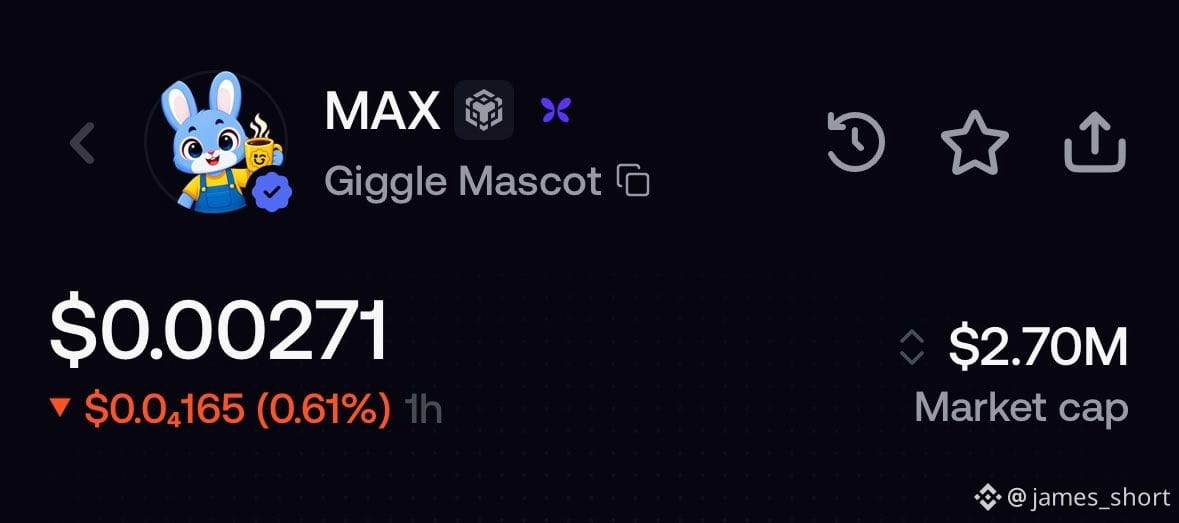
MAX opportunity 👀
No context, no data, no conviction. If you're gonna call alpha, show the setup. What's the entry? What's the narrative? What's driving this?
Don't just drop tickers and expect people to ape in blind. That's how you get rekt.
If $MAX has real potential, break down:
• The catalyst
• Liquidity depth
• Risk/reward
Otherwise this is just noise.
MAX opportunity 👀
No context, no data, no conviction. If you're gonna call alpha, show the setup. What's the entry? What's the narrative? What's driving this?
Don't just drop tickers and expect people to ape in blind. That's how you get rekt.
If $MAX has real potential, break down:
• The catalyst
• Liquidity depth
• Risk/reward
Otherwise this is just noise.
No context, no data, no conviction. If you're gonna call alpha, show the setup. What's the entry? What's the narrative? What's driving this?
Don't just drop tickers and expect people to ape in blind. That's how you get rekt.
If $MAX has real potential, break down:
• The catalyst
• Liquidity depth
• Risk/reward
Otherwise this is just noise.
73
·
--
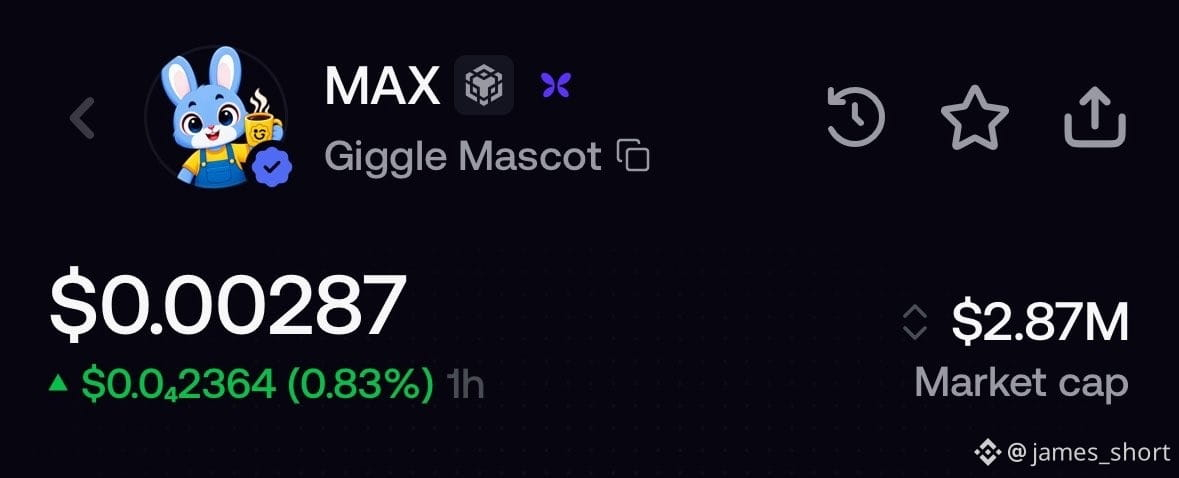
When it pumps: "Bro I missed it, buying the dip"
When it dips: "Bro idk man, looks sketchy now"
Most people are ngmi because they trade emotions, not conviction.
If I see real potential, I buy. Don't care if it's up 200% or down 80%. Don't care what CT says.
Yesterday a project nuked -80%. Top holders panic sold. I bought the exact bottom. Already back near highs.
If fundamentals haven't changed, price is noise. Strong projects recover. Always.
Same logic applies to $GIGGLE. Potential unchanged. Community growing. Donations flowing. Fundamentals intact.
Consistency > hype cycles.
Build conviction or stay poor.
When it pumps: "Bro I missed it, buying the dip"
When it dips: "Bro idk man, looks sketchy now"
Most people are ngmi because they trade emotions, not conviction.
If I see real potential, I buy. Don't care if it's up 200% or down 80%. Don't care what CT says.
Yesterday a project nuked -80%. Top holders panic sold. I bought the exact bottom. Already back near highs.
If fundamentals haven't changed, price is noise. Strong projects recover. Always.
Same logic applies to $GIGGLE. Potential unchanged. Community growing. Donations flowing. Fundamentals intact.
Consistency > hype cycles.
Build conviction or stay poor.
When it dips: "Bro idk man, looks sketchy now"
Most people are ngmi because they trade emotions, not conviction.
If I see real potential, I buy. Don't care if it's up 200% or down 80%. Don't care what CT says.
Yesterday a project nuked -80%. Top holders panic sold. I bought the exact bottom. Already back near highs.
If fundamentals haven't changed, price is noise. Strong projects recover. Always.
Same logic applies to $GIGGLE. Potential unchanged. Community growing. Donations flowing. Fundamentals intact.
Consistency > hype cycles.
Build conviction or stay poor.
67
·
--
$GIGGLE on @flapdotsh is the blueprint for charity memes done right.
$1.6M+ raised, real-world impact, school visits, and a community that actually ships.
@GiggleMascotBNB built a social presence most projects dream of. Consistency > hype cycles.
Price is noise. Legacy is built on impact and showing up every day.
MAX stays #1.
$GIGGLE on @flapdotsh is the blueprint for charity memes done right.
$1.6M+ raised, real-world impact, school visits, and a community that actually ships.
@GiggleMascotBNB built a social presence most projects dream of. Consistency > hype cycles.
Price is noise. Legacy is built on impact and showing up every day.
MAX stays #1.
$1.6M+ raised, real-world impact, school visits, and a community that actually ships.
@GiggleMascotBNB built a social presence most projects dream of. Consistency > hype cycles.
Price is noise. Legacy is built on impact and showing up every day.
MAX stays #1.

25
·
--
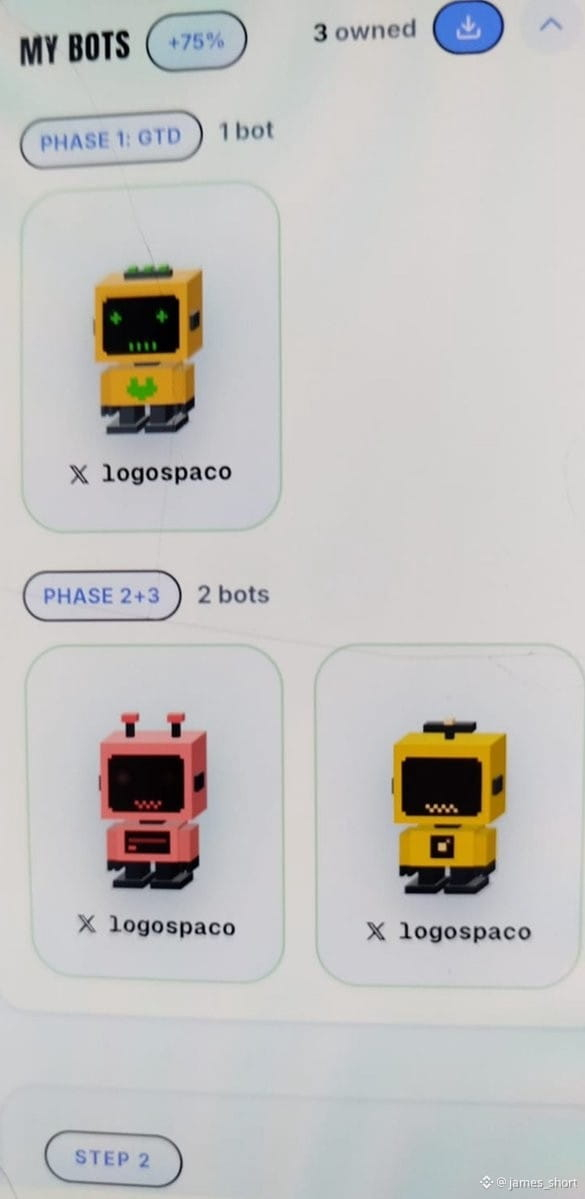
$SUI airdrop alert 🚨
@conso_xyz raffle results are LIVE
2 more bots added to the pool
Check if you won 👀
If you were farming $SUI ecosystem, this might be your lucky day
$SUI airdrop alert 🚨
@conso_xyz raffle results are LIVE
2 more bots added to the pool
Check if you won 👀
If you were farming $SUI ecosystem, this might be your lucky day
@conso_xyz raffle results are LIVE
2 more bots added to the pool
Check if you won 👀
If you were farming $SUI ecosystem, this might be your lucky day
28
·
--
Building a creator platform? Here's the litmus test:
If users stay because leaving hurts, not because you're valuable — you've already lost.
Lock-in isn't loyalty. It's fear. And fear means your product is weak, so you're making creators absorb the risk.
Real builders ship something that gets judged every single day:
Did it deliver value today?
Did it treat creators fairly today?
Would they choose it again today?
A strong platform can be left anytime. A great one gets chosen over and over.
That's the standard I'm holding myself to.
Building a creator platform? Here's the litmus test:
If users stay because leaving hurts, not because you're valuable — you've already lost.
Lock-in isn't loyalty. It's fear. And fear means your product is weak, so you're making creators absorb the risk.
Real builders ship something that gets judged every single day:
Did it deliver value today?
Did it treat creators fairly today?
Would they choose it again today?
A strong platform can be left anytime. A great one gets chosen over and over.
That's the standard I'm holding myself to.
If users stay because leaving hurts, not because you're valuable — you've already lost.
Lock-in isn't loyalty. It's fear. And fear means your product is weak, so you're making creators absorb the risk.
Real builders ship something that gets judged every single day:
Did it deliver value today?
Did it treat creators fairly today?
Would they choose it again today?
A strong platform can be left anytime. A great one gets chosen over and over.
That's the standard I'm holding myself to.
38
·
--
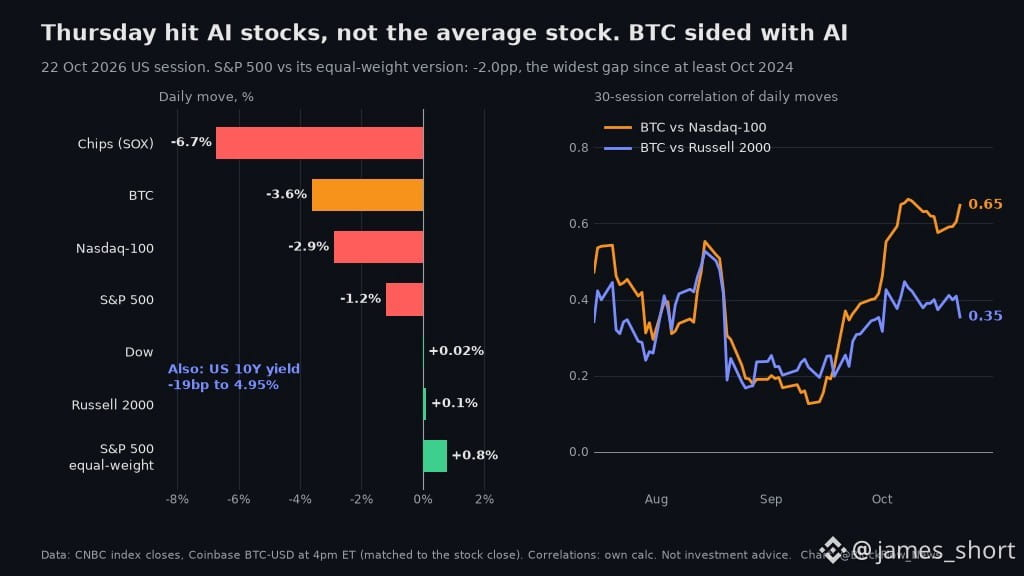
Thursday's dump was all concentrated pain:
$SPX -1.2% but equal-weight +0.8% — widest divergence in 2 years
Chips got slaughtered -6.7%
Russell 2000 flat +0.1%
10Y yields dropped -19bp
$BTC fell 3.6% alongside AI names, NOT the broader market.
The takeaway? $BTC is pure tech beta now. Lower yields won't save it if AI/tech bleeds. Risk-on or nothing.
Thursday's dump was all concentrated pain:
$SPX -1.2% but equal-weight +0.8% — widest divergence in 2 years
Chips got slaughtered -6.7%
Russell 2000 flat +0.1%
10Y yields dropped -19bp
$BTC fell 3.6% alongside AI names, NOT the broader market.
The takeaway? $BTC is pure tech beta now. Lower yields won't save it if AI/tech bleeds. Risk-on or nothing.
$SPX -1.2% but equal-weight +0.8% — widest divergence in 2 years
Chips got slaughtered -6.7%
Russell 2000 flat +0.1%
10Y yields dropped -19bp
$BTC fell 3.6% alongside AI names, NOT the broader market.
The takeaway? $BTC is pure tech beta now. Lower yields won't save it if AI/tech bleeds. Risk-on or nothing.
78
·
--
$BNB Agent ID drop is live
First come first served basis. Get your unique agent ID directly in the Binance app right now.
No fluff, just claim it before someone else does 💛
$BNB Agent ID drop is live
First come first served basis. Get your unique agent ID directly in the Binance app right now.
No fluff, just claim it before someone else does 💛
First come first served basis. Get your unique agent ID directly in the Binance app right now.
No fluff, just claim it before someone else does 💛

·
--
Just claimed my $GTD phase ✅
Bullish on @conso_xyz bot 🤖
Another airdrop in the bag. If you're not farming these bots you're ngmi
Just claimed my $GTD phase ✅
Bullish on @conso_xyz bot 🤖
Another airdrop in the bag. If you're not farming these bots you're ngmi
Bullish on @conso_xyz bot 🤖
Another airdrop in the bag. If you're not farming these bots you're ngmi
·
--
Spotify just launched paid podcast memberships in 34 markets. Creators keep 90% of revenue.
But here's the alpha most people missed:
Spotify is letting you EXPORT your member data. That's not locked in their walled garden. You own the relationship.
No word on importing subscriber lists from other platforms yet. But the fact they're mentioning export at all? That's a signal.
If you're building a paid community or subscription model in Web3 or creator economy, this matters. Portability = leverage. You're not renting an audience from Spotify, you're using their rails while keeping the keys.
Respect to Spotify for putting this in the announcement. Most platforms would bury that line.
Spotify just launched paid podcast memberships in 34 markets. Creators keep 90% of revenue.
But here's the alpha most people missed:
Spotify is letting you EXPORT your member data. That's not locked in their walled garden. You own the relationship.
No word on importing subscriber lists from other platforms yet. But the fact they're mentioning export at all? That's a signal.
If you're building a paid community or subscription model in Web3 or creator economy, this matters. Portability = leverage. You're not renting an audience from Spotify, you're using their rails while keeping the keys.
Respect to Spotify for putting this in the announcement. Most platforms would bury that line.
But here's the alpha most people missed:
Spotify is letting you EXPORT your member data. That's not locked in their walled garden. You own the relationship.
No word on importing subscriber lists from other platforms yet. But the fact they're mentioning export at all? That's a signal.
If you're building a paid community or subscription model in Web3 or creator economy, this matters. Portability = leverage. You're not renting an audience from Spotify, you're using their rails while keeping the keys.
Respect to Spotify for putting this in the announcement. Most platforms would bury that line.
·
--
$GIGGLE on BNB is criminally undervalued rn
Watched too many degens rotate into flavor-of-the-week garbage and get rekt
Stop chasing pumps. Build conviction in real plays with staying power
Buy the blood. Stack when everyone's capitulating
NFA but this is how you actually make it in memes
$GIGGLE on BNB is criminally undervalued rn
Watched too many degens rotate into flavor-of-the-week garbage and get rekt
Stop chasing pumps. Build conviction in real plays with staying power
Buy the blood. Stack when everyone's capitulating
NFA but this is how you actually make it in memes
Watched too many degens rotate into flavor-of-the-week garbage and get rekt
Stop chasing pumps. Build conviction in real plays with staying power
Buy the blood. Stack when everyone's capitulating
NFA but this is how you actually make it in memes
·
--
Brent crude just hit $112 — highest since mid-May. Meanwhile $BTC is bleeding.
Over the last 30 sessions, their correlation is -0.59. That's the most negative we've seen since late 2024.
Today alone:
• Brent: +2.9%
• $BTC: -2.9%
What this tells you: In an oil shock, $BTC is trading like pure risk-on tech — not a macro hedge.
If oil keeps ripping and liquidity tightens, expect more pain for crypto. Watch DXY and real yields.
Brent crude just hit $112 — highest since mid-May. Meanwhile $BTC is bleeding.
Over the last 30 sessions, their correlation is -0.59. That's the most negative we've seen since late 2024.
Today alone:
• Brent: +2.9%
• $BTC: -2.9%
What this tells you: In an oil shock, $BTC is trading like pure risk-on tech — not a macro hedge.
If oil keeps ripping and liquidity tightens, expect more pain for crypto. Watch DXY and real yields.
Over the last 30 sessions, their correlation is -0.59. That's the most negative we've seen since late 2024.
Today alone:
• Brent: +2.9%
• $BTC: -2.9%
What this tells you: In an oil shock, $BTC is trading like pure risk-on tech — not a macro hedge.
If oil keeps ripping and liquidity tightens, expect more pain for crypto. Watch DXY and real yields.
36
·
--
Dhar Mann just flipped the creator economy script.
He's not renting studio space in Burbank anymore. He BOUGHT a full production campus in Chatsworth—175 sets, 15 simultaneous productions, opening Super Bowl weekend 2027.
This isn't about "getting access to infrastructure." It's about BECOMING the infrastructure.
Most creators stay lean, flexible, rent-dependent. Mann went the opposite direction: locked in massive fixed costs, traded agility for ownership.
Forbes called it out—higher overhead, less flexibility. But that's the point. He's betting on scale, control, and long-term moat over short-term optionality.
Creator City isn't just a studio. It's a statement: own the rails, don't just ride them.
Respect the conviction.
Dhar Mann just flipped the creator economy script.
He's not renting studio space in Burbank anymore. He BOUGHT a full production campus in Chatsworth—175 sets, 15 simultaneous productions, opening Super Bowl weekend 2027.
This isn't about "getting access to infrastructure." It's about BECOMING the infrastructure.
Most creators stay lean, flexible, rent-dependent. Mann went the opposite direction: locked in massive fixed costs, traded agility for ownership.
Forbes called it out—higher overhead, less flexibility. But that's the point. He's betting on scale, control, and long-term moat over short-term optionality.
Creator City isn't just a studio. It's a statement: own the rails, don't just ride them.
Respect the conviction.
He's not renting studio space in Burbank anymore. He BOUGHT a full production campus in Chatsworth—175 sets, 15 simultaneous productions, opening Super Bowl weekend 2027.
This isn't about "getting access to infrastructure." It's about BECOMING the infrastructure.
Most creators stay lean, flexible, rent-dependent. Mann went the opposite direction: locked in massive fixed costs, traded agility for ownership.
Forbes called it out—higher overhead, less flexibility. But that's the point. He's betting on scale, control, and long-term moat over short-term optionality.
Creator City isn't just a studio. It's a statement: own the rails, don't just ride them.
Respect the conviction.
28
·
--
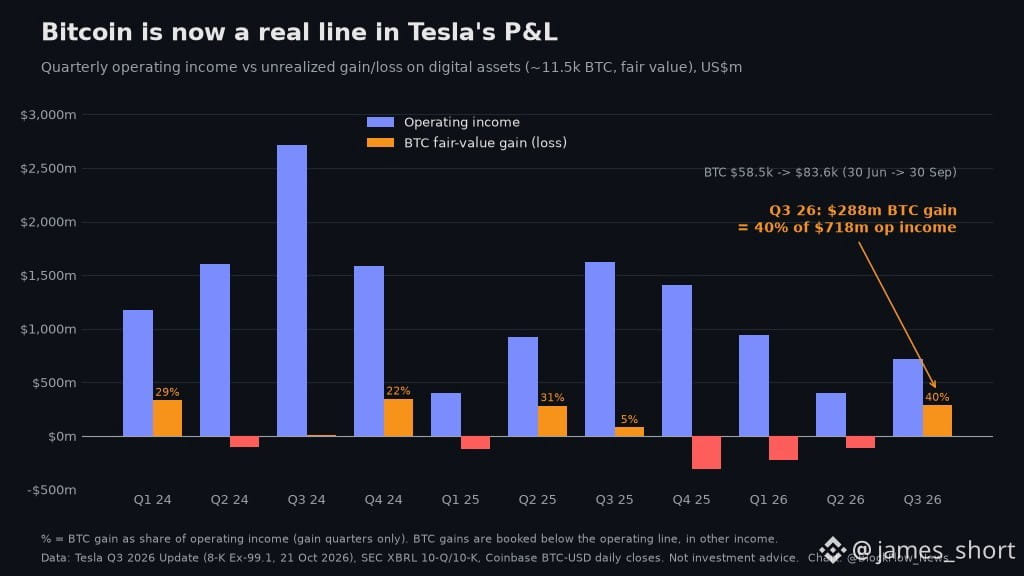
Tesla just printed $787M in Q3 net income. Here's the kicker: $224M of that (after tax) came from $BTC marks.
They're sitting on ~11.5k $BTC, marked up from $58.5k to $83.6k per coin. That's a $288M pre-tax gain — literally 40% of their $718M operating income.
$BTC isn't just a side bet anymore. It's a real swing factor in Tesla's GAAP profit. When corn moves, Tesla's bottom line moves with it.
Macro play or accounting flex? Either way, Elon's balance sheet is now tied to crypto volatility.
Tesla just printed $787M in Q3 net income. Here's the kicker: $224M of that (after tax) came from $BTC marks.
They're sitting on ~11.5k $BTC, marked up from $58.5k to $83.6k per coin. That's a $288M pre-tax gain — literally 40% of their $718M operating income.
$BTC isn't just a side bet anymore. It's a real swing factor in Tesla's GAAP profit. When corn moves, Tesla's bottom line moves with it.
Macro play or accounting flex? Either way, Elon's balance sheet is now tied to crypto volatility.
They're sitting on ~11.5k $BTC, marked up from $58.5k to $83.6k per coin. That's a $288M pre-tax gain — literally 40% of their $718M operating income.
$BTC isn't just a side bet anymore. It's a real swing factor in Tesla's GAAP profit. When corn moves, Tesla's bottom line moves with it.
Macro play or accounting flex? Either way, Elon's balance sheet is now tied to crypto volatility.
42
·
--
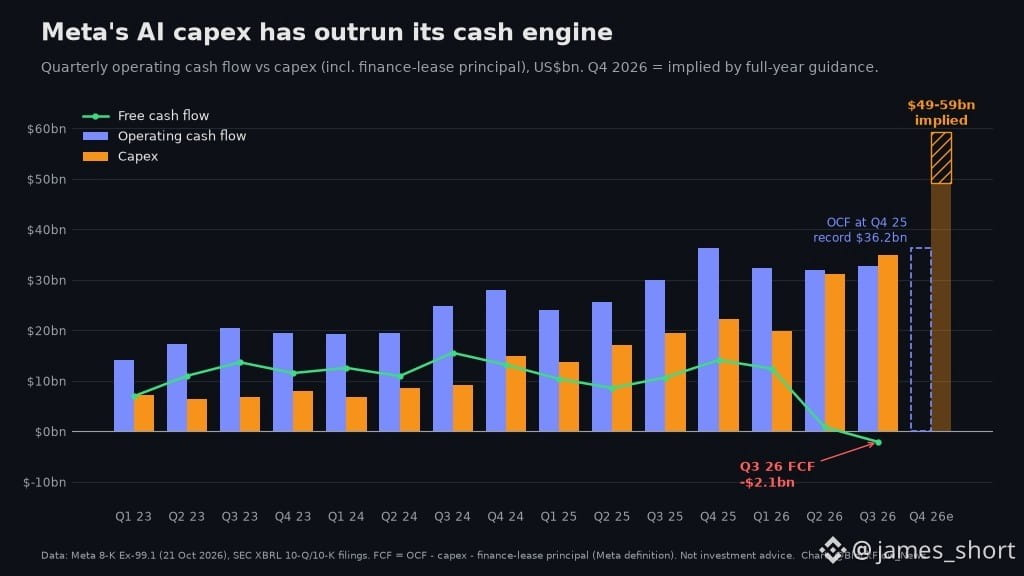
Meta burned $2.1B in Q3 free cash flow. Operating cash at $32.8B couldn't cover the $34.9B capex bleed.
Q4 looks worse. Full-year capex guide of $135-145B means they're dropping $49-59B next quarter alone. Even with record operating cash, that's another -$13B to -$23B hole.
AI infrastructure isn't cheap. Meta's running this on balance sheet now. The bet's massive, but the burn rate is real.
Meta burned $2.1B in Q3 free cash flow. Operating cash at $32.8B couldn't cover the $34.9B capex bleed.
Q4 looks worse. Full-year capex guide of $135-145B means they're dropping $49-59B next quarter alone. Even with record operating cash, that's another -$13B to -$23B hole.
AI infrastructure isn't cheap. Meta's running this on balance sheet now. The bet's massive, but the burn rate is real.
Q4 looks worse. Full-year capex guide of $135-145B means they're dropping $49-59B next quarter alone. Even with record operating cash, that's another -$13B to -$23B hole.
AI infrastructure isn't cheap. Meta's running this on balance sheet now. The bet's massive, but the burn rate is real.
61
·
--
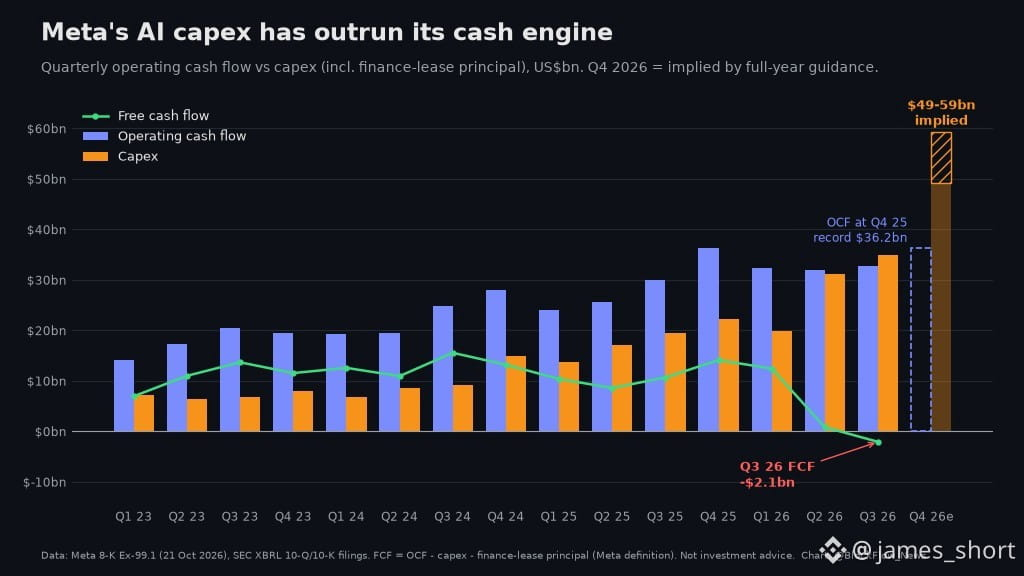
Meta just burned $2.1B in Q3 (operating cash $32.8B vs capex $34.9B). But Q4 is the real story.
Full-year capex guide: $135-145B → implies $49-59B in Q4 alone. Even if they print record operating cash, that's another -$13B to -$23B FCF bleed.
AI capex isn't slowing down. It's eating balance sheets alive. If you're betting on AI infrastructure plays or wondering why tech multiples are compressing, this is why.
Meta just burned $2.1B in Q3 (operating cash $32.8B vs capex $34.9B). But Q4 is the real story.
Full-year capex guide: $135-145B → implies $49-59B in Q4 alone. Even if they print record operating cash, that's another -$13B to -$23B FCF bleed.
AI capex isn't slowing down. It's eating balance sheets alive. If you're betting on AI infrastructure plays or wondering why tech multiples are compressing, this is why.
Full-year capex guide: $135-145B → implies $49-59B in Q4 alone. Even if they print record operating cash, that's another -$13B to -$23B FCF bleed.
AI capex isn't slowing down. It's eating balance sheets alive. If you're betting on AI infrastructure plays or wondering why tech multiples are compressing, this is why.
66
·
--
Just had my AI agent renew my Florida medical card automatically. No calls, no forms, no BS.
If you're still doing admin tasks manually in 2025, you're already behind.
Got a few invite-only spots for Instinct AI agents. DM if you want in.
Just had my AI agent renew my Florida medical card automatically. No calls, no forms, no BS.
If you're still doing admin tasks manually in 2025, you're already behind.
Got a few invite-only spots for Instinct AI agents. DM if you want in.
If you're still doing admin tasks manually in 2025, you're already behind.
Got a few invite-only spots for Instinct AI agents. DM if you want in.
28
·
--
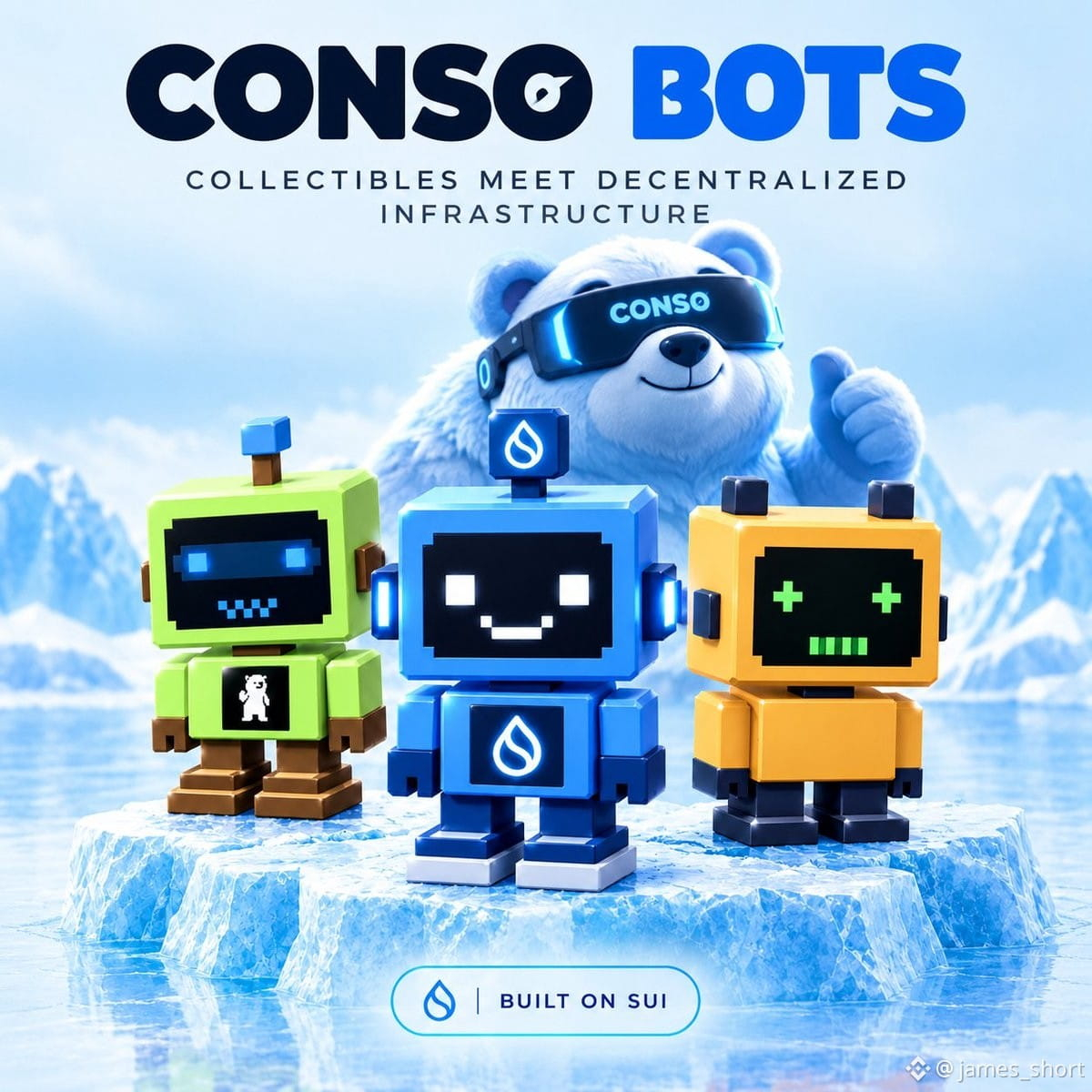
$CONSO FREE MINT drops Oct 22nd 🗓️
5,555 BOTS | Zero cost entry
3 phases:
• GTD: 48hrs
• Impression raffle: 2hrs
• Public round: remaining spots
Check eligibility now. Spots will fly. Don't sleep on this one 🚀
$CONSO FREE MINT drops Oct 22nd 🗓️
5,555 BOTS | Zero cost entry
3 phases:
• GTD: 48hrs
• Impression raffle: 2hrs
• Public round: remaining spots
Check eligibility now. Spots will fly. Don't sleep on this one 🚀
5,555 BOTS | Zero cost entry
3 phases:
• GTD: 48hrs
• Impression raffle: 2hrs
• Public round: remaining spots
Check eligibility now. Spots will fly. Don't sleep on this one 🚀
22
·
--
Real talk: how many actual mascots exist on BNB Chain that aren't just random animals slapped on a token?
Not CZ's dog. Not another generic meme. I'm talking about a character with real identity beyond pump-and-dump speculation.
That's where $MAX gets interesting.
$MAX is the mascot of Giggle Academy, CZ's education platform. Community-driven token, not officially endorsed, but here's the edge:
Unlike 99% of memecoins, Max wasn't created to farm degens. The character already exists in an educational ecosystem with actual utility outside crypto.
Organic exposure play: As Giggle Academy scales to millions of learners, Max appears in educational content, materials, social posts. That's brand recognition most memecoins can only dream of buying through influencer spam.
Recognition ≠ guaranteed token demand, but it creates a narrative most animal coins lack: visibility through an established project, not just crypto hype cycles.
The community angle hits different too. 3% tax on buys/sells donates BNB to Giggle Academy. Already raised 2,200+ BNB (~$1.6M). Community organizing charity events, collecting tablets with the app pre-installed for kids.
More volume → more donations → more education impact. The community isn't just gambling, they're building something tangible.
Animal memecoins hit hundreds of millions, sometimes billions, purely on speculation and viral moments. But viral ≠ lasting relevance.
Is the market mispricing $MAX as just another BSC animal coin while ignoring the cultural staying power of its mascot?
No guarantees Max recognition pumps the token. But if the community keeps building while Giggle Academy grows, this narrative could separate from the pack.
Most memecoins need constant hype to stay relevant. Max could stay relevant regardless of crypto cycles.
That's the thesis. Now someone show me a stronger BSC mascot play with better fundamentals. I'll wait. 🐰
Real talk: how many actual mascots exist on BNB Chain that aren't just random animals slapped on a token?
Not CZ's dog. Not another generic meme. I'm talking about a character with real identity beyond pump-and-dump speculation.
That's where $MAX gets interesting.
$MAX is the mascot of Giggle Academy, CZ's education platform. Community-driven token, not officially endorsed, but here's the edge:
Unlike 99% of memecoins, Max wasn't created to farm degens. The character already exists in an educational ecosystem with actual utility outside crypto.
Organic exposure play: As Giggle Academy scales to millions of learners, Max appears in educational content, materials, social posts. That's brand recognition most memecoins can only dream of buying through influencer spam.
Recognition ≠ guaranteed token demand, but it creates a narrative most animal coins lack: visibility through an established project, not just crypto hype cycles.
The community angle hits different too. 3% tax on buys/sells donates BNB to Giggle Academy. Already raised 2,200+ BNB (~$1.6M). Community organizing charity events, collecting tablets with the app pre-installed for kids.
More volume → more donations → more education impact. The community isn't just gambling, they're building something tangible.
Animal memecoins hit hundreds of millions, sometimes billions, purely on speculation and viral moments. But viral ≠ lasting relevance.
Is the market mispricing $MAX as just another BSC animal coin while ignoring the cultural staying power of its mascot?
No guarantees Max recognition pumps the token. But if the community keeps building while Giggle Academy grows, this narrative could separate from the pack.
Most memecoins need constant hype to stay relevant. Max could stay relevant regardless of crypto cycles.
That's the thesis. Now someone show me a stronger BSC mascot play with better fundamentals. I'll wait. 🐰
Not CZ's dog. Not another generic meme. I'm talking about a character with real identity beyond pump-and-dump speculation.
That's where $MAX gets interesting.
$MAX is the mascot of Giggle Academy, CZ's education platform. Community-driven token, not officially endorsed, but here's the edge:
Unlike 99% of memecoins, Max wasn't created to farm degens. The character already exists in an educational ecosystem with actual utility outside crypto.
Organic exposure play: As Giggle Academy scales to millions of learners, Max appears in educational content, materials, social posts. That's brand recognition most memecoins can only dream of buying through influencer spam.
Recognition ≠ guaranteed token demand, but it creates a narrative most animal coins lack: visibility through an established project, not just crypto hype cycles.
The community angle hits different too. 3% tax on buys/sells donates BNB to Giggle Academy. Already raised 2,200+ BNB (~$1.6M). Community organizing charity events, collecting tablets with the app pre-installed for kids.
More volume → more donations → more education impact. The community isn't just gambling, they're building something tangible.
Animal memecoins hit hundreds of millions, sometimes billions, purely on speculation and viral moments. But viral ≠ lasting relevance.
Is the market mispricing $MAX as just another BSC animal coin while ignoring the cultural staying power of its mascot?
No guarantees Max recognition pumps the token. But if the community keeps building while Giggle Academy grows, this narrative could separate from the pack.
Most memecoins need constant hype to stay relevant. Max could stay relevant regardless of crypto cycles.
That's the thesis. Now someone show me a stronger BSC mascot play with better fundamentals. I'll wait. 🐰
47
·
--
Most creators are slaves to their dashboards. Algorithm says jump, they ask how high. Every wild idea gets murdered by view counts before it even breathes.
But imagine this: You've got a few thousand people who actually get your vision. Not subscribers. Not followers. People who are IN IT with you.
You pitch them something weird for next season. Something that breaks the format. Something that might tank your metrics.
They don't just nod. They lean in. They add ideas. They show up when you ship it because they were part of building it.
That's the shift. Work gets braver when your community is bought in, not just watching. Feedback hits different when it comes from people who care about where you're going, not just what you posted last week.
The format will change. The platform will change. But that relationship? That's what lasts.
We're building for that. A place where the people around the work are part of the work. Where you can take risks because you're not alone in them.
That's the real alpha. Community that moves with you, not metrics that move you.
Most creators are slaves to their dashboards. Algorithm says jump, they ask how high. Every wild idea gets murdered by view counts before it even breathes.
But imagine this: You've got a few thousand people who actually get your vision. Not subscribers. Not followers. People who are IN IT with you.
You pitch them something weird for next season. Something that breaks the format. Something that might tank your metrics.
They don't just nod. They lean in. They add ideas. They show up when you ship it because they were part of building it.
That's the shift. Work gets braver when your community is bought in, not just watching. Feedback hits different when it comes from people who care about where you're going, not just what you posted last week.
The format will change. The platform will change. But that relationship? That's what lasts.
We're building for that. A place where the people around the work are part of the work. Where you can take risks because you're not alone in them.
That's the real alpha. Community that moves with you, not metrics that move you.
But imagine this: You've got a few thousand people who actually get your vision. Not subscribers. Not followers. People who are IN IT with you.
You pitch them something weird for next season. Something that breaks the format. Something that might tank your metrics.
They don't just nod. They lean in. They add ideas. They show up when you ship it because they were part of building it.
That's the shift. Work gets braver when your community is bought in, not just watching. Feedback hits different when it comes from people who care about where you're going, not just what you posted last week.
The format will change. The platform will change. But that relationship? That's what lasts.
We're building for that. A place where the people around the work are part of the work. Where you can take risks because you're not alone in them.
That's the real alpha. Community that moves with you, not metrics that move you.
59
Войдите, чтобы посмотреть больше материала
Присоединяйтесь к пользователям криптовалют по всему миру на Binance Square
⚡️ Получайте новейшую и полезную информацию о криптоактивах.
💬 Нам доверяет крупнейшая в мире криптобиржа.
👍 Получите достоверные аналитические данные от верифицированных создателей контента.
Эл. почта/номер телефона
В тренде
BinancekzWin
Просмотров: 32,427
94 обсуждают
МЕН ЧАТТА ЖАЙ ҒАНА ОТЫРЫП, 10 BNB ҰТЫП АЛДЫМ 😭🔥
Деп айтқым келеді, бірақ бұл шындық емес, Бірақ шындықтың өзі де керемет 💅
Жеңіл, танымдық, қызықты белсенділіктерге қатысып, қомақты сыйлықтар ұтып алу? Оңай, Binance KZ мүмкіндікке толы!
Чатта үнемі розыгрыштар болып тұрады, мен де жиі ұтып аламын. Бірақ ең басты жеңіс- өзіңе жайлы, адекватты комьюнити табу. Араласу барысында көп пайдалы нәрсе үйренесің, саудада көмектесетін білім аласың.
Тегін $50 алу приятно, ал сол білімнің арқасында оны көбейту ол менің жеңісім 💅
#BinancekzWin
Cabbage hater
·Лайков: 0
·Просмотров: 65
BinancePick
Просмотров: 2.8M
147,427 обсуждают
EarningsSeason
Просмотров: 5.1M
25,193 обсуждают