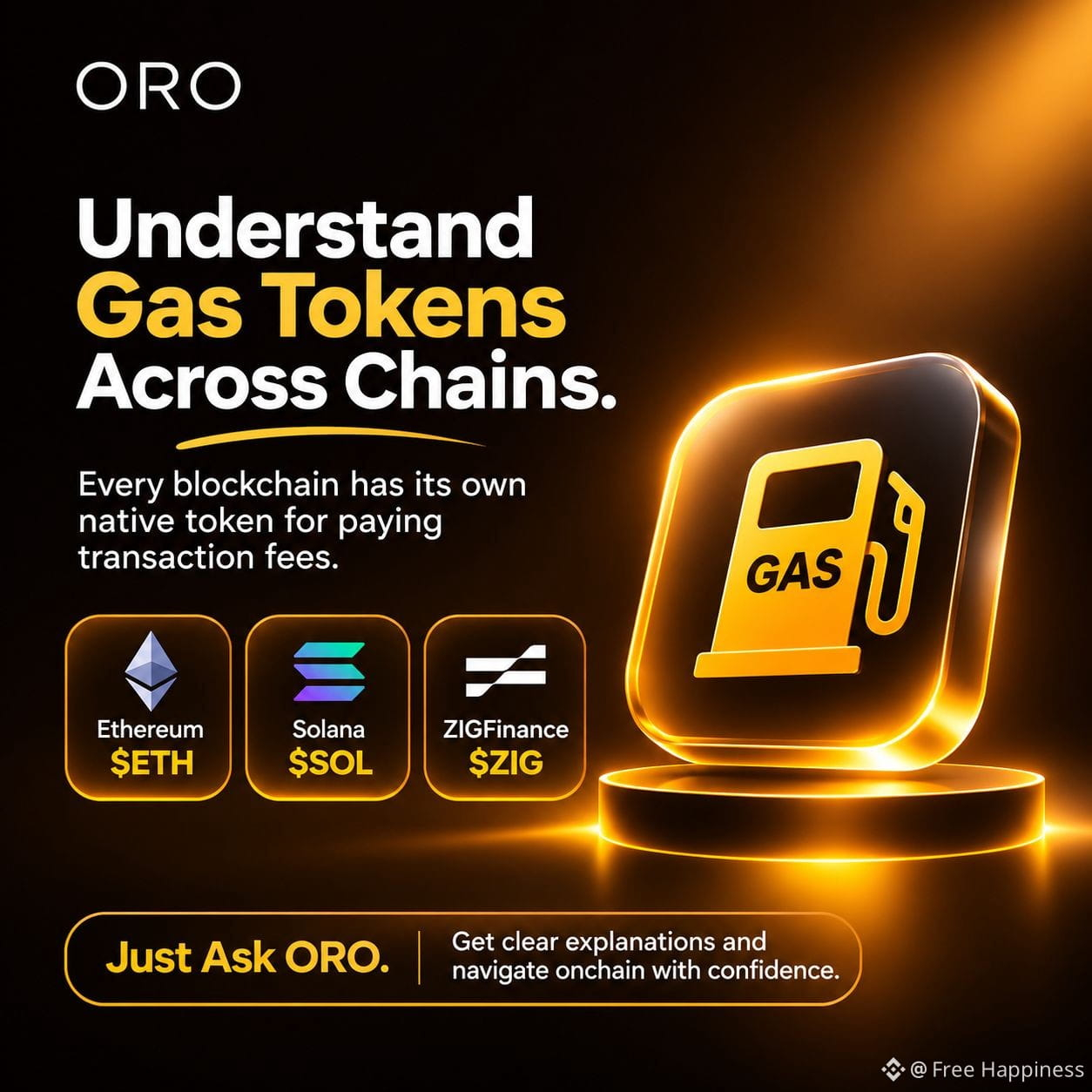
One of the easiest ways to get stuck onchain is having the right asset but the wrong gas token.
Every blockchain has its own native token for paying transaction fees. Ethereum uses $ETH, Solana uses $SOL, and ZIGFinance uses $ZIG.
But what exactly is gas? Gas measures the computational resources required to execute operations on a blockchain, while the network's native token is used to pay the resulting transaction fees. Whether you're swapping tokens, transferring assets, or approving a smart contract, you'll generally need some of that native token to cover the cost.
Here's what that means in practice:
On Ethereum, you'll need ETH to cover gas when making a swap. Holding USDC alone may not be enough to complete the transaction.
On Solana, SOL is used to pay transaction fees. Even if your wallet holds other Solana-based tokens, you'll still need some SOL.
On ZIG Chain, ZIG serves as the network's gas token. Having the assets you want to move doesn't eliminate the need for transaction fees.
This becomes especially important when moving between chains. A token you hold on one network won't automatically cover gas fees on another. You need to consider the specific network you're interacting with.
Before making an onchain transaction, ask yourself:
- Which network am I using?
- What is its native gas token?
- Do I have enough to cover the transaction?
- Have I reviewed the transaction details before signing?
Not sure about gas tokens, network fees, or what you need before interacting with a DeFi protocol?
Just Ask ORO. Get clear explanations and understand your onchain options before taking action.
Understand the network. Know the cost. Stay in control.
ORO is clarity.
#DEFİ #ORO