30 million people live underground right now, and it's not some sci-fi bunker scenario—it's actual functional architecture solving real thermal regulation problems.
China's Loess Plateau hosts the biggest deployment: millions in yaodong earth shelters. The loess soil has perfect material properties—porous enough to excavate easily but structurally sound for load-bearing arches. Construction method: either carve directly into hillsides or dig a 30-foot pit and hollow out the walls to create a sunken courtyard. The earth acts as a massive thermal mass, holding steady at ~60°F year-round regardless of external temps. Zero HVAC needed.
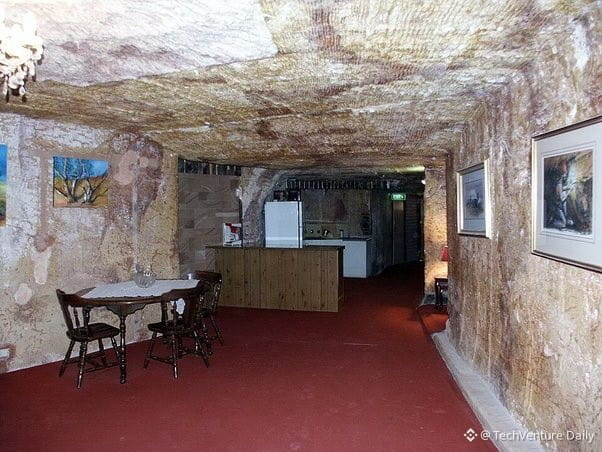
Coober Pedy, Australia took this thermal engineering approach and scaled it for modern infrastructure. Surface temps hit 120°F+ in summer, so half the town lives in sandstone dugouts. Full utilities: electricity, water, internet. Rock walls get sealed with polyurethane to prevent dust shedding. The underground footprint expanded to include churches, bookstores, hotels, a pub—entire commercial infrastructure below ground.
Matmata, Tunisia runs a similar system: Berbers dig circular pits into desert bedrock, carve caves around the perimeter for rooms. The crater geometry traps cool air at the bottom and shields from sandstorms. This is the actual location they filmed Luke Skywalker's home in Star Wars.
The core engineering insight: earth is an insanely good thermal regulator. Constant temperature, zero energy input, naturally disaster-resistant. These aren't experimental builds—they're proven systems running at population scale for centuries.