AMD BEATS EXPECTATIONS — THE AI BOOM IS FAR FROM OVER!
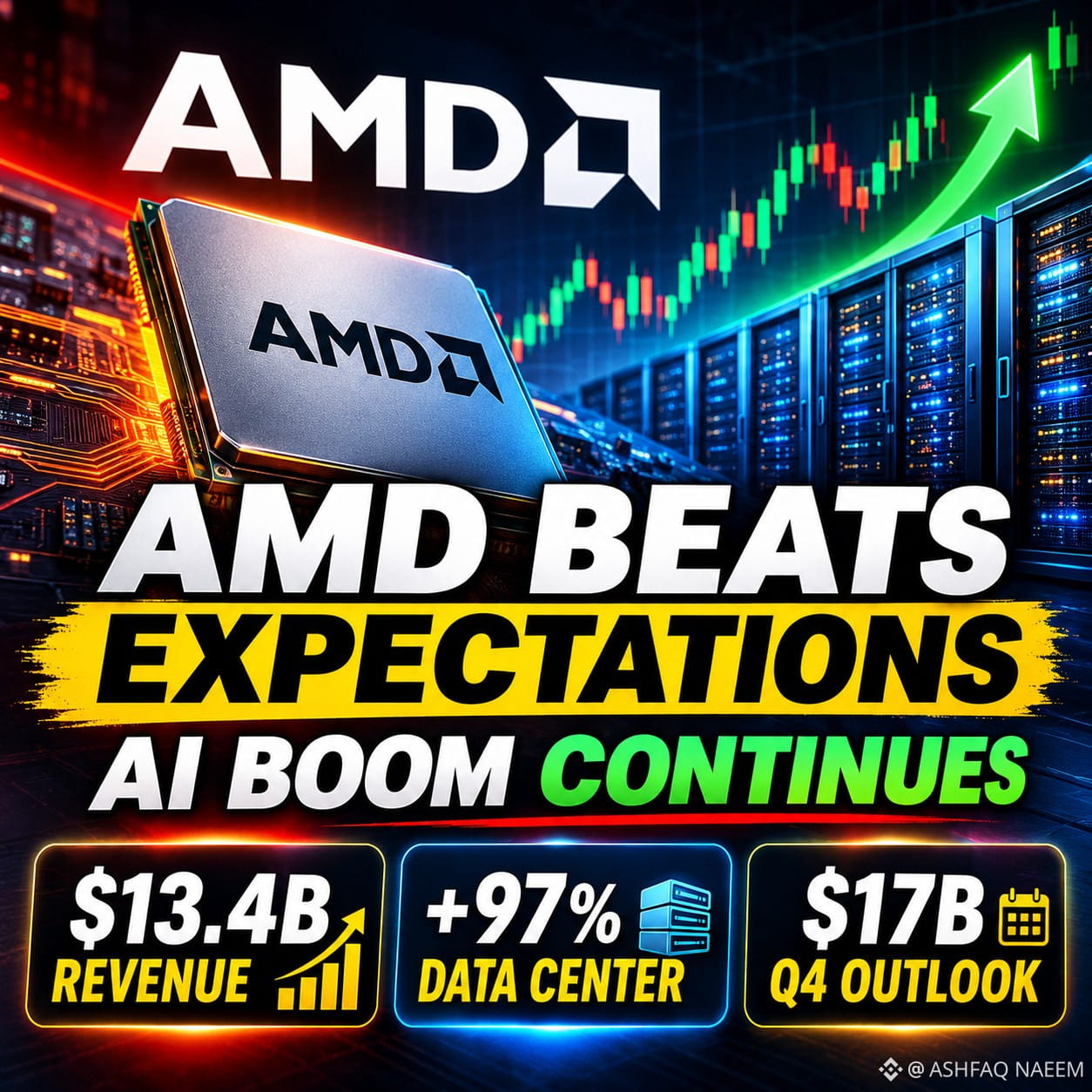
AMD just delivered another powerful signal that demand for AI infrastructure remains strong. The chipmaker reported record third-quarter 2026 revenue of $13.4 billion, up 45% year over year, beating Wall Street expectations. Adjusted earnings reached $2.09 per share, above the $1.94 analyst estimate. But the biggest story was its Data Center business, where revenue nearly doubled to $8.5 billion, jumping 97% year over year as demand for AI GPUs and EPYC server processors continued to accelerate.
The outlook was equally important. AMD expects fourth-quarter revenue of approximately $17 billion, representing around 66% year-over-year growth at the midpoint. The company also highlighted growing demand for its next-generation Helios systems and Venice CPUs. These results reinforce the broader AI infrastructure narrative and show that spending on computing capacity is creating opportunities beyond Nvidia.
However, strong earnings do not eliminate investment risks. AMD still faces intense competition, high expectations, and questions about how sustainably AI companies can turn massive infrastructure spending into profits. Its Client and Gaming segment also declined 8% year over year, showing that growth is not equally strong across every business.
The bigger takeaway: AI demand is translating into real revenue growth for AMD, but investors will now watch whether the company can maintain this momentum and deliver on its ambitious outlook.
Do you believe AMD can become a stronger challenger in the AI chip market, or will Nvidia continue to dominate?
#amdbeatsexpectations-ainarrativecontinues $AMD $AMDB $AMD.US
AMD just delivered another powerful signal that demand for AI infrastructure remains strong. The chipmaker reported record third-quarter 2026 revenue of $13.4 billion, up 45% year over year, beating Wall Street expectations. Adjusted earnings reached $2.09 per share, above the $1.94 analyst estimate. But the biggest story was its Data Center business, where revenue nearly doubled to $8.5 billion, jumping 97% year over year as demand for AI GPUs and EPYC server processors continued to accelerate.
The outlook was equally important. AMD expects fourth-quarter revenue of approximately $17 billion, representing around 66% year-over-year growth at the midpoint. The company also highlighted growing demand for its next-generation Helios systems and Venice CPUs. These results reinforce the broader AI infrastructure narrative and show that spending on computing capacity is creating opportunities beyond Nvidia.
However, strong earnings do not eliminate investment risks. AMD still faces intense competition, high expectations, and questions about how sustainably AI companies can turn massive infrastructure spending into profits. Its Client and Gaming segment also declined 8% year over year, showing that growth is not equally strong across every business.
The bigger takeaway: AI demand is translating into real revenue growth for AMD, but investors will now watch whether the company can maintain this momentum and deliver on its ambitious outlook.
Do you believe AMD can become a stronger challenger in the AI chip market, or will Nvidia continue to dominate?
#amdbeatsexpectations-ainarrativecontinues $AMD $AMDB $AMD.US