I’ve been looking at how different pool types behave on STONfi, and the distinction between constant product and StableSwap is more practical than it first appears.
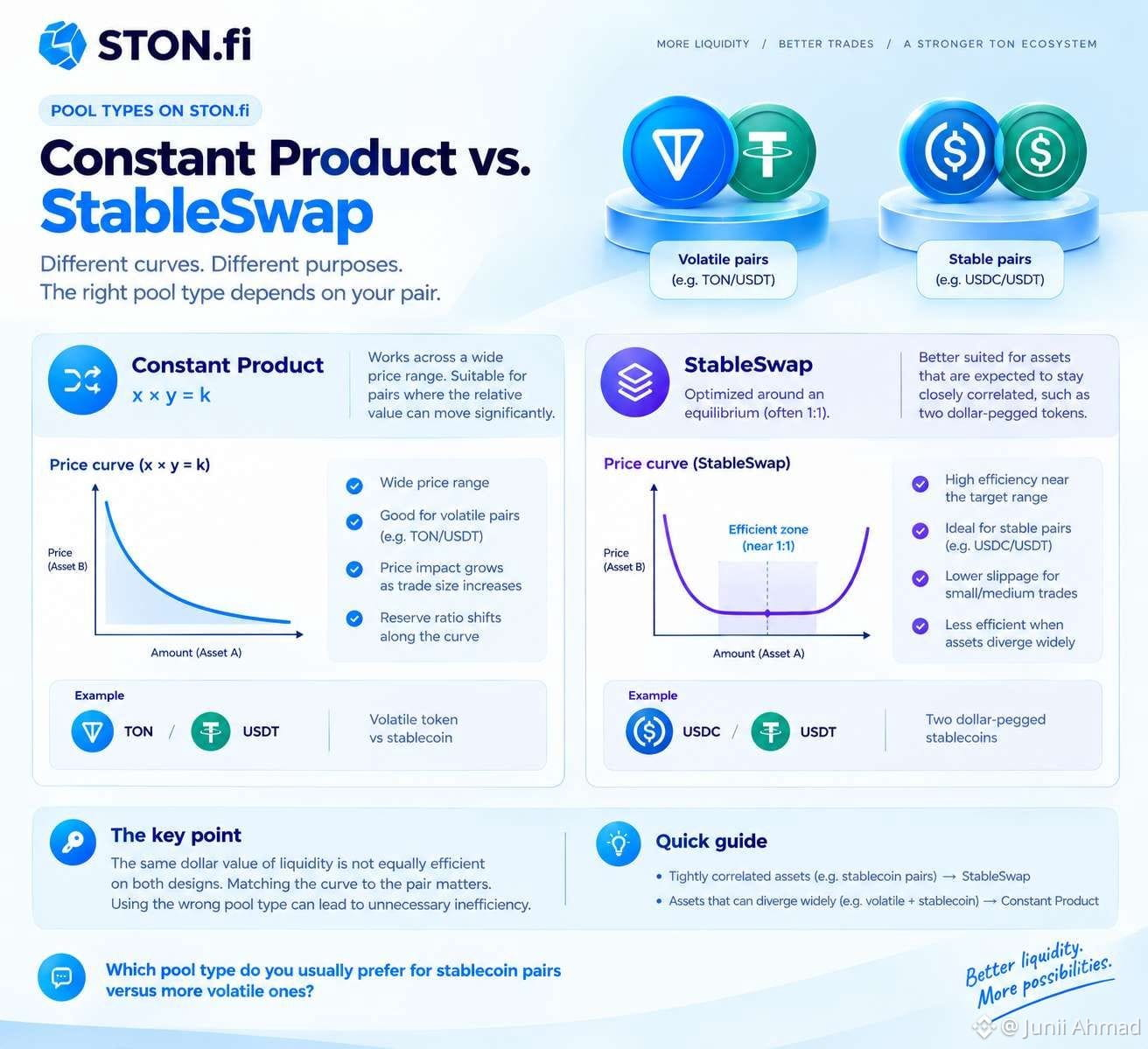
Constant product pools use the classic x * y = k model. They work across a wide price range, which makes them suitable for pairs where the relative value of the two assets can move significantly for example, a volatile token against a stablecoin. As trade size increases, the price impact grows because the reserve ratio shifts further along the curve.
StableSwap is designed for a different situation. It concentrates efficiency around an expected equilibrium, often near 1:1. This makes it better suited for assets that are expected to stay closely correlated, such as two dollar-pegged tokens. The same amount of liquidity can be more efficient on this curve when the price stays near the target range.
The key point is that the same dollar value of liquidity is not equally efficient on both designs. Matching the curve to the pair matters. Using a constant product pool for tightly correlated assets, or a StableSwap pool for assets that can diverge widely, can lead to unnecessary inefficiency.
Understanding which curve fits the pair helps when reviewing pools or providing liquidity.
Which pool type do you usually prefer for stablecoin pairs versus more volatile ones?
#defi #STONfi $GRAM
Constant product pools use the classic x * y = k model. They work across a wide price range, which makes them suitable for pairs where the relative value of the two assets can move significantly for example, a volatile token against a stablecoin. As trade size increases, the price impact grows because the reserve ratio shifts further along the curve.
StableSwap is designed for a different situation. It concentrates efficiency around an expected equilibrium, often near 1:1. This makes it better suited for assets that are expected to stay closely correlated, such as two dollar-pegged tokens. The same amount of liquidity can be more efficient on this curve when the price stays near the target range.
The key point is that the same dollar value of liquidity is not equally efficient on both designs. Matching the curve to the pair matters. Using a constant product pool for tightly correlated assets, or a StableSwap pool for assets that can diverge widely, can lead to unnecessary inefficiency.
Understanding which curve fits the pair helps when reviewing pools or providing liquidity.
Which pool type do you usually prefer for stablecoin pairs versus more volatile ones?
#defi #STONfi $GRAM