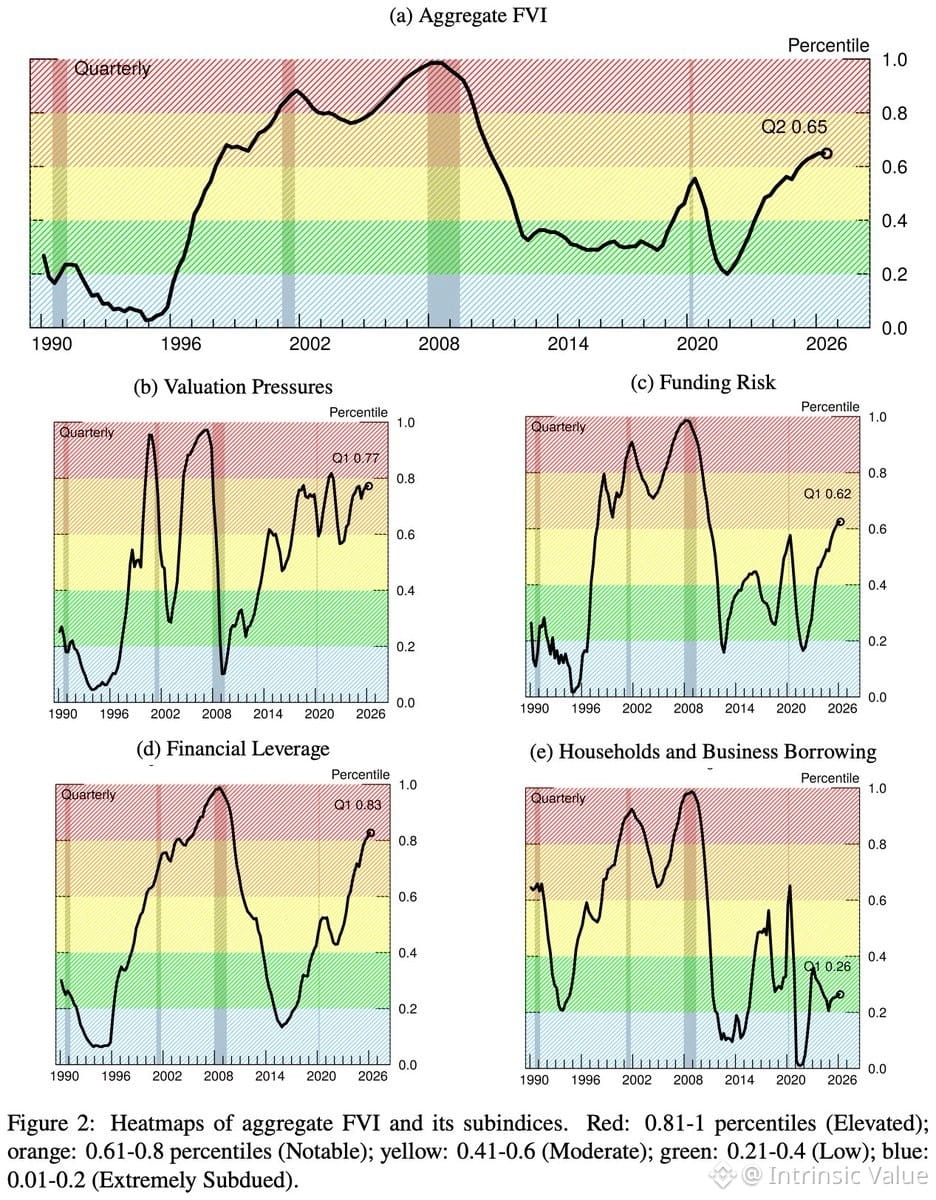
The Fed's new Financial Vulnerability Index hit the 65th percentile in Q2 — officially "notable" but not yet "elevated."
This is the kind of metric that matters more in hindsight than in real-time. Markets can stay vulnerable for years without breaking, or snap in a quarter when liquidity disappears. The index is useful for context, not timing.
What it does tell us: credit stress, asset valuations, and leverage are all running warm. Not flashing red, but warm enough that you shouldn't be surprised if something eventually cracks.
The problem with vulnerability indices is they measure conditions, not catalysts. You can be vulnerable and nothing happens. Or you can be fine and a random event tips everything over.
Still, worth tracking. When this crosses into "elevated" territory, that's when the Fed starts worrying publicly.
This is the kind of metric that matters more in hindsight than in real-time. Markets can stay vulnerable for years without breaking, or snap in a quarter when liquidity disappears. The index is useful for context, not timing.
What it does tell us: credit stress, asset valuations, and leverage are all running warm. Not flashing red, but warm enough that you shouldn't be surprised if something eventually cracks.
The problem with vulnerability indices is they measure conditions, not catalysts. You can be vulnerable and nothing happens. Or you can be fine and a random event tips everything over.
Still, worth tracking. When this crosses into "elevated" territory, that's when the Fed starts worrying publicly.