


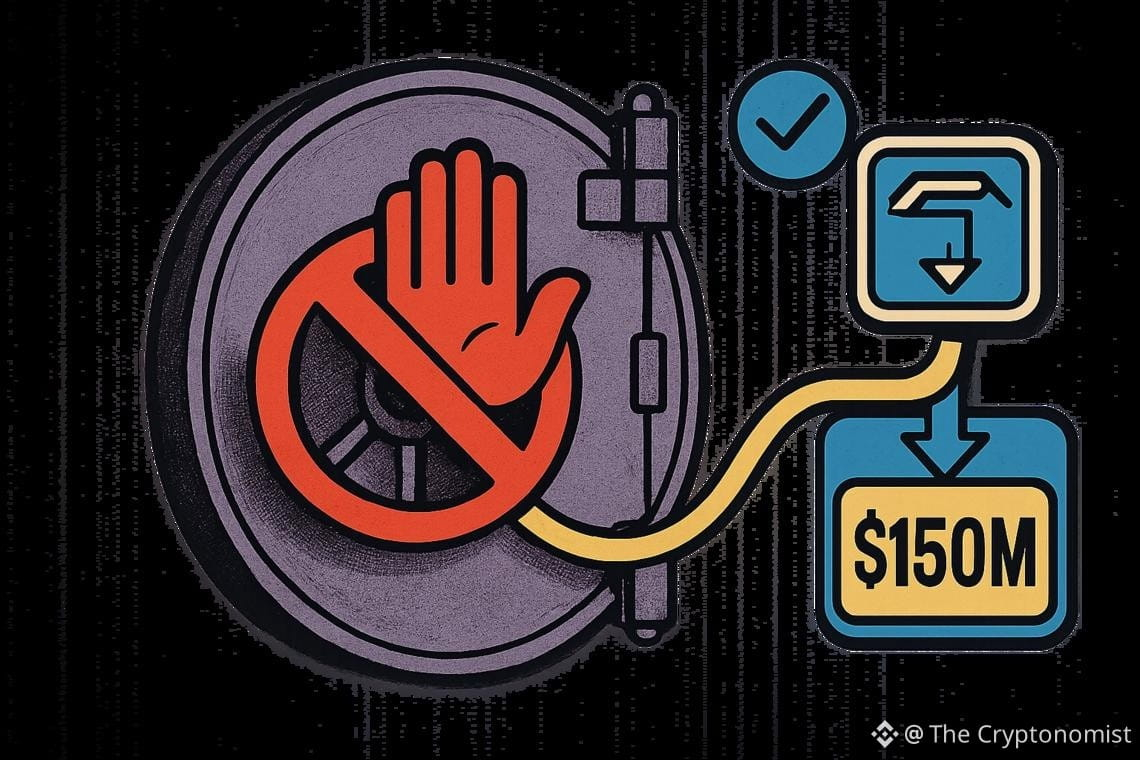
Bitcoin holders on Wall Street’s favorite new blockchain just got a way to put their coins to work without selling anything. Circle’s wrapped Bitcoin token, cirBTC, went live on the Arc network on September 21, 2026, giving institutions a regulated path to use Bitcoin as collateral inside a chain built specifically for corporate finance. The launch landed five days after Arc itself opened its mainnet to the public, and within its first 24 hours, cirBTC had already pulled in more than $150 million in lending deposits through one protocol alone.
Key takeaways
Circle’s wrapped Bitcoin token, cirBTC, launched on Arc mainnet on September 21, 2026, five days after Arc’s own public debut.
cirBTC is backed 1:1 by real Bitcoin held in reserve, issued by Circle International Bermuda Limited and regulated by the Bermuda Monetary Authority.
Chainlink verifies proof of reserves in real time through an on-chain system.
Morpho reported over $150 million in first-day lending deposits using cirBTC as collateral, while Aave V4 opened matching markets almost simultaneously.
As of September 19-20, 2026, total cirBTC supply sat around 949 tokens, worth roughly $77 million, against reserves of about 951 BTC.
Circle launches cirBTC on Arc mainnet
The arrival of Circle wrapped Bitcoin on Arc marks the company’s attempt to bring Bitcoin liquidity into a blockchain designed from the ground up for regulated, institutional finance. Arc’s own launch had already drawn attention: the chain rolled out with an inaugural validator list that included Visa, Mastercard and BlackRock, built on EVM-compatible code, and Circle minted 10 billion ARC tokens as part of the rollout, according to Fortune. cirBTC arrived on top of that infrastructure just five days later.
Every cirBTC token in circulation is matched 1:1 by actual Bitcoin held in reserve, meaning the wrapped asset carries no leverage or synthetic exposure baked into its structure. That backing model is the core selling point for a token aimed at institutions that need to prove, not just claim, that collateral exists.
Issuer and regulatory framework
Circle International Bermuda Limited issues cirBTC, and the Bermuda Monetary Authority regulates the operation. That regulatory wrapper is deliberate: it gives cirBTC a supervised issuance structure rather than leaving it as a purely on-chain, self-attested wrapped asset, which is the gap Circle is trying to close relative to older wrapped Bitcoin products.
Features and infrastructure behind cirBTC
Trust in a wrapped Bitcoin token lives or dies on whether the reserves are real and checkable. Circle addressed that by running real-time proof of reserves through Chainlink’s on-chain verification system, letting anyone check that cirBTC’s backing matches its circulating supply at any given moment rather than relying on periodic attestations.
On the access side, users can convert BTC, cbBTC, or wBTC into cirBTC with no fees on select flows, either through Arc’s native swap and bridge portal or via Circle Mint for institutional participants. Circle Mint now also offers a Digital Asset-Backed Borrowing option for qualifying institutions, extending the same infrastructure that already underpins USDC and EURC on Arc.
That shared plumbing matters structurally. Arc’s Layer-1 blockchain uses USDC as both its gas token and its primary settlement asset, which sets it apart from chains where ETH or a separate governance token handles those roles. Folding cirBTC into that same stablecoin-native environment means Bitcoin, USDC and EURC all move through one regulated settlement layer instead of three disconnected systems.
Early adoption and market response
The clearest signal of demand came from lending markets, not spot trading. Morpho, one of the first protocols to integrate the token, reported more than $150 million in deposits into its USDC and EURC vaults on cirBTC’s first day, with the token serving as the collateral layer for those positions. Aave V4 moved almost as fast, opening cirBTC, USDC, and EURC markets on Arc nearly simultaneously with Morpho’s rollout.
First-day lending deposits and circulating supply
Supply figures from September 19 to 20, 2026, show total cirBTC in circulation at roughly 949 tokens, with somewhere between 379 and 397 of those living on Arc and the rest still on Ethereum. At that point, the outstanding supply was valued at around $77 million, while reserves held slightly ahead of demand at approximately 951 BTC. That gap between reserves and circulating tokens is a detail worth watching as adoption scales, since it shows the backing running marginally above the issued supply rather than tightly matched to it.
Significance of cirBTC in DeFi and institutional use
Circle first floated plans for cirBTC back in April 2026, positioning it explicitly as an alternative to existing wrapped Bitcoin products already circulating in DeFi. The pitch is aimed squarely at institutions that want Bitcoin exposure inside decentralized finance but need documentation they can hand to compliance and audit teams, something a segregated custody model paired with Bermuda-based regulation and Chainlink-verified reserves is meant to provide.
What this changes in practice is how Bitcoin behaves once it enters Arc’s ecosystem. Instead of forcing holders to convert BTC into a dollar-denominated position before it can generate any return, cirBTC lets Bitcoin sit directly as collateral for lending and borrowing. That turns Bitcoin into a productive asset inside a framework Circle controls from issuance through settlement, rather than leaving it as a static store of value sitting outside the stablecoin ecosystem Arc was built around.
The broader question is whether that regulated packaging is enough to pull serious institutional Bitcoin liquidity away from incumbent wrapped tokens. The first-day numbers from Morpho and Aave suggest there was pent-up demand waiting for exactly this kind of compliance-first entry point, but a single day of deposits is a start, not a verdict on where Bitcoin collateral in DeFi ultimately settles.
FAQ
What is cirBTC and when was it launched?
cirBTC is Circle’s wrapped Bitcoin token launched on the Arc network on September 21, 2026.
How is cirBTC backed to ensure its value?
cirBTC is 1:1 backed by actual Bitcoin held in reserve, with real-time proof of reserves verified by Chainlink’s on-chain system.
Who issues cirBTC and under which regulatory authority?
Circle International Bermuda Limited issues cirBTC, and it is regulated by the Bermuda Monetary Authority.
Can users convert other Bitcoin tokens to cirBTC without fees?
Yes, users can convert BTC, cbBTC, or wBTC into cirBTC with no fees on select flows.
Article produced with the assistance of artificial intelligence and reviewed by the editorial team.