Bank of Japan Pivot: Rates Reach 31-Year High
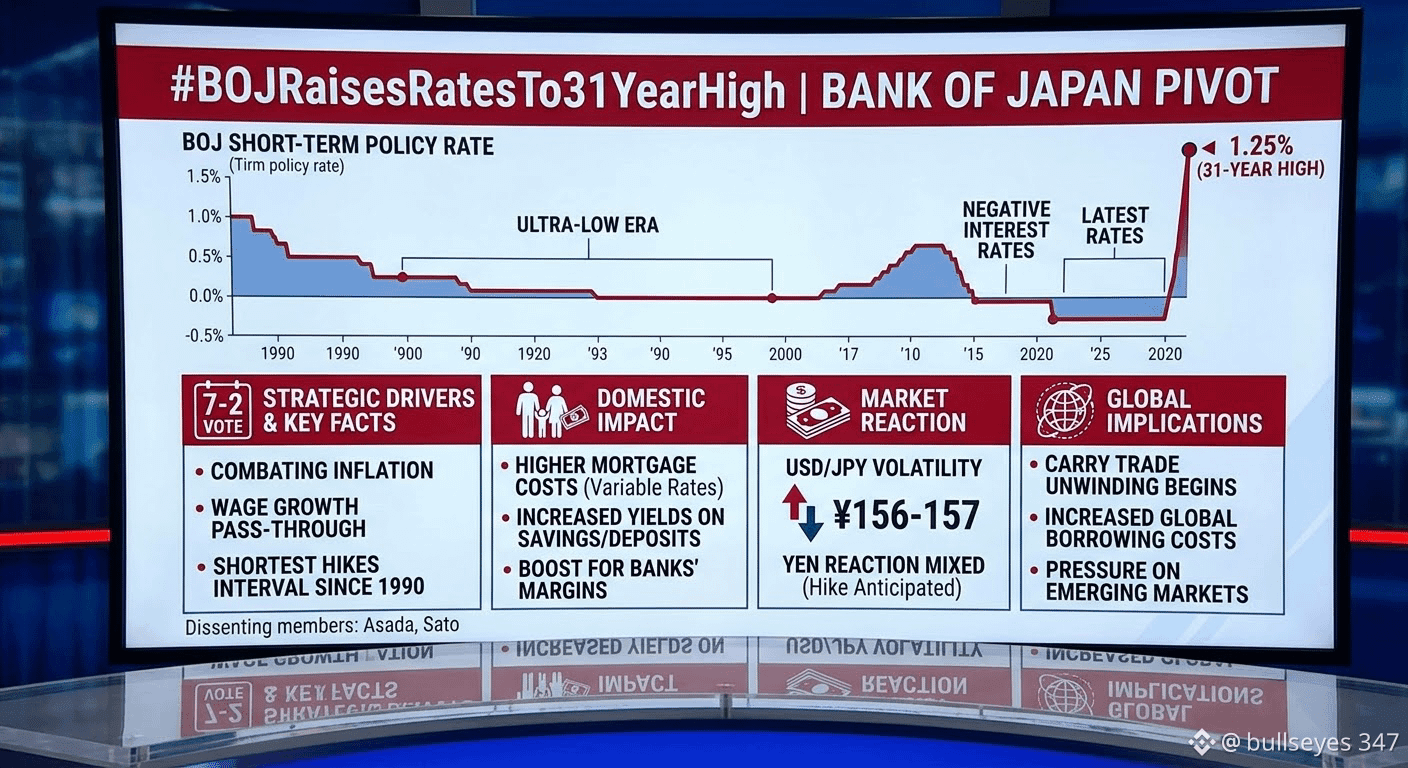
In a landmark monetary decision, the Bank of Japan (BOJ) raised its key short-term policy rate by 25 basis points to 1.25%. The decision took borrowing costs to their highest level since 1995, cementing the central bank's step away from decades of aggressive monetary stimulus.
Strategic Drivers & Split Vote
* Split Decision: The Policy Board passed the hike by a 7–2 majority. Board members Toichiro Asada and Ayano Sato dissented, cautioning that broader economic growth remains fragile.
* Inflation Control: The move comes as core CPI continues to approach and threaten to overshoot the BOJ's 2% target, driven by elevated energy prices, global AI demand, and persistent wage increases passed along by businesses.
* Policy Pace: Coming just three months after the prior rate increase to 1%, this marks the shortest interval between hikes since 1990, reflecting accelerating hawkish pressure.
Domestic & Global Impact
* Generational Divide: Higher variable mortgage rates impose higher debt costs on younger households. Conversely, asset-rich seniors benefit from higher yields on cash and time deposits.
* Market Reaction: Despite the tightening, the Japanese Yen saw immediate volatility near the ¥156–157 level against the U.S. dollar, as markets had broadly anticipated the decision.
* Carry Trade Dynamics: The steady unwinding of Japan’s ultra-cheap liquidity introduces structurally higher baseline borrowing costs, prompting institutional adjustments across global financial markets.
$NVDAB
$ETH
$BTC
#BOJRaisesRatesTo31YearHigh
#BuffettStepsDownAsBerkshireChairman
#XRPExchangeReservesHitSevenYearLow
#HKCompletesFirstHKDStablecoinUseCase
#VietnamPlansFirstCryptoLicensesIn2026
In a landmark monetary decision, the Bank of Japan (BOJ) raised its key short-term policy rate by 25 basis points to 1.25%. The decision took borrowing costs to their highest level since 1995, cementing the central bank's step away from decades of aggressive monetary stimulus.
Strategic Drivers & Split Vote
* Split Decision: The Policy Board passed the hike by a 7–2 majority. Board members Toichiro Asada and Ayano Sato dissented, cautioning that broader economic growth remains fragile.
* Inflation Control: The move comes as core CPI continues to approach and threaten to overshoot the BOJ's 2% target, driven by elevated energy prices, global AI demand, and persistent wage increases passed along by businesses.
* Policy Pace: Coming just three months after the prior rate increase to 1%, this marks the shortest interval between hikes since 1990, reflecting accelerating hawkish pressure.
Domestic & Global Impact
* Generational Divide: Higher variable mortgage rates impose higher debt costs on younger households. Conversely, asset-rich seniors benefit from higher yields on cash and time deposits.
* Market Reaction: Despite the tightening, the Japanese Yen saw immediate volatility near the ¥156–157 level against the U.S. dollar, as markets had broadly anticipated the decision.
* Carry Trade Dynamics: The steady unwinding of Japan’s ultra-cheap liquidity introduces structurally higher baseline borrowing costs, prompting institutional adjustments across global financial markets.
$NVDAB
$ETH
$BTC
#BOJRaisesRatesTo31YearHigh
#BuffettStepsDownAsBerkshireChairman
#XRPExchangeReservesHitSevenYearLow
#HKCompletesFirstHKDStablecoinUseCase
#VietnamPlansFirstCryptoLicensesIn2026