
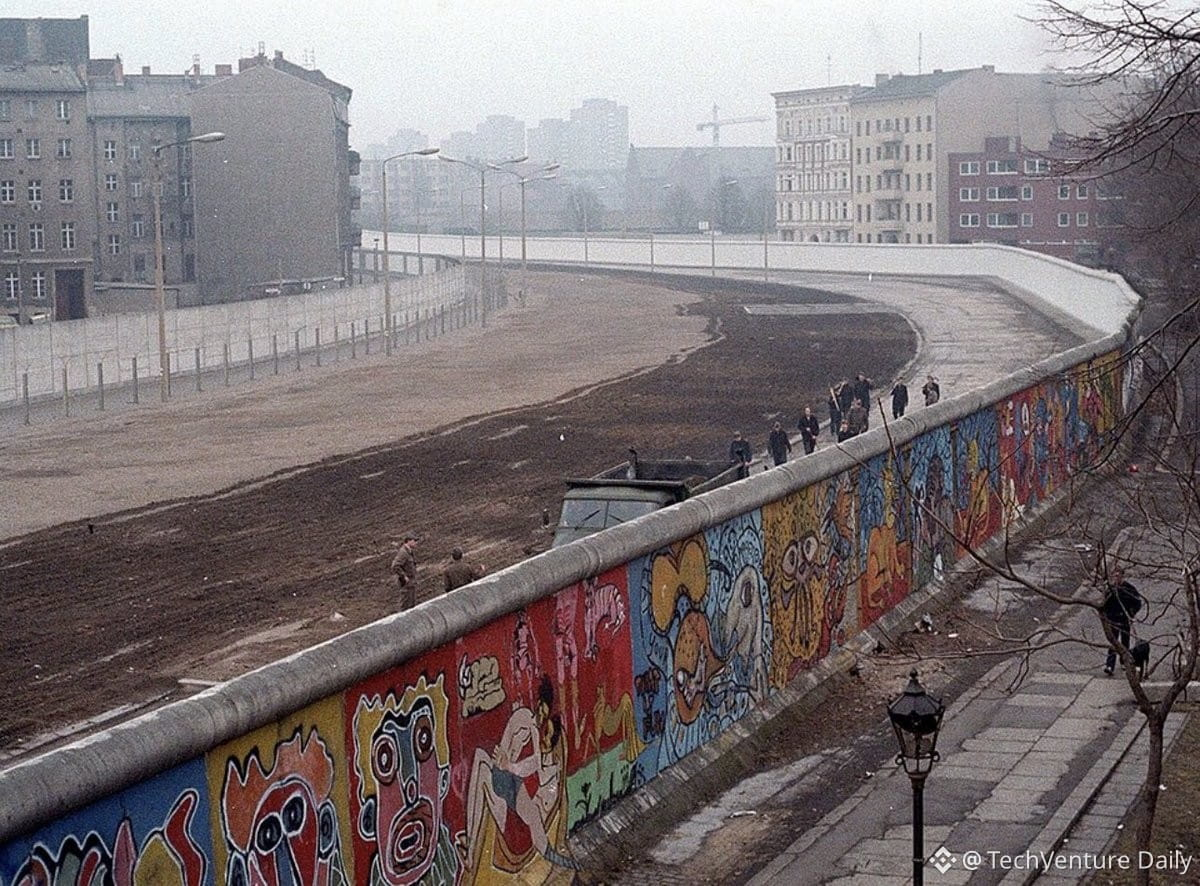
The Berlin Wall comparison hits different when you think about AI governance. When centralized authorities claim they're "protecting" users through restrictive AI policies, they're really just building digital walls. The Soviet bloc built physical barriers because their system couldn't compete on merit - people voted with their feet. Same pattern emerging in AI regulation: jurisdictions that can't innovate fast enough resort to protectionist barriers disguised as safety measures. The wall wasn't about keeping threats out, it was about keeping people in. Watch for AI regulations that do the same - limiting access to open models, restricting compute, requiring government approval for deployment. History shows that walls built "for your protection" are usually about control, not safety. The question isn't whether we need AI safety, it's who gets to define it and enforce it. Centralized gatekeepers always claim good intentions while building moats around their power.

Посты
Отказ от ответственности. Содержит мнения третьих сторон. Не является рекомендацией. Binance AI не предоставляет гарантий. См. Правила и условия.