🌍 Geopolitics Meets Bitcoin: Could Global Tensions Boost BTC Adoption?
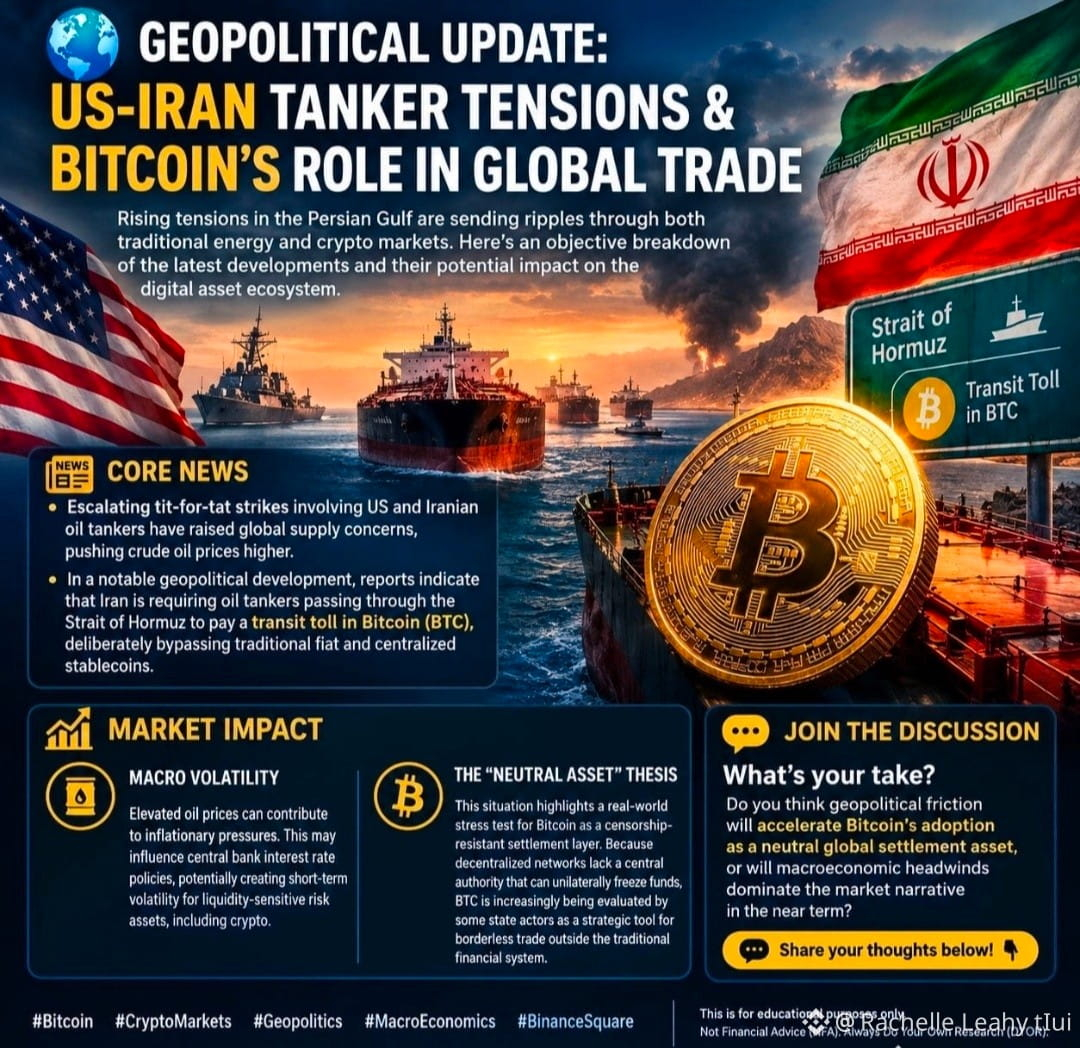
Tensions around the Persian Gulf are once again putting global energy markets and financial markets under pressure. Rising geopolitical uncertainty is creating fresh questions about oil supply, inflation, liquidity, and the future role of decentralized assets.
📰 What’s Happening?
Reports surrounding US–Iran tensions and the Strait of Hormuz have raised concerns about potential disruptions to global energy flows. Any prolonged uncertainty in this region could keep crude oil prices volatile and add pressure to global inflation expectations.
At the same time, claims that Iran could use Bitcoin for certain oil-related settlements or transit payments have sparked discussions about BTC’s potential role in international trade. These reports should be treated cautiously until independently verified.
📊 Why Does This Matter for Crypto?
🔹 Macro Pressure: Higher energy costs can increase inflation expectations and influence central-bank policy, potentially creating volatility across risk assets, including crypto.
🔹 Bitcoin’s Neutrality: Bitcoin operates on a decentralized network without a single central authority controlling transactions. That characteristic makes BTC interesting to market participants looking for a borderless settlement asset.
🔹 A Bigger Question: If geopolitical tensions continue to challenge traditional financial channels, could decentralized assets become more relevant in cross-border commerce?
⚠️ However, Bitcoin is still highly volatile, and geopolitical uncertainty can just as easily create short-term selling pressure as it can increase long-term interest.
💬 What do you think?
👇 Share your view in the comments#iran #Binance #BTC #CryptoMarkets # #BinanceSquare
Tensions around the Persian Gulf are once again putting global energy markets and financial markets under pressure. Rising geopolitical uncertainty is creating fresh questions about oil supply, inflation, liquidity, and the future role of decentralized assets.
📰 What’s Happening?
Reports surrounding US–Iran tensions and the Strait of Hormuz have raised concerns about potential disruptions to global energy flows. Any prolonged uncertainty in this region could keep crude oil prices volatile and add pressure to global inflation expectations.
At the same time, claims that Iran could use Bitcoin for certain oil-related settlements or transit payments have sparked discussions about BTC’s potential role in international trade. These reports should be treated cautiously until independently verified.
📊 Why Does This Matter for Crypto?
🔹 Macro Pressure: Higher energy costs can increase inflation expectations and influence central-bank policy, potentially creating volatility across risk assets, including crypto.
🔹 Bitcoin’s Neutrality: Bitcoin operates on a decentralized network without a single central authority controlling transactions. That characteristic makes BTC interesting to market participants looking for a borderless settlement asset.
🔹 A Bigger Question: If geopolitical tensions continue to challenge traditional financial channels, could decentralized assets become more relevant in cross-border commerce?
⚠️ However, Bitcoin is still highly volatile, and geopolitical uncertainty can just as easily create short-term selling pressure as it can increase long-term interest.
💬 What do you think?
👇 Share your view in the comments#iran #Binance #BTC #CryptoMarkets # #BinanceSquare