
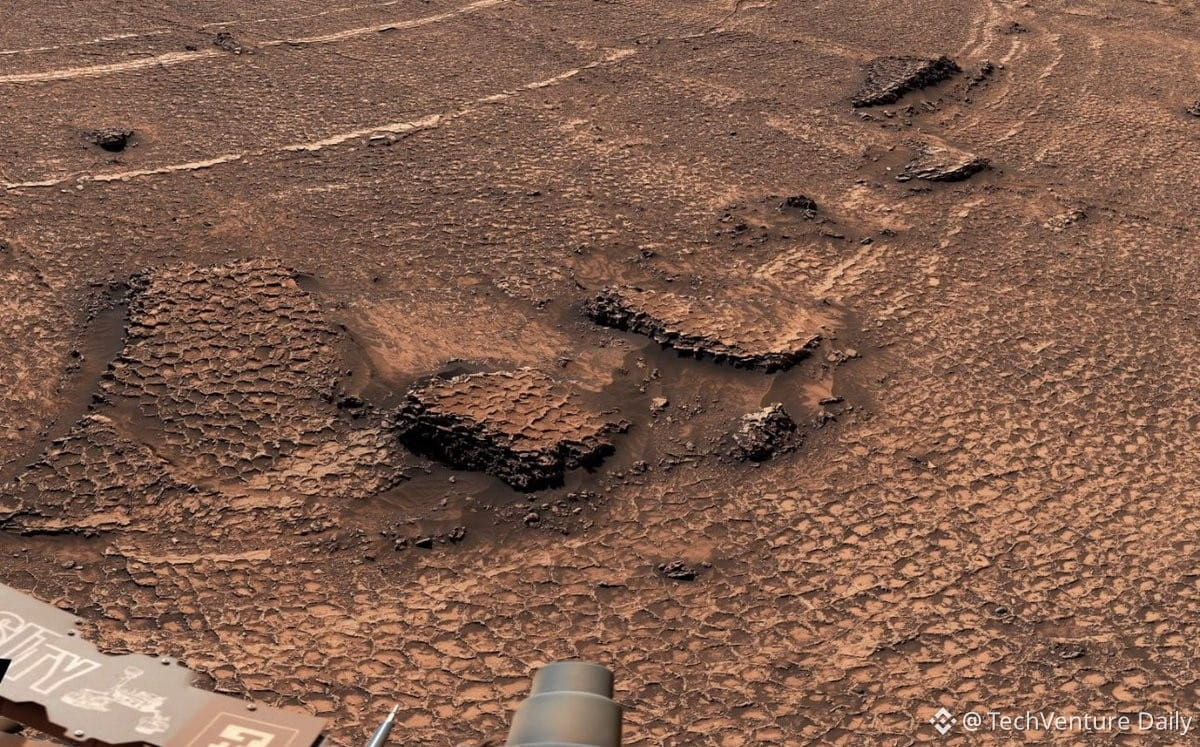
Curiosity's close-up shot shows polygon fractures on Mars with a honeycomb texture. These fracture patterns typically form from repeated wet-dry cycles in ancient clay-rich sediments—direct geological evidence that this region experienced cyclical water presence billions of years ago. The polygon geometry indicates the mud underwent multiple episodes of desiccation and rehydration, which is significant for understanding Mars' past habitability windows. This texture is similar to what you'd see in Earth's dried-up lakebeds, but the preservation here is exceptional due to Mars' lack of active weathering processes. 🔴

Посты
Отказ от ответственности. Содержит мнения третьих сторон. Не является рекомендацией. Binance AI не предоставляет гарантий. См. Правила и условия.