
Dream Spicer 梦想家
11.3k Публикации

Dream Spicer 梦想家
Dream big, earn smart | Crypto learner | Airdrop Hunter | Charts on, stress gone | Let’s grow 🚀
504 подписок(и/а)
25.2K+ подписчиков(а)
16.5K+ понравилось
Посты
Все
Цитирования
Видео
Активно
PINNED
25K Followers Completed Now I'm Looking Saalar ki Imama😂❤️
We’ve officially reached 25,000 followers on Binance Square.
Honestly, this milestone feels special because it was built one post, one discussion, and one interaction at a time.
I’ve always tried to share research and ideas that are actually worth reading not just chase numbers.
To celebrate, I’m sharing a Red Packet with the community. 🧧
Thank you to everyone who has been part of the journey.
25K today. Let’s see where we can take it next.
Good luck, everyone. ❤️
To Claim Red Packet
📌 Follow
📌 Repost
📌 Like
📌 Comment
#BinanceSquare #25K #CryptoCommunity
$SOL
We’ve officially reached 25,000 followers on Binance Square.
Honestly, this milestone feels special because it was built one post, one discussion, and one interaction at a time.
I’ve always tried to share research and ideas that are actually worth reading not just chase numbers.
To celebrate, I’m sharing a Red Packet with the community. 🧧
Thank you to everyone who has been part of the journey.
25K today. Let’s see where we can take it next.
Good luck, everyone. ❤️
To Claim Red Packet
📌 Follow
📌 Repost
📌 Like
📌 Comment
#BinanceSquare #25K #CryptoCommunity
$SOL

PINNED
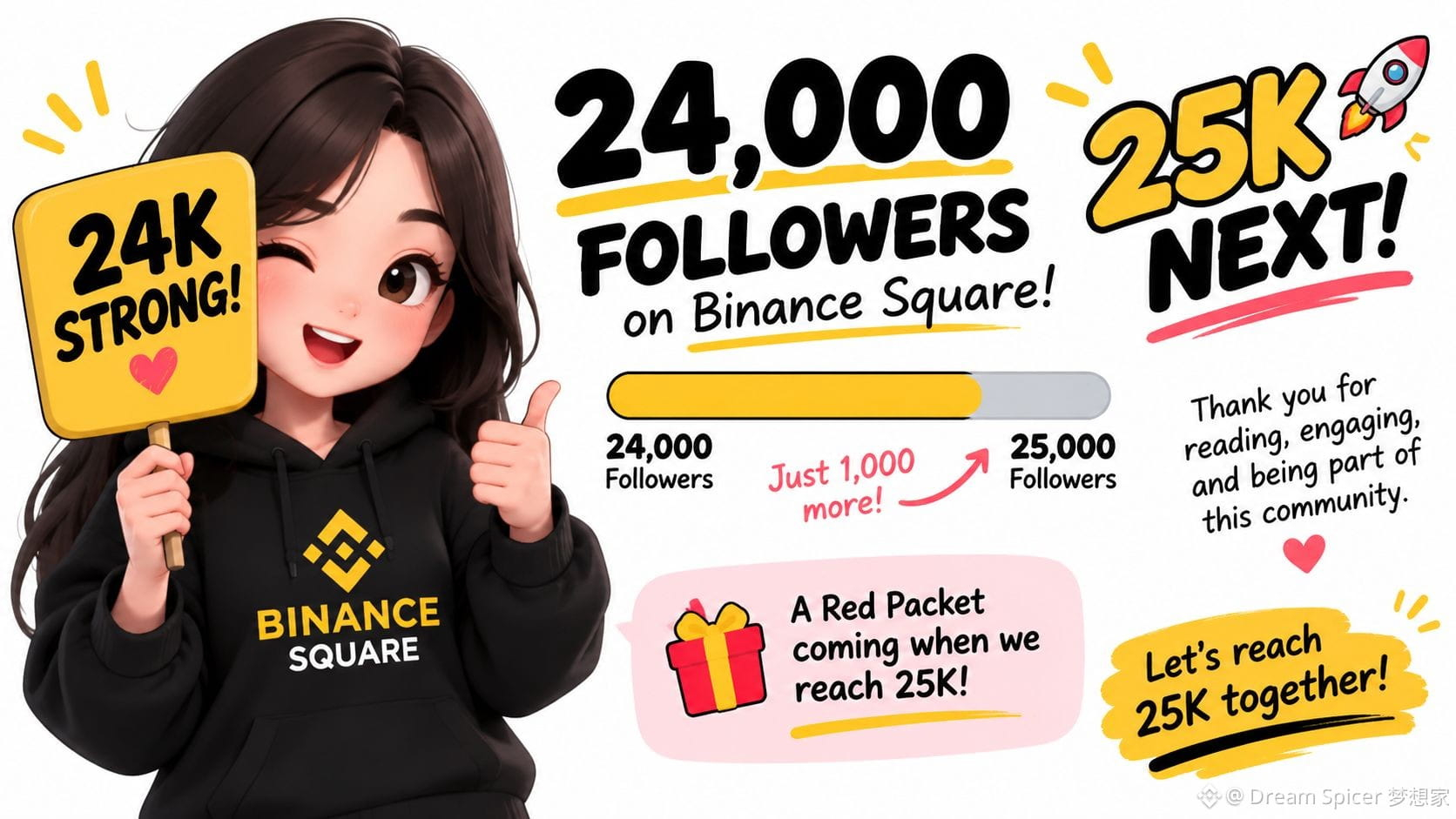
24K Strong. 25K Next.
We’ve officially reached 24,000 followers on Binance Square.
What started as sharing research, insights, and ideas with the community has grown into something much bigger.
Now, we’re just 500 followers away from 25K.
To celebrate everyone who has supported the journey, I’ll be sharing a Red Packet when we reach the milestone. 🎁
Thank you for reading, engaging, and being part of this community.
Let’s reach 25K together.
$BNB
We’ve officially reached 24,000 followers on Binance Square.
What started as sharing research, insights, and ideas with the community has grown into something much bigger.
Now, we’re just 500 followers away from 25K.
To celebrate everyone who has supported the journey, I’ll be sharing a Red Packet when we reach the milestone. 🎁
Thank you for reading, engaging, and being part of this community.
Let’s reach 25K together.
$BNB
goo

生蚝哥Oyster
·
--
Рост时光缓缓前行,起起落落皆是常态。
不必焦虑一时的得失,守住节奏,稳住心态。
愿大家沉淀积蓄力量,守得住初心,也等得到繁花盛放。
前路坦荡,万事向好,共勉✨
不必焦虑一时的得失,守住节奏,稳住心态。
愿大家沉淀积蓄力量,守得住初心,也等得到繁花盛放。
前路坦荡,万事向好,共勉✨

goo

融易挣乾-佳佳
·
--
不是所有机遇都需要喧哗,
真正的价值自有声量。
Not every opportunity needs noise;
true value carries its own voice.
真正的价值自有声量。
Not every opportunity needs noise;
true value carries its own voice.

Go

Sara_ k
·
--
Join here 👈
$BNB
$BNB

claim


燕寶Melissa
·
--
ПадениеCZ最新判断:比特币100万美元时代,可能比想象中更快到来?🚀
8月27日,赵长鹏(CZ)在香港 Bitcoin Asia「比特币世纪」炉边对谈中,再次释放了对比特币未来的强烈信心。
他说:
比特币涨到100万美元,不一定需要25年,可能会比市场想象中更快。
这背后,不只是价格逻辑,而是一场全球金融体系的重构。
🔸 从投资资产 → 全球战略资产
CZ认为,未来比特币的角色不会只停留在交易市场,而可能逐步进入:
✅ 退休金体系
✅ 养老金配置
✅ 国家战略储备
✅ 全球资产配置框架
比特币正在从“另类资产”,走向“数字时代的价值储存”。
🔸 黄金之后,谁代表未来?
CZ直言:
比特币最终的重要性可能超过黄金。
黄金用了几千年建立共识,而比特币正在用短短十几年完成全球化传播。
下一轮牛市,市场关注的不只是价格上涨,更是:
比特币是否完成从资产到金融基础设施的跨越。
过去很多人问:
“比特币到底有没有价值?”
也许未来的问题会变成:
“如果数字经济时代到来,一个国家为什么没有比特币战略?”
BTC的故事,可能才刚刚进入下一阶段。
#黄金8月上涨约14%
$BTC
$ETH
$BNB
8月27日,赵长鹏(CZ)在香港 Bitcoin Asia「比特币世纪」炉边对谈中,再次释放了对比特币未来的强烈信心。
他说:
比特币涨到100万美元,不一定需要25年,可能会比市场想象中更快。
这背后,不只是价格逻辑,而是一场全球金融体系的重构。
🔸 从投资资产 → 全球战略资产
CZ认为,未来比特币的角色不会只停留在交易市场,而可能逐步进入:
✅ 退休金体系
✅ 养老金配置
✅ 国家战略储备
✅ 全球资产配置框架
比特币正在从“另类资产”,走向“数字时代的价值储存”。
🔸 黄金之后,谁代表未来?
CZ直言:
比特币最终的重要性可能超过黄金。
黄金用了几千年建立共识,而比特币正在用短短十几年完成全球化传播。
下一轮牛市,市场关注的不只是价格上涨,更是:
比特币是否完成从资产到金融基础设施的跨越。
过去很多人问:
“比特币到底有没有价值?”
也许未来的问题会变成:
“如果数字经济时代到来,一个国家为什么没有比特币战略?”
BTC的故事,可能才刚刚进入下一阶段。
#黄金8月上涨约14%
$BTC
$ETH
$BNB

Goo

NAJAF_加密 143
·
--
Solana (SOL): The High-Speed Crypto Engine 🚀
Solana is one of the top cryptocurrencies, currently trading around $85 with a massive market cap placing it firmly among the top layer-1 networks.
Why It Matters:
⚡ Blazing Speed: Processes thousands of transactions per second via its unique Proof-of-History mechanism.
💸 Micro Fees: Average transactions cost fractions of a cent, making micro-payments practical.
🌐 Ecosystem Hub: Powers DeFi, NFTs, and Web3 apps at scale.
Solana solves crypto’s scaling problem, combining speed, affordability, and utility.
#Solana #Crypto #SOL
#ClaimNow #BinanceSquareFamily
Solana is one of the top cryptocurrencies, currently trading around $85 with a massive market cap placing it firmly among the top layer-1 networks.
Why It Matters:
⚡ Blazing Speed: Processes thousands of transactions per second via its unique Proof-of-History mechanism.
💸 Micro Fees: Average transactions cost fractions of a cent, making micro-payments practical.
🌐 Ecosystem Hub: Powers DeFi, NFTs, and Web3 apps at scale.
Solana solves crypto’s scaling problem, combining speed, affordability, and utility.
#Solana #Crypto #SOL
#ClaimNow #BinanceSquareFamily

777

Prof Denial
·
--
I’m giving a $DOGE 🐶 reward 🎁 to our community as a BIG gift of appreciation.
💛claim it before the reward is gone.💛
💛 Don’t wait and miss your chance! 💛
💛claim it before the reward is gone.💛
💛 Don’t wait and miss your chance! 💛

claim

叮噹-Doraemon
·
--
BSC生态部分meme币拉升明显,「4」单日涨超52%
8 月 29 日,据 GMGN 行情,今日 BSC 生态部分 meme 币拉升明显,其中:
「4」单日涨超 52%,市值现报 1778 万美元;
「我踏马来了」单日涨 21.35%,市值现报 1364 万美元;
「龙虾」单日涨 18.11%,市值现报 7127 万美元,市值再创历史新高。
「4」单日涨 52% 领跑,但真正值得注意的是「龙虾」市值已到 7127 万美元——4 月那轮行情里它市值才 1289 万美元,两个月前回调到 2400 万,如今翻了三倍。这不是普涨,是 BSC 中文 Meme 板块在经历一轮结构性洗牌后的二次集结。
「币安人生」从 4 月引爆行情时的新高,到 8 月 21 日逼近 5 亿美元市值,已经是这个生态里的标杆资产。它的存在决定了整个板块的资金水位,也解释了为何「我踏马来了」这种曾跌到 2000 万以下、被传统媒体点名批评过的标的还能回到 1364 万美元。
对比 4 月 PALU 单日涨 421% 的极端行情,如今涨幅温和得多,说明筹码集中度在提高,资金不再追逐单日暴击,而是通过轮动维持板块整体热度。下一步看「牛来」能否突破前高,那才是这轮行情真正的方向标。
「4」单日涨超 52%,市值现报 1778 万美元;
「我踏马来了」单日涨 21.35%,市值现报 1364 万美元;
「龙虾」单日涨 18.11%,市值现报 7127 万美元,市值再创历史新高。
「4」单日涨 52% 领跑,但真正值得注意的是「龙虾」市值已到 7127 万美元——4 月那轮行情里它市值才 1289 万美元,两个月前回调到 2400 万,如今翻了三倍。这不是普涨,是 BSC 中文 Meme 板块在经历一轮结构性洗牌后的二次集结。
「币安人生」从 4 月引爆行情时的新高,到 8 月 21 日逼近 5 亿美元市值,已经是这个生态里的标杆资产。它的存在决定了整个板块的资金水位,也解释了为何「我踏马来了」这种曾跌到 2000 万以下、被传统媒体点名批评过的标的还能回到 1364 万美元。
对比 4 月 PALU 单日涨 421% 的极端行情,如今涨幅温和得多,说明筹码集中度在提高,资金不再追逐单日暴击,而是通过轮动维持板块整体热度。下一步看「牛来」能否突破前高,那才是这轮行情真正的方向标。
Goo

E L E X A
·
--
🚨 $USDT GIVEAWAY LIVE 🚨
Watching won’t get you rewards…
Taking action will 👀
Ready to grab some free $USDT
💬 Comment 666
❤️ Like this post
🔁 Repost / Share
➕ Follow
⏳ Limited spots — early birds win
Drop 666 now 🚀
#USDT #Crypto #BinanceSquareFamily #Giveaway #Viral
Watching won’t get you rewards…
Taking action will 👀
Ready to grab some free $USDT
💬 Comment 666
❤️ Like this post
🔁 Repost / Share
➕ Follow
⏳ Limited spots — early birds win
Drop 666 now 🚀
#USDT #Crypto #BinanceSquareFamily #Giveaway #Viral
Congratulations

艾伦Eren1688
·
--
Рост*深夜的电波,清晨的胜果* 🎙️🌙
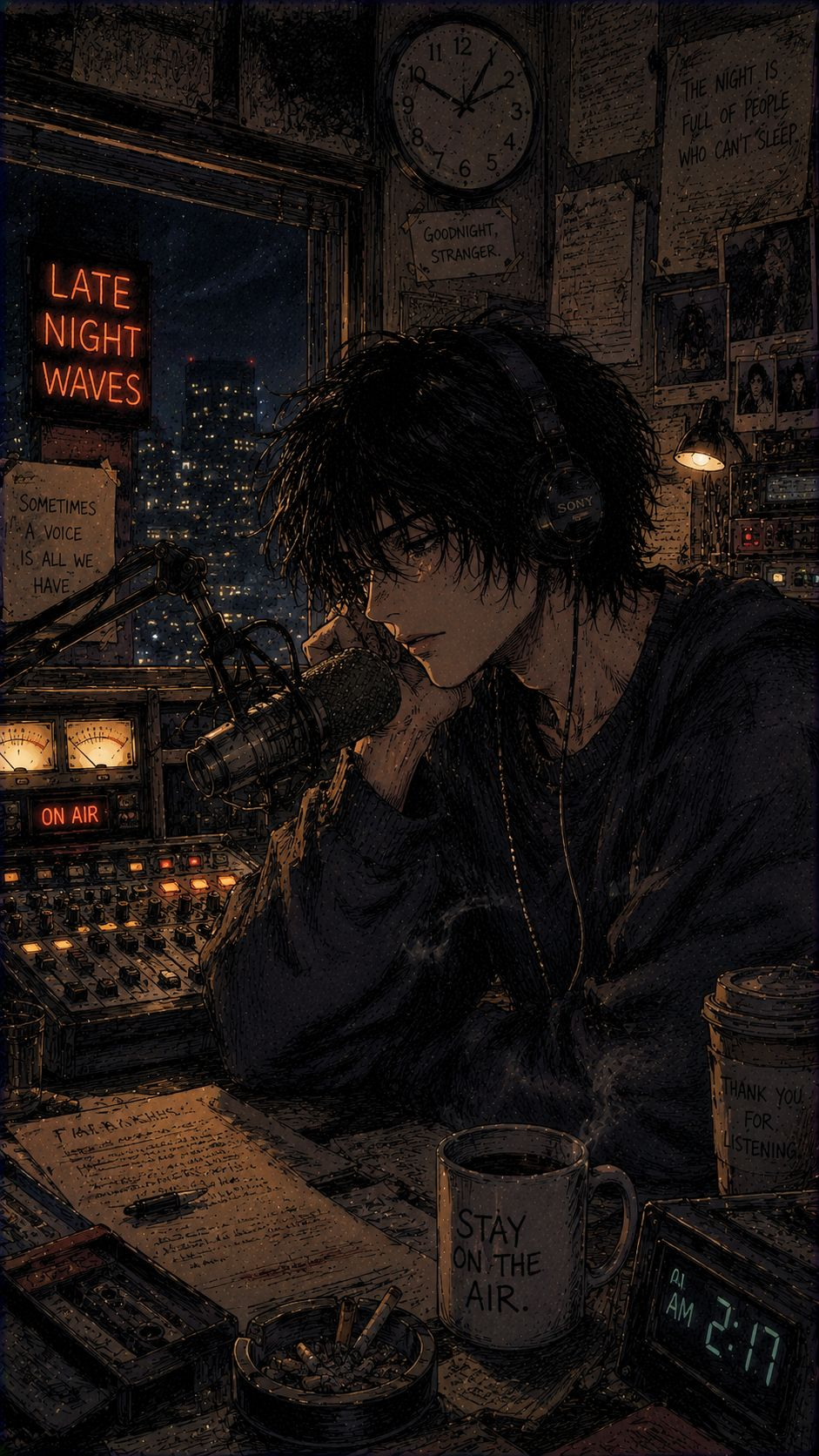
凌晨 2:17。城市已入梦乡。麦克风开启,咖啡尚温。 “这漫漫长夜里,总有人辗转难眠。”
这是无人可见的默默耕耘:研读、分析、在尚无人聆听时坚持发声。
这就是“持之以恒”的模样——在万籁俱寂之时,依然坚守阵地。
因为重大的突破并非诞生于喧嚣之中,而是源自深夜里那份精心的筹备与积淀 💎
交易亦是如此。当别人在漫无目的地刷屏时,我们在潜心研读;当别人在盲目猜测时,我们在精准预判。
我正将这份自律投入到 *Predict Token* 之中——在这里,你可以基于真实事件为自己的信念下注,磨练判断力,将深夜的研究转化为实实在在的成果。洞察局势,果断决策 📈
保持发声,保持在场。 感谢家人们的支持——向着 2 万粉丝的目标进发!🙏
今晚是什么让你彻夜未眠:是行情图表、既定目标,还是心中梦想?在下方留言告诉我吧 👇
answer:1
回答 :1
#1688家族family #prediction...
凌晨 2:17。城市已入梦乡。麦克风开启,咖啡尚温。 “这漫漫长夜里,总有人辗转难眠。”
这是无人可见的默默耕耘:研读、分析、在尚无人聆听时坚持发声。
这就是“持之以恒”的模样——在万籁俱寂之时,依然坚守阵地。
因为重大的突破并非诞生于喧嚣之中,而是源自深夜里那份精心的筹备与积淀 💎
交易亦是如此。当别人在漫无目的地刷屏时,我们在潜心研读;当别人在盲目猜测时,我们在精准预判。
我正将这份自律投入到 *Predict Token* 之中——在这里,你可以基于真实事件为自己的信念下注,磨练判断力,将深夜的研究转化为实实在在的成果。洞察局势,果断决策 📈
保持发声,保持在场。 感谢家人们的支持——向着 2 万粉丝的目标进发!🙏
今晚是什么让你彻夜未眠:是行情图表、既定目标,还是心中梦想?在下方留言告诉我吧 👇
answer:1
回答 :1
#1688家族family #prediction...
🎙️ 🎉2026狂暴牛市,号角已吹响,行情尽在BSC链!!11月1号马斯克将为火星狗Marvin庆祝生日,这波链上行情一定要抓住!
Завершено
04 ч 00 мин 25 сек
18.4k
82
claim
ETHcryptohub
·
--
🎁🎁🎁🎁 Gifts for Everyone 🎁🎁🎁🎁
Comment: Yes
LIKE + Follow + Repost
🎉🎉🎉🎉🎉🎉🎉🎉🎉🎉🎉
#Ethcryptohub
$BNB $BTC
Comment: Yes
LIKE + Follow + Repost
🎉🎉🎉🎉🎉🎉🎉🎉🎉🎉🎉
#Ethcryptohub
$BNB $BTC
Gooo

Frenzy _13
·
--
Hello crypto friends 🤗✨
Gold is up around 14% in August, and that’s definitely caught my attention. To me, this move looks bigger than just a short-term price pump. It shows how much interest investors still have in safe-haven assets. Now I’m watching to see if this momentum can carry into September.
$XAU
Gold is up around 14% in August, and that’s definitely caught my attention. To me, this move looks bigger than just a short-term price pump. It shows how much interest investors still have in safe-haven assets. Now I’m watching to see if this momentum can carry into September.
$XAU

claim

远方1688 BNB
·
--
₿ $BTC 價格預測 — 2026 → 2035 🚀
未來十年,BTC 可能走向哪裏?👀
2026 → $125K
2027 → $100K
2028 → $140K
2029 → $200K
2030 → $300K
2031 → $250K
2032 → $350K
2033 → $450K
2034 → $550K
2035 → $700K+ 🔥🔥🔥
📌 如果採用和需求持續增長, 比特幣到 2035 年可能達到 50 萬到 70 萬美金以上。
這段旅程不會一帆風順——預計途中會出現重大回調、熊市以及爆發式反彈。
你會一直持有 BTC 到 2035 年嗎?👁️👁️
#BTC #Bitcoin #Crypto #CryptoPrediction #Bitcoin2035
未來十年,BTC 可能走向哪裏?👀
2026 → $125K
2027 → $100K
2028 → $140K
2029 → $200K
2030 → $300K
2031 → $250K
2032 → $350K
2033 → $450K
2034 → $550K
2035 → $700K+ 🔥🔥🔥
📌 如果採用和需求持續增長, 比特幣到 2035 年可能達到 50 萬到 70 萬美金以上。
這段旅程不會一帆風順——預計途中會出現重大回調、熊市以及爆發式反彈。
你會一直持有 BTC 到 2035 年嗎?👁️👁️
#BTC #Bitcoin #Crypto #CryptoPrediction #Bitcoin2035

24K followers. 😮💨
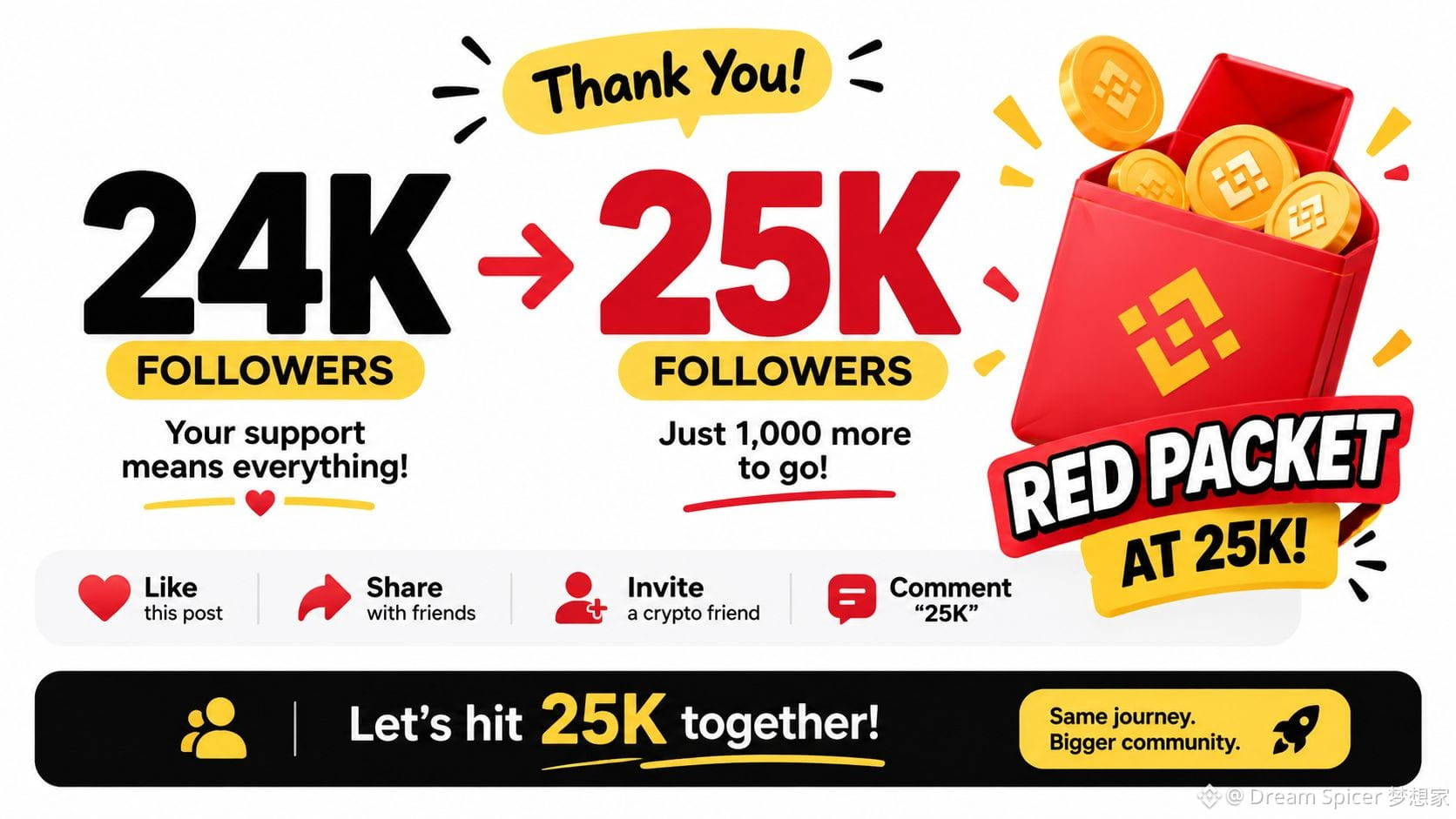
Okay… apparently some people actually enjoy reading my crypto thoughts. 😂
Now we’re only 1,000 followers away from 25K — and I want to make the final push a little more fun.
🧧 RED PACKET coming at 25K!
If you’ve been following, reading, commenting, or quietly watching me overthink crypto charts… this one is for you. 😂
Help me close the final 1K:
❤️ Like
🔁 Share
👥 Invite a crypto friend
💬 Comment 25K
Let’s make 25K happen together.
Okay… apparently some people actually enjoy reading my crypto thoughts. 😂
Now we’re only 1,000 followers away from 25K — and I want to make the final push a little more fun.
🧧 RED PACKET coming at 25K!
If you’ve been following, reading, commenting, or quietly watching me overthink crypto charts… this one is for you. 😂
Help me close the final 1K:
❤️ Like
🔁 Share
👥 Invite a crypto friend
💬 Comment 25K
Let’s make 25K happen together.
🎙️ Let's start to share Dusk live Trading Session
Завершено
01 ч 08 мин 52 сек
302

BNB
Активы
-1.69
0
🎙️ Talk About Dusk, live Trade, live Analysis

Завершено
01 ч 18 мин 19 сек
288
DUSK/USDT
Рыночный/Продажа
Исполнен
0
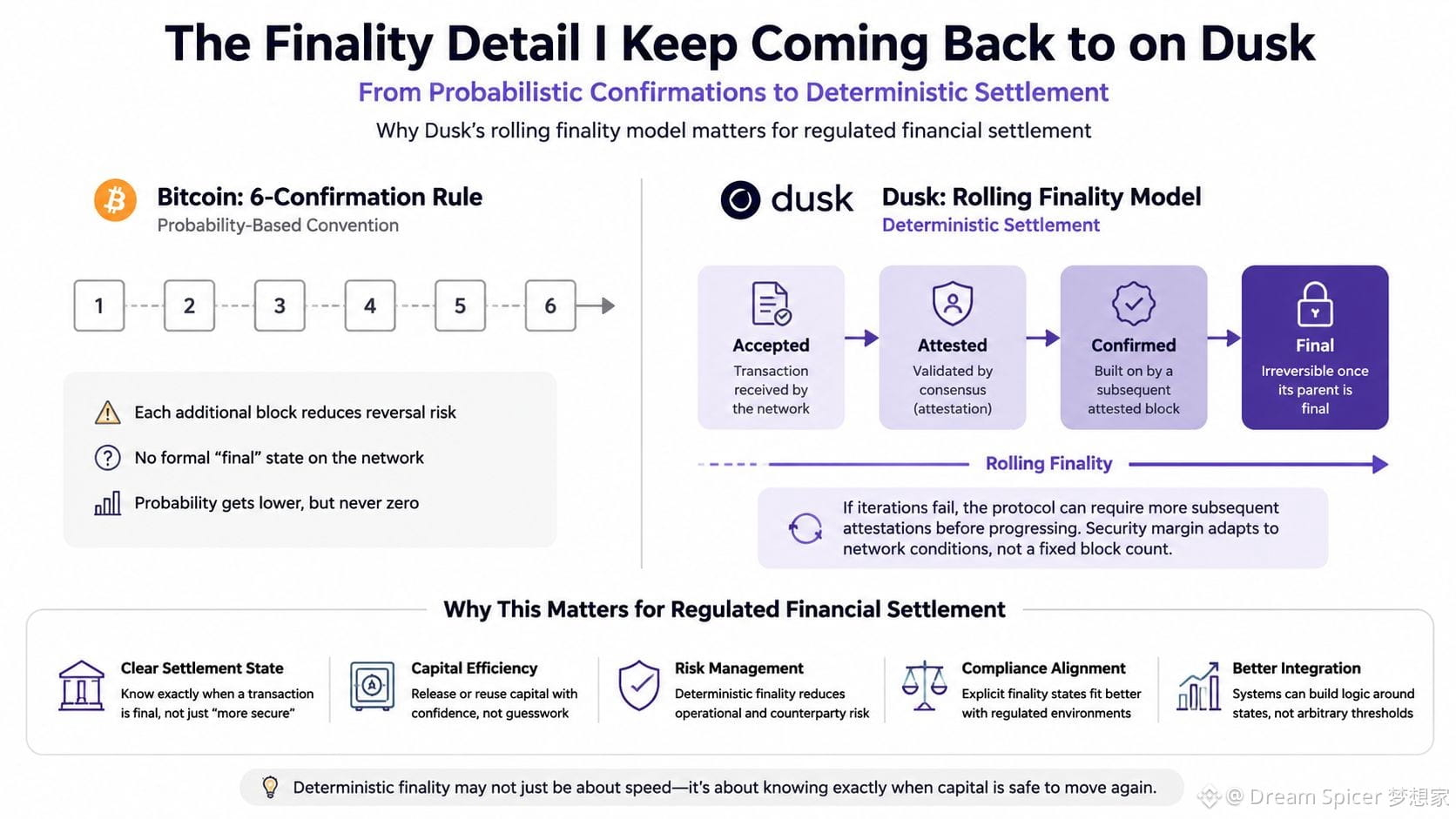
The more I study @Dusk , the more I think its rolling finality is easy to underestimate.
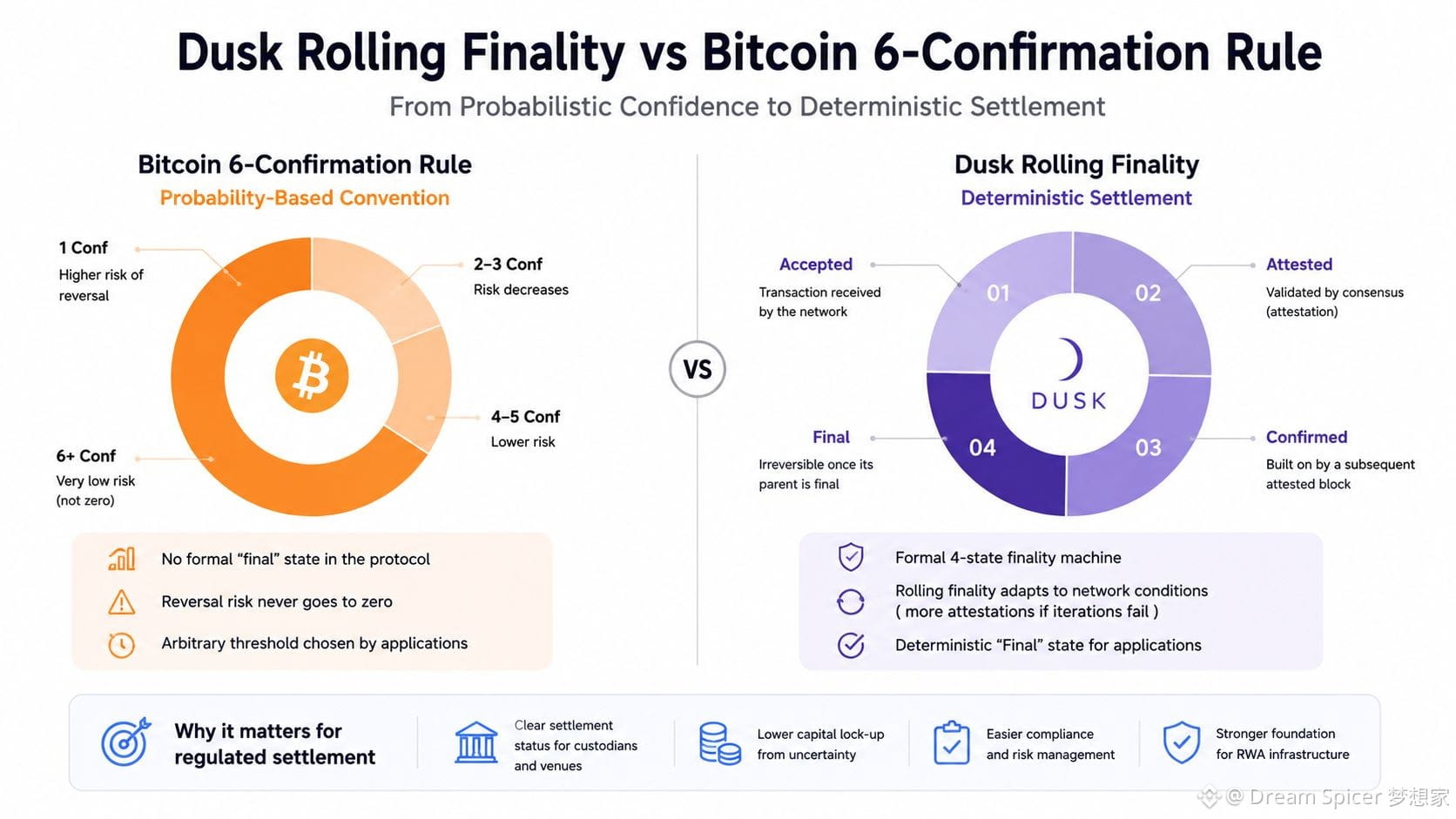
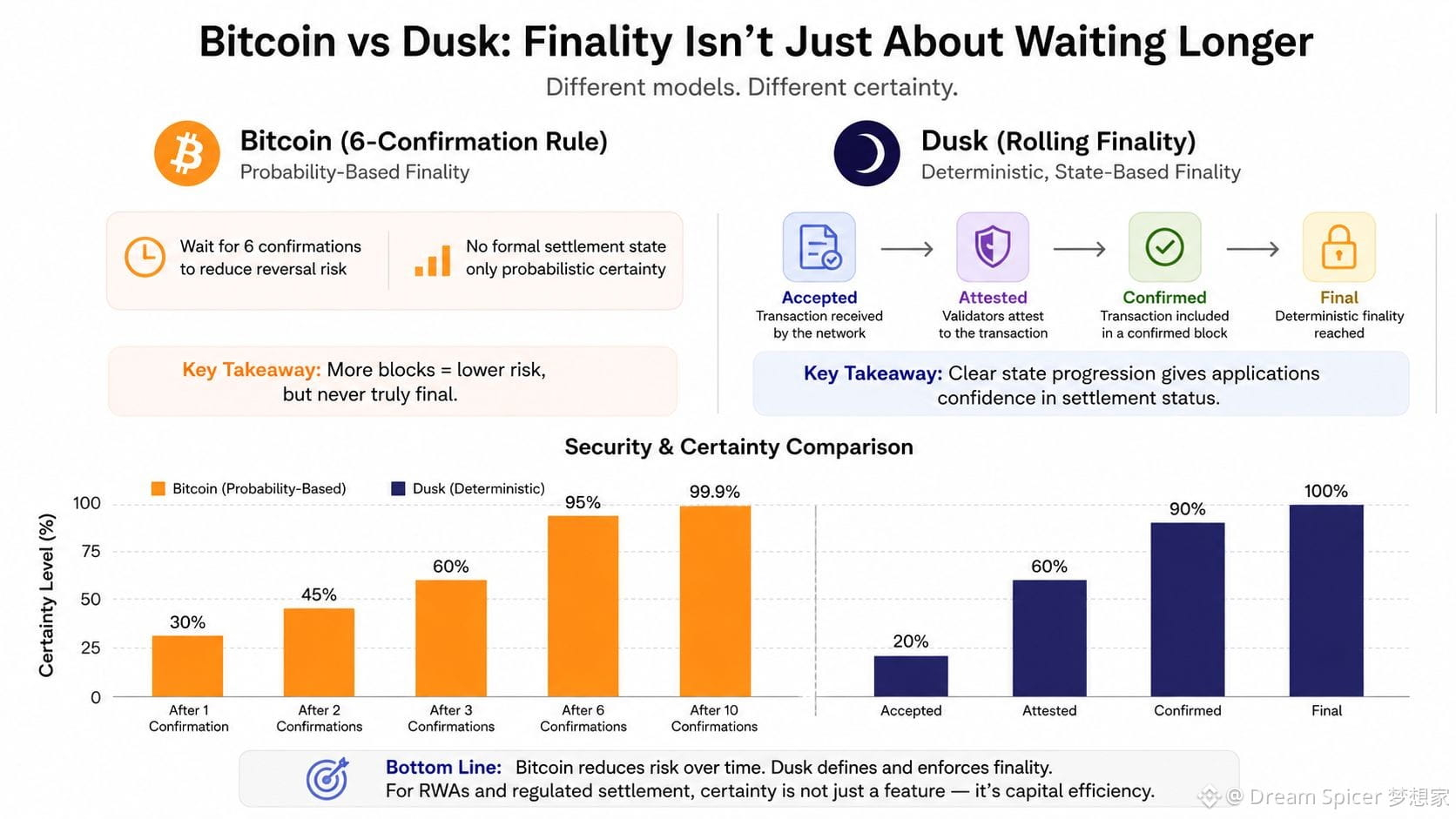
Bitcoin’s familiar 6 confirmation rule is really a probability based convention. Waiting longer reduces the chance of a reversal, but the network doesn’t move through a formal settlement state called final.
$DUSK takes a different approach.
Accepted → Attested → Confirmed → Final
I like this distinction because it gives applications a clearer idea of where a transaction actually stands. A custodian or financial venue can treat final differently from simply seeing a transaction included or confirmed.
The rolling part matters too. If iterations fail, the protocol can require more subsequent attestations before progressing. So the security margin isn’t just an arbitrary block count.
There’s an obvious trade off. Applications now need to understand the state machine instead of reducing everything to wait six blocks.
But that complexity may be worthwhile for regulated settlement, where uncertainty has a real capital cost.
If deterministic finality can make settlement status more predictable. I wonder whether its biggest advantage for RWAs will ultimately be speed or simply knowing exactly when capital is safe to move again.
#dusk #DUSK #Dusk
Bitcoin’s familiar 6 confirmation rule is really a probability based convention. Waiting longer reduces the chance of a reversal, but the network doesn’t move through a formal settlement state called final.
$DUSK takes a different approach.
Accepted → Attested → Confirmed → Final
I like this distinction because it gives applications a clearer idea of where a transaction actually stands. A custodian or financial venue can treat final differently from simply seeing a transaction included or confirmed.
The rolling part matters too. If iterations fail, the protocol can require more subsequent attestations before progressing. So the security margin isn’t just an arbitrary block count.
There’s an obvious trade off. Applications now need to understand the state machine instead of reducing everything to wait six blocks.
But that complexity may be worthwhile for regulated settlement, where uncertainty has a real capital cost.
If deterministic finality can make settlement status more predictable. I wonder whether its biggest advantage for RWAs will ultimately be speed or simply knowing exactly when capital is safe to move again.
#dusk #DUSK #Dusk
🎙️ Dusk Live Trading, Real analysis, Real Trade 📌
Завершено
01 ч 27 мин 02 сек
429
DUSK/USDT
Рыночный/Продажа
Исполнен
1
Войдите, чтобы посмотреть больше материала