
Ahmed Ali Nizamani
984 Публикации

Ahmed Ali Nizamani
 Square Verified+
Live: 7 - 9 PM (PKT) | X: AhmedAliNizaman
Трейдер с регулярными сделками
4.2 г
520 подписок(и/а)
42.3K+ подписчиков(а)
28.6K+ понравилось
Посты
Все
Цитирования
Видео
Активно
PINNED
454 + 444 = 🎁🎁🎁🎁🎁✅

Mahi

mahii_23
·
--
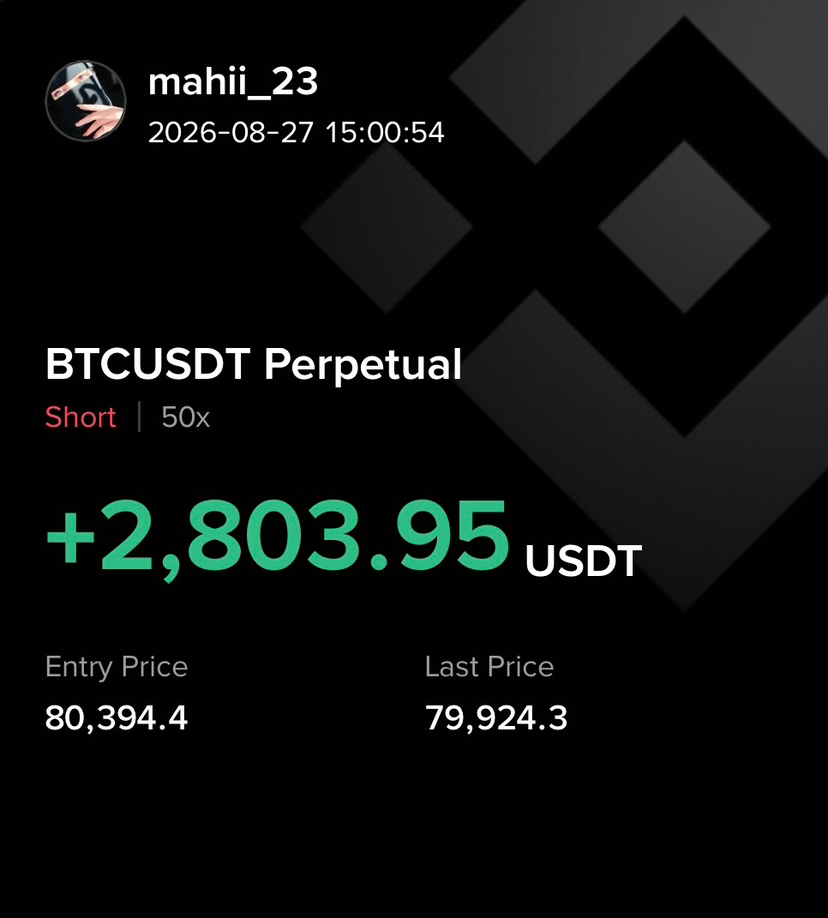
$BTC 🎁 Smart trading is not about being right every time 💫📉
It’s about patience, proper risk management, and trusting your setup.💰
Trade smart, stay focused, and let the strategy work. 💎✨
$BTC
$ETH
#BitcoinHoldsNear$79400
It’s about patience, proper risk management, and trusting your setup.💰
Trade smart, stay focused, and let the strategy work. 💎✨
$BTC
$ETH
#BitcoinHoldsNear$79400
yash

YASH DHALIWAL 31_加密 143
·
--
🌄🌄🌄🌄🌄🌄🔥🔥🔥🔥🌹🌹🥰🌹🤠🌹🌉😊🌹🤪🌄🌄😊😁🌉😁🥰😁🌉🎂🌉😁😽🌄🤪🌄😊🥰🌄😊😊😁😽🎂😜🥰🌄😽🎉🤠


Abdul Rauf

AbdullRauf
·
--
GIVEAWAY ALERT 🧧
We're giving away 2000 gifts to our Square Family as a huge thank you for your support!
To Enter:
✅ Follow
✅ Share this post
✅ Comment "666 !"
Random winners will be selected. Good luck, everyone! 🚀
We're giving away 2000 gifts to our Square Family as a huge thank you for your support!
To Enter:
✅ Follow
✅ Share this post
✅ Comment "666 !"
Random winners will be selected. Good luck, everyone! 🚀

@必按666 势不可挡 势不可挡

必按666 势不可挡
·
--
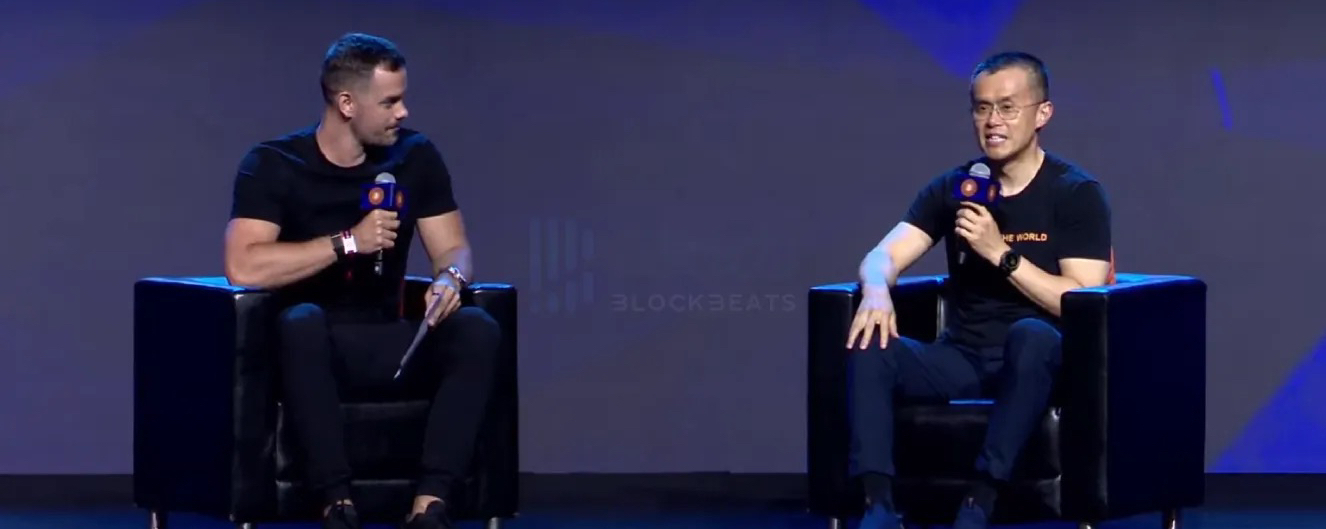
2026年Bitcoin Asia:CZ谈加密多元化:让比特币更大,而不是更小
币安创始人赵长鹏(Changpeng Zhao)在2026年Bitcoin Asia大会上对Bitcoin Asia表示,加密行业并非链与链之间的零和竞争;如果没有围绕比特币而发展起来的生态,比特币会更小。他还拒绝点名下一轮牛市的主导叙事,称其自身记录显示他未能看见上一轮的两大事项。
CZ的非零和案例:其他区块链让比特币变得更大
"我认为,如果这个行业只有比特币,它的发展实际上会慢得多,"赵长鹏说。"其他区块链并不会削弱比特币;事实上,拥有以太坊(Ethereum)、BNB Chain以及其他区块链反而有助于比特币的增长。没有其他区块链,比特币会更小。对比特币有利的,也对其他区块链有利。所以,我们的行业不是零和游戏。"
他的分工非常明确。比特币按市值计算是最大、也是最去中心化的加密货币,并且很可能会在很长一段时间内保持储备货币的地位。其他区块链之所以能提供更多创新,是因为在它们上更容易尝试新东西——而赵更偏好的结果是,未来比特币会反过来吸收这些创新。
币安创始人赵长鹏(Changpeng Zhao)在2026年Bitcoin Asia大会上对Bitcoin Asia表示,加密行业并非链与链之间的零和竞争;如果没有围绕比特币而发展起来的生态,比特币会更小。他还拒绝点名下一轮牛市的主导叙事,称其自身记录显示他未能看见上一轮的两大事项。
CZ的非零和案例:其他区块链让比特币变得更大
"我认为,如果这个行业只有比特币,它的发展实际上会慢得多,"赵长鹏说。"其他区块链并不会削弱比特币;事实上,拥有以太坊(Ethereum)、BNB Chain以及其他区块链反而有助于比特币的增长。没有其他区块链,比特币会更小。对比特币有利的,也对其他区块链有利。所以,我们的行业不是零和游戏。"
他的分工非常明确。比特币按市值计算是最大、也是最去中心化的加密货币,并且很可能会在很长一段时间内保持储备货币的地位。其他区块链之所以能提供更多创新,是因为在它们上更容易尝试新东西——而赵更偏好的结果是,未来比特币会反过来吸收这些创新。
sudagar

Suadagar Ali
·
--
#BNB $
follow ☘️🥀🌹like
comments repost
follow ☘️🥀🌹like
comments repost


融易挣乾-佳佳
·
--
盘面起伏扰人心,牛熊轮转皆是周期✨
摒弃追涨的冲动,不被情绪带着入场。
行情永不停歇,守住本金方有余地。
放平心态,耐心持仓,等待属于自己的风口。
祝大家运筹有度,一路长红🧧
摒弃追涨的冲动,不被情绪带着入场。
行情永不停歇,守住本金方有余地。
放平心态,耐心持仓,等待属于自己的风口。
祝大家运筹有度,一路长红🧧



🎙️ welcome everyone 😁🥸👽👾🌩️🌪️🌪️🌪️❄️❄️🌬️🌊🌲🪵🌿🌱🍃🪴🌵🍃🪴🌵🍁
Завершено
02 ч 40 мин 01 сек
534
7
Irfan

IRFAN AWAN 3
·
--
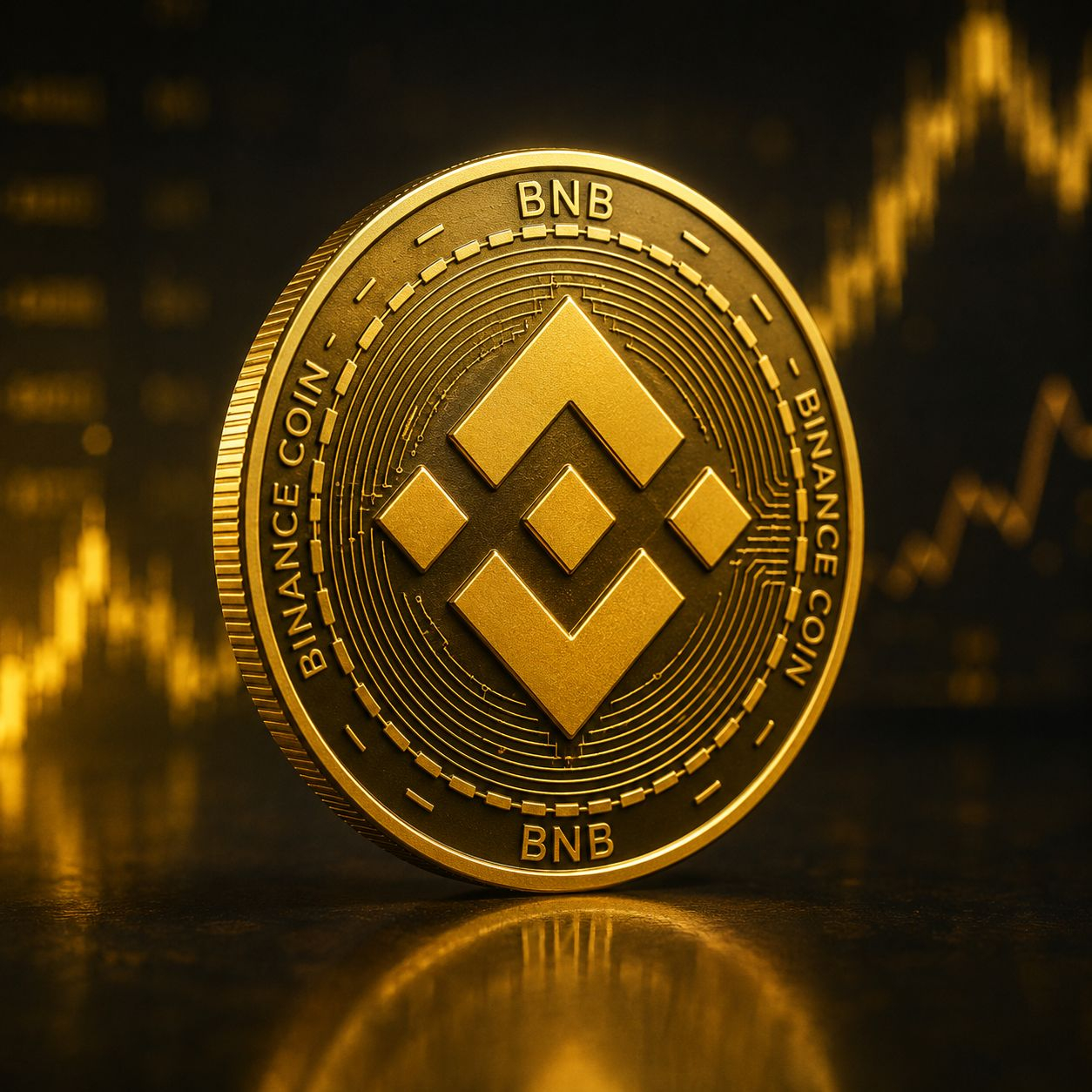
@BNB #BNB $BNB
If you mean BNB’s live trading signal right now:
BNB price: around $702–$703
24h: about +1.3%
Current signal: Bullish
Signal confidence: 62%
Market regime: Range, with trend confirmation still pending.
So the current signal is bullish, but not a strong confirmed breakout yet.
If you mean BNB’s live trading signal right now:
BNB price: around $702–$703
24h: about +1.3%
Current signal: Bullish
Signal confidence: 62%
Market regime: Range, with trend confirmation still pending.
So the current signal is bullish, but not a strong confirmed breakout yet.
Najaf

NAJAF_加密 143
·
--
BNB is showing strong momentum as the broader crypto market turns bullish. BNB recently climbed to around $670, gaining more than 10% over just a few days. Bitcoin’s strong weekly rally and improving market sentiment are also supporting altcoins. BNB’s utility across the Binance ecosystem remains a key fundamental strength. The market still carries volatility, so traders should watch resistance near recent highs and manage risk carefully.
#BNB #Binance #Crypto #BNBChain #Bitcoin
#BNB #Binance #Crypto #BNBChain #Bitcoin

Hood

ROBINX-Hood
·
--
РостMarket never sleeps.
Neither should your strategy.Stay ready. Stay liquid. Stay consistent.#crypto #bitcoin #trading
$MOVR
Neither should your strategy.Stay ready. Stay liquid. Stay consistent.#crypto #bitcoin #trading
$MOVR


周周1688
·
--
🚀 8月27日|加密市场速览
$BNB 🧧🧧
🔥 BTC重新站上$80,000
BTC早盘一度跌破$79K,但买盘迅速回归,目前重新站上 $80,000附近。
ETH约 $2,500–$2,520,SOL重新站上 $100,整体市值约 $2.75–2.78T。
本轮上涨后市场仍处于高波动状态,但多头结构暂未被破坏。
💰 ETF资金继续成为核心支撑
现货BTC ETF此前一周净流入约 $1.92B,连续多日保持资金流入。
机构需求仍然是BTC能够反复挑战$80K的重要原因。�
Investopedia +1
⚡ 明天:$6.4B BTC期权到期
8月28日,Deribit约 81,700枚BTC期权到期,名义价值约 $6.4B。
目前$75K和$80K附近存在明显期权仓位集中。
这意味着接下来24小时,BTC可能出现更剧烈的上下扫动。
$80K再次成为关键战场。 �
Binance +1
🏦 美国正在推进加密资产托管规则改革
SEC关于数字资产托管规则的修改方案已经进入白宫审查流程。
如果后续落地,将直接影响投资顾问、托管机构以及更广泛的机构资金进入加密市场的基础设施。�
The Block
🟣 Ethereum:Glamsterdam升级提前测试
Ethereum开发团队提醒,下一阶段的 Glamsterdam 升级将调整部分Gas成本。
少数智能合约可能受到影响,开发者已经开始进行兼容性测试。
对普通用户暂时无需操作,但项目方需要提前检查合约。�
Ethereum Foundation Blog
🌐 市场正在等待Jackson Hole
本周最大的宏观事件仍然是 Jackson Hole。
美联储主席 Kevin Warsh 将于8月28日发表讲话,市场重点关注利率、流动性以及未来政策路径。�
The Wall Street Journal
📊 今日市场
BTC → ~$80K
ETH → ~$2.5K
SOL → $100+
TOTAL MARKET CAP → ~$2.75T
BTC ETF → 强劲资金流入
🚀 市场真正的考验来了。
BTC重新回到$80K上方,但明天同时面对:
$6.4B期权到期 + Jackson Hole + 高位市场情绪。
所以接下来比“能不能涨”更重要的是:
$80K能不能真正变成新的支撑?
#1688家族family
$BTC $ETH
$BNB 🧧🧧
🔥 BTC重新站上$80,000
BTC早盘一度跌破$79K,但买盘迅速回归,目前重新站上 $80,000附近。
ETH约 $2,500–$2,520,SOL重新站上 $100,整体市值约 $2.75–2.78T。
本轮上涨后市场仍处于高波动状态,但多头结构暂未被破坏。
💰 ETF资金继续成为核心支撑
现货BTC ETF此前一周净流入约 $1.92B,连续多日保持资金流入。
机构需求仍然是BTC能够反复挑战$80K的重要原因。�
Investopedia +1
⚡ 明天:$6.4B BTC期权到期
8月28日,Deribit约 81,700枚BTC期权到期,名义价值约 $6.4B。
目前$75K和$80K附近存在明显期权仓位集中。
这意味着接下来24小时,BTC可能出现更剧烈的上下扫动。
$80K再次成为关键战场。 �
Binance +1
🏦 美国正在推进加密资产托管规则改革
SEC关于数字资产托管规则的修改方案已经进入白宫审查流程。
如果后续落地,将直接影响投资顾问、托管机构以及更广泛的机构资金进入加密市场的基础设施。�
The Block
🟣 Ethereum:Glamsterdam升级提前测试
Ethereum开发团队提醒,下一阶段的 Glamsterdam 升级将调整部分Gas成本。
少数智能合约可能受到影响,开发者已经开始进行兼容性测试。
对普通用户暂时无需操作,但项目方需要提前检查合约。�
Ethereum Foundation Blog
🌐 市场正在等待Jackson Hole
本周最大的宏观事件仍然是 Jackson Hole。
美联储主席 Kevin Warsh 将于8月28日发表讲话,市场重点关注利率、流动性以及未来政策路径。�
The Wall Street Journal
📊 今日市场
BTC → ~$80K
ETH → ~$2.5K
SOL → $100+
TOTAL MARKET CAP → ~$2.75T
BTC ETF → 强劲资金流入
🚀 市场真正的考验来了。
BTC重新回到$80K上方,但明天同时面对:
$6.4B期权到期 + Jackson Hole + 高位市场情绪。
所以接下来比“能不能涨”更重要的是:
$80K能不能真正变成新的支撑?
#1688家族family
$BTC $ETH

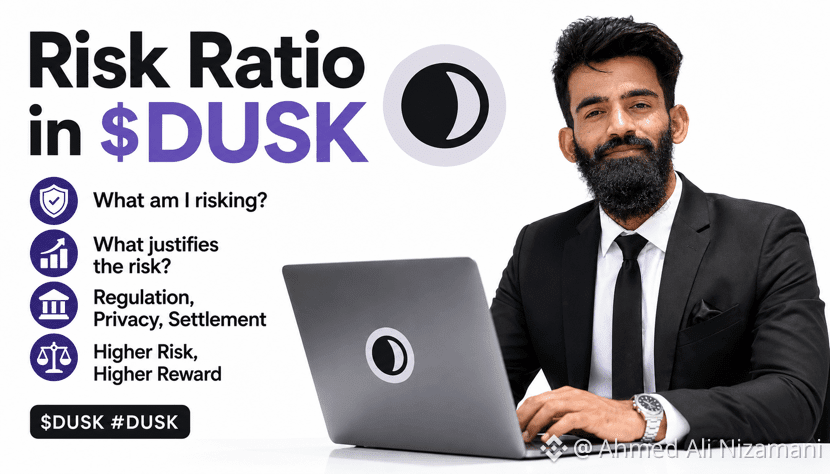
When I research a crypto asset, I don’t start with the upside. I start by asking what am I actually risking and what justifies taking that risk?
For $DUSK that question is especially interesting because the thesis isn’t built purely around speculation. Dusk Network is targeting a difficult market: regulated financial infrastructure, tokenized securities, privacy, compliance and settlement.
From my research and experience tracking crypto projects I’ve learned that strong narratives are not enough. The real test is whether the technology can attract developers, users, institutions and sustainable network activity.
That’s where I see both the opportunity and the risk in $DUSK
The opportunity comes from Dusk’s focus on combining confidentiality with regulatory requirements rather than treating privacy and compliance as competing ideas.
The risk is execution Institutional adoption takes time, competition is intense and technical infrastructure only becomes valuable when real applications use it.
So I don’t view $DUSK as a simple momentum trade. I view it as a higher-risk infrastructure thesis where the future payoff depends heavily on adoption and execution.
In my views risk management comes first. The technology can be compelling but the market ultimately decides whether the thesis works.
@Dusk #DUSK
For $DUSK that question is especially interesting because the thesis isn’t built purely around speculation. Dusk Network is targeting a difficult market: regulated financial infrastructure, tokenized securities, privacy, compliance and settlement.
From my research and experience tracking crypto projects I’ve learned that strong narratives are not enough. The real test is whether the technology can attract developers, users, institutions and sustainable network activity.
That’s where I see both the opportunity and the risk in $DUSK
The opportunity comes from Dusk’s focus on combining confidentiality with regulatory requirements rather than treating privacy and compliance as competing ideas.
The risk is execution Institutional adoption takes time, competition is intense and technical infrastructure only becomes valuable when real applications use it.
So I don’t view $DUSK as a simple momentum trade. I view it as a higher-risk infrastructure thesis where the future payoff depends heavily on adoption and execution.
In my views risk management comes first. The technology can be compelling but the market ultimately decides whether the thesis works.
@Dusk #DUSK
After watching DeFi evolve I’ve learned that the next challenge isn’t simply putting more financial activity onchain. It’s making that activity usable without exposing everything publicly.
Here we find Dusk interesting.
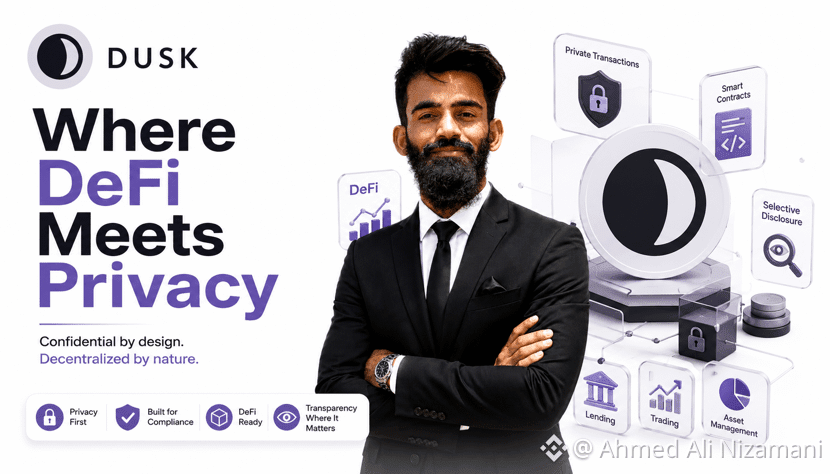
Most DeFi systems make transparency a default. That works for many use cases, but financial markets often involve sensitive positions, balances, counterparties and transaction details. Making all of that permanently visible can create problems for serious capital.
Dusk takes a different direction by combining smart contract execution with privacy focused infrastructure. Its architecture is designed around cryptographic primitives that can support confidential transactions and selective disclosure while still allowing applications to operate onchain.
the more interesting part is the potential DeFi use case.
Imagine lending, trading or asset management where users can prove the information required by a protocol without exposing their entire financial history to everyone watching the blockchain.
That could create a different model for DeFi: privacy where it matters transparency where it is required.
I’m not saying Dusk automatically solves DeFi’s biggest problems. Adoption, liquidity, developers and real applications still matter.
But if DeFi moves toward more sophisticated financial products, privacy may become infrastructure rather than an optional feature.
That’s why everyone keeping $DUSK on my radar.
@Dusk #Dusk
Here we find Dusk interesting.
Most DeFi systems make transparency a default. That works for many use cases, but financial markets often involve sensitive positions, balances, counterparties and transaction details. Making all of that permanently visible can create problems for serious capital.
Dusk takes a different direction by combining smart contract execution with privacy focused infrastructure. Its architecture is designed around cryptographic primitives that can support confidential transactions and selective disclosure while still allowing applications to operate onchain.
the more interesting part is the potential DeFi use case.
Imagine lending, trading or asset management where users can prove the information required by a protocol without exposing their entire financial history to everyone watching the blockchain.
That could create a different model for DeFi: privacy where it matters transparency where it is required.
I’m not saying Dusk automatically solves DeFi’s biggest problems. Adoption, liquidity, developers and real applications still matter.
But if DeFi moves toward more sophisticated financial products, privacy may become infrastructure rather than an optional feature.
That’s why everyone keeping $DUSK on my radar.
@Dusk #Dusk
A wallet address can show who owns a token.
But for a financial security ownership is only the starting point.
The harder question is what happens when something changes around that asset.
An issuer may need to execute a corporate action. An asset may need to be created or removed. A transfer could require specific controls. Authorized participants may also need a reliable way to verify the asset’s history.
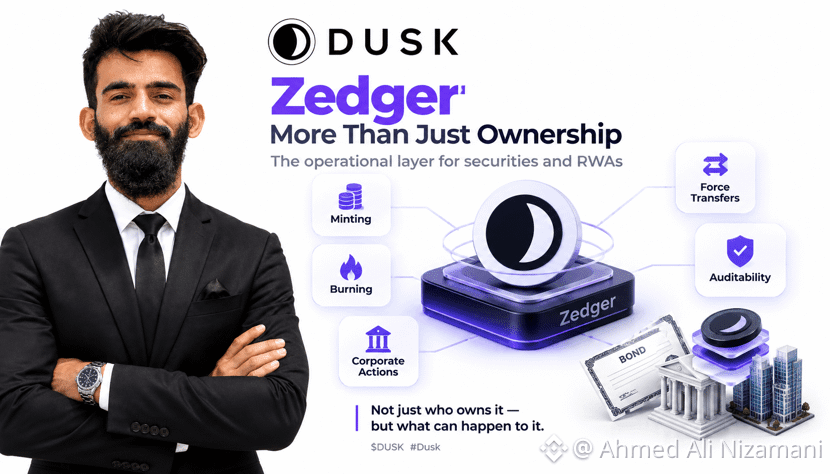
This is where Zedger gets interesting to me.
Dusk describes Zedger as infrastructure for securities and RWAs, with capabilities including minting, burning, corporate actions, force transfers and auditability.
To me those functions point to a broader idea
A financial asset needs more than a balance. It needs operational rules.
That distinction matters for RWAs.
Simply representing a bond fund or other financial instrument as a token doesn’t automatically recreate the processes surrounding the real-world asset.
Zedger is designed around this missing layer, providing mechanisms for actions that can occur throughout an asset’s lifecycle.
So instead of asking only
“Who owns it?”
We can also ask
“What can happen to it, who can trigger it and how can that activity be verified?”
That’s the part of @Dusk I find compelling.
$DUSK #Dusk
But for a financial security ownership is only the starting point.
The harder question is what happens when something changes around that asset.
An issuer may need to execute a corporate action. An asset may need to be created or removed. A transfer could require specific controls. Authorized participants may also need a reliable way to verify the asset’s history.
This is where Zedger gets interesting to me.
Dusk describes Zedger as infrastructure for securities and RWAs, with capabilities including minting, burning, corporate actions, force transfers and auditability.
To me those functions point to a broader idea
A financial asset needs more than a balance. It needs operational rules.
That distinction matters for RWAs.
Simply representing a bond fund or other financial instrument as a token doesn’t automatically recreate the processes surrounding the real-world asset.
Zedger is designed around this missing layer, providing mechanisms for actions that can occur throughout an asset’s lifecycle.
So instead of asking only
“Who owns it?”
We can also ask
“What can happen to it, who can trigger it and how can that activity be verified?”
That’s the part of @Dusk I find compelling.
$DUSK #Dusk
Проверено
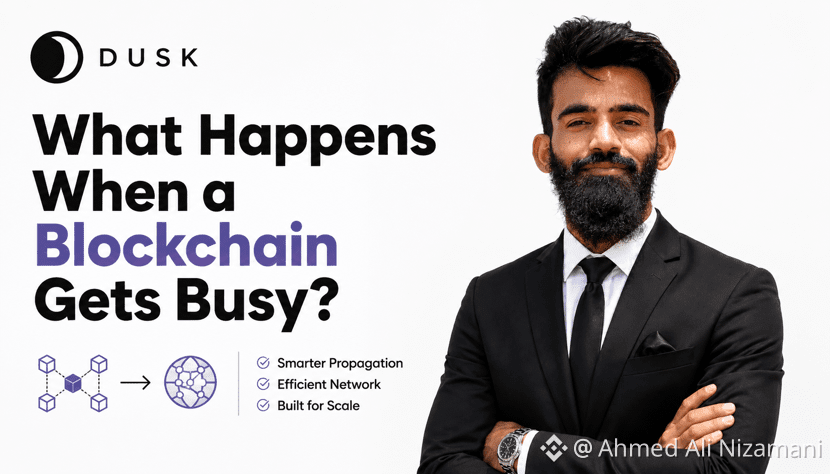
What Happens When a Blockchain Gets Busy?
I think one of the more overlooked questions in blockchain design is what happens between producing a message and everyone receiving it.
As network activity grows the challenge isn’t simply creating more transactions.
The network also has to coordinate more information without turning communication overhead into a hidden scalability limit.
This is where Dusk’s choice of Kadcast becomes interesting to me.
Its approach to propagation is designed around structured peer selection rather than having every node repeatedly relay information across the network.
That changes the efficiency equation.
The goal isn’t just:
“Can the network send the message?”
It is;
“Can the network distribute the message without wasting resources doing it?”
That distinction becomes particularly relevant for infrastructure intended to support financial activity, where predictable network behavior can matter just as much as raw throughput.
I find this a more interesting way to look at blockchain scalability.
Sometimes scalability isn’t only about processing more.
It’s also about communicating more intelligently.
That’s the engineering layer I think is worth paying attention to when looking at @Dusk
$DUSK #Dusk
I think one of the more overlooked questions in blockchain design is what happens between producing a message and everyone receiving it.
As network activity grows the challenge isn’t simply creating more transactions.
The network also has to coordinate more information without turning communication overhead into a hidden scalability limit.
This is where Dusk’s choice of Kadcast becomes interesting to me.
Its approach to propagation is designed around structured peer selection rather than having every node repeatedly relay information across the network.
That changes the efficiency equation.
The goal isn’t just:
“Can the network send the message?”
It is;
“Can the network distribute the message without wasting resources doing it?”
That distinction becomes particularly relevant for infrastructure intended to support financial activity, where predictable network behavior can matter just as much as raw throughput.
I find this a more interesting way to look at blockchain scalability.
Sometimes scalability isn’t only about processing more.
It’s also about communicating more intelligently.
That’s the engineering layer I think is worth paying attention to when looking at @Dusk
$DUSK #Dusk
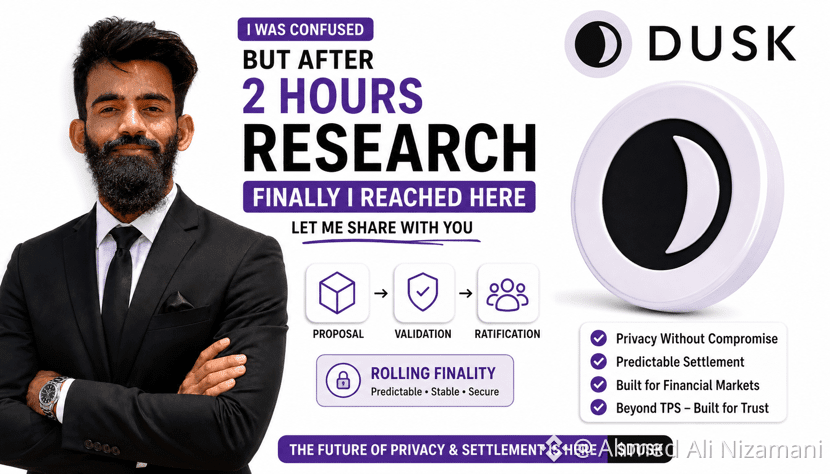
I was confused but after 2hours research finally i reached here let me share with you
Most crypto discussions treat consensus as a question of decentralization or staking.
But financial markets have another requirement: predictable settlement.
That’s where Dusk’s consensus architecture gets interesting.
Succinct Attestation uses committee based proof of stake with deterministic sortition. A block moves through proposal → validation → ratification, with attestations helping establish agreement and rolling finality determining how stable the chain becomes over time.
Why does this matter?
Because confirmation and final settlement are not the same question.
A financial application doesn’t just need a transaction to process quickly. It needs a clear answer to
When can this transaction be treated as final?
That’s an important infrastructure question for tokenized securities, regulated assets and institutional settlement.
So I think @Dusk should be evaluated beyond the usual privacy narrative.
The deeper $DUSK thesis is whether its consensus, confidentiality and application layers can work together to deliver something financial markets actually require:
privacy without sacrificing predictable settlement.
That’s a much more interesting proposition than TPS alone.
#Dusk
#dusk $DUSK
Most crypto discussions treat consensus as a question of decentralization or staking.
But financial markets have another requirement: predictable settlement.
That’s where Dusk’s consensus architecture gets interesting.
Succinct Attestation uses committee based proof of stake with deterministic sortition. A block moves through proposal → validation → ratification, with attestations helping establish agreement and rolling finality determining how stable the chain becomes over time.
Why does this matter?
Because confirmation and final settlement are not the same question.
A financial application doesn’t just need a transaction to process quickly. It needs a clear answer to
When can this transaction be treated as final?
That’s an important infrastructure question for tokenized securities, regulated assets and institutional settlement.
So I think @Dusk should be evaluated beyond the usual privacy narrative.
The deeper $DUSK thesis is whether its consensus, confidentiality and application layers can work together to deliver something financial markets actually require:
privacy without sacrificing predictable settlement.
That’s a much more interesting proposition than TPS alone.
#Dusk
#dusk $DUSK
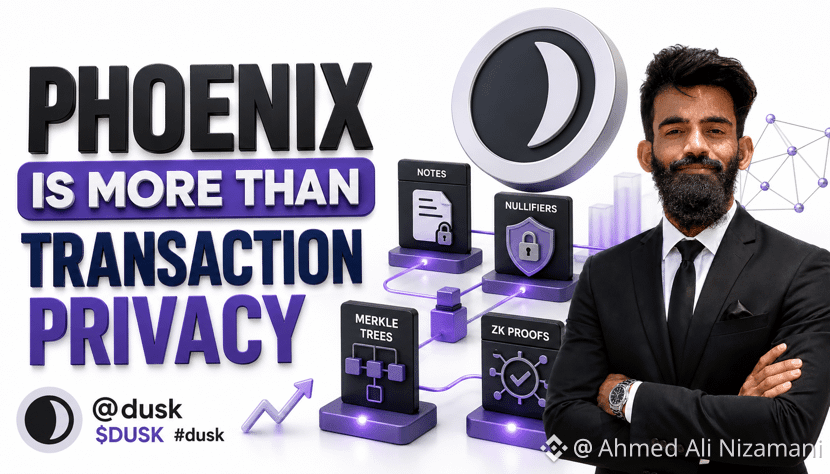
I think that Phoenix becomes more interesting when you look beyond the word “privacy.”
Its architecture uses notes, nullifiers, Merkle trees and zero-knowledge proofs to preserve transaction validity while limiting what information becomes publicly visible.
For example the network can verify a Phoenix proof without directly checking the underlying transaction details. Nullifiers help prevent the same note from being spent twice while the ZK proof demonstrates that the transaction follows the network rules.
That matters because regulated financial systems still need strong guarantees around ownership balances and settlement.
Privacy without integrity would be useless.
What I find particularly interesting is the delegation model. Dusk describes how view keys can allow transaction scanning to be delegated without giving the third party the complete secret needed to spend the notes. ZK proof generation can also be delegated without compromising transaction integrity.
To me that shows the design is thinking about practical usage, not just cryptographic theory.
That’s one of the reasons I keep looking deeper into @Dusk
$DUSK #Dusk
Its architecture uses notes, nullifiers, Merkle trees and zero-knowledge proofs to preserve transaction validity while limiting what information becomes publicly visible.
For example the network can verify a Phoenix proof without directly checking the underlying transaction details. Nullifiers help prevent the same note from being spent twice while the ZK proof demonstrates that the transaction follows the network rules.
That matters because regulated financial systems still need strong guarantees around ownership balances and settlement.
Privacy without integrity would be useless.
What I find particularly interesting is the delegation model. Dusk describes how view keys can allow transaction scanning to be delegated without giving the third party the complete secret needed to spend the notes. ZK proof generation can also be delegated without compromising transaction integrity.
To me that shows the design is thinking about practical usage, not just cryptographic theory.
That’s one of the reasons I keep looking deeper into @Dusk
$DUSK #Dusk
Войдите, чтобы посмотреть больше материала