I used to think tokenizing an asset basically meant putting it on a blockchain.
Then I started digging into Dusk’s docs and realized there’s actually a pretty important difference between tokenization and native issuance.
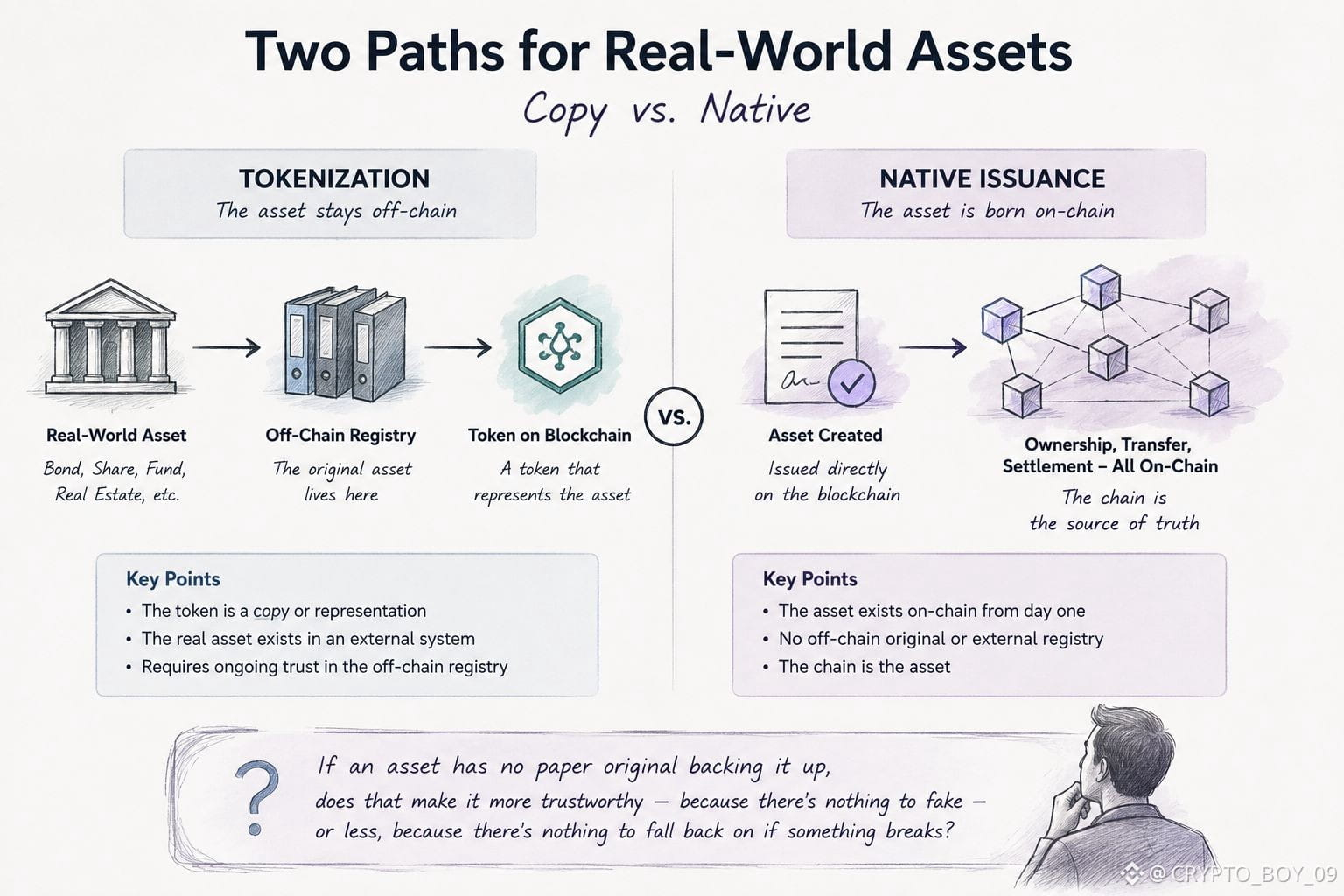
With tokenization, the asset already exists somewhere else. Say it’s a bond or a share sitting in an existing registry. You create a token onchain that represents it, but the original asset is still sitting offchain.
Native issuance is different.
The asset is created onchain from the start. There isn’t another “original” sitting somewhere else that the token needs to represent. Ownership, transfers and the asset itself can live on the same system.
And honestly, that distinction got me thinking.
One approach basically adds a blockchain layer to the existing financial system. The other is trying to make the blockchain part of the actual financial infrastructure.
That’s where I find Dusk interesting.
But I’m still stuck on one question:
If there’s no paper or offchain original to fall back on, does that make an asset more trustworthy because there’s less room for mismatch — or less trustworthy because there’s no traditional fallback when something goes wrong?
@Dusk #dusk $DUSK
$HEMI $RE
Then I started digging into Dusk’s docs and realized there’s actually a pretty important difference between tokenization and native issuance.
With tokenization, the asset already exists somewhere else. Say it’s a bond or a share sitting in an existing registry. You create a token onchain that represents it, but the original asset is still sitting offchain.
Native issuance is different.
The asset is created onchain from the start. There isn’t another “original” sitting somewhere else that the token needs to represent. Ownership, transfers and the asset itself can live on the same system.
And honestly, that distinction got me thinking.
One approach basically adds a blockchain layer to the existing financial system. The other is trying to make the blockchain part of the actual financial infrastructure.
That’s where I find Dusk interesting.
But I’m still stuck on one question:
If there’s no paper or offchain original to fall back on, does that make an asset more trustworthy because there’s less room for mismatch — or less trustworthy because there’s no traditional fallback when something goes wrong?
@Dusk #dusk $DUSK
$HEMI $RE