
@TermMax #TermMax
I almost missed that TermMax’s “fixed rate” isn’t really a rate being paid out over time in the way I first pictured it.
The interesting part is how the position gets split.
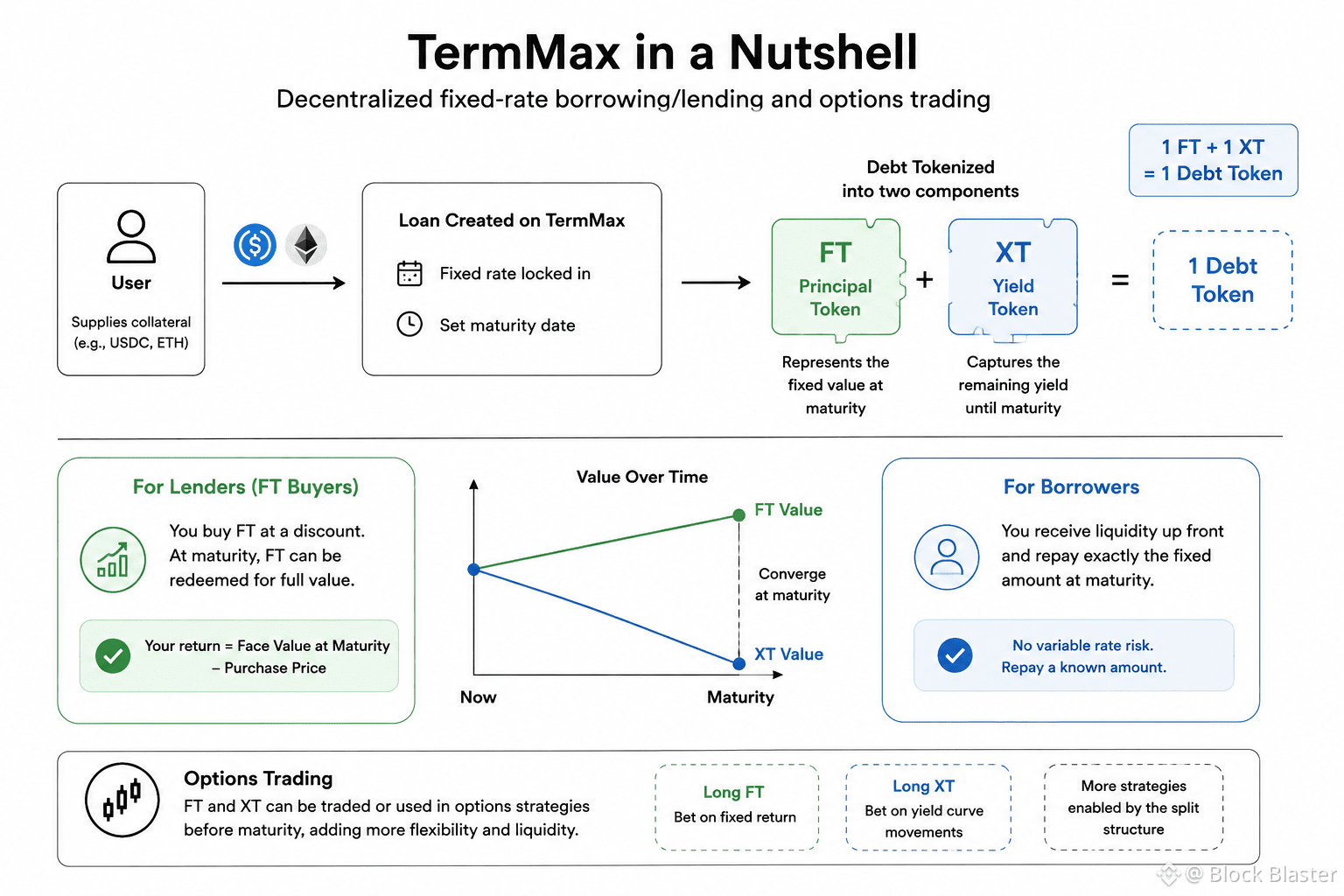
TermMax uses FT and XT, and the structure is tied together by a simple relationship: 1 FT + 1 XT corresponds to 1 debt token. FT is the piece that carries the repayment value toward maturity, while XT holds the remaining exposure around that position.
That means a lender’s return can come from buying FT below the amount it can later be redeemed for, rather than watching interest slowly accumulate block by block.
That sounds like a small difference, but it changes the whole mental model. You’re not just lending at a fixed APR. You’re effectively buying a discounted claim on a future repayment.
The extra token layer can definitely make the system less intuitive at first, but it also gives the market separate pieces that can be priced and traded instead of hiding everything inside one lending position.
I’m curious whether that separation becomes TermMax’s biggest advantage over time, or whether most users will prefer fixed-rate lending that feels simpler on the surface.
I almost missed that TermMax’s “fixed rate” isn’t really a rate being paid out over time in the way I first pictured it.
The interesting part is how the position gets split.
TermMax uses FT and XT, and the structure is tied together by a simple relationship: 1 FT + 1 XT corresponds to 1 debt token. FT is the piece that carries the repayment value toward maturity, while XT holds the remaining exposure around that position.
That means a lender’s return can come from buying FT below the amount it can later be redeemed for, rather than watching interest slowly accumulate block by block.
That sounds like a small difference, but it changes the whole mental model. You’re not just lending at a fixed APR. You’re effectively buying a discounted claim on a future repayment.
The extra token layer can definitely make the system less intuitive at first, but it also gives the market separate pieces that can be priced and traded instead of hiding everything inside one lending position.
I’m curious whether that separation becomes TermMax’s biggest advantage over time, or whether most users will prefer fixed-rate lending that feels simpler on the surface.