I spent a few hours digging into Dusk’s technical docs last night, trying to understand how they handle privacy for regulated assets beyond the marketing.
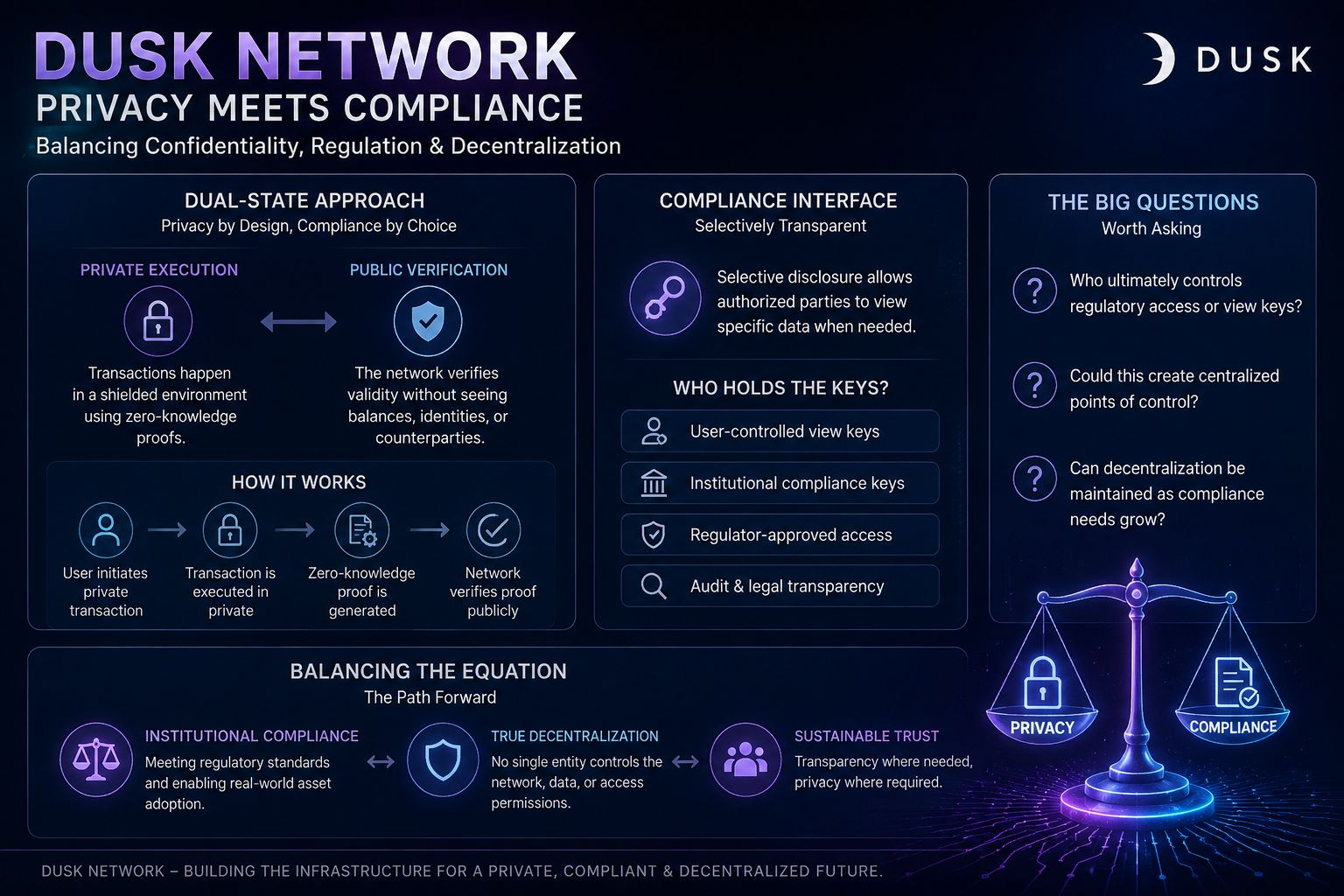
I initially assumed it worked like a standard privacy chain, but the dual-state approach caught my attention. Instead of hiding everything, Dusk separates public verification from private execution, using zero-knowledge proofs to verify transactions without exposing balances or counterparties.
What remains unclear to me is the compliance interface. The docs mention selective disclosure, but who ultimately controls regulatory access or view keys?
If authorized entities can access transaction histories, could that eventually create centralized control points?
How do you see Dusk balancing institutional compliance with true decentralization?
@Dusk #dusk $DUSK