
There is a moment in every technology cycle when a project quietly transitions from being one among many to becoming the reference point others measure themselves against. When I analyzed Injective over the past several months I kept coming back to this idea. Not because Injective dominates headlines or pushes loud marketing but because the ecosystem evolved into something that no longer competes in the same arena as the rest of Web3. It began defining what the new baseline for financial-layer block chains should look like. And in my assessment that shift happened earlier than most people realize.
The funny part is that most traders including myself first approached Injective as just another high speed chain. We compared it to Solana for latency to Ethereum rollups for scalability to Cosmos chains for interoperability. But over time the comparisons stopped making sense. Injective was not winning through raw numbers it was redefining the categories themselves. My research started revealing patterns that reminded me of early stage traditional finance infrastructure systems that did not care about competitors because they were building new ground rules.
The Shift From Speed to Market Architecture
When I think about the moment Injective truly separated itself it was not a single release but more the culmination of design decisions that made traditional comparisons obsolete. Speed for example is still important. Injective consistently finalizes blocks in roughly 0.7 seconds according to Cosmos network explorers which is fast enough for near instant trade settlement. But if speed were the only metric Injective would remain just one more specialized chain among many.
The real turning point in my assessment came from architecture. Injective chose to embed a decentralized order book based exchange layer into its protocol. That decision continues to influence every aspect of the ecosystem. Instead of forcing developers to build markets from scratch or rely on inefficient AMMs Injective created an environment where market logic is a native feature of the chain. In 2024, Binance Research said that this method lets financial apps launch more complicated trading products without needing anything else.
This started a chain reaction that can be seen in public metrics. Injective's network dashboard shows more than 313 million transactions processed since mainnet with cumulative trading volumes across ecosystem dApps exceeding $13.4 billion. These numbers are more than growth signals they represent the chain's evolution into a financial coordination layer rather than a traditional smart contract network. Even the number of blocks produced now beyond 49 million demonstrates a consistency that is rare in DeFi environments known for congestion spikes and unpredictable performance.
I imagine a conceptual table labeled Protocol Level Market Primitives Across Major Chains. Ethereum would list AMMs and external order books. Solana would highlight high throughput but off chain matching for many venues. Injective would stand alone with on-chain order books natively supported. Seeing that table makes the shift obvious: Injective didn't perfect the competition's model it replaced the model.
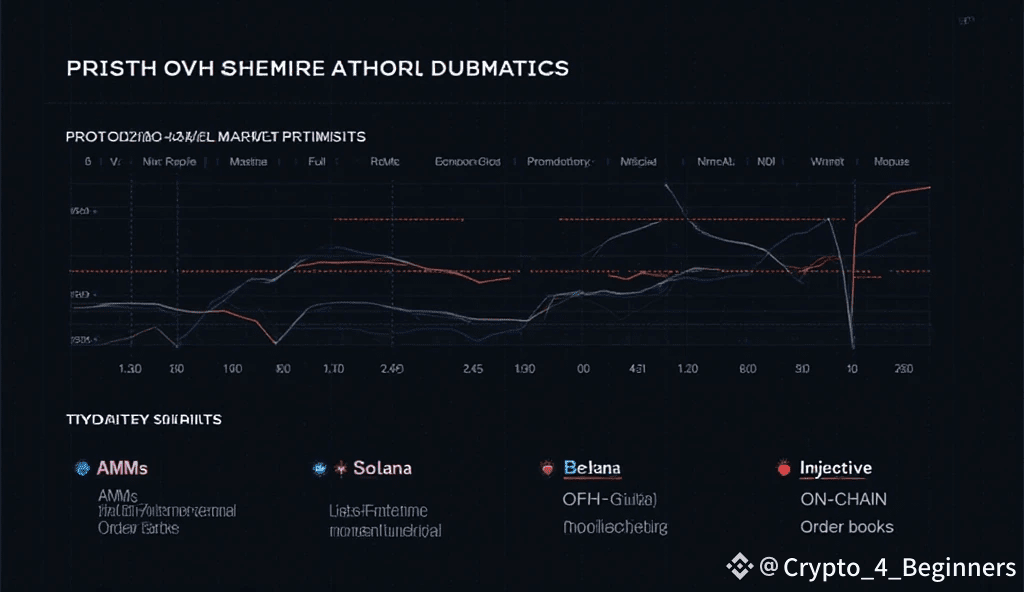
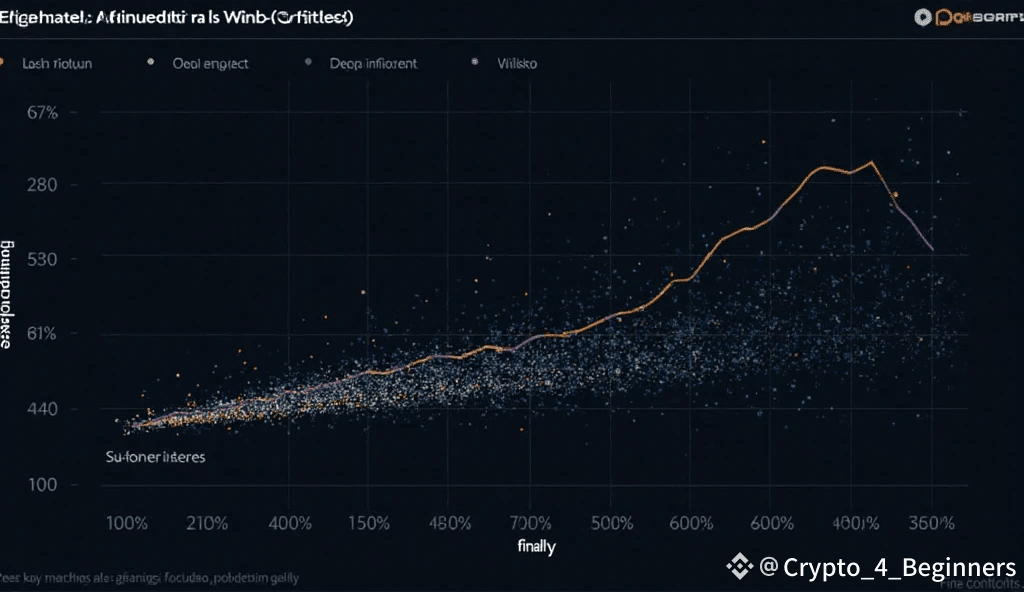
A second helpful visualization would be a chart comparing Finality vs Market Efficiency. Injective would show a tight clustering where low latency consistently aligns with deep order book behavior while most chains scatter unpredictably due to congestion or architectural limitations.
When Institutions Started Paying Attention
In my research I noticed a quiet but meaningful trend: institutions began examining the chain not as a speculative ecosystem but as financial infrastructure. Part of that confidence came from transparency. Injective is built in the Cosmos ecosystem running on Tendermint consensus which has one of the better uptime and security records in public block chain history. The chain offers deterministic finality rather than probabilistic settlement a feature that traditional finance naturally prefers.

Another factor is the nature of liquidity on Injective. Unlike ecosystems where liquidity exists in isolated pools Injective’s markets share a unified liquidity layer. This gives trading environments a depth comparable to centralized venues. For example Helix one of the key dApps on Injective frequently records daily volumes in the tens of millions. Paired with IBC flows from chains like Osmosis and Cosmos Hub these liquidity inflows create predictable behavior. Cosmos IBC analytics regularly show billions in monthly cross-chain transfers a portion of which directly benefits Injective based markets.
The more I analyzed the situation the more it felt like institutions were not just exploring Injective they were benchmarking their expectations against it. This is the point where a project stops competing and starts defining standards. You no longer ask How does Injective stack up against L2s? Instead you ask Why are not other chains offering this level of execution quality?
I often think about this in the same way I think about FIX engines or clearing systems in traditional markets. They do not win because they advertise they win because they are the reference architecture. Injective is slowly taking that role within Web3 finance.
Even though I'm bullish on Injective's structural advantages, I'm careful not to ignore the risks. A project becomes a standard only if its growth remains adaptable. One of the key uncertainties I have identified is the ecosystem's specialization. Injective excels in financial markets but this creates a narrower field of dApps compared to broader smart contract networks. If market cycles shift toward consumer apps or generalized social protocols Injective may need to grow horizontally.
There is also the risk of competition from modular architectures. Some next generation rollups are experimenting with shared sequencers and hybrid order book models. If these solutions work well without making EVM less familiar, they could make Injective less appealing to developers who want to get started quickly.
Cross chain dependencies represent another complexity. Injective benefits greatly from IBC but any disruption in that infrastructure could affect liquidity or asset mobility. While IBC has strong security reputation relying on external channels always introduces additional vectors.
Finally liquidity itself can behave unpredictably. Large market makers can withdraw during extreme volatility creating temporary thinness. Even with a strong architectural base behavioral risks always remain.
Trading Strategy and Price Levels I'm Watching
My assessment of INJ as an asset is heavily influenced by its role as financial infrastructure rather than as a general-purpose token. For me INJ accumulates value when more markets developers and liquidity providers build around its core architecture. Historically the range between $7.20 and $8.50 has acted as a deep liquidity zone during market consolidations. I consider this region structurally important because it aligns with periods when on-chain metrics remained strong despite external volatility.
If the current trajectory continues and Injective expands its institutional or IBC linked liquidity streams I expect the token to revisit the $16 to $19 region which previously acted as a mid cycle equilibrium zone. My medium term target sits around $24 to $28 supported by cross-chain integration growth and higher on-chain order book activity. In a strong market with broader DeFi recovery I see potential extensions toward the mid $30s. On the downside I monitor $6.50 as a stress level in case liquidity temporarily withdraws. These price views are not predictions but structural markers based on how liquidity naturally clusters within Injective’s market ecosystem.
How Injective Compares to Other Scaling Models
When I compare Injective to major competitors, the most important distinction is how liquidity forms. Ethereum rollups excel in cost reduction but each L2 houses isolated liquidity unless bridged. Solana boasts remarkable throughput but relies on off-chain or hybrid market structures that do not provide protocol level liquidity guarantees. Cosmos chains offer strong interoperability but vary widely in financial infrastructure maturity.
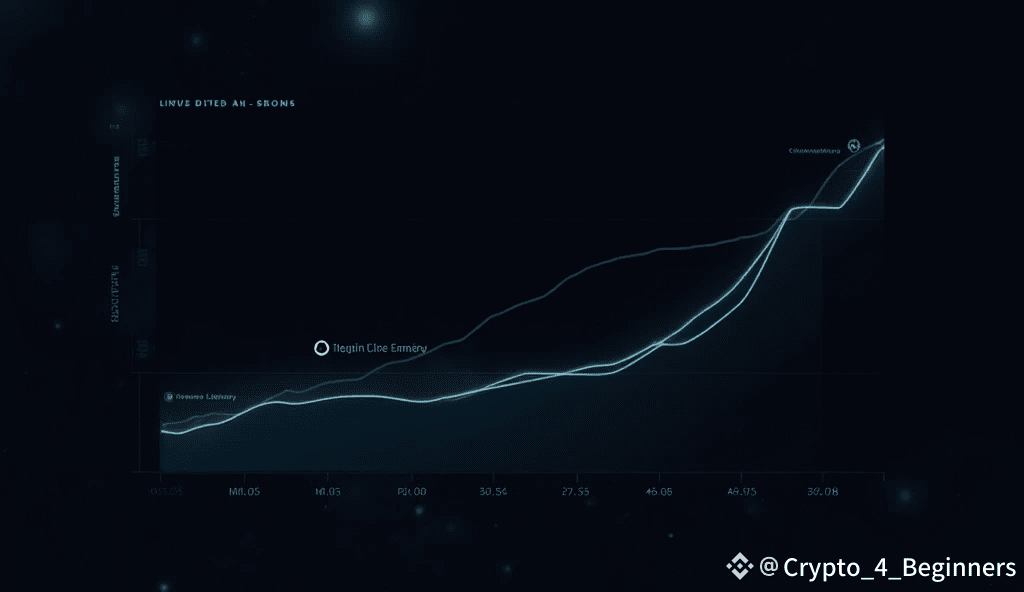
Injective by contrast creates a shared liquidity environment across all dApps. Markets reinforce each other rather than compete for capital. This creates what I like to call the liquidity resonance effect a structural advantage visible when multiple markets deepen simultaneously.
A conceptual chart showing Liquidity Synergy Across Ecosystems would illustrate this clearly. Injective's curve would rise sharply with each new market launch while competing ecosystems curves stay relatively flat due to fragmentation.
The comparison is not about superiority in every dimension. Solana remains unmatched in raw TPS and Ethereum still leads in developer gravity. But when it comes to defining what a financial layer blockchain should feel like Injective sets the new baseline.
Injective did not win because it outpaced competitors. It won because the competition was playing a different game. When a chain stops fighting for attention and instead becomes the reference model others quietly study it crosses into a new phase of influence. In my assessment Injective reached that point the moment its architecture started dictating expectations across DeFi rather than reacting to them.
Whether the broader market realizes it now or in the next cycle the standard for financial layer block chains has already shifted. Injective did not join the race. It redrew the track.


