
Mark Neo
6.9k Публикации

Mark Neo
 Square Verified+
Отправить жалобу
Заблокировать пользователя
Web3 believer building for the future.
942 подписок(и/а)
34.0K+ подписчиков(а)
15.3K+ понравилось
Посты
Все
Активно
·
--
Проверено
I’m not looking at today’s CPI as just another inflation print.
I’m watching what it does to the Fed narrative.
Yesterday’s PPI came in hot at 0.4% for August, with producer prices up 5.4% year-over-year. That’s already putting pressure on the idea that inflation is cooling smoothly.
Now all eyes are on CPI.
If core CPI stays near expectations, the Fed may still have room to wait.
But a hotter-than-expected print could change the conversation quickly — pushing yields and the dollar higher while putting pressure on stocks, gold and crypto.
A softer CPI, on the other hand, could give risk assets some breathing room.
So I’m not trying to predict the exact number.
I’m watching the market reaction.
The real question is:
Does CPI give the Fed a reason to move, or another reason to wait?
#CPIWatch #NFP #FedWatch #CPI
$哈基米
{future}(哈基米USDT)
$牛来
{spot}(牛来USDT)
$MARSCOIN
{spot}(MARSCOINUSDT)
I’m not looking at today’s CPI as just another inflation print.
I’m watching what it does to the Fed narrative.
Yesterday’s PPI came in hot at 0.4% for August, with producer prices up 5.4% year-over-year. That’s already putting pressure on the idea that inflation is cooling smoothly.
Now all eyes are on CPI.
If core CPI stays near expectations, the Fed may still have room to wait.
But a hotter-than-expected print could change the conversation quickly — pushing yields and the dollar higher while putting pressure on stocks, gold and crypto.
A softer CPI, on the other hand, could give risk assets some breathing room.
So I’m not trying to predict the exact number.
I’m watching the market reaction.
The real question is:
Does CPI give the Fed a reason to move, or another reason to wait?
#CPIWatch #NFP #FedWatch #CPI
$哈基米
$牛来
$MARSCOIN
I’m watching what it does to the Fed narrative.
Yesterday’s PPI came in hot at 0.4% for August, with producer prices up 5.4% year-over-year. That’s already putting pressure on the idea that inflation is cooling smoothly.
Now all eyes are on CPI.
If core CPI stays near expectations, the Fed may still have room to wait.
But a hotter-than-expected print could change the conversation quickly — pushing yields and the dollar higher while putting pressure on stocks, gold and crypto.
A softer CPI, on the other hand, could give risk assets some breathing room.
So I’m not trying to predict the exact number.
I’m watching the market reaction.
The real question is:
Does CPI give the Fed a reason to move, or another reason to wait?
#CPIWatch #NFP #FedWatch #CPI
$哈基米
$牛来
$MARSCOIN

17
19
603
·
--
Рост
🚨 $XAU USDT — Momentum Shift Incoming 👀
Price sitting at 4,436.30 after a sharp rejection from the 4,476 resistance zone — bulls pushed, but sellers took full control ⚠️
Momentum is turning weak. Structure shows rejection at highs, indicating possible downside pressure building.
Resistance: 4,476 (strong rejection zone)
Support: 4,400 area — break = مزید downside
Bias: Bearish short-term unless reclaim happens
If price fails to hold current levels, we could see a fast drop 📉
If bulls regain 4,476, sentiment flips again
High volatility zone — entries need precision 🎯
Let’s go — trade now 🔥
{future}(XAUUSDT)
#OilPricesDrop
#US-IranTalks
#US5DayHalt
🚨 $XAU USDT — Momentum Shift Incoming 👀
Price sitting at 4,436.30 after a sharp rejection from the 4,476 resistance zone — bulls pushed, but sellers took full control ⚠️
Momentum is turning weak. Structure shows rejection at highs, indicating possible downside pressure building.
Resistance: 4,476 (strong rejection zone)
Support: 4,400 area — break = مزید downside
Bias: Bearish short-term unless reclaim happens
If price fails to hold current levels, we could see a fast drop 📉
If bulls regain 4,476, sentiment flips again
High volatility zone — entries need precision 🎯
Let’s go — trade now 🔥
#OilPricesDrop
#US-IranTalks
#US5DayHalt
Price sitting at 4,436.30 after a sharp rejection from the 4,476 resistance zone — bulls pushed, but sellers took full control ⚠️
Momentum is turning weak. Structure shows rejection at highs, indicating possible downside pressure building.
Resistance: 4,476 (strong rejection zone)
Support: 4,400 area — break = مزید downside
Bias: Bearish short-term unless reclaim happens
If price fails to hold current levels, we could see a fast drop 📉
If bulls regain 4,476, sentiment flips again
High volatility zone — entries need precision 🎯
Let’s go — trade now 🔥
#OilPricesDrop
#US-IranTalks
#US5DayHalt
2
323
·
--
Падение
$SIREN just crashed hard — -57% سقوط ⚠️
Market looks extremely unstable right now. Volatility is high, اتجاه unclear, and momentum is weak.
Buy Zone: Avoid for now
Target: Unclear — no solid direction yet
Stop Loss: Must be strict below entry (no exceptions)
This is not for beginners. Only experienced traders with proper risk management should even think about entering 🎯
High risk. High uncertainty. One wrong move = heavy loss.
Let’s go — trade smart now 🔥
{future}(SIRENUSDT)
#OilPricesDrop
#US-IranTalks
$SIREN just crashed hard — -57% سقوط ⚠️
Market looks extremely unstable right now. Volatility is high, اتجاه unclear, and momentum is weak.
Buy Zone: Avoid for now
Target: Unclear — no solid direction yet
Stop Loss: Must be strict below entry (no exceptions)
This is not for beginners. Only experienced traders with proper risk management should even think about entering 🎯
High risk. High uncertainty. One wrong move = heavy loss.
Let’s go — trade smart now 🔥
#OilPricesDrop
#US-IranTalks
Market looks extremely unstable right now. Volatility is high, اتجاه unclear, and momentum is weak.
Buy Zone: Avoid for now
Target: Unclear — no solid direction yet
Stop Loss: Must be strict below entry (no exceptions)
This is not for beginners. Only experienced traders with proper risk management should even think about entering 🎯
High risk. High uncertainty. One wrong move = heavy loss.
Let’s go — trade smart now 🔥
#OilPricesDrop
#US-IranTalks
3
252
·
--

Статья
The People Who Prove the Need—and Bear the RiskMy mother spent the first twenty years of her life without a birth certificate. Not because her country didn’t keep records, but because the system that held those records was too far away to reach. The office was three days from her village. The fee cost more than a week’s income. So she grew up in a strange in-between space—fully alive, fully known by her community, but invisible to anything that required proof on paper.
When she finally got her documents, it didn’t magically fix everything. It took years to rebuild what most people accumulate without thinking: a traceable identity. School records, eligibility, continuity. The system didn’t just recognize her—it asked her to prove herself, piece by piece.
That gap—between being a person and being recognized as one by systems—is still a reality for millions. In places like , it’s not unusual. And it’s not because people don’t exist in the system at all. Often, they do—just not in a way that works.
The numbers are striking. A large portion of the population has identity numbers, but only a small percentage has physical ID cards. On paper, they exist. In practice, they don’t. And that difference matters more than it sounds. Because without something you can present and verify, that identity number doesn’t open a bank account. It doesn’t unlock services. It doesn’t move money.
So you end up with a strange contradiction: people are counted, but still excluded. Farmers can’t receive subsidies that were meant for them. Social programs don’t reach the people they were designed to help. Not because the money isn’t there—but because there’s no reliable way to connect it to the person.
This is the problem companies like are trying to solve. And to be fair, they’re not wrong about the core issue. Identity isn’t just a feature—it’s infrastructure. Without it, everything else struggles to function. You can build digital payments, financial systems, government programs—but if people can’t prove who they are in a usable way, none of it reaches them.
There’s a simple logic to it. Identity enables accounts. Accounts enable transactions. Transactions enable participation. Fix the first step, and the rest can finally work.
And for someone who has been excluded, that’s not a small thing. It’s the difference between receiving help that already exists and never seeing it at all.
But here’s the part that’s harder to talk about.
The people who most need this infrastructure are also the ones who will depend on it the most—and have the least say in how it’s designed or used.
Because modern digital identity systems aren’t just digital versions of paper IDs. When combined with financial systems, they become something much more powerful. Every transaction can be recorded. Payments can come with conditions—where they can be spent, how quickly, or on what. Accounts can be paused or restricted. Data can flow automatically into regulatory systems.
Individually, each of these features can be explained. You can say they reduce fraud, improve efficiency, make sure resources are used properly. And in many cases, that’s true.
But together, they create a system that doesn’t just include people—it also shapes what they can do.
The farmer in Sierra Leone who can’t receive a subsidy today would, in a better system, finally get that money. That’s real progress. But she would also be stepping into a system that records her transactions, potentially limits how funds are used, and can be adjusted or paused without her having much ability to challenge it.
And that’s where the tension sits.
Because inclusion isn’t neutral. Being brought into a system always means accepting the rules of that system. And when those rules are complex, invisible, or hard to challenge, the people inside them can become dependent in ways they didn’t choose.
In countries with strong institutions, clear laws, and real accountability, there are at least some safeguards. But in places where those protections are weaker, the balance of power shifts quickly. The system works—but it also becomes something you can’t easily question or step outside of.
There’s a tendency to treat access as the end of the story. As if once people are included, the problem is solved. But inclusion is just the beginning. What matters just as much is the kind of system people are being included into.
The Sierra Leone example makes this real. These aren’t abstract debates. These are people who can’t access money meant for them right now. Fixing that matters. It changes lives.
But if the solution introduces new kinds of control—ones that are harder to see and even harder to resist—then the conversation can’t stop at access alone.
It has to include protection.
Because once identity becomes the gateway to financial life, and financial systems become programmable, the infrastructure starts to shape behavior in quiet ways. Not dramatically, not overnight—but gradually. What gets recorded can be analyzed. What gets analyzed can be optimized. And what gets optimized can be influenced.
Ten years from now, the biggest shift might not just be that more people have digital IDs. It might be that the systems around them are constantly responding to their behavior—adjusting access, eligibility, and opportunity in ways that feel seamless but are deeply structured.
And the people most affected will be the same ones we point to today as proof that these systems are needed.
That doesn’t mean we shouldn’t build them. The exclusion is real, and leaving it unaddressed isn’t acceptable.
But it does mean we need to ask harder questions while we do.
Not just “does this work?”
But “who does it protect?”
Not just “who gets access?”
But “who has control?”
Because the people who prove the need for this infrastructure are also the ones who will live inside it the longest—and have the least room to push back if it’s built wrong?? 🤔
#SignDigitalSovereignInfra @SignOfficial $SIGN
{spot}(SIGNUSDT)
The People Who Prove the Need—and Bear the Risk
My mother spent the first twenty years of her life without a birth certificate. Not because her country didn’t keep records, but because the system that held those records was too far away to reach. The office was three days from her village. The fee cost more than a week’s income. So she grew up in a strange in-between space—fully alive, fully known by her community, but invisible to anything that required proof on paper.
When she finally got her documents, it didn’t magically fix everything. It took years to rebuild what most people accumulate without thinking: a traceable identity. School records, eligibility, continuity. The system didn’t just recognize her—it asked her to prove herself, piece by piece.
That gap—between being a person and being recognized as one by systems—is still a reality for millions. In places like , it’s not unusual. And it’s not because people don’t exist in the system at all. Often, they do—just not in a way that works.
The numbers are striking. A large portion of the population has identity numbers, but only a small percentage has physical ID cards. On paper, they exist. In practice, they don’t. And that difference matters more than it sounds. Because without something you can present and verify, that identity number doesn’t open a bank account. It doesn’t unlock services. It doesn’t move money.
So you end up with a strange contradiction: people are counted, but still excluded. Farmers can’t receive subsidies that were meant for them. Social programs don’t reach the people they were designed to help. Not because the money isn’t there—but because there’s no reliable way to connect it to the person.
This is the problem companies like are trying to solve. And to be fair, they’re not wrong about the core issue. Identity isn’t just a feature—it’s infrastructure. Without it, everything else struggles to function. You can build digital payments, financial systems, government programs—but if people can’t prove who they are in a usable way, none of it reaches them.
There’s a simple logic to it. Identity enables accounts. Accounts enable transactions. Transactions enable participation. Fix the first step, and the rest can finally work.
And for someone who has been excluded, that’s not a small thing. It’s the difference between receiving help that already exists and never seeing it at all.
But here’s the part that’s harder to talk about.
The people who most need this infrastructure are also the ones who will depend on it the most—and have the least say in how it’s designed or used.
Because modern digital identity systems aren’t just digital versions of paper IDs. When combined with financial systems, they become something much more powerful. Every transaction can be recorded. Payments can come with conditions—where they can be spent, how quickly, or on what. Accounts can be paused or restricted. Data can flow automatically into regulatory systems.
Individually, each of these features can be explained. You can say they reduce fraud, improve efficiency, make sure resources are used properly. And in many cases, that’s true.
But together, they create a system that doesn’t just include people—it also shapes what they can do.
The farmer in Sierra Leone who can’t receive a subsidy today would, in a better system, finally get that money. That’s real progress. But she would also be stepping into a system that records her transactions, potentially limits how funds are used, and can be adjusted or paused without her having much ability to challenge it.
And that’s where the tension sits.
Because inclusion isn’t neutral. Being brought into a system always means accepting the rules of that system. And when those rules are complex, invisible, or hard to challenge, the people inside them can become dependent in ways they didn’t choose.
In countries with strong institutions, clear laws, and real accountability, there are at least some safeguards. But in places where those protections are weaker, the balance of power shifts quickly. The system works—but it also becomes something you can’t easily question or step outside of.
There’s a tendency to treat access as the end of the story. As if once people are included, the problem is solved. But inclusion is just the beginning. What matters just as much is the kind of system people are being included into.
The Sierra Leone example makes this real. These aren’t abstract debates. These are people who can’t access money meant for them right now. Fixing that matters. It changes lives.
But if the solution introduces new kinds of control—ones that are harder to see and even harder to resist—then the conversation can’t stop at access alone.
It has to include protection.
Because once identity becomes the gateway to financial life, and financial systems become programmable, the infrastructure starts to shape behavior in quiet ways. Not dramatically, not overnight—but gradually. What gets recorded can be analyzed. What gets analyzed can be optimized. And what gets optimized can be influenced.
Ten years from now, the biggest shift might not just be that more people have digital IDs. It might be that the systems around them are constantly responding to their behavior—adjusting access, eligibility, and opportunity in ways that feel seamless but are deeply structured.
And the people most affected will be the same ones we point to today as proof that these systems are needed.
That doesn’t mean we shouldn’t build them. The exclusion is real, and leaving it unaddressed isn’t acceptable.
But it does mean we need to ask harder questions while we do.
Not just “does this work?”
But “who does it protect?”
Not just “who gets access?”
But “who has control?”
Because the people who prove the need for this infrastructure are also the ones who will live inside it the longest—and have the least room to push back if it’s built wrong?? 🤔
#SignDigitalSovereignInfra @SignOfficial $SIGN
When she finally got her documents, it didn’t magically fix everything. It took years to rebuild what most people accumulate without thinking: a traceable identity. School records, eligibility, continuity. The system didn’t just recognize her—it asked her to prove herself, piece by piece.
That gap—between being a person and being recognized as one by systems—is still a reality for millions. In places like , it’s not unusual. And it’s not because people don’t exist in the system at all. Often, they do—just not in a way that works.
The numbers are striking. A large portion of the population has identity numbers, but only a small percentage has physical ID cards. On paper, they exist. In practice, they don’t. And that difference matters more than it sounds. Because without something you can present and verify, that identity number doesn’t open a bank account. It doesn’t unlock services. It doesn’t move money.
So you end up with a strange contradiction: people are counted, but still excluded. Farmers can’t receive subsidies that were meant for them. Social programs don’t reach the people they were designed to help. Not because the money isn’t there—but because there’s no reliable way to connect it to the person.
This is the problem companies like are trying to solve. And to be fair, they’re not wrong about the core issue. Identity isn’t just a feature—it’s infrastructure. Without it, everything else struggles to function. You can build digital payments, financial systems, government programs—but if people can’t prove who they are in a usable way, none of it reaches them.
There’s a simple logic to it. Identity enables accounts. Accounts enable transactions. Transactions enable participation. Fix the first step, and the rest can finally work.
And for someone who has been excluded, that’s not a small thing. It’s the difference between receiving help that already exists and never seeing it at all.
But here’s the part that’s harder to talk about.
The people who most need this infrastructure are also the ones who will depend on it the most—and have the least say in how it’s designed or used.
Because modern digital identity systems aren’t just digital versions of paper IDs. When combined with financial systems, they become something much more powerful. Every transaction can be recorded. Payments can come with conditions—where they can be spent, how quickly, or on what. Accounts can be paused or restricted. Data can flow automatically into regulatory systems.
Individually, each of these features can be explained. You can say they reduce fraud, improve efficiency, make sure resources are used properly. And in many cases, that’s true.
But together, they create a system that doesn’t just include people—it also shapes what they can do.
The farmer in Sierra Leone who can’t receive a subsidy today would, in a better system, finally get that money. That’s real progress. But she would also be stepping into a system that records her transactions, potentially limits how funds are used, and can be adjusted or paused without her having much ability to challenge it.
And that’s where the tension sits.
Because inclusion isn’t neutral. Being brought into a system always means accepting the rules of that system. And when those rules are complex, invisible, or hard to challenge, the people inside them can become dependent in ways they didn’t choose.
In countries with strong institutions, clear laws, and real accountability, there are at least some safeguards. But in places where those protections are weaker, the balance of power shifts quickly. The system works—but it also becomes something you can’t easily question or step outside of.
There’s a tendency to treat access as the end of the story. As if once people are included, the problem is solved. But inclusion is just the beginning. What matters just as much is the kind of system people are being included into.
The Sierra Leone example makes this real. These aren’t abstract debates. These are people who can’t access money meant for them right now. Fixing that matters. It changes lives.
But if the solution introduces new kinds of control—ones that are harder to see and even harder to resist—then the conversation can’t stop at access alone.
It has to include protection.
Because once identity becomes the gateway to financial life, and financial systems become programmable, the infrastructure starts to shape behavior in quiet ways. Not dramatically, not overnight—but gradually. What gets recorded can be analyzed. What gets analyzed can be optimized. And what gets optimized can be influenced.
Ten years from now, the biggest shift might not just be that more people have digital IDs. It might be that the systems around them are constantly responding to their behavior—adjusting access, eligibility, and opportunity in ways that feel seamless but are deeply structured.
And the people most affected will be the same ones we point to today as proof that these systems are needed.
That doesn’t mean we shouldn’t build them. The exclusion is real, and leaving it unaddressed isn’t acceptable.
But it does mean we need to ask harder questions while we do.
Not just “does this work?”
But “who does it protect?”
Not just “who gets access?”
But “who has control?”
Because the people who prove the need for this infrastructure are also the ones who will live inside it the longest—and have the least room to push back if it’s built wrong?? 🤔
#SignDigitalSovereignInfra @SignOfficial $SIGN
4
67
·
--
When Payment Standards Start Defining Your Financial Story
ISO 20022 didn’t just standardize payments — it standardized what counts as a valid financial story.
Once every transaction must explain itself in structured fields, ambiguity dies. No messy edges. No gaps.
Not control through force — control through format.
#SignDigitalSovereignInfra @SignOfficial $SIGN
{spot}(SIGNUSDT)
When Payment Standards Start Defining Your Financial Story
ISO 20022 didn’t just standardize payments — it standardized what counts as a valid financial story.
Once every transaction must explain itself in structured fields, ambiguity dies. No messy edges. No gaps.
Not control through force — control through format.
#SignDigitalSovereignInfra @SignOfficial $SIGN
ISO 20022 didn’t just standardize payments — it standardized what counts as a valid financial story.
Once every transaction must explain itself in structured fields, ambiguity dies. No messy edges. No gaps.
Not control through force — control through format.
#SignDigitalSovereignInfra @SignOfficial $SIGN

3
332
·
--
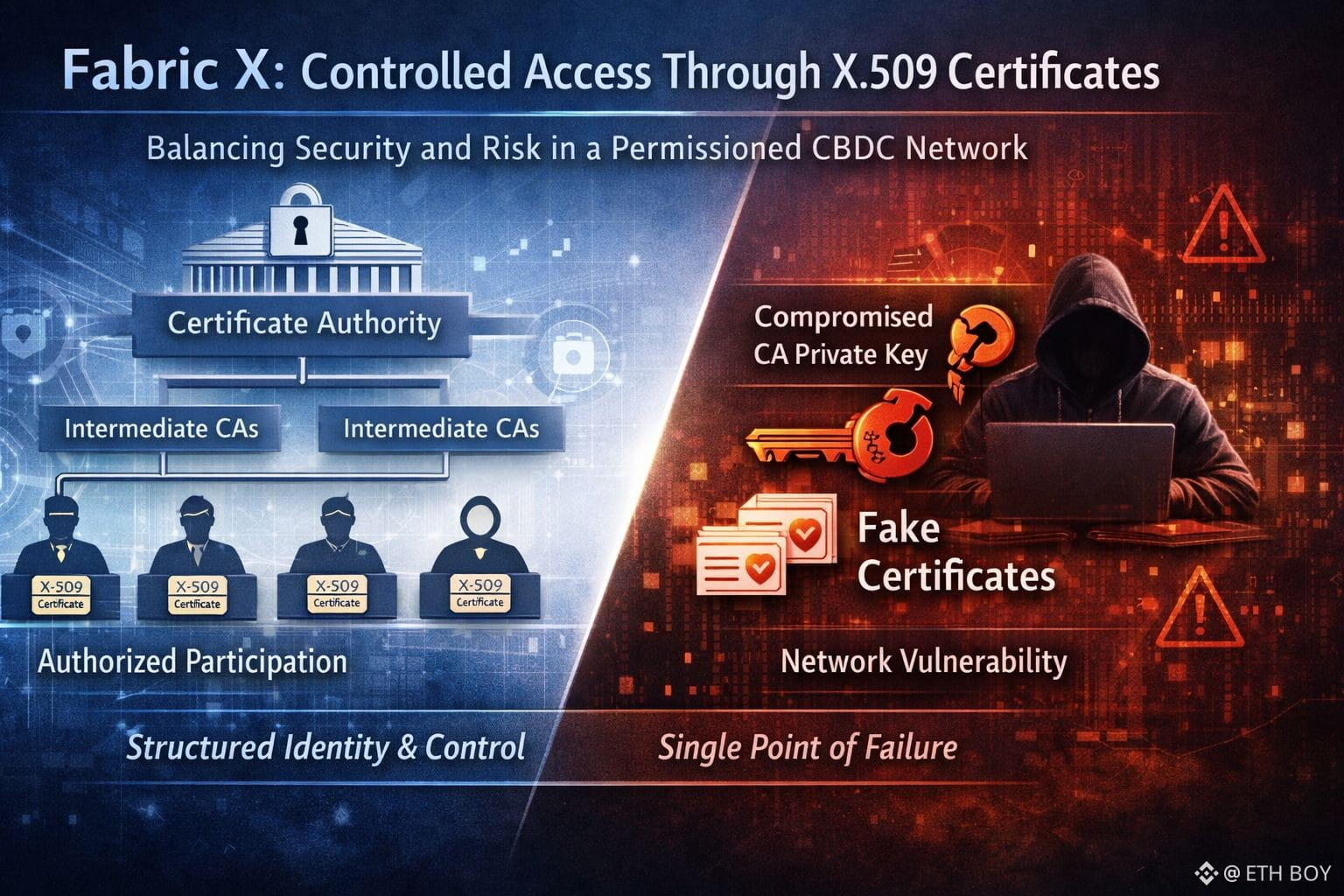
Fabric X: Controlled Identity, Hidden Fragility
I didn’t set out to study Fabric X this closely, but the more I looked at how it handles participation, the more the certificate layer kept pulling my attention back. It’s not flashy, but it quietly defines who is allowed to exist in the system at all.
Fabric X seems less focused on open access and more on controlled coordination. Identity isn’t abstract or wallet-based. It’s issued, verified, and enforced through a structured hierarchy. That makes sense for a CBDC environment where participation isn’t meant to be fluid. The MSP model, backed by X.509 certificates, gives the network a kind of institutional clarity that most crypto systems avoid.
At the same time, it shifts a lot of weight onto the certificate authority itself. Trust isn’t distributed in the usual sense. It’s concentrated, formalized, and assumed to be managed correctly. That introduces a different kind of risk, one that isn’t always visible in high-level designs.
I don’t think that makes the approach wrong. It just makes it very specific. Fabric X feels less like a decentralized network experiment and more like an attempt to build durable financial infrastructure with clear boundaries. Whether that tradeoff holds up in practice is still an open question??
#SignDigitalSovereignInfra @SignOfficial $SIGN
{spot}(SIGNUSDT)
Fabric X: Controlled Identity, Hidden Fragility
I didn’t set out to study Fabric X this closely, but the more I looked at how it handles participation, the more the certificate layer kept pulling my attention back. It’s not flashy, but it quietly defines who is allowed to exist in the system at all.
Fabric X seems less focused on open access and more on controlled coordination. Identity isn’t abstract or wallet-based. It’s issued, verified, and enforced through a structured hierarchy. That makes sense for a CBDC environment where participation isn’t meant to be fluid. The MSP model, backed by X.509 certificates, gives the network a kind of institutional clarity that most crypto systems avoid.
At the same time, it shifts a lot of weight onto the certificate authority itself. Trust isn’t distributed in the usual sense. It’s concentrated, formalized, and assumed to be managed correctly. That introduces a different kind of risk, one that isn’t always visible in high-level designs.
I don’t think that makes the approach wrong. It just makes it very specific. Fabric X feels less like a decentralized network experiment and more like an attempt to build durable financial infrastructure with clear boundaries. Whether that tradeoff holds up in practice is still an open question??
#SignDigitalSovereignInfra @SignOfficial $SIGN
I didn’t set out to study Fabric X this closely, but the more I looked at how it handles participation, the more the certificate layer kept pulling my attention back. It’s not flashy, but it quietly defines who is allowed to exist in the system at all.
Fabric X seems less focused on open access and more on controlled coordination. Identity isn’t abstract or wallet-based. It’s issued, verified, and enforced through a structured hierarchy. That makes sense for a CBDC environment where participation isn’t meant to be fluid. The MSP model, backed by X.509 certificates, gives the network a kind of institutional clarity that most crypto systems avoid.
At the same time, it shifts a lot of weight onto the certificate authority itself. Trust isn’t distributed in the usual sense. It’s concentrated, formalized, and assumed to be managed correctly. That introduces a different kind of risk, one that isn’t always visible in high-level designs.
I don’t think that makes the approach wrong. It just makes it very specific. Fabric X feels less like a decentralized network experiment and more like an attempt to build durable financial infrastructure with clear boundaries. Whether that tradeoff holds up in practice is still an open question??
#SignDigitalSovereignInfra @SignOfficial $SIGN
2
5
110
·
--
Статья
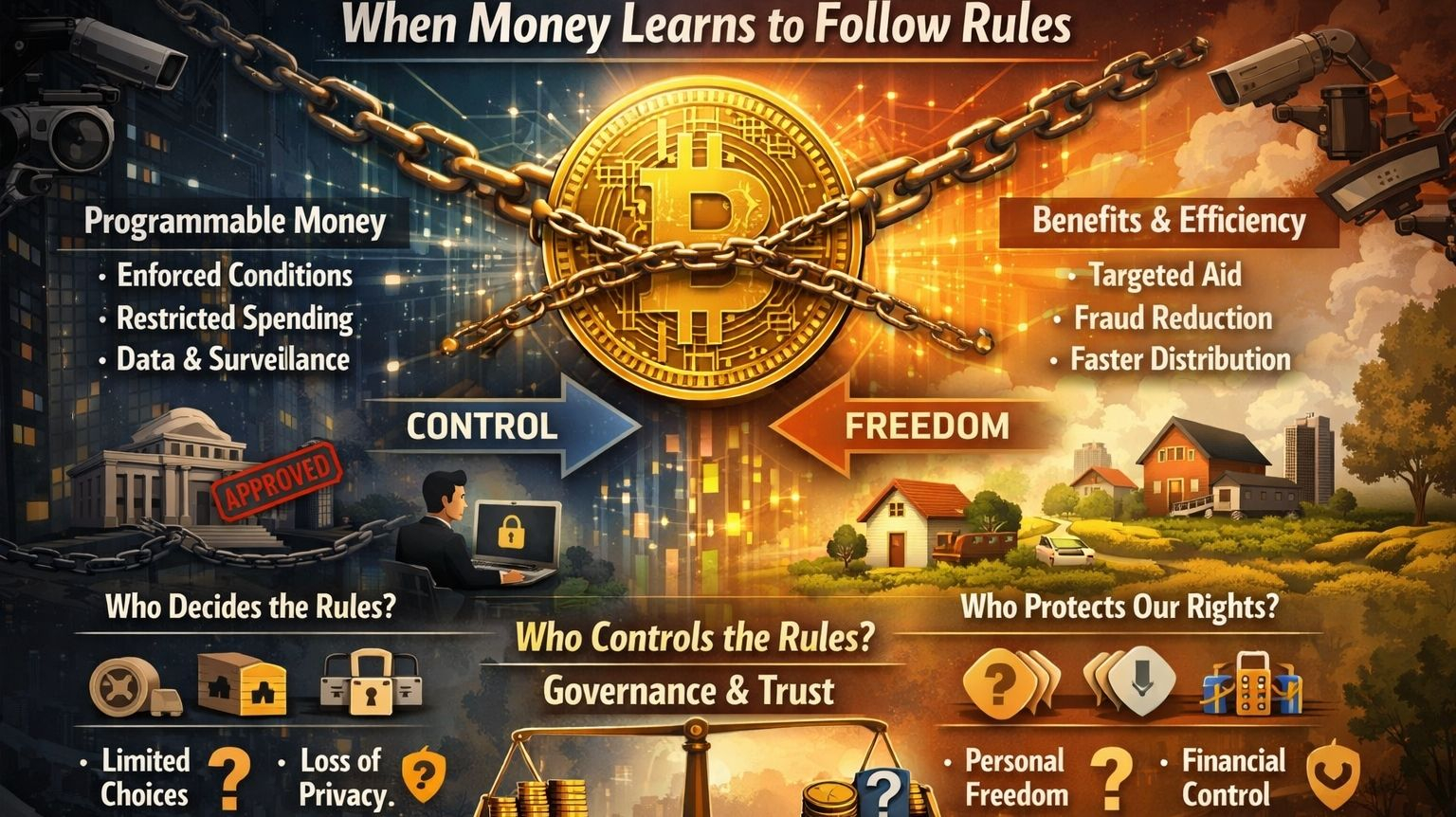
When Money Learns to Follow RulesI keep thinking about something simple from my past. When I was a student, I had a scholarship. Every semester, the money came in, but it never felt completely free. It had expectations attached to it. I had to maintain a certain grade, stay enrolled, and meet specific requirements. If I didn’t, the payments stopped. At the time, it felt normal. It made sense. The money was there for a purpose, and that purpose came with conditions.
Back then, those conditions were enforced by people. Universities checked records, administrators reviewed progress, and decisions were made manually. It took time, effort, and coordination. The rules existed, but they depended on systems that could be slow, imperfect, and sometimes inconsistent.
Now imagine a different version of that same scholarship. Instead of people enforcing the rules, the money itself does. It simply refuses to exist outside its conditions. If your grades drop, it stops arriving automatically. If you try to use it in a way that isn’t allowed, the transaction fails instantly. No warnings, no appeals in the moment, no exceptions. Just a system that either allows or blocks.
That is the world programmable digital money is slowly building toward.
For most of history, money has been passive. Once you receive it, it becomes yours to use however you want. Cash doesn’t ask questions. A bank transfer doesn’t carry instructions about what you should do next. Money moves, and people decide.
Programmable CBDCs change that basic idea. They introduce the concept that money can carry rules within it. Not soft rules, but hard ones that are enforced automatically. The money is no longer just a medium of exchange. It becomes something closer to a controlled instrument.
Technically, this is made possible by how the system is designed. Instead of treating money as one single balance, it can be broken into smaller units, each with its own properties. When one unit is spent, it disappears and new ones are created. This makes it possible to attach specific conditions to each piece. One unit might only be usable after a certain date. Another might require multiple approvals before it can move. Another might only work at certain types of businesses.
These conditions are not suggestions. They are built into the system itself. If the conditions are not met, the transaction simply cannot happen. There is no workaround because the rule is part of the money’s structure.
From a government’s point of view, this solves a very real and long-standing problem. When money is distributed for a specific purpose, there has always been a risk that it will be used differently. Benefits meant for housing might be spent elsewhere. Subsidies might not reach the intended people. Fraud and misuse have always been part of large-scale financial systems.
Programmable money offers a way to reduce those problems. It can ensure that funds go exactly where they are meant to go and are used exactly how they are intended. A housing benefit can only be spent on housing. A subsidy can only reach verified recipients. A payment can require approvals before it moves. Everything becomes more precise, more targeted, and harder to exploit.
In that sense, it looks like a clear improvement. More efficiency. Less waste. Better outcomes.
But there is another side to this, and it becomes visible once you step back and look at the system as a whole.
All of these conditions—time limits, approvals, usage restrictions—are simply parameters. They can be adjusted, expanded, or combined in different ways. The system itself does not define limits on what kinds of conditions can exist. It only provides the ability to enforce them.
That means the same system that ensures a benefit is used properly can also restrict where you are allowed to spend. It can make money expire if it is not used within a certain time. It can limit transactions based on location. It can change how money behaves depending on data linked to your identity.
None of this requires new technology. It is already part of what the system can do.
This is where the conversation shifts from technology to something deeper. The question is no longer just about efficiency or fraud prevention. It becomes about control, and where the boundaries of that control should be.
There is a pattern that has shown up before. Whenever systems are built to enforce conditions on money, those conditions tend to grow over time. At first, they are simple and focused. Then new use cases appear. New objectives are added. The system becomes more detailed, more specific, more powerful.
In the past, this growth was limited by effort. Complex rules required more administration. More people, more checks, more time. That created a natural limit on how far things could go.
With programmable money, that limit is gone. Adding a new rule does not require more staff or more paperwork. It is just a change in code. The cost of enforcing even very detailed conditions becomes almost zero.
And when something becomes that easy, it rarely stays simple.
This also changes how we think about the economics of money itself. In many digital systems, people focus on value, price, and growth. But here, the focus shifts to behavior. The system is not just distributing money; it is shaping how money moves and how people interact with it.
Money can be designed to encourage spending or saving. It can be directed toward certain industries or regions. It can influence decisions in subtle ways, not by forcing choices directly, but by limiting the options available.
So instead of asking whether the system increases value, a more important question is what kind of behavior it creates.
Around this, a larger ecosystem begins to form. Central banks issue the currency. Technology providers build the infrastructure that allows these conditions to exist. Banks and digital platforms distribute the money and provide access. Identity systems verify who is eligible for what. Businesses interact with the system when they accept payments that may come with restrictions.
It is no longer just money moving between people. It is a network of systems coordinating with each other.
The development of these systems will likely happen gradually. It will start with small programs, limited use cases, and controlled environments. Over time, more features will be added. More conditions will be introduced. The system will expand step by step.
At each stage, the changes may seem reasonable. Each new feature will have a purpose. Each condition will solve a problem. But over time, the overall structure can become something much more complex than what was originally imagined.
That is why the biggest challenge here is not technical. It is about governance and trust.
Who decides what conditions are acceptable? What limits exist on how far those conditions can go? How transparent are those decisions? And what happens if the rules change in ways that people did not expect?
There are also human concerns that come with this shift. Privacy becomes more fragile when money is linked to identity and conditions. Personal freedom can feel reduced if money becomes too restricted in how it can be used. People may begin to feel that they are not fully in control of their own financial choices.
At the same time, the benefits remain real. Better targeting, reduced fraud, faster distribution, and more efficient systems are not small improvements. They can make a meaningful difference, especially in large and complex economies.
That is what makes this topic so difficult to define clearly. It is not simply positive or negative. It is a powerful tool that can be used in different ways depending on the choices made around it.
In the end, the most important question may not be about how the technology works, but about who controls it and how it is used.
Because once money learns to follow rules, the real issue is not whether it can do so, but who gets to decide what those rules are, and how much space is left for people to decide for themselves.
#SignDigitalSovereignInfra @SignOfficial $SIGN
{spot}(SIGNUSDT)
When Money Learns to Follow Rules
I keep thinking about something simple from my past. When I was a student, I had a scholarship. Every semester, the money came in, but it never felt completely free. It had expectations attached to it. I had to maintain a certain grade, stay enrolled, and meet specific requirements. If I didn’t, the payments stopped. At the time, it felt normal. It made sense. The money was there for a purpose, and that purpose came with conditions.
Back then, those conditions were enforced by people. Universities checked records, administrators reviewed progress, and decisions were made manually. It took time, effort, and coordination. The rules existed, but they depended on systems that could be slow, imperfect, and sometimes inconsistent.
Now imagine a different version of that same scholarship. Instead of people enforcing the rules, the money itself does. It simply refuses to exist outside its conditions. If your grades drop, it stops arriving automatically. If you try to use it in a way that isn’t allowed, the transaction fails instantly. No warnings, no appeals in the moment, no exceptions. Just a system that either allows or blocks.
That is the world programmable digital money is slowly building toward.
For most of history, money has been passive. Once you receive it, it becomes yours to use however you want. Cash doesn’t ask questions. A bank transfer doesn’t carry instructions about what you should do next. Money moves, and people decide.
Programmable CBDCs change that basic idea. They introduce the concept that money can carry rules within it. Not soft rules, but hard ones that are enforced automatically. The money is no longer just a medium of exchange. It becomes something closer to a controlled instrument.
Technically, this is made possible by how the system is designed. Instead of treating money as one single balance, it can be broken into smaller units, each with its own properties. When one unit is spent, it disappears and new ones are created. This makes it possible to attach specific conditions to each piece. One unit might only be usable after a certain date. Another might require multiple approvals before it can move. Another might only work at certain types of businesses.
These conditions are not suggestions. They are built into the system itself. If the conditions are not met, the transaction simply cannot happen. There is no workaround because the rule is part of the money’s structure.
From a government’s point of view, this solves a very real and long-standing problem. When money is distributed for a specific purpose, there has always been a risk that it will be used differently. Benefits meant for housing might be spent elsewhere. Subsidies might not reach the intended people. Fraud and misuse have always been part of large-scale financial systems.
Programmable money offers a way to reduce those problems. It can ensure that funds go exactly where they are meant to go and are used exactly how they are intended. A housing benefit can only be spent on housing. A subsidy can only reach verified recipients. A payment can require approvals before it moves. Everything becomes more precise, more targeted, and harder to exploit.
In that sense, it looks like a clear improvement. More efficiency. Less waste. Better outcomes.
But there is another side to this, and it becomes visible once you step back and look at the system as a whole.
All of these conditions—time limits, approvals, usage restrictions—are simply parameters. They can be adjusted, expanded, or combined in different ways. The system itself does not define limits on what kinds of conditions can exist. It only provides the ability to enforce them.
That means the same system that ensures a benefit is used properly can also restrict where you are allowed to spend. It can make money expire if it is not used within a certain time. It can limit transactions based on location. It can change how money behaves depending on data linked to your identity.
None of this requires new technology. It is already part of what the system can do.
This is where the conversation shifts from technology to something deeper. The question is no longer just about efficiency or fraud prevention. It becomes about control, and where the boundaries of that control should be.
There is a pattern that has shown up before. Whenever systems are built to enforce conditions on money, those conditions tend to grow over time. At first, they are simple and focused. Then new use cases appear. New objectives are added. The system becomes more detailed, more specific, more powerful.
In the past, this growth was limited by effort. Complex rules required more administration. More people, more checks, more time. That created a natural limit on how far things could go.
With programmable money, that limit is gone. Adding a new rule does not require more staff or more paperwork. It is just a change in code. The cost of enforcing even very detailed conditions becomes almost zero.
And when something becomes that easy, it rarely stays simple.
This also changes how we think about the economics of money itself. In many digital systems, people focus on value, price, and growth. But here, the focus shifts to behavior. The system is not just distributing money; it is shaping how money moves and how people interact with it.
Money can be designed to encourage spending or saving. It can be directed toward certain industries or regions. It can influence decisions in subtle ways, not by forcing choices directly, but by limiting the options available.
So instead of asking whether the system increases value, a more important question is what kind of behavior it creates.
Around this, a larger ecosystem begins to form. Central banks issue the currency. Technology providers build the infrastructure that allows these conditions to exist. Banks and digital platforms distribute the money and provide access. Identity systems verify who is eligible for what. Businesses interact with the system when they accept payments that may come with restrictions.
It is no longer just money moving between people. It is a network of systems coordinating with each other.
The development of these systems will likely happen gradually. It will start with small programs, limited use cases, and controlled environments. Over time, more features will be added. More conditions will be introduced. The system will expand step by step.
At each stage, the changes may seem reasonable. Each new feature will have a purpose. Each condition will solve a problem. But over time, the overall structure can become something much more complex than what was originally imagined.
That is why the biggest challenge here is not technical. It is about governance and trust.
Who decides what conditions are acceptable? What limits exist on how far those conditions can go? How transparent are those decisions? And what happens if the rules change in ways that people did not expect?
There are also human concerns that come with this shift. Privacy becomes more fragile when money is linked to identity and conditions. Personal freedom can feel reduced if money becomes too restricted in how it can be used. People may begin to feel that they are not fully in control of their own financial choices.
At the same time, the benefits remain real. Better targeting, reduced fraud, faster distribution, and more efficient systems are not small improvements. They can make a meaningful difference, especially in large and complex economies.
That is what makes this topic so difficult to define clearly. It is not simply positive or negative. It is a powerful tool that can be used in different ways depending on the choices made around it.
In the end, the most important question may not be about how the technology works, but about who controls it and how it is used.
Because once money learns to follow rules, the real issue is not whether it can do so, but who gets to decide what those rules are, and how much space is left for people to decide for themselves.
#SignDigitalSovereignInfra @SignOfficial $SIGN
Back then, those conditions were enforced by people. Universities checked records, administrators reviewed progress, and decisions were made manually. It took time, effort, and coordination. The rules existed, but they depended on systems that could be slow, imperfect, and sometimes inconsistent.
Now imagine a different version of that same scholarship. Instead of people enforcing the rules, the money itself does. It simply refuses to exist outside its conditions. If your grades drop, it stops arriving automatically. If you try to use it in a way that isn’t allowed, the transaction fails instantly. No warnings, no appeals in the moment, no exceptions. Just a system that either allows or blocks.
That is the world programmable digital money is slowly building toward.
For most of history, money has been passive. Once you receive it, it becomes yours to use however you want. Cash doesn’t ask questions. A bank transfer doesn’t carry instructions about what you should do next. Money moves, and people decide.
Programmable CBDCs change that basic idea. They introduce the concept that money can carry rules within it. Not soft rules, but hard ones that are enforced automatically. The money is no longer just a medium of exchange. It becomes something closer to a controlled instrument.
Technically, this is made possible by how the system is designed. Instead of treating money as one single balance, it can be broken into smaller units, each with its own properties. When one unit is spent, it disappears and new ones are created. This makes it possible to attach specific conditions to each piece. One unit might only be usable after a certain date. Another might require multiple approvals before it can move. Another might only work at certain types of businesses.
These conditions are not suggestions. They are built into the system itself. If the conditions are not met, the transaction simply cannot happen. There is no workaround because the rule is part of the money’s structure.
From a government’s point of view, this solves a very real and long-standing problem. When money is distributed for a specific purpose, there has always been a risk that it will be used differently. Benefits meant for housing might be spent elsewhere. Subsidies might not reach the intended people. Fraud and misuse have always been part of large-scale financial systems.
Programmable money offers a way to reduce those problems. It can ensure that funds go exactly where they are meant to go and are used exactly how they are intended. A housing benefit can only be spent on housing. A subsidy can only reach verified recipients. A payment can require approvals before it moves. Everything becomes more precise, more targeted, and harder to exploit.
In that sense, it looks like a clear improvement. More efficiency. Less waste. Better outcomes.
But there is another side to this, and it becomes visible once you step back and look at the system as a whole.
All of these conditions—time limits, approvals, usage restrictions—are simply parameters. They can be adjusted, expanded, or combined in different ways. The system itself does not define limits on what kinds of conditions can exist. It only provides the ability to enforce them.
That means the same system that ensures a benefit is used properly can also restrict where you are allowed to spend. It can make money expire if it is not used within a certain time. It can limit transactions based on location. It can change how money behaves depending on data linked to your identity.
None of this requires new technology. It is already part of what the system can do.
This is where the conversation shifts from technology to something deeper. The question is no longer just about efficiency or fraud prevention. It becomes about control, and where the boundaries of that control should be.
There is a pattern that has shown up before. Whenever systems are built to enforce conditions on money, those conditions tend to grow over time. At first, they are simple and focused. Then new use cases appear. New objectives are added. The system becomes more detailed, more specific, more powerful.
In the past, this growth was limited by effort. Complex rules required more administration. More people, more checks, more time. That created a natural limit on how far things could go.
With programmable money, that limit is gone. Adding a new rule does not require more staff or more paperwork. It is just a change in code. The cost of enforcing even very detailed conditions becomes almost zero.
And when something becomes that easy, it rarely stays simple.
This also changes how we think about the economics of money itself. In many digital systems, people focus on value, price, and growth. But here, the focus shifts to behavior. The system is not just distributing money; it is shaping how money moves and how people interact with it.
Money can be designed to encourage spending or saving. It can be directed toward certain industries or regions. It can influence decisions in subtle ways, not by forcing choices directly, but by limiting the options available.
So instead of asking whether the system increases value, a more important question is what kind of behavior it creates.
Around this, a larger ecosystem begins to form. Central banks issue the currency. Technology providers build the infrastructure that allows these conditions to exist. Banks and digital platforms distribute the money and provide access. Identity systems verify who is eligible for what. Businesses interact with the system when they accept payments that may come with restrictions.
It is no longer just money moving between people. It is a network of systems coordinating with each other.
The development of these systems will likely happen gradually. It will start with small programs, limited use cases, and controlled environments. Over time, more features will be added. More conditions will be introduced. The system will expand step by step.
At each stage, the changes may seem reasonable. Each new feature will have a purpose. Each condition will solve a problem. But over time, the overall structure can become something much more complex than what was originally imagined.
That is why the biggest challenge here is not technical. It is about governance and trust.
Who decides what conditions are acceptable? What limits exist on how far those conditions can go? How transparent are those decisions? And what happens if the rules change in ways that people did not expect?
There are also human concerns that come with this shift. Privacy becomes more fragile when money is linked to identity and conditions. Personal freedom can feel reduced if money becomes too restricted in how it can be used. People may begin to feel that they are not fully in control of their own financial choices.
At the same time, the benefits remain real. Better targeting, reduced fraud, faster distribution, and more efficient systems are not small improvements. They can make a meaningful difference, especially in large and complex economies.
That is what makes this topic so difficult to define clearly. It is not simply positive or negative. It is a powerful tool that can be used in different ways depending on the choices made around it.
In the end, the most important question may not be about how the technology works, but about who controls it and how it is used.
Because once money learns to follow rules, the real issue is not whether it can do so, but who gets to decide what those rules are, and how much space is left for people to decide for themselves.
#SignDigitalSovereignInfra @SignOfficial $SIGN
10
10
242
·
--
Падение
🚨 $XAI / UUSD (Gold) – KEY DECISION ZONE 🚨
$XAI tracking Gold is heating up as price rebounds from the strong $4,200–$4,300 support zone ⚠️
Bulls stepped in, but momentum is fading below the critical $4,600 resistance — this is where the real battle begins 📊
A clean break above $4,600 could trigger a strong upside push, while rejection here may send price back toward support 📉
Volatility is building, and the next move could be explosive — all eyes on this level
Let’s go — trade now 🔥
{spot}(XAIUSDT)
#OilPricesDrop
#US5DayHalt
🚨 $XAI / UUSD (Gold) – KEY DECISION ZONE 🚨
$XAI tracking Gold is heating up as price rebounds from the strong $4,200–$4,300 support zone ⚠️
Bulls stepped in, but momentum is fading below the critical $4,600 resistance — this is where the real battle begins 📊
A clean break above $4,600 could trigger a strong upside push, while rejection here may send price back toward support 📉
Volatility is building, and the next move could be explosive — all eyes on this level
Let’s go — trade now 🔥
#OilPricesDrop
#US5DayHalt
$XAI tracking Gold is heating up as price rebounds from the strong $4,200–$4,300 support zone ⚠️
Bulls stepped in, but momentum is fading below the critical $4,600 resistance — this is where the real battle begins 📊
A clean break above $4,600 could trigger a strong upside push, while rejection here may send price back toward support 📉
Volatility is building, and the next move could be explosive — all eyes on this level
Let’s go — trade now 🔥
#OilPricesDrop
#US5DayHalt
2
107
·
--
Падение
🚨 $SIGN /USDT CRASH ALERT 🚨
$SIGN just got smashed down to 0.03130 — a brutal -26.06% drop as bears take full control ⚠️
Heavy selling pressure is wiping out weak hands, and momentum is clearly tilted to the downside. No strong support in sight yet, meaning volatility could stay high and further dips are still on the table 📉
This is where smart money watches closely — panic sellers exit, but opportunities start forming for calculated entries.
Let’s go — trade now 🔥
{spot}(SIGNUSDT)
#OilPricesDrop
#US-IranTalks
🚨 $SIGN /USDT CRASH ALERT 🚨
$SIGN just got smashed down to 0.03130 — a brutal -26.06% drop as bears take full control ⚠️
Heavy selling pressure is wiping out weak hands, and momentum is clearly tilted to the downside. No strong support in sight yet, meaning volatility could stay high and further dips are still on the table 📉
This is where smart money watches closely — panic sellers exit, but opportunities start forming for calculated entries.
Let’s go — trade now 🔥
#OilPricesDrop
#US-IranTalks
$SIGN just got smashed down to 0.03130 — a brutal -26.06% drop as bears take full control ⚠️
Heavy selling pressure is wiping out weak hands, and momentum is clearly tilted to the downside. No strong support in sight yet, meaning volatility could stay high and further dips are still on the table 📉
This is where smart money watches closely — panic sellers exit, but opportunities start forming for calculated entries.
Let’s go — trade now 🔥
#OilPricesDrop
#US-IranTalks
2
58
·
--
Рост
🚨 BREAKING
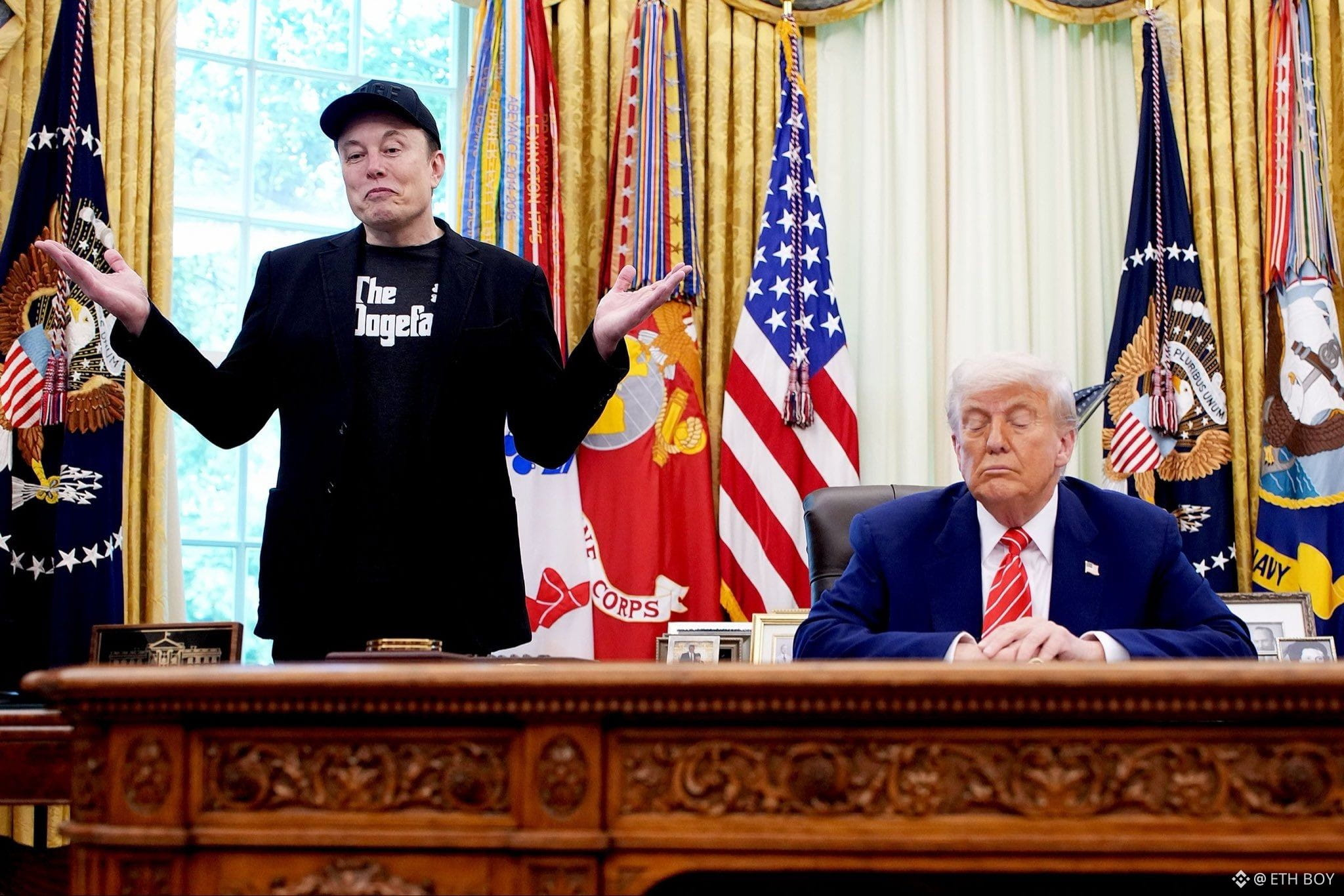
Donald Trump has reportedly refused to allow Elon Musk to personally pay TSA agents — shutting down what would’ve been a highly unusual move.
The idea raised eyebrows fast… a private billionaire stepping in to fund Transportation Security Administration staff isn’t something you see every day.
But Trump’s stance is clear:
👉 Government roles stay government-controlled — no outside intervention.
Still, the fact this was even on the table shows just how strained and unconventional things are getting behind the scenes.
One thing’s certain — when business power and government collide like this, it always sparks bigger questions.
Stay tuned… this story has layers. 🔥
🚨 BREAKING
Donald Trump has reportedly refused to allow Elon Musk to personally pay TSA agents — shutting down what would’ve been a highly unusual move.
The idea raised eyebrows fast… a private billionaire stepping in to fund Transportation Security Administration staff isn’t something you see every day.
But Trump’s stance is clear:
👉 Government roles stay government-controlled — no outside intervention.
Still, the fact this was even on the table shows just how strained and unconventional things are getting behind the scenes.
One thing’s certain — when business power and government collide like this, it always sparks bigger questions.
Stay tuned… this story has layers. 🔥
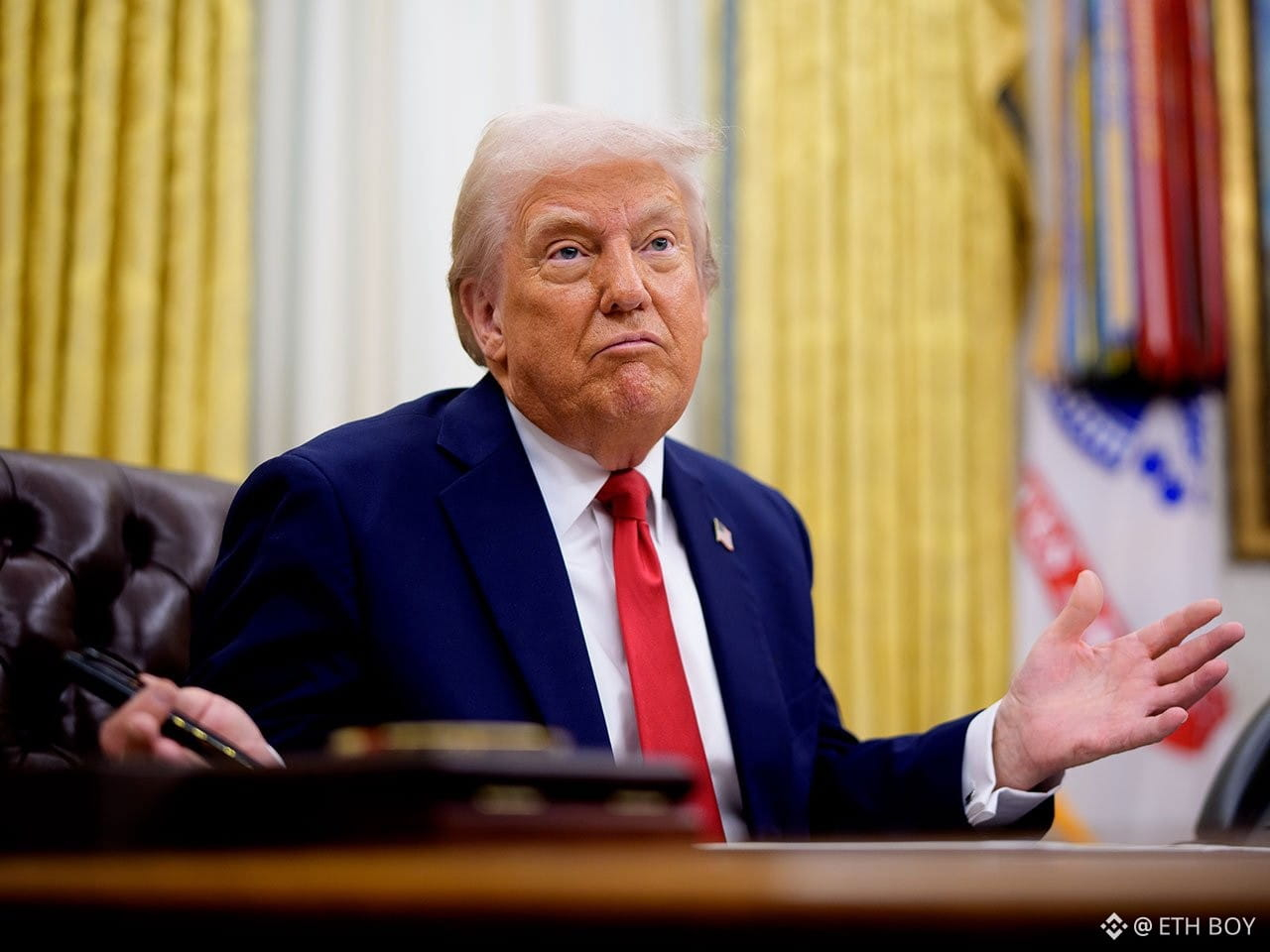
Donald Trump has reportedly refused to allow Elon Musk to personally pay TSA agents — shutting down what would’ve been a highly unusual move.
The idea raised eyebrows fast… a private billionaire stepping in to fund Transportation Security Administration staff isn’t something you see every day.
But Trump’s stance is clear:
👉 Government roles stay government-controlled — no outside intervention.
Still, the fact this was even on the table shows just how strained and unconventional things are getting behind the scenes.
One thing’s certain — when business power and government collide like this, it always sparks bigger questions.
Stay tuned… this story has layers. 🔥
1
208
·
--
Рост
🚨 BREAKING
Donald Trump is starting to feel the consequences of a strategy years in the making…
After publicly clashing with traditional allies and pushing an unpredictable foreign policy, the U.S. is now facing Iran in a tense standoff — and the backup isn’t exactly lining up.
Behind the scenes, cracks are showing:
Global partners are hesitant and divided
G7 allies are struggling to stay aligned with Washington’s approach
And Iran? It’s not backing down — it’s raising the stakes instead
What once looked like strength is now turning into strategic isolation.
This is the hard reality of geopolitics:
When alliances weaken… pressure builds.
And right now, the pressure is all on Trump.
Stay alert — this situation is tightening fast. 🔥
🚨 BREAKING
Donald Trump is starting to feel the consequences of a strategy years in the making…
After publicly clashing with traditional allies and pushing an unpredictable foreign policy, the U.S. is now facing Iran in a tense standoff — and the backup isn’t exactly lining up.
Behind the scenes, cracks are showing:
Global partners are hesitant and divided
G7 allies are struggling to stay aligned with Washington’s approach
And Iran? It’s not backing down — it’s raising the stakes instead
What once looked like strength is now turning into strategic isolation.
This is the hard reality of geopolitics:
When alliances weaken… pressure builds.
And right now, the pressure is all on Trump.
Stay alert — this situation is tightening fast. 🔥
Donald Trump is starting to feel the consequences of a strategy years in the making…
After publicly clashing with traditional allies and pushing an unpredictable foreign policy, the U.S. is now facing Iran in a tense standoff — and the backup isn’t exactly lining up.
Behind the scenes, cracks are showing:
Global partners are hesitant and divided
G7 allies are struggling to stay aligned with Washington’s approach
And Iran? It’s not backing down — it’s raising the stakes instead
What once looked like strength is now turning into strategic isolation.
This is the hard reality of geopolitics:
When alliances weaken… pressure builds.
And right now, the pressure is all on Trump.
Stay alert — this situation is tightening fast. 🔥
1
197
·
--
Рост
🚨 BREAKING 🇺🇸🇮🇷
A former defense chief from the Trump administration just dropped a blunt warning…
The Iranians will not surrender.
According to him, Iran isn’t backing down — in fact, they’ve grown bolder, now setting their own conditions for any negotiations to end the conflict.
This isn’t de-escalation… this is a shift in leverage.
When both sides start drawing hard lines, tensions don’t cool — they tighten.
Stay alert — this situation is far from over, and the next moves could be critical. 🔥
🚨 BREAKING 🇺🇸🇮🇷
A former defense chief from the Trump administration just dropped a blunt warning…
The Iranians will not surrender.
According to him, Iran isn’t backing down — in fact, they’ve grown bolder, now setting their own conditions for any negotiations to end the conflict.
This isn’t de-escalation… this is a shift in leverage.
When both sides start drawing hard lines, tensions don’t cool — they tighten.
Stay alert — this situation is far from over, and the next moves could be critical. 🔥
A former defense chief from the Trump administration just dropped a blunt warning…
The Iranians will not surrender.
According to him, Iran isn’t backing down — in fact, they’ve grown bolder, now setting their own conditions for any negotiations to end the conflict.
This isn’t de-escalation… this is a shift in leverage.
When both sides start drawing hard lines, tensions don’t cool — they tighten.
Stay alert — this situation is far from over, and the next moves could be critical. 🔥

1
157
·
--
Падение
🚨 BREAKING
The Federal Reserve is stepping in — fast.
An urgent $8.07 BILLION liquidity injection is set for 9:00 AM ET today, right after the recent market chaos shook confidence.
This isn’t random… it’s a clear move to stabilize the system and calm the panic after the latest sell-off.
Some are calling it a full-on “money printer” moment — but for traders, it could mean one thing:
👉 short-term relief for risk assets
Still, don’t get too comfortable…
When the Fed moves this quickly, it usually means something bigger is under pressure beneath the surface.
Eyes on the market — this could flip sentiment fast. 🔥
🚨 BREAKING
The Federal Reserve is stepping in — fast.
An urgent $8.07 BILLION liquidity injection is set for 9:00 AM ET today, right after the recent market chaos shook confidence.
This isn’t random… it’s a clear move to stabilize the system and calm the panic after the latest sell-off.
Some are calling it a full-on “money printer” moment — but for traders, it could mean one thing:
👉 short-term relief for risk assets
Still, don’t get too comfortable…
When the Fed moves this quickly, it usually means something bigger is under pressure beneath the surface.
Eyes on the market — this could flip sentiment fast. 🔥
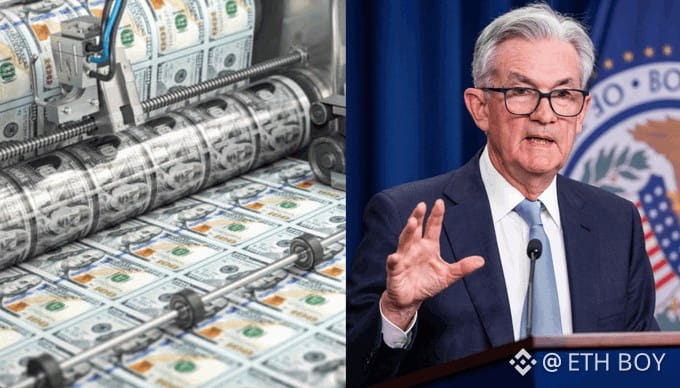
The Federal Reserve is stepping in — fast.
An urgent $8.07 BILLION liquidity injection is set for 9:00 AM ET today, right after the recent market chaos shook confidence.
This isn’t random… it’s a clear move to stabilize the system and calm the panic after the latest sell-off.
Some are calling it a full-on “money printer” moment — but for traders, it could mean one thing:
👉 short-term relief for risk assets
Still, don’t get too comfortable…
When the Fed moves this quickly, it usually means something bigger is under pressure beneath the surface.
Eyes on the market — this could flip sentiment fast. 🔥
414
·
--
Рост
🚨 BREAKING
The Federal Reserve is suddenly back in hawkish territory… and markets are feeling the pressure.
After tensions around the failed U.S.–Iran developments shook expectations, rate hike odds for next month have jumped — signaling that the Fed may be forced to act if inflation keeps heating up.
Rising oil prices and geopolitical stress are already pushing inflation risks higher, which is exactly what could trigger tighter policy.
What changed?
Just weeks ago, markets were betting on rate cuts… now even a hike is back on the table as energy shocks ripple through the economy.
For markets, this is the worst combo:
⚠️ Higher rates
⚠️ Sticky inflation
⚠️ Global uncertainty
Risk assets don’t like this environment… and volatility could spike hard from here.
Stay sharp — this shift could move everything. 🔥
🚨 BREAKING
The Federal Reserve is suddenly back in hawkish territory… and markets are feeling the pressure.
After tensions around the failed U.S.–Iran developments shook expectations, rate hike odds for next month have jumped — signaling that the Fed may be forced to act if inflation keeps heating up.
Rising oil prices and geopolitical stress are already pushing inflation risks higher, which is exactly what could trigger tighter policy.
What changed?
Just weeks ago, markets were betting on rate cuts… now even a hike is back on the table as energy shocks ripple through the economy.
For markets, this is the worst combo:
⚠️ Higher rates
⚠️ Sticky inflation
⚠️ Global uncertainty
Risk assets don’t like this environment… and volatility could spike hard from here.
Stay sharp — this shift could move everything. 🔥
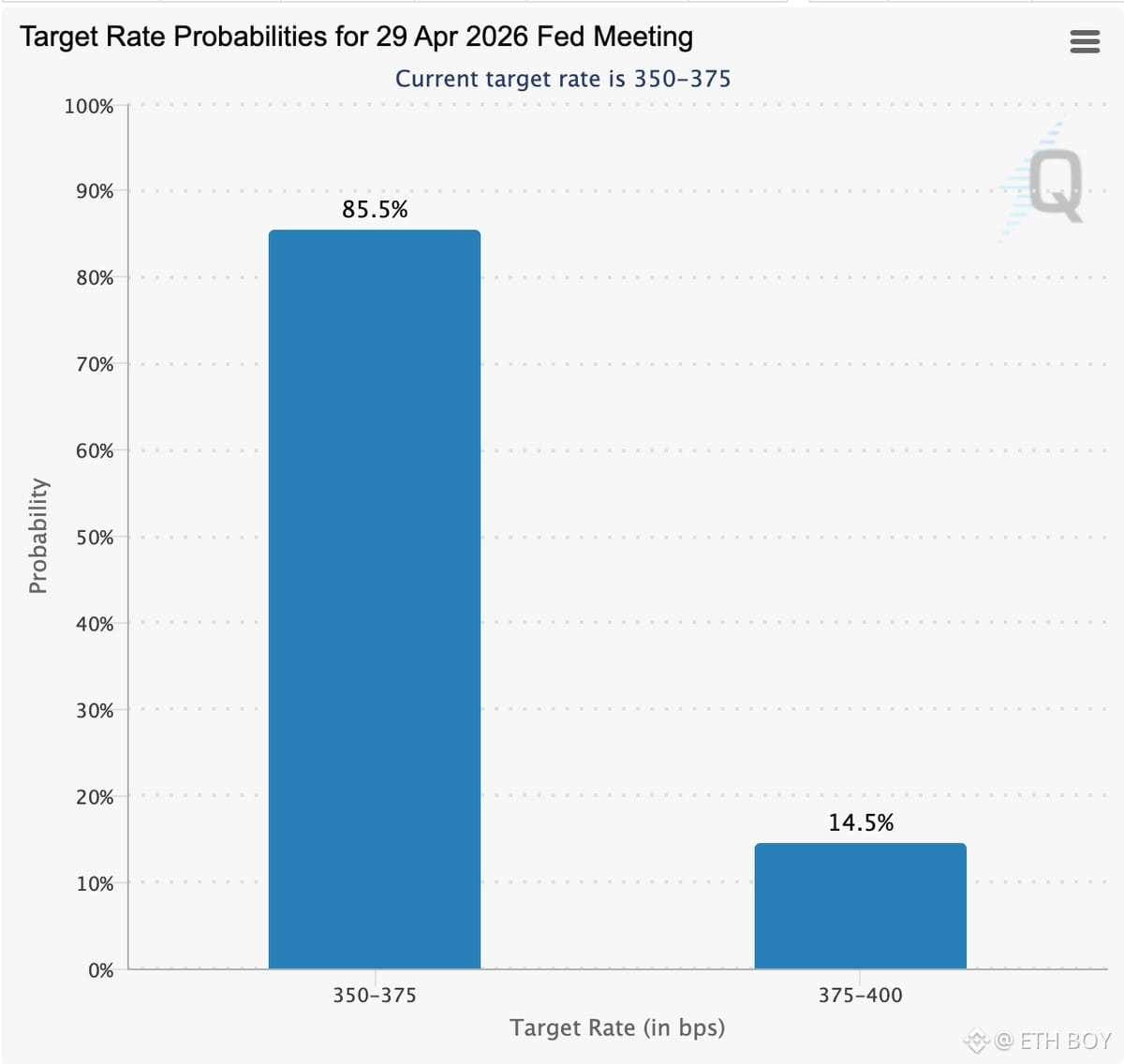
The Federal Reserve is suddenly back in hawkish territory… and markets are feeling the pressure.
After tensions around the failed U.S.–Iran developments shook expectations, rate hike odds for next month have jumped — signaling that the Fed may be forced to act if inflation keeps heating up.
Rising oil prices and geopolitical stress are already pushing inflation risks higher, which is exactly what could trigger tighter policy.
What changed?
Just weeks ago, markets were betting on rate cuts… now even a hike is back on the table as energy shocks ripple through the economy.
For markets, this is the worst combo:
⚠️ Higher rates
⚠️ Sticky inflation
⚠️ Global uncertainty
Risk assets don’t like this environment… and volatility could spike hard from here.
Stay sharp — this shift could move everything. 🔥
1
107
·
--
Рост
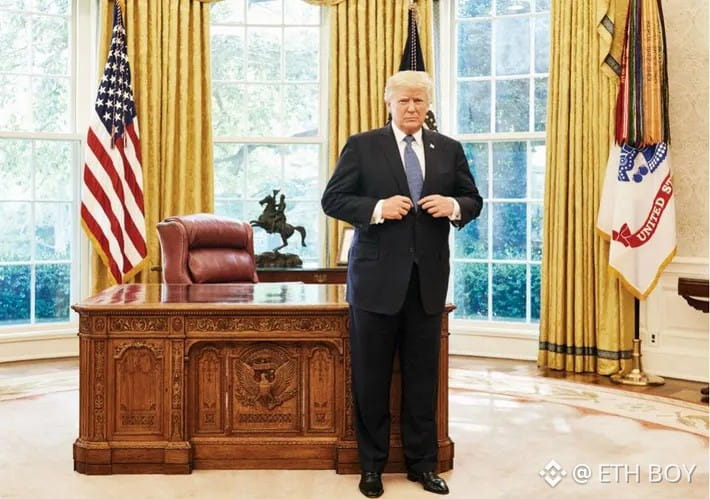
🚨 BREAKING
Donald Trump is set for a power-packed day tomorrow — and it’s looking intense.
At 10:00 AM, he’ll sit down for a full Cabinet meeting, bringing key decision-makers together at a critical moment. Then later, at 5:45 PM, all eyes shift to the Oval Office, where he’ll take part in an official document signing session — a move that could signal major developments.
No slowdown. No quiet moments. Just action from morning to evening.
Stay alert… things could get interesting fast. 🔥
🚨 BREAKING
Donald Trump is set for a power-packed day tomorrow — and it’s looking intense.
At 10:00 AM, he’ll sit down for a full Cabinet meeting, bringing key decision-makers together at a critical moment. Then later, at 5:45 PM, all eyes shift to the Oval Office, where he’ll take part in an official document signing session — a move that could signal major developments.
No slowdown. No quiet moments. Just action from morning to evening.
Stay alert… things could get interesting fast. 🔥
Donald Trump is set for a power-packed day tomorrow — and it’s looking intense.
At 10:00 AM, he’ll sit down for a full Cabinet meeting, bringing key decision-makers together at a critical moment. Then later, at 5:45 PM, all eyes shift to the Oval Office, where he’ll take part in an official document signing session — a move that could signal major developments.
No slowdown. No quiet moments. Just action from morning to evening.
Stay alert… things could get interesting fast. 🔥
205
·
--
Рост
$DASH showing mild weakness as momentum cools ⚡
Trading between 33.64 → 34.63 in the last 24H 👀
Now sitting around 33.74 — slipping slightly from recent highs.
Not a crash… but pressure building 🔴
- $DASH down -3.45%
- $RIVER down -5.29% 💥
- down -3.92%
Market showing soft downside drift — volatility low, but direction leaning bearish.
This is a slow bleed zone… next move depends on support holding 🔥
Stay sharp — momentum can shift fast.
Let’s go — trade now.
{spot}(DASHUSDT)
#OilPricesDrop #US-IranTalks #US5DayHalt
$DASH showing mild weakness as momentum cools ⚡
Trading between 33.64 → 34.63 in the last 24H 👀
Now sitting around 33.74 — slipping slightly from recent highs.
Not a crash… but pressure building 🔴
- $DASH down -3.45%
- $RIVER down -5.29% 💥
- down -3.92%
Market showing soft downside drift — volatility low, but direction leaning bearish.
This is a slow bleed zone… next move depends on support holding 🔥
Stay sharp — momentum can shift fast.
Let’s go — trade now.
#OilPricesDrop #US-IranTalks #US5DayHalt
Trading between 33.64 → 34.63 in the last 24H 👀
Now sitting around 33.74 — slipping slightly from recent highs.
Not a crash… but pressure building 🔴
- $DASH down -3.45%
- $RIVER down -5.29% 💥
- down -3.92%
Market showing soft downside drift — volatility low, but direction leaning bearish.
This is a slow bleed zone… next move depends on support holding 🔥
Stay sharp — momentum can shift fast.
Let’s go — trade now.
#OilPricesDrop #US-IranTalks #US5DayHalt
350
·
--
Падение
$XAU showing strength again as market reacts to ceasefire talks ⚡
After snapping a 9-day losing streak, gold pushing higher as traders price in possible US–Iran negotiations 👀
But this isn’t clean bullish momentum… it’s uncertainty-driven movement.
Ceasefire hopes = less fear → pressure on gold 🔴
But no deal yet = volatility stays high 🔥
This is a headline-driven market — one update can flip direction fast 💥
$XAU sitting in a sensitive zone where sentiment controls price.
Stay sharp — this move is not over.
Let’s go — trade now.
{future}(XAUUSDT)
$XAU showing strength again as market reacts to ceasefire talks ⚡
After snapping a 9-day losing streak, gold pushing higher as traders price in possible US–Iran negotiations 👀
But this isn’t clean bullish momentum… it’s uncertainty-driven movement.
Ceasefire hopes = less fear → pressure on gold 🔴
But no deal yet = volatility stays high 🔥
This is a headline-driven market — one update can flip direction fast 💥
$XAU sitting in a sensitive zone where sentiment controls price.
Stay sharp — this move is not over.
Let’s go — trade now.
After snapping a 9-day losing streak, gold pushing higher as traders price in possible US–Iran negotiations 👀
But this isn’t clean bullish momentum… it’s uncertainty-driven movement.
Ceasefire hopes = less fear → pressure on gold 🔴
But no deal yet = volatility stays high 🔥
This is a headline-driven market — one update can flip direction fast 💥
$XAU sitting in a sensitive zone where sentiment controls price.
Stay sharp — this move is not over.
Let’s go — trade now.
365
·
--
Падение
$SIREN moving wild — this isn’t normal price action ⚡Stuck around 1.00… then exploded to 3.15 on March 22 🚀
Right after — brutal drop to 0.80 💥
Now back up at 2.19… all within days.
This isn’t organic growth — it’s pure hype and momentum driving chaos 👀
Volatility extreme, stability almost zero 🔴
Fast money moves, but risk is just as fast. $SIREN is a battlefield right now 🔥
Let’s go — trade now.
{future}(SIRENUSDT)
$SIREN moving wild — this isn’t normal price action ⚡Stuck around 1.00… then exploded to 3.15 on March 22 🚀
Right after — brutal drop to 0.80 💥
Now back up at 2.19… all within days.
This isn’t organic growth — it’s pure hype and momentum driving chaos 👀
Volatility extreme, stability almost zero 🔴
Fast money moves, but risk is just as fast. $SIREN is a battlefield right now 🔥
Let’s go — trade now.
Right after — brutal drop to 0.80 💥
Now back up at 2.19… all within days.
This isn’t organic growth — it’s pure hype and momentum driving chaos 👀
Volatility extreme, stability almost zero 🔴
Fast money moves, but risk is just as fast. $SIREN is a battlefield right now 🔥
Let’s go — trade now.
222
·
--
Падение
$SIGN — revolution or just another layer? ⚡
Reusable identity sounds powerful — verify once, use everywhere… but reality is different.
Most apps still rely on old KYC & compliance systems.
Right now, $SIGN sits alongside existing flows — not replacing them 👀
Devs running parallel systems = more complexity, not less.
This isn’t full disruption yet… risk still on the table 🔴
The real shift comes when builders fully drop legacy systems — that’s when $SIGN changes the game 🔥
Until then… it’s portable trust, not replacement.
Let’s go — trade now.
{spot}(SIGNUSDT)
$SIGN — revolution or just another layer? ⚡
Reusable identity sounds powerful — verify once, use everywhere… but reality is different.
Most apps still rely on old KYC & compliance systems.
Right now, $SIGN sits alongside existing flows — not replacing them 👀
Devs running parallel systems = more complexity, not less.
This isn’t full disruption yet… risk still on the table 🔴
The real shift comes when builders fully drop legacy systems — that’s when $SIGN changes the game 🔥
Until then… it’s portable trust, not replacement.
Let’s go — trade now.
Reusable identity sounds powerful — verify once, use everywhere… but reality is different.
Most apps still rely on old KYC & compliance systems.
Right now, $SIGN sits alongside existing flows — not replacing them 👀
Devs running parallel systems = more complexity, not less.
This isn’t full disruption yet… risk still on the table 🔴
The real shift comes when builders fully drop legacy systems — that’s when $SIGN changes the game 🔥
Until then… it’s portable trust, not replacement.
Let’s go — trade now.
71
·
--
Рост
$KAT holding strength at 0.01197 (+8.92%) ⚡
Not the biggest mover — but the structure is clean and tradable.
Holding this zone keeps the bullish grind intact 👀
EP: 0.0117–0.0120
TP: 0.0125 / 0.0131 / 0.0138 🔥
SL: 0.0111
As long as support holds, this can slowly push higher — controlled momentum, steady buildup 💥
Stay patient with $KAT — this is how moves develop.
Let’s go — trade now.
{spot}(KATUSDT)
$KAT holding strength at 0.01197 (+8.92%) ⚡
Not the biggest mover — but the structure is clean and tradable.
Holding this zone keeps the bullish grind intact 👀
EP: 0.0117–0.0120
TP: 0.0125 / 0.0131 / 0.0138 🔥
SL: 0.0111
As long as support holds, this can slowly push higher — controlled momentum, steady buildup 💥
Stay patient with $KAT — this is how moves develop.
Let’s go — trade now.
Not the biggest mover — but the structure is clean and tradable.
Holding this zone keeps the bullish grind intact 👀
EP: 0.0117–0.0120
TP: 0.0125 / 0.0131 / 0.0138 🔥
SL: 0.0111
As long as support holds, this can slowly push higher — controlled momentum, steady buildup 💥
Stay patient with $KAT — this is how moves develop.
Let’s go — trade now.
194
Войдите, чтобы посмотреть больше материала
Присоединяйтесь к пользователям криптовалют по всему миру на Binance Square
⚡️ Получайте новейшую и полезную информацию о криптоактивах.
💬 Нам доверяет крупнейшая в мире криптобиржа.
👍 Получите достоверные аналитические данные от верифицированных создателей контента.
Эл. почта/номер телефона
В тренде
FedRateWatch
Просмотров: 977,341
4,656 обсуждают
Share & Win Traffic Reward in our Trending Hashtag Campaign
✨Topic: FOMC September, What's The Fed's Next Move?
👉How to Join:
Publish a short post or article with hashtag #FedRateWatch
Create content based on the below angles:
- August core CPI rose 0.3% month-over-month, and the odds of a 25bp hike this week are now close to 90%. Do you anticipate a rate hike this week? Is it a one-off, or the start of a longer hiking cycle?
- If the hike lands, how does it play out for BTC, tech stocks, and gold? Bullish or bearish?
- How are you planning to trade next? Share your BTC, stocks or gold trade/holdings with our trade sharing widget.
⏰Campaign Period:
- 2026-09-15 11:00 - 2026-09-17 3:00 UTC
🎁Reward:
- Qualified posts that comply with the above guidelines and contain more than 100 words will be reviewed and may receive a random traffic boost of 500 to 3,000 views. You will receive a notification from your feed secretary if your post is selected.
- Get a chance to have your article featured on Binance Square Official
Need ideas for your post? Visit the topic page #FedRateWatch or the Square Guide on How to Post for Better Reach.
Binance Square Official
·Лайков: 544
·Просмотров: 1.2M
MSTRTradingVolumeSurpassesMorganStanley
Просмотров: 6,139
223 обсуждают
BitcoinFalls4%
Просмотров: 16,467
483 обсуждают