
--Sky
102 Публикации

--Sky
 Square Verified+
All views in this post are personal and for reference only. Not financial advice. Always do your own research and be responsible for your decisions.
Трейдер с регулярными сделками
6.9 г
4 подписок(и/а)
37.6K+ подписчиков(а)
35.6K+ понравилось
Посты
PINNED
If you only have $1,000 in crypto, your goal probably isn’t to make another 20% or 30%. You’re looking for an opportunity big enough to actually change the size of your portfolio.
But 50x or 100x coins are rarely discovered after the entire market is already talking about them. The biggest opportunities usually appear when volume is still small, attention is low, and the narrative is only beginning to form.
By the time your timeline is flooded with the ticker and everyone is asking, “Where did this coin come from?”, the easiest part of the opportunity may already be gone.
The real question is: Can you recognize it before that day comes?
But 50x or 100x coins are rarely discovered after the entire market is already talking about them. The biggest opportunities usually appear when volume is still small, attention is low, and the narrative is only beginning to form.
By the time your timeline is flooded with the ticker and everyone is asking, “Where did this coin come from?”, the easiest part of the opportunity may already be gone.
The real question is: Can you recognize it before that day comes?
PINNED
If your net worth is under $10,000 and you’re buying large-cap coins like ETH, SOL, or BNB…
Don’t expect these coins to make you rich overnight.
Even in this bull market, a 10x–20x move would already be an extremely strong performance.
The real opportunity is finding coins with powerful narratives and strong messaging before the super bull run begins.
I’m preparing a detailed breakdown to show you exactly how to do that.
Which narratives am I watching?
How do I filter coins?
What signals do I pay attention to before the big move starts?
I’ll explain everything step by step.
If you want me to break all of this down in detail, just show some support.
Don’t expect these coins to make you rich overnight.
Even in this bull market, a 10x–20x move would already be an extremely strong performance.
The real opportunity is finding coins with powerful narratives and strong messaging before the super bull run begins.
I’m preparing a detailed breakdown to show you exactly how to do that.
Which narratives am I watching?
How do I filter coins?
What signals do I pay attention to before the big move starts?
I’ll explain everything step by step.
If you want me to break all of this down in detail, just show some support.
I never expected holding memecoins could generate daily income.
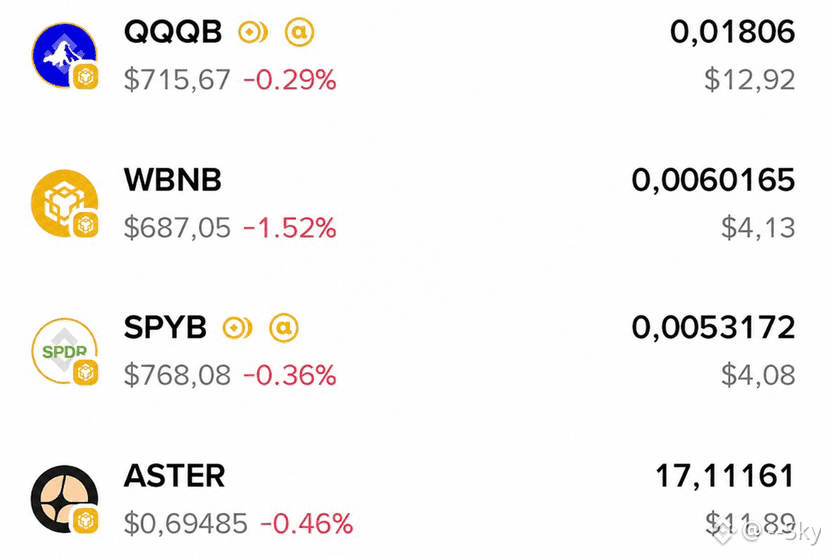
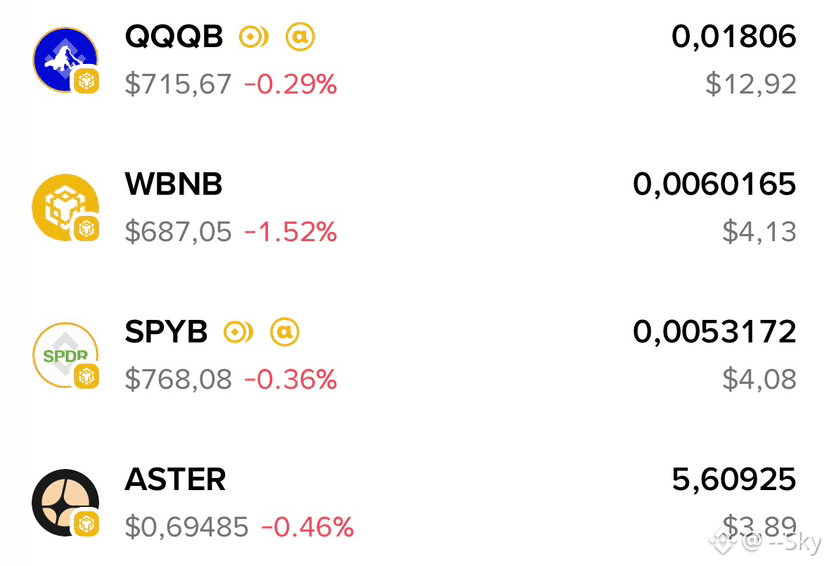
I invested around $10,000 in several memecoins paired with stocks.
The biggest surprise isn’t the price increase. It’s receiving $20–$50 in dividends every day.
If this continues, simply holding could generate $600–$1,500 per month.
Could this be the next big memecoin narrative?
I invested around $10,000 in several memecoins paired with stocks.
The biggest surprise isn’t the price increase. It’s receiving $20–$50 in dividends every day.
If this continues, simply holding could generate $600–$1,500 per month.
Could this be the next big memecoin narrative?
Which coin are you quietly accumulating before the crowd notices it?
Drop:
– Name and ticker
– Is it on BNB Chain, Solana, Ethereum, or another chain?
– Why do you believe it could pump hard?
– What catalyst is the market currently overlooking?
Don’t just shill a coin. Give me the reason behind your conviction.
I may research and add one of the most convincing picks to my portfolio.
Drop:
– Name and ticker
– Is it on BNB Chain, Solana, Ethereum, or another chain?
– Why do you believe it could pump hard?
– What catalyst is the market currently overlooking?
Don’t just shill a coin. Give me the reason behind your conviction.
I may research and add one of the most convincing picks to my portfolio.
Can You Turn $1,000 Into $1 Million in Five Years Using Only Memecoins?
Turning $1,000 into $1 million requires a 1,000x return. Spread across five years, the capital must grow nearly fourfold every year:
$1,000 → $4,000 → $16,000 → $64,000 → $256,000 → $1,024,000.
The math is simple. Achieving it is extremely difficult. Most memecoins can fall 90% or approach zero. Reaching the target would require at least one token returning hundreds or thousands of times, or several exceptional wins across multiple cycles.
Do not place the entire $1,000 into one token. Keep $500 as dry powder and divide the remaining $500 into ten $50 positions.
Focus on one ecosystem you understand deeply. Study capital flows, team wallets, holder concentration, liquidity and genuine community growth.
Do not buy simply because a KOL posted or the price suddenly spiked. Search for narratives before they dominate the timeline. Size every position as if it could go to zero. Avoid leverage and never average down after the original thesis breaks.
At 3x, recover the initial capital. At 10x, take additional profit. At 50x, continue protecting gains while keeping 20–30% for asymmetric upside.
Recycle realized profits into several small positions instead of placing everything into the next opportunity.
The goal during the first two years is not becoming a millionaire. It is surviving, protecting capital and building an information advantage strong enough to identify one major opportunity before the crowd.
The probability of failure remains extremely high. But when memecoins are the only option, the rational approach is not betting everything on one coin. It is building a system capable of surviving long enough to encounter an outlier.
Turning $1,000 into $1 million requires a 1,000x return. Spread across five years, the capital must grow nearly fourfold every year:
$1,000 → $4,000 → $16,000 → $64,000 → $256,000 → $1,024,000.
The math is simple. Achieving it is extremely difficult. Most memecoins can fall 90% or approach zero. Reaching the target would require at least one token returning hundreds or thousands of times, or several exceptional wins across multiple cycles.
Do not place the entire $1,000 into one token. Keep $500 as dry powder and divide the remaining $500 into ten $50 positions.
Focus on one ecosystem you understand deeply. Study capital flows, team wallets, holder concentration, liquidity and genuine community growth.
Do not buy simply because a KOL posted or the price suddenly spiked. Search for narratives before they dominate the timeline. Size every position as if it could go to zero. Avoid leverage and never average down after the original thesis breaks.
At 3x, recover the initial capital. At 10x, take additional profit. At 50x, continue protecting gains while keeping 20–30% for asymmetric upside.
Recycle realized profits into several small positions instead of placing everything into the next opportunity.
The goal during the first two years is not becoming a millionaire. It is surviving, protecting capital and building an information advantage strong enough to identify one major opportunity before the crowd.
The probability of failure remains extremely high. But when memecoins are the only option, the rational approach is not betting everything on one coin. It is building a system capable of surviving long enough to encounter an outlier.
ASTER vs HYPE: Which One Has More Upside?
ASTER
Market Cap: ~$1.9B
30D Perp Volume: ~$49B
Open Interest: ~$2.4B
TVL: ~$800M
Smaller valuation
Aster Chain + RWA potential
More room to multiply
But higher dilution and execution risk
VS
HYPE
Market Cap: ~$21B
30D Perp Volume: ~$205B
Open Interest: ~$13B
Market leader
Much stronger revenue
Deeper liquidity
Stronger network effect
But already at a much larger valuation
HYPE is clearly stronger today.
But the better protocol does not always mean the bigger return.
ASTER: Higher risk, higher potential multiple?
HYPE: Lower risk, stronger fundamentals?
If you had $10,000 today and could choose only ONE:
Which one has a better chance of 3x, 5x or 10x from here?
ASTER or HYPE?
Why?
ASTER
Market Cap: ~$1.9B
30D Perp Volume: ~$49B
Open Interest: ~$2.4B
TVL: ~$800M
Smaller valuation
Aster Chain + RWA potential
More room to multiply
But higher dilution and execution risk
VS
HYPE
Market Cap: ~$21B
30D Perp Volume: ~$205B
Open Interest: ~$13B
Market leader
Much stronger revenue
Deeper liquidity
Stronger network effect
But already at a much larger valuation
HYPE is clearly stronger today.
But the better protocol does not always mean the bigger return.
ASTER: Higher risk, higher potential multiple?
HYPE: Lower risk, stronger fundamentals?
If you had $10,000 today and could choose only ONE:
Which one has a better chance of 3x, 5x or 10x from here?
ASTER or HYPE?
Why?
After Building Binance, CZ Wants to Teach One Billion Children for Free
In February 2024, Giggle Academy existed as a concept paper. On March 19, CZ announced his mission to provide free, gamified and adaptive education worldwide.
The idea came from a global problem: hundreds of millions still cannot read or write, while many children in developing countries have no access to school. Instead of building physical schools everywhere, CZ believed smartphones, AI and the internet could deliver education globally.
The vision covered Grades 1 through 12, from reading and mathematics to science, finance, programming and AI. Giggle Academy was not designed to replace schools, but to reach children existing systems could not.
At launch, the project had no logo, no finished product and zero learners. CZ was hiring a team. About one month later, around 10 people had produced one experimental Android lesson.
Then growth accelerated.
Giggle Academy reached 5,000 learners in February 2025, 90,000 by the end of 2025, 472,000 in May 2026 and more than one million in July. By the end of August, it had reached 1,478,577 learners across 189 countries.
The app has surpassed one million Google Play downloads. Its games, stories, speaking exercises and lessons remain free, with no ads or subscriptions.
But reaching millions is only the first challenge.
AI can scale content production, yet children preferred human generated stories over AI generated ones. Quality education still requires teachers, curriculum experts and human review.
Giggle Academy must localize lessons, protect children’s privacy, maintain a stable app and fund a platform designed to generate no revenue. Advanced subjects are harder to gamify, while online learning cannot fully recreate teachers, classmates and group learning.
The real test is no longer how many children register. It is whether they truly learn and whether that education changes their future.
If Giggle Academy can turn global access into measurable results, it may become one of the most meaningful legacies CZ leaves behind.
In February 2024, Giggle Academy existed as a concept paper. On March 19, CZ announced his mission to provide free, gamified and adaptive education worldwide.
The idea came from a global problem: hundreds of millions still cannot read or write, while many children in developing countries have no access to school. Instead of building physical schools everywhere, CZ believed smartphones, AI and the internet could deliver education globally.
The vision covered Grades 1 through 12, from reading and mathematics to science, finance, programming and AI. Giggle Academy was not designed to replace schools, but to reach children existing systems could not.
At launch, the project had no logo, no finished product and zero learners. CZ was hiring a team. About one month later, around 10 people had produced one experimental Android lesson.
Then growth accelerated.
Giggle Academy reached 5,000 learners in February 2025, 90,000 by the end of 2025, 472,000 in May 2026 and more than one million in July. By the end of August, it had reached 1,478,577 learners across 189 countries.
The app has surpassed one million Google Play downloads. Its games, stories, speaking exercises and lessons remain free, with no ads or subscriptions.
But reaching millions is only the first challenge.
AI can scale content production, yet children preferred human generated stories over AI generated ones. Quality education still requires teachers, curriculum experts and human review.
Giggle Academy must localize lessons, protect children’s privacy, maintain a stable app and fund a platform designed to generate no revenue. Advanced subjects are harder to gamify, while online learning cannot fully recreate teachers, classmates and group learning.
The real test is no longer how many children register. It is whether they truly learn and whether that education changes their future.
If Giggle Academy can turn global access into measurable results, it may become one of the most meaningful legacies CZ leaves behind.

Проверено
Saylor Is Back. Strategy Just Bought $369.7 Million in Bitcoin.
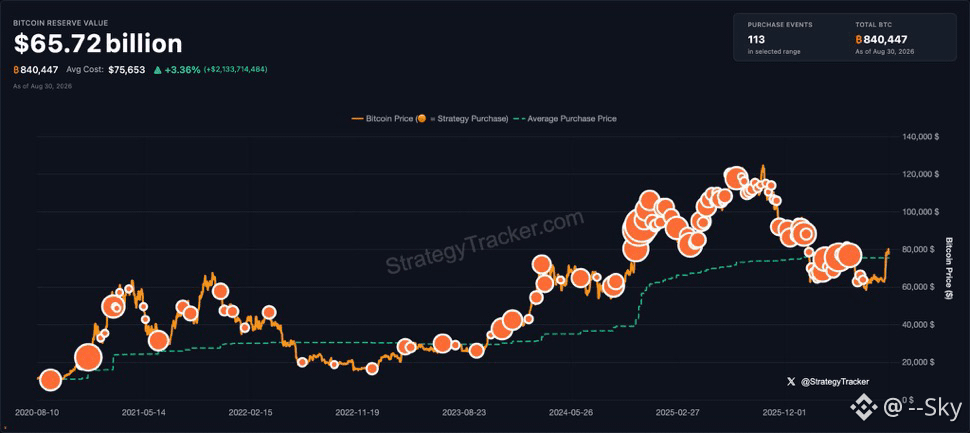
After nearly two months without buying, Strategy acquired 4,603 BTC at an average price of $80,318.
The company now holds 845,050 BTC, purchased for a total of $63.73 billion at an average price of $75,412.
That is more than 4% of Bitcoin’s maximum supply.
This is no longer just an investment.
Bitcoin has become the center of Strategy’s corporate treasury.
After nearly two months without buying, Strategy acquired 4,603 BTC at an average price of $80,318.
The company now holds 845,050 BTC, purchased for a total of $63.73 billion at an average price of $75,412.
That is more than 4% of Bitcoin’s maximum supply.
This is no longer just an investment.
Bitcoin has become the center of Strategy’s corporate treasury.
Частичная правда
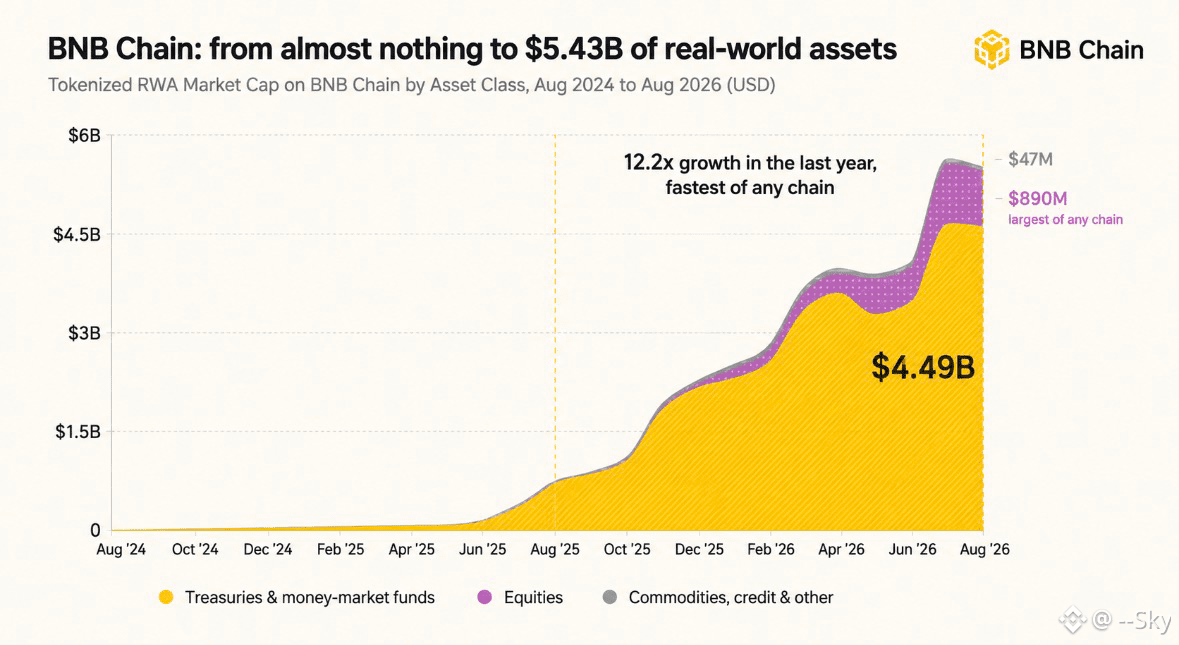
One year ago, BNB Chain held just $446 million in tokenized real-world assets.
Today, that number has reached $5.43 billion.
That is 12.2 times growth in only 12 months, making BNB Chain the fastest growing major blockchain in the RWA market.
The most impressive signal may be tokenized equities. BNB Chain now holds $890 million, more than any other blockchain.
RWA is no longer just a future narrative. Real capital is moving onchain, more asset classes are being tokenized, and BNB Chain is capturing an outsized share of that growth.
Today, that number has reached $5.43 billion.
That is 12.2 times growth in only 12 months, making BNB Chain the fastest growing major blockchain in the RWA market.
The most impressive signal may be tokenized equities. BNB Chain now holds $890 million, more than any other blockchain.
RWA is no longer just a future narrative. Real capital is moving onchain, more asset classes are being tokenized, and BNB Chain is capturing an outsized share of that growth.
Giggle Academy has reached 1,478,577 learners across 189 countries.
From 823,291 to nearly 1.5 million learners in less than two months.
No tuition. No borders. No barriers.
Free education is scaling globally.
From 823,291 to nearly 1.5 million learners in less than two months.
No tuition. No borders. No barriers.
Free education is scaling globally.

On average, I receive around $22 every day like this.
I don’t trade to earn it. The rewards are automatically distributed directly to my wallet every day.
Want to know why I receive them?
I don’t trade to earn it. The rewards are automatically distributed directly to my wallet every day.
Want to know why I receive them?
Ethereum Started at Around $0.31 in Its ICO. Today, It Secures Hundreds of Billions in Digital Assets. What Actually Changed?
Ethereum launched its crowdsale in 2014, with ETH initially priced at roughly $0.31.
Unlike Bitcoin, Ethereum was not designed only as digital money. The bigger idea was a programmable blockchain where anyone could build applications.
Mainnet launched in 2015.
Then came smart contracts, ERC-20 tokens, ICOs, stablecoins, DeFi, NFTs and eventually Layer 2 networks. ETH became the asset used to pay for computation across this economy.
But Ethereum’s monetary system changed dramatically too.
Ethereum originally used Proof of Work, where miners received newly issued ETH.
In 2022, The Merge replaced miners with validators and Proof of Stake. New ETH issuance dropped significantly.
Then there is EIP-1559.
Since 2021, part of every Ethereum transaction fee has been permanently burned. When network activity becomes high enough, ETH burned can exceed newly issued ETH, making supply temporarily deflationary.
Today, ETH therefore has two forces working against each other:
Validators receive newly issued ETH.
Network usage burns ETH.
Unlike Bitcoin, Ethereum does not have a fixed 21 million maximum supply. Its monetary thesis instead depends on balancing issuance with burn.
And Ethereum’s next chapter may be even bigger.
Layer 2 networks are scaling transactions while Ethereum increasingly acts as the settlement and security layer beneath them.
Stablecoins, DeFi, tokenized stocks, bonds and other RWAs are also moving on-chain.
So Ethereum’s long-term question is different from Bitcoin’s.
Bitcoin asks:
How much demand will compete for 21 million BTC?
Ethereum asks:
How much of the world’s financial activity can eventually settle on Ethereum, and how much ETH will that activity require?
ETH is not simply betting on scarcity.
It is betting on Ethereum becoming infrastructure for the on-chain economy.
Ethereum launched its crowdsale in 2014, with ETH initially priced at roughly $0.31.
Unlike Bitcoin, Ethereum was not designed only as digital money. The bigger idea was a programmable blockchain where anyone could build applications.
Mainnet launched in 2015.
Then came smart contracts, ERC-20 tokens, ICOs, stablecoins, DeFi, NFTs and eventually Layer 2 networks. ETH became the asset used to pay for computation across this economy.
But Ethereum’s monetary system changed dramatically too.
Ethereum originally used Proof of Work, where miners received newly issued ETH.
In 2022, The Merge replaced miners with validators and Proof of Stake. New ETH issuance dropped significantly.
Then there is EIP-1559.
Since 2021, part of every Ethereum transaction fee has been permanently burned. When network activity becomes high enough, ETH burned can exceed newly issued ETH, making supply temporarily deflationary.
Today, ETH therefore has two forces working against each other:
Validators receive newly issued ETH.
Network usage burns ETH.
Unlike Bitcoin, Ethereum does not have a fixed 21 million maximum supply. Its monetary thesis instead depends on balancing issuance with burn.
And Ethereum’s next chapter may be even bigger.
Layer 2 networks are scaling transactions while Ethereum increasingly acts as the settlement and security layer beneath them.
Stablecoins, DeFi, tokenized stocks, bonds and other RWAs are also moving on-chain.
So Ethereum’s long-term question is different from Bitcoin’s.
Bitcoin asks:
How much demand will compete for 21 million BTC?
Ethereum asks:
How much of the world’s financial activity can eventually settle on Ethereum, and how much ETH will that activity require?
ETH is not simply betting on scarcity.
It is betting on Ethereum becoming infrastructure for the on-chain economy.
Bitcoin Started With Almost No Market Value. Today, Only 21 Million Can Ever Exist. What Happens Next?
Imagine mining Bitcoin in 2009, forgetting the wallet, and opening it today. Back then, BTC had almost no market price. Today, one Bitcoin is worth tens of thousands of dollars.
But Bitcoin’s real story is not price. It is scarcity.
Bitcoin has a maximum supply of 21 million BTC. By 2026, roughly 20 million, more than 95% of the entire supply, has already been mined.
In 2009, miners received 50 BTC per block. Then came the halvings: 25 BTC in 2012, 12.5 in 2016, 6.25 in 2020 and just 3.125 BTC after the 2024 halving.
The next halving, expected around 2028, will reduce issuance again to 1.5625 BTC per block. This process continues until roughly 2140.
There was no ICO, no team allocation and no venture unlock schedule.
Satoshi mined Bitcoin alongside other early miners. Researchers estimate addresses potentially associated with Satoshi may hold roughly 1.1 million BTC, although this remains an estimate.
And 21 million does not mean 21 million will actually be available.
Millions of BTC may already be permanently lost through forgotten private keys, destroyed devices and inaccessible wallets. Nobody knows the exact number.
Meanwhile, Bitcoin has evolved from an experimental peer-to-peer currency into an asset held by individuals, corporations, funds and institutional investors.
That creates a simple but powerful long-term equation.
New supply keeps falling.
Some existing Bitcoin may never return to circulation.
Yet the number of potential buyers has expanded dramatically.
So perhaps the biggest question for Bitcoin’s future is not how many BTC will exist. We already know the maximum.
The real question is:
Who will compete for the Bitcoin that is actually available?
Bitcoin doesn’t need more supply to grow.
It needs more demand competing for a supply that cannot grow beyond 21 million.
Imagine mining Bitcoin in 2009, forgetting the wallet, and opening it today. Back then, BTC had almost no market price. Today, one Bitcoin is worth tens of thousands of dollars.
But Bitcoin’s real story is not price. It is scarcity.
Bitcoin has a maximum supply of 21 million BTC. By 2026, roughly 20 million, more than 95% of the entire supply, has already been mined.
In 2009, miners received 50 BTC per block. Then came the halvings: 25 BTC in 2012, 12.5 in 2016, 6.25 in 2020 and just 3.125 BTC after the 2024 halving.
The next halving, expected around 2028, will reduce issuance again to 1.5625 BTC per block. This process continues until roughly 2140.
There was no ICO, no team allocation and no venture unlock schedule.
Satoshi mined Bitcoin alongside other early miners. Researchers estimate addresses potentially associated with Satoshi may hold roughly 1.1 million BTC, although this remains an estimate.
And 21 million does not mean 21 million will actually be available.
Millions of BTC may already be permanently lost through forgotten private keys, destroyed devices and inaccessible wallets. Nobody knows the exact number.
Meanwhile, Bitcoin has evolved from an experimental peer-to-peer currency into an asset held by individuals, corporations, funds and institutional investors.
That creates a simple but powerful long-term equation.
New supply keeps falling.
Some existing Bitcoin may never return to circulation.
Yet the number of potential buyers has expanded dramatically.
So perhaps the biggest question for Bitcoin’s future is not how many BTC will exist. We already know the maximum.
The real question is:
Who will compete for the Bitcoin that is actually available?
Bitcoin doesn’t need more supply to grow.
It needs more demand competing for a supply that cannot grow beyond 21 million.
Проверено
ASTER Is Burning Tokens Aggressively. But Is Its Supply Actually Shrinking?
ASTER’s tokenomics looks simple: use protocol revenue for buybacks, burn tokens, and eventually reduce supply from 8 billion to 3 billion ASTER.
But the real story is more complicated.
ASTER launched with a maximum supply of 8 billion tokens.
53.5% went to Airdrops, 30% to Ecosystem & Community, 7% to Treasury, 5% to Team & Advisors, and 4.5% to Liquidity & Listing.
The team received only 5%, or 400 million ASTER.
In June 2026, Aster introduced a more aggressive mechanism.
99% of daily platform fees are used to buy ASTER from the market through TWAP. Those tokens are distributed to veASTER stakers.
At the same time, an equivalent amount is taken from reserves and burned, with the team allocation burned first.
Aster calls this its “198% Buyback + Burn” model.
In simple terms, buybacks create market demand while burns remove future supply.
By August 24, 2026, Aster reported roughly 196 million ASTER burned, about 2.45% of the original supply.
The long-term target is 3 billion ASTER, meaning around 5 billion tokens need to disappear.
But burning team allocation does not necessarily reduce circulating supply immediately because much of it represents future supply.
So:
Total supply can fall while circulating supply continues to rise.
This matters because Airdrops and Ecosystem & Community represent 83.5% of the original supply.
If ASTER enters circulation through unlocks, incentives and ecosystem distributions faster than it is burned, circulating supply can still expand.
That is why I would watch four numbers:
Protocol fees, ASTER bought back, ASTER burned, and most importantly, new ASTER entering circulation.
If buybacks and burns eventually grow faster than new supply, ASTER’s tokenomics becomes much more interesting.
So instead of asking:
“How much ASTER is being burned?”
The better question is:
“How much new ASTER entered the market during the same period?”
Because the gap between Burn and Unlock shows whether ASTER is actually becoming scarcer.
ASTER’s tokenomics looks simple: use protocol revenue for buybacks, burn tokens, and eventually reduce supply from 8 billion to 3 billion ASTER.
But the real story is more complicated.
ASTER launched with a maximum supply of 8 billion tokens.
53.5% went to Airdrops, 30% to Ecosystem & Community, 7% to Treasury, 5% to Team & Advisors, and 4.5% to Liquidity & Listing.
The team received only 5%, or 400 million ASTER.
In June 2026, Aster introduced a more aggressive mechanism.
99% of daily platform fees are used to buy ASTER from the market through TWAP. Those tokens are distributed to veASTER stakers.
At the same time, an equivalent amount is taken from reserves and burned, with the team allocation burned first.
Aster calls this its “198% Buyback + Burn” model.
In simple terms, buybacks create market demand while burns remove future supply.
By August 24, 2026, Aster reported roughly 196 million ASTER burned, about 2.45% of the original supply.
The long-term target is 3 billion ASTER, meaning around 5 billion tokens need to disappear.
But burning team allocation does not necessarily reduce circulating supply immediately because much of it represents future supply.
So:
Total supply can fall while circulating supply continues to rise.
This matters because Airdrops and Ecosystem & Community represent 83.5% of the original supply.
If ASTER enters circulation through unlocks, incentives and ecosystem distributions faster than it is burned, circulating supply can still expand.
That is why I would watch four numbers:
Protocol fees, ASTER bought back, ASTER burned, and most importantly, new ASTER entering circulation.
If buybacks and burns eventually grow faster than new supply, ASTER’s tokenomics becomes much more interesting.
So instead of asking:
“How much ASTER is being burned?”
The better question is:
“How much new ASTER entered the market during the same period?”
Because the gap between Burn and Unlock shows whether ASTER is actually becoming scarcer.
Three years before Binance was founded, on April 15, 2014, CZ wrote a blog post about using cryptocurrency for charitable giving. He emphasized one of blockchain’s greatest strengths: transparency, allowing donations to be tracked openly from the moment they are sent to where they ultimately go.
At the time, one statistic stood out: as much as 80% of donations could eventually be absorbed by intermediaries as “administrative costs.” That paper can still be found on GitHub today.
When beneficiaries receive donations directly in cryptocurrency, it can also give them a more positive first impression of the industry and challenge the unfair narrative often repeated by traditional media that “crypto is only used by drug dealers.”
On a personal level, back in 2014, CZ and He Yi organized a fundraising campaign for a community member who had been diagnosed with leukemia. Together, they helped raise 9 BTC to cover the person’s medical treatment.
At the time, neither of them had significant financial resources or influence. But they already shared a simple principle: if you are able to help, then help.
After the donation efforts in Japan, CZ began thinking more seriously about how charitable work could be made more efficient, transparent, and professional.
That idea eventually became one of the motivations behind the creation of the Binance Charity Foundation.
At the time, one statistic stood out: as much as 80% of donations could eventually be absorbed by intermediaries as “administrative costs.” That paper can still be found on GitHub today.
When beneficiaries receive donations directly in cryptocurrency, it can also give them a more positive first impression of the industry and challenge the unfair narrative often repeated by traditional media that “crypto is only used by drug dealers.”
On a personal level, back in 2014, CZ and He Yi organized a fundraising campaign for a community member who had been diagnosed with leukemia. Together, they helped raise 9 BTC to cover the person’s medical treatment.
At the time, neither of them had significant financial resources or influence. But they already shared a simple principle: if you are able to help, then help.
After the donation efforts in Japan, CZ began thinking more seriously about how charitable work could be made more efficient, transparent, and professional.
That idea eventually became one of the motivations behind the creation of the Binance Charity Foundation.
Everyone Is Asking If Bitcoin Can Reach $100,000. But What If That Is the Wrong Question?
CZ recently raised a much bigger possibility: what if Bitcoin eventually becomes more important than gold?
Most people will immediately turn that into a price prediction, but I think the more interesting story is somewhere else. For years, Bitcoin was mainly driven by retail investors. Then institutions arrived. ETFs followed. Public companies began putting Bitcoin on their balance sheets. The next stage may eventually be governments, and if that happens, the entire conversation around Bitcoin changes.
Gold has had centuries to become a global reserve asset. Countries already have established systems for buying it, storing it, valuing it and holding it as part of national reserves. Bitcoin is still building that infrastructure. So perhaps the real question is no longer whether Bitcoin can reach $100,000, $200,000 or even $1 million. The bigger question is what happens when governments begin asking how much Bitcoin they should own instead of whether they should own Bitcoin at all.
That distinction matters because the source of demand changes completely. Retail capital is one scale. Institutional capital is another. Sovereign capital is an entirely different level.
And if Bitcoin eventually becomes a serious competitor to gold, the opportunity may not stop with BTC. Capital rarely enters crypto and stays in one place forever. It usually starts with Bitcoin, then attention slowly expands toward infrastructure, applications and major ecosystems such as ETH, BNB and SOL.
Maybe the next major bull market will not simply come from more people buying crypto. Maybe it will come from an entirely different class of buyers entering the market.
And perhaps the most important question of all is this:
What happens when owning zero Bitcoin starts looking riskier than owning some?
CZ recently raised a much bigger possibility: what if Bitcoin eventually becomes more important than gold?
Most people will immediately turn that into a price prediction, but I think the more interesting story is somewhere else. For years, Bitcoin was mainly driven by retail investors. Then institutions arrived. ETFs followed. Public companies began putting Bitcoin on their balance sheets. The next stage may eventually be governments, and if that happens, the entire conversation around Bitcoin changes.
Gold has had centuries to become a global reserve asset. Countries already have established systems for buying it, storing it, valuing it and holding it as part of national reserves. Bitcoin is still building that infrastructure. So perhaps the real question is no longer whether Bitcoin can reach $100,000, $200,000 or even $1 million. The bigger question is what happens when governments begin asking how much Bitcoin they should own instead of whether they should own Bitcoin at all.
That distinction matters because the source of demand changes completely. Retail capital is one scale. Institutional capital is another. Sovereign capital is an entirely different level.
And if Bitcoin eventually becomes a serious competitor to gold, the opportunity may not stop with BTC. Capital rarely enters crypto and stays in one place forever. It usually starts with Bitcoin, then attention slowly expands toward infrastructure, applications and major ecosystems such as ETH, BNB and SOL.
Maybe the next major bull market will not simply come from more people buying crypto. Maybe it will come from an entirely different class of buyers entering the market.
And perhaps the most important question of all is this:
What happens when owning zero Bitcoin starts looking riskier than owning some?
How Much Capital Did You Start With, and How Long Have You Been in Crypto?
Some people enter the market with $500 and build a meaningful portfolio over the next few years.
Others start with $50,000, go through several market cycles, yet repeatedly find themselves back where they began.
More capital creates more opportunities, but it also makes every mistake more expensive. If you cannot manage $1,000 properly, having $100,000 may not make you a better investor.
Experience is not measured only by the number of years you have spent in the market. Some people have held BTC, ETH, BNB, or SOL for years but still repeat the same mistakes: chasing out of fear of missing out, changing their plans whenever prices move, and risking too much capital on a single decision.
Real experience begins when you recognize what once cost you money and refuse to let it happen again.
I’m genuinely curious:
How much capital did you start with?
How many years have you been investing?
And what is the most expensive lesson the market has ever taught you?
Some people enter the market with $500 and build a meaningful portfolio over the next few years.
Others start with $50,000, go through several market cycles, yet repeatedly find themselves back where they began.
More capital creates more opportunities, but it also makes every mistake more expensive. If you cannot manage $1,000 properly, having $100,000 may not make you a better investor.
Experience is not measured only by the number of years you have spent in the market. Some people have held BTC, ETH, BNB, or SOL for years but still repeat the same mistakes: chasing out of fear of missing out, changing their plans whenever prices move, and risking too much capital on a single decision.
Real experience begins when you recognize what once cost you money and refuse to let it happen again.
I’m genuinely curious:
How much capital did you start with?
How many years have you been investing?
And what is the most expensive lesson the market has ever taught you?
The next 100x coin may already exist right now. You may have scrolled past it on Binance Square today, looked at the chart for a few seconds, and thought there was nothing special about it.
That’s exactly what makes finding early opportunities so difficult. The coins that eventually deliver the biggest returns rarely look obvious before the move begins.
Once the chart goes vertical, volume explodes, and every major account starts talking about it, the opportunity becomes easy to recognize.
But when everyone can finally see it, are you really early anymore?
That’s exactly what makes finding early opportunities so difficult. The coins that eventually deliver the biggest returns rarely look obvious before the move begins.
Once the chart goes vertical, volume explodes, and every major account starts talking about it, the opportunity becomes easy to recognize.
But when everyone can finally see it, are you really early anymore?
The biggest problem for someone with a small crypto portfolio may not be a lack of capital. The bigger mistake is only buying what everyone already knows about.
When a narrative has gone viral, your timeline is flooded with the same ticker, and major accounts are all repeating the same story, you’re no longer in the discovery phase. You’re entering with the crowd.
The biggest opportunities are often created before that point, when the narrative is still just a whisper and most of the market isn’t paying attention.
In crypto, being early can sometimes matter more than having a large portfolio.
When a narrative has gone viral, your timeline is flooded with the same ticker, and major accounts are all repeating the same story, you’re no longer in the discovery phase. You’re entering with the crowd.
The biggest opportunities are often created before that point, when the narrative is still just a whisper and most of the market isn’t paying attention.
In crypto, being early can sometimes matter more than having a large portfolio.
Everyone wants to know which memecoin will do the next 10000x.
The answer is already somewhere on the timeline.
You just haven’t noticed it yet.
Until one day, it goes vertical and everyone says:
“Why didn’t I buy it earlier?”
The answer is already somewhere on the timeline.
You just haven’t noticed it yet.
Until one day, it goes vertical and everyone says:
“Why didn’t I buy it earlier?”
Войдите, чтобы посмотреть больше материала