
#web3business
web3business
Просмотров: 3,951
16 обсуждают
Популярные
Новые

The most expensive mistake crypto businesses make during a market rally is not a bad entry, but leaving their corporate treasury fractured into pieces.
I have seen teams bleed substantial profit to retail trading fees simply because their operational capital was scattered across multiple separate wallets. Watching hard-earned gains evaporate to unnecessary platform overhead is a painful lesson that past market cycles taught many of us the hard way.
Take an e-commerce ecosystem operating four distinct branches: an online retail storefront holding 250,000 $USDT, a logistics firm with 150,000, a marketing agency holding 120,000, and an IT division with 80,000. Standing alone, not one of these accounts holds enough volume to qualify for institutional tier benefits or reduced execution fees when rotating capital into $BTC.
The moment you aggregate those corporate balances under a unified umbrella structure, the math flips. Combined, they reach exactly 600,000 $USDT, clearing the institutional threshold and slashing trading friction across every single sub-account. Layering those volume discounts with $BNB turns fragmented deadweight capital into an efficient treasury that actively protects your margin.
Are you actively aggregating your operational balances to cut transaction costs, or is your capital still running in silos?
#CryptoTreasury #RiskManagement #Web3Business
The most expensive mistake crypto businesses make during a market rally is not a bad entry, but leaving their corporate treasury fractured into pieces.
I have seen teams bleed substantial profit to retail trading fees simply because their operational capital was scattered across multiple separate wallets. Watching hard-earned gains evaporate to unnecessary platform overhead is a painful lesson that past market cycles taught many of us the hard way.
Take an e-commerce ecosystem operating four distinct branches: an online retail storefront holding 250,000 $USDT, a logistics firm with 150,000, a marketing agency holding 120,000, and an IT division with 80,000. Standing alone, not one of these accounts holds enough volume to qualify for institutional tier benefits or reduced execution fees when rotating capital into $BTC .
The moment you aggregate those corporate balances under a unified umbrella structure, the math flips. Combined, they reach exactly 600,000 $USDT, clearing the institutional threshold and slashing trading friction across every single sub-account. Layering those volume discounts with $BNB turns fragmented deadweight capital into an efficient treasury that actively protects your margin.
Are you actively aggregating your operational balances to cut transaction costs, or is your capital still running in silos?
#CryptoTreasury #RiskManagement #Web3Business


·
--
Why is nobody talking about how broken P2P becomes the moment your crypto flow stops being “personal”?
Most traders only learn this the hard way: one large transfer turns into endless small orders, bad rates, delayed settlement, and sometimes frozen accounts. FOMO buying is painful, but being unable to move your own capital when you need it is worse.
P2P is fine if you’re moving a few hundred or a few thousand. But if a Web3 business needs to clear $70,000 in $BTC for payroll or treasury, splitting that into 20+ orders is not a strategy. It’s operational risk disguised as convenience.
The smarter move is to treat on/off-ramping like infrastructure, not an afterthought. Check liquidity depth, daily limits, compliance requirements, settlement speed, and fiat coverage before you need the money. Keep a working buffer in $USDT, separate treasury from operating funds, and test rails with smaller transactions before scaling size.
There’s a reason the global crypto on/off-ramp market is projected to grow from $4.64B in 2026 to $25.9B by 2034. Serious capital doesn’t want chaos. It wants reliable rails, whether you’re managing $BTC, $USDT, or $BNB flows.
Are businesses finally outgrowing P2P, or is the market still underestimating how big this shift gets?
#CryptoPayments #Web3Business #Bitcoin
Why is nobody talking about how broken P2P becomes the moment your crypto flow stops being “personal”?
Most traders only learn this the hard way: one large transfer turns into endless small orders, bad rates, delayed settlement, and sometimes frozen accounts. FOMO buying is painful, but being unable to move your own capital when you need it is worse.
P2P is fine if you’re moving a few hundred or a few thousand. But if a Web3 business needs to clear $70,000 in $BTC for payroll or treasury, splitting that into 20+ orders is not a strategy. It’s operational risk disguised as convenience.
The smarter move is to treat on/off-ramping like infrastructure, not an afterthought. Check liquidity depth, daily limits, compliance requirements, settlement speed, and fiat coverage before you need the money. Keep a working buffer in $USDT, separate treasury from operating funds, and test rails with smaller transactions before scaling size.
There’s a reason the global crypto on/off-ramp market is projected to grow from $4.64B in 2026 to $25.9B by 2034. Serious capital doesn’t want chaos. It wants reliable rails, whether you’re managing $BTC , $USDT, or $BNB flows.
Are businesses finally outgrowing P2P, or is the market still underestimating how big this shift gets?
#CryptoPayments #Web3Business #Bitcoin
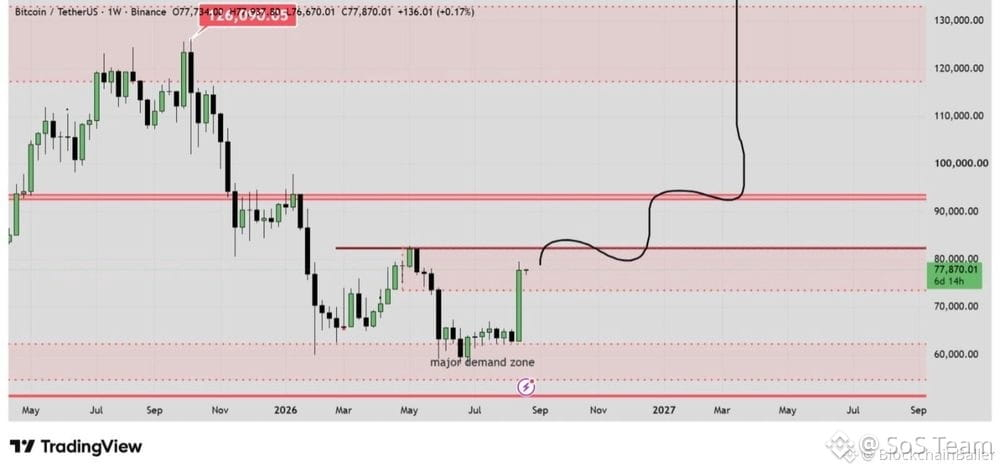
64

·
--
$Are stablecoins just for trading? Think again. In 2026, they're becoming the core settlement layer for global business. Fast, cheap, and borderless—stablecoin infrastructure is redefining how the internet handles payments. Are you ready for the payment revolution?
#Stablecoins #CryptoPayments #Web3Business #Fintech #DigitalFinance।
#Stablecoins #CryptoPayments #Web3Business #Fintech #DigitalFinance।


Best Wishes!
От yeasinxyz
1
80
Войдите, чтобы посмотреть больше материала
Присоединяйтесь к пользователям криптовалют по всему миру на Binance Square
⚡️ Получайте новейшую и полезную информацию о криптоактивах.
💬 Нам доверяет крупнейшая в мире криптобиржа.
👍 Получите достоверные аналитические данные от верифицированных создателей контента.
Эл. почта/номер телефона
В тренде
1
#EvolveAtBinanceBlockchainWeek
Просмотров: 2.2M
19,330 обсуждают
2
#BitcoinETFsExtendOutflowStreakToEightDays
Просмотров: 53,397
565 обсуждают
3
#FranklinTempletonPlansToAddHYPEToCryptoIndexETF
Просмотров: 10,244
154 обсуждают
4
#ColdcardFlawLeadsToTheftOfAtLeast1789BTC
Просмотров: 127,715
868 обсуждают
5
#SECIssuesNoActionLetterOnMoleculeModel
Просмотров: 28,137
298 обсуждают
6
#BitcoinETFsSee$5.39BNetOutflowRecord
Просмотров: 758
5 обсуждают
7
#MalaysiaFirstBitcoinETFToListOnDecember2
Просмотров: 37,776
309 обсуждают
8
#LiquidHackerMoves598BTC
Просмотров: 3,823
13 обсуждают
9
#WorldLibertyActsToCutLiquidationRisk
Просмотров: 845
12 обсуждают
10
#HoskinsonBacksUnverifiedClaudeCensorshipClaims
Просмотров: 0
0 обсуждают