
#usbank
usbank
Просмотров: 39,245
109 обсуждают
Популярные
Новые

·
--
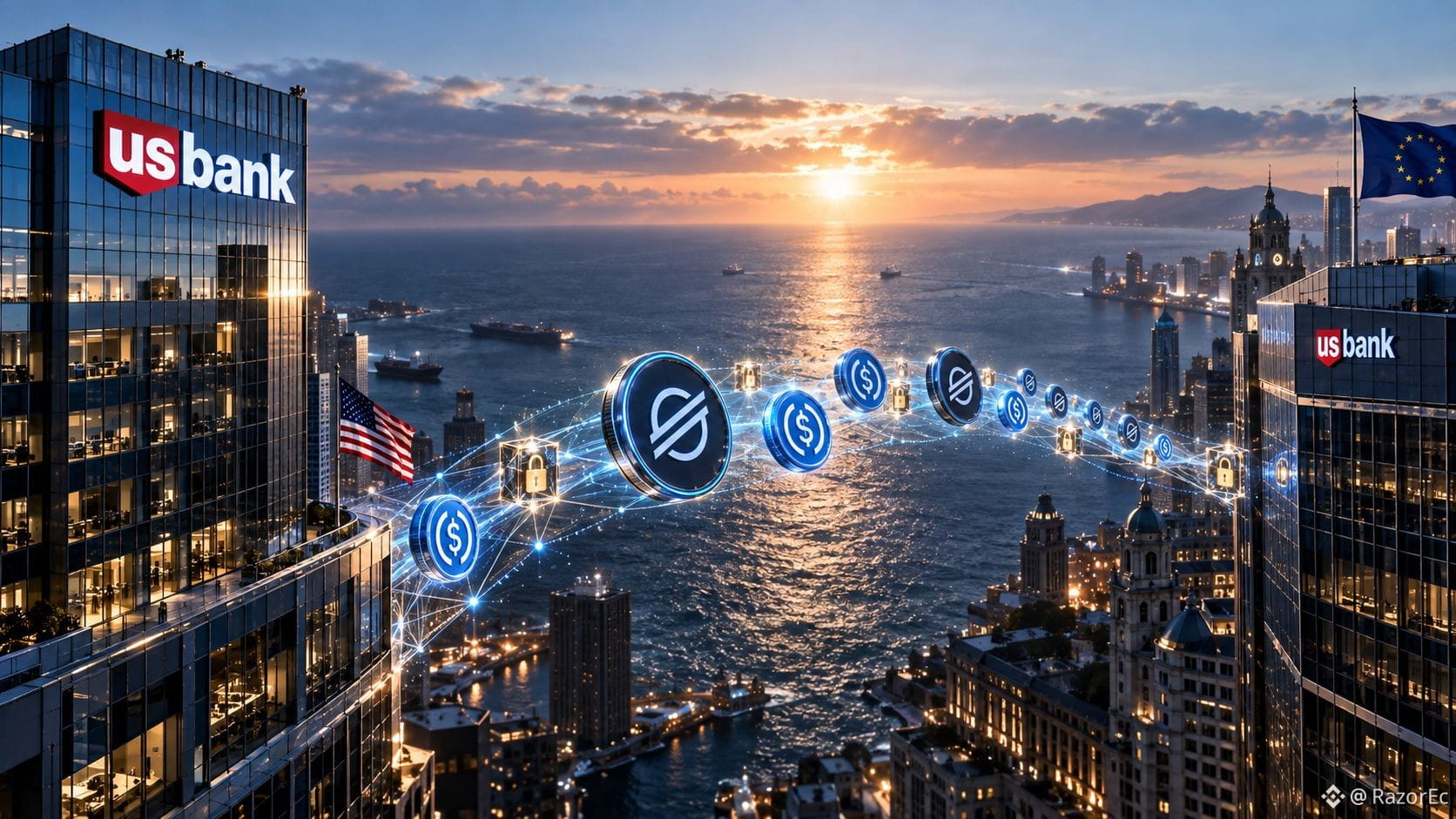
U.S. Bank movió valor de verdad entre sus entidades en Norteamérica y Europa con USBDC, su stablecoin en dólares. Lo hizo sobre Stellar $XLM y de paso probó mint, redención, freeze y clawback.
El quinto banco comercial de Estados Unidos está ensayando rieles propios en una red pública, pero con la lógica de cumplimiento que ya usa en su negocio. Me parece un hito técnico. También deja una duda bastante concreta: ¿cuánta autonomía le queda al usuario cuando el token puede congelarse?
Fuente: CoinDesk
#USbank
{spot}(XLMUSDT)
U.S. Bank movió valor de verdad entre sus entidades en Norteamérica y Europa con USBDC, su stablecoin en dólares. Lo hizo sobre Stellar $XLM y de paso probó mint, redención, freeze y clawback.
El quinto banco comercial de Estados Unidos está ensayando rieles propios en una red pública, pero con la lógica de cumplimiento que ya usa en su negocio. Me parece un hito técnico. También deja una duda bastante concreta: ¿cuánta autonomía le queda al usuario cuando el token puede congelarse?
Fuente: CoinDesk
#USbank
El quinto banco comercial de Estados Unidos está ensayando rieles propios en una red pública, pero con la lógica de cumplimiento que ya usa en su negocio. Me parece un hito técnico. También deja una duda bastante concreta: ¿cuánta autonomía le queda al usuario cuando el token puede congelarse?
Fuente: CoinDesk
#USbank
2
245


·
--
#BankOfAmericaGroupPilotsUSBDCStablecoin
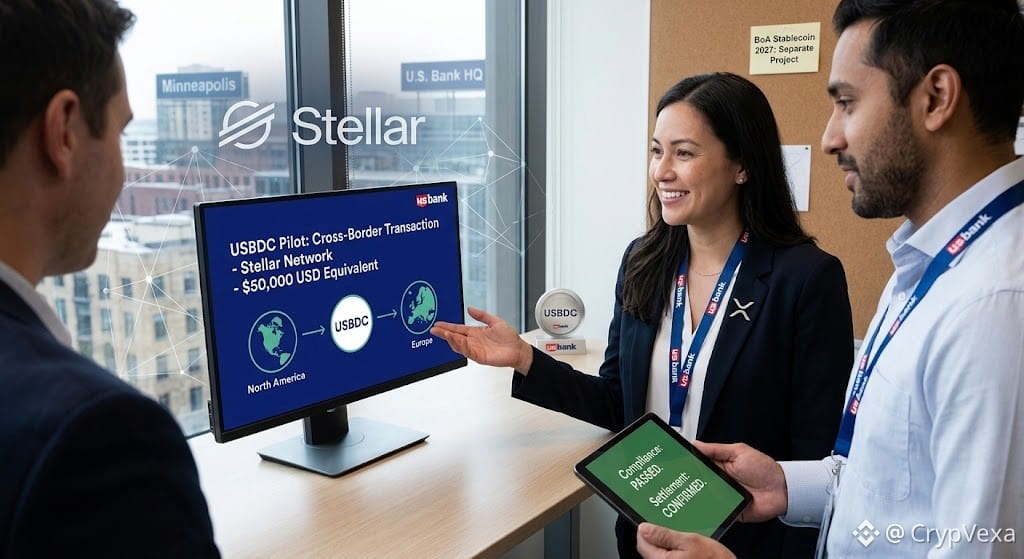
🚨 U.S. Bank Pilots Its Own Stablecoin! 💵🔗
Important correction: The latest stablecoin pilot involves U.S. Bank, not Bank of America.
🏦 U.S. Bank completed a live pilot transaction using USBDC, its proprietary dollar-backed stablecoin, for a cross-border payment between North American and European entities.
⛓️ The transaction used the Stellar blockchain while maintaining traditional banking controls, compliance and risk-management processes.
💡 Potential uses include:
• Corporate treasury payments
• Liquidity management
• Collateral-related workflows
⚠️ This is a pilot, not a public retail launch.
Meanwhile, Bank of America is part of a separate 21-bank initiative exploring a jointly developed dollar stablecoin targeted for 2027.
🌍 Key takeaway: Banks are increasingly testing stablecoins for faster, potentially 24/7 institutional settlement.
#Stablecoin #USBank #Blockchain #crypto
#BankOfAmericaGroupPilotsUSBDCStablecoin
🚨 U.S. Bank Pilots Its Own Stablecoin! 💵🔗
Important correction: The latest stablecoin pilot involves U.S. Bank, not Bank of America.
🏦 U.S. Bank completed a live pilot transaction using USBDC, its proprietary dollar-backed stablecoin, for a cross-border payment between North American and European entities.
⛓️ The transaction used the Stellar blockchain while maintaining traditional banking controls, compliance and risk-management processes.
💡 Potential uses include:
• Corporate treasury payments
• Liquidity management
• Collateral-related workflows
⚠️ This is a pilot, not a public retail launch.
Meanwhile, Bank of America is part of a separate 21-bank initiative exploring a jointly developed dollar stablecoin targeted for 2027.
🌍 Key takeaway: Banks are increasingly testing stablecoins for faster, potentially 24/7 institutional settlement.
#Stablecoin #USBank #Blockchain #crypto
🚨 U.S. Bank Pilots Its Own Stablecoin! 💵🔗
Important correction: The latest stablecoin pilot involves U.S. Bank, not Bank of America.
🏦 U.S. Bank completed a live pilot transaction using USBDC, its proprietary dollar-backed stablecoin, for a cross-border payment between North American and European entities.
⛓️ The transaction used the Stellar blockchain while maintaining traditional banking controls, compliance and risk-management processes.
💡 Potential uses include:
• Corporate treasury payments
• Liquidity management
• Collateral-related workflows
⚠️ This is a pilot, not a public retail launch.
Meanwhile, Bank of America is part of a separate 21-bank initiative exploring a jointly developed dollar stablecoin targeted for 2027.
🌍 Key takeaway: Banks are increasingly testing stablecoins for faster, potentially 24/7 institutional settlement.
#Stablecoin #USBank #Blockchain #crypto
1
25
·
--
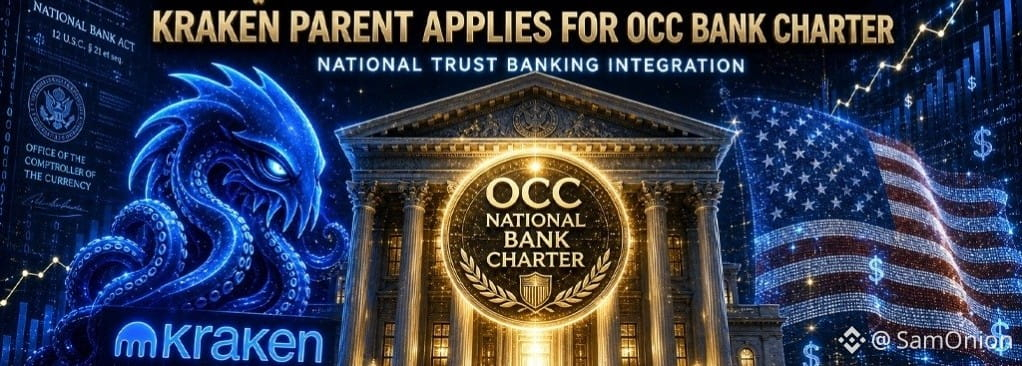
The company behind Kraken is seeking a license to operate as a #USbank , thereby gaining control over cryptocurrency custody and funds. 🏦🇺🇸
This move would make Kraken a licensed national bank, ending the dependence of crypto platforms on traditional banks and enhancing their credibility. 🚀⚖️
$BTC
{spot}(BTCUSDT)
The company behind Kraken is seeking a license to operate as a #USbank , thereby gaining control over cryptocurrency custody and funds. 🏦🇺🇸
This move would make Kraken a licensed national bank, ending the dependence of crypto platforms on traditional banks and enhancing their credibility. 🚀⚖️
$BTC
This move would make Kraken a licensed national bank, ending the dependence of crypto platforms on traditional banks and enhancing their credibility. 🚀⚖️
$BTC
12

·
--
Рост
BREAKING 💡
US banks’ private credit loan exposure nears $300 billion💡US private credit market reshapes bank lending and risk.
Over the past decade, non-bank lenders have steadily expanded their footprint in the US corporate loan market, often stepping in where traditional banks have pulled back because of tighter credit standards and regulatory capital constraints.
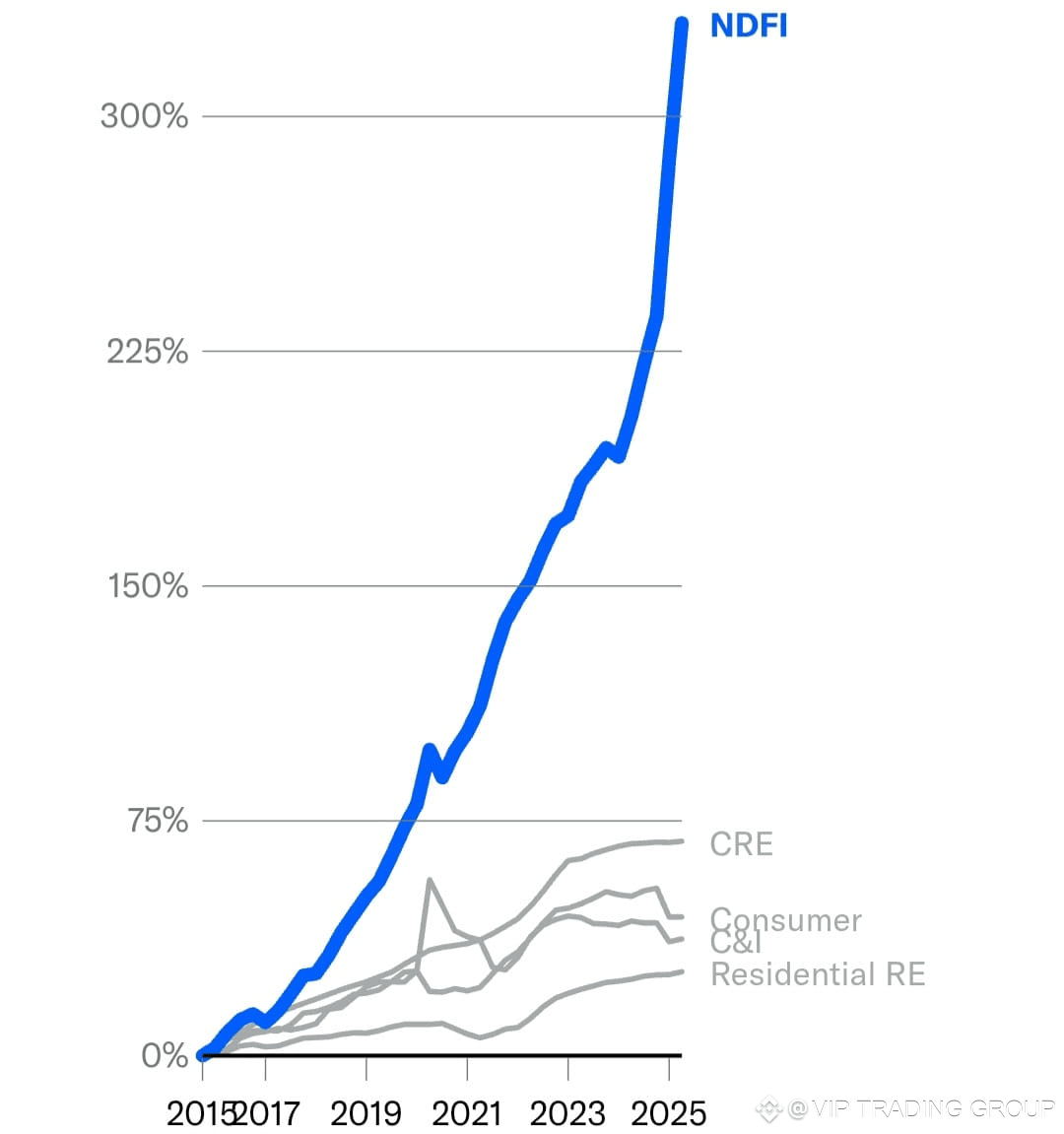
Unwilling or unable to loosen credit standards in light of these constraints, banks have responded to the loss of loan market share to non-banks by increasing their lending to these same entities — making loans to NDFIs the fastest-growing category in US banking. Loans to NDFIs are now roughly 10.4% of total bank loans, nearly three times the 3.6% of a decade ago.
Large banks may be better equipped to manage these risks because of their deeper relationships with private market participants and more robust controls and risk-management infrastructure. These relationships can also span multiple facets of their operations, providing a more complete view of counterparty activities and exposures.
Smaller banks may be more vulnerable, however, especially if they have less established track records of lending to private market participants. Their accelerated push into NDFI lending could lead to greater credit concentration, potentially looser underwriting standards, and strain their risk management capabilities.
The exposure of smaller US banks to non-bank lenders still remains modest compared with that of the largest 25 banks. But prudent growth and robust oversight will be essential to balance opportunity and risk, especially amid shifting market conditions.
ATTENTION SIGNAL 💡
BLESS
LONG
Entry 0.044 - 0.042
TP 0.05
0.08
0.1
0.2
SL on the yourself opinion
#MarketPullback #news #USbank #CryptoNewss #BREAKING
{future}(BLESSUSDT)
$BLESS
BREAKING 💡
US banks’ private credit loan exposure nears $300 billion💡US private credit market reshapes bank lending and risk.
Over the past decade, non-bank lenders have steadily expanded their footprint in the US corporate loan market, often stepping in where traditional banks have pulled back because of tighter credit standards and regulatory capital constraints.
Unwilling or unable to loosen credit standards in light of these constraints, banks have responded to the loss of loan market share to non-banks by increasing their lending to these same entities — making loans to NDFIs the fastest-growing category in US banking. Loans to NDFIs are now roughly 10.4% of total bank loans, nearly three times the 3.6% of a decade ago.
Large banks may be better equipped to manage these risks because of their deeper relationships with private market participants and more robust controls and risk-management infrastructure. These relationships can also span multiple facets of their operations, providing a more complete view of counterparty activities and exposures.
Smaller banks may be more vulnerable, however, especially if they have less established track records of lending to private market participants. Their accelerated push into NDFI lending could lead to greater credit concentration, potentially looser underwriting standards, and strain their risk management capabilities.
The exposure of smaller US banks to non-bank lenders still remains modest compared with that of the largest 25 banks. But prudent growth and robust oversight will be essential to balance opportunity and risk, especially amid shifting market conditions.
ATTENTION SIGNAL 💡
BLESS
LONG
Entry 0.044 - 0.042
TP 0.05
0.08
0.1
0.2
SL on the yourself opinion
#MarketPullback #news #USbank #CryptoNewss #BREAKING
$BLESS
US banks’ private credit loan exposure nears $300 billion💡US private credit market reshapes bank lending and risk.
Over the past decade, non-bank lenders have steadily expanded their footprint in the US corporate loan market, often stepping in where traditional banks have pulled back because of tighter credit standards and regulatory capital constraints.
Unwilling or unable to loosen credit standards in light of these constraints, banks have responded to the loss of loan market share to non-banks by increasing their lending to these same entities — making loans to NDFIs the fastest-growing category in US banking. Loans to NDFIs are now roughly 10.4% of total bank loans, nearly three times the 3.6% of a decade ago.
Large banks may be better equipped to manage these risks because of their deeper relationships with private market participants and more robust controls and risk-management infrastructure. These relationships can also span multiple facets of their operations, providing a more complete view of counterparty activities and exposures.
Smaller banks may be more vulnerable, however, especially if they have less established track records of lending to private market participants. Their accelerated push into NDFI lending could lead to greater credit concentration, potentially looser underwriting standards, and strain their risk management capabilities.
The exposure of smaller US banks to non-bank lenders still remains modest compared with that of the largest 25 banks. But prudent growth and robust oversight will be essential to balance opportunity and risk, especially amid shifting market conditions.
ATTENTION SIGNAL 💡
BLESS
LONG
Entry 0.044 - 0.042
TP 0.05
0.08
0.1
0.2
SL on the yourself opinion
#MarketPullback #news #USbank #CryptoNewss #BREAKING
$BLESS
4
1
7
4.6k
Войдите, чтобы посмотреть больше материала
Присоединяйтесь к пользователям криптовалют по всему миру на Binance Square
⚡️ Получайте новейшую и полезную информацию о криптоактивах.
💬 Нам доверяет крупнейшая в мире криптобиржа.
👍 Получите достоверные аналитические данные от верифицированных создателей контента.
Эл. почта/номер телефона
В тренде
1
#AppleDebutsFoldablePhone
Просмотров: 28,651
606 обсуждают
2
#TSMCAugustRevenueUp53.3%YoY
Просмотров: 1,800
103 обсуждают
3
#IranSaysReadyToEscalateWarWithUS
Просмотров: 4,737
144 обсуждают
4
#EUExtendsCentralContactPointToCASPs
Просмотров: 8,071
224 обсуждают
5
#US10YTreasuryYieldHitsHighestSinceNov2023
Просмотров: 28,158
444 обсуждают
6
#USTreasuryToBuyBackUpTo$6BLongDatedDebt
Просмотров: 17,940
172 обсуждают
7
#BitcoinSurpasses$79K
Просмотров: 67,962
279 обсуждают
8
#BrentCrudeTops$100
Просмотров: 126,481
408 обсуждают
9
#USADPWeeklyEmploymentRises12000
Просмотров: 112,995
1,357 обсуждают
10
#BankOfAmericaGroupPilotsUSBDCStablecoin
Просмотров: 84,735
1,070 обсуждают