
#emergingmarkets
emergingmarkets
Просмотров: 249,599
556 обсуждают
Популярные
Новые

周一拉美金融市场出现剧烈震荡,巴西大选结果公布后,左翼候选人卢拉击败右翼参议员博索纳罗赢得大选。圣保罗证券交易所(Bovespa)股指期货在早盘一度重挫近 15%,巴西雷亚尔对美元即期汇率骤跌 12.2%,利率期货同步大幅飙升,其中 2031 年 1 月到期的合约利率跳涨 182 个基点。
大选结果超出部分民调预期,令市场对巴西未来的财政扩张与政策转向感到担忧。主权风险溢价的激增直接体现了资本对主权债务扩张的防御心理,新兴市场主权资产面临新一轮信任危机。
这一剧烈波动迅速推高了区域性外汇与债券的风险折价,并促使跨境资金加速回流美元避险资产。大宗商品出口国货币的急跌,也对全球流动性预期蒙上一层阴影,加剧了跨市场波动。
对于加密市场而言,主权法币大幅贬值虽然在局部地区会催生被动的抗通胀与资产保值需求,但在全球宏观避险情绪主导下,$BTC 等风险资产更容易受到流动性回抽的压制,投资者需警惕系统性抛售风险。📉
#Brazil #EmergingMarkets #MacroEconomics
59

The Brazilian Real experienced a severe sudden drop at the market open today, plunging 8.2% to trade down at 5.42 BRL per US Dollar. Such a sharp single-session depreciation highlights acute regional market stress and swift capital outflows.
A move of this magnitude is exceedingly rare for a major emerging market currency without significant political, fiscal, or monetary catalysts. Investors are rapidly reassessing Latin American risk exposure and local sovereign debt stability against broad global headwinds.
The currency plunge directly accelerates domestic imported inflation risks and forces markets to price in potential emergency central bank interventions. Concurrently, the broad US Dollar strengthens against emerging market FX baskets, tightening financial conditions regionally.
For digital asset markets, severe fiat devaluations historically spur local demand for liquid hedges like stablecoins and $BTC. We may see elevated localized trading volumes across South American on-ramps as market participants seek dollar-pegged capital protection. 📊
#Forex #EmergingMarkets #MacroEconomy
The Brazilian Real experienced a severe sudden drop at the market open today, plunging 8.2% to trade down at 5.42 BRL per US Dollar. Such a sharp single-session depreciation highlights acute regional market stress and swift capital outflows.
A move of this magnitude is exceedingly rare for a major emerging market currency without significant political, fiscal, or monetary catalysts. Investors are rapidly reassessing Latin American risk exposure and local sovereign debt stability against broad global headwinds.
The currency plunge directly accelerates domestic imported inflation risks and forces markets to price in potential emergency central bank interventions. Concurrently, the broad US Dollar strengthens against emerging market FX baskets, tightening financial conditions regionally.
For digital asset markets, severe fiat devaluations historically spur local demand for liquid hedges like stablecoins and $BTC . We may see elevated localized trading volumes across South American on-ramps as market participants seek dollar-pegged capital protection. 📊
#Forex #EmergingMarkets #MacroEconomy
5

🇧🇷 Brazil Heads Into a High-Stakes Presidential Runoff as Political Tensions Rise
Brazil is holding its presidential runoff election on October 25, 2026, with voters deciding the country’s political direction amid economic concerns and intense political competition. The result could influence Brazil’s fiscal policy, international relations and future investment outlook.
Reuters
#BrazilElection #GlobalPolitics #EmergingMarkets #WorldNews
Tokens: $EWZ · $IBOC.US · $BRLT.US

2
1.1k

·
--
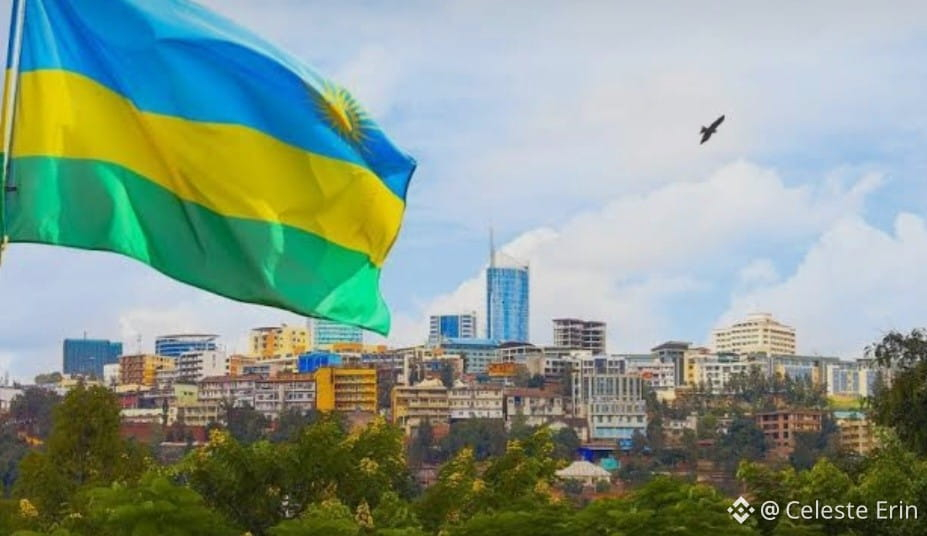
🌍 RUANDA ATRAE MÁS DE $600M Y DESAFÍA A MAURICIO COMO CENTRO FINANCIERO DE ÁFRICA 🏛️💼
El país africano capta capital masivo de inversión, aunque enfrenta el desafío de la escasez de talento especializado.
Puntos clave del reporte:
💰 Captación masiva: Ruanda acumula más de $600 millones de dólares en activos gestionados.
🎯 Competencia regional: Se consolida como alternativa directa a Mauricio para inversiones internacionales en África.
⚠️ Desafío operativo: La falta de profesionales técnicos cualificados amenaza el ritmo de su expansión.
¿Creen que los centros financieros emergentes en África adoptarán la tecnología blockchain para acelerar su crecimiento e inclusión financiera?
💬👇 ¡Los leo en los comentarios!
#BinanceSquare #Rwanda #EmergingMarkets #Macroeconomics #CryptoCommunity
$BTC
{spot}(BTCUSDT)
$ETH
{spot}(ETHUSDT)
$BNB
{spot}(BNBUSDT)
🌍 RUANDA ATRAE MÁS DE $600M Y DESAFÍA A MAURICIO COMO CENTRO FINANCIERO DE ÁFRICA 🏛️💼
El país africano capta capital masivo de inversión, aunque enfrenta el desafío de la escasez de talento especializado.
Puntos clave del reporte:
💰 Captación masiva: Ruanda acumula más de $600 millones de dólares en activos gestionados.
🎯 Competencia regional: Se consolida como alternativa directa a Mauricio para inversiones internacionales en África.
⚠️ Desafío operativo: La falta de profesionales técnicos cualificados amenaza el ritmo de su expansión.
¿Creen que los centros financieros emergentes en África adoptarán la tecnología blockchain para acelerar su crecimiento e inclusión financiera?
💬👇 ¡Los leo en los comentarios!
#BinanceSquare #Rwanda #EmergingMarkets #Macroeconomics #CryptoCommunity
$BTC
$ETH
$BNB
1
133

·
--
Emerging markets are not waiting for Western regulators to figure out crypto.
Brazil, the UAE, Singapore, Nigeria, and Argentina have each moved faster than the G7 on clear crypto frameworks — and capital is noticing. When regulatory certainty exists, institutional flows follow. When it is absent, builders and liquidity migrate to where the rules are legible.
This creates a structural dynamic worth tracking:
→ Countries with high inflation and weak local currencies have the strongest organic crypto demand. Their regulators feel pressure to channel that demand rather than suppress it.
→ Jurisdictions competing for fintech talent (UAE, Singapore, Hong Kong) treat crypto licensing as economic policy, not just financial regulation.
→ The US and EU, despite larger capital pools, cede first-mover advantage in on-chain payment infrastructure to faster-moving smaller markets.
For $BTC and $ETH, this matters because the marginal demand driver is increasingly non-Western. Emerging market retail and sovereign-adjacent buying is structurally different from ETF inflows — it is stickier, less correlated to Fed policy, and driven by genuine utility.
$SOL payment corridors are already live in several EM markets. Subnet deployments and on-chain pilots in financial institutions are mostly coming from non-G7 jurisdictions.
Regulatory arbitrage is not a loophole. It is the market telling you where infrastructure gets built next.
#Crypto #EmergingMarkets #CryptoRegulation #Bitcoin #BinanceSquare
Emerging markets are not waiting for Western regulators to figure out crypto.
Brazil, the UAE, Singapore, Nigeria, and Argentina have each moved faster than the G7 on clear crypto frameworks — and capital is noticing. When regulatory certainty exists, institutional flows follow. When it is absent, builders and liquidity migrate to where the rules are legible.
This creates a structural dynamic worth tracking:
→ Countries with high inflation and weak local currencies have the strongest organic crypto demand. Their regulators feel pressure to channel that demand rather than suppress it.
→ Jurisdictions competing for fintech talent (UAE, Singapore, Hong Kong) treat crypto licensing as economic policy, not just financial regulation.
→ The US and EU, despite larger capital pools, cede first-mover advantage in on-chain payment infrastructure to faster-moving smaller markets.
For $BTC and $ETH , this matters because the marginal demand driver is increasingly non-Western. Emerging market retail and sovereign-adjacent buying is structurally different from ETF inflows — it is stickier, less correlated to Fed policy, and driven by genuine utility.
$SOL payment corridors are already live in several EM markets. Subnet deployments and on-chain pilots in financial institutions are mostly coming from non-G7 jurisdictions.
Regulatory arbitrage is not a loophole. It is the market telling you where infrastructure gets built next.
#Crypto #EmergingMarkets #CryptoRegulation #Bitcoin #BinanceSquare
1
51


·
--
Circle CEO Jeremy Allaire told Reuters that the company behind the USDC stablecoin intends to launch operations in roughly 40 emerging and developing markets. He pointed to growing demand across Southeast Asia, Latin America, Africa and the Middle East as the main driver. The move reflects the broader shift of stablecoins from niche tools to everyday financial instruments in regions where access to traditional banking remains limited. By expanding its footprint, Circle aims to capture more of the rising use of USDC for payments, remittances and store of value.
#USDCExpansion #EmergingMarkets #StablecoinAdoption
#USDCExpansion #EmergingMarkets #StablecoinAdoption

35
Trading on the Indonesia Stock Exchange closed with severe losses today as the Jakarta Composite Index plunged 12.00% to settle at 5,185.11 points. This rare, double-digit single-day collapse marks one of the most intense sell-offs across regional equities this year.
A localized drop of this magnitude signals acute systemic stress, triggered by aggressive capital outflows and heightened risk aversion in emerging markets. When a major benchmark falls this abruptly, it easily breaks standard technical support and activates broad liquidity-preservation protocols among institutional investors.
Across global financial markets, extreme stress in regional equities typically accelerates flight-to-safety behavior. Investors are likely to rotate liquidity toward cash equivalents, sovereign debt, and safe-haven commodities while scaling back exposure to higher-beta risk assets.
For the crypto sector, widespread emerging market sell-offs present a dual dynamic. In the immediate term, forced deleveraging and liquidity squeezes could exert downward pressure on $BTC and major altcoins, though prolonged macro fragility may reinforce long-term demand for borderless digital assets. #GlobalMarkets #EmergingMarkets #LiquidityRisk
24
印度统计和计划执行部周一公布的官方数据显示,印度9月份消费者价格指数(CPI)同比加速攀升至5.54%,较8月修正后的4.83%大幅跃升,创下近两年来的最高水平。这一增幅主要受食品通胀由5.97%骤升至7.74%推动,使整体通胀率逼近印度央行2-6%目标区间的上限。
这组数据直接印证了印度央行上周近四年来首次加息举措的紧迫性。在降雨不足持续推高占CPI权重超三分之一的食品价格背景下,通胀黏性远超市场乐观预期,此前预期的降息或宽松周期显然已被彻底打破。
数据公布后,印度10年期国债收益率快速上行约10个基点至7.40%,国债价格承压重挫。新兴市场核心经济体的通胀反弹与紧缩防御,正加剧全球流动性在更长时间维持偏紧状态的担忧,对跨国资本流向构成实质约束。
对于加密资产等高贝塔市场而言,主要新兴市场通胀抬头与借贷成本居高不下,意味着全球法币流动性边际收缩的压力尚未出清。风险偏好短期内难以获得宏观基本面支撑,投资者需警惕 $BTC 及主流代币在流动性抽离预期下的回调风险。
#Inflation #MacroEconomy #EmergingMarkets
13
·
--
Bitcoin as a Savings Technology for Emerging Markets
The most underappreciated Bitcoin use case isn't gold 2.0 or a macro hedge. It's savings technology for the 1.4 billion people living under double or triple-digit inflation.
Consider what financial reality looks like in large parts of Sub-Saharan Africa, Latin America, and Southeast Asia:
— Local currency can lose 20–80% of purchasing power in a single year
— Bank accounts are inaccessible or require minimum deposits most cannot afford
— Remittance corridors charge 5–10% to move money across borders
— Dollar access is restricted, rationed, or unavailable at fair exchange rates
For these populations, $BTC is not a speculative asset. It's a dollar-denominated savings account that fits on a phone, crosses borders at near-zero cost, and cannot be seized by a failing government.
Layered infrastructure is making this increasingly practical. Lightning Network reduces transaction fees to fractions of a cent. Projects targeting remittance corridors are gaining real traction. $BNB and BNB Chain make low-value transfers economically viable for everyday users.
The narrative of Bitcoin as institutional macro hedge is real — but it's a wealthy-world lens. For billions, self-custody is not ideology. It's the only savings account that cannot be inflated away.
Adoption metrics from Argentina, Nigeria, Turkey, and Vietnam consistently outpace the global average. That trend is structural, not cyclical.
The next wave of users won't come from ETFs. They'll come from economic necessity.
$BTC $XRP $BNB
#Bitcoin #EmergingMarkets #Crypto #Adoption #SavingsTechnology
1
61

·
--
🌍 Emerging Market P2P Adoption and Bitcoin’s Quantum Resistance 🛡️
The grassroots utility of $BTC
{spot}(BTCUSDT)
is expanding rapidly across developing economies, where peer-to-peer (P2P) trading volumes are reaching record highs. In regions facing hyperinflation or weak banking infrastructure, citizens utilize Bitcoin as a censorship-resistant alternative for daily commerce and cross-border remittances. This organic, ground-up adoption proves its fundamental value proposition as a decentralized, global financial network.
While global adoption scales, the network is also preparing for future technological challenges, including the theoretical security impact of quantum computing. The core architecture remains highly resilient, as standard addresses hash public keys, keeping them hidden from quantum vulnerabilities until a transaction occurs. According to insights from @Bitcoinworld , developers are already researching post-quantum cryptographic upgrades. This proactive approach ensures the blockchain remains secure against both economic instability and future computational threats.
#P2PMarket #EmergingMarkets #QuantumComputing #CyberSecurity #CryptoAdoption2026
🌍 Emerging Market P2P Adoption and Bitcoin’s Quantum Resistance 🛡️
The grassroots utility of $BTC
is expanding rapidly across developing economies, where peer-to-peer (P2P) trading volumes are reaching record highs. In regions facing hyperinflation or weak banking infrastructure, citizens utilize Bitcoin as a censorship-resistant alternative for daily commerce and cross-border remittances. This organic, ground-up adoption proves its fundamental value proposition as a decentralized, global financial network.
While global adoption scales, the network is also preparing for future technological challenges, including the theoretical security impact of quantum computing. The core architecture remains highly resilient, as standard addresses hash public keys, keeping them hidden from quantum vulnerabilities until a transaction occurs. According to insights from @Bitcoinworld , developers are already researching post-quantum cryptographic upgrades. This proactive approach ensures the blockchain remains secure against both economic instability and future computational threats.
#P2PMarket #EmergingMarkets #QuantumComputing #CyberSecurity #CryptoAdoption2026

15

·
--
Stablecoin geography is backward.
While emerging economies account for the majority of real-world stablecoin transactions, the people building these networks and the venture capital backing them remain concentrated in the United States and Europe.
This mismatch reveals a critical tension in crypto adoption. Users in Latin America, Africa, and Southeast Asia turn to dollar-pegged tokens for daily payments, savings, and remittances — but the infrastructure they rely on was designed by teams thousands of miles away. Venture funding patterns reinforce this divide. Analysis shows that over 70% of stablecoin-related VC investment in 2025 went to U.S. and European startups, while regions generating the highest on-chain volume received less than 15% of capital.
The consequence? Stablecoin protocols optimized for regulatory compliance in rich markets, not usability in the places where they're actually needed. High beefy fees, KYC gates on use cases local users don't have, and governance tokens that are geographically irrelevant.
This isn't just awkward — it's a strategic vulnerability. As emerging-market stablecoin usage explodes past $500B in annual transit volume, the gap between where value moves and where decisions get made will widen. Projects that close this gap by funding local teams, building in local languages, and designing for unbanked-first use cases could capture outsized market share.
Who's building stablecoin infrastructure for emerging markets? Qatar the loudest voice. 👇
#StablecoinGeography #EmergingMarkets #CryptoAdoption
25

·
--
Market Momentum Shifts as Vietnam Prepares for Historic Infrastructure Project 🚀
In a move expected to boost economic growth, Vietnam's largest conglomerate, Vingroup, is set to break ground on a massive $3.4 billion underwater tunnel and sea-crossing bridge project. This ambitious undertaking will integrate two artificial islands, transforming the country's landscape and cementing its position as a major player in regional development. The project's impact on the market is anticipated to be significant, with potential increases in foreign investment and job creation. As Vietnam continues to push forward with large-scale infrastructure initiatives, investors are taking notice of the country's growing potential. #VietnamInfrastructure #EmergingMarkets #EconomicGrowth #Crypto #Markets
In a move expected to boost economic growth, Vietnam's largest conglomerate, Vingroup, is set to break ground on a massive $3.4 billion underwater tunnel and sea-crossing bridge project. This ambitious undertaking will integrate two artificial islands, transforming the country's landscape and cementing its position as a major player in regional development. The project's impact on the market is anticipated to be significant, with potential increases in foreign investment and job creation. As Vietnam continues to push forward with large-scale infrastructure initiatives, investors are taking notice of the country's growing potential. #VietnamInfrastructure #EmergingMarkets #EconomicGrowth #Crypto #Markets
16

TRON'S ROLE IN EMERGING MARKETS: FINANCIAL INCLUSION IN ACTION 🌎
In countries where traditional banking leaves millions unbanked, TRON is providing financial access. From Nigeria to Argentina, from Turkey to Vietnam, TRON-based solutions are changing lives.
In Nigeria alone, TRON processes over $500 million in monthly remittances. Workers send money home using USDT on TRON because it's fast, cheap, and reliable.
TRON-based DeFi protocols are providing savings accounts with yields that far exceed traditional banks. Payment solutions are enabling merchants to accept digital payments. And NFT platforms are giving artists access to global markets.
Justin Sun has made emerging markets a priority. His vision of financial inclusion isn't theoretical — it's happening right now on TRON.
@TRON DAO
@Justin Sun孙宇晨
#TRONEcoStar #EmergingMarkets #Inclusion
17

Частичная правда
#msciemindexnearscorrection
Msci Emerging Markets Index Nears Correction Territory.
Msci emerging markets index moves closer to correction levels with notable declines from recent highs. This reflects broader pressure on developing economies amid global risk aversion and currency shifts.
Key Market View:
Index shows weakness as capital flows adjust to higher rate expectations. Emerging assets face headwinds from developed market dynamics. Traders watch key support zones for potential reversal or deeper pullback. 📉🔍
Simple Outlook:
Correction territory often brings buying opportunities but requires patience. Monitor commodity prices and us dollar strength for clues on next direction. Effects ripple into crypto and related risk trades.
Trending Pulse:
Binance square highlights cross asset impacts with focus on defensive positioning. Trade carefully and always do your own research.
Thoughts on emerging markets setup? Share below! 🐋🚀
#MSCI #EmergingMarkets #globaleconomy
5
16k

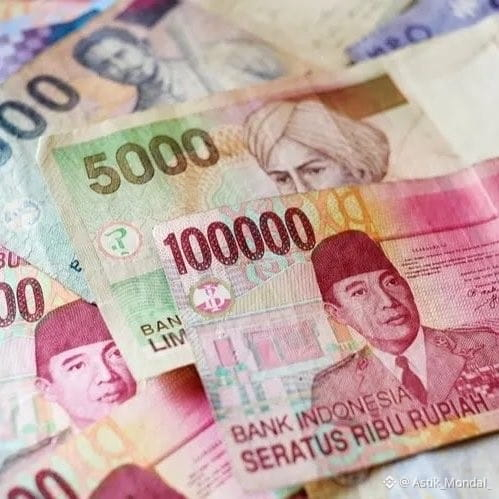
The Indonesian Rupiah just hit a record low of 17,930 per USD. A currency crisis is unfolding in real time.
17,930.
That is not a typo. That is a record.
Indonesia is the 4th most populous nation on earth. Over 270 million people. One of Southeast Asia's largest economies. And its currency is in freefall.
This is not happening in a vacuum.
The US Dollar is surging. Speculative long positioning just hit $16.5 billion. When the Dollar runs, emerging market currencies bleed. That is the oldest story in global finance and it is playing out again right now.
And the timing could not be worse for Indonesia.
The USTR just flagged Indonesia in a forced labor investigation alongside 59 other economies. New tariffs of up to 10% to 12.5% could be coming. Foreign investors are watching that closely.
Capital is already nervous. A tariff threat on top of a record weak currency is not a combination that attracts investment.
It repels it.
A weaker Rupiah means more expensive imports. Higher inflation. Rising cost of living for hundreds of millions of people who can least afford it.
Indonesia is not alone in this. Emerging markets across the board are feeling the Dollar squeeze.
But right now Indonesia is the canary in the coal mine.
Watch this currency. Because where the Rupiah goes, others may follow.
#Indonesia #Rupiah #CurrencyCrisis #EmergingMarkets #DollarStrength
39
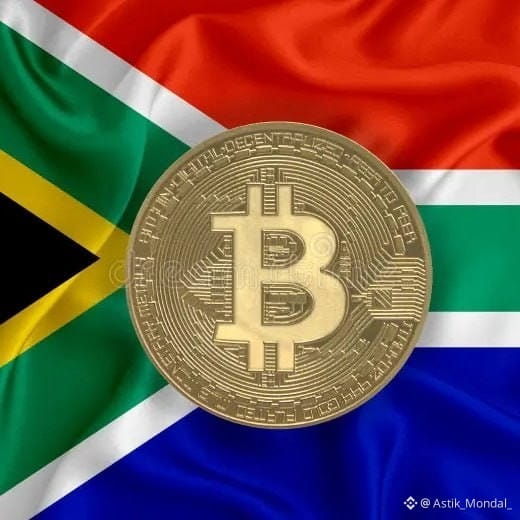
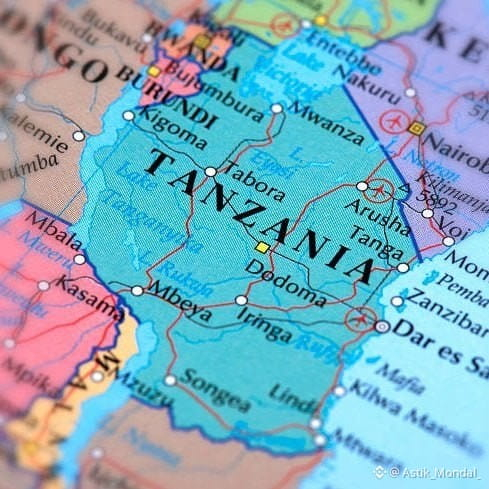
Tanzania is preparing crypto regulations for a $205 billion African digital asset market. The continent that was supposed to be too underdeveloped for crypto just revealed it was quietly building one of the largest crypto economies on earth.
$205 billion in on-chain activity across Sub-Saharan Africa.
Not a prediction. Not a projection.
Actual on-chain volume that regulators can no longer ignore.
Tanzania is now following Kenya and Zimbabwe in moving from restricting crypto to regulating it. Three African nations in the same period making the same pivot. That is not coincidence. That is a regional policy shift driven by economic reality.
And the economic reality is extraordinary.
Sub-Saharan Africa has some of the highest crypto adoption rates in the world precisely because it needs crypto the most. Currencies that lose value overnight. Banking systems that exclude hundreds of millions of people. Remittance corridors that charge 8% to 10% to send money home. Cross-border payments that take days through correspondent banking chains designed for a different era.
Crypto solves every one of those problems directly and cheaply.
Nigeria just became the best performing stock market on earth in dollar terms. Nigerian stocks overtook South Korea. The continent is not waiting for permission from Western financial institutions to participate in the global economy.
And now the regulatory frameworks are catching up to the on-chain reality.
Tanzania. Kenya. Zimbabwe. The Bank of Tanzania preparing formal digital asset laws.
While the US debates the Clarity Act and senators meet Trump at the White House, Africa already built a $205 billion crypto economy and is now formalizing it.
The next billion crypto users are not coming.
They are already on-chain.
#Africa #Tanzania #Crypto #Bitcoin #EmergingMarkets
1
49

·
--
根据印度央行最新公布的数据,截至9月18日当周,印度外汇储备大幅减少148.8亿美元,降至7659亿美元,创下近两年来最大单周跌幅。为了稳住走弱的印度卢比,印度央行近期在外汇市场上持续抛售美元进行干预,加上中东局势推高油价以及股市资金外流,导致外汇储备承压明显。
这轮储备缩水背后反映出新兴市场面临的双重挤压。一方面是原油等进口能源成本攀升推高了用汇需求,另一方面则是全球资金避险流出本土资产。尽管印度此前推出了吸引非居民存款等举措吸收了超过千亿美元资金,并进行了美元掉期操作,但卢比依然是今年亚洲表现相对疲软的货币之一。
从宏观金融市场来看,这种主要新兴市场央行被动消耗外汇储备托底汇率的操作,往往会进一步推升美元的避险买盘,同时也会收紧当地银行系统的流动性。当大宗商品价格高企与强美元周期叠加时,新兴市场的汇率保卫战通常会让跨市场资金更偏向于谨慎观望。
对于加密市场而言,这类宏观流动性扰动短期内更多体现在风险偏好层面。新兴市场流动性承压并未直接关联链上资金,但如果美元持续强势、避险情绪上升,投机性资金进场的节奏可能会放缓,主流资产走势也多以跟随全球宏观大盘震荡为主。
#Forex #EmergingMarkets #Rupee
22

·
--
Статья
What the World's Next Billion Investors Look Like — and What They're BuyingThe center of gravity in global crypto adoption has moved, and the shift has been large enough that the old assumptions about who a crypto investor is no longer hold. For three consecutive years, Chainalysis has ranked India first in its Global Crypto Adoption Index, ahead of the United States, and the countries filling out the rest of the top ten are overwhelmingly lower-middle and upper-middle income economies — Pakistan, Vietnam, Nigeria, among others. This is not a marginal statistical curiosity. It reflects a population that has already built the habits, the infrastructure, and the financial logic that Western markets are still debating in policy papers.
What distinguishes this cohort from the retail wave that defined crypto's first decade is the reason they hold digital assets at all. In the United States, the story of 2025 was institutional: spot Bitcoin $BTC ETFs, clearer rules under the GENIUS Act, and asset managers building allocation frameworks. In Nigeria, Kenya, Pakistan, and Vietnam, the story is closer to household finance than portfolio theory. Sub-Saharan Africa grew crypto adoption 52% year-over-year, the fastest of any region tracked, and stablecoins accounted for 43% of that on-chain value. That is not a speculative cohort chasing a rally. It is a population using dollar-denominated digital tokens the way a previous generation used a savings account, except the account happens to live on a blockchain rather than inside a commercial bank.
Nigeria illustrates the mechanism most clearly, precisely because its currency has given residents little choice but to look elsewhere. The naira lost more than 60% of its value against the dollar between 2023 and early 2025, and inflation held above 20% through much of that period. Under those conditions, holding a stablecoin is not an ideological statement about decentralization; it is the same defensive instinct that drove dollarization in Latin America decades earlier, executed through a phone rather than a currency exchange counter. The IMF's own assessment of the country, released this year, attributed Nigeria's roughly $59 billion in crypto-asset inflows to exactly this logic: households and small firms using stablecoins to receive remittances and settle payments in minutes, at a fraction of the cost of the formal banking channels that reach only 64% of the population in the first place.
The remittance arithmetic deserves particular attention because it is the clearest evidence that this behavior is rational rather than speculative. Sending $200 to Sub-Saharan Africa through conventional channels costs close to 9% of the transaction's value, well above the global average. Stablecoin transfers, by contrast, typically run between half a percent and one percent. For a Kenyan diaspora that sent more than a trillion shillings home in 2025 alone, that spread is not a rounding error; it is the difference between a remittance system that taxes its users and one that does not. Kenya's position — fifth globally for transactional stablecoin use, built directly on the back of M-Pesa's 34 million mobile money users — makes a further point that is easy to miss. This population did not need to be taught mobile-first finance. It invented it, more than a decade ago, and stablecoins have simply plugged into rails that already existed.
{spot}(BTCUSDT)
Regulators in these markets have started to respond in kind rather than resist. Kenya's Virtual Asset Service Providers Bill, signed into law in October, hands stablecoin issuer licensing to the central bank and exchange supervision to the Capital Markets Authority, while requiring local physical presence and segregated client funds. Nigeria's Investment and Securities Act reclassified digital assets as securities and, in doing so, allowed banks back into a business the central bank had shut them out of in 2021. Neither move resembles the deregulatory posture often associated with crypto-friendly jurisdictions. Both look like conventional financial regulators extending existing frameworks to cover an asset class their citizens had already adopted at scale, whether the rulebook existed or not.
None of this means Bitcoin is absent from the picture — India, Pakistan, and Vietnam still show meaningful centralized exchange and retail trading activity alongside their stablecoin use, and speculative appetite has not disappeared from any of these markets. But the framing of a "next billion investors" narrative built primarily around Bitcoin exposure misreads what the data shows. The defining behavior of this cohort is closer to import-export financing, payroll settlement, and inflation hedging than to directional price bets, and Sub-Saharan Africa's growth rate outpacing every other region while stablecoins carry the largest share of that volume is the clearest signal of which use case is actually driving the numbers.
The more durable implication is about where financial infrastructure gets built next. Wall Street and the City are optimizing an existing system for institutional efficiency — better custody, better settlement, better compliance rails around assets that already have deep, liquid markets. Lagos, Nairobi, Karachi, and Ho Chi Minh City are doing something closer to building a financial system from a weaker starting point, and reaching for whatever tool clears the bar of cost, speed, and access. That the tool happens to be a blockchain-based dollar token is almost incidental. The more interesting fact is that the world's fastest-growing base of crypto users got there by solving a problem, not by following a trend — and that distinction is likely to matter far more than total user counts once this cohort starts allocating beyond stablecoins.
The numbers behind the argument, at a glance:
India: #1 in Chainalysis's Global Crypto Adoption Index for three consecutive years, scoring first across all four sub-indices measuredSub-Saharan Africa: 52% year-over-year growth in crypto adoption — the fastest of any region globally — with stablecoins making up 43% of that on-chain volumeNigeria: ~$59 billion in crypto-asset inflows (July 2023–June 2024, per the IMF), driven largely by a naira that lost over 60% of its value against the dollar between 2023 and early 2025Remittance cost gap: sending $200 to Sub-Saharan Africa costs close to 9% via traditional channels, versus roughly 0.5–1% via stablecoinsKenya: 5th globally for transactional stablecoin use, built on M-Pesa's 34 million mobile money users, with diaspora remittances exceeding 1 trillion shillings in 2025Regulatory response: Kenya's VASP Bill (signed October 2025) and Nigeria's Investment and Securities Act both bring stablecoins under formal central-bank and securities oversight rather than leaving them unregulated
Discussion: If the fastest-growing crypto users on Earth are adopting stablecoins to solve currency instability and remittance costs rather than to speculate on price, does that change how the industry should be measuring "adoption" going forward — user counts and trading volume, or something closer to displaced remittance and banking fees?
#StablecoinAdoption #EmergingMarkets #CryptoRemittances #writetoearn
What the World's Next Billion Investors Look Like — and What They're Buying
The center of gravity in global crypto adoption has moved, and the shift has been large enough that the old assumptions about who a crypto investor is no longer hold. For three consecutive years, Chainalysis has ranked India first in its Global Crypto Adoption Index, ahead of the United States, and the countries filling out the rest of the top ten are overwhelmingly lower-middle and upper-middle income economies — Pakistan, Vietnam, Nigeria, among others. This is not a marginal statistical curiosity. It reflects a population that has already built the habits, the infrastructure, and the financial logic that Western markets are still debating in policy papers.
What distinguishes this cohort from the retail wave that defined crypto's first decade is the reason they hold digital assets at all. In the United States, the story of 2025 was institutional: spot Bitcoin $BTC ETFs, clearer rules under the GENIUS Act, and asset managers building allocation frameworks. In Nigeria, Kenya, Pakistan, and Vietnam, the story is closer to household finance than portfolio theory. Sub-Saharan Africa grew crypto adoption 52% year-over-year, the fastest of any region tracked, and stablecoins accounted for 43% of that on-chain value. That is not a speculative cohort chasing a rally. It is a population using dollar-denominated digital tokens the way a previous generation used a savings account, except the account happens to live on a blockchain rather than inside a commercial bank.
Nigeria illustrates the mechanism most clearly, precisely because its currency has given residents little choice but to look elsewhere. The naira lost more than 60% of its value against the dollar between 2023 and early 2025, and inflation held above 20% through much of that period. Under those conditions, holding a stablecoin is not an ideological statement about decentralization; it is the same defensive instinct that drove dollarization in Latin America decades earlier, executed through a phone rather than a currency exchange counter. The IMF's own assessment of the country, released this year, attributed Nigeria's roughly $59 billion in crypto-asset inflows to exactly this logic: households and small firms using stablecoins to receive remittances and settle payments in minutes, at a fraction of the cost of the formal banking channels that reach only 64% of the population in the first place.
The remittance arithmetic deserves particular attention because it is the clearest evidence that this behavior is rational rather than speculative. Sending $200 to Sub-Saharan Africa through conventional channels costs close to 9% of the transaction's value, well above the global average. Stablecoin transfers, by contrast, typically run between half a percent and one percent. For a Kenyan diaspora that sent more than a trillion shillings home in 2025 alone, that spread is not a rounding error; it is the difference between a remittance system that taxes its users and one that does not. Kenya's position — fifth globally for transactional stablecoin use, built directly on the back of M-Pesa's 34 million mobile money users — makes a further point that is easy to miss. This population did not need to be taught mobile-first finance. It invented it, more than a decade ago, and stablecoins have simply plugged into rails that already existed.
Regulators in these markets have started to respond in kind rather than resist. Kenya's Virtual Asset Service Providers Bill, signed into law in October, hands stablecoin issuer licensing to the central bank and exchange supervision to the Capital Markets Authority, while requiring local physical presence and segregated client funds. Nigeria's Investment and Securities Act reclassified digital assets as securities and, in doing so, allowed banks back into a business the central bank had shut them out of in 2021. Neither move resembles the deregulatory posture often associated with crypto-friendly jurisdictions. Both look like conventional financial regulators extending existing frameworks to cover an asset class their citizens had already adopted at scale, whether the rulebook existed or not.
None of this means Bitcoin is absent from the picture — India, Pakistan, and Vietnam still show meaningful centralized exchange and retail trading activity alongside their stablecoin use, and speculative appetite has not disappeared from any of these markets. But the framing of a "next billion investors" narrative built primarily around Bitcoin exposure misreads what the data shows. The defining behavior of this cohort is closer to import-export financing, payroll settlement, and inflation hedging than to directional price bets, and Sub-Saharan Africa's growth rate outpacing every other region while stablecoins carry the largest share of that volume is the clearest signal of which use case is actually driving the numbers.
The more durable implication is about where financial infrastructure gets built next. Wall Street and the City are optimizing an existing system for institutional efficiency — better custody, better settlement, better compliance rails around assets that already have deep, liquid markets. Lagos, Nairobi, Karachi, and Ho Chi Minh City are doing something closer to building a financial system from a weaker starting point, and reaching for whatever tool clears the bar of cost, speed, and access. That the tool happens to be a blockchain-based dollar token is almost incidental. The more interesting fact is that the world's fastest-growing base of crypto users got there by solving a problem, not by following a trend — and that distinction is likely to matter far more than total user counts once this cohort starts allocating beyond stablecoins.
The numbers behind the argument, at a glance:
India: #1 in Chainalysis's Global Crypto Adoption Index for three consecutive years, scoring first across all four sub-indices measuredSub-Saharan Africa: 52% year-over-year growth in crypto adoption — the fastest of any region globally — with stablecoins making up 43% of that on-chain volumeNigeria: ~$59 billion in crypto-asset inflows (July 2023–June 2024, per the IMF), driven largely by a naira that lost over 60% of its value against the dollar between 2023 and early 2025Remittance cost gap: sending $200 to Sub-Saharan Africa costs close to 9% via traditional channels, versus roughly 0.5–1% via stablecoinsKenya: 5th globally for transactional stablecoin use, built on M-Pesa's 34 million mobile money users, with diaspora remittances exceeding 1 trillion shillings in 2025Regulatory response: Kenya's VASP Bill (signed October 2025) and Nigeria's Investment and Securities Act both bring stablecoins under formal central-bank and securities oversight rather than leaving them unregulated
Discussion: If the fastest-growing crypto users on Earth are adopting stablecoins to solve currency instability and remittance costs rather than to speculate on price, does that change how the industry should be measuring "adoption" going forward — user counts and trading volume, or something closer to displaced remittance and banking fees?
#StablecoinAdoption #EmergingMarkets #CryptoRemittances #writetoearn
1
71
Emerging markets are where TRON shines brightest. In Nigeria, TRON-based USDT transfers are replacing informal hawala systems. In Argentina, people use TRON to hedge against peso devaluation. In Turkey, TRON provides a lifeline during currency crises. In Vietnam, cross-border business runs on TRON USDT. These are not speculative use cases. These are survival use cases. When your local currency loses 50 percent of its value in a year, you need stable, fast, cheap transfers. TRON delivers that. No KYC hoops, no bank intermediaries, no borders. Just code and consensus. #EmergingMarkets
Emerging markets are where TRON shines brightest. In Nigeria, TRON-based USDT transfers are replacing informal hawala systems. In Argentina, people use TRON to hedge against peso devaluation. In Turkey, TRON provides a lifeline during currency crises. In Vietnam, cross-border business runs on TRON USDT. These are not speculative use cases. These are survival use cases. When your local currency loses 50 percent of its value in a year, you need stable, fast, cheap transfers. TRON delivers that. No KYC hoops, no bank intermediaries, no borders. Just code and consensus. #EmergingMarkets
23
贝莱德(BlackRock)首席投资策略师Wei Li及其团队在周一发布的最新研究报告中,正式上调了对新兴市场股票的评级至“超配”。该机构认为,韩国与中国台湾正处于半导体及存储芯片供应链的核心枢纽,而拉美市场则为人工智能发展提供了关键的稀缺大宗商品与基础设施支撑。这一举动直接逆转了贝莱德在今年6月份的谨慎立场——当时该机构曾因担忧AI交易拥挤及杠杆风险将新兴市场降级为“中性”,如今其认为7月经历充分去杠杆后,配置性价优势已重新显现。
从宏观策略深度来看,这种转向反映出全球顶级资管机构在美股科技巨头估值逼近极值之际,正被迫向供应链上游与资源端寻求安全边际。然而,这一逻辑背后潜藏着显著的周期错配风险。将新兴市场的盈利复苏完全寄托于AI资本支出的持续扩张过于乐观,一旦终端应用商业化落地不及预期,导致科技巨头放缓基础设施投资,处于制造端与资源端的新兴市场将首当其冲遭遇剧烈的业绩与估值双杀。
对整体金融市场而言,资金向新兴市场及上游大宗商品的分流,虽然短期内为非美资产提供了一定动能,但并未改变全球流动性偏紧的基本面。在美联储降息节奏存在高度不确定性、强势美元仍具韧性的背景下,新兴市场资产对外部流动性冲击的防御力依然薄弱,其供应链溢价随时可能被地缘政治摩擦与贸易壁垒所侵蚀。
对加密市场而言,机构流动性向特定传统实体产业与硬件基础设施的倾斜,表明宏观资本仍在追求具备确定性资产支撑的方向,而非纯粹的流动性叙事。以 $BTC 为代表的加密资产短期内或面临宏观风险偏好分流的压力。在去杠杆周期并未彻底结束的背景下,投资者需警惕全球科技供应链波动引发的跨市场流动性抽离风险。⚠️
#BlackRock #EmergingMarkets #ArtificialIntelligence
107
Войдите, чтобы посмотреть больше материала
Присоединяйтесь к пользователям криптовалют по всему миру на Binance Square
⚡️ Получайте новейшую и полезную информацию о криптоактивах.
💬 Нам доверяет крупнейшая в мире криптобиржа.
👍 Получите достоверные аналитические данные от верифицированных создателей контента.
Эл. почта/номер телефона
В тренде
1
#BTCRebounds80K
Просмотров: 51,284
648 обсуждают
2
#Binance98PercentReplenished
Просмотров: 35,869
518 обсуждают
3
#USMidterms-WhatAreMarketsExpecting?
Просмотров: 329,853
2,017 обсуждают
4
#USOctoberNFP-AreRateCutsStillPossible
Просмотров: 391,261
2,812 обсуждают
5
#USClearsSingleStockPerpetualFutures
Просмотров: 0
3 обсуждают
6
#AMDBeatsExpectations-AINarrativeContinues
Просмотров: 96,484
772 обсуждают
7
#CircleQ3Revenue865M
Просмотров: 26,944
431 обсуждают
8
#BinanceIncidentReport
Просмотров: 545,863
2,122 обсуждают
9
#USStocksOpenHigherAsDowGains1.9%
Просмотров: 5,817
74 обсуждают
10
#ADPUSPrivateEmployersAdd86000JobsInOctober
Просмотров: 3,883
49 обсуждают