Binance Square

eigen

Просмотров: 3.8M
4,147 обсуждают
LuckyStar_
·
--
·
--
Рост
·
--
Рост
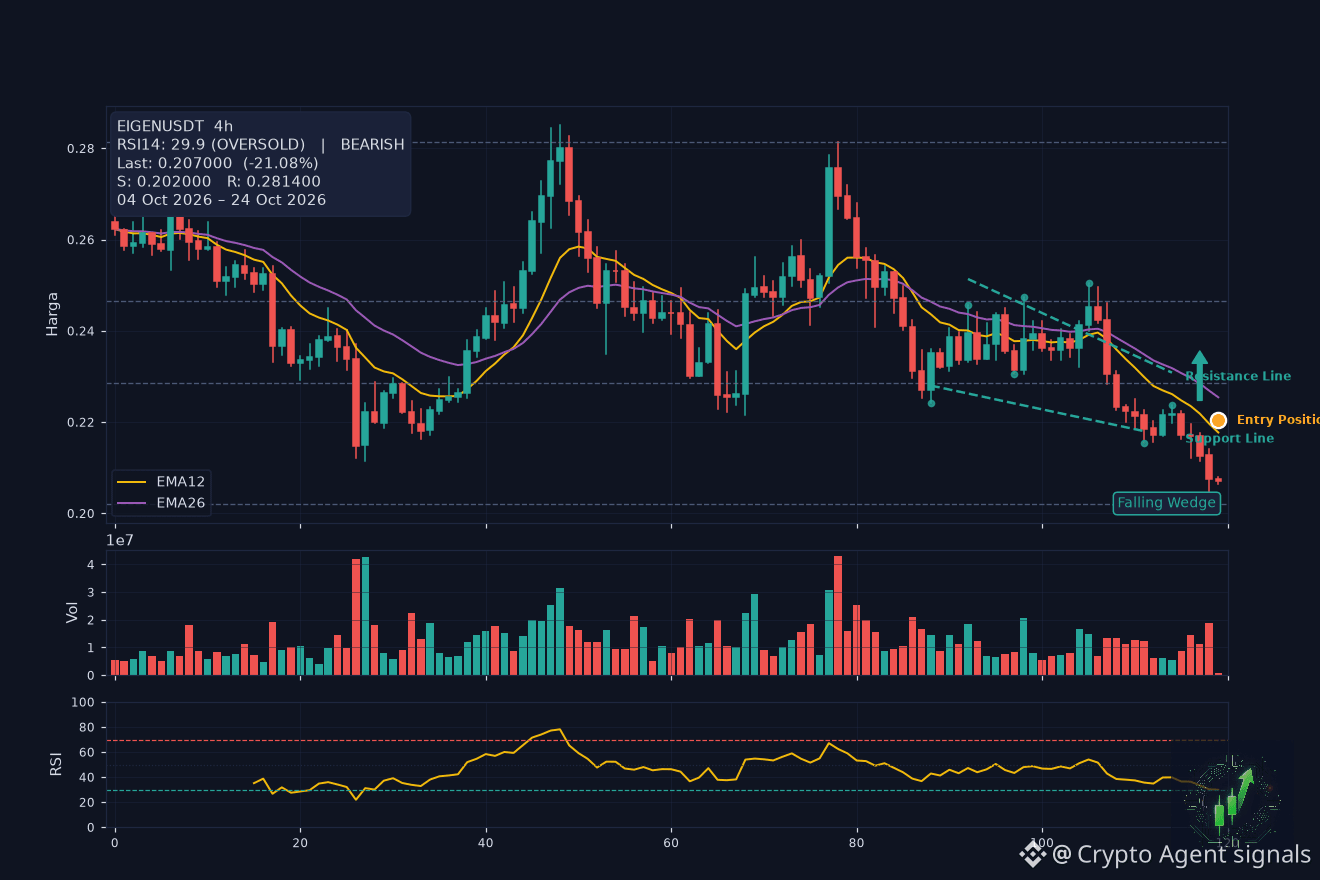
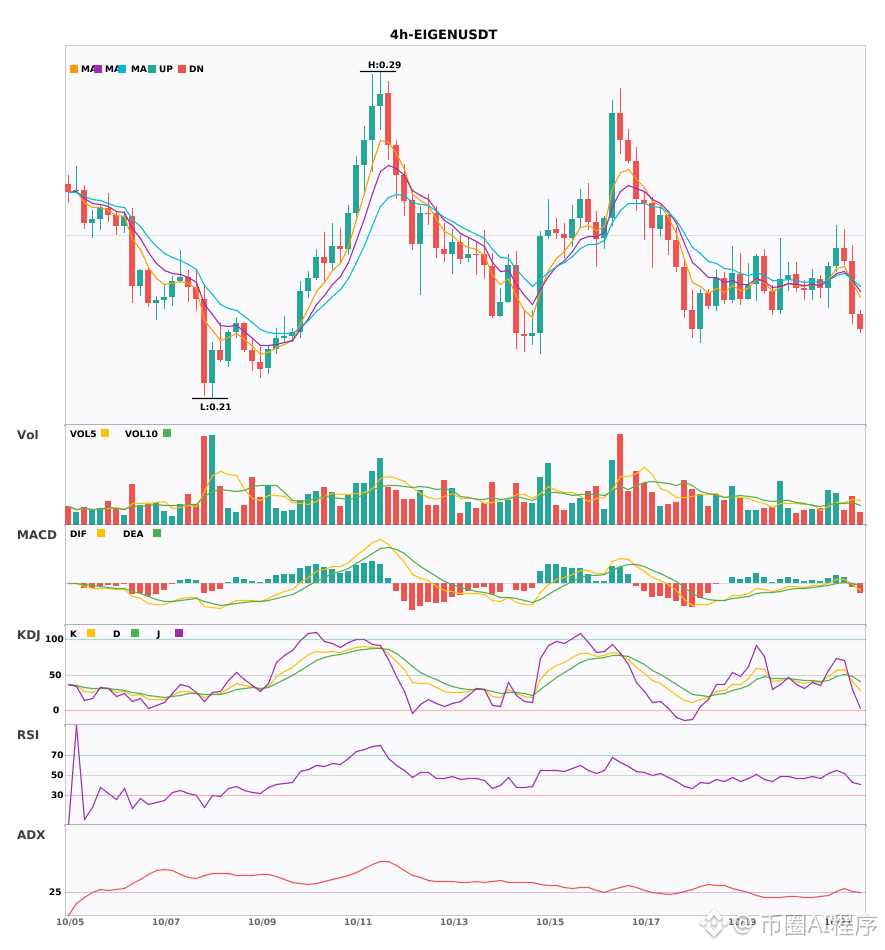
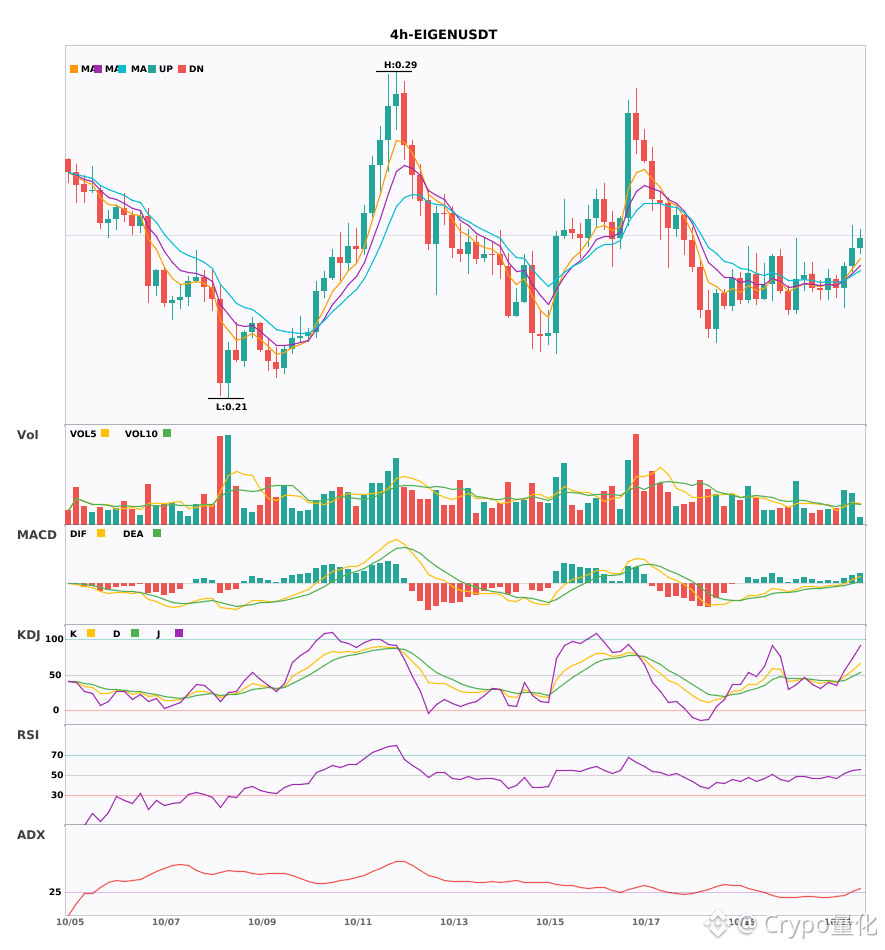
🔴 $EIGEN Market Update 📉 📊 Trend: Bearish ⚠️ Traders: High risk. Short opportunities may arise. ⚠️ Holders: Consider reducing exposure. 💡 Buyers: Strong caution. DCA only if long-term conviction. 🛡️ Protect capital. Use stop-loss. #EIGEN #Altcoin #Crypto #Bearish #Trading
🔴 $EIGEN Market Update 📉

📊 Trend: Bearish
⚠️ Traders: High risk. Short opportunities may arise.
⚠️ Holders: Consider reducing exposure.
💡 Buyers: Strong caution. DCA only if long-term conviction.

🛡️ Protect capital. Use stop-loss.

#EIGEN #Altcoin #Crypto #Bearish #Trading
#EIGEN Support Test in Progress🔍 $EIGEN {spot}(EIGENUSDT) The token is testing the support zone inside the descending channel on the daily chart🧐 Rising buying interest at this zone suggests a potential rebound💁‍♂️ A successful defense could launch the price toward targets at $0.26, $0.34, $0.50, $0.75, and $1.05🎯
#EIGEN Support Test in Progress🔍
$EIGEN

The token is testing the support zone inside the descending channel on the daily chart🧐

Rising buying interest at this zone suggests a potential rebound💁‍♂️

A successful defense could launch the price toward targets at $0.26, $0.34, $0.50, $0.75, and $1.05🎯
What Is EigenLayer?[What Is EigenLayer?](https://www.binance.com/en/academy/articles/what-is-eigenlayer) EigenLayer is a protocol that enhances Ethereum's Proof-of-Stake system by allowing users to 'restake' their ETH.EigenLayer's approach uses modular security, enhancing the flexibility and functionalities of staked ETH through a concept called "restaking collective".Challenges include increased complexity, potential centralization risks due to staking pool dominance, and collusion threats within the module-based design. Introduction [Ethereum](https://academy.binance.com/en/articles/what-is-ethereum) transitioned from a Proof-of-Work (PoW) model to a Proof-of-Stake (PoS) system through a series of upgrades. In PoS, users [stake](https://academy.binance.com/en/articles/what-is-staking) their ETH tokens to secure the network. Essentially, they become validators who verify transactions and ensure network integrity. In return for their contribution, stakers earn rewards. However, staked ETH is temporarily locked, limiting its accessibility. This is where EigenLayer steps in with its innovative approach. This article provides a quick overview of EigenLayer, its airdrops, core functionalities, pros and cons, and the key differences between traditional staking and EigenLayer staking. What Is EigenLayer? EigenLayer is a protocol built on top of the Ethereum blockchain. It introduced a concept called "restaking collective," allowing ETH stakers to support applications within the Ethereum ecosystem. EigenLayer creates a dynamic marketplace for decentralized trust. Developers can benefit from the security provided by the collective pool of stakers, while stakers can support the development of their projects. How Does EigenLayer Work? Modules EigenLayer introduces a modular security approach. It allows stakers to contribute their ETH to secure specific functionalities within the network. These functionalities are generally referred to as modules. For example, a module might be dedicated to securing decentralized storage solutions like Arweave. Some modules could secure in-game items within blockchain-based games. Others could foster trust within DeFi applications like Aave. Smart contracts Ethereum stakers can restake their staked ETH via EigenLayer [smart contracts](https://academy.binance.com/en/articles/what-are-smart-contracts), offering a new set of security and validation services to specific modules in the network. This is achieved by granting EigenLayer contracts the ability to set certain conditions on [staked](https://academy.binance.com/en/articles/what-is-staking) assets. Restaking  EigenLayer restaking can be done in two different ways:  1. Solo staking. Users can operate their own [nodes](https://academy.binance.com/en/articles/what-are-nodes) and actively validate transactions for the modules. This method is more suitable for advanced users. 2. Delegation. EigenLayer also allows delegating the node operation to other participants within the network. This is a convenient option for users who want to contribute to EigenLayer while avoiding the technical aspects.  Staker diversity  EigenLayer recognizes that stakers may have different preferences and capabilities. Some can have powerful computers suitable for solo staking, while others may prioritize convenience through delegation.  Additionally, stakers may have different risk tolerance levels. EigenLayer allows modules to adjust their requirements to match specific stakers, fostering a more flexible network. Actively Validated Services (AVS) EigenLayer adopts Actively Validated Services (AVS) as specific services within the Ethereum ecosystem that require active validation and enhanced security. AVS can include high-stakes applications like decentralized finance (DeFi) platforms, cross-chain bridges, and other critical infrastructure. By leveraging AVS, developers can ensure their applications receive the necessary security and validation from a dedicated pool of restakers, enhancing the overall trust and reliability of their services. Traditional Staking vs. EigenLayer Staking EigenLayer disrupts the traditional staking on Ethereum, offering a unique approach with its "restaking collective" concept. Let’s take a look at the key differences between traditional staking and EigenLayer staking. Liquidity In traditional staking, staked ETH becomes temporarily locked. While the staked ETH is locked, stakers can’t use it. In contrast, while the underlying ETH remains staked, EigenLayer allows users to leverage it for additional purposes. For example, stakers may use it to increase the security of various applications being built on Ethereum. Participation and rewards When it comes to traditional staking, participation is relatively straightforward. Essentially, users lock up their ETH and earn rewards based on the staking protocol they choose.  In contrast, EigenLayer offers a wider range of participation options. Users can choose between solo staking or delegation. Delegation might be a better choice for users who don’t have advanced technical knowledge of cryptocurrencies.  In addition, EigenLayer staking can potentially be more rewarding. Modules with higher security needs might offer greater rewards for stakers who secure them. Security focus In traditional staking, staked ETH directly contributes to the security of the Ethereum blockchain. In EigenLayer staking, security becomes modular. Users can contribute to the security of specific modules within the Ethereum ecosystem. The overall security of a module generally depends on the collective staking power directed towards it. EigenLayer Airdrop EigenLayer airdrops are set to occur in multiple seasons, each containing one or more phases. In total, EigenLayer allocated 15% of the [total supply](https://academy.binance.com/en/glossary/total-supply) of EIGEN tokens to be distributed across all seasons. Season 1 Phase 1 Season 1 of EigenLayer’s airdrop campaign started on May 10, 2024, with 6.7% of the total token supply. Its claim window will be open until September 7, 2024. The first [snapshot](https://academy.binance.com/en/glossary/snapshot) happened on March 15, 2024, with bonus airdrops allocated to users who have restaked ETH or [LSTs](https://academy.binance.com/en/glossary/liquid-staking-token-lst) on EigenLayer between March 15 and April 29. To be eligible for the first phase of the airdrop, users had to meet specific criteria, such as: Holding or staking LRT tokens for a certain period.Active participation in EigenLayer's governance processes.Contributing to the development or testing of EigenLayer modules.Engaging in community activities, such as participating in forums or social media discussions related to EigenLayer. Season 1 Phase 2 Season 1 Phase 2 airdrop eligibility extends to DeFi users who participated in platforms such as Kelp, Pendle, Equilibrium, and others before March 15, 2024. This phase aims to reward long-term supporters and early participants in the network, fostering greater community engagement and participation. To be eligible for the airdrop, users must have participated in the initial phase of EigenLayer's restaking program or be long-term supporters of the protocol. Specific eligibility criteria may include holding or staking LRT tokens, participation in network activities, or involvement in governance processes. How to claim EigenLayer airdrops Be wary of fake websites and phishing attacks. Make sure you are using the official websites and channels. Eligible users can claim their airdropped tokens through the EigenLayer platform. The process involves connecting their wallet, verifying eligibility, and following the steps provided. As of June 2024, the EIGEN tokens from the first airdrop season are not yet transferable but can be staked or delegated after being claimed. Season 2 According to the EigenLayer Foundation, Season 2 has already started and any ecosystem participation beyond the March 15 snapshot will be considered for Season 2 airdrops. However, the details of Season 2 distribution are yet to be announced. Enhanced Security for EigenDA In June 2024, EigenLayer improved the security of EigenDA – its decentralized application (DApp) platform – to counteract [Sybil](https://academy.binance.com/en/glossary/sybil-attack) and [DDoS](https://academy.binance.com/en/articles/what-is-a-dos-attack) attacks. Sybil attack prevention: Sybil attacks involve a malicious actor creating multiple identities to gain a disproportionate influence on the network. EigenLayer's enhanced security measures include stricter identity verification processes and mechanisms to detect and prevent malicious activities. DDoS attack mitigation: Distributed denial-of-service (DDoS) attacks aim to overwhelm the network with a flood of traffic, causing service disruptions. To counter this, EigenLayer has implemented robust traffic filtering and rate-limiting mechanisms. These measures ensure that legitimate traffic is prioritized and that malicious traffic is effectively blocked, maintaining the availability and performance of the EigenDA platform. Continuous monitoring: EigenLayer has also introduced continuous monitoring and threat detection systems to proactively identify and respond to potential security threats. This involves real-time analysis of network traffic, anomaly detection, and rapid incident response to address any emerging security issues. Pros and Cons of EigenLayer Pros 1. Enhanced security for DApps. By leveraging a pool of validators for various modules, EigenLayer strengthens the overall security of decentralized applications ([DApps](https://academy.binance.com/en/articles/what-are-decentralized-applications-dapps)) built on those modules. This fosters a more trustworthy environment for users interacting with DApps. 2. Testing ground. EigenLayer acts as a platform for testing and validating new Ethereum functionalities before integrating them into the mainnet. This lets developers experiment with innovative ideas like [danksharding](https://academy.binance.com/en/glossary/danksharding), a core feature of the [Ethereum Cancun upgrade](https://academy.binance.com/en/articles/what-is-the-ethereum-cancun-upgrade). 3. Permissionless innovation. Developers no longer need to build their own validator sets to secure their applications. Instead, they can leverage the existing pool of secure validators offered by EigenLayer through restaking. This generally lowers the entry barrier for developers and fosters more innovation on Ethereum. Cons 1. Complexity. EigenLayer introduces a new layer of complexity to the Ethereum ecosystem. Understanding how restaking works, choosing the right modules to participate in, and managing the technical aspects (for solo stakers) can be challenging for some users. 2. Centralization risks. While EigenLayer promotes decentralized trust, a few dominant [staking pools](https://academy.binance.com/en/glossary/staking-pool) may emerge, leading to a degree of centralization within the restaking collective. 3. Module collusion risks. ​​The modular design of EigenLayer offers flexibility but also introduces a potential risk of collusion between malicious actors controlling multiple modules. Closing Thoughts EigenLayer's "restaking collective" serves as a potential game-changer for decentralized trust on Ethereum. By enabling permissionless innovation and providing a testing ground for Ethereum features, EigenLayer may play a crucial role in shaping a future of robust, secure, and scalable decentralized applications. $EIGEN #EIGEN

What Is EigenLayer?

What Is EigenLayer?
EigenLayer is a protocol that enhances Ethereum's Proof-of-Stake system by allowing users to 'restake' their ETH.EigenLayer's approach uses modular security, enhancing the flexibility and functionalities of staked ETH through a concept called "restaking collective".Challenges include increased complexity, potential centralization risks due to staking pool dominance, and collusion threats within the module-based design.
Introduction
Ethereum transitioned from a Proof-of-Work (PoW) model to a Proof-of-Stake (PoS) system through a series of upgrades. In PoS, users stake their ETH tokens to secure the network. Essentially, they become validators who verify transactions and ensure network integrity. In return for their contribution, stakers earn rewards.
However, staked ETH is temporarily locked, limiting its accessibility. This is where EigenLayer steps in with its innovative approach. This article provides a quick overview of EigenLayer, its airdrops, core functionalities, pros and cons, and the key differences between traditional staking and EigenLayer staking.
What Is EigenLayer?
EigenLayer is a protocol built on top of the Ethereum blockchain. It introduced a concept called "restaking collective," allowing ETH stakers to support applications within the Ethereum ecosystem.
EigenLayer creates a dynamic marketplace for decentralized trust. Developers can benefit from the security provided by the collective pool of stakers, while stakers can support the development of their projects.
How Does EigenLayer Work?
Modules
EigenLayer introduces a modular security approach. It allows stakers to contribute their ETH to secure specific functionalities within the network. These functionalities are generally referred to as modules.
For example, a module might be dedicated to securing decentralized storage solutions like Arweave. Some modules could secure in-game items within blockchain-based games. Others could foster trust within DeFi applications like Aave.
Smart contracts
Ethereum stakers can restake their staked ETH via EigenLayer smart contracts, offering a new set of security and validation services to specific modules in the network. This is achieved by granting EigenLayer contracts the ability to set certain conditions on staked assets.
Restaking 
EigenLayer restaking can be done in two different ways: 
1. Solo staking. Users can operate their own nodes and actively validate transactions for the modules. This method is more suitable for advanced users.
2. Delegation. EigenLayer also allows delegating the node operation to other participants within the network. This is a convenient option for users who want to contribute to EigenLayer while avoiding the technical aspects. 
Staker diversity 
EigenLayer recognizes that stakers may have different preferences and capabilities. Some can have powerful computers suitable for solo staking, while others may prioritize convenience through delegation. 
Additionally, stakers may have different risk tolerance levels. EigenLayer allows modules to adjust their requirements to match specific stakers, fostering a more flexible network.
Actively Validated Services (AVS)
EigenLayer adopts Actively Validated Services (AVS) as specific services within the Ethereum ecosystem that require active validation and enhanced security. AVS can include high-stakes applications like decentralized finance (DeFi) platforms, cross-chain bridges, and other critical infrastructure. By leveraging AVS, developers can ensure their applications receive the necessary security and validation from a dedicated pool of restakers, enhancing the overall trust and reliability of their services.
Traditional Staking vs. EigenLayer Staking
EigenLayer disrupts the traditional staking on Ethereum, offering a unique approach with its "restaking collective" concept. Let’s take a look at the key differences between traditional staking and EigenLayer staking.
Liquidity
In traditional staking, staked ETH becomes temporarily locked. While the staked ETH is locked, stakers can’t use it. In contrast, while the underlying ETH remains staked, EigenLayer allows users to leverage it for additional purposes. For example, stakers may use it to increase the security of various applications being built on Ethereum.
Participation and rewards
When it comes to traditional staking, participation is relatively straightforward. Essentially, users lock up their ETH and earn rewards based on the staking protocol they choose. 
In contrast, EigenLayer offers a wider range of participation options. Users can choose between solo staking or delegation. Delegation might be a better choice for users who don’t have advanced technical knowledge of cryptocurrencies. 
In addition, EigenLayer staking can potentially be more rewarding. Modules with higher security needs might offer greater rewards for stakers who secure them.
Security focus
In traditional staking, staked ETH directly contributes to the security of the Ethereum blockchain. In EigenLayer staking, security becomes modular. Users can contribute to the security of specific modules within the Ethereum ecosystem. The overall security of a module generally depends on the collective staking power directed towards it.
EigenLayer Airdrop
EigenLayer airdrops are set to occur in multiple seasons, each containing one or more phases. In total, EigenLayer allocated 15% of the total supply of EIGEN tokens to be distributed across all seasons.
Season 1 Phase 1
Season 1 of EigenLayer’s airdrop campaign started on May 10, 2024, with 6.7% of the total token supply. Its claim window will be open until September 7, 2024.
The first snapshot happened on March 15, 2024, with bonus airdrops allocated to users who have restaked ETH or LSTs on EigenLayer between March 15 and April 29.
To be eligible for the first phase of the airdrop, users had to meet specific criteria, such as:
Holding or staking LRT tokens for a certain period.Active participation in EigenLayer's governance processes.Contributing to the development or testing of EigenLayer modules.Engaging in community activities, such as participating in forums or social media discussions related to EigenLayer.
Season 1 Phase 2
Season 1 Phase 2 airdrop eligibility extends to DeFi users who participated in platforms such as Kelp, Pendle, Equilibrium, and others before March 15, 2024. This phase aims to reward long-term supporters and early participants in the network, fostering greater community engagement and participation.
To be eligible for the airdrop, users must have participated in the initial phase of EigenLayer's restaking program or be long-term supporters of the protocol. Specific eligibility criteria may include holding or staking LRT tokens, participation in network activities, or involvement in governance processes.
How to claim EigenLayer airdrops
Be wary of fake websites and phishing attacks. Make sure you are using the official websites and channels.

Eligible users can claim their airdropped tokens through the EigenLayer platform. The process involves connecting their wallet, verifying eligibility, and following the steps provided.
As of June 2024, the EIGEN tokens from the first airdrop season are not yet transferable but can be staked or delegated after being claimed.
Season 2
According to the EigenLayer Foundation, Season 2 has already started and any ecosystem participation beyond the March 15 snapshot will be considered for Season 2 airdrops. However, the details of Season 2 distribution are yet to be announced.
Enhanced Security for EigenDA
In June 2024, EigenLayer improved the security of EigenDA – its decentralized application (DApp) platform – to counteract Sybil and DDoS attacks.
Sybil attack prevention: Sybil attacks involve a malicious actor creating multiple identities to gain a disproportionate influence on the network. EigenLayer's enhanced security measures include stricter identity verification processes and mechanisms to detect and prevent malicious activities.
DDoS attack mitigation: Distributed denial-of-service (DDoS) attacks aim to overwhelm the network with a flood of traffic, causing service disruptions. To counter this, EigenLayer has implemented robust traffic filtering and rate-limiting mechanisms. These measures ensure that legitimate traffic is prioritized and that malicious traffic is effectively blocked, maintaining the availability and performance of the EigenDA platform.
Continuous monitoring: EigenLayer has also introduced continuous monitoring and threat detection systems to proactively identify and respond to potential security threats. This involves real-time analysis of network traffic, anomaly detection, and rapid incident response to address any emerging security issues.
Pros and Cons of EigenLayer
Pros
1. Enhanced security for DApps. By leveraging a pool of validators for various modules, EigenLayer strengthens the overall security of decentralized applications (DApps) built on those modules. This fosters a more trustworthy environment for users interacting with DApps.
2. Testing ground. EigenLayer acts as a platform for testing and validating new Ethereum functionalities before integrating them into the mainnet. This lets developers experiment with innovative ideas like danksharding, a core feature of the Ethereum Cancun upgrade.
3. Permissionless innovation. Developers no longer need to build their own validator sets to secure their applications. Instead, they can leverage the existing pool of secure validators offered by EigenLayer through restaking. This generally lowers the entry barrier for developers and fosters more innovation on Ethereum.
Cons
1. Complexity. EigenLayer introduces a new layer of complexity to the Ethereum ecosystem. Understanding how restaking works, choosing the right modules to participate in, and managing the technical aspects (for solo stakers) can be challenging for some users.
2. Centralization risks. While EigenLayer promotes decentralized trust, a few dominant staking pools may emerge, leading to a degree of centralization within the restaking collective.
3. Module collusion risks. ​​The modular design of EigenLayer offers flexibility but also introduces a potential risk of collusion between malicious actors controlling multiple modules.
Closing Thoughts
EigenLayer's "restaking collective" serves as a potential game-changer for decentralized trust on Ethereum. By enabling permissionless innovation and providing a testing ground for Ethereum features, EigenLayer may play a crucial role in shaping a future of robust, secure, and scalable decentralized applications.
$EIGEN
#EIGEN
·
--
Падение
$EIGEN / USDT – Sideways Consolidation $EIGEN is trading at 0.205 after a 0.49 percent dip. The minor pullback reflects consolidation rather than a decisive trend shift. Buyers and sellers are currently balanced. A breakout above 0.215 would favor upward continuation. Potential Entry Zone for Buyers: 0.198 – 0.204 Upside Targets: • Target 1: 0.220 • Target 2: 0.240 • Extended Target: 0.270 Protective Zone: Stop-Loss: 0.190 Market Bias: Short-Term Neutral $EIGEN {spot}(EIGENUSDT) #EIGEN #WhaleDeRiskETH #GoldSilverRally #BinanceBitcoinSAFUFund #USIranStandoff
$EIGEN / USDT – Sideways Consolidation
$EIGEN is trading at 0.205 after a 0.49 percent dip. The minor pullback reflects consolidation rather than a decisive trend shift. Buyers and sellers are currently balanced.
A breakout above 0.215 would favor upward continuation.
Potential Entry Zone for Buyers:
0.198 – 0.204
Upside Targets:
• Target 1: 0.220
• Target 2: 0.240
• Extended Target: 0.270
Protective Zone:
Stop-Loss: 0.190
Market Bias: Short-Term Neutral
$EIGEN

#EIGEN #WhaleDeRiskETH #GoldSilverRally #BinanceBitcoinSAFUFund #USIranStandoff
·
--
Падение
$EIGEN /USDT declines 5.19%, triggering defensive sentiment while bargain hunters quietly step in. Liquidity pockets suggest a potential reaction zone approaching. Will buyers defend the trend or surrender control? The next sessions could define short-term direction. #AltcoinAlert #EIGEN $EIGEN {spot}(EIGENUSDT)
$EIGEN /USDT declines 5.19%, triggering defensive sentiment while bargain hunters quietly step in. Liquidity pockets suggest a potential reaction zone approaching. Will buyers defend the trend or surrender control? The next sessions could define short-term direction. #AltcoinAlert #EIGEN
$EIGEN
#EIGEN EigenLayer is consolidating within the descending channel on the 3D chart. A breakout could propel the price toward $2.00 "It is only matter of time time to be succesful." $EIGEN {future}(EIGENUSDT)
#EIGEN EigenLayer is consolidating within the descending channel on the 3D chart.

A breakout could propel the price toward $2.00

"It is only matter of time time to be succesful."
$EIGEN
EIGEN BREAKOUT IMMINENT. $1 PRICE TARGET LOOMS. Entry: 1.00 🟩 Target 1: 2.00 🎯 Stop Loss: 0.80 🛑 The accumulation phase is over. $EIGEN is building energy. A powerful surge is coming. This is your chance to capture massive gains. Don't get left behind. The window is closing fast. Act now. Disclaimer: This is not financial advice. #EIGEN #CryptoTrading #FOMO 🚀 {future}(EIGENUSDT)
EIGEN BREAKOUT IMMINENT. $1 PRICE TARGET LOOMS.

Entry: 1.00 🟩
Target 1: 2.00 🎯
Stop Loss: 0.80 🛑

The accumulation phase is over. $EIGEN is building energy. A powerful surge is coming. This is your chance to capture massive gains. Don't get left behind. The window is closing fast. Act now.

Disclaimer: This is not financial advice.

#EIGEN #CryptoTrading #FOMO 🚀
🚨 EIGENLAYER BREAKOUT IMMINENT! 🚨 $EIGEN is consolidating in a descending channel on the 3D chart. Watch this structure CLOSELY. A confirmed breakout above this resistance zone is primed to send $EIGEN screaming toward $2.00. Massive potential incoming. Prepare for liftoff! 🚀 #Crypto #Altcoins #EIGEN #Trading #Alpha 🚀 {future}(EIGENUSDT)
🚨 EIGENLAYER BREAKOUT IMMINENT! 🚨

$EIGEN is consolidating in a descending channel on the 3D chart. Watch this structure CLOSELY.

A confirmed breakout above this resistance zone is primed to send $EIGEN screaming toward $2.00. Massive potential incoming. Prepare for liftoff! 🚀

#Crypto #Altcoins #EIGEN #Trading #Alpha

🚀
$EIGEN BREAKOUT IMMINENT. 1$BTC Entry: 1.00 🟩 Target 1: 2.00 🎯 Stop Loss: 0.80 🛑 Accumulation phase is OVER. $EIGEN is coiling in a descending channel. The 3D chart screams breakout. This is your last chance to get in before the rocket ignites. Massive upside incoming. Don't blink. This will be legendary. Disclaimer: Trading involves risk. #EIGEN #Crypto #Trading #FOMO 🚀 {future}(EIGENUSDT)
$EIGEN BREAKOUT IMMINENT. 1$BTC
Entry: 1.00 🟩
Target 1: 2.00 🎯
Stop Loss: 0.80 🛑

Accumulation phase is OVER. $EIGEN is coiling in a descending channel. The 3D chart screams breakout. This is your last chance to get in before the rocket ignites. Massive upside incoming. Don't blink. This will be legendary.

Disclaimer: Trading involves risk.

#EIGEN #Crypto #Trading #FOMO 🚀
·
--
Рост
5️⃣2️⃣ $EIGEN /USDT — LONG TRADE SIGNAL 🟢🚀 🚀 Strong base formed, breakout potential increasing. 📊 Trade Setup (Long): ✅ Entry Zone: 0.218 – 0.226 🎯 TP1: 0.238 🎯 TP2: 0.252 🎯 TP3: 0.268 🛑 SL: 0.204 💰 Margin: 2–3% ⚡ Leverage: 10x 📈 Market Outlook: Price respecting higher lows. Bullish momentum favors trend continuation. #EIGEN #CryptoTrading #Long #Altcoins #Futures $EIGEN {future}(EIGENUSDT)
5️⃣2️⃣ $EIGEN /USDT — LONG TRADE SIGNAL 🟢🚀
🚀 Strong base formed, breakout potential increasing.
📊 Trade Setup (Long):
✅ Entry Zone: 0.218 – 0.226
🎯 TP1: 0.238
🎯 TP2: 0.252
🎯 TP3: 0.268
🛑 SL: 0.204
💰 Margin: 2–3%
⚡ Leverage: 10x
📈 Market Outlook:
Price respecting higher lows.
Bullish momentum favors trend continuation.
#EIGEN #CryptoTrading #Long #Altcoins #Futures $EIGEN
🔴 $EIGEN Market Update 📉 📊 Trend: Bearish ⚠️ Traders: High-risk environment. Consider cautious short positions. ⚠️ Holders: Assess and potentially trim your holdings. 💡 Buyers: Extreme caution. Only DCA with a long-term conviction. 🛡️ Rule: Always implement stop-losses to manage risk. #EIGEN #Crypto #Trading #Bearish #MarketAlert {spot}(EIGENUSDT)
🔴 $EIGEN Market Update 📉

📊 Trend: Bearish
⚠️ Traders: High-risk environment. Consider cautious short positions.
⚠️ Holders: Assess and potentially trim your holdings.
💡 Buyers: Extreme caution. Only DCA with a long-term conviction.

🛡️ Rule: Always implement stop-losses to manage risk.

#EIGEN #Crypto #Trading #Bearish #MarketAlert
Войдите, чтобы посмотреть больше материала
Последние новости криптовалют
⚡️ Участвуйте в последних обсуждениях в криптомире
💬 Общайтесь с любимыми авторами
👍 Изучайте темы, которые вам интересны
Эл. почта/номер телефона