
#dep
dep
Просмотров: 5,294
33 обсуждают
Популярные
Новые

·
--
Статья
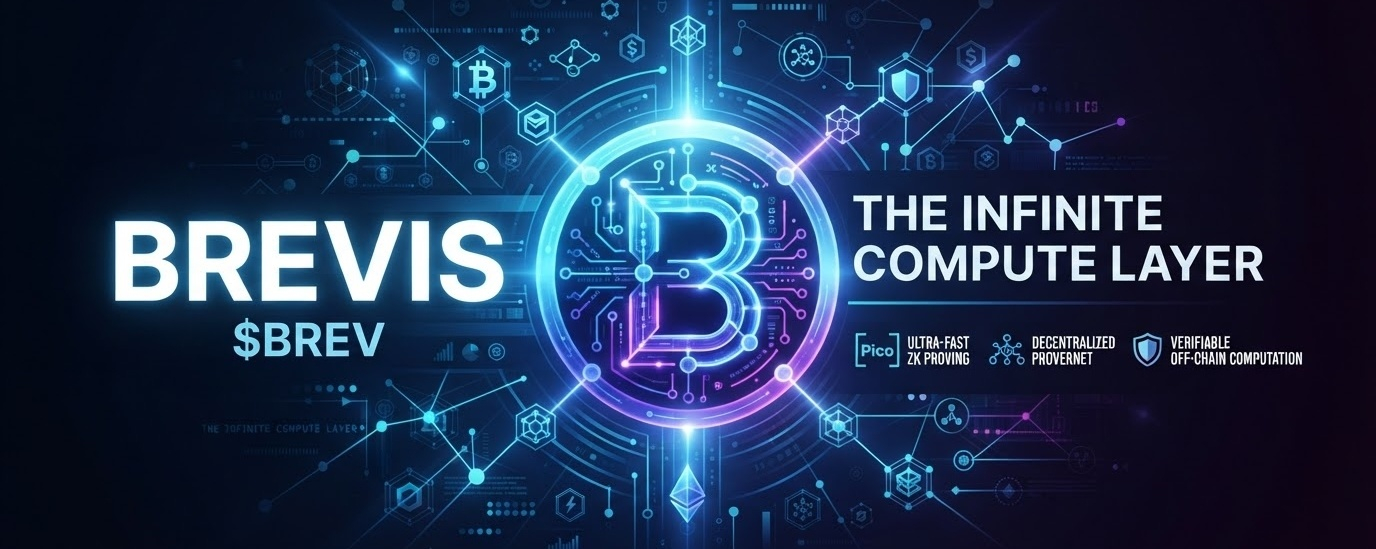
Meet Brevis ($BREV)—the Infinite Compute Layer allowing smart contracts to run complex computationsShort & Punchy (Best for X / Twitter or Threads)
Zero-Knowledge computing just got faster. ⚡Meet Brevis ($BREV )—the Infinite Compute Layer allowing smart contracts to run complex computations off-chain and verify them on-chain using ZK proofs at a fraction of the cost.🔹 Pico zkVM: Near real-time Ethereum proving🔹 ProverNet: Decentralized ZK proof marketplace🔹 Brevis Vera: Open-source media & image verification
Backed by Polychain Capital & YZi Labs, $BREV powers fees, staking, and governance across the ecosystem.
#DeFi
Option 2: Educational & Detailed (Best for LinkedIn, Facebook, or Telegram)
Why Verifiable Off-Chain Compute Matters in Web3 🌐Blockchains are secure, but running heavy data queries or complex logic directly on-chain is slow and expensive. That’s where Brevis ($BREV) comes in.Brevis is building an Infinite Compute Layer—an open, decentralized network that executes heavy computations off-chain and proves their validity on-chain via Zero-Knowledge (ZK) proofs.Key Highlights of the Brevis Ecosystem:
✅ Pico zkVM & Prism 2.0: Engineered for ultra-fast, near real-time Ethereum proving.
✅ ProverNet Mainnet: A decentralized marketplace where provers stake $BREV to generate and verify ZK proofs.
✅ Brevis Vera: An open-source cryptographic verification system tackling media and image authenticity.
✅ Token Utility: $BREV serves as the core payment medium for protocol service fees, prover staking collateral, and network governance (250M circulating / 1B max supply).With backing from major VCs like Polychain Capital, HashKey Capital, and YZi Labs, Brevis is positioning itself as foundational infrastructure for data-driven DeFi and AI verification.#brevis s #CryptoNewss #Zeroknowle dge #BlockchainTech #DeP
IN #Altcoins
Option 3: Market & Trader Focus (Best for Binance Square or Crypto Channels)
📊 Project Spotlight: Brevis ($BREV)Looking at ZK & Decentralized Compute infrastructure? Here’s a quick breakdown of Brevis ($BREV):💡 What it does: Off-chain verifiable compute powered by Zero-Knowledge proofs (Pico zkVM + ProverNet).💰 Tokenomics: 250M Circulating Supply | 1B Max Supply📈 Market Context: Currently trading around the ~$0.057–$0.065 range (~$14M–$20M Market Cap), well off its ~$0.56 ATH—giving it a low-cap infrastructure profile.
Meet Brevis ($BREV)—the Infinite Compute Layer allowing smart contracts to run complex computations
Short & Punchy (Best for X / Twitter or Threads)
Zero-Knowledge computing just got faster. ⚡Meet Brevis ($BREV )—the Infinite Compute Layer allowing smart contracts to run complex computations off-chain and verify them on-chain using ZK proofs at a fraction of the cost.🔹 Pico zkVM: Near real-time Ethereum proving🔹 ProverNet: Decentralized ZK proof marketplace🔹 Brevis Vera: Open-source media & image verification
Backed by Polychain Capital & YZi Labs, $BREV powers fees, staking, and governance across the ecosystem.
#DeFi
Option 2: Educational & Detailed (Best for LinkedIn, Facebook, or Telegram)
Why Verifiable Off-Chain Compute Matters in Web3 🌐Blockchains are secure, but running heavy data queries or complex logic directly on-chain is slow and expensive. That’s where Brevis ($BREV ) comes in.Brevis is building an Infinite Compute Layer—an open, decentralized network that executes heavy computations off-chain and proves their validity on-chain via Zero-Knowledge (ZK) proofs.Key Highlights of the Brevis Ecosystem:
✅ Pico zkVM & Prism 2.0: Engineered for ultra-fast, near real-time Ethereum proving.
✅ ProverNet Mainnet: A decentralized marketplace where provers stake $BREV to generate and verify ZK proofs.
✅ Brevis Vera: An open-source cryptographic verification system tackling media and image authenticity.
✅ Token Utility: $BREV serves as the core payment medium for protocol service fees, prover staking collateral, and network governance (250M circulating / 1B max supply).With backing from major VCs like Polychain Capital, HashKey Capital, and YZi Labs, Brevis is positioning itself as foundational infrastructure for data-driven DeFi and AI verification.#brevis s #CryptoNewss #Zeroknowle dge #BlockchainTech #DeP
IN #Altcoins
Option 3: Market & Trader Focus (Best for Binance Square or Crypto Channels)
📊 Project Spotlight: Brevis ($BREV )Looking at ZK & Decentralized Compute infrastructure? Here’s a quick breakdown of Brevis ($BREV ):💡 What it does: Off-chain verifiable compute powered by Zero-Knowledge proofs (Pico zkVM + ProverNet).💰 Tokenomics: 250M Circulating Supply | 1B Max Supply📈 Market Context: Currently trading around the ~$0.057–$0.065 range (~$14M–$20M Market Cap), well off its ~$0.56 ATH—giving it a low-cap infrastructure profile.
1
319


·
--
#bedrock $BR $BTC Everyone is celebrating yield.
That’s exactly why I’m paying attention to Bedrock.
The popular narrative says crypto's future is simple:
Stake your assets.
Earn rewards.
Wait.
Sounds great.
But what if that model is already outdated?
What if the biggest inefficiency in crypto isn't low yield...
It's trapped liquidity?
Think about it.
Billions of dollars are locked across staking ecosystems. Capital earns rewards, but loses flexibility. Opportunity appears elsewhere, and users are forced to choose between yield and mobility.
That's a hidden tax few people talk about.
Bedrock (BR) takes the opposite approach.
Instead of asking users to sacrifice liquidity for rewards, it combines multi-asset liquid restaking across Ethereum, Bitcoin, and DePIN ecosystems.
The result?
Capital can potentially earn while still remaining active.
That sounds subtle.
It's not.
Historically, markets reward systems that increase capital efficiency. The winners aren't always the platforms offering the highest yields. They're often the ones that make every dollar work harder.
That's why I think many investors are looking at Bedrock through the wrong lens.
They're asking:
"How much yield can it generate?"
The better question is:
"How much idle capital can it unlock?"
Big difference.
One measures rewards.
The other measures efficiency.
And efficiency tends to scale.
Maybe Bedrock becomes a major pillar of the restaking economy.
Maybe it doesn't.
But while everyone debates APYs, the more interesting story may be unfolding underneath:
The transformation of staking from a capital lockup mechanism into a capital optimization layer.
That's a narrative worth watching.
#Bedrock #BR #Crypto #DeFi #Restaking #Ethereum #Bitcoin #Web3 #Blockchain #DEP $BTC
1
88
Войдите, чтобы посмотреть больше материала
Присоединяйтесь к пользователям криптовалют по всему миру на Binance Square
⚡️ Получайте новейшую и полезную информацию о криптоактивах.
💬 Нам доверяет крупнейшая в мире криптобиржа.
👍 Получите достоверные аналитические данные от верифицированных создателей контента.
Эл. почта/номер телефона
В тренде
1
#NvidiaBeatsEstimatesWith$130BQ4Outlook
Просмотров: 1,772
40 обсуждают
2
#AnthropicIPOPriceCouldExceed$80
Просмотров: 3,887
51 обсуждают
3
#CanNvidia’sDataCenterGrowthContinue?
Просмотров: 8,049
182 обсуждают
4
#DBSAndCirclePartnerToExpandAsianInstitutionsUSDCAccess
Просмотров: 163
4 обсуждают
5
#NvidiaBoardNotConsideringHuang’sReturnasCEO
Просмотров: 160,778
1,211 обсуждают
6
#KOSPIFalls2.59%ToLowestCloseSinceFebruary
Просмотров: 43,399
484 обсуждают
7
#AnthropicClearedToListOnNasdaqAsANT
Просмотров: 37,752
385 обсуждают
8
#WhatInvestmentSignalsDo13FFilingsReveal?
Просмотров: 86,921
792 обсуждают
9
#TetherCapitalMakesStrategicInvestmentInStables
Просмотров: 21,487
204 обсуждают
10
#EvernorthRecords$505MImpairmentOnPreListingXRP
Просмотров: 2,531
28 обсуждают