
#cryptonewswithjack
cryptonewswithjack
Просмотров: 444,177
757 обсуждают
Популярные
Новые


The US House Ways and Means Committee will review a broad digital asset tax package that excludes a key proposal sought by crypto miners and stakers.
The 114-page Digital Asset Tax Certainty Act, H.R. 10357, does not include a provision that would delay taxes on newly created tokens until they are sold. The committee published the bill Monday ahead of a markup scheduled for Wednesday.
That approach differs from the Tax Clarity for Mining and Staking Act, which Representative Mike Carey introduced in June. His proposal would allow taxpayers to decide when to recognize mining and staking rewards as income.
One option would tax tokens when they are received. The other would treat them more like property created by the taxpayer, with tax due upon sale.
Leaving that provision out means staking and mining rewards would generally remain taxable once recipients receive or control them.
This could create a tax obligation before recipients convert the tokens into cash.
Industry groups have pushed Congress to change that treatment. The Blockchain Association, Crypto Council for Innovation and Digital Chamber previously backed Carey’s legislation as introduced.
They argued that taxing rewards before a sale can create liquidity difficulties for miners and stakers. The groups also opposed a proposed amendment that would have capped the tax deferral period at five years.
#CryptonewswithJack
The US House Ways and Means Committee will review a broad digital asset tax package that excludes a key proposal sought by crypto miners and stakers.
The 114-page Digital Asset Tax Certainty Act, H.R. 10357, does not include a provision that would delay taxes on newly created tokens until they are sold. The committee published the bill Monday ahead of a markup scheduled for Wednesday.
That approach differs from the Tax Clarity for Mining and Staking Act, which Representative Mike Carey introduced in June. His proposal would allow taxpayers to decide when to recognize mining and staking rewards as income.
One option would tax tokens when they are received. The other would treat them more like property created by the taxpayer, with tax due upon sale.
Leaving that provision out means staking and mining rewards would generally remain taxable once recipients receive or control them.
This could create a tax obligation before recipients convert the tokens into cash.
Industry groups have pushed Congress to change that treatment. The Blockchain Association, Crypto Council for Innovation and Digital Chamber previously backed Carey’s legislation as introduced.
They argued that taxing rewards before a sale can create liquidity difficulties for miners and stakers. The groups also opposed a proposed amendment that would have capped the tax deferral period at five years.
#CryptonewswithJack
The 114-page Digital Asset Tax Certainty Act, H.R. 10357, does not include a provision that would delay taxes on newly created tokens until they are sold. The committee published the bill Monday ahead of a markup scheduled for Wednesday.
That approach differs from the Tax Clarity for Mining and Staking Act, which Representative Mike Carey introduced in June. His proposal would allow taxpayers to decide when to recognize mining and staking rewards as income.
One option would tax tokens when they are received. The other would treat them more like property created by the taxpayer, with tax due upon sale.
Leaving that provision out means staking and mining rewards would generally remain taxable once recipients receive or control them.
This could create a tax obligation before recipients convert the tokens into cash.
Industry groups have pushed Congress to change that treatment. The Blockchain Association, Crypto Council for Innovation and Digital Chamber previously backed Carey’s legislation as introduced.
They argued that taxing rewards before a sale can create liquidity difficulties for miners and stakers. The groups also opposed a proposed amendment that would have capped the tax deferral period at five years.
#CryptonewswithJack
92

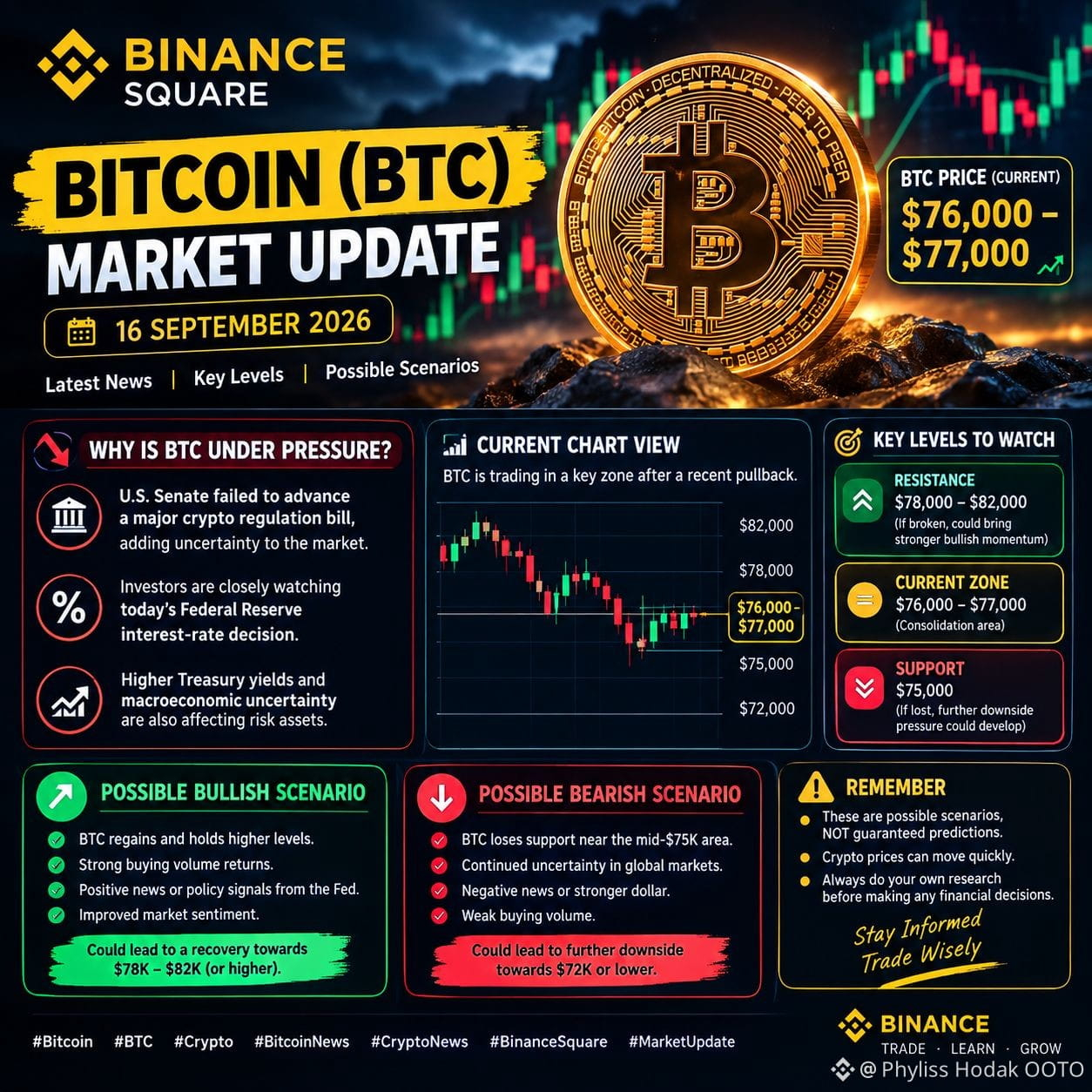
#BTC 🚨 Bitcoin (BTC) Market Update — 16 September 2026
Bitcoin is currently trading around the $76K–$77K area after a sharp recent pullback.
📉 Why is BTC under pressure? • U.S. Senate failed to advance a major crypto regulation bill, adding uncertainty to the market. • Investors are closely watching today’s Federal Reserve interest-rate decision. • Higher Treasury yields and macroeconomic uncertainty are also affecting risk assets.
📊 What to watch next?
🟢 If BTC regains and holds higher levels with strong buying volume, market sentiment could improve.
🔴 If BTC loses important support around the mid-$75K area, further downside pressure could develop.
⚠️ These are possible scenarios, NOT guaranteed predictions. Crypto prices can move quickly, so always do your own research before making financial decisions.
#bitcoin #BTC #BitcoinNews #CryptonewswithJack
{spot}(BTCUSDT)
#BTC 🚨 Bitcoin (BTC) Market Update — 16 September 2026
Bitcoin is currently trading around the $76K–$77K area after a sharp recent pullback.
📉 Why is BTC under pressure? • U.S. Senate failed to advance a major crypto regulation bill, adding uncertainty to the market. • Investors are closely watching today’s Federal Reserve interest-rate decision. • Higher Treasury yields and macroeconomic uncertainty are also affecting risk assets.
📊 What to watch next?
🟢 If BTC regains and holds higher levels with strong buying volume, market sentiment could improve.
🔴 If BTC loses important support around the mid-$75K area, further downside pressure could develop.
⚠️ These are possible scenarios, NOT guaranteed predictions. Crypto prices can move quickly, so always do your own research before making financial decisions.
#bitcoin #BTC #BitcoinNews #CryptonewswithJack
Bitcoin is currently trading around the $76K–$77K area after a sharp recent pullback.
📉 Why is BTC under pressure? • U.S. Senate failed to advance a major crypto regulation bill, adding uncertainty to the market. • Investors are closely watching today’s Federal Reserve interest-rate decision. • Higher Treasury yields and macroeconomic uncertainty are also affecting risk assets.
📊 What to watch next?
🟢 If BTC regains and holds higher levels with strong buying volume, market sentiment could improve.
🔴 If BTC loses important support around the mid-$75K area, further downside pressure could develop.
⚠️ These are possible scenarios, NOT guaranteed predictions. Crypto prices can move quickly, so always do your own research before making financial decisions.
#bitcoin #BTC #BitcoinNews #CryptonewswithJack
58

·
--
Рост
🚨 Don’t Just Watch the Crypto Market — Understand It.
Crypto isn’t only about price charts and short-term moves. Understanding the fundamentals, news, regulations, and major market developments can help you see the bigger picture.
Here, I’ll be sharing:
📊 Crypto Fundamentals & Market Insights
📰 Important Crypto News & Updates
🏛️ Regulatory & Industry Developments
🔥 Major Market Events & Trends
💡 Useful Crypto Knowledge & Analysis
No unnecessary hype — just valuable information to help you better understand the crypto market.
If you want to stay informed and keep up with the developments that matter:
👉 Follow me on Binance Square and don’t miss the next update. 🚀
Stay informed. Stay ahead. 📈
#Crypto_Jobs🎯 #CryptonewswithJack #CryptoFundamentals #BinanceSquareFamily #CryptoUpdates
🚨 Don’t Just Watch the Crypto Market — Understand It.
Crypto isn’t only about price charts and short-term moves. Understanding the fundamentals, news, regulations, and major market developments can help you see the bigger picture.
Here, I’ll be sharing:
📊 Crypto Fundamentals & Market Insights
📰 Important Crypto News & Updates
🏛️ Regulatory & Industry Developments
🔥 Major Market Events & Trends
💡 Useful Crypto Knowledge & Analysis
No unnecessary hype — just valuable information to help you better understand the crypto market.
If you want to stay informed and keep up with the developments that matter:
👉 Follow me on Binance Square and don’t miss the next update. 🚀
Stay informed. Stay ahead. 📈
#Crypto_Jobs🎯 #CryptonewswithJack #CryptoFundamentals #BinanceSquareFamily #CryptoUpdates
Crypto isn’t only about price charts and short-term moves. Understanding the fundamentals, news, regulations, and major market developments can help you see the bigger picture.
Here, I’ll be sharing:
📊 Crypto Fundamentals & Market Insights
📰 Important Crypto News & Updates
🏛️ Regulatory & Industry Developments
🔥 Major Market Events & Trends
💡 Useful Crypto Knowledge & Analysis
No unnecessary hype — just valuable information to help you better understand the crypto market.
If you want to stay informed and keep up with the developments that matter:
👉 Follow me on Binance Square and don’t miss the next update. 🚀
Stay informed. Stay ahead. 📈
#Crypto_Jobs🎯 #CryptonewswithJack #CryptoFundamentals #BinanceSquareFamily #CryptoUpdates

46

·
--
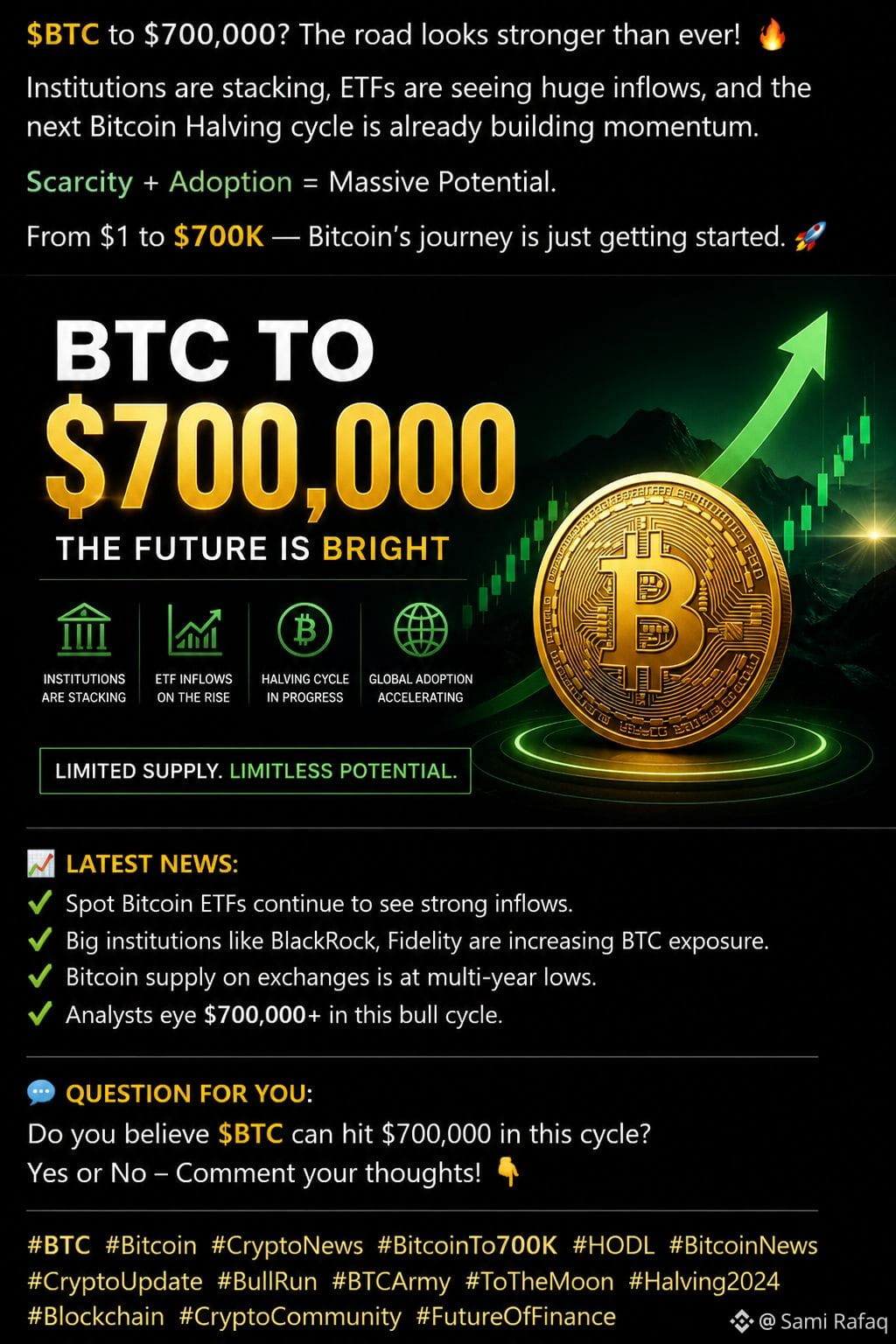
🔥 $BTC MARKET UPDATE — Can Bitcoin Reach $700K?
Bitcoin is trading around $77K–$78K, while bulls are still trying to push BTC back above the important $80K level.
📈 Bullish: BTC is holding above the $77K area and remains a major focus for crypto investors.
📉 Risk: Rising interest-rate expectations and recent ETF outflows are creating short-term pressure. �
Reuters +1
🚀 BIG QUESTION:
Can $BTC reach $700,000 in the next major bull cycle — or is $80K the next real battle?
👇 YES or NO? Drop your BTC target in the comments!
#BTC #Bitcoin #Crypto #BitcoinNews #BTCUpdate #CryptonewswithJack #CryptoCommunityLove #Bitcoin700K
{spot}(BTCUSDT)
🔥 $BTC MARKET UPDATE — Can Bitcoin Reach $700K?
Bitcoin is trading around $77K–$78K, while bulls are still trying to push BTC back above the important $80K level.
📈 Bullish: BTC is holding above the $77K area and remains a major focus for crypto investors.
📉 Risk: Rising interest-rate expectations and recent ETF outflows are creating short-term pressure. �
Reuters +1
🚀 BIG QUESTION:
Can $BTC reach $700,000 in the next major bull cycle — or is $80K the next real battle?
👇 YES or NO? Drop your BTC target in the comments!
#BTC #Bitcoin #Crypto #BitcoinNews #BTCUpdate #CryptonewswithJack #CryptoCommunityLove #Bitcoin700K
Bitcoin is trading around $77K–$78K, while bulls are still trying to push BTC back above the important $80K level.
📈 Bullish: BTC is holding above the $77K area and remains a major focus for crypto investors.
📉 Risk: Rising interest-rate expectations and recent ETF outflows are creating short-term pressure. �
Reuters +1
🚀 BIG QUESTION:
Can $BTC reach $700,000 in the next major bull cycle — or is $80K the next real battle?
👇 YES or NO? Drop your BTC target in the comments!
#BTC #Bitcoin #Crypto #BitcoinNews #BTCUpdate #CryptonewswithJack #CryptoCommunityLove #Bitcoin700K
44

·
--
🚨 U.S. CRYPTO REGULATION ALERT — CLARITY ACT UPDATED
The U.S. Senate has introduced changes to the Digital Asset Market Clarity Act ahead of a key vote next week.
🔹 The bill aims to define crypto market oversight more clearly
🔹 New language addresses when DeFi protocols may need to register
🔹 Bank Secrecy Act compliance is also part of the discussion
🔹 Stablecoin yields, prediction markets, and banking access remain debated
Why it matters: clearer rules could reduce uncertainty for exchanges, developers, institutions, and investors — but the bill still faces political hurdles.
📊 Do you think the CLARITY Act will pass?
DYOR. Not financial advice.
#CryptonewswithJack #Bitcoin❗ #Regulation #DeFiDominance #Stablecoins #BinanceSquare
🚨 U.S. CRYPTO REGULATION ALERT — CLARITY ACT UPDATED
The U.S. Senate has introduced changes to the Digital Asset Market Clarity Act ahead of a key vote next week.
🔹 The bill aims to define crypto market oversight more clearly
🔹 New language addresses when DeFi protocols may need to register
🔹 Bank Secrecy Act compliance is also part of the discussion
🔹 Stablecoin yields, prediction markets, and banking access remain debated
Why it matters: clearer rules could reduce uncertainty for exchanges, developers, institutions, and investors — but the bill still faces political hurdles.
📊 Do you think the CLARITY Act will pass?
DYOR. Not financial advice.
#CryptonewswithJack #Bitcoin❗ #Regulation #DeFiDominance #Stablecoins #BinanceSquare
The U.S. Senate has introduced changes to the Digital Asset Market Clarity Act ahead of a key vote next week.
🔹 The bill aims to define crypto market oversight more clearly
🔹 New language addresses when DeFi protocols may need to register
🔹 Bank Secrecy Act compliance is also part of the discussion
🔹 Stablecoin yields, prediction markets, and banking access remain debated
Why it matters: clearer rules could reduce uncertainty for exchanges, developers, institutions, and investors — but the bill still faces political hurdles.
📊 Do you think the CLARITY Act will pass?
DYOR. Not financial advice.
#CryptonewswithJack #Bitcoin❗ #Regulation #DeFiDominance #Stablecoins #BinanceSquare
1
73

Zcash Momentum Surges: Can ZEC Break the $1,290 Resistance? 🚀
Zcash is showing explosive upside power, trading at $1,204.50, reflecting an impressive multi-day rally. The market structure remains firmly Bullish as strong privacy-coin sector inflows and heavy volume drive continuous higher highs.
Key Support: $1,100.00
Key Resistance: $1,290.00
This sharp price appreciation is fueled by a massive surge in market interest and derivatives activity targeting decentralized privacy protocols. If buying pressure persists, a test of the major $1,290 ceiling is imminent.$ZEC
Can ZEC punch through resistance and set new yearly highs this week?
#zec #zcash #CryptonewswithJack #BinanceSquare #TechnicalAnalysisong
{spot}(ZECUSDT)
#Bullish #PrivacyCoins
Not financial advice.
Zcash Momentum Surges: Can ZEC Break the $1,290 Resistance? 🚀
Zcash is showing explosive upside power, trading at $1,204.50, reflecting an impressive multi-day rally. The market structure remains firmly Bullish as strong privacy-coin sector inflows and heavy volume drive continuous higher highs.
Key Support: $1,100.00
Key Resistance: $1,290.00
This sharp price appreciation is fueled by a massive surge in market interest and derivatives activity targeting decentralized privacy protocols. If buying pressure persists, a test of the major $1,290 ceiling is imminent.$ZEC
Can ZEC punch through resistance and set new yearly highs this week?
#zec #zcash #CryptonewswithJack #BinanceSquare #TechnicalAnalysisong
#Bullish #PrivacyCoins
Not financial advice.
Zcash is showing explosive upside power, trading at $1,204.50, reflecting an impressive multi-day rally. The market structure remains firmly Bullish as strong privacy-coin sector inflows and heavy volume drive continuous higher highs.
Key Support: $1,100.00
Key Resistance: $1,290.00
This sharp price appreciation is fueled by a massive surge in market interest and derivatives activity targeting decentralized privacy protocols. If buying pressure persists, a test of the major $1,290 ceiling is imminent.$ZEC
Can ZEC punch through resistance and set new yearly highs this week?
#zec #zcash #CryptonewswithJack #BinanceSquare #TechnicalAnalysisong
#Bullish #PrivacyCoins
Not financial advice.

160

Some crypto gainers really make you wonder: WHY are they going up? 🚨
$VTHO, $ANIME, and $ZEST have all attracted attention, but a sudden price pump does not automatically mean a project is strong.
Before buying any coin, look beyond the chart. Check the project’s utility, market cap, trading volume, exchange listings, tokenomics, and overall fundamentals.
A coin can pump because of hype, speculation, liquidity, or market activity — and that doesn’t guarantee the move will last.
These are my personal opinions, not financial advice.
Always DYOR — Do Your Own Research. 🔎
#Cryptocurrency #CryptonewswithJack #CryptoGainersAlert2026 #Altcoinseason2024 #CPIWatch
Some crypto gainers really make you wonder: WHY are they going up? 🚨
$VTHO, $ANIME, and $ZEST have all attracted attention, but a sudden price pump does not automatically mean a project is strong.
Before buying any coin, look beyond the chart. Check the project’s utility, market cap, trading volume, exchange listings, tokenomics, and overall fundamentals.
A coin can pump because of hype, speculation, liquidity, or market activity — and that doesn’t guarantee the move will last.
These are my personal opinions, not financial advice.
Always DYOR — Do Your Own Research. 🔎
#Cryptocurrency #CryptonewswithJack #CryptoGainersAlert2026 #Altcoinseason2024 #CPIWatch
$VTHO, $ANIME, and $ZEST have all attracted attention, but a sudden price pump does not automatically mean a project is strong.
Before buying any coin, look beyond the chart. Check the project’s utility, market cap, trading volume, exchange listings, tokenomics, and overall fundamentals.
A coin can pump because of hype, speculation, liquidity, or market activity — and that doesn’t guarantee the move will last.
These are my personal opinions, not financial advice.
Always DYOR — Do Your Own Research. 🔎
#Cryptocurrency #CryptonewswithJack #CryptoGainersAlert2026 #Altcoinseason2024 #CPIWatch

465

·
--
🚨 ZEC EXPLOSION! $1150+ AND STILL PUMPING! 🚨
While $BTC bleeds to $77K and $SOL struggles at $100,
ZEC is showing UNUSUAL STRENGTH! 💎🔥
📈 Market down -17%
📈 ZEC UP +25%
Privacy is the new narrative! 🔒
Are you still ignoring privacy coins? 👀
Disclaimer: Not financial advice
$ZEC
{spot}(ZECUSDT)
$XMR
{future}(XMRUSDT)
$TAO
{spot}(TAOUSDT)
#zec #zcash #PrivacyCoin #CryptonewswithJack #Binance
🚨 ZEC EXPLOSION! $1150+ AND STILL PUMPING! 🚨
While $BTC bleeds to $77K and $SOL struggles at $100,
ZEC is showing UNUSUAL STRENGTH! 💎🔥
📈 Market down -17%
📈 ZEC UP +25%
Privacy is the new narrative! 🔒
Are you still ignoring privacy coins? 👀
Disclaimer: Not financial advice
$ZEC
$XMR
$TAO
#zec #zcash #PrivacyCoin #CryptonewswithJack #Binance
While $BTC bleeds to $77K and $SOL struggles at $100,
ZEC is showing UNUSUAL STRENGTH! 💎🔥
📈 Market down -17%
📈 ZEC UP +25%
Privacy is the new narrative! 🔒
Are you still ignoring privacy coins? 👀
Disclaimer: Not financial advice
$ZEC
$XMR
$TAO
#zec #zcash #PrivacyCoin #CryptonewswithJack #Binance

1
1
355

·
--
🚨 Trump Has $1.4B+ in Crypto — And Now the U.S. Is Fighting Over Crypto Regulation 🇺🇸🚨 Trump Has $1.4B+ in Crypto — And Now the U.S. Is Fighting Over Crypto Regulation 🇺🇸
President Donald Trump has reportedly built a crypto fortune worth more than $1.4 billion, and now his administration is pushing Congress to establish a clearer regulatory framework for the U.S. digital-asset industry.
At the center of the debate is the CLARITY Act, a major crypto market-structure bill designed to clarify how digital assets are regulated and which agencies should oversee different parts of the market.
But there’s a major problem 👀
Democrats are demanding stronger ethics and conflict-of-interest protections. Their argument is simple: how can lawmakers create rules for an industry in which the president and his business interests have such significant financial exposure?
Meanwhile, Republicans want to move the legislation forward, arguing that clearer rules could provide more certainty for crypto investors, exchanges, startups, and entrepreneurs operating in the U.S.
⏳ Now the pressure is increasing.
Republicans want the bill passed.
Democrats want stronger safeguards.
The crypto industry is waiting for regulatory clarity.
If both sides manage to reach a compromise, the CLARITY Act could become one of the most significant pieces of crypto legislation in U.S. history, potentially reshaping how the industry operates for years to come.
🔥 But the big question remains:
Will Congress pass CLARITY — or will Trump’s massive crypto interests become the biggest political obstacle standing in its way?
#Crypto #Bitcoin #Trump #CLARITYAct #Cryptocurrency #Regulation #Blockchain #CryptonewswithJack #USAugustPPIRisesLessThanExpected #SECApprovesNasdaqTexasCommodityTrustRule #ECBRaisesRatesSecondTimeTo2.5%
🚨 Trump Has $1.4B+ in Crypto — And Now the U.S. Is Fighting Over Crypto Regulation 🇺🇸
🚨 Trump Has $1.4B+ in Crypto — And Now the U.S. Is Fighting Over Crypto Regulation 🇺🇸
President Donald Trump has reportedly built a crypto fortune worth more than $1.4 billion, and now his administration is pushing Congress to establish a clearer regulatory framework for the U.S. digital-asset industry.
At the center of the debate is the CLARITY Act, a major crypto market-structure bill designed to clarify how digital assets are regulated and which agencies should oversee different parts of the market.
But there’s a major problem 👀
Democrats are demanding stronger ethics and conflict-of-interest protections. Their argument is simple: how can lawmakers create rules for an industry in which the president and his business interests have such significant financial exposure?
Meanwhile, Republicans want to move the legislation forward, arguing that clearer rules could provide more certainty for crypto investors, exchanges, startups, and entrepreneurs operating in the U.S.
⏳ Now the pressure is increasing.
Republicans want the bill passed.
Democrats want stronger safeguards.
The crypto industry is waiting for regulatory clarity.
If both sides manage to reach a compromise, the CLARITY Act could become one of the most significant pieces of crypto legislation in U.S. history, potentially reshaping how the industry operates for years to come.
🔥 But the big question remains:
Will Congress pass CLARITY — or will Trump’s massive crypto interests become the biggest political obstacle standing in its way?
#Crypto #Bitcoin #Trump #CLARITYAct #Cryptocurrency #Regulation #Blockchain #CryptonewswithJack #USAugustPPIRisesLessThanExpected #SECApprovesNasdaqTexasCommodityTrustRule #ECBRaisesRatesSecondTimeTo2.5%
President Donald Trump has reportedly built a crypto fortune worth more than $1.4 billion, and now his administration is pushing Congress to establish a clearer regulatory framework for the U.S. digital-asset industry.
At the center of the debate is the CLARITY Act, a major crypto market-structure bill designed to clarify how digital assets are regulated and which agencies should oversee different parts of the market.
But there’s a major problem 👀
Democrats are demanding stronger ethics and conflict-of-interest protections. Their argument is simple: how can lawmakers create rules for an industry in which the president and his business interests have such significant financial exposure?
Meanwhile, Republicans want to move the legislation forward, arguing that clearer rules could provide more certainty for crypto investors, exchanges, startups, and entrepreneurs operating in the U.S.
⏳ Now the pressure is increasing.
Republicans want the bill passed.
Democrats want stronger safeguards.
The crypto industry is waiting for regulatory clarity.
If both sides manage to reach a compromise, the CLARITY Act could become one of the most significant pieces of crypto legislation in U.S. history, potentially reshaping how the industry operates for years to come.
🔥 But the big question remains:
Will Congress pass CLARITY — or will Trump’s massive crypto interests become the biggest political obstacle standing in its way?
#Crypto #Bitcoin #Trump #CLARITYAct #Cryptocurrency #Regulation #Blockchain #CryptonewswithJack #USAugustPPIRisesLessThanExpected #SECApprovesNasdaqTexasCommodityTrustRule #ECBRaisesRatesSecondTimeTo2.5%
29
Zcash ($ZEC
{spot}(ZECUSDT)
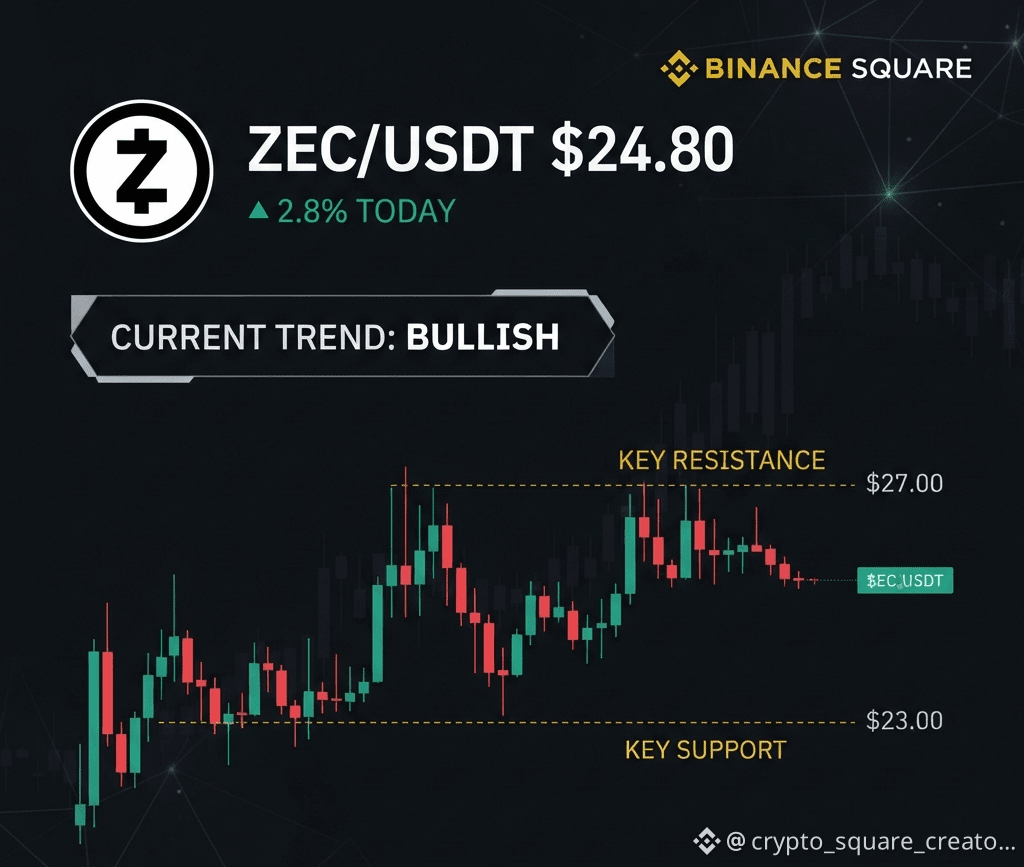
) Bulls Eye $27 Resistance: Can the Rally Hold? 🚀
Zcash is showing impressive momentum, trading at $24.80, reflecting a solid +2.8% gain today. The market structure is clearly Bullish, as price action consistently forms higher lows on the daily chart, signaling strong accumulation.
Key Support: $23.00
Key Resistance: $27.00
This positive movement is fueled by growing interest in privacy-focused assets and renewed market confidence. If buying pressure persists, a challenge of the $27.00 resistance level is highly probable. Breaking this level could open the door for further gains.
Can ZEC push through $27 and ignite a broader rally this week?
#ZEC #Zcash #CryptonewswithJack #BinanceSquare #TechnicalAnalysisCrypto #Bullish #PrivacyCoins
Not financial advice.
Zcash ($ZEC
) Bulls Eye $27 Resistance: Can the Rally Hold? 🚀
Zcash is showing impressive momentum, trading at $24.80, reflecting a solid +2.8% gain today. The market structure is clearly Bullish, as price action consistently forms higher lows on the daily chart, signaling strong accumulation.
Key Support: $23.00
Key Resistance: $27.00
This positive movement is fueled by growing interest in privacy-focused assets and renewed market confidence. If buying pressure persists, a challenge of the $27.00 resistance level is highly probable. Breaking this level could open the door for further gains.
Can ZEC push through $27 and ignite a broader rally this week?
#ZEC #Zcash #CryptonewswithJack #BinanceSquare #TechnicalAnalysisCrypto #Bullish #PrivacyCoins
Not financial advice.
) Bulls Eye $27 Resistance: Can the Rally Hold? 🚀
Zcash is showing impressive momentum, trading at $24.80, reflecting a solid +2.8% gain today. The market structure is clearly Bullish, as price action consistently forms higher lows on the daily chart, signaling strong accumulation.
Key Support: $23.00
Key Resistance: $27.00
This positive movement is fueled by growing interest in privacy-focused assets and renewed market confidence. If buying pressure persists, a challenge of the $27.00 resistance level is highly probable. Breaking this level could open the door for further gains.
Can ZEC push through $27 and ignite a broader rally this week?
#ZEC #Zcash #CryptonewswithJack #BinanceSquare #TechnicalAnalysisCrypto #Bullish #PrivacyCoins
Not financial advice.
321
·
--
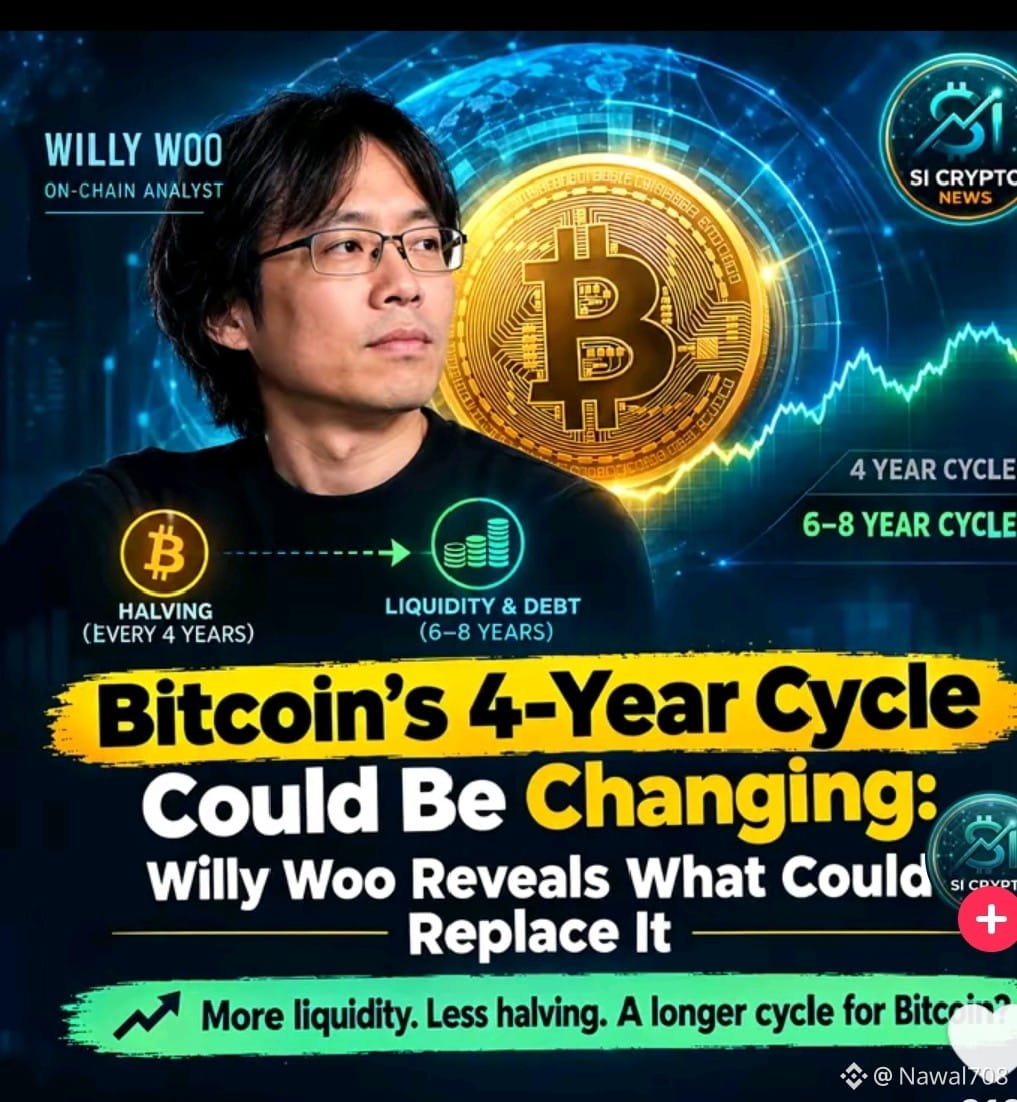
🚨 IS BITCOIN’S 4-YEAR CYCLE DEAD? WILLY WOO REVEALS WHAT COULD REPLACE IT
📉 1. The Problem: Halving Supply Shocks Are Fading
🏦 2. The Shift: M2 Liquidity & Debt Cycles Take Over
💡 The Core Takeaway🌊 More Liquidity: Traditional macro banking flows and central bank printing presses dictate the new market direction.📉 Less Halving Influence: Code-driven reward cuts take a structural back seat.⏳ Longer Cycles: Investors must prepare for extended accumulation phases and macro timelines.
#CryptonewswithJack #WillyWoo #blockchains #MacroEconomics #wep3
🚨 IS BITCOIN’S 4-YEAR CYCLE DEAD? WILLY WOO REVEALS WHAT COULD REPLACE IT
📉 1. The Problem: Halving Supply Shocks Are Fading
🏦 2. The Shift: M2 Liquidity & Debt Cycles Take Over
💡 The Core Takeaway🌊 More Liquidity: Traditional macro banking flows and central bank printing presses dictate the new market direction.📉 Less Halving Influence: Code-driven reward cuts take a structural back seat.⏳ Longer Cycles: Investors must prepare for extended accumulation phases and macro timelines.
#CryptonewswithJack #WillyWoo #blockchains #MacroEconomics #wep3
📉 1. The Problem: Halving Supply Shocks Are Fading
🏦 2. The Shift: M2 Liquidity & Debt Cycles Take Over
💡 The Core Takeaway🌊 More Liquidity: Traditional macro banking flows and central bank printing presses dictate the new market direction.📉 Less Halving Influence: Code-driven reward cuts take a structural back seat.⏳ Longer Cycles: Investors must prepare for extended accumulation phases and macro timelines.
#CryptonewswithJack #WillyWoo #blockchains #MacroEconomics #wep3
34

·
--
Падение
🚨US-Iran tensions escalated over the weekend.
Result $BTC dropped ~1%🧐
Oil crossed $93 Dollar Index rose
Why it matters👉Higher oil Higher inflation Fears fed rate cuts get delayed = Risk assets under pressure.
Crypto trades 24/7. It reacts first.
Stay updated. Manage your risk.
Trade responsibly on Binance👍
#BinanceSquareTalks #BTC☀ #CryptonewswithJack #USIran
#USIranTradeTankerStrikesEscalate
🚨US-Iran tensions escalated over the weekend.
Result $BTC dropped ~1%🧐
Oil crossed $93 Dollar Index rose
Why it matters👉Higher oil Higher inflation Fears fed rate cuts get delayed = Risk assets under pressure.
Crypto trades 24/7. It reacts first.
Stay updated. Manage your risk.
Trade responsibly on Binance👍
#BinanceSquareTalks #BTC☀ #CryptonewswithJack #USIran
#USIranTradeTankerStrikesEscalate
Result $BTC dropped ~1%🧐
Oil crossed $93 Dollar Index rose
Why it matters👉Higher oil Higher inflation Fears fed rate cuts get delayed = Risk assets under pressure.
Crypto trades 24/7. It reacts first.
Stay updated. Manage your risk.
Trade responsibly on Binance👍
#BinanceSquareTalks #BTC☀ #CryptonewswithJack #USIran
#USIranTradeTankerStrikesEscalate

1
82
Проверено
Статья
"US Government Could Seize XRP During Financial Crisis: Expert Warns"American media personality Alex Jones has warned that proposed changes to the financial system could eventually give governments greater control over privately held assets, including #XRP .
During a recent broadcast, Jones linked discussions surrounding centralized financial ledgers, bank bail-ins, and the mobilization of household savings to a broader concern about government intervention in private wealth. He suggested that regulators could eventually develop mechanisms to control citizens’ assets during a severe financial crisis.
Jones specifically raised the possibility that authorities could target digital assets such as XRP. He compared the potential scenario with the U.S. government’s restrictions on private gold ownership in 1933, arguing that digital assets could face similar intervention under extraordinary circumstances.
However, his comments have faced strong criticism from members of the XRP community, who argue that the claims lack supporting evidence.
XRP Community Challenges Jones’ Claims
XRP community figure Moon Lambo dismissed Jones’ warning as “conspiracy theory nonsense,” arguing that there is no established U.S. government plan to confiscate XRP.
According to Moon Lambo, forcibly taking XRP from American investors would undermine confidence in the digital-asset market and could trigger panic selling. He further argued that such a move could deprive the United States of a significant source of retail and institutional capital.
Moon Lambo also challenged Jones’ comparison with the 1933 gold restrictions. He pointed out that the U.S. operated under a gold-standard monetary system at the time, whereas the modern U.S. dollar is a fiat currency. Therefore, he argued, the government has no comparable monetary requirement to acquire XRP.
Aussie XRP likewise labeled Jones’ claim pure FUD, stressing that the government cannot simply confiscate XRP held in a self-custody wallet. Meanwhile, Jacob Metzger took a more evidence-focused position. He challenged Jones and others making similar claims to identify the specific law, policy, or government document that would authorize regulators to seize people’s XRP, homes, or bank accounts.
Self-Custody Remains a Key Point
Digital Ascension Group Chairman Jake Claver also questioned the timing of Jones’ comments, while an XRPL dUNL validator Vet emphasized that self-custodied XRP remains under the control of whoever possesses the corresponding private keys.
The validator also rejected the characterization of XRP as exclusively a “bank asset.” Instead, he noted that the XRP Ledger is open-source and available to anyone.
Furthermore, financial authorities such as the U.S. FDIC do not have an established legal framework that simply allows them to seize privately held digital assets. Similarly, claims about authorities intervening in Ripple’s locked XRP escrow holdings have faced legal scrutiny, with those escrows operating through predefined mechanisms rather than giving regulators direct control over privately held XRP.
Jones Clarifies His XRP Comments
Amid the backlash, Jones has since clarified that his concerns are focused more broadly on vulnerabilities within the financial system rather than on XRP itself.
Jones explained that viewers had initially asked whether governments could seize XRP during an extreme economic crisis. In response, he said his primary concern was the potential use of emergency government powers, including bank bail-ins, and whether authorities could target different forms of private wealth if the traditional financial system came under severe pressure.
As a result, his clarification shifts the focus from a specific prediction that the government will confiscate XRP to a broader warning about how emergency financial powers could affect private assets during a systemic crisis.
Despite the controversy, some XRP proponents believe Jones’ comments could ultimately benefit the asset by exposing it to a much larger audience. Jones has a massive following of roughly 4.4 million users on X, meaning his discussion of XRP reaches an audience far beyond the cryptocurrency community.
#CryptonewswithJack
"US Government Could Seize XRP During Financial Crisis: Expert Warns"
American media personality Alex Jones has warned that proposed changes to the financial system could eventually give governments greater control over privately held assets, including #XRP .
During a recent broadcast, Jones linked discussions surrounding centralized financial ledgers, bank bail-ins, and the mobilization of household savings to a broader concern about government intervention in private wealth. He suggested that regulators could eventually develop mechanisms to control citizens’ assets during a severe financial crisis.
Jones specifically raised the possibility that authorities could target digital assets such as XRP. He compared the potential scenario with the U.S. government’s restrictions on private gold ownership in 1933, arguing that digital assets could face similar intervention under extraordinary circumstances.
However, his comments have faced strong criticism from members of the XRP community, who argue that the claims lack supporting evidence.
XRP Community Challenges Jones’ Claims
XRP community figure Moon Lambo dismissed Jones’ warning as “conspiracy theory nonsense,” arguing that there is no established U.S. government plan to confiscate XRP.
According to Moon Lambo, forcibly taking XRP from American investors would undermine confidence in the digital-asset market and could trigger panic selling. He further argued that such a move could deprive the United States of a significant source of retail and institutional capital.
Moon Lambo also challenged Jones’ comparison with the 1933 gold restrictions. He pointed out that the U.S. operated under a gold-standard monetary system at the time, whereas the modern U.S. dollar is a fiat currency. Therefore, he argued, the government has no comparable monetary requirement to acquire XRP.
Aussie XRP likewise labeled Jones’ claim pure FUD, stressing that the government cannot simply confiscate XRP held in a self-custody wallet. Meanwhile, Jacob Metzger took a more evidence-focused position. He challenged Jones and others making similar claims to identify the specific law, policy, or government document that would authorize regulators to seize people’s XRP, homes, or bank accounts.
Self-Custody Remains a Key Point
Digital Ascension Group Chairman Jake Claver also questioned the timing of Jones’ comments, while an XRPL dUNL validator Vet emphasized that self-custodied XRP remains under the control of whoever possesses the corresponding private keys.
The validator also rejected the characterization of XRP as exclusively a “bank asset.” Instead, he noted that the XRP Ledger is open-source and available to anyone.
Furthermore, financial authorities such as the U.S. FDIC do not have an established legal framework that simply allows them to seize privately held digital assets. Similarly, claims about authorities intervening in Ripple’s locked XRP escrow holdings have faced legal scrutiny, with those escrows operating through predefined mechanisms rather than giving regulators direct control over privately held XRP.
Jones Clarifies His XRP Comments
Amid the backlash, Jones has since clarified that his concerns are focused more broadly on vulnerabilities within the financial system rather than on XRP itself.
Jones explained that viewers had initially asked whether governments could seize XRP during an extreme economic crisis. In response, he said his primary concern was the potential use of emergency government powers, including bank bail-ins, and whether authorities could target different forms of private wealth if the traditional financial system came under severe pressure.
As a result, his clarification shifts the focus from a specific prediction that the government will confiscate XRP to a broader warning about how emergency financial powers could affect private assets during a systemic crisis.
Despite the controversy, some XRP proponents believe Jones’ comments could ultimately benefit the asset by exposing it to a much larger audience. Jones has a massive following of roughly 4.4 million users on X, meaning his discussion of XRP reaches an audience far beyond the cryptocurrency community.
#CryptonewswithJack
During a recent broadcast, Jones linked discussions surrounding centralized financial ledgers, bank bail-ins, and the mobilization of household savings to a broader concern about government intervention in private wealth. He suggested that regulators could eventually develop mechanisms to control citizens’ assets during a severe financial crisis.
Jones specifically raised the possibility that authorities could target digital assets such as XRP. He compared the potential scenario with the U.S. government’s restrictions on private gold ownership in 1933, arguing that digital assets could face similar intervention under extraordinary circumstances.
However, his comments have faced strong criticism from members of the XRP community, who argue that the claims lack supporting evidence.
XRP Community Challenges Jones’ Claims
XRP community figure Moon Lambo dismissed Jones’ warning as “conspiracy theory nonsense,” arguing that there is no established U.S. government plan to confiscate XRP.
According to Moon Lambo, forcibly taking XRP from American investors would undermine confidence in the digital-asset market and could trigger panic selling. He further argued that such a move could deprive the United States of a significant source of retail and institutional capital.
Moon Lambo also challenged Jones’ comparison with the 1933 gold restrictions. He pointed out that the U.S. operated under a gold-standard monetary system at the time, whereas the modern U.S. dollar is a fiat currency. Therefore, he argued, the government has no comparable monetary requirement to acquire XRP.
Aussie XRP likewise labeled Jones’ claim pure FUD, stressing that the government cannot simply confiscate XRP held in a self-custody wallet. Meanwhile, Jacob Metzger took a more evidence-focused position. He challenged Jones and others making similar claims to identify the specific law, policy, or government document that would authorize regulators to seize people’s XRP, homes, or bank accounts.
Self-Custody Remains a Key Point
Digital Ascension Group Chairman Jake Claver also questioned the timing of Jones’ comments, while an XRPL dUNL validator Vet emphasized that self-custodied XRP remains under the control of whoever possesses the corresponding private keys.
The validator also rejected the characterization of XRP as exclusively a “bank asset.” Instead, he noted that the XRP Ledger is open-source and available to anyone.
Furthermore, financial authorities such as the U.S. FDIC do not have an established legal framework that simply allows them to seize privately held digital assets. Similarly, claims about authorities intervening in Ripple’s locked XRP escrow holdings have faced legal scrutiny, with those escrows operating through predefined mechanisms rather than giving regulators direct control over privately held XRP.
Jones Clarifies His XRP Comments
Amid the backlash, Jones has since clarified that his concerns are focused more broadly on vulnerabilities within the financial system rather than on XRP itself.
Jones explained that viewers had initially asked whether governments could seize XRP during an extreme economic crisis. In response, he said his primary concern was the potential use of emergency government powers, including bank bail-ins, and whether authorities could target different forms of private wealth if the traditional financial system came under severe pressure.
As a result, his clarification shifts the focus from a specific prediction that the government will confiscate XRP to a broader warning about how emergency financial powers could affect private assets during a systemic crisis.
Despite the controversy, some XRP proponents believe Jones’ comments could ultimately benefit the asset by exposing it to a much larger audience. Jones has a massive following of roughly 4.4 million users on X, meaning his discussion of XRP reaches an audience far beyond the cryptocurrency community.
#CryptonewswithJack
1
226
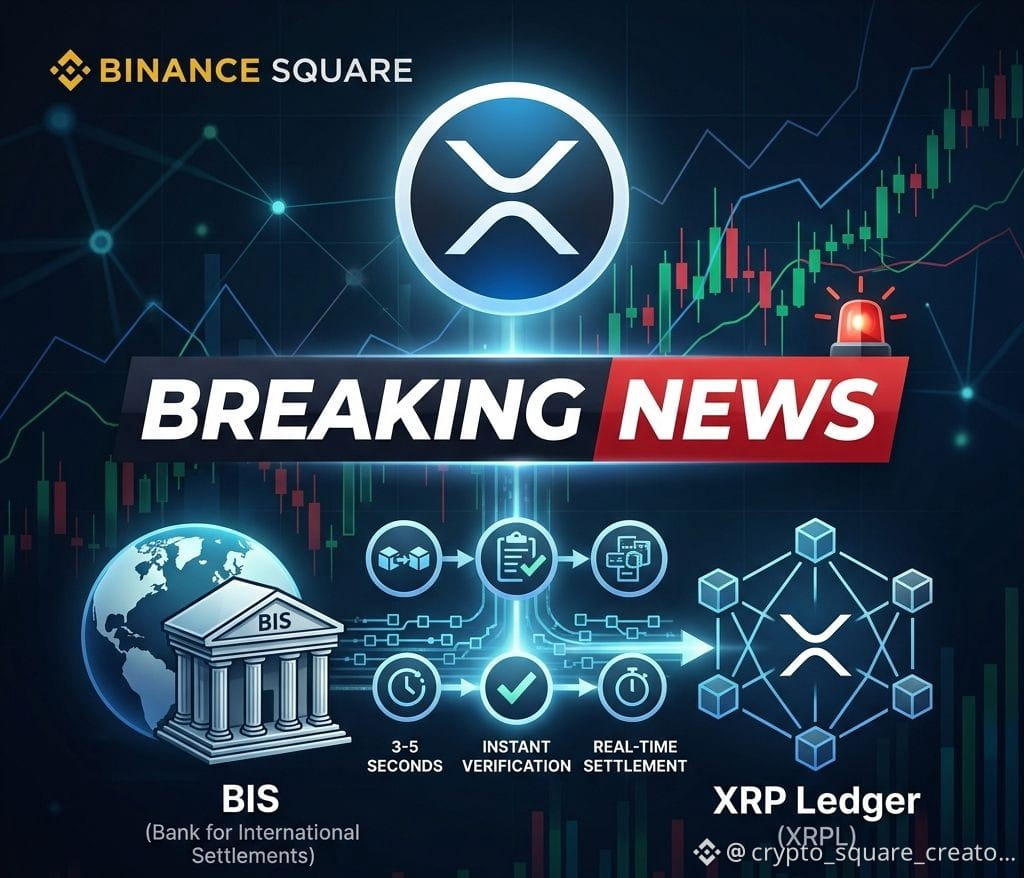
🚨 NEWS: XRP Secures Major Victory, BIS Adopts Ledger for Instant Verification
A massive win for $XRP! In a groundbreaking development, the Bank for International Settlements (BIS) has officially incorporated the XRP Ledger (XRPL) into its system. This isn't just news; it's a monumental shift. The XRPL will now be utilized for instantaneous, 3-5 second data verification, a crucial step in the BIS's ongoing efforts to enhance global financial infrastructure.
For crypto traders and investors, this is a pivotal moment. The inclusion of XRP by a top-tier global financial institution significantly bolsters its legitimacy. This verified use case directly addresses long-standing concerns about utility, positioning XRP as a key player in the future of cross-border settlements. This real-world adoption is a strong signal of growing confidence, potentially unlocking significant institutional interest. Not financial advice.
What are your thoughts on this major milestone for Ripple and the broader crypto market? Will this adoption pave the way for other financial institutions to embrace blockchain technology? Share your perspectives below.
Hashtags:$XRP
#XRPHACKED #Ripple #XRPL #CryptonewswithJack #FinancialInnovation #BIS #BlockchainAdoption
{spot}(XRPUSDT)
#InstitutionalInvesting
🚨 NEWS: XRP Secures Major Victory, BIS Adopts Ledger for Instant Verification
A massive win for $XRP ! In a groundbreaking development, the Bank for International Settlements (BIS) has officially incorporated the XRP Ledger (XRPL) into its system. This isn't just news; it's a monumental shift. The XRPL will now be utilized for instantaneous, 3-5 second data verification, a crucial step in the BIS's ongoing efforts to enhance global financial infrastructure.
For crypto traders and investors, this is a pivotal moment. The inclusion of XRP by a top-tier global financial institution significantly bolsters its legitimacy. This verified use case directly addresses long-standing concerns about utility, positioning XRP as a key player in the future of cross-border settlements. This real-world adoption is a strong signal of growing confidence, potentially unlocking significant institutional interest. Not financial advice.
What are your thoughts on this major milestone for Ripple and the broader crypto market? Will this adoption pave the way for other financial institutions to embrace blockchain technology? Share your perspectives below.
Hashtags:$XRP
#XRPHACKED #Ripple #XRPL #CryptonewswithJack #FinancialInnovation #BIS #BlockchainAdoption
#InstitutionalInvesting
A massive win for $XRP ! In a groundbreaking development, the Bank for International Settlements (BIS) has officially incorporated the XRP Ledger (XRPL) into its system. This isn't just news; it's a monumental shift. The XRPL will now be utilized for instantaneous, 3-5 second data verification, a crucial step in the BIS's ongoing efforts to enhance global financial infrastructure.
For crypto traders and investors, this is a pivotal moment. The inclusion of XRP by a top-tier global financial institution significantly bolsters its legitimacy. This verified use case directly addresses long-standing concerns about utility, positioning XRP as a key player in the future of cross-border settlements. This real-world adoption is a strong signal of growing confidence, potentially unlocking significant institutional interest. Not financial advice.
What are your thoughts on this major milestone for Ripple and the broader crypto market? Will this adoption pave the way for other financial institutions to embrace blockchain technology? Share your perspectives below.
Hashtags:$XRP
#XRPHACKED #Ripple #XRPL #CryptonewswithJack #FinancialInnovation #BIS #BlockchainAdoption
#InstitutionalInvesting
86

·
--
🚀 Elon Musk: The Ultimate Crypto Market Mover? 🌌
Whenever Elon Musk tweets, the crypto market listens! From driving massive rallies in Dogecoin ($DOGE) to integrating crypto discussions into X (formerly Twitter), his influence on the Web3 space is undeniable.
Love him or hate him, Elon continues to shape sentiment across Bitcoin, meme coins, and futuristic tech trends.
Key Takeaways on Musk’s Crypto Impact:
The Meme King: Single-handedly propelled Dogecoin into the mainstream spotlight.
Tech Visionary: Exploring payments, AI, and blockchain integration for future platforms.
Market Catalyst: A single statement can trigger major price action in minutes.
What’s your take on Elon Musk’s role in crypto? Is he a true visionary or just playing the hype game? Drop your thoughts below! 👇
#Binance #Crypto #ElonMusk #DOGE #Bitcoin #Web3 #CryptonewswithJack
🚀 Elon Musk: The Ultimate Crypto Market Mover? 🌌
Whenever Elon Musk tweets, the crypto market listens! From driving massive rallies in Dogecoin ($DOGE) to integrating crypto discussions into X (formerly Twitter), his influence on the Web3 space is undeniable.
Love him or hate him, Elon continues to shape sentiment across Bitcoin, meme coins, and futuristic tech trends.
Key Takeaways on Musk’s Crypto Impact:
The Meme King: Single-handedly propelled Dogecoin into the mainstream spotlight.
Tech Visionary: Exploring payments, AI, and blockchain integration for future platforms.
Market Catalyst: A single statement can trigger major price action in minutes.
What’s your take on Elon Musk’s role in crypto? Is he a true visionary or just playing the hype game? Drop your thoughts below! 👇
#Binance #Crypto #ElonMusk #DOGE #Bitcoin #Web3 #CryptonewswithJack
Whenever Elon Musk tweets, the crypto market listens! From driving massive rallies in Dogecoin ($DOGE) to integrating crypto discussions into X (formerly Twitter), his influence on the Web3 space is undeniable.
Love him or hate him, Elon continues to shape sentiment across Bitcoin, meme coins, and futuristic tech trends.
Key Takeaways on Musk’s Crypto Impact:
The Meme King: Single-handedly propelled Dogecoin into the mainstream spotlight.
Tech Visionary: Exploring payments, AI, and blockchain integration for future platforms.
Market Catalyst: A single statement can trigger major price action in minutes.
What’s your take on Elon Musk’s role in crypto? Is he a true visionary or just playing the hype game? Drop your thoughts below! 👇
#Binance #Crypto #ElonMusk #DOGE #Bitcoin #Web3 #CryptonewswithJack

1
4
256

🚀 TRAD TOKEN — TODAY UPDATE
$TRAD.US abhi traders ke radar par aa raha hai. Market mein overall crypto sentiment improve ho raha hai, aur Bitcoin bhi recent sessions mein strong recovery dikha raha hai.
📈 TRAD Outlook:
Agar buying volume increase hota hai aur resistance break hoti hai, to TRAD mein short-term upside move dekhne ko mil sakta hai.
🔥 Bullish scenario: Resistance breakout → higher levels
⚠️ Bearish scenario: Volume weak hua → pullback possible
Meri view: TRAD mein upside ka chance hai, lekin confirmation volume aur breakout ke baad hi strong mani jayegi.
#TRADToken #CryptoTrends2024 #Altcoins #CryptonewswithJack #Trading
🚀 TRAD TOKEN — TODAY UPDATE
$TRAD.US abhi traders ke radar par aa raha hai. Market mein overall crypto sentiment improve ho raha hai, aur Bitcoin bhi recent sessions mein strong recovery dikha raha hai.
📈 TRAD Outlook:
Agar buying volume increase hota hai aur resistance break hoti hai, to TRAD mein short-term upside move dekhne ko mil sakta hai.
🔥 Bullish scenario: Resistance breakout → higher levels
⚠️ Bearish scenario: Volume weak hua → pullback possible
Meri view: TRAD mein upside ka chance hai, lekin confirmation volume aur breakout ke baad hi strong mani jayegi.
#TRADToken #CryptoTrends2024 #Altcoins #CryptonewswithJack #Trading
$TRAD.US abhi traders ke radar par aa raha hai. Market mein overall crypto sentiment improve ho raha hai, aur Bitcoin bhi recent sessions mein strong recovery dikha raha hai.
📈 TRAD Outlook:
Agar buying volume increase hota hai aur resistance break hoti hai, to TRAD mein short-term upside move dekhne ko mil sakta hai.
🔥 Bullish scenario: Resistance breakout → higher levels
⚠️ Bearish scenario: Volume weak hua → pullback possible
Meri view: TRAD mein upside ka chance hai, lekin confirmation volume aur breakout ke baad hi strong mani jayegi.
#TRADToken #CryptoTrends2024 #Altcoins #CryptonewswithJack #Trading
TRADUS-0,19%
76

·
--
OpenReserve: Why a U.S. Banking Charter Could Be a Bigger Crypto Milestone Than It Looks
Crypto adoption becomes more meaningful when blockchain companies start moving into traditional financial infrastructure.
The latest development around OpenReserve is interesting because the U.S. Office of the Comptroller of the Currency has granted the blockchain-focused bank a provisional charter to operate.
At first glance, this may look like another regulatory approval. But the bigger story is the direction it represents.
A crypto-native institution receiving a path toward operating as a bank shows how blockchain and traditional finance are gradually moving closer together. Instead of building completely outside the financial system, companies are increasingly trying to bring blockchain technology directly into regulated infrastructure.
That could matter for stablecoins, digital assets, payments and institutional adoption.
The charter is still provisional, so execution and regulatory requirements remain important.
But the signal is clear: blockchain is slowly becoming part of the financial system, not simply an alternative to it.
$BTC $SUI $XRP
#Crypto #blockchains #OpenReserve #CryptonewswithJack #Stablecoins
OpenReserve: Why a U.S. Banking Charter Could Be a Bigger Crypto Milestone Than It Looks
Crypto adoption becomes more meaningful when blockchain companies start moving into traditional financial infrastructure.
The latest development around OpenReserve is interesting because the U.S. Office of the Comptroller of the Currency has granted the blockchain-focused bank a provisional charter to operate.
At first glance, this may look like another regulatory approval. But the bigger story is the direction it represents.
A crypto-native institution receiving a path toward operating as a bank shows how blockchain and traditional finance are gradually moving closer together. Instead of building completely outside the financial system, companies are increasingly trying to bring blockchain technology directly into regulated infrastructure.
That could matter for stablecoins, digital assets, payments and institutional adoption.
The charter is still provisional, so execution and regulatory requirements remain important.
But the signal is clear: blockchain is slowly becoming part of the financial system, not simply an alternative to it.
$BTC $SUI $XRP
#Crypto #blockchains #OpenReserve #CryptonewswithJack #Stablecoins
Crypto adoption becomes more meaningful when blockchain companies start moving into traditional financial infrastructure.
The latest development around OpenReserve is interesting because the U.S. Office of the Comptroller of the Currency has granted the blockchain-focused bank a provisional charter to operate.
At first glance, this may look like another regulatory approval. But the bigger story is the direction it represents.
A crypto-native institution receiving a path toward operating as a bank shows how blockchain and traditional finance are gradually moving closer together. Instead of building completely outside the financial system, companies are increasingly trying to bring blockchain technology directly into regulated infrastructure.
That could matter for stablecoins, digital assets, payments and institutional adoption.
The charter is still provisional, so execution and regulatory requirements remain important.
But the signal is clear: blockchain is slowly becoming part of the financial system, not simply an alternative to it.
$BTC $SUI $XRP
#Crypto #blockchains #OpenReserve #CryptonewswithJack #Stablecoins
153
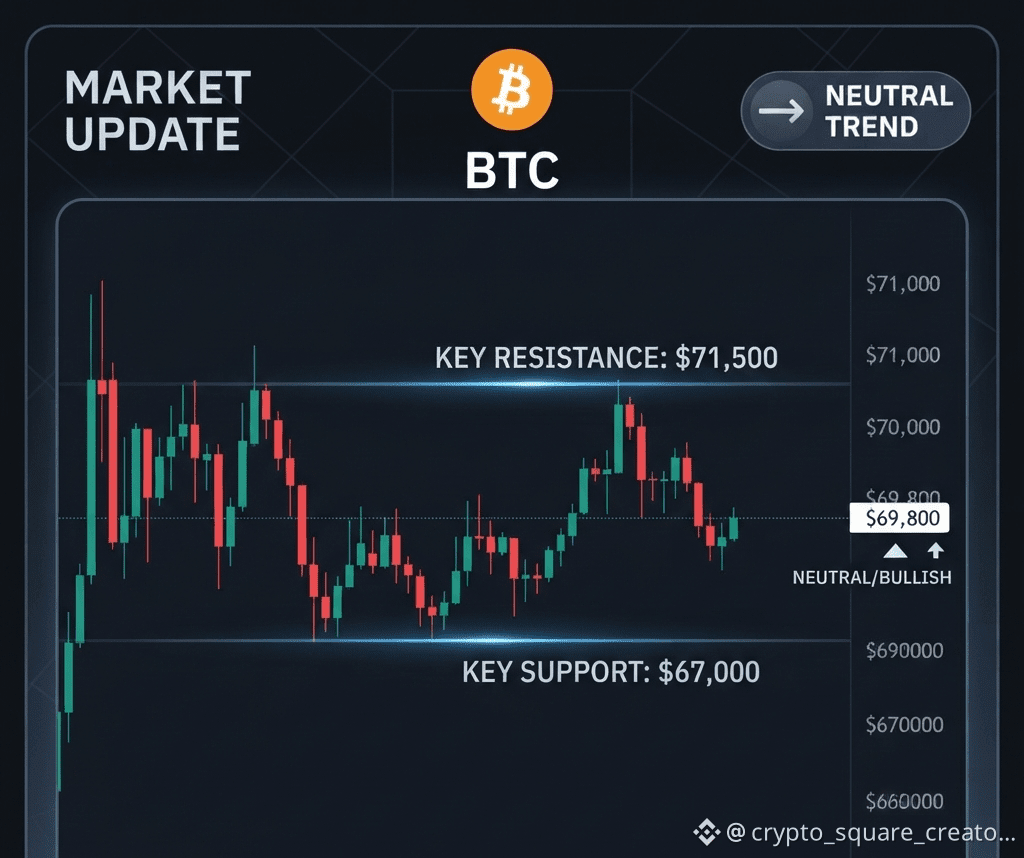
$BTC Headline: BTC Squeezed: Consolidation Continues!
Bitcoin (BTC) is currently trading around $69,800 as of May 29, 2024, holding steady inside a tight range. The overall market trend remains cautiously Neutral/Bullish while we wait for a decisive breakout.
Key technical levels to watch:
Resistance: $71,500
Support: $67,000
Price action is currently consolidating between these boundaries following recent ETF inflow volatility. Traders are closely monitoring macroeconomic cues for the next directional impulse.
Are you buying the dip or waiting for the breakout above resistance? Let us know below 👇$BTC
#Bitcoin #BTC突破7万大关 #CryptoAnalysis #BinanceSquareFamily #CryptonewswithJack
{spot}(BTCUSDT)
#Trading #InvestAware
Not financial advice.
$BTC Headline: BTC Squeezed: Consolidation Continues!
Bitcoin (BTC) is currently trading around $69,800 as of May 29, 2024, holding steady inside a tight range. The overall market trend remains cautiously Neutral/Bullish while we wait for a decisive breakout.
Key technical levels to watch:
Resistance: $71,500
Support: $67,000
Price action is currently consolidating between these boundaries following recent ETF inflow volatility. Traders are closely monitoring macroeconomic cues for the next directional impulse.
Are you buying the dip or waiting for the breakout above resistance? Let us know below 👇$BTC
#Bitcoin #BTC突破7万大关 #CryptoAnalysis #BinanceSquareFamily #CryptonewswithJack
#Trading #InvestAware
Not financial advice.
Bitcoin (BTC) is currently trading around $69,800 as of May 29, 2024, holding steady inside a tight range. The overall market trend remains cautiously Neutral/Bullish while we wait for a decisive breakout.
Key technical levels to watch:
Resistance: $71,500
Support: $67,000
Price action is currently consolidating between these boundaries following recent ETF inflow volatility. Traders are closely monitoring macroeconomic cues for the next directional impulse.
Are you buying the dip or waiting for the breakout above resistance? Let us know below 👇$BTC
#Bitcoin #BTC突破7万大关 #CryptoAnalysis #BinanceSquareFamily #CryptonewswithJack
#Trading #InvestAware
Not financial advice.
60

·
--
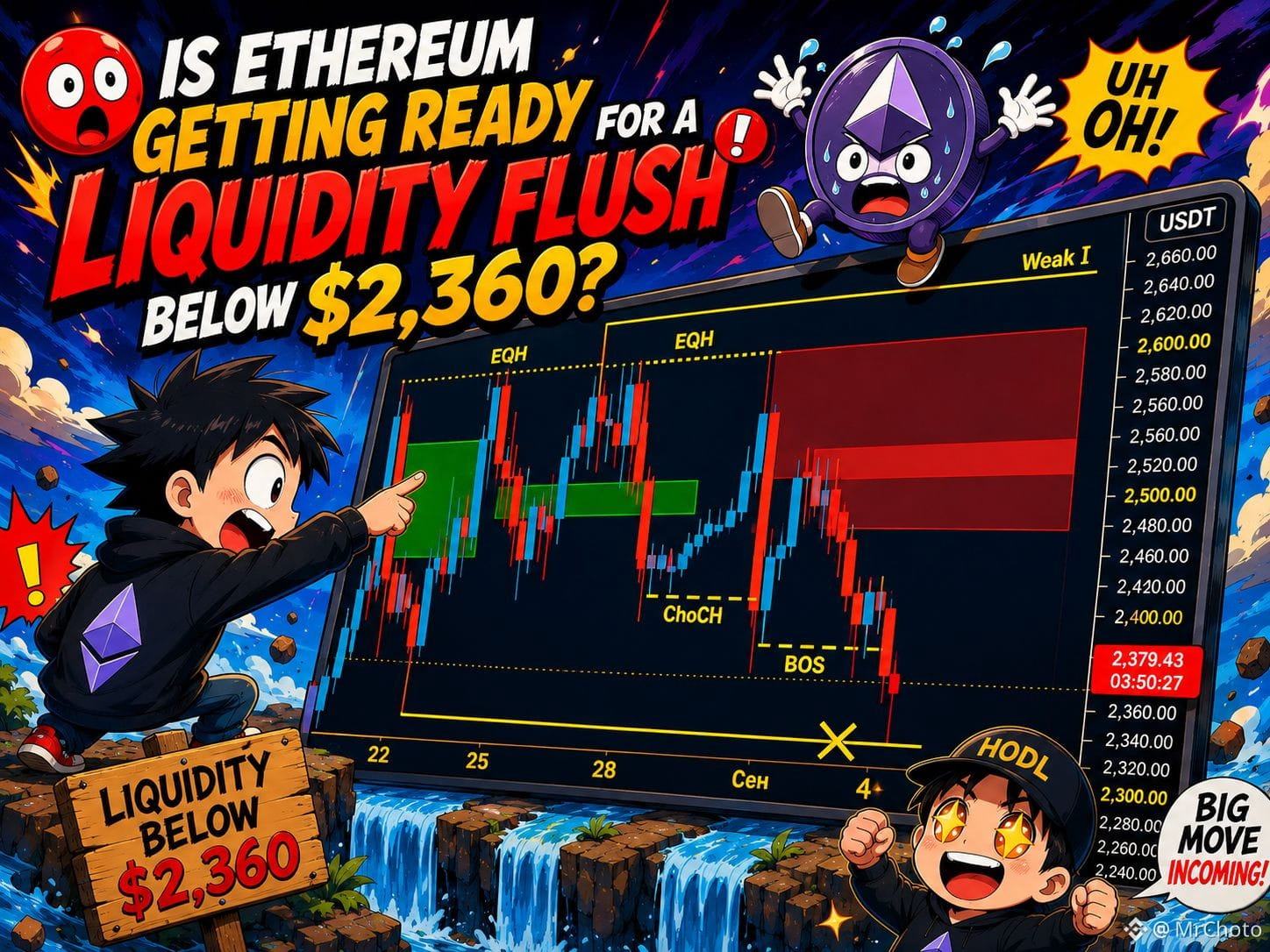
🔴 Is Ethereum Getting Ready for a Liquidity Flush Below $2,360? 🔴
Ethereum ($ETH) is displaying some classic signs of Smart Money distribution on the 4-hour chart! 📉
After hitting those Equal Highs (EQH) and reaching into the upper supply zone, ETH made a bold Change of Character (CHoCH) followed by a Break of Structure (BOS) downward.
📉 Key Levels to Keep an Eye On:
🧱. Resistance / Bearish Order Block: $2,480 – $2,530
🎯. Immediate Target: Liquidating late longs below $2,360
🧟. Macro Catalyst: Growing anxiety over rate hikes as we approach the upcoming FOMC & CPI releases
With macroeconomic challenges putting pressure on risk-on assets, will the $2,360 support line hold strong, or are we in for a deeper dive into September consolidation? 💣👇
#Ethereum #Ethereum #SmartMoneyConceptsCrypto #CryptonewswithJack #fomc
🔴 Is Ethereum Getting Ready for a Liquidity Flush Below $2,360? 🔴
Ethereum ($ETH) is displaying some classic signs of Smart Money distribution on the 4-hour chart! 📉
After hitting those Equal Highs (EQH) and reaching into the upper supply zone, ETH made a bold Change of Character (CHoCH) followed by a Break of Structure (BOS) downward.
📉 Key Levels to Keep an Eye On:
🧱. Resistance / Bearish Order Block: $2,480 – $2,530
🎯. Immediate Target: Liquidating late longs below $2,360
🧟. Macro Catalyst: Growing anxiety over rate hikes as we approach the upcoming FOMC & CPI releases
With macroeconomic challenges putting pressure on risk-on assets, will the $2,360 support line hold strong, or are we in for a deeper dive into September consolidation? 💣👇
#Ethereum #Ethereum #SmartMoneyConceptsCrypto #CryptonewswithJack #fomc
Ethereum ($ETH) is displaying some classic signs of Smart Money distribution on the 4-hour chart! 📉
After hitting those Equal Highs (EQH) and reaching into the upper supply zone, ETH made a bold Change of Character (CHoCH) followed by a Break of Structure (BOS) downward.
📉 Key Levels to Keep an Eye On:
🧱. Resistance / Bearish Order Block: $2,480 – $2,530
🎯. Immediate Target: Liquidating late longs below $2,360
🧟. Macro Catalyst: Growing anxiety over rate hikes as we approach the upcoming FOMC & CPI releases
With macroeconomic challenges putting pressure on risk-on assets, will the $2,360 support line hold strong, or are we in for a deeper dive into September consolidation? 💣👇
#Ethereum #Ethereum #SmartMoneyConceptsCrypto #CryptonewswithJack #fomc
309

·
--
Binance Market Update — 2 ستمبر 2026آج Crypto Market میں محتاط رجحان دیکھا جا رہا ہے۔ Bitcoin تقریباً $78,984 پر ہے اور گزشتہ 24 گھنٹوں میں معمولی اضافہ ہوا ہے، جبکہ Ethereum، BNB اور Solana دباؤ میں نظر آ رہے ہیں۔
🔹 Bitcoin (BTC): $78,984 | +0.22%
🔹 Ethereum (ETH): $2,481 | -0.79%
🔹 BNB: $692 | -0.96%
🔹 Solana (SOL): $103.72 | -1.87%
🔹 Total Crypto Market Cap: تقریباً $2.6T | -2.05%
📰 Binance News: Binance نے آج U.S. stocks اور ETF options کے لیے Stock Options سروس لانچ کرنے کا اعلان بھی کیا ہے۔
📌 Market Note: آج کا ڈیٹا mixed ہے، اس لیے مارکیٹ کی volatility پر نظر رکھنا اہم ہے۔
⚠️ Crypto market میں خطرہ موجود ہے۔ یہ پوسٹ صرف معلومات کے لیے ہے، مالیاتی مشورہ نہیں۔
#Binance #Crypto #Bitcoin #BTC #Ethereum #BNB #Solana #CryptonewswithJack
Binance Market Update — 2 ستمبر 2026
آج Crypto Market میں محتاط رجحان دیکھا جا رہا ہے۔ Bitcoin تقریباً $78,984 پر ہے اور گزشتہ 24 گھنٹوں میں معمولی اضافہ ہوا ہے، جبکہ Ethereum، BNB اور Solana دباؤ میں نظر آ رہے ہیں۔
🔹 Bitcoin (BTC): $78,984 | +0.22%
🔹 Ethereum (ETH): $2,481 | -0.79%
🔹 BNB: $692 | -0.96%
🔹 Solana (SOL): $103.72 | -1.87%
🔹 Total Crypto Market Cap: تقریباً $2.6T | -2.05%
📰 Binance News: Binance نے آج U.S. stocks اور ETF options کے لیے Stock Options سروس لانچ کرنے کا اعلان بھی کیا ہے۔
📌 Market Note: آج کا ڈیٹا mixed ہے، اس لیے مارکیٹ کی volatility پر نظر رکھنا اہم ہے۔
⚠️ Crypto market میں خطرہ موجود ہے۔ یہ پوسٹ صرف معلومات کے لیے ہے، مالیاتی مشورہ نہیں۔
#Binance #Crypto #Bitcoin #BTC #Ethereum #BNB #Solana #CryptonewswithJack
🔹 Bitcoin (BTC): $78,984 | +0.22%
🔹 Ethereum (ETH): $2,481 | -0.79%
🔹 BNB: $692 | -0.96%
🔹 Solana (SOL): $103.72 | -1.87%
🔹 Total Crypto Market Cap: تقریباً $2.6T | -2.05%
📰 Binance News: Binance نے آج U.S. stocks اور ETF options کے لیے Stock Options سروس لانچ کرنے کا اعلان بھی کیا ہے۔
📌 Market Note: آج کا ڈیٹا mixed ہے، اس لیے مارکیٹ کی volatility پر نظر رکھنا اہم ہے۔
⚠️ Crypto market میں خطرہ موجود ہے۔ یہ پوسٹ صرف معلومات کے لیے ہے، مالیاتی مشورہ نہیں۔
#Binance #Crypto #Bitcoin #BTC #Ethereum #BNB #Solana #CryptonewswithJack
74
Войдите, чтобы посмотреть больше материала
Присоединяйтесь к пользователям криптовалют по всему миру на Binance Square
⚡️ Получайте новейшую и полезную информацию о криптоактивах.
💬 Нам доверяет крупнейшая в мире криптобиржа.
👍 Получите достоверные аналитические данные от верифицированных создателей контента.
Эл. почта/номер телефона
В тренде
1
#HKMAPlansWholesaleCBDCByYearEnd
Просмотров: 509
72 обсуждают
2
#NEARSurges26%Past$3.45
Просмотров: 6,191
69 обсуждают
3
#BOJHikesRatesTo31YearHigh
Просмотров: 15,534
464 обсуждают
4
#ChainlinkPowersBottomlinePaymentPlatform
Просмотров: 19,177
479 обсуждают
5
#DtcpayCompletes$25MSeriesA
Просмотров: 413
22 обсуждают
6
#InjectiveLaunchesINJOnSolana
Просмотров: 1,739
85 обсуждают
7
#StellarActivatesProtocol28At211TPS
Просмотров: 26,413
599 обсуждают
8
#SECGrantsInnovationExemptionForTokenizedStocks
Просмотров: 21,688
464 обсуждают
9
#XRPGains3%AsRippleAddsMPPSupport
Просмотров: 19,626
361 обсуждают
10
#SPGlobalToAcquireOpenZeppelin
Просмотров: 10,884
226 обсуждают