
#alitcoin
alitcoin
Просмотров: 555
8 обсуждают
Популярные
Новые

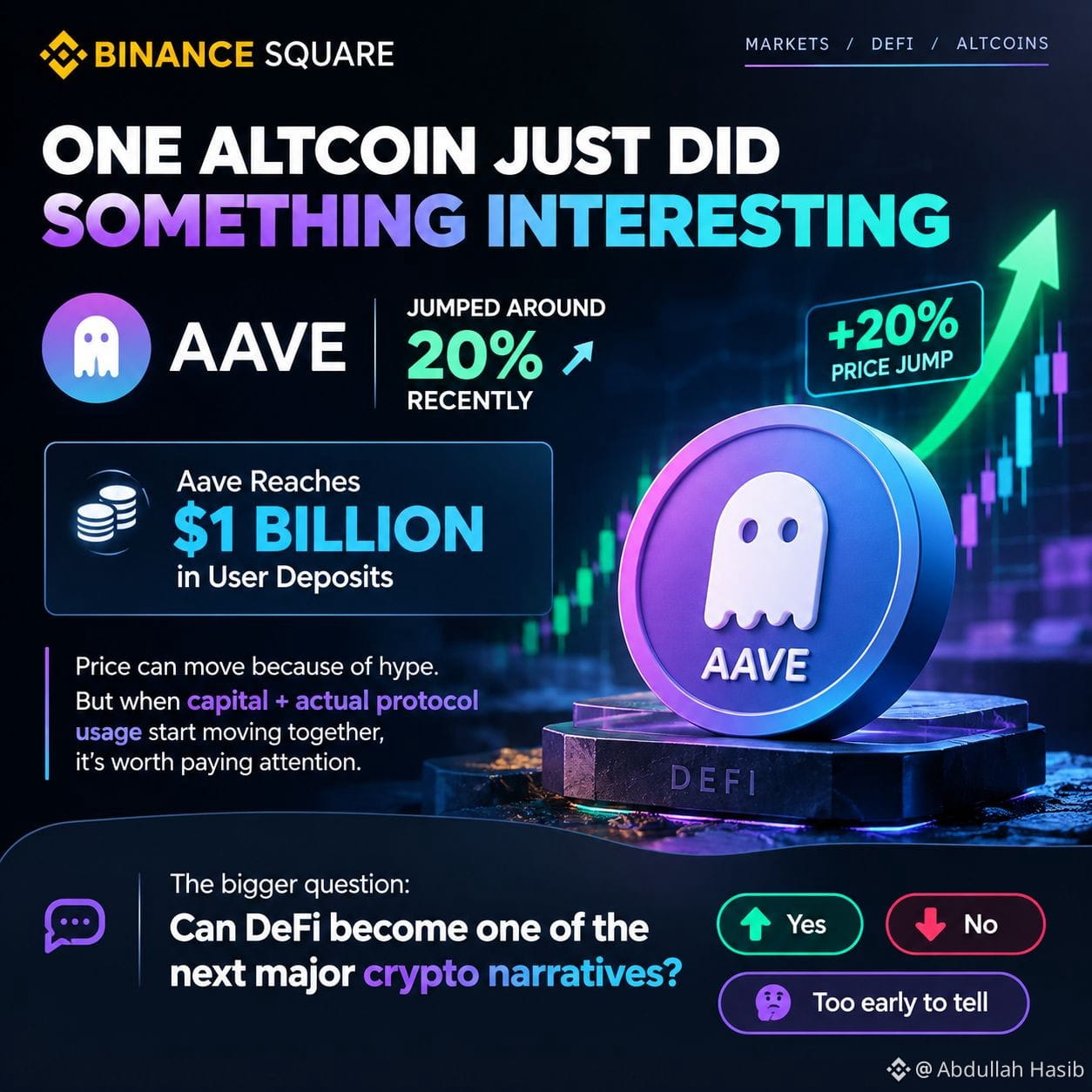
🚨 ONE ALTCOIN JUST DID SOMETHING INTERESTING
While much of the crypto market was cooling off, AAVE jumped around 20% recently. 👀
The move came as Aave reached a major milestone: $1 billion in user deposits.
That’s the part I find interesting.
Price can move because of hype.
But when capital + actual protocol usage start moving together, it’s worth paying attention.
The bigger question:
👉 Can DeFi become one of the next major crypto narratives?
🟢 Yes
🔴 No
👀 Too early to tell
#Crypto #alitcoin #defi
98

·
--
пока биток стоит в боковике ,самое время торговать альтами,главное не ниже 50 плеча,иначе как вы заработаете еще
#alitcoin
пока биток стоит в боковике ,самое время торговать альтами,главное не ниже 50 плеча,иначе как вы заработаете еще
#alitcoin
#alitcoin
62

·
--
Статья
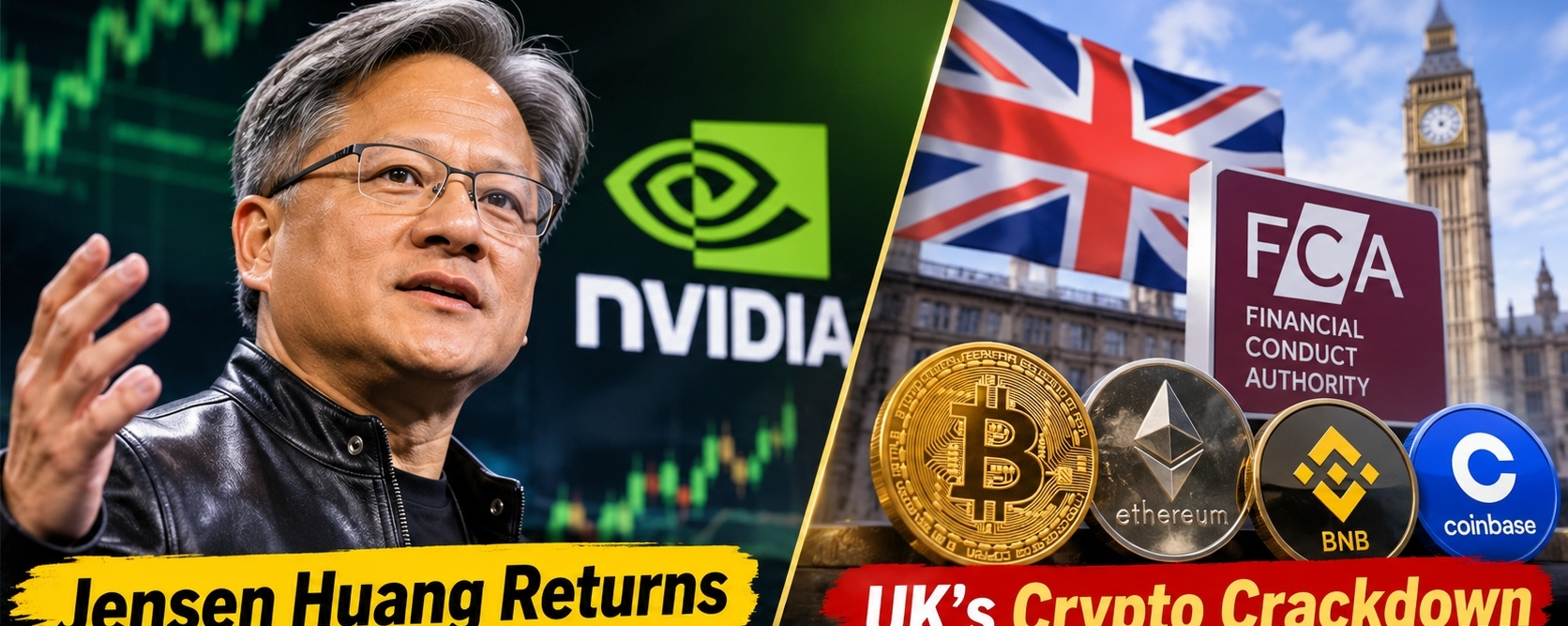
Jensen Huang Returns to Nvidia: Leadership Risks, UK Crypto Crackdown and What Investors Should WatcA company can dominate an industry, but what happens when its future appears too closely tied to one person? And what happens when the platform controlling a financial market also trades inside that market?
Nvidia and the UK crypto market are facing two different challenges, but both raise the same fundamental question: who holds the power, and how much protection do ordinary investors have?
These developments go beyond corporate headlines. They highlight the growing importance of leadership accountability, market transparency and government regulation in today's global financial system.
$NVDA : Is Jensen Huang Too Important to Replace?
Nvidia CEO and co-founder Jensen Huang has returned to the company just 11 days after stepping down amid reports concerning multiple personal relationships, including allegations involving a Chinese businesswoman suspected of having links to Beijing.
Following his departure, CFO Colette Kress served as interim CEO. However, Nvidia's board reinstated Huang on November 23, reportedly after consulting senior US government officials about potential national security concerns.
President Donald Trump also confirmed to CNBC that he had played a role in securing Huang's return.
The political dimension matters. Nvidia is no longer just another semiconductor company. Its chips power much of the infrastructure behind artificial intelligence, cloud computing and advanced data centres.
For Washington, Nvidia is also a strategic asset in the competition for technological leadership.
That explains why Huang's return attracted such attention from investors and policymakers.
But his first meeting with employees after returning raised another important issue.
According to CNBC, Huang apologised to employees, acknowledged that he had let them down and thanked Colette Kress for taking over during his absence.
He also argued that Nvidia did not need a traditional succession plan because several capable executives already manage different parts of the business.
His reasoning was that a formal succession structure could create unnecessary corporate hierarchy.
I see this differently from a long-term investor's perspective.
A strong CEO is an asset. But a company that cannot function smoothly without its founder carries an additional risk.
Succession planning is not about replacing a successful leader. It is about ensuring business continuity if that leader suddenly becomes unavailable.
For a company as strategically important as Nvidia, that should be a basic part of corporate governance.
The board must also demonstrate that its decisions are based on shareholders' interests, national security and corporate accountability—not simply political pressure or short-term market sentiment.
Nvidia's next challenge is therefore bigger than restoring confidence in Huang. It must show that its leadership structure is strong enough to protect the company beyond any single individual.
UK Targets Crypto Exchanges: A New Era for Market Transparency?
While Nvidia faces questions about corporate leadership, the UK is addressing a different problem: whether crypto exchanges should be allowed to act as market makers on their own trading platforms.
The proposed regulatory approach aims to prevent conflicts of interest.
The concern is straightforward.
An exchange operates the trading platform, has access to information about customer orders and may also trade using its own capital.
That creates a potential advantage over ordinary traders.
Imagine an exchange that knows where large buy and sell orders are concentrated. If it also trades for its own account, investors may question whether customer information is being used fairly.
This is known as a conflict of interest.
The UK's Financial Conduct Authority (FCA) wants stronger safeguards to separate exchange operations from trading activities and protect customers from unfair practices.
Importantly, this does not mean all market-making activity will disappear. Independent liquidity providers can still play a role, while certain permitted trading arrangements may remain available.
The proposed framework is expected to bring significant changes to the UK's crypto industry, with major elements scheduled to take effect from October 25, 2027.
For retail investors, the potential benefits are clear: better transparency, stronger oversight and a more level playing field.
But regulation comes with trade-offs.
If exchanges stop providing liquidity through their own market-making operations, independent providers must fill the gap.
If they fail to do so, bid-ask spreads could widen. Trading costs may increase, and relatively small orders could trigger larger price movements.
That is why regulators must strike a balance between protecting investors and keeping markets competitive.
What Could This Mean for BTC, ETH, $BNB BNB, $COIN and NVDA?
These developments create different opportunities and risks across financial markets.
NVDA: Huang's return restored some investor confidence. However, a sharp recovery in share price does not automatically mean the stock is undervalued. Investors should monitor AI chip demand, revenue growth, competition and corporate governance.
BTC: Better regulatory standards in major financial markets could support institutional confidence in crypto over time. However, tighter rules and temporary liquidity disruptions could increase short-term volatility.
ETH: Ethereum could benefit indirectly if clearer regulations encourage institutional participation in blockchain-based financial services. But regulatory improvements alone cannot guarantee higher ETH demand. Network activity and capital inflows remain important.
BNB: Binance-related regulatory developments deserve particular attention from BNB investors. Stronger transparency could improve long-term confidence, but changes to exchange operations could also affect trading activity and liquidity.
COIN: Coinbase could benefit from a market where regulatory compliance becomes a competitive advantage. However, higher compliance costs and increased competition could affect profitability.
For investors, the key is to distinguish between a positive regulatory headline and an actual improvement in business fundamentals.
The Bigger Political and Economic Picture
There is a common thread connecting these developments.
The US government sees advanced semiconductor technology as essential to economic and national security. The UK, meanwhile, wants crypto markets to operate with stronger accountability and fewer conflicts of interest.
Both governments are trying to address the same challenge: how to encourage innovation without allowing concentrated corporate power to undermine public confidence.
This matters beyond institutional investors.
Ordinary people need financial markets where prices are fair, information is accessible and trading platforms cannot exploit their position against customers.
At the same time, excessive regulation can reduce competition, discourage innovation and increase trading costs.
My assessment is that Nvidia's long-term strength will depend not only on Huang's leadership but also on whether the company can build a sustainable management structure around him.
For crypto markets, the UK's regulatory approach could become an important test of whether investor protection and market liquidity can coexist.
The investment opportunity is not simply in following the headlines. It is in understanding how political decisions, corporate power and capital flows shape the next market cycle.
What is your view? Is Jensen Huang's leadership Nvidia's greatest competitive advantage, or does the company's dependence on one individual create a long-term risk? And will the UK's proposed crypto restrictions protect retail traders or make the market less liquid? Share your thoughts.
{spot}(BTCUSDT)
{spot}(ETHUSDT)
{future}(NVDAUSDT)
#JensenHuangSaysNvidiaDoesn’tNeedASuccessionPlan #UKToBanExchangesMakingMarketsOnOwnPlatforms #Geopolitics #CryptoAnalysis #alitcoin
Jensen Huang Returns to Nvidia: Leadership Risks, UK Crypto Crackdown and What Investors Should Watc
A company can dominate an industry, but what happens when its future appears too closely tied to one person? And what happens when the platform controlling a financial market also trades inside that market?
Nvidia and the UK crypto market are facing two different challenges, but both raise the same fundamental question: who holds the power, and how much protection do ordinary investors have?
These developments go beyond corporate headlines. They highlight the growing importance of leadership accountability, market transparency and government regulation in today's global financial system.
$NVDA : Is Jensen Huang Too Important to Replace?
Nvidia CEO and co-founder Jensen Huang has returned to the company just 11 days after stepping down amid reports concerning multiple personal relationships, including allegations involving a Chinese businesswoman suspected of having links to Beijing.
Following his departure, CFO Colette Kress served as interim CEO. However, Nvidia's board reinstated Huang on November 23, reportedly after consulting senior US government officials about potential national security concerns.
President Donald Trump also confirmed to CNBC that he had played a role in securing Huang's return.
The political dimension matters. Nvidia is no longer just another semiconductor company. Its chips power much of the infrastructure behind artificial intelligence, cloud computing and advanced data centres.
For Washington, Nvidia is also a strategic asset in the competition for technological leadership.
That explains why Huang's return attracted such attention from investors and policymakers.
But his first meeting with employees after returning raised another important issue.
According to CNBC, Huang apologised to employees, acknowledged that he had let them down and thanked Colette Kress for taking over during his absence.
He also argued that Nvidia did not need a traditional succession plan because several capable executives already manage different parts of the business.
His reasoning was that a formal succession structure could create unnecessary corporate hierarchy.
I see this differently from a long-term investor's perspective.
A strong CEO is an asset. But a company that cannot function smoothly without its founder carries an additional risk.
Succession planning is not about replacing a successful leader. It is about ensuring business continuity if that leader suddenly becomes unavailable.
For a company as strategically important as Nvidia, that should be a basic part of corporate governance.
The board must also demonstrate that its decisions are based on shareholders' interests, national security and corporate accountability—not simply political pressure or short-term market sentiment.
Nvidia's next challenge is therefore bigger than restoring confidence in Huang. It must show that its leadership structure is strong enough to protect the company beyond any single individual.
UK Targets Crypto Exchanges: A New Era for Market Transparency?
While Nvidia faces questions about corporate leadership, the UK is addressing a different problem: whether crypto exchanges should be allowed to act as market makers on their own trading platforms.
The proposed regulatory approach aims to prevent conflicts of interest.
The concern is straightforward.
An exchange operates the trading platform, has access to information about customer orders and may also trade using its own capital.
That creates a potential advantage over ordinary traders.
Imagine an exchange that knows where large buy and sell orders are concentrated. If it also trades for its own account, investors may question whether customer information is being used fairly.
This is known as a conflict of interest.
The UK's Financial Conduct Authority (FCA) wants stronger safeguards to separate exchange operations from trading activities and protect customers from unfair practices.
Importantly, this does not mean all market-making activity will disappear. Independent liquidity providers can still play a role, while certain permitted trading arrangements may remain available.
The proposed framework is expected to bring significant changes to the UK's crypto industry, with major elements scheduled to take effect from October 25, 2027.
For retail investors, the potential benefits are clear: better transparency, stronger oversight and a more level playing field.
But regulation comes with trade-offs.
If exchanges stop providing liquidity through their own market-making operations, independent providers must fill the gap.
If they fail to do so, bid-ask spreads could widen. Trading costs may increase, and relatively small orders could trigger larger price movements.
That is why regulators must strike a balance between protecting investors and keeping markets competitive.
What Could This Mean for BTC, ETH, $BNB BNB, $COIN and NVDA?
These developments create different opportunities and risks across financial markets.
NVDA: Huang's return restored some investor confidence. However, a sharp recovery in share price does not automatically mean the stock is undervalued. Investors should monitor AI chip demand, revenue growth, competition and corporate governance.
BTC: Better regulatory standards in major financial markets could support institutional confidence in crypto over time. However, tighter rules and temporary liquidity disruptions could increase short-term volatility.
ETH: Ethereum could benefit indirectly if clearer regulations encourage institutional participation in blockchain-based financial services. But regulatory improvements alone cannot guarantee higher ETH demand. Network activity and capital inflows remain important.
BNB: Binance-related regulatory developments deserve particular attention from BNB investors. Stronger transparency could improve long-term confidence, but changes to exchange operations could also affect trading activity and liquidity.
COIN: Coinbase could benefit from a market where regulatory compliance becomes a competitive advantage. However, higher compliance costs and increased competition could affect profitability.
For investors, the key is to distinguish between a positive regulatory headline and an actual improvement in business fundamentals.
The Bigger Political and Economic Picture
There is a common thread connecting these developments.
The US government sees advanced semiconductor technology as essential to economic and national security. The UK, meanwhile, wants crypto markets to operate with stronger accountability and fewer conflicts of interest.
Both governments are trying to address the same challenge: how to encourage innovation without allowing concentrated corporate power to undermine public confidence.
This matters beyond institutional investors.
Ordinary people need financial markets where prices are fair, information is accessible and trading platforms cannot exploit their position against customers.
At the same time, excessive regulation can reduce competition, discourage innovation and increase trading costs.
My assessment is that Nvidia's long-term strength will depend not only on Huang's leadership but also on whether the company can build a sustainable management structure around him.
For crypto markets, the UK's regulatory approach could become an important test of whether investor protection and market liquidity can coexist.
The investment opportunity is not simply in following the headlines. It is in understanding how political decisions, corporate power and capital flows shape the next market cycle.
What is your view? Is Jensen Huang's leadership Nvidia's greatest competitive advantage, or does the company's dependence on one individual create a long-term risk? And will the UK's proposed crypto restrictions protect retail traders or make the market less liquid? Share your thoughts.
#JensenHuangSaysNvidiaDoesn’tNeedASuccessionPlan #UKToBanExchangesMakingMarketsOnOwnPlatforms #Geopolitics #CryptoAnalysis #alitcoin
1
196
Войдите, чтобы посмотреть больше материала
Присоединяйтесь к пользователям криптовалют по всему миру на Binance Square
⚡️ Получайте новейшую и полезную информацию о криптоактивах.
💬 Нам доверяет крупнейшая в мире криптобиржа.
👍 Получите достоверные аналитические данные от верифицированных создателей контента.
Эл. почта/номер телефона
В тренде
1
#CanMarketsReboundAfterThanksgiving?
Просмотров: 133,025
1,629 обсуждают
2
#CouldSpaceX’sOrbitalDataCentersBoostAIChipDemand?
Просмотров: 62,664
1,000 обсуждают
3
#SouthKoreaProposesMandatoryDigitalAssetTransactionDisclosure
Просмотров: 1,477
47 обсуждают
4
#EvolveAtBinanceBlockchainWeek
Просмотров: 777,916
9,702 обсуждают
5
#KoreaFSCSeeksPowerToSuspendCryptoListings
Просмотров: 12,717
239 обсуждают
6
#SouthKoreaPlansToRequireTetherCircleLocalReserves
Просмотров: 11,235
178 обсуждают
7
#UKFCAReportedlyPlansDeFiAuthorizationRules
Просмотров: 9,129
113 обсуждают
8
#ZcashDevelopersUrgeZECMoveToIronwood
Просмотров: 17,494
110 обсуждают
9
#TetherGoldFaces$2.55BUnrealizedLoss
Просмотров: 2,034
11 обсуждают
10
#CorePCEBeatLiftsFedHikeOdds
Просмотров: 266,863
1,765 обсуждают