
#tradingtales
tradingtales
Просмотров: 4.5M
11,936 обсуждают
Популярные
Новые

·
--
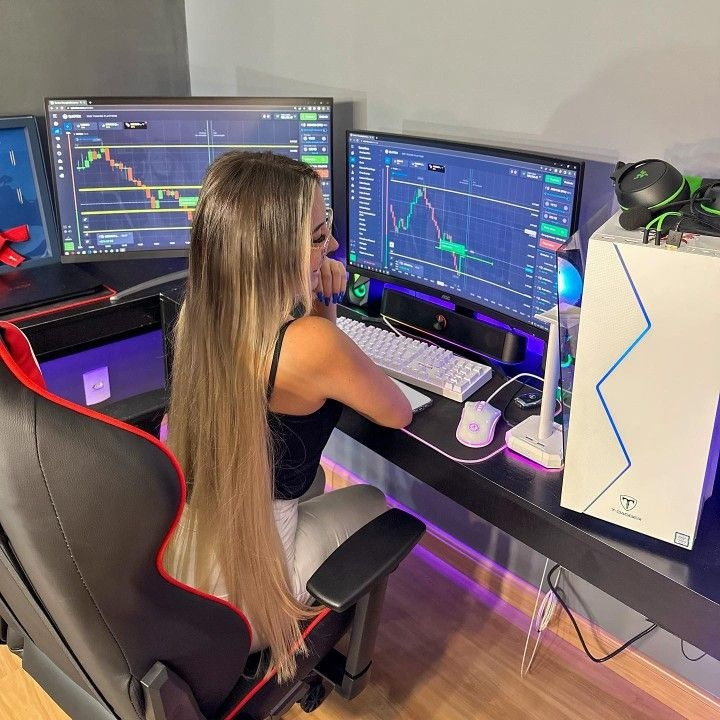
I once met a man who had spent many years trading in the financial markets. He had an incredible amount of experience, not only in the stock market but in financial markets in general.
His experience went back to a time before computers became as widespread as they are today, and even before the internet existed. Back when he first started trading, buying and selling were done over the phone. There were no online brokers, no leverage trading features, and nothing like the tools we have today.
But this man wasn't just experienced; he was incredibly successful as well. I personally witnessed him turn $1,000 into $100,000 in less than 24 hours. And no, he wasn't trading some crazy cryptocurrency. Bitcoin hadn't even been invented yet! He did it through Forex currency pairs alone.
I once asked him for just one piece of advice: What is the biggest secret to succeeding in this business?
His answer was surprisingly simple, yet incredibly profound:
"The secret lies in proper money management."
And if you really think about that advice, you'll realize that it truly is the key to everything.
No matter how much you rely on fundamental or technical analysis, things can change. The market can suddenly throw something unexpected at you, and everything can spiral beyond your control and beyond what you had planned.
But calculating your potential loss and defining your risk exposure? That's something you are always in control of before entering any trade. You are the one who decides it and calculates it.
You cannot walk into a casino with the mindset of a trader. Just as you cannot run a successful trading business with the mindset of a gambler.
A good trader knows how to make money. A great trader knows how to protect it.
For anyone wondering, this was a true story, by the way.
And i hope you enjoyed it. So don't forget to follow me!
#TradingTopics #TradingAdvice #TradingTales #Follow_Like_Comment
{spot}(BTCUSDT)
{spot}(ETHUSDT)
{spot}(SOLUSDT)
I once met a man who had spent many years trading in the financial markets. He had an incredible amount of experience, not only in the stock market but in financial markets in general.
His experience went back to a time before computers became as widespread as they are today, and even before the internet existed. Back when he first started trading, buying and selling were done over the phone. There were no online brokers, no leverage trading features, and nothing like the tools we have today.
But this man wasn't just experienced; he was incredibly successful as well. I personally witnessed him turn $1,000 into $100,000 in less than 24 hours. And no, he wasn't trading some crazy cryptocurrency. Bitcoin hadn't even been invented yet! He did it through Forex currency pairs alone.
I once asked him for just one piece of advice: What is the biggest secret to succeeding in this business?
His answer was surprisingly simple, yet incredibly profound:
"The secret lies in proper money management."
And if you really think about that advice, you'll realize that it truly is the key to everything.
No matter how much you rely on fundamental or technical analysis, things can change. The market can suddenly throw something unexpected at you, and everything can spiral beyond your control and beyond what you had planned.
But calculating your potential loss and defining your risk exposure? That's something you are always in control of before entering any trade. You are the one who decides it and calculates it.
You cannot walk into a casino with the mindset of a trader. Just as you cannot run a successful trading business with the mindset of a gambler.
A good trader knows how to make money. A great trader knows how to protect it.
For anyone wondering, this was a true story, by the way.
And i hope you enjoyed it. So don't forget to follow me!
#TradingTopics #TradingAdvice #TradingTales #Follow_Like_Comment

1
140
·
--
I was down $3K on $BTC 📉
Added liquidity, set my SL, and went for a nap thinking the momentum was DEAD 💀
Woke up, opened Binance, and saw THIS…
📱 Phone almost slipped out of my hand.
😳 I was staring at the screen for seconds.
BUT THE CRAZIEST PART?
MY STOP-LOSS NEVER GOT HIT. 🤯
Bitcoin really said: “You thought the move was over?” 🚀
Never underestimate $BTC. ₿🔥
#bitcoin #BTC #crypto #TradingTales

65
·
--
Статья
J’ai dépensé 1 000 $ dans un restaurant sans cligner des yeux. Le lendemain, je négociais 2 $Quand les cryptos ont commencé à me rapporter des sommes folles, mon cerveau a complètement déconnecté de la valeur de l'argent.
Sur l’écran, c’étaient des chiffres abstraits. 500 de gains en une heure, 2 000 en une nuit. Très vite, l’argent réel a perdu tout son sens :
Je ne calculais plus mes sorties.
J'achetais des choses inutiles en me disant : « De toute façon, un simple trade de 10 minutes remboursera tout ça. »
Je méprisais presque l'effort du travail quotidien.
Je vivais dans une illusion totale, convaincu(e) que cette abondance facile ne s’arrêterait jamais.
Puis, le marché a corrigé. Les gains faciles ont disparu, les liquidations ont enchaîné, et les profits virtuels se sont évaporés plus vite qu'ils n'étaient apparus.
C’est là que le choc m'a frappé en plein visage. En regardant mon relevé bancaire, j'ai réalisé que j'avais brûlé des mois de travail acharné dans des dépenses superflues, simplement parce que je croyais être devenu(e) un génie de la finance.
Le marché m’a remis à ma place avec une violence inouïe.
Voici ce que cette leçon d'humilité m'a gravé dans l'esprit :
L'argent gagné vite repart deux fois plus vite : Sans discipline financière dans la vraie vie, aucun gain crypto ne vous rendra riche sur le long terme.
Les profits sur l'écran ne sont pas de l'argent réel : Tant que ce n'est pas sécurisé et transformé en actifs tangibles (immobilier, épargne de sécurité, projets concrets), ce ne sont que des pixels.
Le respect de la valeur du travail : Le jour où vous commencez à trouver que 100 $ « ce n'est rien », vous avez déjà un pied dans la ruine.
Aujourd'hui, chaque dollar retiré du marché a une destination précise et respectée. La vraie richesse ne réside pas dans l'euphorie de la hausse, mais dans la sagesse de savoir conserver ce que le marché nous prête temporairement.
Avez-vous déjà ressenti ce décalage dangereux où l'argent sur l'écran vous fait perdre la valeur de l'argent réel ?
#TradingTales #TradingCommunity
$BTC $XAU
J’ai dépensé 1 000 $ dans un restaurant sans cligner des yeux. Le lendemain, je négociais 2 $
Quand les cryptos ont commencé à me rapporter des sommes folles, mon cerveau a complètement déconnecté de la valeur de l'argent.
Sur l’écran, c’étaient des chiffres abstraits. 500 de gains en une heure, 2 000 en une nuit. Très vite, l’argent réel a perdu tout son sens :
Je ne calculais plus mes sorties.
J'achetais des choses inutiles en me disant : « De toute façon, un simple trade de 10 minutes remboursera tout ça. »
Je méprisais presque l'effort du travail quotidien.
Je vivais dans une illusion totale, convaincu(e) que cette abondance facile ne s’arrêterait jamais.
Puis, le marché a corrigé. Les gains faciles ont disparu, les liquidations ont enchaîné, et les profits virtuels se sont évaporés plus vite qu'ils n'étaient apparus.
C’est là que le choc m'a frappé en plein visage. En regardant mon relevé bancaire, j'ai réalisé que j'avais brûlé des mois de travail acharné dans des dépenses superflues, simplement parce que je croyais être devenu(e) un génie de la finance.
Le marché m’a remis à ma place avec une violence inouïe.
Voici ce que cette leçon d'humilité m'a gravé dans l'esprit :
L'argent gagné vite repart deux fois plus vite : Sans discipline financière dans la vraie vie, aucun gain crypto ne vous rendra riche sur le long terme.
Les profits sur l'écran ne sont pas de l'argent réel : Tant que ce n'est pas sécurisé et transformé en actifs tangibles (immobilier, épargne de sécurité, projets concrets), ce ne sont que des pixels.
Le respect de la valeur du travail : Le jour où vous commencez à trouver que 100 $ « ce n'est rien », vous avez déjà un pied dans la ruine.
Aujourd'hui, chaque dollar retiré du marché a une destination précise et respectée. La vraie richesse ne réside pas dans l'euphorie de la hausse, mais dans la sagesse de savoir conserver ce que le marché nous prête temporairement.
Avez-vous déjà ressenti ce décalage dangereux où l'argent sur l'écran vous fait perdre la valeur de l'argent réel ?
#TradingTales #TradingCommunity
$BTC $XAU
2
8
6.8k

·
--

Статья
Are you scared of trading?Remember traders who are sacred of trading should find an other job because cowards has never won ,for some trading is easy for some it is mount everest. Those who has skills and are hardworking and have faith upon themselves will be successful traders unlike those who after watching only a few videos from some social media platforms terms themselves as traders .
When I was doing bachlor of law a professor specially came to me and strictly said remember this phrase "first learn then earn" without learning the earning is not possible.
It has been almost five years i have been trying to be good trader, I have tried many strategies but fall down to earth ,i lost and got depressed but did not stop but I was frightened from the trading but I did not stop that phrase of professor is still echoeing in my ears ,if I did not stop then why you are stoping ?
Keep trying hard and faith upon yourselves one day you will be proud of yourself .
Best of luck my best traders you are the future of trading and world will witness . I trust you guys and you should trust yourselves.
#TradingTales
$BTC
{future}(BTCUSDT)
Are you scared of trading?
Remember traders who are sacred of trading should find an other job because cowards has never won ,for some trading is easy for some it is mount everest. Those who has skills and are hardworking and have faith upon themselves will be successful traders unlike those who after watching only a few videos from some social media platforms terms themselves as traders .
When I was doing bachlor of law a professor specially came to me and strictly said remember this phrase "first learn then earn" without learning the earning is not possible.
It has been almost five years i have been trying to be good trader, I have tried many strategies but fall down to earth ,i lost and got depressed but did not stop but I was frightened from the trading but I did not stop that phrase of professor is still echoeing in my ears ,if I did not stop then why you are stoping ?
Keep trying hard and faith upon yourselves one day you will be proud of yourself .
Best of luck my best traders you are the future of trading and world will witness . I trust you guys and you should trust yourselves.
#TradingTales
$BTC
127

Lost some capital, gained more experience. The journey isn't over. 🚀🔥
Trading is not about winning every day; it's about managing losses responsibly.
#TradingTales #TradingCommunity
Lost some capital, gained more experience. The journey isn't over. 🚀🔥
Trading is not about winning every day; it's about managing losses responsibly.
#TradingTales #TradingCommunity
Trading is not about winning every day; it's about managing losses responsibly.
#TradingTales #TradingCommunity



007JR7:
nice...
4
5
884

Статья
Don’t Defend Your EgoThe Underrated Edge
Changing your mind is one of the most underrated superpowers in business and trading. 🎯
Many of us grew up believing that shifting your stance makes you look weak or unreliable. In reality, clinging to an outdated view out of pride leads to stagnation, bad decisions, and avoidable losses.
Ego vs. Market Reality
Recently, my team and I debated whether the market faced a simple correction or a deeper breakdown. The sharpest traders adapted effortlessly as new data came in, while others let ego trap them into defending a losing thesis.
Markets shift fast. Headlines rewrite reality in minutes, and yesterday’s logic often stops working today. Survival takes humility—being willing to say, "The facts changed, so my view changed."
Defending a past statement just because you said it out loud isn’t principle; it’s ego. And in the markets, pride hurts just as fast as poor risk management.
What George Soros Teaches Us
Take George Soros. People admire his biggest wins, yet overlook how often he reversed course—sometimes weekly or daily—adjusting continuously even during historic trades like breaking the Bank of England.
Final Takeaway
The strongest people aren’t the ones who stubbornly dig in. They’re the ones who spot the shift first and adapt. ⚡
Don’t fear changing your mind. Fear standing still while the world moves on.
#cryptouniverseofficial
#Marketpsychology
#Risk
#TradingTales
Don’t Defend Your Ego
The Underrated Edge
Changing your mind is one of the most underrated superpowers in business and trading. 🎯
Many of us grew up believing that shifting your stance makes you look weak or unreliable. In reality, clinging to an outdated view out of pride leads to stagnation, bad decisions, and avoidable losses.
Ego vs. Market Reality
Recently, my team and I debated whether the market faced a simple correction or a deeper breakdown. The sharpest traders adapted effortlessly as new data came in, while others let ego trap them into defending a losing thesis.
Markets shift fast. Headlines rewrite reality in minutes, and yesterday’s logic often stops working today. Survival takes humility—being willing to say, "The facts changed, so my view changed."
Defending a past statement just because you said it out loud isn’t principle; it’s ego. And in the markets, pride hurts just as fast as poor risk management.
What George Soros Teaches Us
Take George Soros. People admire his biggest wins, yet overlook how often he reversed course—sometimes weekly or daily—adjusting continuously even during historic trades like breaking the Bank of England.
Final Takeaway
The strongest people aren’t the ones who stubbornly dig in. They’re the ones who spot the shift first and adapt. ⚡
Don’t fear changing your mind. Fear standing still while the world moves on.
#cryptouniverseofficial
#Marketpsychology
#Risk
#TradingTales
55


Статья
💎 Графіт чи діамант: що ринок робить із трейдером на кожному рівні💎 Графіт чи діамант: що ринок робить із трейдером на кожному рівні
Олівець і діамант складаються з одного вуглецю. Різниця в структурі.
З трейдерами так само. Ринок тисне на всіх: і на того, хто вчора поповнив перший депозит, і на того, хто торгує роками. Тільки форми тиску різні. 👇
🔥 Тиск не змінює людину, він проявляє її структуру
Волатильність, серія збитків, «ще одна угода й я в нулі». Саме тут система або витримує, або ламається.
📉 Шлях графіту
Збиток → «відіграюсь» → більший лот → ще більший збиток → злитий депозит → вигорання → вихід.
Кожен крок логічний зсередини. Разом вони ведуть в один кінець.
📈 Шлях діаманта
Це не про «геніальний вхід». Це нудний процес: правила замість емоцій, контроль ризику, журнал, зворотний зв'язок.
🎲 Результат трейдера: розподіл імовірностей, а не лінія вгору
• Можна діяти правильно й отримати збиток.
• Можна діяти погано й тимчасово вигравати.
• Серія з 10-20 угод майже нічого не доводить. Вибірка занадто мала.
• Жодна система не гарантує результат. Дисципліна лише змінює ваші шанси на дистанції.
🌱 Для новачка
1️⃣ Торгуй лише коштами, втрата яких не зламає життя
2️⃣ Задай ліміт ризику на угоду та денний ліміт збитків
3️⃣ Запиши правила до початку торгів, а не під час
4️⃣ Веди журнал: що зробив, чому, що відчував
5️⃣ Не збільшуй лот, щоб «відіграти»
6️⃣ Роби паузу після серії збитків
7️⃣ Шукай наставника або середовище, яке чесно вказує на помилки
🧠 Для досвідченого трейдера
Базові речі вже на місці. Тут інший рівень питань:
🔹 Процес окремо від результату. Розбирай угоди у чотирьох категоріях: гарне рішення з поганим результатом, погане рішення з хорошим результатом і два «чисті» випадки. Не вчись на удачі.
🔹 Ризик у відсотках від капіталу. Рахуй результат у кратних до початкового ризику (R), а не в «гривнях» чи доларах. Це прибирає шум від розміру рахунку.
🔹 Просадка як окрема метрика. Заздалегідь знай, яка просадка для тебе допустима, і що ти робиш, коли її досягнуто: зменшуєш ризик, зупиняєшся, переглядаєш підхід.
🔹 Реальні витрати. Комісії, проковзування, фандинг. Вони тихо з'їдають статистичну перевагу, якщо їх не враховувати в журналі.
🔹 Зміна ринкових умов. Те, що працювало в одному режимі, може не працювати в іншому. Періодично перевіряй, чи твої правила ще відповідають реальності, і не підганяй дані під улюблену ідею.
🔹 Знижувальна перевага успіху. Після серії прибуткових угод ризик зазвичай зростає непомітно: збільшується впевненість, лот, кількість угод. Фіксуй це в журналі так само ретельно, як і збитки.
🔹 Стан як змінна. Сон, стрес, виснаження впливають на якість рішень. Познач їх у журналі й подивись, чи є кореляція з помилками.
{spot}(BTCUSDT)
💡 Ключова думка: алмаз не з'являється автоматично, і «вирости з цього» не вдається назавжди. Структура, ризик і чесний зворотний зв'язок потрібні і першого дня, і на десятому році.
{spot}(ETHUSDT)
Тепер до вас 👇
Новачки: що з чекліста для вас найскладніше?
Досвідчені: яка одна метрика або правило найбільше змінили ваш підхід до ризику?
Пишіть у коментарях. Конкретні відповіді корисніші за будь-яку теорію.
{spot}(BNBUSDT)
🔔 Збережіть пост і підписуйтесь: далі розберу ризик-менеджмент, статистику та психологію трейдингу без хайпу.
⚠️ Матеріал має освітній характер і не є фінансовою порадою. Торгівля криптовалютами пов'язана з високим ризиком, можлива часткова або повна втрата коштів. Приймайте рішення самостійно та оцінюйте власні ризики.
$BNB $XAG $COPPER
#Write2Earn #Squar2earn #BİNANCE #TradingTales #expirience
💎 Графіт чи діамант: що ринок робить із трейдером на кожному рівні
💎 Графіт чи діамант: що ринок робить із трейдером на кожному рівні
Олівець і діамант складаються з одного вуглецю. Різниця в структурі.
З трейдерами так само. Ринок тисне на всіх: і на того, хто вчора поповнив перший депозит, і на того, хто торгує роками. Тільки форми тиску різні. 👇
🔥 Тиск не змінює людину, він проявляє її структуру
Волатильність, серія збитків, «ще одна угода й я в нулі». Саме тут система або витримує, або ламається.
📉 Шлях графіту
Збиток → «відіграюсь» → більший лот → ще більший збиток → злитий депозит → вигорання → вихід.
Кожен крок логічний зсередини. Разом вони ведуть в один кінець.
📈 Шлях діаманта
Це не про «геніальний вхід». Це нудний процес: правила замість емоцій, контроль ризику, журнал, зворотний зв'язок.
🎲 Результат трейдера: розподіл імовірностей, а не лінія вгору
• Можна діяти правильно й отримати збиток.
• Можна діяти погано й тимчасово вигравати.
• Серія з 10-20 угод майже нічого не доводить. Вибірка занадто мала.
• Жодна система не гарантує результат. Дисципліна лише змінює ваші шанси на дистанції.
🌱 Для новачка
1️⃣ Торгуй лише коштами, втрата яких не зламає життя
2️⃣ Задай ліміт ризику на угоду та денний ліміт збитків
3️⃣ Запиши правила до початку торгів, а не під час
4️⃣ Веди журнал: що зробив, чому, що відчував
5️⃣ Не збільшуй лот, щоб «відіграти»
6️⃣ Роби паузу після серії збитків
7️⃣ Шукай наставника або середовище, яке чесно вказує на помилки
🧠 Для досвідченого трейдера
Базові речі вже на місці. Тут інший рівень питань:
🔹 Процес окремо від результату. Розбирай угоди у чотирьох категоріях: гарне рішення з поганим результатом, погане рішення з хорошим результатом і два «чисті» випадки. Не вчись на удачі.
🔹 Ризик у відсотках від капіталу. Рахуй результат у кратних до початкового ризику (R), а не в «гривнях» чи доларах. Це прибирає шум від розміру рахунку.
🔹 Просадка як окрема метрика. Заздалегідь знай, яка просадка для тебе допустима, і що ти робиш, коли її досягнуто: зменшуєш ризик, зупиняєшся, переглядаєш підхід.
🔹 Реальні витрати. Комісії, проковзування, фандинг. Вони тихо з'їдають статистичну перевагу, якщо їх не враховувати в журналі.
🔹 Зміна ринкових умов. Те, що працювало в одному режимі, може не працювати в іншому. Періодично перевіряй, чи твої правила ще відповідають реальності, і не підганяй дані під улюблену ідею.
🔹 Знижувальна перевага успіху. Після серії прибуткових угод ризик зазвичай зростає непомітно: збільшується впевненість, лот, кількість угод. Фіксуй це в журналі так само ретельно, як і збитки.
🔹 Стан як змінна. Сон, стрес, виснаження впливають на якість рішень. Познач їх у журналі й подивись, чи є кореляція з помилками.
💡 Ключова думка: алмаз не з'являється автоматично, і «вирости з цього» не вдається назавжди. Структура, ризик і чесний зворотний зв'язок потрібні і першого дня, і на десятому році.
Тепер до вас 👇
Новачки: що з чекліста для вас найскладніше?
Досвідчені: яка одна метрика або правило найбільше змінили ваш підхід до ризику?
Пишіть у коментарях. Конкретні відповіді корисніші за будь-яку теорію.
🔔 Збережіть пост і підписуйтесь: далі розберу ризик-менеджмент, статистику та психологію трейдингу без хайпу.
⚠️ Матеріал має освітній характер і не є фінансовою порадою. Торгівля криптовалютами пов'язана з високим ризиком, можлива часткова або повна втрата коштів. Приймайте рішення самостійно та оцінюйте власні ризики.
$BNB $XAG $COPPER
#Write2Earn #Squar2earn #BİNANCE #TradingTales #expirience
2
106

·
--
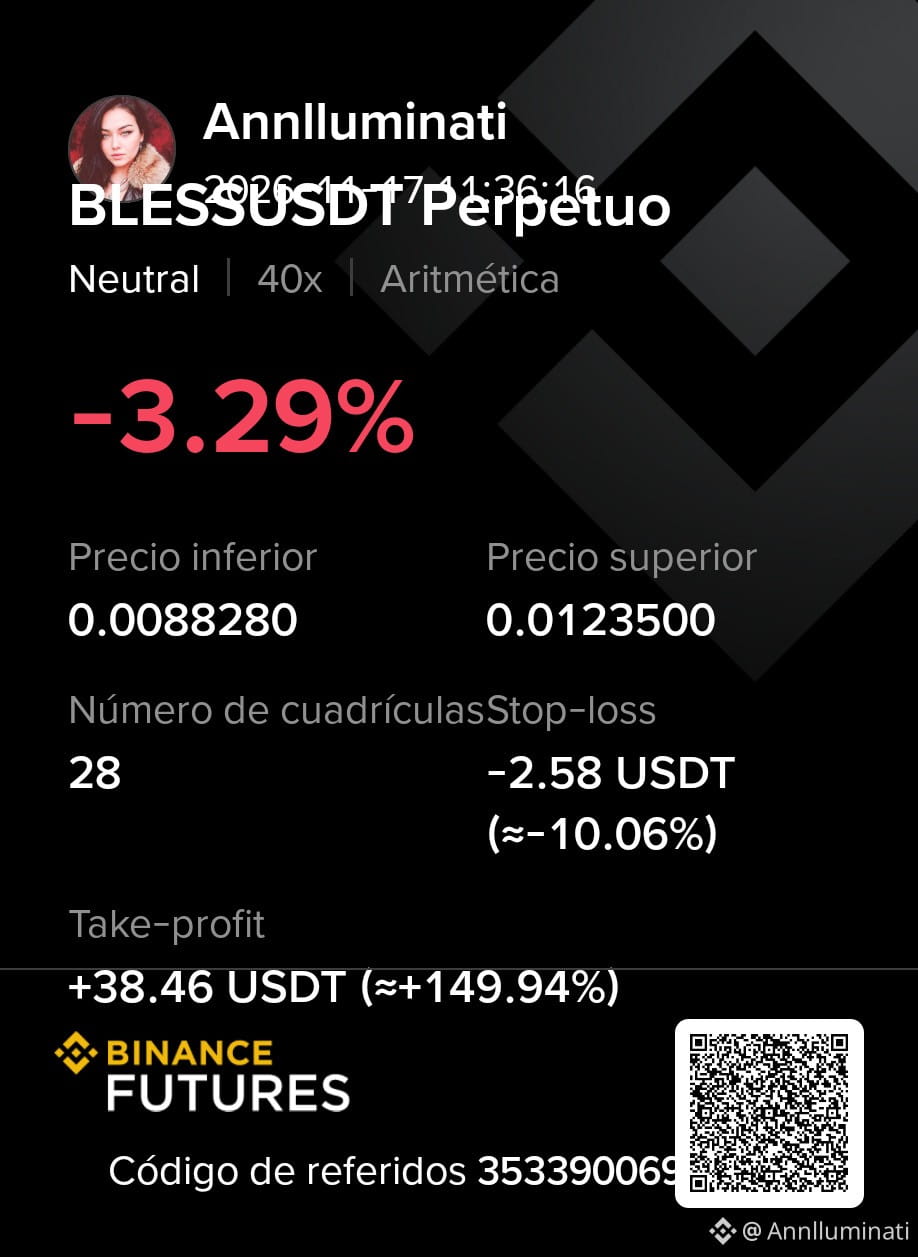
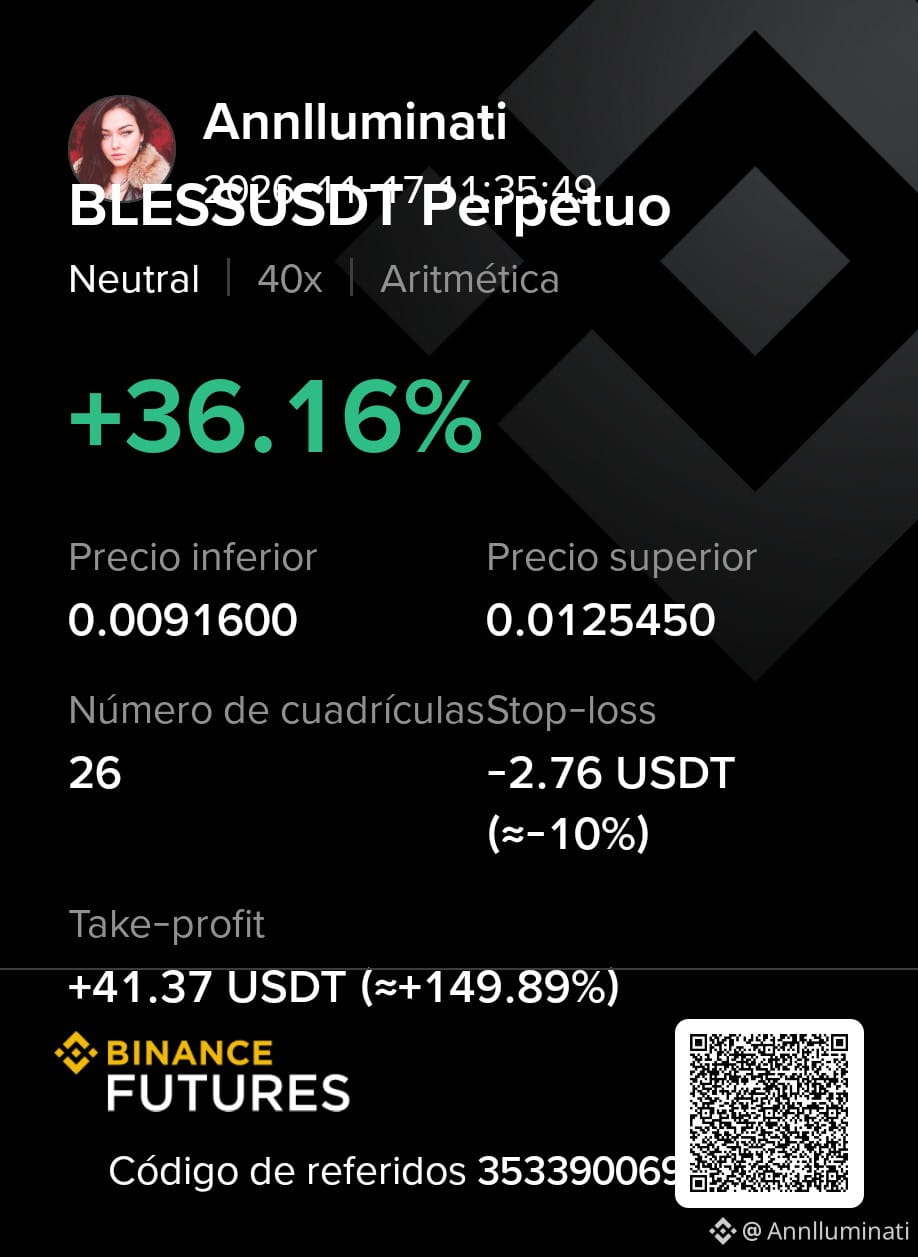
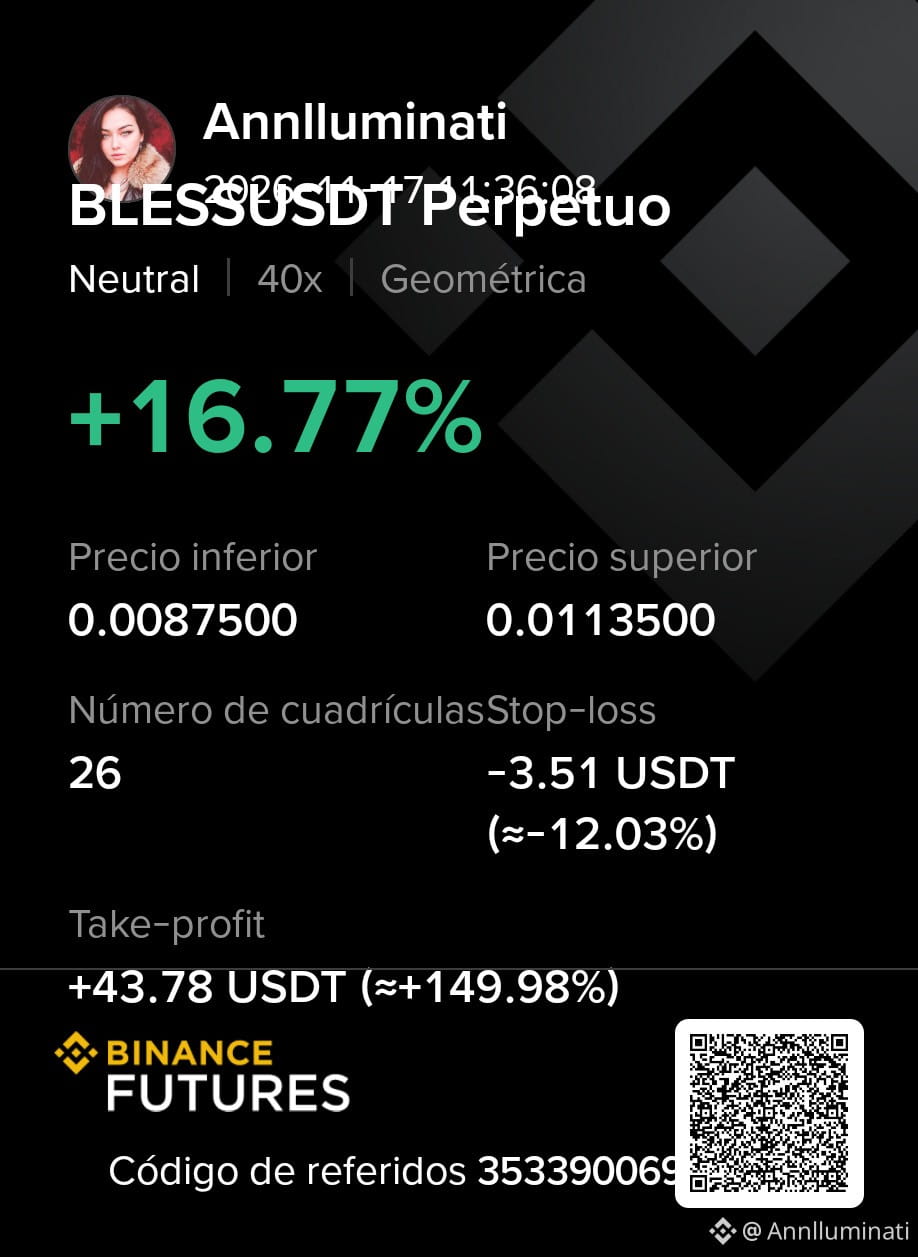
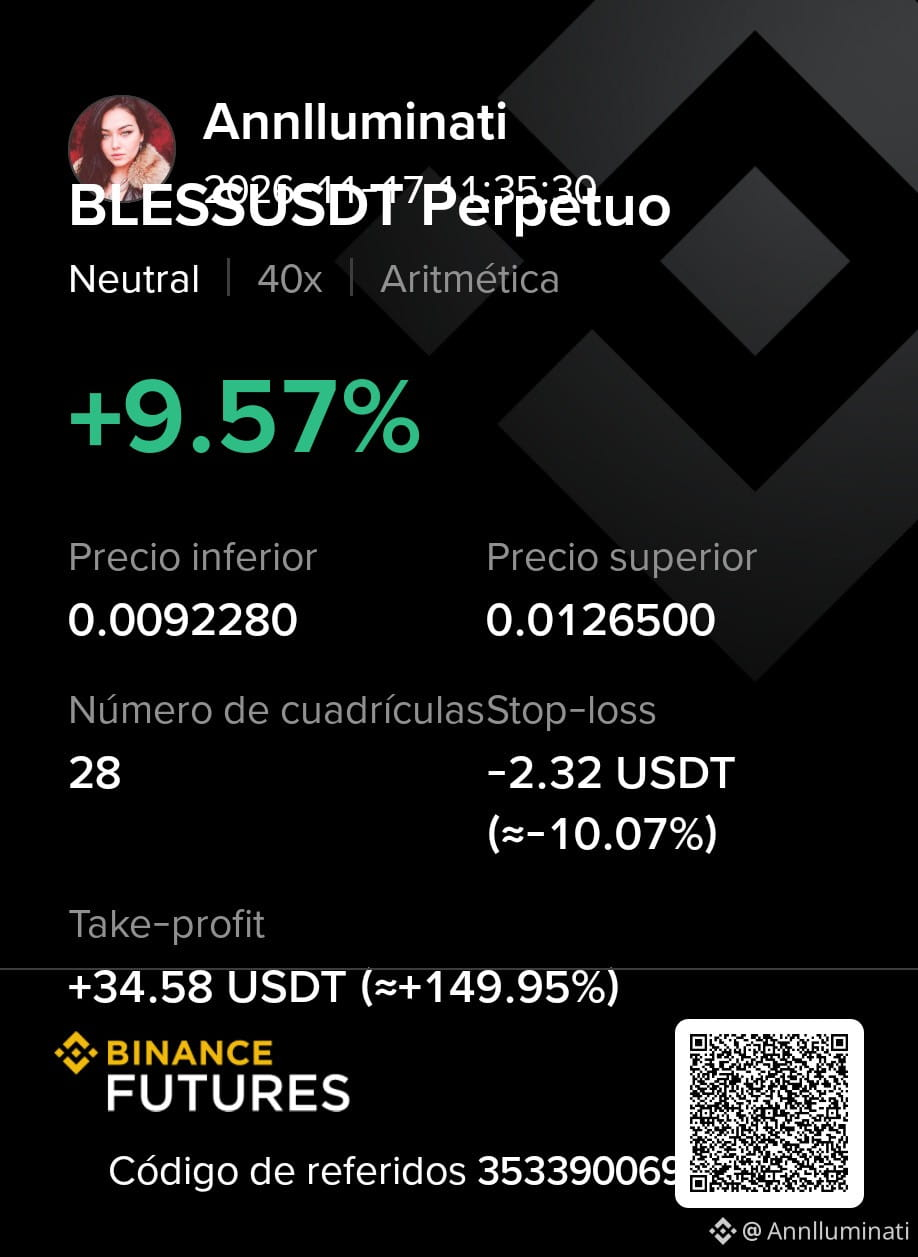
$BLESS Hablemos de trading con bots pero también de reglas esenciales .
1:No dejes que tu perdida sea más del 10% de capital inicial .
2:Si llevas dos operaciones perdidas no operes hasta el día siguiente ,por qué ? porque ya llevarías el 20% en perdida de tu capital inicial y la mente te juega en contra .
3: Siempre usa Stop Loss en bots u operaciones individuales .
4: SIEMPRE TEN EN MENTE que este sector implica riesgos financieros, cualquiera de sus variables implica riesgo que desde un inicio debes estar dispuesto a asumir , de no ser así mejor NO OPERES.
5: Debes saber CUÁNDO PARAR,si llevas una buena racha de más de 5 operaciones rentables , retírate y saca esas ganancias sólo deja tu capital inicial . Por qué? Así seguras las ganancias y no quemas la cuenta si la mente va en tu contra .
7. Si usas bots,NO LOS DEJES CORRER SOLOS, supervisa de vez en cuando las ganancias o perdidas , si no estás dispuesto a asumir la perdida cierra operaciones y apaga el bot manual . Lo mismo para el profit, si llevas PNL positivo detener operación en cuanto veas reversa de mercado, a veces en los rebotes suelen liquidar a los traders individuales.
8: JAMÁS CREAS A CIEGAS lo que los creadores postean , INCLUYÉNDOME , haz propio DYOR, investiga , aprender sobre los marcadores , las gráficas , ten en cuenta que las noticias también afectan el mercado .
9: TODO RIESGO FINANCIERO DEBE ASUMIRSE PERSONALMENTE, asque gestiona bien tu pérdida y ganancia , nadie más tiene la responsabilidad de tu capital , sólo tú
Por último , no pagues por señales, aprovecha quienes damos información gratis PERO haz tu investigación personal .
EXITO EN SUS TRADES
PDT.Dejo imágenes no sólo de ganancias , también de perdidas a eso le refiero en que debes saber cuándo parar.
#TradingTales #TradingAdvice #BotTrading #tradingrules
{future}(BLESSUSDT)
$BLESS Hablemos de trading con bots pero también de reglas esenciales .
1:No dejes que tu perdida sea más del 10% de capital inicial .
2:Si llevas dos operaciones perdidas no operes hasta el día siguiente ,por qué ? porque ya llevarías el 20% en perdida de tu capital inicial y la mente te juega en contra .
3: Siempre usa Stop Loss en bots u operaciones individuales .
4: SIEMPRE TEN EN MENTE que este sector implica riesgos financieros, cualquiera de sus variables implica riesgo que desde un inicio debes estar dispuesto a asumir , de no ser así mejor NO OPERES.
5: Debes saber CUÁNDO PARAR,si llevas una buena racha de más de 5 operaciones rentables , retírate y saca esas ganancias sólo deja tu capital inicial . Por qué? Así seguras las ganancias y no quemas la cuenta si la mente va en tu contra .
7. Si usas bots,NO LOS DEJES CORRER SOLOS, supervisa de vez en cuando las ganancias o perdidas , si no estás dispuesto a asumir la perdida cierra operaciones y apaga el bot manual . Lo mismo para el profit, si llevas PNL positivo detener operación en cuanto veas reversa de mercado, a veces en los rebotes suelen liquidar a los traders individuales.
8: JAMÁS CREAS A CIEGAS lo que los creadores postean , INCLUYÉNDOME , haz propio DYOR, investiga , aprender sobre los marcadores , las gráficas , ten en cuenta que las noticias también afectan el mercado .
9: TODO RIESGO FINANCIERO DEBE ASUMIRSE PERSONALMENTE, asque gestiona bien tu pérdida y ganancia , nadie más tiene la responsabilidad de tu capital , sólo tú
Por último , no pagues por señales, aprovecha quienes damos información gratis PERO haz tu investigación personal .
EXITO EN SUS TRADES
PDT.Dejo imágenes no sólo de ganancias , también de perdidas a eso le refiero en que debes saber cuándo parar.
#TradingTales #TradingAdvice #BotTrading #tradingrules
4
3.4k
·
--
Compró ETH en la cima, vendió en el sótano y se fue a dormir con $3.1 millones menos
Una ballena compró 5,105 ETH a $2,691 hace un mes, bien confiada, con $13.74 millones en la mano . Diez horas antes de este drama, vendió 6,532 ETH a $2,085 y se llevó $13.62 millones: pérdida neta de $3.1 millones . Y mientras tanto, los ETFs de Ethereum sumaron su quinto día seguido de salidas, con $145 millones volando por la puerta el 11 de noviembre . La pregunta no es si dolió. La pregunta es: ¿tú habrías aguantado o habrías vendido antes de llegar a $2,000?
#TradingTales
#inversión
#Perdition
407


·
--
Cómo elegir una buena entrada de trading: dos condiciones que pueden aumentar tus probabilidades:Una buena entrada de trading no consiste simplemente en encontrar un indicador que marque una señal de compra o venta.
Tampoco consiste en identificar un patrón gráfico y entrar inmediatamente porque parece que el precio va a moverse en nuestra dirección.
Para aumentar las probabilidades de una operación, hay que tener en cuenta dos elementos fundamentales: un punto de entrada estratégico y una tendencia macro que esté a favor de nuestra operación.
Cuando ambos elementos coinciden, podemos tener una oportunidad mejor estructurada.
1. Tener un punto de entrada validado por una metodología
El primer elemento es saber exactamente dónde queremos entrar.
Un trader necesita desarrollar una metodología que le permita identificar puntos de entrada mediante reglas concretas, patrones, indicadores o comportamientos del precio.
Pero no basta con que un punto de entrada parezca interesante visualmente.
Debe estar estudiado y respaldado por estadísticas.
Por ejemplo:
¿Cuántas veces ha aparecido esa señal?
¿Qué porcentaje de esas operaciones ha terminado favorablemente?
¿Cuál ha sido la pérdida promedio?
¿Qué condiciones estaban presentes cuando funcionó?
¿En qué escenarios ha demostrado ser menos efectiva?
El objetivo es dejar de entrar por intuición y comenzar a tomar decisiones basadas en un proceso que pueda medirse y evaluarse.
Un buen punto de entrada es aquel que tiene sentido dentro de una metodología previamente estudiada, no simplemente aquel que parece atractivo en el gráfico.
2. La tendencia macro debe favorecer nuestra operación
El segundo elemento es observar el contexto general del mercado.
Podemos encontrar un punto de entrada técnicamente interesante, pero si el movimiento macro está avanzando con fuerza en dirección contraria, nuestra operación podría tener mayores dificultades.
Por eso es importante analizar diferentes temporalidades.
Una señal de compra en una temporalidad pequeña, por ejemplo, puede aparecer mientras el mercado macro mantiene una estructura bajista.
De la misma manera, una señal de venta puede aparecer en una temporalidad pequeña mientras el mercado general presenta una estructura alcista.
Esto no significa que operar contra la tendencia sea siempre incorrecto, pero sí implica reconocer que estamos asumiendo un contexto diferente y que nuestra metodología debe demostrar que tiene una ventaja en ese escenario.
La idea es buscar coincidencia:
Un punto de entrada identificado por nuestra metodología.
Un contexto macro que favorezca la dirección de la operación.
Una estructura de mercado que no contradiga nuestra hipótesis.
Cuando estos elementos coinciden, podemos aumentar la calidad de nuestra selección de operaciones.
3. Una buena entrada no garantiza una operación ganadora
Aquí está uno de los principios más importantes del trading: incluso cuando tenemos un punto de entrada estudiado, indicadores favorables, patrones identificados y una tendencia macro alineada, podemos perder.
¿Por qué?
Porque el trading trabaja con probabilidades, no con certezas.
El mercado es dinámico y puede cambiar de dirección por acontecimientos que no podemos anticipar. Una operación puede desarrollar un comportamiento completamente diferente al que esperábamos.
Por eso, nunca debemos confundir una entrada de alta calidad con una entrada garantizada.
Una metodología puede aumentar nuestras probabilidades, pero no eliminar el riesgo.
4. Antes de entrar, imagina el peor escenario
Un trader debe aprender a pensar en dos posibilidades antes de ejecutar una operación:
¿Qué ocurre si el mercado se mueve a mi favor?
Y, sobre todo, ¿qué ocurre si se mueve en mi contra?
Antes de entrar debemos conocer cuánto estamos dispuestos a perder, dónde queda invalidada nuestra hipótesis y si esa pérdida está dentro de nuestros límites de riesgo.
No importa cuántos indicadores coincidan ni cuántas veces haya funcionado anteriormente un patrón.
Cada operación debe tener un riesgo definido.
La gestión del riesgo no es un complemento de una buena entrada. Es una parte fundamental de ella.
5. La coincidencia de condiciones mejora la selección
Podemos resumir el proceso de esta manera:
Primero: nuestra metodología identifica un punto de entrada que ha sido estudiado y evaluado estadísticamente.
Segundo: analizamos el mercado macro para comprobar si su dirección favorece nuestra operación.
Tercero: verificamos que las condiciones actuales sean compatibles con nuestra estrategia.
Cuarto: definimos el riesgo y contemplamos la posibilidad de perder antes de ejecutar.
No buscamos tener razón en todas las operaciones. Buscamos seleccionar situaciones en las que exista una ventaja estadística y mantener un proceso disciplinado a lo largo de muchas operaciones.
Conclusión: una buena entrada comienza antes de presionar el botón
El trader que quiere mejorar sus resultados no debería preguntarse solamente dónde entrar.
También debería preguntarse si el contexto general favorece esa entrada, si su metodología ha demostrado resultados en condiciones similares y cuánto está dispuesto a perder si su análisis falla.
Un punto de entrada estratégico es importante, pero su coincidencia con el movimiento macro puede mejorar la selección de oportunidades.
Y aun cuando todo esté alineado, debemos recordar que ninguna operación está libre de riesgo.
En trading no se trata de encontrar una entrada que nunca falle. Se trata de construir un método que seleccione mejores oportunidades, gestione las pérdidas y pueda demostrar su ventaja estadística con el tiempo.
Pregunta para la comunidad:
Cuando identificas un buen punto de entrada, ¿también analizas la tendencia macro antes de operar o tomas decisiones principalmente desde la temporalidad en la que aparece tu señal?
#trading #TradingTales #TradingCommunity #TradingSignals #Nomadacripto $SOL $BNB $DOGE
Cómo elegir una buena entrada de trading: dos condiciones que pueden aumentar tus probabilidades:
Una buena entrada de trading no consiste simplemente en encontrar un indicador que marque una señal de compra o venta.
Tampoco consiste en identificar un patrón gráfico y entrar inmediatamente porque parece que el precio va a moverse en nuestra dirección.
Para aumentar las probabilidades de una operación, hay que tener en cuenta dos elementos fundamentales: un punto de entrada estratégico y una tendencia macro que esté a favor de nuestra operación.
Cuando ambos elementos coinciden, podemos tener una oportunidad mejor estructurada.
1. Tener un punto de entrada validado por una metodología
El primer elemento es saber exactamente dónde queremos entrar.
Un trader necesita desarrollar una metodología que le permita identificar puntos de entrada mediante reglas concretas, patrones, indicadores o comportamientos del precio.
Pero no basta con que un punto de entrada parezca interesante visualmente.
Debe estar estudiado y respaldado por estadísticas.
Por ejemplo:
¿Cuántas veces ha aparecido esa señal?
¿Qué porcentaje de esas operaciones ha terminado favorablemente?
¿Cuál ha sido la pérdida promedio?
¿Qué condiciones estaban presentes cuando funcionó?
¿En qué escenarios ha demostrado ser menos efectiva?
El objetivo es dejar de entrar por intuición y comenzar a tomar decisiones basadas en un proceso que pueda medirse y evaluarse.
Un buen punto de entrada es aquel que tiene sentido dentro de una metodología previamente estudiada, no simplemente aquel que parece atractivo en el gráfico.
2. La tendencia macro debe favorecer nuestra operación
El segundo elemento es observar el contexto general del mercado.
Podemos encontrar un punto de entrada técnicamente interesante, pero si el movimiento macro está avanzando con fuerza en dirección contraria, nuestra operación podría tener mayores dificultades.
Por eso es importante analizar diferentes temporalidades.
Una señal de compra en una temporalidad pequeña, por ejemplo, puede aparecer mientras el mercado macro mantiene una estructura bajista.
De la misma manera, una señal de venta puede aparecer en una temporalidad pequeña mientras el mercado general presenta una estructura alcista.
Esto no significa que operar contra la tendencia sea siempre incorrecto, pero sí implica reconocer que estamos asumiendo un contexto diferente y que nuestra metodología debe demostrar que tiene una ventaja en ese escenario.
La idea es buscar coincidencia:
Un punto de entrada identificado por nuestra metodología.
Un contexto macro que favorezca la dirección de la operación.
Una estructura de mercado que no contradiga nuestra hipótesis.
Cuando estos elementos coinciden, podemos aumentar la calidad de nuestra selección de operaciones.
3. Una buena entrada no garantiza una operación ganadora
Aquí está uno de los principios más importantes del trading: incluso cuando tenemos un punto de entrada estudiado, indicadores favorables, patrones identificados y una tendencia macro alineada, podemos perder.
¿Por qué?
Porque el trading trabaja con probabilidades, no con certezas.
El mercado es dinámico y puede cambiar de dirección por acontecimientos que no podemos anticipar. Una operación puede desarrollar un comportamiento completamente diferente al que esperábamos.
Por eso, nunca debemos confundir una entrada de alta calidad con una entrada garantizada.
Una metodología puede aumentar nuestras probabilidades, pero no eliminar el riesgo.
4. Antes de entrar, imagina el peor escenario
Un trader debe aprender a pensar en dos posibilidades antes de ejecutar una operación:
¿Qué ocurre si el mercado se mueve a mi favor?
Y, sobre todo, ¿qué ocurre si se mueve en mi contra?
Antes de entrar debemos conocer cuánto estamos dispuestos a perder, dónde queda invalidada nuestra hipótesis y si esa pérdida está dentro de nuestros límites de riesgo.
No importa cuántos indicadores coincidan ni cuántas veces haya funcionado anteriormente un patrón.
Cada operación debe tener un riesgo definido.
La gestión del riesgo no es un complemento de una buena entrada. Es una parte fundamental de ella.
5. La coincidencia de condiciones mejora la selección
Podemos resumir el proceso de esta manera:
Primero: nuestra metodología identifica un punto de entrada que ha sido estudiado y evaluado estadísticamente.
Segundo: analizamos el mercado macro para comprobar si su dirección favorece nuestra operación.
Tercero: verificamos que las condiciones actuales sean compatibles con nuestra estrategia.
Cuarto: definimos el riesgo y contemplamos la posibilidad de perder antes de ejecutar.
No buscamos tener razón en todas las operaciones. Buscamos seleccionar situaciones en las que exista una ventaja estadística y mantener un proceso disciplinado a lo largo de muchas operaciones.
Conclusión: una buena entrada comienza antes de presionar el botón
El trader que quiere mejorar sus resultados no debería preguntarse solamente dónde entrar.
También debería preguntarse si el contexto general favorece esa entrada, si su metodología ha demostrado resultados en condiciones similares y cuánto está dispuesto a perder si su análisis falla.
Un punto de entrada estratégico es importante, pero su coincidencia con el movimiento macro puede mejorar la selección de oportunidades.
Y aun cuando todo esté alineado, debemos recordar que ninguna operación está libre de riesgo.
En trading no se trata de encontrar una entrada que nunca falle. Se trata de construir un método que seleccione mejores oportunidades, gestione las pérdidas y pueda demostrar su ventaja estadística con el tiempo.
Pregunta para la comunidad:
Cuando identificas un buen punto de entrada, ¿también analizas la tendencia macro antes de operar o tomas decisiones principalmente desde la temporalidad en la que aparece tu señal?
#trading #TradingTales #TradingCommunity #TradingSignals #Nomadacripto $SOL $BNB $DOGE
2
141

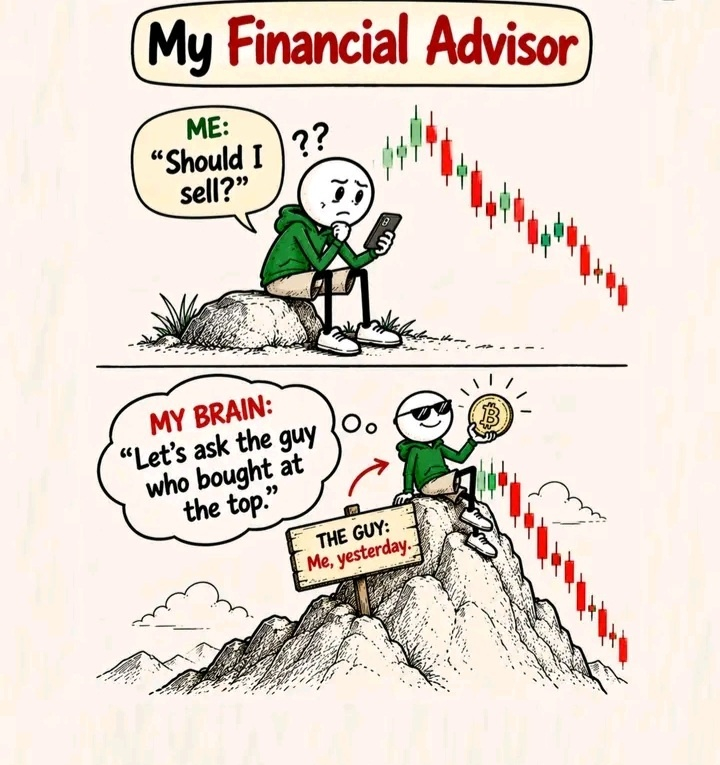
Your biggest financial advisor might be… YOU FROM YESTERDAY. 💀😂📉
You buy at the top, watch the market crash, and suddenly start questioning every decision you’ve ever made. Then your brain suggests asking the same person who got you into this mess. 🤡
Yesterday’s confidence becomes today’s regret. 📈😭
#CryptoMeme
#TradingTales
You buy at the top, watch the market crash, and suddenly start questioning every decision you’ve ever made. Then your brain suggests asking the same person who got you into this mess. 🤡
Yesterday’s confidence becomes today’s regret. 📈😭
#CryptoMeme
#TradingTales
74

·
--
昨天熬夜读完了《与神对话》,书里那些温暖又充满力量的文字,给了我很多启发。📖
最近也在持续学习交易相关知识,希望从更多角度了解客户关注的产品、功能,以及他们面对不同市场环境时的真实需求。
但慢慢发现,交易市场教会我的第一课,不是如何预测行情,而是心态
市场有涨有跌,人生有得有失。
书中有一个让我印象很深的观点:我们无法选择痛苦和失意是否会到来,但当它们真正来临时,我们可以选择如何面对,这是你改变事情发生走向的重要因素
保持理性,敬畏风险
不因一时盈利而盲目自信,也不因暂时失意而否定自己
keep learning,学会接受不确定性,保持平常心,或许比预测下一次涨跌更重要。
允许一切发生,交易如此,人生亦如此。🌱
#BİNANCE #TradingTales
最近也在持续学习交易相关知识,希望从更多角度了解客户关注的产品、功能,以及他们面对不同市场环境时的真实需求。
但慢慢发现,交易市场教会我的第一课,不是如何预测行情,而是心态
市场有涨有跌,人生有得有失。
书中有一个让我印象很深的观点:我们无法选择痛苦和失意是否会到来,但当它们真正来临时,我们可以选择如何面对,这是你改变事情发生走向的重要因素
保持理性,敬畏风险
不因一时盈利而盲目自信,也不因暂时失意而否定自己
keep learning,学会接受不确定性,保持平常心,或许比预测下一次涨跌更重要。
允许一切发生,交易如此,人生亦如此。🌱
#BİNANCE #TradingTales

1
190

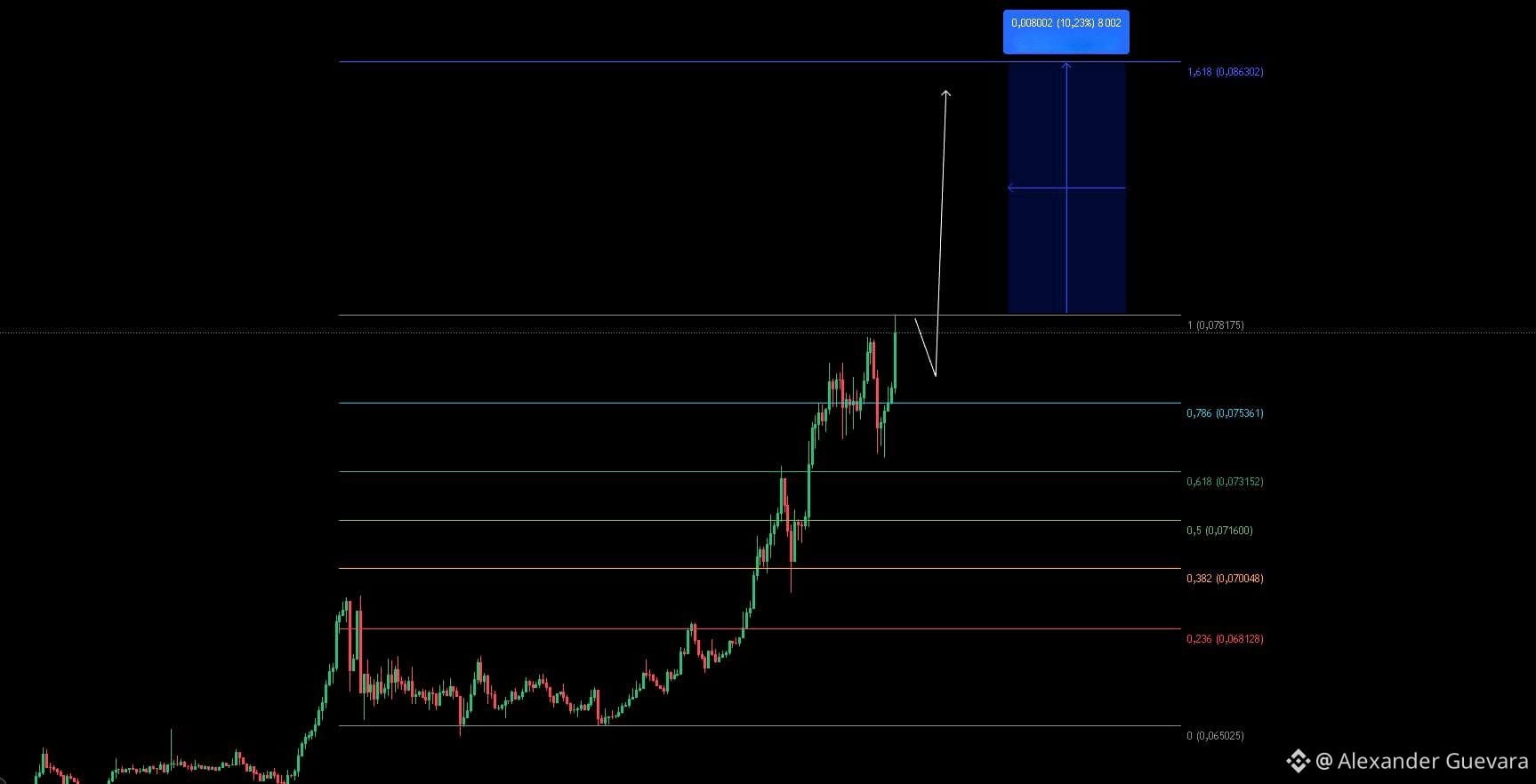
👑¡Atención a todos! Tenemos que actuar rápido. ⚡️
Encontré una moneda que es una auténtica locura y nos va a dar grandes beneficios. 🚀💵
Quien quiera llevarse un take rápido, manténgase conectado. 📲
Estoy esperando el retroceso para abrir el long en la continuación del impulso. ↗️📊
Se dio el retroceso, acabo de abrir posición en long. 💵
Espero un +10% de subida rápida. El stop loss es sumamente ajustado, protegido detrás de un nivel fuerte. 📊
Si quieres recibir la señal, mándame un «♥️» . Comparto la posición y todos los detalles. 🛡 📲
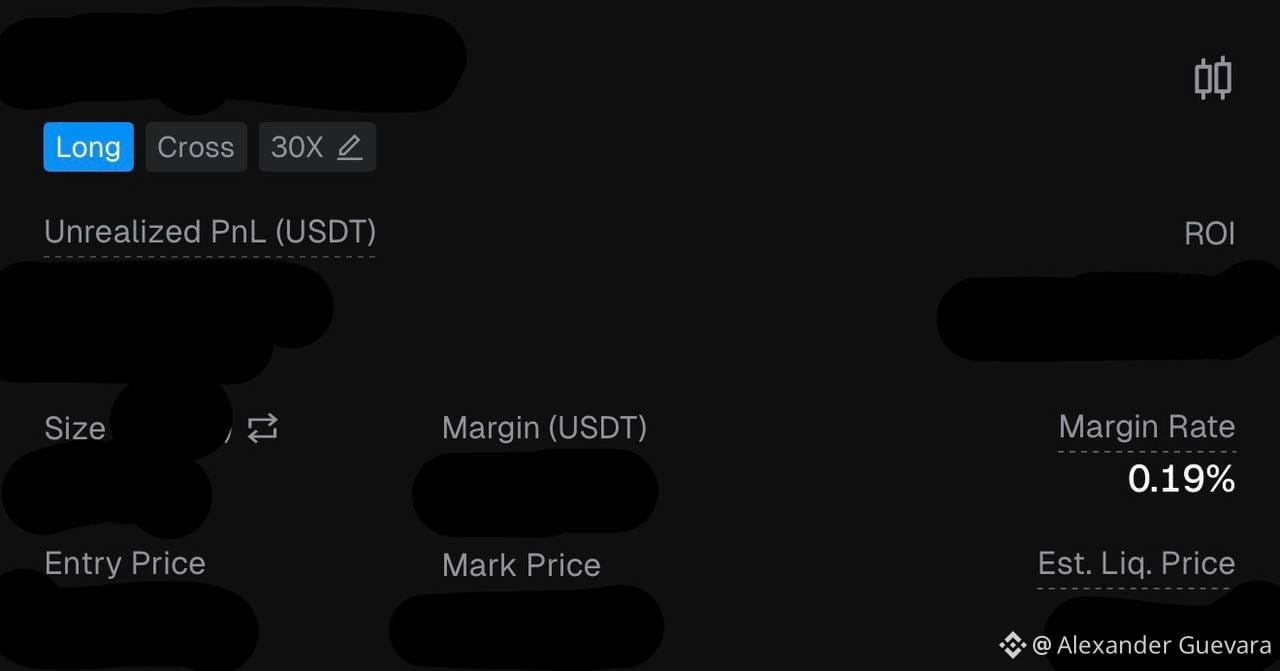
Digamos que abriste una posición que multiplicó con fuerza (un pump de manual): metiste $1,000 en futuros con apalancamiento 10x, el token hizo exactamente un 3x, tu posición ahora vale $30,000 y en pantalla ves +$20,000 de beneficio no realizado (unrealized PnL). ↗️
Te garantizo que en ese preciso instante sientes que va a subir todavía más: tu confianza está al 100%, la narrativa parece indiscutible y los fundamentales, de hierro. Es una trampa. Y yo mismo caí en ella más de una vez. ⚠️
Cambio de mentalidad (mindset): mantener una posición abierta equivale exactamente a tomar la decisión de abrirla desde cero al precio actual.
La única pregunta que debes hacerte es:
➡️ ¿Abrirías hoy un long de $30,000 al precio actual (tras haber multiplicado ya por 3)?
• ¿Sí? Mantén la posición.
• ¿Solo con un tamaño (size) menor? Toma ganancias parciales por la diferencia justo ahora.
• ¿No la abrirías? Ciérrala de inmediato.
El mercado cripto está lleno de round-trips (ver números increíbles en pantalla solo para verlos desaparecer y volver al punto de partida). Esta regla mental te salvará de caer en ese error. 🎯
#TradingCommunity #TrendingPredictions #TradingSignals #TradingTales #TradingTales $VTHO
31

·
--
3 errores comunes que quiebran cuentas en crypto (y cómo evitarlos) 🚨👇
1️⃣ Entrar al mercado por FOMO: Comprar solo porque una moneda está subiendo rápido. Espera siempre una reacumulación o un retroceso.
2️⃣ No colocar Stop Loss: Dejar la posición abierta esperando que "reaccione" solo expone tu capital.
3️⃣ Sobreoperar (Overtrading): Hacer 10 operaciones al día por ansiedad en lugar de esperar la configuración correcta.
La paciencia paga más que la velocidad en este mercado 🧠📈
¿Cuál de estos errores te costó más aprender?
Los leo en los comentarios 💬
#BİNANCE #cryptouniverseofficial #TradingTales #bitcoin #Write2Earn
1
137

·
--
Статья
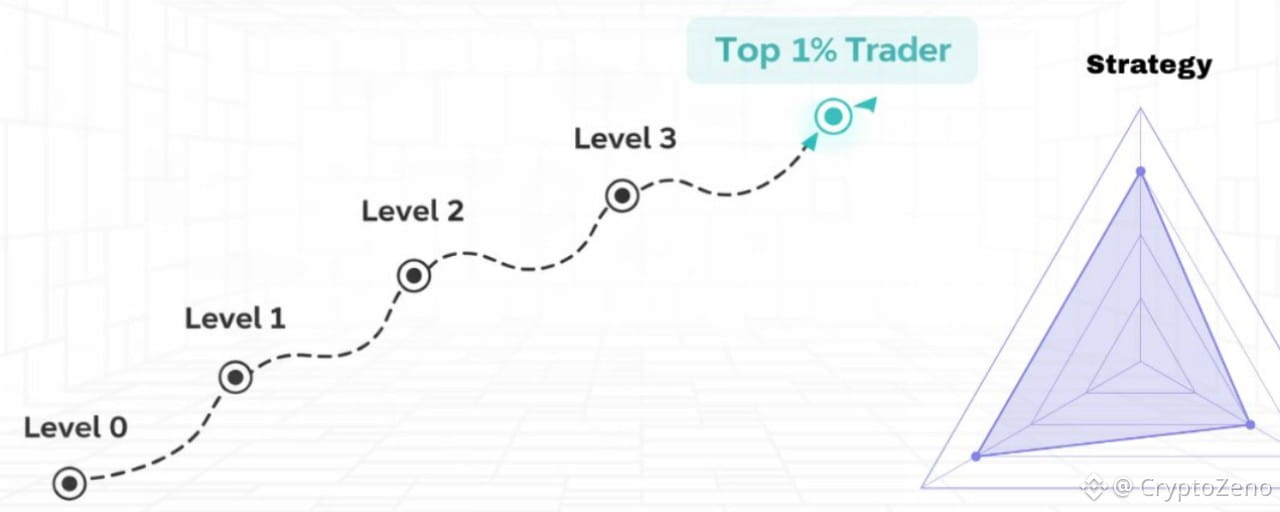
Trader Roadmap - A Guide to Becoming a Top 1% TraderThis is what I wish I had 9 years ago when I started trading… and it’s the opposite of what most influencers tell you to do.
I will give you my step-by-step roadmap detailing every stage of a trader's journey.
You will see exactly where you are, why you're stuck, and what to fix first.
Let's start:
The Three Dimensions
If you're not profitable, you likely have:
A strategy that doesn't make moneyA strategy you can't follow under pressure.A strategy that doesn't survive long enough to make money.
This is the core of my model.
Strategy: your journal, edge development, and asset selectionRisk: your sizing, trade management, and scalingPsyche: your psychology, routines, and discipline
Where these overlap, specific capabilities emerge:
Strategy + Risk = ProfitStrategy + Psyche = ScaleRisk + Psyche = SurvivalAll three = Top 1% Trader
Remember this: at every level of the roadmap, one of these three dimensions is the bottleneck. Everything we diagnose comes back to the same question → is it Strategy, Risk, or Psyche?
Level 0 → No Strategy
This is where every trader starts.
And where many stay longer than they realise...
You know you're Level 0 if:
No strategy. Just tips and 'gut feelings'No written rules for entries, exits, or stop lossesNo journal. No screenshots. No data.Position sizes swing wildly (1% one day, 10% the next)Wins feel like skill. Losses feel like bad luck.
What's required to reach Level 1
The goal at Level 0 isn't to find a strategy.
It's to build three habits: a routine, a journal, and the resilience to keep showing up.
Strategy:
Start journaling every trade immediately after you close it to capture your entries, exits, trade screenshots and emotional state.
‼️IMPORTANT‼️ Your journal is the single most important tool you’ll ever use at ANY level as a trader. Without this, there is no data… and without data, you can never improve.
Psyche:
Find 2 hours in your day, 5 days a week, where you will trade / learn to trade no matter what.Solidify your sleep, diet and exercise.Trading is one of the hardest games in the world. It will test you emotionally before it rewards you financially. If you can't go to bed on time or eat 3 meals a day, you have a 0% chance of making it.
Risk:
Max portfolio size: $100.
Common mistake: Thinking you need to learn everything before you start. You don't need TA, risk management, or strategy yet... You need a journal, a routine, and the willingness to show up.
The first 30 trades aren't about making money. They're about building the foundation that makes everything else possible.
Level 1 → Inconsistent Strategy
Congratulations, you have your foundation. Now it's time to build the skills that will become your trading strategy.
Technical analysis gives you a framework for reading price.Risk management gives you a framework for protecting capital.Learning your tools gives you the infrastructure to trade.
What Level 1 looks like:
Learning to read charts: support/resistance, candlestick patterns, market structureSetting up your exchange, understanding order types, securing your capitalStarting to define entry triggers, stop loss placement, take profit rulesRisk per trade becoming more consistent but still variesJournal has data, but execution still varies
What's required to reach Level 2
Strategy:
Learn Price Action, Support & Resistance, and Volume. I've seen traders make $10k+ a month using only these. I have detailed free tutorials on all of them.Learn to use your Exchange (order types, leverage, trade placement)Put together ONE very basic breakout or reversal strategy. As simple as '1 candle close above resistance and I buy the breakout' (the goal is consistency NOT profit at this point)
Risk:
Max portfolio size: $1000. Until we can prove we're profitable, we don't need more.Set a fixed risk per trade. 1% of your account is a solid starting point.Calculate position size before every trade: Position Size = Max Risk ÷ (Entry Price − Stop Loss Price).
Psyche:
No new focus. Keep the routine and journal from Level 0.
Level 2 → Consistent Strategy
You have rules. You follow them.
Great work most traders never get here.
Now we want profitability.
What Level 2 looks like:
Follows strategy rules on 90%+ of tradesJournals every trade with screenshots and commentsHas a working routine: checklist, report card, emotional check-insData is clean and reliableNot yet consistently profitable: equity curve may be flat or slightly negative
We need to evolve from following rules to isolating variables and improving our rules.
The journey looks like this.
Unprofitable. Improve ↓Less unprofitable. Improve ↓Breakeven. Improve ↓Slightly profitable. Improve ↓More Profitable
What's required to reach Level 3
Strategy:
Develop asset selection skills. This is the highest-leverage improvement you can make. A 10% improvement in asset selection improves your entry, stop, and target simultaneously. A 10% improvement in entry alone only improves entry.Develop condition identification skills. Learn which conditions favour your strategy. Tip: Moving averages are very good for this.Understand expectancy: (Win% × Average Win) − (Loss% × Average Loss)Learn to analyse your journal data. Filter trades into winners and losers. Open all winning screenshots in one tab, all losing screenshots in another. Look for patterns. Tip: Change one variable at a time. Test 30+ trades. Measure the impact. Then repeat.
Risk:
No new focus. Just remember max portfolio size stays $1000.
Psyche:
Continue routine.
Common mistake: Changing too many variables at once. Or perfecting entries when asset selection would have a bigger impact. Prioritise the changes that create the most leverage.
Level 3 → Consistent & Profitable Strategy
You're consistently profitable, congratulations you're in the top 5%. This is a real milestone.
Everything you've built works but only with a small portfolio.
The question now: can you scale it without breaking it?
In Level 2, you learned which trades to take.In Level 3, you learn how to deepen your edge and learn to manage trades actively.
What Level 3 looks like:
Positive expectancy over 30+ tradesUpward-sloping equity curveCan distinguish a good setup from a great oneBeginning to introduce discretion based on dataMaking money but not yet at meaningful size
Why you're stuck
You need two things to move forward:
Active trade management (protect profits, cut losers more intelligently)Continued edge development (so your strategy evolves as markets change).
Edge isn't permanent and alpha decay is real.
What's required to reach Level 4
Strategy:
Expand your strategy. If you've been trading breakouts, learn breakdowns. Then explore reversals. Each new style gives you tools for different conditions and reduces the periods where you're sitting on your hands.
Risk:
Introduce active trade management. Start by noting the candle where you lose confidence and writing why. Build the recognition skill before adding the execution component.Develop conviction-based sizing. Not all setups are equal. Score each setup across key variables. Your best set ups get more risk. Your worst set ups get less.
Psyche:
Prepare for the psychological shift of scaling... The emotions around a $5 loss and a $500 loss are fundamentally different. Scaling introduces challenges that didn't exist at small size. Risk appetite is like a rubber band. Stretch it slowly.
Level 4 → Consistent, Profitable & Scaled
Wow, you did it. You can now earn a serious income full or part time trading.
At Level 4, you're no longer building the machine.
You're maintaining it, upgrading it, and running it at full capacity.
What Level 4 looks like:
Consistently making four to five+ figures per monthScaled to a meaningful portfolio sizeMultiple strategies across different market conditionsExecution fluid and largely automaticEmotional stability under large position sizesContinuous edge development as a habit, not a project
The Psyche dimension develops differently at each level.
At Level 0, you're building habits.At Level 1, managing emotions through live execution for the first time.At Level 2, following rules under moderate stress.At Level 3, blending system and discretion without losing composure.At Level 4, execution becomes seamless.
The Ongoing Challenge
Markets evolve. What's working right now likely won't last forever.
Your real edge is your process itself.
The meta-skill of developing edge is more valuable than any single edge you currently hold.
What Level 4 traders focus on:
Psychology mastery: daily meditation, lifestyle optimisation, structured emotional check-insSystematic scaling: $1,000 → $2,000 → $5,000 → $10,000+, with 30+ trades at each level before moving upContinuous edge development through structured testingFinding new edgePortfolio-level risk management across multiple strategiesNavigating liquidity constraints as size grows
#CryptoZeno #TradingTales
Trader Roadmap - A Guide to Becoming a Top 1% Trader
This is what I wish I had 9 years ago when I started trading… and it’s the opposite of what most influencers tell you to do.
I will give you my step-by-step roadmap detailing every stage of a trader's journey.
You will see exactly where you are, why you're stuck, and what to fix first.
Let's start:
The Three Dimensions
If you're not profitable, you likely have:
A strategy that doesn't make moneyA strategy you can't follow under pressure.A strategy that doesn't survive long enough to make money.
This is the core of my model.
Strategy: your journal, edge development, and asset selectionRisk: your sizing, trade management, and scalingPsyche: your psychology, routines, and discipline
Where these overlap, specific capabilities emerge:
Strategy + Risk = ProfitStrategy + Psyche = ScaleRisk + Psyche = SurvivalAll three = Top 1% Trader
Remember this: at every level of the roadmap, one of these three dimensions is the bottleneck. Everything we diagnose comes back to the same question → is it Strategy, Risk, or Psyche?
Level 0 → No Strategy
This is where every trader starts.
And where many stay longer than they realise...
You know you're Level 0 if:
No strategy. Just tips and 'gut feelings'No written rules for entries, exits, or stop lossesNo journal. No screenshots. No data.Position sizes swing wildly (1% one day, 10% the next)Wins feel like skill. Losses feel like bad luck.
What's required to reach Level 1
The goal at Level 0 isn't to find a strategy.
It's to build three habits: a routine, a journal, and the resilience to keep showing up.
Strategy:
Start journaling every trade immediately after you close it to capture your entries, exits, trade screenshots and emotional state.
‼️IMPORTANT‼️ Your journal is the single most important tool you’ll ever use at ANY level as a trader. Without this, there is no data… and without data, you can never improve.
Psyche:
Find 2 hours in your day, 5 days a week, where you will trade / learn to trade no matter what.Solidify your sleep, diet and exercise.Trading is one of the hardest games in the world. It will test you emotionally before it rewards you financially. If you can't go to bed on time or eat 3 meals a day, you have a 0% chance of making it.
Risk:
Max portfolio size: $100.
Common mistake: Thinking you need to learn everything before you start. You don't need TA, risk management, or strategy yet... You need a journal, a routine, and the willingness to show up.
The first 30 trades aren't about making money. They're about building the foundation that makes everything else possible.
Level 1 → Inconsistent Strategy
Congratulations, you have your foundation. Now it's time to build the skills that will become your trading strategy.
Technical analysis gives you a framework for reading price.Risk management gives you a framework for protecting capital.Learning your tools gives you the infrastructure to trade.
What Level 1 looks like:
Learning to read charts: support/resistance, candlestick patterns, market structureSetting up your exchange, understanding order types, securing your capitalStarting to define entry triggers, stop loss placement, take profit rulesRisk per trade becoming more consistent but still variesJournal has data, but execution still varies
What's required to reach Level 2
Strategy:
Learn Price Action, Support & Resistance, and Volume. I've seen traders make $10k+ a month using only these. I have detailed free tutorials on all of them.Learn to use your Exchange (order types, leverage, trade placement)Put together ONE very basic breakout or reversal strategy. As simple as '1 candle close above resistance and I buy the breakout' (the goal is consistency NOT profit at this point)
Risk:
Max portfolio size: $1000. Until we can prove we're profitable, we don't need more.Set a fixed risk per trade. 1% of your account is a solid starting point.Calculate position size before every trade: Position Size = Max Risk ÷ (Entry Price − Stop Loss Price).
Psyche:
No new focus. Keep the routine and journal from Level 0.
Level 2 → Consistent Strategy
You have rules. You follow them.
Great work most traders never get here.
Now we want profitability.
What Level 2 looks like:
Follows strategy rules on 90%+ of tradesJournals every trade with screenshots and commentsHas a working routine: checklist, report card, emotional check-insData is clean and reliableNot yet consistently profitable: equity curve may be flat or slightly negative
We need to evolve from following rules to isolating variables and improving our rules.
The journey looks like this.
Unprofitable. Improve ↓Less unprofitable. Improve ↓Breakeven. Improve ↓Slightly profitable. Improve ↓More Profitable
What's required to reach Level 3
Strategy:
Develop asset selection skills. This is the highest-leverage improvement you can make. A 10% improvement in asset selection improves your entry, stop, and target simultaneously. A 10% improvement in entry alone only improves entry.Develop condition identification skills. Learn which conditions favour your strategy. Tip: Moving averages are very good for this.Understand expectancy: (Win% × Average Win) − (Loss% × Average Loss)Learn to analyse your journal data. Filter trades into winners and losers. Open all winning screenshots in one tab, all losing screenshots in another. Look for patterns. Tip: Change one variable at a time. Test 30+ trades. Measure the impact. Then repeat.
Risk:
No new focus. Just remember max portfolio size stays $1000.
Psyche:
Continue routine.
Common mistake: Changing too many variables at once. Or perfecting entries when asset selection would have a bigger impact. Prioritise the changes that create the most leverage.
Level 3 → Consistent & Profitable Strategy
You're consistently profitable, congratulations you're in the top 5%. This is a real milestone.
Everything you've built works but only with a small portfolio.
The question now: can you scale it without breaking it?
In Level 2, you learned which trades to take.In Level 3, you learn how to deepen your edge and learn to manage trades actively.
What Level 3 looks like:
Positive expectancy over 30+ tradesUpward-sloping equity curveCan distinguish a good setup from a great oneBeginning to introduce discretion based on dataMaking money but not yet at meaningful size
Why you're stuck
You need two things to move forward:
Active trade management (protect profits, cut losers more intelligently)Continued edge development (so your strategy evolves as markets change).
Edge isn't permanent and alpha decay is real.
What's required to reach Level 4
Strategy:
Expand your strategy. If you've been trading breakouts, learn breakdowns. Then explore reversals. Each new style gives you tools for different conditions and reduces the periods where you're sitting on your hands.
Risk:
Introduce active trade management. Start by noting the candle where you lose confidence and writing why. Build the recognition skill before adding the execution component.Develop conviction-based sizing. Not all setups are equal. Score each setup across key variables. Your best set ups get more risk. Your worst set ups get less.
Psyche:
Prepare for the psychological shift of scaling... The emotions around a $5 loss and a $500 loss are fundamentally different. Scaling introduces challenges that didn't exist at small size. Risk appetite is like a rubber band. Stretch it slowly.
Level 4 → Consistent, Profitable & Scaled
Wow, you did it. You can now earn a serious income full or part time trading.
At Level 4, you're no longer building the machine.
You're maintaining it, upgrading it, and running it at full capacity.
What Level 4 looks like:
Consistently making four to five+ figures per monthScaled to a meaningful portfolio sizeMultiple strategies across different market conditionsExecution fluid and largely automaticEmotional stability under large position sizesContinuous edge development as a habit, not a project
The Psyche dimension develops differently at each level.
At Level 0, you're building habits.At Level 1, managing emotions through live execution for the first time.At Level 2, following rules under moderate stress.At Level 3, blending system and discretion without losing composure.At Level 4, execution becomes seamless.
The Ongoing Challenge
Markets evolve. What's working right now likely won't last forever.
Your real edge is your process itself.
The meta-skill of developing edge is more valuable than any single edge you currently hold.
What Level 4 traders focus on:
Psychology mastery: daily meditation, lifestyle optimisation, structured emotional check-insSystematic scaling: $1,000 → $2,000 → $5,000 → $10,000+, with 30+ trades at each level before moving upContinuous edge development through structured testingFinding new edgePortfolio-level risk management across multiple strategiesNavigating liquidity constraints as size grows
#CryptoZeno #TradingTales
2
6
403

·
--
#BinanceSquareTalks #TradingTales #Espoorts #RAVAChain #DOGE冲冲冲 هل تتداول مع الاتجاه أم تبحث عن القاع؟
في عالم الكريبتو، هناك نوعان من المتداولين:
1️⃣ المتداول الصبور: ينتظر تأكيد الاتجاه (Breakout) ويدخل بثقة.
2️⃣ المتداول الجريء: يحاول قنص القيعان (Catching the bottom) ويتحمل المخاطرة العالية.
💡 الحقيقة التي تعلمتها الأسواق:
إدارة المخاطر (Risk Management) وحجم الصفقة (Position Sizing) أهم بكثير من توقيت الدخول نفسه. لا يهم كم مرة كنت محقاً، بل كم خسرت عندما أخطأت وكم ربحت عندما أصبت!
👇 شاركونا في التعليقات:
أي مدرسة تتبع في تداولك اليومي؟ وما هي العملة التي تراقبها عن كثب هذا الأسبوع؟ 🔥
$DOGE $RAVE $CYS
237
Something I learned today 📚
One thing I'm learning about trading:
You don't need to enter every trade.
Sometimes the smartest thing to do is simply WAIT until you
understand what's happening.
Patience is part of trading too. 🧠
#TradingTales #cryptoedication #Binance
Something I learned today 📚
One thing I'm learning about trading:
You don't need to enter every trade.
Sometimes the smartest thing to do is simply WAIT until you
understand what's happening.
Patience is part of trading too. 🧠
#TradingTales #cryptoedication #Binance
One thing I'm learning about trading:
You don't need to enter every trade.
Sometimes the smartest thing to do is simply WAIT until you
understand what's happening.
Patience is part of trading too. 🧠
#TradingTales #cryptoedication #Binance
1
109

·
--
🚨 BULLISH? I’LL TELL YOU WHY. 🐂
BEARISH? I’LL TELL YOU WHY. 🐻
But here’s the rule: one direction at a time. 😎
No endless:
“If this happens… then maybe… unless… but what if…” 🤡
I make my call, explain the logic, and then let the market answer. 📊
Today I’m bullish 🐂
A few days later I might flip bearish 🐻
That’s called reading the market, not pretending you predicted every candle in advance. 😂
And after everything plays out, coming back to say,
“See! I told you!” 👀
Bro… what’s the point? 🤷♀️
It’s 2026. Crypto users aren’t beginners anymore. They can see through the noise, the hindsight flexing, and the “I was right all along” show. 🎭
Respect the market. Respect the users.
Let the charts do the talking. 📈📉
Now… weekend mode ON. 🍹😎
#BTC #Crypto #Bitcoin #TradingTales #BİNANCESQUARE

102

·
--
Рост
{future}(DOGEUSDT)
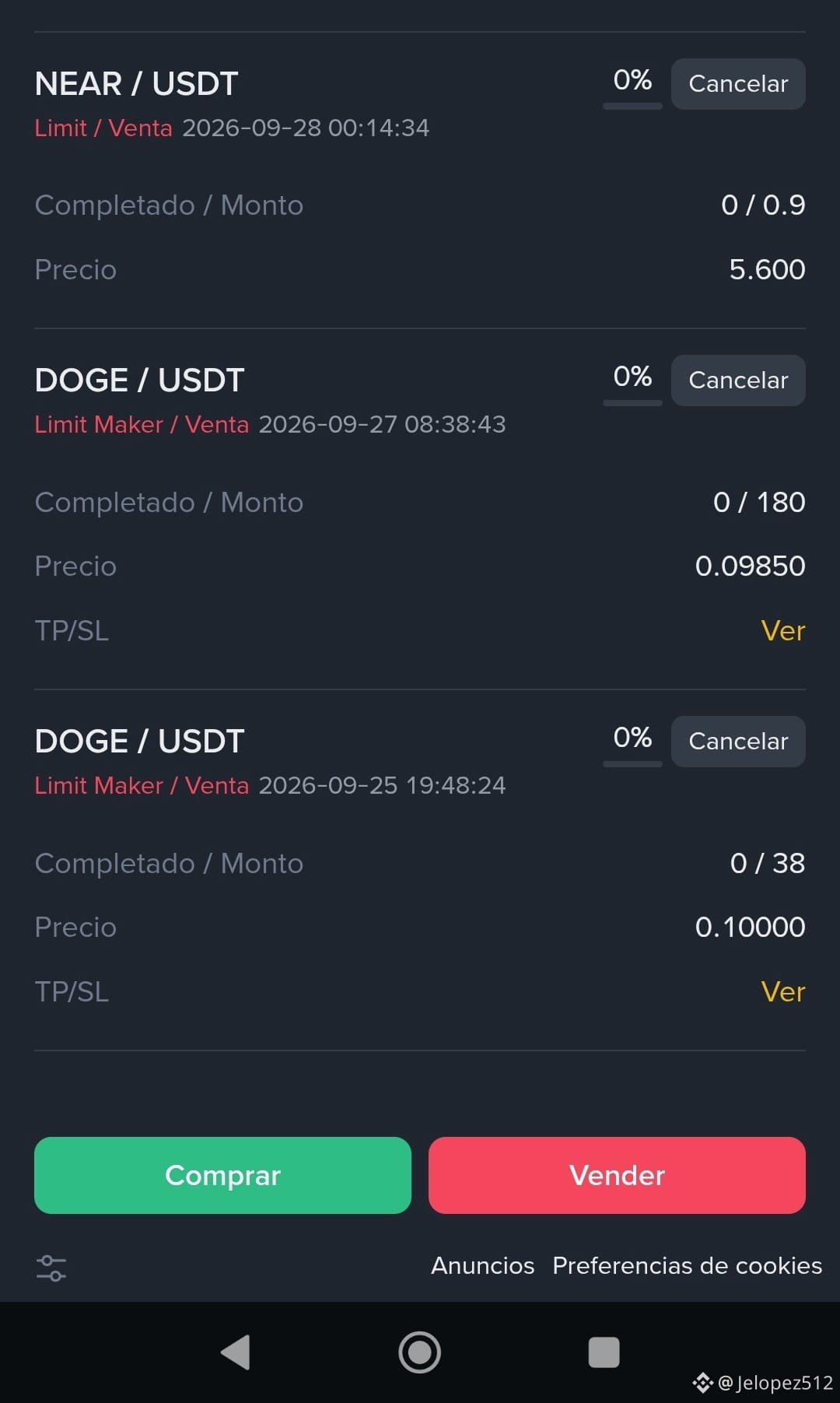
Si hay algo que he aprendido en este mundo del trading es que no hay que vender en pánico. Esperar para mi, es lo mejor 😌
#TradingTales
#Dogecoin
Si hay algo que he aprendido en este mundo del trading es que no hay que vender en pánico. Esperar para mi, es lo mejor 😌
#TradingTales
#Dogecoin
#TradingTales
#Dogecoin
7
4.7k

·
--
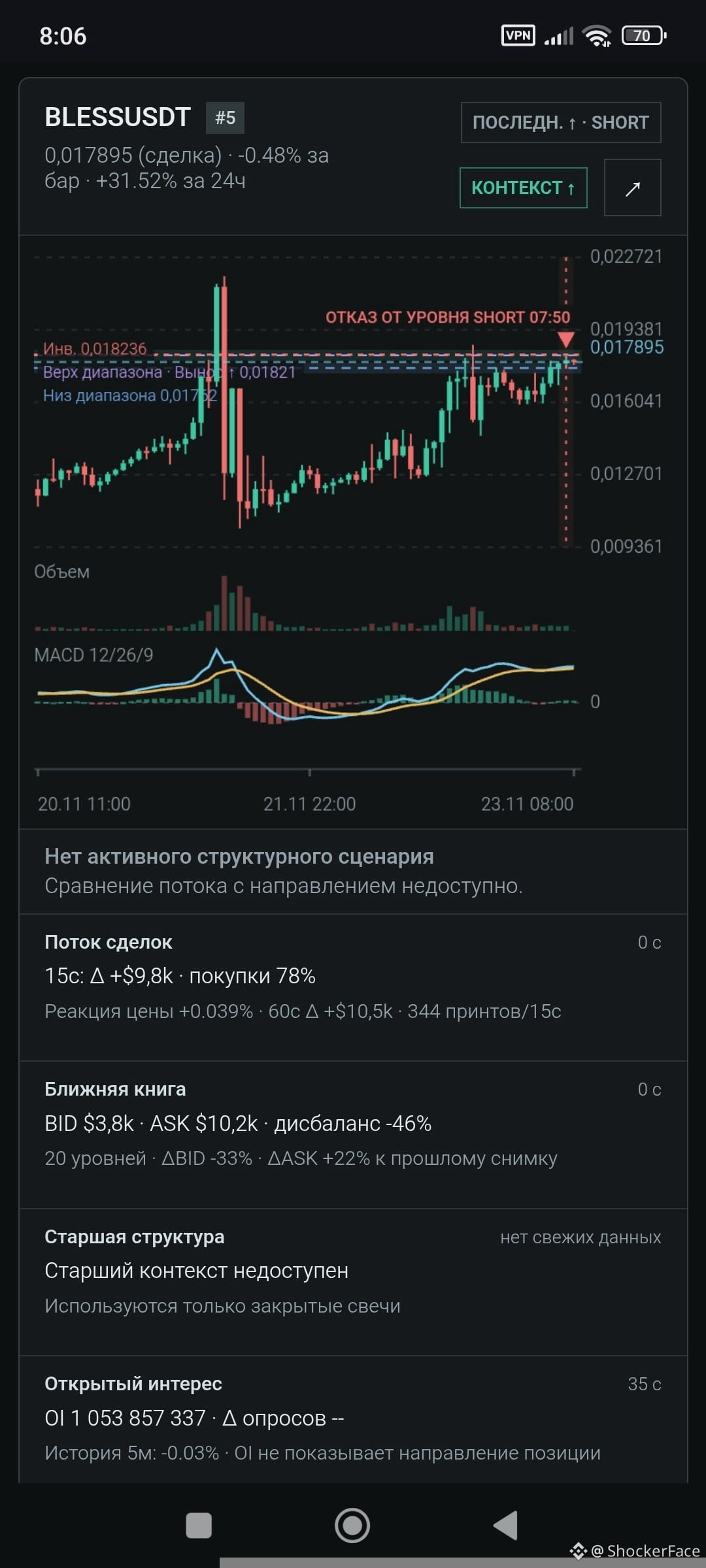
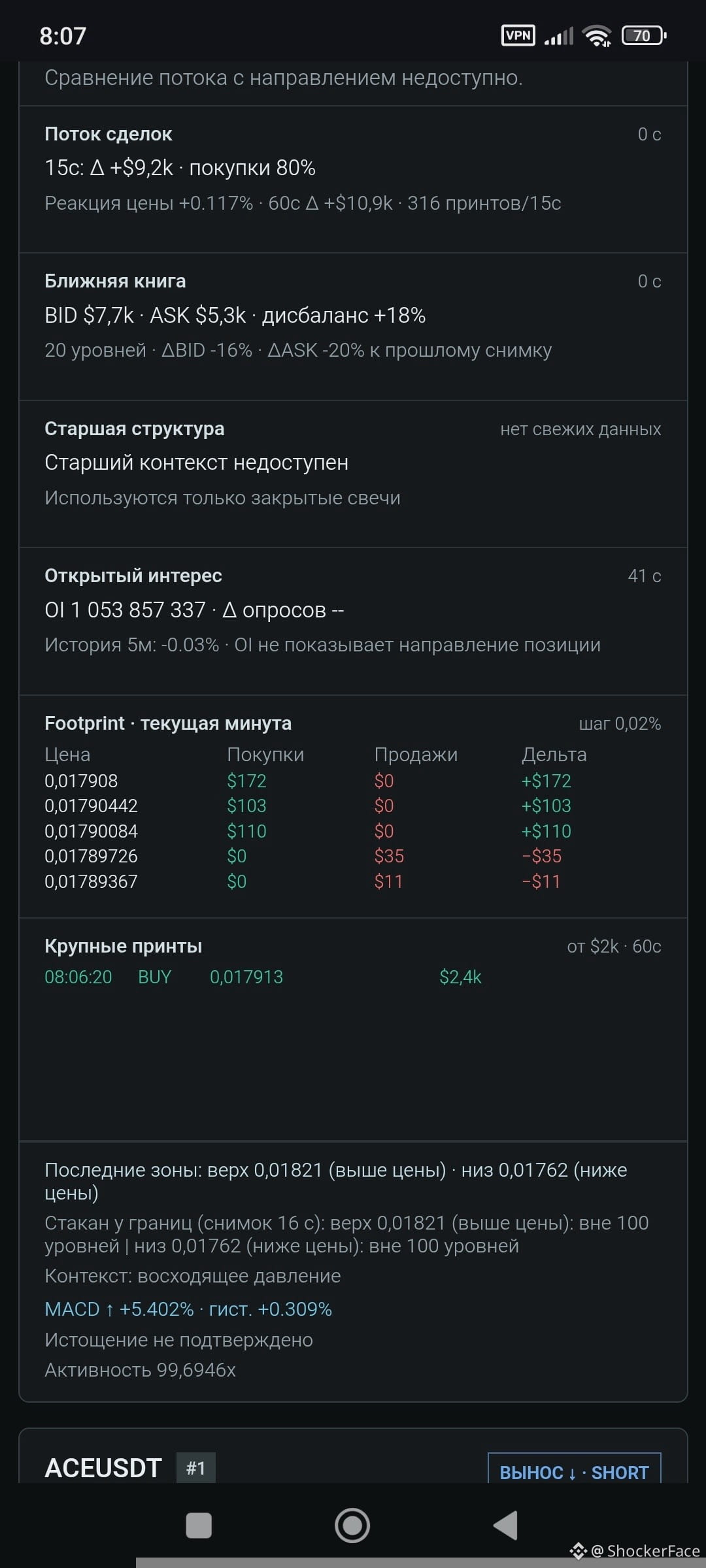
$BLESS — присмотритесь к монете, чтобы не пропустить шорт.
* Цена: ~0,017895 (+31,52% за 24ч)
* Сигнал: отказ от уровня (SHORT), верхняя зона/диапазон около 0,01821–0,018236
* Контекст: активный рост и высокая активность, следим за реакцией у верхних границ перед возможным откатом.
Не является финансовым советом. Контролируйте риск и стопы.
$BLESS #Binance #Crypto #bless #TradingTales
Zero_Gravity19:
Только главное не забудь. Что на данной монете сидит сильный игрок на хэдже
17
2
1.2k
Войдите, чтобы посмотреть больше материала
Присоединяйтесь к пользователям криптовалют по всему миру на Binance Square
⚡️ Получайте новейшую и полезную информацию о криптоактивах.
💬 Нам доверяет крупнейшая в мире криптобиржа.
👍 Получите достоверные аналитические данные от верифицированных создателей контента.
Эл. почта/номер телефона
В тренде
1
#BitcoinAndStocksSlipAgainAmidTrump’sTariffPlans
Просмотров: 29,652
441 обсуждают
2
#WillOctCorePCEShiftFedHikeExpectations?
Просмотров: 319,374
2,099 обсуждают
3
#JensenHuangSaysNvidiaDoesn’tNeedASuccessionPlan
Просмотров: 20,237
302 обсуждают
4
#AnthropicBreaksBelowIPOPriceAmidAISlump
Просмотров: 117,879
1,070 обсуждают
5
#HongKongPlansToRequireBanksToRegisterWithSFC
Просмотров: 0
1 обсуждают
6
#FidelityCryptoAddsAAVELINKAndUNITrading
Просмотров: 6,476
122 обсуждают
7
#UKToBanExchangesMakingMarketsOnOwnPlatforms
Просмотров: 4,327
94 обсуждают
8
#CFTCApprovesTradeReportingRuleForPredictionMarkets
Просмотров: 12,537
158 обсуждают
9
#Bitcoin'sReboundFadesBelow$60K
Просмотров: 181,011
462 обсуждают
10
#WillMarketsStageAThanksgivingReliefRally?
Просмотров: 728,609
3,803 обсуждают