
#marketcycle
marketcycle
Просмотров: 922,211
2,630 обсуждают
Популярные
Новые

·
--
Post-halving supply absorption is telling us something the price chart doesn't.
Every Bitcoin halving cuts new issuance in half overnight, but demand doesn't adjust on a schedule. The gap between what miners produce and what the market absorbs has to close through price discovery — and exchange reserves are the mechanism.
When exchange BTC balances decline steadily, coins move to cold storage faster than they're deposited for sale. That's structural demand outpacing supply. This cycle has shown one of the most sustained reserve drawdowns on record — not a spike, not panic, but a slow bleed.
The difference from 2020-2021 is the nature of the buyers. Last cycle, institutional accumulation was headline-driven — big announcements, treasury allocations, public filings. This cycle, the absorption is quieter. DCA flows into spot ETFs, corporate treasury programs on autopilot, sovereign interest that doesn't hold press conferences.
Supply shocks no longer need a narrative catalyst. The baseline demand curve has shifted. Corrections get absorbed faster because the bid side is now a flowing river, not a waiting pool.
The risk cuts both ways. If DCA flows slow — regulation, ETF outflows, macro tightening — the supply overhang from miners and long-term holders has less cushion. The same tightness that amplifies upside amplifies downside when the bid thins.
Track exchange reserves, not just price. The inventory tells you who's winning the supply-demand tug-of-war.
$BTC $ETH $BNB #MarketCycle #OnChain #SupplyShock
Post-halving supply absorption is telling us something the price chart doesn't.
Every Bitcoin halving cuts new issuance in half overnight, but demand doesn't adjust on a schedule. The gap between what miners produce and what the market absorbs has to close through price discovery — and exchange reserves are the mechanism.
When exchange BTC balances decline steadily, coins move to cold storage faster than they're deposited for sale. That's structural demand outpacing supply. This cycle has shown one of the most sustained reserve drawdowns on record — not a spike, not panic, but a slow bleed.
The difference from 2020-2021 is the nature of the buyers. Last cycle, institutional accumulation was headline-driven — big announcements, treasury allocations, public filings. This cycle, the absorption is quieter. DCA flows into spot ETFs, corporate treasury programs on autopilot, sovereign interest that doesn't hold press conferences.
Supply shocks no longer need a narrative catalyst. The baseline demand curve has shifted. Corrections get absorbed faster because the bid side is now a flowing river, not a waiting pool.
The risk cuts both ways. If DCA flows slow — regulation, ETF outflows, macro tightening — the supply overhang from miners and long-term holders has less cushion. The same tightness that amplifies upside amplifies downside when the bid thins.
Track exchange reserves, not just price. The inventory tells you who's winning the supply-demand tug-of-war.
$BTC $ETH $BNB #MarketCycle #OnChain #SupplyShock
Every Bitcoin halving cuts new issuance in half overnight, but demand doesn't adjust on a schedule. The gap between what miners produce and what the market absorbs has to close through price discovery — and exchange reserves are the mechanism.
When exchange BTC balances decline steadily, coins move to cold storage faster than they're deposited for sale. That's structural demand outpacing supply. This cycle has shown one of the most sustained reserve drawdowns on record — not a spike, not panic, but a slow bleed.
The difference from 2020-2021 is the nature of the buyers. Last cycle, institutional accumulation was headline-driven — big announcements, treasury allocations, public filings. This cycle, the absorption is quieter. DCA flows into spot ETFs, corporate treasury programs on autopilot, sovereign interest that doesn't hold press conferences.
Supply shocks no longer need a narrative catalyst. The baseline demand curve has shifted. Corrections get absorbed faster because the bid side is now a flowing river, not a waiting pool.
The risk cuts both ways. If DCA flows slow — regulation, ETF outflows, macro tightening — the supply overhang from miners and long-term holders has less cushion. The same tightness that amplifies upside amplifies downside when the bid thins.
Track exchange reserves, not just price. The inventory tells you who's winning the supply-demand tug-of-war.
$BTC $ETH $BNB #MarketCycle #OnChain #SupplyShock
10
·
--
Bull markets don't die from bad fundamentals. They die from euphoria.
Every market cycle follows a predictable emotional arc: disbelief → optimism → excitement → greed → denial → capitulation. Most traders only recognize which phase they're in after it's too late.
Here's what each phase looks like on the ground:
🔹 Disbelief – "This rally won't last." Prices climb but conviction is low. The best entries are here.
🔹 Optimism – "Maybe this is real." Fundamentals start matching price. Institutions start allocating.
🔹 Excitement – "I was right all along." FOMO accelerates. Volume spikes. Retail pours in.
🔹 Greed – "This time is different." Leverage explodes. Unrealistic targets circulate. Warning signs get rationalized.
🔹 Denial → Capitulation – The exit nobody planned for.
We're in a cycle right now. The question isn't whether a top will come — it's whether you've defined your exit before the narrative captures you.
Practical edge: Tie sell targets to price levels and time windows, not feelings. Review your thesis every 30 days. Reduce when everyone around you stops asking "why" and starts asking "how much."
$BTC $ETH $BNB are all subject to the same cycle psychology — the asset changes, the human behavior doesn't.
#BullMarket #MarketCycle #CryptoTrading #RiskManagement #Crypto2026
Bull markets don't die from bad fundamentals. They die from euphoria.
Every market cycle follows a predictable emotional arc: disbelief → optimism → excitement → greed → denial → capitulation. Most traders only recognize which phase they're in after it's too late.
Here's what each phase looks like on the ground:
🔹 Disbelief – "This rally won't last." Prices climb but conviction is low. The best entries are here.
🔹 Optimism – "Maybe this is real." Fundamentals start matching price. Institutions start allocating.
🔹 Excitement – "I was right all along." FOMO accelerates. Volume spikes. Retail pours in.
🔹 Greed – "This time is different." Leverage explodes. Unrealistic targets circulate. Warning signs get rationalized.
🔹 Denial → Capitulation – The exit nobody planned for.
We're in a cycle right now. The question isn't whether a top will come — it's whether you've defined your exit before the narrative captures you.
Practical edge: Tie sell targets to price levels and time windows, not feelings. Review your thesis every 30 days. Reduce when everyone around you stops asking "why" and starts asking "how much."
$BTC $ETH $BNB are all subject to the same cycle psychology — the asset changes, the human behavior doesn't.
#BullMarket #MarketCycle #CryptoTrading #RiskManagement #Crypto2026
Every market cycle follows a predictable emotional arc: disbelief → optimism → excitement → greed → denial → capitulation. Most traders only recognize which phase they're in after it's too late.
Here's what each phase looks like on the ground:
🔹 Disbelief – "This rally won't last." Prices climb but conviction is low. The best entries are here.
🔹 Optimism – "Maybe this is real." Fundamentals start matching price. Institutions start allocating.
🔹 Excitement – "I was right all along." FOMO accelerates. Volume spikes. Retail pours in.
🔹 Greed – "This time is different." Leverage explodes. Unrealistic targets circulate. Warning signs get rationalized.
🔹 Denial → Capitulation – The exit nobody planned for.
We're in a cycle right now. The question isn't whether a top will come — it's whether you've defined your exit before the narrative captures you.
Practical edge: Tie sell targets to price levels and time windows, not feelings. Review your thesis every 30 days. Reduce when everyone around you stops asking "why" and starts asking "how much."
$BTC $ETH $BNB are all subject to the same cycle psychology — the asset changes, the human behavior doesn't.
#BullMarket #MarketCycle #CryptoTrading #RiskManagement #Crypto2026
26
·
--
Q4 Is Where Crypto Cycles Have Historically Been Made
September has a bad reputation. But for long-term investors, September is not the story — Q4 is.
Looking back across multiple market cycles, Q4 has consistently been the quarter where the biggest structural moves begin. It is not coincidence. It is mechanics.
Several forces converge toward year-end:
• Institutional rebalancing: Portfolio managers who underperformed reallocate toward higher-beta assets in Q4 to close the performance gap before year-end reporting.
• Tax-loss harvesting exits in Q3 become fresh capital in Q4: The same investors who sold in September often rotate back in October and November.
• Liquidity conditions: Global M2 expansion and central bank posture tend to loosen heading into year-end, creating a more favorable backdrop for risk assets.
• Supply compression: $BTC long-term holders have been quietly reducing exchange float each cycle. Fewer coins available for sale means smaller inflows can move price further.
Ethereum post-Pectra, BNB with its deflationary burn mechanics, and $SOL with its expanding institutional footprint all enter Q4 with fundamental tailwinds that pure seasonality narratives miss.
The real edge is not timing the exact entry. It is being positioned before the narrative becomes obvious.
What are you watching as the Q4 setup develops?
#CryptoMarkets #Bitcoin #Q4Setup #MarketCycle
Q4 Is Where Crypto Cycles Have Historically Been Made
September has a bad reputation. But for long-term investors, September is not the story — Q4 is.
Looking back across multiple market cycles, Q4 has consistently been the quarter where the biggest structural moves begin. It is not coincidence. It is mechanics.
Several forces converge toward year-end:
• Institutional rebalancing: Portfolio managers who underperformed reallocate toward higher-beta assets in Q4 to close the performance gap before year-end reporting.
• Tax-loss harvesting exits in Q3 become fresh capital in Q4: The same investors who sold in September often rotate back in October and November.
• Liquidity conditions: Global M2 expansion and central bank posture tend to loosen heading into year-end, creating a more favorable backdrop for risk assets.
• Supply compression: $BTC long-term holders have been quietly reducing exchange float each cycle. Fewer coins available for sale means smaller inflows can move price further.
Ethereum post-Pectra, BNB with its deflationary burn mechanics, and $SOL with its expanding institutional footprint all enter Q4 with fundamental tailwinds that pure seasonality narratives miss.
The real edge is not timing the exact entry. It is being positioned before the narrative becomes obvious.
What are you watching as the Q4 setup develops?
#CryptoMarkets #Bitcoin #Q4Setup #MarketCycle
September has a bad reputation. But for long-term investors, September is not the story — Q4 is.
Looking back across multiple market cycles, Q4 has consistently been the quarter where the biggest structural moves begin. It is not coincidence. It is mechanics.
Several forces converge toward year-end:
• Institutional rebalancing: Portfolio managers who underperformed reallocate toward higher-beta assets in Q4 to close the performance gap before year-end reporting.
• Tax-loss harvesting exits in Q3 become fresh capital in Q4: The same investors who sold in September often rotate back in October and November.
• Liquidity conditions: Global M2 expansion and central bank posture tend to loosen heading into year-end, creating a more favorable backdrop for risk assets.
• Supply compression: $BTC long-term holders have been quietly reducing exchange float each cycle. Fewer coins available for sale means smaller inflows can move price further.
Ethereum post-Pectra, BNB with its deflationary burn mechanics, and $SOL with its expanding institutional footprint all enter Q4 with fundamental tailwinds that pure seasonality narratives miss.
The real edge is not timing the exact entry. It is being positioned before the narrative becomes obvious.
What are you watching as the Q4 setup develops?
#CryptoMarkets #Bitcoin #Q4Setup #MarketCycle
405
·
--
September has a reputation as crypto's worst month. History says sell. Consensus says brace.
But the data is more nuanced than the narrative.
$BTC has posted negative September returns more often than positive — that part is true. But the magnitude of those moves has compressed dramatically as institutional participation deepened. The violent September selloffs of 2018 and 2020 happened in a market with almost no institutional infrastructure. Spot ETFs did not exist. Regulated custody was nascent. Corporate treasuries had not entered.
The 2026 version of September looks structurally different:
→ Spot ETF inflows provide a persistent bid floor
→ $ETH Pectra upgrade has compressing supply mechanics active
→ $BNB burns are running on autopilot regardless of macro sentiment
Seasonality works until it does not. When the marginal buyer shifts from retail to institutional, calendar-based selling signals lose precision. Pension allocations do not pause because it is September.
The smarter frame: September is when patient positioning separates from reactive positioning. Volatility may arrive. That volatility is the opportunity — not the threat.
Do not trade the month. Trade the structure underneath it.
#Bitcoin #Crypto #CryptoMarkets #MarketCycle #CryptoInvesting
September has a reputation as crypto's worst month. History says sell. Consensus says brace.
But the data is more nuanced than the narrative.
$BTC has posted negative September returns more often than positive — that part is true. But the magnitude of those moves has compressed dramatically as institutional participation deepened. The violent September selloffs of 2018 and 2020 happened in a market with almost no institutional infrastructure. Spot ETFs did not exist. Regulated custody was nascent. Corporate treasuries had not entered.
The 2026 version of September looks structurally different:
→ Spot ETF inflows provide a persistent bid floor
→ $ETH Pectra upgrade has compressing supply mechanics active
→ $BNB burns are running on autopilot regardless of macro sentiment
Seasonality works until it does not. When the marginal buyer shifts from retail to institutional, calendar-based selling signals lose precision. Pension allocations do not pause because it is September.
The smarter frame: September is when patient positioning separates from reactive positioning. Volatility may arrive. That volatility is the opportunity — not the threat.
Do not trade the month. Trade the structure underneath it.
#Bitcoin #Crypto #CryptoMarkets #MarketCycle #CryptoInvesting
But the data is more nuanced than the narrative.
$BTC has posted negative September returns more often than positive — that part is true. But the magnitude of those moves has compressed dramatically as institutional participation deepened. The violent September selloffs of 2018 and 2020 happened in a market with almost no institutional infrastructure. Spot ETFs did not exist. Regulated custody was nascent. Corporate treasuries had not entered.
The 2026 version of September looks structurally different:
→ Spot ETF inflows provide a persistent bid floor
→ $ETH Pectra upgrade has compressing supply mechanics active
→ $BNB burns are running on autopilot regardless of macro sentiment
Seasonality works until it does not. When the marginal buyer shifts from retail to institutional, calendar-based selling signals lose precision. Pension allocations do not pause because it is September.
The smarter frame: September is when patient positioning separates from reactive positioning. Volatility may arrive. That volatility is the opportunity — not the threat.
Do not trade the month. Trade the structure underneath it.
#Bitcoin #Crypto #CryptoMarkets #MarketCycle #CryptoInvesting
80

Crypto Market Cycles: Where Are We Now?
On June 27, 2026, with Bitcoin $BTC at $60,147 and total cap at $2.165T, historical patterns help orient us.
Phase 1: Accumulation. Phase 2: Mark-up. Phase 3: Distribution. Phase 4: Mark-down. Current signals suggest late accumulation or early mark-up.
Key Takeaway:
Reading cycles helps avoid buying peaks and selling bottoms - $259B stablecoins are the next fuel.
#MarketCycle #Education
#BinanceAlphaAlert
Crypto Market Cycles: Where Are We Now?
On June 27, 2026, with Bitcoin $BTC at $60,147 and total cap at $2.165T, historical patterns help orient us.
Phase 1: Accumulation. Phase 2: Mark-up. Phase 3: Distribution. Phase 4: Mark-down. Current signals suggest late accumulation or early mark-up.
Key Takeaway:
Reading cycles helps avoid buying peaks and selling bottoms - $259B stablecoins are the next fuel.
#MarketCycle #Education
#BinanceAlphaAlert
On June 27, 2026, with Bitcoin $BTC at $60,147 and total cap at $2.165T, historical patterns help orient us.
Phase 1: Accumulation. Phase 2: Mark-up. Phase 3: Distribution. Phase 4: Mark-down. Current signals suggest late accumulation or early mark-up.
Key Takeaway:
Reading cycles helps avoid buying peaks and selling bottoms - $259B stablecoins are the next fuel.
#MarketCycle #Education
#BinanceAlphaAlert
9

·
--
🧪 THOUGHT EXPERIMENT: The Déjà Vu Test
Pull up any major cycle in $BTC's history. The euphoria at the top always sounds the same: "This time it's different. The old models don't apply anymore. We've entered a new paradigm."$BTC
Then pull up the bottom of the last bear market. The despair sounds identical too: "It's over. This was the mistake of a lifetime. Nobody will trust this again."
Now here's the experiment $ETC — if you removed the dates and just read the sentiment, could you tell which cycle you were looking at?
Most people can't. Because the market doesn't actually change as much as the participants convince themselves it does. Technology evolves. Adoption grows. But human psychology at extremes — greed at the top, despair at the bottom — repeats with almost eerie consistency.$BNB
The traders who do well aren't the ones who found some secret new pattern. They're the ones who recognized the old pattern early enough to act on it.
If you couldn't see the date, would you know which part of the cycle we're in right now?
#HalvingCycle #BTC #MarketCycle #CryptoPsychology
🧪 THOUGHT EXPERIMENT: The Déjà Vu Test
Pull up any major cycle in $BTC 's history. The euphoria at the top always sounds the same: "This time it's different. The old models don't apply anymore. We've entered a new paradigm."$BTC
Then pull up the bottom of the last bear market. The despair sounds identical too: "It's over. This was the mistake of a lifetime. Nobody will trust this again."
Now here's the experiment $ETC — if you removed the dates and just read the sentiment, could you tell which cycle you were looking at?
Most people can't. Because the market doesn't actually change as much as the participants convince themselves it does. Technology evolves. Adoption grows. But human psychology at extremes — greed at the top, despair at the bottom — repeats with almost eerie consistency.$BNB
The traders who do well aren't the ones who found some secret new pattern. They're the ones who recognized the old pattern early enough to act on it.
If you couldn't see the date, would you know which part of the cycle we're in right now?
#HalvingCycle #BTC #MarketCycle #CryptoPsychology
Pull up any major cycle in $BTC 's history. The euphoria at the top always sounds the same: "This time it's different. The old models don't apply anymore. We've entered a new paradigm."$BTC
Then pull up the bottom of the last bear market. The despair sounds identical too: "It's over. This was the mistake of a lifetime. Nobody will trust this again."
Now here's the experiment $ETC — if you removed the dates and just read the sentiment, could you tell which cycle you were looking at?
Most people can't. Because the market doesn't actually change as much as the participants convince themselves it does. Technology evolves. Adoption grows. But human psychology at extremes — greed at the top, despair at the bottom — repeats with almost eerie consistency.$BNB
The traders who do well aren't the ones who found some secret new pattern. They're the ones who recognized the old pattern early enough to act on it.
If you couldn't see the date, would you know which part of the cycle we're in right now?
#HalvingCycle #BTC #MarketCycle #CryptoPsychology
1
29

⚡ THE NEXT EXPANSION CYCLE IS LOADING AND 20% DAILY PUMPS ARE RETURNING TO $BTC ! 🚀
📌 Smart money does not wait for violent green candles to confirm a trend; institutional order flow accumulates quietly long before momentum hits the headlines. As structural liquidity sweeps into primary assets, macro cycle targets like $BTC pushing toward 135K-190K and $ETH at 7K-9.5K reflect natural market expansion. 📊
💡 Navigating this window requires front-running the crowd with disciplined positioning rather than chasing aggressive green spikes mid-flight. 🌊 The bid is building quietly across key demand zones—are you already positioned or waiting to buy the local top? 🤔
⚠️ Not financial advice. Always manage your risk. 🛡️
🏷️ #BTC #BullRun #MarketCycle #Crypto
🔥 💎
⚡ THE NEXT EXPANSION CYCLE IS LOADING AND 20% DAILY PUMPS ARE RETURNING TO $BTC ! 🚀
📌 Smart money does not wait for violent green candles to confirm a trend; institutional order flow accumulates quietly long before momentum hits the headlines. As structural liquidity sweeps into primary assets, macro cycle targets like $BTC pushing toward 135K-190K and $ETH at 7K-9.5K reflect natural market expansion. 📊
💡 Navigating this window requires front-running the crowd with disciplined positioning rather than chasing aggressive green spikes mid-flight. 🌊 The bid is building quietly across key demand zones—are you already positioned or waiting to buy the local top? 🤔
⚠️ Not financial advice. Always manage your risk. 🛡️
🏷️ #BTC #BullRun #MarketCycle #Crypto
🔥 💎
📌 Smart money does not wait for violent green candles to confirm a trend; institutional order flow accumulates quietly long before momentum hits the headlines. As structural liquidity sweeps into primary assets, macro cycle targets like $BTC pushing toward 135K-190K and $ETH at 7K-9.5K reflect natural market expansion. 📊
💡 Navigating this window requires front-running the crowd with disciplined positioning rather than chasing aggressive green spikes mid-flight. 🌊 The bid is building quietly across key demand zones—are you already positioned or waiting to buy the local top? 🤔
⚠️ Not financial advice. Always manage your risk. 🛡️
🏷️ #BTC #BullRun #MarketCycle #Crypto
🔥 💎

66
·
--
BTC Dominance Is the Market Cycle Clock Nobody Checks Closely Enough
Bitcoin dominance — the share of total crypto market cap held by $BTC — is one of the most overlooked macro signals in the space. Yet history keeps proving it reliable.
Here is the pattern: early in a bull cycle, capital flows into BTC first. Dominance rises. Newcomers pile in through the asset they recognize. Liquidity concentrates. This phase often lasts longer than anyone expects — and impatient altcoin holders get wrecked waiting for their tokens to move.
Then something shifts. BTC dominance peaks and starts a multi-month decline. Capital doesn’t leave crypto — it rotates. $ETH typically catches the first wave, given its role as the foundational layer for most DeFi and NFT activity. Then large-caps like $SOL absorb the next tranche, driven by ecosystem narratives and developer momentum. Smaller alts follow last — if at all.
What to watch right now:
– BTC dominance stalling at or below a prior cycle high is a soft rotation signal
– ETH/BTC ratio trend reversal often precedes broader altcoin expansion
– Stablecoin supply growth (new dry powder entering the market) confirms the move is real, not just reshuffling
The mistake most make is chasing alts before dominance peaks. The market cycle clock tells you when to rotate — not just whether to.
Patience plus timing beats conviction plus noise.
$BTC $ETH $SOL
#Bitcoin #MarketCycle #CryptoStrategy #BTCDominance #AltcoinSeason
BTC Dominance Is the Market Cycle Clock Nobody Checks Closely Enough
Bitcoin dominance — the share of total crypto market cap held by $BTC — is one of the most overlooked macro signals in the space. Yet history keeps proving it reliable.
Here is the pattern: early in a bull cycle, capital flows into BTC first. Dominance rises. Newcomers pile in through the asset they recognize. Liquidity concentrates. This phase often lasts longer than anyone expects — and impatient altcoin holders get wrecked waiting for their tokens to move.
Then something shifts. BTC dominance peaks and starts a multi-month decline. Capital doesn’t leave crypto — it rotates. $ETH typically catches the first wave, given its role as the foundational layer for most DeFi and NFT activity. Then large-caps like $SOL absorb the next tranche, driven by ecosystem narratives and developer momentum. Smaller alts follow last — if at all.
What to watch right now:
– BTC dominance stalling at or below a prior cycle high is a soft rotation signal
– ETH/BTC ratio trend reversal often precedes broader altcoin expansion
– Stablecoin supply growth (new dry powder entering the market) confirms the move is real, not just reshuffling
The mistake most make is chasing alts before dominance peaks. The market cycle clock tells you when to rotate — not just whether to.
Patience plus timing beats conviction plus noise.
$BTC $ETH $SOL
#Bitcoin #MarketCycle #CryptoStrategy #BTCDominance #AltcoinSeason
Bitcoin dominance — the share of total crypto market cap held by $BTC — is one of the most overlooked macro signals in the space. Yet history keeps proving it reliable.
Here is the pattern: early in a bull cycle, capital flows into BTC first. Dominance rises. Newcomers pile in through the asset they recognize. Liquidity concentrates. This phase often lasts longer than anyone expects — and impatient altcoin holders get wrecked waiting for their tokens to move.
Then something shifts. BTC dominance peaks and starts a multi-month decline. Capital doesn’t leave crypto — it rotates. $ETH typically catches the first wave, given its role as the foundational layer for most DeFi and NFT activity. Then large-caps like $SOL absorb the next tranche, driven by ecosystem narratives and developer momentum. Smaller alts follow last — if at all.
What to watch right now:
– BTC dominance stalling at or below a prior cycle high is a soft rotation signal
– ETH/BTC ratio trend reversal often precedes broader altcoin expansion
– Stablecoin supply growth (new dry powder entering the market) confirms the move is real, not just reshuffling
The mistake most make is chasing alts before dominance peaks. The market cycle clock tells you when to rotate — not just whether to.
Patience plus timing beats conviction plus noise.
$BTC $ETH $SOL
#Bitcoin #MarketCycle #CryptoStrategy #BTCDominance #AltcoinSeason
1
54

⏳ 51 DAYS UNTIL THE HISTORICAL $BTC CYCLE BOTTOM IS IN? 📊
The 1,065-day bull to 365-day bear fractal points to a potential macro bottom window in just 51 days. Markets rarely repeat historical timelines down to the exact candle, but collective trader psychology creates an unmistakable rhythm across cycles. 📊
Trying to front-run the exact bottom print is a high-risk game when order flow shifts dynamically. Scaling spot bids through structured DCA removes emotion while smart money quietly absorbs panic selling in established demand zones. 💡
Survival in this market isn't about calling the absolute low, it is about disciplined position sizing before liquidity expands again. 💬 Are you trying to catch knife spikes or quietly scaling into your long-term $BTC allocations? 👇
⚠️ Not financial advice. Always manage your risk. 🛡️
🏷️ #BTC #Bitcoin #MarketCycle #Crypto
🔥 💎
⏳ 51 DAYS UNTIL THE HISTORICAL $BTC CYCLE BOTTOM IS IN? 📊
The 1,065-day bull to 365-day bear fractal points to a potential macro bottom window in just 51 days. Markets rarely repeat historical timelines down to the exact candle, but collective trader psychology creates an unmistakable rhythm across cycles. 📊
Trying to front-run the exact bottom print is a high-risk game when order flow shifts dynamically. Scaling spot bids through structured DCA removes emotion while smart money quietly absorbs panic selling in established demand zones. 💡
Survival in this market isn't about calling the absolute low, it is about disciplined position sizing before liquidity expands again. 💬 Are you trying to catch knife spikes or quietly scaling into your long-term $BTC allocations? 👇
⚠️ Not financial advice. Always manage your risk. 🛡️
🏷️ #BTC #Bitcoin #MarketCycle #Crypto
🔥 💎
The 1,065-day bull to 365-day bear fractal points to a potential macro bottom window in just 51 days. Markets rarely repeat historical timelines down to the exact candle, but collective trader psychology creates an unmistakable rhythm across cycles. 📊
Trying to front-run the exact bottom print is a high-risk game when order flow shifts dynamically. Scaling spot bids through structured DCA removes emotion while smart money quietly absorbs panic selling in established demand zones. 💡
Survival in this market isn't about calling the absolute low, it is about disciplined position sizing before liquidity expands again. 💬 Are you trying to catch knife spikes or quietly scaling into your long-term $BTC allocations? 👇
⚠️ Not financial advice. Always manage your risk. 🛡️
🏷️ #BTC #Bitcoin #MarketCycle #Crypto
🔥 💎
14

🦈 $ALT FIVE YEARS OF PAIN JUST FORGED A MACRO CUP — THE BOTTOM IS FORMING 💀
📉 The aggregate altcoin market cap sits at $657B today — still below 2021 pricing. Five years of relentless distribution, exhausted traders, and underwater bags have finally sculpted one of the most recognizable structural basements in crypto history.
💡 This is what the handle of a decade-defining cup looks like. Every top-buyer capitulating, every swing trader wiped out — that's the emotional fuel institutional accumulation feeds on. 🌀
🔍 The question isn't whether liquidity returns — it's who's still positioned when the handle completes. Smart money has been quietly mapping these lows for months. 🌊
💬 Are you building a strategic position in this accumulation zone, or waiting for confirmation above the cup's rim? 👇
⚠️ Not financial advice. Always manage your risk. 🛡️
🏷️ #ALT #Altcoin #MarketCycle #CryptoBottom #SmartMoney
🎯 🦈
🦈 $ALT FIVE YEARS OF PAIN JUST FORGED A MACRO CUP — THE BOTTOM IS FORMING 💀
📉 The aggregate altcoin market cap sits at $657B today — still below 2021 pricing. Five years of relentless distribution, exhausted traders, and underwater bags have finally sculpted one of the most recognizable structural basements in crypto history.
💡 This is what the handle of a decade-defining cup looks like. Every top-buyer capitulating, every swing trader wiped out — that's the emotional fuel institutional accumulation feeds on. 🌀
🔍 The question isn't whether liquidity returns — it's who's still positioned when the handle completes. Smart money has been quietly mapping these lows for months. 🌊
💬 Are you building a strategic position in this accumulation zone, or waiting for confirmation above the cup's rim? 👇
⚠️ Not financial advice. Always manage your risk. 🛡️
🏷️ #ALT #Altcoin #MarketCycle #CryptoBottom #SmartMoney
🎯 🦈
📉 The aggregate altcoin market cap sits at $657B today — still below 2021 pricing. Five years of relentless distribution, exhausted traders, and underwater bags have finally sculpted one of the most recognizable structural basements in crypto history.
💡 This is what the handle of a decade-defining cup looks like. Every top-buyer capitulating, every swing trader wiped out — that's the emotional fuel institutional accumulation feeds on. 🌀
🔍 The question isn't whether liquidity returns — it's who's still positioned when the handle completes. Smart money has been quietly mapping these lows for months. 🌊
💬 Are you building a strategic position in this accumulation zone, or waiting for confirmation above the cup's rim? 👇
⚠️ Not financial advice. Always manage your risk. 🛡️
🏷️ #ALT #Altcoin #MarketCycle #CryptoBottom #SmartMoney
🎯 🦈
86
·
--
Mid-Cycle Consolidation vs. Trend Reversal: The Trap Most Investors Fall Into
Every bull market has at least one moment that feels exactly like the top — until it isn't.
Mid-cycle consolidations are the cruelest feature of crypto market structure. Price corrects 20–35%, social sentiment collapses, and the narrative flips bearish. Retail capitulates. Then the cycle continues higher.
How do you tell consolidation from reversal? A few signals matter more than price alone:
1. Network activity: During genuine mid-cycle pauses, on-chain transaction volumes stay elevated. In true bear markets, they fall structurally.
2. Liquidity behavior: Bitcoin dominance rising sharply signals risk-off rotation — capital isn't leaving crypto, it's seeking safety within it. That's consolidation, not exit.
3. Stablecoin supply growth: When stablecoin market cap keeps growing even as prices dip, dry powder is accumulating — not fleeing.
4. Macro correlation: If the dip tracks a DXY surge or a Fed repricing, it's externally driven. External shocks create entries, not endings.
$BTC $ETH $SOL have all shown this pattern across multiple cycles. The investors who compounded the most weren't the ones who called the top — they were the ones who didn't panic during the pause.
The cycle doesn't announce itself. The signal is always hiding in the noise.
#Bitcoin #Crypto #MarketCycle #BullMarket #CryptoInsights
Mid-Cycle Consolidation vs. Trend Reversal: The Trap Most Investors Fall Into
Every bull market has at least one moment that feels exactly like the top — until it isn't.
Mid-cycle consolidations are the cruelest feature of crypto market structure. Price corrects 20–35%, social sentiment collapses, and the narrative flips bearish. Retail capitulates. Then the cycle continues higher.
How do you tell consolidation from reversal? A few signals matter more than price alone:
1. Network activity: During genuine mid-cycle pauses, on-chain transaction volumes stay elevated. In true bear markets, they fall structurally.
2. Liquidity behavior: Bitcoin dominance rising sharply signals risk-off rotation — capital isn't leaving crypto, it's seeking safety within it. That's consolidation, not exit.
3. Stablecoin supply growth: When stablecoin market cap keeps growing even as prices dip, dry powder is accumulating — not fleeing.
4. Macro correlation: If the dip tracks a DXY surge or a Fed repricing, it's externally driven. External shocks create entries, not endings.
$BTC $ETH $SOL have all shown this pattern across multiple cycles. The investors who compounded the most weren't the ones who called the top — they were the ones who didn't panic during the pause.
The cycle doesn't announce itself. The signal is always hiding in the noise.
#Bitcoin #Crypto #MarketCycle #BullMarket #CryptoInsights
Every bull market has at least one moment that feels exactly like the top — until it isn't.
Mid-cycle consolidations are the cruelest feature of crypto market structure. Price corrects 20–35%, social sentiment collapses, and the narrative flips bearish. Retail capitulates. Then the cycle continues higher.
How do you tell consolidation from reversal? A few signals matter more than price alone:
1. Network activity: During genuine mid-cycle pauses, on-chain transaction volumes stay elevated. In true bear markets, they fall structurally.
2. Liquidity behavior: Bitcoin dominance rising sharply signals risk-off rotation — capital isn't leaving crypto, it's seeking safety within it. That's consolidation, not exit.
3. Stablecoin supply growth: When stablecoin market cap keeps growing even as prices dip, dry powder is accumulating — not fleeing.
4. Macro correlation: If the dip tracks a DXY surge or a Fed repricing, it's externally driven. External shocks create entries, not endings.
$BTC $ETH $SOL have all shown this pattern across multiple cycles. The investors who compounded the most weren't the ones who called the top — they were the ones who didn't panic during the pause.
The cycle doesn't announce itself. The signal is always hiding in the noise.
#Bitcoin #Crypto #MarketCycle #BullMarket #CryptoInsights
76

THE NEXT 12-18 MONTHS WILL SEPARATE THE PREPARED FROM THE SPECTATORS $BTC ⏳
The quiet before the storm is the loudest signal in this market. While the crowd scrolls, the position-takers are already building. The next year and a half isn't a guessing game — it's a transfer window.
The cycle doesn't announce itself. It sneaks in, shakes out the weak hands, then runs. Most will be caught watching charts instead of positioning for the sweep. That's the edge — seeing the battlefield before the smoke clears.
History rewards the ones who build conviction in calm waters, not the ones who chase once the tide turns. The question is: are you positioning or just watching?
⚠️ Not financial advice. Always manage your risk. 🛡️
🏷️ #BTC #Crypto #Bitcoin #MarketCycle
🧠
THE NEXT 12-18 MONTHS WILL SEPARATE THE PREPARED FROM THE SPECTATORS $BTC ⏳
The quiet before the storm is the loudest signal in this market. While the crowd scrolls, the position-takers are already building. The next year and a half isn't a guessing game — it's a transfer window.
The cycle doesn't announce itself. It sneaks in, shakes out the weak hands, then runs. Most will be caught watching charts instead of positioning for the sweep. That's the edge — seeing the battlefield before the smoke clears.
History rewards the ones who build conviction in calm waters, not the ones who chase once the tide turns. The question is: are you positioning or just watching?
⚠️ Not financial advice. Always manage your risk. 🛡️
🏷️ #BTC #Crypto #Bitcoin #MarketCycle
🧠
The quiet before the storm is the loudest signal in this market. While the crowd scrolls, the position-takers are already building. The next year and a half isn't a guessing game — it's a transfer window.
The cycle doesn't announce itself. It sneaks in, shakes out the weak hands, then runs. Most will be caught watching charts instead of positioning for the sweep. That's the edge — seeing the battlefield before the smoke clears.
History rewards the ones who build conviction in calm waters, not the ones who chase once the tide turns. The question is: are you positioning or just watching?
⚠️ Not financial advice. Always manage your risk. 🛡️
🏷️ #BTC #Crypto #Bitcoin #MarketCycle
🧠
39
·
--
Stablecoin supply on-chain is one of the most overlooked market cycle indicators and right now it deserves your attention.
When stablecoin circulation expands rapidly, it signals fresh capital entering the ecosystem looking for deployment. That dry powder is the fuel behind the next leg up. Historically, surges in on-chain stablecoin supply have preceded significant moves in $BTC and $ETH and eventually the broader altcoin market following the classic rotation waterfall.
The logic is simple: stablecoins do not sit idle. They are held by investors who are positioned to buy. When sentiment shifts triggered by a macro catalyst, a favorable Fed signal, or a policy clarity event that supply converts into spot bids fast.
What matters is not just the total stablecoin market cap, but the velocity. Flat or declining stablecoin supply often signals that capital has already deployed. Rising supply, especially in tandem with BTC dominance cooling off, is the setup condition worth watching.
Right now, pay attention to:
-> Stablecoin supply growth rate (7-day and 30-day delta)
-> USDT + USDC share relative to total crypto market cap
-> BTC dominance divergence as a rotation trigger
The market does not move on headlines. It moves on liquidity. Track the dry powder before the next big move.
$BTC $ETH $BNB
#CryptoMarket #MarketCycle #OnChainAnalysis #CryptoInsights #BinanceSquare
Stablecoin supply on-chain is one of the most overlooked market cycle indicators and right now it deserves your attention.
When stablecoin circulation expands rapidly, it signals fresh capital entering the ecosystem looking for deployment. That dry powder is the fuel behind the next leg up. Historically, surges in on-chain stablecoin supply have preceded significant moves in $BTC and $ETH and eventually the broader altcoin market following the classic rotation waterfall.
The logic is simple: stablecoins do not sit idle. They are held by investors who are positioned to buy. When sentiment shifts triggered by a macro catalyst, a favorable Fed signal, or a policy clarity event that supply converts into spot bids fast.
What matters is not just the total stablecoin market cap, but the velocity. Flat or declining stablecoin supply often signals that capital has already deployed. Rising supply, especially in tandem with BTC dominance cooling off, is the setup condition worth watching.
Right now, pay attention to:
-> Stablecoin supply growth rate (7-day and 30-day delta)
-> USDT + USDC share relative to total crypto market cap
-> BTC dominance divergence as a rotation trigger
The market does not move on headlines. It moves on liquidity. Track the dry powder before the next big move.
$BTC $ETH $BNB
#CryptoMarket #MarketCycle #OnChainAnalysis #CryptoInsights #BinanceSquare
When stablecoin circulation expands rapidly, it signals fresh capital entering the ecosystem looking for deployment. That dry powder is the fuel behind the next leg up. Historically, surges in on-chain stablecoin supply have preceded significant moves in $BTC and $ETH and eventually the broader altcoin market following the classic rotation waterfall.
The logic is simple: stablecoins do not sit idle. They are held by investors who are positioned to buy. When sentiment shifts triggered by a macro catalyst, a favorable Fed signal, or a policy clarity event that supply converts into spot bids fast.
What matters is not just the total stablecoin market cap, but the velocity. Flat or declining stablecoin supply often signals that capital has already deployed. Rising supply, especially in tandem with BTC dominance cooling off, is the setup condition worth watching.
Right now, pay attention to:
-> Stablecoin supply growth rate (7-day and 30-day delta)
-> USDT + USDC share relative to total crypto market cap
-> BTC dominance divergence as a rotation trigger
The market does not move on headlines. It moves on liquidity. Track the dry powder before the next big move.
$BTC $ETH $BNB
#CryptoMarket #MarketCycle #OnChainAnalysis #CryptoInsights #BinanceSquare
40
·
--
Twelve hours ago the consensus was $BTC was broken. 74,300 printed. Spot ETFs bled billions. Bear accounts everywhere declared the cycle over.
Then a single headline flipped it.
This is what mid-cycle corrections are designed to do — shake out everyone who bought for the narrative, not the structure. The traders who sold at 74K weren’t wrong about the dip. They were wrong about what it meant.
Here’s what actually happened:
— LTH supply barely moved during the flush
— $ETH held relative structure better than most expected
— Stablecoin dry powder on-chain didn’t rotate out — it waited
— The 200-day MA held. Again.
The GENIUS Act is law. Institutional ETF infrastructure is intact. None of that changed because of a geopolitical macro dip.
Every cycle has its “this time it’s really over” moment. The 2021 May crash. The 2019 mid-rally fade. Today felt like that moment for a lot of people.
The data says otherwise. The structure says otherwise.
The flush wasn’t the end. It was the reset that sets up the next leg.
#Bitcoin #CryptoMarkets #MarketCycle #BTC #CryptoTrading
Twelve hours ago the consensus was $BTC was broken. 74,300 printed. Spot ETFs bled billions. Bear accounts everywhere declared the cycle over.
Then a single headline flipped it.
This is what mid-cycle corrections are designed to do — shake out everyone who bought for the narrative, not the structure. The traders who sold at 74K weren’t wrong about the dip. They were wrong about what it meant.
Here’s what actually happened:
— LTH supply barely moved during the flush
— $ETH held relative structure better than most expected
— Stablecoin dry powder on-chain didn’t rotate out — it waited
— The 200-day MA held. Again.
The GENIUS Act is law. Institutional ETF infrastructure is intact. None of that changed because of a geopolitical macro dip.
Every cycle has its “this time it’s really over” moment. The 2021 May crash. The 2019 mid-rally fade. Today felt like that moment for a lot of people.
The data says otherwise. The structure says otherwise.
The flush wasn’t the end. It was the reset that sets up the next leg.
#Bitcoin #CryptoMarkets #MarketCycle #BTC #CryptoTrading
Then a single headline flipped it.
This is what mid-cycle corrections are designed to do — shake out everyone who bought for the narrative, not the structure. The traders who sold at 74K weren’t wrong about the dip. They were wrong about what it meant.
Here’s what actually happened:
— LTH supply barely moved during the flush
— $ETH held relative structure better than most expected
— Stablecoin dry powder on-chain didn’t rotate out — it waited
— The 200-day MA held. Again.
The GENIUS Act is law. Institutional ETF infrastructure is intact. None of that changed because of a geopolitical macro dip.
Every cycle has its “this time it’s really over” moment. The 2021 May crash. The 2019 mid-rally fade. Today felt like that moment for a lot of people.
The data says otherwise. The structure says otherwise.
The flush wasn’t the end. It was the reset that sets up the next leg.
#Bitcoin #CryptoMarkets #MarketCycle #BTC #CryptoTrading
85

·
--
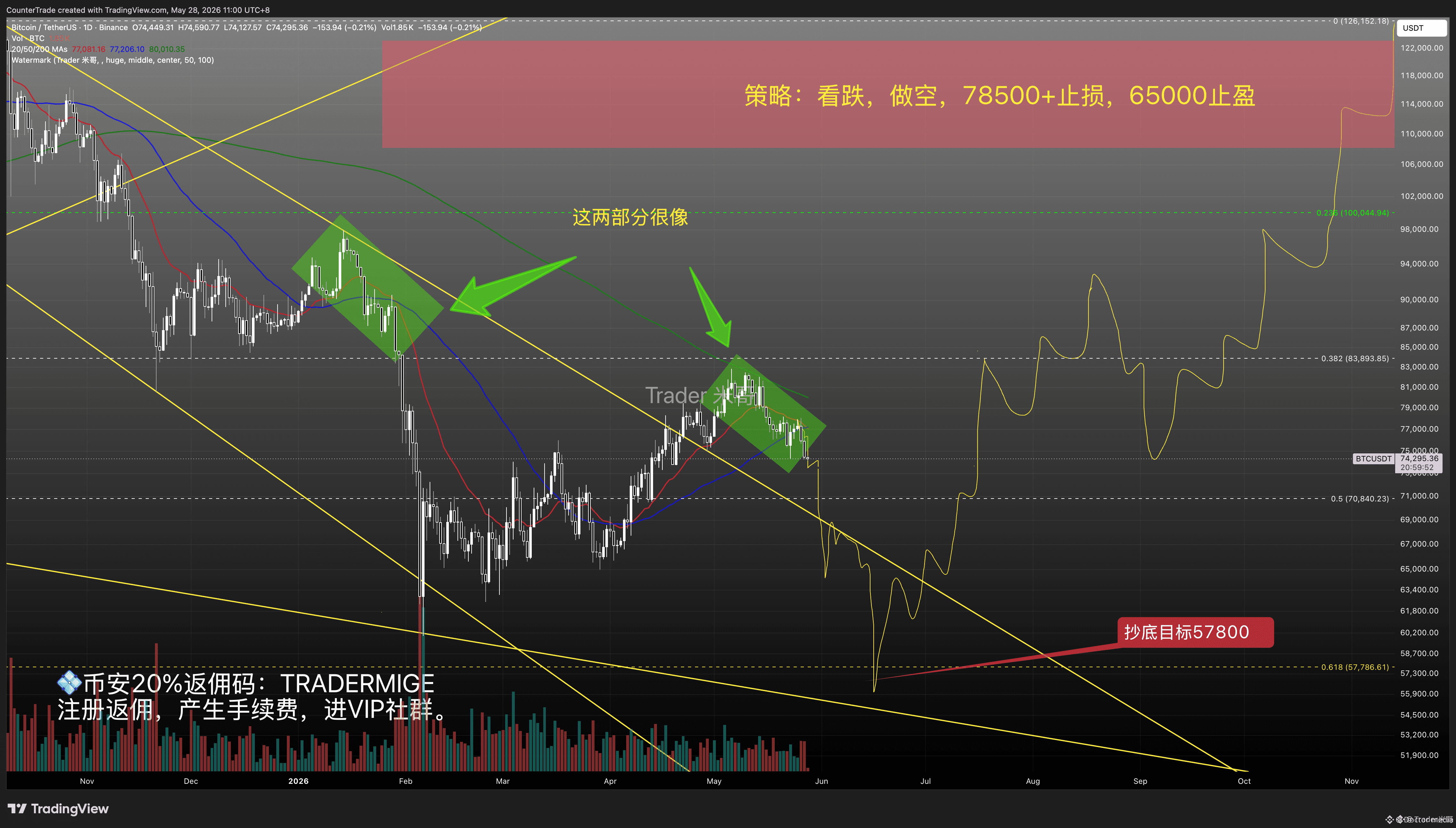
$BTC :The Final Shakeout Before the Parabolic Run? ⚠️🚀
{future}(BTCUSDT)
The next few months are going to be absolute carnage before we see true glory. Bookmark this series—we are about to witness the most critical cycle shift in years.
The Roadmap to the Peak:
The "Graveyard" Phase: We are likely looking at a sharp correction from these levels down to the $57k zone. This is designed to liquidate the over-leveraged and send the bulls to their graves. 📉
The Epic Rally: Once the weak hands are washed out, the real move begins. We are targeting a massive breakout to $135k as the final leg of this cycle. 🌕
The Long Winter: Once we hit that $135k peak, the bull market officially concludes, ushering in a brutal three-year bear cycle. ❄️
The Bottom Line: The "Big One" is coming. Whether you survive the $57k shakeout will determine if you’re around for the $135k pay-day.
Are you holding through the volatility or moving to cash to wait for the $57k entry? Let’s hear your thoughts below. 👇
#BTC #Bitcoin #CryptoMarket #TradingStrategy #BullRun #MarketCycle
$GUA
{future}(GUAUSDT)
$ALLO
{future}(ALLOUSDT)
$BTC :The Final Shakeout Before the Parabolic Run? ⚠️🚀
The next few months are going to be absolute carnage before we see true glory. Bookmark this series—we are about to witness the most critical cycle shift in years.
The Roadmap to the Peak:
The "Graveyard" Phase: We are likely looking at a sharp correction from these levels down to the $57k zone. This is designed to liquidate the over-leveraged and send the bulls to their graves. 📉
The Epic Rally: Once the weak hands are washed out, the real move begins. We are targeting a massive breakout to $135k as the final leg of this cycle. 🌕
The Long Winter: Once we hit that $135k peak, the bull market officially concludes, ushering in a brutal three-year bear cycle. ❄️
The Bottom Line: The "Big One" is coming. Whether you survive the $57k shakeout will determine if you’re around for the $135k pay-day.
Are you holding through the volatility or moving to cash to wait for the $57k entry? Let’s hear your thoughts below. 👇
#BTC #Bitcoin #CryptoMarket #TradingStrategy #BullRun #MarketCycle
$GUA
$ALLO
The next few months are going to be absolute carnage before we see true glory. Bookmark this series—we are about to witness the most critical cycle shift in years.
The Roadmap to the Peak:
The "Graveyard" Phase: We are likely looking at a sharp correction from these levels down to the $57k zone. This is designed to liquidate the over-leveraged and send the bulls to their graves. 📉
The Epic Rally: Once the weak hands are washed out, the real move begins. We are targeting a massive breakout to $135k as the final leg of this cycle. 🌕
The Long Winter: Once we hit that $135k peak, the bull market officially concludes, ushering in a brutal three-year bear cycle. ❄️
The Bottom Line: The "Big One" is coming. Whether you survive the $57k shakeout will determine if you’re around for the $135k pay-day.
Are you holding through the volatility or moving to cash to wait for the $57k entry? Let’s hear your thoughts below. 👇
#BTC #Bitcoin #CryptoMarket #TradingStrategy #BullRun #MarketCycle
$GUA
$ALLO
257

·
--
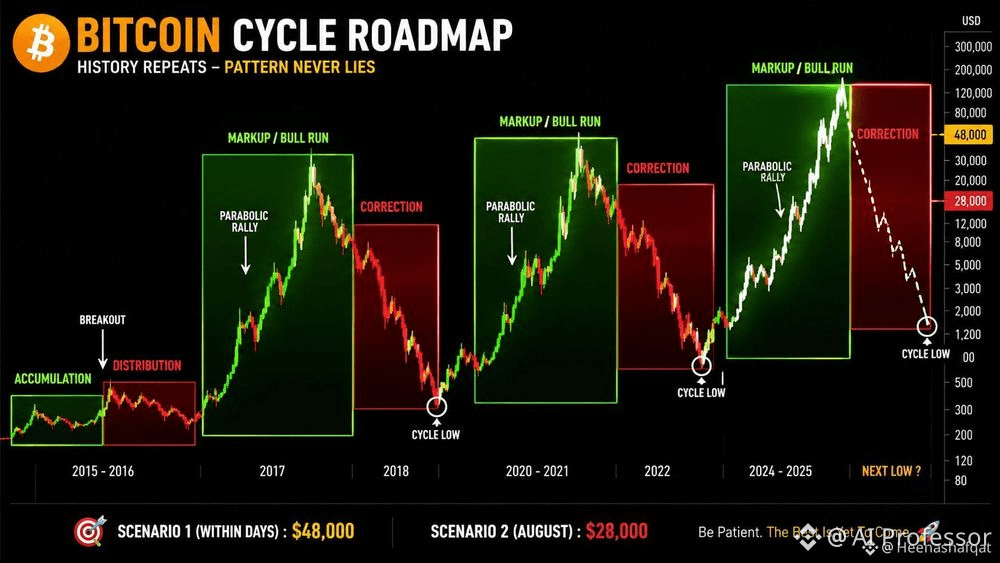
🚨 Bitcoin Is Following the Same Cycle Structure as 2017 & 2021
$BITCOIN is now mirroring the patterns seen in previous market cycles. The price action continues to follow the roadmap I’ve been tracking, and so far, the structure remains intact.
📉 The bull trap appears to be complete, and the next major move could be a deep correction before a new bull market begins.
🔍 Possible Scenarios:
📌 Scenario 1: → $BTC drops to $48,000 within the coming days.
📌 Scenario 2: → BTC continues lower and reaches $28,000 by August, creating the ultimate capitulation event before the next major rally.
History doesn’t repeat exactly, but it often rhymes. If this cycle continues to follow the same pattern, the biggest opportunities may come when fear is at its highest.
⚠️ Are you actually prepared if Bitcoin drops to $28,000? #Bitcoin #BTC #Crypto #Trading #MarketCycle
🚨 Bitcoin Is Following the Same Cycle Structure as 2017 & 2021
$BITCOIN is now mirroring the patterns seen in previous market cycles. The price action continues to follow the roadmap I’ve been tracking, and so far, the structure remains intact.
📉 The bull trap appears to be complete, and the next major move could be a deep correction before a new bull market begins.
🔍 Possible Scenarios:
📌 Scenario 1: → $BTC drops to $48,000 within the coming days.
📌 Scenario 2: → BTC continues lower and reaches $28,000 by August, creating the ultimate capitulation event before the next major rally.
History doesn’t repeat exactly, but it often rhymes. If this cycle continues to follow the same pattern, the biggest opportunities may come when fear is at its highest.
⚠️ Are you actually prepared if Bitcoin drops to $28,000? #Bitcoin #BTC #Crypto #Trading #MarketCycle
$BITCOIN is now mirroring the patterns seen in previous market cycles. The price action continues to follow the roadmap I’ve been tracking, and so far, the structure remains intact.
📉 The bull trap appears to be complete, and the next major move could be a deep correction before a new bull market begins.
🔍 Possible Scenarios:
📌 Scenario 1: → $BTC drops to $48,000 within the coming days.
📌 Scenario 2: → BTC continues lower and reaches $28,000 by August, creating the ultimate capitulation event before the next major rally.
History doesn’t repeat exactly, but it often rhymes. If this cycle continues to follow the same pattern, the biggest opportunities may come when fear is at its highest.
⚠️ Are you actually prepared if Bitcoin drops to $28,000? #Bitcoin #BTC #Crypto #Trading #MarketCycle
134

·
--
Man, that 2026 market correction is definitely going to be a game-changer. It feels like it's setting up to completely flip the current narrative we're seeing across the board for $BTC and $ETH.
We've been riding a certain wave, but if this forecast holds true, expect a total reset. It'll be interesting to see which projects survive and thrive post-correction, especially given how much speculation is out there right now.
It's going to be a wild ride.
#CryptoMarket #MarketCycle #Bitcoin #Ethereum #FutureOfCrypto
Man, that 2026 market correction is definitely going to be a game-changer. It feels like it's setting up to completely flip the current narrative we're seeing across the board for $BTC and $ETH .
We've been riding a certain wave, but if this forecast holds true, expect a total reset. It'll be interesting to see which projects survive and thrive post-correction, especially given how much speculation is out there right now.
It's going to be a wild ride.
#CryptoMarket #MarketCycle #Bitcoin #Ethereum #FutureOfCrypto
We've been riding a certain wave, but if this forecast holds true, expect a total reset. It'll be interesting to see which projects survive and thrive post-correction, especially given how much speculation is out there right now.
It's going to be a wild ride.
#CryptoMarket #MarketCycle #Bitcoin #Ethereum #FutureOfCrypto
10

·
--
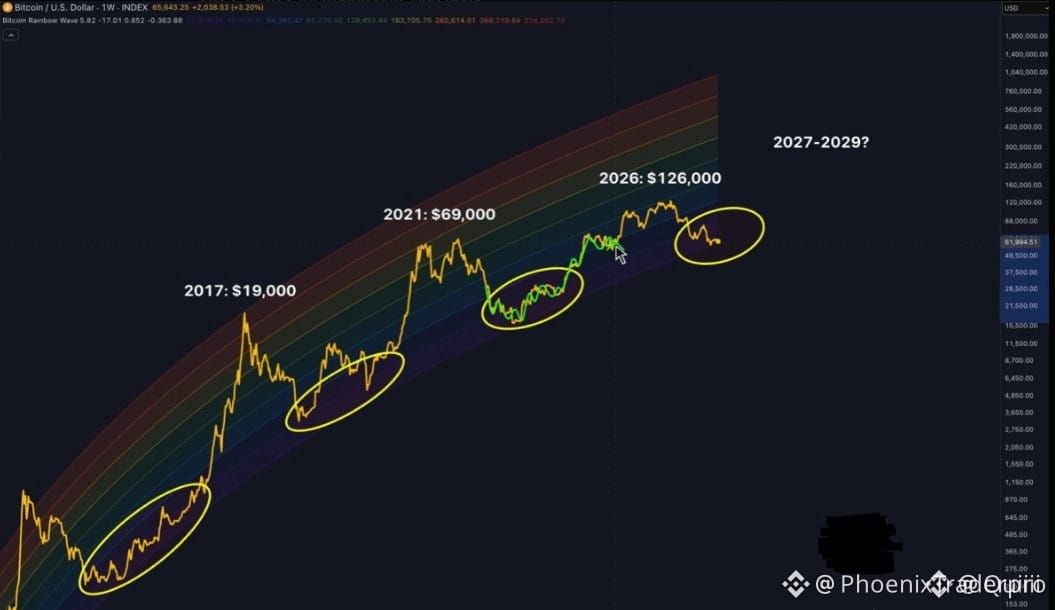
Is the famous Bitcoin Rainbow Chart officially broken❓
According to CoinDesk, Bitcoin has just dropped into the model’s bottom purple band -the dreaded “Bitcoin Is Dead” zone. This marks only the second time in history that BTC has fallen this low relative to the chart, following a 50% slide from its October 2025 all-time high of $126,000.
Trading right back near its April 2024 halving price of $62,500, the market is completely split. On one side, data-driven analysts argue this signals deep, historical undervaluation. On the other hand, macro traders believe the long-running chart is simply losing its relevance. With institutional ETFs, Wall Street allocators, and broader tech-driven macro forces completely reshaping price discovery, the old retail-driven cycles might just be a thing of the past.
Either way, we are watching a massive test of market structure play out in real time.
$BTC $MUB $FLOKI #CoinVahini #BitcoinRainbowChart #CryptoAnalysis #MarketCycle
Is the famous Bitcoin Rainbow Chart officially broken❓
According to CoinDesk, Bitcoin has just dropped into the model’s bottom purple band -the dreaded “Bitcoin Is Dead” zone. This marks only the second time in history that BTC has fallen this low relative to the chart, following a 50% slide from its October 2025 all-time high of $126,000.
Trading right back near its April 2024 halving price of $62,500, the market is completely split. On one side, data-driven analysts argue this signals deep, historical undervaluation. On the other hand, macro traders believe the long-running chart is simply losing its relevance. With institutional ETFs, Wall Street allocators, and broader tech-driven macro forces completely reshaping price discovery, the old retail-driven cycles might just be a thing of the past.
Either way, we are watching a massive test of market structure play out in real time.
$BTC $MUB $FLOKI #CoinVahini #BitcoinRainbowChart #CryptoAnalysis #MarketCycle
According to CoinDesk, Bitcoin has just dropped into the model’s bottom purple band -the dreaded “Bitcoin Is Dead” zone. This marks only the second time in history that BTC has fallen this low relative to the chart, following a 50% slide from its October 2025 all-time high of $126,000.
Trading right back near its April 2024 halving price of $62,500, the market is completely split. On one side, data-driven analysts argue this signals deep, historical undervaluation. On the other hand, macro traders believe the long-running chart is simply losing its relevance. With institutional ETFs, Wall Street allocators, and broader tech-driven macro forces completely reshaping price discovery, the old retail-driven cycles might just be a thing of the past.
Either way, we are watching a massive test of market structure play out in real time.
$BTC $MUB $FLOKI #CoinVahini #BitcoinRainbowChart #CryptoAnalysis #MarketCycle
10

·
--
WHEN $BTC STRENGTHENS, ALTCOINS FOLLOW 🔥
Capital rotation from Bitcoin into altcoins is a recurring market pattern. History shows that by the time social media catches up with breakout stories, the biggest moves have already happened. Smart money builds positions during quiet accumulation phases, not after prices have surged.
Liquidity flows where attention hasn't yet peaked. The next alt season may not mirror past cycles, but the structural setup remains the same — patience and preparation typically outperform chasing hype. Are you positioning before the crowd arrives or waiting for confirmation?
Not financial advice. Always manage your risk.
#BTC #AltSeason #MarketCycle #Crypto
🔥
WHEN $BTC STRENGTHENS, ALTCOINS FOLLOW 🔥
Capital rotation from Bitcoin into altcoins is a recurring market pattern. History shows that by the time social media catches up with breakout stories, the biggest moves have already happened. Smart money builds positions during quiet accumulation phases, not after prices have surged.
Liquidity flows where attention hasn't yet peaked. The next alt season may not mirror past cycles, but the structural setup remains the same — patience and preparation typically outperform chasing hype. Are you positioning before the crowd arrives or waiting for confirmation?
Not financial advice. Always manage your risk.
#BTC #AltSeason #MarketCycle #Crypto
🔥
Capital rotation from Bitcoin into altcoins is a recurring market pattern. History shows that by the time social media catches up with breakout stories, the biggest moves have already happened. Smart money builds positions during quiet accumulation phases, not after prices have surged.
Liquidity flows where attention hasn't yet peaked. The next alt season may not mirror past cycles, but the structural setup remains the same — patience and preparation typically outperform chasing hype. Are you positioning before the crowd arrives or waiting for confirmation?
Not financial advice. Always manage your risk.
#BTC #AltSeason #MarketCycle #Crypto
🔥
27


·
--
🚨 The pattern looks familiar.
Bitcoin is starting to mirror the behavior seen during the 2017 and 2021 cycles, and the market structure continues to follow the path I've been tracking.
While many investors remain convinced that the rally has plenty of room left, I believe we may be approaching the final stages of this phase.
📉 Scenario 1 (Near Term): BTC retreats toward $48,000
📉 Scenario 2 (August Outlook): BTC revisits the $28,000 region
Markets often move against the crowd. When most participants become comfortable with one direction, a sharp move the other way can catch everyone off guard.
⚠️ Right now, the focus is on higher prices, but I'm paying close attention to the downside risk that many seem to be ignoring.
💭 What if the next major move isn't another breakout... but a significant correction before the next bull leg begins?
$BTC $XRP
🔥 Do you have a plan if the market takes an unexpected turn?
#Bitcoin #BTC #Crypto #MarketCycle #Bearish #Trading #CryptoMarket
🚨 The pattern looks familiar.
Bitcoin is starting to mirror the behavior seen during the 2017 and 2021 cycles, and the market structure continues to follow the path I've been tracking.
While many investors remain convinced that the rally has plenty of room left, I believe we may be approaching the final stages of this phase.
📉 Scenario 1 (Near Term): BTC retreats toward $48,000
📉 Scenario 2 (August Outlook): BTC revisits the $28,000 region
Markets often move against the crowd. When most participants become comfortable with one direction, a sharp move the other way can catch everyone off guard.
⚠️ Right now, the focus is on higher prices, but I'm paying close attention to the downside risk that many seem to be ignoring.
💭 What if the next major move isn't another breakout... but a significant correction before the next bull leg begins?
$BTC $XRP
🔥 Do you have a plan if the market takes an unexpected turn?
#Bitcoin #BTC #Crypto #MarketCycle #Bearish #Trading #CryptoMarket
Bitcoin is starting to mirror the behavior seen during the 2017 and 2021 cycles, and the market structure continues to follow the path I've been tracking.
While many investors remain convinced that the rally has plenty of room left, I believe we may be approaching the final stages of this phase.
📉 Scenario 1 (Near Term): BTC retreats toward $48,000
📉 Scenario 2 (August Outlook): BTC revisits the $28,000 region
Markets often move against the crowd. When most participants become comfortable with one direction, a sharp move the other way can catch everyone off guard.
⚠️ Right now, the focus is on higher prices, but I'm paying close attention to the downside risk that many seem to be ignoring.
💭 What if the next major move isn't another breakout... but a significant correction before the next bull leg begins?
$BTC $XRP
🔥 Do you have a plan if the market takes an unexpected turn?
#Bitcoin #BTC #Crypto #MarketCycle #Bearish #Trading #CryptoMarket
223
Войдите, чтобы посмотреть больше материала
Присоединяйтесь к пользователям криптовалют по всему миру на Binance Square
⚡️ Получайте новейшую и полезную информацию о криптоактивах.
💬 Нам доверяет крупнейшая в мире криптобиржа.
👍 Получите достоверные аналитические данные от верифицированных создателей контента.
Эл. почта/номер телефона
В тренде
1
#USAugustPPIRisesLessThanExpected
Просмотров: 5,156
219 обсуждают
2
#SECApprovesNasdaqTexasCommodityTrustRule
Просмотров: 5,171
233 обсуждают
3
#ECBRaisesRatesSecondTimeTo2.5%
Просмотров: 2,759
164 обсуждают
4
#USContinuingJoblessClaims1.774M
Просмотров: 8,681
270 обсуждают
5
#USAugustPPIYoYRisesTo5.4%
Просмотров: 7,709
206 обсуждают
6
#AppleDebutsFoldablePhone
Просмотров: 73,615
1,275 обсуждают
7
#TSMCAugustRevenueUp53.3%YoY
Просмотров: 18,566
481 обсуждают
8
#IranSaysReadyToEscalateWarWithUS
Просмотров: 26,902
475 обсуждают
9
#EUExtendsCentralContactPointToCASPs
Просмотров: 22,502
484 обсуждают
10
#US10YTreasuryYieldHitsHighestSinceNov2023
Просмотров: 50,232
738 обсуждают