
#dusktothemoon
dusktothemoon
Просмотров: 28,471
844 обсуждают
Популярные
Новые

Hey guys today I found something interesting about BLS signatures in Dusk consensus.
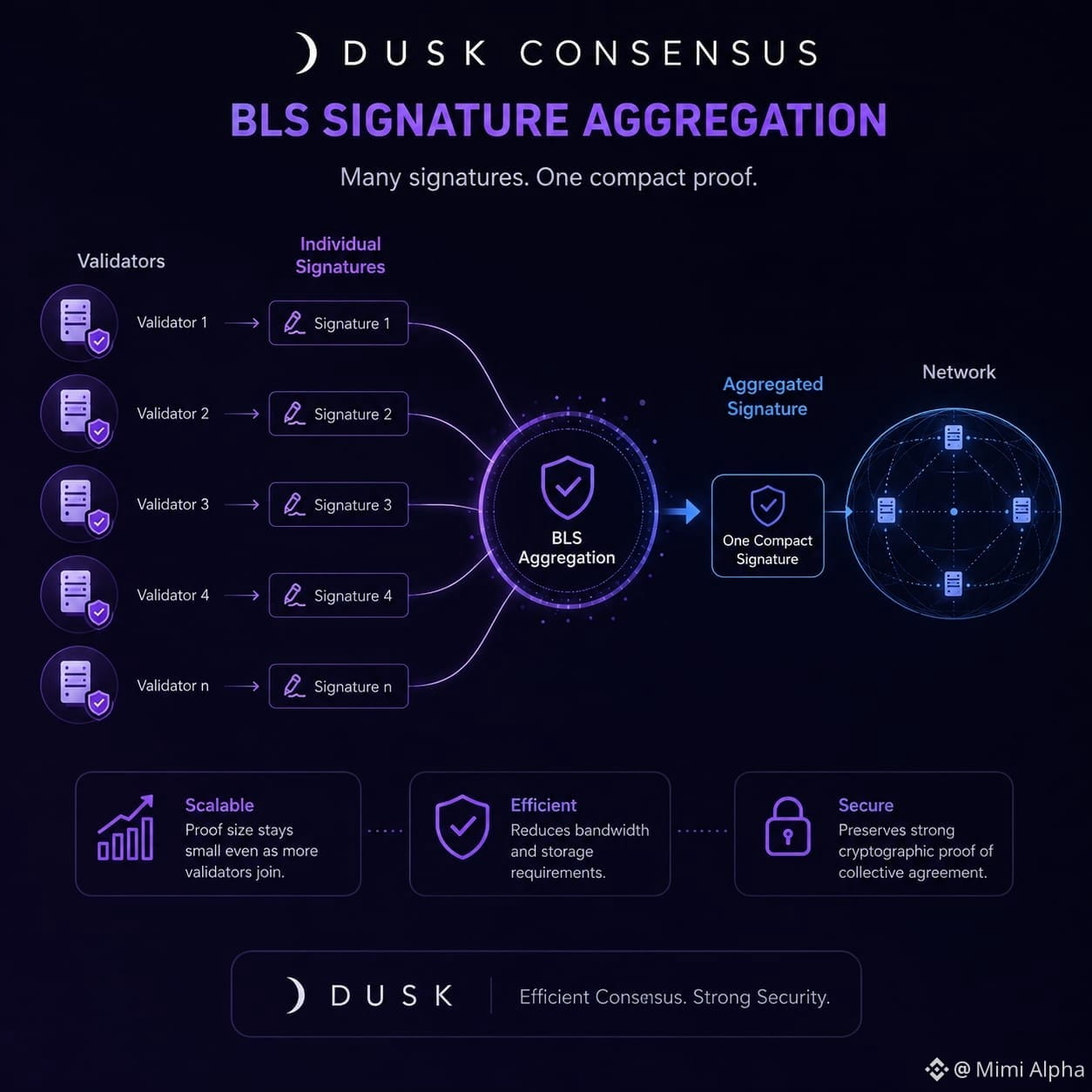
Validators need to sign messages to show their agreement. If every signature had to be handled separately then the proof of agreement could become larger as more validators take part.
Dusk uses BLS signatures to combine multiple signatures into a compact representation. This helps keep the proof of collective agreement smaller instead of carrying every signature separately.
What caught my attention is that this is not just about cryptography. It also affects how efficiently Dusk can communicate validator agreement during consensus.
There is a tradeoff too. BLS aggregation adds more cryptographic complexity so the implementation and verification have to work correctly.
After reading about Dusk consensus I found this small detail much more interesting than it first looked.
Do you think compact signatures are worth the extra cryptographic complexity?
#dusk @Dusk
$DUSK
#DuskToTheMoon
$BTR
$TAC
Validators need to sign messages to show their agreement. If every signature had to be handled separately then the proof of agreement could become larger as more validators take part.
Dusk uses BLS signatures to combine multiple signatures into a compact representation. This helps keep the proof of collective agreement smaller instead of carrying every signature separately.
What caught my attention is that this is not just about cryptography. It also affects how efficiently Dusk can communicate validator agreement during consensus.
There is a tradeoff too. BLS aggregation adds more cryptographic complexity so the implementation and verification have to work correctly.
After reading about Dusk consensus I found this small detail much more interesting than it first looked.
Do you think compact signatures are worth the extra cryptographic complexity?
#dusk @Dusk
$DUSK
#DuskToTheMoon
$BTR
$TAC
#dusk $DUSK @Dusk
🚀 DUSK: A Blockchain Project Worth Watching
DUSK is attracting attention in the crypto market with its focus on privacy, compliance, and real-world financial applications. The project aims to build blockchain infrastructure that can connect traditional financial markets with the benefits of Web3.
What makes DUSK interesting is its focus on regulated assets and privacy-preserving technology. As blockchain adoption continues to expand, projects that can bridge traditional finance and decentralized technology may have strong long-term potential.
📊 For traders, keep an eye on DUSK’s price action, trading volume, market sentiment, and major ecosystem developments. Strong fundamentals can create opportunities, but crypto markets remain highly volatile.
🔥 DUSK could be an interesting project to keep on the watchlist—but remember, no coin is guaranteed to rise.
Always DYOR and manage your risk before making any trading decision.
#DUSK #Binance #Crypto #web3兼职 #DuskToTheMoon #dusk
🚀 DUSK: A Blockchain Project Worth Watching
DUSK is attracting attention in the crypto market with its focus on privacy, compliance, and real-world financial applications. The project aims to build blockchain infrastructure that can connect traditional financial markets with the benefits of Web3.
What makes DUSK interesting is its focus on regulated assets and privacy-preserving technology. As blockchain adoption continues to expand, projects that can bridge traditional finance and decentralized technology may have strong long-term potential.
📊 For traders, keep an eye on DUSK’s price action, trading volume, market sentiment, and major ecosystem developments. Strong fundamentals can create opportunities, but crypto markets remain highly volatile.
🔥 DUSK could be an interesting project to keep on the watchlist—but remember, no coin is guaranteed to rise.
Always DYOR and manage your risk before making any trading decision.
#DUSK #Binance #Crypto #web3兼职 #DuskToTheMoon #dusk

What if transparency was never supposed to mean showing everything?
I used to think a financial blockchain had to make everything visible to be trusted.
Then I started thinking about how regulated markets actually work.
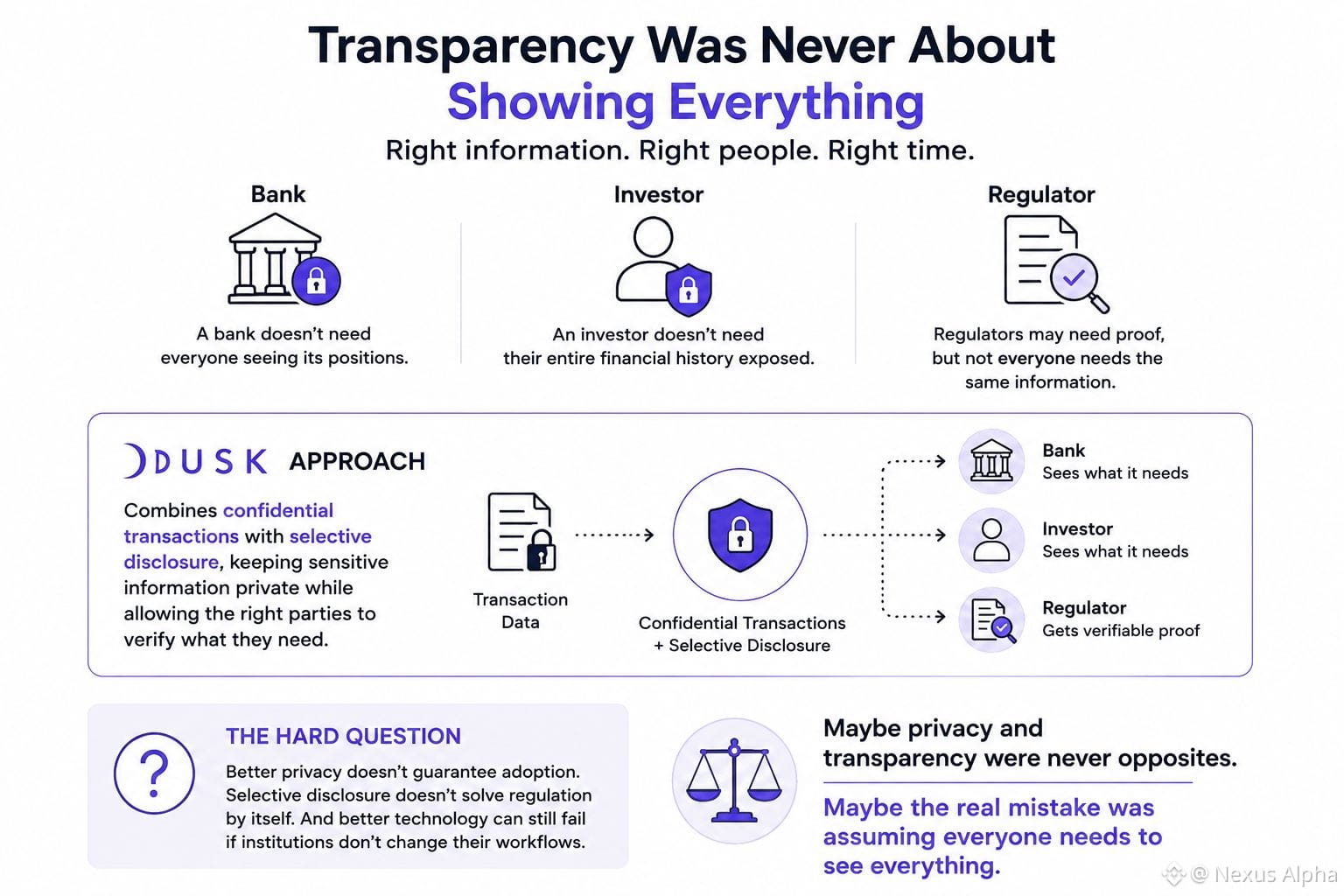
A bank doesn’t need everyone seeing its positions.
An investor doesn’t need their entire financial history exposed.
Regulators may need proof, but that doesn’t mean everyone needs the same information.
That’s where Dusk made me rethink the usual blockchain assumption.
Its approach combines confidential transactions with selective disclosure, keeping sensitive information private while allowing the right parties to verify what they need.
But there’s still a hard question.
Better privacy doesn’t guarantee adoption. Selective disclosure doesn’t solve regulation by itself. And better technology can still fail if institutions don’t change their workflows.
Maybe privacy and transparency were never opposites.
Maybe the real mistake was assuming everyone needs to see everything.
#dusk $DUSK @Dusk
$DUSK
#Dusk/usdt✅ #DuskToTheMoon
I used to think a financial blockchain had to make everything visible to be trusted.
Then I started thinking about how regulated markets actually work.
A bank doesn’t need everyone seeing its positions.
An investor doesn’t need their entire financial history exposed.
Regulators may need proof, but that doesn’t mean everyone needs the same information.
That’s where Dusk made me rethink the usual blockchain assumption.
Its approach combines confidential transactions with selective disclosure, keeping sensitive information private while allowing the right parties to verify what they need.
But there’s still a hard question.
Better privacy doesn’t guarantee adoption. Selective disclosure doesn’t solve regulation by itself. And better technology can still fail if institutions don’t change their workflows.
Maybe privacy and transparency were never opposites.
Maybe the real mistake was assuming everyone needs to see everything.
#dusk $DUSK @Dusk
$DUSK
#Dusk/usdt✅ #DuskToTheMoon
Trust _Chain:
Exactly. Privacy is only part of the equation. The real challenge is building infrastructure where confidentiality, verifiability, and regulatory requirements can work together. That’s what makes $DUSK ’s approach worth watching.
#dusk $DUSK @Dusk
🔥 DUSK: A Crypto Project Worth Watching?
DUSK is attracting attention as traders search for promising altcoins with potential momentum. 📈 The project has an interesting focus on blockchain-based financial markets and privacy, which gives it a unique narrative in the crypto space.
From a trading perspective, the important thing now is price action and volume. If DUSK continues to build higher lows and breaks important resistance with strong volume, it could signal improving bullish momentum. On the other hand, losing major support could bring another period of consolidation.
🎯 What to watch: • Increasing trading volume 📊
• Breakout above resistance 🚀
• Strong support holding 🛡️
• Overall crypto market sentiment 🌐
No coin moves straight up forever, so risk management is essential. Don’t buy simply because of hype—wait for confirmation and always do your own research.
👀 Is DUSK on your watchlist?
#DUSK #Crypto #Altcoins #BinanceSquare #CryptoTrading #Bullish #Blockchain #DYOR#DuskToTheMoon
🔥 DUSK: A Crypto Project Worth Watching?
DUSK is attracting attention as traders search for promising altcoins with potential momentum. 📈 The project has an interesting focus on blockchain-based financial markets and privacy, which gives it a unique narrative in the crypto space.
From a trading perspective, the important thing now is price action and volume. If DUSK continues to build higher lows and breaks important resistance with strong volume, it could signal improving bullish momentum. On the other hand, losing major support could bring another period of consolidation.
🎯 What to watch: • Increasing trading volume 📊
• Breakout above resistance 🚀
• Strong support holding 🛡️
• Overall crypto market sentiment 🌐
No coin moves straight up forever, so risk management is essential. Don’t buy simply because of hype—wait for confirmation and always do your own research.
👀 Is DUSK on your watchlist?
#DUSK #Crypto #Altcoins #BinanceSquare #CryptoTrading #Bullish #Blockchain #DYOR#DuskToTheMoon
#dusk $DUSK @Dusk
#DuskToTheMoon
*Binance par DUSK Coin - Dusk Network*
DUSK, Dusk Network ka native token hai jo Binance par trade hota hai. Ye ek privacy-focused Layer-1 blockchain hai jo khaas tor par regulated finance aur real-world assets ke liye banaya gaya hai. Dusk ki sab se bari khasiyat ye hai ke ye zero-knowledge proofs, PLONK proofs aur stealth addresses ke zariye transactions ko private rakhta hai, lekin sath hi MiCA aur MiFID II jese regulations ko bhi follow karta hai. Isi wajah se banks aur institutions €200M–€500M+ ke tokenized stocks, bonds aur securities ko NPEX jese regulated Dutch exchange ke through Dusk par move kar rahe hain. d30a7a8c041d
DUSK token ka use gas fees, smart contracts deploy karne, staking aur governance ke liye hota hai. Validators ko network ko secure rakhne ke liye minimum 1,000 DUSK stake karna parta hai. Token ki total supply 1 billion hai jis me se taqreeban 567.5 million circulating me hain. 2025 me mainnet aur DuskEVM launch ke baad developers ab Solidity contracts bhi privacy ke sath chala sakte hain, jis se Ethereum ka tooling use karna asaan ho gaya hai. 61f5041d7a8c
Mukhtasir me, DUSK hype ke peeche nahi bhagta. Ye "institutional crypto layer" banne ki koshish kar raha hai jahan privacy, compliance aur RWA tokenization ek sath milte hain. 7563
Note: Crypto investments risky hote hain. Price bohot fluctuate karti hai, is liye hamesha apni research kar ke invest karein. 61f5
Kya aap chahte hain me is ka latest Binance price aur chart bhi dekh kar batau?
#DuskToTheMoon
*Binance par DUSK Coin - Dusk Network*
DUSK, Dusk Network ka native token hai jo Binance par trade hota hai. Ye ek privacy-focused Layer-1 blockchain hai jo khaas tor par regulated finance aur real-world assets ke liye banaya gaya hai. Dusk ki sab se bari khasiyat ye hai ke ye zero-knowledge proofs, PLONK proofs aur stealth addresses ke zariye transactions ko private rakhta hai, lekin sath hi MiCA aur MiFID II jese regulations ko bhi follow karta hai. Isi wajah se banks aur institutions €200M–€500M+ ke tokenized stocks, bonds aur securities ko NPEX jese regulated Dutch exchange ke through Dusk par move kar rahe hain. d30a7a8c041d
DUSK token ka use gas fees, smart contracts deploy karne, staking aur governance ke liye hota hai. Validators ko network ko secure rakhne ke liye minimum 1,000 DUSK stake karna parta hai. Token ki total supply 1 billion hai jis me se taqreeban 567.5 million circulating me hain. 2025 me mainnet aur DuskEVM launch ke baad developers ab Solidity contracts bhi privacy ke sath chala sakte hain, jis se Ethereum ka tooling use karna asaan ho gaya hai. 61f5041d7a8c
Mukhtasir me, DUSK hype ke peeche nahi bhagta. Ye "institutional crypto layer" banne ki koshish kar raha hai jahan privacy, compliance aur RWA tokenization ek sath milte hain. 7563
Note: Crypto investments risky hote hain. Price bohot fluctuate karti hai, is liye hamesha apni research kar ke invest karein. 61f5
Kya aap chahte hain me is ka latest Binance price aur chart bhi dekh kar batau?

#SolanaGovernanceVoteToDoubleDeflationRate #DuskToTheMoon $DUSK @Dusk
Previously, I thought that the more transparent a blockchain is, the more trustworthy it must be. Every transaction could be verified, every balance clearly visible—on paper, it sounds like an ideal foundation for finance. But when I looked deeper into how real financial markets actually operate, I began to doubt that view.
Does an investment fund really want its competitors to know what assets it is buying? Can a market maker operate effectively if all orders and positions are laid bare? To me, this is precisely what makes Dusk’s approach stand out: they don’t treat privacy as the opposite of transparency, but as a prerequisite for a blockchain to enter regulated finance.
The concept I’m most interested in is “selective disclosure.” Dusk doesn’t try to turn everything into a secret. Instead, the protocol aims to determine which data needs to be publicly disclosed, which should remain confidential, and which information should only be revealed to the authorized party. Zero-knowledge proofs, shielded transactions, and selective disclosure mechanisms are built to serve this model.
That also explains why Dusk doesn’t just talk about tokenizing assets. Their infrastructure is designed for the entire asset lifecycle: issuance, investor control, trading, settlement, and compliance. DuskEVM paves the way for Solidity applications, while Hedger adds the ability to execute private transaction flows using homomorphic encryption and zero-knowledge proofs.
Previously, I thought that the more transparent a blockchain is, the more trustworthy it must be. Every transaction could be verified, every balance clearly visible—on paper, it sounds like an ideal foundation for finance. But when I looked deeper into how real financial markets actually operate, I began to doubt that view.
Does an investment fund really want its competitors to know what assets it is buying? Can a market maker operate effectively if all orders and positions are laid bare? To me, this is precisely what makes Dusk’s approach stand out: they don’t treat privacy as the opposite of transparency, but as a prerequisite for a blockchain to enter regulated finance.
The concept I’m most interested in is “selective disclosure.” Dusk doesn’t try to turn everything into a secret. Instead, the protocol aims to determine which data needs to be publicly disclosed, which should remain confidential, and which information should only be revealed to the authorized party. Zero-knowledge proofs, shielded transactions, and selective disclosure mechanisms are built to serve this model.
That also explains why Dusk doesn’t just talk about tokenizing assets. Their infrastructure is designed for the entire asset lifecycle: issuance, investor control, trading, settlement, and compliance. DuskEVM paves the way for Solidity applications, while Hedger adds the ability to execute private transaction flows using homomorphic encryption and zero-knowledge proofs.

Dusk Network privacy isn’t just about hiding transactions. The real test showed up when something went wrong.
Suspicious activity to bridge addresses disabled to bridging paused to Web Wallet blocklist added. That response didn’t break the privacy model.
It revealed the actual design question:
Privacy from the public is one thing.
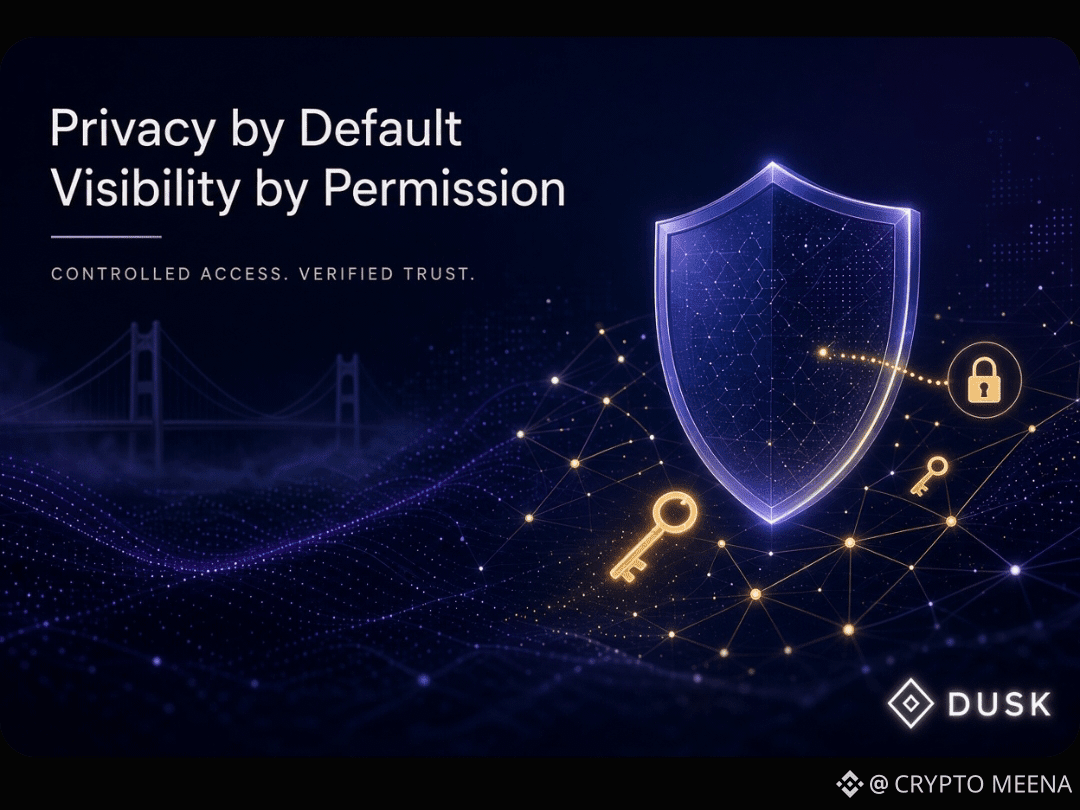
Who holds the keys to visibility and intervention is another. For real regulated finance, pure anonymity often fails. Institutions need confidentiality from outsiders while still allowing controlled access for auditors, venues, or supervisors. “Private by default, visible by permission” sounds right on paper. But permission creates power. If one party can see most of a private flow, or freeze flagged addresses, the system’s decentralization depends on how narrow those powers are, how transparent the decisions are, and whether there’s any real appeal process. I’m no longer focused on whether @Dusk can hide data today.
I’m watching whether it can keep selective disclosure tight, auditable, and role limited without slowly turning intervention into a central control point.
Curious what the community thinks.
Is controlled visibility the only realistic path for institutional privacy, or does it inevitably create new centralization risks? What’s your take on Dusk’s approach?
$DUSK
$TUT
$TAO
#DuskToTheMoon #dusk #SP500EndsWeeklyWinStreak #NvidiaAIServerPricesRiseOver15% #USCanadaTradeTalksCollapseCanadaVowsRetaliation
Suspicious activity to bridge addresses disabled to bridging paused to Web Wallet blocklist added. That response didn’t break the privacy model.
It revealed the actual design question:
Privacy from the public is one thing.
Who holds the keys to visibility and intervention is another. For real regulated finance, pure anonymity often fails. Institutions need confidentiality from outsiders while still allowing controlled access for auditors, venues, or supervisors. “Private by default, visible by permission” sounds right on paper. But permission creates power. If one party can see most of a private flow, or freeze flagged addresses, the system’s decentralization depends on how narrow those powers are, how transparent the decisions are, and whether there’s any real appeal process. I’m no longer focused on whether @Dusk can hide data today.
I’m watching whether it can keep selective disclosure tight, auditable, and role limited without slowly turning intervention into a central control point.
Curious what the community thinks.
Is controlled visibility the only realistic path for institutional privacy, or does it inevitably create new centralization risks? What’s your take on Dusk’s approach?
$DUSK
$TUT
$TAO
#DuskToTheMoon #dusk #SP500EndsWeeklyWinStreak #NvidiaAIServerPricesRiseOver15% #USCanadaTradeTalksCollapseCanadaVowsRetaliation
Bhima_Trader:
RWAs need both accessibility and restrictions.
Programmability can help balance those needs.
Interesting DUSK direction.
#dusk $DUSK @Dusk 🌟 Key Technical Innovations Powering the $DUSK Ecosystem
🔐 Zero-Knowledge (ZK) Proofs: Encrypts sensitive financial data, trade volumes, and institutional balance sheets from public view while maintaining cryptographic verifiability on-chain.
⚖️ Built-In Regulatory Compliance: Utilizes native identity frameworks (like Citadel) and selective disclosure tools, enabling seamless auditing for regulatory authorities without leaking proprietary data.
⚡ Full EVM Compatibility (DuskEVM): Allows Solidity developers to deploy confidential smart contracts using familiar tools, accelerating multi-chain Web3 migration and financial dApp development.
⚙️ Fast Settlement & Utility: Powered by fast-finality consensus, $DUSK fuels transaction gas fees, staking security, and governance across the entire network.
#DuskToTheMoon
🔐 Zero-Knowledge (ZK) Proofs: Encrypts sensitive financial data, trade volumes, and institutional balance sheets from public view while maintaining cryptographic verifiability on-chain.
⚖️ Built-In Regulatory Compliance: Utilizes native identity frameworks (like Citadel) and selective disclosure tools, enabling seamless auditing for regulatory authorities without leaking proprietary data.
⚡ Full EVM Compatibility (DuskEVM): Allows Solidity developers to deploy confidential smart contracts using familiar tools, accelerating multi-chain Web3 migration and financial dApp development.
⚙️ Fast Settlement & Utility: Powered by fast-finality consensus, $DUSK fuels transaction gas fees, staking security, and governance across the entire network.
#DuskToTheMoon

#dusk $DUSK @Dusk
@Dusk is building privacy-first infrastructure for real-world assets, combining confidential smart contracts with Ethereum-compatible tooling through DuskEVM. Privacy and compliance can work together. $DUSK #DuskToTheMoon
@Dusk is building privacy-first infrastructure for real-world assets, combining confidential smart contracts with Ethereum-compatible tooling through DuskEVM. Privacy and compliance can work together. $DUSK #DuskToTheMoon

#dusk $DUSK @Dusk
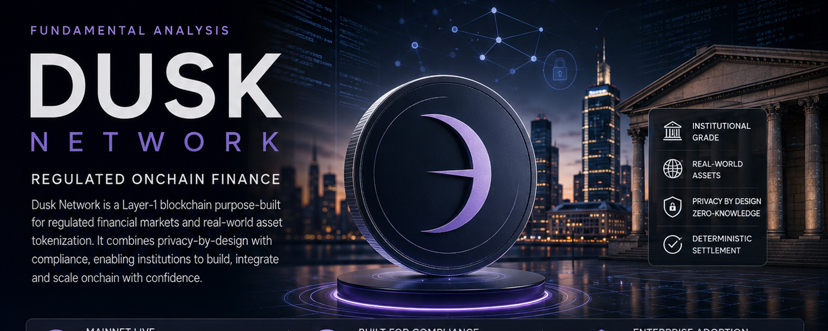
DUSK USDT Fresh Launch Opportunity
$DUSK USDT is attracting attention with its upcoming new launch, bringing fresh energy and trading interest to the market. New listings often create strong momentum as traders watch the first major price movements and liquidity levels. DUSK could become an interesting setup for traders who prefer early opportunities and fast market action The key will be watching volume, price structure and liquidity before making any decision. If momentum builds after launch, DUSK USDT may offer some exciting moves. Overall, this is a fresh project worth keeping on the radar as the market prepares for its new trading opportunity
#Dusk/usdt✅ #dusk
#DUSKARMY #DuskToTheMoon
DUSK USDT Fresh Launch Opportunity
$DUSK USDT is attracting attention with its upcoming new launch, bringing fresh energy and trading interest to the market. New listings often create strong momentum as traders watch the first major price movements and liquidity levels. DUSK could become an interesting setup for traders who prefer early opportunities and fast market action The key will be watching volume, price structure and liquidity before making any decision. If momentum builds after launch, DUSK USDT may offer some exciting moves. Overall, this is a fresh project worth keeping on the radar as the market prepares for its new trading opportunity
#Dusk/usdt✅ #dusk
#DUSKARMY #DuskToTheMoon
SA PRINCE MAHMUD:
Dusk’s vision goes beyond simply creating another blockchain. It’s trying to provide infrastructure where regulated assets can operate efficiently while maintaining privacy and transparency where needed.The institutional blockchain narrative becomes much stronger when compliance is part of the design rather than something added later. That’s one of the areas where Dusk looks particularly interesting.

#dusk $DUSK @Dusk
DuskEVM is still marked Testnet, so the same $DUSK can move into a very different environment depending on where you use it.
That’s where the bridge concept became more interesting to me.
DUSK isn't simply “one token, one experience.”
With Moonlight, it stays transparent and account-based, making it feel closer to the usual EVM wallet experience.
With Phoenix, the model is shielded and note-based, giving Dusk a more privacy-focused setup.
So when you bridge, you're not only deciding where your DUSK goes. You're also choosing how you want to hold and use it afterward.
I originally expected the usual flow: connect wallet → confirm → receive tokens.😍#DuskToTheMoon
DuskEVM is still marked Testnet, so the same $DUSK can move into a very different environment depending on where you use it.
That’s where the bridge concept became more interesting to me.
DUSK isn't simply “one token, one experience.”
With Moonlight, it stays transparent and account-based, making it feel closer to the usual EVM wallet experience.
With Phoenix, the model is shielded and note-based, giving Dusk a more privacy-focused setup.
So when you bridge, you're not only deciding where your DUSK goes. You're also choosing how you want to hold and use it afterward.
I originally expected the usual flow: connect wallet → confirm → receive tokens.😍#DuskToTheMoon
Bhima_Trader:
DUSK’s infrastructure is designed with multiple layers in mind.
Networking supports consensus, while execution supports applications.
Everything has a defined role.


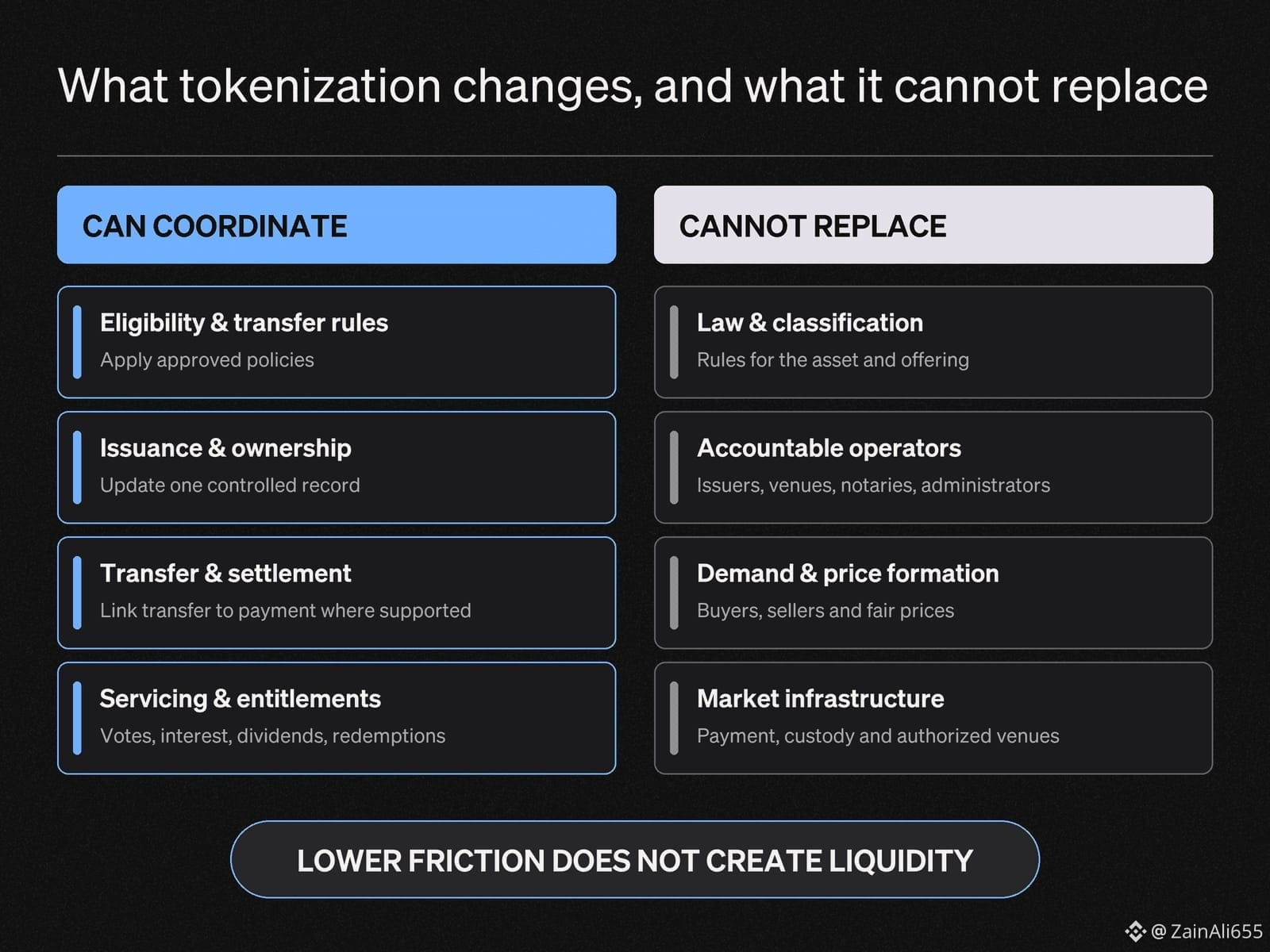
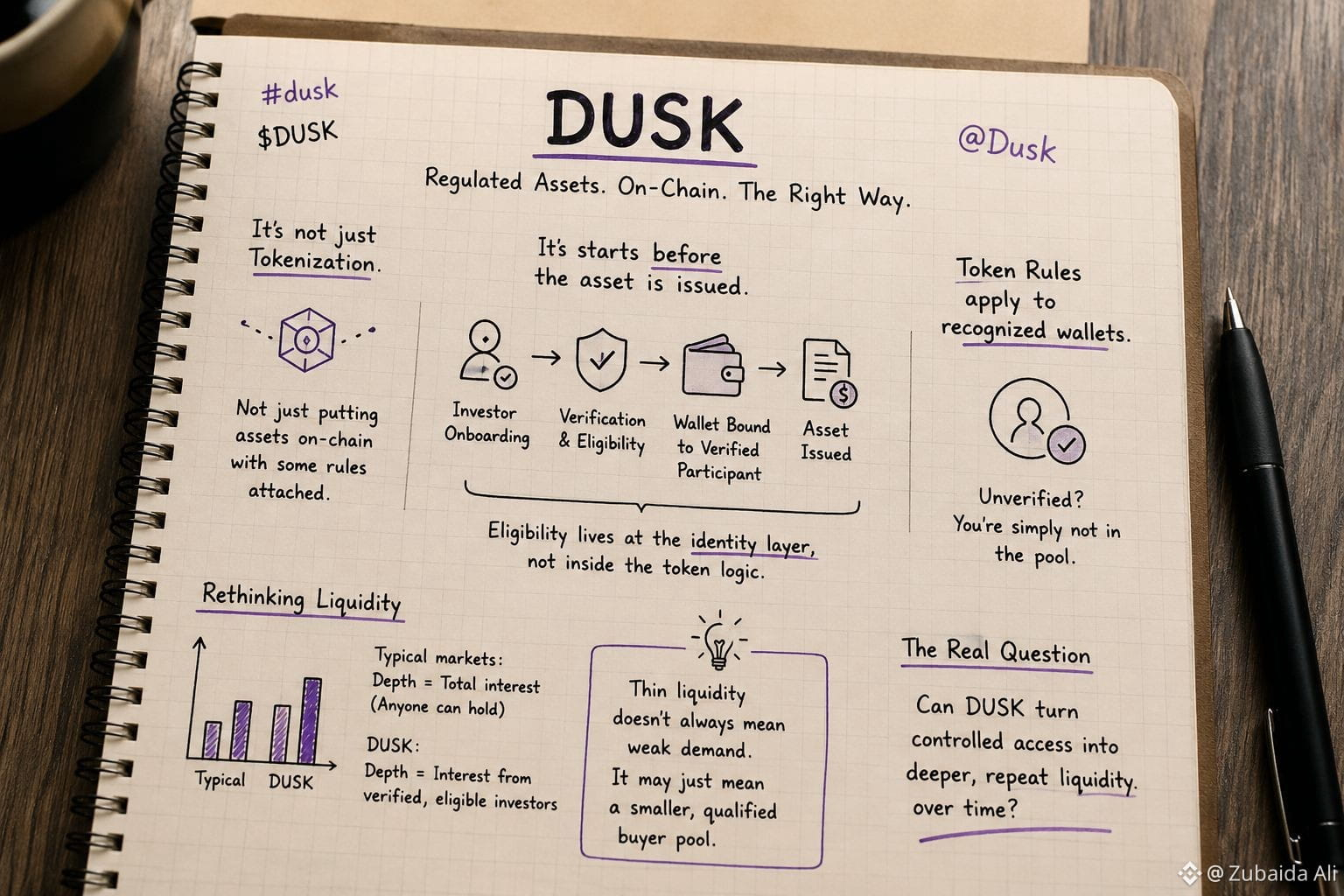
#dusk $DUSK @Dusk At first I thought putting a regulated asset on Dusk basically means packaging it as a token with some rules attached and rest sorts itself out on-chain, but looking closer at how Dusk sequence investor onboarding, that idea didn't really hold up, cause wallets have to be bound to verified participants before asset even get issued, meaning eligibility check sits at identity layer not inside the token logic itself, so token contract can carry transfer restrictions, but it can only apply them on wallets already recognized inside the system, which means someone unverified isn't rejected at the moment they try to buy, they simply never enter the addressable buyer pool to begin with, and what I keep coming back to is what this does to how you read liquidity on @Dusk , cause on typical token order book depth is rough proxy for total interest since anyone can hold the asset, but here visible market only reflects whoever already cleared onboarding, so thin liquidity doesn't necessarily mean weak demand, it might just mean eligible pool hasn't caught up to actual interest yet, which leaves me wondering if slow liquidity growth on a Dusk regulated asset is really a demand problem, or just a verification bottleneck that hasn't been solved yet, and if onboarding speed is really the hidden constraint here, what happens to asset's price discovery the day eligible pool suddenly doubles?
@Dusk #dusk $DUSK #DuskToTheMoon
@Dusk #dusk $DUSK #DuskToTheMoon
White_Shark007:
Exactly right. If regulated tokenized cash can settle alongside the security, Dusk’s market infrastructure becomes much more interesting.

#dusk $DUSK @Dusk
The more I look at Dusk, the more I think the interesting part isn’t simply putting a regulated asset on-chain.
It’s what happens before the asset even becomes tradable.
If investors need to be verified and linked to eligible wallets first, then the usual idea of “anyone can buy, and the token handles the rules” doesn’t really fit here. The compliance layer comes earlier.
That also changes how I’d read liquidity.
A thin market for a regulated asset on Dusk doesn’t automatically mean there’s little interest. The visible buyer pool is already filtered by eligibility, so the order book is showing demand from qualified participants, not the entire crypto market.
That distinction feels easy to miss when looking at on-chain numbers.
For me, the bigger question is whether Dusk can turn that controlled access into deeper, repeat liquidity over time. That’s where the real adoption story gets interesting.
#DuskToTheMoon @Dusk
The more I look at Dusk, the more I think the interesting part isn’t simply putting a regulated asset on-chain.
It’s what happens before the asset even becomes tradable.
If investors need to be verified and linked to eligible wallets first, then the usual idea of “anyone can buy, and the token handles the rules” doesn’t really fit here. The compliance layer comes earlier.
That also changes how I’d read liquidity.
A thin market for a regulated asset on Dusk doesn’t automatically mean there’s little interest. The visible buyer pool is already filtered by eligibility, so the order book is showing demand from qualified participants, not the entire crypto market.
That distinction feels easy to miss when looking at on-chain numbers.
For me, the bigger question is whether Dusk can turn that controlled access into deeper, repeat liquidity over time. That’s where the real adoption story gets interesting.
#DuskToTheMoon @Dusk
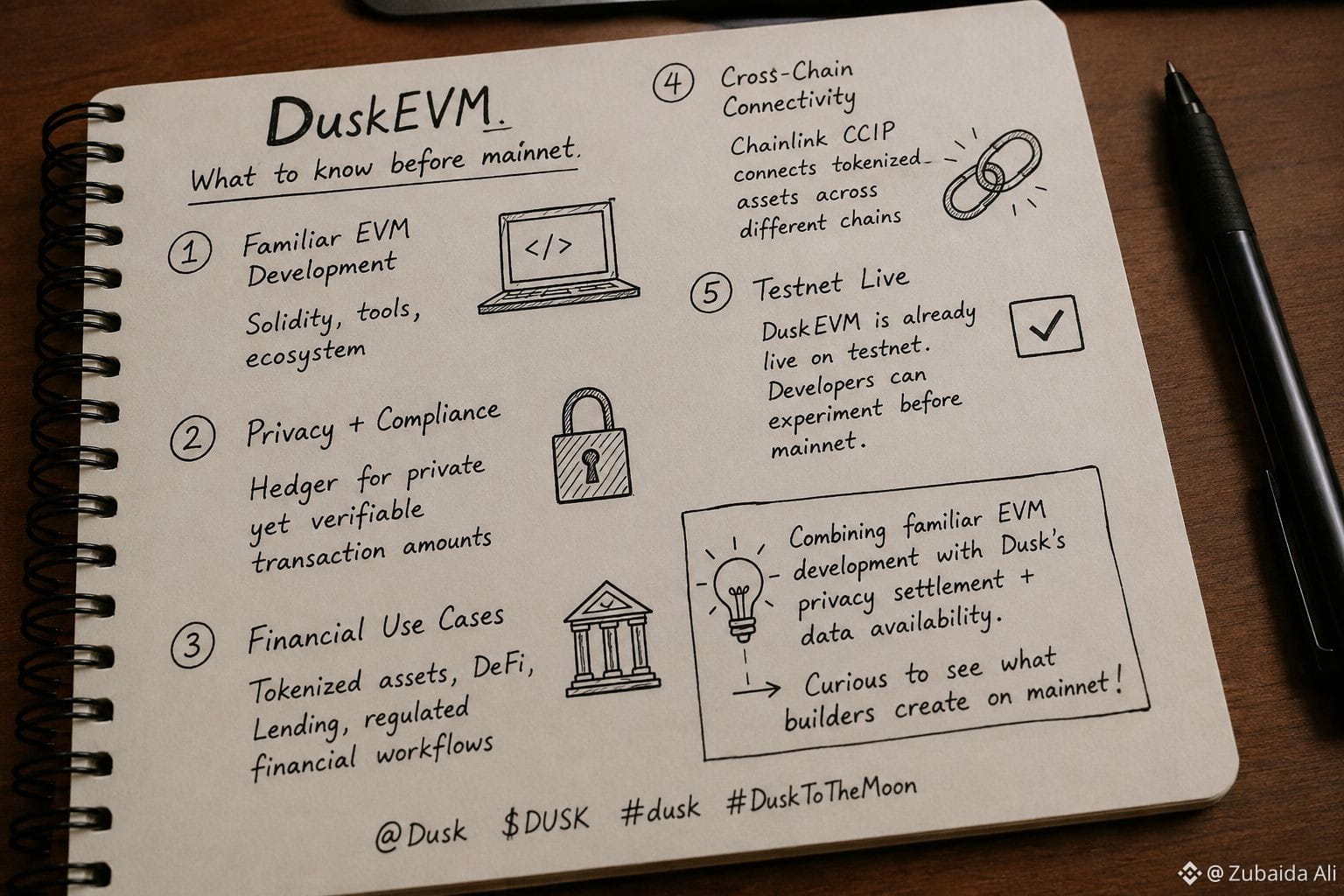
#dusk $DUSK @Dusk When I first came across DuskEVM, I honestly thought the main story was pretty simple: bring EVM compatibility to Dusk and make it easier for developers to build.
But the more I looked into it, the more interesting the bigger picture became.
What stands out to me is the combination of familiar EVM development with Dusk’s focus on privacy and regulated financial use cases.
Developers can work with Solidity and tools they already know, while financial applications can explore private yet verifiable transactions. That opens the door to things like tokenized assets, DeFi, lending, and other financial workflows where privacy actually matters.
Then there’s Chainlink CCIP, which could make cross-chain movement of tokenized assets much more practical by helping different networks communicate.
The fact that DuskEVM is already available on testnet is another important piece. Developers can experiment, test ideas, and figure out what works before mainnet arrives.
For me, that’s the part I find most interesting. It isn’t just about making Dusk EVM-compatible. It’s about giving developers familiar tools while keeping the privacy and settlement features that make Dusk different.
Now I’m less interested in what DuskEVM can do on paper and more curious about what people will actually build with it once mainnet goes live.
@Dusk $DUSK #dusk #DuskToTheMoon
But the more I looked into it, the more interesting the bigger picture became.
What stands out to me is the combination of familiar EVM development with Dusk’s focus on privacy and regulated financial use cases.
Developers can work with Solidity and tools they already know, while financial applications can explore private yet verifiable transactions. That opens the door to things like tokenized assets, DeFi, lending, and other financial workflows where privacy actually matters.
Then there’s Chainlink CCIP, which could make cross-chain movement of tokenized assets much more practical by helping different networks communicate.
The fact that DuskEVM is already available on testnet is another important piece. Developers can experiment, test ideas, and figure out what works before mainnet arrives.
For me, that’s the part I find most interesting. It isn’t just about making Dusk EVM-compatible. It’s about giving developers familiar tools while keeping the privacy and settlement features that make Dusk different.
Now I’m less interested in what DuskEVM can do on paper and more curious about what people will actually build with it once mainnet goes live.
@Dusk $DUSK #dusk #DuskToTheMoon
#dusk $DUSK @Dusk
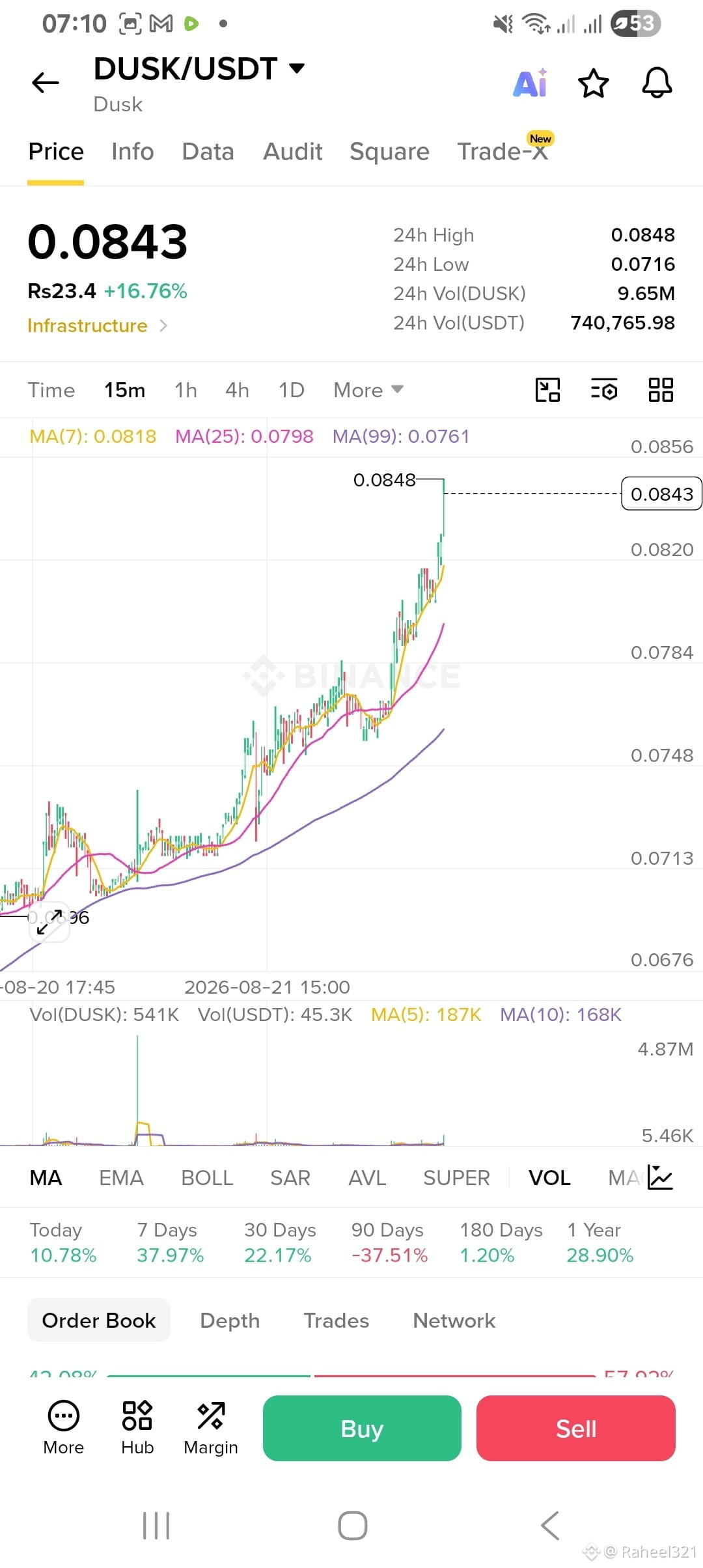
🔥 $DUSK — BREAKOUT LOADING? 👀
DUSK is currently trading around $0.063–$0.070, with buyers defending the lower zone. Latest market data shows strong intraday activity, but price is still facing resistance around $0.072–$0.073.
📊 Key Levels:
🟢 Support: $0.062
🔴 Resistance: $0.072–$0.073
🚀 Breakout above $0.073 + strong volume = bullish confirmation
⚠️ Lose $0.062 = downside risk increases
My watch: Don’t chase the candle. Let DUSK confirm the breakout first.
#DuskToTheMoon #DUSKARMY.
🔥 $DUSK — BREAKOUT LOADING? 👀
DUSK is currently trading around $0.063–$0.070, with buyers defending the lower zone. Latest market data shows strong intraday activity, but price is still facing resistance around $0.072–$0.073.
📊 Key Levels:
🟢 Support: $0.062
🔴 Resistance: $0.072–$0.073
🚀 Breakout above $0.073 + strong volume = bullish confirmation
⚠️ Lose $0.062 = downside risk increases
My watch: Don’t chase the candle. Let DUSK confirm the breakout first.
#DuskToTheMoon #DUSKARMY.
Проверено
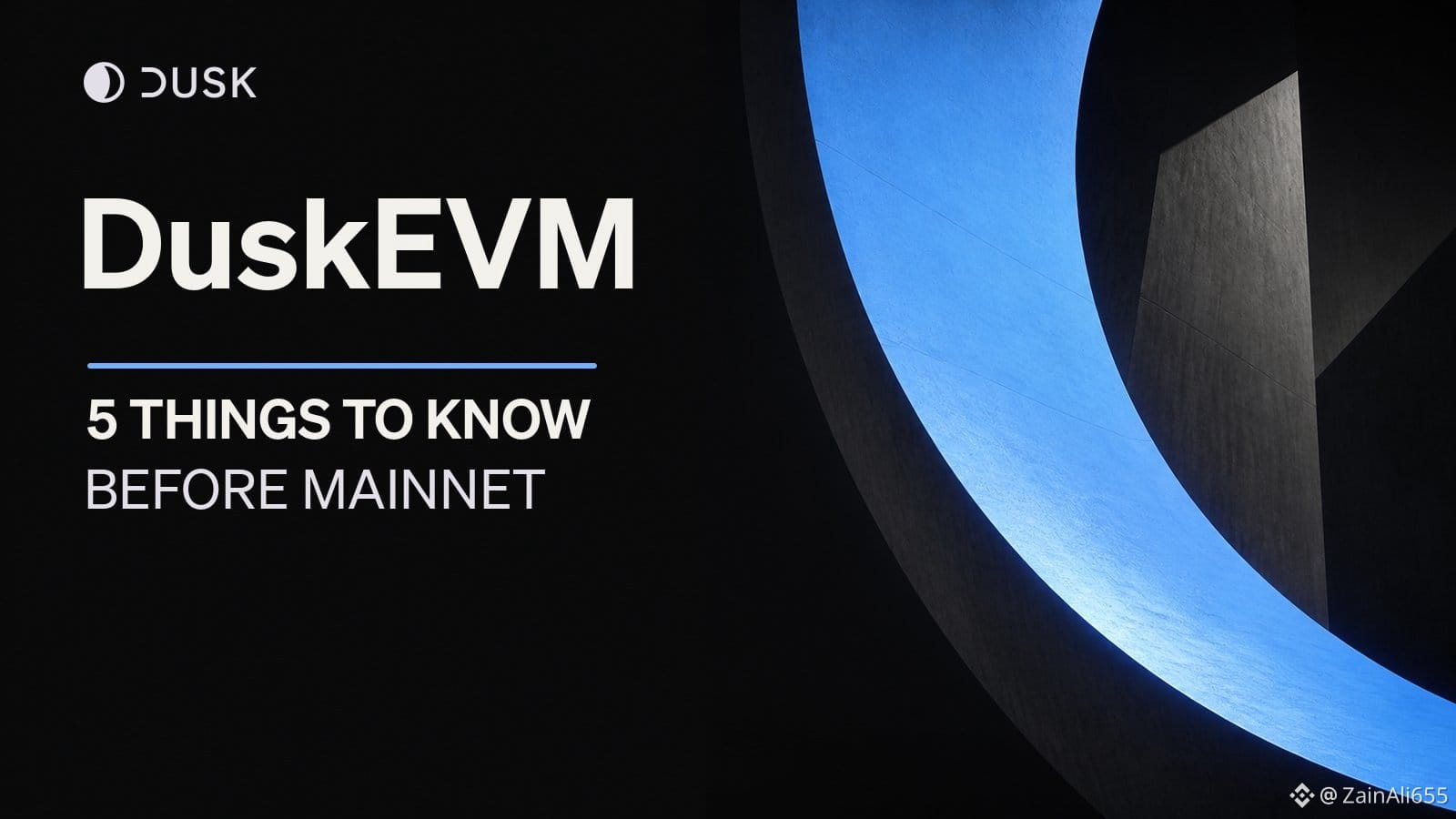
#dusk $DUSK @Dusk At first i thought DuskEVM was mainly about bringing EVM compatibility to @Dusk but then i looked deeper into what is actually coming with and it started making more sense to me.
Here are 5 things to know before mainnet.
Developers can use familiar solidity and EVM tools financial applications can use hedger for private yet verifiable transaction amounts and the ecosystem can expand into tokenized assets,DeFi, lending and regulated financial workflows then there is chainlink CCIP which can help connect tokenized assets across different chains while DuskEVM is already live on testnet so developers can experiment before mainnet. I actually like this approach because it combines familiar EVM development with dusk's privacy settlement and data available instead of making developers start from scratch.now i am more curious about what people will actually build once DuskEVM reaches mainnet. #Dusk. #DuskToTheMoon
Here are 5 things to know before mainnet.
Developers can use familiar solidity and EVM tools financial applications can use hedger for private yet verifiable transaction amounts and the ecosystem can expand into tokenized assets,DeFi, lending and regulated financial workflows then there is chainlink CCIP which can help connect tokenized assets across different chains while DuskEVM is already live on testnet so developers can experiment before mainnet. I actually like this approach because it combines familiar EVM development with dusk's privacy settlement and data available instead of making developers start from scratch.now i am more curious about what people will actually build once DuskEVM reaches mainnet. #Dusk. #DuskToTheMoon
Olivia_BTC:
The real test now is what developers build with it. EVM compatibility + privacy + regulated asset infrastructure could make DuskEVM pretty interesting.

Проверено
I was looking at @Dusk mainly as a privacy-focused Layer-1. Then again I looked at its different components and realized the bigger picture is much more interesting.
Dusk is building the infrastructure for financial markets from the base layer upward.
At the core is DuskDS which handles consensus and settlement. Then there is DuskVM for native smart-contract execution. DuskEVM adds an EVM environment for the developers who want Solidity and familiar Ethereum tooling.
My friend asked me where the actual financial applications fit into this.
That is where the stack becomes more interesting.
The XSC standard is designed for privacy-enabled tokenized securities. Citadel focuses on the identity and selective disclosure. Dusk Trade is aimed at financial workflows around tokenized assets. Hedger brings confidential transaction capabilities toward the EVM environment.
Each component has a different role but they point toward the same goal making onchain financial markets more practical.
What I like about this approach is that Dusk is not treating privacy as a standalone feature. Privacy can connect with smart contracts, identity, asset rules and the settlement within the same ecosystem.
Even DUSK has a role beyond being a market ticker. It is the native asset of the Dusk network and is used for the transaction fees and staking.
That is why I see Dusk as more than another blockchain. It is building a stack where are financial assets, privacy, execution, identity and settlement can work together.
$RICE
$ACE
$DUSK
#dusk @Dusk #KEEP_SUPPORT #BTC走势分析 #DuskToTheMoon
Which part of the Dusk stack interests you most?
Dusk is building the infrastructure for financial markets from the base layer upward.
At the core is DuskDS which handles consensus and settlement. Then there is DuskVM for native smart-contract execution. DuskEVM adds an EVM environment for the developers who want Solidity and familiar Ethereum tooling.
My friend asked me where the actual financial applications fit into this.
That is where the stack becomes more interesting.
The XSC standard is designed for privacy-enabled tokenized securities. Citadel focuses on the identity and selective disclosure. Dusk Trade is aimed at financial workflows around tokenized assets. Hedger brings confidential transaction capabilities toward the EVM environment.
Each component has a different role but they point toward the same goal making onchain financial markets more practical.
What I like about this approach is that Dusk is not treating privacy as a standalone feature. Privacy can connect with smart contracts, identity, asset rules and the settlement within the same ecosystem.
Even DUSK has a role beyond being a market ticker. It is the native asset of the Dusk network and is used for the transaction fees and staking.
That is why I see Dusk as more than another blockchain. It is building a stack where are financial assets, privacy, execution, identity and settlement can work together.
$RICE
$ACE
$DUSK
#dusk @Dusk #KEEP_SUPPORT #BTC走势分析 #DuskToTheMoon
Which part of the Dusk stack interests you most?
XSC
50%
DuskEVM
0%
Dusk Trade
50%
Hedger
0%
2 проголосовали • Голосование закрыто
Войдите, чтобы посмотреть больше материала