
#databreach
databreach
Просмотров: 109,906
253 обсуждают
Популярные
Новые

·
--
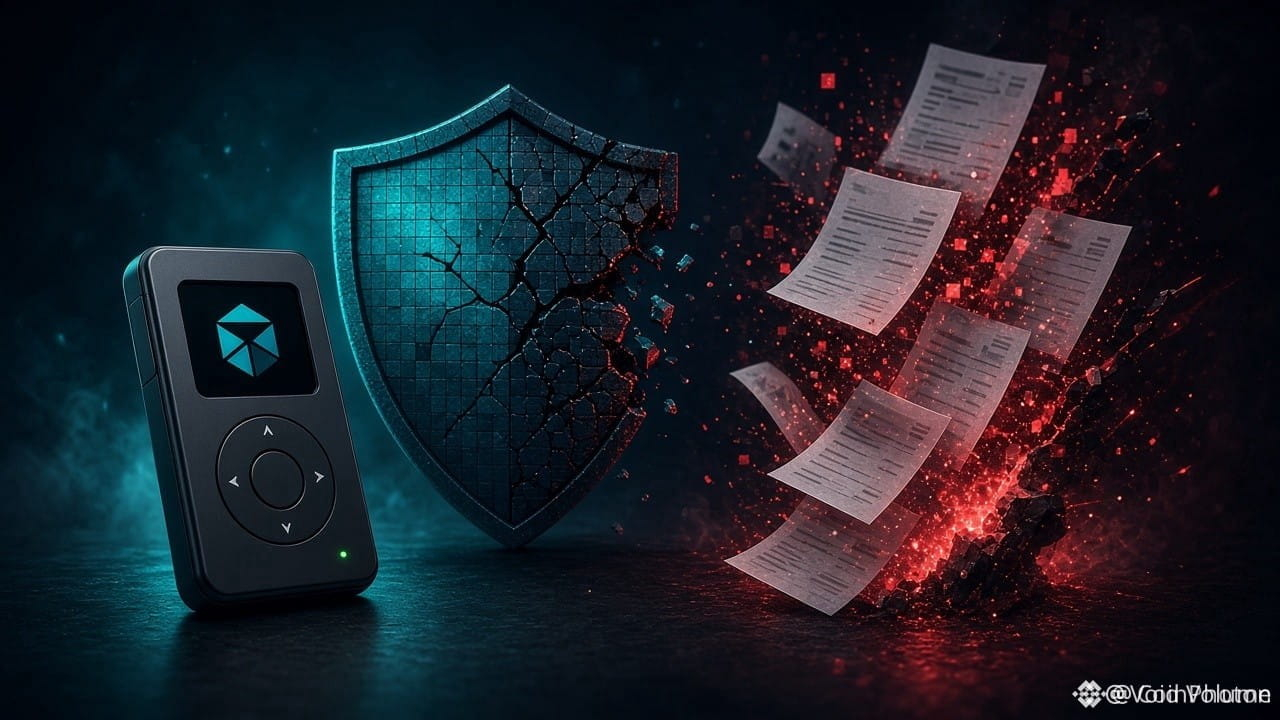
🚨 $SFP DISCLOSES EXTENDED ORDER DATA EXPOSURE ACROSS THOUSANDS OF RECORDS 📊
Institutional-grade operational security requires constant vigilance when auxiliary tracking plugins introduce structural vulnerabilities. Recent disclosures regarding $SFP reveal an authorization flaw affecting tens of thousands of customer order records. 🔍
While core hardware encryption remained uncompromised and remediation was independently verified, exposed metadata fuels targeted impersonation vectors. Market participants maintaining digital custody must maintain rigorous perimeter awareness. 🛡️
💬 How are you auditing your operational security and safeguarding your metadata footprint against evolving threat vectors? 👇
⚠️ Not financial advice. Always manage your risk. 🛡️
🏷️ #SFP #CryptoSecurity #HardwareWallet #DataBreach
📊 🔒

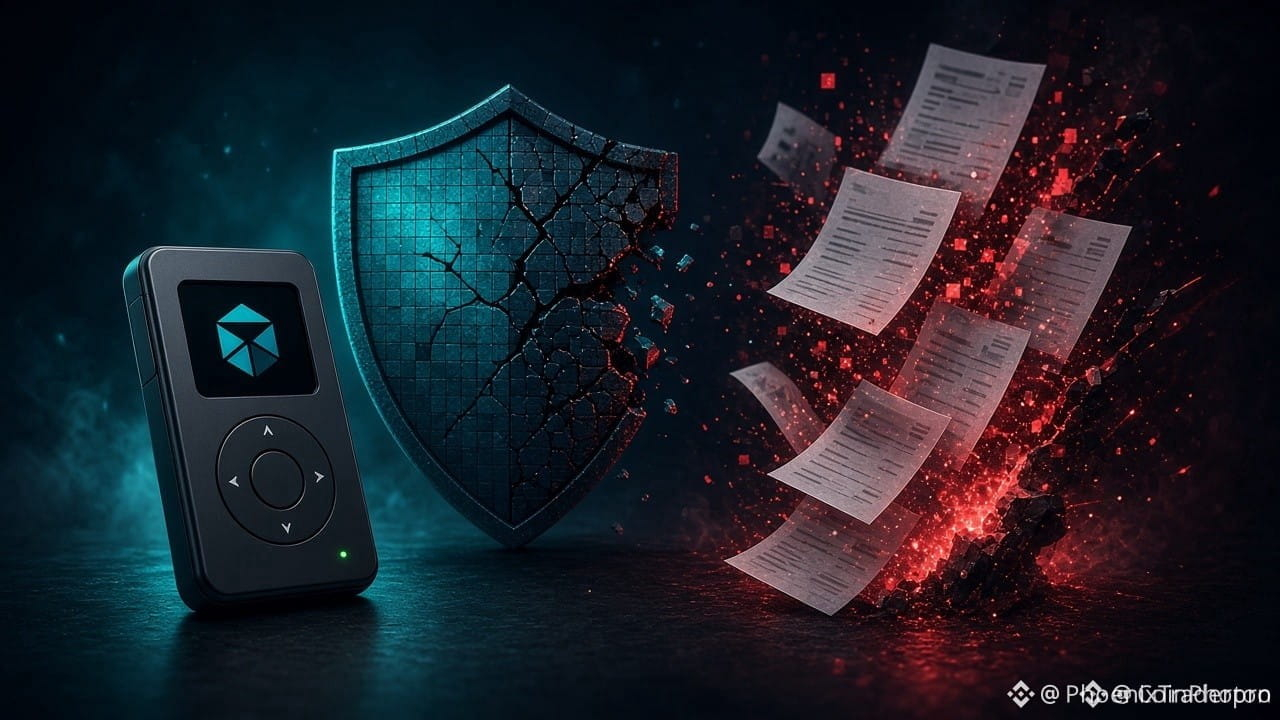
🚨 ANOTHER DATA EXPOSURE HITS $SFP USERS AS 37,500 MORE RECORDS ARE LAID BARE! ⚠️
Operational security is the ultimate edge in this game, and a major hardware player just expanded its security disclosure. Another batch of tens of thousands of order records has been exposed due to an authorization flaw, leaving clients vulnerable to sophisticated phishing vectors. 🛡️
While core wallet keys remained sealed, opportunistic actors live for these info leaks to craft hyper-targeted impersonation traps. Treat every unexpected inbound message with extreme suspicion right now. ⚡
Are you tightening your personal OpSec and email hygiene after this latest disclosure? 💬
⚠️ Not financial advice. Always manage your risk. 🛡️
🏷️ #SFP #CryptoSecurity #HardwareWallet #DataBreach
🔒 ⚡
6

·
--
Статья
How to Check if Your Data Was Leaked — and What to Do NextEvery few months there is news about another data breach. Emails, phone numbers and passwords end up for sale online. I used to ignore these stories. Now I treat each one as a reminder to check my own data and tighten my accounts. Here is the simple routine I follow.
Quick Facts
A leak usually exposes emails, phone numbers, passwords or ID details.Free breach-check services can tell you if your email appeared in a known leak.Change reused passwords first, then turn on two-factor authentication.Scammers often use leaked data to send fake messages, so expect more phishing after a breach.
01 What a Data Leak Means
A data leak happens when a company loses control of user information. The data may include your name, email, phone number, password or even ID documents. Once it is out, it can be used for scams or to break into other accounts.
02 How I Check if My Data Was Exposed
There are a few easy ways:
Use a well-known breach-check service such as Have I Been Pwned and enter your email or phone number.Check the security section of your password manager or browser, which can flag leaked passwords.Read official emails from companies you use. A real breach notice will not ask for your password.
03 First Steps if You Were Leaked
Change the password on the leaked account.Change it anywhere else you used the same password.Use a different, strong password for each account.Turn on two-factor authentication with an authenticator app or passkey.
04 Lock Down Your Crypto Accounts
Crypto accounts deserve extra care. On Binance I use passkeys, two-factor authentication, an anti-phishing code and a withdrawal address allowlist. I also review logged-in devices and delete API keys I no longer use.
05 Watch Out for Follow-Up Scams
After a leak, scammers know your name and email, so their messages look real. With an anti-phishing code set, genuine Binance emails show your code. If an email has no code, or asks you to log in from a link, I ignore it and open the app directly.
06 Make It a Habit
I check my email on a breach-check service every few months and after any big breach in the news. It takes five minutes and gives me peace of mind.
I also tell my family to do the same, because older relatives are often the main target of follow-up scams. A fake call or message that knows your name feels trustworthy. My simple rule for everyone at home: never share a verification code, never log in from a link in a message, and always call back using the official number. These small habits stop most of the scams that come after a data leak.
Bottom Line
You cannot stop every company from being breached, but you can limit the damage. Check, change, secure, and stay alert.
This article is for information only and is not financial advice.
#DataBreach #CyberSecurity #CryptoSafety #Binance #Jxlolo
How to Check if Your Data Was Leaked — and What to Do Next
Every few months there is news about another data breach. Emails, phone numbers and passwords end up for sale online. I used to ignore these stories. Now I treat each one as a reminder to check my own data and tighten my accounts. Here is the simple routine I follow.
Quick Facts
A leak usually exposes emails, phone numbers, passwords or ID details.Free breach-check services can tell you if your email appeared in a known leak.Change reused passwords first, then turn on two-factor authentication.Scammers often use leaked data to send fake messages, so expect more phishing after a breach.
01 What a Data Leak Means
A data leak happens when a company loses control of user information. The data may include your name, email, phone number, password or even ID documents. Once it is out, it can be used for scams or to break into other accounts.
02 How I Check if My Data Was Exposed
There are a few easy ways:
Use a well-known breach-check service such as Have I Been Pwned and enter your email or phone number.Check the security section of your password manager or browser, which can flag leaked passwords.Read official emails from companies you use. A real breach notice will not ask for your password.
03 First Steps if You Were Leaked
Change the password on the leaked account.Change it anywhere else you used the same password.Use a different, strong password for each account.Turn on two-factor authentication with an authenticator app or passkey.
04 Lock Down Your Crypto Accounts
Crypto accounts deserve extra care. On Binance I use passkeys, two-factor authentication, an anti-phishing code and a withdrawal address allowlist. I also review logged-in devices and delete API keys I no longer use.
05 Watch Out for Follow-Up Scams
After a leak, scammers know your name and email, so their messages look real. With an anti-phishing code set, genuine Binance emails show your code. If an email has no code, or asks you to log in from a link, I ignore it and open the app directly.
06 Make It a Habit
I check my email on a breach-check service every few months and after any big breach in the news. It takes five minutes and gives me peace of mind.
I also tell my family to do the same, because older relatives are often the main target of follow-up scams. A fake call or message that knows your name feels trustworthy. My simple rule for everyone at home: never share a verification code, never log in from a link in a message, and always call back using the official number. These small habits stop most of the scams that come after a data leak.
Bottom Line
You cannot stop every company from being breached, but you can limit the damage. Check, change, secure, and stay alert.
This article is for information only and is not financial advice.
#DataBreach #CyberSecurity #CryptoSafety #Binance #Jxlolo
1
5
·
--
A data breach at Standard Chartered‑backed Zodia Custody exposed client names and email addresses.
• The breach was detected on Monday, prompting an internal investigation (crypto.news).
• Names and email addresses of several clients and employees were leaked (cointelegraph.com).
This highlights the escalating cyber threat landscape for institutional crypto custodians. Strengthening data protection and verification protocols is now more critical than ever.
How should custodians prioritize security?
A) Invest in advanced encryption and monitoring
B) Rely on existing safeguards
$ZODIA #Custody #DataBreach #CryptoSecurity 🔐
⚠️ Not financial advice. DYOR.
10
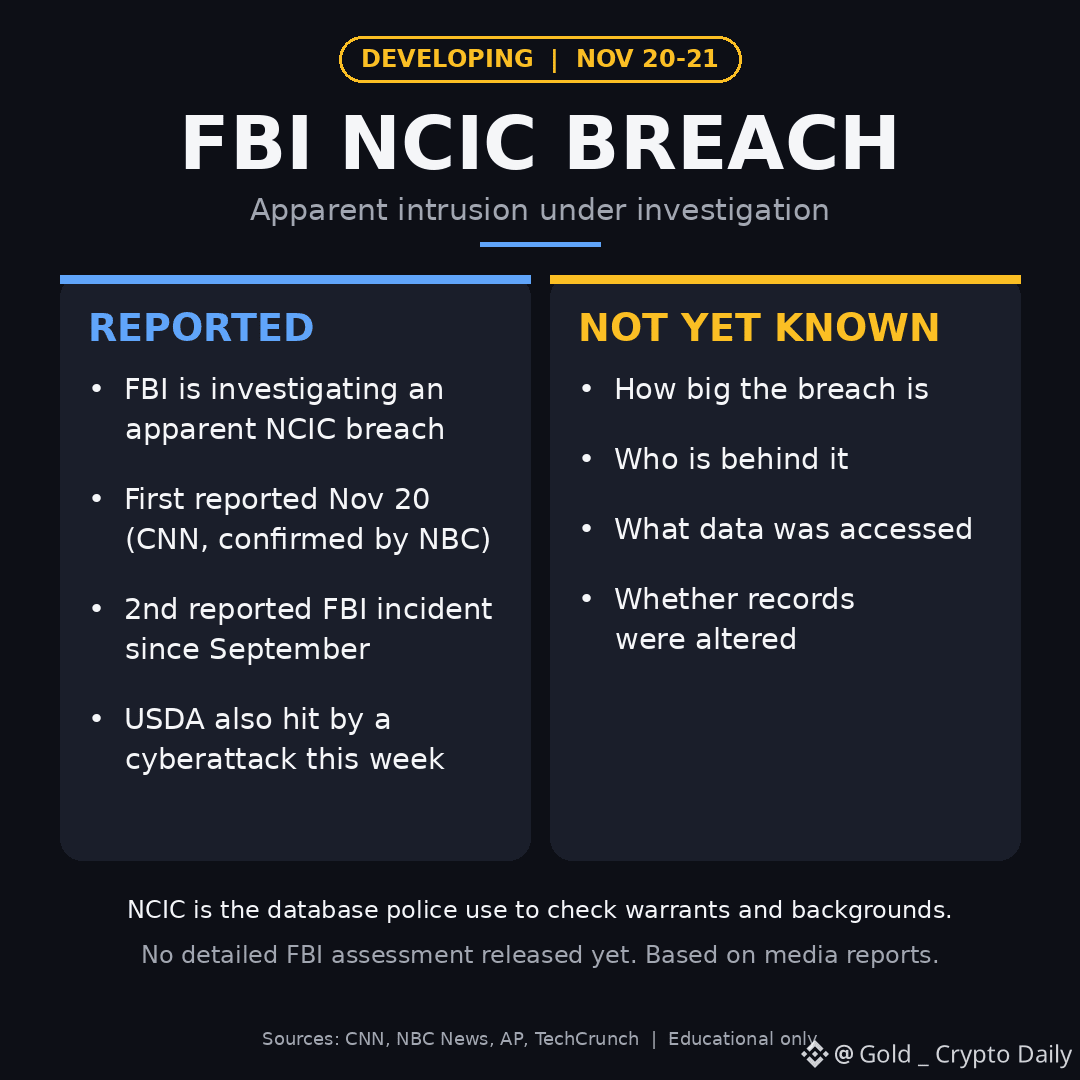
🛡️ FBI NCIC Breach: What We Know and What We Don't #Cybersecurity
📰 What's reported: CNN first reported on Nov 20 that the FBI is investigating an apparent breach of its National Crime Information Center (NCIC), citing two people briefed on the matter. NBC News said it confirmed the investigation through its own sources. (NBC News)
🗂️ Why NCIC matters: it's the database federal and local law enforcement use to share information about warrants, background checks and more. A former FBI official told CNN the concern is not only whether hackers saw sensitive data, but whether they could compromise the accuracy of the information officers rely on. (TechCrunch) (TechCrunch)
🔁 Context: it's reportedly the second FBI cybersecurity breach since September, when the group ShinyHunters targeted employee data from an FBI jobs website. The USDA also faced its own cyberattack this week. (abc) (NBC News)
❓ Not yet known:
• How large the breach is
• Who is behind it
• What data was accessed
• Whether any records were altered
🗣️ Reaction: President Trump said the reported hack is "not good." (TechCrunch)
📌 No detailed FBI assessment has been released yet, so treat details as unconfirmed. I found no evidence linking this to this week's market moves.
🗳️ What worries you most about breaches like this?
A) Stolen personal data
B) Altered or corrupted records
C) Repeat attacks on agencies
Drop a letter 👇
#FBI #CyberSecurity #databreach #BinanceSquare
1
25

·
--
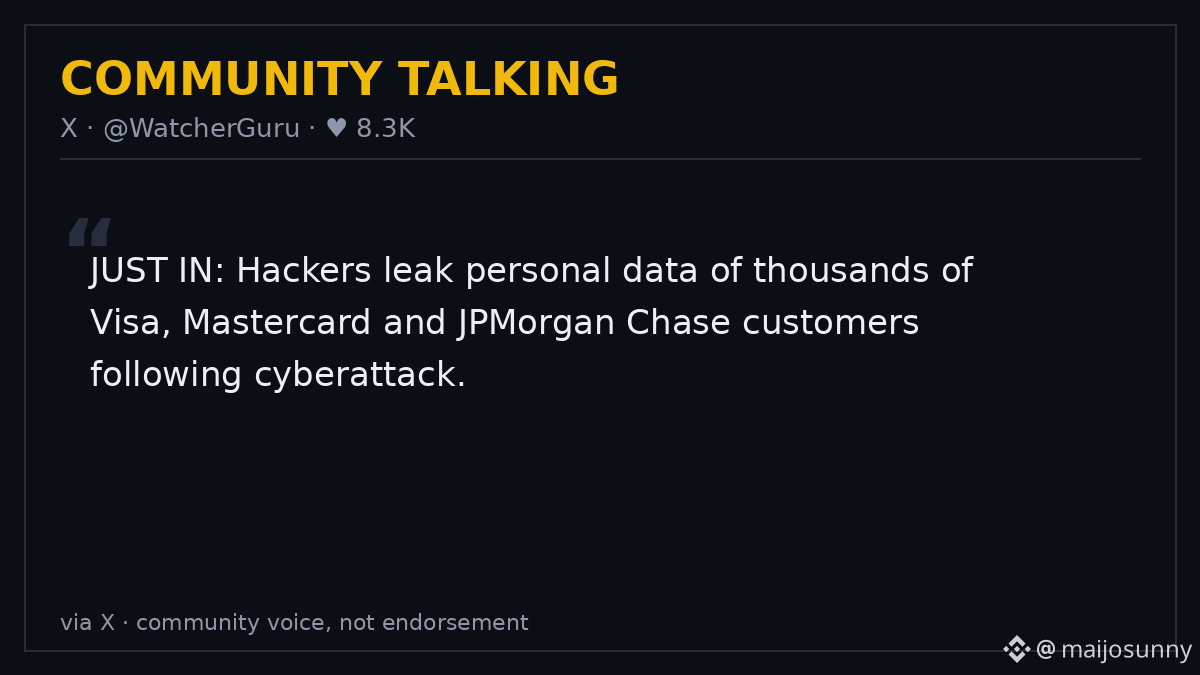
Your bank leaked your data this week. Your wallet never asked for it. Coincidence?
Visa, Mastercard and JPMorgan Chase all landed on ransomware group n0n's leak site on Nov 16, with a 48-hour countdown. On Thursday, the data went public.
What actually leaked (WSJ / NY Post):
• JPMorgan: emails, phone numbers and account IDs of 16,000 of its wealthiest customers, from its Reserve program
• Visa: Asia-Pacific cardholder program records, via a third-party provider
• Mastercard: a limited set of benefit-program records
⚠️ What it is NOT: no card numbers were confirmed exposed anywhere. Visa says its own systems were not involved. JPMorgan says the Nov 16 outage was a software bug, not a cyberattack.
🤔 Why should crypto traders care?
Your email and phone are the raw material for the next phishing wave, and crypto holders are the top targets. Attackers go after the weakest link, and it is rarely the cryptography: vendor gets hit, your inbox becomes the attack surface, one convincing "bank" email, wallet drained.
My take: this is not about card numbers. It is about how many copies of you exist in databases you never chose. Self-custody removes one copy, your coins, but your identity still lives in vendor systems.
✅ Action Required:
• Don't click links in "bank" emails, open the official app instead
• Expect phishing texts using your real name and account details
• Verify any wallet message twice before signing anything
Bottom line: TradFi's data model leaks. The question is whether the market treats that as a crypto use case, or just another headline.
$BTC sits at $62,298 (-0.68% 24h) while Fear & Greed reads 10, Extreme Fear (alternative.me). Traders are not pricing a TradFi trust crisis yet.
Is this the week "trust us with your data" finally breaks, or a headline we forget by Monday? 👇
Not financial advice. DYOR.
#crypto #CyberSecurity #DataBreach
10
·
--
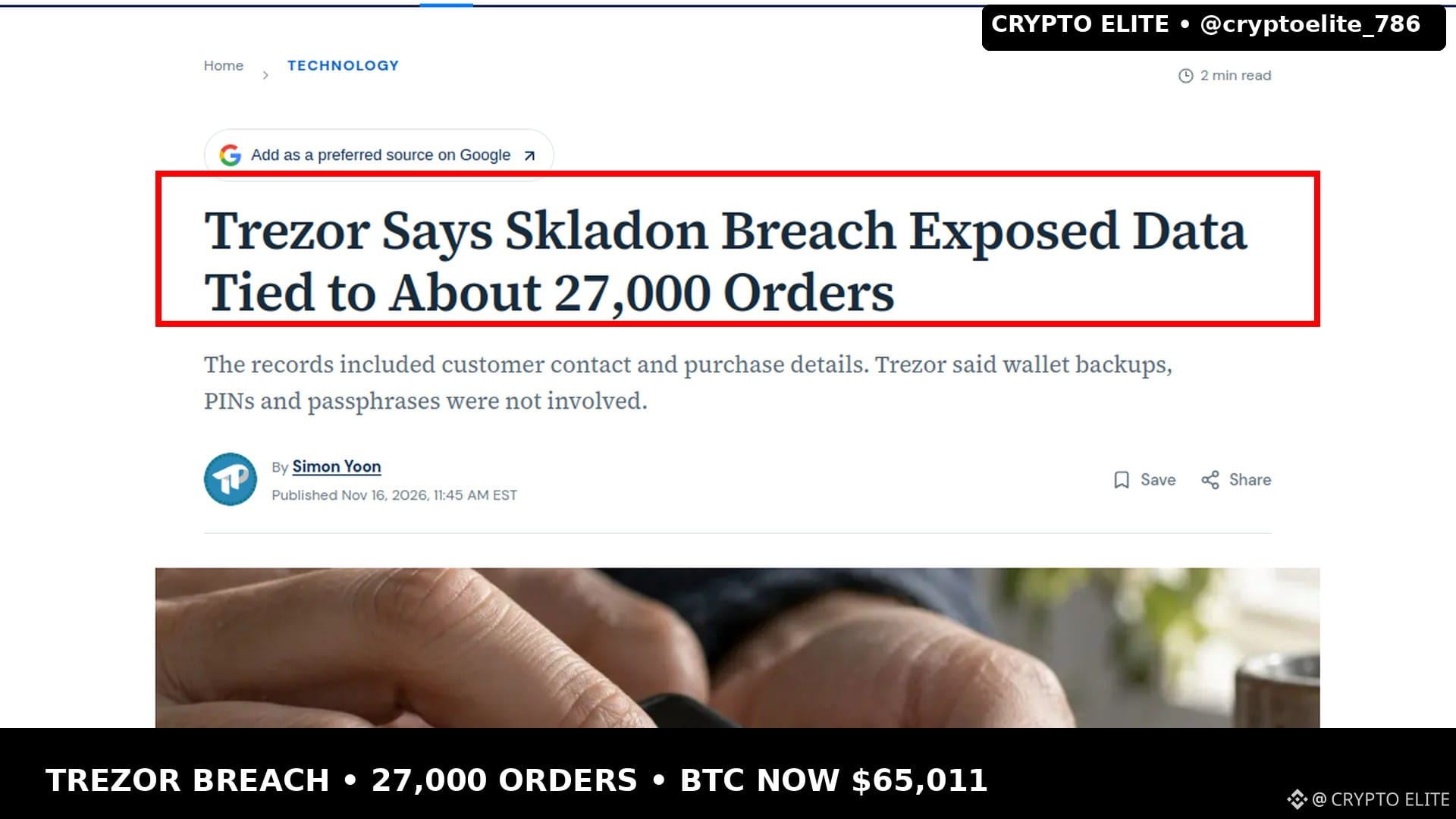
📦🔐 TREZOR DELIVERY PARTNER BREACH — DATA OF ~27,000 ORDERS EXPOSED
Trezor has disclosed that its delivery partner Skladon was hit by unauthorized access on November 7. Data tied to about 27,000 orders placed between August 9 and November 7 was exported.
The records included names, phone numbers, delivery addresses, email addresses, order dates and purchase details. Trezor says its own systems were not compromised, devices remain secure, and wallet backups, PINs and passphrases were not involved. US customers were not affected, as Skladon does not ship to the US.
Trezor has emailed the customers it can reach, informed the data protection authority, cut order-data retention from 90 days to 45 days, and launched Anonymous Pickup in 18 European countries.
THE PROOF — check this news yourself here:
https://www.tokenpost.com/news/technology/58616
Follow @cryptoelite_786 for the fastest crypto news & updates! 🔔
$BTC #Trezor #CryptoSecurity #DataBreach
51

📊 التسريب أُعلن مرتبطاً بمزوّد سحابي لا باختراق داخلي، والبائع طلب 3 BTC مقابل 46,000 سجل مزعوم. $BTC
شركة TSMC قالت إنها لم تجد دليلاً على اختراق من الداخل، ما يرجّح أن البيانات خرجت من طرف ثالث يخدمها سحابياً.
إذا كنت تتعامل مع منصات في الدوحة أو الرياض أو دبي، فالقصة تخصك من زاوية الثقة: مزوّدو الخدمات السحابية صاروا جزءاً من سلسلة المخاطر، لا مجرد خادم بعيد.
الخلاصة العملية: اسأل أي جهة تحتفظ ببياناتك عن مزوّدها السحابي، لا عن جدار الحماية فقط.
هل رأيت سابقاً تسريباً كهذا، وماذا كانت نهايته؟
#TSMC #DataBreach
المحتوى للمعلومات فقط وليس نصيحة مالية.
اضغط $BTC للتداول
$BTC
غيرك سبقك وتابع. ادخل بروفايلي وخلك مع اللي يقرأ قبل ما ينتشر الخبر.
53
Статья
Gnosis Pay Breach Exposes Home Addresses and Linked Crypto WalletsCrypto debit card provider Gnosis Pay has disclosed a data breach, and the details exposed are the kind that make every self-custody user uncomfortable. Here is what we know, and why it matters beyond one company.
What Happened
Gnosis Pay says it detected unauthorized access to its consumer card system on Nov. 3. According to CoinDesk, the company began containing the intrusion within two hours, replaced the affected security credentials and fixed the flaw that allowed the breach.
Customer funds were not affected, and neither was the separate enterprise platform that powers card programs for other businesses. But the data that leaked is sensitive: one user, Rotki founder Lefteris Karapetsas, said the email he received listed his name, full home address, card number and every wallet address linked to his account.
Gnosis Pay has not said how many customers were affected. It emailed each impacted user with details of what was exposed.
Background
Gnosis Pay launched in 2023 and lets customers spend stablecoins through Visa debit cards tied to their crypto wallets. CoinDesk cites Paymentscan data putting its annualized payments volume at around $67.6 million, so this is a small player, not a giant.
It is also not the first incident. In June, a wallet software flaw led to an exploit that drained about $1.5 million; Gnosis covered those losses and restored customer funds. Since then it made 3D Secure mandatory for online card payments and stepped up fraud monitoring. The legacy consumer system is scheduled to shut down on Dec. 20 as the company focuses on partner programs.
Why It Matters
Here is my take: the funds being safe is good news, but it is only half the story. In crypto, privacy is the security layer. Once someone can link your real name and home address to a list of wallets, they know who holds what, and where to find you.
That is the setup for targeted phishing, fake support calls and, in the worst cases, physical-world threats. Gnosis itself warned that scammers can use stolen personal details and past purchase information to make fraudulent messages look legitimate.
This is the uncomfortable trade-off with crypto cards. They bridge on-chain wallets and the traditional KYC world, and that bridge stores a lot of identity data in one place. The blockchain may be pseudonymous, but the card database is not.
Market Impact
There is no direct price shock here. The broader market is more focused on macro and tech sentiment: CoinDesk reported Bitcoin recovering above $76,000 on Friday after a tech-driven rout that triggered over $1 billion in liquidations, with spot ETFs shedding about $430 million. Security incidents like this one tend to hit trust in the crypto payments sector rather than any single token.
What to Watch Next
• How many users Gnosis Pay says were affected, and whether it publishes a fuller post-mortem.
• Whether affected users report targeted phishing or scam attempts in the coming weeks.
• How other crypto card issuers describe their data practices and what they store.
• The Dec. 20 shutdown of the legacy consumer cards and how the migration is handled.
If you use a crypto card, a few habits are worth considering: use a dedicated wallet for spending, treat unsolicited messages about your card with suspicion, and never share seed phrases with anyone.
Would you still link your main wallet to a crypto card, or keep a separate spending wallet? Let me know below.
#CryptoSecurity #DataBreach #CryptoCards
$BTC $ETH
Gnosis Pay Breach Exposes Home Addresses and Linked Crypto Wallets
Crypto debit card provider Gnosis Pay has disclosed a data breach, and the details exposed are the kind that make every self-custody user uncomfortable. Here is what we know, and why it matters beyond one company.
What Happened
Gnosis Pay says it detected unauthorized access to its consumer card system on Nov. 3. According to CoinDesk, the company began containing the intrusion within two hours, replaced the affected security credentials and fixed the flaw that allowed the breach.
Customer funds were not affected, and neither was the separate enterprise platform that powers card programs for other businesses. But the data that leaked is sensitive: one user, Rotki founder Lefteris Karapetsas, said the email he received listed his name, full home address, card number and every wallet address linked to his account.
Gnosis Pay has not said how many customers were affected. It emailed each impacted user with details of what was exposed.
Background
Gnosis Pay launched in 2023 and lets customers spend stablecoins through Visa debit cards tied to their crypto wallets. CoinDesk cites Paymentscan data putting its annualized payments volume at around $67.6 million, so this is a small player, not a giant.
It is also not the first incident. In June, a wallet software flaw led to an exploit that drained about $1.5 million; Gnosis covered those losses and restored customer funds. Since then it made 3D Secure mandatory for online card payments and stepped up fraud monitoring. The legacy consumer system is scheduled to shut down on Dec. 20 as the company focuses on partner programs.
Why It Matters
Here is my take: the funds being safe is good news, but it is only half the story. In crypto, privacy is the security layer. Once someone can link your real name and home address to a list of wallets, they know who holds what, and where to find you.
That is the setup for targeted phishing, fake support calls and, in the worst cases, physical-world threats. Gnosis itself warned that scammers can use stolen personal details and past purchase information to make fraudulent messages look legitimate.
This is the uncomfortable trade-off with crypto cards. They bridge on-chain wallets and the traditional KYC world, and that bridge stores a lot of identity data in one place. The blockchain may be pseudonymous, but the card database is not.
Market Impact
There is no direct price shock here. The broader market is more focused on macro and tech sentiment: CoinDesk reported Bitcoin recovering above $76,000 on Friday after a tech-driven rout that triggered over $1 billion in liquidations, with spot ETFs shedding about $430 million. Security incidents like this one tend to hit trust in the crypto payments sector rather than any single token.
What to Watch Next
• How many users Gnosis Pay says were affected, and whether it publishes a fuller post-mortem.
• Whether affected users report targeted phishing or scam attempts in the coming weeks.
• How other crypto card issuers describe their data practices and what they store.
• The Dec. 20 shutdown of the legacy consumer cards and how the migration is handled.
If you use a crypto card, a few habits are worth considering: use a dedicated wallet for spending, treat unsolicited messages about your card with suspicion, and never share seed phrases with anyone.
Would you still link your main wallet to a crypto card, or keep a separate spending wallet? Let me know below.
#CryptoSecurity #DataBreach #CryptoCards
$BTC $ETH
98

·
--
Gnosis Pay 数据泄露:加密支付入口再陷 AI 黑客浪潮
近期围绕加密支付环节的数据安全事件持续发酵,最新一起落在卡商 Gnosis Pay 身上。据 Decrypt 报道,Gnosis Pay 称黑客访问了其品牌卡片背后遗留系统(legacy system)中的客户信息,但资金并未失窃。
从事件性质看,这并非交易所被直接盗刷,而是支付工具背后的技术链条出现缺口。与近期围绕 AXS、Kraken 等事件的讨论相呼应,它被纳入所谓「AI 黑客浪潮」的叙事之中,时效性较强。
为什么这件事值得关注?加密支付卡正逐渐把链上资产与日常消费连接起来,入口越普及,一旦客户数据外泄,受影响的就不再是少数重度用户,而可能传导到更广泛的零售信任。需要强调的是,本次资金未失,实际损失或相当有限,真正需要观察的是后续监管与赔偿动向。
从基本面依据看,本次漏洞位于「遗留系统」而非最新架构,说明部分支付基础设施在迭代过程中仍保留了薄弱环节。数据泄露与资金被盗是两个不同层级的风险:前者伤信任,后者伤资产。当前证据停留在前者。
市场可能如何反应?由于不涉及直接资金损失,短期对大盘或主要币种的冲击可能有限;但若同类事件叠加,零售端对加密支付工具的信任或逐步承压,进而影响相关卡商与支付赛道的估值预期。
反方因素在于:资金未失、影响范围或可控,且事件仍处早期披露阶段,最终泄露规模、责任归属与赔偿方案都尚未明确,过度放大风险为时尚早。
接下来观察什么?重点看三点:泄露数据的具体范围、监管是否介入、以及 Gnosis Pay 是否给出明确赔偿。交易层面而言,若无直接资产损失,短线更值得观察的是同类事件是否形成持续性叙事,而非单一事件的短期波动。
#CryptoSecurity #DataBreach
以上为信息整理与个人分析,不构成投资建议。
47
Gnosis Pay vừa dính phốt lớn! Hệ thống thẻ tiêu dùng cũ bị xâm nhập, rò rỉ dữ liệu khách hàng từ tên, địa chỉ, chi tiết thẻ đến cả địa chỉ ví crypto được liên kết.
Đây chính là kịch bản tồi tệ nhất: thông tin nhận dạng đời thực kết hợp với ví crypto công khai. Nguy cơ bị phishing, lừa đảo, hoặc thậm chí đe dọa vật lý là CÓ THẬT.
Mặc dù Gnosis Pay khẳng định tiền của khách hàng và nền tảng doanh nghiệp không bị ảnh hưởng, và sự cố đã được kiểm soát trong 2 giờ. Nhưng vết nứt này cho thấy sự mong manh của bảo mật.
Dù vậy, hãy CỰC KỲ CẢNH GIÁC với các chiêu trò lừa đảo tinh vi sắp tới. Tuyệt đối không bao giờ chia sẻ seed phrase, private key hay mã PIN dưới bất kỳ hình thức nào!
Một sai lầm nhỏ có thể khiến bạn mất tất cả. Vụ Gnosis Pay là lời nhắc nhở đắt giá. Bạn đã chuẩn bị kỹ lưỡng để tự bảo vệ tài sản của mình chưa?
#CryptoSecurity #DataBreach
101

·
--
Gnosis Pay just had a data breach: card details and personal data exposed.
What we know (The Block, Cointelegraph):
• Breach hit the crypto card provider on Nov 6
• Customer funds reported safe
• Exposed info is the kind used for phishing and SIM-swap attempts
Self-custody protects your coins, but not your identity. When a card is tied to your wallet, the weak link is the data around it, not the keys.
If you hold a crypto card: check statements, rotate passwords and be wary of "support" DMs.
Do you use a crypto debit card, or keep spending separate from your main wallet?
$GNO $ETH
#CryptoSecurity #DataBreach #Binance
11
·
--
Gnosis Pay 加密卡客户数据遭黑客访问,资金未失但信任存疑
加密消费基础设施的信任短板再次被摆上台面。据 Decrypt 报道,加密信用卡服务商 Gnosis Pay 表示,黑客访问了其品牌卡背后的遗留系统(legacy system)中的客户信息,但资金并未被盗取。
从事件性质看,这与近期多起加密安全事件形成了明显区分。Binance、GOPAX 等事件的核心是资金损失或系统停机,而 Gnosis Pay 这一事件聚焦的是用户个人信息的泄露。换句话说,损失的重心从「钱」转移到了「数据」。
为什么这件事值得留意?加密卡作为连接加密资产与现实消费的桥梁,其背后系统承载的是用户的身份、支付等敏感信息。一旦这类消费基础设施出现信任缺口,受影响的就不只是单一项目,而是整个赛道的用户心理。即便本次资金未失、事件规模相对有限,用户数据的长期风险仍需要观察——泄露信息的用途、时效与波及范围,目前都尚未完全清晰。
从基本面看,Gnosis Pay 强调资金安全未受影响,这在短期内缓解了恐慌情绪。但遗留系统被访问这一事实本身,暴露出部分加密消费基础设施在技术架构上的老化问题。这类系统往往承载历史用户与交易,升级成本高、迁移风险大,容易成为安全短板。
市场可能如何反应?由于不涉及资金损失,预计对整体市场的直接冲击有限,关注度也可能不高。但作为风险分析类事件,它提醒市场:安全叙事正在从「防盗刷」向「防泄露」延伸。
反方因素在于,资金未失、规模较小,意味着短期市场反应大概率平淡,不必过度放大。真正需要警惕的是用户数据的长期隐患。
接下来观察什么?重点是官方能否披露被访问数据的具体范围、是否涉及支付信息,以及后续是否有补救与补偿措施。交易层面而言,此类事件对单一资产的价格影响有限,更值得观察的是它是否会成为加密消费赛道安全讨论的新切入点,而非追涨杀跌。
#CryptoSecurity #DataBreach
以上为信息整理与个人分析,不构成投资建议。
74

Gnosis Pay has disclosed a breach of the legacy system behind its branded consumer cards. The company says it detected unauthorised access on Nov. 3 and publicly disclosed it on Nov. 6 at 14:32 UTC. It says containment began within two hours, affected credentials were replaced and the vulnerability was addressed.
Gnosis Pay says the incident exposed certain customer information, while its white-label enterprise platform and customer funds were unaffected. Those are the company’s statements; no independent wallet-balance audit was reported. The number of affected customers, full data fields and technical cause have not been disclosed.
If you use the card, follow the account-specific notice and stay alert for personalized phishing. Open the official app directly; never share a seed phrase, private key, PIN or full card number in a message.
What matters most in a breach disclosure: clear scope, a credible timeline or independent verification?
Sources: [Gnosis Pay’s notice](https://gnosispay.com/blog/data-breach-legacy-system-gnosis-pay-branded-cards) · [DeFiPrime](https://defiprime.com/gnosis-pay-legacy-card-data-breach) · [The Defiant](https://thedefiant.io/news/security/gnosis-pay-confirms-breach-of-consumer-card-system)
Conclusion: $GNO — [Binance GNO/USDT Spot chart](https://www.binance.com/en/trade/GNO_USDT?type=spot) for the Gnosis ecosystem token; it is not a measure of this card incident. Check the chart for yourself, do your own research, and trade responsibly. #GnosisPay #GNO #CryptoSecurity #DataBreach
52

🚨 CZ WARNS: DATA LEAKS POSE SERIOUS CRYPTO SECURITY RISKS! 🔐
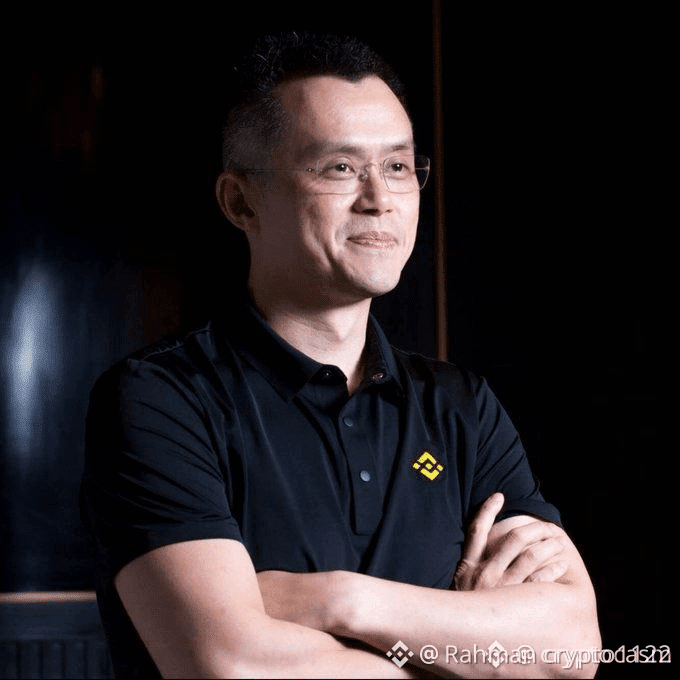
🇺🇸🌐 Binance founder Changpeng Zhao (CZ) has warned that leaked personal data can expose cryptocurrency users to phishing scams, SIM-swapping attacks, social engineering, and even real-world threats.
Recent reports of data breaches have renewed concerns about how criminals can exploit leaked names, email addresses, and phone numbers to target crypto investors.
🛡️ How to Stay SAFU:
🔹 Use a unique email address and strong password for each exchange.
🔹 Prefer passkeys, hardware security keys, or authenticator apps over SMS-based 2FA.
🔹 Never click suspicious links or share passwords, private keys, or recovery phrases.
🔹 Enable withdrawal address whitelisting and anti-phishing protections where available.
🔹 Verify support requests through official channels.
⚠️ Remember: A data leak does not automatically mean your crypto funds have been compromised, but exposed personal information can make targeted scams more convincing.
🔒 Protect your identity. Secure your accounts. Stay SAFU!
📌 References:
• BeInCrypto — CZ Shares How to Stay SAFU as Crypto Data Leak Wave Hits 4 Major Firms, October 28, 2026:
• CZ’s reported security warning on X, October 23, 2026: https://x.com/cz_binance
#CZ #Binance #CryptoSecurity #DataBreach #Phishing
$REN $CLV $CLO
712
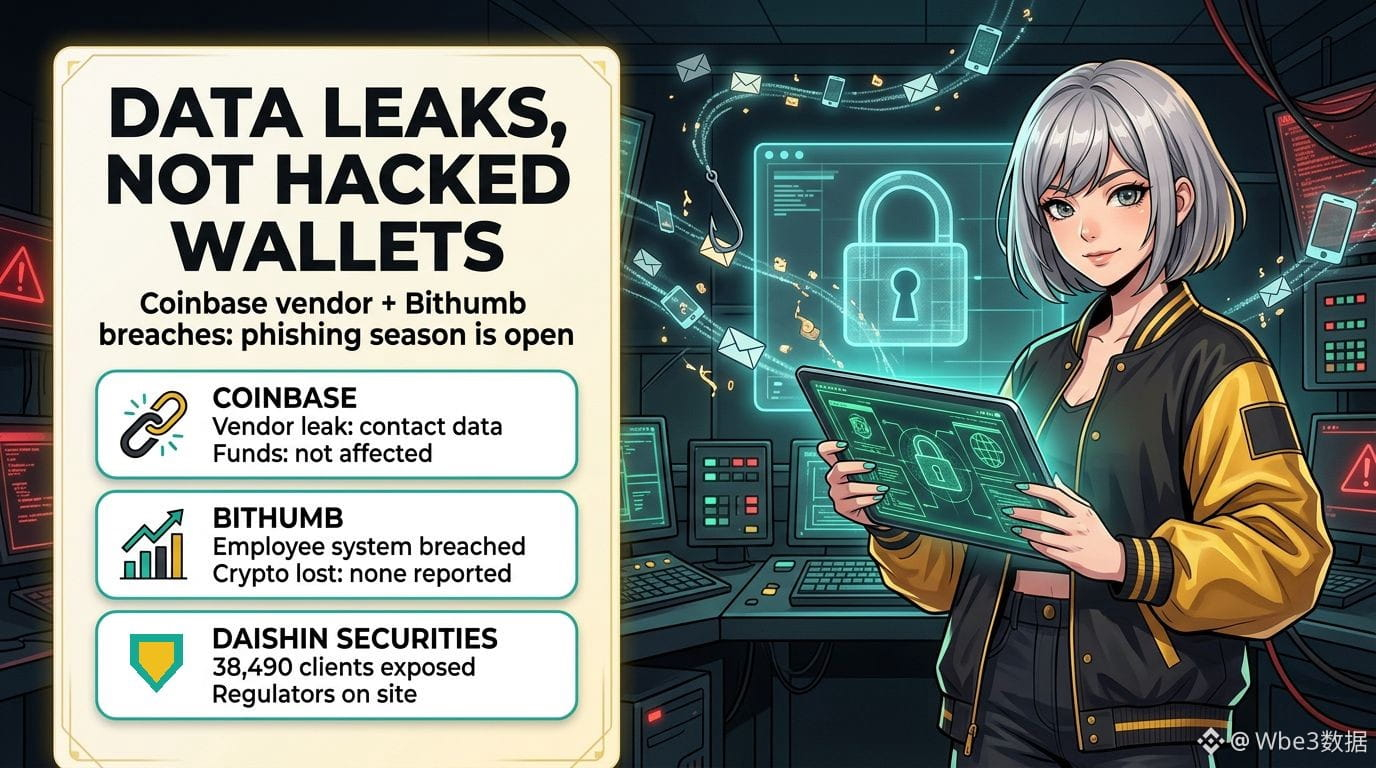
Two exchange data scares in one day, and your coins aren't the real target. Your inbox is.
Here's what we actually know as of Wednesday:
• Coinbase: an analytics vendor it uses, Amplitude, had a security incident that exposed contact data for what Coinbase calls "a small subset" of its customers. Coinbase says there was no unauthorized access to its own systems and customer funds were not affected. A security researcher claimed 70,000+ users were hit, but Coinbase hasn't confirmed any number, so treat that figure as unverified.
• Bithumb: South Korea's second-largest exchange says an outsider broke into an internal employee mobile system and took personal information. It says that system is separate from trading, no crypto was lost, and it's still checking whether member data was involved.
• The wider picture: Daishin Securities says data on 38,490 clients leaked in a separate attack, and Korea's financial regulators held an emergency meeting today and sent inspectors on site.
Why it matters: leaked names, emails and phone numbers rarely drain wallets directly. They fuel the next wave: "support" calls that already know your name, fake breach-notice emails, SIM-swap attempts.
A calm checklist for this week:
1. Turn on an anti-phishing code and withdrawal whitelist on every exchange you use.
2. Swap SMS 2FA for a passkey or hardware key where possible.
3. Ask your carrier for a port-out PIN.
4. Assume anyone contacting you about a "security issue" is a scammer. Real support never asks for codes, passwords or seed phrases.
Have you ever received a phishing message that knew too much about you?
#CryptoSecurity #Phishing #DataBreach
Not financial advice.
68

·
--
DATA BREACH HITS 13K WALLETS 🚨 $COTI $AVNT $AKE ON EDGE 📉
The flow just got a fresh layer of turbulence. Trezor's shipping vector breach surfaces 13,689 user records—names, emails, phones, addresses. This isn't a core protocol attack, but it's a classic liquidity squeeze on sentiment. Smart money reads this as a short-term volatility spike, not a structural invalidation.
Devices remain secure, but the market reprices trust instantaneously. Expect a cautious bid under $COTI , $AVNT , and $AKE as traders digest the noise. The real play is watching for the inevitable inefficiency fill—a sweep of low liquidity before any meaningful reclaim.
How are you positioning your risk around this data event? Is this a dip-buying opportunity or a reason to step aside until structure confirms direction? 🧐
⚠️ Not financial advice. Always manage your risk. 🛡️
🏷️ #COTI #AVNT #AKE #DataBreach #CryptoNews
🧠📊
206
·
--
🚨 $SFP BREACH EXPOSES 40K USERS — TRUST LINES CRACKING? 🛑
🛡️ SafePal just disclosed a data breach leaking names, home addresses, and phone numbers of nearly 40,000 customers. The flaw sat in an order tracking plugin for over a year, granting unauthorized access to sensitive order details. 🔍 With 30+ phishing sites tied to the stolen data, this isn't a small leak — it's a targeted harvest of wallet-holder identity.
📉 For the token, sentiment is the real casualty here. Hardware wallet brands sell on one thing: impenetrable custody. When that narrative cracks, capital flows shift fast, and $SFP will likely feel the friction long after the headlines fade. ⚠️ This raises a sharper question about third-party plugins in the custody stack — where does your trust actually live?
💬 Are you re-auditing your security setup after this, or does a breach like this change nothing about your hardware wallet conviction? 👇
⚠️ Not financial advice. Always manage your risk. 🛡️
🏷️ #SFP #DataBreach #SecurityAlert #CryptoRisk
🛡️ ⚠️

101

·
--
Revolut搞砸了!这家金融科技公司居然被一个假的政府请求骗了,暴露了用户护照信息和完整的比特币交易历史。虽然他们说只有"有限"用户受影响,但这太离谱了了!
数据安全出问题,大家又开始讨论去中心化钱包的重要性了。短期内可能会看到一些用户开始把资产转出Revolut,长期看反而可能促进自我托管意识觉醒。
#DataBreach #CryptoSecurity $BTC
Revolut搞砸了!这家金融科技公司居然被一个假的政府请求骗了,暴露了用户护照信息和完整的比特币交易历史。虽然他们说只有"有限"用户受影响,但这太离谱了了!
数据安全出问题,大家又开始讨论去中心化钱包的重要性了。短期内可能会看到一些用户开始把资产转出Revolut,长期看反而可能促进自我托管意识觉醒。
#DataBreach #CryptoSecurity $BTC
数据安全出问题,大家又开始讨论去中心化钱包的重要性了。短期内可能会看到一些用户开始把资产转出Revolut,长期看反而可能促进自我托管意识觉醒。
#DataBreach #CryptoSecurity $BTC
111

·
--
🚨 Revolut & Fake Government Email: A Serious Data Security Warning
A new cybersecurity controversy involving Revolut is raising questions about how financial institutions verify sensitive government requests.
Reports circulating online suggest that a fake government email/request may have been used to obtain or expose sensitive customer information. While the full scope and details still need to be independently verified, the situation highlights a major cybersecurity lesson:
🔐 Never trust an email simply because it looks official.
For financial platforms, even a convincing government-style request can become dangerous if identity and authorization checks aren't strong enough.
Why this matters 👇
💳 Financial platforms hold highly sensitive customer data.
📧 Email impersonation can make fraudulent requests look legitimate.
🏦 KYC information can become extremely valuable to attackers.
🎣 Leaked information can potentially fuel targeted phishing and social-engineering attacks.
Revolut itself advises users to check suspicious sender addresses and contact support through the app rather than trusting unexpected communications. �
Revolut
⚠️ The bigger question:
Should banks and fintech companies require multiple independent verification steps before releasing customer information in response to government requests?
🟢 YES — verification should be mandatory
🔴 Current systems are already sufficient
What do you think? 👇
#Revolut #CyberSecurity #DataBreach #Crypto_Jobs🎯 #Fintech #Privacy #Phishing #ScamAlert #Blockchain
*This post discusses reported allegations and does not establish that every claim circulating online has been independently confirmed. Always verify information through official sources.*
85
Войдите, чтобы посмотреть больше материала
Присоединяйтесь к пользователям криптовалют по всему миру на Binance Square
⚡️ Получайте новейшую и полезную информацию о криптоактивах.
💬 Нам доверяет крупнейшая в мире криптобиржа.
👍 Получите достоверные аналитические данные от верифицированных создателей контента.
Эл. почта/номер телефона
В тренде
1
#EvolveAtBinanceBlockchainWeek
Просмотров: 3.2M
23,421 обсуждают
2
#CryptographersFormGroupForEncryptionBreak
Просмотров: 7,326
102 обсуждают
3
#SunReportedlyOffered4BToRescueFTX
Просмотров: 72,122
503 обсуждают
4
#XRPLAmendmentsEnterActivationWindow
Просмотров: 61,950
429 обсуждают
5
#Kuwait362BitcoinMinersSeized
Просмотров: 472
19 обсуждают
6
#BitcoinETFsExtendOutflowStreakToEightDays
Просмотров: 192,359
1,189 обсуждают
7
#SouthKorea’sStockStabilizationFundCouldDoubleTo$15B
Просмотров: 135
9 обсуждают
8
#NvidiaHuangToTestifyOverSpyAffairConcerns
Просмотров: 0
0 обсуждают
9
#NovaTechFoundersOrderedToPay1.37B
Просмотров: 0
0 обсуждают
10
#LatviaSaysRussiaA7NetworkUnslowedAfterSanctions
Просмотров: 0
4 обсуждают