

#bitcoinetf
bitcoinetf
Просмотров: 1.9M
5,246 обсуждают
Популярные
Новые

·
--
【美东9:27 BTC ETF盘前砸盘原因|链上视角】
周末BTC先跌到约7.91万,周一盘前ETF直接跟跌。
核心不是突然有人砸现货,而是前两天大额赎回已经在链上兑现了:
• 10月22日:ETF净流出约6.36亿美元
• 10月23日:再流出约1.38亿美元
• 对应约6998枚BTC从ETF托管钱包转出
赎回→AP卖出→现货承压。叠加周末油价冲高(霍尔木兹相关扰动把布伦特推到114附近)带来的风险偏好下降,以及ETF持有人成本在8.15万附近,盘前一开就出现集中定价。
这是典型的“链上先走、盘前补跌”,不是突发利空。
你怎么看?是赎回压力还没结束,还是周末缺口已经补完?
$BTC #BitcoinETF #链上数据
【美东9:27 BTC ETF盘前砸盘原因|链上视角】
周末BTC先跌到约7.91万,周一盘前ETF直接跟跌。
核心不是突然有人砸现货,而是前两天大额赎回已经在链上兑现了:
• 10月22日:ETF净流出约6.36亿美元
• 10月23日:再流出约1.38亿美元
• 对应约6998枚BTC从ETF托管钱包转出
赎回→AP卖出→现货承压。叠加周末油价冲高(霍尔木兹相关扰动把布伦特推到114附近)带来的风险偏好下降,以及ETF持有人成本在8.15万附近,盘前一开就出现集中定价。
这是典型的“链上先走、盘前补跌”,不是突发利空。
你怎么看?是赎回压力还没结束,还是周末缺口已经补完?
$BTC #BitcoinETF #链上数据
周末BTC先跌到约7.91万,周一盘前ETF直接跟跌。
核心不是突然有人砸现货,而是前两天大额赎回已经在链上兑现了:
• 10月22日:ETF净流出约6.36亿美元
• 10月23日:再流出约1.38亿美元
• 对应约6998枚BTC从ETF托管钱包转出
赎回→AP卖出→现货承压。叠加周末油价冲高(霍尔木兹相关扰动把布伦特推到114附近)带来的风险偏好下降,以及ETF持有人成本在8.15万附近,盘前一开就出现集中定价。
这是典型的“链上先走、盘前补跌”,不是突发利空。
你怎么看?是赎回压力还没结束,还是周末缺口已经补完?
$BTC #BitcoinETF #链上数据
95

·
--
Рост
#franklintempletonfilestwodividendbitcoinetfs 🚨 Franklin Templeton's Bitcoin ETF Move Deserves Attention
This is worth watching - even for crypto traders.
HARD DATA:
SEC filing on Oct 22, 2026 shows Franklin Templeton registered 2 new ETFs - Franklin US Equity Bitcoin DRIP Index ETF and Franklin US Innovation Bitcoin DRIP Index ETF. The $1.8 Trillion asset manager plans 95% US stocks + 5% Bitcoin allocation on Nasdaq, with all stock dividends auto-routed into Bitcoin exposure.
$BTC
WHY CARE?
Why should crypto traders care? This is not just another ETF. It's a new flow mechanism. Every time those portfolio companies pay dividends, that cash becomes BTC buying pressure. If approved, it creates a passive, rules-based demand loop from traditional equity income straight into Bitcoin.
$BTC
BALANCED VIEW:
The other side matters: Risk bhi hai. 1) It's still a filing, not approval. 2) BTC is capped at a small sleeve, so impact depends on how big these ETFs actually get. 3) If equities fall and dividends get cut, the Bitcoin buying engine slows too. And bearish market me ye structure underperform kar sakta hai.
TAKEAWAY:
The takeaway: treat this as a signal about institutional adoption, not a trading trigger. Big asset managers are now engineering products to turn stock income into crypto exposure.
#BitcoinETF #FranklinTempleton #CryptoNews
#franklintempletonfilestwodividendbitcoinetfs 🚨 Franklin Templeton's Bitcoin ETF Move Deserves Attention
This is worth watching - even for crypto traders.
HARD DATA:
SEC filing on Oct 22, 2026 shows Franklin Templeton registered 2 new ETFs - Franklin US Equity Bitcoin DRIP Index ETF and Franklin US Innovation Bitcoin DRIP Index ETF. The $1.8 Trillion asset manager plans 95% US stocks + 5% Bitcoin allocation on Nasdaq, with all stock dividends auto-routed into Bitcoin exposure.
$BTC
WHY CARE?
Why should crypto traders care? This is not just another ETF. It's a new flow mechanism. Every time those portfolio companies pay dividends, that cash becomes BTC buying pressure. If approved, it creates a passive, rules-based demand loop from traditional equity income straight into Bitcoin.
$BTC
BALANCED VIEW:
The other side matters: Risk bhi hai. 1) It's still a filing, not approval. 2) BTC is capped at a small sleeve, so impact depends on how big these ETFs actually get. 3) If equities fall and dividends get cut, the Bitcoin buying engine slows too. And bearish market me ye structure underperform kar sakta hai.
TAKEAWAY:
The takeaway: treat this as a signal about institutional adoption, not a trading trigger. Big asset managers are now engineering products to turn stock income into crypto exposure.
#BitcoinETF #FranklinTempleton #CryptoNews
This is worth watching - even for crypto traders.
HARD DATA:
SEC filing on Oct 22, 2026 shows Franklin Templeton registered 2 new ETFs - Franklin US Equity Bitcoin DRIP Index ETF and Franklin US Innovation Bitcoin DRIP Index ETF. The $1.8 Trillion asset manager plans 95% US stocks + 5% Bitcoin allocation on Nasdaq, with all stock dividends auto-routed into Bitcoin exposure.
$BTC
WHY CARE?
Why should crypto traders care? This is not just another ETF. It's a new flow mechanism. Every time those portfolio companies pay dividends, that cash becomes BTC buying pressure. If approved, it creates a passive, rules-based demand loop from traditional equity income straight into Bitcoin.
$BTC
BALANCED VIEW:
The other side matters: Risk bhi hai. 1) It's still a filing, not approval. 2) BTC is capped at a small sleeve, so impact depends on how big these ETFs actually get. 3) If equities fall and dividends get cut, the Bitcoin buying engine slows too. And bearish market me ye structure underperform kar sakta hai.
TAKEAWAY:
The takeaway: treat this as a signal about institutional adoption, not a trading trigger. Big asset managers are now engineering products to turn stock income into crypto exposure.
#BitcoinETF #FranklinTempleton #CryptoNews
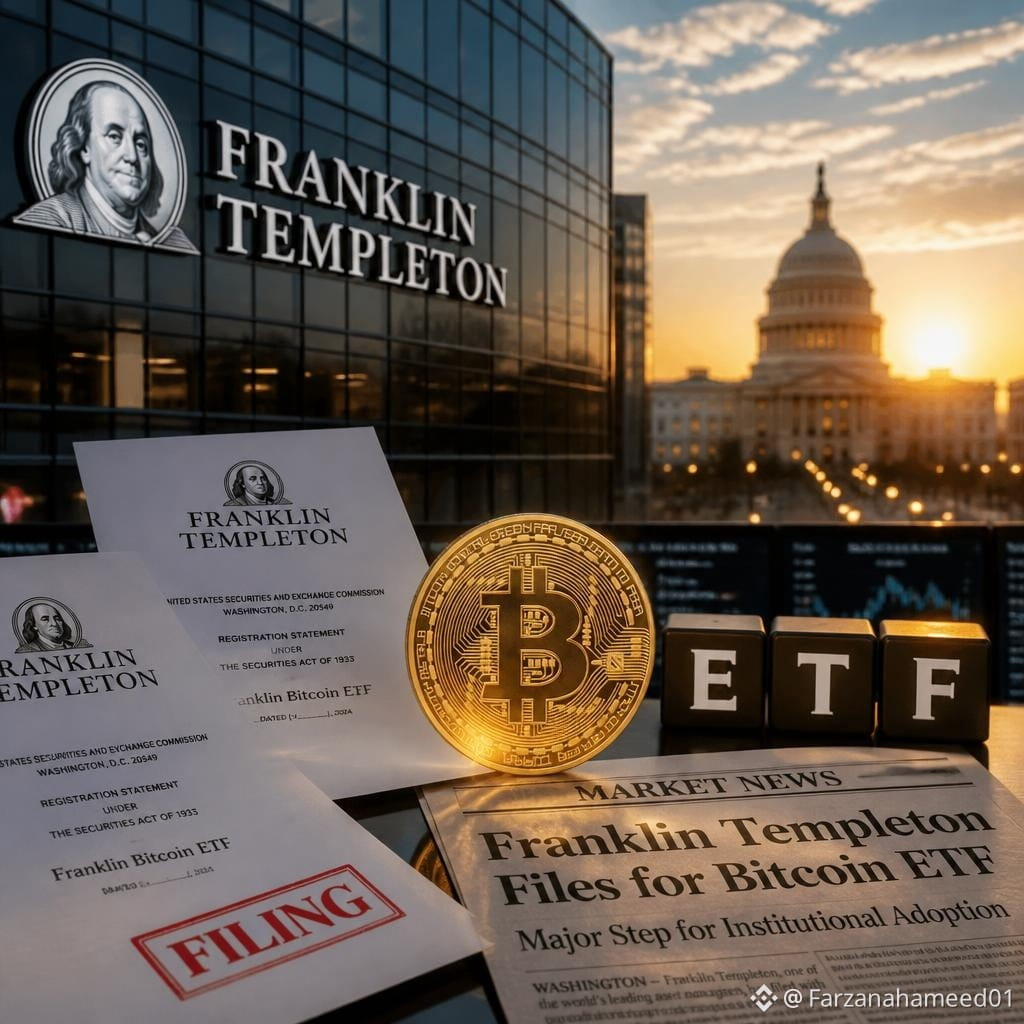
1
39

🚨 WALL STREET MEETS BITCOIN! FRANKLIN TEMPLETON TAKES A NEW STEP ₿
Big news for the crypto market! 👀 Franklin Templeton is moving closer to bringing Bitcoin exposure into traditional stock investment strategies.
Here’s what makes these two proposed ETFs interesting:
📊 95% Stocks + 5% Bitcoin: Both funds start with this target allocation.
💰 Dividends Into Bitcoin: Instead of reinvesting stock dividends back into shares, the strategy directs those dividends toward Bitcoin exposure.
🏦 Two Different Strategies:
🔹 FBEQ — Focuses on large-cap US stocks.
🔹 FIBT — Focuses on innovation-oriented US companies.
📈 Why It Matters: This structure could offer traditional investors another route to gain indirect Bitcoin exposure without buying BTC directly themselves.
⚠️ Important Detail: The latest filings point to October 27 as the effective date, but that does not automatically mean trading has started. The funds also carry investment risks, and their Bitcoin allocation is subject to rebalancing rules.
🧠 My Take: The bigger story is how traditional finance continues exploring new ways to connect stock-market investing with Bitcoin. It could broaden access to BTC exposure, but it does not guarantee higher prices.
💬 What do you think? Could dividend-funded Bitcoin exposure become a popular investment strategy?
👇 Share your thoughts!
$BTC
#Bitcoin #CryptoNews #BitcoinETF
🚨 WALL STREET MEETS BITCOIN! FRANKLIN TEMPLETON TAKES A NEW STEP ₿
Big news for the crypto market! 👀 Franklin Templeton is moving closer to bringing Bitcoin exposure into traditional stock investment strategies.
Here’s what makes these two proposed ETFs interesting:
📊 95% Stocks + 5% Bitcoin: Both funds start with this target allocation.
💰 Dividends Into Bitcoin: Instead of reinvesting stock dividends back into shares, the strategy directs those dividends toward Bitcoin exposure.
🏦 Two Different Strategies:
🔹 FBEQ — Focuses on large-cap US stocks.
🔹 FIBT — Focuses on innovation-oriented US companies.
📈 Why It Matters: This structure could offer traditional investors another route to gain indirect Bitcoin exposure without buying BTC directly themselves.
⚠️ Important Detail: The latest filings point to October 27 as the effective date, but that does not automatically mean trading has started. The funds also carry investment risks, and their Bitcoin allocation is subject to rebalancing rules.
🧠 My Take: The bigger story is how traditional finance continues exploring new ways to connect stock-market investing with Bitcoin. It could broaden access to BTC exposure, but it does not guarantee higher prices.
💬 What do you think? Could dividend-funded Bitcoin exposure become a popular investment strategy?
👇 Share your thoughts!
$BTC
#Bitcoin #CryptoNews #BitcoinETF
Big news for the crypto market! 👀 Franklin Templeton is moving closer to bringing Bitcoin exposure into traditional stock investment strategies.
Here’s what makes these two proposed ETFs interesting:
📊 95% Stocks + 5% Bitcoin: Both funds start with this target allocation.
💰 Dividends Into Bitcoin: Instead of reinvesting stock dividends back into shares, the strategy directs those dividends toward Bitcoin exposure.
🏦 Two Different Strategies:
🔹 FBEQ — Focuses on large-cap US stocks.
🔹 FIBT — Focuses on innovation-oriented US companies.
📈 Why It Matters: This structure could offer traditional investors another route to gain indirect Bitcoin exposure without buying BTC directly themselves.
⚠️ Important Detail: The latest filings point to October 27 as the effective date, but that does not automatically mean trading has started. The funds also carry investment risks, and their Bitcoin allocation is subject to rebalancing rules.
🧠 My Take: The bigger story is how traditional finance continues exploring new ways to connect stock-market investing with Bitcoin. It could broaden access to BTC exposure, but it does not guarantee higher prices.
💬 What do you think? Could dividend-funded Bitcoin exposure become a popular investment strategy?
👇 Share your thoughts!
$BTC
#Bitcoin #CryptoNews #BitcoinETF
1
67

·
--
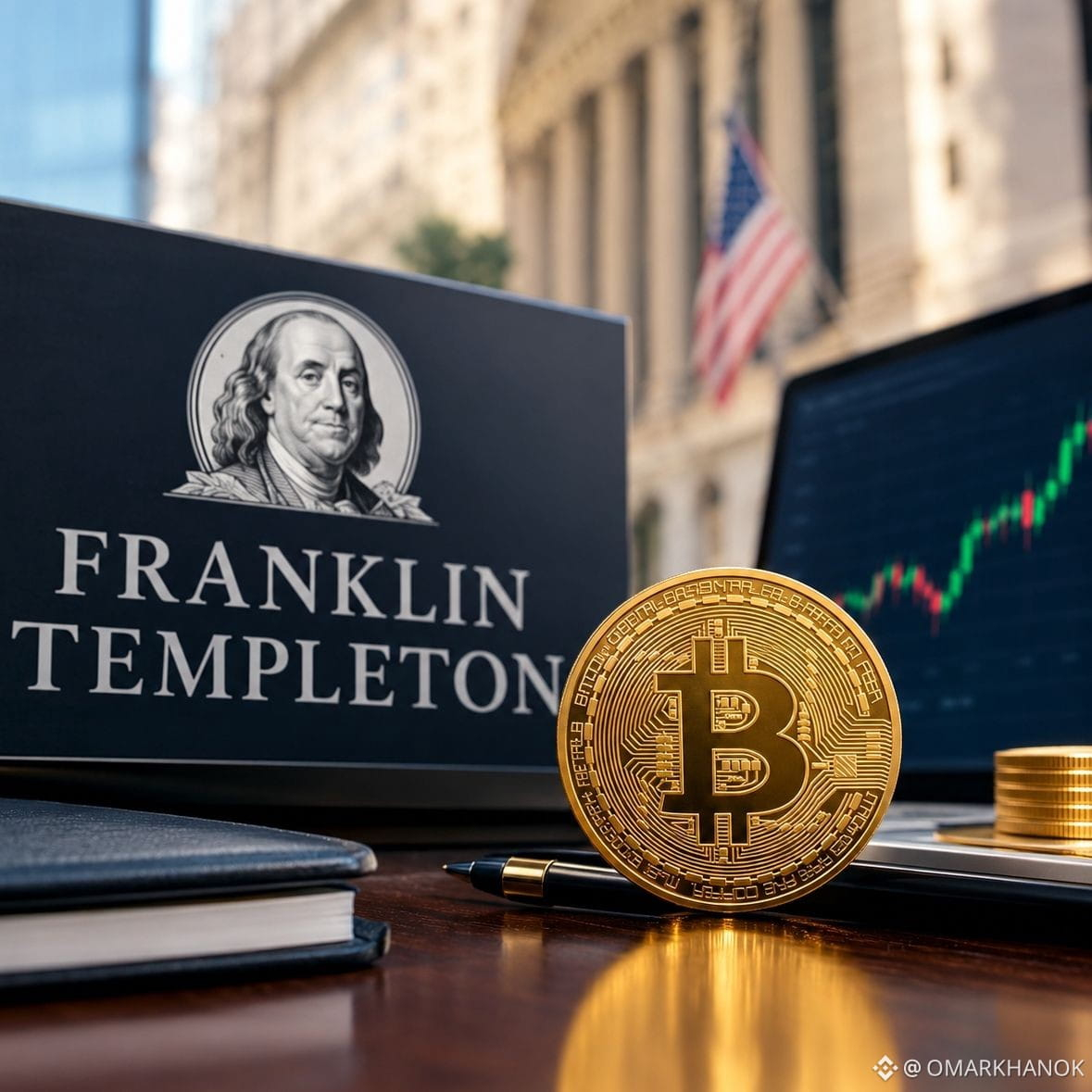
#FranklinTempletonFilesForTwoDividendToBitcoinETFs BITCOIN IS GETTING ANOTHER WALL STREET CONNECTION — ARE YOU READY?
Franklin Templeton has filed for two proposed ETFs designed to connect stock dividend income with Bitcoin exposure.
Both target an initial 5% BTC allocation, potentially creating another bridge between traditional finance and crypto.
If adoption grows, could this become a long-term catalyst for $BTC?
Smart traders watch the news, plan their entries, and manage risk. Don't chase pumps — trade with a strategy.
My 3 Target Support Zones for BTC:
Zone 1: $80K–$81K Zone 2: $78K–$79K Zone 3: $75K–$76K
I AM DCA BUYING MY FAVORITE COINS FOR THE LONG TERM: 👉 $BNB | $ETH | $BTC
My strategy is simple: Buy gradually, stay patient, and hold for the long term.
YOUR MOVE: BUY BTC, HOLD, OR WAIT FOR A DIP?
Share your strategy in the comments.
buy and hold in spot long terM 👇
{spot}(SOLUSDT)
{spot}(SUIUSDT)
{spot}(BTCUSDT)
#bitcoin #BTC #BitcoinETF #CryptoNews
#FranklinTempletonFilesForTwoDividendToBitcoinETFs BITCOIN IS GETTING ANOTHER WALL STREET CONNECTION — ARE YOU READY?
Franklin Templeton has filed for two proposed ETFs designed to connect stock dividend income with Bitcoin exposure.
Both target an initial 5% BTC allocation, potentially creating another bridge between traditional finance and crypto.
If adoption grows, could this become a long-term catalyst for $BTC ?
Smart traders watch the news, plan their entries, and manage risk. Don't chase pumps — trade with a strategy.
My 3 Target Support Zones for BTC:
Zone 1: $80K–$81K Zone 2: $78K–$79K Zone 3: $75K–$76K
I AM DCA BUYING MY FAVORITE COINS FOR THE LONG TERM: 👉 $BNB | $ETH | $BTC
My strategy is simple: Buy gradually, stay patient, and hold for the long term.
YOUR MOVE: BUY BTC, HOLD, OR WAIT FOR A DIP?
Share your strategy in the comments.
buy and hold in spot long terM 👇
#bitcoin #BTC #BitcoinETF #CryptoNews
Franklin Templeton has filed for two proposed ETFs designed to connect stock dividend income with Bitcoin exposure.
Both target an initial 5% BTC allocation, potentially creating another bridge between traditional finance and crypto.
If adoption grows, could this become a long-term catalyst for $BTC ?
Smart traders watch the news, plan their entries, and manage risk. Don't chase pumps — trade with a strategy.
My 3 Target Support Zones for BTC:
Zone 1: $80K–$81K Zone 2: $78K–$79K Zone 3: $75K–$76K
I AM DCA BUYING MY FAVORITE COINS FOR THE LONG TERM: 👉 $BNB | $ETH | $BTC
My strategy is simple: Buy gradually, stay patient, and hold for the long term.
YOUR MOVE: BUY BTC, HOLD, OR WAIT FOR A DIP?
Share your strategy in the comments.
buy and hold in spot long terM 👇
#bitcoin #BTC #BitcoinETF #CryptoNews
1
1
156

·
--
#FranklinTempletonFilesForTwoDividendToBitcoinETFs
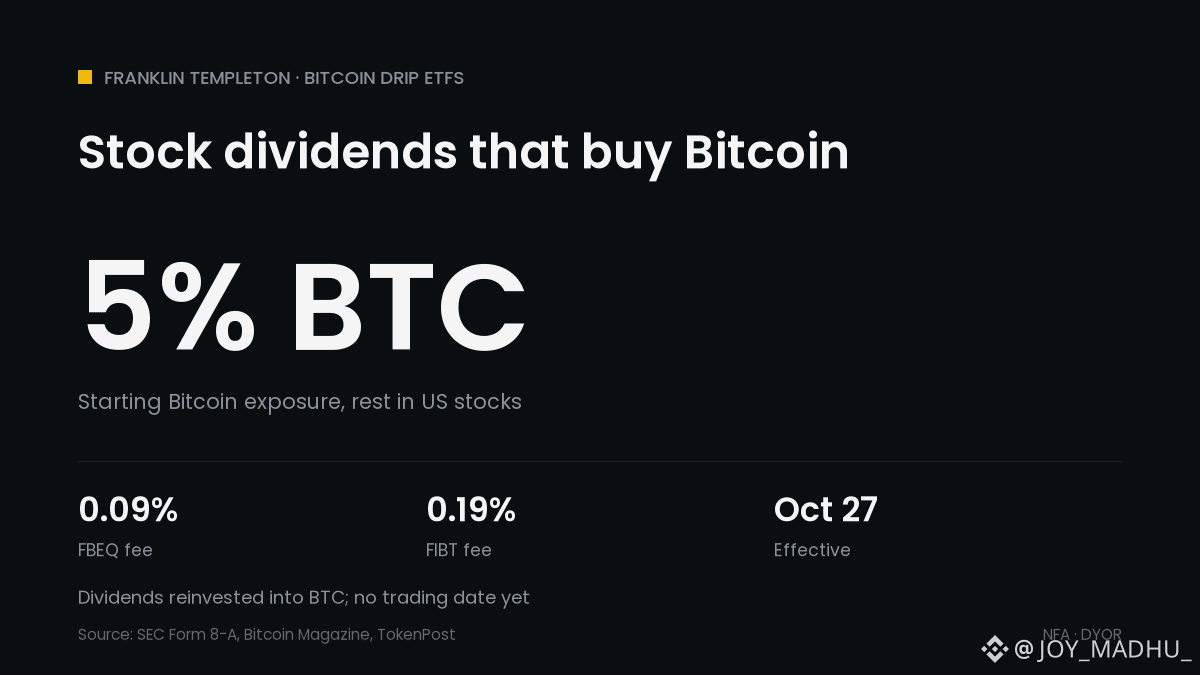
🏦 Franklin Templeton Wants Stock Dividends to Buy Bitcoin
📄 Oct 22: Franklin filed to list two "Bitcoin DRIP" ETFs on Nasdaq
📊 FBEQ tracks 500 large US stocks (0.09% fee); FIBT tracks 100 innovation stocks (0.19%)
⚖️ Each index starts at 95% stocks and 5% Bitcoin exposure
🔁 Every dividend, regular or special, gets reinvested into Bitcoin the day after the ex-date
⚠️ Caps: BTC above 5% is trimmed to 4.5% each quarter, and never runs past 20%
📅 Prospectuses take effect Oct 27, but no trading date has been announced
What it means for Bitcoin: a $1.8T asset manager is building a slow, automatic BTC bid into plain stock funds. It's a small sleeve, not a spot ETF. BTC is near $80.4K, up about 0.3% in 24h.
Would you rather get dividends in cash or in Bitcoin? 👇
$BTC
#CryptoNews #BitcoinETF #FranklinTempleton #FranklinTempletonFilesForTwoDividendToBitcoinETFs
#FranklinTempletonFilesForTwoDividendToBitcoinETFs
🏦 Franklin Templeton Wants Stock Dividends to Buy Bitcoin
📄 Oct 22: Franklin filed to list two "Bitcoin DRIP" ETFs on Nasdaq
📊 FBEQ tracks 500 large US stocks (0.09% fee); FIBT tracks 100 innovation stocks (0.19%)
⚖️ Each index starts at 95% stocks and 5% Bitcoin exposure
🔁 Every dividend, regular or special, gets reinvested into Bitcoin the day after the ex-date
⚠️ Caps: BTC above 5% is trimmed to 4.5% each quarter, and never runs past 20%
📅 Prospectuses take effect Oct 27, but no trading date has been announced
What it means for Bitcoin: a $1.8T asset manager is building a slow, automatic BTC bid into plain stock funds. It's a small sleeve, not a spot ETF. BTC is near $80.4K, up about 0.3% in 24h.
Would you rather get dividends in cash or in Bitcoin? 👇
$BTC
#CryptoNews #BitcoinETF #FranklinTempleton #FranklinTempletonFilesForTwoDividendToBitcoinETFs
🏦 Franklin Templeton Wants Stock Dividends to Buy Bitcoin
📄 Oct 22: Franklin filed to list two "Bitcoin DRIP" ETFs on Nasdaq
📊 FBEQ tracks 500 large US stocks (0.09% fee); FIBT tracks 100 innovation stocks (0.19%)
⚖️ Each index starts at 95% stocks and 5% Bitcoin exposure
🔁 Every dividend, regular or special, gets reinvested into Bitcoin the day after the ex-date
⚠️ Caps: BTC above 5% is trimmed to 4.5% each quarter, and never runs past 20%
📅 Prospectuses take effect Oct 27, but no trading date has been announced
What it means for Bitcoin: a $1.8T asset manager is building a slow, automatic BTC bid into plain stock funds. It's a small sleeve, not a spot ETF. BTC is near $80.4K, up about 0.3% in 24h.
Would you rather get dividends in cash or in Bitcoin? 👇
$BTC
#CryptoNews #BitcoinETF #FranklinTempleton #FranklinTempletonFilesForTwoDividendToBitcoinETFs
16

·
--
Chào cộng đồng Crypto! Hôm nay, một tin tức cực kỳ quan trọng đã xuất hiện, khiến nhiều nhà đầu tư phải nhìn lại thị trường Bitcoin ETF sau chuỗi ngày ảm đạm.
### ĐỘT PHÁ! Sau 2 tuần "tháo chạy", Bitcoin ETF bất ngờ HÚT 301 TRIỆU ĐÔ! Chuyện gì đang xảy ra?
Sau giai đoạn "chảy máu" liên tục, các quỹ Bitcoin ETF giao ngay tại Mỹ vừa có một màn "comeback" ngoạn mục, thu hút hàng trăm triệu USD. Liệu đây có phải là tín hiệu đảo chiều mà chúng ta chờ đợi?
**Điểm tin chính:**
* **Phá vỡ chuỗi rút ròng:** Các quỹ Bitcoin ETF giao ngay tại Mỹ đã chính thức phá vỡ chuỗi 2 tuần liên tiếp ghi nhận dòng tiền rút ròng, mang lại hy vọng mới cho thị trường.
* **Dòng tiền ròng ấn tượng:** Tổng dòng tiền ròng đổ vào các quỹ này đã đạt mức 301 triệu USD ấn tượng chỉ trong tuần vừa qua.
* **Biến động nội tại:** Đáng chú ý, dòng tiền trong tuần chứng kiến khởi đầu tích cực trong ba ngày đầu, sau đó là những đợt rút vốn mạnh, nhưng cuối cùng vẫn kết thúc với con số dương đáng kể.
**Góc nhìn cá nhân:**
Dòng tiền 301 triệu USD trở lại các quỹ Bitcoin ETF là một tín hiệu *phục hồi* đáng mừng, chấm dứt giai đoạn "ngủ đông" kéo dài hai tuần. Nó cho thấy *áp lực bán từ các nhà đầu tư tổ chức đang giảm bớt* và có thể đang có sự *tái định vị vốn*. Tuy nhiên, việc dòng tiền biến động mạnh trong tuần (khởi đầu tốt nhưng sau đó bị rút) cũng cảnh báo rằng tâm lý thị trường vẫn *rất mong manh*. Đừng vội "FOMO" mà hãy nhìn vào đây như một *dấu hiệu ban đầu của sự ổn định*. Chúng ta cần theo dõi thêm các tuần tiếp theo để xác nhận liệu xu hướng này có bền vững hay không, nhưng rõ ràng, đây là một *điểm sáng* quan trọng sau chuỗi ngày ảm đạm.
**Ý kiến của bạn thì sao?**
Bạn nghĩ sao về đợt phục hồi dòng tiền này? Đây là dấu hiệu của sự đảo chiều hay chỉ là một cú "lướt sóng" ngắn hạn?
Hãy để lại bình luận phía dưới và đừng quên **BẤM THEO DÕI** kênh của tôi để cập nhật những phân tích chuyên sâu và tin tức nóng hổi nhất về thị trường Crypto nhé!
#CryptoNews #TrendingNews #BTC #BitcoinETF
Chào cộng đồng Crypto! Hôm nay, một tin tức cực kỳ quan trọng đã xuất hiện, khiến nhiều nhà đầu tư phải nhìn lại thị trường Bitcoin ETF sau chuỗi ngày ảm đạm.
### ĐỘT PHÁ! Sau 2 tuần "tháo chạy", Bitcoin ETF bất ngờ HÚT 301 TRIỆU ĐÔ! Chuyện gì đang xảy ra?
Sau giai đoạn "chảy máu" liên tục, các quỹ Bitcoin ETF giao ngay tại Mỹ vừa có một màn "comeback" ngoạn mục, thu hút hàng trăm triệu USD. Liệu đây có phải là tín hiệu đảo chiều mà chúng ta chờ đợi?
**Điểm tin chính:**
* **Phá vỡ chuỗi rút ròng:** Các quỹ Bitcoin ETF giao ngay tại Mỹ đã chính thức phá vỡ chuỗi 2 tuần liên tiếp ghi nhận dòng tiền rút ròng, mang lại hy vọng mới cho thị trường.
* **Dòng tiền ròng ấn tượng:** Tổng dòng tiền ròng đổ vào các quỹ này đã đạt mức 301 triệu USD ấn tượng chỉ trong tuần vừa qua.
* **Biến động nội tại:** Đáng chú ý, dòng tiền trong tuần chứng kiến khởi đầu tích cực trong ba ngày đầu, sau đó là những đợt rút vốn mạnh, nhưng cuối cùng vẫn kết thúc với con số dương đáng kể.
**Góc nhìn cá nhân:**
Dòng tiền 301 triệu USD trở lại các quỹ Bitcoin ETF là một tín hiệu *phục hồi* đáng mừng, chấm dứt giai đoạn "ngủ đông" kéo dài hai tuần. Nó cho thấy *áp lực bán từ các nhà đầu tư tổ chức đang giảm bớt* và có thể đang có sự *tái định vị vốn*. Tuy nhiên, việc dòng tiền biến động mạnh trong tuần (khởi đầu tốt nhưng sau đó bị rút) cũng cảnh báo rằng tâm lý thị trường vẫn *rất mong manh*. Đừng vội "FOMO" mà hãy nhìn vào đây như một *dấu hiệu ban đầu của sự ổn định*. Chúng ta cần theo dõi thêm các tuần tiếp theo để xác nhận liệu xu hướng này có bền vững hay không, nhưng rõ ràng, đây là một *điểm sáng* quan trọng sau chuỗi ngày ảm đạm.
**Ý kiến của bạn thì sao?**
Bạn nghĩ sao về đợt phục hồi dòng tiền này? Đây là dấu hiệu của sự đảo chiều hay chỉ là một cú "lướt sóng" ngắn hạn?
Hãy để lại bình luận phía dưới và đừng quên **BẤM THEO DÕI** kênh của tôi để cập nhật những phân tích chuyên sâu và tin tức nóng hổi nhất về thị trường Crypto nhé!
#CryptoNews #TrendingNews #BTC #BitcoinETF
### ĐỘT PHÁ! Sau 2 tuần "tháo chạy", Bitcoin ETF bất ngờ HÚT 301 TRIỆU ĐÔ! Chuyện gì đang xảy ra?
Sau giai đoạn "chảy máu" liên tục, các quỹ Bitcoin ETF giao ngay tại Mỹ vừa có một màn "comeback" ngoạn mục, thu hút hàng trăm triệu USD. Liệu đây có phải là tín hiệu đảo chiều mà chúng ta chờ đợi?
**Điểm tin chính:**
* **Phá vỡ chuỗi rút ròng:** Các quỹ Bitcoin ETF giao ngay tại Mỹ đã chính thức phá vỡ chuỗi 2 tuần liên tiếp ghi nhận dòng tiền rút ròng, mang lại hy vọng mới cho thị trường.
* **Dòng tiền ròng ấn tượng:** Tổng dòng tiền ròng đổ vào các quỹ này đã đạt mức 301 triệu USD ấn tượng chỉ trong tuần vừa qua.
* **Biến động nội tại:** Đáng chú ý, dòng tiền trong tuần chứng kiến khởi đầu tích cực trong ba ngày đầu, sau đó là những đợt rút vốn mạnh, nhưng cuối cùng vẫn kết thúc với con số dương đáng kể.
**Góc nhìn cá nhân:**
Dòng tiền 301 triệu USD trở lại các quỹ Bitcoin ETF là một tín hiệu *phục hồi* đáng mừng, chấm dứt giai đoạn "ngủ đông" kéo dài hai tuần. Nó cho thấy *áp lực bán từ các nhà đầu tư tổ chức đang giảm bớt* và có thể đang có sự *tái định vị vốn*. Tuy nhiên, việc dòng tiền biến động mạnh trong tuần (khởi đầu tốt nhưng sau đó bị rút) cũng cảnh báo rằng tâm lý thị trường vẫn *rất mong manh*. Đừng vội "FOMO" mà hãy nhìn vào đây như một *dấu hiệu ban đầu của sự ổn định*. Chúng ta cần theo dõi thêm các tuần tiếp theo để xác nhận liệu xu hướng này có bền vững hay không, nhưng rõ ràng, đây là một *điểm sáng* quan trọng sau chuỗi ngày ảm đạm.
**Ý kiến của bạn thì sao?**
Bạn nghĩ sao về đợt phục hồi dòng tiền này? Đây là dấu hiệu của sự đảo chiều hay chỉ là một cú "lướt sóng" ngắn hạn?
Hãy để lại bình luận phía dưới và đừng quên **BẤM THEO DÕI** kênh của tôi để cập nhật những phân tích chuyên sâu và tin tức nóng hổi nhất về thị trường Crypto nhé!
#CryptoNews #TrendingNews #BTC #BitcoinETF
77

·
--
🚨 BITCOIN ETFs BREAK 2-WEEK OUTFLOW STREAK WITH $301M COMEBACK! 🔥
US spot Bitcoin ETFs recorded approximately $301 million in net inflows, ending two consecutive weeks of outflows.
📊 KEY MARKET HIGHLIGHTS:
💰 $301M — Weekly net inflows into Bitcoin ETFs.
🏦 $1.08B — Inflows recorded between Monday and Wednesday.
⚠️ $774M — Withdrawn on Thursday and Friday as BTC retreated toward $80,000.
📉 Bitcoin dropped from a weekly high of $84,777 to around $80,025.
🐻 Meanwhile, US spot Ethereum ETFs recorded another $221 million in weekly outflows, extending their losing streak to four weeks.
WHAT'S NEXT FOR BITCOIN? 👀
ETF inflows have turned positive again, but heavy late-week withdrawals suggest uncertainty remains in the market.
The big question is whether institutional demand can return strongly enough to support the next BTC rally.
#BTC #BitcoinETF #BinancePick
{spot}(BTCUSDT)
🚨 BITCOIN ETFs BREAK 2-WEEK OUTFLOW STREAK WITH $301M COMEBACK! 🔥
US spot Bitcoin ETFs recorded approximately $301 million in net inflows, ending two consecutive weeks of outflows.
📊 KEY MARKET HIGHLIGHTS:
💰 $301M — Weekly net inflows into Bitcoin ETFs.
🏦 $1.08B — Inflows recorded between Monday and Wednesday.
⚠️ $774M — Withdrawn on Thursday and Friday as BTC retreated toward $80,000.
📉 Bitcoin dropped from a weekly high of $84,777 to around $80,025.
🐻 Meanwhile, US spot Ethereum ETFs recorded another $221 million in weekly outflows, extending their losing streak to four weeks.
WHAT'S NEXT FOR BITCOIN? 👀
ETF inflows have turned positive again, but heavy late-week withdrawals suggest uncertainty remains in the market.
The big question is whether institutional demand can return strongly enough to support the next BTC rally.
#BTC #BitcoinETF #BinancePick
US spot Bitcoin ETFs recorded approximately $301 million in net inflows, ending two consecutive weeks of outflows.
📊 KEY MARKET HIGHLIGHTS:
💰 $301M — Weekly net inflows into Bitcoin ETFs.
🏦 $1.08B — Inflows recorded between Monday and Wednesday.
⚠️ $774M — Withdrawn on Thursday and Friday as BTC retreated toward $80,000.
📉 Bitcoin dropped from a weekly high of $84,777 to around $80,025.
🐻 Meanwhile, US spot Ethereum ETFs recorded another $221 million in weekly outflows, extending their losing streak to four weeks.
WHAT'S NEXT FOR BITCOIN? 👀
ETF inflows have turned positive again, but heavy late-week withdrawals suggest uncertainty remains in the market.
The big question is whether institutional demand can return strongly enough to support the next BTC rally.
#BTC #BitcoinETF #BinancePick
1
65

🔥 Spot Bitcoin ETFs aren't just a headline; they’re a market‑shifting inflection point.
📈 Monday saw $532 million pour into U.S. spot Bitcoin ETFs for the third straight day, led by BlackRock and Fidelity, while BTC hovers at $80,345 with a bearish RSI 42.6 and futures open interest at $7.55 billion supporting a modest +0.0080% funding rate. #BitcoinETF #InstitutionalMoney
🌐 This flood of regulated capital signals the next phase of the #CryptoCycle – institutional confidence often precedes the “price discovery” wave that launches a multi‑year bull run, echoing the early‑2021 surge when on‑chain smart‑money wallets began loading up. #LongTermThesis
💡 Practical move: keep a modest allocation in BTC or a spot‑ETF, monitor the weekly chart for a breakout above the 33.4% Bollinger mid‑range, and hold cash ready for a pull‑back when the RSI dips below 35.
❓ How are you positioning now – buying the dip, waiting for a breakout, or staying on the sidelines?
🔥 Spot Bitcoin ETFs aren't just a headline; they’re a market‑shifting inflection point.
📈 Monday saw $532 million pour into U.S. spot Bitcoin ETFs for the third straight day, led by BlackRock and Fidelity, while BTC hovers at $80,345 with a bearish RSI 42.6 and futures open interest at $7.55 billion supporting a modest +0.0080% funding rate. #BitcoinETF #InstitutionalMoney
🌐 This flood of regulated capital signals the next phase of the #CryptoCycle – institutional confidence often precedes the “price discovery” wave that launches a multi‑year bull run, echoing the early‑2021 surge when on‑chain smart‑money wallets began loading up. #LongTermThesis
💡 Practical move: keep a modest allocation in BTC or a spot‑ETF, monitor the weekly chart for a breakout above the 33.4% Bollinger mid‑range, and hold cash ready for a pull‑back when the RSI dips below 35.
❓ How are you positioning now – buying the dip, waiting for a breakout, or staying on the sidelines?
📈 Monday saw $532 million pour into U.S. spot Bitcoin ETFs for the third straight day, led by BlackRock and Fidelity, while BTC hovers at $80,345 with a bearish RSI 42.6 and futures open interest at $7.55 billion supporting a modest +0.0080% funding rate. #BitcoinETF #InstitutionalMoney
🌐 This flood of regulated capital signals the next phase of the #CryptoCycle – institutional confidence often precedes the “price discovery” wave that launches a multi‑year bull run, echoing the early‑2021 surge when on‑chain smart‑money wallets began loading up. #LongTermThesis
💡 Practical move: keep a modest allocation in BTC or a spot‑ETF, monitor the weekly chart for a breakout above the 33.4% Bollinger mid‑range, and hold cash ready for a pull‑back when the RSI dips below 35.
❓ How are you positioning now – buying the dip, waiting for a breakout, or staying on the sidelines?
58

·
--
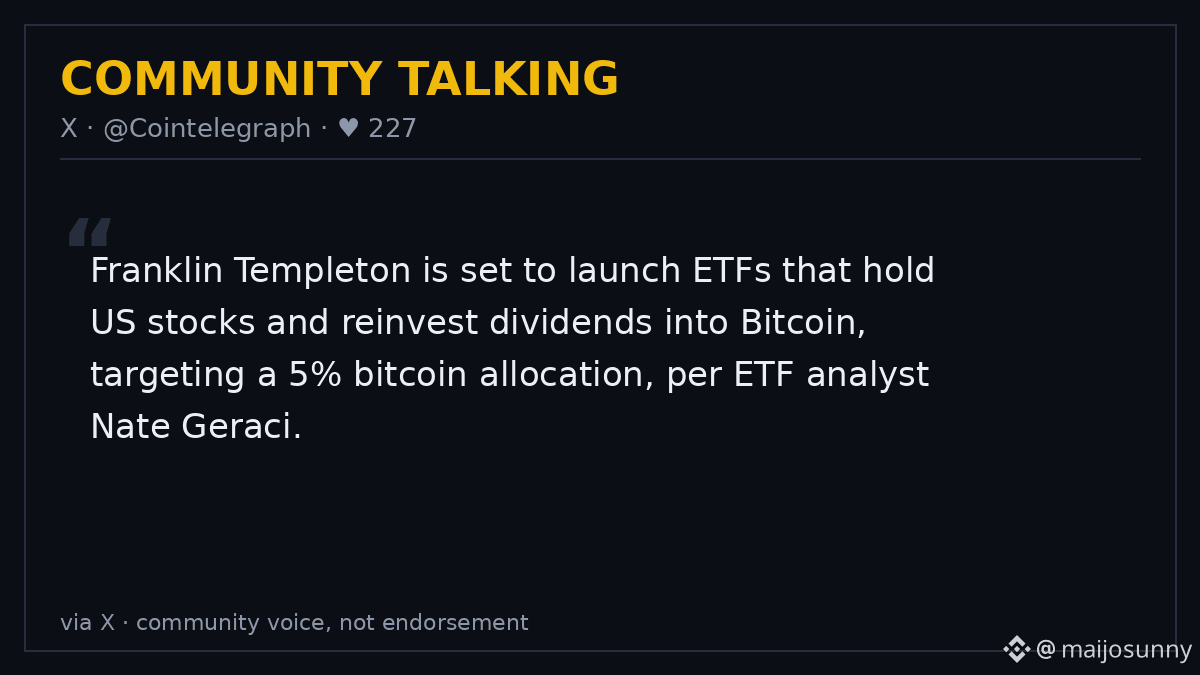
👀 "Franklin Templeton is set to launch ETFs that hold US stocks and reinvest dividends into Bitcoin."
That is Cointelegraph on X today, crediting ETF analyst Nate Geraci. The details underneath are better than the headline.
Two funds, FBEQ and FIBT, start at 95% US stocks and 5% Bitcoin exposure. Every dividend those stocks pay, regular or special, gets reinvested into Bitcoin at the next day's open instead of buying more shares. Registration goes effective Oct 27, with fees from 0.09%. No trading date announced yet.
My take: this is a plumbing innovation, not a Bitcoin buying spree. The funds do not hold BTC directly. Exposure comes through Bitcoin ETPs, futures and options, and the Bitcoin sleeve gets trimmed back to 4.5% at each quarterly rebalance if it drifts above 5%.
And here is the number everyone will misread. $1.8 trillion is Franklin Templeton's total assets under management. It is NOT money flowing into Bitcoin. The actual BTC buying is limited to dividend cash from the equity sleeve, a slow drip by design.
Why it matters: if this structure works, every dividend season becomes a small mechanical bid for $BTC, and other managers will copy it. Approval alone does not guarantee a single dollar of inflows, so the test is simple. Watch whether FBEQ and FIBT actually gather assets once trading starts.
🟢 Bull case: the DRIP model spreads and dividend flows become a steady Bitcoin demand channel.
🔴 Bear case: investors ignore it and it joins the long list of clever ETFs with no flows.
What to watch:
- Oct 27: registration effective
- First trading date, still unannounced
- Early flows, after $635M left US spot BTC ETFs on Oct 22
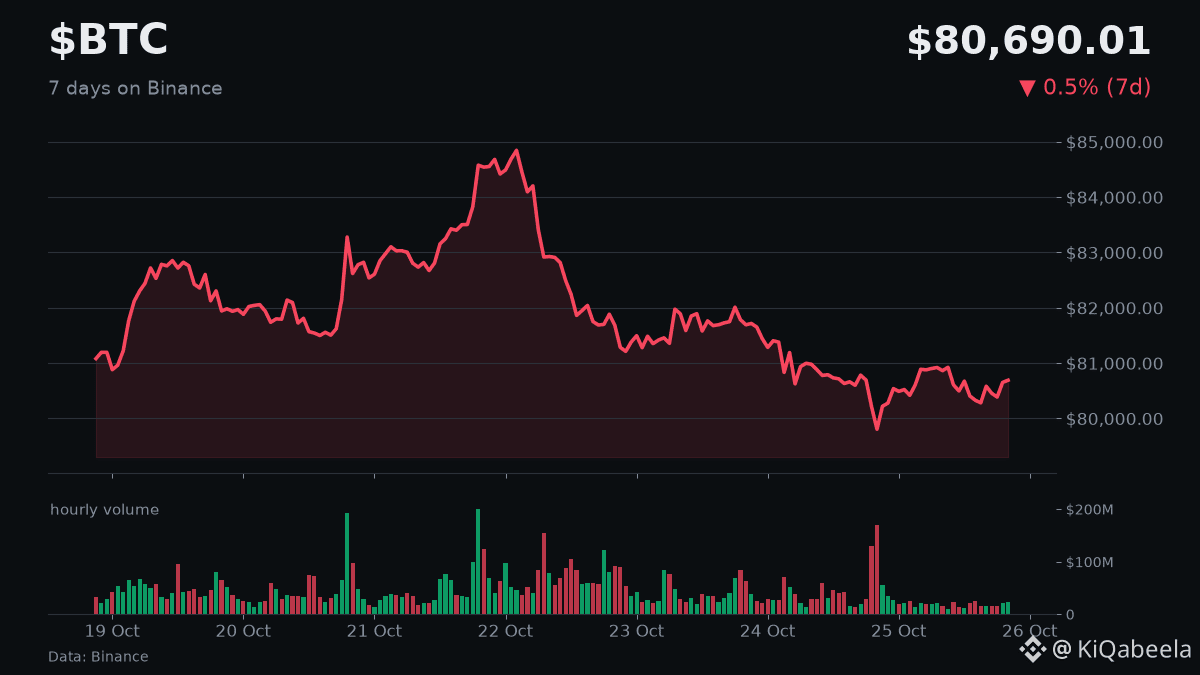
Meanwhile $BTC sits at $80,154, down 0.9% in 24h, holding just above $80K.
Would you let your dividends buy Bitcoin for you, or keep the cash? 👇
Not financial advice. DYOR.
#BitcoinETF #crypto
👀 "Franklin Templeton is set to launch ETFs that hold US stocks and reinvest dividends into Bitcoin."
That is Cointelegraph on X today, crediting ETF analyst Nate Geraci. The details underneath are better than the headline.
Two funds, FBEQ and FIBT, start at 95% US stocks and 5% Bitcoin exposure. Every dividend those stocks pay, regular or special, gets reinvested into Bitcoin at the next day's open instead of buying more shares. Registration goes effective Oct 27, with fees from 0.09%. No trading date announced yet.
My take: this is a plumbing innovation, not a Bitcoin buying spree. The funds do not hold BTC directly. Exposure comes through Bitcoin ETPs, futures and options, and the Bitcoin sleeve gets trimmed back to 4.5% at each quarterly rebalance if it drifts above 5%.
And here is the number everyone will misread. $1.8 trillion is Franklin Templeton's total assets under management. It is NOT money flowing into Bitcoin. The actual BTC buying is limited to dividend cash from the equity sleeve, a slow drip by design.
Why it matters: if this structure works, every dividend season becomes a small mechanical bid for $BTC , and other managers will copy it. Approval alone does not guarantee a single dollar of inflows, so the test is simple. Watch whether FBEQ and FIBT actually gather assets once trading starts.
🟢 Bull case: the DRIP model spreads and dividend flows become a steady Bitcoin demand channel.
🔴 Bear case: investors ignore it and it joins the long list of clever ETFs with no flows.
What to watch:
- Oct 27: registration effective
- First trading date, still unannounced
- Early flows, after $635M left US spot BTC ETFs on Oct 22
Meanwhile $BTC sits at $80,154, down 0.9% in 24h, holding just above $80K.
Would you let your dividends buy Bitcoin for you, or keep the cash? 👇
Not financial advice. DYOR.
#BitcoinETF #crypto
That is Cointelegraph on X today, crediting ETF analyst Nate Geraci. The details underneath are better than the headline.
Two funds, FBEQ and FIBT, start at 95% US stocks and 5% Bitcoin exposure. Every dividend those stocks pay, regular or special, gets reinvested into Bitcoin at the next day's open instead of buying more shares. Registration goes effective Oct 27, with fees from 0.09%. No trading date announced yet.
My take: this is a plumbing innovation, not a Bitcoin buying spree. The funds do not hold BTC directly. Exposure comes through Bitcoin ETPs, futures and options, and the Bitcoin sleeve gets trimmed back to 4.5% at each quarterly rebalance if it drifts above 5%.
And here is the number everyone will misread. $1.8 trillion is Franklin Templeton's total assets under management. It is NOT money flowing into Bitcoin. The actual BTC buying is limited to dividend cash from the equity sleeve, a slow drip by design.
Why it matters: if this structure works, every dividend season becomes a small mechanical bid for $BTC , and other managers will copy it. Approval alone does not guarantee a single dollar of inflows, so the test is simple. Watch whether FBEQ and FIBT actually gather assets once trading starts.
🟢 Bull case: the DRIP model spreads and dividend flows become a steady Bitcoin demand channel.
🔴 Bear case: investors ignore it and it joins the long list of clever ETFs with no flows.
What to watch:
- Oct 27: registration effective
- First trading date, still unannounced
- Early flows, after $635M left US spot BTC ETFs on Oct 22
Meanwhile $BTC sits at $80,154, down 0.9% in 24h, holding just above $80K.
Would you let your dividends buy Bitcoin for you, or keep the cash? 👇
Not financial advice. DYOR.
#BitcoinETF #crypto
67

·
--
🚨🔥 BITCOIN UNDER PRESSURE — BUT IS THE BIG MONEY COMING BACK? 🐋📊
💥 THE CRYPTO MARKET IS SENDING MIXED SIGNALS!
📉 Bitcoin ETF outflows reportedly reached around $635 MILLION in one day on October 22, raising fresh questions about institutional demand. Meanwhile, investors are watching whether Bitcoin can hold near the $80K level. 👀 <Cite refs={["turn525380search3","turn525380search5"]}/>
⚡ HERE'S WHAT MATTERS:
🔴 ETF outflows could signal short-term caution.
🟢 Institutional demand could return if market sentiment improves.
🐋 Whale movements and global economic news remain important signals.
🔥 The next move could change the market mood!
💬 THE BIG QUESTION: Is BTC preparing for a recovery, or could more volatility be ahead?
👇 Comment your view: BULLISH 🐂 or BEARISH 🐻?
⚠️ Crypto is highly volatile. This post is for discussion, not financial advice.
#Bitcoin #BTC #Binance #CryptoNews #CryptoMarket #BitcoinETF #CryptoCommunity
$SOL $BTC
🚨🔥 BITCOIN UNDER PRESSURE — BUT IS THE BIG MONEY COMING BACK? 🐋📊
💥 THE CRYPTO MARKET IS SENDING MIXED SIGNALS!
📉 Bitcoin ETF outflows reportedly reached around $635 MILLION in one day on October 22, raising fresh questions about institutional demand. Meanwhile, investors are watching whether Bitcoin can hold near the $80K level. 👀 <Cite refs={["turn525380search3","turn525380search5"]}/>
⚡ HERE'S WHAT MATTERS:
🔴 ETF outflows could signal short-term caution.
🟢 Institutional demand could return if market sentiment improves.
🐋 Whale movements and global economic news remain important signals.
🔥 The next move could change the market mood!
💬 THE BIG QUESTION: Is BTC preparing for a recovery, or could more volatility be ahead?
👇 Comment your view: BULLISH 🐂 or BEARISH 🐻?
⚠️ Crypto is highly volatile. This post is for discussion, not financial advice.
#Bitcoin #BTC #Binance #CryptoNews #CryptoMarket #BitcoinETF #CryptoCommunity
$SOL $BTC
💥 THE CRYPTO MARKET IS SENDING MIXED SIGNALS!
📉 Bitcoin ETF outflows reportedly reached around $635 MILLION in one day on October 22, raising fresh questions about institutional demand. Meanwhile, investors are watching whether Bitcoin can hold near the $80K level. 👀 <Cite refs={["turn525380search3","turn525380search5"]}/>
⚡ HERE'S WHAT MATTERS:
🔴 ETF outflows could signal short-term caution.
🟢 Institutional demand could return if market sentiment improves.
🐋 Whale movements and global economic news remain important signals.
🔥 The next move could change the market mood!
💬 THE BIG QUESTION: Is BTC preparing for a recovery, or could more volatility be ahead?
👇 Comment your view: BULLISH 🐂 or BEARISH 🐻?
⚠️ Crypto is highly volatile. This post is for discussion, not financial advice.
#Bitcoin #BTC #Binance #CryptoNews #CryptoMarket #BitcoinETF #CryptoCommunity
$SOL $BTC

126
·
--
$BTC
{spot}(BTCUSDT)
🚨 BITCOIN ETF's RECORD $301 MILLION IN WEEKLY INFLOWS!
US spot Bitcoin ETFs ended the week with approximately $301.2 million in net inflows, breaking a two-week streak of outflows totaling around $910 million.
📊 KEY HIGHLIGHTS:
💰 $301.2M — Total weekly net inflows.
🏦 $565.7M — BlackRock's IBIT weekly inflows, making it the biggest contributor.
📈 Monday and Wednesday saw strong inflows, bringing in over $1 billion combined.
⚠️ However, Thursday and Friday recorded significant outflows totaling $773.5 million.
🐋 Despite late-week selling pressure, IBIT remained the strongest contributor overall.
WHAT DOES THIS MEAN FOR BTC?
ETF inflows may signal renewed institutional demand, but the heavy late-week outflows show that investor sentiment remains mixed.
👀 Will institutional money push Bitcoin higher, or are we heading for another correction?
Drop your thoughts below! 👇🔥
#Bitcoin #BitcoinETF #CryptoNews #CryptoNewss
$BTC
🚨 BITCOIN ETF's RECORD $301 MILLION IN WEEKLY INFLOWS!
US spot Bitcoin ETFs ended the week with approximately $301.2 million in net inflows, breaking a two-week streak of outflows totaling around $910 million.
📊 KEY HIGHLIGHTS:
💰 $301.2M — Total weekly net inflows.
🏦 $565.7M — BlackRock's IBIT weekly inflows, making it the biggest contributor.
📈 Monday and Wednesday saw strong inflows, bringing in over $1 billion combined.
⚠️ However, Thursday and Friday recorded significant outflows totaling $773.5 million.
🐋 Despite late-week selling pressure, IBIT remained the strongest contributor overall.
WHAT DOES THIS MEAN FOR BTC?
ETF inflows may signal renewed institutional demand, but the heavy late-week outflows show that investor sentiment remains mixed.
👀 Will institutional money push Bitcoin higher, or are we heading for another correction?
Drop your thoughts below! 👇🔥
#Bitcoin #BitcoinETF #CryptoNews #CryptoNewss
🚨 BITCOIN ETF's RECORD $301 MILLION IN WEEKLY INFLOWS!
US spot Bitcoin ETFs ended the week with approximately $301.2 million in net inflows, breaking a two-week streak of outflows totaling around $910 million.
📊 KEY HIGHLIGHTS:
💰 $301.2M — Total weekly net inflows.
🏦 $565.7M — BlackRock's IBIT weekly inflows, making it the biggest contributor.
📈 Monday and Wednesday saw strong inflows, bringing in over $1 billion combined.
⚠️ However, Thursday and Friday recorded significant outflows totaling $773.5 million.
🐋 Despite late-week selling pressure, IBIT remained the strongest contributor overall.
WHAT DOES THIS MEAN FOR BTC?
ETF inflows may signal renewed institutional demand, but the heavy late-week outflows show that investor sentiment remains mixed.
👀 Will institutional money push Bitcoin higher, or are we heading for another correction?
Drop your thoughts below! 👇🔥
#Bitcoin #BitcoinETF #CryptoNews #CryptoNewss
1
53

·
--
Spot Bitcoin ETFs pull in $301M, ending two‑week outflow streak.
The inflow signals renewed investor appetite despite recent outflows that kept October negative.
$BTC is up 0.2% at $80,375, but 24h volume sits at half its weekly average, hinting limited trading enthusiasm. Funding is +0.008%, so longs are paying shorts. Open interest slipped 2% to $7.5B and long‑to‑short accounts sit at 2.07‑to‑1.
My view: the modest price rise paired with thin volume suggests the ETF money may be more about portfolio rebalancing than fresh buying power.
💬 Bullish, bearish or waiting? One word.
#BitcoinETF #SpotETF
Spot Bitcoin ETFs pull in $301M, ending two‑week outflow streak.
The inflow signals renewed investor appetite despite recent outflows that kept October negative.
$BTC is up 0.2% at $80,375, but 24h volume sits at half its weekly average, hinting limited trading enthusiasm. Funding is +0.008%, so longs are paying shorts. Open interest slipped 2% to $7.5B and long‑to‑short accounts sit at 2.07‑to‑1.
My view: the modest price rise paired with thin volume suggests the ETF money may be more about portfolio rebalancing than fresh buying power.
💬 Bullish, bearish or waiting? One word.
#BitcoinETF #SpotETF
The inflow signals renewed investor appetite despite recent outflows that kept October negative.
$BTC is up 0.2% at $80,375, but 24h volume sits at half its weekly average, hinting limited trading enthusiasm. Funding is +0.008%, so longs are paying shorts. Open interest slipped 2% to $7.5B and long‑to‑short accounts sit at 2.07‑to‑1.
My view: the modest price rise paired with thin volume suggests the ETF money may be more about portfolio rebalancing than fresh buying power.
💬 Bullish, bearish or waiting? One word.
#BitcoinETF #SpotETF
2

Spot Bitcoin ETFs managed to break their two week losing streak by recording three hundred and one million dollars in net inflows this week. Despite a late week slide that left October in the red, the net positive figure suggests underlying demand remains resilient. Traders should watch if this momentum can sustain through the end of the month or if outflows will return.
#BitcoinETF #SpotBitcoin ⠀
Spot Bitcoin ETFs managed to break their two week losing streak by recording three hundred and one million dollars in net inflows this week. Despite a late week slide that left October in the red, the net positive figure suggests underlying demand remains resilient. Traders should watch if this momentum can sustain through the end of the month or if outflows will return.
#BitcoinETF #SpotBitcoin ⠀
#BitcoinETF #SpotBitcoin ⠀
4

Dòng tiền ETF Bitcoin theo dõi giá nhưng không dự báo chính xác
- DWF nghiên cứu ETF dòng tiền đặt ra câu hỏi về việc dùng tổng dòng tiền hàng ngày để dự báo giá. - Dòng tiền ETF Bitcoin thường trễ hơn giá thị trường và không nhất thiết phản ánh xu hướng đúng.
#BitcoinETF #CryptoNews #DWF #BTC #ETH
$btc
vlikevn Titanbot
Nguồn: NewsBTC
Dòng tiền ETF Bitcoin theo dõi giá nhưng không dự báo chính xác
- DWF nghiên cứu ETF dòng tiền đặt ra câu hỏi về việc dùng tổng dòng tiền hàng ngày để dự báo giá. - Dòng tiền ETF Bitcoin thường trễ hơn giá thị trường và không nhất thiết phản ánh xu hướng đúng.
#BitcoinETF #CryptoNews #DWF #BTC #ETH
$btc
vlikevn Titanbot
Nguồn: NewsBTC
- DWF nghiên cứu ETF dòng tiền đặt ra câu hỏi về việc dùng tổng dòng tiền hàng ngày để dự báo giá. - Dòng tiền ETF Bitcoin thường trễ hơn giá thị trường và không nhất thiết phản ánh xu hướng đúng.
#BitcoinETF #CryptoNews #DWF #BTC #ETH
$btc
vlikevn Titanbot
Nguồn: NewsBTC
122

·
--
🚨 مليار دولار تدخل بيتكوين... وبعد أيام تبدأ الملايين بالخروج!
تخيل مطعما يقف الناس بالطابور للدخول إليه، وبعد ثلاثة أيام ترى مجموعة كبيرة منهم تغادر دفعة واحدة!
هل الطعام أصبح سيئا فجأة؟ أم أن بعض الزبائن قرروا المغادرة لأسباب أخرى؟
هذا تقريبا ما يحدث مع صناديق بيتكوين المتداولة في البورصة الأمريكية (ETFs).
📈 خلال ثلاث جلسات تداول، سجلت الصناديق صافي تدفقات داخلة تجاوز مليار دولار.
📉 ثم جاءت جلسة الخميس 22 أكتوبر، لتسجل صافي تدفقات خارجة بنحو 635.6 مليون دولار!
والسؤال: هل المؤسسات غيرت رأيها ببيتكوين بهذه السرعة؟
ليس بالضرورة!
فالتدفقات قد تتأثر بجني الأرباح، وإعادة موازنة المحافظ، وتغير شهية المخاطرة، وحتى ظروف الأسواق التقليدية.
💡 والدرس الأهم:
دخول مليار دولار لا يعني أن السعر سيواصل الصعود، وخروج مئات الملايين لا يعني أن بيتكوين انتهت.
السوق لا يتحرك باتجاه واحد، والمؤسسات نفسها قد تشتري اليوم وتبيع غدا.
🎯 لو كنت تراقب هذه الأرقام، أيهما تعطي وزنا أكبر: تدفقات المؤسسات اليومية أم الاتجاه طويل الأجل لبيتكوين؟
#BTC #BitcoinETF #ETFFlows
⚠️ محتوى تعليمي وليس نصيحة مالية.
🚨 مليار دولار تدخل بيتكوين... وبعد أيام تبدأ الملايين بالخروج!
تخيل مطعما يقف الناس بالطابور للدخول إليه، وبعد ثلاثة أيام ترى مجموعة كبيرة منهم تغادر دفعة واحدة!
هل الطعام أصبح سيئا فجأة؟ أم أن بعض الزبائن قرروا المغادرة لأسباب أخرى؟
هذا تقريبا ما يحدث مع صناديق بيتكوين المتداولة في البورصة الأمريكية (ETFs).
📈 خلال ثلاث جلسات تداول، سجلت الصناديق صافي تدفقات داخلة تجاوز مليار دولار.
📉 ثم جاءت جلسة الخميس 22 أكتوبر، لتسجل صافي تدفقات خارجة بنحو 635.6 مليون دولار!
والسؤال: هل المؤسسات غيرت رأيها ببيتكوين بهذه السرعة؟
ليس بالضرورة!
فالتدفقات قد تتأثر بجني الأرباح، وإعادة موازنة المحافظ، وتغير شهية المخاطرة، وحتى ظروف الأسواق التقليدية.
💡 والدرس الأهم:
دخول مليار دولار لا يعني أن السعر سيواصل الصعود، وخروج مئات الملايين لا يعني أن بيتكوين انتهت.
السوق لا يتحرك باتجاه واحد، والمؤسسات نفسها قد تشتري اليوم وتبيع غدا.
🎯 لو كنت تراقب هذه الأرقام، أيهما تعطي وزنا أكبر: تدفقات المؤسسات اليومية أم الاتجاه طويل الأجل لبيتكوين؟
#BTC #BitcoinETF #ETFFlows
⚠️ محتوى تعليمي وليس نصيحة مالية.
تخيل مطعما يقف الناس بالطابور للدخول إليه، وبعد ثلاثة أيام ترى مجموعة كبيرة منهم تغادر دفعة واحدة!
هل الطعام أصبح سيئا فجأة؟ أم أن بعض الزبائن قرروا المغادرة لأسباب أخرى؟
هذا تقريبا ما يحدث مع صناديق بيتكوين المتداولة في البورصة الأمريكية (ETFs).
📈 خلال ثلاث جلسات تداول، سجلت الصناديق صافي تدفقات داخلة تجاوز مليار دولار.
📉 ثم جاءت جلسة الخميس 22 أكتوبر، لتسجل صافي تدفقات خارجة بنحو 635.6 مليون دولار!
والسؤال: هل المؤسسات غيرت رأيها ببيتكوين بهذه السرعة؟
ليس بالضرورة!
فالتدفقات قد تتأثر بجني الأرباح، وإعادة موازنة المحافظ، وتغير شهية المخاطرة، وحتى ظروف الأسواق التقليدية.
💡 والدرس الأهم:
دخول مليار دولار لا يعني أن السعر سيواصل الصعود، وخروج مئات الملايين لا يعني أن بيتكوين انتهت.
السوق لا يتحرك باتجاه واحد، والمؤسسات نفسها قد تشتري اليوم وتبيع غدا.
🎯 لو كنت تراقب هذه الأرقام، أيهما تعطي وزنا أكبر: تدفقات المؤسسات اليومية أم الاتجاه طويل الأجل لبيتكوين؟
#BTC #BitcoinETF #ETFFlows
⚠️ محتوى تعليمي وليس نصيحة مالية.
4
313


·
--
Статья
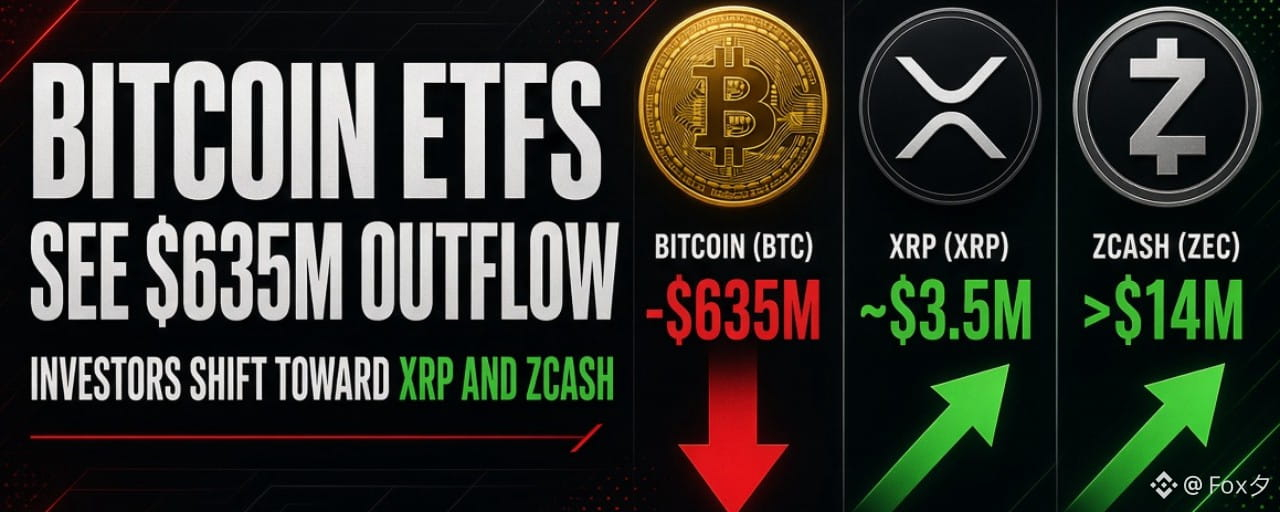
Bitcoin ETFs See $635M Outflow as Investors Shift Toward XRP and ZcashU.S. spot Bitcoin ETFs recorded approximately $635 million in net outflows on October 22, marking their largest single-day withdrawal since June and reversing much of the recent inflow momentum. Major funds, including BlackRock’s IBIT and Fidelity’s FBTC, accounted for more than 70% of the outflows, highlighting how quickly institutional sentiment toward Bitcoin can shift amid rising market uncertainty. Despite the withdrawals, total assets under management across Bitcoin ETFs remained above $100 billion. $XRP
{future}(XRPUSDT)
While Bitcoin and Ethereum ETFs faced significant selling pressure, XRP and Zcash products attracted fresh capital. Spot XRP ETFs reportedly recorded around $3.5 million to $3.6 million in net inflows, while Grayscale’s Zcash product attracted more than $14 million. Meanwhile, Ethereum ETFs lost approximately $110 million, and Solana and other altcoin products also experienced outflows. This selective movement suggests that some institutional investors are reallocating capital toward specific altcoin narratives rather than abandoning crypto assets altogether. $BTC
{future}(BTCUSDT)
Broader macroeconomic concerns, including weakness in AI-related technology stocks, rising oil prices, and economic uncertainty, contributed to the cautious market environment. Bitcoin’s ability to hold the $80,000 – $86,000 range, the direction of daily ETF flows, and whether XRP continues attracting institutional capital will be crucial indicators to watch. Ultimately, the latest figures highlight the fragility of institutional demand for Bitcoin while showing that capital remains willing to pursue selected altcoin opportunities. Whether this represents a temporary market adjustment or a more lasting shift in institutional allocation will depend on the coming weeks of ETF flows and price action. $SOL
{future}(SOLUSDT)
#BitcoinETF #xrp #CryptoMarket
Bitcoin ETFs See $635M Outflow as Investors Shift Toward XRP and Zcash
U.S. spot Bitcoin ETFs recorded approximately $635 million in net outflows on October 22, marking their largest single-day withdrawal since June and reversing much of the recent inflow momentum. Major funds, including BlackRock’s IBIT and Fidelity’s FBTC, accounted for more than 70% of the outflows, highlighting how quickly institutional sentiment toward Bitcoin can shift amid rising market uncertainty. Despite the withdrawals, total assets under management across Bitcoin ETFs remained above $100 billion. $XRP
While Bitcoin and Ethereum ETFs faced significant selling pressure, XRP and Zcash products attracted fresh capital. Spot XRP ETFs reportedly recorded around $3.5 million to $3.6 million in net inflows, while Grayscale’s Zcash product attracted more than $14 million. Meanwhile, Ethereum ETFs lost approximately $110 million, and Solana and other altcoin products also experienced outflows. This selective movement suggests that some institutional investors are reallocating capital toward specific altcoin narratives rather than abandoning crypto assets altogether. $BTC
Broader macroeconomic concerns, including weakness in AI-related technology stocks, rising oil prices, and economic uncertainty, contributed to the cautious market environment. Bitcoin’s ability to hold the $80,000 – $86,000 range, the direction of daily ETF flows, and whether XRP continues attracting institutional capital will be crucial indicators to watch. Ultimately, the latest figures highlight the fragility of institutional demand for Bitcoin while showing that capital remains willing to pursue selected altcoin opportunities. Whether this represents a temporary market adjustment or a more lasting shift in institutional allocation will depend on the coming weeks of ETF flows and price action. $SOL
#BitcoinETF #xrp #CryptoMarket
While Bitcoin and Ethereum ETFs faced significant selling pressure, XRP and Zcash products attracted fresh capital. Spot XRP ETFs reportedly recorded around $3.5 million to $3.6 million in net inflows, while Grayscale’s Zcash product attracted more than $14 million. Meanwhile, Ethereum ETFs lost approximately $110 million, and Solana and other altcoin products also experienced outflows. This selective movement suggests that some institutional investors are reallocating capital toward specific altcoin narratives rather than abandoning crypto assets altogether. $BTC
Broader macroeconomic concerns, including weakness in AI-related technology stocks, rising oil prices, and economic uncertainty, contributed to the cautious market environment. Bitcoin’s ability to hold the $80,000 – $86,000 range, the direction of daily ETF flows, and whether XRP continues attracting institutional capital will be crucial indicators to watch. Ultimately, the latest figures highlight the fragility of institutional demand for Bitcoin while showing that capital remains willing to pursue selected altcoin opportunities. Whether this represents a temporary market adjustment or a more lasting shift in institutional allocation will depend on the coming weeks of ETF flows and price action. $SOL
#BitcoinETF #xrp #CryptoMarket
Kain_Morrie P90FN:
senyumu ra penakì cak
4
16
6.8k

🚨 BITCOIN ETFs $BTC LOST $773M IN TWO DAYS — BUT THE WEEK IS STILL GREEN
US spot Bitcoin ETFs just reversed sharply
📊 Farside flow data
• Oct 21: +$524.8M
• Oct 22: −$635.6M
• Oct 23: −$137.9M reported so far
{future}(BTCUSDT)
Yet the week's net flow remains approximately +$301M
That's the contradiction worth watching
Institutional demand hasn't disappeared
But the buying that supported Bitcoin earlier this week is no longer absorbing selling pressure with the same strength
$BTC is hovering near $80.8K
And here's what matters more than one red ETF headline 👀
ETF inflows don't guarantee rising prices
Just as outflows don't prove every institutional investor is abandoning Bitcoin
{spot}(BTCUSDT)
⚠️ My read
If BTC keeps struggling while weekly ETF flows remain positive, that tells us demand isn't strong enough to absorb the broader selling
If flows turn persistently negative, the recovery case weakens further
US ETFs are closed for the weekend
The real test comes when institutional trading resumes
{etf_us}(BTCC.ETF)
$BTC #bitcoin #BitcoinETF
🚨 BITCOIN ETFs $BTC LOST $773M IN TWO DAYS — BUT THE WEEK IS STILL GREEN
US spot Bitcoin ETFs just reversed sharply
📊 Farside flow data
• Oct 21: +$524.8M
• Oct 22: −$635.6M
• Oct 23: −$137.9M reported so far
Yet the week's net flow remains approximately +$301M
That's the contradiction worth watching
Institutional demand hasn't disappeared
But the buying that supported Bitcoin earlier this week is no longer absorbing selling pressure with the same strength
$BTC is hovering near $80.8K
And here's what matters more than one red ETF headline 👀
ETF inflows don't guarantee rising prices
Just as outflows don't prove every institutional investor is abandoning Bitcoin
⚠️ My read
If BTC keeps struggling while weekly ETF flows remain positive, that tells us demand isn't strong enough to absorb the broader selling
If flows turn persistently negative, the recovery case weakens further
US ETFs are closed for the weekend
The real test comes when institutional trading resumes
$BTC #bitcoin #BitcoinETF
US spot Bitcoin ETFs just reversed sharply
📊 Farside flow data
• Oct 21: +$524.8M
• Oct 22: −$635.6M
• Oct 23: −$137.9M reported so far
Yet the week's net flow remains approximately +$301M
That's the contradiction worth watching
Institutional demand hasn't disappeared
But the buying that supported Bitcoin earlier this week is no longer absorbing selling pressure with the same strength
$BTC is hovering near $80.8K
And here's what matters more than one red ETF headline 👀
ETF inflows don't guarantee rising prices
Just as outflows don't prove every institutional investor is abandoning Bitcoin
⚠️ My read
If BTC keeps struggling while weekly ETF flows remain positive, that tells us demand isn't strong enough to absorb the broader selling
If flows turn persistently negative, the recovery case weakens further
US ETFs are closed for the weekend
The real test comes when institutional trading resumes
$BTC #bitcoin #BitcoinETF
113

·
--
🚨 BREAKING: BlackRock’s Bitcoin ETF Sells $115 Million Worth of BTC
BlackRock’s Bitcoin ETF has reportedly sold $115 million worth of Bitcoin, drawing attention to institutional activity in the crypto market.
The move comes as investors closely monitor ETF flows for signs of shifting sentiment among institutional players.
However, a single reported sale does not necessarily signal a broader bearish trend. Net ETF flows and subsequent trading activity will be key to understanding the bigger picture.
👀 Are institutions reducing exposure, or is this just short-term repositioning?
#Bitcoin #BTC #BlackRock #BitcoinETF #Crypto $IRYS $BIRB $BTC
{future}(BTCUSDT)
{future}(BIRBUSDT)
{future}(IRYSUSDT)
🚨 BREAKING: BlackRock’s Bitcoin ETF Sells $115 Million Worth of BTC
BlackRock’s Bitcoin ETF has reportedly sold $115 million worth of Bitcoin, drawing attention to institutional activity in the crypto market.
The move comes as investors closely monitor ETF flows for signs of shifting sentiment among institutional players.
However, a single reported sale does not necessarily signal a broader bearish trend. Net ETF flows and subsequent trading activity will be key to understanding the bigger picture.
👀 Are institutions reducing exposure, or is this just short-term repositioning?
#Bitcoin #BTC #BlackRock #BitcoinETF #Crypto $IRYS $BIRB $BTC
BlackRock’s Bitcoin ETF has reportedly sold $115 million worth of Bitcoin, drawing attention to institutional activity in the crypto market.
The move comes as investors closely monitor ETF flows for signs of shifting sentiment among institutional players.
However, a single reported sale does not necessarily signal a broader bearish trend. Net ETF flows and subsequent trading activity will be key to understanding the bigger picture.
👀 Are institutions reducing exposure, or is this just short-term repositioning?
#Bitcoin #BTC #BlackRock #BitcoinETF #Crypto $IRYS $BIRB $BTC
94

·
--
🚨 RECORD ETF REDEMPTIONS: US spot Bitcoin ETFs bled $635.6M on Thursday — the biggest single-day outflow since June.
BlackRock's IBIT led the exit (-$254M), followed by Fidelity's FBTC (-$218M) and ARKB (-$109M). The one-day dump erased nearly 60% of the three-day $1.08B inflow streak and pushed October flows back into the red.
BTC slid to ~$81,500 as $440M in leveraged positions got liquidated. ETH and SOL ETFs bled too; only XRP ETFs posted inflows.
Smart money rotating out, or just pre-FOMC caution ahead of the Oct 27-28 Fed meeting? 👀
Honest risk: weekly flows are still +$443M — one red day is not a trend. But a second red day would change the story.
📌 Sharing personal opinions only, not financial advice or a recommendation to buy/sell. Crypto is highly risky; DYOR and you are solely responsible. No coin promotion.
$BTC #Bitcoin #BitcoinETF #BlackRock #Crypto #Binance
🚨 RECORD ETF REDEMPTIONS: US spot Bitcoin ETFs bled $635.6M on Thursday — the biggest single-day outflow since June.
BlackRock's IBIT led the exit (-$254M), followed by Fidelity's FBTC (-$218M) and ARKB (-$109M). The one-day dump erased nearly 60% of the three-day $1.08B inflow streak and pushed October flows back into the red.
BTC slid to ~$81,500 as $440M in leveraged positions got liquidated. ETH and SOL ETFs bled too; only XRP ETFs posted inflows.
Smart money rotating out, or just pre-FOMC caution ahead of the Oct 27-28 Fed meeting? 👀
Honest risk: weekly flows are still +$443M — one red day is not a trend. But a second red day would change the story.
📌 Sharing personal opinions only, not financial advice or a recommendation to buy/sell. Crypto is highly risky; DYOR and you are solely responsible. No coin promotion.
$BTC #Bitcoin #BitcoinETF #BlackRock #Crypto #Binance
BlackRock's IBIT led the exit (-$254M), followed by Fidelity's FBTC (-$218M) and ARKB (-$109M). The one-day dump erased nearly 60% of the three-day $1.08B inflow streak and pushed October flows back into the red.
BTC slid to ~$81,500 as $440M in leveraged positions got liquidated. ETH and SOL ETFs bled too; only XRP ETFs posted inflows.
Smart money rotating out, or just pre-FOMC caution ahead of the Oct 27-28 Fed meeting? 👀
Honest risk: weekly flows are still +$443M — one red day is not a trend. But a second red day would change the story.
📌 Sharing personal opinions only, not financial advice or a recommendation to buy/sell. Crypto is highly risky; DYOR and you are solely responsible. No coin promotion.
$BTC #Bitcoin #BitcoinETF #BlackRock #Crypto #Binance
640
·
--
📈 X IS CALLING THIS THE "BITCOIN PIGGY BANK" ETF 👀
Traders on X are buzzing about a brand new kind of Bitcoin ETF, and this one doesn't work like any spot ETF you've seen before.
🚨 $1.8T Franklin Templeton just got Nasdaq approval to list TWO Bitcoin DRIP ETFs, FBEQ and FIBT (Oct 23, per CoinDesk). The structure:
📊 Start: 95% US stocks + 5% Bitcoin-related instruments
📊 Every stock dividend gets reinvested into $BTC exposure on the trading day after the ex-dividend date, not into more shares
📊 BTC weight can drift up to 20%, but quarterly rebalances trim anything above 5% back to 4.5%
📊 0.09% fee, tracking VettaFi indexes (large-cap 500 for FBEQ, innovation 100 for FIBT)
Why it matters: this would create a brand new, calendar-driven demand pipeline for Bitcoin. Equity dividends from S&P 500 and Nasdaq-100 stocks would be systematically converted into BTC buys, on autopilot, without investors ever touching crypto themselves. Franklin's own spot ETF EZBC (~$335M net inflows to date) doubles as the BTC engine inside these funds.
My take: the tickers matter less than the template. If dividend-to-BTC becomes a standard product structure across asset managers, equity income becomes a persistent bid for Bitcoin, arriving with every dividend season.
⚠️ But approval alone does not guarantee inflows or higher prices. The guardrails are real: BTC weight is capped at 20% and gets trimmed to 4.5% each quarter, and growth stocks pay thinner dividends, so FIBT's engine runs slower than FBEQ's. The real test comes when trading starts (projected Oct 27): do dividends actually convert into BTC buys at scale?
Is this the blueprint for the next wave of ETF demand, or a trickle that stays small? 🐂🐻
Not financial advice. DYOR.
#BitcoinETF #crypto
📈 X IS CALLING THIS THE "BITCOIN PIGGY BANK" ETF 👀
Traders on X are buzzing about a brand new kind of Bitcoin ETF, and this one doesn't work like any spot ETF you've seen before.
🚨 $1.8T Franklin Templeton just got Nasdaq approval to list TWO Bitcoin DRIP ETFs, FBEQ and FIBT (Oct 23, per CoinDesk). The structure:
📊 Start: 95% US stocks + 5% Bitcoin-related instruments
📊 Every stock dividend gets reinvested into $BTC exposure on the trading day after the ex-dividend date, not into more shares
📊 BTC weight can drift up to 20%, but quarterly rebalances trim anything above 5% back to 4.5%
📊 0.09% fee, tracking VettaFi indexes (large-cap 500 for FBEQ, innovation 100 for FIBT)
Why it matters: this would create a brand new, calendar-driven demand pipeline for Bitcoin. Equity dividends from S&P 500 and Nasdaq-100 stocks would be systematically converted into BTC buys, on autopilot, without investors ever touching crypto themselves. Franklin's own spot ETF EZBC (~$335M net inflows to date) doubles as the BTC engine inside these funds.
My take: the tickers matter less than the template. If dividend-to-BTC becomes a standard product structure across asset managers, equity income becomes a persistent bid for Bitcoin, arriving with every dividend season.
⚠️ But approval alone does not guarantee inflows or higher prices. The guardrails are real: BTC weight is capped at 20% and gets trimmed to 4.5% each quarter, and growth stocks pay thinner dividends, so FIBT's engine runs slower than FBEQ's. The real test comes when trading starts (projected Oct 27): do dividends actually convert into BTC buys at scale?
Is this the blueprint for the next wave of ETF demand, or a trickle that stays small? 🐂🐻
Not financial advice. DYOR.
#BitcoinETF #crypto
Traders on X are buzzing about a brand new kind of Bitcoin ETF, and this one doesn't work like any spot ETF you've seen before.
🚨 $1.8T Franklin Templeton just got Nasdaq approval to list TWO Bitcoin DRIP ETFs, FBEQ and FIBT (Oct 23, per CoinDesk). The structure:
📊 Start: 95% US stocks + 5% Bitcoin-related instruments
📊 Every stock dividend gets reinvested into $BTC exposure on the trading day after the ex-dividend date, not into more shares
📊 BTC weight can drift up to 20%, but quarterly rebalances trim anything above 5% back to 4.5%
📊 0.09% fee, tracking VettaFi indexes (large-cap 500 for FBEQ, innovation 100 for FIBT)
Why it matters: this would create a brand new, calendar-driven demand pipeline for Bitcoin. Equity dividends from S&P 500 and Nasdaq-100 stocks would be systematically converted into BTC buys, on autopilot, without investors ever touching crypto themselves. Franklin's own spot ETF EZBC (~$335M net inflows to date) doubles as the BTC engine inside these funds.
My take: the tickers matter less than the template. If dividend-to-BTC becomes a standard product structure across asset managers, equity income becomes a persistent bid for Bitcoin, arriving with every dividend season.
⚠️ But approval alone does not guarantee inflows or higher prices. The guardrails are real: BTC weight is capped at 20% and gets trimmed to 4.5% each quarter, and growth stocks pay thinner dividends, so FIBT's engine runs slower than FBEQ's. The real test comes when trading starts (projected Oct 27): do dividends actually convert into BTC buys at scale?
Is this the blueprint for the next wave of ETF demand, or a trickle that stays small? 🐂🐻
Not financial advice. DYOR.
#BitcoinETF #crypto

109
Войдите, чтобы посмотреть больше материала
Присоединяйтесь к пользователям криптовалют по всему миру на Binance Square
⚡️ Получайте новейшую и полезную информацию о криптоактивах.
💬 Нам доверяет крупнейшая в мире криптобиржа.
👍 Получите достоверные аналитические данные от верифицированных создателей контента.
Эл. почта/номер телефона
В тренде
1
#BinancePick
Просмотров: 3.1M
152,950 обсуждают
2
#EarningsSeason
Просмотров: 5.3M
26,015 обсуждают
3
#AnthropicTTMRevenueGrewAbout1200%
Просмотров: 30,903
426 обсуждают
4
#AnthropicS1ExpectedToday
Просмотров: 26,745
352 обсуждают
5
#SouthKoreaReportedlyWeighsFourthCryptoTaxDelay
Просмотров: 31,024
479 обсуждают
6
#FranklinTempletonFilesForTwoDividendToBitcoinETFs
Просмотров: 40,922
546 обсуждают
7
#StrategyMSTRSurpassesNasdaqInMarketCap
Просмотров: 31,176
390 обсуждают
8
#CanadaProposesStablecoinRedemptionWithin3BusinessDays
Просмотров: 1,339
36 обсуждают
9
#ElectrumWalletBugLetRogueServersStealFunds
Просмотров: 31,531
467 обсуждают
10
#ArgentineCourtDismissesLIBRACaseAgainstMilei
Просмотров: 47,178
584 обсуждают