
#algorithmictrading
algorithmictrading
Просмотров: 33,403
327 обсуждают
Популярные
Новые

·
--
The 'per-bot trap' is a real risk when managing multi-asset portfolios. ⚠️
Relying on individually configured risk limits means each strategy can draw down independently, risking total account loss when markets move together.
A unified risk engine changes this safety profile entirely. It evaluates your total position across every connected account—including crypto futures and MT5—before and during every trade.
Here is how you build that comprehensive safety net:
1. Navigate to the Risk Controls section to set up your risk controls.
2. Establish a safety net for your entire operation.
3. Remember that rules like drawdown limits and exposure caps apply at the entire portfolio level. This means a drawdown limit covers your whole portfolio, no matter how many bots or brokers generated the positions.
4. The system correctly groups correlated positions, so the engine sees the total exposure once, keeping it visible.
5. You gain tangible safety because hitting the portfolio drawdown limit automatically pauses activity across all connected strategies. ✅
To see the technical breakdown of how this works, review this guide: https://community.wolfbot.io/docs/how-unified-risk-differs-from-per-bot-risk
#CryptoAutomation #RiskManagement #AlgorithmicTrading #PortfolioRisk
1
1
·
--
Feeling trapped by another platform's syntax after building a profitable trading logic? 🤔
Understanding that your strategy is a set of explicit decisions—what to trade, when to add, sizing, profit/stop rules, and max risk—while platform templates are just the syntax wrapping those decisions, is the first key step.
To start migrating your edge:
• Articulate your entire strategy in plain, vendor-agnostic language. Describe the mechanics, not the bot type (e.g., 'buy low in pieces' instead of 'DCA bot').
• Map these plain-language mechanics to WolfBot's native blocks: use DCA for entries, define clear TP/SL for exits, and set position sizing/damage limits. 🛠️
We suggest a phased approach for safety:
1. Rebuild only the core entry/exit loop in simulation to confirm behavior.
2. Run the simulation, comparing actual entry/exit against your old system's logic.
3. Only after success, proceed to a small, live trade size using trade-only keys and portfolio guards. 🛡️
Remember this rule: always ask, 'What did my strategy actually decide?' instead of, 'Which template equals my old bot?' This keeps your strategy portable and truly yours.
For a detailed walkthrough on this process, check out our academy guide: https://community.wolfbot.io/academy/moving-strategy-ideas-to-wolfbot. 🧠
#TradingAutomation #CryptoStrategy #AlgorithmicTrading #Crypto

1
67

When your strategy needs to coordinate signals across multiple accounts, the real headache isn't the signal itself. It's the lack of a single, auditable view of execution. 🧐
How do you automate complex, multi-faceted strategies while knowing exactly where every order came from and what the risk parameters were for that specific trade?
WolfBot solves this by centralizing rule-based and AI-assisted signals into one scheduler.
This means the platform applies your account risk policy per strategy and logs every single decision, making automation auditable instead of a black box. 🔗
The system also maintains a predictable flow by routing both automated and manual orders through shared infrastructure, giving you one single execution pipeline.
Remember that automation is a spectrum. You can stick to deterministic, rule-based conditions or use model views to inform those rules. Crucially, the risk and execution guardrails remain under your control. 🛡️
When setting up, you must decide on your risk parameters, as the system applies account-level guardrails by default, but you always retain the choice to build your own strategy alongside WolfBot's risk management tools.
To start automating, the path is clear:
1. Explore the demo.
2. Connect an account.
3. Choose whether to use a pre-built WolfBot strategy, build your own, or import external signals. 🚀
See the entire process in action here: https://wolfbot.io/en/products/trading-automation
#AutomatedTrading #CryptoAutomation #AlgorithmicTrading #TradingStrategy

56
·
--
Bridging the gap from Jupyter Notebook research to a live, deterministic MT5 deployment is tricky. 😬
When your state-of-the-art neural network is ready, watch out for pitfalls around data consistency and execution path validation.
Here are key steps to structure the deployment:
1. Define the Prediction Task rigorously: Specify the instrument, timeframe, decision time, and output meaning. Labels must terminate after the decision time, requiring purged chronological splits.
2. Ensure Feature Parity: Build a 'golden fixture'—a small, immutable bar sequence—to verify feature vectors match between research and live pipelines (check timezones, spreads, normalization).
3. Structure the Workflow: Treat the process as separate, versioned stages, not one monolithic Expert Advisor. Version everything: symbol mapping, bar construction, feature definitions, model architecture, etc.
4. Rigorous Training: Use chronological windows, testing on later data, and opening the final test set only once. Compare MQL5 and Python outputs for consistency.
5. Backtest the Entire Decision Path: Convert the model output through a frozen decision rule, testing the whole path while accounting for real-world costs (spread, slippage, etc.).
6. Choose the Integration Boundary: Select one pattern (Native MQL5, Python, or local service) and define max inference latency, schema version, and a fail-closed fallback.
7. Maintain Determinism and Safety: Log input cutoff, feature/model versions, raw output, risk decision, and broker request. Portfolio guards must validate exposure before any order. ⚠️
8. For Promotion: Use offline replay or MT5 Strategy Tester. Ensure a model registry keeps immutable weights and checksums for rollbacks. 🛡️
For a deep dive into structuring these complex ML pipelines for MT5, review this detailed guide: https://community.wolfbot.io/academy/neural-networks-mt5-research-to-deployment
#AlgorithmicTrading #MQL5 #MachineLearning #QuantDev #Automation

1
86


#UKAlgorithmicCryptoTradingAppsMayNeedFCAAuthorization
🤖🇬🇧 UK Algorithmic Crypto Trading Apps May Need FCA Authorization 🇬🇧🤖
Imagine opening a crypto trading app, setting a few rules, and letting software buy and sell while you sleep. The convenience feels effortless, until regulation asks a critical question: who is responsible when an automated system makes decisions with your money?
The UK is moving toward a more comprehensive crypto regulatory framework. The Financial Conduct Authority (FCA) opened applications for crypto firms seeking authorization on September 30, 2026, ahead of the new regime taking effect on October 25, 2027.
Under the framework, activities such as operating crypto trading platforms, dealing in cryptoassets, and arranging transactions may require authorization. Algorithmic trading apps could therefore fall within scope depending on the services they provide and how their business operates.
The important distinction is that automation itself does not automatically make every app subject to identical requirements. The actual activity, business model, and applicable regulatory rules matter.
For users, stronger oversight could improve accountability, consumer protection, and operational standards. For developers, however, authorization may bring additional compliance costs, documentation, and operational responsibilities.
Smaller providers could face difficult choices: invest in compliance, change their services, or reconsider operating in the UK. Established firms may be better equipped to absorb those costs, although regulation alone does not guarantee a safer product.
My take: Crypto automation is becoming more than a coding challenge. Sustainable platforms will need to demonstrate not only that their algorithms work, but also that their businesses operate within the rules.
Will FCA authorization make algorithmic crypto trading safer, or could compliance costs reduce competition?
Disclaimer: Educational content only, not financial advice.
#CryptoRegulation #AlgorithmicTrading #GrowWithSAC $MUB $CUDIS $SLF

1
1
363
Backtests look perfect, but the live market feels unpredictable? 🤔 It's easy to doubt the whole setup.
Trusting automated systems means understanding the gap between historical simulation and real-time adaptation.
Here is how we build confidence in automated decision-making:
1. Backtests show how the core trading logic would have performed using historical data. ✅
2. WolfBot uses an Adaptive AI Engine in live trading, unlike fixed simulations, continuously reviewing model performance.
3. If the system spots poor model performance live, it can pause and improve before redeployment. 🛡️
4. The core trading logic stays consistent between backtest and live trading—this is the foundation of trust.
5. Remember to view backtest results as just one part of the picture, alongside live performance, risk controls, and monitoring. 📈
For a deeper dive into how our logic is validated against past data, check this out: https://wolfbot.io/en/backtest
#AlgorithmicTrading #Backtesting #CryptoAutomation #TradingStrategy #Crypto
52

·
--
Parte 2: Cómo blindar tu bot algorítmico contra el desgaste de comisiones en Binance ⚙️📊
Si en el post anterior vimos cómo el trading de alta frecuencia y rotación puede comerse el margen en dos frentes, aquí van 3 ajustes tácticos para salir en verde:
1. Regla del 3x Fee Buffer: La distancia mínima de ejecución en tu grid o rebalanceo debe superar por 3x el costo total de ida y vuelta (comisiones + slippage estimado). Si no respetas este ratio, estás quemando balance en cada orden.
2. Filtro de volatilidad por activo: Libros densos como y toleran rangos más ajustados. En cambio, monedas explosivas como y exigen buffers dinámicos (como bandas ATR) para evitar entradas en falso durante mechazos.
3. Modo Multi-Activos en Futuros: Al correr coberturas entre spot y derivados, este modo te permite optimizar el margen con respaldo cruzado, previniendo liquidaciones innecesarias por desbalances temporales.
¿Cuál es la regla innegociable en sus bots personales? Déjenlo en comentarios 💬 (¡Si este hilo te sumó valor, un like y tu propina impulsan a seguir compartiendo análisis técnicos!).
[SYNAPSE-INDEX:02 // EXECUTION_ALPHA]
#BinanceSquare #CryptoTrading #TradingBots #AlgorithmicTrading
65

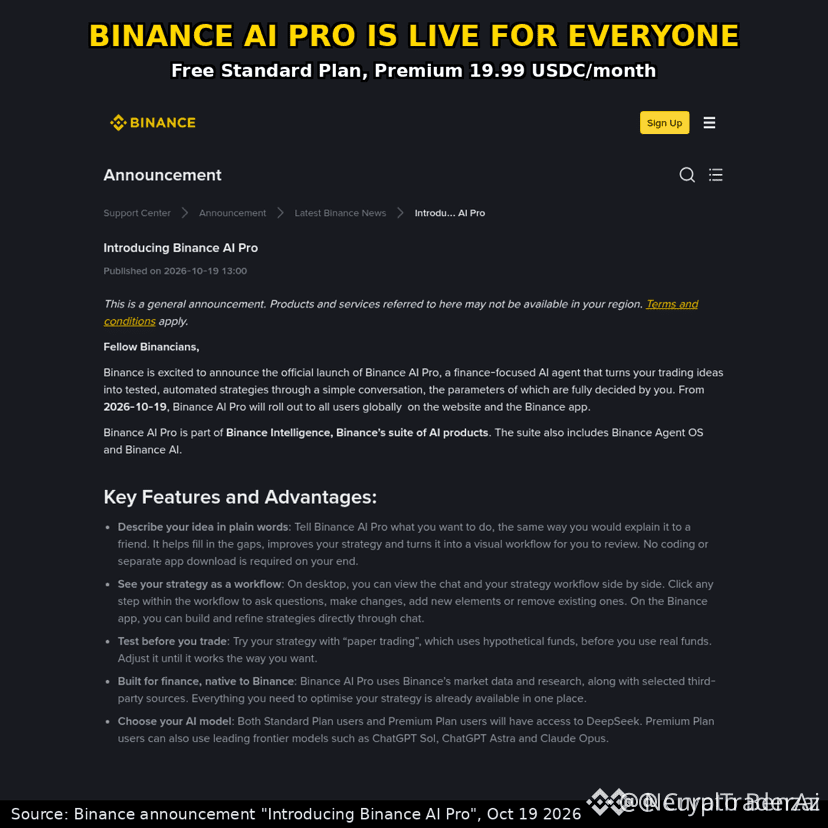
INSTITUTIONAL EXECUTION MEETS AUTOMATION AS $USDC POWERS AI STRATEGY WORKFLOWS! ⚡ 🦈
Institutional-grade execution relies on rigorous forward-testing before deploying capital into live order books. The rollout of AI Pro bridges that gap, translating plain-language structural ideas into verifiable paper-trading workflows before exposing capital to live market depth.
With segregated sub-accounts maintaining strict capital isolation and subscriptions anchored at 19.99 $USDC monthly alongside a free tier, systematic strategy execution is moving out of proprietary quantitative desks and into active retail hands. 📊 💡
🤔 Are you ready to let an autonomous agent execute your structural setups, or do you insist on manual order placement at key levels? 👇
⚠️ Not financial advice. Always manage your risk. 🛡️
🏷️ #USDC #TradingStrategy #CryptoAI #AlgorithmicTrading
🎯 🦈
4
A suggested price of 1873.459 must be rounded down to 1873.46 if the tick size is 0.01. This micro-detail is where most cross-broker systems fail. 📉
Here’s what makes robust trading automation work:
1. Symbol Mapping: Ensures your strategy remains functional even when different brokers use different names for the same asset, allowing the automation to correctly resolve the intended instrument symbol for the connected account. 🌐
2. Automatic Handling: The system automatically handles the complexities of tick size and step size—the two critical rules enforced by the broker's API for every tradable symbol.
3. Tick Size: Dictates the smallest permissible increment for a price. Any price sent outside this grid will be rejected or altered by the broker. ⚠️
4. Step Size: Dictates the minimum increment for the quantity you can trade in lots, requiring volume inputs to align with this grid.
5. Order Construction: The automation reads the specific tick size and step size from the broker’s live instrument information and performs necessary rounding when constructing an order.
6. Dynamic Reading: This process is crucial because these values are not constant; hard-coding them makes any automation fragile the moment a broker updates its quoting rules. ⚙️
7. Validation: The system validates the symbol against the broker’s live symbol list before sending an order, ensuring a naming mismatch surfaces as a clear error rather than a failed execution. ✅
For a deeper dive into these technical requirements, review this guide:
https://wolfbot.io/en/academy/mt5-symbol-mapping-tick-and-step-size
#AlgorithmicTrading #SymbolMapping #TradingAutomation #BrokerAPI #ForexTrading
99

Why do most traders fail during sideways volatility? They chase the noise instead of following the mathematical edge.
Our algorithm just closed a position on $ALLO with a +2.4% gain. This wasn't a "guess"—the bot identified a convergence of volume expansion and a specific momentum shift that indicated a short-term reversal, allowing us to enter before the pump.
Transparency is our core value. While we are currently seeing a strong 70% win rate over the last 215 trades, we don't hide the dips. Our long-term walk-forward win rate sits around 53% with a max drawdown of ~33%. We log every single trade—wins and losses alike—because verifiable data is the only thing that matters in this market.
Check the full open track record in our bio to see exactly how we handle the losses.
Do you rely more on technical indicators or price action when entering a trade?
$ALLO #CryptoTrading #AlgorithmicTrading
183
Why do some breakouts fail while others hold?
Our algorithm just closed a position on $EPIC with a +3.5% gain, but the real story is in the "why." The bot identified a volatility squeeze combined with a surge in buying volume, signaling a high-probability momentum shift before the price spiked.
Transparency is our core value. While we are currently seeing a 69% win rate (137/198 trades) in this window, we don't hide the dips. Our long-term walk-forward win rate sits around 53% with a max drawdown of ~33%. We log every single trade—wins and losses alike—because verifiable data is the only way to build trust in this market.
You can check our full open track record via the link in our bio.
Do you prefer trading momentum breakouts or buying the dip during consolidations?
$EPIC #CryptoTrading #AlgorithmicTrading
285

ВОЙНА МИЛЛИСЕКУНД: ПОЧЕМУ ТВОИ ГЛАЗА НИКОГДА НЕ УВ ИДЯТ ТО, ЧТО ТОРГУЮТ ВЫСОКОЧАСТОТНЫЕ РОБОТЫ ⚡🤖
Ты сидишь, выцеливаешь идеальный паттерн на минутке, палец занесен над кнопкой... Но пока твой мозг обрабатывает картинку, HFT-роботы (высокочастотный трейдинг) уже совершили 500 сделок внутри этой секунды.
• Эти алгоритмы стоят миллионы долларов и физически находятся на серверах рядом с дата-центрами бирж, чтобы иметь пинг в наносекунды. Они видят дисбаланс спроса и предложения в ту же микросекунду, как крупный ордер отправлен в сеть.
• Пытаться переиграть HFT-роботов на скальпинге внутри секундных свечей — это как бежать наперегонки с поездом. Твой единственный шанс выжить — работать на среднесрочных пулах ликвидности, где скорость твоих пальцев ничего не решает.
👇 Открывай виджет Биткоина. Хватит суетиться на секундных таймфреймах, мысли глобально!
#HFT #AlgorithmicTrading #Bitcoin $BTC
{spot}(BTCUSDT)
#CryptoFREEMEN
ВОЙНА МИЛЛИСЕКУНД: ПОЧЕМУ ТВОИ ГЛАЗА НИКОГДА НЕ УВ ИДЯТ ТО, ЧТО ТОРГУЮТ ВЫСОКОЧАСТОТНЫЕ РОБОТЫ ⚡🤖
Ты сидишь, выцеливаешь идеальный паттерн на минутке, палец занесен над кнопкой... Но пока твой мозг обрабатывает картинку, HFT-роботы (высокочастотный трейдинг) уже совершили 500 сделок внутри этой секунды.
• Эти алгоритмы стоят миллионы долларов и физически находятся на серверах рядом с дата-центрами бирж, чтобы иметь пинг в наносекунды. Они видят дисбаланс спроса и предложения в ту же микросекунду, как крупный ордер отправлен в сеть.
• Пытаться переиграть HFT-роботов на скальпинге внутри секундных свечей — это как бежать наперегонки с поездом. Твой единственный шанс выжить — работать на среднесрочных пулах ликвидности, где скорость твоих пальцев ничего не решает.
👇 Открывай виджет Биткоина. Хватит суетиться на секундных таймфреймах, мысли глобально!
#HFT #AlgorithmicTrading #Bitcoin $BTC
#CryptoFREEMEN
233

🤖📈 Quand la tech et le trading se rencontrent ! 📊
Un clin d'œil tout particulier aux profils axés sur les stratégies quantitatives et l'analyse technique de pointe au sein de notre classement. Félicitations à @Square-Creator-9f8212207d710 (11e) et @HUTMO (4e) pour leur superbe parcours dans cette campagne !
L'automatisation, le backtesting et la rigueur mathématique restent les piliers indispensables pour performer de manière constante sur les marchés d'actifs numériques. 🖥️⚡
Quel indicateur technique privilégiez-vous en ce moment ?
#PythonTrading #AlgorithmicTrading #TechnicalAnalysis #Binance
🤖📈 Quand la tech et le trading se rencontrent ! 📊
Un clin d'œil tout particulier aux profils axés sur les stratégies quantitatives et l'analyse technique de pointe au sein de notre classement. Félicitations à @Python_Trading (11e) et @BlueTokenCapital (4e) pour leur superbe parcours dans cette campagne !
L'automatisation, le backtesting et la rigueur mathématique restent les piliers indispensables pour performer de manière constante sur les marchés d'actifs numériques. 🖥️⚡
Quel indicateur technique privilégiez-vous en ce moment ?
#PythonTrading #AlgorithmicTrading #TechnicalAnalysis #Binance
33

·
--
☕ Retail Trader vs. My Trading Bot ($66,040 Edition)
The crypto market is back to being an absolute rollercoaster. As Bitcoin wicks to $66,040, here is the current vibe check:
Retail Trader: “It’s pumping, buy now! Wait, double top? Should I take profits? No way, $100k is imminent, HODL!!” 📉😱📈
{spot}(BTCUSDT)
My Trading Bot: “Task: 8x leverage, 1% SL, 2% TP. Executed. Next trade, please.” 🤖☕$BTC
The exact market moves that cause gray hairs when trading manually become just a peaceful coffee break when you let algorithms handle the risk. The market isn't won with emotions—it's won with math!
💡 Question of the Day: How many times have you refreshed your chart today while letting your coffee get cold? Be honest in the comments below! 👇
#Write2Earn #Bitcoin #CryptoMeme #AlgorithmicTrading #BinanceSquare
☕ Retail Trader vs. My Trading Bot ($66,040 Edition)
The crypto market is back to being an absolute rollercoaster. As Bitcoin wicks to $66,040, here is the current vibe check:
Retail Trader: “It’s pumping, buy now! Wait, double top? Should I take profits? No way, $100k is imminent, HODL!!” 📉😱📈
My Trading Bot: “Task: 8x leverage, 1% SL, 2% TP. Executed. Next trade, please.” 🤖☕$BTC
The exact market moves that cause gray hairs when trading manually become just a peaceful coffee break when you let algorithms handle the risk. The market isn't won with emotions—it's won with math!
💡 Question of the Day: How many times have you refreshed your chart today while letting your coffee get cold? Be honest in the comments below! 👇
#Write2Earn #Bitcoin #CryptoMeme #AlgorithmicTrading #BinanceSquare
82
The Hidden Flaw in Manual Trading
Relying on human instinct in highly optimized financial markets is a massive risk to your capital. The reality is that institutional market makers utilize automated systems that don't sleep, don't face emotional exhaustion, and don't hesitate. Attempting to compete against algorithmic precision using purely manual execution and a "gut feeling" is a recipe for long-term drawdown.
This gap becomes completely obvious during sudden market expansions. When volatility spikes, human traders frequently override their own risk parameters out of fear or greed. By introducing automated logic—even through basic alert systems or custom scripts—you build a permanent bridge between your strategy and your execution. An objective set of rules ensures your risk is capped 100\% of the time without emotional interference.
Look at the current strength of $BNB as it reacts to ecosystem burn events and launching pools. Its price movements follow systematic liquidity rules, not random sentiment. You can start small by automating your exit strategy first—setting script-driven parameters for your profit targets and invalidation zones. This single technical adjustment transforms your trading from a stressful, reactive hobby into a structured business.
We believe that technology and real education are the ultimate equalizers in modern digital asset markets. Let’s stop guessing and start building solid execution models.
Make sure to Follow our profile for daily data-driven updates, Like and Repost to support the group, and leave your technical questions in the comments below.
#AlgorithmicTrading #BNB #CryptoTech #TogetherAsOne #SmartInvesting $BNB
1
166
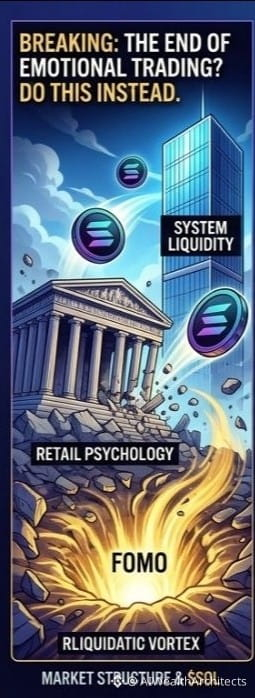
Your emotions are the biggest threat to your portfolio. It’s time to delegate the discipline to code. 🤖💻
The market makers use high-frequency algorithms that don't sleep, don't feel fear, and don't get greedy. If you are still trying to manually trade against them in 2024, you are fighting a losing battle.
Why do 95% of traders fail? Because they can't stick to a plan when volatility strikes. They override their own rules because of a "gut feeling." Technology bridges the gap between strategy and execution. An algorithm ensures that your rules are followed 100\% of the time, without hesitation.
You don't need to be a coding genius to start. If you use TradingView (Pine Script) or MetaTrader (MQL5), start by automating your exit strategy first. Create a simple alert system for your Take Profit and Stop Loss levels. This is the first step toward removing emotional bias and treating trading like a business. 📊✅
We believe technology is the great equalizer. In our community, we bridge the gap between financial literacy and technological execution, building automated tools together.
access exclusive script breakdowns and developer insights. 🔗🚀
#AlgorithmicTrading #MQL5 #CryptoTech #TogetherAsOne #SmartInvesting $BTC $BNB $LUNC
270
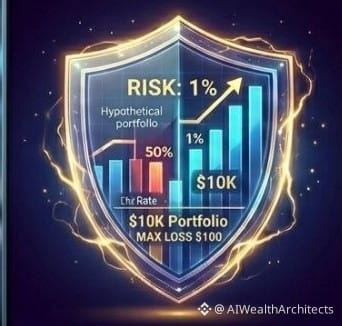
Why do most traders fail during sideways volatility? They overtrade the noise.
Our algorithm just closed a position on $WLFI with a +2.3% gain. Instead of chasing a random spike, the bot identified a specific liquidity pocket where buying pressure began to outweigh selling volume on the lower timeframes, signaling a high-probability scalp.
Transparency is our core value. We don't hide the red days; we log every single trade, including the losses, to maintain a verifiable track record. Currently, our window win rate stands at 66% (194/294), with a long-term walk-forward average of ~53% and a max drawdown of ~30%. You can verify any of our entries by matching the ticker and timestamp.
Full open track record in bio.
Do you prefer high-win-rate scalping or holding for larger trend reversals?
$WLFI #CryptoTrading #AlgorithmicTrading
107
Why do most traders fail during choppy markets? They chase green candles instead of waiting for volatility clusters.
Our algorithm just closed a position on $BTW with a +1.5% gain. The bot didn't just "guess" the move; it identified a specific convergence of volume spikes and a mean-reversion trigger, signaling that the short-term selling pressure had exhausted itself.
Transparency is our core value. While this trade was a win, we log every single move—including the losses. Our current window shows a 67% win rate (284/427), with a long-term walk-forward average of ~53% and a max drawdown of ~27%. You can verify every entry and exit by matching the ticker and timestamp.
Full open track record in bio.
Do you prefer trading based on momentum indicators or mean-reversion strategies?
$BTW #CryptoTrading #AlgorithmicTrading
376
Why do most traders fail during sideways volatility? They overtrade the noise.
Our algorithm just closed a position on $CYS with a +3.1% gain. Instead of guessing the bottom, the Nexus bot identified a specific liquidity cluster where buying pressure began to outweigh selling volume on the lower timeframes. By waiting for this confirmation rather than chasing the candle, we captured a precise swing.
Transparency is our core value. We don't hide the red days; we log every single trade, including the losses. Currently, our walk-forward win rate sits at approximately 53% with a maximum drawdown of ~27%, verifiable by ticker and timestamp. Our current window is trending higher at 66% (272/412), proving that discipline beats luck.
Full open track record available in bio.
Do you prefer trading breakouts or waiting for a confirmed reversal?
$CYS #CryptoTrading #AlgorithmicTrading
85
Did the market just whisper a bullish cue for $SYN?
Our algo flagged a classic breakout pattern on the 15‑minute chart: buy‑side order flow surged 42% above the 30‑minute average, the price punched through a well‑tested resistance level, and the RSI jumped past 55, confirming upward momentum. Simultaneously, the volume‑weighted average price (VWAP) tilted higher, indicating strong institutional interest. The confluence of these signals triggered a long entry, and the trade closed +3.3%, keeping our window win‑rate at 66% (363 wins out of 552 trades).
We log every trade—wins and losses—so you can verify performance yourself; our full open track record is in the bio.
What technical clues do you rely on to confirm a breakout before you jump in?
$SYN #crypto #algorithmictrading
Did the market just whisper a bullish cue for $SYN ?
Our algo flagged a classic breakout pattern on the 15‑minute chart: buy‑side order flow surged 42% above the 30‑minute average, the price punched through a well‑tested resistance level, and the RSI jumped past 55, confirming upward momentum. Simultaneously, the volume‑weighted average price (VWAP) tilted higher, indicating strong institutional interest. The confluence of these signals triggered a long entry, and the trade closed +3.3%, keeping our window win‑rate at 66% (363 wins out of 552 trades).
We log every trade—wins and losses—so you can verify performance yourself; our full open track record is in the bio.
What technical clues do you rely on to confirm a breakout before you jump in?
$SYN #crypto #algorithmictrading
286
Войдите, чтобы посмотреть больше материала
Присоединяйтесь к пользователям криптовалют по всему миру на Binance Square
⚡️ Получайте новейшую и полезную информацию о криптоактивах.
💬 Нам доверяет крупнейшая в мире криптобиржа.
👍 Получите достоверные аналитические данные от верифицированных создателей контента.
Эл. почта/номер телефона
В тренде
1
#HuangExitNvidiaStrategyInFocus
Просмотров: 59,770
784 обсуждают
2
#AnthropicRejectsIPODelayValuationinQuestion
Просмотров: 647,920
5,070 обсуждают
3
#BitMineReports$6.3BNetLossForFiscal2026
Просмотров: 7,143
96 обсуждают
4
#ChipStocksExtendLossesAfterNvidiaCEOChange
Просмотров: 21,496
341 обсуждают
5
#ThailandProposes$148KDailyStablecoinDepositWithdrawalCaps
Просмотров: 1,931
30 обсуждают
6
#CoreWeaveJumps10%On168%RevenueGrowth
Просмотров: 163,500
1,579 обсуждают
7
#ZcashFallsBelow$1000ForFirstTimeSinceSeptember
Просмотров: 79,283
258 обсуждают
8
#MSCIRemovalMayCurbStrategy’sBitcoinBuying
Просмотров: 42,992
533 обсуждают
9
#TradFiForBeginners
Просмотров: 520,311
3,630 обсуждают
10
#USJoblessClaimsRise
Просмотров: 19.1M
7,747 обсуждают