
马克Mark-
3.7k Posts

马克Mark-
 Square Verified
👑 公众号《加密马克》精准策略🔸跟单进群🔹实盘交易
15 Following
5.4K+ Followers
1.1K+ Liked
Posts
All
Live
PINNED
点击进入马克粉丝策略基地
点击进入马克粉丝策略基地
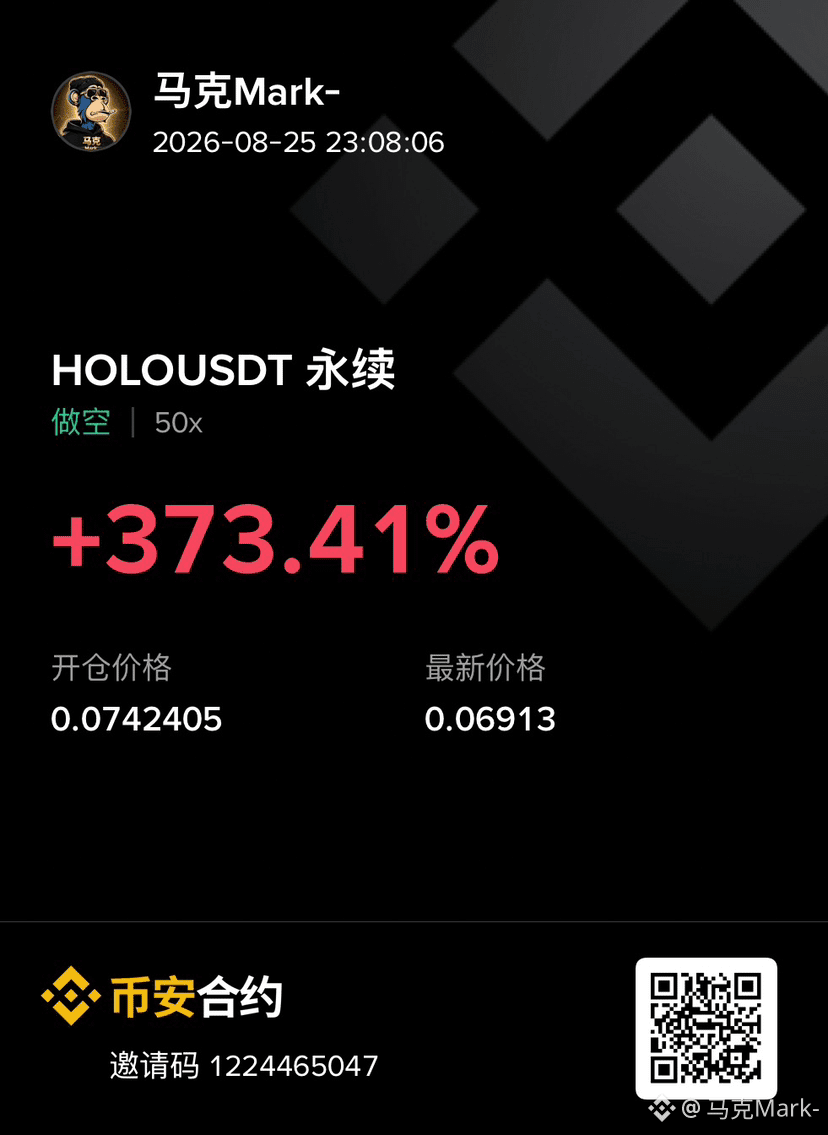
$HOLO This short position—after entering at 50x, I got +373%. I opened at 0.07424, and now it’s 0.06913. When the market switched from weakness to sideways, I felt something was off: volume contracted but price didn’t bounce, and selling pressure above was too heavy—so I went short directly. $ETH
Many people like to catch the dip after it drops a lot, but I’m looking at whether the structure has broken or not. This rebound lacks momentum, which shows the bulls already got scared. In futures, it’s all about timing—not betting on direction. $BTC
Don’t get carried away. Profit is given by risk control. I’ll keep watching the chart tomorrow—move only if there’s a signal. #比特币受阻于81000美元50周均线
$HOLO This short position—after entering at 50x, I got +373%. I opened at 0.07424, and now it’s 0.06913. When the market switched from weakness to sideways, I felt something was off: volume contracted but price didn’t bounce, and selling pressure above was too heavy—so I went short directly. $ETH
Many people like to catch the dip after it drops a lot, but I’m looking at whether the structure has broken or not. This rebound lacks momentum, which shows the bulls already got scared. In futures, it’s all about timing—not betting on direction. $BTC
Don’t get carried away. Profit is given by risk control. I’ll keep watching the chart tomorrow—move only if there’s a signal. #比特币受阻于81000美元50周均线

点击进入马克粉丝策略基地
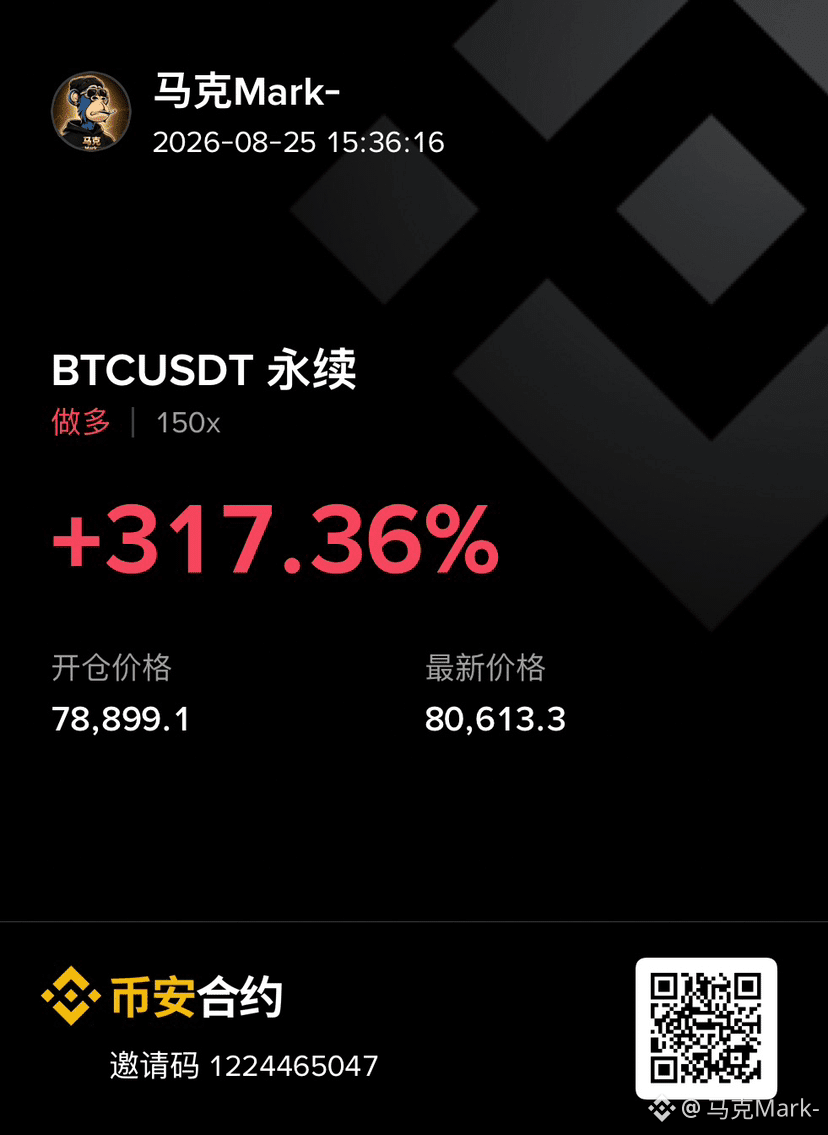
Seeing $BTC firmly stand above 80,000 USD, I went in with my 150x leveraged long and directly pulled out a 317% return. The stone in my heart finally landed.$ZEC
Back then, I opened a long at the 78899 level—it was under a lot of pressure. The market was hesitating, but I could see the strong buy-side support on the order book. If it dropped, there would be buyers stepping in. In situations like that, you’ve got to trust your own judgment. Since I was bullish on what comes next, I made the move decisively. High leverage is meant to take every last bit of the confirmed profit.$ETH
The biggest taboo in futures trading is wavering—being overly hesitant. From 78899 up to 80613, there were also plenty of fluctuations in between. If you can’t hold, you’re likely to get shaken out. Remember: have your own trading logic. When others are fearful, that’s often when opportunity shows up.#BTC触及80000美元
Seeing $BTC firmly stand above 80,000 USD, I went in with my 150x leveraged long and directly pulled out a 317% return. The stone in my heart finally landed.$ZEC
Back then, I opened a long at the 78899 level—it was under a lot of pressure. The market was hesitating, but I could see the strong buy-side support on the order book. If it dropped, there would be buyers stepping in. In situations like that, you’ve got to trust your own judgment. Since I was bullish on what comes next, I made the move decisively. High leverage is meant to take every last bit of the confirmed profit.$ETH
The biggest taboo in futures trading is wavering—being overly hesitant. From 78899 up to 80613, there were also plenty of fluctuations in between. If you can’t hold, you’re likely to get shaken out. Remember: have your own trading logic. When others are fearful, that’s often when opportunity shows up.#BTC触及80000美元

点击进入马克粉丝策略基地
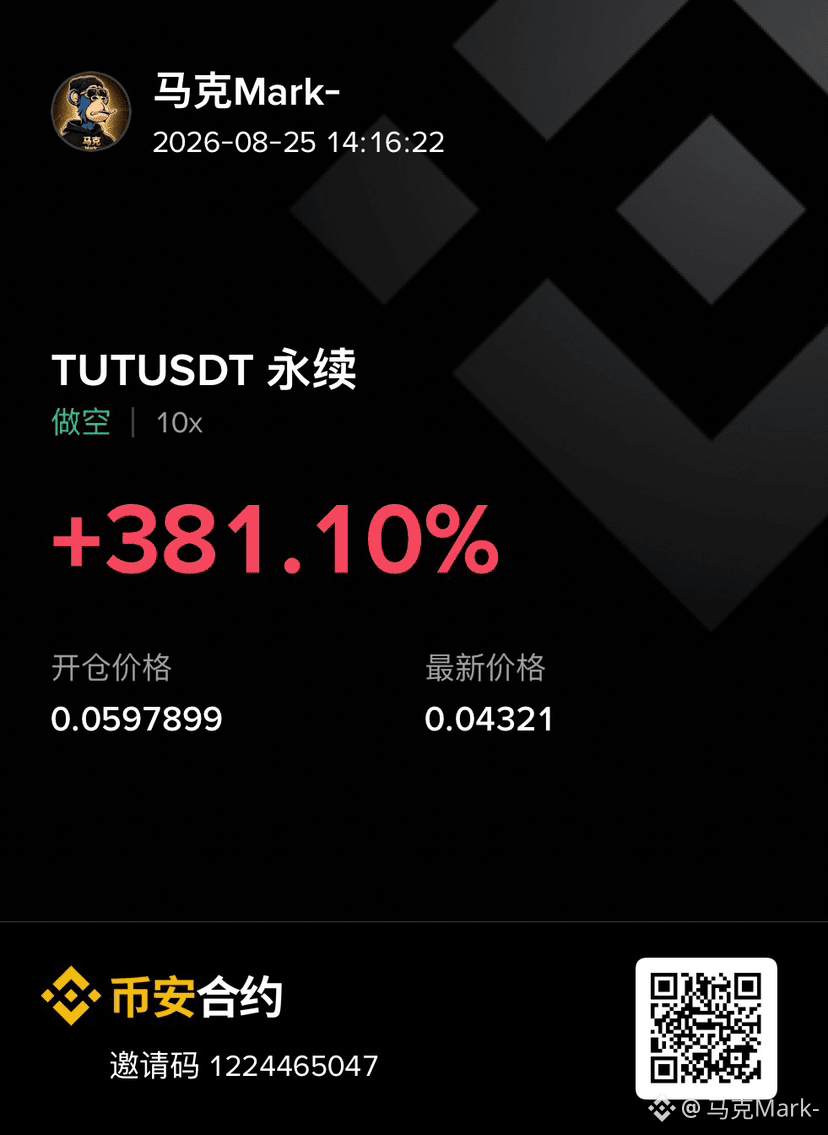
$TUT This short trade actually paid off. Seeing the floating profit locked in at +381%, honestly, it feels pretty damn good. $ETH
Back then, around 0.059, I promptly closed my short because I felt the sell pressure above was too heavy and the volume couldn’t keep up—classic pump without real support. When these shady coins surge, it’s basically handing opportunities to shorts. I went in directly with 10x leverage. Sure enough, the price got smashed all the way down to 0.043. The chart was incredibly weak. $BTC
The biggest taboo in futures trading is greed and holding on. Once you’ve made it to this level, I’m already gradually taking profit and stepping back. The market never lacks opportunities—taking profits is the real “hard cash.” Everyone, keep your hands under control lately. Don’t blindly follow the crowd. Protecting your principal matters more than anything. #BTC触及80000美元
$TUT This short trade actually paid off. Seeing the floating profit locked in at +381%, honestly, it feels pretty damn good. $ETH
Back then, around 0.059, I promptly closed my short because I felt the sell pressure above was too heavy and the volume couldn’t keep up—classic pump without real support. When these shady coins surge, it’s basically handing opportunities to shorts. I went in directly with 10x leverage. Sure enough, the price got smashed all the way down to 0.043. The chart was incredibly weak. $BTC
The biggest taboo in futures trading is greed and holding on. Once you’ve made it to this level, I’m already gradually taking profit and stepping back. The market never lacks opportunities—taking profits is the real “hard cash.” Everyone, keep your hands under control lately. Don’t blindly follow the crowd. Protecting your principal matters more than anything. #BTC触及80000美元

点击进入马克粉丝策略基地
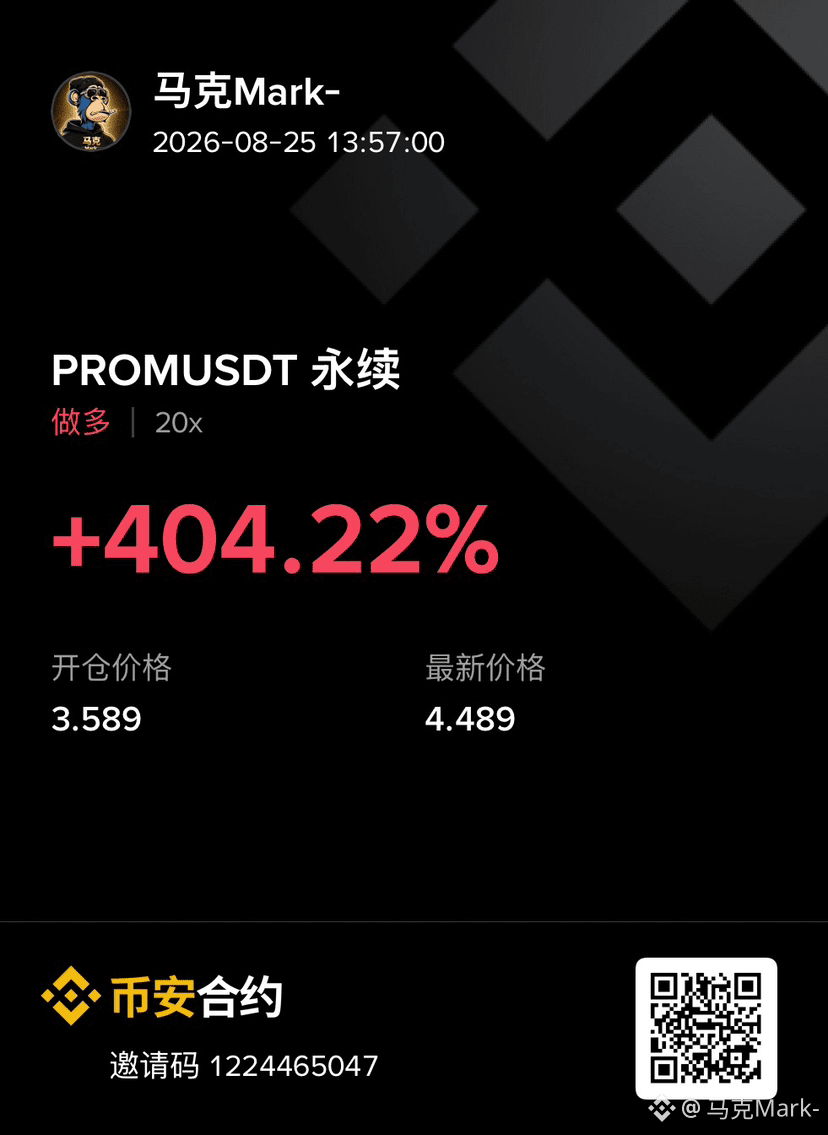
$PROM This long position, using 20x leverage, captured a 400% return. Honestly, when I finally got it, my hands were a bit shaky. Back then, around 3.58, I got on without hesitation—just based on market feel plus a bit of courage. The support at that level was strong, so I felt it was worth taking a shot.$BTC
When it pushed up to 4.48, this run turned the profit into more than four times. In the crypto world, it’s sometimes like this: once you see the setup, you have to dare to act. Hesitating often means you miss the chance. This time I’ve taken the meat and booked the gains. Next, I’ll keep watching the charts and look for the next opportunity.#BTC触及80000美元
$PROM This long position, using 20x leverage, captured a 400% return. Honestly, when I finally got it, my hands were a bit shaky. Back then, around 3.58, I got on without hesitation—just based on market feel plus a bit of courage. The support at that level was strong, so I felt it was worth taking a shot.$BTC
When it pushed up to 4.48, this run turned the profit into more than four times. In the crypto world, it’s sometimes like this: once you see the setup, you have to dare to act. Hesitating often means you miss the chance. This time I’ve taken the meat and booked the gains. Next, I’ll keep watching the charts and look for the next opportunity.#BTC触及80000美元

点击进入马克粉丝策略基地
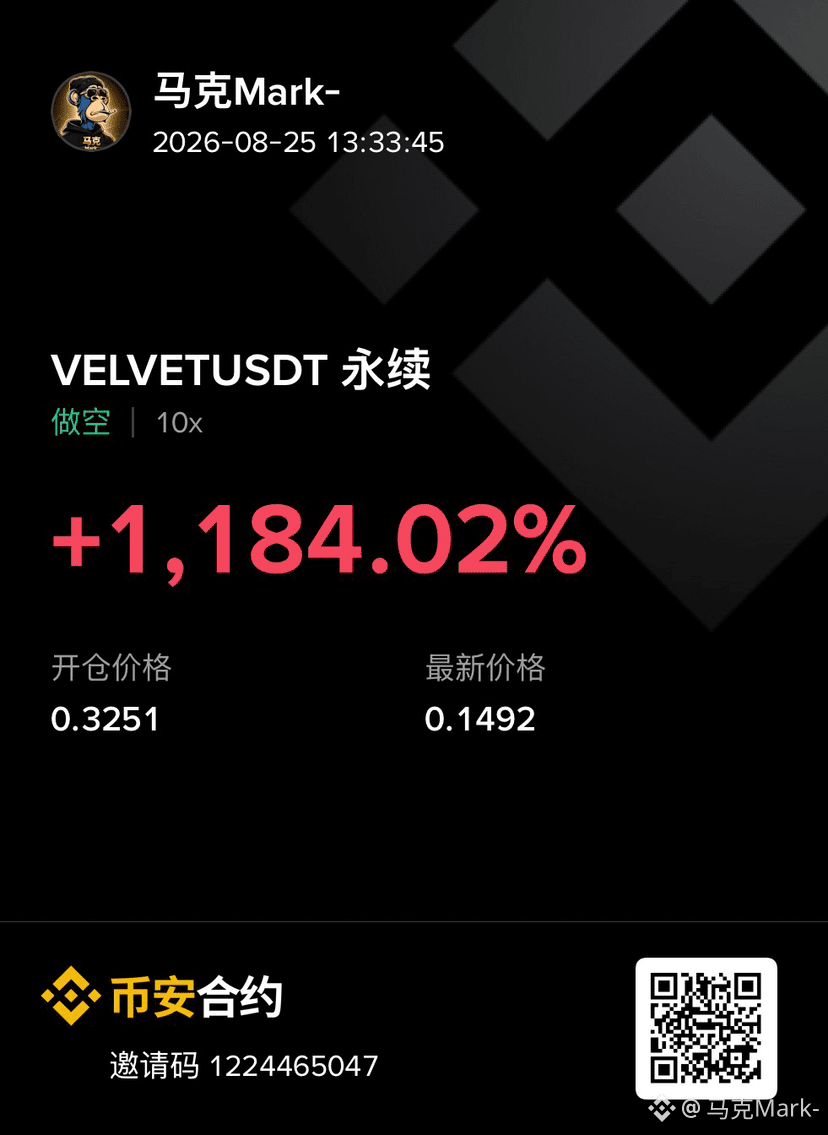
$VELVET This short trade ended up eating a lot of meat. With 10x leverage, I took a profit of +1184%. Back then, around 0.325, I could clearly feel heavy sell pressure overhead and that rebounds didn’t have much strength. At times like that, I’m used to looking for opportunities to short—never expecting to catch a falling knife. $ETH
Watching the price keep dropping all the way to 0.149, the profit multiplied more than tenfold, and I still felt pretty great about it. But to be honest, playing with 10x leverage makes your heart race too. When volatility spikes in the middle, you still have to hold firmly—otherwise you would’ve been shaken out long ago. $BTC
The market never lacks opportunities, but protecting your principal comes first. Don’t think that because I made so much on this one trade, I usually just go all-in with my whole account. When you copy-trade or operate on your own, remember to set up your stop-loss properly—don’t get carried away. #BTC触及80000美元
$VELVET This short trade ended up eating a lot of meat. With 10x leverage, I took a profit of +1184%. Back then, around 0.325, I could clearly feel heavy sell pressure overhead and that rebounds didn’t have much strength. At times like that, I’m used to looking for opportunities to short—never expecting to catch a falling knife. $ETH
Watching the price keep dropping all the way to 0.149, the profit multiplied more than tenfold, and I still felt pretty great about it. But to be honest, playing with 10x leverage makes your heart race too. When volatility spikes in the middle, you still have to hold firmly—otherwise you would’ve been shaken out long ago. $BTC
The market never lacks opportunities, but protecting your principal comes first. Don’t think that because I made so much on this one trade, I usually just go all-in with my whole account. When you copy-trade or operate on your own, remember to set up your stop-loss properly—don’t get carried away. #BTC触及80000美元

点击进入马克粉丝策略基地
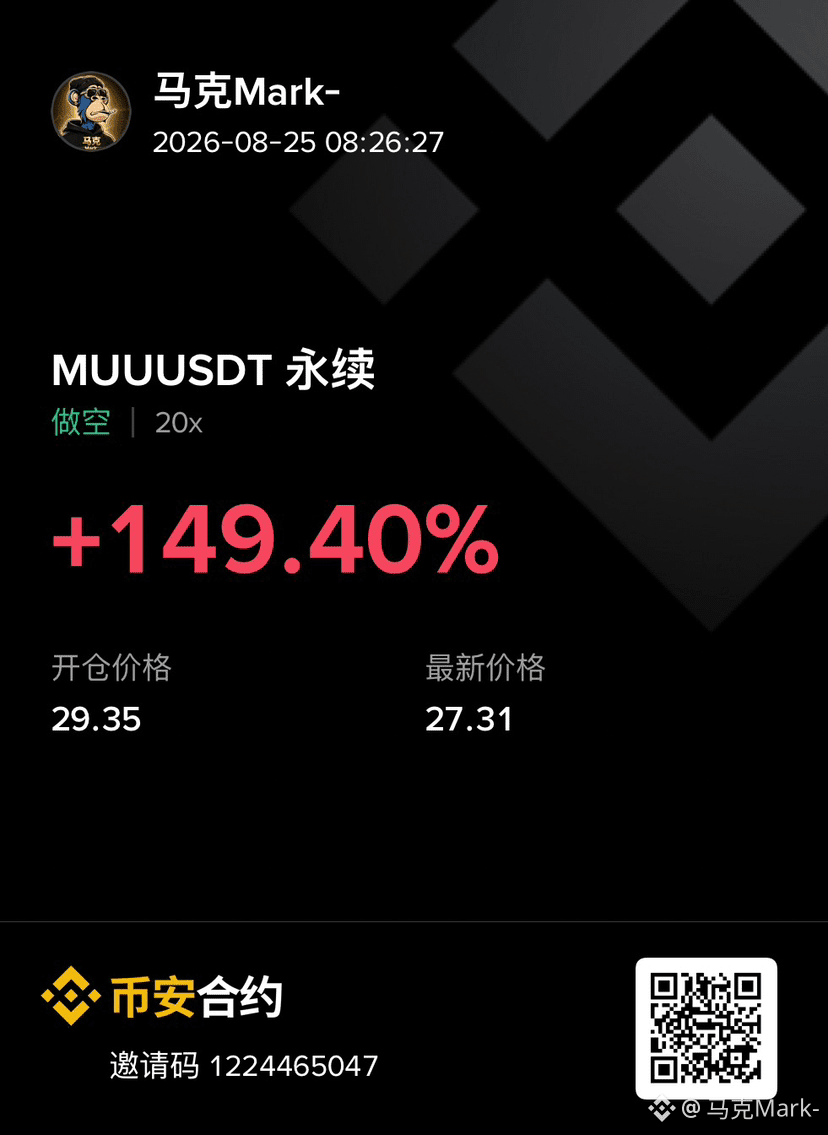
Seeing $MUU crash like this, I actually felt more at ease. At the 29.35 level, I noticed the volume couldn’t keep up—it was clearly at the end of its strength—so I decisively opened a 20x short position. A lot of people think that after falling hard there will be a rebound, but I looked at the order book and it was just weak. I decided to follow the trend.
Turned out I wasn’t disappointed. It kept grinding down to 27.31 and I ended up taking 149% of my profit. Honestly, futures trading is like that—don’t always try to bottom-fish or top-pick. Going with the flow is the way to go. I held this position without making any乱 moves, because I trusted my judgment.$ETH
The market never lacks opportunities—what it lacks is the ability to control your hands and the discipline to follow the trend. This time I locked in the gains and take a breather, then wait for the next signal.$BTC
Seeing $MUU crash like this, I actually felt more at ease. At the 29.35 level, I noticed the volume couldn’t keep up—it was clearly at the end of its strength—so I decisively opened a 20x short position. A lot of people think that after falling hard there will be a rebound, but I looked at the order book and it was just weak. I decided to follow the trend.
Turned out I wasn’t disappointed. It kept grinding down to 27.31 and I ended up taking 149% of my profit. Honestly, futures trading is like that—don’t always try to bottom-fish or top-pick. Going with the flow is the way to go. I held this position without making any乱 moves, because I trusted my judgment.$ETH
The market never lacks opportunities—what it lacks is the ability to control your hands and the discipline to follow the trend. This time I locked in the gains and take a breather, then wait for the next signal.$BTC

点击进入马克粉丝策略基地
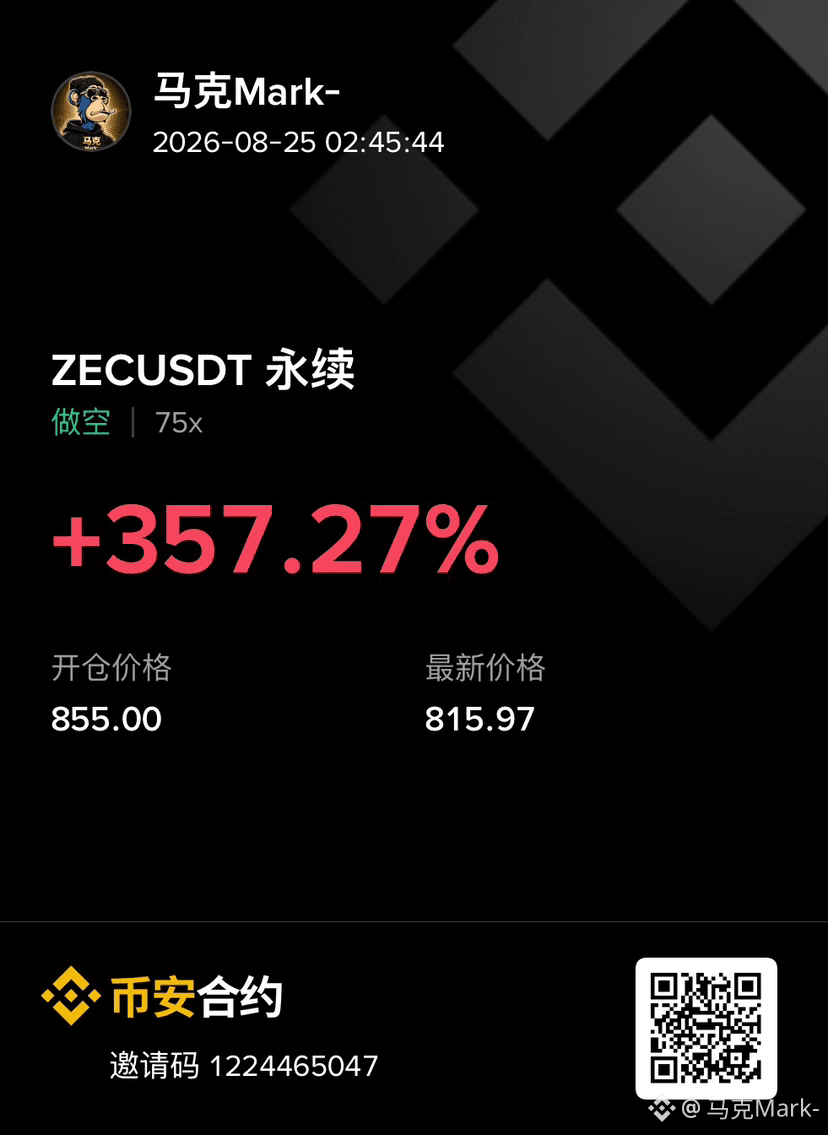
$ZEC This short position turned out to be a win—using 75x leverage I held on and reaped a profit of over 350%. My hands were kind of shaking.
Last night while watching the chart, at that 855 level I just felt something was off. The volume couldn’t keep up, yet it was being pushed higher—classic bull trap. At the time I thought, “This spot will most likely dip back with a quick spike,” so I decisively closed my short. Sure enough, it didn’t hold for long and then dropped; it kept falling all the way to around 815.$ETH
Honestly, trading with 75x leverage is basically playing on adrenaline. Along the way there were also small rebounds and I almost got shaken out. But once you spot the trend, you have to hold it—otherwise you won’t be able to take a bite that big.$BTC
The market is always right—don’t fight the trend. I’m cashing this one in first and taking a breather. I’ll wait for the next clear opportunity to make a move!#比特币周涨23.6%
$ZEC This short position turned out to be a win—using 75x leverage I held on and reaped a profit of over 350%. My hands were kind of shaking.
Last night while watching the chart, at that 855 level I just felt something was off. The volume couldn’t keep up, yet it was being pushed higher—classic bull trap. At the time I thought, “This spot will most likely dip back with a quick spike,” so I decisively closed my short. Sure enough, it didn’t hold for long and then dropped; it kept falling all the way to around 815.$ETH
Honestly, trading with 75x leverage is basically playing on adrenaline. Along the way there were also small rebounds and I almost got shaken out. But once you spot the trend, you have to hold it—otherwise you won’t be able to take a bite that big.$BTC
The market is always right—don’t fight the trend. I’m cashing this one in first and taking a breather. I’ll wait for the next clear opportunity to make a move!#比特币周涨23.6%

点击进入马克粉丝策略基地
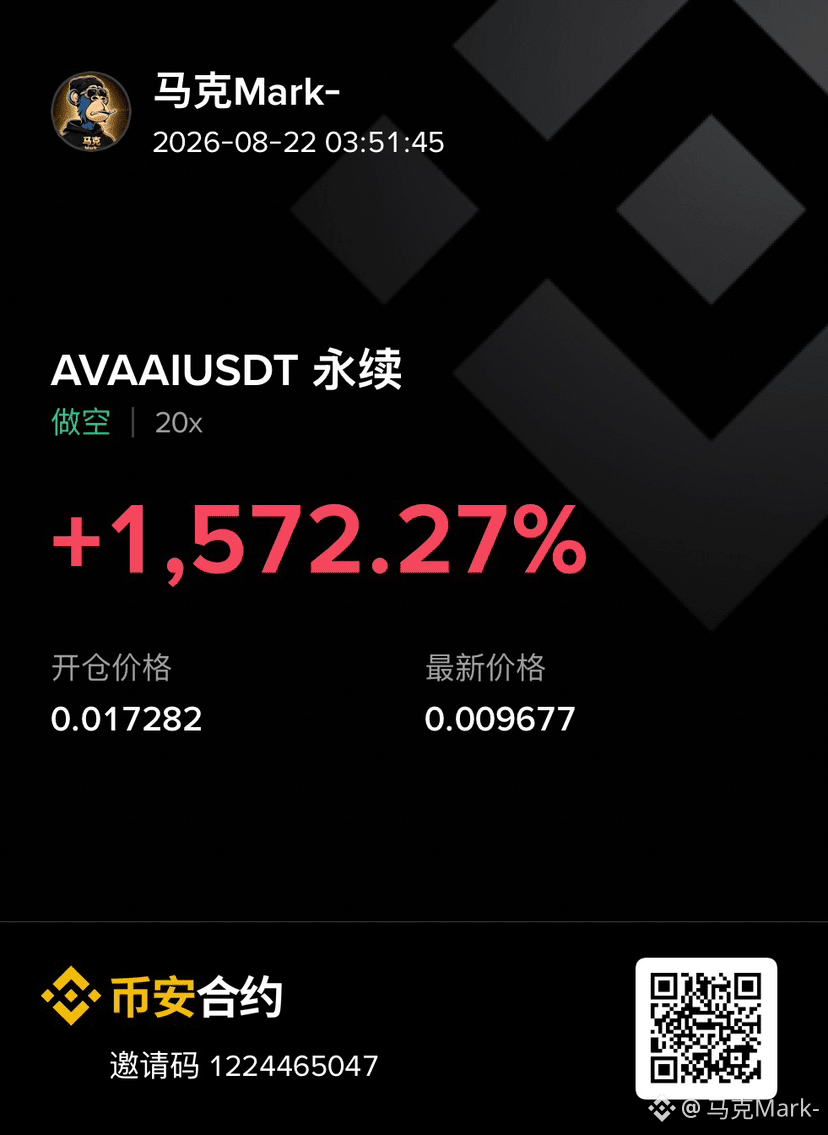
This $AVAAI empty position is really爽翻了! A 1572% return on investment is in hand. At the time, the price was grinding around 0.017, and the volume clearly couldn’t keep up. I felt something was off, so I decisively opened a short position with 20x leverage. A lot of people were still fantasizing about a breakout, but I thought this was simply a bull-trap to lure longs.$BTC
Turns out my call was right—the price kept dropping all the way to 0.0096, basically a straight 50% cut. When these Meme coins pump without volume, they’re just paper tigers. Anyone chasing high got buried.$ETH
Even falling asleep made me wake up laughing. Hold onto your logic; don’t let FOMO emotions throw you off course. When it’s time to take meat, you won’t even miss a bite!#黄金反弹近5%
This $AVAAI empty position is really爽翻了! A 1572% return on investment is in hand. At the time, the price was grinding around 0.017, and the volume clearly couldn’t keep up. I felt something was off, so I decisively opened a short position with 20x leverage. A lot of people were still fantasizing about a breakout, but I thought this was simply a bull-trap to lure longs.$BTC
Turns out my call was right—the price kept dropping all the way to 0.0096, basically a straight 50% cut. When these Meme coins pump without volume, they’re just paper tigers. Anyone chasing high got buried.$ETH
Even falling asleep made me wake up laughing. Hold onto your logic; don’t let FOMO emotions throw you off course. When it’s time to take meat, you won’t even miss a bite!#黄金反弹近5%
点击进入马克粉丝策略基地
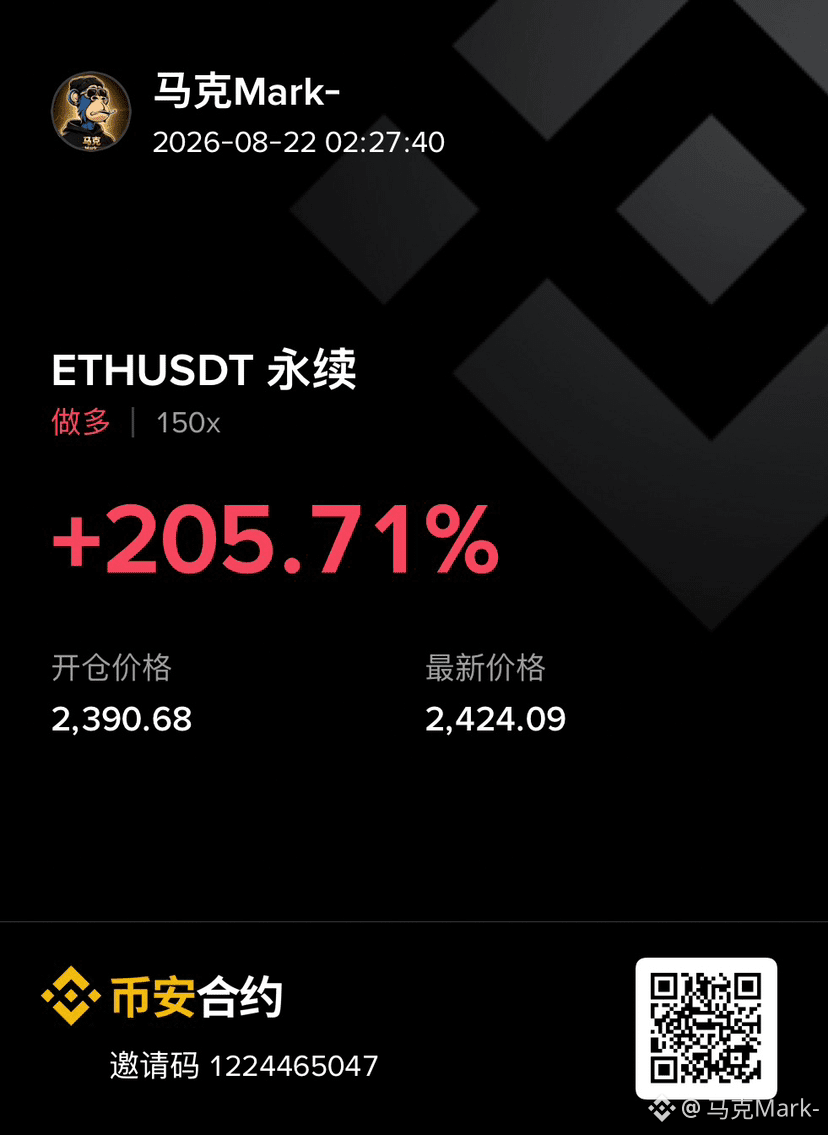
In the evening, this order $ETH really tested my nerve! Around 2390, I saw the support looked solid, so I went in with a 150x long. At the time, many people were guessing it would keep dropping, but I just felt the bears were running out of steam. $ETH
Then it surged to 2424 in one move—doubling my money and making a 205% profit! With this kind of high leverage, it’s basically life-or-death trading; the entry timing has to be nailed perfectly. $BTC
Time to sleep—taking profits and locking them in is the real skill. #比特币日内触及75500美元
In the evening, this order $ETH really tested my nerve! Around 2390, I saw the support looked solid, so I went in with a 150x long. At the time, many people were guessing it would keep dropping, but I just felt the bears were running out of steam. $ETH
Then it surged to 2424 in one move—doubling my money and making a 205% profit! With this kind of high leverage, it’s basically life-or-death trading; the entry timing has to be nailed perfectly. $BTC
Time to sleep—taking profits and locking them in is the real skill. #比特币日内触及75500美元
Last night’s market action was like an unexpected midsummer downpour.
When Bitcoin slammed into the $70,000 mark and Ethereum broke above 2,200, and the numbers started jumping across the screen, I actually froze for a moment—not because I was surprised by the rise, but because it felt “familiar after a long absence.” Over the past few weeks, the market had become like a sluggish, viscous pool—buyers and sellers both seemed to have lost their strength, and even the candlesticks moved lazily.
But just a few hours before the Federal Reserve’s minutes were released, the board suddenly came alive. One big bullish candle shot up out of nowhere, pulverizing the short positions that had been piled up for so long—this isn’t some “price discovery” moment. It’s a liquidation targeting over-pessimism. When everyone was convinced, “It’s going to fall more,” going long the other way became the sharpest blade.
As for the deeper reason, I tend to believe the market was pricing in a “policy pivot” ahead of time. Trump’s meeting with crypto mining executives, the SEC’s rare willingness to offer exemption provisions—those signals layered together, and capital could smell the acceleration of compliance. Add to that the U.S. Treasury’s unexpected expansion of its balance sheet to repurchase long-dated bonds, and the dollar weakened on cue. Bitcoin, as the most liquidity-sensitive asset, naturally was the first to jump up and catch that falling water.
But if you ask me what “big trend signal” this is—truthfully, I’m cautious. Seventy thousand is a psychological level, but it’s not a breakout. This feels more like the brief gasp after a cornered beast fight than the triumphant chorus of a bull market. $ETH
A sudden surge or a sudden plunge is ultimately just a numbers game. What really matters is whether, after each bout of volatility, we’ve become a little more clear-headed. $BTC
When Bitcoin slammed into the $70,000 mark and Ethereum broke above 2,200, and the numbers started jumping across the screen, I actually froze for a moment—not because I was surprised by the rise, but because it felt “familiar after a long absence.” Over the past few weeks, the market had become like a sluggish, viscous pool—buyers and sellers both seemed to have lost their strength, and even the candlesticks moved lazily.
But just a few hours before the Federal Reserve’s minutes were released, the board suddenly came alive. One big bullish candle shot up out of nowhere, pulverizing the short positions that had been piled up for so long—this isn’t some “price discovery” moment. It’s a liquidation targeting over-pessimism. When everyone was convinced, “It’s going to fall more,” going long the other way became the sharpest blade.
As for the deeper reason, I tend to believe the market was pricing in a “policy pivot” ahead of time. Trump’s meeting with crypto mining executives, the SEC’s rare willingness to offer exemption provisions—those signals layered together, and capital could smell the acceleration of compliance. Add to that the U.S. Treasury’s unexpected expansion of its balance sheet to repurchase long-dated bonds, and the dollar weakened on cue. Bitcoin, as the most liquidity-sensitive asset, naturally was the first to jump up and catch that falling water.
But if you ask me what “big trend signal” this is—truthfully, I’m cautious. Seventy thousand is a psychological level, but it’s not a breakout. This feels more like the brief gasp after a cornered beast fight than the triumphant chorus of a bull market. $ETH
A sudden surge or a sudden plunge is ultimately just a numbers game. What really matters is whether, after each bout of volatility, we’ve become a little more clear-headed. $BTC
加密逼空夜,BitMine看涨期权出现异常交易,机构投资者已提前布局加仓
On August 20, the cryptocurrency market saw a long-awaited surge overnight, and crypto-related stocks also moved. According to BIT (bit.com) market data, Ethereum’s largest treasury company, BitMine, saw its stock price close up 10%. Notably, BitMine’s bullish call options also showed unusual activity overnight.
Data shows that on Wednesday, investors bought 181,684 call options—about 25% higher than the stock’s average daily call option trading volume (around 145,316). Multiple data platforms also marked several options trades for the stock that day as “unusual options activity.” In addition, the stock’s options implied volatility rose as well.
Recently, institutional investors have repeatedly announced increased positions in BitMine:
Marex Group increased its stake by 560.1% in last year’s Q4 and now holds about 10.02 million shares.
Weiss Asset Management increased its stake by 363.6% in this year’s Q1 and now holds about 4.32 million shares.
Morgan Stanley increased its stake by 25.8% in last year’s Q4 and now holds about 12.19 million shares.
On August 20, the cryptocurrency market saw a long-awaited surge overnight, and crypto-related stocks also moved. According to BIT (bit.com) market data, Ethereum’s largest treasury company, BitMine, saw its stock price close up 10%. Notably, BitMine’s bullish call options also showed unusual activity overnight.
Data shows that on Wednesday, investors bought 181,684 call options—about 25% higher than the stock’s average daily call option trading volume (around 145,316). Multiple data platforms also marked several options trades for the stock that day as “unusual options activity.” In addition, the stock’s options implied volatility rose as well.
Recently, institutional investors have repeatedly announced increased positions in BitMine:
Marex Group increased its stake by 560.1% in last year’s Q4 and now holds about 10.02 million shares.
Weiss Asset Management increased its stake by 363.6% in this year’s Q1 and now holds about 4.32 million shares.
Morgan Stanley increased its stake by 25.8% in last year’s Q4 and now holds about 12.19 million shares.
点击进入马克粉丝策略新基地
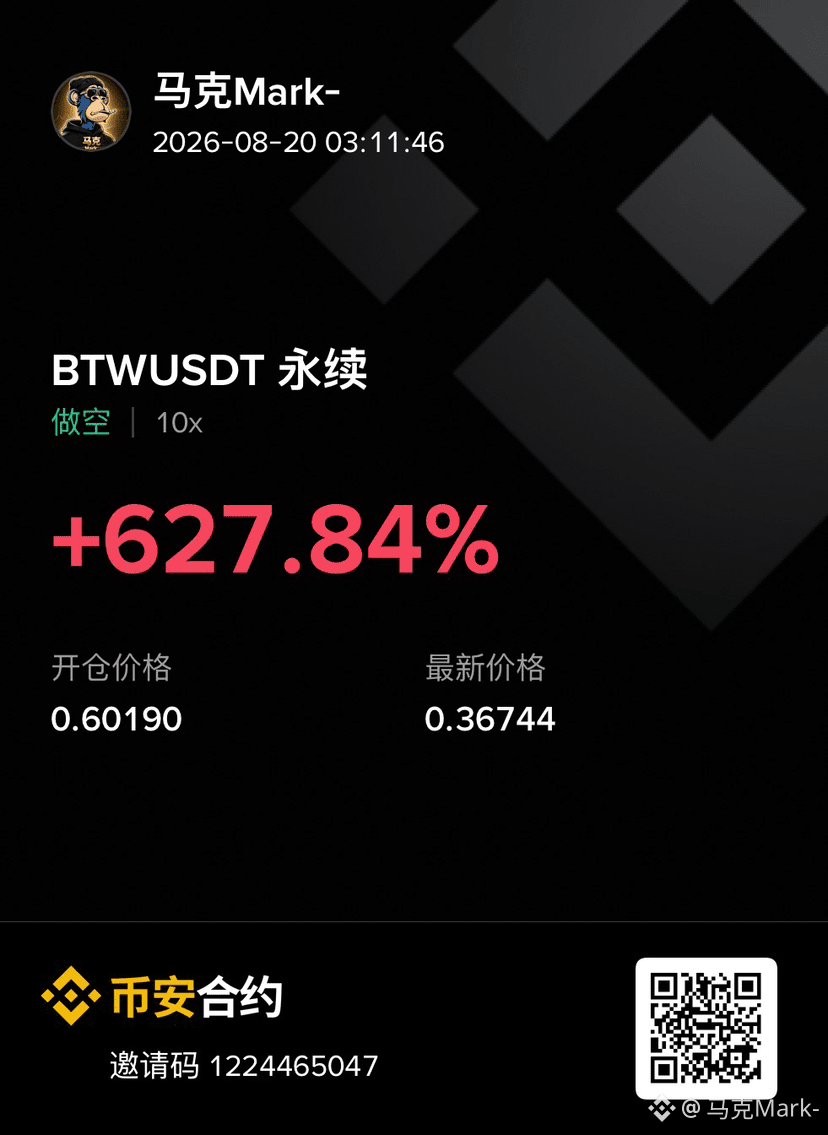
Seeing this screenshot of a short order for $BTW , I really can’t help but want to talk to everyone.
Back then, around 0.60, I could see the order book had heavy sell pressure, and the volume couldn’t keep up either—it was clear it just couldn’t push higher. At that point, many people were still fantasizing about breaking through the previous high, but my intuition told me the risk was greater than the opportunity. I decisively opened a 10x short.
As everyone has seen, the price kept dropping all the way to 0.36, and my return hit +627%. This trade felt amazing to hold, but the core logic was actually very simple: follow the trend—when it’s time to be ruthless, don’t hesitate.$ETH
In the crypto world, greed and fear are separated by a single thought. Don’t always try to buy at the lowest and sell at the highest. If you can make your move in places with higher certainty, you’ll already outperform 80% of people. After taking profit on this trade, I pulled out—leave a little meat for others. Cashing in and staying safe is the real way to go.$BTC #美国柴油利润率突破100美元创纪录
Seeing this screenshot of a short order for $BTW , I really can’t help but want to talk to everyone.
Back then, around 0.60, I could see the order book had heavy sell pressure, and the volume couldn’t keep up either—it was clear it just couldn’t push higher. At that point, many people were still fantasizing about breaking through the previous high, but my intuition told me the risk was greater than the opportunity. I decisively opened a 10x short.
As everyone has seen, the price kept dropping all the way to 0.36, and my return hit +627%. This trade felt amazing to hold, but the core logic was actually very simple: follow the trend—when it’s time to be ruthless, don’t hesitate.$ETH
In the crypto world, greed and fear are separated by a single thought. Don’t always try to buy at the lowest and sell at the highest. If you can make your move in places with higher certainty, you’ll already outperform 80% of people. After taking profit on this trade, I pulled out—leave a little meat for others. Cashing in and staying safe is the real way to go.$BTC #美国柴油利润率突破100美元创纪录

点击进入马克粉丝策略新基地
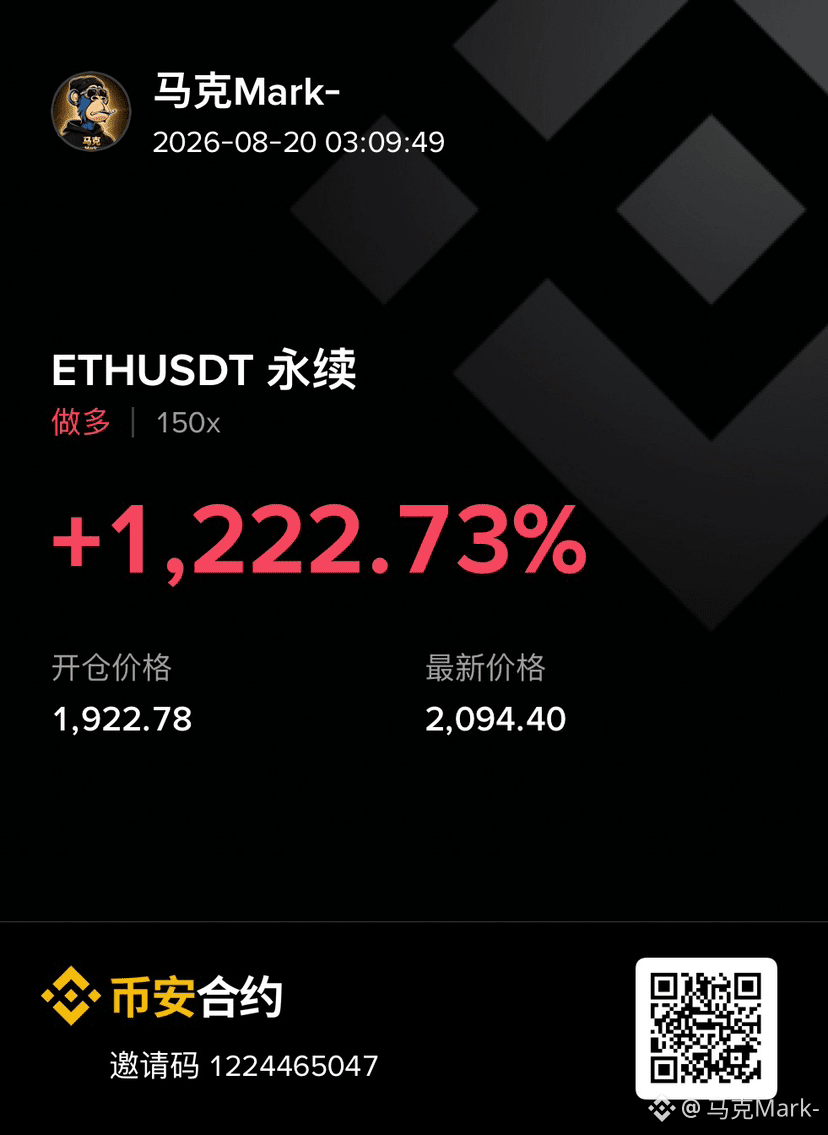
Last night, $ETH repeatedly rubbed around the 1920 area. Watching the order book and that slow, grindy look, I felt like a breakout was coming. At the time, market sentiment was really low—lots of people were bearish—but I looked at the volume and knew something was off. The main force was clearly accumulating.
While the market was pulling back and stabilizing, I decisively opened a long position around 1922. If I’m bullish, I go all in—up to 150x leverage. To catch fish, you have to catch the midsection; you can’t be timid with opportunities like this.
Sure enough, the price surged and broke up past 2094 in one shot! The ROI on this trade hit 1222%, and I made a killing and exited. In crypto, when you’re right on direction and stacked with high leverage, returns can be this brutal. Follow the trend—when it’s time to act, act. Locking in profits is the real skill. $BTC #Coldcard盗窃案调查取得进展
Last night, $ETH repeatedly rubbed around the 1920 area. Watching the order book and that slow, grindy look, I felt like a breakout was coming. At the time, market sentiment was really low—lots of people were bearish—but I looked at the volume and knew something was off. The main force was clearly accumulating.
While the market was pulling back and stabilizing, I decisively opened a long position around 1922. If I’m bullish, I go all in—up to 150x leverage. To catch fish, you have to catch the midsection; you can’t be timid with opportunities like this.
Sure enough, the price surged and broke up past 2094 in one shot! The ROI on this trade hit 1222%, and I made a killing and exited. In crypto, when you’re right on direction and stacked with high leverage, returns can be this brutal. Follow the trend—when it’s time to act, act. Locking in profits is the real skill. $BTC #Coldcard盗窃案调查取得进展
约1.18亿美元BTC仍在攻击者地址,Coldcard第一波攻击者身份可能已被执法部门掌握
July 2026 Coldcard hardware wallet large-scale stolen-coin incident investigation has made progress. In the first wave of attacks, about 1,082.65 BTC, worth about $118 million, is still kept in the attackers’ addresses. The investigation found that the attacker used a paid account from a certain blockchain data service provider; its internal logs closely match the stolen-coin attack pattern, and the related leads have been handed over to law enforcement. Galaxy Research analyst Alex Thorn said that the first-wave attacker’s identity may have been identified by law enforcement. Subsequent waves of attacks totaled about 2,000 BTC stolen; the second wave accounted for about 76 BTC, with an operation pattern similar to the first wave, possibly the same actor. #宇树科技上市首日涨629%
July 2026 Coldcard hardware wallet large-scale stolen-coin incident investigation has made progress. In the first wave of attacks, about 1,082.65 BTC, worth about $118 million, is still kept in the attackers’ addresses. The investigation found that the attacker used a paid account from a certain blockchain data service provider; its internal logs closely match the stolen-coin attack pattern, and the related leads have been handed over to law enforcement. Galaxy Research analyst Alex Thorn said that the first-wave attacker’s identity may have been identified by law enforcement. Subsequent waves of attacks totaled about 2,000 BTC stolen; the second wave accounted for about 76 BTC, with an operation pattern similar to the first wave, possibly the same actor. #宇树科技上市首日涨629%
Bitcoin spot ETF saw total net outflows of $49.7544 million yesterday, continuing net outflows for 4 days
PANews, July 29. According to SoSoValue data, yesterday (July 28, U.S. Eastern Time) Bitcoin spot ETFs recorded total net outflows of $49.7544 million. The Bitcoin spot ETF with the highest net inflow on a single day was Grayscale’s Bitcoin Mini Trust ETF BTC, with a net inflow of $5.0796 million. As of now, BTC’s historical total net inflows have reached $2.654 billion. The Bitcoin spot ETF with the highest net outflow on a single day yesterday was Blackrock’s ETF IBIT, with net outflows of $54.8340 million. As of now, IBIT’s historical total net inflows have reached $60.331 billion. As of the time of writing, Bitcoin spot ETFs’ total net asset value was $77.234 billion, and the ETF net asset ratio (the proportion of ETF market value relative to Bitcoin’s total market value) was 6.02%. The historical cumulative net inflows have reached $51.325 billion.$BTC $ETH
PANews, July 29. According to SoSoValue data, yesterday (July 28, U.S. Eastern Time) Bitcoin spot ETFs recorded total net outflows of $49.7544 million. The Bitcoin spot ETF with the highest net inflow on a single day was Grayscale’s Bitcoin Mini Trust ETF BTC, with a net inflow of $5.0796 million. As of now, BTC’s historical total net inflows have reached $2.654 billion. The Bitcoin spot ETF with the highest net outflow on a single day yesterday was Blackrock’s ETF IBIT, with net outflows of $54.8340 million. As of now, IBIT’s historical total net inflows have reached $60.331 billion. As of the time of writing, Bitcoin spot ETFs’ total net asset value was $77.234 billion, and the ETF net asset ratio (the proportion of ETF market value relative to Bitcoin’s total market value) was 6.02%. The historical cumulative net inflows have reached $51.325 billion.$BTC $ETH
The Federal Reserve is scheduled to release its interest rate decision at 2:00 a.m. Beijing time on Thursday, and Fed Chair Wash is expected—as usual—to hold a press conference at 2:30 a.m. Facing what industry insiders call the Fed’s most difficult-to-predict decision, JPMorgan’s U.S. market intelligence trading desk, in its latest research note, expects the Fed to keep rates unchanged. It also anticipates at least two dissenting votes from hawkish members—including dissents from Hammack and Logan.
Lighthouse lays out five scenario forecasts for the Fed’s decision and the potential path of the S&P 500 (ranked by probability from high to low):
① The Fed keeps rates unchanged while taking a hawkish stance (probability 50%)—the S&P 500 is expected to trade today within a range of up 0.25% to down 0.5%. This is the current baseline forecast: the Fed will keep rates unchanged given the strength of the labor market and economic growth, but will remain alert to inflation—recent energy price trends suggest that another round of inflation may be on the way.
② The Fed keeps rates unchanged while taking a dovish stance (probability 28%)—the S&P 500 is likely to rise 0.5%–1%. This would be the most favorable outcome for equities.
③ The Fed hikes rates by 25 bps (probability 20%)—the S&P 500 is expected to fall 1.5%–2%, and the Nasdaq 100’s decline could be about double. Driven by the market shifting away from momentum stocks/AI-related names, the Russell 2000 index may show relatively better resilience in this selloff.
④ The Fed hikes rates by 50 bps (probability 1%)—the S&P 500 falls 2%–4%. If the Fed also releases information indicating that this hike is only a temporary measure to address traditional inflation indicators and should not be interpreted as the start of a series of hikes, the downside may be limited.
⑤ The Fed cuts rates (probability 1%)—the S&P 500 trades within a range of up 1% to down 1.5%. The market’s potential negative outcome is due to the possibility that investors view this as a sign of the Fed losing independence, which would lead to higher yields, a higher breakeven inflation rate, rising volatility, and a weaker stock market. #美联储利率决议即将公布
Lighthouse lays out five scenario forecasts for the Fed’s decision and the potential path of the S&P 500 (ranked by probability from high to low):
① The Fed keeps rates unchanged while taking a hawkish stance (probability 50%)—the S&P 500 is expected to trade today within a range of up 0.25% to down 0.5%. This is the current baseline forecast: the Fed will keep rates unchanged given the strength of the labor market and economic growth, but will remain alert to inflation—recent energy price trends suggest that another round of inflation may be on the way.
② The Fed keeps rates unchanged while taking a dovish stance (probability 28%)—the S&P 500 is likely to rise 0.5%–1%. This would be the most favorable outcome for equities.
③ The Fed hikes rates by 25 bps (probability 20%)—the S&P 500 is expected to fall 1.5%–2%, and the Nasdaq 100’s decline could be about double. Driven by the market shifting away from momentum stocks/AI-related names, the Russell 2000 index may show relatively better resilience in this selloff.
④ The Fed hikes rates by 50 bps (probability 1%)—the S&P 500 falls 2%–4%. If the Fed also releases information indicating that this hike is only a temporary measure to address traditional inflation indicators and should not be interpreted as the start of a series of hikes, the downside may be limited.
⑤ The Fed cuts rates (probability 1%)—the S&P 500 trades within a range of up 1% to down 1.5%. The market’s potential negative outcome is due to the possibility that investors view this as a sign of the Fed losing independence, which would lead to higher yields, a higher breakeven inflation rate, rising volatility, and a weaker stock market. #美联储利率决议即将公布
QQQETF+0.61%
SPYETF+0.26%
Federal Reserve July Decision: Don’t bet on the outcome—watch the wording
At 2:00 a.m. Thursday, the Fed will release its interest rate decision.
Cut rates or not?
The market has basically priced it in:
Most likely, it will hold steady.
What truly drives the move isn’t the rate number.
It’s how a few words in the statement are changed.
There are three areas that matter most:
1. How inflation is described
If it still says: inflation remains elevated → Markets interpret it as hawkish, and rate-cut expectations keep waiting.
If it changes to: inflation is making further progress → More dovish; the market will start pricing a September cut early.
2. How employment is described
If it stays: the labor market remains strong → Neutral.
If it becomes: the labor market is moving toward balance → Markets may read this as the Fed starting to focus on employment risk.
3. The risk of the dual mandate
The key question now is: what does the Fed worry about more—inflation, or jobs?
If it emphasizes inflation risks: → Hawkish.
If it emphasizes pressure on employment: → Dovish.
My personal view:
The statement may include a slightly more dovish adjustment.
But Powell’s remarks are unlikely to directly confirm a September rate cut.
More likely, it will be: leave room in the text, and keep a cautious tone in public comments.
$BTC How should it be viewed?
If dovish: pressure on the U.S. dollar and Treasury yields may ease. Risk assets could rebound.
BTC focus: the 66–67K zone.
If neutral: the market will keep waiting for data.
BTC likely: digesting via range trading.
If unexpectedly hawkish: risk assets may come under pressure first.
BTC key level to watch: support around 63K.
Don’t pick sides too early.
Wait for the 2:00 a.m. statement and see how the first wave of money votes.
At 2:30, after Powell speaks, watch whether the market changes direction.
What the Fed meeting fears most isn’t the outcome.
It’s:
The market getting the direction wrong too early. #Fed to release interest rate decision early Thursday #美联储利率决议即将公布
At 2:00 a.m. Thursday, the Fed will release its interest rate decision.
Cut rates or not?
The market has basically priced it in:
Most likely, it will hold steady.
What truly drives the move isn’t the rate number.
It’s how a few words in the statement are changed.
There are three areas that matter most:
1. How inflation is described
If it still says: inflation remains elevated → Markets interpret it as hawkish, and rate-cut expectations keep waiting.
If it changes to: inflation is making further progress → More dovish; the market will start pricing a September cut early.
2. How employment is described
If it stays: the labor market remains strong → Neutral.
If it becomes: the labor market is moving toward balance → Markets may read this as the Fed starting to focus on employment risk.
3. The risk of the dual mandate
The key question now is: what does the Fed worry about more—inflation, or jobs?
If it emphasizes inflation risks: → Hawkish.
If it emphasizes pressure on employment: → Dovish.
My personal view:
The statement may include a slightly more dovish adjustment.
But Powell’s remarks are unlikely to directly confirm a September rate cut.
More likely, it will be: leave room in the text, and keep a cautious tone in public comments.
$BTC How should it be viewed?
If dovish: pressure on the U.S. dollar and Treasury yields may ease. Risk assets could rebound.
BTC focus: the 66–67K zone.
If neutral: the market will keep waiting for data.
BTC likely: digesting via range trading.
If unexpectedly hawkish: risk assets may come under pressure first.
BTC key level to watch: support around 63K.
Don’t pick sides too early.
Wait for the 2:00 a.m. statement and see how the first wave of money votes.
At 2:30, after Powell speaks, watch whether the market changes direction.
What the Fed meeting fears most isn’t the outcome.
It’s:
The market getting the direction wrong too early. #Fed to release interest rate decision early Thursday #美联储利率决议即将公布
Many people haven’t experienced a bull market before, and their perspective isn’t big enough. Today, I’m here to open your mindset. If we come into this circle, it’s to make gains of dozens of times, even hundreds of times—not to run off after a profit of just a few percentage points.
Here are a few examples to make you realize how fast and concentrated an upward move can be:
CHZ: From February to March 2021, it grew 30x in one month
BNB: On Feb 20, 2021, it grew 8x within 20 days
DOT: From January to February 2021, it grew 8x in two months
SUSHI: In January 2021, it grew 6x within one month
AAVE: In January 2021, it grew 6x within one month
HOT: From February to March 2021, it grew 35x in two months
JOE: In August 2021, it grew 60x within two weeks
In January 2021, DOGE jumped nearly 10x in a single day—it was already a billion-dollar token back then
THETA’s market cap rose from $1B to $12B within three months
RUNE’s market cap increased from $200M to nearly $5B within five months
FIL once reached an FDV close to $400B
ICP had an FDV of $250B at launch
AXS’s market cap rose from $200M to $10B in 5 months; its FDV peaked at $43B
GALA’s market cap reached $5.4B at the peak of 2021, while at the beginning of the year the project’s market cap was only $5M
TEL’s market cap rose from $10M to $30B (300x) in 5 months
If this is your first market cycle, you’re likely to enter the market too late, causing your investment to skyrocket on irrational valuations without realizing profits in time—and then you’ll keep oscillating among many different gains. But if you’ve read this article, chances are you’ve already experienced the previous cycle and made it through the mid-point adjustments during the particularly brutal bull market of 2025. In a bear market, you have to stay alert for every upward move and be ready to short whenever some altcoin starts rising due to some catalyst. That kind of behavior gets rewarded. But in a bull market, everything changes completely: the coin rallies much higher than you think it will. You have to be prepared to benefit from it.
$BTC $ETH
Here are a few examples to make you realize how fast and concentrated an upward move can be:
CHZ: From February to March 2021, it grew 30x in one month
BNB: On Feb 20, 2021, it grew 8x within 20 days
DOT: From January to February 2021, it grew 8x in two months
SUSHI: In January 2021, it grew 6x within one month
AAVE: In January 2021, it grew 6x within one month
HOT: From February to March 2021, it grew 35x in two months
JOE: In August 2021, it grew 60x within two weeks
In January 2021, DOGE jumped nearly 10x in a single day—it was already a billion-dollar token back then
THETA’s market cap rose from $1B to $12B within three months
RUNE’s market cap increased from $200M to nearly $5B within five months
FIL once reached an FDV close to $400B
ICP had an FDV of $250B at launch
AXS’s market cap rose from $200M to $10B in 5 months; its FDV peaked at $43B
GALA’s market cap reached $5.4B at the peak of 2021, while at the beginning of the year the project’s market cap was only $5M
TEL’s market cap rose from $10M to $30B (300x) in 5 months
If this is your first market cycle, you’re likely to enter the market too late, causing your investment to skyrocket on irrational valuations without realizing profits in time—and then you’ll keep oscillating among many different gains. But if you’ve read this article, chances are you’ve already experienced the previous cycle and made it through the mid-point adjustments during the particularly brutal bull market of 2025. In a bear market, you have to stay alert for every upward move and be ready to short whenever some altcoin starts rising due to some catalyst. That kind of behavior gets rewarded. But in a bull market, everything changes completely: the coin rallies much higher than you think it will. You have to be prepared to benefit from it.
$BTC $ETH
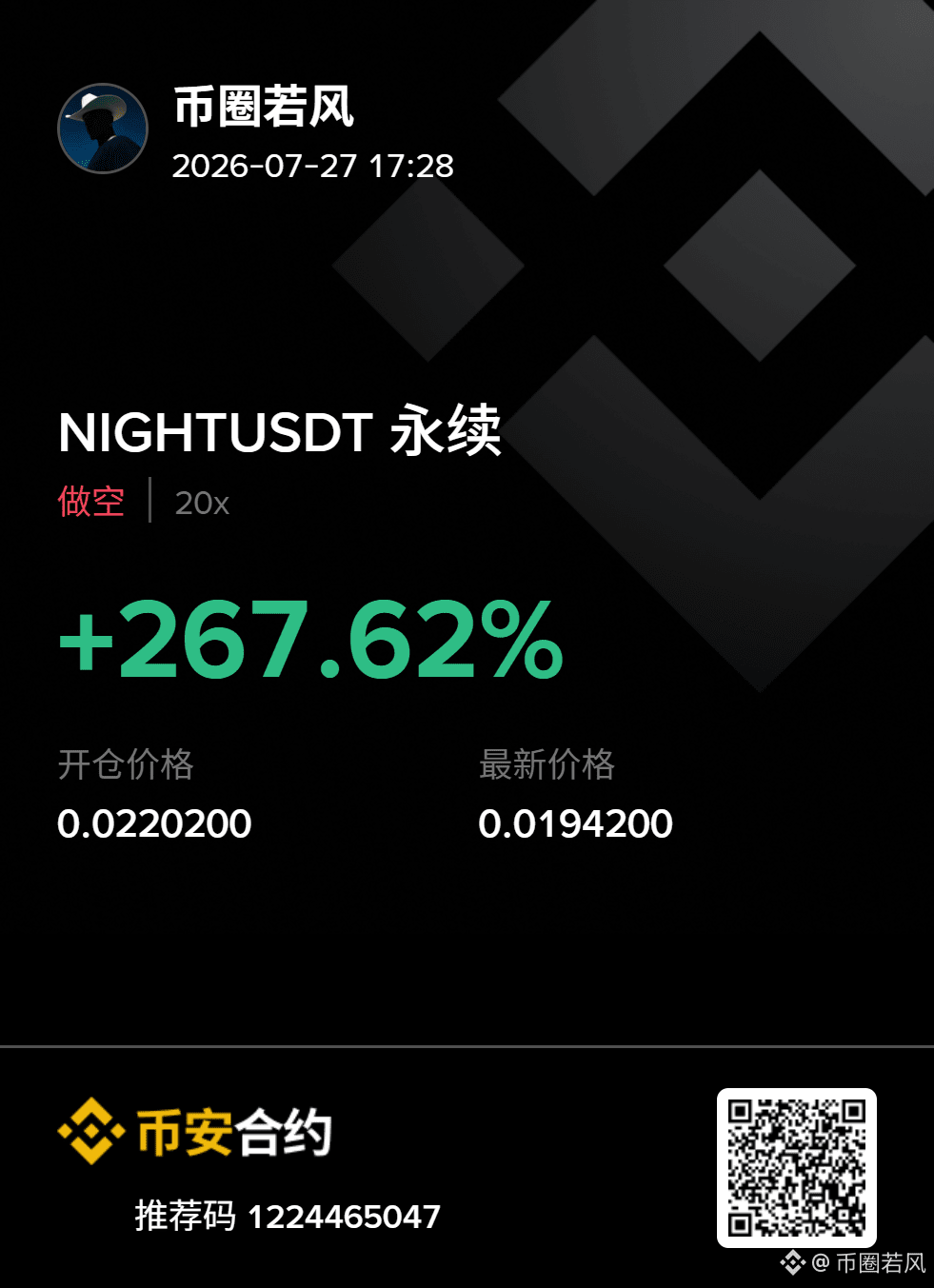
This time it isn’t a sudden reversal of face—it's been writing its fatigue on the chart all along. Yesterday afternoon when I was watching the market, $NIGHT kept grinding around the high range, repeatedly pushing higher like it was short by the last breath. Volume never kept up; even when it pushed up, nobody was willing to take it. The more I looked, the more it looked like a breakdown after a “liquidity grab” (bait) and subsequent loosening.
I placed the SHORT around 0.0220200. This wasn’t an impulse triggered by seeing a single bearish candle; it was based on first spotting overhead suppression, then waiting for the rebound strength to keep weakening. The feedback provided in this NIGHT segment was very direct: the current price has already come back to 0.0194200. The profit from this round of short trades shows +267.62%—the timing was spot on.
Big gains first go into the pocket: close 80% first, and keep the remaining 20% as a protective position near the entry cost. If there’s still room for further downside, just hold along with it. And if there’s a rebound, I won’t let the profit become uncomfortable. Position management matters more than emotions.
The market is something you wait for, and profits are something you hold onto. For friends who haven’t boarded yet, take my word for it: this is not the time to rush. Don’t chase into a spot that’s already moved past just because you see the outcome—wait for the next shot to come, which will feel even more comfortable.
$BTC $ETH
I placed the SHORT around 0.0220200. This wasn’t an impulse triggered by seeing a single bearish candle; it was based on first spotting overhead suppression, then waiting for the rebound strength to keep weakening. The feedback provided in this NIGHT segment was very direct: the current price has already come back to 0.0194200. The profit from this round of short trades shows +267.62%—the timing was spot on.
Big gains first go into the pocket: close 80% first, and keep the remaining 20% as a protective position near the entry cost. If there’s still room for further downside, just hold along with it. And if there’s a rebound, I won’t let the profit become uncomfortable. Position management matters more than emotions.
The market is something you wait for, and profits are something you hold onto. For friends who haven’t boarded yet, take my word for it: this is not the time to rush. Don’t chase into a spot that’s already moved past just because you see the outcome—wait for the next shot to come, which will feel even more comfortable.
$BTC $ETH


Log in to explore more content