
ParvezMayar
10.6k Posts

ParvezMayar
 Square Verified+
Crypto enthusiast | Exploring, sharing, and earning | Let’s grow together!🤝 | X @Next_GemHunter

Traders League Badge Expert
Open Trade
Frequent Trader
2.9 Years
333 Following
45.1K+ Followers
85.3K+ Liked
1 Badges
Posts
Portfolio
All
Quotes
Videos
Live
PINNED
Verified
GUYS... $TMX just got listed on Binance Alpha...
😁 How much TMX did you guys get from #Creatorpad ?
#TMX
#BinanceAlpha
$VELVET
$TUT
#Trending
#TGE
😁 How much TMX did you guys get from #Creatorpad ?
#TMX
#BinanceAlpha
$VELVET
$TUT
#Trending
#TGE
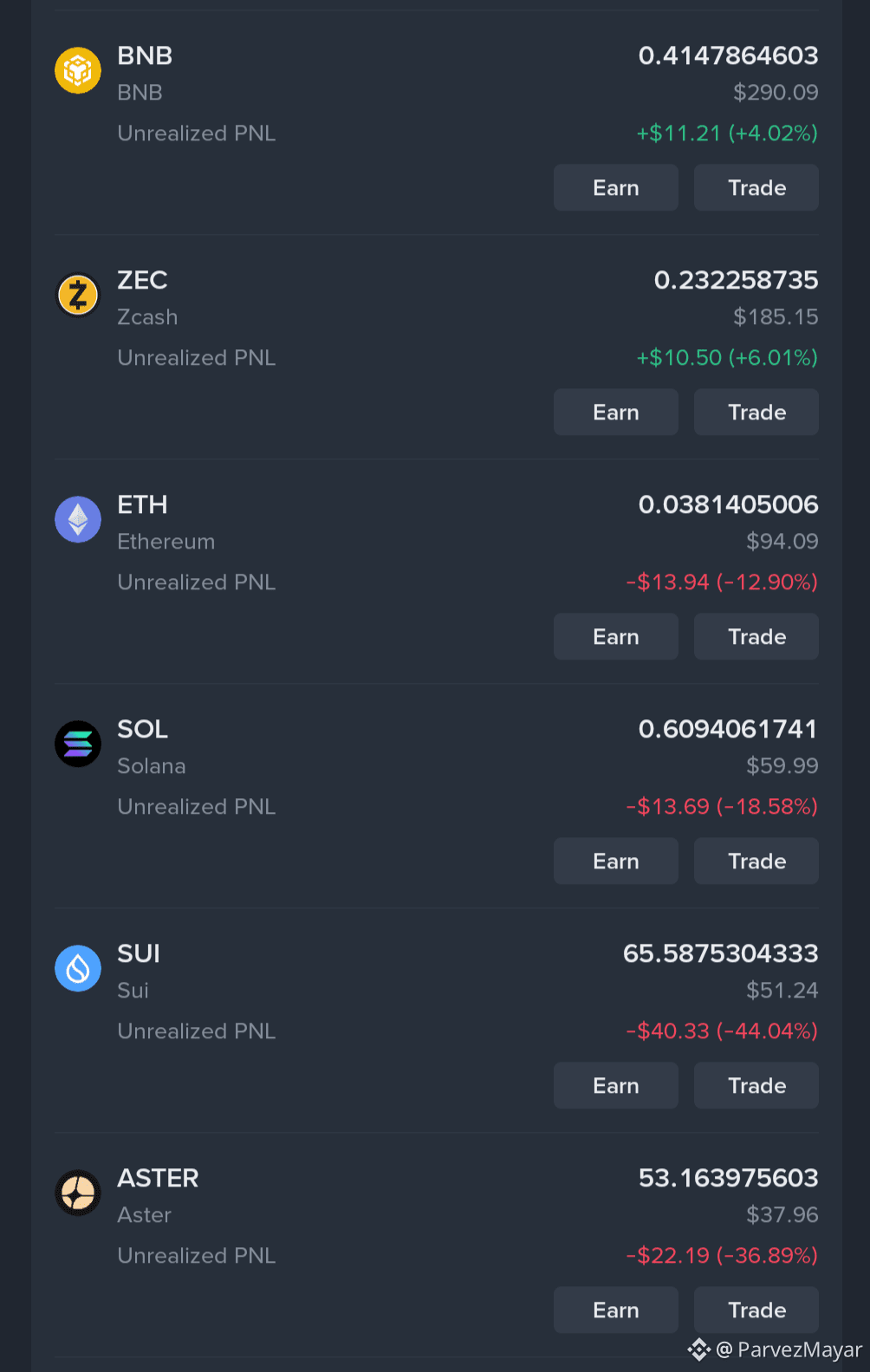
Guys... I am going to BUY $ZEC ... Now Don't stop me..
I will buy each and every dip on ZEC 🔥
LET'S GOOO 💪🏻... TARGET $1500 😁
I will buy each and every dip on ZEC 🔥
LET'S GOOO 💪🏻... TARGET $1500 😁
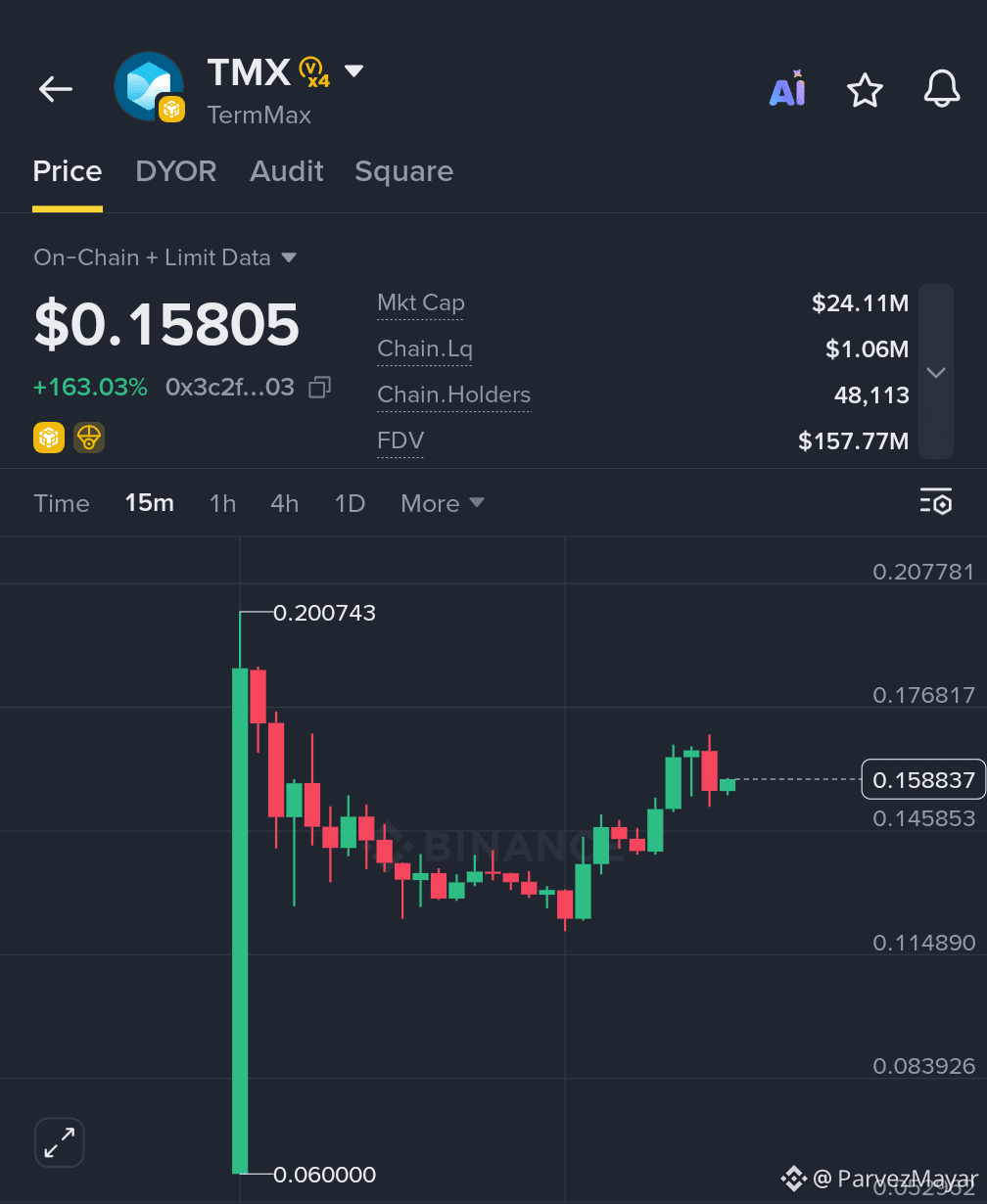
To be honest I wasn't expecting $TMX to be this resilient after launch...
Holding above $0.158 even after 6 hours of launch... after too many community airdrop distributions 🔥
$TMX has passed the initial tough phase.. Let's see if it can hold for a long term and proves to be a real Gem instead of usual launch and fade type thing. 😁
Holding above $0.158 even after 6 hours of launch... after too many community airdrop distributions 🔥
$TMX has passed the initial tough phase.. Let's see if it can hold for a long term and proves to be a real Gem instead of usual launch and fade type thing. 😁
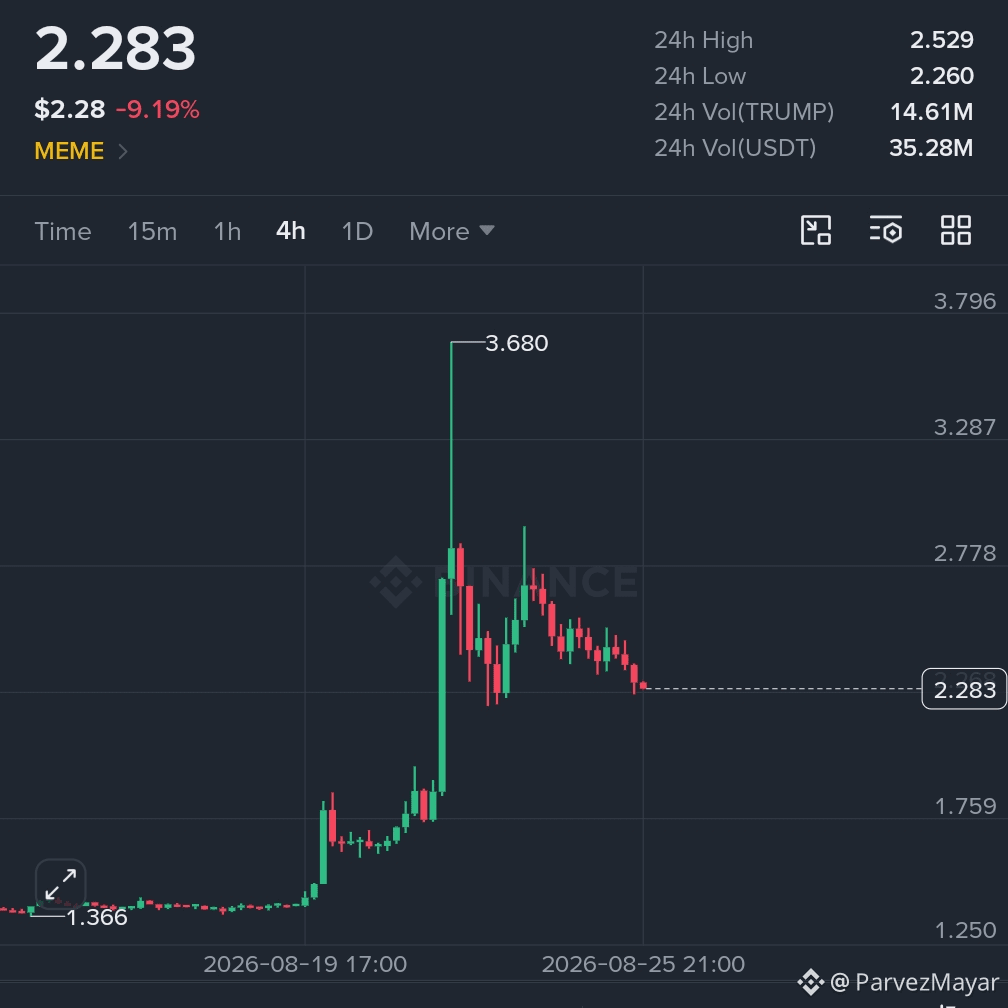
🤔 What to expect next from $TRUMP ?
Because right now the chart is asking a pretty uncomfortable question...
Was that whole move just manipulation? 👀
$TRUMP ripped from roughly $1.36 to $3.68, then immediately failed to hold the excitement.
Now price is back around $2.28, down 9% on the day, and the 4H structure has turned into lower highs + slow bleed.
That’s the part I don’t like.
The pump was violent.
The follow-through wasn’t.
If bulls want to prove this was more than a liquidity event, they need to reclaim $2.45-$2.55 first, then push back into $2.70-$2.80.
Below $2.20?
I’d start watching $2.00-$1.90 pretty closely.
The weird part is volume is already cooling hard too.
So yeah... maybe this was genuine momentum.
Maybe it was positioning, hype, thin liquidity, whatever.
But the chart doesn’t care about the story now.
It cares whether buyers come back.
And so far?
They're kinda late. 💀
$TRUMP
#ZECBreaksKeyResistanceUp75.5%
Because right now the chart is asking a pretty uncomfortable question...
Was that whole move just manipulation? 👀
$TRUMP ripped from roughly $1.36 to $3.68, then immediately failed to hold the excitement.
Now price is back around $2.28, down 9% on the day, and the 4H structure has turned into lower highs + slow bleed.
That’s the part I don’t like.
The pump was violent.
The follow-through wasn’t.
If bulls want to prove this was more than a liquidity event, they need to reclaim $2.45-$2.55 first, then push back into $2.70-$2.80.
Below $2.20?
I’d start watching $2.00-$1.90 pretty closely.
The weird part is volume is already cooling hard too.
So yeah... maybe this was genuine momentum.
Maybe it was positioning, hype, thin liquidity, whatever.
But the chart doesn’t care about the story now.
It cares whether buyers come back.
And so far?
They're kinda late. 💀
$TRUMP
#ZECBreaksKeyResistanceUp75.5%
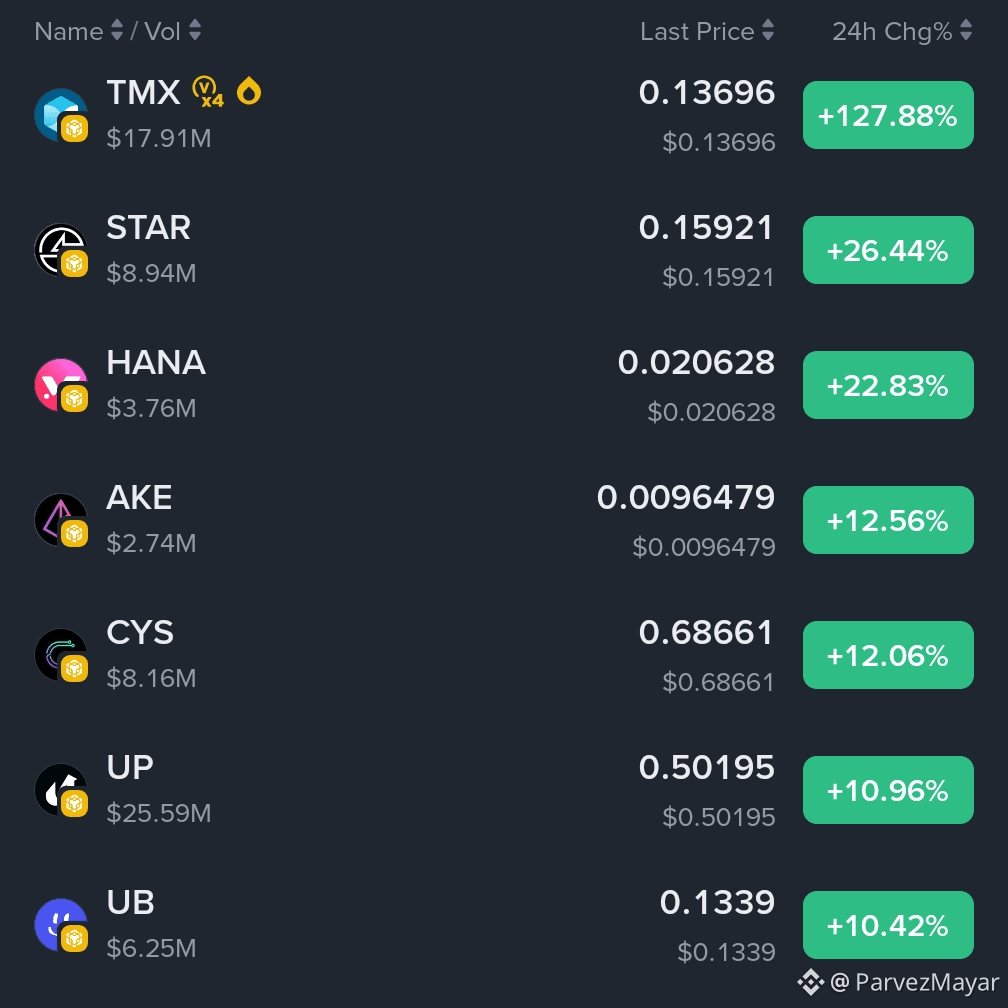
ALPHA... moving exactly like ALPHA today 😭🔥
$TMX +127% is completely stealing the board...
#STAR +26%, $HANA +22%, then $AKE / CYS / UP all comfortably green too.
This is the kind of board where attention starts rotating VERY fast.
The smart part now is not chasing every green coin...
It's finding which one can actually HOLD the move after the first excitement cools down. 👀📈
#Alpha
$TMX +127% is completely stealing the board...
#STAR +26%, $HANA +22%, then $AKE / CYS / UP all comfortably green too.
This is the kind of board where attention starts rotating VERY fast.
The smart part now is not chasing every green coin...
It's finding which one can actually HOLD the move after the first excitement cools down. 👀📈
#Alpha
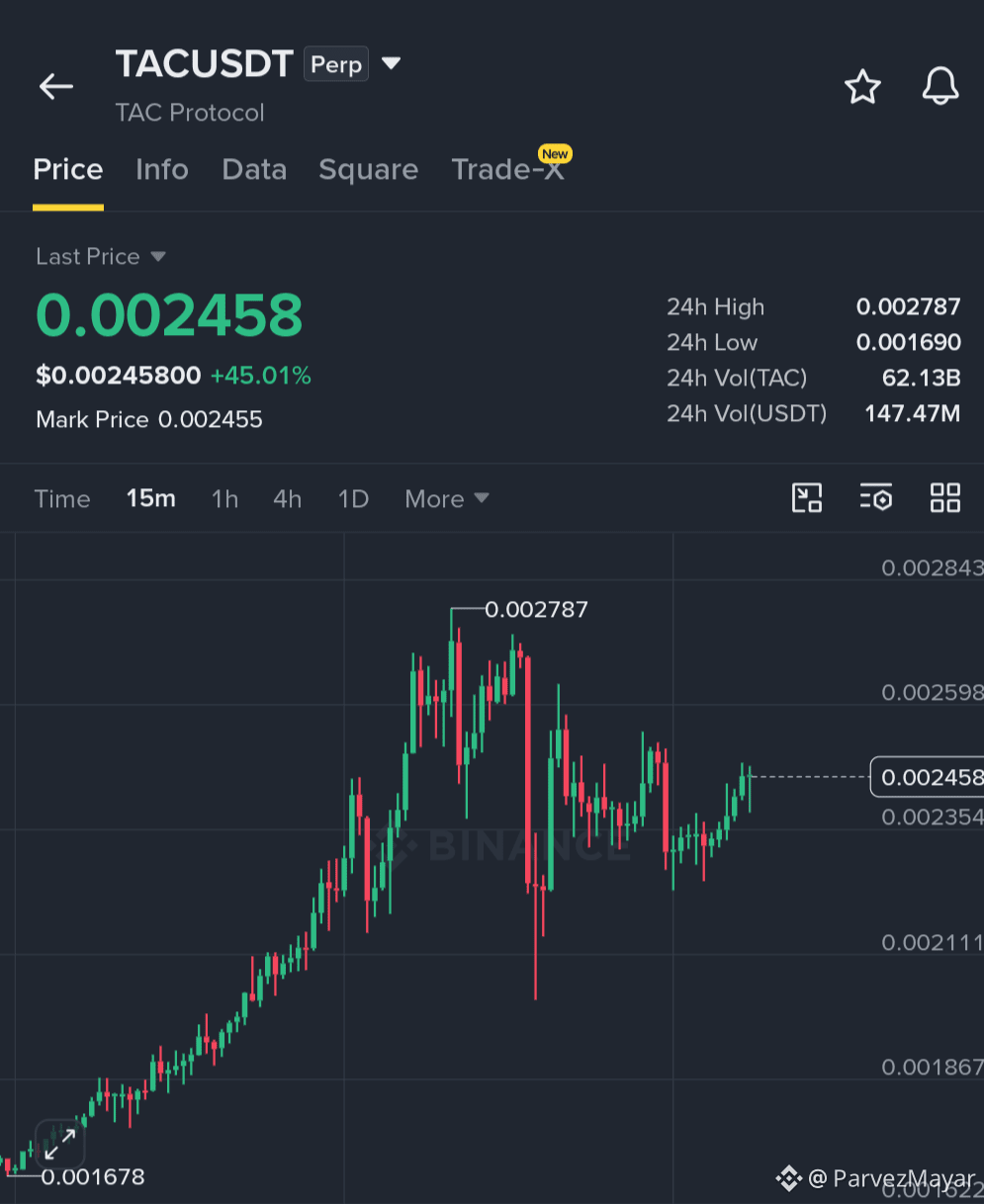
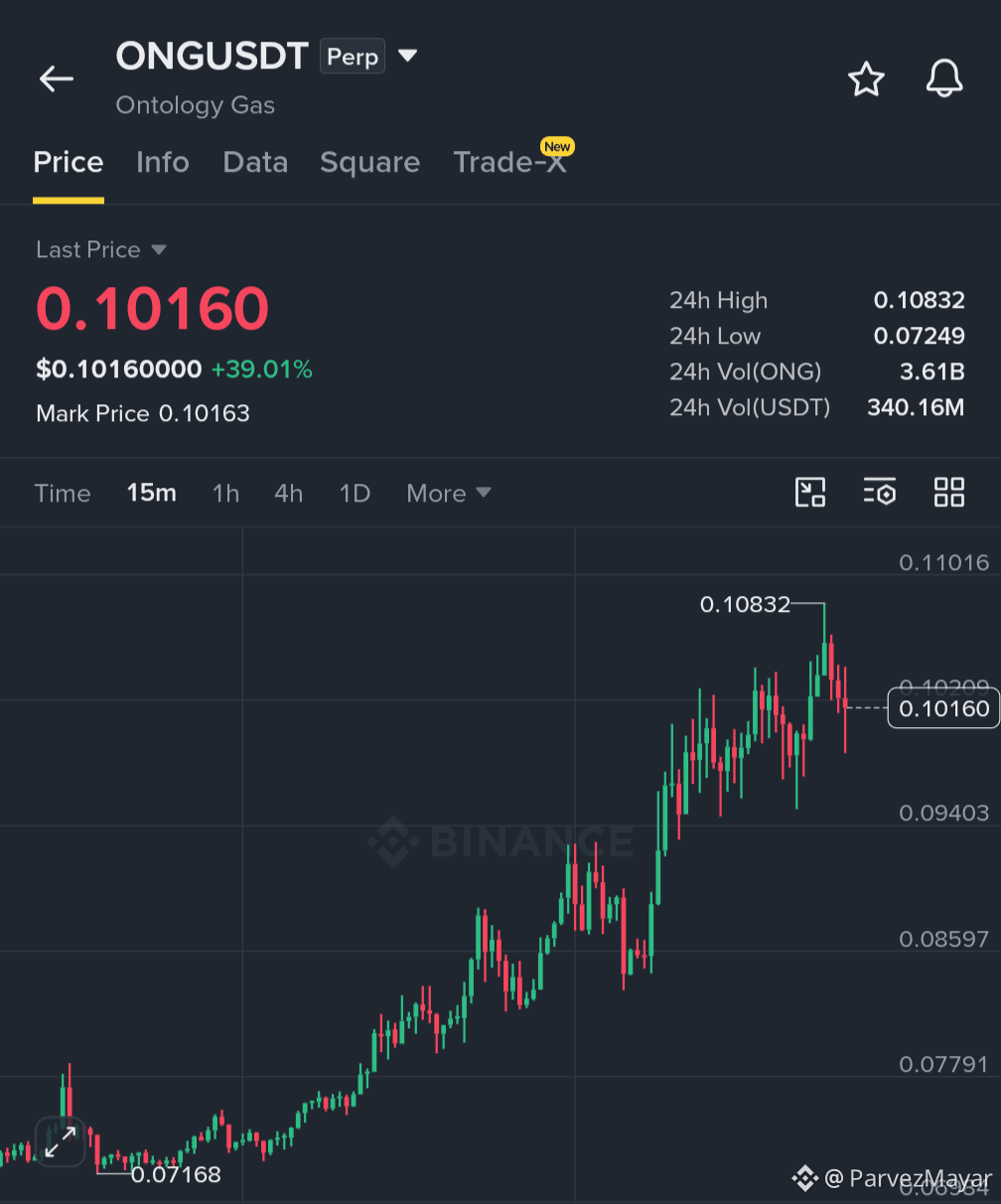
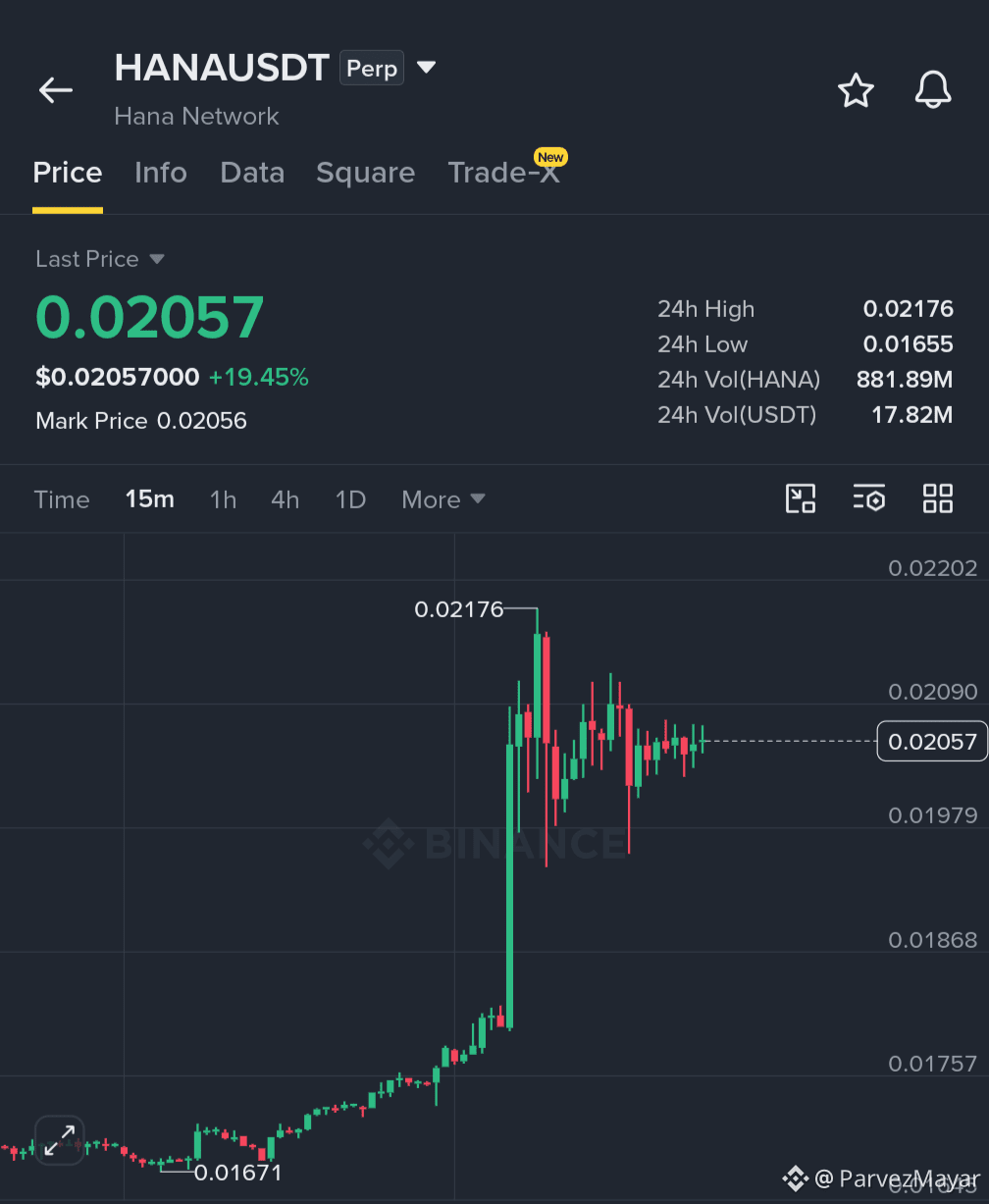
📈 Dears... three charts are quietly telling the same story right now 👀
$ONG +39%, $TAC +45%, $HANA +19%...
but the interesting part is not the green number.
All three already made the explosive move... and now instead of instantly collapsing, they are trying to HOLD higher zones.
#ONG is sitting around $0.10 after pushing to $0.108.
#TAC cooled from $0.00278 but buyers are still defending around $0.00235-$0.00245.
And #HANA is basically consolidating around $0.0205 after that vertical breakout.
This is where psychology gets funny...
People usually want to buy during the giant green candle.
But the cleaner opportunity often comes AFTER the excitement... when price settles, builds a base, and proves buyers are still there.
For now, these three are not dead after the pump.
They are trying to reload. 👀📈
$ONG +39%, $TAC +45%, $HANA +19%...
but the interesting part is not the green number.
All three already made the explosive move... and now instead of instantly collapsing, they are trying to HOLD higher zones.
#ONG is sitting around $0.10 after pushing to $0.108.
#TAC cooled from $0.00278 but buyers are still defending around $0.00235-$0.00245.
And #HANA is basically consolidating around $0.0205 after that vertical breakout.
This is where psychology gets funny...
People usually want to buy during the giant green candle.
But the cleaner opportunity often comes AFTER the excitement... when price settles, builds a base, and proves buyers are still there.
For now, these three are not dead after the pump.
They are trying to reload. 👀📈
👀 GUYS... how many times did I say BUY the $SOL dips and HOLD?
Every time the market gave weakness, people got scared.
But that dip was the opportunity.
Now look at SOL...
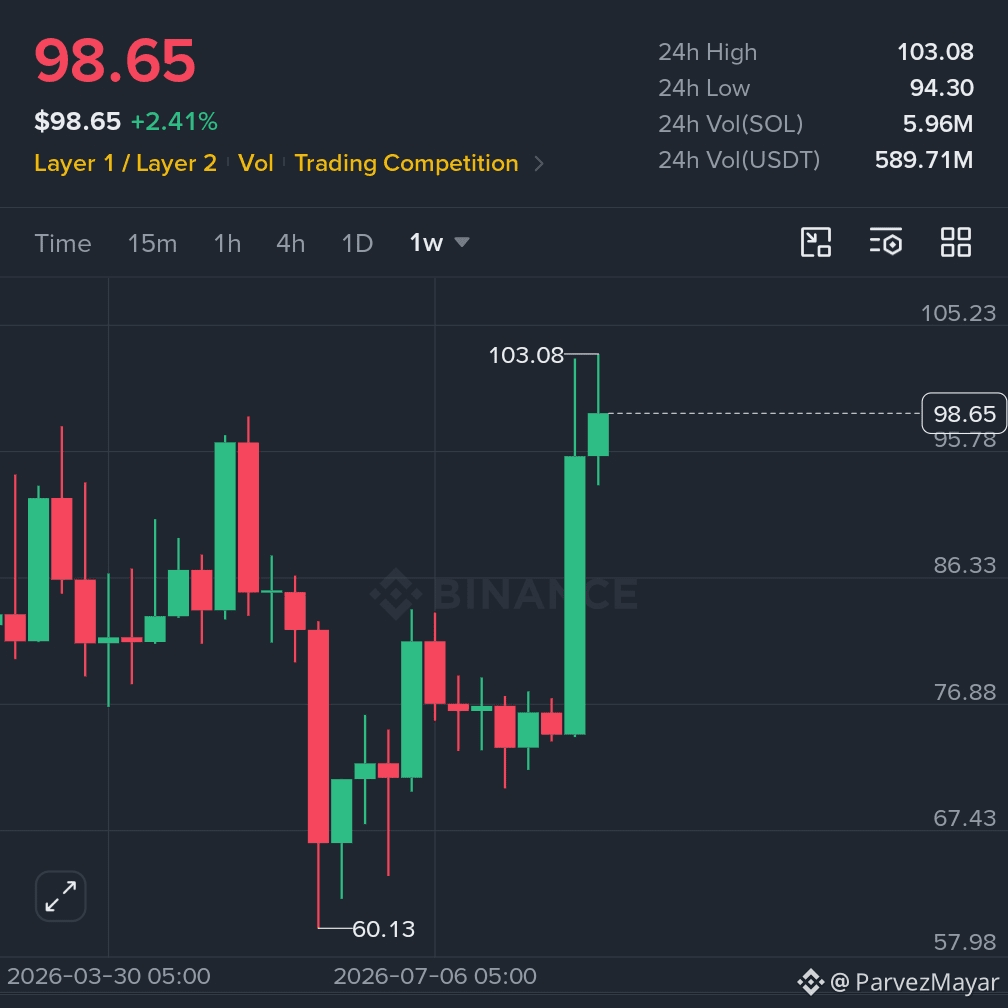
Back around $98.6, already touched $103, and the weekly chart is finally pushing into a completely different zone again.
From near $60 to $100 territory... this is exactly why panic selling strong coins usually hurts more than the dip itself.
I still think the important area now is $95-$100.
If bulls keep holding this zone, then $SOL $103 gets tested again... and above that, $110-$115 can come very quickly.
Buying the dip is easy to say when candles are green.
The real opportunity usually appears when everyone suddenly gets scared to click BUY. 👀📈
#Solana #Sol #CryptoMarket $VELVET #TrendingTopic
Every time the market gave weakness, people got scared.
But that dip was the opportunity.
Now look at SOL...
Back around $98.6, already touched $103, and the weekly chart is finally pushing into a completely different zone again.
From near $60 to $100 territory... this is exactly why panic selling strong coins usually hurts more than the dip itself.
I still think the important area now is $95-$100.
If bulls keep holding this zone, then $SOL $103 gets tested again... and above that, $110-$115 can come very quickly.
Buying the dip is easy to say when candles are green.
The real opportunity usually appears when everyone suddenly gets scared to click BUY. 👀📈
#Solana #Sol #CryptoMarket $VELVET #TrendingTopic
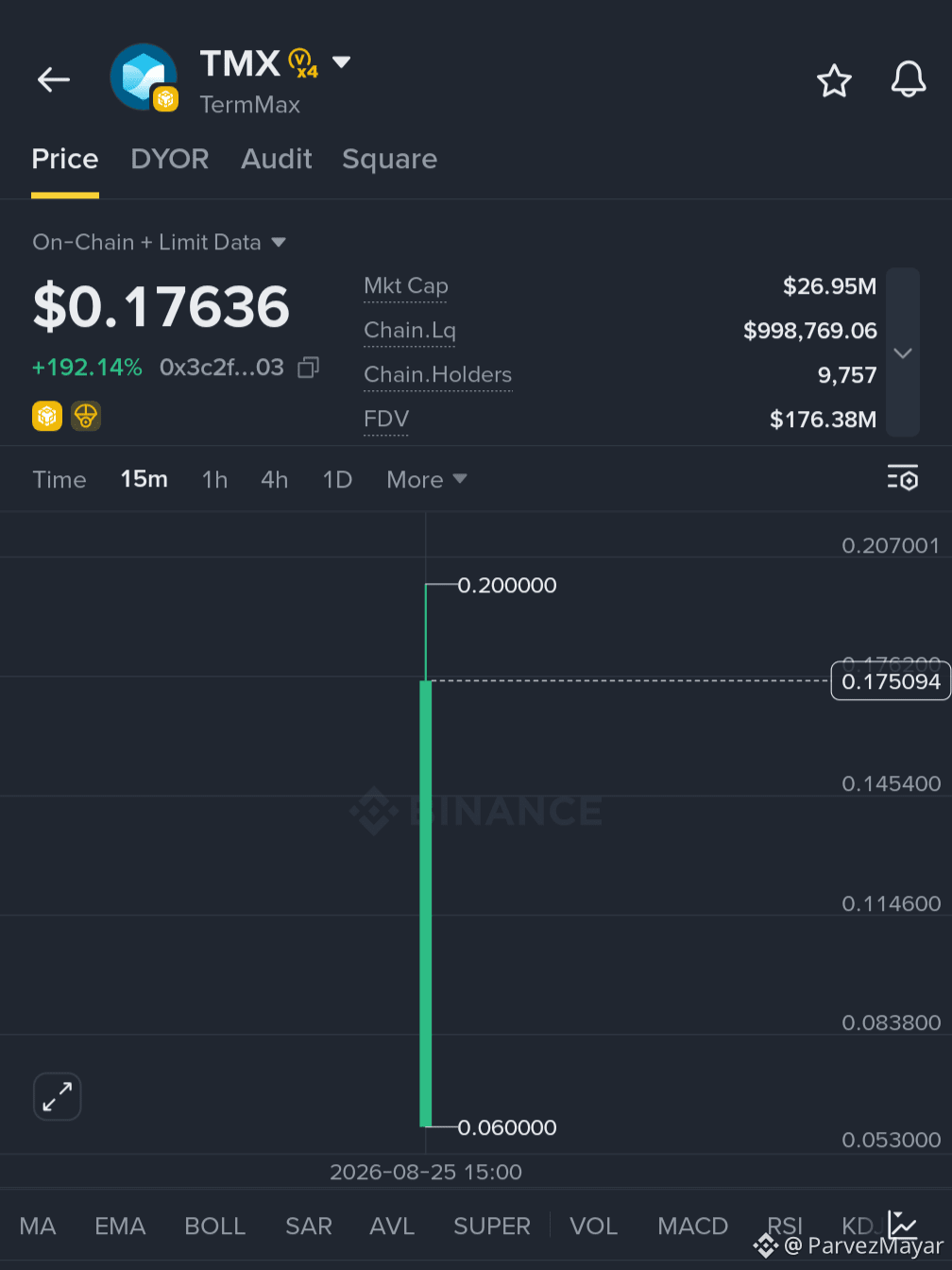
$TMX is FINALLY here 👀🔥
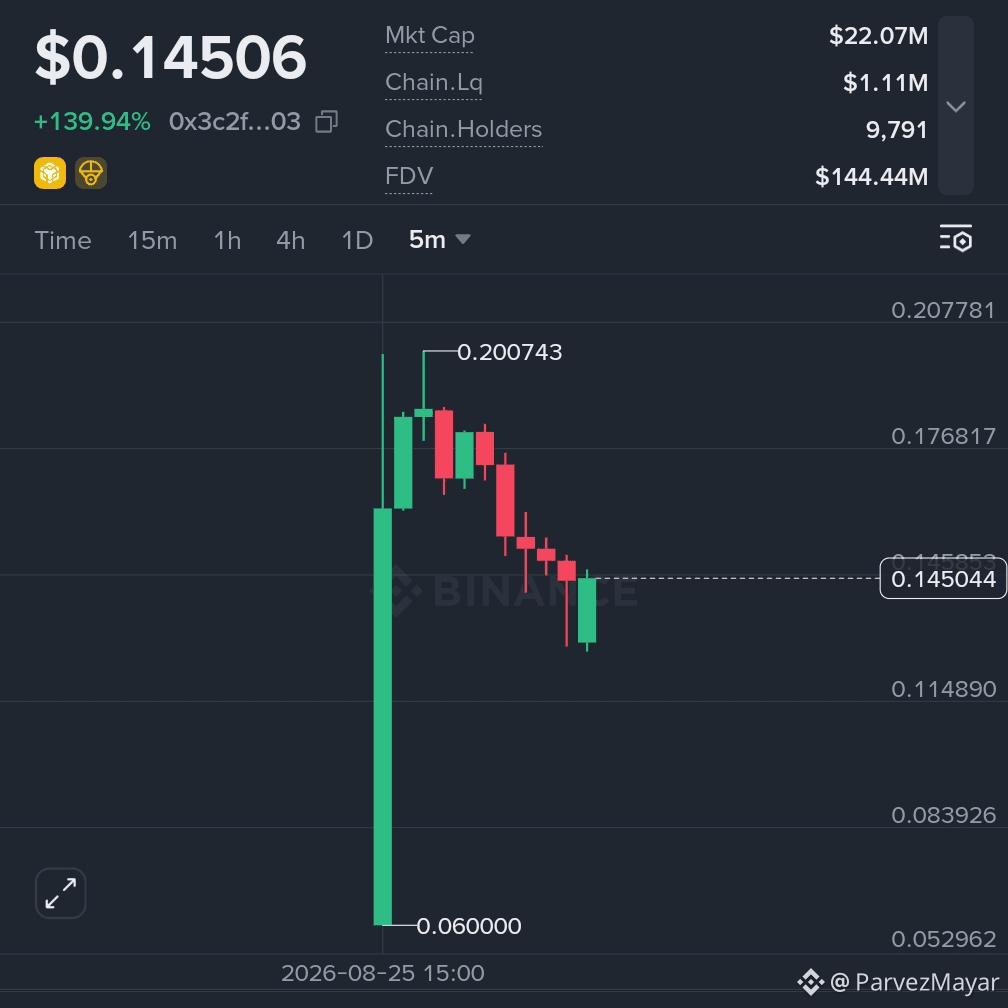
TGE today, Binance Alpha listing, and this thing already went from around $0.06 to $0.20 before cooling near $0.145.
Now comes the interesting part…
Was that just launch-day madness, or is $TMX actually going to build a proper base and become one of the stronger DeFi launches from here?
At this stage the chart is still fresh, liquidity is still adjusting, and price discovery can get messy VERY fast.
But yeah… this one $TMX is definitely worth watching closely now. 👀
#BinanceAlpha #TMX #TermMax
TGE today, Binance Alpha listing, and this thing already went from around $0.06 to $0.20 before cooling near $0.145.
Now comes the interesting part…
Was that just launch-day madness, or is $TMX actually going to build a proper base and become one of the stronger DeFi launches from here?
At this stage the chart is still fresh, liquidity is still adjusting, and price discovery can get messy VERY fast.
But yeah… this one $TMX is definitely worth watching closely now. 👀
#BinanceAlpha #TMX #TermMax
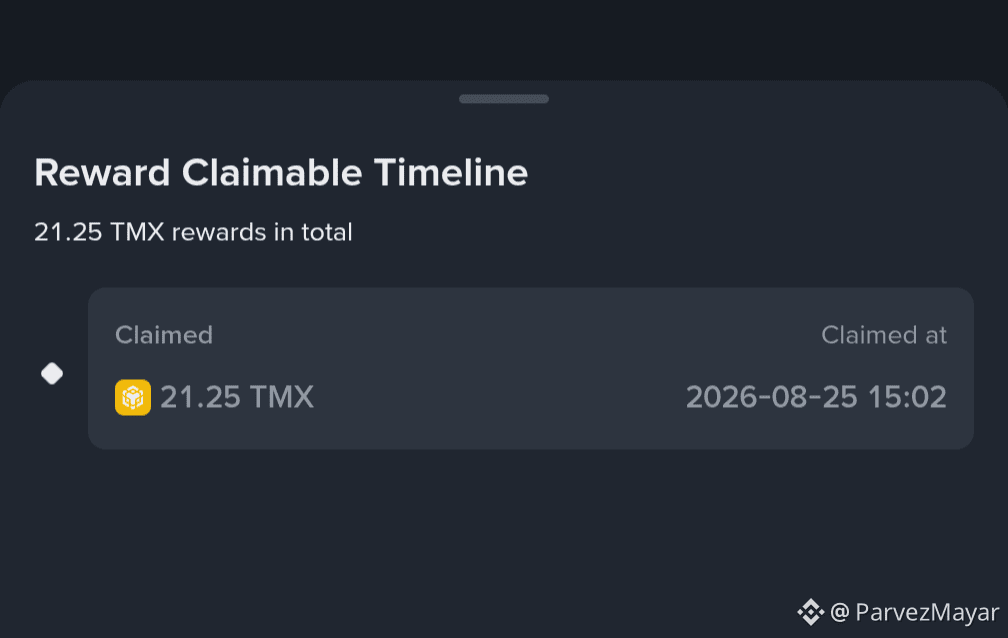
😁 Just got 21 $TMX from Binance wallet booster campaign 🔥
How much did you guys receive? 😁
How much did you guys receive? 😁
$HANA just went VERTICAL 😳🔥
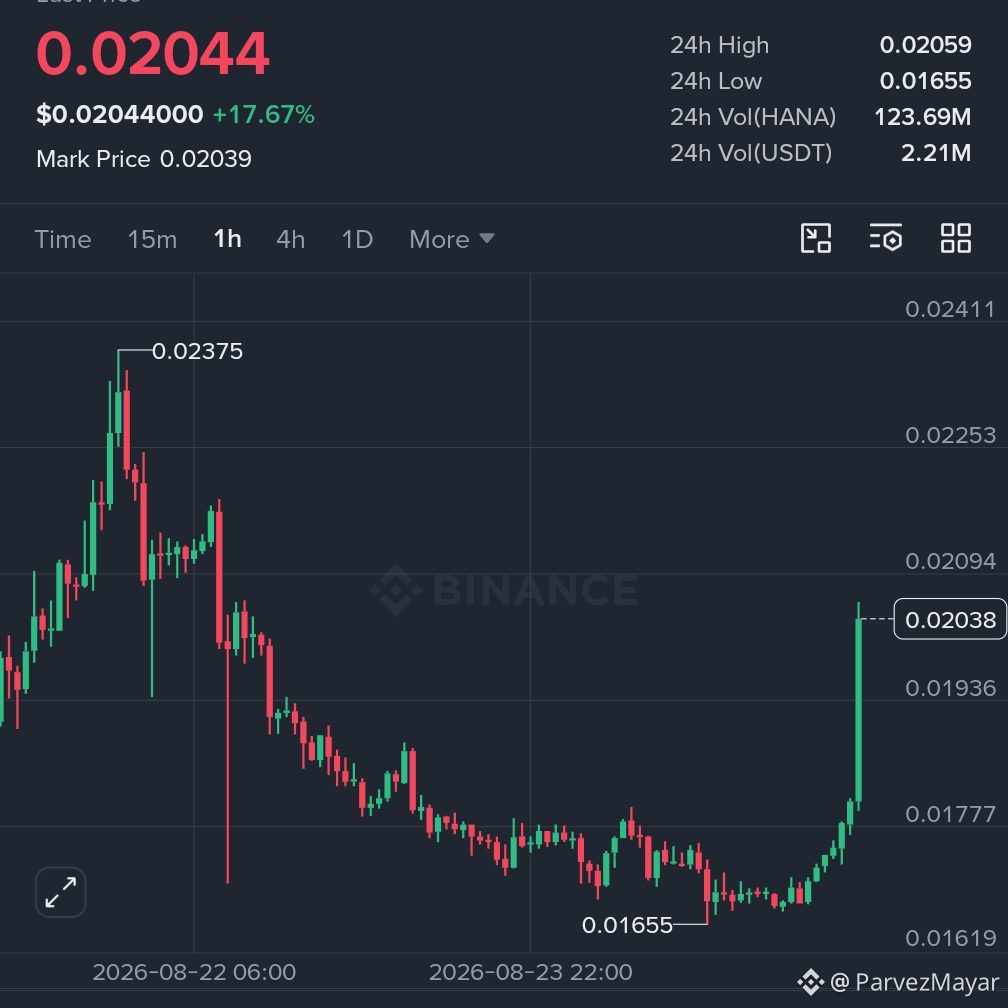
Up 17%+, blasting from around $0.0177 straight into $0.0205 with barely any hesitation.
DON'T sleep on this one...
If $0.0200-$0.0203 keeps holding, next push can target $0.0210 / $0.0220 / $0.0235.
$HANA Momentum is very much BULLISH right now... more upside can come fast. 📈
Up 17%+, blasting from around $0.0177 straight into $0.0205 with barely any hesitation.
DON'T sleep on this one...
If $0.0200-$0.0203 keeps holding, next push can target $0.0210 / $0.0220 / $0.0235.
$HANA Momentum is very much BULLISH right now... more upside can come fast. 📈
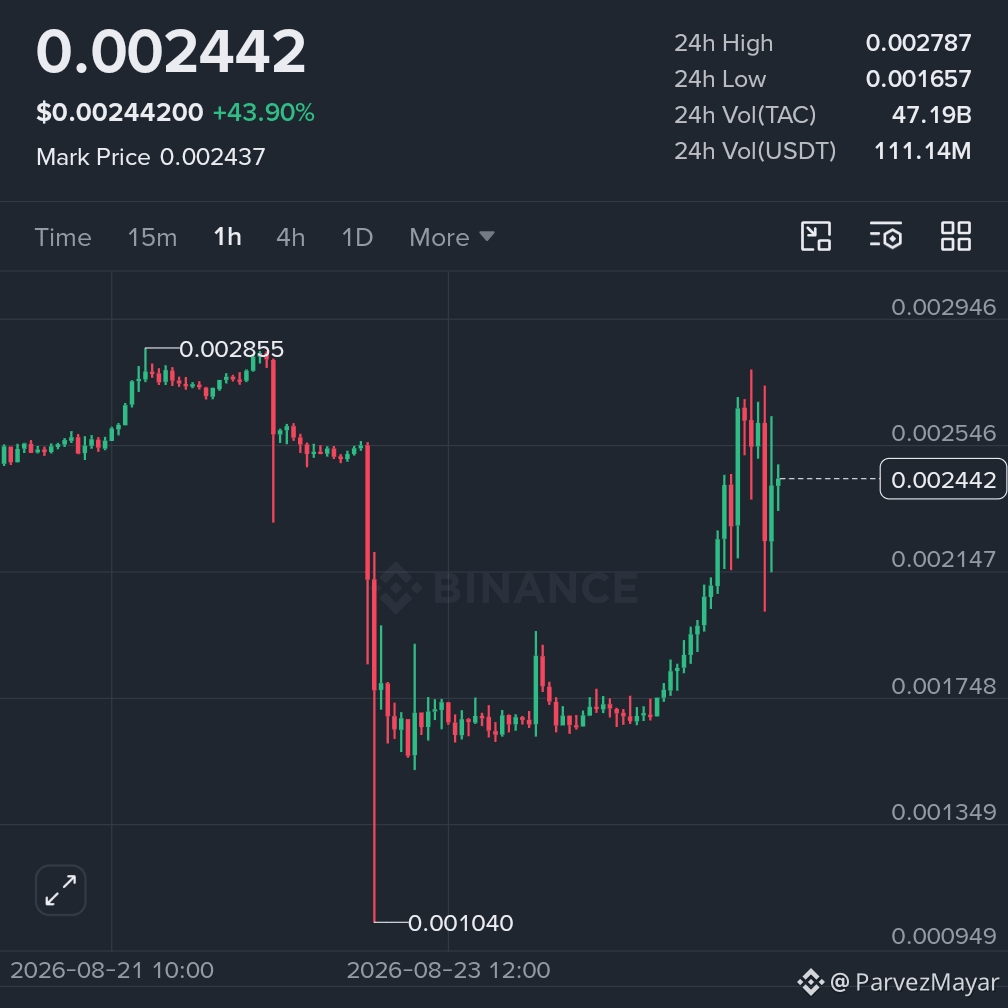
$TAC is going crazy again 😭🔥
Up 43%+, back around $0.00244, and that recovery from the $0.0016 base is getting very hard to ignore now.
If buyers keep defending $0.0023-$0.0024, next push can attack $0.00255 / $0.00270 / $0.00285.
Momentum is BULLISH... but this thing moves like it has anger issues, so chasing the top is still asking for trouble. 👀📈
$ONG $VELVET #ONG #VELVET
📍 Personal analysis only. Not financial advice. DYOR and manage your own risk.
Up 43%+, back around $0.00244, and that recovery from the $0.0016 base is getting very hard to ignore now.
If buyers keep defending $0.0023-$0.0024, next push can attack $0.00255 / $0.00270 / $0.00285.
Momentum is BULLISH... but this thing moves like it has anger issues, so chasing the top is still asking for trouble. 👀📈
$ONG $VELVET #ONG #VELVET
📍 Personal analysis only. Not financial advice. DYOR and manage your own risk.
30D trade $TUT89.1 USDT
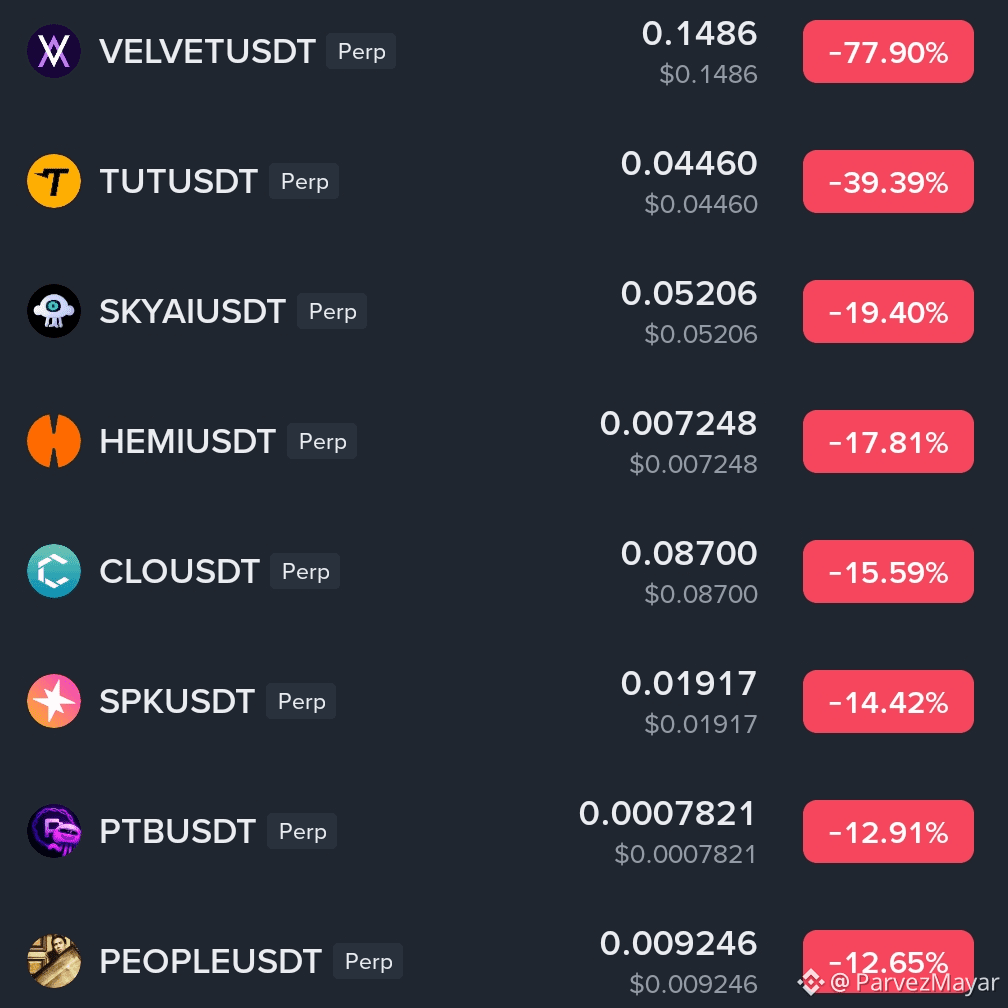
Dears... this losers board is getting nastier by the hour 💀
$VELVET -77.9%... basically wiped out. From $0.91 to $0.13-$0.15 territory... this is not a dip anymore, this is damage control.
$TUT -39.3%... huge momentum reversal. After running to $0.0828, price is now back near $0.0446 and still looking weak.
$SKYAI -19.4%... slow bleed, lower highs, lower lows... not dramatic, just consistently ugly.
The trap now is obvious...
These charts start looking “cheap” exactly when people get impatient.
Better bounce traders will wait for strength to actually return first. 👀
$VELVET -77.9%... basically wiped out. From $0.91 to $0.13-$0.15 territory... this is not a dip anymore, this is damage control.
$TUT -39.3%... huge momentum reversal. After running to $0.0828, price is now back near $0.0446 and still looking weak.
$SKYAI -19.4%... slow bleed, lower highs, lower lows... not dramatic, just consistently ugly.
The trap now is obvious...
These charts start looking “cheap” exactly when people get impatient.
Better bounce traders will wait for strength to actually return first. 👀

Okay so... $VELVET has made a plan to dump below $0.1 and...
😝 $TUT is trying hard to compete to dump below $0.03
😝 $TUT is trying hard to compete to dump below $0.03
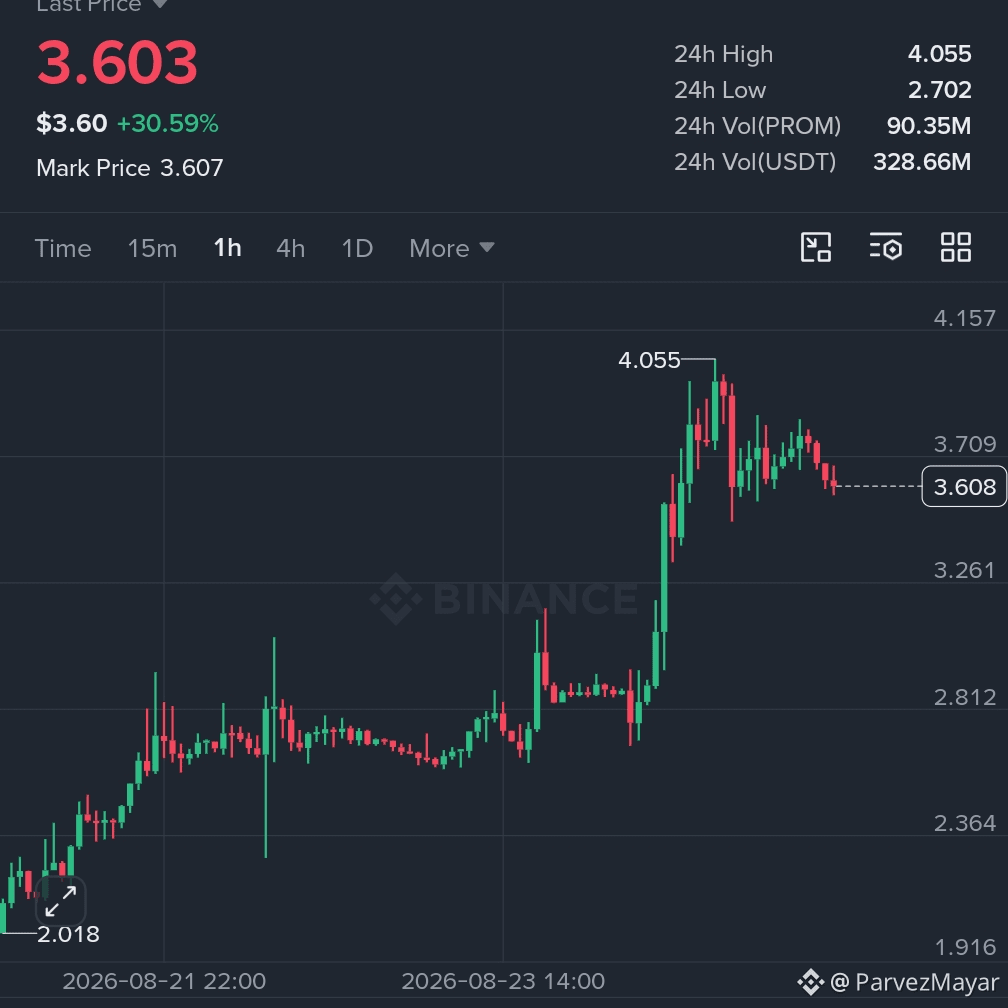
Guys... $PROM is still looking annoyingly strong 👀🔥
Up 30%+, touched $4.05, and now just cooling around $3.60 instead of collapsing.
If $3.55-$3.60 keeps holding, another push toward $3.90-$4.05 is very much alive. 📈
Up 30%+, touched $4.05, and now just cooling around $3.60 instead of collapsing.
If $3.55-$3.60 keeps holding, another push toward $3.90-$4.05 is very much alive. 📈
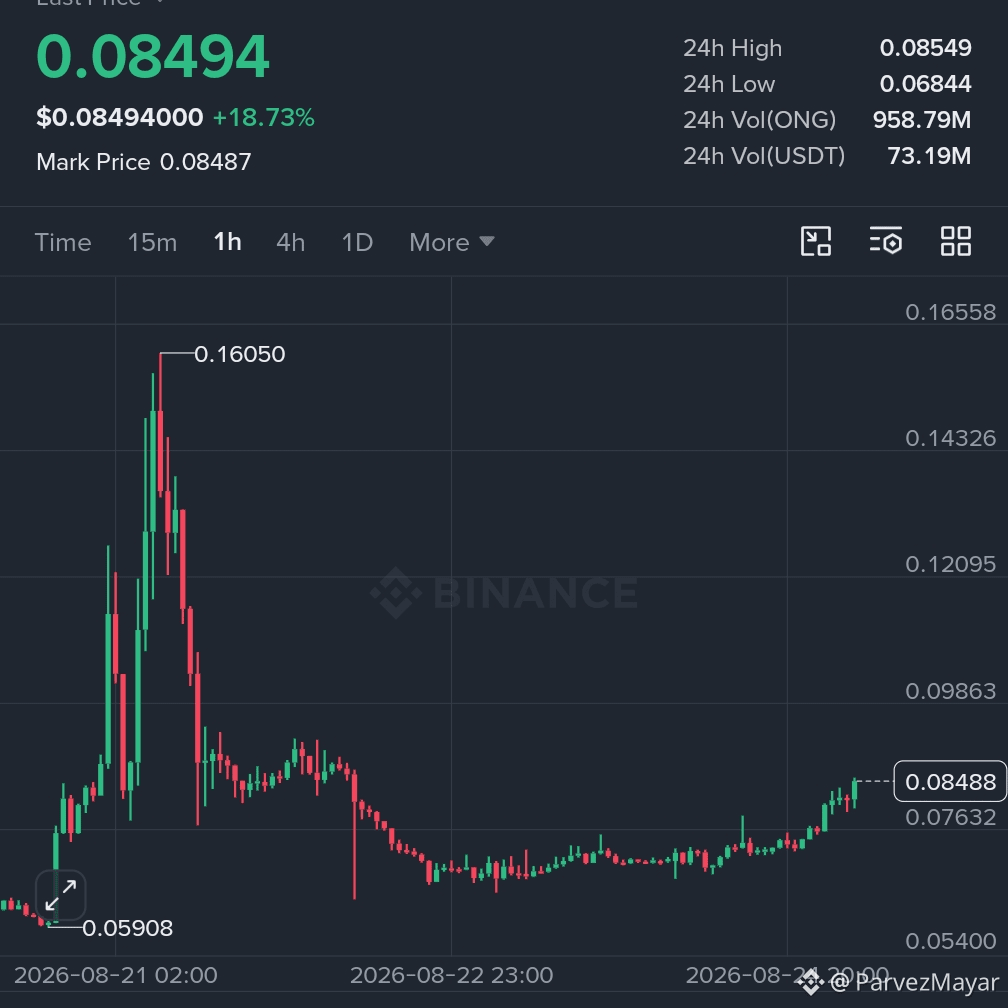
$ONG bounce is loading nicely here 👀🔥
After getting crushed from the old $0.16 area, price spent enough time building around $0.06-$0.07... now it’s finally pushing back toward $0.085 with +18% momentum.
If $0.0855 breaks cleanly, next targets sit around $0.090 / $0.098 / $0.105.
This one is waking up... just needs that breakout confirmation now. 📈
$ONG
After getting crushed from the old $0.16 area, price spent enough time building around $0.06-$0.07... now it’s finally pushing back toward $0.085 with +18% momentum.
If $0.0855 breaks cleanly, next targets sit around $0.090 / $0.098 / $0.105.
This one is waking up... just needs that breakout confirmation now. 📈
$ONG
Log in to explore more content