Binance Square

CryptoMasterMindX

image
Creator verificat
Trader • Investor • Content Creator | Follow @CryptoMasterMindX on X 🚀
Deținător SOL
Deținător SOL
Trader frecvent
4.2 Ani
145 Urmăriți
75.0K+ Urmăritori
42.3K+ Apreciate
8.1K+ Distribuite
Conținut
PINNED
·
--
Bullish
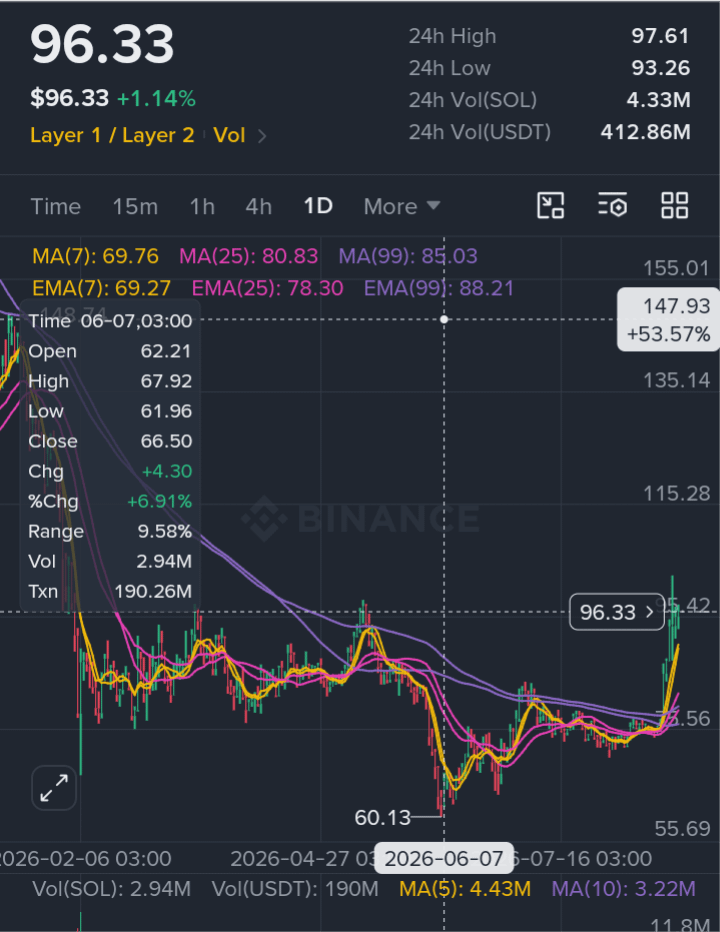
#CE AR PUTEA ÎNTÂMPLA DACĂ ÎȚI INVESTEȘTI $100 ÎN SOLANA ASTĂZI Solana (SOL) a devenit una dintre platformele preferate de smart contracts datorită rețelei sale eficiente de scalare. Aceasta este unul dintre motivele pentru care sute de dezvoltatori au început să folosească platforma pentru a crea aplicații descentralizate. Efectul rezultat al acestui lucru este o reflecție pozitivă asupra noului său token, SOL, care este una dintre cele mai cerute criptomonede în sfera crypto. Deoarece piața crypto continuă să se bucure de o creștere a prețurilor în 2022, mulți comercianți continuă să investească miliarde de dolari în mai mult de 17,000 de monede zilnic. Cu un ochi pe găsirea următoarei găini de aur, investitorii nesofisticați cu mai puțini bani de riscat continuă să pună întrebări. Printre altele, cea mai populară întrebare care se potrivește cerințelor investitorilor cu venituri mici este ce ar putea să se întâmple dacă îți investești $100 în Solana (SOL) astăzi? Dacă îți investești $100 în Solana (SOL) astăzi și valoarea tokenului crește din cauza cererii crescute din partea investitorilor, să zicem până la $380, ai șansa de a obține un profit de $280. Profitul este corect denumit câștiguri de capital sau de portofoliu, deoarece Solana este categorisită ca criptomonedă care se încadrează în active financiare digitale. Deoarece piața criptomonedelor este una foarte volatilă, investițiile tale pot suferi o scădere bruscă. Dacă valoarea Solana scade la noi minimuri din cauza unei perspective negative asupra pieței, care rezultă în vânzări masive, să zicem la $2, ai șansa de a suferi o pierdere de $98. Cu toate acestea, în lumea investițiilor de $100 în Solana (SOL) și a investițiilor în criptomonede în general, poți vedea doar profituri sau pierderi dacă decizi să vinzi deținerile tale. Îți mulțumim pentru lectură, întreabă orice întrebare te rugăm să urmărești și să apreciezi
#CE AR PUTEA ÎNTÂMPLA DACĂ ÎȚI INVESTEȘTI $100 ÎN SOLANA ASTĂZI

Solana (SOL) a devenit una dintre platformele preferate de smart contracts datorită rețelei sale eficiente de scalare.

Aceasta este unul dintre motivele pentru care sute de dezvoltatori au început să folosească platforma pentru a crea aplicații descentralizate.

Efectul rezultat al acestui lucru este o reflecție pozitivă asupra noului său token, SOL, care este una dintre cele mai cerute criptomonede în sfera crypto.

Deoarece piața crypto continuă să se bucure de o creștere a prețurilor în 2022, mulți comercianți continuă să investească miliarde de dolari în mai mult de 17,000 de monede zilnic.

Cu un ochi pe găsirea următoarei găini de aur, investitorii nesofisticați cu mai puțini bani de riscat continuă să pună întrebări. Printre altele, cea mai populară întrebare care se potrivește cerințelor investitorilor cu venituri mici este ce ar putea să se întâmple dacă îți investești $100 în Solana (SOL) astăzi?

Dacă îți investești $100 în Solana (SOL) astăzi și valoarea tokenului crește din cauza cererii crescute din partea investitorilor, să zicem până la $380, ai șansa de a obține un profit de $280.

Profitul este corect denumit câștiguri de capital sau de portofoliu, deoarece Solana este categorisită ca criptomonedă care se încadrează în active financiare digitale.

Deoarece piața criptomonedelor este una foarte volatilă, investițiile tale pot suferi o scădere bruscă.

Dacă valoarea Solana scade la noi minimuri din cauza unei perspective negative asupra pieței, care rezultă în vânzări masive, să zicem la $2, ai șansa de a suferi o pierdere de $98.

Cu toate acestea, în lumea investițiilor de $100 în Solana (SOL) și a investițiilor în criptomonede în general, poți vedea doar profituri sau pierderi dacă decizi să vinzi deținerile tale.

Îți mulțumim pentru lectură, întreabă orice întrebare
te rugăm să urmărești și să apreciezi
Plasma: Making Global Trade Way Simpler – And That Big Zerohash Deal Just Proves ItLook, if you've ever dealt with international business – paying suppliers in another country, getting paid for exports, or just wiring money overseas – you know the pain. Banks take forever, fees eat into your margins, exchange rates mess you up, and sometimes the whole thing gets held up for "compliance checks." It's 2026, and we're still using systems from the 1970s. But Plasma is changing that, one stablecoin transfer at a time. And their latest partnership? It's a massive step forward. Plasma is a Layer 1 blockchain built from the ground up for stablecoins. Not another general-purpose chain trying to do everything. It's laser-focused on settling stablecoins like USDT fast, cheap, and reliably. It runs on Reth (full Ethereum compatibility, so devs feel right at home), uses PlasmaBFT for finality in under a second (your transaction is done before you blink), and has killer features like gasless USDT transfers – meaning you can send USDT without paying any fees at all. For other transactions, gas can be paid in stablecoins, not some volatile token. Security? It anchors to Bitcoin, which keeps things neutral and super hard to censor. Who’s this for? Everyday people in places like Kenya, Indonesia, or Brazil where crypto is already huge for remittances and payments. And big institutions – banks, payment processors, finance firms – that need to move serious money without the usual headaches. Now, why is this making global trade easier than ever? Traditional cross-border payments are slow and expensive. A B2B transfer might take days and cost 3-6% in fees plus FX losses. Stablecoins cut that to seconds and pennies, but most chains aren't optimized for it – congestion, high gas, or weird UX gets in the way. Plasma fixes all that. Sub-second finality means suppliers get paid instantly. Gasless USDT means small businesses or freelancers don't lose money on tiny fees. And because it's stablecoin-first, there's no volatility risk – what you send is what arrives. Enter the Zerohash partnership. Announced late last year (around November 2025), it's their biggest payment tie-up so far. Zerohash is a major player in compliant stablecoin infrastructure – they work with big names across the US and Europe, handling the boring but crucial stuff like regulations, onboarding, and settlement so platforms can offer crypto without getting buried in red tape. With this deal, Zerohash integrated Plasma into their system. That means merchants, payroll companies, remittance services, and B2B platforms can now accept or send USDT on Plasma as easily as they handle regular dollars or euros. No extra hoops. It's live on places like Public, and rolling out to others like BitMart and Bolt. Zerohash's CEO even sat down with Plasma's team to talk about how this lets big enterprises move onchain smoothly. Think about what that unlocks for global trade: A factory in China gets paid by a retailer in Europe instantly via USDT – no waiting for banks to clear. Freelancers in Lagos receive client payments from the US without losing 10-20% to fees and delays. Companies settle supply chain invoices in real time, improving cash flow and cutting financing needs. Institutions finally have a compliant, fast rail for stablecoin volumes without building everything themselves. This isn't hype; it's practical. Global trade is worth trillions every year, but the old rails are creaky. Plasma + Zerohash is building new ones – fast, borderless, and built for the real economy. With stablecoins already moving massive value daily, partnerships like this pull in the big players who can actually scale it. Of course, nothing's perfect yet. Regulations are evolving (stuff like the GENIUS Act helps), and adoption takes time. But when a solid infra player like Zerohash bets big on Plasma, it shows confidence that this is where money movement is heading. If you're in trade, payments, or just tired of old-school banking friction, Plasma's worth watching closely. It's not about moonshots – it's about making the world smaller and business smoother. And that Zerohash news? It's one of the clearest signs yet that the shift is real and accelerating. #Plasma @Plasma $XPL {spot}(XPLUSDT)

Plasma: Making Global Trade Way Simpler – And That Big Zerohash Deal Just Proves It

Look, if you've ever dealt with international business – paying suppliers in another country, getting paid for exports, or just wiring money overseas – you know the pain. Banks take forever, fees eat into your margins, exchange rates mess you up, and sometimes the whole thing gets held up for "compliance checks." It's 2026, and we're still using systems from the 1970s. But Plasma is changing that, one stablecoin transfer at a time. And their latest partnership? It's a massive step forward.
Plasma is a Layer 1 blockchain built from the ground up for stablecoins. Not another general-purpose chain trying to do everything. It's laser-focused on settling stablecoins like USDT fast, cheap, and reliably. It runs on Reth (full Ethereum compatibility, so devs feel right at home), uses PlasmaBFT for finality in under a second (your transaction is done before you blink), and has killer features like gasless USDT transfers – meaning you can send USDT without paying any fees at all. For other transactions, gas can be paid in stablecoins, not some volatile token. Security? It anchors to Bitcoin, which keeps things neutral and super hard to censor.
Who’s this for? Everyday people in places like Kenya, Indonesia, or Brazil where crypto is already huge for remittances and payments. And big institutions – banks, payment processors, finance firms – that need to move serious money without the usual headaches.
Now, why is this making global trade easier than ever? Traditional cross-border payments are slow and expensive. A B2B transfer might take days and cost 3-6% in fees plus FX losses. Stablecoins cut that to seconds and pennies, but most chains aren't optimized for it – congestion, high gas, or weird UX gets in the way. Plasma fixes all that. Sub-second finality means suppliers get paid instantly. Gasless USDT means small businesses or freelancers don't lose money on tiny fees. And because it's stablecoin-first, there's no volatility risk – what you send is what arrives.
Enter the Zerohash partnership. Announced late last year (around November 2025), it's their biggest payment tie-up so far. Zerohash is a major player in compliant stablecoin infrastructure – they work with big names across the US and Europe, handling the boring but crucial stuff like regulations, onboarding, and settlement so platforms can offer crypto without getting buried in red tape.
With this deal, Zerohash integrated Plasma into their system. That means merchants, payroll companies, remittance services, and B2B platforms can now accept or send USDT on Plasma as easily as they handle regular dollars or euros. No extra hoops. It's live on places like Public, and rolling out to others like BitMart and Bolt. Zerohash's CEO even sat down with Plasma's team to talk about how this lets big enterprises move onchain smoothly.
Think about what that unlocks for global trade:
A factory in China gets paid by a retailer in Europe instantly via USDT – no waiting for banks to clear.
Freelancers in Lagos receive client payments from the US without losing 10-20% to fees and delays.
Companies settle supply chain invoices in real time, improving cash flow and cutting financing needs.
Institutions finally have a compliant, fast rail for stablecoin volumes without building everything themselves.
This isn't hype; it's practical. Global trade is worth trillions every year, but the old rails are creaky. Plasma + Zerohash is building new ones – fast, borderless, and built for the real economy. With stablecoins already moving massive value daily, partnerships like this pull in the big players who can actually scale it.
Of course, nothing's perfect yet. Regulations are evolving (stuff like the GENIUS Act helps), and adoption takes time. But when a solid infra player like Zerohash bets big on Plasma, it shows confidence that this is where money movement is heading.
If you're in trade, payments, or just tired of old-school banking friction, Plasma's worth watching closely. It's not about moonshots – it's about making the world smaller and business smoother. And that Zerohash news? It's one of the clearest signs yet that the shift is real and accelerating.

#Plasma @Plasma $XPL
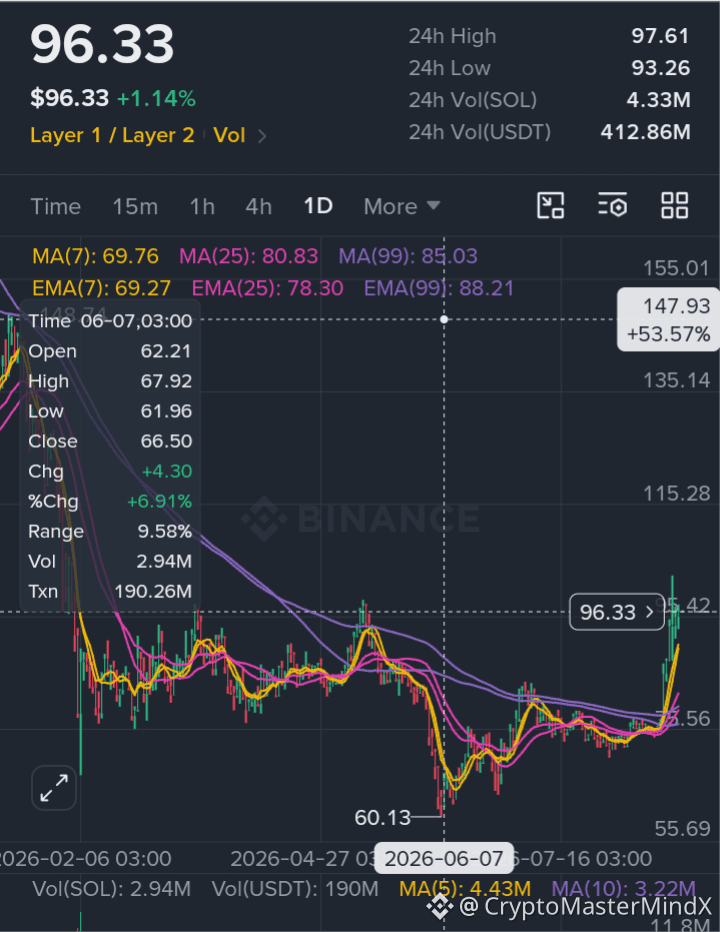
Așa a distrus Solana în piața bear din 2022
Unlocking Global Money with Plasma: The Blockchain Built for StablecoinsHey folks, let's talk about Plasma. If you're into crypto or just curious about how digital money is changing the world, this one's for you. Plasma is a Layer 1 blockchain designed from the ground up for settling stablecoins. Think of stablecoins like USDT – they're digital dollars that don't swing wildly in value, perfect for everyday payments, sending money home, or big business deals. What makes Plasma stand out? It mixes full EVM compatibility – that's Ethereum Virtual Machine, using Reth tech – so it works seamlessly with all the Ethereum tools and apps you already know. But it adds super-fast sub-second finality through something called PlasmaBFT. No more waiting minutes for transactions to confirm; it's done in under a second. Then there are the stablecoin-focused perks: gasless transfers for USDT, meaning you can send it without paying any fees. And stablecoin-first gas, where you pay network fees in stablecoins like USDT instead of some volatile token. It's all about making things simple and cheap. Security-wise, Plasma anchors to Bitcoin. That means it taps into Bitcoin's huge mining power for extra protection, making it more neutral and resistant to censorship. No one can easily mess with it or shut it down. Now, here's where it gets exciting for global reach. Plasma is licensing its tech stack for global money movement. What does that mean? Basically, they're sharing their blockchain blueprint with partners around the world. This lets them tap into way bigger markets and team up with more players in different regions. Instead of building everything from scratch in every country, they license the stack – the core tech – to local firms or networks. This speeds things up, cuts costs, and helps navigate local rules. Suddenly, Plasma can serve millions more people in places like Africa, Asia, and Latin America, where stablecoins are huge for remittances and dodging inflation. For big institutions in finance and payments, it opens doors to reliable, scalable setups without the hassle of starting over. And today – yeah, right now on January 25, 2026 – Plasma is rolling out its global regulatory strategy. They're aiming for worldwide coverage, zeroing in on countries where stablecoins are a big deal. Think high-adoption spots like Kenya, Nigeria, Brazil, or the Philippines, where folks rely on them for daily stuff. This strategy is all about getting the right licenses, partnering with regulators, and making sure everything's compliant. It's smart because stablecoins are exploding – already handling more volume than some traditional payment giants in certain areas. Why does this matter? In a world where borders don't mean much for money anymore, Plasma is building rails that anyone can use safely and quickly. For retail users like you and me in high-adoption markets, it means easier access to stable money without fees eating into our transfers. For institutions, it's a solid foundation for payments, finance, and even things like payroll or cross-border trades. I've been following crypto for a while, and Plasma feels like it's filling a real gap. No fluff, just practical tech for stablecoins. #Plasma @Plasma $XPL {spot}(XPLUSDT)

Unlocking Global Money with Plasma: The Blockchain Built for Stablecoins

Hey folks, let's talk about Plasma. If you're into crypto or just curious about how digital money is changing the world, this one's for you. Plasma is a Layer 1 blockchain designed from the ground up for settling stablecoins. Think of stablecoins like USDT – they're digital dollars that don't swing wildly in value, perfect for everyday payments, sending money home, or big business deals.
What makes Plasma stand out? It mixes full EVM compatibility – that's Ethereum Virtual Machine, using Reth tech – so it works seamlessly with all the Ethereum tools and apps you already know. But it adds super-fast sub-second finality through something called PlasmaBFT. No more waiting minutes for transactions to confirm; it's done in under a second. Then there are the stablecoin-focused perks: gasless transfers for USDT, meaning you can send it without paying any fees. And stablecoin-first gas, where you pay network fees in stablecoins like USDT instead of some volatile token. It's all about making things simple and cheap.
Security-wise, Plasma anchors to Bitcoin. That means it taps into Bitcoin's huge mining power for extra protection, making it more neutral and resistant to censorship. No one can easily mess with it or shut it down.
Now, here's where it gets exciting for global reach. Plasma is licensing its tech stack for global money movement. What does that mean? Basically, they're sharing their blockchain blueprint with partners around the world. This lets them tap into way bigger markets and team up with more players in different regions. Instead of building everything from scratch in every country, they license the stack – the core tech – to local firms or networks. This speeds things up, cuts costs, and helps navigate local rules. Suddenly, Plasma can serve millions more people in places like Africa, Asia, and Latin America, where stablecoins are huge for remittances and dodging inflation. For big institutions in finance and payments, it opens doors to reliable, scalable setups without the hassle of starting over.
And today – yeah, right now on January 25, 2026 – Plasma is rolling out its global regulatory strategy. They're aiming for worldwide coverage, zeroing in on countries where stablecoins are a big deal. Think high-adoption spots like Kenya, Nigeria, Brazil, or the Philippines, where folks rely on them for daily stuff. This strategy is all about getting the right licenses, partnering with regulators, and making sure everything's compliant. It's smart because stablecoins are exploding – already handling more volume than some traditional payment giants in certain areas.
Why does this matter? In a world where borders don't mean much for money anymore, Plasma is building rails that anyone can use safely and quickly. For retail users like you and me in high-adoption markets, it means easier access to stable money without fees eating into our transfers. For institutions, it's a solid foundation for payments, finance, and even things like payroll or cross-border trades.
I've been following crypto for a while, and Plasma feels like it's filling a real gap. No fluff, just practical tech for stablecoins.
#Plasma @Plasma $XPL
Vanar Chain ($VANRY): One of Those Quiet Builders People Are Sleeping On Hey guys,I’ve been digging into a few underrated projects lately, and honestly — Vanar Chain ($VANRY) really caught my attention. This isn’t one of those loud L1s screaming “we’re faster than everyone”. Instead, Vanar feels like a project built with real people in mind, not just hardcore crypto users. The team behind it actually comes from gaming, entertainment, and major brands, so they understand something most blockchains don’t: normal users don’t care about tech jargon — they just want smooth, fun experiences. That’s exactly what Vanar is focusing on. Rather than forcing crypto on people, they’re onboarding users through things they already love — gaming, metaverse experiences, AI, and digital entertainment. A few things I personally like: Virtua Metaverse A seriously immersive digital world — own land, collect assets, race vehicles, explore environments — all running smoothly on Vanar. VGN Games Network Built to help developers launch real Web3 games that actually feel like games — not slow, buggy experiments. Low fees, scalable, and player-friendly. $VANRY Token Used for network fees, staking, ecosystem rewards, and powering activity across games and metaverse apps. What really stands out to me is the vision. Vanar isn’t chasing hype — they’re quietly building bridges to the next billion users, especially people who don’t care about “crypto talk” but love good digital experiences that just happen to be on-chain. Not financial advice — just sharing my personal thoughts after researching the project. If you’re into gaming, AI, metaverse, and real adoption plays, this one is definitely worth keeping an eye on. #vanar $VANRY @Vanar
Vanar Chain ($VANRY ): One of Those Quiet Builders People Are Sleeping On

Hey guys,I’ve been digging into a few underrated projects lately, and honestly — Vanar Chain ($VANRY ) really caught my attention.

This isn’t one of those loud L1s screaming “we’re faster than everyone”. Instead, Vanar feels like a project built with real people in mind, not just hardcore crypto users.

The team behind it actually comes from gaming, entertainment, and major brands, so they understand something most blockchains don’t:

normal users don’t care about tech jargon — they just want smooth, fun experiences.
That’s exactly what Vanar is focusing on.
Rather than forcing crypto on people, they’re onboarding users through things they already love — gaming, metaverse experiences, AI, and digital entertainment.
A few things I personally like:

Virtua Metaverse
A seriously immersive digital world — own land, collect assets, race vehicles, explore environments — all running smoothly on Vanar.

VGN Games Network
Built to help developers launch real Web3 games that actually feel like games — not slow, buggy experiments. Low fees, scalable, and player-friendly.

$VANRY Token
Used for network fees, staking, ecosystem rewards, and powering activity across games and metaverse apps.

What really stands out to me is the vision.
Vanar isn’t chasing hype — they’re quietly building bridges to the next billion users, especially people who don’t care about “crypto talk” but love good digital experiences that just happen to be on-chain.

Not financial advice — just sharing my personal thoughts after researching the project.

If you’re into gaming, AI, metaverse, and real adoption plays, this one is definitely worth keeping an eye on.

#vanar $VANRY @Vanarchain
If you’ve got $2.5 million sitting around, a 9.25% savings rate means $231,250k a year, no stress, no risk, just passive income. Why are people not doing this
If you’ve got $2.5 million sitting around, a 9.25% savings rate means $231,250k a year, no stress, no risk, just passive income.

Why are people not doing this
Plasma: A Blockchain Built Just for Stablecoins I’ve been looking deeper into Plasma lately, and honestly, it feels like one of those projects trying to solve real problems — not just chasing hype. Plasma is a Layer 1 blockchain made mainly for stablecoins, especially USDT. Instead of trying to do everything, it focuses on one thing: moving digital dollars fast and cheap. It’s fully EVM compatible, so Ethereum tools and wallets work easily. But the big difference is speed — with PlasmaBFT, transactions settle in under one second. Why Plasma stands out • Gasless USDT transfers — send USDT with zero fees • Pay fees in USDT — no need to hold extra tokens • Bitcoin-backed security — data is checkpointed to Bitcoin for extra trust This is huge for people in Africa, Asia, and LatAm where stablecoins are used daily for payments and remittances. Plasma is built for both everyday users and institutions that need reliable global payment rails. With stablecoin usage growing fast, a chain designed only for this makes a lot of sense. Mainnet beta is already live, with strong liquidity flowing in. The ecosystem runs on the $XPL token. Not hype — just practical. What do you think about Plasma so far? #plasma $XPL @Plasma
Plasma: A Blockchain Built Just for Stablecoins

I’ve been looking deeper into Plasma lately, and honestly, it feels like one of those projects trying to solve real problems — not just chasing hype.

Plasma is a Layer 1 blockchain made mainly for stablecoins, especially USDT. Instead of trying to do everything, it focuses on one thing: moving digital dollars fast and cheap.
It’s fully EVM compatible, so Ethereum tools and wallets work easily. But the big difference is speed — with PlasmaBFT, transactions settle in under one second.

Why Plasma stands out

• Gasless USDT transfers — send USDT with zero fees
• Pay fees in USDT — no need to hold extra tokens
• Bitcoin-backed security — data is checkpointed to Bitcoin for extra trust

This is huge for people in Africa, Asia, and LatAm where stablecoins are used daily for payments and remittances.

Plasma is built for both everyday users and institutions that need reliable global payment rails. With stablecoin usage growing fast, a chain designed only for this makes a lot of sense.

Mainnet beta is already live, with strong liquidity flowing in. The ecosystem runs on the $XPL token.

Not hype — just practical.
What do you think about Plasma so far?

#plasma $XPL @Plasma
Plasma and Trust Wallet: Making USDT Feel Like Real MoneyPlasma is shaking things up in the crypto world as a Layer 1 blockchain made just for stablecoins. Think of it as a super-fast highway built only for moving digital dollars like USDT around without the usual headaches. It runs on full Ethereum tech (thanks to Reth for that EVM compatibility), so devs feel right at home. But the real magic comes from PlasmaBFT, which locks in transactions in under a second. No more staring at your screen waiting for confirmations. What sets Plasma apart even more? Gasless transfers for USDT. You can send it back and forth for basically nothing—no fees eating into small payments. Gas fees, when you do need them, get paid in stablecoins first, so costs stay predictable instead of jumping around with token prices. And for extra trust, it ties security back to Bitcoin. That makes the network tougher against censorship and keeps things neutral, which matters a ton in payments and finance. This chain isn't chasing every trend. It's laser-focused on stablecoin settlements—perfect for everyday use in places where people already rely on USDT for remittances, shopping, or dodging shaky local currencies. Retail folks in emerging markets get cheap, instant transfers. Big institutions in payments get reliable rails for moving serious money without drama. Now, here's where Trust Wallet comes in and makes a huge difference. Trust Wallet, that massive non-custodial wallet used by millions (especially in Africa, Asia, and Latin America), integrated Plasma right into the app. Back in late 2025, they announced it: you can now send, receive, and hold USDT on Plasma straight from Trust Wallet. Zero fees for those USDT moves, near-instant settlements, and everything feels simple—no extra steps or weird setups. For someone in India or Lagos or Jakarta, this is game-changing. Imagine sending money home to family: you open Trust Wallet, pick Plasma network, send USDT, and it's there in seconds with nothing deducted. No more high remittance fees from banks or other services. Or paying a vendor across borders—same thing, smooth and cheap. Trust Wallet already has a huge user base in high-adoption spots, so plugging Plasma in puts this stablecoin infrastructure right in people's pockets. The goal? Make USD₮ (that Tether stablecoin optimized on Plasma) part of daily life. Everyone, everywhere can tap into it now. Trillions in stablecoin volume are already flowing globally, and tools like Trust Wallet help push that into real-world habits—buying groceries, paying bills, saving without borders getting in the way. Plasma isn't trying to be everything to everyone. It's nailing stablecoins, and with Trust Wallet on board, it's reaching the people who need it most. If you're in an emerging market tired of clunky payments, check it out in your wallet. It might just make crypto feel normal for once. What do you think—could this be the one that sticks for everyday use? #Plasma @Plasma $XPL {spot}(XPLUSDT)

Plasma and Trust Wallet: Making USDT Feel Like Real Money

Plasma is shaking things up in the crypto world as a Layer 1 blockchain made just for stablecoins. Think of it as a super-fast highway built only for moving digital dollars like USDT around without the usual headaches. It runs on full Ethereum tech (thanks to Reth for that EVM compatibility), so devs feel right at home. But the real magic comes from PlasmaBFT, which locks in transactions in under a second. No more staring at your screen waiting for confirmations.
What sets Plasma apart even more? Gasless transfers for USDT. You can send it back and forth for basically nothing—no fees eating into small payments. Gas fees, when you do need them, get paid in stablecoins first, so costs stay predictable instead of jumping around with token prices. And for extra trust, it ties security back to Bitcoin. That makes the network tougher against censorship and keeps things neutral, which matters a ton in payments and finance.
This chain isn't chasing every trend. It's laser-focused on stablecoin settlements—perfect for everyday use in places where people already rely on USDT for remittances, shopping, or dodging shaky local currencies. Retail folks in emerging markets get cheap, instant transfers. Big institutions in payments get reliable rails for moving serious money without drama.
Now, here's where Trust Wallet comes in and makes a huge difference. Trust Wallet, that massive non-custodial wallet used by millions (especially in Africa, Asia, and Latin America), integrated Plasma right into the app. Back in late 2025, they announced it: you can now send, receive, and hold USDT on Plasma straight from Trust Wallet. Zero fees for those USDT moves, near-instant settlements, and everything feels simple—no extra steps or weird setups.
For someone in India or Lagos or Jakarta, this is game-changing. Imagine sending money home to family: you open Trust Wallet, pick Plasma network, send USDT, and it's there in seconds with nothing deducted. No more high remittance fees from banks or other services. Or paying a vendor across borders—same thing, smooth and cheap. Trust Wallet already has a huge user base in high-adoption spots, so plugging Plasma in puts this stablecoin infrastructure right in people's pockets.
The goal? Make USD₮ (that Tether stablecoin optimized on Plasma) part of daily life. Everyone, everywhere can tap into it now. Trillions in stablecoin volume are already flowing globally, and tools like Trust Wallet help push that into real-world habits—buying groceries, paying bills, saving without borders getting in the way.
Plasma isn't trying to be everything to everyone. It's nailing stablecoins, and with Trust Wallet on board, it's reaching the people who need it most. If you're in an emerging market tired of clunky payments, check it out in your wallet. It might just make crypto feel normal for once. What do you think—could this be the one that sticks for everyday use?

#Plasma @Plasma $XPL
Vanar Chain (VANRY): Powering the Future of Gaming, Metaverse, and AI in Web3Vanar Chain is trying to do something different in the crowded world of blockchains. It's a Layer 1 network built specifically to make Web3 feel normal and useful for regular people, not just crypto fans. The team behind it comes from gaming, entertainment, and big brands, so they know what it takes to get millions of everyday users interested in blockchain stuff. What stands out about Vanar is how it focuses on real adoption instead of just hype. They aim to bring the next few billion people into Web3 by making things simple and tying into stuff people already enjoy—like games, virtual worlds, AI tools, and even eco-friendly projects or brand partnerships. It's not another chain promising everything; it's more targeted at entertainment, gaming, and experiences that feel fun rather than technical. Two big products already running on Vanar show what I mean. First, there's Virtua Metaverse. It's this virtual world where you can own digital land, collect items, race vehicles, explore quests, and trade NFTs that actually have real use. It started on another chain but moved to Vanar to take advantage of faster speeds and lower costs. Then there's the VGN games network—basically a hub for blockchain-based games where players can earn real rewards and assets while having fun. These aren't just ideas on paper; they're live platforms that people are using right now. The whole thing runs on the VANRY token. This is the native coin that powers everything. You use VANRY to pay for transactions (gas fees), stake it to help secure the network, join in governance decisions, and get involved in the ecosystem. It's EVM-compatible, so developers can bring over tools from Ethereum easily, but Vanar adds its own twists—like being AI-native. That means it has built-in support for AI features, semantic memory for smarter apps, on-chain reasoning, and even stuff for PayFi (payment finance) and real-world assets getting tokenized. One cool thing is their push for being eco-friendly. They run on Google's renewable energy sources, which helps cut down on the usual blockchain energy complaints. Speed and scalability are big focuses too—high transaction rates without crazy fees, making it practical for games or metaverse stuff where lag kills the experience. Right now, VANRY trades around $0.0076, with a market cap in the $15-16 million range (as of late January 2026). Trading volume stays decent, showing some steady interest. Price predictions vary, but some folks think it could climb toward $0.01 or higher in the coming years if adoption keeps growing, especially with more games and AI integrations coming online. Overall, Vanar feels like one of those projects that's quietly building for the long run. Instead of chasing quick pumps, they're connecting blockchain to things people already love—gaming, virtual hangouts, and smart AI tools. If they keep delivering on those real-world products like Virtua and VGN, and more brands jump in, VANRY could become a solid player in making Web3 less scary and more everyday. Worth keeping an eye on if you're into gaming crypto or metaverse plays. #vanar @Vanar $VANRY {spot}(VANRYUSDT)

Vanar Chain (VANRY): Powering the Future of Gaming, Metaverse, and AI in Web3

Vanar Chain is trying to do something different in the crowded world of blockchains. It's a Layer 1 network built specifically to make Web3 feel normal and useful for regular people, not just crypto fans. The team behind it comes from gaming, entertainment, and big brands, so they know what it takes to get millions of everyday users interested in blockchain stuff.
What stands out about Vanar is how it focuses on real adoption instead of just hype. They aim to bring the next few billion people into Web3 by making things simple and tying into stuff people already enjoy—like games, virtual worlds, AI tools, and even eco-friendly projects or brand partnerships. It's not another chain promising everything; it's more targeted at entertainment, gaming, and experiences that feel fun rather than technical.
Two big products already running on Vanar show what I mean. First, there's Virtua Metaverse. It's this virtual world where you can own digital land, collect items, race vehicles, explore quests, and trade NFTs that actually have real use. It started on another chain but moved to Vanar to take advantage of faster speeds and lower costs. Then there's the VGN games network—basically a hub for blockchain-based games where players can earn real rewards and assets while having fun. These aren't just ideas on paper; they're live platforms that people are using right now.
The whole thing runs on the VANRY token. This is the native coin that powers everything. You use VANRY to pay for transactions (gas fees), stake it to help secure the network, join in governance decisions, and get involved in the ecosystem. It's EVM-compatible, so developers can bring over tools from Ethereum easily, but Vanar adds its own twists—like being AI-native. That means it has built-in support for AI features, semantic memory for smarter apps, on-chain reasoning, and even stuff for PayFi (payment finance) and real-world assets getting tokenized.
One cool thing is their push for being eco-friendly. They run on Google's renewable energy sources, which helps cut down on the usual blockchain energy complaints. Speed and scalability are big focuses too—high transaction rates without crazy fees, making it practical for games or metaverse stuff where lag kills the experience.
Right now, VANRY trades around $0.0076, with a market cap in the $15-16 million range (as of late January 2026). Trading volume stays decent, showing some steady interest. Price predictions vary, but some folks think it could climb toward $0.01 or higher in the coming years if adoption keeps growing, especially with more games and AI integrations coming online.
Overall, Vanar feels like one of those projects that's quietly building for the long run. Instead of chasing quick pumps, they're connecting blockchain to things people already love—gaming, virtual hangouts, and smart AI tools. If they keep delivering on those real-world products like Virtua and VGN, and more brands jump in, VANRY could become a solid player in making Web3 less scary and more everyday. Worth keeping an eye on if you're into gaming crypto or metaverse plays.
#vanar @Vanarchain $VANRY
Plasma: A Fresh Take on Blockchain for StablecoinsHey everyone, I've been digging into some new tech in the crypto world, and I came across Plasma. It's this Layer 1 blockchain built specifically for handling stablecoins. If you're into crypto payments or just curious about how blockchains can make money transfers smoother, this might interest you. Let me break it down in simple terms. First off, what makes Plasma stand out? It's designed from the ground up for stablecoins like USDT. That means it's not just another general-purpose chain; it's optimized for things like settlements where stability and speed matter a lot. One cool thing is it works fully with the Ethereum Virtual Machine (EVM) using something called Reth. If you're a developer, that means you can run Ethereum-style smart contracts without any hassle. No need to rewrite code or learn new tricks. But speed is where it shines. Plasma uses PlasmaBFT for consensus, which gives sub-second finality. In plain English, that means transactions confirm super fast—under a second. No more waiting around for blocks to finalize like on some other chains. This is huge for real-world use, like paying for coffee or sending money across borders. Now, about the stablecoin perks. They have gasless transfers for USDT. Yep, you heard that right—no gas fees for moving USDT around. And gas fees in general are paid in stablecoins first, which keeps things predictable. No wild swings in costs because of volatile tokens. It's all about making stablecoins the star of the show. Security-wise, Plasma anchors to Bitcoin. That adds a layer of neutrality and makes it harder for anyone to censor transactions. Bitcoin's been around forever and is super secure, so tying into that boosts trust. It's like building on a rock-solid foundation. Who is this for? Well, it's aimed at regular folks in places where crypto is already big, like retail users who want easy, cheap payments. Think emerging markets where people use stablecoins daily. But it's also for big players—institutions in finance and payments. They need reliable, fast settlements without the drama of traditional banking. Overall, Plasma seems like a smart evolution in blockchain tech. It's not trying to do everything; it's focusing on stablecoins and doing it well. If you're tired of high fees and slow confirmations, keep an eye on this one. It could change how we handle digital money. What do you think—ready to give it a try? #Plasma @Plasma $XPL {spot}(XPLUSDT)

Plasma: A Fresh Take on Blockchain for Stablecoins

Hey everyone, I've been digging into some new tech in the crypto world, and I came across Plasma. It's this Layer 1 blockchain built specifically for handling stablecoins. If you're into crypto payments or just curious about how blockchains can make money transfers smoother, this might interest you. Let me break it down in simple terms.
First off, what makes Plasma stand out? It's designed from the ground up for stablecoins like USDT. That means it's not just another general-purpose chain; it's optimized for things like settlements where stability and speed matter a lot. One cool thing is it works fully with the Ethereum Virtual Machine (EVM) using something called Reth. If you're a developer, that means you can run Ethereum-style smart contracts without any hassle. No need to rewrite code or learn new tricks.
But speed is where it shines. Plasma uses PlasmaBFT for consensus, which gives sub-second finality. In plain English, that means transactions confirm super fast—under a second. No more waiting around for blocks to finalize like on some other chains. This is huge for real-world use, like paying for coffee or sending money across borders.
Now, about the stablecoin perks. They have gasless transfers for USDT. Yep, you heard that right—no gas fees for moving USDT around. And gas fees in general are paid in stablecoins first, which keeps things predictable. No wild swings in costs because of volatile tokens. It's all about making stablecoins the star of the show.
Security-wise, Plasma anchors to Bitcoin. That adds a layer of neutrality and makes it harder for anyone to censor transactions. Bitcoin's been around forever and is super secure, so tying into that boosts trust. It's like building on a rock-solid foundation.
Who is this for? Well, it's aimed at regular folks in places where crypto is already big, like retail users who want easy, cheap payments. Think emerging markets where people use stablecoins daily. But it's also for big players—institutions in finance and payments. They need reliable, fast settlements without the drama of traditional banking.
Overall, Plasma seems like a smart evolution in blockchain tech. It's not trying to do everything; it's focusing on stablecoins and doing it well. If you're tired of high fees and slow confirmations, keep an eye on this one. It could change how we handle digital money. What do you think—ready to give it a try?

#Plasma @Plasma $XPL
Plasma: The Blockchain That's Simplifying Global TradeHey there, if you've ever tried sending money across borders, you know it's a hassle. Fees pile up, it takes days, and sometimes things just get stuck because of regulations or banks playing gatekeeper. But what if there was a way to make all that faster, cheaper, and more reliable? That's where Plasma comes in. It's a new kind of blockchain designed specifically for handling stablecoins – those digital dollars that don't swing wildly in value like Bitcoin does. Let me break it down for you and explain why Plasma is quietly revolutionizing global trade. First off, Plasma isn't just another crypto project. It's a Layer 1 blockchain, which means it's the base layer where everything happens, not some add-on to Ethereum or something else. What sets it apart is its focus on stablecoins for settlements. Think of stablecoins like USDT or USDC – they're pegged to real money, so they're perfect for everyday transactions without the volatility headache. One of the coolest things about Plasma is its tech under the hood. It uses something called Reth for full compatibility with the Ethereum Virtual Machine (EVM). In plain terms, that means developers can build apps on Plasma just like they do on Ethereum, without starting from scratch. No big learning curve. Then there's PlasmaBFT, which gives sub-second finality. Finality? That's when a transaction is locked in and can't be reversed. On Plasma, it happens in under a second – way faster than most blockchains where you might wait minutes or even hours. But here's where it gets really user-friendly: gasless USDT transfers. "Gas" is the fee you pay to make transactions on blockchains, and it can add up. Plasma lets you send USDT without paying gas fees at all. And for other stuff, it prioritizes stablecoins for gas payments, so you're not forced to use volatile tokens. This makes it super practical for regular folks and businesses alike. Security is another big win. Plasma anchors its security to Bitcoin, which is like the gold standard of crypto for being neutral and hard to mess with. This adds a layer of censorship resistance – meaning no single entity can easily shut it down or block transactions. In a world where governments and big banks sometimes interfere, that's huge for keeping things fair and open. Now, why does all this make global trade easier? Let's think about it. Global trade involves moving money between countries for goods, services, or investments. Traditionally, you go through banks, wire transfers, or systems like SWIFT, which are slow and expensive. A simple cross-border payment can take 3-5 days and cost 5-7% in fees. With Plasma, stablecoin settlements happen almost instantly and at a fraction of the cost. For retail users in places like Southeast Asia or Latin America, where crypto adoption is high, this means easier remittances. Imagine a worker in the US sending money home to family in Mexico – no more waiting or losing chunks to fees. Plasma's gasless features make it accessible even for small amounts. On the institutional side, banks and finance companies can use it for payments and settlements without the usual friction. Stablecoins on Plasma could streamline supply chains, where companies pay suppliers overseas quickly and transparently. No more currency conversion headaches or exchange rate risks, since everything's in stable value. Compared to before, global trade was bogged down by outdated systems. Blockchains like Ethereum helped, but they're often congested and pricey. Plasma fixes that by being tailored for stablecoins, making it more efficient. It's like upgrading from a clunky old truck to a sleek electric car – smoother, faster, and cheaper to run. Of course, it's not perfect yet. Adoption takes time, and regulations are still catching up. But Plasma's targeting the right crowds: everyday users in crypto-hotspots and big players in finance. If it gains traction, we could see a world where trading goods from China to Europe is as easy as sending an email. In the end, Plasma isn't about hype or moonshots. It's about practical tools that make money move like it should in 2026 – fast, secure, and without borders getting in the way. If you're into crypto or just frustrated with traditional banking, keep an eye on this one. It might just change how we do business globally. #Plasma @Plasma $XPL {spot}(XPLUSDT)

Plasma: The Blockchain That's Simplifying Global Trade

Hey there, if you've ever tried sending money across borders, you know it's a hassle. Fees pile up, it takes days, and sometimes things just get stuck because of regulations or banks playing gatekeeper. But what if there was a way to make all that faster, cheaper, and more reliable? That's where Plasma comes in. It's a new kind of blockchain designed specifically for handling stablecoins – those digital dollars that don't swing wildly in value like Bitcoin does. Let me break it down for you and explain why Plasma is quietly revolutionizing global trade.
First off, Plasma isn't just another crypto project. It's a Layer 1 blockchain, which means it's the base layer where everything happens, not some add-on to Ethereum or something else. What sets it apart is its focus on stablecoins for settlements. Think of stablecoins like USDT or USDC – they're pegged to real money, so they're perfect for everyday transactions without the volatility headache.
One of the coolest things about Plasma is its tech under the hood. It uses something called Reth for full compatibility with the Ethereum Virtual Machine (EVM). In plain terms, that means developers can build apps on Plasma just like they do on Ethereum, without starting from scratch. No big learning curve. Then there's PlasmaBFT, which gives sub-second finality. Finality? That's when a transaction is locked in and can't be reversed. On Plasma, it happens in under a second – way faster than most blockchains where you might wait minutes or even hours.
But here's where it gets really user-friendly: gasless USDT transfers. "Gas" is the fee you pay to make transactions on blockchains, and it can add up. Plasma lets you send USDT without paying gas fees at all. And for other stuff, it prioritizes stablecoins for gas payments, so you're not forced to use volatile tokens. This makes it super practical for regular folks and businesses alike.
Security is another big win. Plasma anchors its security to Bitcoin, which is like the gold standard of crypto for being neutral and hard to mess with. This adds a layer of censorship resistance – meaning no single entity can easily shut it down or block transactions. In a world where governments and big banks sometimes interfere, that's huge for keeping things fair and open.
Now, why does all this make global trade easier? Let's think about it. Global trade involves moving money between countries for goods, services, or investments. Traditionally, you go through banks, wire transfers, or systems like SWIFT, which are slow and expensive. A simple cross-border payment can take 3-5 days and cost 5-7% in fees. With Plasma, stablecoin settlements happen almost instantly and at a fraction of the cost.
For retail users in places like Southeast Asia or Latin America, where crypto adoption is high, this means easier remittances. Imagine a worker in the US sending money home to family in Mexico – no more waiting or losing chunks to fees. Plasma's gasless features make it accessible even for small amounts.
On the institutional side, banks and finance companies can use it for payments and settlements without the usual friction. Stablecoins on Plasma could streamline supply chains, where companies pay suppliers overseas quickly and transparently. No more currency conversion headaches or exchange rate risks, since everything's in stable value.
Compared to before, global trade was bogged down by outdated systems. Blockchains like Ethereum helped, but they're often congested and pricey. Plasma fixes that by being tailored for stablecoins, making it more efficient. It's like upgrading from a clunky old truck to a sleek electric car – smoother, faster, and cheaper to run.
Of course, it's not perfect yet. Adoption takes time, and regulations are still catching up. But Plasma's targeting the right crowds: everyday users in crypto-hotspots and big players in finance. If it gains traction, we could see a world where trading goods from China to Europe is as easy as sending an email.
In the end, Plasma isn't about hype or moonshots. It's about practical tools that make money move like it should in 2026 – fast, secure, and without borders getting in the way. If you're into crypto or just frustrated with traditional banking, keep an eye on this one. It might just change how we do business globally.

#Plasma @Plasma $XPL
Plasma: Blockchain-ul construit pentru viața reală, nu pentru comercianți Când majoritatea oamenilor aud „crypto”, se gândesc la grafice, stres de tranzacționare și pariuri riscante. Dar în multe țări — Argentina, Turcia, Nigeria, chiar și în părți din Africa — crypto nu este despre profit. Este despre supraviețuire. Oamenii folosesc stablecoins precum USDT doar pentru a-și proteja banii și a cumpăra lucruri esențiale zilnice, deoarece monedele locale continuă să-și piardă valoarea. Problema? Cele mai multe blockchain-uri nu au fost construite niciodată pentru acest tip de utilizare zilnică. Taxele sunt mari, aplicațiile sunt confuze, iar trimiterea a 10 $ poate părea mai greu decât trimiterea a 1.000 $. Aici intervine Plasma. Plasma este un blockchain de tip Layer 1 construit pentru un singur job simplu: mutarea rapidă și ieftină a dolarilor digitali. Fără jonglarea diferitelor token-uri doar pentru a plăti taxe. Fără a aștepta minute pentru tranzacții. Poți trimite USDT direct — iar pentru transferurile de bază, este fără gaz. Dacă este necesară o taxă, o plătești folosind stablecoins, nu un token aleatoriu pe care nu-l înțelegi. Tranzacțiile se finalizează în mai puțin de o secundă, dar Plasma nu sacrifică siguranța. Își ancorează înregistrările în Bitcoin, ceea ce înseamnă că istoricul tău de plăți nu poate fi alterat sau falsificat. Plasma nu urmărește hype-ul. Nu este despre monede meme sau speculație. Este despre trimiterea banilor acasă, plata cuiva instantaneu și protejarea valorii — simplu, rapid și uman. Aceasta este crypto așa cum ar fi trebuit să fie. #plasma $XPL @Plasma
Plasma: Blockchain-ul construit pentru viața reală, nu pentru comercianți

Când majoritatea oamenilor aud „crypto”, se gândesc la grafice, stres de tranzacționare și pariuri riscante.

Dar în multe țări — Argentina, Turcia, Nigeria, chiar și în părți din Africa — crypto nu este despre profit. Este despre supraviețuire.
Oamenii folosesc stablecoins precum USDT doar pentru a-și proteja banii și a cumpăra lucruri esențiale zilnice, deoarece monedele locale continuă să-și piardă valoarea.

Problema?
Cele mai multe blockchain-uri nu au fost construite niciodată pentru acest tip de utilizare zilnică. Taxele sunt mari, aplicațiile sunt confuze, iar trimiterea a 10 $ poate părea mai greu decât trimiterea a 1.000 $.

Aici intervine Plasma.
Plasma este un blockchain de tip Layer 1 construit pentru un singur job simplu: mutarea rapidă și ieftină a dolarilor digitali.
Fără jonglarea diferitelor token-uri doar pentru a plăti taxe.
Fără a aștepta minute pentru tranzacții.
Poți trimite USDT direct — iar pentru transferurile de bază, este fără gaz. Dacă este necesară o taxă, o plătești folosind stablecoins, nu un token aleatoriu pe care nu-l înțelegi.

Tranzacțiile se finalizează în mai puțin de o secundă, dar Plasma nu sacrifică siguranța. Își ancorează înregistrările în Bitcoin, ceea ce înseamnă că istoricul tău de plăți nu poate fi alterat sau falsificat.
Plasma nu urmărește hype-ul.
Nu este despre monede meme sau speculație.
Este despre trimiterea banilor acasă, plata cuiva instantaneu și protejarea valorii — simplu, rapid și uman.

Aceasta este crypto așa cum ar fi trebuit să fie.

#plasma $XPL @Plasma
De ce Vanar rezolvă în tăcere adevărata problemă a AI-ului despre care nu vorbește nimeni Când oamenii discută despre viitorul AI-ului, ei își imaginează roboți sau chatbots inteligenți. Dar în Web3, adevărata schimbare se petrece cu agenți AI — programe care pot gândi, decide și acționa pe cont propriu. Există doar o problemă despre care nimeni nu vorbește: Cum plătește efectiv un AI pentru lucruri? Portofelele de astăzi sunt construite pentru oameni. Apasă aprobat. Semnează tranzacții. Confirmă taxe de gaz. Un AI nu poate aștepta ca cineva să se trezească și să apese un telefon — odată ce se întâmplă asta, nu mai este autonom. Aceasta este piesa lipsă. Agenții AI pot fi inteligenți, dar din punct de vedere economic, sunt blocați. Aici intervine Vanar. În loc să trateze plățile ca pe un supliment, Vanar le integrează direct în sistem. Agenții AI de pe Vanar pot câștiga și cheltui $VANRY automat — fie în jocuri, lumi virtuale, straturi de stocare sau motoare de date — fără aprobat constant din partea oamenilor. Și mai bine, Vanar nu ignoră lumea reală. Cu parteneri de decontare precum Worldpay, plățile sunt concepute pentru a fi conforme și pregătite pentru afaceri reale, nu doar experimente cripto. Aceasta oferă $VANRY un scop real. Nu este doar un token pe care oamenii speculează — este folosit pentru a plăti activități reale care au loc pe rețea. În timp ce majoritatea proiectelor urmăresc hype-ul și tendințele, Vanar se concentrează pe pregătire. Nu promisiuni. Nu narațiuni. Infrastructură reală care funcționează acum. Pentru că viitorul AI-ului nu va fi decis de cât de inteligenți sunt agenții — ci de dacă pot efectiv participa în economie. Și Vanar se asigură în tăcere că pot. #vanar @Vanar
De ce Vanar rezolvă în tăcere adevărata problemă a AI-ului despre care nu vorbește nimeni

Când oamenii discută despre viitorul AI-ului, ei își imaginează roboți sau chatbots inteligenți.
Dar în Web3, adevărata schimbare se petrece cu agenți AI — programe care pot gândi, decide și acționa pe cont propriu.

Există doar o problemă despre care nimeni nu vorbește:
Cum plătește efectiv un AI pentru lucruri?
Portofelele de astăzi sunt construite pentru oameni. Apasă aprobat. Semnează tranzacții. Confirmă taxe de gaz.
Un AI nu poate aștepta ca cineva să se trezească și să apese un telefon — odată ce se întâmplă asta, nu mai este autonom.

Aceasta este piesa lipsă.
Agenții AI pot fi inteligenți, dar din punct de vedere economic, sunt blocați.
Aici intervine Vanar.
În loc să trateze plățile ca pe un supliment, Vanar le integrează direct în sistem. Agenții AI de pe Vanar pot câștiga și cheltui $VANRY automat — fie în jocuri, lumi virtuale, straturi de stocare sau motoare de date — fără aprobat constant din partea oamenilor.
Și mai bine, Vanar nu ignoră lumea reală. Cu parteneri de decontare precum Worldpay, plățile sunt concepute pentru a fi conforme și pregătite pentru afaceri reale, nu doar experimente cripto.

Aceasta oferă $VANRY un scop real.
Nu este doar un token pe care oamenii speculează — este folosit pentru a plăti activități reale care au loc pe rețea.

În timp ce majoritatea proiectelor urmăresc hype-ul și tendințele, Vanar se concentrează pe pregătire.
Nu promisiuni. Nu narațiuni. Infrastructură reală care funcționează acum.
Pentru că viitorul AI-ului nu va fi decis de cât de inteligenți sunt agenții —
ci de dacă pot efectiv participa în economie.
Și Vanar se asigură în tăcere că pot.

#vanar @Vanarchain
Întâlnește Plasma: Blockchain-ul care promite să schimbe pentru totdeauna plățile transfrontaliereBună, dacă ai trimis vreodată bani peste granițe, știi cât de complicat poate fi. Comisioane mari, transferuri lente și tot felul de birocrație din partea băncilor și guvernelor. Dar ce-ar fi dacă ar exista o nouă modalitate de a gestiona acest lucru, ceva construit special pentru stablecoin-uri ca USDT? Aici intervine Plasma. Este un blockchain nou de tip Layer 1, conceput specific pentru a soluționa plățile cu stablecoin-uri, și ar putea fi exact schimbarea de joc pe care o așteptam în finanțele globale. Permite-mi să-ți explic. Plasma nu este un blockchain obișnuit. Îmbină compatibilitatea totală cu Ethereum Virtual Machine – aceasta este tehnologia care permite executarea contractelor inteligente exact așa cum face Ethereum, folosind ceva numit Reth. Dar iată partea interesantă: are o finalitate super-rapidă, ceea ce înseamnă că tranzacțiile se blochează în mai puțin de o secundă datorită PlasmaBFT. Nu mai trebuie să aștepți confirmări care durează minute sau chiar ore pe alte rețele.

Întâlnește Plasma: Blockchain-ul care promite să schimbe pentru totdeauna plățile transfrontaliere

Bună, dacă ai trimis vreodată bani peste granițe, știi cât de complicat poate fi. Comisioane mari, transferuri lente și tot felul de birocrație din partea băncilor și guvernelor. Dar ce-ar fi dacă ar exista o nouă modalitate de a gestiona acest lucru, ceva construit special pentru stablecoin-uri ca USDT? Aici intervine Plasma. Este un blockchain nou de tip Layer 1, conceput specific pentru a soluționa plățile cu stablecoin-uri, și ar putea fi exact schimbarea de joc pe care o așteptam în finanțele globale.
Permite-mi să-ți explic. Plasma nu este un blockchain obișnuit. Îmbină compatibilitatea totală cu Ethereum Virtual Machine – aceasta este tehnologia care permite executarea contractelor inteligente exact așa cum face Ethereum, folosind ceva numit Reth. Dar iată partea interesantă: are o finalitate super-rapidă, ceea ce înseamnă că tranzacțiile se blochează în mai puțin de o secundă datorită PlasmaBFT. Nu mai trebuie să aștepți confirmări care durează minute sau chiar ore pe alte rețele.
Dezvăluind VANRY: Token-ul care construiește poduri în lumea reală în Web3Salut tuturor, dacă ați început să explorați lumea crypto, probabil ați auzit zvonurile despre tot felul de token-uri care promit luna. Dar să vorbim despre unul care este de fapt ancorat în a face Web3 să funcționeze pentru oamenii de zi cu zi – VANRY, puterea din spatele blockchain-ului Vanar. Vanar nu este doar un alt lanț de tip layer-1 care urmărește hype-ul; este construit de la temelie pentru o adopție reală, bazându-se pe abilitățile echipei în jocuri, divertisment și mărci mari. Ei își propun să aducă următorii 3 miliarde de utilizatori în Web3 prin lucruri precum jocurile, metaversurile, AI, soluții ecologice și instrumente de brand. Gândiți-vă la produse precum Metaversul Virtua sau rețeaua de jocuri VGN – aceasta este tipologia de avantaj practic pe care o aduc.

Dezvăluind VANRY: Token-ul care construiește poduri în lumea reală în Web3

Salut tuturor, dacă ați început să explorați lumea crypto, probabil ați auzit zvonurile despre tot felul de token-uri care promit luna. Dar să vorbim despre unul care este de fapt ancorat în a face Web3 să funcționeze pentru oamenii de zi cu zi – VANRY, puterea din spatele blockchain-ului Vanar. Vanar nu este doar un alt lanț de tip layer-1 care urmărește hype-ul; este construit de la temelie pentru o adopție reală, bazându-se pe abilitățile echipei în jocuri, divertisment și mărci mari. Ei își propun să aducă următorii 3 miliarde de utilizatori în Web3 prin lucruri precum jocurile, metaversurile, AI, soluții ecologice și instrumente de brand. Gândiți-vă la produse precum Metaversul Virtua sau rețeaua de jocuri VGN – aceasta este tipologia de avantaj practic pe care o aduc.
Revoluționarea Remitențelor: Cum Blockchain-ul Plasma Face Trimiterea Banilor Acasă Mai Ușoară, Mai Ieftină și Mai RapidăSalut tuturor, dacă ați avut vreodată de trimis bani din străinătate înapoi familiei dvs.—poate din SUA în Africa sau din Europa în Filipine—știți cum stau lucrurile. Este o bătaie de cap. Băncile percep taxe ridicole, transferurile durează zile, iar uneori pierdeți chiar mai mult din cauza cursurilor de schimb. Dar ce-ar fi dacă ar exista o modalitate mai bună? Introduceți Plasma, această nouă blockchain Layer 1 care este practic construită de la bază pentru a gestiona stablecoins precum USDT. Nu este doar un alt proiect crypto care urmărește tendințele; este concentrată pe facilitarea plăților, în special pentru lucruri precum remitențele. Permiteți-mi să vă explic.

Revoluționarea Remitențelor: Cum Blockchain-ul Plasma Face Trimiterea Banilor Acasă Mai Ușoară, Mai Ieftină și Mai Rapidă

Salut tuturor, dacă ați avut vreodată de trimis bani din străinătate înapoi familiei dvs.—poate din SUA în Africa sau din Europa în Filipine—știți cum stau lucrurile. Este o bătaie de cap. Băncile percep taxe ridicole, transferurile durează zile, iar uneori pierdeți chiar mai mult din cauza cursurilor de schimb. Dar ce-ar fi dacă ar exista o modalitate mai bună? Introduceți Plasma, această nouă blockchain Layer 1 care este practic construită de la bază pentru a gestiona stablecoins precum USDT. Nu este doar un alt proiect crypto care urmărește tendințele; este concentrată pe facilitarea plăților, în special pentru lucruri precum remitențele. Permiteți-mi să vă explic.
De ce mai mulți oameni din Africa aleg stablecoins - și cum Plasma le face mai ușorAfrica se confruntă cu unele dificultăți economice serioase de ani de zile - fluctuații sălbatice ale monedei, inflație care lovește ca un camion și taxe pe remitențe care consumă bani câștigați cu greu înainte de a ajunge acasă. În locuri precum Nigeria, Kenya și în întreaga Africă, oamenii au apelat la stablecoins ca la o adevărată salvare. Dolarii digitali (sau euro, sau orice activ legat) își păstrează valoarea atunci când moneda locală decide să se prăbușească. Și în acest moment, Plasma își asumă un rol important pentru a face această salvare mai puternică, mai rapidă și mult mai accesibilă în întreaga continent.

De ce mai mulți oameni din Africa aleg stablecoins - și cum Plasma le face mai ușor

Africa se confruntă cu unele dificultăți economice serioase de ani de zile - fluctuații sălbatice ale monedei, inflație care lovește ca un camion și taxe pe remitențe care consumă bani câștigați cu greu înainte de a ajunge acasă. În locuri precum Nigeria, Kenya și în întreaga Africă, oamenii au apelat la stablecoins ca la o adevărată salvare. Dolarii digitali (sau euro, sau orice activ legat) își păstrează valoarea atunci când moneda locală decide să se prăbușească. Și în acest moment, Plasma își asumă un rol important pentru a face această salvare mai puternică, mai rapidă și mult mai accesibilă în întreaga continent.
Investiții acum 10 ani care valorează acum 1 milion de dolari: • 2.600 $ în Nvidia (NVDA) • 4.600 $ în Bitcoin (BTC) • 35.000 $ în Tesla (TSLA) • 50.000 $ în Netflix (NFLX) • 22.000 $ în Broadcom (AVGO) • 70.000 $ în Amazon (AMZN) • 65.000 $ în Eli Lilly (LLY) • 100.000 $ în Microsoft (MSFT) • 115.000 $ în Apple (AAPL) • 145.000 $ în Alphabet (GOOGL
Investiții acum 10 ani care valorează acum 1 milion de dolari:
• 2.600 $ în Nvidia (NVDA)
• 4.600 $ în Bitcoin (BTC)
• 35.000 $ în Tesla (TSLA)
• 50.000 $ în Netflix (NFLX)
• 22.000 $ în Broadcom (AVGO)
• 70.000 $ în Amazon (AMZN)
• 65.000 $ în Eli Lilly (LLY)
• 100.000 $ în Microsoft (MSFT)
• 115.000 $ în Apple (AAPL)
• 145.000 $ în Alphabet (GOOGL
Plasma: Schimbătorul de Joc Care Își Reconfigurază În Tăcere Comerțul GlobalUite, comerțul global a fost întotdeauna această bestie masivă și greoaie. Vorbim despre miliarde de dolari care circulă peste granițe în fiecare zi, dar este împiedicat de sisteme învechite—băncile durează zile pentru a procesa plățile, comisioane mari care diminuează profiturile, și să nu-mi mai începi cu fluctuațiile valutare care pot distruge o afacere peste noapte. Intră stablecoins, acele dolari digitali legați de fiat-ul din lumea reală, care au promis să rezolve o mare parte din această confuzie. Dar până acum, blockchains care le găzduiesc erau ca și cum ai încerca să alergi un maraton în pantofi eleganți: nu sunt făcute pentru această muncă. Aici intervine Plasma, un blockchain de tip Layer 1 care este concentrat pe a face reglementările stablecoin fără probleme, rapide și ieftine. Și da, este pregătit să transforme modul în care toată lumea—de la vânzătorii de pe stradă din Africa până la finanțatorii importanți din New York—își desfășoară afacerile la nivel global.

Plasma: Schimbătorul de Joc Care Își Reconfigurază În Tăcere Comerțul Global

Uite, comerțul global a fost întotdeauna această bestie masivă și greoaie. Vorbim despre miliarde de dolari care circulă peste granițe în fiecare zi, dar este împiedicat de sisteme învechite—băncile durează zile pentru a procesa plățile, comisioane mari care diminuează profiturile, și să nu-mi mai începi cu fluctuațiile valutare care pot distruge o afacere peste noapte. Intră stablecoins, acele dolari digitali legați de fiat-ul din lumea reală, care au promis să rezolve o mare parte din această confuzie. Dar până acum, blockchains care le găzduiesc erau ca și cum ai încerca să alergi un maraton în pantofi eleganți: nu sunt făcute pentru această muncă. Aici intervine Plasma, un blockchain de tip Layer 1 care este concentrat pe a face reglementările stablecoin fără probleme, rapide și ieftine. Și da, este pregătit să transforme modul în care toată lumea—de la vânzătorii de pe stradă din Africa până la finanțatorii importanți din New York—își desfășoară afacerile la nivel global.
Mută bani la nivel global, 24/7, cu Plasma — rapid, fără frontiere și fără întreruperiTrimiterea a 20 de dolari în întreaga lume nu ar trebui să coste 5 dolari în taxe și să dureze trei zile pentru a fi procesată. Cu toții am simțit acea frustrare—fie că este vorba de un transfer bancar care s-a "blocat" sau de o tranzacție crypto care a eșuat pentru că nu aveai suficient dintr-un anumit token pentru a plăti "gazul." Stablecoins ar fi trebuit să rezolve aceasta, dar pentru prea mult timp, s-au agățat de blockchains concepute pentru contracte inteligente complexe și NFT-uri, nu pentru plăți simple. Plasma schimbă acest lucru construind o autostradă specific pentru dolarii digitali.

Mută bani la nivel global, 24/7, cu Plasma — rapid, fără frontiere și fără întreruperi

Trimiterea a 20 de dolari în întreaga lume nu ar trebui să coste 5 dolari în taxe și să dureze trei zile pentru a fi procesată. Cu toții am simțit acea frustrare—fie că este vorba de un transfer bancar care s-a "blocat" sau de o tranzacție crypto care a eșuat pentru că nu aveai suficient dintr-un anumit token pentru a plăti "gazul."
Stablecoins ar fi trebuit să rezolve aceasta, dar pentru prea mult timp, s-au agățat de blockchains concepute pentru contracte inteligente complexe și NFT-uri, nu pentru plăți simple. Plasma schimbă acest lucru construind o autostradă specific pentru dolarii digitali.
Conectați-vă pentru a explora mai mult conținut
Explorați cele mai recente știri despre criptomonede
⚡️ Luați parte la cele mai recente discuții despre criptomonede
💬 Interacționați cu creatorii dvs. preferați
👍 Bucurați-vă de conținutul care vă interesează
E-mail/Număr de telefon
Harta site-ului
Preferințe cookie
Termenii și condițiile platformei