


Most blockchains look best right before mainnet. Roadmaps are clean, promises are cheap, and nothing has broken yet. The real test starts after launch, when nobody is clapping anymore and the system has to survive real usage.
As of late January 2026, Dusk Network is already past that moment.
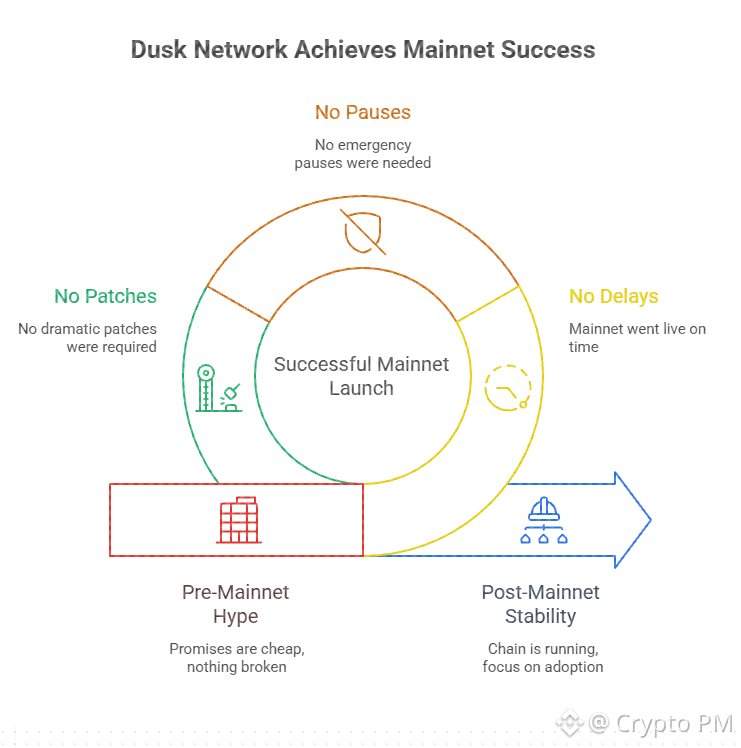
Mainnet went live on January 7 after six years of development. No delays. No emergency pauses. No dramatic patches. The chain is running, blocks are finalizing, and the focus has shifted away from launch optics toward adoption and execution. That alone puts Dusk in a very small minority.
This Chain Was Never Meant For Retail Excitement
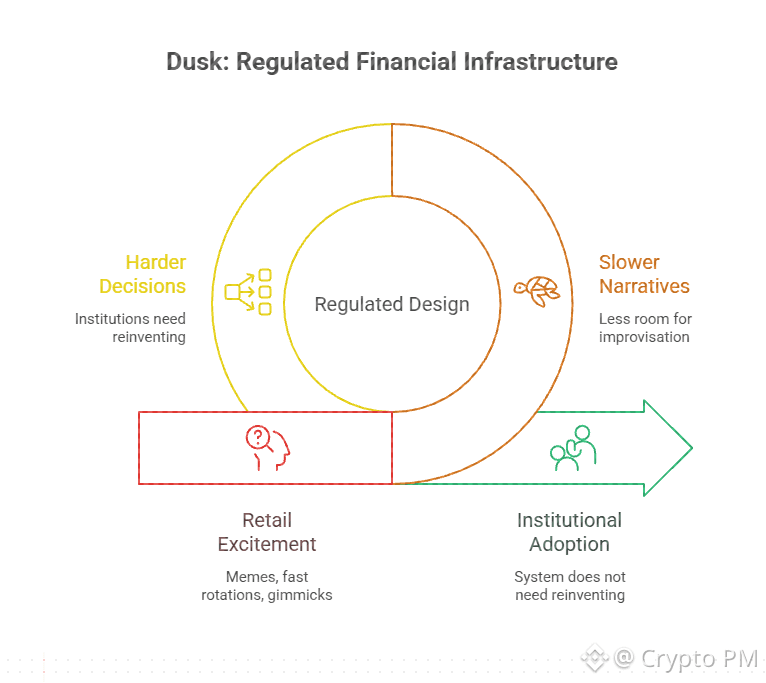
Let’s be blunt: if you are looking for memes, fast rotations, or viral DeFi gimmicks, Dusk is not built for you. It never was.
Dusk was designed as regulated financial infrastructure from day one. That means slower narratives, harder design decisions, and far less room for improvisation. The upside is that when institutions show up, the system does not need to be reinvented.
The Architecture Is Boring On Purpose
Dusk runs a modular stack that is already fully live:
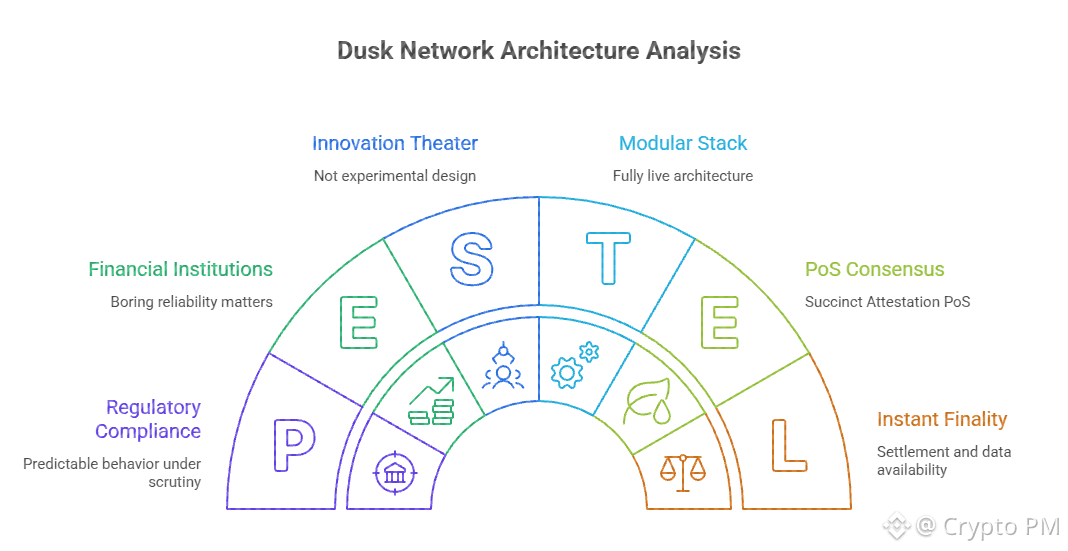
DuskDS handles settlement and data availability with Succinct Attestation PoS, delivering ~2 second blocks and instant finality
DuskEVM provides full EVM compatibility using standard Ethereum tooling
A trustless native bridge moves value between layers without wrappers or custodians
Nothing here is experimental. Nothing is duct taped together. The design goal is predictable behavior under regulatory scrutiny, not innovation theater.
That boring reliability is exactly what financial institutions care about.
Privacy Without The Usual Regulatory Excuses
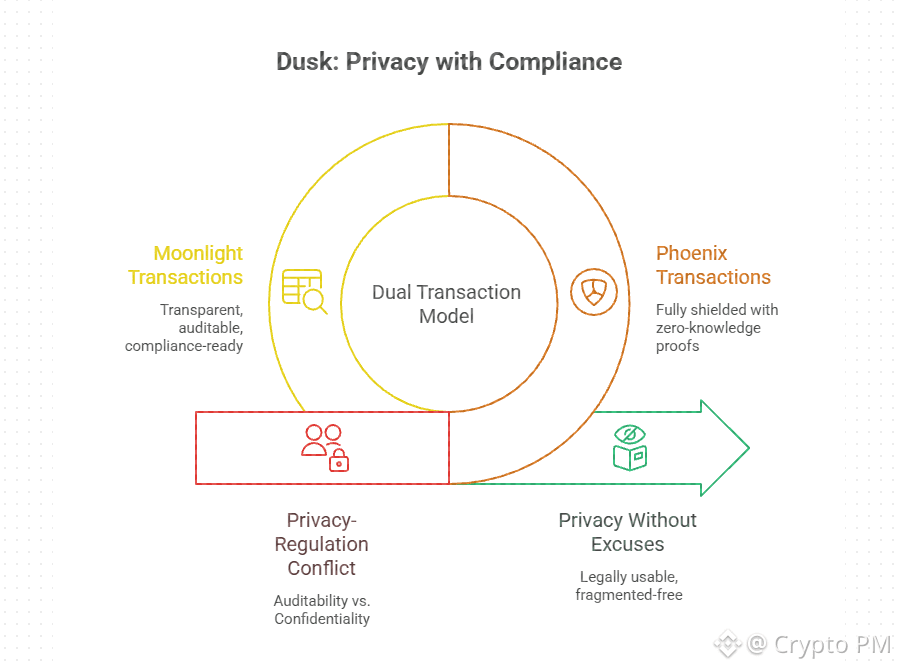
Most privacy chains hit the same wall: regulators want auditability, users want confidentiality, and projects pick one and pretend the other doesn’t matter.
Dusk does not.
Its dual transaction model is one of the most underrated design choices in crypto:
Phoenix transactions are fully shielded using zero-knowledge proofs
Moonlight transactions are transparent, auditable, and compliance-ready
Same chain. Same liquidity. Different privacy levels depending on use case. This avoids fragmentation while staying legally usable.
Hedger Is Where Dusk Gets Uncomfortable For Competitors
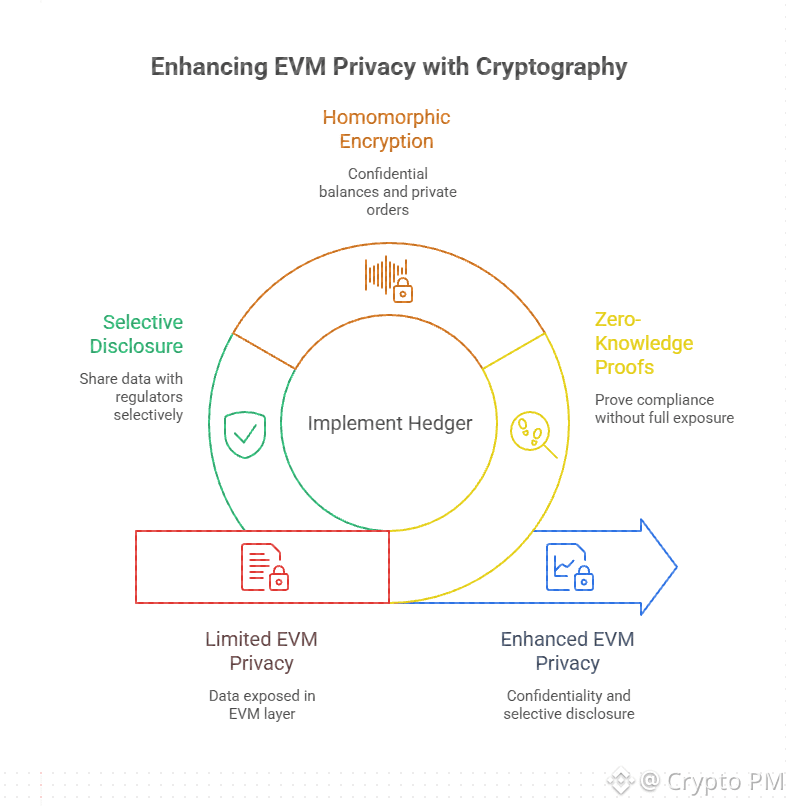
Hedger extends privacy directly into the EVM layer using zero-knowledge proofs and homomorphic encryption. That sounds abstract until you realize what it enables:
Confidential balances
Private order books
Selective disclosure for regulators without leaking user data
This is not “trust us” privacy. This is cryptographic proof of compliance without full exposure. Hedger Alpha is still in public testing, which is good — this is the kind of system that should be stressed before institutions depend on it.
RWAs Are Not A Narrative Here, They Are A Pipeline
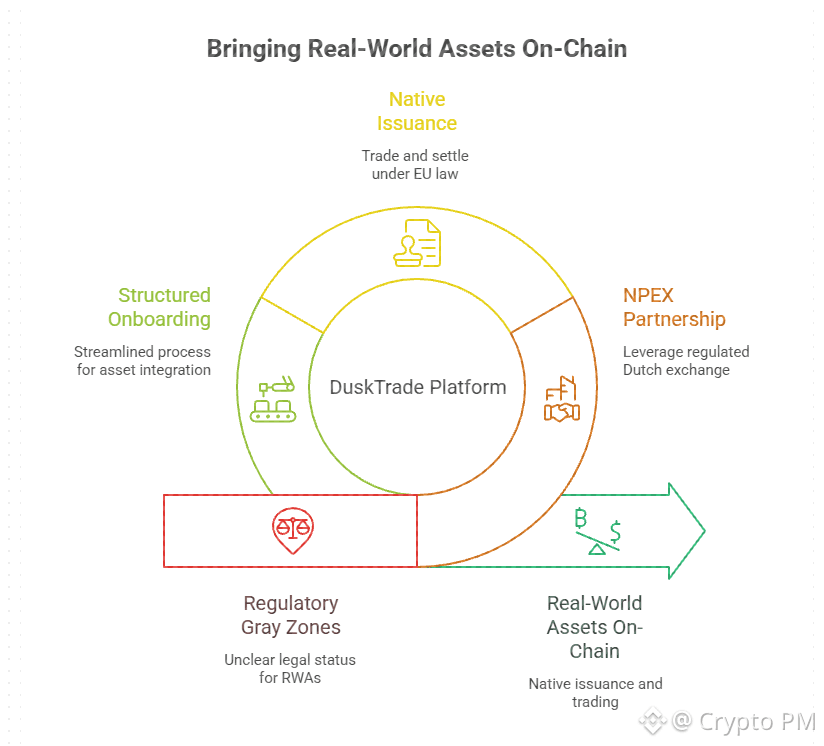
DuskTrade is not a whitepaper idea. It is a product being built with NPEX, a regulated Dutch exchange holding MTF, Broker, and ECSP licenses.
Over €300 million in tokenized securities are already in the pipeline. The waitlist is live. Onboarding is structured. This is how real-world assets come on-chain when lawyers are involved.
No wrapped assets. No regulatory gray zones. Native issuance, trading, and settlement under EU law.
Regulated Stablecoins Matter More Than DeFi Yield
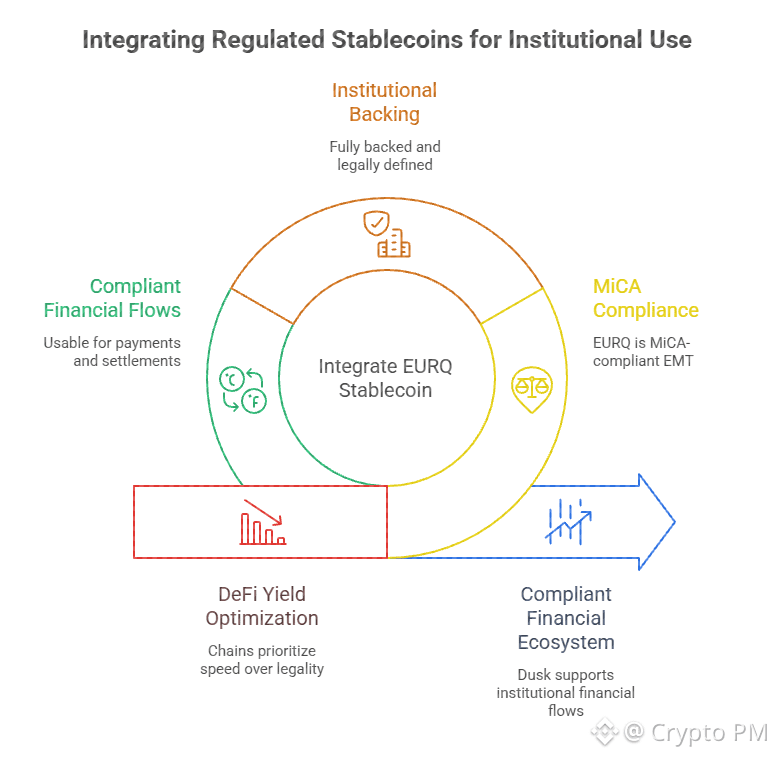
The integration of EURQ, a MiCA-compliant Electronic Money Token issued by Quantoz, is easy to overlook — and that would be a mistake.
EMTs are not like typical stablecoins. They are legally defined, strictly regulated, fully backed, and designed for institutional use. Supporting EURQ makes Dusk usable for payments, settlements, and collateral inside compliant financial flows.
This is where most chains quietly fail because they optimized for speed instead of legality.
Chainlink Is Doing Real Work Here
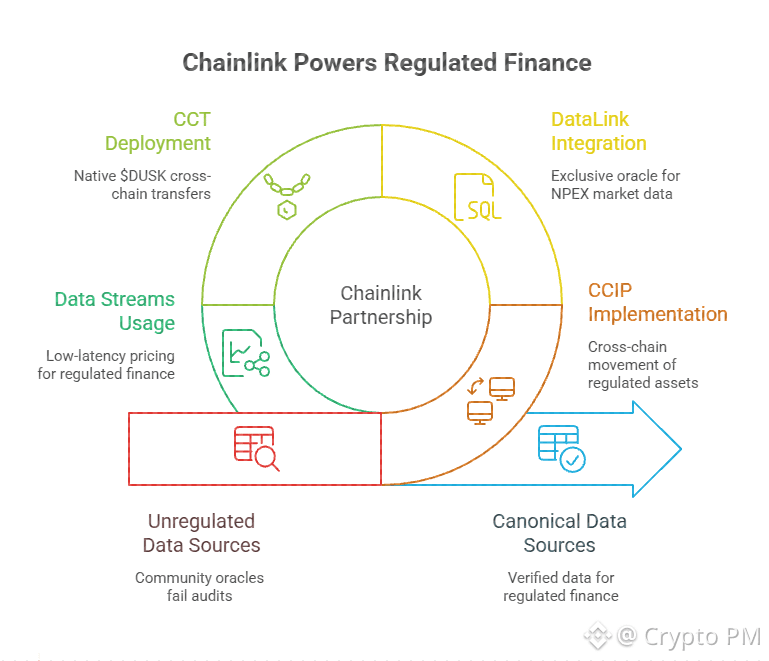
The Chainlink partnership is not branding. It is infrastructure:
CCIP for cross-chain movement of regulated assets
DataLink as the exclusive oracle for verified NPEX market data
CCT for native $DUSK cross-chain transfers
Data Streams for low-latency pricing
This matters because regulated finance needs canonical data sources. “Community oracles” do not pass audits.
The Honest Take
Dusk is not early-stage anymore. It is early-adoption.
That is a dangerous place to be because hype fades faster than usage grows. Price action may stay noisy. Attention will drift. But the system itself is already doing what it claimed it would do.
If Europe’s MiCA framework becomes the global reference point for regulated on-chain finance, Dusk is structurally aligned to benefit. If institutions move RWAs on-chain at scale, they will not build this stack themselves — they will use something like Dusk.
This is not a moonshot thesis. It is an infrastructure thesis.
And infrastructure only becomes obvious after it has been boring for a long time.
