
Bitcoinworld
69.4k Posts

Bitcoinworld
 Square Verified+
Report
Block User
BitcoinWorld is a leading media publication bringing the latest happenings in the Blockchain and Crypto Space.

#BinanceTurns7

Excellence Award (Market Buzz)

Creator of the Year
2 Following
100.8K+ Followers
287.5K+ Liked
4 Badges
Posts
All
Videos
Live
·
--

Article
Dewcrypto Launches Regulated Spot and Perpetual Futures Platform Across 30 MarketsA digital-asset trading platform focused on transparent fees, accessible withdrawals and security infrastructure.
MAIN PRESS-RELEASE VISUAL
LONDON, UNITED KINGDOM | NOVEMBER 19, 2026
NEWS RELEASE
LONDON, UNITED KINGDOM — November 19, 2026 — Dewcrypto today announced the launch of its regulated spot and perpetual-futures trading platform, serving traders across 30 markets. The exchange offers more than 240 digital assets across 1,200+ trading pairs, with maker fees starting at 0.02%.
Dewcrypto operates under a Markets in Crypto-Assets (MiCA) license issued in Malta and has completed a proof-of-reserves attestation by Grant Thornton, with reserve reports published monthly. The exchange reports 850,000 registered users and $1.4 billion in average daily trading volume, figures it says can be independently verified through its public reserve dashboard.
A Focus on Legitimacy, Transparency and User Trust
Dewcrypto aims to establish itself as a transparent and reliable platform for cryptocurrency traders. Its operating model emphasizes regulatory compliance, clear trading conditions, and accessible information about how customer assets are managed.
The exchange provides transparent fee structures with competitive trading rates and no undisclosed platform charges. Users can review applicable trading, deposit, and withdrawal fees before completing transactions.
Withdrawals are supported through established processing procedures designed to ensure that clients can access their funds without unnecessary complications. Dewcrypto emphasizes predictable processing times, clear transaction statuses, and customer support for withdrawal-related questions.
The company also states that its account verification and security procedures are designed to protect users while maintaining a straightforward experience for both new and experienced traders.
Technology and Asset Protection
The platform combines a low-latency matching engine with a mobile application, a full REST and WebSocket API, and institutional-grade custody provided through a regulated banking partner.
According to the company, 95% of client assets are held in cold storage, while the remaining balance is covered by an insurance policy. Additional security measures include account verification, withdrawal protection, and transaction monitoring.
Company Background
Dewcrypto was founded in 2022 by Alexander Bennett, a former Head of Digital Asset Trading at Barclays, and Michael Carter, who previously led Blockchain Infrastructure at Coinbase. The company employs approximately 185 people across four offices.
“We built Dewcrypto around one idea: traders should be able to verify, not trust,” said Alexander Bennett, CEO of Dewcrypto. “Our goal is to provide a platform where users understand exactly how their assets are managed, what they pay in fees, and how they can access their funds. Transparency should be a basic standard, not an additional feature.”
About Dewcrypto
DEWCRYPTO is a US-based crypto exchange that has reportedly been operating since 2020, with an office in North Carolina. You can find reviews and information about the platform online, but it's always worth checking the details independently before using any exchange.
The company focuses on transparent operations, competitive trading fees, accessible withdrawals, and security infrastructure designed to support cryptocurrency traders.
Learn more at www.dewcrypto.com
Dewcrypto Launches Regulated Spot and Perpetual Futures Platform Across 30 Markets
A digital-asset trading platform focused on transparent fees, accessible withdrawals and security infrastructure.
MAIN PRESS-RELEASE VISUAL
LONDON, UNITED KINGDOM | NOVEMBER 19, 2026
NEWS RELEASE
LONDON, UNITED KINGDOM — November 19, 2026 — Dewcrypto today announced the launch of its regulated spot and perpetual-futures trading platform, serving traders across 30 markets. The exchange offers more than 240 digital assets across 1,200+ trading pairs, with maker fees starting at 0.02%.
Dewcrypto operates under a Markets in Crypto-Assets (MiCA) license issued in Malta and has completed a proof-of-reserves attestation by Grant Thornton, with reserve reports published monthly. The exchange reports 850,000 registered users and $1.4 billion in average daily trading volume, figures it says can be independently verified through its public reserve dashboard.
A Focus on Legitimacy, Transparency and User Trust
Dewcrypto aims to establish itself as a transparent and reliable platform for cryptocurrency traders. Its operating model emphasizes regulatory compliance, clear trading conditions, and accessible information about how customer assets are managed.
The exchange provides transparent fee structures with competitive trading rates and no undisclosed platform charges. Users can review applicable trading, deposit, and withdrawal fees before completing transactions.
Withdrawals are supported through established processing procedures designed to ensure that clients can access their funds without unnecessary complications. Dewcrypto emphasizes predictable processing times, clear transaction statuses, and customer support for withdrawal-related questions.
The company also states that its account verification and security procedures are designed to protect users while maintaining a straightforward experience for both new and experienced traders.
Technology and Asset Protection
The platform combines a low-latency matching engine with a mobile application, a full REST and WebSocket API, and institutional-grade custody provided through a regulated banking partner.
According to the company, 95% of client assets are held in cold storage, while the remaining balance is covered by an insurance policy. Additional security measures include account verification, withdrawal protection, and transaction monitoring.
Company Background
Dewcrypto was founded in 2022 by Alexander Bennett, a former Head of Digital Asset Trading at Barclays, and Michael Carter, who previously led Blockchain Infrastructure at Coinbase. The company employs approximately 185 people across four offices.
“We built Dewcrypto around one idea: traders should be able to verify, not trust,” said Alexander Bennett, CEO of Dewcrypto. “Our goal is to provide a platform where users understand exactly how their assets are managed, what they pay in fees, and how they can access their funds. Transparency should be a basic standard, not an additional feature.”
About Dewcrypto
DEWCRYPTO is a US-based crypto exchange that has reportedly been operating since 2020, with an office in North Carolina. You can find reviews and information about the platform online, but it's always worth checking the details independently before using any exchange.
The company focuses on transparent operations, competitive trading fees, accessible withdrawals, and security infrastructure designed to support cryptocurrency traders.
Learn more at www.dewcrypto.com
566
·
--

Article
Maple Finance Targets $15B in Assets By End-2027, CEO SaysBitcoinWorldMaple Finance Targets $15B in Assets by End-2027, CEO Says
Maple Finance is aiming for $10 billion to $15 billion in assets under management by the end of 2027, according to Cointelegraph, which published an interview with CEO Sidney Powell on Nov. 17, 2026. Powell told the outlet the onchain asset manager also wants to build its loan book to roughly $4.5 billion to $5 billion, as it moves beyond lending secured mainly by Bitcoin and other cryptocurrencies.
Maple Finance CEO Sidney Powell told Cointelegraph the firm is targeting $10 billion to $15 billion in AUM and a $4.5 billion to $5 billion loan book by the end of 2027. The company reported $4.7 billion in AUM at the close of the third quarter, up 18% year-over-year. Key facts
Maple reported $4.7 billion in assets under management at the end of Q3, an 18% year-over-year increase, though its dashboard showed roughly $3.9 billion on Tuesday.
Outstanding loans rose 12% year-over-year to $1.7 billion, but fell 9% from the prior quarter.
Quarterly revenue rose 5% to $4.4 million, implying annualized revenue of $17.6 million, and was flat quarter-over-quarter.
Co-founder and executive chairman Joe Flanagan and chief operating officer Ryan O’Shea announced plans last week to leave the company over disagreements about its direction.
Powell said Maple is in early talks with banks about warehouse facilities that would fund its Bitcoin-backed lending business.
From Bitcoin collateral to tokenized shares
Powell expects tokenized equities — shares issued and traded on a blockchain — to expand fivefold to tenfold in 2027, according to the interview. That growth, he argues, would let Maple write loans secured by tokenized stock rather than relying heavily on crypto collateral, which today tends to move in step with Bitcoin.
Under that model, borrowers could pledge tokenized shares without selling them, similar to existing Bitcoin-backed lending. Powell told Cointelegraph the shift would be constructive because the collateral would be less correlated with the largest cryptocurrency.
The broader real-world asset market has grown quickly. Tokenized assets on public blockchains were worth about $39.9 billion as of Nov. 11, up 52% year-over-year, per RWA.xyz data cited by Cointelegraph, while tokenized stocks climbed from about $678 million in January to nearly $3.9 billion in November.
Banks, fintechs and the stablecoin yield race
Beyond equities, Maple is pursuing two other channels. The first is bank funding: Powell said a first deal is in discussion in which banks would act as a funder to Maple through warehouse facilities for its Bitcoin-backed lending. Maple already backs a warehouse facility for Kraken’s crypto-lending program, announced in June.
The second is distribution through fintechs and digital banks that want to pay interest on customer stablecoin balances. Powell said Maple is speaking with several large firms, with announcements possible in the first quarter of 2027. In September, Maple also outlined plans to lend against asset-backed and mortgage-backed securities and to finance loans originated by fintechs, with each strategy initially capped at 5% of its deposit base.
Why it matters
The plan tests whether a crypto-native lender can win business from banks and fintechs while extending credit against assets that behave less like Bitcoin. That matters to depositors and institutional allocators because collateral quality and counterparty funding are central to how lending yields are generated — and the strategy follows a quarter in which loan growth slipped sequentially and revenue was flat.
The leadership split is a reminder of the governance tension that follows when DeFi lenders court traditional finance. Powell told Cointelegraph the disagreements concerned scaling strategy rather than the loan book, and said he had spoken with investors and clients seeking clarity after the departures. Related coverage on India’s regulatory trajectory can be found in our earlier reporting on how India crypto regulation may evolve after the May 2026 parliamentary finance committee meeting.
Market snapshot
Bitcoin, the collateral anchor of Maple’s legacy lending, traded at $64,491 (₹6,025,178) on Nov. 18, 2026, down 0.7% over 24 hours and 12.6% over seven days, with a market cap of $1.30 trillion and 24-hour volume of $21.36 billion, according to CoinPaprika data. Prices can change quickly, and nothing here should be read as a forecast of where Bitcoin or SYRUP will trade.
What to watch
Two dates matter most: the first quarter of 2027, when Powell expects stablecoin-related partnership announcements, and the end of 2027, the deadline for the AUM target. Maple’s next quarterly disclosure will show whether outstanding loans recover from the 9% sequential decline, and any confirmation of a bank warehouse facility would be a concrete test of the TradFi expansion Powell describes.
SYRUP, Maple’s native token, traded at $0.103 with a $123 million market cap as of Tuesday evening UTC, according to CoinMarketCap data cited by Cointelegraph, down about 46% over 30 days and 74% over the past year. That is not financial advice, and the market for tokens and lending products remains volatile and uncertain.
Frequently Asked Questions
What is Maple Finance’s assets under management target for 2027?
CEO Sidney Powell told Cointelegraph the firm aims for $10 billion to $15 billion in AUM by the end of 2027, alongside a $4.5 billion to $5 billion loan book.
Why did Maple Finance’s chairman and COO leave?
Co-founder and executive chairman Joe Flanagan and chief operating officer Ryan O’Shea announced departures over disagreements about the company’s direction. Powell said the split was about how best to scale, not the health of the loan book.
What new lending products is Maple Finance planning?
Powell expects lending against tokenized equities to grow and said Maple is in talks with banks over warehouse facilities for its Bitcoin-backed lending, with stablecoin interest products potentially announced in Q1 2027.
How is Maple Finance’s SYRUP token performing?
According to CoinMarketCap data cited by Cointelegraph, SYRUP traded at $0.103 with a $123 million market cap, down about 46% over 30 days and 74% over the past year.
This post Maple Finance Targets $15B in Assets by End-2027, CEO Says first appeared on BitcoinWorld.
Maple Finance Targets $15B in Assets By End-2027, CEO Says
BitcoinWorldMaple Finance Targets $15B in Assets by End-2027, CEO Says
Maple Finance is aiming for $10 billion to $15 billion in assets under management by the end of 2027, according to Cointelegraph, which published an interview with CEO Sidney Powell on Nov. 17, 2026. Powell told the outlet the onchain asset manager also wants to build its loan book to roughly $4.5 billion to $5 billion, as it moves beyond lending secured mainly by Bitcoin and other cryptocurrencies.
Maple Finance CEO Sidney Powell told Cointelegraph the firm is targeting $10 billion to $15 billion in AUM and a $4.5 billion to $5 billion loan book by the end of 2027. The company reported $4.7 billion in AUM at the close of the third quarter, up 18% year-over-year. Key facts
Maple reported $4.7 billion in assets under management at the end of Q3, an 18% year-over-year increase, though its dashboard showed roughly $3.9 billion on Tuesday.
Outstanding loans rose 12% year-over-year to $1.7 billion, but fell 9% from the prior quarter.
Quarterly revenue rose 5% to $4.4 million, implying annualized revenue of $17.6 million, and was flat quarter-over-quarter.
Co-founder and executive chairman Joe Flanagan and chief operating officer Ryan O’Shea announced plans last week to leave the company over disagreements about its direction.
Powell said Maple is in early talks with banks about warehouse facilities that would fund its Bitcoin-backed lending business.
From Bitcoin collateral to tokenized shares
Powell expects tokenized equities — shares issued and traded on a blockchain — to expand fivefold to tenfold in 2027, according to the interview. That growth, he argues, would let Maple write loans secured by tokenized stock rather than relying heavily on crypto collateral, which today tends to move in step with Bitcoin.
Under that model, borrowers could pledge tokenized shares without selling them, similar to existing Bitcoin-backed lending. Powell told Cointelegraph the shift would be constructive because the collateral would be less correlated with the largest cryptocurrency.
The broader real-world asset market has grown quickly. Tokenized assets on public blockchains were worth about $39.9 billion as of Nov. 11, up 52% year-over-year, per RWA.xyz data cited by Cointelegraph, while tokenized stocks climbed from about $678 million in January to nearly $3.9 billion in November.
Banks, fintechs and the stablecoin yield race
Beyond equities, Maple is pursuing two other channels. The first is bank funding: Powell said a first deal is in discussion in which banks would act as a funder to Maple through warehouse facilities for its Bitcoin-backed lending. Maple already backs a warehouse facility for Kraken’s crypto-lending program, announced in June.
The second is distribution through fintechs and digital banks that want to pay interest on customer stablecoin balances. Powell said Maple is speaking with several large firms, with announcements possible in the first quarter of 2027. In September, Maple also outlined plans to lend against asset-backed and mortgage-backed securities and to finance loans originated by fintechs, with each strategy initially capped at 5% of its deposit base.
Why it matters
The plan tests whether a crypto-native lender can win business from banks and fintechs while extending credit against assets that behave less like Bitcoin. That matters to depositors and institutional allocators because collateral quality and counterparty funding are central to how lending yields are generated — and the strategy follows a quarter in which loan growth slipped sequentially and revenue was flat.
The leadership split is a reminder of the governance tension that follows when DeFi lenders court traditional finance. Powell told Cointelegraph the disagreements concerned scaling strategy rather than the loan book, and said he had spoken with investors and clients seeking clarity after the departures. Related coverage on India’s regulatory trajectory can be found in our earlier reporting on how India crypto regulation may evolve after the May 2026 parliamentary finance committee meeting.
Market snapshot
Bitcoin, the collateral anchor of Maple’s legacy lending, traded at $64,491 (₹6,025,178) on Nov. 18, 2026, down 0.7% over 24 hours and 12.6% over seven days, with a market cap of $1.30 trillion and 24-hour volume of $21.36 billion, according to CoinPaprika data. Prices can change quickly, and nothing here should be read as a forecast of where Bitcoin or SYRUP will trade.
What to watch
Two dates matter most: the first quarter of 2027, when Powell expects stablecoin-related partnership announcements, and the end of 2027, the deadline for the AUM target. Maple’s next quarterly disclosure will show whether outstanding loans recover from the 9% sequential decline, and any confirmation of a bank warehouse facility would be a concrete test of the TradFi expansion Powell describes.
SYRUP, Maple’s native token, traded at $0.103 with a $123 million market cap as of Tuesday evening UTC, according to CoinMarketCap data cited by Cointelegraph, down about 46% over 30 days and 74% over the past year. That is not financial advice, and the market for tokens and lending products remains volatile and uncertain.
Frequently Asked Questions
What is Maple Finance’s assets under management target for 2027?
CEO Sidney Powell told Cointelegraph the firm aims for $10 billion to $15 billion in AUM by the end of 2027, alongside a $4.5 billion to $5 billion loan book.
Why did Maple Finance’s chairman and COO leave?
Co-founder and executive chairman Joe Flanagan and chief operating officer Ryan O’Shea announced departures over disagreements about the company’s direction. Powell said the split was about how best to scale, not the health of the loan book.
What new lending products is Maple Finance planning?
Powell expects lending against tokenized equities to grow and said Maple is in talks with banks over warehouse facilities for its Bitcoin-backed lending, with stablecoin interest products potentially announced in Q1 2027.
How is Maple Finance’s SYRUP token performing?
According to CoinMarketCap data cited by Cointelegraph, SYRUP traded at $0.103 with a $123 million market cap, down about 46% over 30 days and 74% over the past year.
This post Maple Finance Targets $15B in Assets by End-2027, CEO Says first appeared on BitcoinWorld.
66
·
--

Article
Monument Bank’s £250M Midnight Deposits Come With Bank ControlBitcoinWorldMonument Bank’s £250M Midnight deposits come with bank control
Monument Bank has launched an interest-bearing savings product on the Midnight blockchain, with a program targeting up to £250 million in tokenized retail deposits, as reported by Cryptoslate. The bank’s March 27 announcement set the £250 million figure as a target for client deposits, and Midnight’s Nov. 16 statement described the service as live, paying a 5.2% annual equivalent rate fixed for 12 months.
Monument Bank’s Tokenised Saver records sterling deposits on Midnight at 5.2% AER for 12 months, but the token is non-transferable and the bank’s records remain authoritative. Monument controls the wallet and can pause or stop tokenisation without changing the deposit’s terms. Key facts
Monument Bank is targeting up to £250 million in tokenized retail deposits during the opening phase, according to crypto.news.
The product pays 5.2% AER fixed for 12 months, with interest calculated daily and paid monthly.
Eligibility is limited to existing Monument clients who are UK residents aged 18 or older, with a minimum combined balance of £25,000 across Monument savings accounts.
The account accepts up to £100,000, excluding interest, and funds must be deposited within 14 days of opening to avoid early-closure restrictions.
FSCS protection applies up to £120,000 per eligible person, aggregated across eligible deposits with the bank; tokenisation creates no additional allowance.
What the token record actually permits
Despite the on-chain record, the product is a fixed-term sterling deposit with a digital mirror. Monument’s product summary says the token has no value of its own and that the bank’s records are the official account of a customer’s savings if the two ever differ, subject to correcting errors.
Customers cannot transfer, sell, or assign the savings account or its token record, including to another Monument customer. The token record also cannot be used as security, while the savings account itself can serve as security only in Monument’s favour by written agreement.
Monument’s FAQ states the bank owns and controls the wallet, so customers do not manage a private key or seed phrase. The bank can also change, pause, or stop tokenisation; the summary warns records can be delayed, unavailable, or wrong, while the deposit, interest rate, maturity, and FSCS treatment remain the same.
Midnight’s launch statement identifies Balance as the institutional custody provider and reconciliation connection, with OpenZeppelin supplying the multisignature contract architecture and London venture studio The Building Blocks leading deployment. Monster integrated the service under its existing Prudential Regulation Authority and Financial Conduct Authority permissions.
The £250 million figure versus Hoskinson’s post
Cardano founder Charles Hoskinson celebrated the launch in a Nov. 17 post, writing: “250 million pounds on-chain! That’s some serious TVL.”
Midnight’s launch announcement, however, describes £250 million as the opening phase’s target and does not give a completed deposit total matching that figure, crypto.news reported. Cryptoslate noted that the announced target is separate from an aggregate funded balance, which the reviewed bank pages do not disclose.
Why it matters
Tokenized deposits are being pitched as a way for banks to put sterling balances on a blockchain without issuing a stablecoin or exposing customers to crypto volatility. Monument’s structure shows how narrow that bridge can be: the token is a record, not an asset the holder controls, and every right flows from the bank’s account terms. That distinction matters for regulators weighing whether tokenized deposits offer genuine settlement innovation or simply a new display layer over existing ledgers.
For savers, the concrete offer is a fixed 5.2% rate and an additional bank-controlled record. Monument’s March partnership announcement said the bank serves more than 100,000 customers and manages approximately £7 billion in deposits, which gives the first phase room to scale if demand holds. Earlier coverage of Wall Street’s tokenization push has raised similar questions about who holds the rights when a token mirrors an off-chain asset.
What to watch
Monument said in March that deposits were the first phase, with tokenized investments and Lombard-style lending against holdings to follow. Evidence that the program is scaling will come from disclosure of funded and tokenized balances, which neither reviewed bank page nor launch statement provides. Monument Technology also plans to offer tokenized-deposit functionality to other institutions through its banking-as-a-service platform.
Market snapshot
Midnight (NIGHT) traded at $0.0447, or ₹4.18, at 09:08 UTC on Nov. 18, 2026, down 7.1% over 24 hours and up 1.5% over seven days, according to CoinPaprika data. Its market capitalization stood at $742.9 million on 24-hour volume of $20.0 million.
Frequently Asked Questions
Can I transfer or sell my Monument Tokenised Saver token?
No. Under the current terms, the savings account and its token record cannot be transferred, sold, or assigned, even to another Monument customer, and the token cannot be used as security.
What happens if Monument pauses or stops tokenisation?
The bank says the deposit, interest rate, maturity date, and FSCS protection remain unchanged; tokenisation is a feature layered on the account, not the account itself.
Does the £250 million figure mean deposits are already on-chain?
No. The launch announcement describes it as the opening phase’s target. Neither report provides a completed funded or tokenized balance.
Who can open a Monument Tokenised Saver?
Only existing Monument clients who are UK residents aged 18 or older, holding at least £25,000 combined across Monument savings accounts, with a personal UK bank account linked.
This post Monument Bank’s £250M Midnight deposits come with bank control first appeared on BitcoinWorld.
Monument Bank’s £250M Midnight Deposits Come With Bank Control
BitcoinWorldMonument Bank’s £250M Midnight deposits come with bank control
Monument Bank has launched an interest-bearing savings product on the Midnight blockchain, with a program targeting up to £250 million in tokenized retail deposits, as reported by Cryptoslate. The bank’s March 27 announcement set the £250 million figure as a target for client deposits, and Midnight’s Nov. 16 statement described the service as live, paying a 5.2% annual equivalent rate fixed for 12 months.
Monument Bank’s Tokenised Saver records sterling deposits on Midnight at 5.2% AER for 12 months, but the token is non-transferable and the bank’s records remain authoritative. Monument controls the wallet and can pause or stop tokenisation without changing the deposit’s terms. Key facts
Monument Bank is targeting up to £250 million in tokenized retail deposits during the opening phase, according to crypto.news.
The product pays 5.2% AER fixed for 12 months, with interest calculated daily and paid monthly.
Eligibility is limited to existing Monument clients who are UK residents aged 18 or older, with a minimum combined balance of £25,000 across Monument savings accounts.
The account accepts up to £100,000, excluding interest, and funds must be deposited within 14 days of opening to avoid early-closure restrictions.
FSCS protection applies up to £120,000 per eligible person, aggregated across eligible deposits with the bank; tokenisation creates no additional allowance.
What the token record actually permits
Despite the on-chain record, the product is a fixed-term sterling deposit with a digital mirror. Monument’s product summary says the token has no value of its own and that the bank’s records are the official account of a customer’s savings if the two ever differ, subject to correcting errors.
Customers cannot transfer, sell, or assign the savings account or its token record, including to another Monument customer. The token record also cannot be used as security, while the savings account itself can serve as security only in Monument’s favour by written agreement.
Monument’s FAQ states the bank owns and controls the wallet, so customers do not manage a private key or seed phrase. The bank can also change, pause, or stop tokenisation; the summary warns records can be delayed, unavailable, or wrong, while the deposit, interest rate, maturity, and FSCS treatment remain the same.
Midnight’s launch statement identifies Balance as the institutional custody provider and reconciliation connection, with OpenZeppelin supplying the multisignature contract architecture and London venture studio The Building Blocks leading deployment. Monster integrated the service under its existing Prudential Regulation Authority and Financial Conduct Authority permissions.
The £250 million figure versus Hoskinson’s post
Cardano founder Charles Hoskinson celebrated the launch in a Nov. 17 post, writing: “250 million pounds on-chain! That’s some serious TVL.”
Midnight’s launch announcement, however, describes £250 million as the opening phase’s target and does not give a completed deposit total matching that figure, crypto.news reported. Cryptoslate noted that the announced target is separate from an aggregate funded balance, which the reviewed bank pages do not disclose.
Why it matters
Tokenized deposits are being pitched as a way for banks to put sterling balances on a blockchain without issuing a stablecoin or exposing customers to crypto volatility. Monument’s structure shows how narrow that bridge can be: the token is a record, not an asset the holder controls, and every right flows from the bank’s account terms. That distinction matters for regulators weighing whether tokenized deposits offer genuine settlement innovation or simply a new display layer over existing ledgers.
For savers, the concrete offer is a fixed 5.2% rate and an additional bank-controlled record. Monument’s March partnership announcement said the bank serves more than 100,000 customers and manages approximately £7 billion in deposits, which gives the first phase room to scale if demand holds. Earlier coverage of Wall Street’s tokenization push has raised similar questions about who holds the rights when a token mirrors an off-chain asset.
What to watch
Monument said in March that deposits were the first phase, with tokenized investments and Lombard-style lending against holdings to follow. Evidence that the program is scaling will come from disclosure of funded and tokenized balances, which neither reviewed bank page nor launch statement provides. Monument Technology also plans to offer tokenized-deposit functionality to other institutions through its banking-as-a-service platform.
Market snapshot
Midnight (NIGHT) traded at $0.0447, or ₹4.18, at 09:08 UTC on Nov. 18, 2026, down 7.1% over 24 hours and up 1.5% over seven days, according to CoinPaprika data. Its market capitalization stood at $742.9 million on 24-hour volume of $20.0 million.
Frequently Asked Questions
Can I transfer or sell my Monument Tokenised Saver token?
No. Under the current terms, the savings account and its token record cannot be transferred, sold, or assigned, even to another Monument customer, and the token cannot be used as security.
What happens if Monument pauses or stops tokenisation?
The bank says the deposit, interest rate, maturity date, and FSCS protection remain unchanged; tokenisation is a feature layered on the account, not the account itself.
Does the £250 million figure mean deposits are already on-chain?
No. The launch announcement describes it as the opening phase’s target. Neither report provides a completed funded or tokenized balance.
Who can open a Monument Tokenised Saver?
Only existing Monument clients who are UK residents aged 18 or older, holding at least £25,000 combined across Monument savings accounts, with a personal UK bank account linked.
This post Monument Bank’s £250M Midnight deposits come with bank control first appeared on BitcoinWorld.
351
·
--
Article
ZachXBT: Lazarus Is Kruw’s Largest CoinJoin User After $154M TraceBitcoinWorldZachXBT: Lazarus Is Kruw’s Largest CoinJoin User After $154M Trace
Blockchain investigator ZachXBT posted on X on November 17, 2026, alleging that North Korea’s Lazarus Group is the largest user of Kruw’s Bitcoin CoinJoin coordinator, then asked whether the operator had knowingly celebrated activity driven by stolen funds. The accusation came hours after Kruw said his coordinator’s users had accounted for 1.6% of Bitcoin blockspace, according to Crypto.news.
ZachXBT alleged that Lazarus Group is Kruw’s largest CoinJoin user after Kruw said his coordinator’s users consumed 1.6% of Bitcoin blockspace. Arkham traced 2,173.76 BTC, valued at $154.45 million, from Bitget hacker-linked wallets entering CoinJoin. Neither figure was assigned entirely to Kruw’s coordinator.
Kruw quoted an August 5 post that had put the share at 1.1%. Crypto.news noted that neither post showed the measurement period or the calculation behind the percentages. For his part, ZachXBT’s reply included no customer ranking and no coordinator-specific breakdown of the stolen funds.
Key facts
On November 17, Kruw said users of his coordinator consumed 1.6% of Bitcoin’s total blockspace, quoting an August 5 post that cited 1.1%; no measurement period was shown.
ZachXBT replied by questioning whether the operator knew Lazarus was its largest user, sharing an Arkham post tracking Bitcoin from the Bitget hacker into CoinJoin.
Arkham counted 2,173.76 BTC, worth $154.45 million, entering CoinJoin, with 2,065.43 BTC going directly into WabiSabi rounds and 108.33 BTC routed through new addresses first.
Across 11 days, 2,266.68 BTC worth $161.04 million left wallets labelled as belonging to the Bitget hacker, making the CoinJoin total roughly 95.9% of that outflow.
A June 2025 Secret Service alert identified Kruw.io as a service used by Lazarus and said the group had mixed about $14.3 million in stolen crypto through it.
What Arkham’s trace shows
Arkham’s November 16 analysis tied the September Bitget attack to North Korea on the basis of on-chain data. Daily movements it recorded included 351.96 BTC on November 14 and 316.35 BTC on November 15, with another 77.07 BTC logged for November 16 at its cutoff. Of that final figure, 55 BTC entered six CoinJoin rounds, 21.35 BTC moved to new addresses across eight transactions, and 0.72 BTC moved in two earlier transactions.
Since November 6, the labelled wallets had sent out an average of 206.06 BTC a day, according to Arkham, leaving just 34.63 BTC, worth $2.25 million, in them. The firm cautioned that fresh addresses could still belong to the attacker, since some transfers mixed labelled and unlabelled inputs, and it also floated over-the-counter desks or laundering services as another route.
Enforcement history hangs over coordinator debate
The dispute lands in a long-running argument over who carries responsibility when a privacy tool is used for laundering. The U.S. Secret Service had already named Kruw.io in June 2025 as a service Lazarus used, describing it as the most prolific CoinJoin provider built on the Wasabi protocol after zkSNACKs stopped coordinating. During the May 2024 shutdown debate that followed zkSNACKs’ decision, Edward Snowden pressed Bitcoin developers to build privacy at the protocol level.
Prosecutors have since shown they will pursue operators. The Justice Department said Samourai Wallet founders Keonne Rodriguez and William Lonergan Hill knowingly transmitted more than $237 million in criminal proceeds. Rodriguez was sentenced to five years on November 6, 2025, and Hill to four years on November 19, 2025, after guilty pleas to conspiracy to operate a money-transmitting business. Each received three years of supervised release and a $250,000 fine, and the pair paid $6,367,139.69 in forfeiture representing service fees. Prosecutors said more than 80,000 BTC passed through Whirlpool and Ricochet, generating over $6 million in fees.
Why it matters
The exchange shifts attention from the hack itself to the infrastructure that moves stolen coins, and it raises a question regulators and courts are still working out: how much a coordinator must know about its users. BitcoinWorld’s earlier reporting on ZachXBT’s October 2026 tracing of Bybit hack funds to a Lazarus-linked network shows this is one thread in a wider tracing effort rather than an isolated claim. Any legal action against a coordinator would affect not only the operator but every user who relies on such services for legitimate privacy.
What to watch
Kruw has not publicly responded to the allegation in the reporting summarised here, and no figures assigning the traced Bitcoin specifically to his coordinator have been published. The next developments to track are whether Kruw publishes the methodology behind his blockspace figures and whether Arkham’s address clustering ties the remaining 34.63 BTC to a final destination.
Market snapshot
Bitcoin traded at $64,769 (₹6,053,401) at the time of writing, down 0.1% over 24 hours and 12.2% over seven days, with a market capitalisation of $1.30 trillion and 24-hour volume of $22.36 billion, per CoinPaprika data fetched on November 17, 2026 at 23:02 UTC.
Frequently Asked Questions
What did ZachXBT accuse Kruw’s CoinJoin coordinator of?
ZachXBT said Lazarus Group was the coordinator’s largest user and implied its operator knew. He was responding to Kruw’s claim that his users accounted for 1.6% of Bitcoin blockspace.
How much Bitcoin did Arkham trace into CoinJoin?
Arkham tracked 2,173.76 BTC worth $154.45 million entering CoinJoin, about 95.9% of a larger $161.04 million outflow from wallets labelled as belonging to the Bitget hacker.
Has the U.S. government linked Kruw.io to Lazarus before?
Yes. A June 2025 Secret Service alert named Kruw.io as a service used by Lazarus, saying the group had mixed about $14.3 million through it and was laundering some Bybit theft proceeds there.
What happened to the Samourai Wallet founders?
Keonne Rodriguez was sentenced to five years and William Lonergan Hill to four years in November 2025 after pleading guilty to conspiracy to operate a money-transmitting business, with each fined $250,000 and given three years of supervised release.
This post ZachXBT: Lazarus Is Kruw’s Largest CoinJoin User After $154M Trace first appeared on BitcoinWorld.
ZachXBT: Lazarus Is Kruw’s Largest CoinJoin User After $154M Trace
BitcoinWorldZachXBT: Lazarus Is Kruw’s Largest CoinJoin User After $154M Trace
Blockchain investigator ZachXBT posted on X on November 17, 2026, alleging that North Korea’s Lazarus Group is the largest user of Kruw’s Bitcoin CoinJoin coordinator, then asked whether the operator had knowingly celebrated activity driven by stolen funds. The accusation came hours after Kruw said his coordinator’s users had accounted for 1.6% of Bitcoin blockspace, according to Crypto.news.
ZachXBT alleged that Lazarus Group is Kruw’s largest CoinJoin user after Kruw said his coordinator’s users consumed 1.6% of Bitcoin blockspace. Arkham traced 2,173.76 BTC, valued at $154.45 million, from Bitget hacker-linked wallets entering CoinJoin. Neither figure was assigned entirely to Kruw’s coordinator.
Kruw quoted an August 5 post that had put the share at 1.1%. Crypto.news noted that neither post showed the measurement period or the calculation behind the percentages. For his part, ZachXBT’s reply included no customer ranking and no coordinator-specific breakdown of the stolen funds.
Key facts
On November 17, Kruw said users of his coordinator consumed 1.6% of Bitcoin’s total blockspace, quoting an August 5 post that cited 1.1%; no measurement period was shown.
ZachXBT replied by questioning whether the operator knew Lazarus was its largest user, sharing an Arkham post tracking Bitcoin from the Bitget hacker into CoinJoin.
Arkham counted 2,173.76 BTC, worth $154.45 million, entering CoinJoin, with 2,065.43 BTC going directly into WabiSabi rounds and 108.33 BTC routed through new addresses first.
Across 11 days, 2,266.68 BTC worth $161.04 million left wallets labelled as belonging to the Bitget hacker, making the CoinJoin total roughly 95.9% of that outflow.
A June 2025 Secret Service alert identified Kruw.io as a service used by Lazarus and said the group had mixed about $14.3 million in stolen crypto through it.
What Arkham’s trace shows
Arkham’s November 16 analysis tied the September Bitget attack to North Korea on the basis of on-chain data. Daily movements it recorded included 351.96 BTC on November 14 and 316.35 BTC on November 15, with another 77.07 BTC logged for November 16 at its cutoff. Of that final figure, 55 BTC entered six CoinJoin rounds, 21.35 BTC moved to new addresses across eight transactions, and 0.72 BTC moved in two earlier transactions.
Since November 6, the labelled wallets had sent out an average of 206.06 BTC a day, according to Arkham, leaving just 34.63 BTC, worth $2.25 million, in them. The firm cautioned that fresh addresses could still belong to the attacker, since some transfers mixed labelled and unlabelled inputs, and it also floated over-the-counter desks or laundering services as another route.
Enforcement history hangs over coordinator debate
The dispute lands in a long-running argument over who carries responsibility when a privacy tool is used for laundering. The U.S. Secret Service had already named Kruw.io in June 2025 as a service Lazarus used, describing it as the most prolific CoinJoin provider built on the Wasabi protocol after zkSNACKs stopped coordinating. During the May 2024 shutdown debate that followed zkSNACKs’ decision, Edward Snowden pressed Bitcoin developers to build privacy at the protocol level.
Prosecutors have since shown they will pursue operators. The Justice Department said Samourai Wallet founders Keonne Rodriguez and William Lonergan Hill knowingly transmitted more than $237 million in criminal proceeds. Rodriguez was sentenced to five years on November 6, 2025, and Hill to four years on November 19, 2025, after guilty pleas to conspiracy to operate a money-transmitting business. Each received three years of supervised release and a $250,000 fine, and the pair paid $6,367,139.69 in forfeiture representing service fees. Prosecutors said more than 80,000 BTC passed through Whirlpool and Ricochet, generating over $6 million in fees.
Why it matters
The exchange shifts attention from the hack itself to the infrastructure that moves stolen coins, and it raises a question regulators and courts are still working out: how much a coordinator must know about its users. BitcoinWorld’s earlier reporting on ZachXBT’s October 2026 tracing of Bybit hack funds to a Lazarus-linked network shows this is one thread in a wider tracing effort rather than an isolated claim. Any legal action against a coordinator would affect not only the operator but every user who relies on such services for legitimate privacy.
What to watch
Kruw has not publicly responded to the allegation in the reporting summarised here, and no figures assigning the traced Bitcoin specifically to his coordinator have been published. The next developments to track are whether Kruw publishes the methodology behind his blockspace figures and whether Arkham’s address clustering ties the remaining 34.63 BTC to a final destination.
Market snapshot
Bitcoin traded at $64,769 (₹6,053,401) at the time of writing, down 0.1% over 24 hours and 12.2% over seven days, with a market capitalisation of $1.30 trillion and 24-hour volume of $22.36 billion, per CoinPaprika data fetched on November 17, 2026 at 23:02 UTC.
Frequently Asked Questions
What did ZachXBT accuse Kruw’s CoinJoin coordinator of?
ZachXBT said Lazarus Group was the coordinator’s largest user and implied its operator knew. He was responding to Kruw’s claim that his users accounted for 1.6% of Bitcoin blockspace.
How much Bitcoin did Arkham trace into CoinJoin?
Arkham tracked 2,173.76 BTC worth $154.45 million entering CoinJoin, about 95.9% of a larger $161.04 million outflow from wallets labelled as belonging to the Bitget hacker.
Has the U.S. government linked Kruw.io to Lazarus before?
Yes. A June 2025 Secret Service alert named Kruw.io as a service used by Lazarus, saying the group had mixed about $14.3 million through it and was laundering some Bybit theft proceeds there.
What happened to the Samourai Wallet founders?
Keonne Rodriguez was sentenced to five years and William Lonergan Hill to four years in November 2025 after pleading guilty to conspiracy to operate a money-transmitting business, with each fined $250,000 and given three years of supervised release.
This post ZachXBT: Lazarus Is Kruw’s Largest CoinJoin User After $154M Trace first appeared on BitcoinWorld.
99
·
--

Article
Ethereum Futures Open Interest Falls to $9.12B, Lowest Since 2024BitcoinWorldEthereum Futures Open Interest Falls to $9.12B, Lowest Since 2024
Open interest in Ethereum futures has slumped to roughly $9.12 billion, the lowest reading since October 2024, according to CryptoQuant data cited by Cryptopotato. The figure marks a steep retreat from 2025, when Ethereum futures open interest climbed above $30 billion at certain points before steadily losing momentum.
Ethereum futures open interest has dropped to about $9.12 billion, its lowest since October 2024, per CryptoQuant. The decline reflects thinner speculative participation rather than a confirmed bearish signal, and it comes as ETH trades near $1,810.
Exchange-level data shows where the remaining positions sit. Binance accounts for approximately $4.4 billion of open interest, Bybit follows at about $1.5 billion, and OKX holds roughly $1.4 billion.
Key facts
Ethereum futures open interest stands at almost $9.12 billion, the lowest level since October 2024, per CryptoQuant.
Binance leads exchanges with about $4.4 billion in open interest, ahead of Bybit ($1.5 billion) and OKX ($1.4 billion).
Ethereum futures open interest exceeded $30 billion at points in 2025 before losing momentum.
ETH was trading near $1,810 at the time of the report.
Spot Ethereum ETFs recorded $1.61 billion in October outflows and more than $780 million in November withdrawals so far.
Reading the decline correctly
The drop in open interest reflects a pullback in active positions: traders are committing less capital to leveraged ETH bets, which points to thinner speculative participation rather than a definitive shift in market direction.
CryptoQuant’s caveat is central here. Open interest measures the total value of outstanding futures contracts, not whether traders are positioned for higher or lower prices. A smaller pool of active positions therefore does not by itself prove that sellers have taken control, nor does it imply another price decline is imminent.
What the metric does show is a market that has cooled. “Consequently, changes in open interest and funding rates will be key indicators to monitor for signs of a potential resurgence in speculative activity in the coming period,” the report noted.
Market snapshot
Ethereum traded at $1,812 (₹169,196) as of 18 November 2026, 06:30 UTC, down 1.1% over 24 hours and 12.1% over seven days on a market cap of $221.44 billion and 24-hour volume of $7.89 billion, per CoinPaprika. Bitcoin stood at $64,635 (₹6,036,334), down 12.4% on the week.
Long-range forecasts and their limits
Against that backdrop, some analysts continue to publish long-horizon price targets. Crypto Patel identified the $1,000–$1,500 band as a historical support and accumulation zone, then mapped a potential recovery to $5,000 followed by a move to $10,000 in 2028.
The same projection sketches a rally toward $25,000–$30,000 around 2029, a significant pullback in 2030, and a further advance with Ethereum potentially reaching $50,000 around 2031. These are speculative scenarios drawn years into the future, not settled outcomes, and should be read alongside the current data rather than as a forecast of near-term direction.
Why it matters
Thinner derivatives activity changes how Ethereum trades: with less leveraged capital in futures, price moves can be sharper when large orders arrive, and the funding-rate signals that traders use to gauge positioning carry more weight. The futures retreat is unfolding alongside sustained spot ETF outflows, a combination that points to softer demand from institutional vehicles as well as from leveraged traders. Readers tracking the market’s direction should treat the derivatives data as a measure of participation, not a verdict on where ETH goes next.
What to watch
The next signals to monitor are shifts in open interest and funding rates, which CryptoQuant flags as the clearest indicators of any return of speculative activity, alongside whether spot Ethereum ETF flows reverse after October and November’s withdrawals.
This article is not financial advice, and cryptocurrency markets are volatile and uncertain; forward-looking price targets should not be treated as guaranteed outcomes.
Frequently Asked Questions
What is Ethereum futures open interest?
Open interest is the total value of outstanding Ethereum futures contracts across exchanges. It measures how much capital is committed to active leveraged positions, not whether traders are betting on higher or lower prices.
Does falling open interest mean Ethereum will keep falling?
Not necessarily. CryptoQuant noted that open interest tracks position value, not direction, so thinner participation does not automatically confirm bearish control. Changes in open interest and funding rates are the signals to watch for a return of speculative activity.
Which exchange holds the most Ethereum futures open interest?
Binance led with approximately $4.4 billion, followed by Bybit at about $1.5 billion and OKX at around $1.4 billion, according to the exchange data cited in the report.
How much have spot Ethereum ETFs lost in outflows?
Spot Ethereum ETFs saw $1.61 billion in outflows during October, followed by more than $780 million in withdrawals so far in November, per the report.
This post Ethereum Futures Open Interest Falls to $9.12B, Lowest Since 2024 first appeared on BitcoinWorld.
Ethereum Futures Open Interest Falls to $9.12B, Lowest Since 2024
BitcoinWorldEthereum Futures Open Interest Falls to $9.12B, Lowest Since 2024
Open interest in Ethereum futures has slumped to roughly $9.12 billion, the lowest reading since October 2024, according to CryptoQuant data cited by Cryptopotato. The figure marks a steep retreat from 2025, when Ethereum futures open interest climbed above $30 billion at certain points before steadily losing momentum.
Ethereum futures open interest has dropped to about $9.12 billion, its lowest since October 2024, per CryptoQuant. The decline reflects thinner speculative participation rather than a confirmed bearish signal, and it comes as ETH trades near $1,810.
Exchange-level data shows where the remaining positions sit. Binance accounts for approximately $4.4 billion of open interest, Bybit follows at about $1.5 billion, and OKX holds roughly $1.4 billion.
Key facts
Ethereum futures open interest stands at almost $9.12 billion, the lowest level since October 2024, per CryptoQuant.
Binance leads exchanges with about $4.4 billion in open interest, ahead of Bybit ($1.5 billion) and OKX ($1.4 billion).
Ethereum futures open interest exceeded $30 billion at points in 2025 before losing momentum.
ETH was trading near $1,810 at the time of the report.
Spot Ethereum ETFs recorded $1.61 billion in October outflows and more than $780 million in November withdrawals so far.
Reading the decline correctly
The drop in open interest reflects a pullback in active positions: traders are committing less capital to leveraged ETH bets, which points to thinner speculative participation rather than a definitive shift in market direction.
CryptoQuant’s caveat is central here. Open interest measures the total value of outstanding futures contracts, not whether traders are positioned for higher or lower prices. A smaller pool of active positions therefore does not by itself prove that sellers have taken control, nor does it imply another price decline is imminent.
What the metric does show is a market that has cooled. “Consequently, changes in open interest and funding rates will be key indicators to monitor for signs of a potential resurgence in speculative activity in the coming period,” the report noted.
Market snapshot
Ethereum traded at $1,812 (₹169,196) as of 18 November 2026, 06:30 UTC, down 1.1% over 24 hours and 12.1% over seven days on a market cap of $221.44 billion and 24-hour volume of $7.89 billion, per CoinPaprika. Bitcoin stood at $64,635 (₹6,036,334), down 12.4% on the week.
Long-range forecasts and their limits
Against that backdrop, some analysts continue to publish long-horizon price targets. Crypto Patel identified the $1,000–$1,500 band as a historical support and accumulation zone, then mapped a potential recovery to $5,000 followed by a move to $10,000 in 2028.
The same projection sketches a rally toward $25,000–$30,000 around 2029, a significant pullback in 2030, and a further advance with Ethereum potentially reaching $50,000 around 2031. These are speculative scenarios drawn years into the future, not settled outcomes, and should be read alongside the current data rather than as a forecast of near-term direction.
Why it matters
Thinner derivatives activity changes how Ethereum trades: with less leveraged capital in futures, price moves can be sharper when large orders arrive, and the funding-rate signals that traders use to gauge positioning carry more weight. The futures retreat is unfolding alongside sustained spot ETF outflows, a combination that points to softer demand from institutional vehicles as well as from leveraged traders. Readers tracking the market’s direction should treat the derivatives data as a measure of participation, not a verdict on where ETH goes next.
What to watch
The next signals to monitor are shifts in open interest and funding rates, which CryptoQuant flags as the clearest indicators of any return of speculative activity, alongside whether spot Ethereum ETF flows reverse after October and November’s withdrawals.
This article is not financial advice, and cryptocurrency markets are volatile and uncertain; forward-looking price targets should not be treated as guaranteed outcomes.
Frequently Asked Questions
What is Ethereum futures open interest?
Open interest is the total value of outstanding Ethereum futures contracts across exchanges. It measures how much capital is committed to active leveraged positions, not whether traders are betting on higher or lower prices.
Does falling open interest mean Ethereum will keep falling?
Not necessarily. CryptoQuant noted that open interest tracks position value, not direction, so thinner participation does not automatically confirm bearish control. Changes in open interest and funding rates are the signals to watch for a return of speculative activity.
Which exchange holds the most Ethereum futures open interest?
Binance led with approximately $4.4 billion, followed by Bybit at about $1.5 billion and OKX at around $1.4 billion, according to the exchange data cited in the report.
How much have spot Ethereum ETFs lost in outflows?
Spot Ethereum ETFs saw $1.61 billion in outflows during October, followed by more than $780 million in withdrawals so far in November, per the report.
This post Ethereum Futures Open Interest Falls to $9.12B, Lowest Since 2024 first appeared on BitcoinWorld.
1
86
·
--
Article
MetaComp Scales Its Interoperable, Agentic Payment Network to Support Push for Integrated Cross-b...BitcoinWorld MediaMetaComp scales its interoperable, agentic payment network to support push for integrated cross-border payments in ASEAN and beyond
One year on, MetaComp’s StableX Agentic Network connects ASEAN markets with the wider region and has more than 1,000 members
SINGAPORE, Nov. 18, 2026 /CNW/ — MetaComp Pte. Ltd. (“MetaComp”), a Singapore-headquartered Web2.5 payments solutions provider licensed by the Monetary Authority of Singapore (MAS) as a Major Payment Institution, is scaling the StableX Agentic Network to carry more cross-border payments into and across Southeast Asia, for banks, payment service providers and businesses. The network is an interoperable, agentic payment infrastructure that spans currencies and regions, and in its first year it grew to more than 1,000 members reaching over 100,000 users.
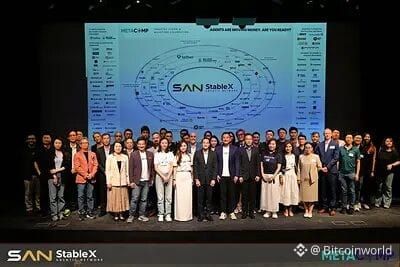
MetaComp marked the network’s first year at its industry forum, Agents Are Moving Money. Are You Ready?, held on 17 November on the eve of Singapore FinTech Festival 2026, with Mr Tan Kiat How, Senior Minister of State for Digital Development and Information, as Guest of Honour.
Key thought leaders from banking, payments, digital assets and academia, including Prof Hahn Jungpil, Provost’s Chair Professor at the School of Computing at the National University of Singapore and representatives from Tether and PwC discussed what agentic payments must demonstrate to earn the trust of institutions and the businesses that depend on them.
Why ASEAN, why now
The forum coincided with the 49th ASEAN Summit. On 14 November, ASEAN member states signed the ASEAN Digital Economy Framework Agreement (DEFA), the bloc’s first standalone, legally binding digital economy agreement. DEFA sets common rules for digital trade, cross-border data flows and electronic payments, and is expected to enter into force in early 2027.
Google, Temasek and Bain & Company project that Southeast Asia’s digital economy will reach US$368 billion in gross merchandise value this year, up 17%. ASEAN’s merchandise trade reached US$2.1 trillion in the first half of 2025, up 16.4% year on year, according to the ASEAN Secretariat.
Yet businesses that pay across Southeast Asia still deal with different rails, currencies and rules in each market. Private networks that connect those systems, and comply with each of them, can help turn that growth into everyday trade.
Agentic payment Infrastructure for ASEAN
The StableX Agentic Network is built to connect fiat and stablecoin rails in one place and routes each payment across available pathways by rate. Its members include payment service providers whose clients are expanding into Southeast Asia, including exporters from North Asia.
If one corridor is slow or unavailable, a payment can take another. In April, MetaComp announced it would adopt Solana as a preferred blockchain for settlement within the network, adding a route alongside fiat rails. Now, the network has also gone agentic.
The network gives institutions two-way access to Southeast Asia. Over local rails and SWIFT, they can pay out in local currency in six ASEAN markets: Singapore, Indonesia, Malaysia, Vietnam, the Philippines and Thailand. They can also collect local currency in Singapore, the Philippines and Indonesia, with Vietnam to follow.
What makes the network agentic is how it handles AI agents. It is designed for payments made by agents and humans, and governance is built into how they take part.
Building on MetaComp’s existing compliance controls, the StableX Know Your Agent (StableX KYA) Framework acts as the network’s ‘gatekeeper’. Every agent on the network must be verified, bounded and accountable. Each one is registered to a verified owner, works only within the permissions it has been given, and can be traced back to whoever is responsible for it. StableX KYA decides which agents can join the network and be active on it, and what each one is authorised to do.
Launched in April 2026, StableX KYA has since been productised and taken live. It oversees agents across their full lifecycle, and its monitoring framework sets out more than 30 measures across six governance objectives to track how agents behave over time, with results shown on a live dashboard.
Once payments are moving, VisionX, MetaComp’s compliance intelligence engine, screens transactions as they happen, across fiat and on-chain activity. Together, StableX KYA and VisionX AI mean every agent on the network is governed and every transaction is screened, whichever corridor a payment takes.
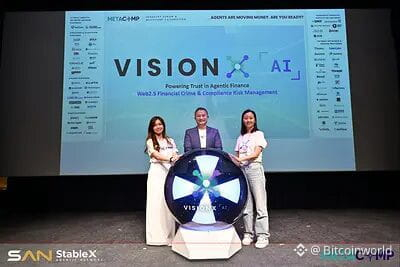
As agentic and cross-border payments have evolved, VisionX has kept pace, expanding its capabilities over the past year. At the forum, VisionX AI, a standalone RegTech company within Alpha Ladder Group, unveiled AEGIS, its proprietary Large Graph Model for financial crime detection, and launched TraceX, a blockchain investigation platform.
Tin Pei Ling, Co-President of MetaComp, said: “ASEAN has set a clear ambition for integrated payments, and policy only becomes trade when payments can move between markets. We are building an interoperable agentic payment infrastructure for the region, now with more than 1,000 members on the StableX Agentic Network. As more payments are initiated by AI agents, we take AI governance and safety seriously, which is why the StableX KYA framework is a key feature of our infrastructure, so that every agent permitted into our network is verified, bounded and accountable. A payment network is only as useful as the trust behind it.”
Dr Bo Bai, Executive Chairman and Co-founder of Alpha Ladder Group, parent group of MetaComp, said: “Southeast Asia is where many of our clients’ businesses are growing. When we launched the StableX Network a year ago, the aim was payment infrastructure that institutions could rely on across markets, not only in Singapore. With new investment behind us, we can take it into more of the region’s markets and connect businesses from North Asia and beyond to them.”
The network’s first year has also been recognised by industry judges. The StableX Agentic Network was named Outstanding Use of AI for Cross-Border Payments at The Digital Banker’s Global AI Innovation Awards 2026, and VisionX won Best Compliance-First Innovation (Transaction Monitoring) at The Digital Banker’s Digital Assets Awards 2026.
Beyond the network, MetaComp was named to the CB Insights 2026 Fintech 100 and listed among Tech in Asia and Statista’s Singapore’s Top Fintech Companies 2027. It is also a finalist in the Regulatory Leader category of the Singapore FinTech Festival FinTech Excellence Awards 2026.
Visitors can see the StableX Agentic Network and VisionX at the Alpha Ladder booth, 6A13, Hall 6, Singapore EXPO, from 18 to 20 November.
About MetaComp
MetaComp is a Singapore-headquartered payments company licensed by the Monetary Authority of Singapore as a Major Payment Institution. Guided by “Easier Payments, Resilient by Design,” MetaComp connects fiat and stablecoin rails through a compliant Web2.5 architecture, enabling institutions and businesses to move, convert and manage capital across borders.
MetaComp is advancing the next evolution of payments through the StableX Agentic Network, which has grown to more than 1,000 members reaching over 100,000 users. Through its agentic financial solution, AI agents can access MetaComp’s regulated payment capabilities directly, supported by StableX KYA, launched in April 2026, for agent governance, and VisionX for integrated fiat and on-chain compliance intelligence.
View original content to download multimedia:https://www.prnewswire.com/news-releases/metacomp-scales-its-interoperable-agentic-payment-network-to-support-push-for-integrated-cross-border-payments-in-asean-and-beyond-302943277.html
SOURCE MetaComp
This post MetaComp scales its interoperable, agentic payment network to support push for integrated cross-border payments in ASEAN and beyond first appeared on BitcoinWorld Media.
MetaComp Scales Its Interoperable, Agentic Payment Network to Support Push for Integrated Cross-b...
BitcoinWorld MediaMetaComp scales its interoperable, agentic payment network to support push for integrated cross-border payments in ASEAN and beyond
One year on, MetaComp’s StableX Agentic Network connects ASEAN markets with the wider region and has more than 1,000 members
SINGAPORE, Nov. 18, 2026 /CNW/ — MetaComp Pte. Ltd. (“MetaComp”), a Singapore-headquartered Web2.5 payments solutions provider licensed by the Monetary Authority of Singapore (MAS) as a Major Payment Institution, is scaling the StableX Agentic Network to carry more cross-border payments into and across Southeast Asia, for banks, payment service providers and businesses. The network is an interoperable, agentic payment infrastructure that spans currencies and regions, and in its first year it grew to more than 1,000 members reaching over 100,000 users.
MetaComp marked the network’s first year at its industry forum, Agents Are Moving Money. Are You Ready?, held on 17 November on the eve of Singapore FinTech Festival 2026, with Mr Tan Kiat How, Senior Minister of State for Digital Development and Information, as Guest of Honour.
Key thought leaders from banking, payments, digital assets and academia, including Prof Hahn Jungpil, Provost’s Chair Professor at the School of Computing at the National University of Singapore and representatives from Tether and PwC discussed what agentic payments must demonstrate to earn the trust of institutions and the businesses that depend on them.
Why ASEAN, why now
The forum coincided with the 49th ASEAN Summit. On 14 November, ASEAN member states signed the ASEAN Digital Economy Framework Agreement (DEFA), the bloc’s first standalone, legally binding digital economy agreement. DEFA sets common rules for digital trade, cross-border data flows and electronic payments, and is expected to enter into force in early 2027.
Google, Temasek and Bain & Company project that Southeast Asia’s digital economy will reach US$368 billion in gross merchandise value this year, up 17%. ASEAN’s merchandise trade reached US$2.1 trillion in the first half of 2025, up 16.4% year on year, according to the ASEAN Secretariat.
Yet businesses that pay across Southeast Asia still deal with different rails, currencies and rules in each market. Private networks that connect those systems, and comply with each of them, can help turn that growth into everyday trade.
Agentic payment Infrastructure for ASEAN
The StableX Agentic Network is built to connect fiat and stablecoin rails in one place and routes each payment across available pathways by rate. Its members include payment service providers whose clients are expanding into Southeast Asia, including exporters from North Asia.
If one corridor is slow or unavailable, a payment can take another. In April, MetaComp announced it would adopt Solana as a preferred blockchain for settlement within the network, adding a route alongside fiat rails. Now, the network has also gone agentic.
The network gives institutions two-way access to Southeast Asia. Over local rails and SWIFT, they can pay out in local currency in six ASEAN markets: Singapore, Indonesia, Malaysia, Vietnam, the Philippines and Thailand. They can also collect local currency in Singapore, the Philippines and Indonesia, with Vietnam to follow.
What makes the network agentic is how it handles AI agents. It is designed for payments made by agents and humans, and governance is built into how they take part.
Building on MetaComp’s existing compliance controls, the StableX Know Your Agent (StableX KYA) Framework acts as the network’s ‘gatekeeper’. Every agent on the network must be verified, bounded and accountable. Each one is registered to a verified owner, works only within the permissions it has been given, and can be traced back to whoever is responsible for it. StableX KYA decides which agents can join the network and be active on it, and what each one is authorised to do.
Launched in April 2026, StableX KYA has since been productised and taken live. It oversees agents across their full lifecycle, and its monitoring framework sets out more than 30 measures across six governance objectives to track how agents behave over time, with results shown on a live dashboard.
Once payments are moving, VisionX, MetaComp’s compliance intelligence engine, screens transactions as they happen, across fiat and on-chain activity. Together, StableX KYA and VisionX AI mean every agent on the network is governed and every transaction is screened, whichever corridor a payment takes.
As agentic and cross-border payments have evolved, VisionX has kept pace, expanding its capabilities over the past year. At the forum, VisionX AI, a standalone RegTech company within Alpha Ladder Group, unveiled AEGIS, its proprietary Large Graph Model for financial crime detection, and launched TraceX, a blockchain investigation platform.
Tin Pei Ling, Co-President of MetaComp, said: “ASEAN has set a clear ambition for integrated payments, and policy only becomes trade when payments can move between markets. We are building an interoperable agentic payment infrastructure for the region, now with more than 1,000 members on the StableX Agentic Network. As more payments are initiated by AI agents, we take AI governance and safety seriously, which is why the StableX KYA framework is a key feature of our infrastructure, so that every agent permitted into our network is verified, bounded and accountable. A payment network is only as useful as the trust behind it.”
Dr Bo Bai, Executive Chairman and Co-founder of Alpha Ladder Group, parent group of MetaComp, said: “Southeast Asia is where many of our clients’ businesses are growing. When we launched the StableX Network a year ago, the aim was payment infrastructure that institutions could rely on across markets, not only in Singapore. With new investment behind us, we can take it into more of the region’s markets and connect businesses from North Asia and beyond to them.”
The network’s first year has also been recognised by industry judges. The StableX Agentic Network was named Outstanding Use of AI for Cross-Border Payments at The Digital Banker’s Global AI Innovation Awards 2026, and VisionX won Best Compliance-First Innovation (Transaction Monitoring) at The Digital Banker’s Digital Assets Awards 2026.
Beyond the network, MetaComp was named to the CB Insights 2026 Fintech 100 and listed among Tech in Asia and Statista’s Singapore’s Top Fintech Companies 2027. It is also a finalist in the Regulatory Leader category of the Singapore FinTech Festival FinTech Excellence Awards 2026.
Visitors can see the StableX Agentic Network and VisionX at the Alpha Ladder booth, 6A13, Hall 6, Singapore EXPO, from 18 to 20 November.
About MetaComp
MetaComp is a Singapore-headquartered payments company licensed by the Monetary Authority of Singapore as a Major Payment Institution. Guided by “Easier Payments, Resilient by Design,” MetaComp connects fiat and stablecoin rails through a compliant Web2.5 architecture, enabling institutions and businesses to move, convert and manage capital across borders.
MetaComp is advancing the next evolution of payments through the StableX Agentic Network, which has grown to more than 1,000 members reaching over 100,000 users. Through its agentic financial solution, AI agents can access MetaComp’s regulated payment capabilities directly, supported by StableX KYA, launched in April 2026, for agent governance, and VisionX for integrated fiat and on-chain compliance intelligence.
View original content to download multimedia:https://www.prnewswire.com/news-releases/metacomp-scales-its-interoperable-agentic-payment-network-to-support-push-for-integrated-cross-border-payments-in-asean-and-beyond-302943277.html
SOURCE MetaComp
This post MetaComp scales its interoperable, agentic payment network to support push for integrated cross-border payments in ASEAN and beyond first appeared on BitcoinWorld Media.
22
·
--
Article
Singapore’s VisionX AI Unveils Its Own Hybrid AI Model to Uncover Financial Crime Networks Across...BitcoinWorld MediaSingapore’s VisionX AI unveils its own hybrid AI model to uncover financial crime networks across accounts and wallets
At its core is AEGIS, a Large Graph Model built for financial crime, which will power TraceX for on-chain investigations
SINGAPORE, Nov. 18, 2026 /CNW/ — VisionX AI, a standalone AI-native RegTech company within Alpha Ladder Group, has unveiled AEGIS, its proprietary Large Graph Model (LGM) for financial crime detection and investigation. It has also introduced the first product built on the model, TraceX, an AI-powered blockchain investigation platform.
AEGIS is built to understand complex financial transaction networks and forms the technological foundation of VisionX AI’s approach to financial crime intelligence. VisionX AI combines this in-house model with large language models (LLMs) from established providers in a hybrid AI architecture. Together, they help financial institutions and investigators find the hidden relationships, suspicious fund-flow patterns and broader criminal networks behind individual transactions.
Ms Tin Pei Ling, Executive Chairwoman, VisionX AI, and Co-President, Alpha Ladder Group and MetaComp, said: “Financial crime operates through networks of people, entities and financial activities. To fight it, we need AI that understands the relationships between transactions. AEGIS is built to see this network. It learns how money moves between accounts and wallets, so it can spot the patterns that link activity which looks unrelated. Our ambition is to build AI-native financial crime tools that help institutions stay ahead of emerging threats.”
A new approach to understanding financial crime networks
Financial crime is increasingly organised through interconnected networks of wallets, accounts, entities and transactions. In July 2026, the Financial Action Task Force (FATF) warned that criminal networks exploit the borderless nature of virtual assets to commit fraud, evade sanctions and launder proceeds. It found that criminals move illicit funds through stablecoins, cross-chain bridges, decentralised exchanges and mixers, mixing them with legitimate flows and making them harder to trace and freeze.
Tools that check one transaction at a time struggle to see the network behind such activity. VisionX AI developed AEGIS to address this challenge.
AEGIS is built on a Graph Transformer architecture and pretrained on financial transaction graph data. It is designed to learn the structure and behaviour of financial networks: how wallets, accounts and entities connect, and how funds move between them. That network view gives investigators a way to see the relationships and patterns that link activity across many transactions.
The name AEGIS stands for Attention-based Entity and Graph Intelligence System. In Greek myth, the aegis was the shield carried by Zeus and lent to Athena. VisionX AI chose the name because its technology is built to protect clients and institutions from financial crime.
Within the hybrid architecture, AEGIS provides graph-native network intelligence, and the LLMs handle natural-language interaction, reasoning and AI-assisted investigative workflows.
Introducing TraceX: turning network intelligence into investigative leads
Alongside AEGIS, VisionX AI introduced TraceX, its AI-powered blockchain investigation and tracing platform.
TraceX is the first product to put the hybrid architecture to work, and is being built to help financial crime investigators and law enforcement agencies analyse complex blockchain transactions and uncover hidden connections.
TraceX is designed to help investigators:
Trace complex fund flows through interconnected blockchain addresses and transactions.
Uncover hidden relationships and criminal networks by identifying suspicious patterns and potential connections across separate investigations.
Generate actionable investigative leads through graph intelligence and AI-assisted analysis, supported by traceable evidence and human review.
Planned capabilities include reverse tracing, MegaMap network analysis, pattern recognition and case association. Together, they will help investigators connect individual cases to the larger criminal networks behind them.
Investigators will make the decisions, guided by the TraceX’s recommendations, and each decision is recorded.
Ms Summer Yu, Chief Executive Officer, VisionX AI, said: “Individual cases often look unrelated, even when the same criminal network sits behind them. TraceX brings AEGIS into practical blockchain investigations, so investigators can identify patterns, connect cases and uncover those networks. AI shows investigators where to look next, and their judgement and the evidence still decide the case.”
From compliance innovation to a standalone AI-native RegTech company
VisionX was originally incubated within MetaComp to address real-world compliance and financial crime risks in regulated financial operations. Its focus was the growing convergence between traditional finance and digital assets.
VisionX has since evolved into an integrated financial crime and compliance platform. It supports the compliance intelligence infrastructure of MetaComp’s StableX Agentic Network, which launched as the StableX Network in November 2025.
Its broader platform includes VisionX KYT, which consolidates blockchain risk intelligence from multiple independent analytics vendors. VisionX KYT draws on their data for 1 billion wallets across 25 chains. The platform also includes Web2.5 TxM, which brings together identity, behavioural and network intelligence for transaction monitoring across traditional finance and digital assets.
Setting up VisionX AI as a standalone company marks the next stage of this evolution. It lets the company offer its technology and products to a broader market of financial institutions, digital asset businesses and public-sector organisations.
VisionX AI aims to extend its proprietary graph intelligence technology across financial crime detection, fraud and scam prevention, compliance risk management and investigation.
About VisionX AI VisionX AI Pte Ltd is a standalone AI-native RegTech company within Alpha Ladder, headquartered in Singapore. It builds AI tools that help financial institutions, digital asset businesses and public-sector organisations detect, monitor and investigate financial crime. Its technology was first developed at MetaComp, the group’s payments subsidiary.
The company’s foundational technology is AEGIS, its proprietary Large Graph Model built for financial crime. Having learned how money moves through networks of wallets and accounts, AEGIS scores risk and recognises laundering patterns. VisionX AI pairs AEGIS with large language models in a hybrid AI architecture that powers all of its products. These include VisionX KYT, for blockchain risk screening, Web2.5 TxM, for transaction monitoring across traditional finance and digital assets and TraceX, which helps investigators trace illicit funds on-chain.
VisionX was recognised with the Best Compliance-First Innovation (Transaction Monitoring) award at The Digital Banker’s Digital Assets Awards 2026.
About MetaComp MetaComp is a Singapore-headquartered payments company licensed by the Monetary Authority of Singapore as a Major Payment Institution. Guided by “Easier Payments, Resilient by Design,” MetaComp connects fiat and stablecoin rails through a compliant Web2.5 architecture, enabling institutions and businesses to move, convert and manage capital across borders.
MetaComp is advancing the next evolution of payments through the StableX Agentic Network, which has grown to more than 1,000 members reaching over 100,000 users. Through its agentic financial solution, AI agents can access MetaComp’s regulated payment capabilities directly, supported by StableX KYA, launched in April 2026, for agent governance, and VisionX AI for integrated fiat and on-chain compliance intelligence.
View original content to download multimedia:https://www.prnewswire.com/news-releases/singapores-visionx-ai-unveils-its-own-hybrid-ai-model-to-uncover-financial-crime-networks-across-accounts-and-wallets-302943419.html
SOURCE Alpha Ladder Group
This post Singapore’s VisionX AI unveils its own hybrid AI model to uncover financial crime networks across accounts and wallets first appeared on BitcoinWorld Media.
Singapore’s VisionX AI Unveils Its Own Hybrid AI Model to Uncover Financial Crime Networks Across...
BitcoinWorld MediaSingapore’s VisionX AI unveils its own hybrid AI model to uncover financial crime networks across accounts and wallets
At its core is AEGIS, a Large Graph Model built for financial crime, which will power TraceX for on-chain investigations
SINGAPORE, Nov. 18, 2026 /CNW/ — VisionX AI, a standalone AI-native RegTech company within Alpha Ladder Group, has unveiled AEGIS, its proprietary Large Graph Model (LGM) for financial crime detection and investigation. It has also introduced the first product built on the model, TraceX, an AI-powered blockchain investigation platform.
AEGIS is built to understand complex financial transaction networks and forms the technological foundation of VisionX AI’s approach to financial crime intelligence. VisionX AI combines this in-house model with large language models (LLMs) from established providers in a hybrid AI architecture. Together, they help financial institutions and investigators find the hidden relationships, suspicious fund-flow patterns and broader criminal networks behind individual transactions.
Ms Tin Pei Ling, Executive Chairwoman, VisionX AI, and Co-President, Alpha Ladder Group and MetaComp, said: “Financial crime operates through networks of people, entities and financial activities. To fight it, we need AI that understands the relationships between transactions. AEGIS is built to see this network. It learns how money moves between accounts and wallets, so it can spot the patterns that link activity which looks unrelated. Our ambition is to build AI-native financial crime tools that help institutions stay ahead of emerging threats.”
A new approach to understanding financial crime networks
Financial crime is increasingly organised through interconnected networks of wallets, accounts, entities and transactions. In July 2026, the Financial Action Task Force (FATF) warned that criminal networks exploit the borderless nature of virtual assets to commit fraud, evade sanctions and launder proceeds. It found that criminals move illicit funds through stablecoins, cross-chain bridges, decentralised exchanges and mixers, mixing them with legitimate flows and making them harder to trace and freeze.
Tools that check one transaction at a time struggle to see the network behind such activity. VisionX AI developed AEGIS to address this challenge.
AEGIS is built on a Graph Transformer architecture and pretrained on financial transaction graph data. It is designed to learn the structure and behaviour of financial networks: how wallets, accounts and entities connect, and how funds move between them. That network view gives investigators a way to see the relationships and patterns that link activity across many transactions.
The name AEGIS stands for Attention-based Entity and Graph Intelligence System. In Greek myth, the aegis was the shield carried by Zeus and lent to Athena. VisionX AI chose the name because its technology is built to protect clients and institutions from financial crime.
Within the hybrid architecture, AEGIS provides graph-native network intelligence, and the LLMs handle natural-language interaction, reasoning and AI-assisted investigative workflows.
Introducing TraceX: turning network intelligence into investigative leads
Alongside AEGIS, VisionX AI introduced TraceX, its AI-powered blockchain investigation and tracing platform.
TraceX is the first product to put the hybrid architecture to work, and is being built to help financial crime investigators and law enforcement agencies analyse complex blockchain transactions and uncover hidden connections.
TraceX is designed to help investigators:
Trace complex fund flows through interconnected blockchain addresses and transactions.
Uncover hidden relationships and criminal networks by identifying suspicious patterns and potential connections across separate investigations.
Generate actionable investigative leads through graph intelligence and AI-assisted analysis, supported by traceable evidence and human review.
Planned capabilities include reverse tracing, MegaMap network analysis, pattern recognition and case association. Together, they will help investigators connect individual cases to the larger criminal networks behind them.
Investigators will make the decisions, guided by the TraceX’s recommendations, and each decision is recorded.
Ms Summer Yu, Chief Executive Officer, VisionX AI, said: “Individual cases often look unrelated, even when the same criminal network sits behind them. TraceX brings AEGIS into practical blockchain investigations, so investigators can identify patterns, connect cases and uncover those networks. AI shows investigators where to look next, and their judgement and the evidence still decide the case.”
From compliance innovation to a standalone AI-native RegTech company
VisionX was originally incubated within MetaComp to address real-world compliance and financial crime risks in regulated financial operations. Its focus was the growing convergence between traditional finance and digital assets.
VisionX has since evolved into an integrated financial crime and compliance platform. It supports the compliance intelligence infrastructure of MetaComp’s StableX Agentic Network, which launched as the StableX Network in November 2025.
Its broader platform includes VisionX KYT, which consolidates blockchain risk intelligence from multiple independent analytics vendors. VisionX KYT draws on their data for 1 billion wallets across 25 chains. The platform also includes Web2.5 TxM, which brings together identity, behavioural and network intelligence for transaction monitoring across traditional finance and digital assets.
Setting up VisionX AI as a standalone company marks the next stage of this evolution. It lets the company offer its technology and products to a broader market of financial institutions, digital asset businesses and public-sector organisations.
VisionX AI aims to extend its proprietary graph intelligence technology across financial crime detection, fraud and scam prevention, compliance risk management and investigation.
About VisionX AI VisionX AI Pte Ltd is a standalone AI-native RegTech company within Alpha Ladder, headquartered in Singapore. It builds AI tools that help financial institutions, digital asset businesses and public-sector organisations detect, monitor and investigate financial crime. Its technology was first developed at MetaComp, the group’s payments subsidiary.
The company’s foundational technology is AEGIS, its proprietary Large Graph Model built for financial crime. Having learned how money moves through networks of wallets and accounts, AEGIS scores risk and recognises laundering patterns. VisionX AI pairs AEGIS with large language models in a hybrid AI architecture that powers all of its products. These include VisionX KYT, for blockchain risk screening, Web2.5 TxM, for transaction monitoring across traditional finance and digital assets and TraceX, which helps investigators trace illicit funds on-chain.
VisionX was recognised with the Best Compliance-First Innovation (Transaction Monitoring) award at The Digital Banker’s Digital Assets Awards 2026.
About MetaComp MetaComp is a Singapore-headquartered payments company licensed by the Monetary Authority of Singapore as a Major Payment Institution. Guided by “Easier Payments, Resilient by Design,” MetaComp connects fiat and stablecoin rails through a compliant Web2.5 architecture, enabling institutions and businesses to move, convert and manage capital across borders.
MetaComp is advancing the next evolution of payments through the StableX Agentic Network, which has grown to more than 1,000 members reaching over 100,000 users. Through its agentic financial solution, AI agents can access MetaComp’s regulated payment capabilities directly, supported by StableX KYA, launched in April 2026, for agent governance, and VisionX AI for integrated fiat and on-chain compliance intelligence.
View original content to download multimedia:https://www.prnewswire.com/news-releases/singapores-visionx-ai-unveils-its-own-hybrid-ai-model-to-uncover-financial-crime-networks-across-accounts-and-wallets-302943419.html
SOURCE Alpha Ladder Group
This post Singapore’s VisionX AI unveils its own hybrid AI model to uncover financial crime networks across accounts and wallets first appeared on BitcoinWorld Media.
37
·
--

Article
Mantle Marks Major Milestone As $MNT Becomes Available on GMO Coin Following Japan’s Rigorous Ass...BitcoinWorld MediaMantle Marks Major Milestone as $MNT Becomes Available on GMO Coin Following Japan’s Rigorous Asset Review Framework
DUBAI, UAE, Nov 18, 2026 /PRNewswire/ — Mantle, the open financial network powering borderless access to global capital markets, announced a major milestone in its Japan expansion following the first-ever listing of $MNT on a Japanese cryptocurrency exchange, GMO Coin, on November 18, 2026.
The listing represents $MNT’s first on a Japanese centralized exchange and brings $MNT to GMO Coin’s more than 825,000 accounts, expanding access to Mantle’s ecosystem through a platform registered with Japan’s Financial Services Agency (FSA). It follows a comprehensive review by GMO Coin and the Japan Virtual and Crypto assets Exchange Association (JVCEA), encompassing compliance, anti-money laundering (AML) controls, smart contract security, and technical architecture. Spot trading, leverage trading, and Dollar-Cost Averaging (DCA) services for $MNT are available on GMO Coin effective today.
A Milestone Under Japan’s Rigorous Asset Review Framework
Japan maintains a comprehensive regulatory framework governing the handling of crypto assets, with oversight from the FSA and self-regulatory standards established by the Japan Virtual and Crypto Assets Exchange Association (JVCEA).
The JVCEA framework requires assessments across six core areas: issuance status, trading activity, asset utility, relevant stakeholders, underlying technology and ledger infrastructure, and the associated project.
The framework also addresses financial crime exposure, operational and cybersecurity risks, record integrity, and user protection. These requirements establish a structured approach to assessing crypto assets before they are introduced into the Japanese market.
As $MNT’s first listing in Japan, its availability on GMO Coin marks an important step in Mantle’s expansion into a market with established regulatory and asset review requirements.
Expanding Access to Japan’s Digital Asset Market
GMO Coin serves more than 825,000 verified accounts and recorded approximately $3B in monthly trading volume in September 2026. The listing provides $MNT with meaningful exposure to an established investor base within a fully regulated market under FSA oversight.
GMO Coin is part of GMO Financial Holdings, the financial services arm of GMO Internet Group (TSE: 9449). GMO Internet Group is listed on the Prime Market of the Tokyo Stock Exchange, with operations spanning internet infrastructure, payments, securities, and crypto assets.
As one of Asia’s most mature and compliance-focused crypto asset markets, Japan represents a strategically significant market for Mantle, and this listing establishes a regulated channel for its continued engagement with Japanese market participants, broadening local access to $MNT while strengthening Mantle’s ability to engage Japan’s retail community, Web3 ecosystem participants, and institutions exploring digital assets and tokenized finance.
Connecting Japan’s Tokenized Assets to Global Onchain Liquidity
The listing comes as Mantle continues to expand its real-world asset (RWA) ecosystem, spanning tokenized equities, treasury products, private credit, commodities, and other onchain financial applications.
Japan has already established an active tokenized securities market, with financial institutions issuing tokenized assets through permissioned and consortium blockchain infrastructure.
As interest in public blockchain infrastructure and cross-border distribution develops, Mantle sees opportunities to work with Japanese institutions and asset issuers seeking broader access to global users and onchain liquidity.
“Japan has long been one of Mantle’s most important markets, with a community that has actively supported and participated in the ecosystem,” said Joshua Cheong, Head of Product & BD at Mantle. “Bringing $MNT to GMO Coin is a meaningful milestone, particularly given Japan’s rigorous crypto asset review framework. As Japan continues to advance tokenization and onchain finance, we look forward to working with local partners to connect emerging opportunities with global liquidity.”
With $MNT now available through a Japanese exchange, Mantle aims to deepen its engagement with local partners and support the connection between Japan’s digital asset ecosystem and global onchain capital markets.
About Mantle
Mantle is the open financial network powering borderless access to global capital markets, connecting global market participants to institutional-grade capital market assets onchain. Mantle brings the full lifecycle of real-world assets onchain, from issuance and liquidity to distribution and settlement, spanning tokenized equities, treasury yield, private credit, commodities, and money markets. Anchored by one of the largest community-owned treasuries in the industry, Mantle combines credibility, deep liquidity, and institutional-grade infrastructure to support real-world finance onchain.
For more information visit mantle.xyz. For more social updates, please follow: Mantle Official X & Mantle Community Channel For media enquiries, please contact: contact@mantle.xyz
View original content to download multimedia:https://www.prnewswire.com/news-releases/mantle-marks-major-milestone-as-mnt-becomes-available-on-gmo-coin-following-japans-rigorous-asset-review-framework-302943507.html
SOURCE Mantle
This post Mantle Marks Major Milestone as $MNT Becomes Available on GMO Coin Following Japan’s Rigorous Asset Review Framework first appeared on BitcoinWorld Media.
Mantle Marks Major Milestone As $MNT Becomes Available on GMO Coin Following Japan’s Rigorous Ass...
BitcoinWorld MediaMantle Marks Major Milestone as $MNT Becomes Available on GMO Coin Following Japan’s Rigorous Asset Review Framework
DUBAI, UAE, Nov 18, 2026 /PRNewswire/ — Mantle, the open financial network powering borderless access to global capital markets, announced a major milestone in its Japan expansion following the first-ever listing of $MNT on a Japanese cryptocurrency exchange, GMO Coin, on November 18, 2026.
The listing represents $MNT’s first on a Japanese centralized exchange and brings $MNT to GMO Coin’s more than 825,000 accounts, expanding access to Mantle’s ecosystem through a platform registered with Japan’s Financial Services Agency (FSA). It follows a comprehensive review by GMO Coin and the Japan Virtual and Crypto assets Exchange Association (JVCEA), encompassing compliance, anti-money laundering (AML) controls, smart contract security, and technical architecture. Spot trading, leverage trading, and Dollar-Cost Averaging (DCA) services for $MNT are available on GMO Coin effective today.
A Milestone Under Japan’s Rigorous Asset Review Framework
Japan maintains a comprehensive regulatory framework governing the handling of crypto assets, with oversight from the FSA and self-regulatory standards established by the Japan Virtual and Crypto Assets Exchange Association (JVCEA).
The JVCEA framework requires assessments across six core areas: issuance status, trading activity, asset utility, relevant stakeholders, underlying technology and ledger infrastructure, and the associated project.
The framework also addresses financial crime exposure, operational and cybersecurity risks, record integrity, and user protection. These requirements establish a structured approach to assessing crypto assets before they are introduced into the Japanese market.
As $MNT’s first listing in Japan, its availability on GMO Coin marks an important step in Mantle’s expansion into a market with established regulatory and asset review requirements.
Expanding Access to Japan’s Digital Asset Market
GMO Coin serves more than 825,000 verified accounts and recorded approximately $3B in monthly trading volume in September 2026. The listing provides $MNT with meaningful exposure to an established investor base within a fully regulated market under FSA oversight.
GMO Coin is part of GMO Financial Holdings, the financial services arm of GMO Internet Group (TSE: 9449). GMO Internet Group is listed on the Prime Market of the Tokyo Stock Exchange, with operations spanning internet infrastructure, payments, securities, and crypto assets.
As one of Asia’s most mature and compliance-focused crypto asset markets, Japan represents a strategically significant market for Mantle, and this listing establishes a regulated channel for its continued engagement with Japanese market participants, broadening local access to $MNT while strengthening Mantle’s ability to engage Japan’s retail community, Web3 ecosystem participants, and institutions exploring digital assets and tokenized finance.
Connecting Japan’s Tokenized Assets to Global Onchain Liquidity
The listing comes as Mantle continues to expand its real-world asset (RWA) ecosystem, spanning tokenized equities, treasury products, private credit, commodities, and other onchain financial applications.
Japan has already established an active tokenized securities market, with financial institutions issuing tokenized assets through permissioned and consortium blockchain infrastructure.
As interest in public blockchain infrastructure and cross-border distribution develops, Mantle sees opportunities to work with Japanese institutions and asset issuers seeking broader access to global users and onchain liquidity.
“Japan has long been one of Mantle’s most important markets, with a community that has actively supported and participated in the ecosystem,” said Joshua Cheong, Head of Product & BD at Mantle. “Bringing $MNT to GMO Coin is a meaningful milestone, particularly given Japan’s rigorous crypto asset review framework. As Japan continues to advance tokenization and onchain finance, we look forward to working with local partners to connect emerging opportunities with global liquidity.”
With $MNT now available through a Japanese exchange, Mantle aims to deepen its engagement with local partners and support the connection between Japan’s digital asset ecosystem and global onchain capital markets.
About Mantle
Mantle is the open financial network powering borderless access to global capital markets, connecting global market participants to institutional-grade capital market assets onchain. Mantle brings the full lifecycle of real-world assets onchain, from issuance and liquidity to distribution and settlement, spanning tokenized equities, treasury yield, private credit, commodities, and money markets. Anchored by one of the largest community-owned treasuries in the industry, Mantle combines credibility, deep liquidity, and institutional-grade infrastructure to support real-world finance onchain.
For more information visit mantle.xyz. For more social updates, please follow: Mantle Official X & Mantle Community Channel For media enquiries, please contact: contact@mantle.xyz
View original content to download multimedia:https://www.prnewswire.com/news-releases/mantle-marks-major-milestone-as-mnt-becomes-available-on-gmo-coin-following-japans-rigorous-asset-review-framework-302943507.html
SOURCE Mantle
This post Mantle Marks Major Milestone as $MNT Becomes Available on GMO Coin Following Japan’s Rigorous Asset Review Framework first appeared on BitcoinWorld Media.
69
·
--

Article
Seven Altcoins to Watch in 2027: Utility, Catalysts and RisksBitcoinWorldSeven altcoins to watch in 2027: utility, catalysts and risks
A Nov. 12 snapshot from Crypto.news showed approximately 4.94 million ZEC — nearly 29% of issued supply — held in shielded pools, one of the concrete usage figures in a report naming seven altcoins it considers worth following into 2027. The article, by Andrew Folkler, groups Zcash (ZEC), Stacks (STX), NEAR Protocol (NEAR), Hyperliquid (HYPE), Venice (VVV), Canton (CC) and Chainlink (LINK) by the different jobs they do: private transfers, Bitcoin capital markets, AI and chain abstraction, onchain trading, private AI compute, institutional tokenization and blockchain infrastructure.
Crypto.news names Zcash, Stacks, NEAR Protocol, Hyperliquid, Venice, Canton and Chainlink as altcoins worth watching in 2027, each tied to a distinct use case. The report says the focus is on how the technology is used and what creates demand for each token, rather than short-term price movements. Key facts
Zcash activated its NU7 upgrade on Nov. 6, cutting the target block interval from 75 seconds to 25 seconds, per Crypto.news.
Stacks has filled three consecutive Bitcoin Bonds totalling roughly 1,740 BTC; the third sold out in November with Bullish Capital and 21shares among participants.
NEAR Intents processed about $3.99 billion in volume during October 2026, and on Nov. 9 Talos made it available to institutional trading clients.
Hyperliquid generated about $88 million in fees in October and held 55.3% of decentralized perpetual futures open interest on Nov. 12, roughly $6.62 billion, according to DefiLlama data cited by the report.
SEC staff granted no-action relief concerning Canton Coin and its rewards structure on Nov. 4; Chainlink’s reserve held about 6.57 million LINK in the latest snapshot.
Where the utility actually shows up
The report is careful to separate each token’s role from its price. HYPE sits inside Hyperliquid’s economics, where trading fees feed an Assistance Fund that automatically buys HYPE and treats those tokens as permanently removed from supply. NEAR covers fees, staking and security, and part of Intents revenue is directed toward NEAR purchases — though Crypto.news notes that only a portion of the fees generated across the service is retained by the protocol. Venice ties VVV to AI compute: locking staked VVV mints DIEM, and each staked DIEM provides $1 in daily Venice API credits, with annual VVV emissions cut to 2 million tokens on Oct. 1 from 14 million.
Canton and Chainlink lean toward institutions. Canton Coin pays synchronization fees that are burned while validators and application providers receive newly issued tokens, so higher settlement activity does not automatically mean a shrinking supply. Chainlink’s Payment Abstraction can convert service revenue in other assets into LINK. Crypto.news also flagged the Oct. 30 pilot involving HSBC, Franklin Templeton, Tradeweb, Fireblocks and Uber as a demonstration, not a commercial rollout.
Why it matters
For readers weighing the sector, the report reframes the question from which token might rise to which network has paying users, recurring fees and a mechanism that links revenue back to the asset. That lens matters because several of the catalysts it lists — Stacks’ proposed PoX-6 auction and Bitcoin-backed borrowing, wider CCIP usage, Canton settling real volume — are milestones that can be checked, not narratives. Each project also comes with named risks: regulatory limits and uneven exchange support for Zcash, bond maturities and STX volatility for Stacks, quiet-market fee declines for Hyperliquid, and slow institutional fee ramp-up for Chainlink.
What to watch
Watch whether Stacks’ PoX-6 open auction and planned Bitcoin-backed borrowing move from proposal to live product, whether NEAR Intents revenue and AI agent activity sustain October’s volumes, and whether Canton’s pilots convert into paying commercial settlement.
This post Seven altcoins to watch in 2027: utility, catalysts and risks first appeared on BitcoinWorld.
Seven Altcoins to Watch in 2027: Utility, Catalysts and Risks
BitcoinWorldSeven altcoins to watch in 2027: utility, catalysts and risks
A Nov. 12 snapshot from Crypto.news showed approximately 4.94 million ZEC — nearly 29% of issued supply — held in shielded pools, one of the concrete usage figures in a report naming seven altcoins it considers worth following into 2027. The article, by Andrew Folkler, groups Zcash (ZEC), Stacks (STX), NEAR Protocol (NEAR), Hyperliquid (HYPE), Venice (VVV), Canton (CC) and Chainlink (LINK) by the different jobs they do: private transfers, Bitcoin capital markets, AI and chain abstraction, onchain trading, private AI compute, institutional tokenization and blockchain infrastructure.
Crypto.news names Zcash, Stacks, NEAR Protocol, Hyperliquid, Venice, Canton and Chainlink as altcoins worth watching in 2027, each tied to a distinct use case. The report says the focus is on how the technology is used and what creates demand for each token, rather than short-term price movements. Key facts
Zcash activated its NU7 upgrade on Nov. 6, cutting the target block interval from 75 seconds to 25 seconds, per Crypto.news.
Stacks has filled three consecutive Bitcoin Bonds totalling roughly 1,740 BTC; the third sold out in November with Bullish Capital and 21shares among participants.
NEAR Intents processed about $3.99 billion in volume during October 2026, and on Nov. 9 Talos made it available to institutional trading clients.
Hyperliquid generated about $88 million in fees in October and held 55.3% of decentralized perpetual futures open interest on Nov. 12, roughly $6.62 billion, according to DefiLlama data cited by the report.
SEC staff granted no-action relief concerning Canton Coin and its rewards structure on Nov. 4; Chainlink’s reserve held about 6.57 million LINK in the latest snapshot.
Where the utility actually shows up
The report is careful to separate each token’s role from its price. HYPE sits inside Hyperliquid’s economics, where trading fees feed an Assistance Fund that automatically buys HYPE and treats those tokens as permanently removed from supply. NEAR covers fees, staking and security, and part of Intents revenue is directed toward NEAR purchases — though Crypto.news notes that only a portion of the fees generated across the service is retained by the protocol. Venice ties VVV to AI compute: locking staked VVV mints DIEM, and each staked DIEM provides $1 in daily Venice API credits, with annual VVV emissions cut to 2 million tokens on Oct. 1 from 14 million.
Canton and Chainlink lean toward institutions. Canton Coin pays synchronization fees that are burned while validators and application providers receive newly issued tokens, so higher settlement activity does not automatically mean a shrinking supply. Chainlink’s Payment Abstraction can convert service revenue in other assets into LINK. Crypto.news also flagged the Oct. 30 pilot involving HSBC, Franklin Templeton, Tradeweb, Fireblocks and Uber as a demonstration, not a commercial rollout.
Why it matters
For readers weighing the sector, the report reframes the question from which token might rise to which network has paying users, recurring fees and a mechanism that links revenue back to the asset. That lens matters because several of the catalysts it lists — Stacks’ proposed PoX-6 auction and Bitcoin-backed borrowing, wider CCIP usage, Canton settling real volume — are milestones that can be checked, not narratives. Each project also comes with named risks: regulatory limits and uneven exchange support for Zcash, bond maturities and STX volatility for Stacks, quiet-market fee declines for Hyperliquid, and slow institutional fee ramp-up for Chainlink.
What to watch
Watch whether Stacks’ PoX-6 open auction and planned Bitcoin-backed borrowing move from proposal to live product, whether NEAR Intents revenue and AI agent activity sustain October’s volumes, and whether Canton’s pilots convert into paying commercial settlement.
This post Seven altcoins to watch in 2027: utility, catalysts and risks first appeared on BitcoinWorld.
1
511
·
--
Article
Small Bitcoin Withdrawals Can Raise Later FeesBitcoinWorldSmall Bitcoin Withdrawals Can Raise Later Fees
Bitcoin holders who withdraw small amounts frequently may face higher fees later when spending those funds, because each withdrawal creates a separate unspent transaction output (UTXO) that must be included as an input in future transactions, according to a report by Crypto.news. The outlet, in its analysis published on November 17, explained that Bitcoin fees depend on transaction data size, not on the value being sent, so a wallet with many small UTXOs can be more expensive to spend from than a wallet with the same total balance held in fewer outputs.
Small Bitcoin withdrawals create multiple UTXOs, each adding input data to future transactions and increasing fees. Consolidating UTXOs during low-fee periods can reduce later costs but involves a transaction fee now and may publicly link your funds. Key facts
Bitcoin transaction fees are based on virtual size and fee rate (satoshis per virtual byte), not the amount being sent, as Crypto.news reported on November 17, 2026.
A native SegWit input adds roughly 68 virtual bytes, costing about 680 satoshis at a hypothetical 10 satoshis per virtual byte fee rate.
An exchange’s withdrawal fee and the network fee paid when spending from a personal wallet are separate charges.
Consolidating several small UTXOs during a low-fee period can reduce future input counts, but the consolidation itself costs money and can connect funds publicly.
How small withdrawals create bigger future costs
Crypto.news explained that Bitcoin does not maintain a simple account balance like a bank. Instead, it records individual transaction outputs that must be spent in full. A wallet’s displayed balance is the sum of all UTXOs it controls. When a holder makes a payment, the wallet selects one or more UTXOs as inputs and creates new outputs, including any change returned to the sender.
The critical distinction is that UTXOs accumulated from repeated small withdrawals remain separate on the blockchain, even if they arrive at the same address or in the same batching transaction from an exchange. When the time comes to spend a larger amount, the wallet must include each UTXO as a separate input, increasing the transaction’s virtual size and, therefore, the fee.
The report offered a hypothetical illustration: two wallets each hold 200,000 satoshis, one as a single UTXO and the other as 20 UTXOs of 10,000 satoshis each. Sending 185,000 satoshis from the single-UTXO wallet could cost approximately 1,410 satoshis at 10 satoshis per virtual byte, while the 20-UTXO wallet could face a fee of about 14,330 satoshis for the same payment. These figures are illustrative and exclude output data and transaction overhead, Crypto.news noted.
Consolidation and its trade-offs
Holders can combine multiple UTXOs into one through a consolidation transaction, typically performed when fee rates are low. Crypto.news estimated that consolidating 20 native SegWit UTXOs at 2 satoshis per virtual byte might cost around 2,804 satoshis, after which a later payment could spend the single consolidated output at a higher fee rate more cheaply than spending all 20 original inputs. The combined cost could be lower than paying the higher rate on all inputs later.
However, consolidation is not always beneficial. If a future payment could already be funded with one existing UTXO, consolidating adds an unnecessary transaction. Moreover, consolidation links the combined UTXOs publicly, which can reveal relationships between receipts that were previously separate. A fresh address does not erase those links.
Market snapshot
At the time of writing, Bitcoin (BTC) traded at $63,832 (₹5,967,678), down 1.6% in 24 hours and 12.3% over seven days, according to CoinPaprika data timestamped November 17, 2026. The broader crypto market also saw declines, with Ethereum (ETH) at $1,774, down 3.0% in 24 hours.
The analysis from Crypto.news also addressed common misconceptions. Receiving multiple payments at the same address does not merge UTXOs, and an exchange’s use of payment batching does not combine outputs for individual customers. Additionally, an output that is uneconomical to spend at high fee rates may become spendable again if fees fall, but the private key must remain secure.
Why it matters
For Bitcoin holders who regularly withdraw small amounts from exchanges, the accumulation of UTXOs can lead to unexpectedly high fees when they eventually spend their funds. This is particularly relevant for self-custody users who must manage their own UTXO set. The report underscores that custody decisions and withdrawal schedules have long-term cost implications beyond the immediate withdrawal fee.
What to watch
Bitcoin fee rates remain the key variable. Holders should monitor the satoshi-per-virtual-byte rate and consider consolidation during low-fee periods, while also weighing the privacy impact. Exchange withdrawal policies and minimums may also influence the optimal withdrawal schedule, and these terms can change.
Frequently Asked Questions
Why can equal Bitcoin balances have different spending fees?
Because one balance may consist of a single UTXO while another contains many small UTXOs. More inputs increase transaction size and therefore the fee at any given fee rate.
Does receiving several payments at one address combine them?
No. Each transaction creates a separate output, even if sent to the same address. The wallet displays the sum, but spending requires each UTXO as an input.
Is the exchange withdrawal fee the same as the later miner fee?
No. The exchange charges its own withdrawal fee. Later, when spending from your personal wallet, you pay a separate network fee based on transaction size and current fee rates.
Does consolidation always save money?
No. Consolidation costs a fee now and may be unnecessary if a future payment can already use one UTXO. It can save later input costs when many small UTXOs are combined at a lower rate.
Can consolidation reduce privacy?
Yes. Combining UTXOs in one transaction publicly links them, which can support inferences about common ownership. Using a fresh address for the consolidated output does not erase those links.
This post Small Bitcoin Withdrawals Can Raise Later Fees first appeared on BitcoinWorld.
Small Bitcoin Withdrawals Can Raise Later Fees
BitcoinWorldSmall Bitcoin Withdrawals Can Raise Later Fees
Bitcoin holders who withdraw small amounts frequently may face higher fees later when spending those funds, because each withdrawal creates a separate unspent transaction output (UTXO) that must be included as an input in future transactions, according to a report by Crypto.news. The outlet, in its analysis published on November 17, explained that Bitcoin fees depend on transaction data size, not on the value being sent, so a wallet with many small UTXOs can be more expensive to spend from than a wallet with the same total balance held in fewer outputs.
Small Bitcoin withdrawals create multiple UTXOs, each adding input data to future transactions and increasing fees. Consolidating UTXOs during low-fee periods can reduce later costs but involves a transaction fee now and may publicly link your funds. Key facts
Bitcoin transaction fees are based on virtual size and fee rate (satoshis per virtual byte), not the amount being sent, as Crypto.news reported on November 17, 2026.
A native SegWit input adds roughly 68 virtual bytes, costing about 680 satoshis at a hypothetical 10 satoshis per virtual byte fee rate.
An exchange’s withdrawal fee and the network fee paid when spending from a personal wallet are separate charges.
Consolidating several small UTXOs during a low-fee period can reduce future input counts, but the consolidation itself costs money and can connect funds publicly.
How small withdrawals create bigger future costs
Crypto.news explained that Bitcoin does not maintain a simple account balance like a bank. Instead, it records individual transaction outputs that must be spent in full. A wallet’s displayed balance is the sum of all UTXOs it controls. When a holder makes a payment, the wallet selects one or more UTXOs as inputs and creates new outputs, including any change returned to the sender.
The critical distinction is that UTXOs accumulated from repeated small withdrawals remain separate on the blockchain, even if they arrive at the same address or in the same batching transaction from an exchange. When the time comes to spend a larger amount, the wallet must include each UTXO as a separate input, increasing the transaction’s virtual size and, therefore, the fee.
The report offered a hypothetical illustration: two wallets each hold 200,000 satoshis, one as a single UTXO and the other as 20 UTXOs of 10,000 satoshis each. Sending 185,000 satoshis from the single-UTXO wallet could cost approximately 1,410 satoshis at 10 satoshis per virtual byte, while the 20-UTXO wallet could face a fee of about 14,330 satoshis for the same payment. These figures are illustrative and exclude output data and transaction overhead, Crypto.news noted.
Consolidation and its trade-offs
Holders can combine multiple UTXOs into one through a consolidation transaction, typically performed when fee rates are low. Crypto.news estimated that consolidating 20 native SegWit UTXOs at 2 satoshis per virtual byte might cost around 2,804 satoshis, after which a later payment could spend the single consolidated output at a higher fee rate more cheaply than spending all 20 original inputs. The combined cost could be lower than paying the higher rate on all inputs later.
However, consolidation is not always beneficial. If a future payment could already be funded with one existing UTXO, consolidating adds an unnecessary transaction. Moreover, consolidation links the combined UTXOs publicly, which can reveal relationships between receipts that were previously separate. A fresh address does not erase those links.
Market snapshot
At the time of writing, Bitcoin (BTC) traded at $63,832 (₹5,967,678), down 1.6% in 24 hours and 12.3% over seven days, according to CoinPaprika data timestamped November 17, 2026. The broader crypto market also saw declines, with Ethereum (ETH) at $1,774, down 3.0% in 24 hours.
The analysis from Crypto.news also addressed common misconceptions. Receiving multiple payments at the same address does not merge UTXOs, and an exchange’s use of payment batching does not combine outputs for individual customers. Additionally, an output that is uneconomical to spend at high fee rates may become spendable again if fees fall, but the private key must remain secure.
Why it matters
For Bitcoin holders who regularly withdraw small amounts from exchanges, the accumulation of UTXOs can lead to unexpectedly high fees when they eventually spend their funds. This is particularly relevant for self-custody users who must manage their own UTXO set. The report underscores that custody decisions and withdrawal schedules have long-term cost implications beyond the immediate withdrawal fee.
What to watch
Bitcoin fee rates remain the key variable. Holders should monitor the satoshi-per-virtual-byte rate and consider consolidation during low-fee periods, while also weighing the privacy impact. Exchange withdrawal policies and minimums may also influence the optimal withdrawal schedule, and these terms can change.
Frequently Asked Questions
Why can equal Bitcoin balances have different spending fees?
Because one balance may consist of a single UTXO while another contains many small UTXOs. More inputs increase transaction size and therefore the fee at any given fee rate.
Does receiving several payments at one address combine them?
No. Each transaction creates a separate output, even if sent to the same address. The wallet displays the sum, but spending requires each UTXO as an input.
Is the exchange withdrawal fee the same as the later miner fee?
No. The exchange charges its own withdrawal fee. Later, when spending from your personal wallet, you pay a separate network fee based on transaction size and current fee rates.
Does consolidation always save money?
No. Consolidation costs a fee now and may be unnecessary if a future payment can already use one UTXO. It can save later input costs when many small UTXOs are combined at a lower rate.
Can consolidation reduce privacy?
Yes. Combining UTXOs in one transaction publicly links them, which can support inferences about common ownership. Using a fresh address for the consolidated output does not erase those links.
This post Small Bitcoin Withdrawals Can Raise Later Fees first appeared on BitcoinWorld.
76
·
--

Article
Lighter Exploit Puts Hyperliquid’s $5.7B Market in FocusBitcoinWorldLighter Exploit Puts Hyperliquid’s $5.7B Market in Focus
Lighter said on Nov. 16, 2026 that its safeguard had returned about 5 million USDC and that withdrawals had resumed, after an attacker used exposed trading keys to drain funds through public-pool shares. The disclosure, first detailed in a security update from the exchange, is now being read against a much larger venue: Hyperliquid, which held roughly $5.7 billion in open interest on Nov. 16, according to CryptoSlate.
Lighter restored withdrawals after recovering about $5 million USDC following an attack that used compromised API signing keys. The incident has prompted questions about how a similar trading-key compromise could play out at Hyperliquid, which held roughly $5.7 billion in open interest on Nov. 16, 2026. Key facts
Lighter said withdrawals had resumed after its safeguard returned about 5 million USDC following the Nov. 16 attack.
The attacker reconstructed API private keys from public signatures by reusing cryptographic signing nonces; the protocol, contracts, infrastructure and official software kits were not affected.
Hyperliquid held $5.715 billion in open interest on DefiLlama’s Nov. 16 ranking snapshot, against Lighter’s $553.97 million and a tracked total of about $10.456 billion.
Hyperliquid’s documentation describes agents that can sign trades without transfer or withdrawal permissions, while the exchange API expressly permits agent-signed asset transfers only when the destination matches the source address.
How the Lighter drain worked
According to the exchange’s account, the affected users signed with code outside Lighter’s official software kits. Reused signing nonces let the attacker rebuild API private keys from public signatures. From there, the attacker created a public pool under the affected account, acquired shares through a second account, and moved victim funds into the pool without issuing corresponding shares. Redeeming the existing shares let the money exit.
CryptoSlate also notes that Bitquery traced a 10,393,057 USDC withdrawal from Lighter’s Ethereum contract the same day, but could not inspect internal rollup transactions or independently confirm the reported second-account loss. Lighter has since required wallet signatures for public-pool transfers, made API signatures non-public, and added IP allowlists and configurable limits.
Why Hyperliquid’s size changes the question
Open interest measures positions, not losses, and CryptoSlate is careful to frame its scenarios as illustrative rather than observed incidents at Hyperliquid. Still, the venue’s scale is the reason the Lighter episode drew attention. On DefiLlama’s Nov. 16 snapshot it was about 10.3 times Lighter’s size and roughly 54.7% of the tracked total, with reported 24-hour perpetual volume of $9.739 billion.
The documented permission set is narrower than a withdrawal key. Hyperliquid’s official agent example describes trading authority only, and its API allows an agent-signed asset transfer when the destination matches the source. CryptoSlate’s point is that those documented internal transfers and vault functions leave no basis for a blanket assurance that every agent-authorized path is closed. A compromised agent with real authority could open unwanted positions or trigger liquidations that consume collateral without a withdrawal ever occurring.
If the affected account supplies meaningful liquidity, missing quotes or forced hedging could worsen execution for others. Hyperliquid’s HLP vault, described as community-owned and sharing strategy profit and loss, would only take a hit where it carries relevant market-making or liquidation exposure — not automatically from every stolen key.
Market snapshot
Hyperliquid’s HYPE traded at $67.61 (₹6,319) on Nov. 17, up 0.4% over 24 hours and down 5.6% over seven days, with a market cap of $16.07 billion, per CoinPaprika data fetched at 18:46 UTC. Lighter’s LIT stood at $2.85 (₹267), up 6.3% in 24 hours but down 14.6% on the week, with a market cap of $713.5 million.
Why it matters
For traders, the distinction between a withdrawal key and a trading key matters because the second can cause losses while never touching custody. Hyperliquid has dealt with large risk events before; as we reported, a leaked API key forced Lighter to halt a $10.4 million withdrawal this week, and both venues have been tracked together in perpetual-DEX dashboards since January.
The comparison also sets expectations for users who assume agent permissions are inherently contained because they cannot move funds off the exchange.
What to watch
Two data points will shape the next phase: whether Bitquery’s tracing yields a verified second-account loss at Lighter, and how Hyperliquid’s agent and vault documentation evolves in response. CryptoSlate’s Nov. 16 snapshot is a fixed benchmark against which those updates can be read.
Frequently Asked Questions
How did the attacker drain funds from Lighter if API keys don’t allow withdrawals?
According to CryptoSlate, the attacker created a public pool under the affected account, bought shares from another account, then moved victim funds into the pool without creating matching shares. Redeeming the existing shares let the funds leave, without a direct withdrawal.
Is Hyperliquid confirmed to be vulnerable to the same attack?
No. The scenarios described are illustrative, not observed Hyperliquid incidents. Wider losses would require the relevant permissions and a matching share-accounting path, and CryptoSlate notes that documented internal transfers and vault functions do not establish a blanket guarantee either way.
What changes did Lighter make after the incident?
Lighter now requires wallet signatures for public-pool transfers, has made API signatures non-public, and added IP allowlists and configurable limits as further protections.
How large is Hyperliquid compared with Lighter?
DefiLlama’s Nov. 16 ranking snapshot put Hyperliquid at $5.715 billion in open interest versus Lighter’s $553.97 million — about 10.3 times larger, or roughly 54.7% of the tracked total.
This post Lighter Exploit Puts Hyperliquid’s $5.7B Market in Focus first appeared on BitcoinWorld.
Lighter Exploit Puts Hyperliquid’s $5.7B Market in Focus
BitcoinWorldLighter Exploit Puts Hyperliquid’s $5.7B Market in Focus
Lighter said on Nov. 16, 2026 that its safeguard had returned about 5 million USDC and that withdrawals had resumed, after an attacker used exposed trading keys to drain funds through public-pool shares. The disclosure, first detailed in a security update from the exchange, is now being read against a much larger venue: Hyperliquid, which held roughly $5.7 billion in open interest on Nov. 16, according to CryptoSlate.
Lighter restored withdrawals after recovering about $5 million USDC following an attack that used compromised API signing keys. The incident has prompted questions about how a similar trading-key compromise could play out at Hyperliquid, which held roughly $5.7 billion in open interest on Nov. 16, 2026. Key facts
Lighter said withdrawals had resumed after its safeguard returned about 5 million USDC following the Nov. 16 attack.
The attacker reconstructed API private keys from public signatures by reusing cryptographic signing nonces; the protocol, contracts, infrastructure and official software kits were not affected.
Hyperliquid held $5.715 billion in open interest on DefiLlama’s Nov. 16 ranking snapshot, against Lighter’s $553.97 million and a tracked total of about $10.456 billion.
Hyperliquid’s documentation describes agents that can sign trades without transfer or withdrawal permissions, while the exchange API expressly permits agent-signed asset transfers only when the destination matches the source address.
How the Lighter drain worked
According to the exchange’s account, the affected users signed with code outside Lighter’s official software kits. Reused signing nonces let the attacker rebuild API private keys from public signatures. From there, the attacker created a public pool under the affected account, acquired shares through a second account, and moved victim funds into the pool without issuing corresponding shares. Redeeming the existing shares let the money exit.
CryptoSlate also notes that Bitquery traced a 10,393,057 USDC withdrawal from Lighter’s Ethereum contract the same day, but could not inspect internal rollup transactions or independently confirm the reported second-account loss. Lighter has since required wallet signatures for public-pool transfers, made API signatures non-public, and added IP allowlists and configurable limits.
Why Hyperliquid’s size changes the question
Open interest measures positions, not losses, and CryptoSlate is careful to frame its scenarios as illustrative rather than observed incidents at Hyperliquid. Still, the venue’s scale is the reason the Lighter episode drew attention. On DefiLlama’s Nov. 16 snapshot it was about 10.3 times Lighter’s size and roughly 54.7% of the tracked total, with reported 24-hour perpetual volume of $9.739 billion.
The documented permission set is narrower than a withdrawal key. Hyperliquid’s official agent example describes trading authority only, and its API allows an agent-signed asset transfer when the destination matches the source. CryptoSlate’s point is that those documented internal transfers and vault functions leave no basis for a blanket assurance that every agent-authorized path is closed. A compromised agent with real authority could open unwanted positions or trigger liquidations that consume collateral without a withdrawal ever occurring.
If the affected account supplies meaningful liquidity, missing quotes or forced hedging could worsen execution for others. Hyperliquid’s HLP vault, described as community-owned and sharing strategy profit and loss, would only take a hit where it carries relevant market-making or liquidation exposure — not automatically from every stolen key.
Market snapshot
Hyperliquid’s HYPE traded at $67.61 (₹6,319) on Nov. 17, up 0.4% over 24 hours and down 5.6% over seven days, with a market cap of $16.07 billion, per CoinPaprika data fetched at 18:46 UTC. Lighter’s LIT stood at $2.85 (₹267), up 6.3% in 24 hours but down 14.6% on the week, with a market cap of $713.5 million.
Why it matters
For traders, the distinction between a withdrawal key and a trading key matters because the second can cause losses while never touching custody. Hyperliquid has dealt with large risk events before; as we reported, a leaked API key forced Lighter to halt a $10.4 million withdrawal this week, and both venues have been tracked together in perpetual-DEX dashboards since January.
The comparison also sets expectations for users who assume agent permissions are inherently contained because they cannot move funds off the exchange.
What to watch
Two data points will shape the next phase: whether Bitquery’s tracing yields a verified second-account loss at Lighter, and how Hyperliquid’s agent and vault documentation evolves in response. CryptoSlate’s Nov. 16 snapshot is a fixed benchmark against which those updates can be read.
Frequently Asked Questions
How did the attacker drain funds from Lighter if API keys don’t allow withdrawals?
According to CryptoSlate, the attacker created a public pool under the affected account, bought shares from another account, then moved victim funds into the pool without creating matching shares. Redeeming the existing shares let the funds leave, without a direct withdrawal.
Is Hyperliquid confirmed to be vulnerable to the same attack?
No. The scenarios described are illustrative, not observed Hyperliquid incidents. Wider losses would require the relevant permissions and a matching share-accounting path, and CryptoSlate notes that documented internal transfers and vault functions do not establish a blanket guarantee either way.
What changes did Lighter make after the incident?
Lighter now requires wallet signatures for public-pool transfers, has made API signatures non-public, and added IP allowlists and configurable limits as further protections.
How large is Hyperliquid compared with Lighter?
DefiLlama’s Nov. 16 ranking snapshot put Hyperliquid at $5.715 billion in open interest versus Lighter’s $553.97 million — about 10.3 times larger, or roughly 54.7% of the tracked total.
This post Lighter Exploit Puts Hyperliquid’s $5.7B Market in Focus first appeared on BitcoinWorld.
304
·
--
Article
Judge Acquits MIT Brothers in $25M Ethereum MEV Fraud CaseBitcoinWorldJudge acquits MIT brothers in $25M Ethereum MEV fraud case
A U.S. federal judge on Monday acquitted Anton and James Peraire-Bueno of all charges in a $25 million Ethereum trading case, ruling that prosecutors failed to prove the brothers made a material misrepresentation. The decision, filed by U.S. District Judge Jessica G. L. Clarke, ends a prosecution that began with the brothers’ arrests in May 2024 and included a mistrial in November 2025, as reported by Crypto.news.
Judge Jessica Clarke acquitted Anton and James Peraire-Bueno of wire fraud, conspiracy to commit wire fraud and conspiracy to commit money laundering. She found that the government’s theories did not establish a material misrepresentation, a necessary element of wire fraud. Key facts
Judge Clarke issued a 46-page opinion and order on Nov. 16 acquitting the brothers of wire fraud, conspiracy to commit wire fraud and conspiracy to commit money laundering.
The case stemmed from an April 2023 MEV operation called Omakase that generated about $25 million in profits in roughly 12 seconds.
Prosecutors alleged the brothers exploited a vulnerability in MEV-Boost relay software; Flashbots patched the relay within 24 hours of the incident.
The first trial ended in a mistrial in November 2025 after jurors deadlocked.
In a footnote, Clarke said the prosecution ‘raises serious due process concerns,’ though she declined to rule on that question, Decrypt reported.
Why the court found no fraud
Clarke’s ruling focused on the nature of Ethereum itself. She described the network as a ‘trustless, highly adversarial environment with no terms of use,’ finding that submitting a transaction to the public pool of pending transactions did not amount to a promise about how it would be executed.
The government had argued that the brothers’ bait transactions, designed to attract automated sandwich-trading bots before disrupting their trades, constituted deception. Clarke rejected that comparison to spoofing in traditional markets, noting that the brothers’ transactions were never withdrawn and appeared on the blockchain within about one minute of the operation.
On the relay software issue, Clarke acknowledged that information in a digitally signed block header submitted to the Ultrasound Relay was incorrect. But trial evidence showed the relay did not examine the disputed fields before releasing transaction data, so the false information ‘had no impact on the behavior of its recipient,’ she wrote. Because the money laundering conspiracy charge depended on proceeds of the alleged fraud, it fell along with the fraud counts.
Market snapshot
Ethereum (ETH) traded at $1,812 / ₹169,196 at the time of writing, down 1.1% in the past 24 hours and 12.1% over seven days, according to CoinPaprika data fetched at 06:38 UTC on Nov. 18, 2026. The asset’s market capitalization stood at $221.44 billion, with 24-hour volume of $7.89 billion.
Why it matters
The acquittal sets a legal benchmark for how courts treat automated trading activity on public blockchains. It suggests that prosecutors must identify a specific false promise, rather than relying on general expectations about how a protocol should function, when bringing fraud charges over MEV-related conduct. The ruling came a year after the mistrial and closes the case without a retrial, sparing the brothers a second trial that could have carried decades in prison.
For traders and developers, the decision reinforces that Ethereum’s adversarial environment is legally distinct from traditional financial markets, where similar bait-and-switch tactics can constitute spoofing.
What to watch
With the criminal case closed, the remaining $3 million in frozen proceeds and the disposition of the brothers’ converted profits may draw further legal attention. The ruling’s footnote on due process could also influence future prosecutions of on-chain trading strategies.
Frequently Asked Questions
What were the charges against the Peraire-Bueno brothers?
They faced wire fraud, conspiracy to commit wire fraud, and conspiracy to commit money laundering. Each original charge carried a maximum potential sentence of 20 years.
Why did the judge acquit them?
Judge Clarke found prosecutors failed to establish a material misrepresentation, an essential element of wire fraud. She described Ethereum as a ‘trustless, highly adversarial environment with no terms of use.’
How much money was involved?
The brothers generated approximately $25 million in profits within a roughly 12-second operation in April 2023, according to court records.
What happened to the earlier trial?
The first trial ended in a mistrial in November 2025 after jurors failed to reach a unanimous verdict. The acquittal means there will be no retrial.
This post Judge acquits MIT brothers in $25M Ethereum MEV fraud case first appeared on BitcoinWorld.
Judge Acquits MIT Brothers in $25M Ethereum MEV Fraud Case
BitcoinWorldJudge acquits MIT brothers in $25M Ethereum MEV fraud case
A U.S. federal judge on Monday acquitted Anton and James Peraire-Bueno of all charges in a $25 million Ethereum trading case, ruling that prosecutors failed to prove the brothers made a material misrepresentation. The decision, filed by U.S. District Judge Jessica G. L. Clarke, ends a prosecution that began with the brothers’ arrests in May 2024 and included a mistrial in November 2025, as reported by Crypto.news.
Judge Jessica Clarke acquitted Anton and James Peraire-Bueno of wire fraud, conspiracy to commit wire fraud and conspiracy to commit money laundering. She found that the government’s theories did not establish a material misrepresentation, a necessary element of wire fraud. Key facts
Judge Clarke issued a 46-page opinion and order on Nov. 16 acquitting the brothers of wire fraud, conspiracy to commit wire fraud and conspiracy to commit money laundering.
The case stemmed from an April 2023 MEV operation called Omakase that generated about $25 million in profits in roughly 12 seconds.
Prosecutors alleged the brothers exploited a vulnerability in MEV-Boost relay software; Flashbots patched the relay within 24 hours of the incident.
The first trial ended in a mistrial in November 2025 after jurors deadlocked.
In a footnote, Clarke said the prosecution ‘raises serious due process concerns,’ though she declined to rule on that question, Decrypt reported.
Why the court found no fraud
Clarke’s ruling focused on the nature of Ethereum itself. She described the network as a ‘trustless, highly adversarial environment with no terms of use,’ finding that submitting a transaction to the public pool of pending transactions did not amount to a promise about how it would be executed.
The government had argued that the brothers’ bait transactions, designed to attract automated sandwich-trading bots before disrupting their trades, constituted deception. Clarke rejected that comparison to spoofing in traditional markets, noting that the brothers’ transactions were never withdrawn and appeared on the blockchain within about one minute of the operation.
On the relay software issue, Clarke acknowledged that information in a digitally signed block header submitted to the Ultrasound Relay was incorrect. But trial evidence showed the relay did not examine the disputed fields before releasing transaction data, so the false information ‘had no impact on the behavior of its recipient,’ she wrote. Because the money laundering conspiracy charge depended on proceeds of the alleged fraud, it fell along with the fraud counts.
Market snapshot
Ethereum (ETH) traded at $1,812 / ₹169,196 at the time of writing, down 1.1% in the past 24 hours and 12.1% over seven days, according to CoinPaprika data fetched at 06:38 UTC on Nov. 18, 2026. The asset’s market capitalization stood at $221.44 billion, with 24-hour volume of $7.89 billion.
Why it matters
The acquittal sets a legal benchmark for how courts treat automated trading activity on public blockchains. It suggests that prosecutors must identify a specific false promise, rather than relying on general expectations about how a protocol should function, when bringing fraud charges over MEV-related conduct. The ruling came a year after the mistrial and closes the case without a retrial, sparing the brothers a second trial that could have carried decades in prison.
For traders and developers, the decision reinforces that Ethereum’s adversarial environment is legally distinct from traditional financial markets, where similar bait-and-switch tactics can constitute spoofing.
What to watch
With the criminal case closed, the remaining $3 million in frozen proceeds and the disposition of the brothers’ converted profits may draw further legal attention. The ruling’s footnote on due process could also influence future prosecutions of on-chain trading strategies.
Frequently Asked Questions
What were the charges against the Peraire-Bueno brothers?
They faced wire fraud, conspiracy to commit wire fraud, and conspiracy to commit money laundering. Each original charge carried a maximum potential sentence of 20 years.
Why did the judge acquit them?
Judge Clarke found prosecutors failed to establish a material misrepresentation, an essential element of wire fraud. She described Ethereum as a ‘trustless, highly adversarial environment with no terms of use.’
How much money was involved?
The brothers generated approximately $25 million in profits within a roughly 12-second operation in April 2023, according to court records.
What happened to the earlier trial?
The first trial ended in a mistrial in November 2025 after jurors failed to reach a unanimous verdict. The acquittal means there will be no retrial.
This post Judge acquits MIT brothers in $25M Ethereum MEV fraud case first appeared on BitcoinWorld.
76
·
--

Article
Business Crypto Wallets Ranked: Bron At $250, Fireblocks At $999BitcoinWorldBusiness crypto wallets ranked: Bron at $250, Fireblocks at $999
Bron, a non-custodial wallet built around stablecoin treasury work, topped a ranking of eight crypto wallets for businesses published by Crypto.news on November 17, 2026, carrying a Business plan priced at $250 per month or $2,500 billed annually. The comparison, written by Andrew Folkler and edited by Rony Roy, scores providers on security, approval controls, treasury tools, chain coverage, business continuity, reporting and cost rather than feature counts alone.
Bron ranks first in Crypto.news’s 2026 list of non-custodial business wallets, followed by Fireblocks, Utila and Fordefi. The eight providers span MPC key-sharing designs and smart-contract multisig setups, with entry prices from about $250 to $999 per month. Key facts
Bron’s Business plan costs $250 per month or $2,500 annually, includes five members and up to 10 accounts, and adds further members at $50 per month.
Fireblocks Essentials starts at $999 per month, with an estimated annual cost of about $28,000 at roughly $1 million in monthly outbound transfers; Custom plans begin at $36,000 annually.
Utila’s Starter plan is $799 per month on a 12-month agreement, or $9,588 annually, covering three users and up to $3 million in quarterly transfers.
MPC Vault’s Growth plan costs $500 per month billed annually, with an estimated annual cost of about $6,020 including usage charges.
Safe Pro Business costs €7,190 annually, and Ledger Multisig charges five basis points on token transfers plus $10 for other transactions.
Two architectures, one question: who can move the money
The list splits largely along how control is implemented. Bron, Fireblocks, Utila, Fordefi and Zengo Business distribute signing responsibility using multi-party computation, so no single server holds a full key. Bron uses a 2-of-3 arrangement with shares held by the customer’s device, Bron itself and an independent recovery partner, Qrypt, and assigns Owner, Member and Viewer roles with approval rules and address restrictions.
Safe{Wallet} and Ledger Multisig instead rely on smart contracts that require a preset number of signatures. Because the contracts are open source, Crypto.news notes, owners can keep reaching their assets through other interfaces if Safe’s own services go offline. Ledger adds a hardware confirmation step for every approval, while limiting network support to five EVM-compatible chains.
Operational gaps distinguish the rest. Fordefi carries no integrated fiat banking rails and limits cross-chain swaps to EVM networks. Zengo Business lacks a public API and offers amount-based approval rules only. MPC Vault handles batch payouts of up to 254 recipients from a spreadsheet but restricts independent key export to its Scale and Enterprise tiers.
What the pricing actually covers
Subscription fees are only part of the bill. Crypto.news warns that providers charge separately for transaction volumes, extra users, compliance integrations, swaps and banking services. Fireblocks builds volume-based charges on top of its subscription, and Safe’s annual fee excludes network gas. Ledger Multisig charges by activity rather than subscription, which the comparison says can suit low-volume businesses but grows more expensive as transfers increase.
The article also flags governance trade-offs. Fireblocks workspaces have a single Owner, and replacing that person requires support involvement. Bron offers round-the-clock human support and a public API but no automated sweeping or scheduled payments, and no single sign-on.
Why it matters
For companies holding stablecoin balances or paying suppliers on-chain, the choice of wallet is a continuity decision as much as a security one. The report stresses that key control must survive staff departures, lost devices and a provider becoming unavailable, which is why independent recovery tools appear across most entries. Smaller firms may find transparent subscription pricing sufficient, while payment processors handling thousands of customer deposits need sweeping, dedicated addresses and deeper API access.
What to watch
Buyers comparing these platforms should test approval workflows and calculate annual cost against real transaction volumes before signing, as the report recommends. Several vendors on the list do not publish standard rates, including Fordefi and Zengo Business, leaving negotiated quotes as the only reference point.
Frequently Asked Questions
How much does a non-custodial business crypto wallet cost in 2026?
Crypto.news lists entry pricing from $250 per month for Bron to $999 per month for Fireblocks Essentials, with Safe Pro Business at €7,190 annually and MPC Vault at $500 per month billed annually.
What is the difference between MPC and multisig wallets for companies?
MPC wallets split key shares across devices and servers, as Bron, Fireblocks, Utila, Fordefi and Zengo do, while multisig wallets like Safe{Wallet} and Ledger Multisig use smart contracts that require a set number of signatures per transaction.
Which wallet is best for companies that need to pay many recipients?
Crypto.news names MPC Vault for bulk payments, noting it accepts CSV or Excel uploads of up to 254 recipients approved as a single batch.
Do these business wallets support Bitcoin and Tron?
Bron supports BTC, ETH and SOL alongside USDT and USDC transfers across Ethereum, Tron, Solana and 26 other chains, while Safe{Wallet} and Ledger Multisig stay limited to EVM networks.
This post Business crypto wallets ranked: Bron at $250, Fireblocks at $999 first appeared on BitcoinWorld.
Business Crypto Wallets Ranked: Bron At $250, Fireblocks At $999
BitcoinWorldBusiness crypto wallets ranked: Bron at $250, Fireblocks at $999
Bron, a non-custodial wallet built around stablecoin treasury work, topped a ranking of eight crypto wallets for businesses published by Crypto.news on November 17, 2026, carrying a Business plan priced at $250 per month or $2,500 billed annually. The comparison, written by Andrew Folkler and edited by Rony Roy, scores providers on security, approval controls, treasury tools, chain coverage, business continuity, reporting and cost rather than feature counts alone.
Bron ranks first in Crypto.news’s 2026 list of non-custodial business wallets, followed by Fireblocks, Utila and Fordefi. The eight providers span MPC key-sharing designs and smart-contract multisig setups, with entry prices from about $250 to $999 per month. Key facts
Bron’s Business plan costs $250 per month or $2,500 annually, includes five members and up to 10 accounts, and adds further members at $50 per month.
Fireblocks Essentials starts at $999 per month, with an estimated annual cost of about $28,000 at roughly $1 million in monthly outbound transfers; Custom plans begin at $36,000 annually.
Utila’s Starter plan is $799 per month on a 12-month agreement, or $9,588 annually, covering three users and up to $3 million in quarterly transfers.
MPC Vault’s Growth plan costs $500 per month billed annually, with an estimated annual cost of about $6,020 including usage charges.
Safe Pro Business costs €7,190 annually, and Ledger Multisig charges five basis points on token transfers plus $10 for other transactions.
Two architectures, one question: who can move the money
The list splits largely along how control is implemented. Bron, Fireblocks, Utila, Fordefi and Zengo Business distribute signing responsibility using multi-party computation, so no single server holds a full key. Bron uses a 2-of-3 arrangement with shares held by the customer’s device, Bron itself and an independent recovery partner, Qrypt, and assigns Owner, Member and Viewer roles with approval rules and address restrictions.
Safe{Wallet} and Ledger Multisig instead rely on smart contracts that require a preset number of signatures. Because the contracts are open source, Crypto.news notes, owners can keep reaching their assets through other interfaces if Safe’s own services go offline. Ledger adds a hardware confirmation step for every approval, while limiting network support to five EVM-compatible chains.
Operational gaps distinguish the rest. Fordefi carries no integrated fiat banking rails and limits cross-chain swaps to EVM networks. Zengo Business lacks a public API and offers amount-based approval rules only. MPC Vault handles batch payouts of up to 254 recipients from a spreadsheet but restricts independent key export to its Scale and Enterprise tiers.
What the pricing actually covers
Subscription fees are only part of the bill. Crypto.news warns that providers charge separately for transaction volumes, extra users, compliance integrations, swaps and banking services. Fireblocks builds volume-based charges on top of its subscription, and Safe’s annual fee excludes network gas. Ledger Multisig charges by activity rather than subscription, which the comparison says can suit low-volume businesses but grows more expensive as transfers increase.
The article also flags governance trade-offs. Fireblocks workspaces have a single Owner, and replacing that person requires support involvement. Bron offers round-the-clock human support and a public API but no automated sweeping or scheduled payments, and no single sign-on.
Why it matters
For companies holding stablecoin balances or paying suppliers on-chain, the choice of wallet is a continuity decision as much as a security one. The report stresses that key control must survive staff departures, lost devices and a provider becoming unavailable, which is why independent recovery tools appear across most entries. Smaller firms may find transparent subscription pricing sufficient, while payment processors handling thousands of customer deposits need sweeping, dedicated addresses and deeper API access.
What to watch
Buyers comparing these platforms should test approval workflows and calculate annual cost against real transaction volumes before signing, as the report recommends. Several vendors on the list do not publish standard rates, including Fordefi and Zengo Business, leaving negotiated quotes as the only reference point.
Frequently Asked Questions
How much does a non-custodial business crypto wallet cost in 2026?
Crypto.news lists entry pricing from $250 per month for Bron to $999 per month for Fireblocks Essentials, with Safe Pro Business at €7,190 annually and MPC Vault at $500 per month billed annually.
What is the difference between MPC and multisig wallets for companies?
MPC wallets split key shares across devices and servers, as Bron, Fireblocks, Utila, Fordefi and Zengo do, while multisig wallets like Safe{Wallet} and Ledger Multisig use smart contracts that require a set number of signatures per transaction.
Which wallet is best for companies that need to pay many recipients?
Crypto.news names MPC Vault for bulk payments, noting it accepts CSV or Excel uploads of up to 254 recipients approved as a single batch.
Do these business wallets support Bitcoin and Tron?
Bron supports BTC, ETH and SOL alongside USDT and USDC transfers across Ethereum, Tron, Solana and 26 other chains, while Safe{Wallet} and Ledger Multisig stay limited to EVM networks.
This post Business crypto wallets ranked: Bron at $250, Fireblocks at $999 first appeared on BitcoinWorld.
151
·
--

Article
Why a Failed Solana Swap Can Still Charge Your WalletBitcoinWorldWhy a Failed Solana Swap Can Still Charge Your Wallet
A failed Solana swap can still leave a trader with fewer SOL, and the reason is mechanical: the network charges its fee before it runs the instructions that make up the trade. According to Crypto.news, the base charge is 5,000 lamports per signature, or 0.000005 SOL for a single charged signature, and it applies whether a transaction succeeds or fails.
Solana takes the processing fee before executing a swap, so a swap that errors out still pays the base fee and any priority fee while its other account changes are reversed. Expired, dropped or simulated transactions follow a different path and may never incur a charge; the recorded status of the signature is what settles it. Key facts
Solana’s base fee is 5,000 lamports per signature, with half burned and half paid to the block-producing validator.
Priority fees are calculated from the requested compute-unit limit and the price offered per unit, not only from the computation actually used.
A transaction can fail during execution, expire before processing, be rejected in simulation or be dropped, and each outcome leaves a different record.
Account-creation deposits and execution-service tips, such as those described in Jito’s documentation, follow separate rules from the network fee.
A rebuilt and newly signed retry is a fresh attempt that can incur another charge; rebroadcasting the same signed transaction is not.
Fee first, trade second
Solana deducts the transaction fee from the paying account before running the instructions behind a swap. If an instruction fails near the end of the sequence, the network discards the attempted changes but retains the charge. A trader can therefore reopen a wallet to find the original tokens untouched and the SOL balance lower.
The size of that deduction depends on the transaction the user signed. A two-signature transaction with a 2,000-lamport priority component totals 12,000 lamports, while a one-signature transaction with the same component totals 7,000. Under the legacy and version-0 compute-budget mechanism, the priority portion uses the requested compute-unit allowance. Requesting 500,000 units at 10,000 micro-lamports produces a 5,000-lamport priority fee, raising a single-signature total from 7,000 to 10,000 lamports. Cutting the allowance too far carries its own risk: the transaction can run out of computation and fail.
Some applications sponsor transactions, paying through their own fee arrangement, so a user may see no deduction even though the network collected its charge. Separately, a first-time token receipt may require a rent-exempt balance in a new token account. That balance is held under the token program’s rules and can be returned on an eligible closure, so it is not a failed-swap fee.
The failure message is not the transaction record
An app can report a failed swap before anything reaches the chain. Simulation tests proposed instructions without committing them, and a simulation error on its own is not an executed trade with an onchain charge. A passed simulation is also only a snapshot: pool conditions can change before the signed transaction runs.
A sent transaction can expire within its recent blockhash window, leaving a prepared trade with no confirmed purchase and no collected execution fee. Connection problems add another layer; if an app times out, the network may still process the transaction while the interface shows nothing. A server accepting a transaction is not the same as the chain confirming it.
An executed failure is identifiable. Its signature carries the error, the failed instruction and the fee collected. A three-attempt example at 7,000 lamports per transaction comes to 21,000 lamports, or 0.000021 SOL, even if only one purchase completes. At the higher 0.000205 SOL figure, 20 newly signed attempts that all reach chargeable processing would cost 0.0041 SOL.
Why it matters
The distinction separates a network charge from everything else that can move a balance. A generic error label cannot tell a simulation rejection from an executed failure, yet only one of them cost anything. As Solana’s block production has accelerated, through changes we covered when the network activated 200ms slots, failures are confirmed sooner under the same fee rules rather than becoming free. Recent attention on Solana’s institutional adoption, including our report on Intesa Sanpaolo raising its SOL and XRP ETF holdings, has widened the audience for a basic reconciliation habit.
Market snapshot
At the time of writing, CoinPaprika data shows Solana at $72.13 (₹6,744), up 1.0% over 24 hours and down 11.8% over seven days, with a market capitalisation of $42.68 billion and $1.95 billion in 24-hour volume.
What to watch
The decisive datum is the signature’s recorded status: whether it shows an executed error with a fee, an unprocessed expiry, a success, or a submission whose confirmation is unresolved. Compare that fee field with other signatures from the same session, and note that the Bitwise forecast circulating on November 17, which puts SOL at $1,100 by 2031, is a projection rather than a settled outcome. This is not financial advice, and crypto markets remain volatile.
Frequently Asked Questions
Why did SOL leave my wallet when the swap failed?
Solana charges the processing fee before executing the swap and keeps it when the instructions fail, while the trade’s other changes are reversed. The signature’s fee field shows the amount taken.
Does every unsuccessful attempt cost a fee?
No. A simulation rejection happens before submission and an expired transaction may never be processed. Only a recorded onchain failure carries a collected fee.
Will a higher priority fee stop my trade failing?
It improves scheduling priority but cannot fix a stale quote, a slippage rejection or a missing balance. Refresh the route and check the error before bidding higher.
Is a token-account deposit permanently spent?
No. A rent-exempt balance may be returned through an eligible account closure, less the cost of the closing transaction, under the program’s rules.
This post Why a Failed Solana Swap Can Still Charge Your Wallet first appeared on BitcoinWorld.
Why a Failed Solana Swap Can Still Charge Your Wallet
BitcoinWorldWhy a Failed Solana Swap Can Still Charge Your Wallet
A failed Solana swap can still leave a trader with fewer SOL, and the reason is mechanical: the network charges its fee before it runs the instructions that make up the trade. According to Crypto.news, the base charge is 5,000 lamports per signature, or 0.000005 SOL for a single charged signature, and it applies whether a transaction succeeds or fails.
Solana takes the processing fee before executing a swap, so a swap that errors out still pays the base fee and any priority fee while its other account changes are reversed. Expired, dropped or simulated transactions follow a different path and may never incur a charge; the recorded status of the signature is what settles it. Key facts
Solana’s base fee is 5,000 lamports per signature, with half burned and half paid to the block-producing validator.
Priority fees are calculated from the requested compute-unit limit and the price offered per unit, not only from the computation actually used.
A transaction can fail during execution, expire before processing, be rejected in simulation or be dropped, and each outcome leaves a different record.
Account-creation deposits and execution-service tips, such as those described in Jito’s documentation, follow separate rules from the network fee.
A rebuilt and newly signed retry is a fresh attempt that can incur another charge; rebroadcasting the same signed transaction is not.
Fee first, trade second
Solana deducts the transaction fee from the paying account before running the instructions behind a swap. If an instruction fails near the end of the sequence, the network discards the attempted changes but retains the charge. A trader can therefore reopen a wallet to find the original tokens untouched and the SOL balance lower.
The size of that deduction depends on the transaction the user signed. A two-signature transaction with a 2,000-lamport priority component totals 12,000 lamports, while a one-signature transaction with the same component totals 7,000. Under the legacy and version-0 compute-budget mechanism, the priority portion uses the requested compute-unit allowance. Requesting 500,000 units at 10,000 micro-lamports produces a 5,000-lamport priority fee, raising a single-signature total from 7,000 to 10,000 lamports. Cutting the allowance too far carries its own risk: the transaction can run out of computation and fail.
Some applications sponsor transactions, paying through their own fee arrangement, so a user may see no deduction even though the network collected its charge. Separately, a first-time token receipt may require a rent-exempt balance in a new token account. That balance is held under the token program’s rules and can be returned on an eligible closure, so it is not a failed-swap fee.
The failure message is not the transaction record
An app can report a failed swap before anything reaches the chain. Simulation tests proposed instructions without committing them, and a simulation error on its own is not an executed trade with an onchain charge. A passed simulation is also only a snapshot: pool conditions can change before the signed transaction runs.
A sent transaction can expire within its recent blockhash window, leaving a prepared trade with no confirmed purchase and no collected execution fee. Connection problems add another layer; if an app times out, the network may still process the transaction while the interface shows nothing. A server accepting a transaction is not the same as the chain confirming it.
An executed failure is identifiable. Its signature carries the error, the failed instruction and the fee collected. A three-attempt example at 7,000 lamports per transaction comes to 21,000 lamports, or 0.000021 SOL, even if only one purchase completes. At the higher 0.000205 SOL figure, 20 newly signed attempts that all reach chargeable processing would cost 0.0041 SOL.
Why it matters
The distinction separates a network charge from everything else that can move a balance. A generic error label cannot tell a simulation rejection from an executed failure, yet only one of them cost anything. As Solana’s block production has accelerated, through changes we covered when the network activated 200ms slots, failures are confirmed sooner under the same fee rules rather than becoming free. Recent attention on Solana’s institutional adoption, including our report on Intesa Sanpaolo raising its SOL and XRP ETF holdings, has widened the audience for a basic reconciliation habit.
Market snapshot
At the time of writing, CoinPaprika data shows Solana at $72.13 (₹6,744), up 1.0% over 24 hours and down 11.8% over seven days, with a market capitalisation of $42.68 billion and $1.95 billion in 24-hour volume.
What to watch
The decisive datum is the signature’s recorded status: whether it shows an executed error with a fee, an unprocessed expiry, a success, or a submission whose confirmation is unresolved. Compare that fee field with other signatures from the same session, and note that the Bitwise forecast circulating on November 17, which puts SOL at $1,100 by 2031, is a projection rather than a settled outcome. This is not financial advice, and crypto markets remain volatile.
Frequently Asked Questions
Why did SOL leave my wallet when the swap failed?
Solana charges the processing fee before executing the swap and keeps it when the instructions fail, while the trade’s other changes are reversed. The signature’s fee field shows the amount taken.
Does every unsuccessful attempt cost a fee?
No. A simulation rejection happens before submission and an expired transaction may never be processed. Only a recorded onchain failure carries a collected fee.
Will a higher priority fee stop my trade failing?
It improves scheduling priority but cannot fix a stale quote, a slippage rejection or a missing balance. Refresh the route and check the error before bidding higher.
Is a token-account deposit permanently spent?
No. A rent-exempt balance may be returned through an eligible account closure, less the cost of the closing transaction, under the program’s rules.
This post Why a Failed Solana Swap Can Still Charge Your Wallet first appeared on BitcoinWorld.
175
·
--

Article
Fed’s Waller: Blockchain Is Forcing Banks to Compete on PaymentsBitcoinWorldFed’s Waller: Blockchain Is Forcing Banks to Compete on Payments
Federal Reserve Governor Christopher Waller told The Clearing House’s annual conference in New York on Nov. 17 that open blockchains and developer-friendly software are pushing established financial firms to compete with new payment providers, Crypto.news reported.
Waller said blockchain and tokenization are forcing banks to compete with new payment providers, and predicted that stablecoins, tokenized deposits and traditional networks will serve different needs side by side. He insisted central bank money must remain the foundation of the system, even when individual transactions settle in private digital instruments.
The remarks, published in the Fed’s prepared text, describe a payments landscape where banks, nonbanks and blockchain-native firms compete for the same transactions rather than one model displacing the others.
Key facts
The speech was delivered on Nov. 17 at The Clearing House’s annual conference in New York.
Waller said banks are responding by building their own blockchains, forming consortiums or working with blockchain companies.
He expects stablecoins, tokenized deposits and tokenized money market funds to find separate uses, with firms choosing more than one instrument.
He cited unresolved questions over fraud in smart contracts, lost or compromised keys, mistaken transfers and assets stranded on “zombie chains.”
Waller said central bank money does not need to appear in every transaction but must remain at the foundation of the system.
Round-the-clock blockchains versus closed settlement windows
Waller framed the competitive pressure as a structural change in how payment services are built. Open blockchains run at all hours, and developers can launch financial products on shared software instead of assembling an entire payment network from scratch.
His illustration of programmable settlement was a tokenized stock purchase on a Saturday, when many conventional systems are shut. Because the asset and the payment can be programmed to move together, delays and the risk that one side delivers without receiving payment can be reduced.
He also cautioned against treating simultaneous settlement as a universal answer. Netting and batch processing still cut the cash needed to settle large volumes of trades, and traditional networks already handle stablecoin conversions and tokenized deposit settlement, he said.
Liability for lost keys is the open question
Before tokenized services reach scale, Waller argued that operators must decide who bears responsibility when things go wrong: fraud involving smart contracts, compromised or lost keys, mistaken transfers and pricing errors. Assets stranded on networks with little developer activity or daily use present a further problem.
Reliable technology alone would not be enough, in his account. Governance, legal protections and common standards would help determine whether institutions trust tokenized claims, custody arrangements and settlement records.
The Clearing House is itself among the organizations building a network to clear and settle tokenized deposits, Waller noted, while stablecoins have begun settling obligations between participants in card networks.
Why it matters
Waller’s comments matter less for what they permit than for what they signal about how the Federal Reserve is thinking about private digital money. A sitting governor describing stablecoins, tokenized deposits and bank networks as coexisting instruments gives banks a policy baseline for product decisions, and puts the burden on operators to resolve liability questions before customers arrive in volume.
The remarks sit alongside his earlier positions arguing that companies should choose among competing instruments rather than have one mandated. How the Fed treats tokenized settlement infrastructure, and whether it accepts private instruments transacting over public blockchains, will shape how quickly bank customers see round-the-clock settlement in practice.
What to watch
The unresolved item is liability and standards: how operators, regulators and industry groups assign responsibility for lost keys, failed smart contracts and stranded assets. The Clearing House’s tokenized deposit network and the Fed’s own monitoring of financial stability risks in this area are the concrete threads to follow.
Frequently Asked Questions
What did Fed Governor Christopher Waller actually say about blockchain?
Speaking at The Clearing House’s annual conference in New York on Nov. 17, Waller said new technologies are forcing established firms to compete in several ways, and that banks are responding by building blockchains, forming consortiums or partnering with blockchain companies.
Will stablecoins replace traditional payment networks?
Waller does not expect a single winner. He said stablecoins, tokenized deposits and traditional payment networks are likely to coexist and serve different customer and transaction needs, with companies often choosing more than one instrument.
What unresolved problems does Waller flag for tokenized finance?
He pointed to fraud involving smart contracts, compromised or lost keys, mistaken transfers, pricing errors and assets stranded on networks with little activity, saying operators must establish who is responsible when transactions go wrong.
Does Waller want central bank money in every transaction?
No. He said central bank money does not need to appear in every transaction, but it must remain at the system’s foundation, with the Fed providing settlement infrastructure and monitoring financial stability risks.
This post Fed’s Waller: Blockchain Is Forcing Banks to Compete on Payments first appeared on BitcoinWorld.
Fed’s Waller: Blockchain Is Forcing Banks to Compete on Payments
BitcoinWorldFed’s Waller: Blockchain Is Forcing Banks to Compete on Payments
Federal Reserve Governor Christopher Waller told The Clearing House’s annual conference in New York on Nov. 17 that open blockchains and developer-friendly software are pushing established financial firms to compete with new payment providers, Crypto.news reported.
Waller said blockchain and tokenization are forcing banks to compete with new payment providers, and predicted that stablecoins, tokenized deposits and traditional networks will serve different needs side by side. He insisted central bank money must remain the foundation of the system, even when individual transactions settle in private digital instruments.
The remarks, published in the Fed’s prepared text, describe a payments landscape where banks, nonbanks and blockchain-native firms compete for the same transactions rather than one model displacing the others.
Key facts
The speech was delivered on Nov. 17 at The Clearing House’s annual conference in New York.
Waller said banks are responding by building their own blockchains, forming consortiums or working with blockchain companies.
He expects stablecoins, tokenized deposits and tokenized money market funds to find separate uses, with firms choosing more than one instrument.
He cited unresolved questions over fraud in smart contracts, lost or compromised keys, mistaken transfers and assets stranded on “zombie chains.”
Waller said central bank money does not need to appear in every transaction but must remain at the foundation of the system.
Round-the-clock blockchains versus closed settlement windows
Waller framed the competitive pressure as a structural change in how payment services are built. Open blockchains run at all hours, and developers can launch financial products on shared software instead of assembling an entire payment network from scratch.
His illustration of programmable settlement was a tokenized stock purchase on a Saturday, when many conventional systems are shut. Because the asset and the payment can be programmed to move together, delays and the risk that one side delivers without receiving payment can be reduced.
He also cautioned against treating simultaneous settlement as a universal answer. Netting and batch processing still cut the cash needed to settle large volumes of trades, and traditional networks already handle stablecoin conversions and tokenized deposit settlement, he said.
Liability for lost keys is the open question
Before tokenized services reach scale, Waller argued that operators must decide who bears responsibility when things go wrong: fraud involving smart contracts, compromised or lost keys, mistaken transfers and pricing errors. Assets stranded on networks with little developer activity or daily use present a further problem.
Reliable technology alone would not be enough, in his account. Governance, legal protections and common standards would help determine whether institutions trust tokenized claims, custody arrangements and settlement records.
The Clearing House is itself among the organizations building a network to clear and settle tokenized deposits, Waller noted, while stablecoins have begun settling obligations between participants in card networks.
Why it matters
Waller’s comments matter less for what they permit than for what they signal about how the Federal Reserve is thinking about private digital money. A sitting governor describing stablecoins, tokenized deposits and bank networks as coexisting instruments gives banks a policy baseline for product decisions, and puts the burden on operators to resolve liability questions before customers arrive in volume.
The remarks sit alongside his earlier positions arguing that companies should choose among competing instruments rather than have one mandated. How the Fed treats tokenized settlement infrastructure, and whether it accepts private instruments transacting over public blockchains, will shape how quickly bank customers see round-the-clock settlement in practice.
What to watch
The unresolved item is liability and standards: how operators, regulators and industry groups assign responsibility for lost keys, failed smart contracts and stranded assets. The Clearing House’s tokenized deposit network and the Fed’s own monitoring of financial stability risks in this area are the concrete threads to follow.
Frequently Asked Questions
What did Fed Governor Christopher Waller actually say about blockchain?
Speaking at The Clearing House’s annual conference in New York on Nov. 17, Waller said new technologies are forcing established firms to compete in several ways, and that banks are responding by building blockchains, forming consortiums or partnering with blockchain companies.
Will stablecoins replace traditional payment networks?
Waller does not expect a single winner. He said stablecoins, tokenized deposits and traditional payment networks are likely to coexist and serve different customer and transaction needs, with companies often choosing more than one instrument.
What unresolved problems does Waller flag for tokenized finance?
He pointed to fraud involving smart contracts, compromised or lost keys, mistaken transfers, pricing errors and assets stranded on networks with little activity, saying operators must establish who is responsible when transactions go wrong.
Does Waller want central bank money in every transaction?
No. He said central bank money does not need to appear in every transaction, but it must remain at the system’s foundation, with the Fed providing settlement infrastructure and monitoring financial stability risks.
This post Fed’s Waller: Blockchain Is Forcing Banks to Compete on Payments first appeared on BitcoinWorld.
65
·
--
Article
Google Flags AI-run Exploit Tool As Malware Hits 178 SitesBitcoinWorldGoogle flags AI-run exploit tool as malware hits 178 sites
Google’s Threat Intelligence Group (GTIG) said it identified threat actors using large language model frameworks to automate vulnerability discovery and exploitation with no human in the loop for the first time, according to a report published Monday and summarized by Cointelegraph. The finding landed on the same day researchers disclosed that a campaign called Optimjack pushed crypto- and credit-card-stealing code onto website scripts used by 178 organizations, among them hardware wallet maker Ledger and Salesforce.
Google’s Threat Intelligence Group reported the first observed case of attackers using LLM frameworks to automate vulnerability discovery and exploitation end to end. Separately, researchers attributed a campaign dubbed Optimjack to malicious website scripts reaching 178 organizations, and former UK Prime Minister Boris Johnson used a London conference to argue the UK should lead on blockchain and tokenization. Key facts
GTIG described a tool found on an exposed staging server that compared software versions, identified potential flaws, and generated and executed exploit code.
The framework was set up for continuous differential analysis, comparing code before and after patch announcements on popular web applications.
The Optimjack campaign affected scripts belonging to 178 organizations, including Ledger, OANDA and Coinpass, and trading platforms IG, Interactive Investor and TMS Brokers.
The malicious code could swap legitimate crypto wallet addresses for attacker-controlled ones when visitors copied them, and captured card details entered into website forms.
Boris Johnson, speaking at Solana’s Breakpoint conference in London on Monday, said Bitcoin resembles a Ponzi scheme while arguing the UK should lead in tokenization.
Automated exploitation shortens the patch window
The GTIG report describes a shift in how attacks are assembled rather than a single breach. The exposed staging server hosted a multi-agent framework designed to run continuous differential analysis, checking code before and after patch announcements on widely used web applications. It would then autonomously discover and exploit software vulnerabilities, the researchers said.
That model leaves defenders less time to install fixes. GTIG warned that automated workflows of this kind compress the gap between a patch being published and attackers developing a working exploit.
Optimjack: malicious scripts on high-traffic sites
The second incident, named Optimjack by researcher Amirul Iman, delivered code through website scripts, including those hosted by website optimization platform Optimizely. A separate analysis by cybersecurity firm StepSecurity found the malware could replace wallet addresses copied by visitors and capture credit card details entered into site forms.
Report URI’s investigation counted 178 affected organizations. Alongside Ledger, OANDA and Coinpass, and the trading platforms IG, Interactive Investor and TMS Brokers, the list included IKEA, Salesforce, Zoom, the BBC and CNN — sites that together draw millions of visitors daily.
Johnson separates blockchain from Bitcoin
Speaking at Solana’s Breakpoint conference in London, Johnson held to his March position in the Daily Mail that Bitcoin resembles a Ponzi scheme, and asked who investors could hold accountable if funds were stolen. He drew a line between that criticism and the underlying technology, saying the UK should be at the forefront of tokenization.
Lord Ross Kempsell, who shared the stage, said that while he holds similar reservations about cryptocurrencies, there is substantial scope for a high-growth industry in the parts that can be brought inside a regulated perimeter that regulators are working on.
Market snapshot
Bitcoin traded at $64,491 (₹6,025,178) at the 18 November 2026 05:18 UTC snapshot from CoinPaprika, down 0.7% over 24 hours and 12.6% over seven days, with a market cap of $1.30 trillion and 24-hour volume of $21.36 billion. Solana changed hands at $74.99 (₹7,006), up 2.8% on the day and down 9.7% on the week.
Why it matters
For crypto users, the Optimjack disclosure is the more concrete threat: script-level malware on trusted retail and wallet-adjacent sites can redirect a copied address without the victim visiting a suspicious domain. The GTIG finding matters over a longer horizon, because automated exploit generation reduces the time between disclosure and attack, raising the cost of slow patching across exchanges, wallet providers and the web infrastructure they depend on. Both stories broke on the same day, and together they underline that security spend is now a competitive variable in crypto, not a compliance checkbox.
What to watch
Watch whether Optimizely and the affected organizations publish a timeline for removing the injected scripts, and whether GTIG releases further technical detail on the LLM framework it identified. Johnson’s remarks may also feed into the UK’s ongoing work on bringing tokenized assets inside a regulated perimeter, which Kempsell referenced.
Frequently Asked Questions
What did Google’s Threat Intelligence Group actually find?
Researchers said they found an exposed staging server hosting a multi-agent vulnerability research and weaponization framework that compared software versions, spotted potential flaws, and generated and executed exploit code without human step-by-step direction.
Which organizations were affected by the Optimjack campaign?
Report URI’s investigation counted 178 organizations, including hardware wallet maker Ledger, OANDA and Coinpass, trading platforms IG, Interactive Investor and TMS Brokers, plus IKEA, Salesforce, Zoom, the BBC and CNN.
Why does Boris Johnson back blockchain but not Bitcoin?
At Solana’s Breakpoint conference in London, Johnson repeated his view that Bitcoin resembles a Ponzi scheme but said the UK should lead in blockchain and tokenization.
What did Lord Ross Kempsell say about UK crypto regulation?
Kempsell said he shares reservations about cryptocurrencies but sees scope for a high-growth industry in the parts that can be brought inside a regulated perimeter.
This post Google flags AI-run exploit tool as malware hits 178 sites first appeared on BitcoinWorld.
Google Flags AI-run Exploit Tool As Malware Hits 178 Sites
BitcoinWorldGoogle flags AI-run exploit tool as malware hits 178 sites
Google’s Threat Intelligence Group (GTIG) said it identified threat actors using large language model frameworks to automate vulnerability discovery and exploitation with no human in the loop for the first time, according to a report published Monday and summarized by Cointelegraph. The finding landed on the same day researchers disclosed that a campaign called Optimjack pushed crypto- and credit-card-stealing code onto website scripts used by 178 organizations, among them hardware wallet maker Ledger and Salesforce.
Google’s Threat Intelligence Group reported the first observed case of attackers using LLM frameworks to automate vulnerability discovery and exploitation end to end. Separately, researchers attributed a campaign dubbed Optimjack to malicious website scripts reaching 178 organizations, and former UK Prime Minister Boris Johnson used a London conference to argue the UK should lead on blockchain and tokenization. Key facts
GTIG described a tool found on an exposed staging server that compared software versions, identified potential flaws, and generated and executed exploit code.
The framework was set up for continuous differential analysis, comparing code before and after patch announcements on popular web applications.
The Optimjack campaign affected scripts belonging to 178 organizations, including Ledger, OANDA and Coinpass, and trading platforms IG, Interactive Investor and TMS Brokers.
The malicious code could swap legitimate crypto wallet addresses for attacker-controlled ones when visitors copied them, and captured card details entered into website forms.
Boris Johnson, speaking at Solana’s Breakpoint conference in London on Monday, said Bitcoin resembles a Ponzi scheme while arguing the UK should lead in tokenization.
Automated exploitation shortens the patch window
The GTIG report describes a shift in how attacks are assembled rather than a single breach. The exposed staging server hosted a multi-agent framework designed to run continuous differential analysis, checking code before and after patch announcements on widely used web applications. It would then autonomously discover and exploit software vulnerabilities, the researchers said.
That model leaves defenders less time to install fixes. GTIG warned that automated workflows of this kind compress the gap between a patch being published and attackers developing a working exploit.
Optimjack: malicious scripts on high-traffic sites
The second incident, named Optimjack by researcher Amirul Iman, delivered code through website scripts, including those hosted by website optimization platform Optimizely. A separate analysis by cybersecurity firm StepSecurity found the malware could replace wallet addresses copied by visitors and capture credit card details entered into site forms.
Report URI’s investigation counted 178 affected organizations. Alongside Ledger, OANDA and Coinpass, and the trading platforms IG, Interactive Investor and TMS Brokers, the list included IKEA, Salesforce, Zoom, the BBC and CNN — sites that together draw millions of visitors daily.
Johnson separates blockchain from Bitcoin
Speaking at Solana’s Breakpoint conference in London, Johnson held to his March position in the Daily Mail that Bitcoin resembles a Ponzi scheme, and asked who investors could hold accountable if funds were stolen. He drew a line between that criticism and the underlying technology, saying the UK should be at the forefront of tokenization.
Lord Ross Kempsell, who shared the stage, said that while he holds similar reservations about cryptocurrencies, there is substantial scope for a high-growth industry in the parts that can be brought inside a regulated perimeter that regulators are working on.
Market snapshot
Bitcoin traded at $64,491 (₹6,025,178) at the 18 November 2026 05:18 UTC snapshot from CoinPaprika, down 0.7% over 24 hours and 12.6% over seven days, with a market cap of $1.30 trillion and 24-hour volume of $21.36 billion. Solana changed hands at $74.99 (₹7,006), up 2.8% on the day and down 9.7% on the week.
Why it matters
For crypto users, the Optimjack disclosure is the more concrete threat: script-level malware on trusted retail and wallet-adjacent sites can redirect a copied address without the victim visiting a suspicious domain. The GTIG finding matters over a longer horizon, because automated exploit generation reduces the time between disclosure and attack, raising the cost of slow patching across exchanges, wallet providers and the web infrastructure they depend on. Both stories broke on the same day, and together they underline that security spend is now a competitive variable in crypto, not a compliance checkbox.
What to watch
Watch whether Optimizely and the affected organizations publish a timeline for removing the injected scripts, and whether GTIG releases further technical detail on the LLM framework it identified. Johnson’s remarks may also feed into the UK’s ongoing work on bringing tokenized assets inside a regulated perimeter, which Kempsell referenced.
Frequently Asked Questions
What did Google’s Threat Intelligence Group actually find?
Researchers said they found an exposed staging server hosting a multi-agent vulnerability research and weaponization framework that compared software versions, spotted potential flaws, and generated and executed exploit code without human step-by-step direction.
Which organizations were affected by the Optimjack campaign?
Report URI’s investigation counted 178 organizations, including hardware wallet maker Ledger, OANDA and Coinpass, trading platforms IG, Interactive Investor and TMS Brokers, plus IKEA, Salesforce, Zoom, the BBC and CNN.
Why does Boris Johnson back blockchain but not Bitcoin?
At Solana’s Breakpoint conference in London, Johnson repeated his view that Bitcoin resembles a Ponzi scheme but said the UK should lead in blockchain and tokenization.
What did Lord Ross Kempsell say about UK crypto regulation?
Kempsell said he shares reservations about cryptocurrencies but sees scope for a high-growth industry in the parts that can be brought inside a regulated perimeter.
This post Google flags AI-run exploit tool as malware hits 178 sites first appeared on BitcoinWorld.
267
·
--
Article
Google Finds AI Tool That Turns Patches Into ExploitsBitcoinWorldGoogle Finds AI Tool That Turns Patches Into Exploits
Google Threat Intelligence Group and Mandiant said in a report dated November 16, 2026 that they had identified an attacker-controlled system built to read software patches, work out what weakness each one fixed, and generate and launch exploits automatically. The researchers found the framework, which they named exploit_agent, on an exposed staging server, as Cryptoslate reported.
Google’s Threat Intelligence Group and Mandiant reported on November 16, 2026 that exploit_agent monitors software updates, compares patched code with older versions, drafts exploits and executes them automatically. Google said it was the first time it had identified attackers using AI frameworks to fully automate vulnerability discovery and exploitation without human intervention through the process. Key facts
Google’s report is dated November 16, 2026 and names the system exploit_agent, found on an exposed staging server holding multiple AI models wired to cybersecurity research and exploitation tools.
The framework was configured to watch software updates, compare patched and older code, generate attack code and run it without human involvement in that pipeline; Google says an operator still had to enter language-model API keys.
Recovered material included stolen victim data and scripts for internal network reconnaissance, brute-force attacks and installing webshells, plus tools that removed webshells left by competing attackers.
The operator showed particular interest in French websites in media, entertainment and education; one example examined access-control protections in Spectra, a WordPress plugin.
A separate campaign tracked as MIDNIGHT NEPTUNE, attributed to suspected North Korean hackers, used AI-generated recruiter profiles and fake meeting sites to target crypto organizations in North America and Europe.
Why a published fix can become a weapon
The logic behind exploit_agent rests on a long-standing tension in software security: fixes are public. When developers ship a patch, the diff between old and new code can reveal exactly which weakness was repaired. Google describes the framework’s use of that diff as a way for attackers to concentrate on known, already-patched flaws rather than search for unknown ones.
In the pipeline Google describes, old and patched code are compared, potential weaknesses are identified, an exploit is drafted and then executed. The company’s diagram is a process flow, not a timing or success-rate measurement, and it does not establish an entirely autonomous campaign.
Investigators also described what surrounded the exploit engine: stolen victim data and malicious scripts that could map internal networks, run brute-force attempts and install webshells giving remote access. Some tools could clear webshells planted by other attackers, a detail that suggests competition between intruders for control of the same servers.
Google said the operator focused on French media, entertainment and education websites. One recovered example examined access-control protections in Spectra, a WordPress plugin used in website development.
The crypto angle: fake recruiters and a poisoned dev tool
The same report set out a second campaign. Attackers tracked as MIDNIGHT NEPTUNE, suspected to be North Korean, built fake recruiter profiles on professional networking platforms using AI-generated photographs, then sent targets to fraudulent meeting websites. Those sites told visitors to run what looked like troubleshooting commands, which instead executed malicious scripts.
Once inside, the intruders reached internal code repositories and edited configuration files used by Anthropic’s Claude Code assistant. The altered files were set to fetch a backdoor named SOMBERMEME whenever employees started Claude Code. GitHub access tokens were disguised under names associated with Microsoft Copilot, according to Google.
Google said the campaign extended North Korea’s existing practice of using AI to write fake resumes, prepare for interviews and impersonate Western technology workers seeking remote roles. The targets named in the report were cryptocurrency organizations in North America and Europe.
Why it matters
For defenders, the report describes a shift in where effort goes. Discovering a flaw used to be the expensive part of an intrusion; automating the analysis of a published fix lowers that cost and shrinks the gap between disclosure and weaponization, which is the period website operators currently rely on. Organizations running unpatched or end-of-life software stand to lose the most.
The crypto industry already sits in the path of state-linked operators who use AI to manufacture trust — fake profiles, fake interviews, plausible meeting links — rather than to break cryptography. That pattern connects to a wider run of AI research announcements from Google, including its DeepMind unit’s PARDIG global rainfall dataset, which shows the same company publishing both offensive-tool findings and AI research within days.
What to watch
Google’s warning points to patch management as a pressing operational question, and the report gives no measured deadline operators can plan against. The next signals will be whether Google or Mandiant publish technical indicators for exploit_agent and MIDNIGHT NEPTUNE, and whether other threat-intelligence teams report comparable AI-automated exploitation.
Frequently Asked Questions
What is exploit_agent and who found it?
It is an attacker-controlled AI framework discovered by Google Threat Intelligence Group and Mandiant on an exposed staging server, containing multiple AI models connected to cybersecurity research and exploitation tools.
How does the patch-to-exploit pipeline work?
According to Google, the framework compares old and patched code, identifies the weakness the update addressed, drafts attack code, and executes it automatically. It requires an operator to enter language-model API keys.
Did Google measure how fast these attacks are?
No. Google’s account describes the configured pipeline but gives no measured timing, universal patching deadline, or success rate.
What else was in the Google report?
A separate campaign by suspected North Korean hackers tracked as MIDNIGHT NEPTUNE, who used AI-generated fake recruiter profiles to target cryptocurrency organizations in North America and Europe and modified Claude Code configuration files to deploy a backdoor called SOMBERMEME.
Does this mean cryptocurrencies are directly at risk?
The report links the North Korean campaign to cryptocurrency organizations specifically. The exploit_agent operator’s recovered interest was in French media, entertainment, and education websites, according to Google.
This post Google Finds AI Tool That Turns Patches Into Exploits first appeared on BitcoinWorld.
Google Finds AI Tool That Turns Patches Into Exploits
BitcoinWorldGoogle Finds AI Tool That Turns Patches Into Exploits
Google Threat Intelligence Group and Mandiant said in a report dated November 16, 2026 that they had identified an attacker-controlled system built to read software patches, work out what weakness each one fixed, and generate and launch exploits automatically. The researchers found the framework, which they named exploit_agent, on an exposed staging server, as Cryptoslate reported.
Google’s Threat Intelligence Group and Mandiant reported on November 16, 2026 that exploit_agent monitors software updates, compares patched code with older versions, drafts exploits and executes them automatically. Google said it was the first time it had identified attackers using AI frameworks to fully automate vulnerability discovery and exploitation without human intervention through the process. Key facts
Google’s report is dated November 16, 2026 and names the system exploit_agent, found on an exposed staging server holding multiple AI models wired to cybersecurity research and exploitation tools.
The framework was configured to watch software updates, compare patched and older code, generate attack code and run it without human involvement in that pipeline; Google says an operator still had to enter language-model API keys.
Recovered material included stolen victim data and scripts for internal network reconnaissance, brute-force attacks and installing webshells, plus tools that removed webshells left by competing attackers.
The operator showed particular interest in French websites in media, entertainment and education; one example examined access-control protections in Spectra, a WordPress plugin.
A separate campaign tracked as MIDNIGHT NEPTUNE, attributed to suspected North Korean hackers, used AI-generated recruiter profiles and fake meeting sites to target crypto organizations in North America and Europe.
Why a published fix can become a weapon
The logic behind exploit_agent rests on a long-standing tension in software security: fixes are public. When developers ship a patch, the diff between old and new code can reveal exactly which weakness was repaired. Google describes the framework’s use of that diff as a way for attackers to concentrate on known, already-patched flaws rather than search for unknown ones.
In the pipeline Google describes, old and patched code are compared, potential weaknesses are identified, an exploit is drafted and then executed. The company’s diagram is a process flow, not a timing or success-rate measurement, and it does not establish an entirely autonomous campaign.
Investigators also described what surrounded the exploit engine: stolen victim data and malicious scripts that could map internal networks, run brute-force attempts and install webshells giving remote access. Some tools could clear webshells planted by other attackers, a detail that suggests competition between intruders for control of the same servers.
Google said the operator focused on French media, entertainment and education websites. One recovered example examined access-control protections in Spectra, a WordPress plugin used in website development.
The crypto angle: fake recruiters and a poisoned dev tool
The same report set out a second campaign. Attackers tracked as MIDNIGHT NEPTUNE, suspected to be North Korean, built fake recruiter profiles on professional networking platforms using AI-generated photographs, then sent targets to fraudulent meeting websites. Those sites told visitors to run what looked like troubleshooting commands, which instead executed malicious scripts.
Once inside, the intruders reached internal code repositories and edited configuration files used by Anthropic’s Claude Code assistant. The altered files were set to fetch a backdoor named SOMBERMEME whenever employees started Claude Code. GitHub access tokens were disguised under names associated with Microsoft Copilot, according to Google.
Google said the campaign extended North Korea’s existing practice of using AI to write fake resumes, prepare for interviews and impersonate Western technology workers seeking remote roles. The targets named in the report were cryptocurrency organizations in North America and Europe.
Why it matters
For defenders, the report describes a shift in where effort goes. Discovering a flaw used to be the expensive part of an intrusion; automating the analysis of a published fix lowers that cost and shrinks the gap between disclosure and weaponization, which is the period website operators currently rely on. Organizations running unpatched or end-of-life software stand to lose the most.
The crypto industry already sits in the path of state-linked operators who use AI to manufacture trust — fake profiles, fake interviews, plausible meeting links — rather than to break cryptography. That pattern connects to a wider run of AI research announcements from Google, including its DeepMind unit’s PARDIG global rainfall dataset, which shows the same company publishing both offensive-tool findings and AI research within days.
What to watch
Google’s warning points to patch management as a pressing operational question, and the report gives no measured deadline operators can plan against. The next signals will be whether Google or Mandiant publish technical indicators for exploit_agent and MIDNIGHT NEPTUNE, and whether other threat-intelligence teams report comparable AI-automated exploitation.
Frequently Asked Questions
What is exploit_agent and who found it?
It is an attacker-controlled AI framework discovered by Google Threat Intelligence Group and Mandiant on an exposed staging server, containing multiple AI models connected to cybersecurity research and exploitation tools.
How does the patch-to-exploit pipeline work?
According to Google, the framework compares old and patched code, identifies the weakness the update addressed, drafts attack code, and executes it automatically. It requires an operator to enter language-model API keys.
Did Google measure how fast these attacks are?
No. Google’s account describes the configured pipeline but gives no measured timing, universal patching deadline, or success rate.
What else was in the Google report?
A separate campaign by suspected North Korean hackers tracked as MIDNIGHT NEPTUNE, who used AI-generated fake recruiter profiles to target cryptocurrency organizations in North America and Europe and modified Claude Code configuration files to deploy a backdoor called SOMBERMEME.
Does this mean cryptocurrencies are directly at risk?
The report links the North Korean campaign to cryptocurrency organizations specifically. The exploit_agent operator’s recovered interest was in French media, entertainment, and education websites, according to Google.
This post Google Finds AI Tool That Turns Patches Into Exploits first appeared on BitcoinWorld.
GOOGUS-0.84%
82
·
--

Article
Three Wallets Hold 52.9M USDf on XRPL EVM As Activity StallsBitcoinWorldThree wallets hold 52.9M USDf on XRPL EVM as activity stalls
Three addresses on XRPL EVM held virtually all of the chain’s USDf supply in a snapshot taken at 13:13 UTC on November 17, 2026, according to Cryptoslate. The USDf contract at 0x5E54c1bbc5F19C7A39CC6ff7dbdFBdF438a3CD60 reported 52,906,708 tokens, split across balances of 40 million, roughly 7.01 million, and 5,896,698 USDf, with a fourth address holding a single base unit of dust.
Three addresses held virtually all 52,906,708 USDf tokens on XRPL EVM in a November 17 explorer snapshot, valued at about $52.7 million by DefiLlama. The same dashboard showed only $22,415 in tracked DeFi TVL and $0.09 in chain fees over 24 hours.
DefiLlama’s stablecoin entry for the day put the circulating supply at 52,906,708 units with a dollar valuation of $52,674,373.43. The concentration is the point: the largest address accounted for about 75.60% of indexed supply, with about 13.25% and 11.15% in the next two. None of the three carried a name or public tag in the explorer response, so they cannot safely be described as separate investors, customers, or a single beneficial owner.
Key facts
The November 17 snapshot recorded 52,906,708 USDf on XRPL EVM, valued at $52,674,373.43 by DefiLlama, implying about $0.9956 per unit.
Three addresses held about 75.60%, 13.25%, and 11.15% of indexed supply; the fourth address, labeled SquidMulticall, held one base unit of USDf.
DefiLlama reported $22,415 in tracked DeFi total value locked, zero tracked decentralized-exchange volume over 24 hours, $5.37 over seven days, and $0.09 in chain fees over 24 hours.
The chain explorer counted 1,365 transactions on November 16, following 1,004 on November 15 and 1,020 on November 14.
Falcon Finance said in a July 14, 2025 recap that USDf was among the assets included in $100 million bridged to XRPL EVM through Axelar.
Why token balances and DeFi activity are different numbers
XRPL EVM is a sovereign layer-1 that runs Ethereum-compatible smart contracts and uses XRP for transaction fees, per its official documentation. It is not the native XRP Ledger. That distinction matters here because the USDf inventory and the chain’s DeFi activity are measured separately.
DefiLlama’s chain TVL sums assets deposited in tracked protocols and excludes bridge TVL. The gap between roughly $52.7 million in bridged inventory and $22,415 in tracked TVL is therefore a difference in what each figure counts, not evidence that funds have gone missing or that every token outside a tracked protocol is idle. Dollar-denominated TVL also moves with token prices, which is why token balances and application activity are normally read together.
What the data does not show is trading depth, broad participation, or sustained borrowing and lending. Tokens can be present on a chain while the measurements of use remain thin — which is the situation the DefiLlama dashboard describes for November 17.
What the concentration means for XRP demand
XRP has a direct operational role on XRPL EVM: paying fees requires it. That does not make every dollar bridged to the chain a dollar spent buying XRP. A large stock of USDf establishes neither fresh XRP purchases nor the size of users’ XRP holdings, and it says nothing about whether holders are replenishing their gas balances.
Repeated fee expenditure would demonstrate continued gas use. Evidence of new purchases would be needed to establish buying demand. Neither is visible in a stablecoin supply figure alone.
The competing reading is that the balances simply reflect a bridge route doing its job. Falcon Finance’s 2025 recap placed USDf inside a $100 million bridging effort through Axelar, and the current supply is consistent with that distribution having landed. Whether those tokens are held for use, for custody, or for some other purpose is not answerable from an explorer snapshot.
Market snapshot
XRP traded at $0.9789 (₹91.45) as of 05:16 UTC on November 18, 2026, up 1.5% over 24 hours and down 7.4% over seven days, according to CoinPaprika data. Ethereum, the closest reference point for an EVM-compatible chain’s activity, was at $1,806 (₹168,759), down 1.8% on the day and 12.6% on the week.
Why it matters
For anyone tracking XRPL EVM as an XRP-demand story, this is a caution against reading bridged stablecoin supply as evidence of adoption. The chain’s fee revenue over 24 hours was $0.09, and tracked DEX volume was zero — figures that describe a quiet network despite the headline inventory. BitcoinWorld’s earlier reporting found the opposite pattern on Flare, where wrapped XRP was almost fully put to work, with lending absorbing most of it; the contrast suggests that what happens to bridged assets after they land varies widely by chain. Readers comparing XRP-adjacent deployments should check whether supply is being used, not just whether it exists.
What to watch
The next useful signal is whether the three large USDf balances move — to tracked protocols, to exchanges, or to other addresses — which would change the TVL and fee picture. Continued low chain-fee readings or a shift in the daily transaction counts (1,365 on November 16) would show whether anything is actually running on the chain.
Frequently Asked Questions
What is USDf on XRPL EVM?
USDf is a dollar-pegged token that Falcon Finance said it bridged to XRPL EVM through Axelar as part of a $100 million bridging route described in a July 14, 2025 recap. It sits on XRPL EVM, an Ethereum-compatible chain that is separate from the native XRP Ledger.
Why doesn’t the $52.7 million in USDf count as DeFi activity?
Under DefiLlama’s methodology, chain TVL only counts assets deposited in tracked protocols, while bridged stablecoin inventory sits outside that measure. Token balances show supply exists, not that it is being traded, lent, or borrowed.
Do the three large USDf wallets belong to the same owner?
The explorer snapshot does not name or tag the three large holder addresses, so they cannot safely be described as separate investors or as a single entity. One separate address, labeled SquidMulticall, held a single base unit of dust.
Does the USDf supply mean people are buying XRP?
XRP is used for transaction fees on XRPL EVM, but a stock of bridged USDf does not by itself establish fresh XRP purchases or the size of users’ XRP holdings. Evidence of new buying demand would be needed separately.
What would show that XRPL EVM liquidity is actually working?
Broader balance distribution, usable trading depth, repeated application transactions, and sustained XRP fee spending would all strengthen the case. Chain explorer data counted 1,365 transactions on November 16, following 1,004 on November 15 and 1,020 on November 14.
This post Three wallets hold 52.9M USDf on XRPL EVM as activity stalls first appeared on BitcoinWorld.
Three Wallets Hold 52.9M USDf on XRPL EVM As Activity Stalls
BitcoinWorldThree wallets hold 52.9M USDf on XRPL EVM as activity stalls
Three addresses on XRPL EVM held virtually all of the chain’s USDf supply in a snapshot taken at 13:13 UTC on November 17, 2026, according to Cryptoslate. The USDf contract at 0x5E54c1bbc5F19C7A39CC6ff7dbdFBdF438a3CD60 reported 52,906,708 tokens, split across balances of 40 million, roughly 7.01 million, and 5,896,698 USDf, with a fourth address holding a single base unit of dust.
Three addresses held virtually all 52,906,708 USDf tokens on XRPL EVM in a November 17 explorer snapshot, valued at about $52.7 million by DefiLlama. The same dashboard showed only $22,415 in tracked DeFi TVL and $0.09 in chain fees over 24 hours.
DefiLlama’s stablecoin entry for the day put the circulating supply at 52,906,708 units with a dollar valuation of $52,674,373.43. The concentration is the point: the largest address accounted for about 75.60% of indexed supply, with about 13.25% and 11.15% in the next two. None of the three carried a name or public tag in the explorer response, so they cannot safely be described as separate investors, customers, or a single beneficial owner.
Key facts
The November 17 snapshot recorded 52,906,708 USDf on XRPL EVM, valued at $52,674,373.43 by DefiLlama, implying about $0.9956 per unit.
Three addresses held about 75.60%, 13.25%, and 11.15% of indexed supply; the fourth address, labeled SquidMulticall, held one base unit of USDf.
DefiLlama reported $22,415 in tracked DeFi total value locked, zero tracked decentralized-exchange volume over 24 hours, $5.37 over seven days, and $0.09 in chain fees over 24 hours.
The chain explorer counted 1,365 transactions on November 16, following 1,004 on November 15 and 1,020 on November 14.
Falcon Finance said in a July 14, 2025 recap that USDf was among the assets included in $100 million bridged to XRPL EVM through Axelar.
Why token balances and DeFi activity are different numbers
XRPL EVM is a sovereign layer-1 that runs Ethereum-compatible smart contracts and uses XRP for transaction fees, per its official documentation. It is not the native XRP Ledger. That distinction matters here because the USDf inventory and the chain’s DeFi activity are measured separately.
DefiLlama’s chain TVL sums assets deposited in tracked protocols and excludes bridge TVL. The gap between roughly $52.7 million in bridged inventory and $22,415 in tracked TVL is therefore a difference in what each figure counts, not evidence that funds have gone missing or that every token outside a tracked protocol is idle. Dollar-denominated TVL also moves with token prices, which is why token balances and application activity are normally read together.
What the data does not show is trading depth, broad participation, or sustained borrowing and lending. Tokens can be present on a chain while the measurements of use remain thin — which is the situation the DefiLlama dashboard describes for November 17.
What the concentration means for XRP demand
XRP has a direct operational role on XRPL EVM: paying fees requires it. That does not make every dollar bridged to the chain a dollar spent buying XRP. A large stock of USDf establishes neither fresh XRP purchases nor the size of users’ XRP holdings, and it says nothing about whether holders are replenishing their gas balances.
Repeated fee expenditure would demonstrate continued gas use. Evidence of new purchases would be needed to establish buying demand. Neither is visible in a stablecoin supply figure alone.
The competing reading is that the balances simply reflect a bridge route doing its job. Falcon Finance’s 2025 recap placed USDf inside a $100 million bridging effort through Axelar, and the current supply is consistent with that distribution having landed. Whether those tokens are held for use, for custody, or for some other purpose is not answerable from an explorer snapshot.
Market snapshot
XRP traded at $0.9789 (₹91.45) as of 05:16 UTC on November 18, 2026, up 1.5% over 24 hours and down 7.4% over seven days, according to CoinPaprika data. Ethereum, the closest reference point for an EVM-compatible chain’s activity, was at $1,806 (₹168,759), down 1.8% on the day and 12.6% on the week.
Why it matters
For anyone tracking XRPL EVM as an XRP-demand story, this is a caution against reading bridged stablecoin supply as evidence of adoption. The chain’s fee revenue over 24 hours was $0.09, and tracked DEX volume was zero — figures that describe a quiet network despite the headline inventory. BitcoinWorld’s earlier reporting found the opposite pattern on Flare, where wrapped XRP was almost fully put to work, with lending absorbing most of it; the contrast suggests that what happens to bridged assets after they land varies widely by chain. Readers comparing XRP-adjacent deployments should check whether supply is being used, not just whether it exists.
What to watch
The next useful signal is whether the three large USDf balances move — to tracked protocols, to exchanges, or to other addresses — which would change the TVL and fee picture. Continued low chain-fee readings or a shift in the daily transaction counts (1,365 on November 16) would show whether anything is actually running on the chain.
Frequently Asked Questions
What is USDf on XRPL EVM?
USDf is a dollar-pegged token that Falcon Finance said it bridged to XRPL EVM through Axelar as part of a $100 million bridging route described in a July 14, 2025 recap. It sits on XRPL EVM, an Ethereum-compatible chain that is separate from the native XRP Ledger.
Why doesn’t the $52.7 million in USDf count as DeFi activity?
Under DefiLlama’s methodology, chain TVL only counts assets deposited in tracked protocols, while bridged stablecoin inventory sits outside that measure. Token balances show supply exists, not that it is being traded, lent, or borrowed.
Do the three large USDf wallets belong to the same owner?
The explorer snapshot does not name or tag the three large holder addresses, so they cannot safely be described as separate investors or as a single entity. One separate address, labeled SquidMulticall, held a single base unit of dust.
Does the USDf supply mean people are buying XRP?
XRP is used for transaction fees on XRPL EVM, but a stock of bridged USDf does not by itself establish fresh XRP purchases or the size of users’ XRP holdings. Evidence of new buying demand would be needed separately.
What would show that XRPL EVM liquidity is actually working?
Broader balance distribution, usable trading depth, repeated application transactions, and sustained XRP fee spending would all strengthen the case. Chain explorer data counted 1,365 transactions on November 16, following 1,004 on November 15 and 1,020 on November 14.
This post Three wallets hold 52.9M USDf on XRPL EVM as activity stalls first appeared on BitcoinWorld.
171
·
--

Article
Ethereum Holds Near $1,791 As Rising Wedge Flags $1.71K RiskBitcoinWorldEthereum Holds Near $1,791 as Rising Wedge Flags $1.71K Risk
Ethereum has recovered from the $1.71K level but stalled near $1.81K, and the rebound is not yet strong enough to undo the broader downtrend. In an analysis published by Cryptopotato, analyst Shayan flags a rising wedge on the 4-hour chart and a cluster of liquidation exposure beneath current price as reasons to stay cautious about the durability of the bounce.
Ethereum has rebounded from $1.71K to about $1.81K, but the recovery has stalled. Cryptopotato’s analysis warns that a rising wedge on the 4-hour chart and liquidation clusters below the market could pull ETH back down to test the $1.71K low.
Key facts
Ethereum fell from a failed recovery near $2.44K and reacted from the $1.71K horizontal level, with candlestick sizes staying small.
The daily RSI sits near 25, keeping momentum in oversold territory; the 4-hour RSI has recovered from oversold readings to approximately 38 but remains below its neutral midpoint.
On the 4-hour chart, ETH is compressing between rising support and a gently ascending resistance line, forming a potential rising wedge near $1.80K–$1.81K.
The three-day liquidation heatmap shows pressure building around $1.78K–$1.80K, with a wider concentration toward $1.74K–$1.77K, and upside clusters near $1.87K–$1.90K.
Key levels to watch are $1.71K on the downside and $1.85K–$1.87K on the upside; a break beneath $1.71K exposes the $1.51K–$1.64K demand zone.
Why the setup is vulnerable
On the daily chart, the sequence of lower highs and lower lows remains intact after the breakdown from an ascending channel. Price has held above the $1.71K inducement level, but the small candles that followed suggest buyers are not yet generating sustained momentum. The oversold RSI leaves room for a relief rally without confirming that a reversal has begun.
The more pressing issue sits on the 4-hour chart. The compression between rising support and slightly higher resistance looks like a rising wedge, a pattern that often resolves lower when it follows a sharp bearish impulse. A confirmed breakdown would put the $1.76K–$1.78K area in play and, if selling persists, another test of $1.71K.
The liquidation heatmap reinforces that risk. Large concentrations of estimated liquidation exposure sit below current price, a condition Cryptopotato says is consistent with a build-up of leveraged long positions during the rebound. The heatmap cannot confirm new long positioning on its own, but it does mean a slip below nearby wedge support could force long closures and speed up the initial decline.
Market snapshot
According to CoinPaprika data fetched at 20:48 UTC on November 17, 2026, Ethereum traded at $1,791 (₹167,443), down 1.6% over 24 hours and 13.0% over seven days, with a market cap of $218.96 billion and 24-hour volume of $7.57 billion. Bitcoin traded at $63,713 (₹5,955,161), down 2.0% in 24 hours and 13.7% over the week. USDT in India traded at ₹93.39 against a reference rate of ₹93.96 per dollar, a premium of -0.6%.
Upside scenarios
A sustained move above $1.87K would weaken the immediate bearish setup and bring the $1.90K–$1.99K supply zone into focus. Reclaiming that area would offer better evidence that the recovery is extending beyond a short-term consolidation, though Cryptopotato notes that substantial supply remains near $2.30K–$2.46K, the region that would be needed for a structural recovery.
Why it matters
Ethereum’s current level matters beyond the chart. A slide back toward $1.71K would test whether the market can absorb another round of forced selling. Bitcoin is trading near $64,000, where, as Grayscale described the level earlier today as a buying opportunity, and weakness in ETH has tended to trail broader market sentiment rather than lead it. For leveraged traders, the nearby liquidation clusters make the difference between a routine pullback and a cascading one.
What to watch
The line to watch is the lower wedge boundary around $1.80K–$1.81K. A decisive break below it, followed by a move through the $1.78K–$1.80K liquidation band, would put $1.71K back in focus. On the other side, a sustained push above $1.87K would be the first meaningful sign that buyers are taking control.
Frequently Asked Questions
What is a rising wedge and why does it matter for Ethereum now?
It is a pattern of higher lows meeting a gently rising resistance line. Cryptopotato flags it on ETH’s 4-hour chart after a sharp selloff, and notes such patterns often resolve lower when they follow a bearish impulse.
Which Ethereum price levels did the analysis identify?
$1.71K is the key floor. A sustained break below it risks a move to $1.51K–$1.64K. A recovery above $1.85K–$1.87K opens $1.90K–$2K, and a structural recovery would need $2.30K–$2.46K.
What does Ethereum’s RSI show right now?
The daily RSI is near 25, deep in oversold territory, while the 4-hour RSI has rebounded to about 38 but remains below its neutral midpoint.
Where are the largest ETH liquidation clusters?
The three-day liquidation heatmap shows pressure building around $1.78K–$1.80K, with a broader concentration toward $1.74K–$1.77K, and upside clusters near $1.87K–$1.90K.
This post Ethereum Holds Near $1,791 as Rising Wedge Flags $1.71K Risk first appeared on BitcoinWorld.
Ethereum Holds Near $1,791 As Rising Wedge Flags $1.71K Risk
BitcoinWorldEthereum Holds Near $1,791 as Rising Wedge Flags $1.71K Risk
Ethereum has recovered from the $1.71K level but stalled near $1.81K, and the rebound is not yet strong enough to undo the broader downtrend. In an analysis published by Cryptopotato, analyst Shayan flags a rising wedge on the 4-hour chart and a cluster of liquidation exposure beneath current price as reasons to stay cautious about the durability of the bounce.
Ethereum has rebounded from $1.71K to about $1.81K, but the recovery has stalled. Cryptopotato’s analysis warns that a rising wedge on the 4-hour chart and liquidation clusters below the market could pull ETH back down to test the $1.71K low.
Key facts
Ethereum fell from a failed recovery near $2.44K and reacted from the $1.71K horizontal level, with candlestick sizes staying small.
The daily RSI sits near 25, keeping momentum in oversold territory; the 4-hour RSI has recovered from oversold readings to approximately 38 but remains below its neutral midpoint.
On the 4-hour chart, ETH is compressing between rising support and a gently ascending resistance line, forming a potential rising wedge near $1.80K–$1.81K.
The three-day liquidation heatmap shows pressure building around $1.78K–$1.80K, with a wider concentration toward $1.74K–$1.77K, and upside clusters near $1.87K–$1.90K.
Key levels to watch are $1.71K on the downside and $1.85K–$1.87K on the upside; a break beneath $1.71K exposes the $1.51K–$1.64K demand zone.
Why the setup is vulnerable
On the daily chart, the sequence of lower highs and lower lows remains intact after the breakdown from an ascending channel. Price has held above the $1.71K inducement level, but the small candles that followed suggest buyers are not yet generating sustained momentum. The oversold RSI leaves room for a relief rally without confirming that a reversal has begun.
The more pressing issue sits on the 4-hour chart. The compression between rising support and slightly higher resistance looks like a rising wedge, a pattern that often resolves lower when it follows a sharp bearish impulse. A confirmed breakdown would put the $1.76K–$1.78K area in play and, if selling persists, another test of $1.71K.
The liquidation heatmap reinforces that risk. Large concentrations of estimated liquidation exposure sit below current price, a condition Cryptopotato says is consistent with a build-up of leveraged long positions during the rebound. The heatmap cannot confirm new long positioning on its own, but it does mean a slip below nearby wedge support could force long closures and speed up the initial decline.
Market snapshot
According to CoinPaprika data fetched at 20:48 UTC on November 17, 2026, Ethereum traded at $1,791 (₹167,443), down 1.6% over 24 hours and 13.0% over seven days, with a market cap of $218.96 billion and 24-hour volume of $7.57 billion. Bitcoin traded at $63,713 (₹5,955,161), down 2.0% in 24 hours and 13.7% over the week. USDT in India traded at ₹93.39 against a reference rate of ₹93.96 per dollar, a premium of -0.6%.
Upside scenarios
A sustained move above $1.87K would weaken the immediate bearish setup and bring the $1.90K–$1.99K supply zone into focus. Reclaiming that area would offer better evidence that the recovery is extending beyond a short-term consolidation, though Cryptopotato notes that substantial supply remains near $2.30K–$2.46K, the region that would be needed for a structural recovery.
Why it matters
Ethereum’s current level matters beyond the chart. A slide back toward $1.71K would test whether the market can absorb another round of forced selling. Bitcoin is trading near $64,000, where, as Grayscale described the level earlier today as a buying opportunity, and weakness in ETH has tended to trail broader market sentiment rather than lead it. For leveraged traders, the nearby liquidation clusters make the difference between a routine pullback and a cascading one.
What to watch
The line to watch is the lower wedge boundary around $1.80K–$1.81K. A decisive break below it, followed by a move through the $1.78K–$1.80K liquidation band, would put $1.71K back in focus. On the other side, a sustained push above $1.87K would be the first meaningful sign that buyers are taking control.
Frequently Asked Questions
What is a rising wedge and why does it matter for Ethereum now?
It is a pattern of higher lows meeting a gently rising resistance line. Cryptopotato flags it on ETH’s 4-hour chart after a sharp selloff, and notes such patterns often resolve lower when they follow a bearish impulse.
Which Ethereum price levels did the analysis identify?
$1.71K is the key floor. A sustained break below it risks a move to $1.51K–$1.64K. A recovery above $1.85K–$1.87K opens $1.90K–$2K, and a structural recovery would need $2.30K–$2.46K.
What does Ethereum’s RSI show right now?
The daily RSI is near 25, deep in oversold territory, while the 4-hour RSI has rebounded to about 38 but remains below its neutral midpoint.
Where are the largest ETH liquidation clusters?
The three-day liquidation heatmap shows pressure building around $1.78K–$1.80K, with a broader concentration toward $1.74K–$1.77K, and upside clusters near $1.87K–$1.90K.
This post Ethereum Holds Near $1,791 as Rising Wedge Flags $1.71K Risk first appeared on BitcoinWorld.
208
·
--

Article
Coinbase Opens ChatGPT Trading, Every Order Needs a YesBitcoinWorldCoinbase Opens ChatGPT Trading, Every Order Needs a Yes
Coinbase released an official ChatGPT plugin on November 17, 2026 that connects a user’s exchange account to the chatbot for trading bitcoin, other cryptocurrencies, eligible US stocks and dated futures, with an interactive confirmation card on every order, the company announced in a launch post and developer documentation. According to Bitcoinmagazine, the tool is designed to keep trading “in the same chat you use for everything else,” and chief executive Brian Armstrong said in a post on X that “starting today anyone with ChatGPT can connect their Coinbase account.”
Coinbase launched a ChatGPT plugin on November 17, 2026 that lets eligible US users review portfolios and place orders for bitcoin, stocks and dated futures inside a conversation, with a confirmation card required for every trade. The official plugin is limited to US Coinbase users and depends on a user’s ChatGPT account and workspace. Key facts
The plugin was announced on November 17, 2026 and lets users connect a Coinbase account, view portfolios and place orders from ChatGPT on web, mobile or desktop.
Confirmation cards cover new orders, edits, cancellations and conversions between dollars and USDC; read-only requests such as balance checks do not trigger a card.
Coinbase’s agent documentation lists spot trading in more than 900 pairs, eligible US stocks and dated futures from Coinbase Financial Markets, all routed through Advanced Trade.
Official availability is limited to US Coinbase users, and access also depends on the user’s ChatGPT account and workspace, per Coinbase’s documentation.
crypto.news reported that Coinbase’s agent service carries no extra fee, though standard trading charges still apply, and that the dedicated plugin does not expose x402 paid-research tools, which need a separate custom connection.
How the plugin differs from Coinbase’s custom AI connection
The official plugin is deliberately narrower than the toolkit Coinbase has been building this year. Coinbase for Agents, introduced in June, is a login and command-line tool that lets an AI app trade within user-set limits, including a gradual rebalancing toward a bitcoin-heavy portfolio. On November 11 the company added Agent Controls: a maximum dollar amount per trade, a rolling 24-hour trading-volume cap and an automatic stop when a portfolio falls by a set percentage. Those limits run on Coinbase’s servers, so an agent cannot switch them off.
Coinbase also documents a custom ChatGPT connection for automated workflows that does not insert a confirmation card before each trade, though sign-in, consent and authorization still apply. Global Derivatives products and x402 payments, which agents can use to buy market data, require that custom route. The dedicated ChatGPT integration is aimed at users who want to stay in the loop on every order. As crypto.news noted, customers can already restrict an agent to an isolated, funded portfolio, a control that was part of the service in September.
What users can actually trade, and when
Connecting an account does not unlock every Coinbase product. Asset access depends on regional restrictions and account eligibility, including for futures. Coinbase already offers US customers stock and ETF trading on its own platform, but the agent documentation says equity orders trade during regular market hours by default, so the plugin is not a new around-the-clock stock venue.
Orders go through Advanced Trade, meaning those fees and eligibility rules apply. Fees vary by product, fee tier and whether an order adds or takes liquidity, and are displayed on the order preview. Coinbase says most agent connections need no coding or API keys: users sign in and choose which portfolios the agent can see, and agents cannot send funds off Coinbase. Access can be revoked later in an account’s security settings under connections. Crypto.news reported that the confirmation requirement also covers dollar-to-USDC conversions, a detail worth noting because conversions are often treated as routine rather than as trades.
Liability sits with the customer
The launch notice describes the service as informational and says it does not provide investment advice. It states that product availability, eligibility and the Coinbase entity providing a service vary by jurisdiction, that trading can result in a total loss, and that “AI agents may fail.” Users direct all AI activity and assume full responsibility for their agent’s trades. Coinbase’s public software repository separately warns that agents can misinterpret instructions, produce inaccurate or unexpected output, and be influenced by third-party material they read. Instructions sent through the tools are treated as instructions from the customer.
Coinbase’s launch materials identify Coinbase Advisors, LLC as the provider of its separate advisory product and note that registration does not imply regulatory endorsement. OpenAI’s help pages, meanwhile, describe a distinct Finances feature in the United States that can connect bank and credit-report data but cannot place trades, and note that third-party plugins supporting transactions are a separate product — a distinction that matters for anyone confusing the two.
Market snapshot
Bitcoin traded at $63,644 (₹5,946,439) at the 17 November 2026 17:08 UTC snapshot, down 1.8% over 24 hours and 13.1% over seven days, with a market cap of $1.28 trillion and 24-hour volume of $22.18 billion, according to CoinPaprika data. USDC held at $1.00 (₹93.47) with a market cap of $69.19 billion, while USDT traded in India at ₹93.38 against a reference rate of ₹93.96 per dollar, a premium of -0.6%.
What it means for India
Nothing changes for Indian traders yet: the plugin is restricted to US Coinbase users, so the practical takeaway for Indian readers is structural rather than immediate. If Coinbase-style agent trading later reaches India, it would sit inside existing rules that apply a flat 30% tax on VDA gains under Section 115BBH and a 1% TDS on VDA transfers under Section 194S, with no set-off of losses against other income. That matters because a confirmation-card flow makes each agent order an individual, taxable transfer the user has approved, and the negative USDT premium in India of -0.6% means dollar-stablecoin conversions there settle at slightly different economics than in the US.
Why it matters
The plugin turns a technically sophisticated agent workflow into a consumer feature, and the confirmation card is the whole point: it keeps a human in the loop while the assistant does the looking-up, the comparing and the order-building. For a company that has spent months shipping developer-facing tools, this is the layer most retail users will actually meet. Bitcoinmagazine noted the announcement did not single out bitcoin, yet the examples in Coinbase’s documentation — a market buy of bitcoin and a dated bitcoin futures contract — show where the product’s first users are likely to point it. The timing also lands in a soft market, with bitcoin down 13.1% on the week in the same snapshot, which is precisely the environment where an approval step earns its keep. Coinbase has also been building out institutional plumbing alongside these tools, including a proposed standard for tokenized stock notices with Broadridge, suggesting the trading surface and the settlement surface are moving in parallel.
What to watch
Coinbase listed its controls for choosing between crypto, equities and derivatives as “coming soon,” so the next product signal is whether those broader asset toggles ship. Watch too whether the company widens official plugin availability beyond US users, given how far Armstrong’s public framing ran ahead of the documentation’s jurisdictional limits.
Frequently Asked Questions
Can anyone with ChatGPT trade on Coinbase now?
No. Coinbase’s documentation limits the official plugin to US Coinbase users, and access also depends on the user’s ChatGPT account and workspace, so some people who see Brian Armstrong’s post will still not find the plugin.
Does the plugin place trades without asking me?
The official plugin shows an interactive confirmation card for new orders, edits, cancellations and dollar-to-USDC conversions. Coinbase documents a separate custom connection for automated workflows that does not add a card before each trade.
What fees do agent trades incur?
Coinbase says its agent service carries no extra fee, but trades go through Advanced Trade and incur standard trading charges that vary by product, fee tier and liquidity, shown on the order preview.
Are stock trades through ChatGPT available around the clock?
No. Coinbase’s agent documentation says equity orders trade during regular market hours by default, so the plugin should not be read as a new 24-hour stock venue.
How do I turn the connection off?
Access can be revoked in an account’s security settings under connections, and Coinbase recommends giving an agent a separate portfolio holding only the funds assigned to it.
This post Coinbase Opens ChatGPT Trading, Every Order Needs a Yes first appeared on BitcoinWorld.
Coinbase Opens ChatGPT Trading, Every Order Needs a Yes
BitcoinWorldCoinbase Opens ChatGPT Trading, Every Order Needs a Yes
Coinbase released an official ChatGPT plugin on November 17, 2026 that connects a user’s exchange account to the chatbot for trading bitcoin, other cryptocurrencies, eligible US stocks and dated futures, with an interactive confirmation card on every order, the company announced in a launch post and developer documentation. According to Bitcoinmagazine, the tool is designed to keep trading “in the same chat you use for everything else,” and chief executive Brian Armstrong said in a post on X that “starting today anyone with ChatGPT can connect their Coinbase account.”
Coinbase launched a ChatGPT plugin on November 17, 2026 that lets eligible US users review portfolios and place orders for bitcoin, stocks and dated futures inside a conversation, with a confirmation card required for every trade. The official plugin is limited to US Coinbase users and depends on a user’s ChatGPT account and workspace. Key facts
The plugin was announced on November 17, 2026 and lets users connect a Coinbase account, view portfolios and place orders from ChatGPT on web, mobile or desktop.
Confirmation cards cover new orders, edits, cancellations and conversions between dollars and USDC; read-only requests such as balance checks do not trigger a card.
Coinbase’s agent documentation lists spot trading in more than 900 pairs, eligible US stocks and dated futures from Coinbase Financial Markets, all routed through Advanced Trade.
Official availability is limited to US Coinbase users, and access also depends on the user’s ChatGPT account and workspace, per Coinbase’s documentation.
crypto.news reported that Coinbase’s agent service carries no extra fee, though standard trading charges still apply, and that the dedicated plugin does not expose x402 paid-research tools, which need a separate custom connection.
How the plugin differs from Coinbase’s custom AI connection
The official plugin is deliberately narrower than the toolkit Coinbase has been building this year. Coinbase for Agents, introduced in June, is a login and command-line tool that lets an AI app trade within user-set limits, including a gradual rebalancing toward a bitcoin-heavy portfolio. On November 11 the company added Agent Controls: a maximum dollar amount per trade, a rolling 24-hour trading-volume cap and an automatic stop when a portfolio falls by a set percentage. Those limits run on Coinbase’s servers, so an agent cannot switch them off.
Coinbase also documents a custom ChatGPT connection for automated workflows that does not insert a confirmation card before each trade, though sign-in, consent and authorization still apply. Global Derivatives products and x402 payments, which agents can use to buy market data, require that custom route. The dedicated ChatGPT integration is aimed at users who want to stay in the loop on every order. As crypto.news noted, customers can already restrict an agent to an isolated, funded portfolio, a control that was part of the service in September.
What users can actually trade, and when
Connecting an account does not unlock every Coinbase product. Asset access depends on regional restrictions and account eligibility, including for futures. Coinbase already offers US customers stock and ETF trading on its own platform, but the agent documentation says equity orders trade during regular market hours by default, so the plugin is not a new around-the-clock stock venue.
Orders go through Advanced Trade, meaning those fees and eligibility rules apply. Fees vary by product, fee tier and whether an order adds or takes liquidity, and are displayed on the order preview. Coinbase says most agent connections need no coding or API keys: users sign in and choose which portfolios the agent can see, and agents cannot send funds off Coinbase. Access can be revoked later in an account’s security settings under connections. Crypto.news reported that the confirmation requirement also covers dollar-to-USDC conversions, a detail worth noting because conversions are often treated as routine rather than as trades.
Liability sits with the customer
The launch notice describes the service as informational and says it does not provide investment advice. It states that product availability, eligibility and the Coinbase entity providing a service vary by jurisdiction, that trading can result in a total loss, and that “AI agents may fail.” Users direct all AI activity and assume full responsibility for their agent’s trades. Coinbase’s public software repository separately warns that agents can misinterpret instructions, produce inaccurate or unexpected output, and be influenced by third-party material they read. Instructions sent through the tools are treated as instructions from the customer.
Coinbase’s launch materials identify Coinbase Advisors, LLC as the provider of its separate advisory product and note that registration does not imply regulatory endorsement. OpenAI’s help pages, meanwhile, describe a distinct Finances feature in the United States that can connect bank and credit-report data but cannot place trades, and note that third-party plugins supporting transactions are a separate product — a distinction that matters for anyone confusing the two.
Market snapshot
Bitcoin traded at $63,644 (₹5,946,439) at the 17 November 2026 17:08 UTC snapshot, down 1.8% over 24 hours and 13.1% over seven days, with a market cap of $1.28 trillion and 24-hour volume of $22.18 billion, according to CoinPaprika data. USDC held at $1.00 (₹93.47) with a market cap of $69.19 billion, while USDT traded in India at ₹93.38 against a reference rate of ₹93.96 per dollar, a premium of -0.6%.
What it means for India
Nothing changes for Indian traders yet: the plugin is restricted to US Coinbase users, so the practical takeaway for Indian readers is structural rather than immediate. If Coinbase-style agent trading later reaches India, it would sit inside existing rules that apply a flat 30% tax on VDA gains under Section 115BBH and a 1% TDS on VDA transfers under Section 194S, with no set-off of losses against other income. That matters because a confirmation-card flow makes each agent order an individual, taxable transfer the user has approved, and the negative USDT premium in India of -0.6% means dollar-stablecoin conversions there settle at slightly different economics than in the US.
Why it matters
The plugin turns a technically sophisticated agent workflow into a consumer feature, and the confirmation card is the whole point: it keeps a human in the loop while the assistant does the looking-up, the comparing and the order-building. For a company that has spent months shipping developer-facing tools, this is the layer most retail users will actually meet. Bitcoinmagazine noted the announcement did not single out bitcoin, yet the examples in Coinbase’s documentation — a market buy of bitcoin and a dated bitcoin futures contract — show where the product’s first users are likely to point it. The timing also lands in a soft market, with bitcoin down 13.1% on the week in the same snapshot, which is precisely the environment where an approval step earns its keep. Coinbase has also been building out institutional plumbing alongside these tools, including a proposed standard for tokenized stock notices with Broadridge, suggesting the trading surface and the settlement surface are moving in parallel.
What to watch
Coinbase listed its controls for choosing between crypto, equities and derivatives as “coming soon,” so the next product signal is whether those broader asset toggles ship. Watch too whether the company widens official plugin availability beyond US users, given how far Armstrong’s public framing ran ahead of the documentation’s jurisdictional limits.
Frequently Asked Questions
Can anyone with ChatGPT trade on Coinbase now?
No. Coinbase’s documentation limits the official plugin to US Coinbase users, and access also depends on the user’s ChatGPT account and workspace, so some people who see Brian Armstrong’s post will still not find the plugin.
Does the plugin place trades without asking me?
The official plugin shows an interactive confirmation card for new orders, edits, cancellations and dollar-to-USDC conversions. Coinbase documents a separate custom connection for automated workflows that does not add a card before each trade.
What fees do agent trades incur?
Coinbase says its agent service carries no extra fee, but trades go through Advanced Trade and incur standard trading charges that vary by product, fee tier and liquidity, shown on the order preview.
Are stock trades through ChatGPT available around the clock?
No. Coinbase’s agent documentation says equity orders trade during regular market hours by default, so the plugin should not be read as a new 24-hour stock venue.
How do I turn the connection off?
Access can be revoked in an account’s security settings under connections, and Coinbase recommends giving an agent a separate portfolio holding only the funds assigned to it.
This post Coinbase Opens ChatGPT Trading, Every Order Needs a Yes first appeared on BitcoinWorld.
88
Log in to explore more content
Join global crypto users on Binance Square
⚡️ Get latest and useful information about crypto.
💬 Trusted by the world’s largest crypto exchange.
👍 Discover real insights from verified creators.
Email / Phone number
Trending Topics
CanBTCReboundAfterFallingBelow60K?
120,239 views
525 Discussing
Bitcoin News | Bitcoin Falls Below $60,000 for the First Time Since July as IBIT Posts Record $541 Million Outflow
Binance News
·40 Likes
·72.4k views
GlobalStocksFaceLongestLosingStreakSince2023
52,266 views
504 Discussing
AnthropicPlungesTowardIPOPriceonDay2
17,921 views
206 Discussing