
白鲸Crypto
841 Posts

白鲸Crypto
 Square Verified
Report
Block User

Creator Awards 2024

原创之星
Occasional Trader
5.7 Years
54 Following
32.3K+ Followers
42.8K+ Liked
2 Badges
Posts
All
Quotes
Videos
Live
·
--
A screen full of hawkish warnings, rate-hike pressure, and stubborn inflation—it’s enough to make you feel suffocated just looking at it. In a market this deeply depressed, seeing this news has already sent many people into a panic.
The reason Fed officials have been coming out in force over the past few days with such tough talk is that the inflation data really is ugly. But understand this: the Fed has to sound hawkish. They have to use the strongest language possible to rein in inflation expectations. If they don’t even sound tough, they really won’t be able to bring inflation under control. This is what you might call a “talk-only rate hike.”
The more extreme their language, the more it suggests that there’s actually less room for rate hikes. As soon as November’s CPI data comes down even a little, they’ll immediately change their tune.
There’s a famous saying on Wall Street: “Markets are born in despair and grow amid doubt.” Everyone is saying it’s over, and everyone is selling at a loss. That’s precisely what a market bottom looks like.
So here’s what we need to do now:
1. Hold your spot positions—don’t sell at a loss! If you bought BTC at $68,000 and didn’t use leverage, even if it drops to $60,000, it can still climb back to $100,000. If you sell now, you’ll lock in a real loss.
2. Close all leveraged futures positions! Stop fantasizing about using futures to buy the dip in a downtrend—that’s a recipe for disaster. Keep your core spot holdings. Staying alive matters more than anything.
3. Buy in batches as the market bleeds! If you still have cash to deploy, buy core assets like BTC or ETH in batches at $68,000, $66,000, or even $64,000—each time the price takes another big drop.
4. Uninstall the apps and tune out the noise! Let time take care of the charts.
To everyone who agrees with my logic: let’s grit our teeth and get through this darkest hour together! 🚀 Follow me so you don’t lose track, and join my chat room 👇

3
1.4k
·
--
I know these past few days have been tough for everyone. The market is in dead-zone territory right now, grinding both bulls and bears into the dirt. But I’m still firmly bullish—the market is nowhere near over! Guys, make sure you remember these points for what comes next:
1. Don’t add any more leverage. Opening futures positions at a time like this is just handing your money to predatory market makers. Hold on to your core assets: spot prices can recover after a dip, but if your futures position gets liquidated, you may never get the chance to bounce back.
2. Don’t panic-sell. If you’re holding a large-cap core asset like $BTC $ETH , selling at a loss now would be the dumbest thing to do. Lose time, but don’t lose your principal.
3. Don’t go all in—keep some firepower in reserve. If the market dips sharply again, that’s an opportunity. Buy spot on the way down in batches instead of going all in at once.
4. Stick with the core assets and stay away from piles of junk altcoins. If the market rebounds, Bitcoin will always lead the way. Weak altcoins may never make it back to their previous highs.
When a storm hits at sea, a wise captain doesn’t abandon ship right away. They drop a heavy anchor (their core spot holdings), furl the extra sails (leverage), and wait for the storm to pass. The market bottoms out in despair and rises amid doubt. Let’s get through this awful stretch together. Don’t sigh in the middle of the night, and whatever you do, don’t jump ship before dawn. Hang in there—we’ll meet at the top!🚀
Join us👇
5
1.6k
·
--
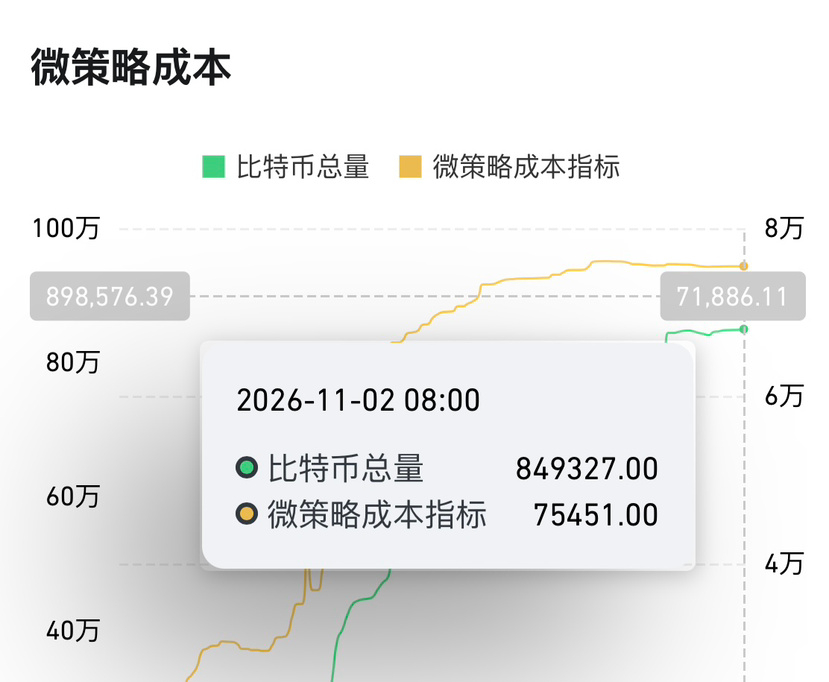
Over the past few days, $BTC was pulled down near 75000 by the U.S. stock market, and market sentiment has cooled considerably. The price dip flushed out a large number of highly leveraged longs, and total open interest fell noticeably. Most of that aggressive leveraged capital has already exited, easing near-term selling pressure.
As the price formed a base around 75000, retail sentiment actually collapsed. The short ratio climbed rapidly, and many traders chose to go short with the trend after the breakdown. Binance whale activity tells the opposite story: as retail traders turned bearish, whales not only absorbed coins at lower levels but also rebuilt substantial long positions.
This has created a clear divergence. The price is still ranging between 75000 and 76000, but coins are shifting from fearful retail traders to whales who are bullish on the outlook. In addition, nearly $500 million worth of short positions are at risk of liquidation in the 76600–77600 range above.
The next move looks fairly clear:
There is institutional and spot-market support around 75000, since this is the cost basis for MicroStrategy and short-term on-chain holders. There are also plenty of short positions overhead. If U.S. stocks stabilize or ETF outflows slow, it would only take a modest push from the bulls to liquidate these highly leveraged shorts. The resulting forced buy-to-cover orders could easily trigger a rapid rally.
As for trading, chasing shorts at this level is already poor value. Leveraged longs have been flushed out, retail traders have turned bearish, and whales are accumulating at lower levels. If you’re holding spot, just be patient and hold on. If you want to take a short-term long, you could wait for the price to hold above 76000 and confirm momentum before entering on the right side, or wait for another dip near 74000 and enter on the left side.
That’s how markets always work: positions change hands amid divergence. Once you understand where the money is flowing, you won’t be shaken out by short-term candlestick movements so easily. Follow me so you don’t lose your way, and join my chat room 👇
2
2
593
·
--
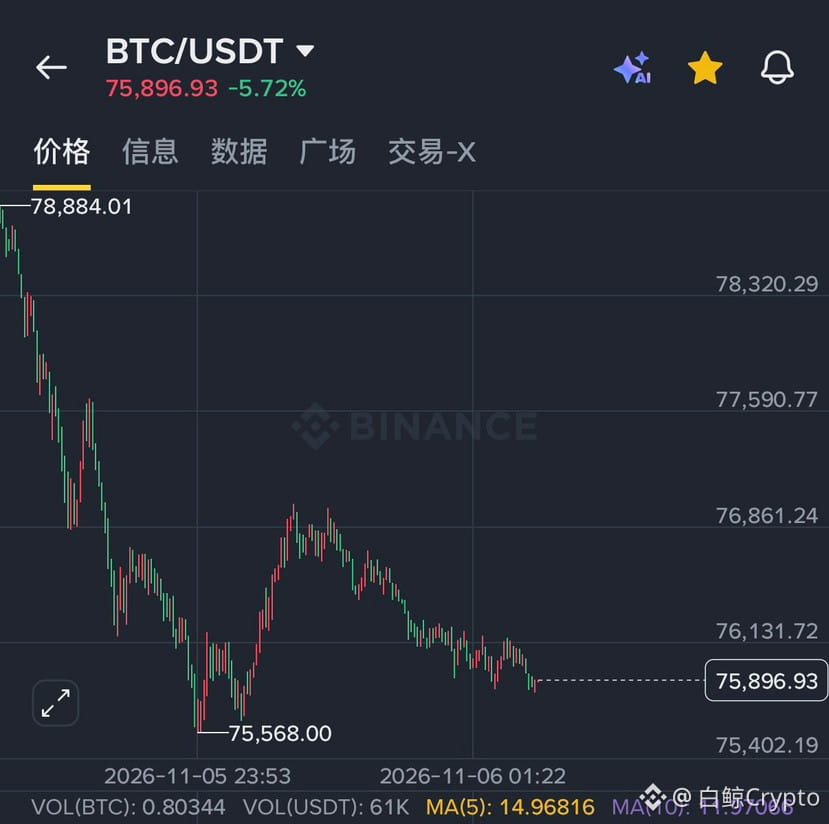
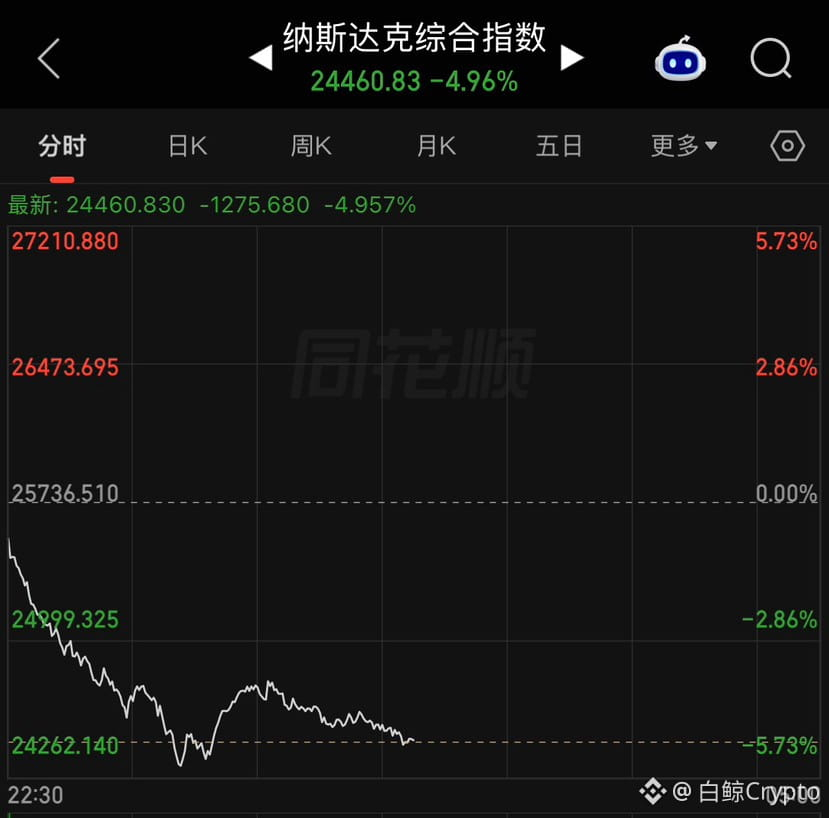
Bitcoin is now completely in sync with US stocks. The more uncertain the market gets, the more opportunities emerge from the dips. Panic is what creates buying opportunities. Keep adding to your spot positions, guys 🚀
Bitcoin is now completely in sync with US stocks. The more uncertain the market gets, the more opportunities emerge from the dips. Panic is what creates buying opportunities. Keep adding to your spot positions, guys 🚀
1
4
1.6k
·
--
With the midterm elections now over, despite a crypto-unfriendly party winning, Bitcoin somehow made a huge V-shaped reversal. This market move is actually really interesting, with lots of details:
Yesterday, BlackRock led the sell-off, driving Bitcoin down in a sharp wick to around 75,700. That level was chosen with real precision—it just breached the psychological line held by the most stubborn bulls and even triggered all their stop-loss orders. Once those panic-sold coins changed hands, the weak positions below were instantly shaken out.
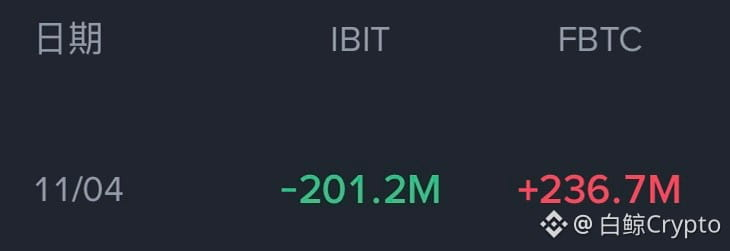
The market saw about $900 million in liquidations yesterday: $370 million in long positions and $530 million in shorts. Many people were still stunned after getting liquidated when $236 million flowed into Fidelity. BlackRock saw $201 million in outflows, while Fidelity had $236 million in inflows. Money didn’t leave; the coins simply changed hands on a large scale between the two institutions.
After all that, the price was still firmly pinned near 80,000. That’s the average cost zone where BlackRock has been accumulating for over two months. The big players moved funds around and the coins changed hands, but the price didn’t budge—while positions got wiped out 🤣
The most remarkable part was the V-shaped reversal that followed. The price shot up fast and hard. It wasn’t because a flood of spot buying suddenly came in; rather, the shorts who had entered at higher levels saw that the sell-off failed to push prices lower and instead sparked a rally. They panicked and were forced to close their positions at a loss—for example, even Aoying was stopped out. It was the forced buying from those covering their shorts that pushed the price straight back up.
Wall Street used election fears as cover: first, it drove prices down in a sharp wick to liquidate the bulls, allowing institutions to exchange coins at a low cost. Then it used the mechanical buying from short covering to bring prices back up. After all that, the market looked like it had merely moved sideways, but underneath, the structure of capital had been reshuffled by major institutions. Politicians put on a show up on stage, while whales scoop up coins below—that’s probably the script.
Follow me and join my group chat so you don’t lose your way 👇
BTC-1.36%
BLKUS-1.52%
2
800
·
--
There’s an old saying in the market: “Of the three thousand waters, I’ll drink from just one gourd.” But most people always want to scoop every fish in the sea into their nets.
I often see people gravitate toward so-called “promising coins” with tiny market caps that nobody’s ever heard of. Their reasoning is that a small market cap means huge upside if the price takes off—and a chance to get rich overnight. But reality often gives them a harsh wake-up call. They think they’ve found a 100x gem, when really they’re just catching loaches in a muddy pond.
Times have changed. The winner-takes-all dynamic is growing stronger than ever. Whether it’s the cutting-edge AI era or the crypto market we’re in, the future will inevitably be dominated by a handful of giants. Capital, resources, traffic, and technology are all flowing toward the leaders.
Just look at the market right now. When macro conditions are tight and money is scarce, Wall Street’s real money only backs Bitcoin. When the broader market gets volatile, those altcoins in the pond—with no fundamentals and propped up entirely by high leverage—can get wiped out in a chain of liquidations by a single wick, left with nothing.
Many of those little fish won’t even survive to see the spring of the next cycle. By contrast, the real giants and core assets aren’t valuable because they can pump 50% in a day. Their strength lies in their high degree of certainty, sustainable growth, and the powerful compounding effect they deliver over time.
So whether you’re investing or trading, maturity isn’t about how many flashy tricks you’ve learned. It’s about knowing what to leave out. To quote CZ: “A lot of the time, what you don’t do is 100 times more important than what you do.”
Don’t waste your limited bullets on mediocre opportunities that are little more than a gamble. Take the time to really study two or three top-tier core assets, and hold tight to those few high-conviction opportunities. That alone is more than enough to do very well in this market.
Choosing a small number of quality assets is the basic prerequisite for success. Give up on those tempting little fish. Better to wait hungry for a big fish in the open sea than to fight the market makers with a knife in a muddy pond.
Follow me and join my group chat. Don’t lose your way trading 👇
5
942
·
--
#币安披露黑客事件进展63亿美元损失已弥补八成
Yesterday, the crypto market and US stocks were rocked by one shock after another. US tech companies’ earnings reports were a disaster, tech stocks fell 10% across the board, Intel dropped nearly 30%, Binance suffered the biggest hack in its history, spot ETFs saw a record $650 million in outflows in a single day, and institutions rushed to close positions.
In the past, Bitcoin would have fallen at least double digits under these conditions. But this time, after plunging from $81,000 to around $76,000, it was dragged right back up to $78,000 by massive buying pressure! Its biggest drop in a single day was only about 5%. With nothing but despair and bearish news all around, Bitcoin’s resilience this time has genuinely impressed me:
In the past, when an exchange suffered a black swan event, on-chain liquidity would dry up instantly, and retail investors could only join the panic selling, with no floor in sight. Things are different now. The spot Bitcoin ETF gives the market a powerful new channel, making Bitcoin’s holder base much more stable. Binance also responded extremely quickly, freezing the funds and promising full reimbursement, which brought the panic over a potential run to a minimum.
The large ETF outflows are institutions engaging in cash-and-carry arbitrage: buying spot ETFs with one hand and opening short positions with the other to collect funding rates and the basis. As macro risks intensified and the exchange ran into trouble, margin pressure on futures surged. To manage risk, they had no choice but to sell their spot ETFs while buying back their short positions. So the major players weren’t dumping because they were bearish; this was mechanical, defensive risk management. Once these arbitrage funds finish closing their positions, this source of targeted selling pressure will be completely exhausted.
Meanwhile, much of the market’s emotional selling pressure came from short-term speculative money and retail investors who chased prices above $82,000 from late September to mid-October. Spooked by the macro-driven plunge and the Binance incident, they quickly cut their losses and handed over their coins. Whales and long-term holders were placing buy orders around $77,000 amid the panic, transferring coins from weaker hands to stronger ones—from short-term speculators to patient, long-term capital. This kind of turnover is painful in the short term, but over the medium to long term, it leaves the market’s foundation far sturdier than before.
In the short term, the $76,000–$78,000 range has already passed an extreme stress test amid multiple negative catalysts. Most likely, prices will churn between $76,000 and $80,000 as the market absorbs the aftershocks of deleveraging in US stocks and the lingering fears from the Binance incident. There’s no need to panic blindly in the face of a black swan. Once US stocks stop falling, Binance’s reimbursement is finalized, and ETF flows return to net inflows, this downturn may well have carved out a golden opportunity ahead of the next rally.
Join the group chat to understand the market and stay on track 👇
1
5
3.3k
·
--
Bitget had just been hit for $300 million, and barely a month later, Binance was robbed of nearly $6 billion. This has now, without a doubt, become the largest recorded theft in human history!
The incident was apparently caused by hackers breaking into an engineer’s computer and using it to gain access to a service container, where they directly submitted a withdrawal instruction. From Bybit to Bitget, and now Binance, three leading CEXs have been breached one after another in just two years, and the underlying cause is the same in every case. I don’t think this is a coincidence anymore—it’s a fundamental weakness of centralized exchanges:
Many major companies are now adopting zero-trust security architectures, claiming to “never trust, always verify.” But engineers need high-level access to release updates, run tests, and maintain nodes. Hackers might bribe insiders, use social engineering and phishing, or breach personal devices. Once a device is compromised, even heavily controlled jump servers can be cracked one by one, rendering all identity-based authentication mechanisms effectively useless.
In essence, CEXs wear the decentralized guise of Web3, but at their core, they’re the most extreme kind of high-concurrency Web2 internet company. To provide tens of millions of users with fast deposits, withdrawals, and trading, their systems need to be highly automated. If every withdrawal required ten executives to sign with hardware wallets, the user experience would be ruined. So hot wallets have to stay online, APIs have to remain open, and automated consolidation programs have to run 24/7. This means that if hackers find an authorization vulnerability in an internal API or forge a withdrawal instruction, they can drain the funds!
Thankfully, Tether and Circle helped freeze the funds in an emergency on-chain. These safeguards prevented most of the losses, but they treat the symptoms, not the underlying problem. As long as custody and trading aren’t separated, and people remain the trust hubs in automated systems, hot wallets will always be the industry’s biggest pain point!
Follow me so you don’t lose your way, and join my group chat 👇
6
2k
·
--
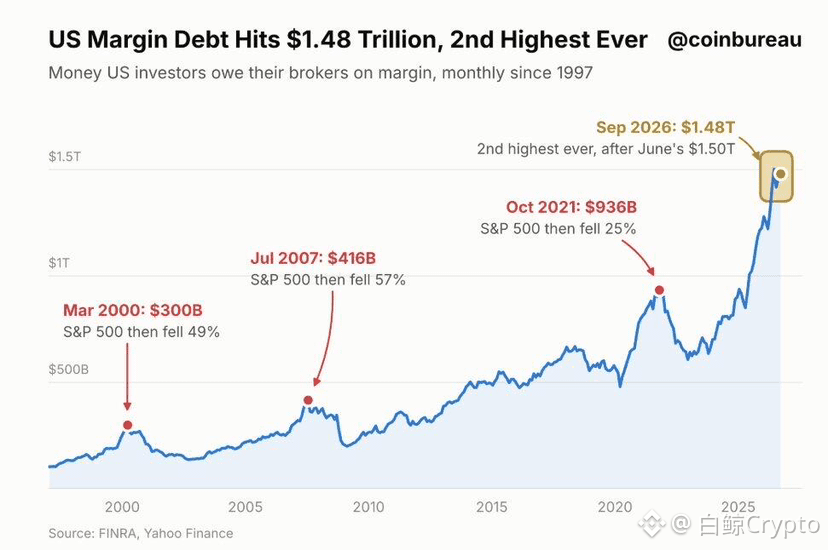
This year, the South Korean 🇰🇷 market has provided a textbook example of how leverage can magnify a market downturn.
Vulnerability in the U.S. is now rising:
U.S. investors’ current margin debt has reached $1.48 trillion, the second-highest level on record.
According to the Financial Industry Regulatory Authority (FINRA), investors took on an additional $26 billion in margin debt in September alone. Current margin debt is just 1.5% below the record $1.50 trillion set in June.
Meanwhile, idle cash held by investors at brokerages has grown just 1.7% since October 2021, while margin debt has surged 58%.
Of course, the stock market’s overall value has also expanded.
According to First Trust data, relative to the S&P 500, investors have about $2.30 in margin debt for every $100 worth of S&P 500 stocks they hold—roughly in line with the average since 1997.
Historically, peaks in margin debt have often occurred within three months of a broader market peak:
1. March 2000: Margin debt reached $300 billion, followed by a 49% drop in the S&P 500.
2. July 2007: Margin debt reached $416 billion, followed by a 57% drop in the S&P 500.
3. October 2021: Margin debt reached $936 billion, followed by a 25% drop in the S&P 500.
In each of these market cycles, leveraged investors were forced to deleverage: margin debt fell 35%–55% from its respective peak.
This doesn’t mean a 📉 is inevitable, nor does it mean that “high margin debt directly causes a crash.” Rather, once selling begins, high leverage can amplify the decline. And extreme leverage levels tend to occur late in bull markets, when risk appetite is at its highest.
In other words, watch out for ⚠️ black swans:
1. Iran War Escalation — Trump says he won’t act before the midterms, but knowing Trump… What are the chances?
2. Credit Crisis — Bullish for 🍊
3. 🇫🇷
4. There’s also the issue of liquidity. If liquidity is poor, whether in the stock market or crypto, it can get ugly.
That’s all I can think of for now. Feel free to comment if you have anything else.
2
1
1.2k
·
--
The market will rally before you know it #FOMC会议
But remember, opportunity favors the prepared
In a bull market, buying in installments is the best approach
Believe it or not, this bull market will be the one that most people miss out on
The buy-in point I emphasized on the livestream isn’t because the market is about to move right now—it’s so you won’t miss out later. You’ll come back and thank me!
1.1k
·
--
What exactly are the big players doing right now?
ETFs were still seeing inflows just a few days ago, but then suddenly saw net outflows of $770 million over October 22–23. Clearly, some investors decided to take profits first:
BlackRock alone accounted for half of the outflows. Looking back, BlackRock has seen net inflows of around $2 billion from September through today, with its overall purchase cost basis around $82,000. That means its short-term holdings are still underwater.
U.S. stocks have been getting hammered over the past two trading days, raising clients’ appetite for safe havens. That sentiment spilling over into Bitcoin ETFs makes perfect sense. So the short-term outflows aren’t because BlackRock itself is bearish; its clients are pulling out, forcing it to process redemptions.
Besides, it takes at least months for major institutions to change course. Two or three consecutive weeks of net outflows would be needed to indicate that institutions are systematically pulling back. BlackRock’s Bitcoin ETF accounts for 60% of the entire ETF market, making it a major buying force and a clear market barometer.
Now let’s look at on-chain data:
1) Wallets holding between 10 and 10,000 BTC, $BTC , have been gradually accumulating during the market’s swings, buying a total of 85,000 to 89,000 BTC.
2) Whale holdings have also risen back to 3.03 million BTC, with the fastest monthly accumulation pace since February this year.
3) Since October, market maker Wintermute has transferred 9,458 BTC—worth around $770 million—to 40 new wallets for safekeeping.
4) In addition, Strive holds 36,818 BTC, while treasury companies such as Strategy have bought a combined 135,979 BTC and are still accumulating.
Their stance is clear: buy the dips and lock up the coins. The short-term players are selling high and seeking safety, while the long-term players are accumulating on dips. The market is still caught in a tug-of-war.
Don’t mistake short-term outflows for a signal of a major crash, and don’t take whale accumulation as a sign that prices are about to skyrocket. Just be patient and hold on to your coins~
Follow me and join my group chat. Lao Bai will help you make sense of things and stay on track👇
{future}(BTCUSDT)
What exactly are the big players doing right now?
ETFs were still seeing inflows just a few days ago, but then suddenly saw net outflows of $770 million over October 22–23. Clearly, some investors decided to take profits first:
BlackRock alone accounted for half of the outflows. Looking back, BlackRock has seen net inflows of around $2 billion from September through today, with its overall purchase cost basis around $82,000. That means its short-term holdings are still underwater.
U.S. stocks have been getting hammered over the past two trading days, raising clients’ appetite for safe havens. That sentiment spilling over into Bitcoin ETFs makes perfect sense. So the short-term outflows aren’t because BlackRock itself is bearish; its clients are pulling out, forcing it to process redemptions.
Besides, it takes at least months for major institutions to change course. Two or three consecutive weeks of net outflows would be needed to indicate that institutions are systematically pulling back. BlackRock’s Bitcoin ETF accounts for 60% of the entire ETF market, making it a major buying force and a clear market barometer.
Now let’s look at on-chain data:
1) Wallets holding between 10 and 10,000 BTC, $BTC , have been gradually accumulating during the market’s swings, buying a total of 85,000 to 89,000 BTC.
2) Whale holdings have also risen back to 3.03 million BTC, with the fastest monthly accumulation pace since February this year.
3) Since October, market maker Wintermute has transferred 9,458 BTC—worth around $770 million—to 40 new wallets for safekeeping.
4) In addition, Strive holds 36,818 BTC, while treasury companies such as Strategy have bought a combined 135,979 BTC and are still accumulating.
Their stance is clear: buy the dips and lock up the coins. The short-term players are selling high and seeking safety, while the long-term players are accumulating on dips. The market is still caught in a tug-of-war.
Don’t mistake short-term outflows for a signal of a major crash, and don’t take whale accumulation as a sign that prices are about to skyrocket. Just be patient and hold on to your coins~
Follow me and join my group chat. Lao Bai will help you make sense of things and stay on track👇
1
7
4.7k
·
--
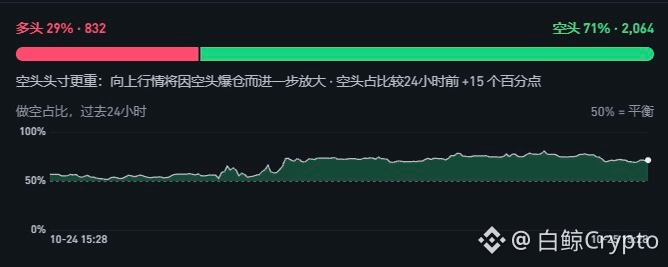
$BTC The market is looking pretty interesting right now. Retail traders are aggressively shorting, and if this keeps up, the big players are probably going to squeeze them:
Short positions surged by another 15 percentage points over the past day. Shorts now account for as much as 71%, while longs make up only 29%. This is a classic setup: when everyone thinks the market is going to fall and rushes to open short positions, it often stops falling. There’s clearly buying support around 79,600, and selling momentum is getting weaker and weaker.
The range between 81,400 and 82,000 is packed with highly leveraged short positions—fuel just waiting for the big players. If the price nudges up and breaks above 81,400, the shorts could get squeezed, pushing the price straight up. So the most likely scenario for now is some choppy consolidation, followed by a sudden rally that liquidates the shorts above.
Here’s my personal take on short-term trading:
Either way, I absolutely wouldn’t chase a short at this level. Shorting here is like dancing on the edge of a cliff. If you want to go long, you could try a small position around the current price of 80,500, or wait for a pullback to around 80,000 before entering. Be sure to use a stop-loss, set below 79,600. If the price breaks below that, it means my read was wrong, and I’ll take the loss and exit.
For upside targets, I’d be watching 81,400 first. If the price breaks through and holds above it, it could very likely reach 82,000. If it rallies into the 81,400–82,000 range and starts losing momentum, consider reducing your position or exiting. If it really takes off, we could see a pretty decent move up. In any case, watch your position size and use a stop-loss—wicky moves are bound to happen in this market.
Follow me and join my group chat. Old Bai will help you understand the trend and stay on track👇
4
15
11.9k
·
--

Article
Do Altcoins Still Have a Future?The era of broad-based gains in altcoin bull markets is over, but altcoins as an asset class are not going away. What’s disappearing is the liquidity premium of “any coin can go up.” What remains are a very small number of assets whose value can be validated by cash flow, compliant on-ramps, and network effects:
I. The most vulnerable part of the altcoin market right now
$BTC Repeatedly rejected near 84,000, with heavy overhead selling pressure, the market is consolidating in the 80,000–85,000 range in the short term as it waits for direction. But the real danger isn’t the broader market’s choppiness itself—it’s the positioning in altcoins.
Since leverage peaked in early October, more than 40% of large-cap altcoins have remained near their highest leverage levels of 2026, while the share of mid-cap altcoins in a highly leveraged state has climbed to a new year-to-date high. A round of liquidations worth about $850 million took place on October 15, but newly opened leveraged long positions quickly filled the gap afterward, with borrowed money taking the place of what had been cleared out.
Do Altcoins Still Have a Future?
The era of broad-based gains in altcoin bull markets is over, but altcoins as an asset class are not going away. What’s disappearing is the liquidity premium of “any coin can go up.” What remains are a very small number of assets whose value can be validated by cash flow, compliant on-ramps, and network effects:
I. The most vulnerable part of the altcoin market right now
$BTC Repeatedly rejected near 84,000, with heavy overhead selling pressure, the market is consolidating in the 80,000–85,000 range in the short term as it waits for direction. But the real danger isn’t the broader market’s choppiness itself—it’s the positioning in altcoins.
Since leverage peaked in early October, more than 40% of large-cap altcoins have remained near their highest leverage levels of 2026, while the share of mid-cap altcoins in a highly leveraged state has climbed to a new year-to-date high. A round of liquidations worth about $850 million took place on October 15, but newly opened leveraged long positions quickly filled the gap afterward, with borrowed money taking the place of what had been cleared out.
1
2
2.3k
·
--
The era when you could buy any altcoin with your eyes closed and watch it go up is over. From now on, only a tiny handful will survive:
More than 40% of large-cap altcoins now have leverage near their yearly highs, while leverage in mid-cap coins has also hit a record. Around $850 million was liquidated on October 15, and leveraged buyers were quick to borrow money and take their place. Prices aren’t being supported by real spot buying; they’re being propped up by borrowed money and leverage. Small coins have thin order books, so when market makers pull out, liquidations can easily cascade. That’s where things stand now.
The Fed’s decision on October 29 and the November 3 midterm elections are only six days apart, and could break Bitcoin’s sideways trend. Institutions fear uncertainty, so money is concentrating in BTC and ETH. Altcoins fell 5.69% in a week, while BTC fell just 1.99%—the flow of funds is clear.
Over the past 30 days, BTC ETFs saw net inflows of about $2.09 billion, while ETH ETFs saw net outflows of about $319 million and SOL ETFs about $33.2 million. What’s more, BlackRock, the largest institutional player, only buys Bitcoin and Ether through its ETFs. Altcoins can’t count on money spilling over after the broader market rallies.
The sell pressure from VC-backed projects is the most frustrating. Recently, ZRO had an unlock worth around $43.3 million; ALLO has an unlock in November equivalent to about 64% of its circulating supply; and HUMA’s team and investor allocations are unlocking in a concentrated wave. Spot demand is already thin, so prices are bound to come under pressure. Why are so many people still falling for this?
Only these kinds of coins will survive:
First: coins with real cash flow. It’s not enough for a project to generate revenue—the revenue must be mandatorily distributed to token holders through buybacks, burns, or staking rewards. For example, Aave is projected to generate about $47 million in annual revenue from its Ethereum lending protocol. Hyperliquid generated more than $800 million in revenue over the past year, with about 99% used to buy back and burn HYPE.
Second: protocols that can provide the underlying settlement, custody, and clearing infrastructure for Wall Street’s compliant financial rails. These may be able to capture incremental demand from traditional finance. Partnerships alone aren’t enough—you also need to see whether TVL and fees are actually accruing on-chain.
Third: public blockchains whose gas fees and TVL won’t disappear as narratives rotate. Ethereum has around $52.3 billion in DeFi TVL, compared with about $6.2 billion for Solana. Solana’s on-chain fees rank among the highest of the six largest public blockchains. The value of a blockchain token doesn’t come from having lots of ecosystem projects; it comes from underlying assets and trading activity creating sustained, inelastic demand for gas, giving the token a durable demand base.
🙅Finally, stay away from highly leveraged altcoin futures. That’s just handing your margin to market makers. Follow me and join my group chat—Lao Bai will help you understand the trends 👇
1
3.4k
·
--
#比特币突破8.2万美元
$BTC Volatility has fallen and the price has started moving sideways. It has retested the area around 80k several times and bounced back. Most of the selling pressure from bears has been released. No matter how sharply the price breaks down, as long as it can quickly recover and hold above 80k, the trend still points upward:
The 84,000–86,000 range is a major danger zone for leveraged bears, with far more short leverage stacked above than below. If major players want to harvest liquidity, pushing the price up to trigger liquidations in this short zone would face much less resistance than crashing it down to liquidate longs.
There are a lot of breakeven sell orders in the 84,000–86,000 area. If spot buying, together with ETF inflows, can absorb this selling pressure, it could immediately trigger short covering above, rapidly pushing the price to the previous high or even higher. That’s what a short squeeze is.
Short covering provides the first splash of fuel, but it’s only enough to get the engine started. We’ve already seen the power of a short squeeze once this year: after Bitcoin broke through 84,000, more than $648 million in short positions were liquidated, including $278 million in short positions. The resulting buying pressure pushed the price straight to 87,000. If it happens again this time, the price could be driven toward 90,000!
There’s nothing new under the sun. The market just gives a new group of people the same old story. Follow me and join my fan group to make sense of the market and stay on track! 👇
3
2.3k
·
--
#比特币重回8.4万美元
Leveraged funds are aggressively shorting futures, with short positions reaching as high as 6.2w contracts of $BTC —far exceeding the 2.8w contracts of $BTC held by longs. Retail traders on the futures market were frightened by this wave of selling and suffered a cascade of liquidations. These highly leveraged gamblers are just pawns helping to drive the market down:
While major players quietly buy up assets on the spot market, they open short positions in the futures market to hedge or push prices down. The goal is to flush out leverage—a win-win for them. Spot ETFs did see a brief outflow of funds in early October, which served as the spark that triggered market panic.
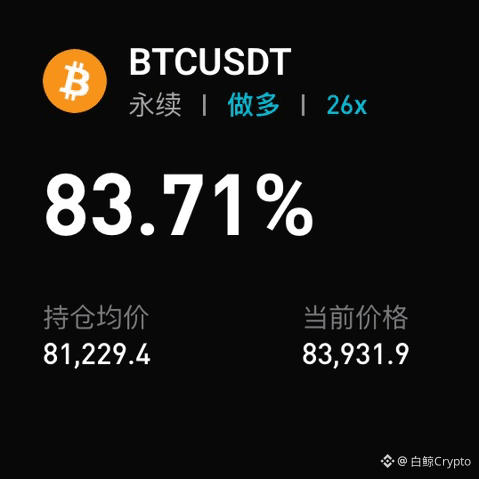
But looking at the month as a whole, giants like BlackRock are still net buyers, and the foundation remains solid. The major players aren't preparing to exit; they're reducing leverage. Retail investors are panic-selling their holdings at a loss, and those very holdings are landing in the pockets of the folks who followed Lao Bai's advice to buy the dip around 80,000.
The price pulled back from a high of 87,000, dipping as low as around 80,000—right into the core accumulation zone we had previously identified. Major players had buy orders stacked along this wall of buying support, built up with capital, and all the selling pressure was absorbed as soon as it hit. After bottoming out, the price rebounded quickly and is now back above 84,000. Panic-driven selling pressure has been exhausted, and a short-term recovery bounce is now underway.
The market is currently in a recovery phase after major players stepped in to support prices. To avoid getting shaken out in the volatility ahead, hold on to your bottom-priced holdings. The first resistance zone above is 86,000–87,000. Only a break above the previous high of 87,395 would confirm a new major uptrend. At 84,000, the market is in the middle of a rebound; if you haven't entered, I don't recommend chasing the rally. Be patient and wait for a pullback to the expected level, and always leave yourself some room to maneuver.
As I said last time, October is a quiet period for macroeconomic data, when major players have the easiest time controlling the market. The real test will come with the midterm elections in November and the year-end rate-hike test in December. Prices were pushed down, but weak hands were shaken out; newcomers took their place. The point of a shakeout is to move holdings from the hands of the fearful into the hands of the patient.
Follow me and join my fan group to make sense of the market and stay on track! Let's patiently wait for the market move that's ours!🚀

1
1
3
5.9k
·
--
#比特币跌破8.1万美元
This pullback in Bitcoin was entirely within expectations. The price levels were all within the range I anticipated. If you want to know more, you can look back at my earlier posts. Here are some more of my thoughts:
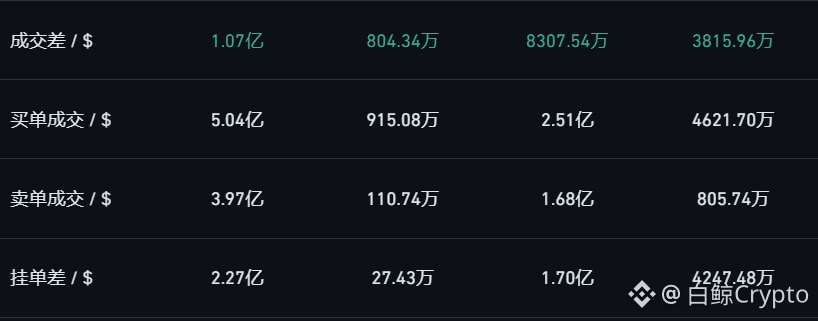
Although Bitcoin’s price has been sliding over the past few days, the order-book data has been the clearest thing to track. There’s a very interesting pattern: at several leading exchanges, large orders showed net inflows throughout the decline, whether measured by the difference in executed trades or resting orders. On Binance’s spot market, the imbalance between buys and sells was huge: net buy orders were more than five times net sell orders. Prices were being pushed down, while major players were accumulating.
The drop wasn’t driven by major players actively dumping the market. After trading sideways for a while, the market fell without any attempt to lure buyers in or set a trap. It’s pretty clear that panic selling by retail traders and a cascade of liquidations among highly leveraged longs were to blame. The market makers simply cast their nets below and quietly waited for panic-sold coins to fall in.
Based on the average purchase price, the key range where major players concentrated their accumulation this time was 81000-82000. Whenever the price falls into this range, a large number of pre-placed buy orders are triggered, absorbing all the selling pressure. As long as this buy-side defense, built up with capital, holds, the market could easily rebound after the major players have supported it and retail panic selling has run its course. So be patient and wait for the recovery~
There’s nothing new under the sun; the market just finds a new group of people to repeat the same story. Follow me and join my fan group, so you can make sense of the market and stay on track!
2
2k
Log in to explore more content
Join global crypto users on Binance Square
⚡️ Get latest and useful information about crypto.
💬 Trusted by the world’s largest crypto exchange.
👍 Discover real insights from verified creators.
Email / Phone number
Trending Topics
NvidiaEarningsTonight:AIStocks’NextMove?
64,710 views
914 Discussing
Nvidia Earnings Day: Interim CEO's First Appearance — Can the AI Story Hold?
Binance News
·17 Likes
·7.9k views
A Packed Week of Earnings and Data Tests Markets
122,110 views
615 Discussing
AnthropicIPOTestsInvestorAppetiteForAI
269,180 views
2,621 Discussing