Binance Square
Zero99
51 Publicações

Zero99

My goal, my ambition, my dream. They all come together to get rich and become a rich man. The work is difficult, but the success will be brilliant
2 A seguir
155 Seguidores
119 Gostaram
Publicações
·
--
Artigo
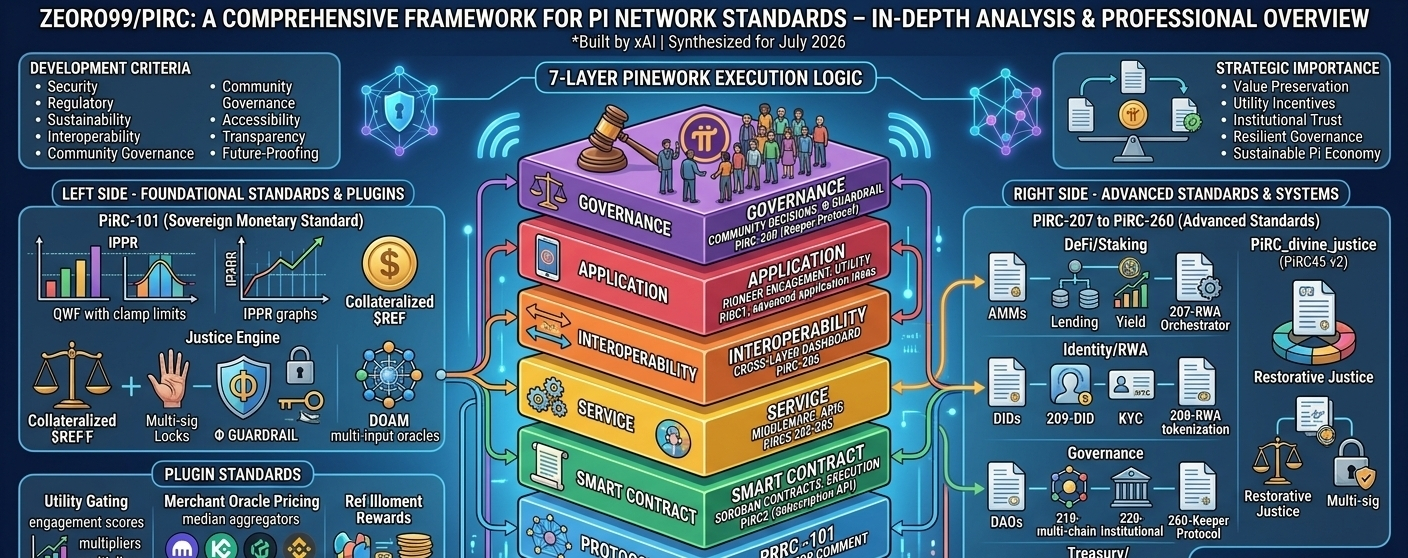
**Ze0ro99/PiRC: Uma Estrutura Abrangente para Padrões da Pi Network – Análise Aprofundada e ProfissionApós uma pesquisa aprofundada no repositório **Ze0ro99/PiRC** — incluindo análise direta da arquitetura da branch principal, mais de 130 branches de funcionalidades, arquivos de proposta detalhados (`PROPOSAL_xxx.md`), documentos de especificação em `contracts/` e `docs/`, implementações de contratos inteligentes, simuladores econômicos e arquivos de referência mestre como `REPOSITORY_MAP.md` e os registros globais — este artigo fornece uma visão completa, atualizada e autorizada de um dos esforços de padronização mais ambiciosos e orientados pela comunidade no ecossistema Pi.

**Ze0ro99/PiRC: Uma Estrutura Abrangente para Padrões da Pi Network – Análise Aprofundada e Profission

Após uma pesquisa aprofundada no repositório **Ze0ro99/PiRC** — incluindo análise direta da arquitetura da branch principal, mais de 130 branches de funcionalidades, arquivos de proposta detalhados (`PROPOSAL_xxx.md`), documentos de especificação em `contracts/` e `docs/`, implementações de contratos inteligentes, simuladores econômicos e arquivos de referência mestre como `REPOSITORY_MAP.md` e os registros globais — este artigo fornece uma visão completa, atualizada e autorizada de um dos esforços de padronização mais ambiciosos e orientados pela comunidade no ecossistema Pi.
·
--
Artigo
Ver tradução
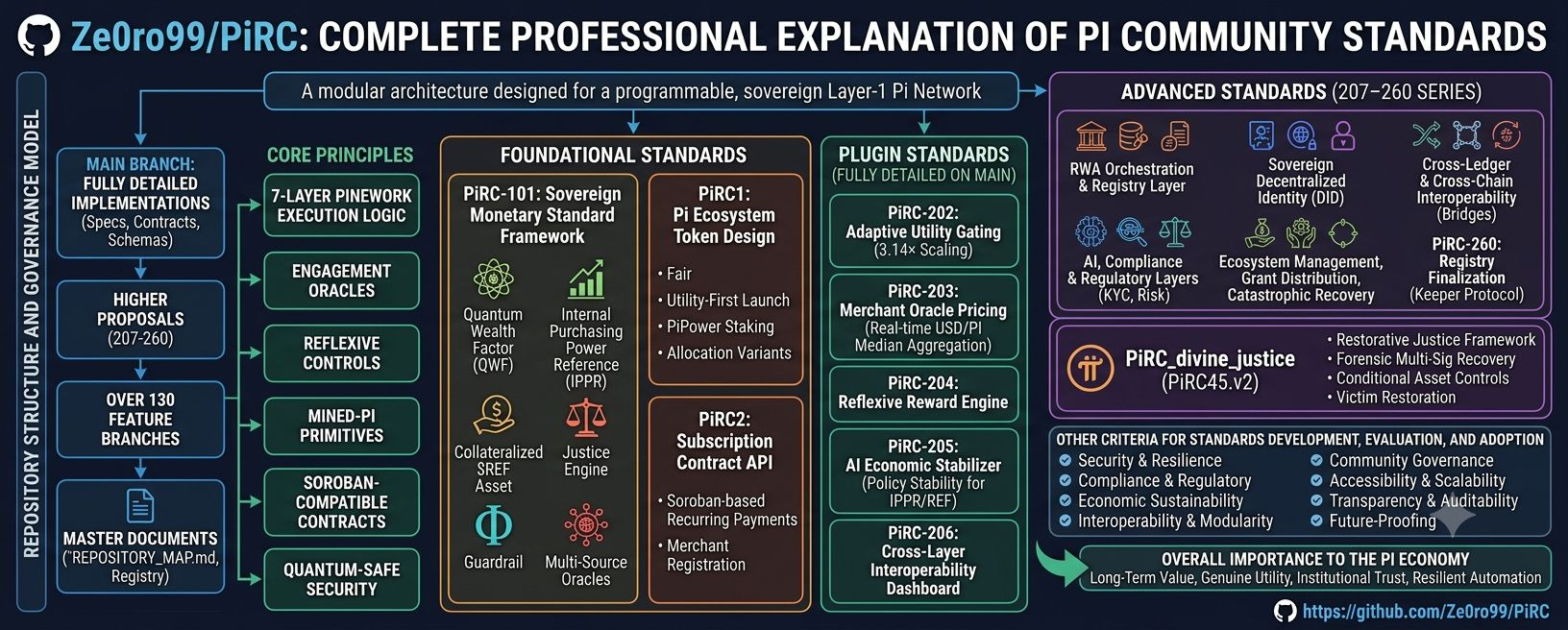
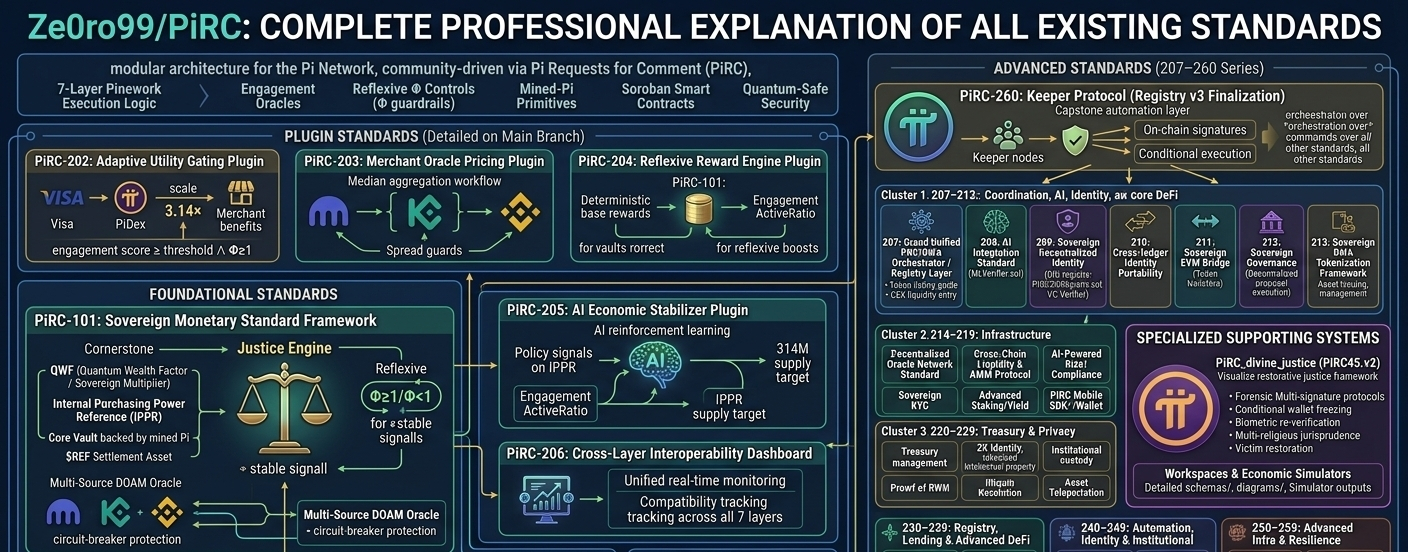
Ze0ro99/PiRC: Complete Professional Explanation of All Existing Standards and Other Criteria for the** The **Ze0ro99/PiRC** repository provides a structured, evolving collection of **Pi Requests for Comment (PiRC)**. It outlines a comprehensive modular architecture designed to support the long-term development of the Pi Network as a programmable, sovereign Layer-1 ecosystem. This framework addresses monetary systems, token economics, subscriptions, identity, real-world assets (RWA), DeFi primitives, governance, compliance, cross-chain interoperability, automation, and restorative justice mechanisms. All standards adhere to the **7-Layer Pinework Execution Logic** and incorporate engagement oracles, reflexive controls, mined-Pi primitives, Soroban-compatible contracts, and quantum-safe security principles. ### Repository Structure and Governance Model The main branch contains fully detailed implementations for foundational and plugin standards. Higher-numbered proposals (207–260) are documented through specification files, smart contracts, schemas, and deployment scripts. Over 130 feature branches enable parallel development of thematic clusters. Master documents (`REPOSITORY_MAP.md`, manifests, and registries) serve as the authoritative index of all standards. ### Foundational Standards **PiRC-101: Sovereign Monetary Standard Framework** Establishes the economic foundation with the **Quantum Wealth Factor (QWF)**, **Internal Purchasing Power Reference (IPPR)**, collateralized **$REF** asset, and a **Justice Engine** governed by the reflexive **Φ guardrail**. Multi-source oracles include circuit-breaker protections. This standard supplies stable pricing and health signals to every higher layer. **PiRC1: Pi Ecosystem Token Design** Defines fair, utility-first token launches through participation windows (Pi staking for **PiPower** + app engagement), allocation mechanisms, and permanent liquidity formation. Two design variants accommodate different allocation and TGE requirements. **PiRC2: Subscription Contract API** Provides Soroban-based recurring payment infrastructure, including merchant service registration and full subscription lifecycle management. ### Plugin Standards (Fully Detailed on Main) **PiRC-202: Adaptive Utility Gating Plugin** Enables dynamic utility access scaling (up to 3.14×) based on verified engagement and network stability. **PiRC-203: Merchant Oracle Pricing Plugin** Delivers real-time USD/PI pricing through median aggregation from major exchanges with built-in safeguards. **PiRC-204: Reflexive Reward Engine Plugin** Applies engagement-driven boosts to deterministic vault-based rewards under governance oversight. **PiRC-205: AI Economic Stabilizer Plugin** Uses reinforcement learning to maintain policy stability for IPPR and $REF against long-term targets. **PiRC-206: Cross-Layer Interoperability Dashboard** Offers unified monitoring and compatibility tracking across all Pinework layers. ### Advanced Standards (207–260 Series) **PiRC-207: Grand Unified PRC Orchestrator / Universal RWA Orchestrator / Registry Layer** Central coordination layer with multi-spec orchestration, token listing processes, CEX liquidity mechanisms, and comprehensive deployment workflows. **PiRC-208: AI Integration Standard** Defines frameworks and verifiers for trustworthy, auditable AI/ML integration within on-chain systems. **PiRC-209: Sovereign Decentralized Identity Standard** Core infrastructure for self-sovereign identity, including DID registries and verifiable credential systems. **PiRC-210 to PiRC-212**: Cross-ledger identity portability, sovereign EVM bridges with token portability, and decentralized governance/proposal execution standards. **PiRC-213 to PiRC-219**: Sovereign RWA tokenization framework, decentralized oracle networks, cross-chain liquidity and AMM protocols, AI-powered risk and compliance engines, sovereign KYC/regulatory layers, advanced staking and yield optimization, and mobile SDK/wallet integration. **PiRC-220 to PiRC-229**: Ecosystem treasury management, privacy-preserving ZK identity, tokenized intellectual property, institutional custody, dynamic RWA metadata, proof of reserves, fractional ownership, illiquid AMM designs, dispute resolution, and asset teleportation. **PiRC-230 to PiRC-239**: Parity Registry v2, over-collateralized lending, justice-driven liquidation, flash-loan resistance, synthetic RWA generation, yield tokenization, dynamic interest rate curves, AI oracles, predictive risk management, and institutional liquidity pools. **PiRC-240 to PiRC-249**: Automated yield farming, zero-knowledge corporate identity, institutional stealth addresses, automated tax withholding, wholesale CBDC integration, off-chain settlement batching, institutional escrow vaults, enterprise compliance oracles, multi-chain governance execution, and cross-chain state synchronization. **PiRC-250 to PiRC-259**: Institutional account abstraction, protocol-owned liquidity, automated treasury diversification, ecosystem grant distribution, ultimate circuit breakers, catastrophic recovery protocols, decentralized validator delegation, ecosystem fee abstraction, standardized dApp ABIs, and cross-chain event standards. **PiRC-260: Registry v3 Finalization (Keeper Protocol)** The final automation and orchestration layer, providing on-chain signatures, conditional execution, and registry finalization across the entire ecosystem. ### Other Specialized Systems **PiRC_divine_justice (PiRC45.v2)**: Implements a restorative justice framework featuring forensic multi-signature recovery, conditional asset controls with biometric re-verification, multi-religious jurisprudence, and quantum-resilient security. It emphasizes victim restoration and ecosystem healing. Additional elements include master workspaces, economic simulators, and compliance documentation. ### Other Criteria for Standards Development, Evaluation, and Adoption In addition to the core technical architecture, the Ze0ro99/PiRC framework incorporates several explicit and implicit criteria that guide the creation, review, and implementation of all standards: - **Security and Resilience Criteria**: All standards must incorporate quantum-safe cryptography, circuit breakers, emergency freeze mechanisms, and recovery protocols. Smart contracts undergo structured threat modeling (Sybil resistance, oracle manipulation, flash-loan resistance). - **Compliance and Regulatory Criteria**: Standards are designed with consideration for frameworks such as EU MiCAR, KYC/AML requirements, and institutional custody needs. Sovereign KYC layers and compliance oracles are embedded where relevant. - **Economic Sustainability and Incentive Alignment Criteria**: Every standard must demonstrate reflexive or incentive-aligned mechanics that reward genuine participation, protect long-term value (via QWF/IPPR/Φ controls), and avoid inflationary or extractive designs. - **Interoperability and Modularity Criteria**: All proposals must integrate with the 7-Layer Pinework model, share common primitives (oracles, vaults, engagement scoring), and support cross-standard and cross-chain compatibility. - **Community Governance and Iteration Criteria**: Standards are developed through open GitHub processes. They require clear specification documents, reference implementations, and economic simulators. Community feedback via issues and pull requests drives iterative refinement. - **Accessibility and Scalability Criteria**: Standards prioritize mobile-first integration (via SDKs and wallets), low-friction merchant adoption, and scalability for millions of Pioneers while maintaining auditability. - **Transparency and Auditability Criteria**: Full documentation, on-chain verifiability (especially for AI components and identity), and public registries ensure accountability. Proof-of-reserves and dynamic metadata standards further enhance transparency. - **Future-Proofing Criteria**: Emphasis on modular design, account abstraction, cross-chain event standards, and catastrophic recovery protocols ensures the framework can evolve with technological and regulatory changes. These criteria ensure that every PiRC standard contributes to a cohesive, trustworthy, and sustainable ecosystem rather than isolated features. ### Interactions, Workflows, and Overall Importance to the Pi Economy Standards interconnect through shared data flows: monetary signals from PiRC-101, engagement data from participation layers, identity verification from PiRC-209 and related standards, and automated execution via PiRC-260. This enables end-to-end processes from user participation to complex DeFi and governance outcomes. Collectively, the full set of standards creates a robust foundation for: - Long-term value preservation - Genuine utility and participation incentives - Institutional trust and regulatory readiness - Scalable innovation in RWA, DeFi, and identity - Resilient automation and community governance The framework positions Pi as a mature, programmable economy capable of supporting real-world adoption while protecting Pioneer interests. ### How to Engage Review and contribute at **https://github.com/Ze0ro99/PiRC**. Explore specifications, contracts, and simulators. Participate via issues, pull requests, or feature branches. Community input on the listed criteria and real-world applications is essential for continued refinement. This document provides the complete professional explanation of all existing standards in the Ze0ro99/PiRC repository, including detailed coverage of the advanced series and the full set of development and adoption criteria. The framework remains open for community-driven evolution.

Ze0ro99/PiRC: Complete Professional Explanation of All Existing Standards and Other Criteria for the

**
The **Ze0ro99/PiRC** repository provides a structured, evolving collection of **Pi Requests for Comment (PiRC)**. It outlines a comprehensive modular architecture designed to support the long-term development of the Pi Network as a programmable, sovereign Layer-1 ecosystem.
This framework addresses monetary systems, token economics, subscriptions, identity, real-world assets (RWA), DeFi primitives, governance, compliance, cross-chain interoperability, automation, and restorative justice mechanisms. All standards adhere to the **7-Layer Pinework Execution Logic** and incorporate engagement oracles, reflexive controls, mined-Pi primitives, Soroban-compatible contracts, and quantum-safe security principles.
### Repository Structure and Governance Model
The main branch contains fully detailed implementations for foundational and plugin standards. Higher-numbered proposals (207–260) are documented through specification files, smart contracts, schemas, and deployment scripts. Over 130 feature branches enable parallel development of thematic clusters. Master documents (`REPOSITORY_MAP.md`, manifests, and registries) serve as the authoritative index of all standards.
### Foundational Standards
**PiRC-101: Sovereign Monetary Standard Framework**
Establishes the economic foundation with the **Quantum Wealth Factor (QWF)**, **Internal Purchasing Power Reference (IPPR)**, collateralized **$REF** asset, and a **Justice Engine** governed by the reflexive **Φ guardrail**. Multi-source oracles include circuit-breaker protections. This standard supplies stable pricing and health signals to every higher layer.
**PiRC1: Pi Ecosystem Token Design**
Defines fair, utility-first token launches through participation windows (Pi staking for **PiPower** + app engagement), allocation mechanisms, and permanent liquidity formation. Two design variants accommodate different allocation and TGE requirements.
**PiRC2: Subscription Contract API**
Provides Soroban-based recurring payment infrastructure, including merchant service registration and full subscription lifecycle management.
### Plugin Standards (Fully Detailed on Main)
**PiRC-202: Adaptive Utility Gating Plugin**
Enables dynamic utility access scaling (up to 3.14×) based on verified engagement and network stability.
**PiRC-203: Merchant Oracle Pricing Plugin**
Delivers real-time USD/PI pricing through median aggregation from major exchanges with built-in safeguards.
**PiRC-204: Reflexive Reward Engine Plugin**
Applies engagement-driven boosts to deterministic vault-based rewards under governance oversight.
**PiRC-205: AI Economic Stabilizer Plugin**
Uses reinforcement learning to maintain policy stability for IPPR and $REF against long-term targets.
**PiRC-206: Cross-Layer Interoperability Dashboard**
Offers unified monitoring and compatibility tracking across all Pinework layers.
### Advanced Standards (207–260 Series)
**PiRC-207: Grand Unified PRC Orchestrator / Universal RWA Orchestrator / Registry Layer**
Central coordination layer with multi-spec orchestration, token listing processes, CEX liquidity mechanisms, and comprehensive deployment workflows.
**PiRC-208: AI Integration Standard**
Defines frameworks and verifiers for trustworthy, auditable AI/ML integration within on-chain systems.
**PiRC-209: Sovereign Decentralized Identity Standard**
Core infrastructure for self-sovereign identity, including DID registries and verifiable credential systems.
**PiRC-210 to PiRC-212**: Cross-ledger identity portability, sovereign EVM bridges with token portability, and decentralized governance/proposal execution standards.
**PiRC-213 to PiRC-219**: Sovereign RWA tokenization framework, decentralized oracle networks, cross-chain liquidity and AMM protocols, AI-powered risk and compliance engines, sovereign KYC/regulatory layers, advanced staking and yield optimization, and mobile SDK/wallet integration.
**PiRC-220 to PiRC-229**: Ecosystem treasury management, privacy-preserving ZK identity, tokenized intellectual property, institutional custody, dynamic RWA metadata, proof of reserves, fractional ownership, illiquid AMM designs, dispute resolution, and asset teleportation.
**PiRC-230 to PiRC-239**: Parity Registry v2, over-collateralized lending, justice-driven liquidation, flash-loan resistance, synthetic RWA generation, yield tokenization, dynamic interest rate curves, AI oracles, predictive risk management, and institutional liquidity pools.
**PiRC-240 to PiRC-249**: Automated yield farming, zero-knowledge corporate identity, institutional stealth addresses, automated tax withholding, wholesale CBDC integration, off-chain settlement batching, institutional escrow vaults, enterprise compliance oracles, multi-chain governance execution, and cross-chain state synchronization.
**PiRC-250 to PiRC-259**: Institutional account abstraction, protocol-owned liquidity, automated treasury diversification, ecosystem grant distribution, ultimate circuit breakers, catastrophic recovery protocols, decentralized validator delegation, ecosystem fee abstraction, standardized dApp ABIs, and cross-chain event standards.
**PiRC-260: Registry v3 Finalization (Keeper Protocol)**
The final automation and orchestration layer, providing on-chain signatures, conditional execution, and registry finalization across the entire ecosystem.
### Other Specialized Systems
**PiRC_divine_justice (PiRC45.v2)**: Implements a restorative justice framework featuring forensic multi-signature recovery, conditional asset controls with biometric re-verification, multi-religious jurisprudence, and quantum-resilient security. It emphasizes victim restoration and ecosystem healing.
Additional elements include master workspaces, economic simulators, and compliance documentation.
### Other Criteria for Standards Development, Evaluation, and Adoption
In addition to the core technical architecture, the Ze0ro99/PiRC framework incorporates several explicit and implicit criteria that guide the creation, review, and implementation of all standards:
- **Security and Resilience Criteria**: All standards must incorporate quantum-safe cryptography, circuit breakers, emergency freeze mechanisms, and recovery protocols. Smart contracts undergo structured threat modeling (Sybil resistance, oracle manipulation, flash-loan resistance).
- **Compliance and Regulatory Criteria**: Standards are designed with consideration for frameworks such as EU MiCAR, KYC/AML requirements, and institutional custody needs. Sovereign KYC layers and compliance oracles are embedded where relevant.
- **Economic Sustainability and Incentive Alignment Criteria**: Every standard must demonstrate reflexive or incentive-aligned mechanics that reward genuine participation, protect long-term value (via QWF/IPPR/Φ controls), and avoid inflationary or extractive designs.
- **Interoperability and Modularity Criteria**: All proposals must integrate with the 7-Layer Pinework model, share common primitives (oracles, vaults, engagement scoring), and support cross-standard and cross-chain compatibility.
- **Community Governance and Iteration Criteria**: Standards are developed through open GitHub processes. They require clear specification documents, reference implementations, and economic simulators. Community feedback via issues and pull requests drives iterative refinement.
- **Accessibility and Scalability Criteria**: Standards prioritize mobile-first integration (via SDKs and wallets), low-friction merchant adoption, and scalability for millions of Pioneers while maintaining auditability.
- **Transparency and Auditability Criteria**: Full documentation, on-chain verifiability (especially for AI components and identity), and public registries ensure accountability. Proof-of-reserves and dynamic metadata standards further enhance transparency.
- **Future-Proofing Criteria**: Emphasis on modular design, account abstraction, cross-chain event standards, and catastrophic recovery protocols ensures the framework can evolve with technological and regulatory changes.
These criteria ensure that every PiRC standard contributes to a cohesive, trustworthy, and sustainable ecosystem rather than isolated features.
### Interactions, Workflows, and Overall Importance to the Pi Economy
Standards interconnect through shared data flows: monetary signals from PiRC-101, engagement data from participation layers, identity verification from PiRC-209 and related standards, and automated execution via PiRC-260. This enables end-to-end processes from user participation to complex DeFi and governance outcomes.
Collectively, the full set of standards creates a robust foundation for:
- Long-term value preservation
- Genuine utility and participation incentives
- Institutional trust and regulatory readiness
- Scalable innovation in RWA, DeFi, and identity
- Resilient automation and community governance
The framework positions Pi as a mature, programmable economy capable of supporting real-world adoption while protecting Pioneer interests.
### How to Engage
Review and contribute at **https://github.com/Ze0ro99/PiRC**. Explore specifications, contracts, and simulators. Participate via issues, pull requests, or feature branches. Community input on the listed criteria and real-world applications is essential for continued refinement.
This document provides the complete professional explanation of all existing standards in the Ze0ro99/PiRC repository, including detailed coverage of the advanced series and the full set of development and adoption criteria. The framework remains open for community-driven evolution.
·
--
Ver tradução
#newt $NEWT **Post 2: PiRC-101 – The Sovereign Monetary Standard Framework and Its Foundational Interactions** **PiRC-101** represents one of the cornerstone proposals within the Ze0ro99/PiRC ecosystem: the **Sovereign Monetary Standard Framework**. It introduces a reflexive monetary controller designed to stabilize the Pi ecosystem internally while preserving purchasing power and mitigating external volatility. At its core, PiRC-101 defines several interconnected components: - **QWF (Quantum Wealth Factor / Sovereign Multiplier)**: A dynamic valuation metric that governs monetary policy. Adjustments are regulated by a `clamp` function tied to Network Velocity and Total Value Locked (TVL), preventing runaway expansion or contraction. Base value is set at 10,000,000 (10^7), with reflexive feedback loops. - **IPPR (Internal Purchasing Power Reference)**: Establishes an internal economic benchmark (~$2,248,000 USD per 1 mined Pi equivalent in conceptual terms), serving as the anchor for minting the protocol's internal settlement asset, **$REF**. - **$REF Settlement Mechanism**: Merchants price in familiar units (e.g., USD) but settle in $REF, which is fully collateralized by mined Pi locked in the Core Vault. This creates an insulated settlement layer. - **Justice Engine**: An algorithmic control loop that monitors liquidity, applies a **Reflexive Guardrail (Φ Constraint)**, and enforces stability. If Φ ≥ 1, minting proceeds; if Φ < 1, expansion halts. - **Oracle Layer**: Utilizes a **Multi-Source DOAM (Decentralized Oracle Aggregation Model)** with medianization across at least three sources and circuit breakers for significant deviations (>15%). **Workflows and Interactions**: PiRC-101 operates as the economic control layer. It interacts with Pi Network's consensus (SCP) for on-chain enforcement via Soroban smart contracts (Core Vault, IPPR Ledger, WCF Utility Gating for mined Pi verification). Off-chain elements include oracle nodes and economic simulators. It feeds stability signals into higher-level PiRC proposals
#newt $NEWT

**Post 2: PiRC-101 – The Sovereign Monetary Standard Framework and Its Foundational Interactions**

**PiRC-101** represents one of the cornerstone proposals within the Ze0ro99/PiRC ecosystem: the **Sovereign Monetary Standard Framework**. It introduces a reflexive monetary controller designed to stabilize the Pi ecosystem internally while preserving purchasing power and mitigating external volatility.

At its core, PiRC-101 defines several interconnected components:

- **QWF (Quantum Wealth Factor / Sovereign Multiplier)**: A dynamic valuation metric that governs monetary policy. Adjustments are regulated by a `clamp` function tied to Network Velocity and Total Value Locked (TVL), preventing runaway expansion or contraction. Base value is set at 10,000,000 (10^7), with reflexive feedback loops.
- **IPPR (Internal Purchasing Power Reference)**: Establishes an internal economic benchmark (~$2,248,000 USD per 1 mined Pi equivalent in conceptual terms), serving as the anchor for minting the protocol's internal settlement asset, **$REF**.
- **$REF Settlement Mechanism**: Merchants price in familiar units (e.g., USD) but settle in $REF, which is fully collateralized by mined Pi locked in the Core Vault. This creates an insulated settlement layer.
- **Justice Engine**: An algorithmic control loop that monitors liquidity, applies a **Reflexive Guardrail (Φ Constraint)**, and enforces stability. If Φ ≥ 1, minting proceeds; if Φ < 1, expansion halts.
- **Oracle Layer**: Utilizes a **Multi-Source DOAM (Decentralized Oracle Aggregation Model)** with medianization across at least three sources and circuit breakers for significant deviations (>15%).

**Workflows and Interactions**: PiRC-101 operates as the economic control layer. It interacts with Pi Network's consensus (SCP) for on-chain enforcement via Soroban smart contracts (Core Vault, IPPR Ledger, WCF Utility Gating for mined Pi verification). Off-chain elements include oracle nodes and economic simulators. It feeds stability signals into higher-level PiRC proposals
·
--
**Post 1: Apresentando o repositório Ze0ro99/PiRC – Uma estrutura fundamental para a rede Pi**#newt $NEWT #pinetwork Na paisagem em evolução do ecossistema da Pi Network, o repositório **Ze0ro99/PiRC** se destaca como uma iniciativa abrangente, orientada pela comunidade, dedicada a definir protocolos padronizados por meio de **Pi Requests for Comment (PiRC)**. Este repositório funciona como um blueprint arquitetônico soberano, propondo uma **Omni-Sovereign Architecture** que integra governança descentralizada, gestão de ativos digitais, fluxos de trabalho assistidos por IA, segurança resistente a ataques quânticos e automação de contratos inteligentes.

**Post 1: Apresentando o repositório Ze0ro99/PiRC – Uma estrutura fundamental para a rede Pi**

#newt $NEWT #pinetwork
Na paisagem em evolução do ecossistema da Pi Network, o repositório **Ze0ro99/PiRC** se destaca como uma iniciativa abrangente, orientada pela comunidade, dedicada a definir protocolos padronizados por meio de **Pi Requests for Comment (PiRC)**. Este repositório funciona como um blueprint arquitetônico soberano, propondo uma **Omni-Sovereign Architecture** que integra governança descentralizada, gestão de ativos digitais, fluxos de trabalho assistidos por IA, segurança resistente a ataques quânticos e automação de contratos inteligentes.
·
--
Artigo
Ver tradução
**Ze0ro99/PiRC: Complete Professional Explanation of All Existing Standards for the Pi Community**The **Ze0ro99/PiRC** repository is a comprehensive, community-driven collection of **Pi Requests for Comment (PiRC)**. It defines a full modular architecture for the Pi Network, spanning monetary foundations, token economics, subscriptions, identity, real-world assets (RWA), DeFi, governance, compliance, cross-chain capabilities, automation, and restorative systems. This framework operates through the **7-Layer Pinework Execution Logic** and integrates engagement oracles, reflexive controls (Φ guardrails), mined-Pi primitives, Soroban smart contracts, and quantum-safe security. Standards progress logically from foundational economic and participation layers to advanced institutional and automation infrastructure. ### Repository Structure - **Main branch**: Hosts complete folders and detailed `PROPOSAL_xxx.md` files for PiRC-101 and PiRC-202 through PiRC-206. - **Higher standards (207–260)**: Documented via specification files (e.g., `PiRC-XXX-[Name]-Standard.md`), smart contracts (`.sol` and Soroban `.rs`), schemas, and deployment workflows in `contracts/`, `docs/`, and `schemas/`. - **Development model**: Over 130 feature branches support grouped evolution (e.g., governance/identity or DeFi clusters). Master catalogs (`REPOSITORY_MAP.md`, manifests, and registries) provide the complete index. - **Supporting systems**: Include `PiRC_divine_justice`, workspaces, economic simulators, and compliance tooling. ### Foundational Standards **PiRC-101: Sovereign Monetary Standard Framework** This is the economic cornerstone. It introduces the **Quantum Wealth Factor (QWF)**, **Internal Purchasing Power Reference (IPPR)**, fully collateralized **$REF** settlement asset, and a **Justice Engine** with reflexive **Φ guardrail**. Multi-source oracles provide circuit-breaker protection against volatility. It supplies stable internal pricing, vault mechanics, and health signals to all higher standards. **PiRC1: Pi Ecosystem Token Design** Defines fair, utility-oriented token launches. Key elements include participation windows (Pi staking for **PiPower** combined with app engagement metrics), allocation rules, and permanent liquidity formation. Two design variants address different allocation and Token Generation Event (TGE) approaches. Sale proceeds convert directly into liquidity rather than project treasuries. **PiRC2: Subscription Contract API** A Soroban-based system for merchant service registration, recurring billing, and full subscription lifecycle management using pre-approved token allowances. ### Plugin Standards (Detailed on Main Branch) **PiRC-202: Adaptive Utility Gating Plugin** Dynamically scales utility access (Visa, PiDex, merchant benefits) up to **3.14×** based on verified engagement scores and network stability (Φ). Uses Sybil-resistant oracles and threshold logic. **PiRC-203: Merchant Oracle Pricing Plugin** Delivers real-time, tamper-resistant USD/PI pricing through median aggregation from Kraken, KuCoin, and Binance, with spread guards and fail-open protections. **PiRC-204: Reflexive Reward Engine Plugin** Calculates deterministic base rewards from vaults and applies engagement-driven boosts via **ActiveRatio**, subject to governance caps and emergency controls. **PiRC-205: AI Economic Stabilizer Plugin** Applies reinforcement-style logic to stabilize IPPR and $REF policy signals against long-term supply targets. **PiRC-206: Cross-Layer Interoperability Dashboard** Provides unified real-time monitoring and compatibility tracking across all seven Pinework layers and interconnected standards. ### Advanced Standards (207–260 Series) These standards extend the foundation into specialized, production-oriented infrastructure. They are implemented through detailed specification documents and corresponding smart contracts. **PiRC-207: Grand Unified PRC Orchestrator / Universal RWA Orchestrator / Registry Layer** Serves as the central coordination hub. It includes multi-layer orchestration specifications, token listing guides, CEX liquidity entry mechanisms, layer color systems, and full deployment workflows. This standard unifies RWA handling and registry functions across the ecosystem. **PiRC-208: AI Integration Standard** Establishes frameworks for trustworthy AI/ML integration. Includes verifiable computation components (such as `PiRC208MLVerifier.sol`) to ensure AI outputs remain auditable and aligned with on-chain rules. **PiRC-209: Sovereign Decentralized Identity Standard** Provides the core infrastructure for self-sovereign identity. Features a DID registry (`PiRC209DIDRegistry.sol`) and Soroban-based verifiable credential verifier (`PiRC209VCVerifier.rs`), enabling secure, user-controlled identity across the Pi ecosystem. **PiRC-210: Cross-Ledger Identity Portability Standard** Enables seamless movement of identity credentials and attestations between different ledgers while preserving sovereignty and privacy. **PiRC-211: Sovereign EVM Bridge and Cross-Ledger Token Portability Standard** Facilitates secure bridging and token transfers between Pi and EVM-compatible chains, maintaining sovereignty and compliance. **PiRC-212: Sovereign Governance and Decentralized Proposal Execution Standard** Defines on-chain mechanisms for proposal creation, voting, and automated execution of governance decisions. **PiRC-213: Sovereign RWA Tokenization Framework** Comprehensive standard for issuing, managing, and governing real-world asset tokens on Pi, including metadata, compliance, and lifecycle controls. **PiRC-214 to PiRC-219 Cluster (Oracles, Liquidity, Compliance & Access)**: - Decentralized Oracle Network Standard - Cross-Chain Liquidity and AMM Protocol - AI-Powered Risk and Compliance Engine - Sovereign KYC and Regulatory Compliance Layer - Advanced Staking and Yield Optimization Protocol - PiRC Mobile SDK and Wallet Integration Standard These enable reliable data feeds, efficient trading, risk management, regulatory alignment, enhanced yields, and seamless mobile/user experiences. **PiRC-220 to PiRC-229 Cluster (Treasury, Privacy, Assets & Resolution)**: Covers ecosystem treasury management, privacy-preserving zero-knowledge identity, tokenized intellectual property, institutional custody solutions, dynamic RWA metadata, proof of reserves, fractional ownership models, illiquid AMM designs, dispute resolution mechanisms, and asset teleportation capabilities. **PiRC-230 to PiRC-239 Cluster (Registry, Lending & Advanced DeFi)**: Includes Parity Registry v2, over-collateralized lending protocols, justice-driven liquidation engines, flash-loan resistance standards, synthetic RWA generation, yield tokenization, dynamic interest rate curves, AI oracles, predictive risk management, and institutional liquidity pools. **PiRC-240 to PiRC-249 Cluster (Automation, Identity & Institutional Tools)**: Features automated yield farming strategies, zero-knowledge corporate identity, institutional stealth addresses, automated tax withholding, wholesale CBDC integration, off-chain settlement batching, institutional escrow vaults, enterprise compliance oracles, multi-chain governance execution, and cross-chain state synchronization. **PiRC-250 to PiRC-259 Cluster (Advanced Infrastructure & Resilience)**: Addresses institutional account abstraction, protocol-owned liquidity, automated treasury diversification, ecosystem grant distribution, ultimate circuit breakers, catastrophic recovery protocols, decentralized validator delegation, ecosystem fee abstraction, standardized dApp ABIs, and cross-chain event standards. **PiRC-260: Registry v3 Finalization (Keeper Protocol)** The capstone automation and registry layer. It provides on-chain signatures, conditional execution, and final registry orchestration, enabling autonomous operation across all prior standards while maintaining security and auditability. ### Specialized Supporting Systems **PiRC_divine_justice (PiRC45.v2)**: Implements a restorative justice framework with forensic multi-signature protocols, conditional wallet freezing, biometric re-verification, multi-religious jurisprudence principles, and quantum-resilient security. It prioritizes victim restoration and ecosystem healing over traditional punitive models. Additional supporting elements include master workspaces for development and testing, extensive economic simulators, and compliance documentation. ### Interactions, Workflows, and System Integration Standards interconnect through shared primitives: - **PiRC-101** supplies monetary stability and Φ signals. - Participation and engagement data from PiRC1 and plugins (202/204) feed identity verification (209/221) and reward systems. - RWA and DeFi layers (213, 215, 231+) operate on verified identity and stable pricing. - Governance (212) and compliance (216/217) layers ensure controlled evolution. - **PiRC-207** and **PiRC-260** serve as central orchestrators and keepers, automating complex conditional workflows across the entire stack. This creates end-to-end processes such as: verified Pioneer engagement → gated utilities and boosted rewards → sovereign identity-checked RWA participation → automated lending/liquidation/settlement → registry updates and governance execution. ### Importance to the Pi Economy Collectively, these standards deliver a complete infrastructure layer that supports: - Long-term value preservation through reflexive monetary controls. - Genuine utility and participation incentives via engagement-gated access and fair token mechanics. - Institutional-grade trust through sovereign identity, compliance layers, custody solutions, and restorative justice. - Scalable innovation via RWA tokenization, cross-chain interoperability, AI integration, and advanced DeFi primitives. - Resilient automation and governance through keeper protocols, circuit breakers, and recovery mechanisms. The framework positions Pi as a programmable, sovereign Layer-1 economy capable of supporting real commerce, decentralized finance, identity systems, and global adoption while protecting the interests of millions of Pioneers. ### Community Engagement The repository is open for review and contribution at **https://github.com/Ze0ro99/PiRC**. Explore specifications, contracts, and simulators. Participate through issues, pull requests, or focused work on feature branches. Community feedback on integration patterns, oracle designs, and real-world use cases helps refine these standards for broader adoption. This complete explanation covers every documented standard and supporting system currently available in the Ze0ro99/PiRC repository. The framework remains a living document designed for iterative improvement by the Pi community.

**Ze0ro99/PiRC: Complete Professional Explanation of All Existing Standards for the Pi Community**

The **Ze0ro99/PiRC** repository is a comprehensive, community-driven collection of **Pi Requests for Comment (PiRC)**. It defines a full modular architecture for the Pi Network, spanning monetary foundations, token economics, subscriptions, identity, real-world assets (RWA), DeFi, governance, compliance, cross-chain capabilities, automation, and restorative systems.
This framework operates through the **7-Layer Pinework Execution Logic** and integrates engagement oracles, reflexive controls (Φ guardrails), mined-Pi primitives, Soroban smart contracts, and quantum-safe security. Standards progress logically from foundational economic and participation layers to advanced institutional and automation infrastructure.
### Repository Structure
- **Main branch**: Hosts complete folders and detailed `PROPOSAL_xxx.md` files for PiRC-101 and PiRC-202 through PiRC-206.
- **Higher standards (207–260)**: Documented via specification files (e.g., `PiRC-XXX-[Name]-Standard.md`), smart contracts (`.sol` and Soroban `.rs`), schemas, and deployment workflows in `contracts/`, `docs/`, and `schemas/`.
- **Development model**: Over 130 feature branches support grouped evolution (e.g., governance/identity or DeFi clusters). Master catalogs (`REPOSITORY_MAP.md`, manifests, and registries) provide the complete index.
- **Supporting systems**: Include `PiRC_divine_justice`, workspaces, economic simulators, and compliance tooling.
### Foundational Standards
**PiRC-101: Sovereign Monetary Standard Framework**
This is the economic cornerstone. It introduces the **Quantum Wealth Factor (QWF)**, **Internal Purchasing Power Reference (IPPR)**, fully collateralized **$REF** settlement asset, and a **Justice Engine** with reflexive **Φ guardrail**. Multi-source oracles provide circuit-breaker protection against volatility.
It supplies stable internal pricing, vault mechanics, and health signals to all higher standards.
**PiRC1: Pi Ecosystem Token Design**
Defines fair, utility-oriented token launches. Key elements include participation windows (Pi staking for **PiPower** combined with app engagement metrics), allocation rules, and permanent liquidity formation. Two design variants address different allocation and Token Generation Event (TGE) approaches. Sale proceeds convert directly into liquidity rather than project treasuries.
**PiRC2: Subscription Contract API**
A Soroban-based system for merchant service registration, recurring billing, and full subscription lifecycle management using pre-approved token allowances.
### Plugin Standards (Detailed on Main Branch)
**PiRC-202: Adaptive Utility Gating Plugin**
Dynamically scales utility access (Visa, PiDex, merchant benefits) up to **3.14×** based on verified engagement scores and network stability (Φ). Uses Sybil-resistant oracles and threshold logic.
**PiRC-203: Merchant Oracle Pricing Plugin**
Delivers real-time, tamper-resistant USD/PI pricing through median aggregation from Kraken, KuCoin, and Binance, with spread guards and fail-open protections.
**PiRC-204: Reflexive Reward Engine Plugin**
Calculates deterministic base rewards from vaults and applies engagement-driven boosts via **ActiveRatio**, subject to governance caps and emergency controls.
**PiRC-205: AI Economic Stabilizer Plugin**
Applies reinforcement-style logic to stabilize IPPR and $REF policy signals against long-term supply targets.
**PiRC-206: Cross-Layer Interoperability Dashboard**
Provides unified real-time monitoring and compatibility tracking across all seven Pinework layers and interconnected standards.
### Advanced Standards (207–260 Series)
These standards extend the foundation into specialized, production-oriented infrastructure. They are implemented through detailed specification documents and corresponding smart contracts.
**PiRC-207: Grand Unified PRC Orchestrator / Universal RWA Orchestrator / Registry Layer**
Serves as the central coordination hub. It includes multi-layer orchestration specifications, token listing guides, CEX liquidity entry mechanisms, layer color systems, and full deployment workflows. This standard unifies RWA handling and registry functions across the ecosystem.
**PiRC-208: AI Integration Standard**
Establishes frameworks for trustworthy AI/ML integration. Includes verifiable computation components (such as `PiRC208MLVerifier.sol`) to ensure AI outputs remain auditable and aligned with on-chain rules.
**PiRC-209: Sovereign Decentralized Identity Standard**
Provides the core infrastructure for self-sovereign identity. Features a DID registry (`PiRC209DIDRegistry.sol`) and Soroban-based verifiable credential verifier (`PiRC209VCVerifier.rs`), enabling secure, user-controlled identity across the Pi ecosystem.
**PiRC-210: Cross-Ledger Identity Portability Standard**
Enables seamless movement of identity credentials and attestations between different ledgers while preserving sovereignty and privacy.
**PiRC-211: Sovereign EVM Bridge and Cross-Ledger Token Portability Standard**
Facilitates secure bridging and token transfers between Pi and EVM-compatible chains, maintaining sovereignty and compliance.
**PiRC-212: Sovereign Governance and Decentralized Proposal Execution Standard**
Defines on-chain mechanisms for proposal creation, voting, and automated execution of governance decisions.
**PiRC-213: Sovereign RWA Tokenization Framework**
Comprehensive standard for issuing, managing, and governing real-world asset tokens on Pi, including metadata, compliance, and lifecycle controls.
**PiRC-214 to PiRC-219 Cluster (Oracles, Liquidity, Compliance & Access)**:
- Decentralized Oracle Network Standard
- Cross-Chain Liquidity and AMM Protocol
- AI-Powered Risk and Compliance Engine
- Sovereign KYC and Regulatory Compliance Layer
- Advanced Staking and Yield Optimization Protocol
- PiRC Mobile SDK and Wallet Integration Standard
These enable reliable data feeds, efficient trading, risk management, regulatory alignment, enhanced yields, and seamless mobile/user experiences.
**PiRC-220 to PiRC-229 Cluster (Treasury, Privacy, Assets & Resolution)**:
Covers ecosystem treasury management, privacy-preserving zero-knowledge identity, tokenized intellectual property, institutional custody solutions, dynamic RWA metadata, proof of reserves, fractional ownership models, illiquid AMM designs, dispute resolution mechanisms, and asset teleportation capabilities.
**PiRC-230 to PiRC-239 Cluster (Registry, Lending & Advanced DeFi)**:
Includes Parity Registry v2, over-collateralized lending protocols, justice-driven liquidation engines, flash-loan resistance standards, synthetic RWA generation, yield tokenization, dynamic interest rate curves, AI oracles, predictive risk management, and institutional liquidity pools.
**PiRC-240 to PiRC-249 Cluster (Automation, Identity & Institutional Tools)**:
Features automated yield farming strategies, zero-knowledge corporate identity, institutional stealth addresses, automated tax withholding, wholesale CBDC integration, off-chain settlement batching, institutional escrow vaults, enterprise compliance oracles, multi-chain governance execution, and cross-chain state synchronization.
**PiRC-250 to PiRC-259 Cluster (Advanced Infrastructure & Resilience)**:
Addresses institutional account abstraction, protocol-owned liquidity, automated treasury diversification, ecosystem grant distribution, ultimate circuit breakers, catastrophic recovery protocols, decentralized validator delegation, ecosystem fee abstraction, standardized dApp ABIs, and cross-chain event standards.
**PiRC-260: Registry v3 Finalization (Keeper Protocol)**
The capstone automation and registry layer. It provides on-chain signatures, conditional execution, and final registry orchestration, enabling autonomous operation across all prior standards while maintaining security and auditability.
### Specialized Supporting Systems
**PiRC_divine_justice (PiRC45.v2)**: Implements a restorative justice framework with forensic multi-signature protocols, conditional wallet freezing, biometric re-verification, multi-religious jurisprudence principles, and quantum-resilient security. It prioritizes victim restoration and ecosystem healing over traditional punitive models.
Additional supporting elements include master workspaces for development and testing, extensive economic simulators, and compliance documentation.
### Interactions, Workflows, and System Integration
Standards interconnect through shared primitives:
- **PiRC-101** supplies monetary stability and Φ signals.
- Participation and engagement data from PiRC1 and plugins (202/204) feed identity verification (209/221) and reward systems.
- RWA and DeFi layers (213, 215, 231+) operate on verified identity and stable pricing.
- Governance (212) and compliance (216/217) layers ensure controlled evolution.
- **PiRC-207** and **PiRC-260** serve as central orchestrators and keepers, automating complex conditional workflows across the entire stack.
This creates end-to-end processes such as: verified Pioneer engagement → gated utilities and boosted rewards → sovereign identity-checked RWA participation → automated lending/liquidation/settlement → registry updates and governance execution.
### Importance to the Pi Economy
Collectively, these standards deliver a complete infrastructure layer that supports:
- Long-term value preservation through reflexive monetary controls.
- Genuine utility and participation incentives via engagement-gated access and fair token mechanics.
- Institutional-grade trust through sovereign identity, compliance layers, custody solutions, and restorative justice.
- Scalable innovation via RWA tokenization, cross-chain interoperability, AI integration, and advanced DeFi primitives.
- Resilient automation and governance through keeper protocols, circuit breakers, and recovery mechanisms.
The framework positions Pi as a programmable, sovereign Layer-1 economy capable of supporting real commerce, decentralized finance, identity systems, and global adoption while protecting the interests of millions of Pioneers.
### Community Engagement
The repository is open for review and contribution at **https://github.com/Ze0ro99/PiRC**. Explore specifications, contracts, and simulators. Participate through issues, pull requests, or focused work on feature branches. Community feedback on integration patterns, oracle designs, and real-world use cases helps refine these standards for broader adoption.
This complete explanation covers every documented standard and supporting system currently available in the Ze0ro99/PiRC repository. The framework remains a living document designed for iterative improvement by the Pi community.
·
--
It is assumed that many will drop to 21 and make a strong bullish rebound

S4rkeft
·
--
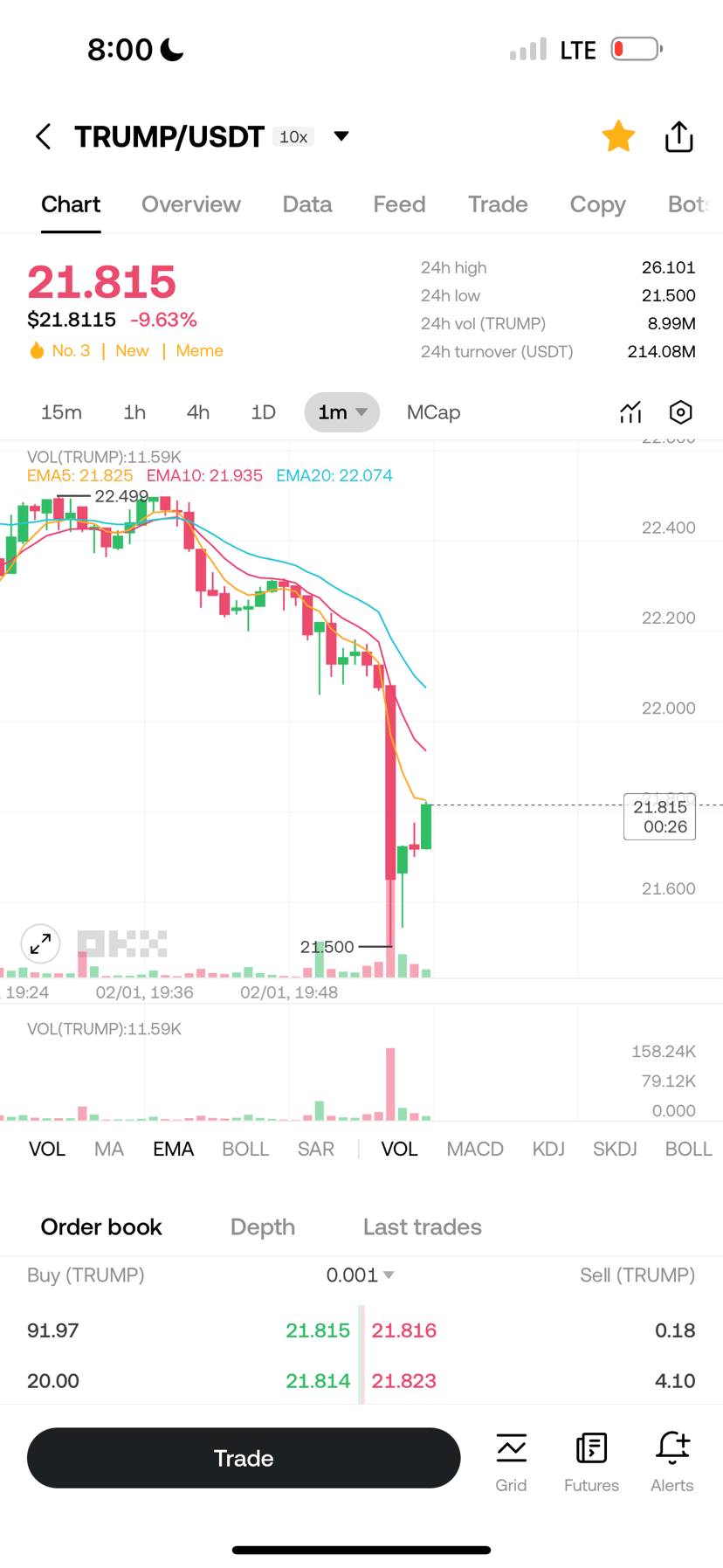
$TRUMP A análise que eu te contei foi verificada. Eu te disse que se o preço cair abaixo de 25, ele vai cair para 22,5 ou até 21,5.
·
--
$TRUMP Por que todo mundo chora durante uma crise? Sinto que a maioria dos traders são crianças. É impossível encontrar um mercado que suba para sempre. No mundo das criptomoedas, as moedas devem cair para quebrar e atingir uma nova alta. É ridículo que Eu encontro pessoas comprando nas áreas erradas e depois chorando depois de uma correção ou depois que as baleias saem para estabilizar e retornar. Para subir novamente, você deve entender que a próxima alta da moeda #Trump será entre 120 a 150 dólares após as aprovações que aconteceu nos mercados comerciais e terá grande impulso, então pare de chorar e guarde o que você tem de suas moedas porque a alta está chegando inevitavelmente
·
--
🌐 Acontecendo agora 🔴 Jerome Powell: Seria útil ter um órgão regulador maior em relação às criptomoedas. Queremos que todos estejam cientes dos riscos das criptomoedas. 📹
🌐 Acontecendo agora 🔴 Jerome Powell: Seria útil ter um órgão regulador maior em relação às criptomoedas.

Queremos que todos estejam cientes dos riscos das criptomoedas.

📹
·
--
🌐 Acontece agora 🔴 Jerome Powell: Em relação às criptomoedas, acreditamos que os bancos são capazes de atender os clientes, desde que gerenciem os riscos 📹
🌐 Acontece agora 🔴 Jerome Powell: Em relação às criptomoedas, acreditamos que os bancos são capazes de atender os clientes, desde que gerenciem os riscos

📹
·
--
$TRUMP Trump vai chocar a todos e voltar para US$ 32
·
--
🤨
🤨
Azzo USDZ
·
--
Elon Musk: Uma jornada do zero ao topo 🚀💸
Elon Musk, o gênio bilionário que passou de uma origem humilde ao auge do sucesso, é um dos maiores empreendedores do nosso tempo 🌟. Ele nasceu na África do Sul 🇿🇦 em 28 de junho de 1971, e cresceu em um ambiente comum, mas desde muito jovem teve uma paixão pela ciência e pela tecnologia 💻. Aos dez anos, ele aprendeu programação e vendeu o primeiro jogo que desenvolveu por US$ 500 💵, e esse foi o início de sua emocionante carreira 🔥.

·
--
Em Alta
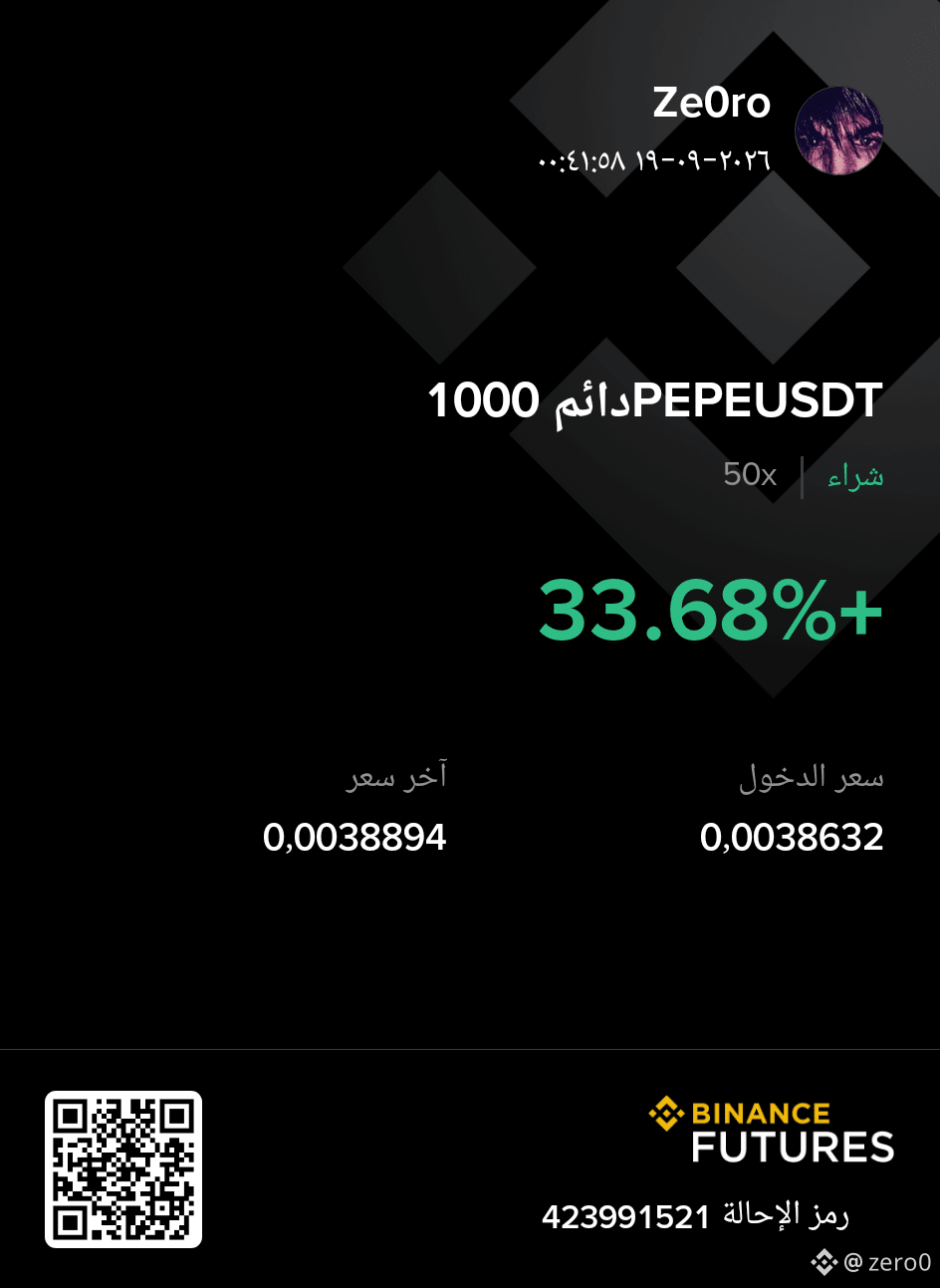
O mercado está começando a se recuperar a caminho de 3350$ETH $PEPE Tem bomba e retornará 0,00001 em breve com permissão. Boa sorte a todo o mercado volátil. {future}(ETHUSDT) {spot}(PEPEUSDT)
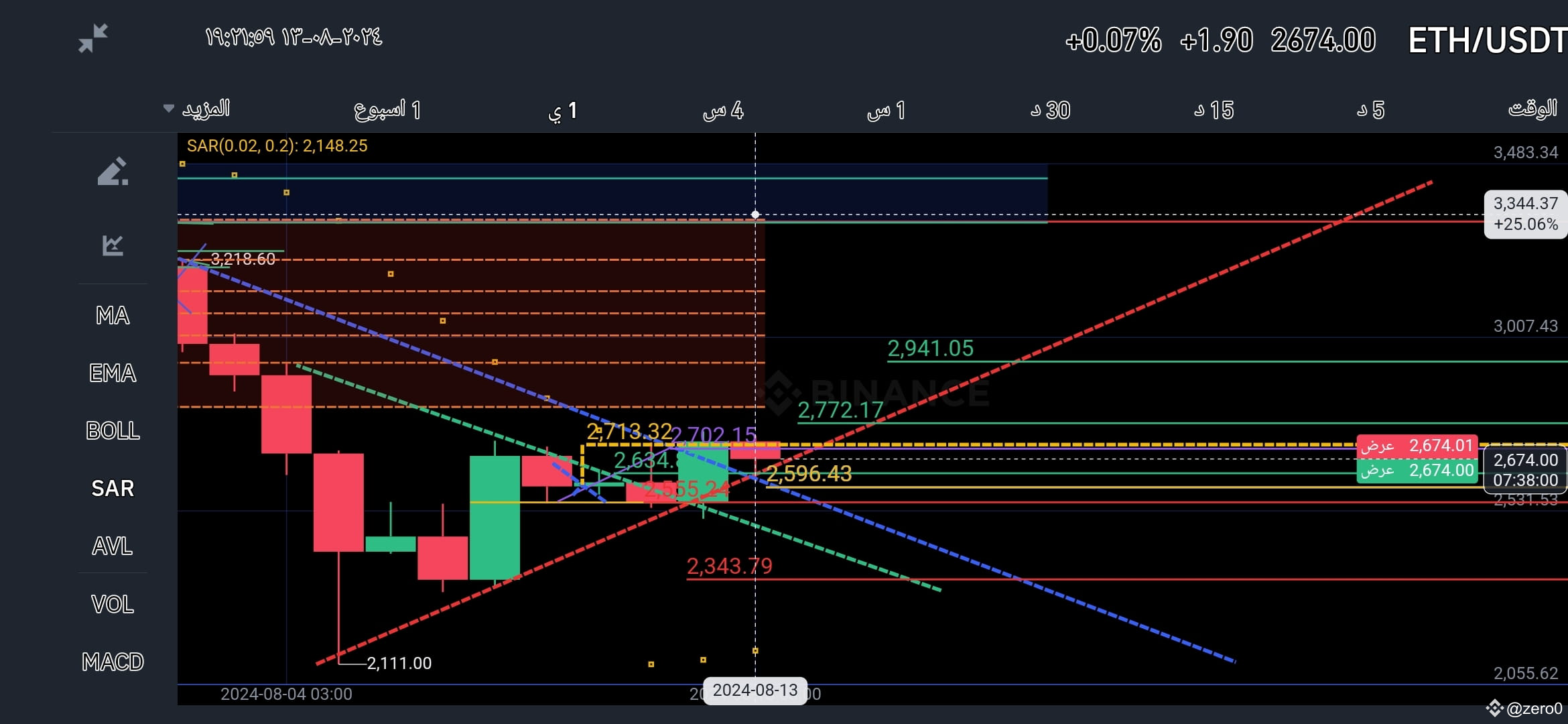
O mercado está começando a se recuperar a caminho de 3350$ETH
$PEPE Tem bomba e retornará 0,00001 em breve com permissão. Boa sorte a todo o mercado volátil.
·
--
Em Baixa
·
--
Em Alta
Se Deus quiser, nas próximas horas poderemos Insira o voo 3000 com o código $ETH E $BTC entre 65.000 e 69.000 O plano inclui cada compra pela metade do seu valor O segundo semestre é em caso de qualquer correção ou declínio para fortalecer
Se Deus quiser, nas próximas horas poderemos
Insira o voo 3000 com o código $ETH
E $BTC entre 65.000 e 69.000
O plano inclui cada compra pela metade do seu valor
O segundo semestre é em caso de qualquer correção ou declínio para fortalecer
·
--
Em Alta
$BTC $ETH #bitcoin Embora a maior parte do que eu esperava fosse de aproximadamente 95%, não encontro apoio de acompanhamentos ou qualquer tipo de aulas.
$BTC $ETH #bitcoin
Embora a maior parte do que eu esperava fosse de aproximadamente 95%, não encontro apoio de acompanhamentos ou qualquer tipo de aulas.
·
--
Em Alta
Louvado seja Deus, falta cerca de uma hora, e talvez continuemos até 62 mil e completemos a subida, se Deus quiser
Zero99
·
--
Em Alta

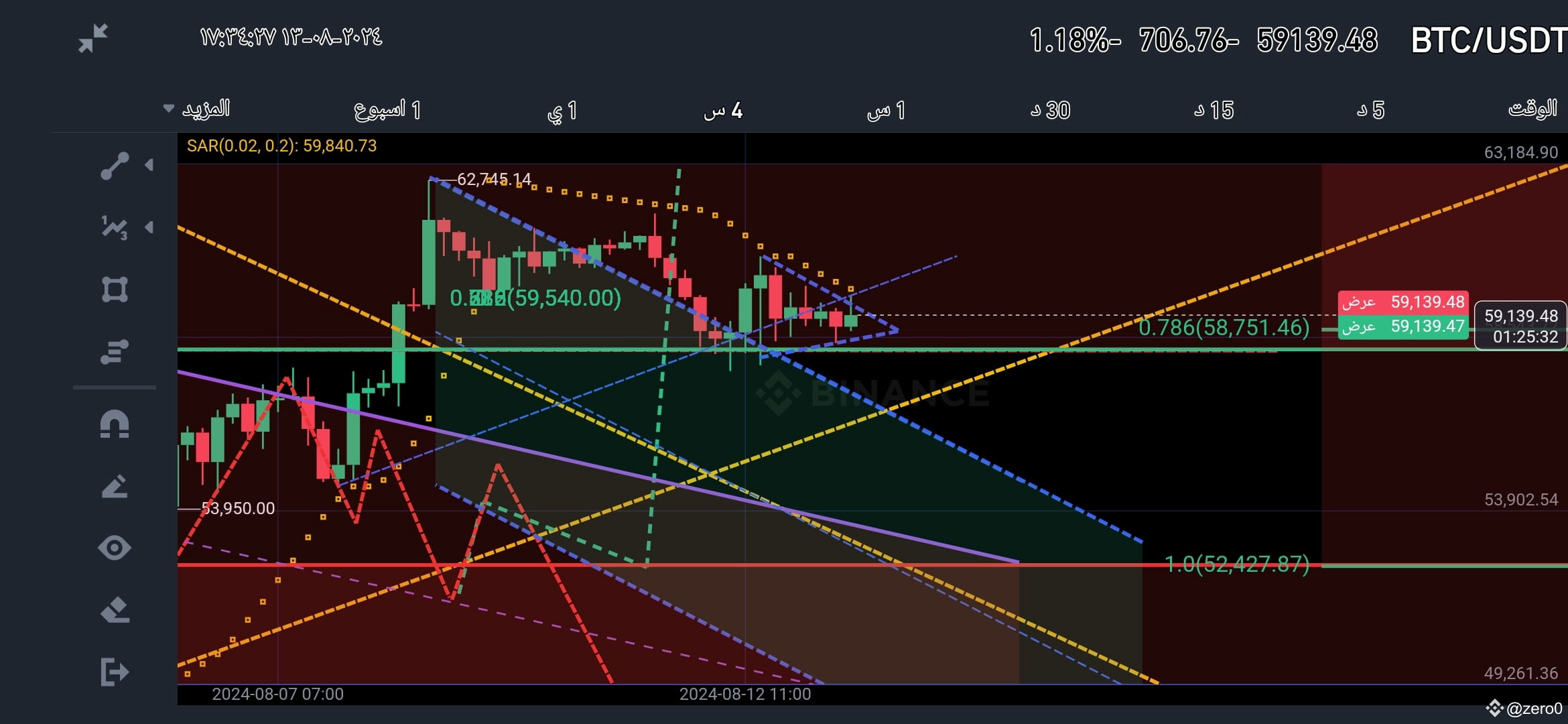
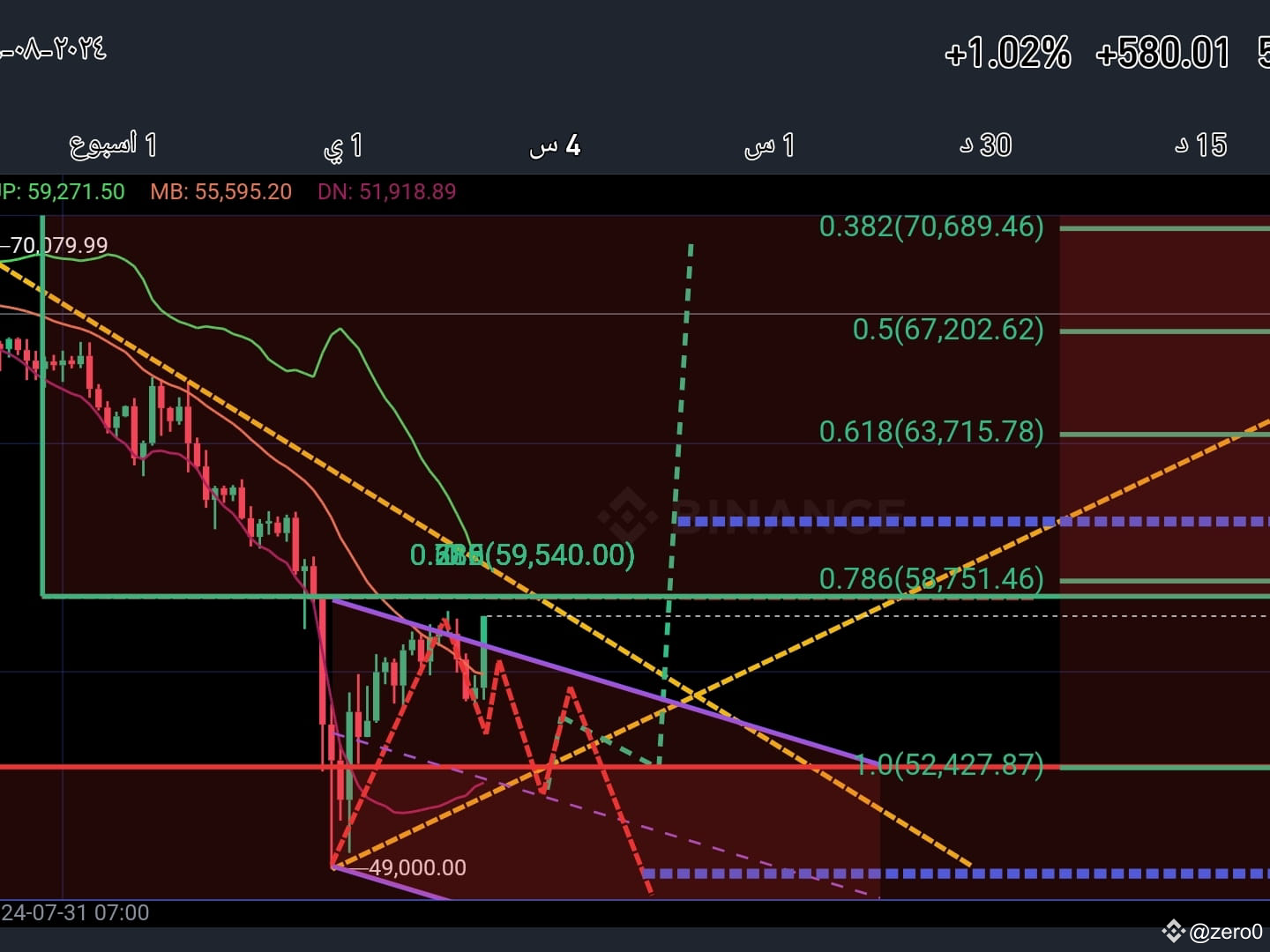
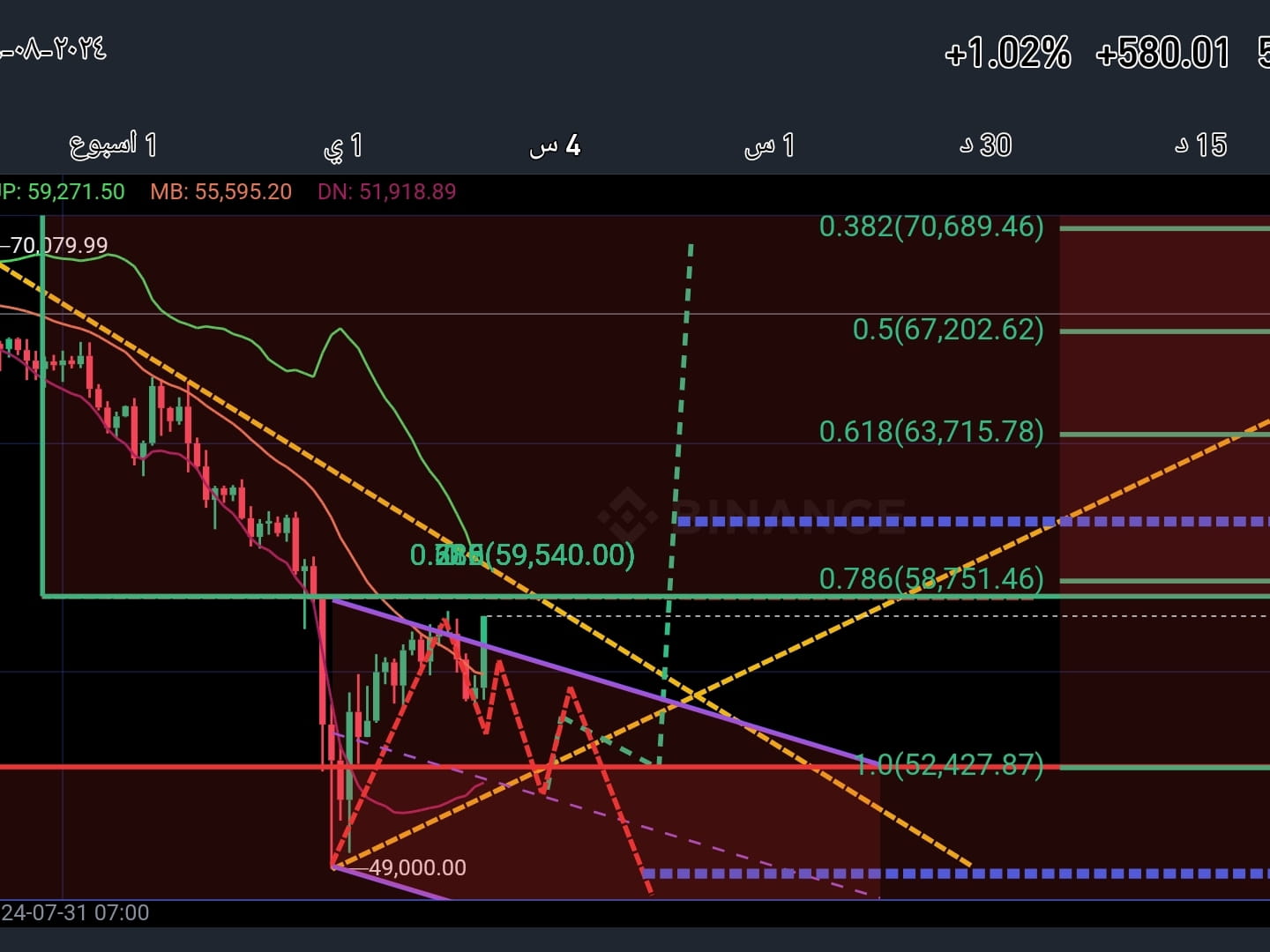
Olá pessoal, se o Bitcoin penetrar em 58.750, ele continuará subindo em direção a 72.000 a 80.000, e se houver um declínio e fechar abaixo de 52.422, o declínio poderá continuar até 35.000.
#Binance #bitcoin #BTC $BTC
·
--
Em Alta
{spot}(BTCUSDT) Olá pessoal, se o Bitcoin penetrar em 58.750, ele continuará subindo em direção a 72.000 a 80.000, e se houver um declínio e fechar abaixo de 52.422, o declínio poderá continuar até 35.000. #Binance #bitcoin #BTC $BTC
Olá pessoal, se o Bitcoin penetrar em 58.750, ele continuará subindo em direção a 72.000 a 80.000, e se houver um declínio e fechar abaixo de 52.422, o declínio poderá continuar até 35.000.
#Binance #bitcoin #BTC $BTC
·
--
Em Baixa
$BTC #Binance Bitcoin atinge o preço de US$ 49 mil na velocidade da luz. Quem quiser comprar, divida seu valor para comprá-lo, insira cinquenta por cento agora e deixe o restante do valor para promoção, para poder visitar as 35 mil áreas.
·
--
Sinceramente, eu esperava uma queda, mas inicialmente esperava uma correção, não esperava explodir dessa forma, haha.
Inicia sessão para explorar mais conteúdos
Junta-te a utilizadores de criptomoedas de todo o mundo na Binance Square
⚡️ Obtém informações úteis e recentes sobre criptomoedas.
💬 Com a confiança da maior exchange de criptomoedas do mundo.
👍 Descobre perspetivas reais de criadores verificados.
E-mail/Número de telefone
Mapa do sítio
Preferências de cookies
Termos e Condições da Plataforma