

James Bond 6
5.3k Publicações

James Bond 6
Denunciar
Bloquear Utilizador
Shadow Killa | Elite Crypto Trader | Smart Money Concepts | Sniper Entries | Risk Controlled | Consistent Profit Vision
Aberto ao trading
Trader de Alta Frequência
11.9 mês(es)
997 A seguir
6.1K+ Seguidores
5.0K+ Gostaram
Publicações
Portfólio
Tudo
Cotações
Vídeos
Em direto
·
--
Em Alta
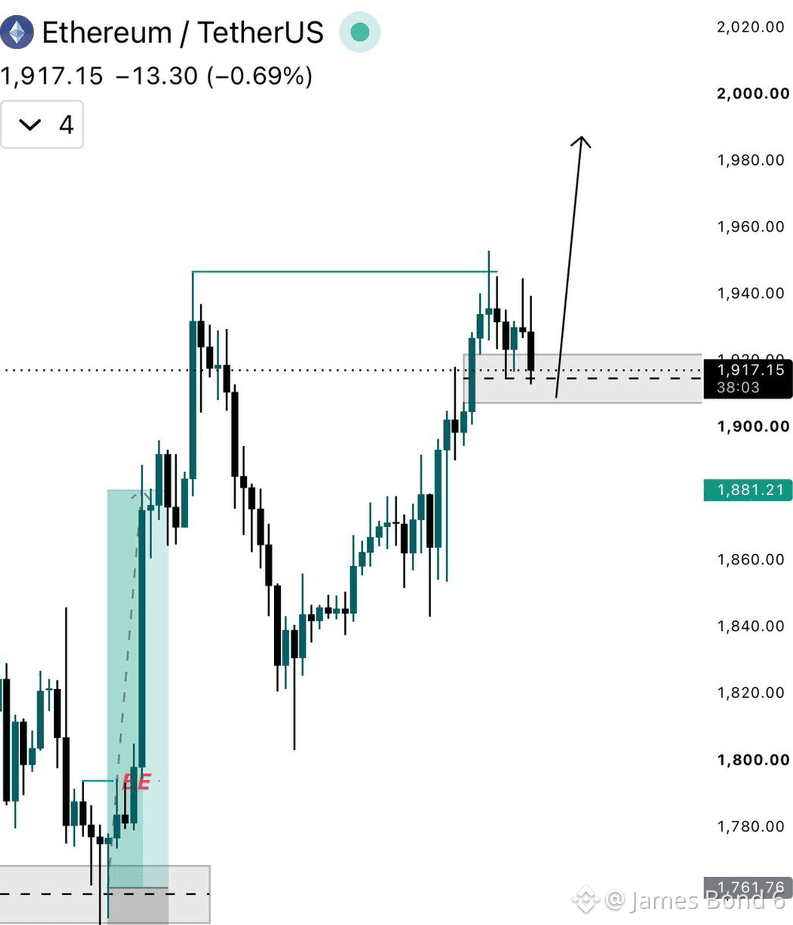
$ETH /USDT | LONG 🚀
Faixa de Preço de Entrada: US$ 1.860 – US$ 1.890
TP1: US$ 1.930
TP2: US$ 1.970
TP3: US$ 2.000
Stop Loss: US$ 1.825
Razão Risco/Recompensa: 1:3.4
O Ethereum está recuando com precisão para uma zona de desequilíbrio previamente identificada, demonstrando respeito pela estrutura do mercado após seu avanço recente. Esta área pode fornecer uma base sólida para a continuação se os compradores entrarem com convicção. O momentum permanece construtivo nos prazos maiores, mas paciência é fundamental enquanto você aguarda a confirmação no timeframe menor. Uma defesa bem-sucedida desta zona pode abrir caminho para um movimento em direção ao nível psicológico de US$ 2.000.
Do ponto de vista técnico, o ETH está recuando para um “bolsão” de liquidez que se alinha com um suporte anterior. A ação do preço sugere uma correção saudável, e não uma ruptura, enquanto a tendência mais ampla ainda favorece os touros. O volume deve ser monitorado de perto para sinais de acumulação perto da região de entrada. Uma quebra abaixo do suporte invalidaria a configuração e desviaria o momentum para o lado dos vendedores. Até lá, a estrutura atual sustenta uma possível continuação com parâmetros de risco definidos.
Lembrete de Gestão de Risco: Sempre gerencie o tamanho da posição de forma adequada e nunca arrisque mais do que você pode perder. Nenhuma configuração é garantida.
A paciência cria oportunidade — espere a confirmação e então deixe o mercado fazer o trabalho pesado.
{spot}(ETHUSDT)
#CrudeOilFuturesRiseOver4%
#SuperMicroRisesNearly20%
#HongKongStorageStocksStrengthen
$ETH /USDT | LONG 🚀
Faixa de Preço de Entrada: US$ 1.860 – US$ 1.890
TP1: US$ 1.930
TP2: US$ 1.970
TP3: US$ 2.000
Stop Loss: US$ 1.825
Razão Risco/Recompensa: 1:3.4
O Ethereum está recuando com precisão para uma zona de desequilíbrio previamente identificada, demonstrando respeito pela estrutura do mercado após seu avanço recente. Esta área pode fornecer uma base sólida para a continuação se os compradores entrarem com convicção. O momentum permanece construtivo nos prazos maiores, mas paciência é fundamental enquanto você aguarda a confirmação no timeframe menor. Uma defesa bem-sucedida desta zona pode abrir caminho para um movimento em direção ao nível psicológico de US$ 2.000.
Do ponto de vista técnico, o ETH está recuando para um “bolsão” de liquidez que se alinha com um suporte anterior. A ação do preço sugere uma correção saudável, e não uma ruptura, enquanto a tendência mais ampla ainda favorece os touros. O volume deve ser monitorado de perto para sinais de acumulação perto da região de entrada. Uma quebra abaixo do suporte invalidaria a configuração e desviaria o momentum para o lado dos vendedores. Até lá, a estrutura atual sustenta uma possível continuação com parâmetros de risco definidos.
Lembrete de Gestão de Risco: Sempre gerencie o tamanho da posição de forma adequada e nunca arrisque mais do que você pode perder. Nenhuma configuração é garantida.
A paciência cria oportunidade — espere a confirmação e então deixe o mercado fazer o trabalho pesado.
#CrudeOilFuturesRiseOver4%
#SuperMicroRisesNearly20%
#HongKongStorageStocksStrengthen
Faixa de Preço de Entrada: US$ 1.860 – US$ 1.890
TP1: US$ 1.930
TP2: US$ 1.970
TP3: US$ 2.000
Stop Loss: US$ 1.825
Razão Risco/Recompensa: 1:3.4
O Ethereum está recuando com precisão para uma zona de desequilíbrio previamente identificada, demonstrando respeito pela estrutura do mercado após seu avanço recente. Esta área pode fornecer uma base sólida para a continuação se os compradores entrarem com convicção. O momentum permanece construtivo nos prazos maiores, mas paciência é fundamental enquanto você aguarda a confirmação no timeframe menor. Uma defesa bem-sucedida desta zona pode abrir caminho para um movimento em direção ao nível psicológico de US$ 2.000.
Do ponto de vista técnico, o ETH está recuando para um “bolsão” de liquidez que se alinha com um suporte anterior. A ação do preço sugere uma correção saudável, e não uma ruptura, enquanto a tendência mais ampla ainda favorece os touros. O volume deve ser monitorado de perto para sinais de acumulação perto da região de entrada. Uma quebra abaixo do suporte invalidaria a configuração e desviaria o momentum para o lado dos vendedores. Até lá, a estrutura atual sustenta uma possível continuação com parâmetros de risco definidos.
Lembrete de Gestão de Risco: Sempre gerencie o tamanho da posição de forma adequada e nunca arrisque mais do que você pode perder. Nenhuma configuração é garantida.
A paciência cria oportunidade — espere a confirmação e então deixe o mercado fazer o trabalho pesado.
#CrudeOilFuturesRiseOver4%
#SuperMicroRisesNearly20%
#HongKongStorageStocksStrengthen
114
·
--
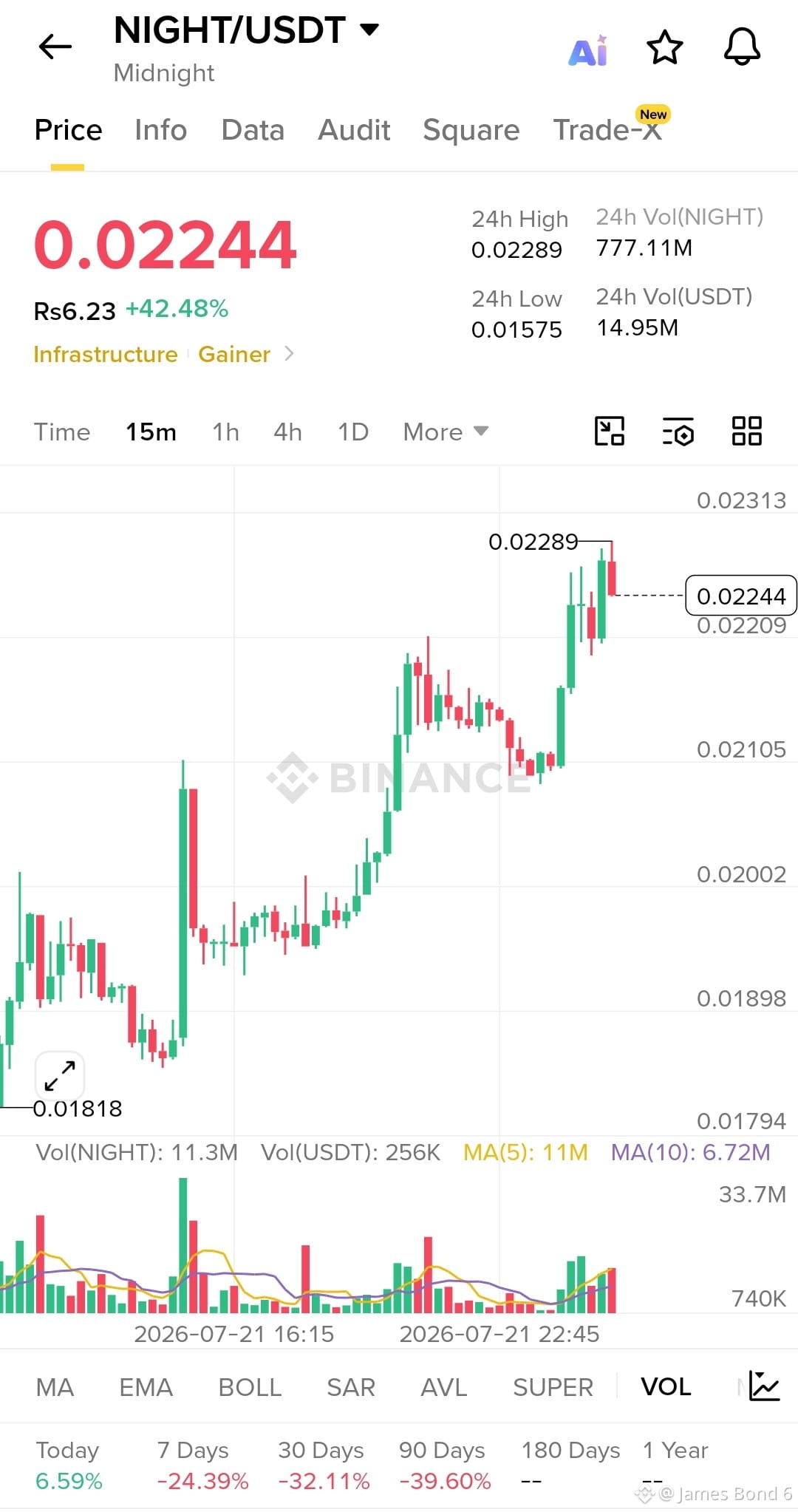
$NIGHT /USDT | LONG 🚀
Entrada: 0.02210 – 0.02235
🎯 TP1: 0.02290
🎯 TP2: 0.02350
🎯 TP3: 0.02420
🛑 Stop Loss: 0.02160
⚖️ Risco/Recompensa: ~1:3.2
Perspectiva do Mercado
$NIGHT produziu uma forte ruptura intraday, com o preço subindo mais de 42%, sustentado pelo aumento do volume de negociações e por um impulso altista contínuo. As velas mais recentes estão se mantendo perto da máxima da sessão, em vez de apresentar uma rejeição agressiva, mostrando que os compradores seguem no controle. Enquanto o preço permanecer acima da área de rompimento em torno de 0.02210, a tendência favorece a continuação em direção a níveis de resistência mais altos. Uma quebra limpa acima de 0.02289 pode desencadear outra onda de pressão de compra.
Análise Técnica
O gráfico de 15 minutos mostra uma sequência clara de máximas mais altas e mínimas mais altas, confirmando uma estrutura de mercado altista. O preço recuperou uma resistência anterior, que agora está atuando como suporte de curto prazo. O aumento do volume durante a alta sugere interesse real de compra, e não apenas um pico fraco. O momentum segue positivo, embora o mercado esteja se aproximando da máxima diária, onde pode surgir alguma realização de lucros. Uma retest bem-sucedida da zona de rompimento fortaleceria o cenário de continuidade altista.
Gestão de Risco: Nunca arrisque mais do que você pode perder. Aguarde confirmação na zona de entrada e respeite sempre seu stop loss se o momentum enfraquecer.
Pensamento Final: Negocie a tendência, proteja seu capital e deixe o mercado confirmar o próximo rompimento — não suas emoções.
{spot}(NIGHTUSDT)
$NIGHT /USDT | LONG 🚀
Entrada: 0.02210 – 0.02235
🎯 TP1: 0.02290
🎯 TP2: 0.02350
🎯 TP3: 0.02420
🛑 Stop Loss: 0.02160
⚖️ Risco/Recompensa: ~1:3.2
Perspectiva do Mercado
$NIGHT produziu uma forte ruptura intraday, com o preço subindo mais de 42%, sustentado pelo aumento do volume de negociações e por um impulso altista contínuo. As velas mais recentes estão se mantendo perto da máxima da sessão, em vez de apresentar uma rejeição agressiva, mostrando que os compradores seguem no controle. Enquanto o preço permanecer acima da área de rompimento em torno de 0.02210, a tendência favorece a continuação em direção a níveis de resistência mais altos. Uma quebra limpa acima de 0.02289 pode desencadear outra onda de pressão de compra.
Análise Técnica
O gráfico de 15 minutos mostra uma sequência clara de máximas mais altas e mínimas mais altas, confirmando uma estrutura de mercado altista. O preço recuperou uma resistência anterior, que agora está atuando como suporte de curto prazo. O aumento do volume durante a alta sugere interesse real de compra, e não apenas um pico fraco. O momentum segue positivo, embora o mercado esteja se aproximando da máxima diária, onde pode surgir alguma realização de lucros. Uma retest bem-sucedida da zona de rompimento fortaleceria o cenário de continuidade altista.
Gestão de Risco: Nunca arrisque mais do que você pode perder. Aguarde confirmação na zona de entrada e respeite sempre seu stop loss se o momentum enfraquecer.
Pensamento Final: Negocie a tendência, proteja seu capital e deixe o mercado confirmar o próximo rompimento — não suas emoções.
Entrada: 0.02210 – 0.02235
🎯 TP1: 0.02290
🎯 TP2: 0.02350
🎯 TP3: 0.02420
🛑 Stop Loss: 0.02160
⚖️ Risco/Recompensa: ~1:3.2
Perspectiva do Mercado
$NIGHT produziu uma forte ruptura intraday, com o preço subindo mais de 42%, sustentado pelo aumento do volume de negociações e por um impulso altista contínuo. As velas mais recentes estão se mantendo perto da máxima da sessão, em vez de apresentar uma rejeição agressiva, mostrando que os compradores seguem no controle. Enquanto o preço permanecer acima da área de rompimento em torno de 0.02210, a tendência favorece a continuação em direção a níveis de resistência mais altos. Uma quebra limpa acima de 0.02289 pode desencadear outra onda de pressão de compra.
Análise Técnica
O gráfico de 15 minutos mostra uma sequência clara de máximas mais altas e mínimas mais altas, confirmando uma estrutura de mercado altista. O preço recuperou uma resistência anterior, que agora está atuando como suporte de curto prazo. O aumento do volume durante a alta sugere interesse real de compra, e não apenas um pico fraco. O momentum segue positivo, embora o mercado esteja se aproximando da máxima diária, onde pode surgir alguma realização de lucros. Uma retest bem-sucedida da zona de rompimento fortaleceria o cenário de continuidade altista.
Gestão de Risco: Nunca arrisque mais do que você pode perder. Aguarde confirmação na zona de entrada e respeite sempre seu stop loss se o momentum enfraquecer.
Pensamento Final: Negocie a tendência, proteja seu capital e deixe o mercado confirmar o próximo rompimento — não suas emoções.
1
129
·
--
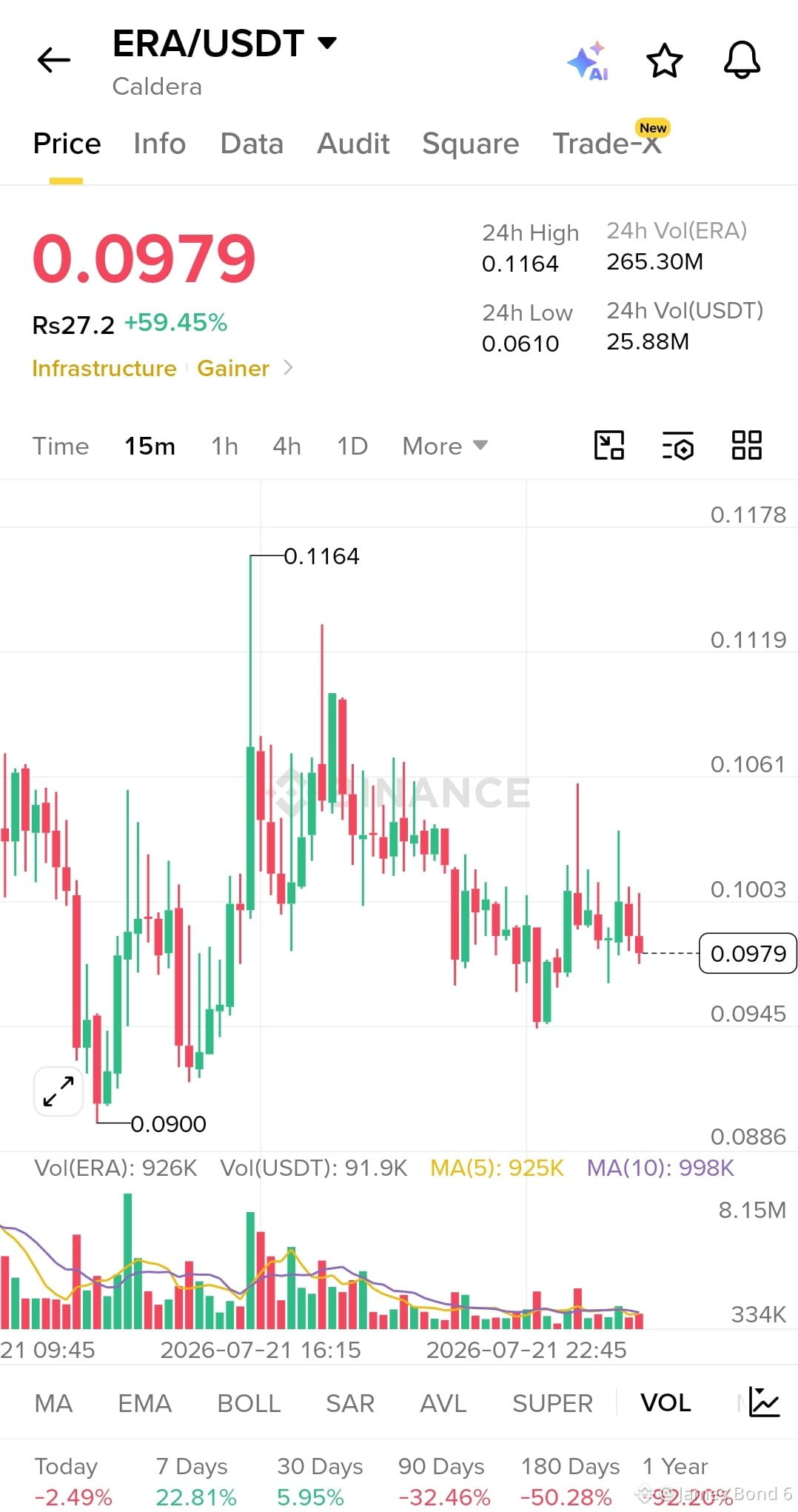
$ERA /USDT | LONG 🚀
📍 Entrada: 0.0965 – 0.0995
🎯 TP1: 0.1035
🎯 TP2: 0.1090
🎯 TP3: 0.1160
🛑 Stop Loss: 0.0935
📊 Risco/Recompensa: 1:2.9
📈 Perspectiva do Mercado:
$ERA permanece em uma forte tendência de alta de curto prazo após uma ruptura explosiva, embora o momentum tenha esfriado após a rejeição perto de 0.1164. O preço agora está consolidando acima da zona de suporte recente, sugerindo que os compradores ainda estão defendendo níveis mais altos. Enquanto o suporte em torno de 0.0960 se mantiver, outra tentativa de recuperação em direção à máxima anterior continua sendo possível. Uma quebra decisiva abaixo do suporte enfraqueceria a estrutura de alta e aumentaria o risco de queda.
🔍 Análise Técnica:
O gráfico de 15 minutos mostra um movimento de impulso acentuado seguido por uma fase de consolidação saudável. A rejeição de 0.1164 criou uma zona de resistência próxima onde os vendedores entraram anteriormente. O preço está negociando dentro de uma faixa estreita, indicando que a liquidez está se acumulando antes do próximo movimento direcional. O volume diminuiu em comparação com a ruptura, o que frequentemente sinaliza consolidação em vez de venda em pânico. Manter-se acima de 0.0960 mantém intacta a estrutura de higher-low, enquanto uma ruptura acima de 0.1035 pode abrir caminho em direção à máxima da última oscilação.
⚠️ Gestão de Risco:
Risque no máximo 1–2% do seu capital de trading em uma única configuração e aguarde a confirmação antes de entrar.
💬 Insight de Trading:
A paciência durante a consolidação muitas vezes recompensa traders disciplinados quando a volatilidade retorna.
{spot}(ERAUSDT)
$ERA /USDT | LONG 🚀
📍 Entrada: 0.0965 – 0.0995
🎯 TP1: 0.1035
🎯 TP2: 0.1090
🎯 TP3: 0.1160
🛑 Stop Loss: 0.0935
📊 Risco/Recompensa: 1:2.9
📈 Perspectiva do Mercado:
$ERA permanece em uma forte tendência de alta de curto prazo após uma ruptura explosiva, embora o momentum tenha esfriado após a rejeição perto de 0.1164. O preço agora está consolidando acima da zona de suporte recente, sugerindo que os compradores ainda estão defendendo níveis mais altos. Enquanto o suporte em torno de 0.0960 se mantiver, outra tentativa de recuperação em direção à máxima anterior continua sendo possível. Uma quebra decisiva abaixo do suporte enfraqueceria a estrutura de alta e aumentaria o risco de queda.
🔍 Análise Técnica:
O gráfico de 15 minutos mostra um movimento de impulso acentuado seguido por uma fase de consolidação saudável. A rejeição de 0.1164 criou uma zona de resistência próxima onde os vendedores entraram anteriormente. O preço está negociando dentro de uma faixa estreita, indicando que a liquidez está se acumulando antes do próximo movimento direcional. O volume diminuiu em comparação com a ruptura, o que frequentemente sinaliza consolidação em vez de venda em pânico. Manter-se acima de 0.0960 mantém intacta a estrutura de higher-low, enquanto uma ruptura acima de 0.1035 pode abrir caminho em direção à máxima da última oscilação.
⚠️ Gestão de Risco:
Risque no máximo 1–2% do seu capital de trading em uma única configuração e aguarde a confirmação antes de entrar.
💬 Insight de Trading:
A paciência durante a consolidação muitas vezes recompensa traders disciplinados quando a volatilidade retorna.
📍 Entrada: 0.0965 – 0.0995
🎯 TP1: 0.1035
🎯 TP2: 0.1090
🎯 TP3: 0.1160
🛑 Stop Loss: 0.0935
📊 Risco/Recompensa: 1:2.9
📈 Perspectiva do Mercado:
$ERA permanece em uma forte tendência de alta de curto prazo após uma ruptura explosiva, embora o momentum tenha esfriado após a rejeição perto de 0.1164. O preço agora está consolidando acima da zona de suporte recente, sugerindo que os compradores ainda estão defendendo níveis mais altos. Enquanto o suporte em torno de 0.0960 se mantiver, outra tentativa de recuperação em direção à máxima anterior continua sendo possível. Uma quebra decisiva abaixo do suporte enfraqueceria a estrutura de alta e aumentaria o risco de queda.
🔍 Análise Técnica:
O gráfico de 15 minutos mostra um movimento de impulso acentuado seguido por uma fase de consolidação saudável. A rejeição de 0.1164 criou uma zona de resistência próxima onde os vendedores entraram anteriormente. O preço está negociando dentro de uma faixa estreita, indicando que a liquidez está se acumulando antes do próximo movimento direcional. O volume diminuiu em comparação com a ruptura, o que frequentemente sinaliza consolidação em vez de venda em pânico. Manter-se acima de 0.0960 mantém intacta a estrutura de higher-low, enquanto uma ruptura acima de 0.1035 pode abrir caminho em direção à máxima da última oscilação.
⚠️ Gestão de Risco:
Risque no máximo 1–2% do seu capital de trading em uma única configuração e aguarde a confirmação antes de entrar.
💬 Insight de Trading:
A paciência durante a consolidação muitas vezes recompensa traders disciplinados quando a volatilidade retorna.
1
131
·
--
🚨 URGENTE: A Lei CLARITY Avança Depois que Trump Aceita Disposições de Ética! 🇺🇸
O presidente Trump teria aceitado disposições de ética vinculadas à Lei CLARITY, superando um grande obstáculo após meses de negociações. ⚖️ O projeto visa estabelecer regras federais mais claras para ativos digitais, um movimento de atenção constante por investidores de cripto. 💰
Um rascunho atualizado é esperado em breve, mas ainda é necessário apoio bipartidário no Senado para que ele possa avançar. 📈
Este é um momento decisivo para a cripto. 🔥
🚨 URGENTE: A Lei CLARITY Avança Depois que Trump Aceita Disposições de Ética! 🇺🇸
O presidente Trump teria aceitado disposições de ética vinculadas à Lei CLARITY, superando um grande obstáculo após meses de negociações. ⚖️ O projeto visa estabelecer regras federais mais claras para ativos digitais, um movimento de atenção constante por investidores de cripto. 💰
Um rascunho atualizado é esperado em breve, mas ainda é necessário apoio bipartidário no Senado para que ele possa avançar. 📈
Este é um momento decisivo para a cripto. 🔥
O presidente Trump teria aceitado disposições de ética vinculadas à Lei CLARITY, superando um grande obstáculo após meses de negociações. ⚖️ O projeto visa estabelecer regras federais mais claras para ativos digitais, um movimento de atenção constante por investidores de cripto. 💰
Um rascunho atualizado é esperado em breve, mas ainda é necessário apoio bipartidário no Senado para que ele possa avançar. 📈
Este é um momento decisivo para a cripto. 🔥

1
133
·
--
🚨 A Lei CLARITY está num ponto de ruptura.
O tempo está correndo. ⏳
Se o Senado não agir antes do recesso de agosto, o projeto pode enfrentar grandes atrasos à medida que o foco muda para as eleições de meio de mandato.
Os próximos dias podem definir se a regulamentação das criptomoedas avança — ou fica presa num limbo legislativo.
👀 Todos os olhares no Senado.
#CLARITYAct #Crypto #Bitcoin
🚨 A Lei CLARITY está num ponto de ruptura.
O tempo está correndo. ⏳
Se o Senado não agir antes do recesso de agosto, o projeto pode enfrentar grandes atrasos à medida que o foco muda para as eleições de meio de mandato.
Os próximos dias podem definir se a regulamentação das criptomoedas avança — ou fica presa num limbo legislativo.
👀 Todos os olhares no Senado.
#CLARITYAct #Crypto #Bitcoin
O tempo está correndo. ⏳
Se o Senado não agir antes do recesso de agosto, o projeto pode enfrentar grandes atrasos à medida que o foco muda para as eleições de meio de mandato.
Os próximos dias podem definir se a regulamentação das criptomoedas avança — ou fica presa num limbo legislativo.
👀 Todos os olhares no Senado.
#CLARITYAct #Crypto #Bitcoin

125
·
--
🚀 $GMX 🚀
EP: US$ 6,20 – US$ 6,35
🎯 TP1: US$ 6,60
🎯 TP2: US$ 6,95
🎯 TP3: US$ 7,40
🛑 SL: US$ 5,90
$GMX continua sendo um dos tokens DeFi mais fortes. Aguarde confirmação antes de entrar.
🔥 Vamos lá $GMX
{spot}(GMXUSDT)
IranianCrudeTops$80#MetaInTalksToLeaseComputeToAnthropic
🚀 $GMX 🚀
EP: US$ 6,20 – US$ 6,35
🎯 TP1: US$ 6,60
🎯 TP2: US$ 6,95
🎯 TP3: US$ 7,40
🛑 SL: US$ 5,90
$GMX continua sendo um dos tokens DeFi mais fortes. Aguarde confirmação antes de entrar.
🔥 Vamos lá $GMX
IranianCrudeTops$80#MetaInTalksToLeaseComputeToAnthropic
EP: US$ 6,20 – US$ 6,35
🎯 TP1: US$ 6,60
🎯 TP2: US$ 6,95
🎯 TP3: US$ 7,40
🛑 SL: US$ 5,90
$GMX continua sendo um dos tokens DeFi mais fortes. Aguarde confirmação antes de entrar.
🔥 Vamos lá $GMX
IranianCrudeTops$80#MetaInTalksToLeaseComputeToAnthropic
31
·
--
🚀 $LTC 🚀
EP: US$ 45.80 – US$ 46.30
🎯 TP1: US$ 47.50
🎯 TP2: US$ 49.00
🎯 TP3: US$ 51.00
🛑 SL: US$ 43.90
$LTC continua a operar com um impulso de alta estável. Uma ruptura pode impulsionar o próximo movimento para cima.
🔥 Vamos $LTC
{spot}(LTCUSDT)
#CardanoToActivateVanRossemUpgradeJuly19
🚀 $LTC 🚀
EP: US$ 45.80 – US$ 46.30
🎯 TP1: US$ 47.50
🎯 TP2: US$ 49.00
🎯 TP3: US$ 51.00
🛑 SL: US$ 43.90
$LTC continua a operar com um impulso de alta estável. Uma ruptura pode impulsionar o próximo movimento para cima.
🔥 Vamos $LTC
#CardanoToActivateVanRossemUpgradeJuly19
EP: US$ 45.80 – US$ 46.30
🎯 TP1: US$ 47.50
🎯 TP2: US$ 49.00
🎯 TP3: US$ 51.00
🛑 SL: US$ 43.90
$LTC continua a operar com um impulso de alta estável. Uma ruptura pode impulsionar o próximo movimento para cima.
🔥 Vamos $LTC
#CardanoToActivateVanRossemUpgradeJuly19
33
·
--
🚀 $EGLD 🚀
EP: US$ 3,18 – US$ 3,24
🎯 TP1: US$ 3,35
🎯 TP2: US$ 3,55
🎯 TP3: US$ 3,80
🛑 SL: US$ 3,00
$EGLD está gradualmente construindo um momentum de alta. Mantenha o suporte e procure confirmação por volume.
🔥 Vamos lá $EGLD
{spot}(EGLDUSDT)
IranianCrudeTops$80#MissilesHitJaskPowerAndDesalinationFacilities
🚀 $EGLD 🚀
EP: US$ 3,18 – US$ 3,24
🎯 TP1: US$ 3,35
🎯 TP2: US$ 3,55
🎯 TP3: US$ 3,80
🛑 SL: US$ 3,00
$EGLD está gradualmente construindo um momentum de alta. Mantenha o suporte e procure confirmação por volume.
🔥 Vamos lá $EGLD
IranianCrudeTops$80#MissilesHitJaskPowerAndDesalinationFacilities
EP: US$ 3,18 – US$ 3,24
🎯 TP1: US$ 3,35
🎯 TP2: US$ 3,55
🎯 TP3: US$ 3,80
🛑 SL: US$ 3,00
$EGLD está gradualmente construindo um momentum de alta. Mantenha o suporte e procure confirmação por volume.
🔥 Vamos lá $EGLD
IranianCrudeTops$80#MissilesHitJaskPowerAndDesalinationFacilities
63
·
--
🚀 $BTTC 🚀
EP: $0.00000026 – $0.00000027
🎯 TP1: $0.00000029
🎯 TP2: $0.00000031
🎯 TP3: $0.00000034
🛑 SL: $0.00000024
$BTTC está mostrando um momentum altista gradual. Um rompimento pode levar a um movimento mais forte para cima.
🔥 Vamos lá $BTTC
{spot}(BTTCUSDT)
#RipplePaymentsEuropeJoinsMiCARegister
🚀 $BTTC 🚀
EP: $0.00000026 – $0.00000027
🎯 TP1: $0.00000029
🎯 TP2: $0.00000031
🎯 TP3: $0.00000034
🛑 SL: $0.00000024
$BTTC está mostrando um momentum altista gradual. Um rompimento pode levar a um movimento mais forte para cima.
🔥 Vamos lá $BTTC
#RipplePaymentsEuropeJoinsMiCARegister
EP: $0.00000026 – $0.00000027
🎯 TP1: $0.00000029
🎯 TP2: $0.00000031
🎯 TP3: $0.00000034
🛑 SL: $0.00000024
$BTTC está mostrando um momentum altista gradual. Um rompimento pode levar a um movimento mais forte para cima.
🔥 Vamos lá $BTTC
#RipplePaymentsEuropeJoinsMiCARegister
1
1
216
·
--
🚀 $SKY 🚀
EP: $0.0610 – $0.0620
🎯 TP1: $0.0640
🎯 TP2: $0.0670
🎯 TP3: $0.0710
🛑 SL: $0.0580
$SKY está ganhando força com o sentimento do mercado melhorando. Observe a resistência para o próximo movimento.
🔥 Vamos $SKY
{spot}(SKYUSDT)
#CardanoToActivateVanRossemUpgradeJuly19 #MissilesHitJaskPowerAndDesalinationFacilities
🚀 $SKY 🚀
EP: $0.0610 – $0.0620
🎯 TP1: $0.0640
🎯 TP2: $0.0670
🎯 TP3: $0.0710
🛑 SL: $0.0580
$SKY está ganhando força com o sentimento do mercado melhorando. Observe a resistência para o próximo movimento.
🔥 Vamos $SKY
#CardanoToActivateVanRossemUpgradeJuly19 #MissilesHitJaskPowerAndDesalinationFacilities
EP: $0.0610 – $0.0620
🎯 TP1: $0.0640
🎯 TP2: $0.0670
🎯 TP3: $0.0710
🛑 SL: $0.0580
$SKY está ganhando força com o sentimento do mercado melhorando. Observe a resistência para o próximo movimento.
🔥 Vamos $SKY
#CardanoToActivateVanRossemUpgradeJuly19 #MissilesHitJaskPowerAndDesalinationFacilities
32
·
--
🚀 $SPELL 🚀
EP: US$ 0.000084 – US$ 0.000086
🎯 TP1: US$ 0.000090
🎯 TP2: US$ 0.000095
🎯 TP3: US$ 0.000101
🛑 SL: US$ 0.000080
$SPELL está se recuperando de forma constante e pode ampliar os ganhos se o volume de compra aumentar.
🔥 Vamos $SPELL #SpaceXShortInterestHits29%OfFloat
🚀 $SPELL 🚀
EP: US$ 0.000084 – US$ 0.000086
🎯 TP1: US$ 0.000090
🎯 TP2: US$ 0.000095
🎯 TP3: US$ 0.000101
🛑 SL: US$ 0.000080
$SPELL está se recuperando de forma constante e pode ampliar os ganhos se o volume de compra aumentar.
🔥 Vamos $SPELL #SpaceXShortInterestHits29%OfFloat
EP: US$ 0.000084 – US$ 0.000086
🎯 TP1: US$ 0.000090
🎯 TP2: US$ 0.000095
🎯 TP3: US$ 0.000101
🛑 SL: US$ 0.000080
$SPELL está se recuperando de forma constante e pode ampliar os ganhos se o volume de compra aumentar.
🔥 Vamos $SPELL #SpaceXShortInterestHits29%OfFloat
106
·
--
🚀 $MET 🚀
EP: $0.135 – $0.138
🎯 TP1: $0.142
🎯 TP2: $0.149
🎯 TP3: $0.158
🛑 SL: $0.129
$MET está mantendo uma estrutura de alta com compradores permanecendo ativos. O momentum pode continuar subindo.
🔥 Vamos $MET
{spot}(METUSDT)
#SpaceXShortInterestHits29%OfFloat
🚀 $MET 🚀
EP: $0.135 – $0.138
🎯 TP1: $0.142
🎯 TP2: $0.149
🎯 TP3: $0.158
🛑 SL: $0.129
$MET está mantendo uma estrutura de alta com compradores permanecendo ativos. O momentum pode continuar subindo.
🔥 Vamos $MET
#SpaceXShortInterestHits29%OfFloat
EP: $0.135 – $0.138
🎯 TP1: $0.142
🎯 TP2: $0.149
🎯 TP3: $0.158
🛑 SL: $0.129
$MET está mantendo uma estrutura de alta com compradores permanecendo ativos. O momentum pode continuar subindo.
🔥 Vamos $MET
#SpaceXShortInterestHits29%OfFloat
33
·
--
🚀 $ACX 🚀
EP: US$ 0,0422 – US$ 0,0430
🎯 TP1: US$ 0,0450
🎯 TP2: US$ 0,0475
🎯 TP3: US$ 0,0500
🛑 SL: US$ 0,0400
$ACX está mostrando uma tendência de alta saudável. Uma ruptura pode atrair mais impulso comprador.
🔥 Vamos lá $ACX
{spot}(ACXUSDT)
#SpaceXShortInterestHits29%OfFloat
🚀 $ACX 🚀
EP: US$ 0,0422 – US$ 0,0430
🎯 TP1: US$ 0,0450
🎯 TP2: US$ 0,0475
🎯 TP3: US$ 0,0500
🛑 SL: US$ 0,0400
$ACX está mostrando uma tendência de alta saudável. Uma ruptura pode atrair mais impulso comprador.
🔥 Vamos lá $ACX
#SpaceXShortInterestHits29%OfFloat
EP: US$ 0,0422 – US$ 0,0430
🎯 TP1: US$ 0,0450
🎯 TP2: US$ 0,0475
🎯 TP3: US$ 0,0500
🛑 SL: US$ 0,0400
$ACX está mostrando uma tendência de alta saudável. Uma ruptura pode atrair mais impulso comprador.
🔥 Vamos lá $ACX
#SpaceXShortInterestHits29%OfFloat
68
·
--
🚀 $CHIP 🚀
EP: US$ 0.0310 – US$ 0.0315
🎯 TP1: US$ 0.0325
🎯 TP2: US$ 0.0340
🎯 TP3: US$ 0.0360
🛑 SL: US$ 0.0295
$CHIP está mostrando um momentum de alta constante, com compradores defendendo níveis mais elevados. Uma quebra acima da resistência pode desencadear mais uma forte alta. Faça a operação com uma gestão de risco adequada.
🔥 Vamos lá $CHIP
{spot}(CHIPUSDT)
🚀 $CHIP 🚀
EP: US$ 0.0310 – US$ 0.0315
🎯 TP1: US$ 0.0325
🎯 TP2: US$ 0.0340
🎯 TP3: US$ 0.0360
🛑 SL: US$ 0.0295
$CHIP está mostrando um momentum de alta constante, com compradores defendendo níveis mais elevados. Uma quebra acima da resistência pode desencadear mais uma forte alta. Faça a operação com uma gestão de risco adequada.
🔥 Vamos lá $CHIP
EP: US$ 0.0310 – US$ 0.0315
🎯 TP1: US$ 0.0325
🎯 TP2: US$ 0.0340
🎯 TP3: US$ 0.0360
🛑 SL: US$ 0.0295
$CHIP está mostrando um momentum de alta constante, com compradores defendendo níveis mais elevados. Uma quebra acima da resistência pode desencadear mais uma forte alta. Faça a operação com uma gestão de risco adequada.
🔥 Vamos lá $CHIP
54
·
--
🚀 $DEXE 🚀
EP: US$ 35,70 – US$ 36,10
🎯 TP1: US$ 37,50
🎯 TP2: US$ 39,00
🎯 TP3: US$ 41,00
🛑 SL: US$ 34,30
$DEXE continua a mostrar força enquanto a pressão de compra aumenta. Observe um volume sustentado antes de entrar e gerencie sempre o seu risco.
🔥 Vamos $DEXE
{spot}(DEXEUSDT)
#SpaceXShortInterestHits29%OfFloat
🚀 $DEXE 🚀
EP: US$ 35,70 – US$ 36,10
🎯 TP1: US$ 37,50
🎯 TP2: US$ 39,00
🎯 TP3: US$ 41,00
🛑 SL: US$ 34,30
$DEXE continua a mostrar força enquanto a pressão de compra aumenta. Observe um volume sustentado antes de entrar e gerencie sempre o seu risco.
🔥 Vamos $DEXE
#SpaceXShortInterestHits29%OfFloat
EP: US$ 35,70 – US$ 36,10
🎯 TP1: US$ 37,50
🎯 TP2: US$ 39,00
🎯 TP3: US$ 41,00
🛑 SL: US$ 34,30
$DEXE continua a mostrar força enquanto a pressão de compra aumenta. Observe um volume sustentado antes de entrar e gerencie sempre o seu risco.
🔥 Vamos $DEXE
#SpaceXShortInterestHits29%OfFloat
118
·
--
🚀 $TRUMP 🚀
EP: US$ 1,61 – US$ 1,64
🎯 TP1: US$ 1,70
🎯 TP2: US$ 1,80
🎯 TP3: US$ 1,92
🛑 SL: US$ 1,53
$TRUMP continua em alta (bullish) com forte interesse da comunidade. Se o momentum continuar, alvos mais altos poderão ser atingidos rapidamente.
🔥 Vamos lá $TRUMP
{spot}(TRUMPUSDT)
#CardanoToActivateVanRossemUpgradeJuly19
🚀 $TRUMP 🚀
EP: US$ 1,61 – US$ 1,64
🎯 TP1: US$ 1,70
🎯 TP2: US$ 1,80
🎯 TP3: US$ 1,92
🛑 SL: US$ 1,53
$TRUMP continua em alta (bullish) com forte interesse da comunidade. Se o momentum continuar, alvos mais altos poderão ser atingidos rapidamente.
🔥 Vamos lá $TRUMP
#CardanoToActivateVanRossemUpgradeJuly19
EP: US$ 1,61 – US$ 1,64
🎯 TP1: US$ 1,70
🎯 TP2: US$ 1,80
🎯 TP3: US$ 1,92
🛑 SL: US$ 1,53
$TRUMP continua em alta (bullish) com forte interesse da comunidade. Se o momentum continuar, alvos mais altos poderão ser atingidos rapidamente.
🔥 Vamos lá $TRUMP
#CardanoToActivateVanRossemUpgradeJuly19
74
·
--
🚀 $GAS 🚀
EP: $1.06 – $1.09
🎯 TP1: $1.14
🎯 TP2: $1.20
🎯 TP3: $1.28
🛑 SL: $1.00
$GAS está ganhando força com compradores entrando. Uma ruptura bem definida pode estender a alta atual.
🔥 Vamos $GAS
{spot}(GASUSDT)
#CardanoToActivateVanRossemUpgradeJuly19
🚀 $GAS 🚀
EP: $1.06 – $1.09
🎯 TP1: $1.14
🎯 TP2: $1.20
🎯 TP3: $1.28
🛑 SL: $1.00
$GAS está ganhando força com compradores entrando. Uma ruptura bem definida pode estender a alta atual.
🔥 Vamos $GAS
#CardanoToActivateVanRossemUpgradeJuly19
EP: $1.06 – $1.09
🎯 TP1: $1.14
🎯 TP2: $1.20
🎯 TP3: $1.28
🛑 SL: $1.00
$GAS está ganhando força com compradores entrando. Uma ruptura bem definida pode estender a alta atual.
🔥 Vamos $GAS
#CardanoToActivateVanRossemUpgradeJuly19
34
·
--
🚀 $PENGU 🚀
EP: US$ 0,00610 – US$ 0,00620
🎯 TP1: US$ 0,00650
🎯 TP2: US$ 0,00690
🎯 TP3: US$ 0,00730
🛑 SL: US$ 0,00580
$PENGU está atraindo uma nova onda de compras. Mantenha o suporte e observe o aumento do volume.
🔥 Vamos lá $PENGU
{spot}(PENGUUSDT)
#SpaceXShortInterestHits29%OfFloat #RipplePaymentsEuropeJoinsMiCARegister
🚀 $PENGU 🚀
EP: US$ 0,00610 – US$ 0,00620
🎯 TP1: US$ 0,00650
🎯 TP2: US$ 0,00690
🎯 TP3: US$ 0,00730
🛑 SL: US$ 0,00580
$PENGU está atraindo uma nova onda de compras. Mantenha o suporte e observe o aumento do volume.
🔥 Vamos lá $PENGU
#SpaceXShortInterestHits29%OfFloat #RipplePaymentsEuropeJoinsMiCARegister
EP: US$ 0,00610 – US$ 0,00620
🎯 TP1: US$ 0,00650
🎯 TP2: US$ 0,00690
🎯 TP3: US$ 0,00730
🛑 SL: US$ 0,00580
$PENGU está atraindo uma nova onda de compras. Mantenha o suporte e observe o aumento do volume.
🔥 Vamos lá $PENGU
#SpaceXShortInterestHits29%OfFloat #RipplePaymentsEuropeJoinsMiCARegister
70
·
--
🚀 $JASMY 🚀
$JASMY está se recuperando com uma estrutura de mercado melhorando e aumentando o sentimento de alta. Compras contínuas podem levar o token a resistências mais altas.
📈 Preço de Entrada (EP): US$ 0.00468 – US$ 0.00476
🎯 TP1: US$ 0.00495
🎯 TP2: US$ 0.00520
🎯 TP3: US$ 0.00555
🛑 Stop Loss (SL): US$ 0.00440
A JASMY se concentra na propriedade de dados e na infraestrutura de IoT, tornando-se um dos projetos cripto mais conhecidos voltados para utilidade.
🔥 Vamos lá $JASMY 🚀
{spot}(JASMYUSDT)
#CardanoToActivateVanRossemUpgradeJuly19
#SpaceXShortInterestHits29%OfFloat
#MissilesHitJaskPowerAndDesalinationFacilities
🚀 $JASMY 🚀
$JASMY está se recuperando com uma estrutura de mercado melhorando e aumentando o sentimento de alta. Compras contínuas podem levar o token a resistências mais altas.
📈 Preço de Entrada (EP): US$ 0.00468 – US$ 0.00476
🎯 TP1: US$ 0.00495
🎯 TP2: US$ 0.00520
🎯 TP3: US$ 0.00555
🛑 Stop Loss (SL): US$ 0.00440
A JASMY se concentra na propriedade de dados e na infraestrutura de IoT, tornando-se um dos projetos cripto mais conhecidos voltados para utilidade.
🔥 Vamos lá $JASMY 🚀
#CardanoToActivateVanRossemUpgradeJuly19
#SpaceXShortInterestHits29%OfFloat
#MissilesHitJaskPowerAndDesalinationFacilities
$JASMY está se recuperando com uma estrutura de mercado melhorando e aumentando o sentimento de alta. Compras contínuas podem levar o token a resistências mais altas.
📈 Preço de Entrada (EP): US$ 0.00468 – US$ 0.00476
🎯 TP1: US$ 0.00495
🎯 TP2: US$ 0.00520
🎯 TP3: US$ 0.00555
🛑 Stop Loss (SL): US$ 0.00440
A JASMY se concentra na propriedade de dados e na infraestrutura de IoT, tornando-se um dos projetos cripto mais conhecidos voltados para utilidade.
🔥 Vamos lá $JASMY 🚀
#CardanoToActivateVanRossemUpgradeJuly19
#SpaceXShortInterestHits29%OfFloat
#MissilesHitJaskPowerAndDesalinationFacilities
1
55
·
--
🚀 $XAI 🚀
$XAI está mostrando um momentum comprador consistente, com os compradores defendendo níveis-chave de suporte. Uma ruptura pode impulsionar mais um forte movimento para cima.
📈 Preço de Entrada (EP): US$ 0.00705 – US$ 0.00720
🎯 TP1: US$ 0.00750
🎯 TP2: US$ 0.00790
🎯 TP3: US$ 0.00840
🛑 Stop Loss (SL): US$ 0.00670
XAI continua ganhando atenção enquanto a narrativa de IA e blockchain permanece ativa. Mantenha a disciplina, gerencie seu risco e aguarde confirmação antes de entrar.
🔥 Vamos lá $XAI 🚀
{spot}(XAIUSDT)
#SpaceXShortInterestHits29%OfFloat
#CardanoToActivateVanRossemUpgradeJuly19
IranianCrudeTops$80
🚀 $XAI 🚀
$XAI está mostrando um momentum comprador consistente, com os compradores defendendo níveis-chave de suporte. Uma ruptura pode impulsionar mais um forte movimento para cima.
📈 Preço de Entrada (EP): US$ 0.00705 – US$ 0.00720
🎯 TP1: US$ 0.00750
🎯 TP2: US$ 0.00790
🎯 TP3: US$ 0.00840
🛑 Stop Loss (SL): US$ 0.00670
XAI continua ganhando atenção enquanto a narrativa de IA e blockchain permanece ativa. Mantenha a disciplina, gerencie seu risco e aguarde confirmação antes de entrar.
🔥 Vamos lá $XAI 🚀
#SpaceXShortInterestHits29%OfFloat
#CardanoToActivateVanRossemUpgradeJuly19
IranianCrudeTops$80
$XAI está mostrando um momentum comprador consistente, com os compradores defendendo níveis-chave de suporte. Uma ruptura pode impulsionar mais um forte movimento para cima.
📈 Preço de Entrada (EP): US$ 0.00705 – US$ 0.00720
🎯 TP1: US$ 0.00750
🎯 TP2: US$ 0.00790
🎯 TP3: US$ 0.00840
🛑 Stop Loss (SL): US$ 0.00670
XAI continua ganhando atenção enquanto a narrativa de IA e blockchain permanece ativa. Mantenha a disciplina, gerencie seu risco e aguarde confirmação antes de entrar.
🔥 Vamos lá $XAI 🚀
#SpaceXShortInterestHits29%OfFloat
#CardanoToActivateVanRossemUpgradeJuly19
IranianCrudeTops$80
146
Inicia sessão para explorar mais conteúdos
Junta-te a utilizadores de criptomoedas de todo o mundo na Binance Square
⚡️ Obtém informações úteis e recentes sobre criptomoedas.
💬 Com a confiança da maior exchange de criptomoedas do mundo.
👍 Descobre perspetivas reais de criadores verificados.
E-mail/Número de telefone