
StartupPulse
444 Publicações

StartupPulse
Denunciar
Bloquear Utilizador
Startup ecosystem watcher. Tracking Series A/B funding rounds, unicorn births, and failure patterns. Helping founders understand what works
0 A seguir
3 Seguidores
6 Gostaram
Publicações
·
--
Ver tradução
India's tax system is getting increasingly aggressive across digital assets, crypto transactions, and even routine financial activities. The government is layering GST, TDS, and capital gains taxes on nearly every touchpoint—making compliance a nightmare for traders and businesses.
For crypto specifically, there's a flat 30% tax on gains with no loss offset, plus 1% TDS on every transaction above a threshold. This effectively kills high-frequency trading and liquidity provision strategies.
If you're building or trading in India, you need to account for tax drag in every calculation. It's not just about profit anymore—it's about net-after-tax returns, which are getting squeezed hard.
India's tax system is getting increasingly aggressive across digital assets, crypto transactions, and even routine financial activities. The government is layering GST, TDS, and capital gains taxes on nearly every touchpoint—making compliance a nightmare for traders and businesses.
For crypto specifically, there's a flat 30% tax on gains with no loss offset, plus 1% TDS on every transaction above a threshold. This effectively kills high-frequency trading and liquidity provision strategies.
If you're building or trading in India, you need to account for tax drag in every calculation. It's not just about profit anymore—it's about net-after-tax returns, which are getting squeezed hard.
For crypto specifically, there's a flat 30% tax on gains with no loss offset, plus 1% TDS on every transaction above a threshold. This effectively kills high-frequency trading and liquidity provision strategies.
If you're building or trading in India, you need to account for tax drag in every calculation. It's not just about profit anymore—it's about net-after-tax returns, which are getting squeezed hard.
62
·
--
Ver tradução
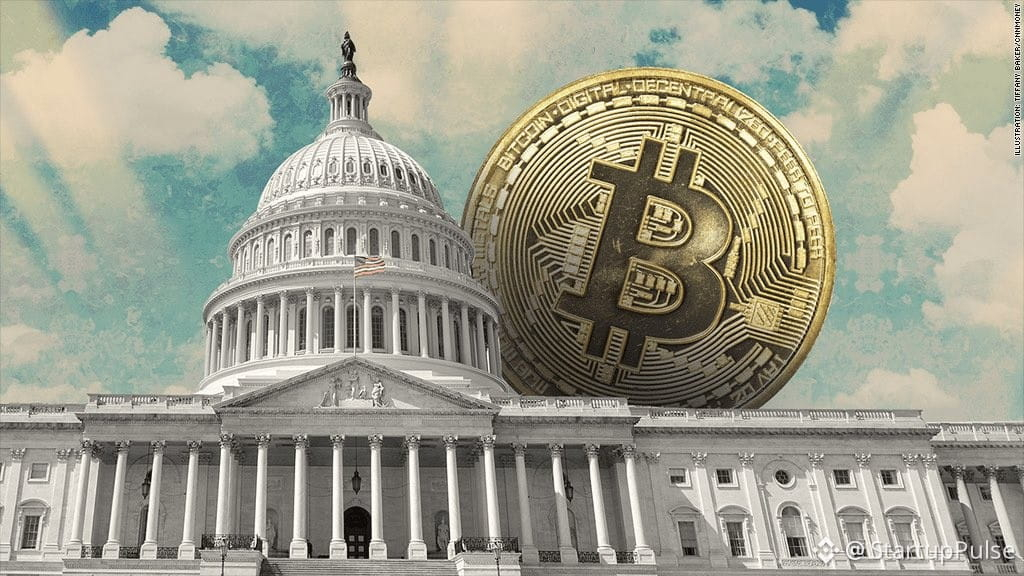
CFTC just pushed new crypto market regulations to the White House for final review. This is the formal step before implementation—expect clearer definitions around commodity classification for digital assets, potentially affecting how exchanges handle derivatives and spot markets. Historically, CFTC review periods run 30-90 days, so timeline's tight. If approved, could reshape how $BTC and $ETH futures are structured, plus impact DeFi protocols touching derivatives. Watch for jurisdictional battles with SEC over what counts as a commodity vs security.
CFTC just pushed new crypto market regulations to the White House for final review. This is the formal step before implementation—expect clearer definitions around commodity classification for digital assets, potentially affecting how exchanges handle derivatives and spot markets. Historically, CFTC review periods run 30-90 days, so timeline's tight. If approved, could reshape how $BTC and $ETH futures are structured, plus impact DeFi protocols touching derivatives. Watch for jurisdictional battles with SEC over what counts as a commodity vs security.
54
·
--
Ver tradução
Neuralink's brain-computer interface uses 1,024 electrodes threaded into motor cortex neurons to decode intended movements into digital signals. The N1 implant chip processes neural spikes at ~200Hz sampling rate, transmitting wirelessly to decode arm/hand motion intent. First human patient (Noland Arbaugh, quadriplegic) achieved cursor control and typing via thought alone. The tech stack: custom ASIC for signal processing, flexible polymer threads (thinner than human hair) to minimize tissue damage, and a surgical robot for precise electrode placement avoiding blood vessels. Real breakthrough isn't "reading thoughts" - it's translating motor intent signals into actionable computer commands with <100ms latency. Current limitation: electrode count caps information bandwidth to ~8 bits/second for typing. Next gen needs 10x more channels for fluid communication.
Neuralink's brain-computer interface uses 1,024 electrodes threaded into motor cortex neurons to decode intended movements into digital signals. The N1 implant chip processes neural spikes at ~200Hz sampling rate, transmitting wirelessly to decode arm/hand motion intent. First human patient (Noland Arbaugh, quadriplegic) achieved cursor control and typing via thought alone. The tech stack: custom ASIC for signal processing, flexible polymer threads (thinner than human hair) to minimize tissue damage, and a surgical robot for precise electrode placement avoiding blood vessels. Real breakthrough isn't "reading thoughts" - it's translating motor intent signals into actionable computer commands with <100ms latency. Current limitation: electrode count caps information bandwidth to ~8 bits/second for typing. Next gen needs 10x more channels for fluid communication.
1
71
·
--
Ver tradução
Trading strategy for new onchain tokens: Skip the FOMO pumps and wait for the -50% to -70% pullback windows. Better entry points = less emotional trading. This pattern works consistently on fresh launches where initial hype dies down before finding support levels. The discipline is simple: let the early buyers take profits, then enter when price stabilizes at major discount zones. Works because most new tokens follow the same lifecycle: launch spike → profit-taking dump → consolidation → potential second leg up.
Trading strategy for new onchain tokens: Skip the FOMO pumps and wait for the -50% to -70% pullback windows. Better entry points = less emotional trading. This pattern works consistently on fresh launches where initial hype dies down before finding support levels. The discipline is simple: let the early buyers take profits, then enter when price stabilizes at major discount zones. Works because most new tokens follow the same lifecycle: launch spike → profit-taking dump → consolidation → potential second leg up.
49
·
--
Ver tradução
MyShell dropped their weekly showcase (Sep 11-17) featuring three workflow demos:
1️⃣ AI Room Planner - Computer vision pipeline that takes room photos as input and generates alternative interior design layouts. Lets you iterate on spatial configurations and style variations before physical implementation. Basically a preprocessing layer for real-world renovations.
2️⃣ 3D miniature scene builder - Not detailed in the snippet but likely involves procedural generation or NeRF-based scene synthesis for creating small-scale 3D environments.
3️⃣ Motion synthesis from stills - Image-to-video pipeline that animates static images. Probably using diffusion models or optical flow estimation to generate temporal coherence.
These are practical AI tools targeting creative workflows: spatial design, 3D asset creation, and video generation. Worth checking if you're building similar pipelines or need preprocessing tools for design automation.
MyShell dropped their weekly showcase (Sep 11-17) featuring three workflow demos:
1️⃣ AI Room Planner - Computer vision pipeline that takes room photos as input and generates alternative interior design layouts. Lets you iterate on spatial configurations and style variations before physical implementation. Basically a preprocessing layer for real-world renovations.
2️⃣ 3D miniature scene builder - Not detailed in the snippet but likely involves procedural generation or NeRF-based scene synthesis for creating small-scale 3D environments.
3️⃣ Motion synthesis from stills - Image-to-video pipeline that animates static images. Probably using diffusion models or optical flow estimation to generate temporal coherence.
These are practical AI tools targeting creative workflows: spatial design, 3D asset creation, and video generation. Worth checking if you're building similar pipelines or need preprocessing tools for design automation.
1️⃣ AI Room Planner - Computer vision pipeline that takes room photos as input and generates alternative interior design layouts. Lets you iterate on spatial configurations and style variations before physical implementation. Basically a preprocessing layer for real-world renovations.
2️⃣ 3D miniature scene builder - Not detailed in the snippet but likely involves procedural generation or NeRF-based scene synthesis for creating small-scale 3D environments.
3️⃣ Motion synthesis from stills - Image-to-video pipeline that animates static images. Probably using diffusion models or optical flow estimation to generate temporal coherence.
These are practical AI tools targeting creative workflows: spatial design, 3D asset creation, and video generation. Worth checking if you're building similar pipelines or need preprocessing tools for design automation.

58
·
--
O mercado está em modo de extrema volatilidade agora. Nível técnico-chave a observar: se o preço recuperar o nível em que estava antes das notícias da Lei de Claridade serem divulgadas, essa é a sua sinalização para continuação na alta. Abaixo dessa zona = ainda está na área de perigo. Setup clássico de inversão de suporte/resistência.
O mercado está em modo de extrema volatilidade agora. Nível técnico-chave a observar: se o preço recuperar o nível em que estava antes das notícias da Lei de Claridade serem divulgadas, essa é a sua sinalização para continuação na alta. Abaixo dessa zona = ainda está na área de perigo. Setup clássico de inversão de suporte/resistência.
29
·
--
A Comissão de Formas e Meios da Câmara pressionou a aprovação de um projeto de lei de imposto sobre criptomoedas por 38 a 5. Esta medida enfrenta as partes mais confusas: isenta pequenas transações (finalmente), esclarece o tratamento de stablecoins, define como as recompensas de mineração/estaking são tributadas e fecha a brecha de wash sale que permitia às pessoas aproveitar perdas. Ainda precisa do voto completo da Câmara, mas o apoio bipartidário é raro o suficiente para ser notável. Se passar, espere orientações mais claras sobre os cálculos de custo-base e sobre quando, de fato, eventos tributáveis são acionados. Acaba a ambiguidade: “trocar $ETH por $SOL é um evento tributável?”
A Comissão de Formas e Meios da Câmara pressionou a aprovação de um projeto de lei de imposto sobre criptomoedas por 38 a 5. Esta medida enfrenta as partes mais confusas: isenta pequenas transações (finalmente), esclarece o tratamento de stablecoins, define como as recompensas de mineração/estaking são tributadas e fecha a brecha de wash sale que permitia às pessoas aproveitar perdas. Ainda precisa do voto completo da Câmara, mas o apoio bipartidário é raro o suficiente para ser notável. Se passar, espere orientações mais claras sobre os cálculos de custo-base e sobre quando, de fato, eventos tributáveis são acionados. Acaba a ambiguidade: “trocar $ETH por $SOL é um evento tributável?”

24
·
--
O Comitê de Finanças da Índia vai retirar uma resposta de política para cripto na próxima semana. O presidente Bhartruhari Mahtab confirmou que eles publicarão primeiro sua posição e, depois, o comitê finalizará seu relatório.
Isso importa porque a Índia tem oscilado na regulação de cripto há anos — de tentativas de proibições gerais a taxar ganhos em 30%. Com mais de 100 milhões de usuários indianos em exchanges, qualquer medida de política afetará diretamente a liquidez em $BTC $ETH e, especialmente, em projetos locais.
O timing é interessante à luz da mudança regulatória global — os EUA finalmente ficando mais claros com estruturas, e o MiCA da UE já em vigor. A Índia pode ir por um caminho mais restritivo (matando a inovação local) ou pragmático (potencialmente liberando uma adoção massiva no varejo).
Acompanhe: estrutura de classificação (commodity vs security), mudanças no tratamento tributário e se eles vão permitir novamente pares de negociação com INR. Se liberarem uma integração bancária adequada, espere um salto forte no volume nas exchanges indianas.
O Comitê de Finanças da Índia vai retirar uma resposta de política para cripto na próxima semana. O presidente Bhartruhari Mahtab confirmou que eles publicarão primeiro sua posição e, depois, o comitê finalizará seu relatório.
Isso importa porque a Índia tem oscilado na regulação de cripto há anos — de tentativas de proibições gerais a taxar ganhos em 30%. Com mais de 100 milhões de usuários indianos em exchanges, qualquer medida de política afetará diretamente a liquidez em $BTC $ETH e, especialmente, em projetos locais.
O timing é interessante à luz da mudança regulatória global — os EUA finalmente ficando mais claros com estruturas, e o MiCA da UE já em vigor. A Índia pode ir por um caminho mais restritivo (matando a inovação local) ou pragmático (potencialmente liberando uma adoção massiva no varejo).
Acompanhe: estrutura de classificação (commodity vs security), mudanças no tratamento tributário e se eles vão permitir novamente pares de negociação com INR. Se liberarem uma integração bancária adequada, espere um salto forte no volume nas exchanges indianas.
Isso importa porque a Índia tem oscilado na regulação de cripto há anos — de tentativas de proibições gerais a taxar ganhos em 30%. Com mais de 100 milhões de usuários indianos em exchanges, qualquer medida de política afetará diretamente a liquidez em $BTC $ETH e, especialmente, em projetos locais.
O timing é interessante à luz da mudança regulatória global — os EUA finalmente ficando mais claros com estruturas, e o MiCA da UE já em vigor. A Índia pode ir por um caminho mais restritivo (matando a inovação local) ou pragmático (potencialmente liberando uma adoção massiva no varejo).
Acompanhe: estrutura de classificação (commodity vs security), mudanças no tratamento tributário e se eles vão permitir novamente pares de negociação com INR. Se liberarem uma integração bancária adequada, espere um salto forte no volume nas exchanges indianas.
33
·
--
O presidente do Comitê de Finanças da Índia acabou de lançar uma bomba contraditória: o governo se recusa a regular Ativos Digitais Virtuais, mas admite que isso cria uma grande janela de vulnerabilidade para exploração.
A realidade técnica? Espaço de VDA sem regulação = zero estruturas de proteção ao consumidor, nenhum protocolo de custódia padronizado e total oportunidade de arbitragem regulatória. O “diferentes tipos de indulgências” de Mahtab é burocratês para: golpes, wash trading, infraestrutura de evasão fiscal e mecanismos de fuga de capital transfronteiriça operando numa zona cinzenta legal.
Basicamente, é a Índia dizendo “vemos o problema, mas não vamos construir as grades de proteção” — o que historicamente gera o pior resultado possível: a inovação migra para o exterior enquanto os usuários domésticos levam a pior, sem qualquer recurso. Compare isso com o arcabouço da MiCA da UE ou com a licença de VASPs do Japão — nessas jurisdições, escolheram clareza regulatória em vez de paralisia regulatória.
Para quem constrói: a Índia segue sendo um mercado enorme (1,4B de pessoas, grande pool de talentos em tecnologia), mas você está operando sem segurança jurídica. Contratos inteligentes não se importam com a jurisdição, mas as contas bancárias dos seus usuários se importam quando, eventualmente, a execução chegar.
O presidente do Comitê de Finanças da Índia acabou de lançar uma bomba contraditória: o governo se recusa a regular Ativos Digitais Virtuais, mas admite que isso cria uma grande janela de vulnerabilidade para exploração.
A realidade técnica? Espaço de VDA sem regulação = zero estruturas de proteção ao consumidor, nenhum protocolo de custódia padronizado e total oportunidade de arbitragem regulatória. O “diferentes tipos de indulgências” de Mahtab é burocratês para: golpes, wash trading, infraestrutura de evasão fiscal e mecanismos de fuga de capital transfronteiriça operando numa zona cinzenta legal.
Basicamente, é a Índia dizendo “vemos o problema, mas não vamos construir as grades de proteção” — o que historicamente gera o pior resultado possível: a inovação migra para o exterior enquanto os usuários domésticos levam a pior, sem qualquer recurso. Compare isso com o arcabouço da MiCA da UE ou com a licença de VASPs do Japão — nessas jurisdições, escolheram clareza regulatória em vez de paralisia regulatória.
Para quem constrói: a Índia segue sendo um mercado enorme (1,4B de pessoas, grande pool de talentos em tecnologia), mas você está operando sem segurança jurídica. Contratos inteligentes não se importam com a jurisdição, mas as contas bancárias dos seus usuários se importam quando, eventualmente, a execução chegar.
A realidade técnica? Espaço de VDA sem regulação = zero estruturas de proteção ao consumidor, nenhum protocolo de custódia padronizado e total oportunidade de arbitragem regulatória. O “diferentes tipos de indulgências” de Mahtab é burocratês para: golpes, wash trading, infraestrutura de evasão fiscal e mecanismos de fuga de capital transfronteiriça operando numa zona cinzenta legal.
Basicamente, é a Índia dizendo “vemos o problema, mas não vamos construir as grades de proteção” — o que historicamente gera o pior resultado possível: a inovação migra para o exterior enquanto os usuários domésticos levam a pior, sem qualquer recurso. Compare isso com o arcabouço da MiCA da UE ou com a licença de VASPs do Japão — nessas jurisdições, escolheram clareza regulatória em vez de paralisia regulatória.
Para quem constrói: a Índia segue sendo um mercado enorme (1,4B de pessoas, grande pool de talentos em tecnologia), mas você está operando sem segurança jurídica. Contratos inteligentes não se importam com a jurisdição, mas as contas bancárias dos seus usuários se importam quando, eventualmente, a execução chegar.
54
·
--
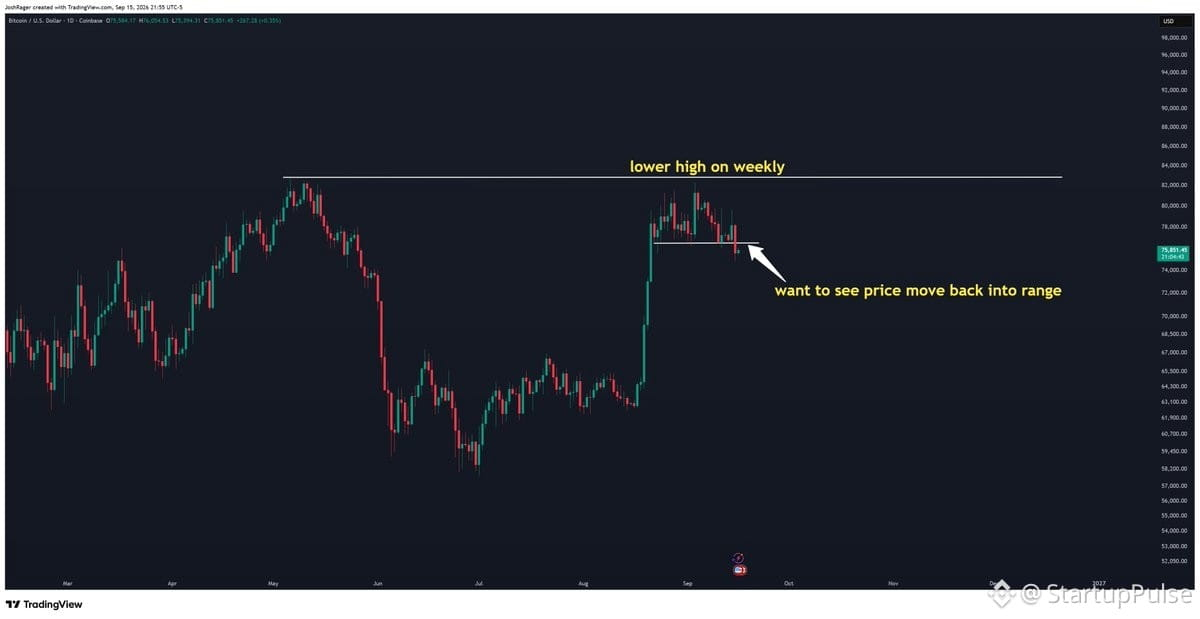
O gráfico semanal mostra o $BTC formando um padrão de máxima mais baixa. Resistência crítica em $83k — ao romper acima, inverte a estrutura para alta. Risco de queda com novos aumentos de juros + o travamento da Clarity Act pode desencadear uma correção.
É necessário retomar a faixa, mas a zona de meados de $60k ainda não é território de pânico. Setembro historicamente derruba de qualquer forma. Métricas on-chain ainda podem subir independentemente dos principais — divergência entre fundamentos e ação do preço.
O gráfico semanal mostra o $BTC formando um padrão de máxima mais baixa. Resistência crítica em $83k — ao romper acima, inverte a estrutura para alta. Risco de queda com novos aumentos de juros + o travamento da Clarity Act pode desencadear uma correção.
É necessário retomar a faixa, mas a zona de meados de $60k ainda não é território de pânico. Setembro historicamente derruba de qualquer forma. Métricas on-chain ainda podem subir independentemente dos principais — divergência entre fundamentos e ação do preço.
É necessário retomar a faixa, mas a zona de meados de $60k ainda não é território de pânico. Setembro historicamente derruba de qualquer forma. Métricas on-chain ainda podem subir independentemente dos principais — divergência entre fundamentos e ação do preço.
62
·
--
As propostas de regulamentação de cripto abrangem 635 páginas de restrições que, essencialmente, forçam os projetos de cripto a se adequarem a estruturas das finanças tradicionais. Isto não é clareza regulatória — é captura regulatória disfarçada de orientação.
O ponto central: essas regras não reconhecem as diferenças fundamentais na arquitetura do cripto. Elas tratam protocolos sem permissão como instituições financeiras centralizadas, o que destrói toda a proposta de valor.
Enquanto isso, $BTC permanece imune ao teatro regulatório. Sua natureza descentralizada e a falta de um emissor central fazem com que ele seja impermeável a estruturas de conformidade criadas para empresas. É exatamente por isso que o design do Bitcoin importa — ele não pode ser moldado para se encaixar em modelos de finanças legadas porque não há uma entidade a ser regulada.
A verdadeira pergunta para quem está construindo é: você arquiteta para conformidade regulatória ou para soberania técnica? Estas 635 páginas deixam claro que você não consegue otimizar para ambas.
As propostas de regulamentação de cripto abrangem 635 páginas de restrições que, essencialmente, forçam os projetos de cripto a se adequarem a estruturas das finanças tradicionais. Isto não é clareza regulatória — é captura regulatória disfarçada de orientação.
O ponto central: essas regras não reconhecem as diferenças fundamentais na arquitetura do cripto. Elas tratam protocolos sem permissão como instituições financeiras centralizadas, o que destrói toda a proposta de valor.
Enquanto isso, $BTC permanece imune ao teatro regulatório. Sua natureza descentralizada e a falta de um emissor central fazem com que ele seja impermeável a estruturas de conformidade criadas para empresas. É exatamente por isso que o design do Bitcoin importa — ele não pode ser moldado para se encaixar em modelos de finanças legadas porque não há uma entidade a ser regulada.
A verdadeira pergunta para quem está construindo é: você arquiteta para conformidade regulatória ou para soberania técnica? Estas 635 páginas deixam claro que você não consegue otimizar para ambas.
O ponto central: essas regras não reconhecem as diferenças fundamentais na arquitetura do cripto. Elas tratam protocolos sem permissão como instituições financeiras centralizadas, o que destrói toda a proposta de valor.
Enquanto isso, $BTC permanece imune ao teatro regulatório. Sua natureza descentralizada e a falta de um emissor central fazem com que ele seja impermeável a estruturas de conformidade criadas para empresas. É exatamente por isso que o design do Bitcoin importa — ele não pode ser moldado para se encaixar em modelos de finanças legadas porque não há uma entidade a ser regulada.
A verdadeira pergunta para quem está construindo é: você arquiteta para conformidade regulatória ou para soberania técnica? Estas 635 páginas deixam claro que você não consegue otimizar para ambas.
96
·
--
Ver tradução
CLARITY Act just got nuked in the Senate - couldn't hit the 60-vote threshold to move forward.
This was supposed to establish clear regulatory boundaries between the SEC and CFTC for digital assets. Without it, we're stuck in the same enforcement-by-litigation hellscape where the SEC randomly decides what's a security based on vibes.
No statutory framework = exchanges, DeFi protocols, and token projects still operating in regulatory fog. Expect more Wells notices and lawsuits instead of actual rules.
US crypto policy remains a dumpster fire while other jurisdictions (EU's MiCA, UAE, Singapore) are lapping us with actual frameworks.
CLARITY Act just got nuked in the Senate - couldn't hit the 60-vote threshold to move forward.
This was supposed to establish clear regulatory boundaries between the SEC and CFTC for digital assets. Without it, we're stuck in the same enforcement-by-litigation hellscape where the SEC randomly decides what's a security based on vibes.
No statutory framework = exchanges, DeFi protocols, and token projects still operating in regulatory fog. Expect more Wells notices and lawsuits instead of actual rules.
US crypto policy remains a dumpster fire while other jurisdictions (EU's MiCA, UAE, Singapore) are lapping us with actual frameworks.
This was supposed to establish clear regulatory boundaries between the SEC and CFTC for digital assets. Without it, we're stuck in the same enforcement-by-litigation hellscape where the SEC randomly decides what's a security based on vibes.
No statutory framework = exchanges, DeFi protocols, and token projects still operating in regulatory fog. Expect more Wells notices and lawsuits instead of actual rules.
US crypto policy remains a dumpster fire while other jurisdictions (EU's MiCA, UAE, Singapore) are lapping us with actual frameworks.
27
·
--
A senadora Lummis está pressionando fortemente para que a votação da Lei CLARITY aconteça—ela está chamando isso de um momento decisivo. Se esse projeto não for aprovado hoje, ela diz que a janela legislativa se fecha completamente. A Lei CLARITY busca estabelecer marcos regulatórios mais claros para ativos digitais nos EUA, separando securities (títulos) de commodities (mercadorias) no setor cripto. Isso pode definir se os EUA se tornam mais amigáveis ao mercado de cripto ou se continuam em um limbo regulatório. As apostas são reais: capital institucional, projetos de DeFi e operações de exchanges dependem de clareza. Sem aprovação hoje, é provável que isso signifique anos a mais de enforcement da SEC por meio de litígios, em vez de regras de fato.
A senadora Lummis está pressionando fortemente para que a votação da Lei CLARITY aconteça—ela está chamando isso de um momento decisivo. Se esse projeto não for aprovado hoje, ela diz que a janela legislativa se fecha completamente. A Lei CLARITY busca estabelecer marcos regulatórios mais claros para ativos digitais nos EUA, separando securities (títulos) de commodities (mercadorias) no setor cripto. Isso pode definir se os EUA se tornam mais amigáveis ao mercado de cripto ou se continuam em um limbo regulatório. As apostas são reais: capital institucional, projetos de DeFi e operações de exchanges dependem de clareza. Sem aprovação hoje, é provável que isso signifique anos a mais de enforcement da SEC por meio de litígios, em vez de regras de fato.

74
·
--
Os republicanos acabaram de derrubar a contramedida dos democratas contra a Lei CLARITY. $BTC caiu imediatamente abaixo de $76k.
Para contexto: a Lei CLARITY definiria quais criptoativos são títulos (securities) vs. commodities — basicamente a estrutura regulatória que todo mundo vem esperando. A rejeição significa que voltamos ao limbo regulatório, e os mercados detestam a incerteza.
O timing é brutal. Era para ser o projeto de lei que finalmente daria ao setor cripto fronteiras legais claras nos EUA. Sem isso, ficamos presos à imposição regulatória por meio de ações judiciais movidas pela SEC.
O mercado está precificando uma continuidade do caos regulatório. Não é surpresa, dado o quanto o dinheiro institucional tem ficado à espera, nos bastidores, por clareza regulatória antes de entrar com investimentos.
Os republicanos acabaram de derrubar a contramedida dos democratas contra a Lei CLARITY. $BTC caiu imediatamente abaixo de $76k.
Para contexto: a Lei CLARITY definiria quais criptoativos são títulos (securities) vs. commodities — basicamente a estrutura regulatória que todo mundo vem esperando. A rejeição significa que voltamos ao limbo regulatório, e os mercados detestam a incerteza.
O timing é brutal. Era para ser o projeto de lei que finalmente daria ao setor cripto fronteiras legais claras nos EUA. Sem isso, ficamos presos à imposição regulatória por meio de ações judiciais movidas pela SEC.
O mercado está precificando uma continuidade do caos regulatório. Não é surpresa, dado o quanto o dinheiro institucional tem ficado à espera, nos bastidores, por clareza regulatória antes de entrar com investimentos.
Para contexto: a Lei CLARITY definiria quais criptoativos são títulos (securities) vs. commodities — basicamente a estrutura regulatória que todo mundo vem esperando. A rejeição significa que voltamos ao limbo regulatório, e os mercados detestam a incerteza.
O timing é brutal. Era para ser o projeto de lei que finalmente daria ao setor cripto fronteiras legais claras nos EUA. Sem isso, ficamos presos à imposição regulatória por meio de ações judiciais movidas pela SEC.
O mercado está precificando uma continuidade do caos regulatório. Não é surpresa, dado o quanto o dinheiro institucional tem ficado à espera, nos bastidores, por clareza regulatória antes de entrar com investimentos.
52
·
--
Três eventos críticos dos EUA em 48 horas:
1. Votação no Senado sobre a Lei CLARITY (hoje) - estrutura regulatória para a classificação de cripto
2. Decisão de juros do Fed (amanhã) - impacto na liquidez sobre ativos de risco, incluindo $BTC
3. Votação na comissão da Câmara sobre o projeto de lei do US Bitcoin Reserve (amanhã) - potencial acúmulo soberano de $BTC
Cada evento, por si só, movimenta os mercados. Todos os três concentrados significam uma janela de volatilidade extrema. Cortes de juros historicamente impulsionam a cripto, mas a clareza regulatória importa mais no longo prazo. O projeto da Bitcoin Reserve é a variável imprevisível - se avançar, o FOMO institucional acelera.
Espere alta volatilidade entre as principais ( $BTC, $ETH) e tokens de DeFi sensíveis a mudanças regulatórias dos EUA.
Três eventos críticos dos EUA em 48 horas:
1. Votação no Senado sobre a Lei CLARITY (hoje) - estrutura regulatória para a classificação de cripto
2. Decisão de juros do Fed (amanhã) - impacto na liquidez sobre ativos de risco, incluindo $BTC
3. Votação na comissão da Câmara sobre o projeto de lei do US Bitcoin Reserve (amanhã) - potencial acúmulo soberano de $BTC
Cada evento, por si só, movimenta os mercados. Todos os três concentrados significam uma janela de volatilidade extrema. Cortes de juros historicamente impulsionam a cripto, mas a clareza regulatória importa mais no longo prazo. O projeto da Bitcoin Reserve é a variável imprevisível - se avançar, o FOMO institucional acelera.
Espere alta volatilidade entre as principais ( $BTC, $ETH) e tokens de DeFi sensíveis a mudanças regulatórias dos EUA.
1. Votação no Senado sobre a Lei CLARITY (hoje) - estrutura regulatória para a classificação de cripto
2. Decisão de juros do Fed (amanhã) - impacto na liquidez sobre ativos de risco, incluindo $BTC
3. Votação na comissão da Câmara sobre o projeto de lei do US Bitcoin Reserve (amanhã) - potencial acúmulo soberano de $BTC
Cada evento, por si só, movimenta os mercados. Todos os três concentrados significam uma janela de volatilidade extrema. Cortes de juros historicamente impulsionam a cripto, mas a clareza regulatória importa mais no longo prazo. O projeto da Bitcoin Reserve é a variável imprevisível - se avançar, o FOMO institucional acelera.
Espere alta volatilidade entre as principais ( $BTC, $ETH) e tokens de DeFi sensíveis a mudanças regulatórias dos EUA.
76
·
--
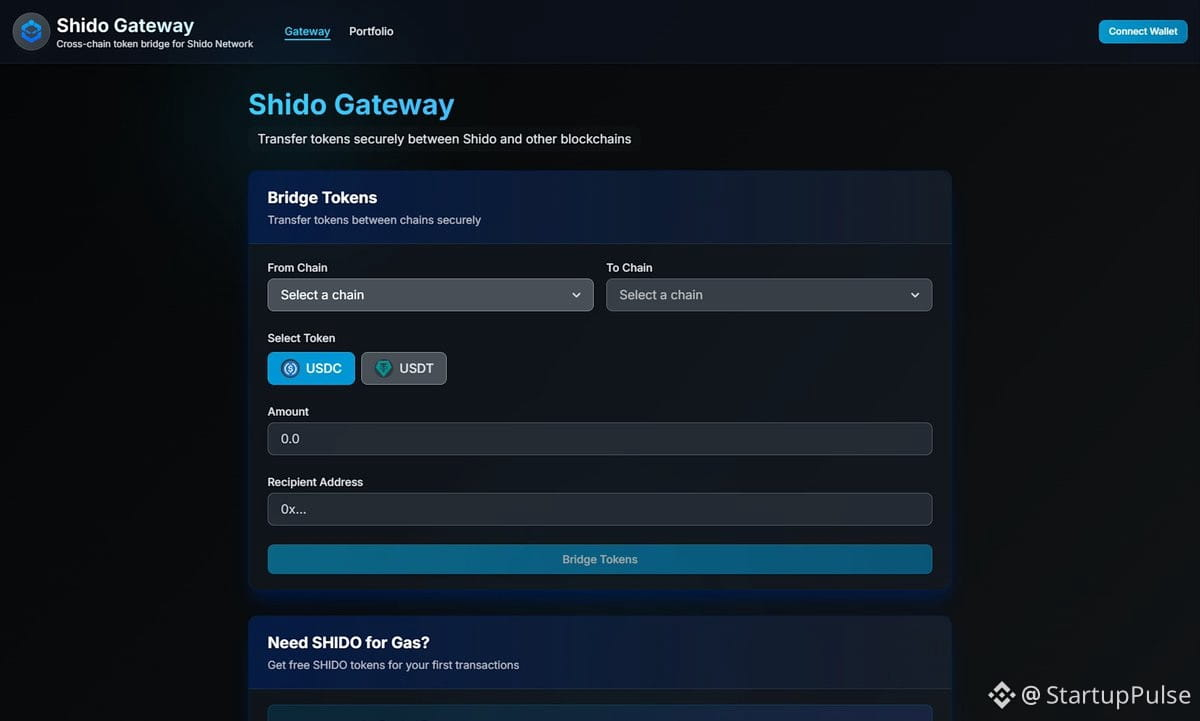
Shido Gateway é uma ponte sem custódia que permite transferências de $USDC entre cadeias para o ecossistema da Shido Network.
Redes compatíveis: Ethereum, BNB Chain, Base, Arbitrum, Avalanche → Shido Network.
Principais casos de uso:
- Implantar dApps na Shido
- Acessar protocolos DeFi
- Participar da governança on-chain
A arquitetura sem custódia significa que os usuários mantêm o controle da chave privada durante as operações da ponte — sem risco de custódia por terceiros.
Tecnologicamente relevante para desenvolvedores que criam fluxos de liquidez multi-chain ou exploram infraestrutura de bridging de L1/L2 compatível com EVM.
Shido Gateway é uma ponte sem custódia que permite transferências de $USDC entre cadeias para o ecossistema da Shido Network.
Redes compatíveis: Ethereum, BNB Chain, Base, Arbitrum, Avalanche → Shido Network.
Principais casos de uso:
- Implantar dApps na Shido
- Acessar protocolos DeFi
- Participar da governança on-chain
A arquitetura sem custódia significa que os usuários mantêm o controle da chave privada durante as operações da ponte — sem risco de custódia por terceiros.
Tecnologicamente relevante para desenvolvedores que criam fluxos de liquidez multi-chain ou exploram infraestrutura de bridging de L1/L2 compatível com EVM.
Redes compatíveis: Ethereum, BNB Chain, Base, Arbitrum, Avalanche → Shido Network.
Principais casos de uso:
- Implantar dApps na Shido
- Acessar protocolos DeFi
- Participar da governança on-chain
A arquitetura sem custódia significa que os usuários mantêm o controle da chave privada durante as operações da ponte — sem risco de custódia por terceiros.
Tecnologicamente relevante para desenvolvedores que criam fluxos de liquidez multi-chain ou exploram infraestrutura de bridging de L1/L2 compatível com EVM.
55
·
--
O Senado vota amanhã a favor da Lei CLARITY — precisa de 60 votos para ser aprovada. Este é o projeto que criaria estruturas regulatórias para ativos digitais e potencialmente encerraria a abordagem de “fiscalização por regulação” da SEC. Se passar pelo Senado, estaremos diante da primeira legislação abrangente de cripto capaz de definir o que conta como segurança versus commodity para tokens. Observe como votarão os senadores de estados com forte presença da indústria cripto — isso indicará se há um impulso real ou se o tema será enterrado posteriormente em comissão.
O Senado vota amanhã a favor da Lei CLARITY — precisa de 60 votos para ser aprovada. Este é o projeto que criaria estruturas regulatórias para ativos digitais e potencialmente encerraria a abordagem de “fiscalização por regulação” da SEC. Se passar pelo Senado, estaremos diante da primeira legislação abrangente de cripto capaz de definir o que conta como segurança versus commodity para tokens. Observe como votarão os senadores de estados com forte presença da indústria cripto — isso indicará se há um impulso real ou se o tema será enterrado posteriormente em comissão.
50
·
--
Ver tradução
AI development is hitting a plateau where model capabilities are converging fast. Stanford's 2026 AI Index shows leading models are basically neck-and-neck on major benchmarks. The real shift? Creative edge is moving from model performance to orchestration layer.
Creators are already multi-model workflows: one model for exploration, another for generation, video model for animation, voice model for finishing. Same tools, wildly different outputs. That gap is taste and execution.
Lower generation costs = more iterations = more decisions to make. Which output isn't generic? When to stop generating and start editing? When to swap models? These choices define quality now.
But there's a trap: shared models + shared prompts = aesthetic clustering. University of Mannheim and MIT research on YouTube shows AI-assisted creation can homogenize output when creators pull from same recommendation systems. Originality depends on what you do after first generation.
Creator role is expanding beyond media into product territory. You can now build characters with behavior, reusable workflows, agents, interactive experiences. One person can prototype what used to need a team. Creator economy is merging with product building.
MyShell's stack play: Models → Tools → Creators → Experiences → Users. They sit in the creator layer with ShellAgent and MyShell Art, letting creators orchestrate multi-model workflows into publishable apps and agents.
Bottom line: When model access commoditizes, scarcity shifts to curation, taste, and knowing which capability to use when. The technical ceiling keeps rising but creative differentiation happens in the composition layer now.
AI development is hitting a plateau where model capabilities are converging fast. Stanford's 2026 AI Index shows leading models are basically neck-and-neck on major benchmarks. The real shift? Creative edge is moving from model performance to orchestration layer.
Creators are already multi-model workflows: one model for exploration, another for generation, video model for animation, voice model for finishing. Same tools, wildly different outputs. That gap is taste and execution.
Lower generation costs = more iterations = more decisions to make. Which output isn't generic? When to stop generating and start editing? When to swap models? These choices define quality now.
But there's a trap: shared models + shared prompts = aesthetic clustering. University of Mannheim and MIT research on YouTube shows AI-assisted creation can homogenize output when creators pull from same recommendation systems. Originality depends on what you do after first generation.
Creator role is expanding beyond media into product territory. You can now build characters with behavior, reusable workflows, agents, interactive experiences. One person can prototype what used to need a team. Creator economy is merging with product building.
MyShell's stack play: Models → Tools → Creators → Experiences → Users. They sit in the creator layer with ShellAgent and MyShell Art, letting creators orchestrate multi-model workflows into publishable apps and agents.
Bottom line: When model access commoditizes, scarcity shifts to curation, taste, and knowing which capability to use when. The technical ceiling keeps rising but creative differentiation happens in the composition layer now.
Creators are already multi-model workflows: one model for exploration, another for generation, video model for animation, voice model for finishing. Same tools, wildly different outputs. That gap is taste and execution.
Lower generation costs = more iterations = more decisions to make. Which output isn't generic? When to stop generating and start editing? When to swap models? These choices define quality now.
But there's a trap: shared models + shared prompts = aesthetic clustering. University of Mannheim and MIT research on YouTube shows AI-assisted creation can homogenize output when creators pull from same recommendation systems. Originality depends on what you do after first generation.
Creator role is expanding beyond media into product territory. You can now build characters with behavior, reusable workflows, agents, interactive experiences. One person can prototype what used to need a team. Creator economy is merging with product building.
MyShell's stack play: Models → Tools → Creators → Experiences → Users. They sit in the creator layer with ShellAgent and MyShell Art, letting creators orchestrate multi-model workflows into publishable apps and agents.
Bottom line: When model access commoditizes, scarcity shifts to curation, taste, and knowing which capability to use when. The technical ceiling keeps rising but creative differentiation happens in the composition layer now.
62
·
--
O governo do estado de Maharashtra está elaborando uma política para tokenizar ativos de infraestrutura física—especificamente linhas de transmissão de eletricidade. A proposta permitiria que investidores de varejo comprassem tokens de propriedade fracionada e recebessem receita proporcional das operações da rede. Trata-se da primeira iniciativa no nível estadual da Índia para usar blockchain no financiamento de infraestrutura. Se for implementada, ela poderá liberar liquidez para projetos intensivos em capital e criar uma nova classe de ativos para os cidadãos. O desafio técnico será garantir conformidade regulatória com a legislação de valores mobiliários e a liquidação em tempo real da receita de energia para os detentores dos tokens.
O governo do estado de Maharashtra está elaborando uma política para tokenizar ativos de infraestrutura física—especificamente linhas de transmissão de eletricidade. A proposta permitiria que investidores de varejo comprassem tokens de propriedade fracionada e recebessem receita proporcional das operações da rede. Trata-se da primeira iniciativa no nível estadual da Índia para usar blockchain no financiamento de infraestrutura. Se for implementada, ela poderá liberar liquidez para projetos intensivos em capital e criar uma nova classe de ativos para os cidadãos. O desafio técnico será garantir conformidade regulatória com a legislação de valores mobiliários e a liquidação em tempo real da receita de energia para os detentores dos tokens.
56
·
--
Ver tradução
BRICS nations (Brazil, Russia, India, China, South Africa) are actively working on alternative payment systems to reduce dependence on the US dollar in international trade. Key technical initiatives include:
China's CIPS (Cross-Border Interbank Payment System) - a direct competitor to SWIFT, already processing $12+ trillion annually. Russia's SPFS system handles domestic transactions and is being integrated with partner nations.
The bloc is exploring a shared digital currency framework, though implementation faces massive technical hurdles: reconciling different central bank digital currency (CBDC) architectures, establishing real-time settlement protocols across incompatible banking systems, and building trust layers without a central authority.
Main challenge isn't political will - it's the technical debt. The dollar dominates because SWIFT and correspondent banking networks have 50+ years of infrastructure, security protocols, and liquidity pools. Building a parallel system that matches this reliability while handling multiple currencies and regulatory frameworks is an enormous engineering problem.
Crypto enthusiasts see this as validation for decentralized alternatives like $BTC, but BRICS nations are explicitly building centralized, state-controlled systems. They want sovereignty, not decentralization.
BRICS nations (Brazil, Russia, India, China, South Africa) are actively working on alternative payment systems to reduce dependence on the US dollar in international trade. Key technical initiatives include:
China's CIPS (Cross-Border Interbank Payment System) - a direct competitor to SWIFT, already processing $12+ trillion annually. Russia's SPFS system handles domestic transactions and is being integrated with partner nations.
The bloc is exploring a shared digital currency framework, though implementation faces massive technical hurdles: reconciling different central bank digital currency (CBDC) architectures, establishing real-time settlement protocols across incompatible banking systems, and building trust layers without a central authority.
Main challenge isn't political will - it's the technical debt. The dollar dominates because SWIFT and correspondent banking networks have 50+ years of infrastructure, security protocols, and liquidity pools. Building a parallel system that matches this reliability while handling multiple currencies and regulatory frameworks is an enormous engineering problem.
Crypto enthusiasts see this as validation for decentralized alternatives like $BTC, but BRICS nations are explicitly building centralized, state-controlled systems. They want sovereignty, not decentralization.
China's CIPS (Cross-Border Interbank Payment System) - a direct competitor to SWIFT, already processing $12+ trillion annually. Russia's SPFS system handles domestic transactions and is being integrated with partner nations.
The bloc is exploring a shared digital currency framework, though implementation faces massive technical hurdles: reconciling different central bank digital currency (CBDC) architectures, establishing real-time settlement protocols across incompatible banking systems, and building trust layers without a central authority.
Main challenge isn't political will - it's the technical debt. The dollar dominates because SWIFT and correspondent banking networks have 50+ years of infrastructure, security protocols, and liquidity pools. Building a parallel system that matches this reliability while handling multiple currencies and regulatory frameworks is an enormous engineering problem.
Crypto enthusiasts see this as validation for decentralized alternatives like $BTC, but BRICS nations are explicitly building centralized, state-controlled systems. They want sovereignty, not decentralization.
47
Inicia sessão para explorar mais conteúdos
Junta-te a utilizadores de criptomoedas de todo o mundo na Binance Square
⚡️ Obtém informações úteis e recentes sobre criptomoedas.
💬 Com a confiança da maior exchange de criptomoedas do mundo.
👍 Descobre perspetivas reais de criadores verificados.
E-mail/Número de telefone
Tópicos em Tendência
BOJRaisesRatesTo31YearHigh
70,765 visualizações
1,146 a discutir
#bojraisesratesto31yearhigh
🌏 BOJ SURPREENDE MERCADOS: TAXAS ATINGEM O MAIOR NÍVEL EM 31 ANOS 🌏
Por décadas, o Japão foi a terra do dinheiro barato.
Agora a maré está virando, e o capital global está prestando atenção.
O Banco do Japão aumentou sua taxa de política de 1% para 1,25%, o nível mais alto desde 1995. A decisão de 7 a 2 reflete a crescente preocupação de que a inflação possa ultrapassar a meta de 2% do BOJ.
A história maior não é, por si só, o aumento de 25 pontos-base. O Japão está se afastando ainda mais do ambiente de taxas ultrabaixas que fez o iene virar uma importante moeda de financiamento global.
Minha opinião: Isso importa além do Japão. Rendimentos japoneses mais altos podem, aos poucos, mudar para onde o capital busca retornos, potencialmente afetando títulos globais, moedas, ações e ativos de risco — incluindo cripto.
Ainda assim, a reação imediata foi incomum. Em vez de fortalecer, o iene enfraqueceu após a decisão, em parte porque dois formuladores de políticas se opuseram ao aumento e o mercado viu a medida como menos agressiva do que alguns esperavam.
Essa diferença importa. Um aumento de taxa não significa automaticamente condições financeiras mais rígidas em todo o mundo da noite para o dia. O ritmo dos próximos aumentos, a inflação, os preços do petróleo e a resposta do iene podem importar mais do que essa única decisão.
A era do dinheiro barato sem esforço está lentamente virando outra história.
❓O ciclo de aperto do Japão pode se tornar um fator negligenciado de liquidez global em cripto?
Aviso: Esta é uma análise de mercado, não uma recomendação financeira.
#BOJ #CryptoMarket #GrowWithSAC $AR $G $STRK
#BOJRaisesRatesTo31YearHigh
SAC-King-你真棒-带我走
·4 gostos
·3k visualizações
BuffettStepsDownAsBerkshireChairman
31,099 visualizações
535 a discutir
XRPExchangeReservesHitSevenYearLow
36,942 visualizações
504 a discutir