
Magnus Corvus
1.1k Publicações

Magnus Corvus
Denunciar
Bloquear Utilizador
I'm Crypto Analyst & Elite Trader:X-@Magnus6424
22 A seguir
6.3K+ Seguidores
1.9K+ Gostaram
Publicações
·
--
Em Alta
O Fed está entrando em um verdadeiro teste “Goldilocks”.
Folhas de pagamento fortes dizem que a economia ainda tem impulso, mas essa força vira um problema se a inflação se recusar a desacelerar. Para mim, a questão-chave não é apenas “aumentar ou manter?” — é se os dados permitem que o Fed continue paciente sem perder credibilidade.
Meu cenário-base é manter, mas eu esperaria uma mensagem firme se a inflação continuar teimosa. Isso manteria os mercados sensíveis às taxas e ao dólar.
Sou neutro em relação às ações até ver qual lado vence: uma inflação mais fraca poderia reanimar o apetite por risco, enquanto outra leitura quente poderia punir rapidamente nomes de maior beta. O ouro pode se beneficiar da incerteza, mas taxas reais mais altas poderiam limitar o movimento.
Então eu não vou correr atrás da primeira reação. Quero confirmação das taxas, do dólar e da amplitude do mercado antes de escolher uma direção.
O que mudaria primeiro a sua visão sobre o Fed?
#CPIWatch
O Fed está entrando em um verdadeiro teste “Goldilocks”.
Folhas de pagamento fortes dizem que a economia ainda tem impulso, mas essa força vira um problema se a inflação se recusar a desacelerar. Para mim, a questão-chave não é apenas “aumentar ou manter?” — é se os dados permitem que o Fed continue paciente sem perder credibilidade.
Meu cenário-base é manter, mas eu esperaria uma mensagem firme se a inflação continuar teimosa. Isso manteria os mercados sensíveis às taxas e ao dólar.
Sou neutro em relação às ações até ver qual lado vence: uma inflação mais fraca poderia reanimar o apetite por risco, enquanto outra leitura quente poderia punir rapidamente nomes de maior beta. O ouro pode se beneficiar da incerteza, mas taxas reais mais altas poderiam limitar o movimento.
Então eu não vou correr atrás da primeira reação. Quero confirmação das taxas, do dólar e da amplitude do mercado antes de escolher uma direção.
O que mudaria primeiro a sua visão sobre o Fed?
#CPIWatch
Folhas de pagamento fortes dizem que a economia ainda tem impulso, mas essa força vira um problema se a inflação se recusar a desacelerar. Para mim, a questão-chave não é apenas “aumentar ou manter?” — é se os dados permitem que o Fed continue paciente sem perder credibilidade.
Meu cenário-base é manter, mas eu esperaria uma mensagem firme se a inflação continuar teimosa. Isso manteria os mercados sensíveis às taxas e ao dólar.
Sou neutro em relação às ações até ver qual lado vence: uma inflação mais fraca poderia reanimar o apetite por risco, enquanto outra leitura quente poderia punir rapidamente nomes de maior beta. O ouro pode se beneficiar da incerteza, mas taxas reais mais altas poderiam limitar o movimento.
Então eu não vou correr atrás da primeira reação. Quero confirmação das taxas, do dólar e da amplitude do mercado antes de escolher uma direção.
O que mudaria primeiro a sua visão sobre o Fed?
#CPIWatch

83
·
--
Em Alta
$VTHO está mostrando forte potencial de recuperação após uma reação acentuada da mínima recente.
Os compradores estão defendendo a estrutura enquanto o preço se mantém acima da zona de suporte-chave.
Zona de Entrada: 0.000561 - 0.000576
Stop Loss: 0.000545
Alvo 1: 0.000602
Alvo 2: 0.000644
Alvo 3: 0.000676
A liquidez está se formando acima das máximas recentes, enquanto reações em torno de 0.000561 continuam sustentando a estrutura de recuperação. Manter essa zona preserva a estrutura de alta e coloca níveis mais altos de liquidez em foco.
Vamos lá e opere agora $VTHO
$VTHO está mostrando forte potencial de recuperação após uma reação acentuada da mínima recente.
Os compradores estão defendendo a estrutura enquanto o preço se mantém acima da zona de suporte-chave.
Zona de Entrada: 0.000561 - 0.000576
Stop Loss: 0.000545
Alvo 1: 0.000602
Alvo 2: 0.000644
Alvo 3: 0.000676
A liquidez está se formando acima das máximas recentes, enquanto reações em torno de 0.000561 continuam sustentando a estrutura de recuperação. Manter essa zona preserva a estrutura de alta e coloca níveis mais altos de liquidez em foco.
Vamos lá e opere agora $VTHO
Os compradores estão defendendo a estrutura enquanto o preço se mantém acima da zona de suporte-chave.
Zona de Entrada: 0.000561 - 0.000576
Stop Loss: 0.000545
Alvo 1: 0.000602
Alvo 2: 0.000644
Alvo 3: 0.000676
A liquidez está se formando acima das máximas recentes, enquanto reações em torno de 0.000561 continuam sustentando a estrutura de recuperação. Manter essa zona preserva a estrutura de alta e coloca níveis mais altos de liquidez em foco.
Vamos lá e opere agora $VTHO

152
·
--
Em Alta
$SAHARA está mostrando forte momentum baixista após um rompimento acentuado da faixa recente.
Os vendedores continuam no controle enquanto a estrutura se mantiver abaixo da zona-chave de resistência.
Zona de Entrada: 0.00887 - 0.00897
Stop Loss: 0.00912
Alvo 1: 0.00875
Alvo 2: 0.00860
Alvo 3: 0.00840
A liquidez está se acumulando abaixo da recente mínima de 0.00887, enquanto as reações em torno de 0.00897 continuam a confirmar a pressão baixista. Manter-se abaixo desta zona preserva a estrutura de baixa e coloca níveis mais baixos de liquidez em foco.
Vamos lá e Faça Trade agora $SAHARA
$SAHARA está mostrando forte momentum baixista após um rompimento acentuado da faixa recente.
Os vendedores continuam no controle enquanto a estrutura se mantiver abaixo da zona-chave de resistência.
Zona de Entrada: 0.00887 - 0.00897
Stop Loss: 0.00912
Alvo 1: 0.00875
Alvo 2: 0.00860
Alvo 3: 0.00840
A liquidez está se acumulando abaixo da recente mínima de 0.00887, enquanto as reações em torno de 0.00897 continuam a confirmar a pressão baixista. Manter-se abaixo desta zona preserva a estrutura de baixa e coloca níveis mais baixos de liquidez em foco.
Vamos lá e Faça Trade agora $SAHARA
Os vendedores continuam no controle enquanto a estrutura se mantiver abaixo da zona-chave de resistência.
Zona de Entrada: 0.00887 - 0.00897
Stop Loss: 0.00912
Alvo 1: 0.00875
Alvo 2: 0.00860
Alvo 3: 0.00840
A liquidez está se acumulando abaixo da recente mínima de 0.00887, enquanto as reações em torno de 0.00897 continuam a confirmar a pressão baixista. Manter-se abaixo desta zona preserva a estrutura de baixa e coloca níveis mais baixos de liquidez em foco.
Vamos lá e Faça Trade agora $SAHARA

127
·
--
Em Alta
$MARSCOIN está mostrando forte impulso de alta após uma expansão acentuada a partir das mínimas.
Os compradores continuam no controle enquanto a estrutura se mantiver acima da zona de suporte principal.
Zona de Entrada: 0.1250 - 0.1275
Stop Loss: 0.1205
Alvo 1: 0.1300
Alvo 2: 0.1330
Alvo 3: 0.1380
A liquidez está sendo construída acima da recente máxima de 0.1330, enquanto as reações em torno de 0.1250 continuam a sustentar a estrutura de alta. Manter essa zona preserva a estrutura de alta e coloca níveis mais altos de liquidez em foco.
Vamos lá e negocie agora $MARSCOIN
$MARSCOIN está mostrando forte impulso de alta após uma expansão acentuada a partir das mínimas.
Os compradores continuam no controle enquanto a estrutura se mantiver acima da zona de suporte principal.
Zona de Entrada: 0.1250 - 0.1275
Stop Loss: 0.1205
Alvo 1: 0.1300
Alvo 2: 0.1330
Alvo 3: 0.1380
A liquidez está sendo construída acima da recente máxima de 0.1330, enquanto as reações em torno de 0.1250 continuam a sustentar a estrutura de alta. Manter essa zona preserva a estrutura de alta e coloca níveis mais altos de liquidez em foco.
Vamos lá e negocie agora $MARSCOIN
Os compradores continuam no controle enquanto a estrutura se mantiver acima da zona de suporte principal.
Zona de Entrada: 0.1250 - 0.1275
Stop Loss: 0.1205
Alvo 1: 0.1300
Alvo 2: 0.1330
Alvo 3: 0.1380
A liquidez está sendo construída acima da recente máxima de 0.1330, enquanto as reações em torno de 0.1250 continuam a sustentar a estrutura de alta. Manter essa zona preserva a estrutura de alta e coloca níveis mais altos de liquidez em foco.
Vamos lá e negocie agora $MARSCOIN

131
·
--
Em Alta
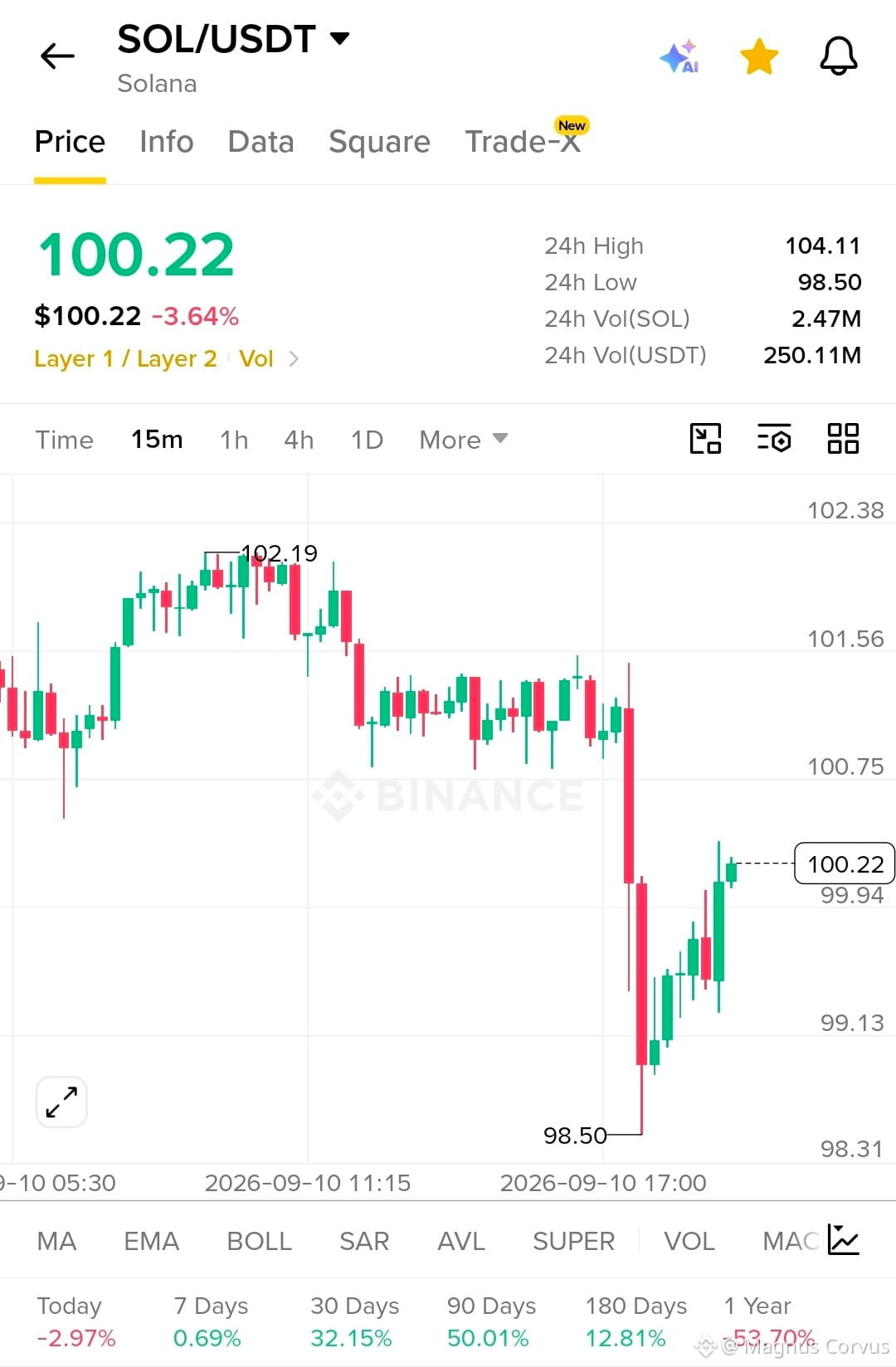
$SOL está mostrando forte recuperação depois de defender a zona-chave de liquidez.
Os compradores estão voltando ao controle enquanto a estrutura começa a reagir a partir da mínima de 98.50.
Zona de Entrada: 99.90 - 100.30
Stop Loss: 98.40
Alvo 1: 100.75
Alvo 2: 101.56
Alvo 3: 102.19
A liquidez foi varrida abaixo de 99.00 antes de uma reação brusca empurrar o SOL de volta para perto de 100.22. Manter essa estrutura de recuperação mantém os níveis de alta em foco, enquanto perder a mínima de liquidez enfraqueceria a configuração.
Vamos lá e faça Trade agora $SOL
$SOL está mostrando forte recuperação depois de defender a zona-chave de liquidez.
Os compradores estão voltando ao controle enquanto a estrutura começa a reagir a partir da mínima de 98.50.
Zona de Entrada: 99.90 - 100.30
Stop Loss: 98.40
Alvo 1: 100.75
Alvo 2: 101.56
Alvo 3: 102.19
A liquidez foi varrida abaixo de 99.00 antes de uma reação brusca empurrar o SOL de volta para perto de 100.22. Manter essa estrutura de recuperação mantém os níveis de alta em foco, enquanto perder a mínima de liquidez enfraqueceria a configuração.
Vamos lá e faça Trade agora $SOL
Os compradores estão voltando ao controle enquanto a estrutura começa a reagir a partir da mínima de 98.50.
Zona de Entrada: 99.90 - 100.30
Stop Loss: 98.40
Alvo 1: 100.75
Alvo 2: 101.56
Alvo 3: 102.19
A liquidez foi varrida abaixo de 99.00 antes de uma reação brusca empurrar o SOL de volta para perto de 100.22. Manter essa estrutura de recuperação mantém os níveis de alta em foco, enquanto perder a mínima de liquidez enfraqueceria a configuração.
Vamos lá e faça Trade agora $SOL
121
·
--
Em Alta
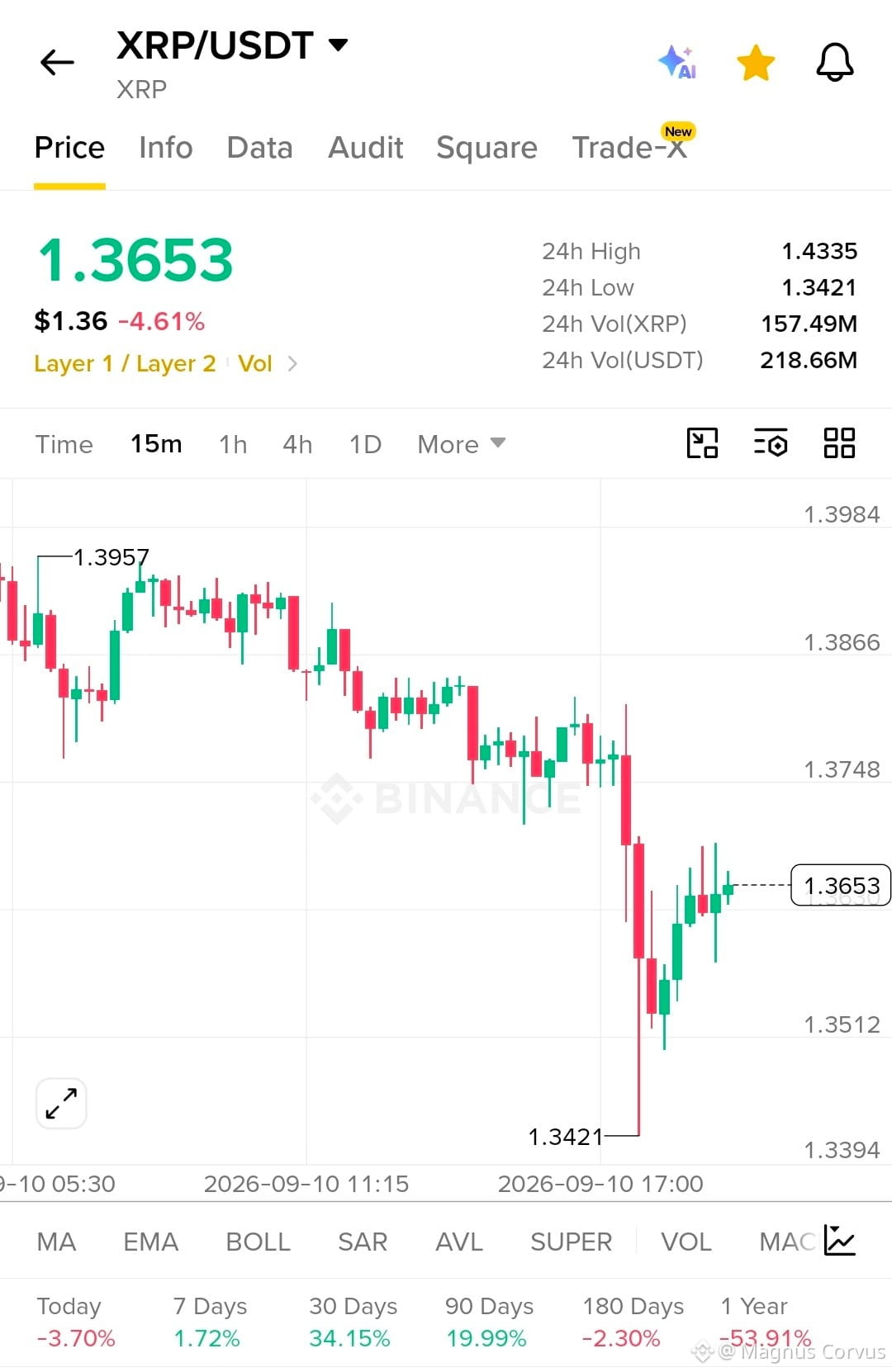
$XRP está mostrando forte momentum de recuperação após defender a zona-chave de liquidez.
Os compradores estão recuperando o controle enquanto a estrutura começa a reagir a partir da mínima de 1.3421.
Zona de Entrada: 1.3600 - 1.3660
Stop Loss: 1.3410
Alvo 1: 1.3748
Alvo 2: 1.3866
Alvo 3: 1.3957
A liquidez foi varrida abaixo de 1.35 antes de uma reação brusca empurrar o XRP de volta para 1.3653. Manter essa estrutura de recuperação mantém os níveis de alta em foco, enquanto perder a mínima de liquidez enfraqueceria o cenário.
Vamos e Façamos Trade agora $XRP
$XRP está mostrando forte momentum de recuperação após defender a zona-chave de liquidez.
Os compradores estão recuperando o controle enquanto a estrutura começa a reagir a partir da mínima de 1.3421.
Zona de Entrada: 1.3600 - 1.3660
Stop Loss: 1.3410
Alvo 1: 1.3748
Alvo 2: 1.3866
Alvo 3: 1.3957
A liquidez foi varrida abaixo de 1.35 antes de uma reação brusca empurrar o XRP de volta para 1.3653. Manter essa estrutura de recuperação mantém os níveis de alta em foco, enquanto perder a mínima de liquidez enfraqueceria o cenário.
Vamos e Façamos Trade agora $XRP
Os compradores estão recuperando o controle enquanto a estrutura começa a reagir a partir da mínima de 1.3421.
Zona de Entrada: 1.3600 - 1.3660
Stop Loss: 1.3410
Alvo 1: 1.3748
Alvo 2: 1.3866
Alvo 3: 1.3957
A liquidez foi varrida abaixo de 1.35 antes de uma reação brusca empurrar o XRP de volta para 1.3653. Manter essa estrutura de recuperação mantém os níveis de alta em foco, enquanto perder a mínima de liquidez enfraqueceria o cenário.
Vamos e Façamos Trade agora $XRP
102
·
--
Em Alta
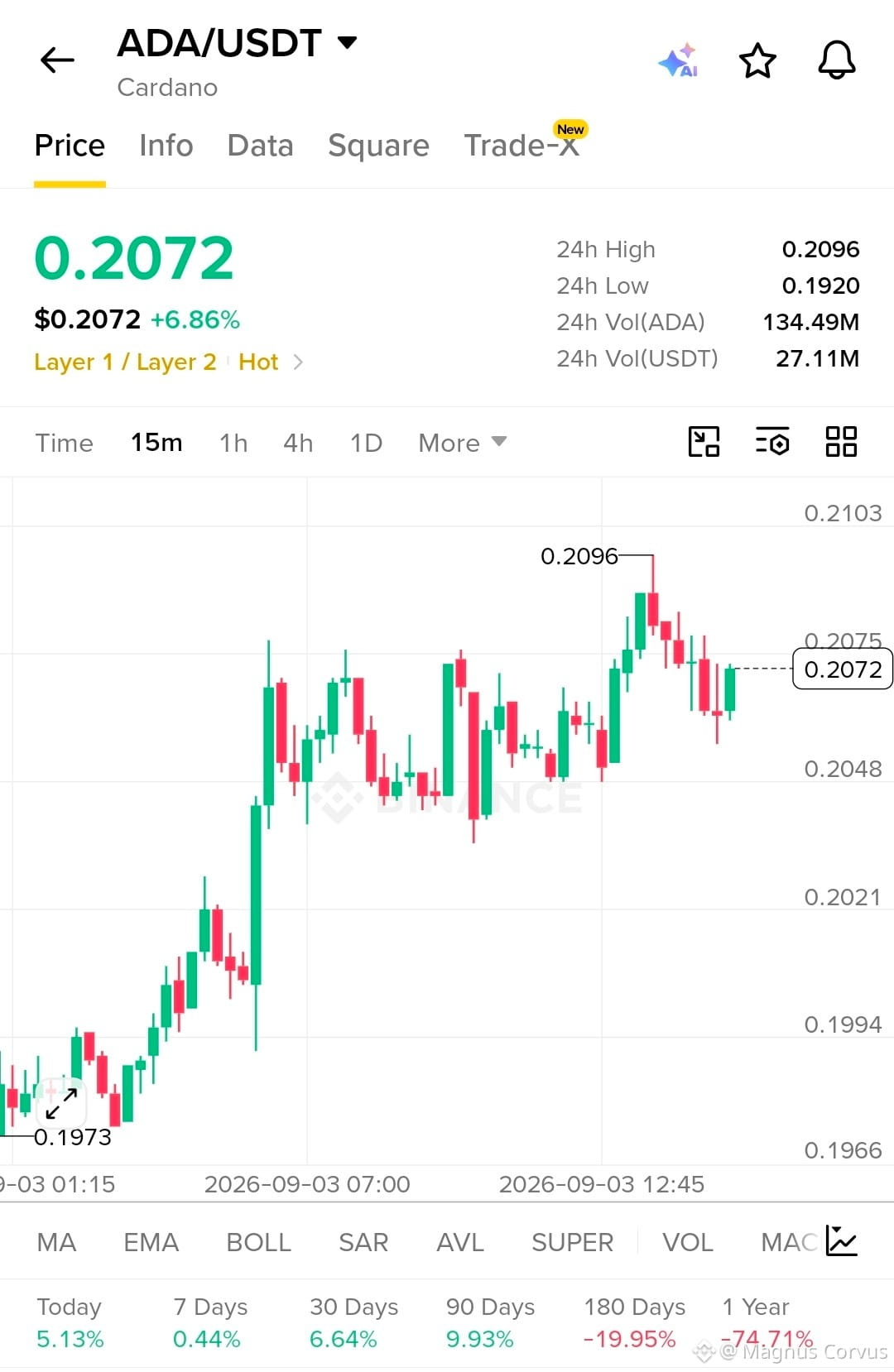
$ADA está mostrando forte momentum após uma expansão limpa a partir da faixa inferior.
A estrutura permanece otimista enquanto os compradores mantêm o controle acima da zona de suporte principal.
Zona de Entrada: 0.2050 - 0.2072
Stop Loss: 0.2020
Alvo 1: 0.2096
Alvo 2: 0.2125
Alvo 3: 0.2160
A liquidez está sendo construída acima de 0.2096, com ADA mostrando uma forte reação a partir da estrutura de 0.2048. Manter essa zona mantém os compradores no controle e abre o caminho para os próximos níveis de liquidez na alta.
Vamos lá e Operar agora $ADA
$ADA está mostrando forte momentum após uma expansão limpa a partir da faixa inferior.
A estrutura permanece otimista enquanto os compradores mantêm o controle acima da zona de suporte principal.
Zona de Entrada: 0.2050 - 0.2072
Stop Loss: 0.2020
Alvo 1: 0.2096
Alvo 2: 0.2125
Alvo 3: 0.2160
A liquidez está sendo construída acima de 0.2096, com ADA mostrando uma forte reação a partir da estrutura de 0.2048. Manter essa zona mantém os compradores no controle e abre o caminho para os próximos níveis de liquidez na alta.
Vamos lá e Operar agora $ADA
A estrutura permanece otimista enquanto os compradores mantêm o controle acima da zona de suporte principal.
Zona de Entrada: 0.2050 - 0.2072
Stop Loss: 0.2020
Alvo 1: 0.2096
Alvo 2: 0.2125
Alvo 3: 0.2160
A liquidez está sendo construída acima de 0.2096, com ADA mostrando uma forte reação a partir da estrutura de 0.2048. Manter essa zona mantém os compradores no controle e abre o caminho para os próximos níveis de liquidez na alta.
Vamos lá e Operar agora $ADA
1
76
·
--
Em Alta
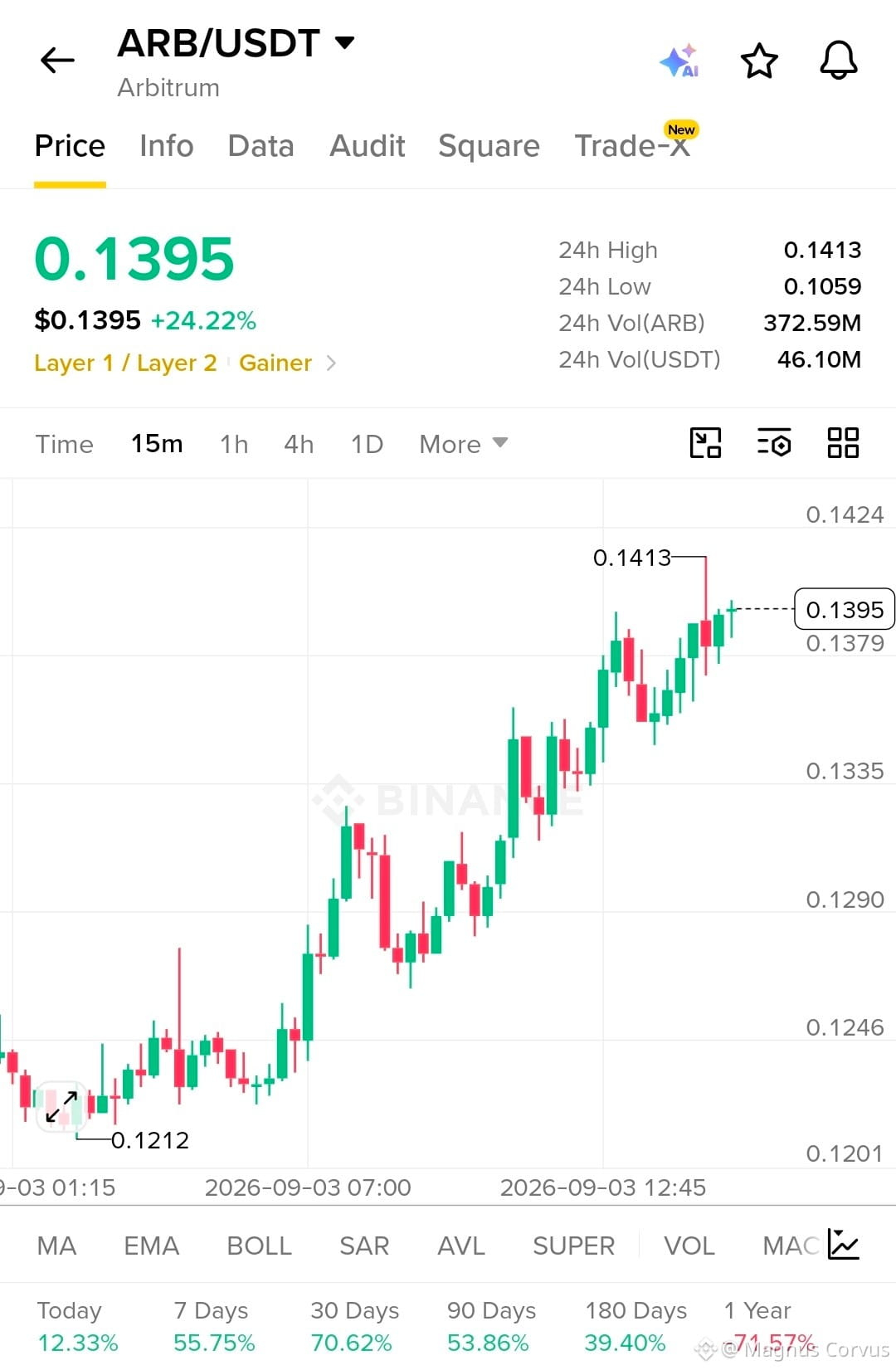
$ARB está mostrando forte momentum após uma expansão limpa em direção às máximas recentes.
A estrutura permanece em alta enquanto os compradores mantêm o controle acima da zona-chave de suporte.
Zona de Entrada: 0.1375 - 0.1395
Stop Loss: 0.1335
Alvo 1: 0.1413
Alvo 2: 0.1424
Alvo 3: 0.1450
A liquidez está se acumulando acima de 0.1413, com ARB reagindo fortemente a cada pullback. Manter essa estrutura mantém os compradores no controle e abre o caminho para os próximos níveis de liquidez na alta.
Vamos lá e faça Trade agora $ARB
$ARB está mostrando forte momentum após uma expansão limpa em direção às máximas recentes.
A estrutura permanece em alta enquanto os compradores mantêm o controle acima da zona-chave de suporte.
Zona de Entrada: 0.1375 - 0.1395
Stop Loss: 0.1335
Alvo 1: 0.1413
Alvo 2: 0.1424
Alvo 3: 0.1450
A liquidez está se acumulando acima de 0.1413, com ARB reagindo fortemente a cada pullback. Manter essa estrutura mantém os compradores no controle e abre o caminho para os próximos níveis de liquidez na alta.
Vamos lá e faça Trade agora $ARB
A estrutura permanece em alta enquanto os compradores mantêm o controle acima da zona-chave de suporte.
Zona de Entrada: 0.1375 - 0.1395
Stop Loss: 0.1335
Alvo 1: 0.1413
Alvo 2: 0.1424
Alvo 3: 0.1450
A liquidez está se acumulando acima de 0.1413, com ARB reagindo fortemente a cada pullback. Manter essa estrutura mantém os compradores no controle e abre o caminho para os próximos níveis de liquidez na alta.
Vamos lá e faça Trade agora $ARB
171
·
--
Em Alta
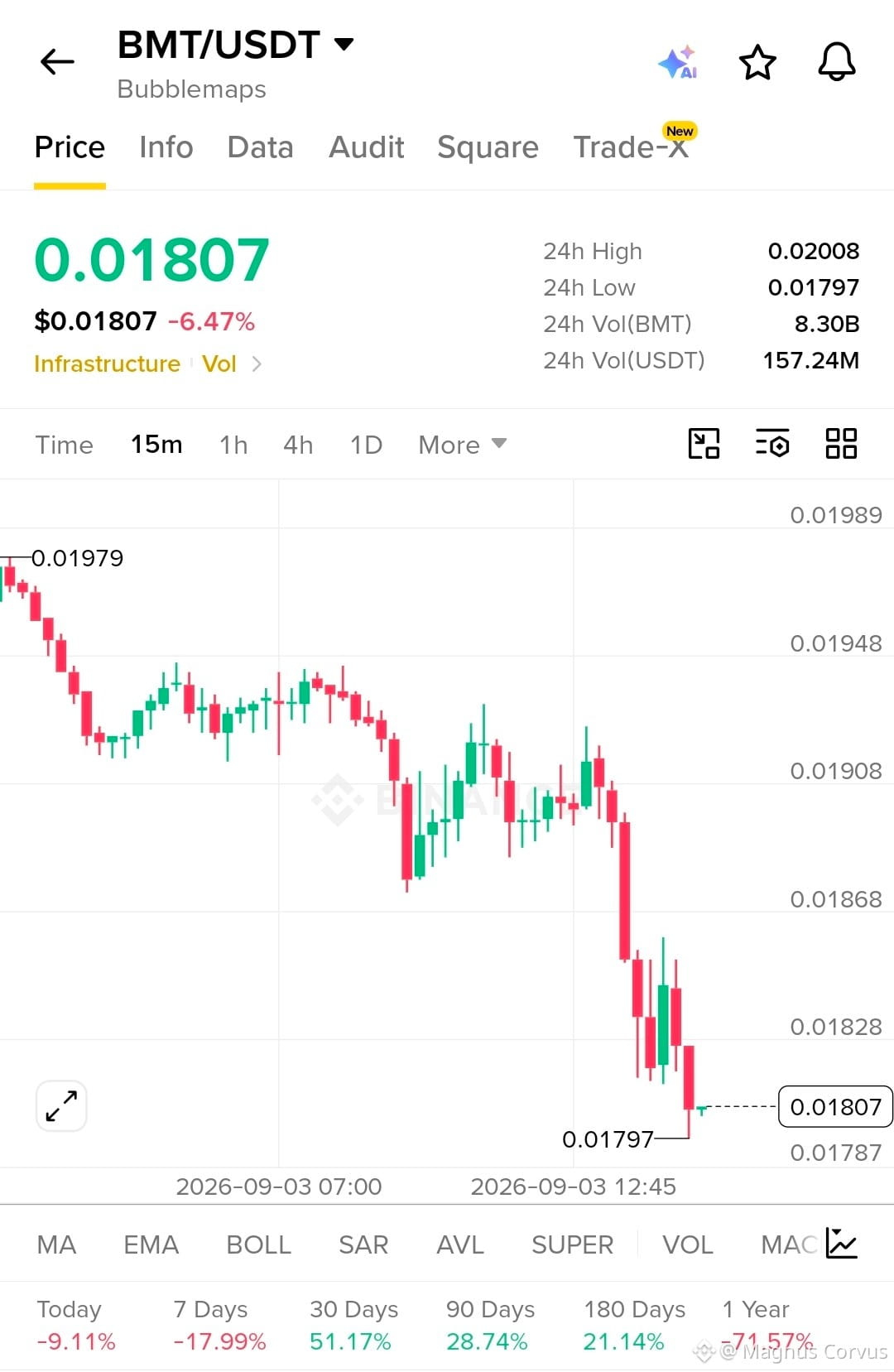
$BMT está mostrando força na faixa mais baixa após absorver uma pressão vendedora agressiva.
A estrutura está estabilizando enquanto os compradores defendem a zona-chave de liquidez.
Zona de Entrada: 0.01800 - 0.01815
Stop Loss: 0.01785
Alvo 1: 0.01868
Alvo 2: 0.01908
Alvo 3: 0.01948
A liquidez foi varrida em torno de 0.01797, com a BMT mostrando uma reação perto das mínimas. Manter essa estrutura pode fazer o controle voltar para os compradores e abrir o caminho para níveis de liquidez mais altos.
Vamos lá e faça Trade agora $BMT
$BMT está mostrando força na faixa mais baixa após absorver uma pressão vendedora agressiva.
A estrutura está estabilizando enquanto os compradores defendem a zona-chave de liquidez.
Zona de Entrada: 0.01800 - 0.01815
Stop Loss: 0.01785
Alvo 1: 0.01868
Alvo 2: 0.01908
Alvo 3: 0.01948
A liquidez foi varrida em torno de 0.01797, com a BMT mostrando uma reação perto das mínimas. Manter essa estrutura pode fazer o controle voltar para os compradores e abrir o caminho para níveis de liquidez mais altos.
Vamos lá e faça Trade agora $BMT
A estrutura está estabilizando enquanto os compradores defendem a zona-chave de liquidez.
Zona de Entrada: 0.01800 - 0.01815
Stop Loss: 0.01785
Alvo 1: 0.01868
Alvo 2: 0.01908
Alvo 3: 0.01948
A liquidez foi varrida em torno de 0.01797, com a BMT mostrando uma reação perto das mínimas. Manter essa estrutura pode fazer o controle voltar para os compradores e abrir o caminho para níveis de liquidez mais altos.
Vamos lá e faça Trade agora $BMT
226
·
--
Em Alta
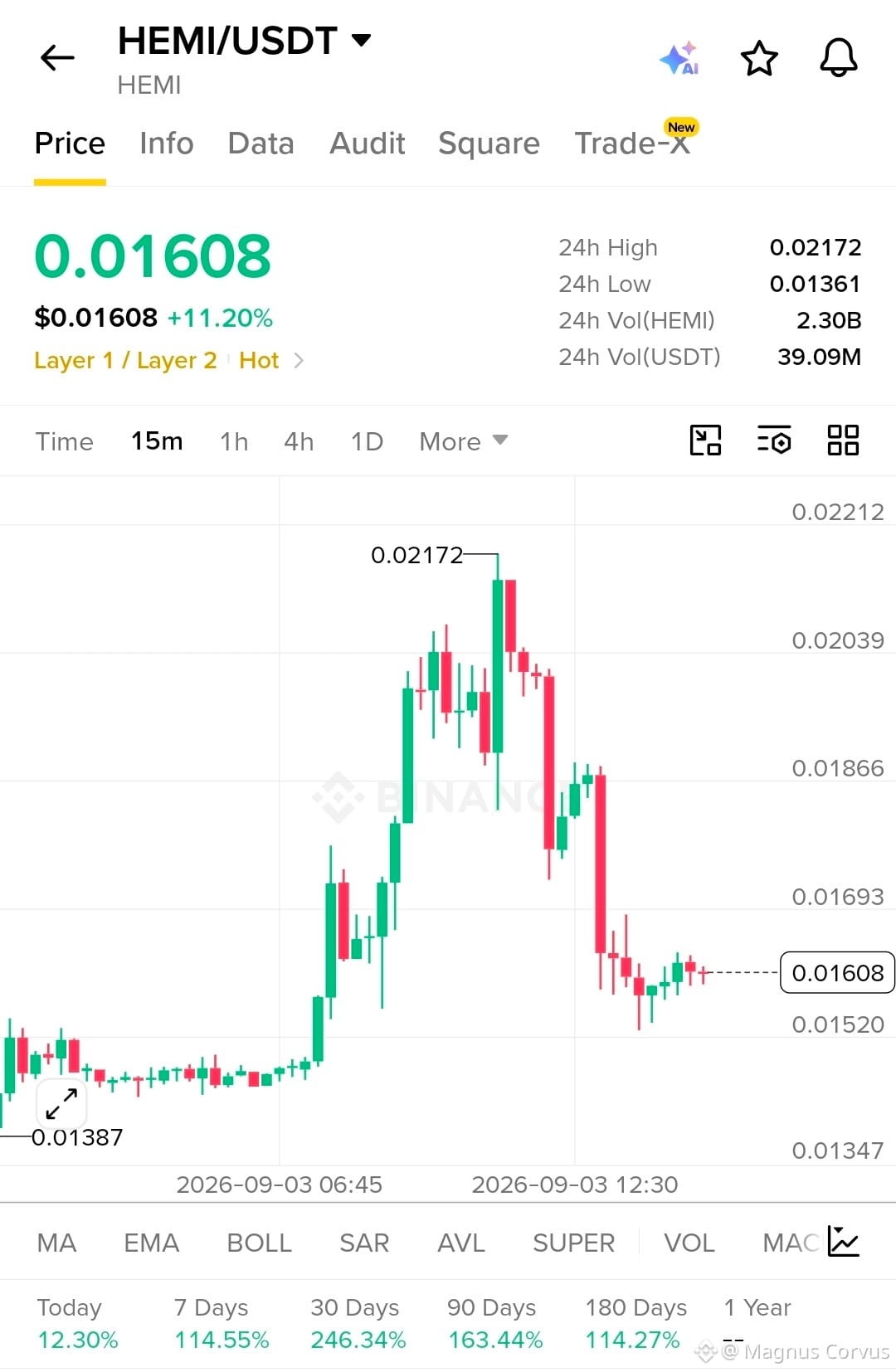
$HEMI está mostrando forte momentum após uma expansão acentuada a partir da faixa inferior.
A estrutura permanece construtiva enquanto os compradores defendem a zona-chave de liquidez.
Zona de Entrada: 0.01580 - 0.01615
Stop Loss: 0.01515
Alvo 1: 0.01693
Alvo 2: 0.01866
Alvo 3: 0.02039
A liquidez foi varrida após a rejeição de 0.02172, com o HEMI agora reagindo na região de 0.01600. Manter essa estrutura pode trazer os compradores de volta ao controle e abrir o caminho para os níveis de liquidez no lado positivo.
Vamos lá e operar agora $HEMI
$HEMI está mostrando forte momentum após uma expansão acentuada a partir da faixa inferior.
A estrutura permanece construtiva enquanto os compradores defendem a zona-chave de liquidez.
Zona de Entrada: 0.01580 - 0.01615
Stop Loss: 0.01515
Alvo 1: 0.01693
Alvo 2: 0.01866
Alvo 3: 0.02039
A liquidez foi varrida após a rejeição de 0.02172, com o HEMI agora reagindo na região de 0.01600. Manter essa estrutura pode trazer os compradores de volta ao controle e abrir o caminho para os níveis de liquidez no lado positivo.
Vamos lá e operar agora $HEMI
A estrutura permanece construtiva enquanto os compradores defendem a zona-chave de liquidez.
Zona de Entrada: 0.01580 - 0.01615
Stop Loss: 0.01515
Alvo 1: 0.01693
Alvo 2: 0.01866
Alvo 3: 0.02039
A liquidez foi varrida após a rejeição de 0.02172, com o HEMI agora reagindo na região de 0.01600. Manter essa estrutura pode trazer os compradores de volta ao controle e abrir o caminho para os níveis de liquidez no lado positivo.
Vamos lá e operar agora $HEMI
125
·
--
Em Alta
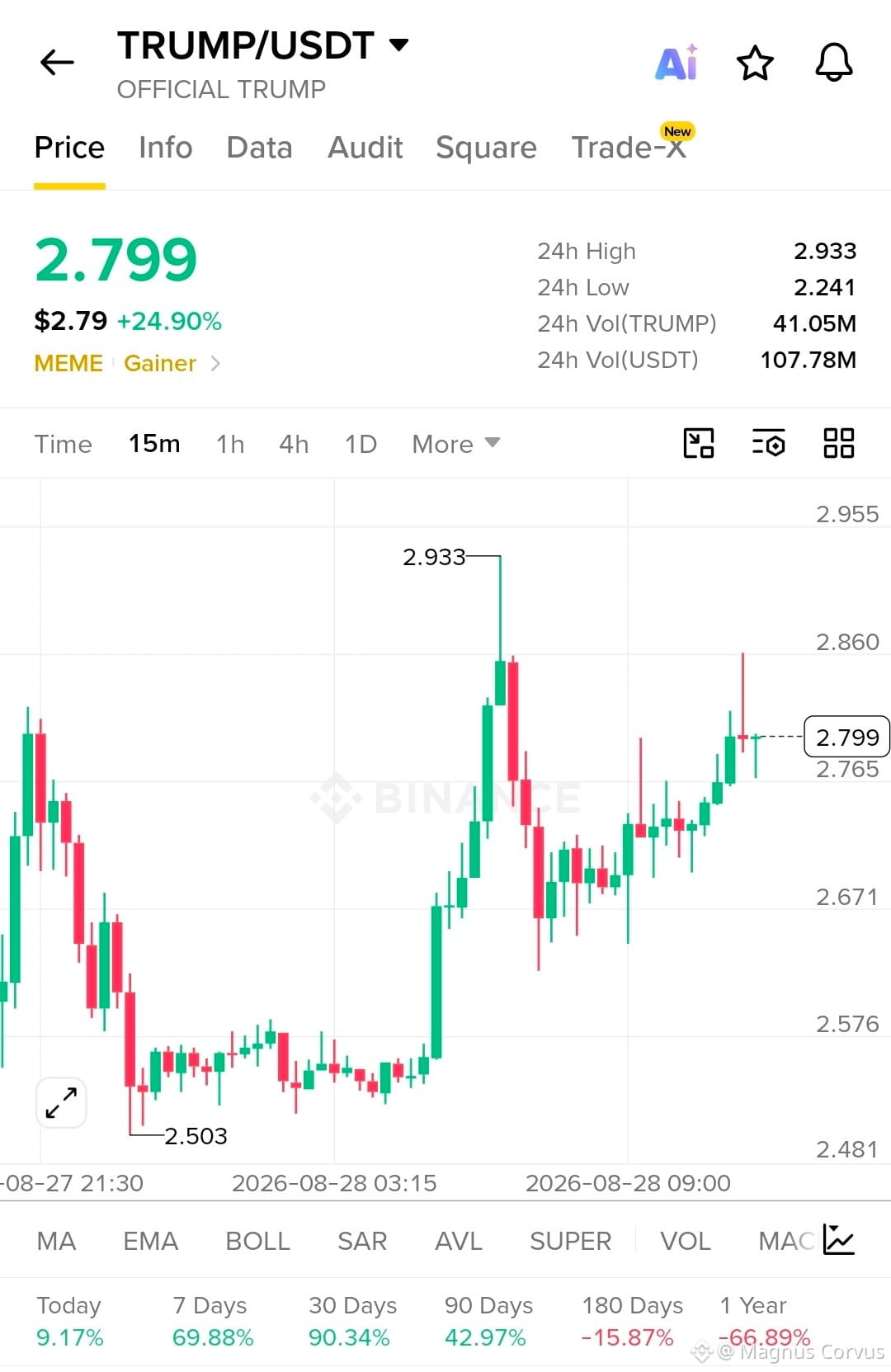
$TRUMP está mostrando forte impulso de alta, com compradores firmemente no controle.
A estrutura continua em alta acima da zona de suporte de 2.671.
Zona de Entrada: 2.765 - 2.800
Stop Loss: 2.665
Alvo 1: 2.860
Alvo 2: 2.933
Alvo 3: 3.050
A liquidez reagiu fortemente a partir de níveis mais baixos, enquanto TRUMP continua mantendo sua estrutura de alta. O controle sustentado acima da zona de entrada pode impulsionar outro movimento de liquidez em direção aos alvos superiores.
Vamos lá e faça Trade agora $TRUMP
$TRUMP está mostrando forte impulso de alta, com compradores firmemente no controle.
A estrutura continua em alta acima da zona de suporte de 2.671.
Zona de Entrada: 2.765 - 2.800
Stop Loss: 2.665
Alvo 1: 2.860
Alvo 2: 2.933
Alvo 3: 3.050
A liquidez reagiu fortemente a partir de níveis mais baixos, enquanto TRUMP continua mantendo sua estrutura de alta. O controle sustentado acima da zona de entrada pode impulsionar outro movimento de liquidez em direção aos alvos superiores.
Vamos lá e faça Trade agora $TRUMP
A estrutura continua em alta acima da zona de suporte de 2.671.
Zona de Entrada: 2.765 - 2.800
Stop Loss: 2.665
Alvo 1: 2.860
Alvo 2: 2.933
Alvo 3: 3.050
A liquidez reagiu fortemente a partir de níveis mais baixos, enquanto TRUMP continua mantendo sua estrutura de alta. O controle sustentado acima da zona de entrada pode impulsionar outro movimento de liquidez em direção aos alvos superiores.
Vamos lá e faça Trade agora $TRUMP
157
·
--
Em Alta
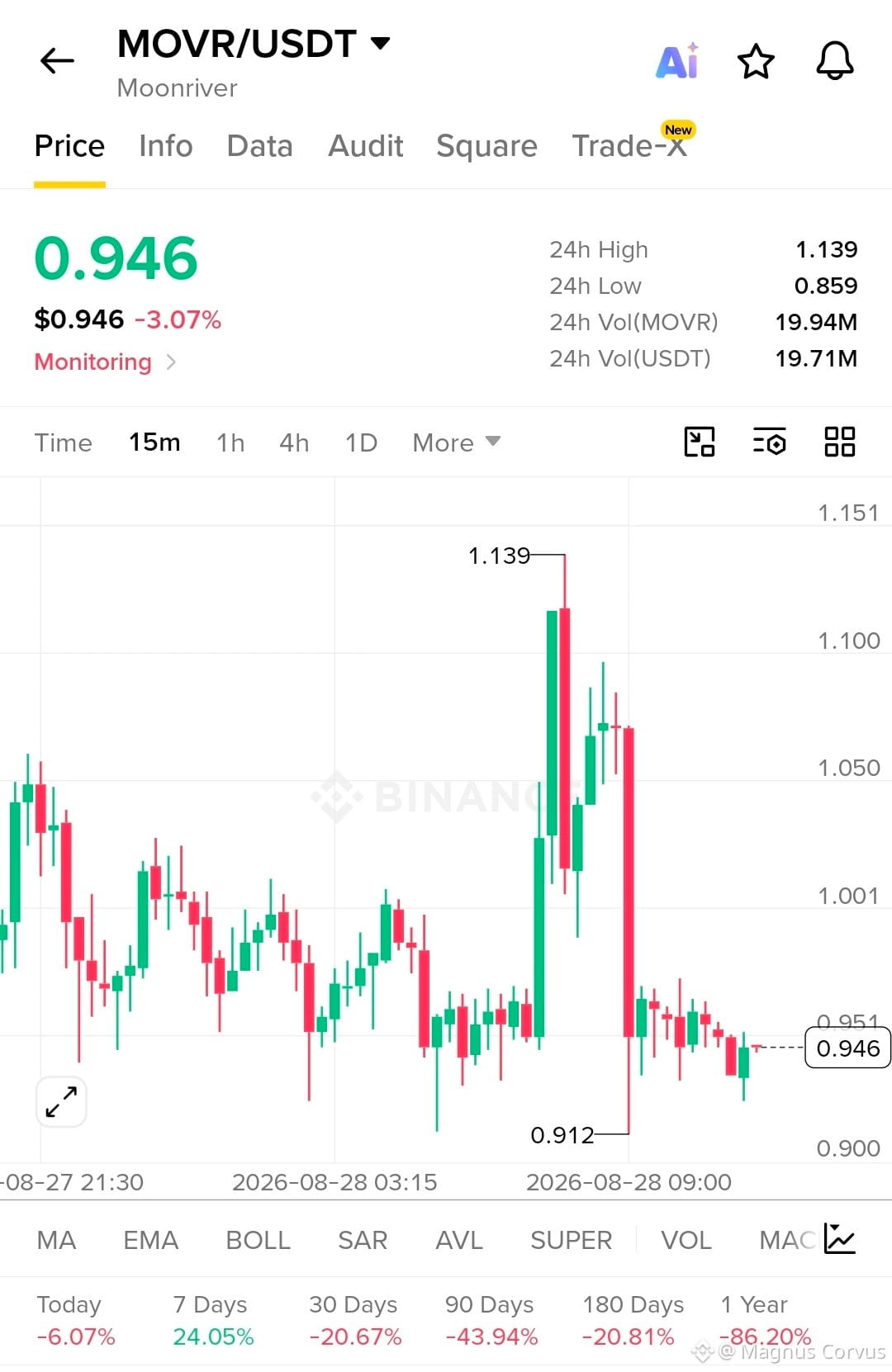
$MOVR está segurando uma zona de suporte com forte potencial de repique.
A estrutura permanece controlada acima da mínima de liquidez 0.912.
Zona de Entrada: 0.940 - 0.955
Stop Loss: 0.910
Alvo 1: 1.001
Alvo 2: 1.050
Alvo 3: 1.100
A liquidez foi varrida perto de 0.912 antes de uma reação forte, enquanto a MOVR agora está consolidando em torno de 0.946. Manter essa estrutura pode desencadear outro movimento em direção aos níveis superiores de liquidez.
Vamos lá e faça Trading agora $MOVR
$MOVR está segurando uma zona de suporte com forte potencial de repique.
A estrutura permanece controlada acima da mínima de liquidez 0.912.
Zona de Entrada: 0.940 - 0.955
Stop Loss: 0.910
Alvo 1: 1.001
Alvo 2: 1.050
Alvo 3: 1.100
A liquidez foi varrida perto de 0.912 antes de uma reação forte, enquanto a MOVR agora está consolidando em torno de 0.946. Manter essa estrutura pode desencadear outro movimento em direção aos níveis superiores de liquidez.
Vamos lá e faça Trading agora $MOVR
A estrutura permanece controlada acima da mínima de liquidez 0.912.
Zona de Entrada: 0.940 - 0.955
Stop Loss: 0.910
Alvo 1: 1.001
Alvo 2: 1.050
Alvo 3: 1.100
A liquidez foi varrida perto de 0.912 antes de uma reação forte, enquanto a MOVR agora está consolidando em torno de 0.946. Manter essa estrutura pode desencadear outro movimento em direção aos níveis superiores de liquidez.
Vamos lá e faça Trading agora $MOVR
207
·
--
Em Alta
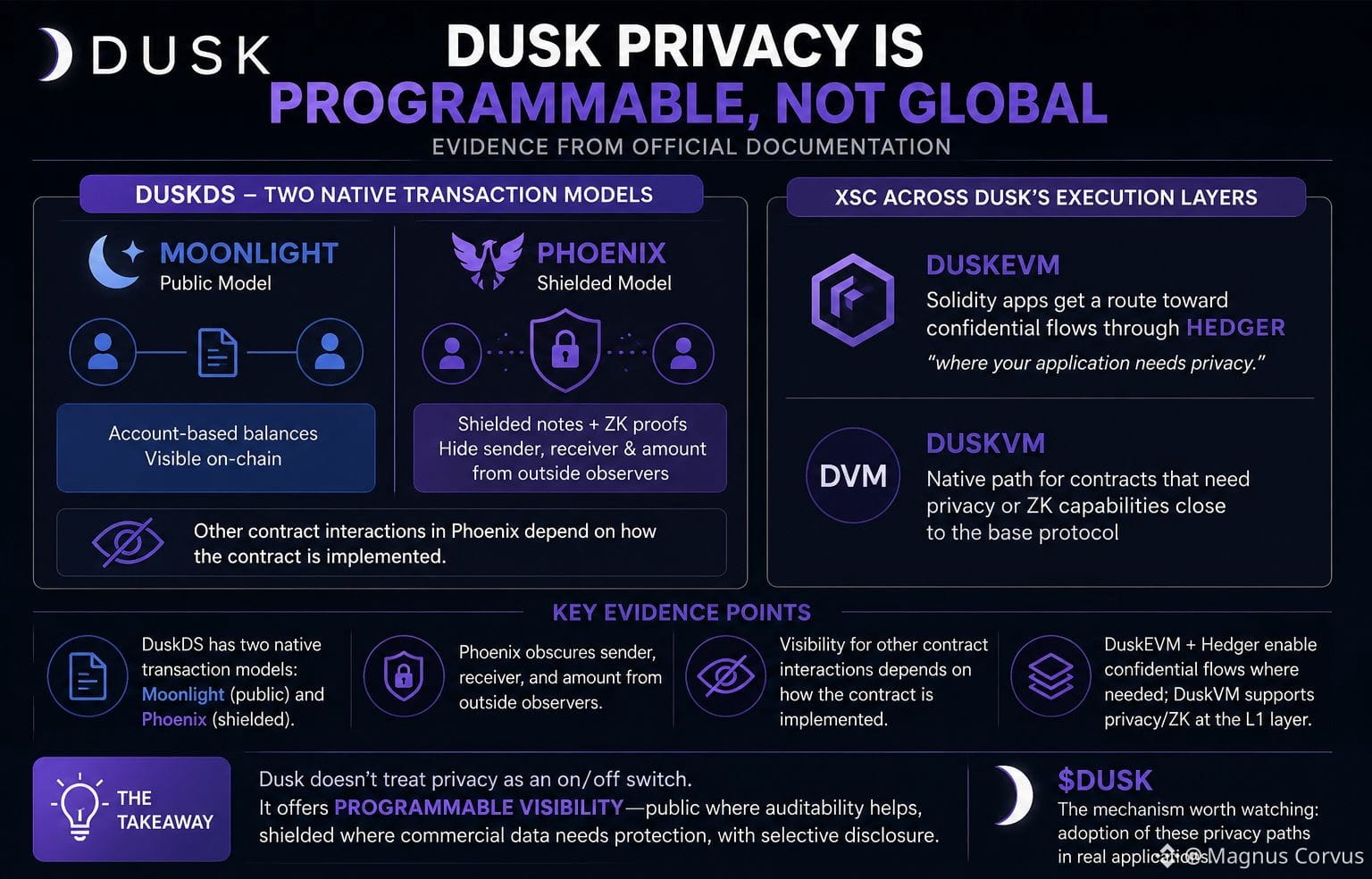
A parte de Dusk que mudou minha visão é que “privacidade” não é um interruptor que vale para toda a rede.
A própria documentação do Dusk mostra dois modelos nativos de transação em DuskDS: a Moonlight usa saldos públicos baseados em contas, enquanto a Phoenix usa notas blindadas e provas de conhecimento zero.
A documentação oficial do explorador vai além: a Phoenix esconde remetente, destinatário e valor de observadores externos, mas a visibilidade para outras interações de contrato depende de como o contrato é implementado.
Isso importa para XSC. É fácil ler “Confidential Security Contract” e assumir que todo fluxo financeiro é automaticamente opaco. A arquitetura é mais deliberada do que isso. A documentação atual de desenvolvedores do Dusk diz que apps Solidity em DuskEVM têm um caminho para fluxos confidenciais por meio do Hedger “onde sua aplicação precisa de privacidade”, enquanto DuskVM é o caminho nativo para contratos que precisam de privacidade ou de recursos de ZK próximos ao protocolo base.
Então a distinção útil não é blockchain privada versus pública.
É visibilidade programável: pública onde a auditabilidade ajuda, blindada onde dados comerciais precisam de proteção, com divulgação seletiva para partes autorizadas.
Para DUSK, o mecanismo que vale observar é a adoção desses caminhos de privacidade em aplicações reais—não apenas se a cadeia os suporta.
@Dusk_Foundation $DUSK #dusk
A parte de Dusk que mudou minha visão é que “privacidade” não é um interruptor que vale para toda a rede.
A própria documentação do Dusk mostra dois modelos nativos de transação em DuskDS: a Moonlight usa saldos públicos baseados em contas, enquanto a Phoenix usa notas blindadas e provas de conhecimento zero.
A documentação oficial do explorador vai além: a Phoenix esconde remetente, destinatário e valor de observadores externos, mas a visibilidade para outras interações de contrato depende de como o contrato é implementado.
Isso importa para XSC. É fácil ler “Confidential Security Contract” e assumir que todo fluxo financeiro é automaticamente opaco. A arquitetura é mais deliberada do que isso. A documentação atual de desenvolvedores do Dusk diz que apps Solidity em DuskEVM têm um caminho para fluxos confidenciais por meio do Hedger “onde sua aplicação precisa de privacidade”, enquanto DuskVM é o caminho nativo para contratos que precisam de privacidade ou de recursos de ZK próximos ao protocolo base.
Então a distinção útil não é blockchain privada versus pública.
É visibilidade programável: pública onde a auditabilidade ajuda, blindada onde dados comerciais precisam de proteção, com divulgação seletiva para partes autorizadas.
Para DUSK, o mecanismo que vale observar é a adoção desses caminhos de privacidade em aplicações reais—não apenas se a cadeia os suporta.
@Dusk $DUSK #dusk
A própria documentação do Dusk mostra dois modelos nativos de transação em DuskDS: a Moonlight usa saldos públicos baseados em contas, enquanto a Phoenix usa notas blindadas e provas de conhecimento zero.
A documentação oficial do explorador vai além: a Phoenix esconde remetente, destinatário e valor de observadores externos, mas a visibilidade para outras interações de contrato depende de como o contrato é implementado.
Isso importa para XSC. É fácil ler “Confidential Security Contract” e assumir que todo fluxo financeiro é automaticamente opaco. A arquitetura é mais deliberada do que isso. A documentação atual de desenvolvedores do Dusk diz que apps Solidity em DuskEVM têm um caminho para fluxos confidenciais por meio do Hedger “onde sua aplicação precisa de privacidade”, enquanto DuskVM é o caminho nativo para contratos que precisam de privacidade ou de recursos de ZK próximos ao protocolo base.
Então a distinção útil não é blockchain privada versus pública.
É visibilidade programável: pública onde a auditabilidade ajuda, blindada onde dados comerciais precisam de proteção, com divulgação seletiva para partes autorizadas.
Para DUSK, o mecanismo que vale observar é a adoção desses caminhos de privacidade em aplicações reais—não apenas se a cadeia os suporta.
@Dusk $DUSK #dusk
119
·
--
Em Alta
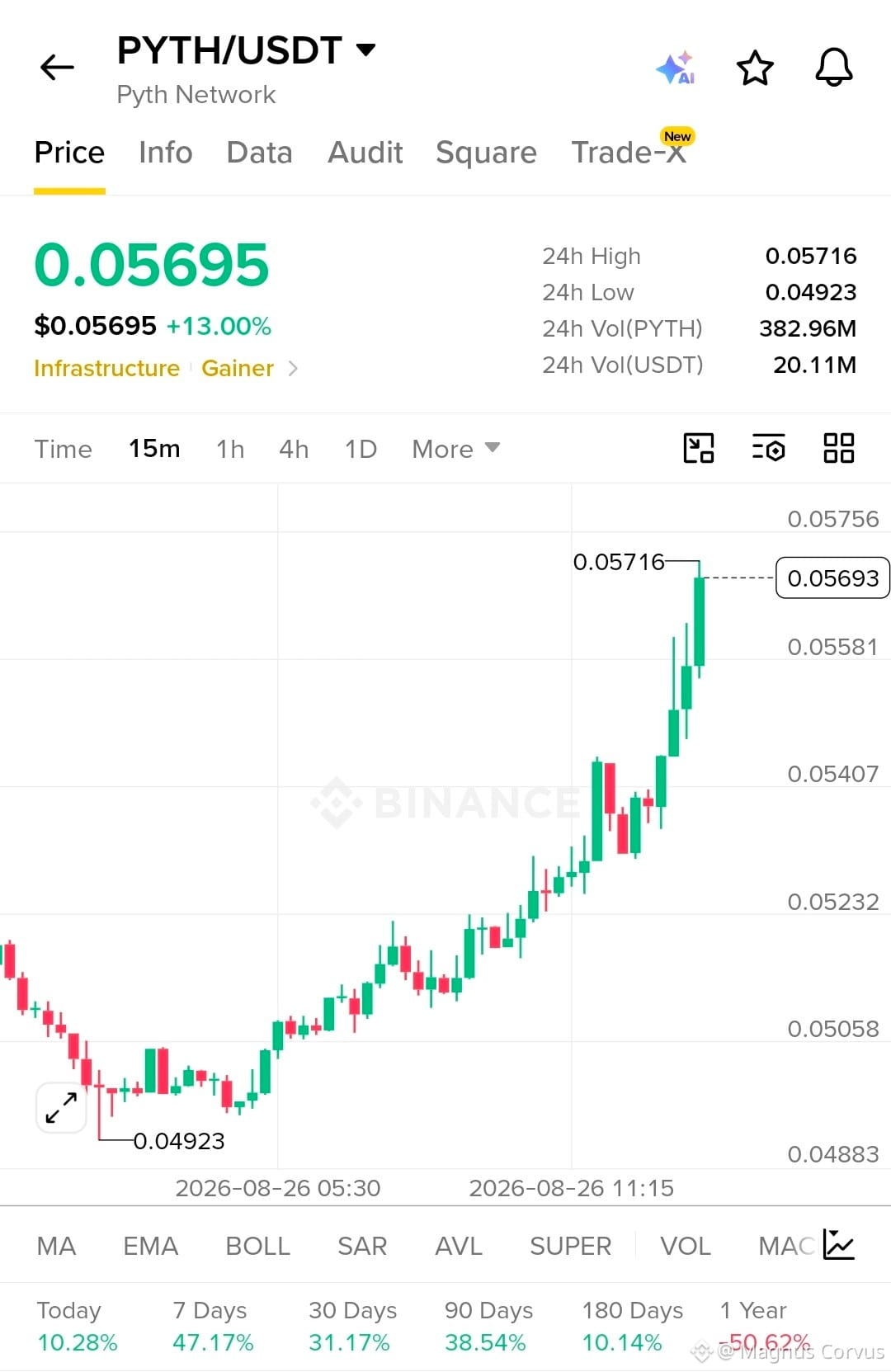
$PYTH está mostrando forte momentum após uma expansão limpa a partir das mínimas.
A estrutura confirma que os compradores ainda estão mantendo o controle acima de um suporte-chave.
Zona de Entrada: 0.05520 - 0.05620
Stop Loss: 0.05380
Alvo 1: 0.05720
Alvo 2: 0.05850
Alvo 3: 0.06000
A liquidez está se acumulando acima da máxima recente, enquanto cada reação de baixa continua encontrando compradores. O PYTH está sustentando uma estrutura bullish, e o controle contínuo acima da zona de entrada pode acionar outro impulso de liquidez em direção aos níveis superiores.
Vamos lá e negocie agora $PYTH
$PYTH está mostrando forte momentum após uma expansão limpa a partir das mínimas.
A estrutura confirma que os compradores ainda estão mantendo o controle acima de um suporte-chave.
Zona de Entrada: 0.05520 - 0.05620
Stop Loss: 0.05380
Alvo 1: 0.05720
Alvo 2: 0.05850
Alvo 3: 0.06000
A liquidez está se acumulando acima da máxima recente, enquanto cada reação de baixa continua encontrando compradores. O PYTH está sustentando uma estrutura bullish, e o controle contínuo acima da zona de entrada pode acionar outro impulso de liquidez em direção aos níveis superiores.
Vamos lá e negocie agora $PYTH
A estrutura confirma que os compradores ainda estão mantendo o controle acima de um suporte-chave.
Zona de Entrada: 0.05520 - 0.05620
Stop Loss: 0.05380
Alvo 1: 0.05720
Alvo 2: 0.05850
Alvo 3: 0.06000
A liquidez está se acumulando acima da máxima recente, enquanto cada reação de baixa continua encontrando compradores. O PYTH está sustentando uma estrutura bullish, e o controle contínuo acima da zona de entrada pode acionar outro impulso de liquidez em direção aos níveis superiores.
Vamos lá e negocie agora $PYTH
118
·
--
Em Alta
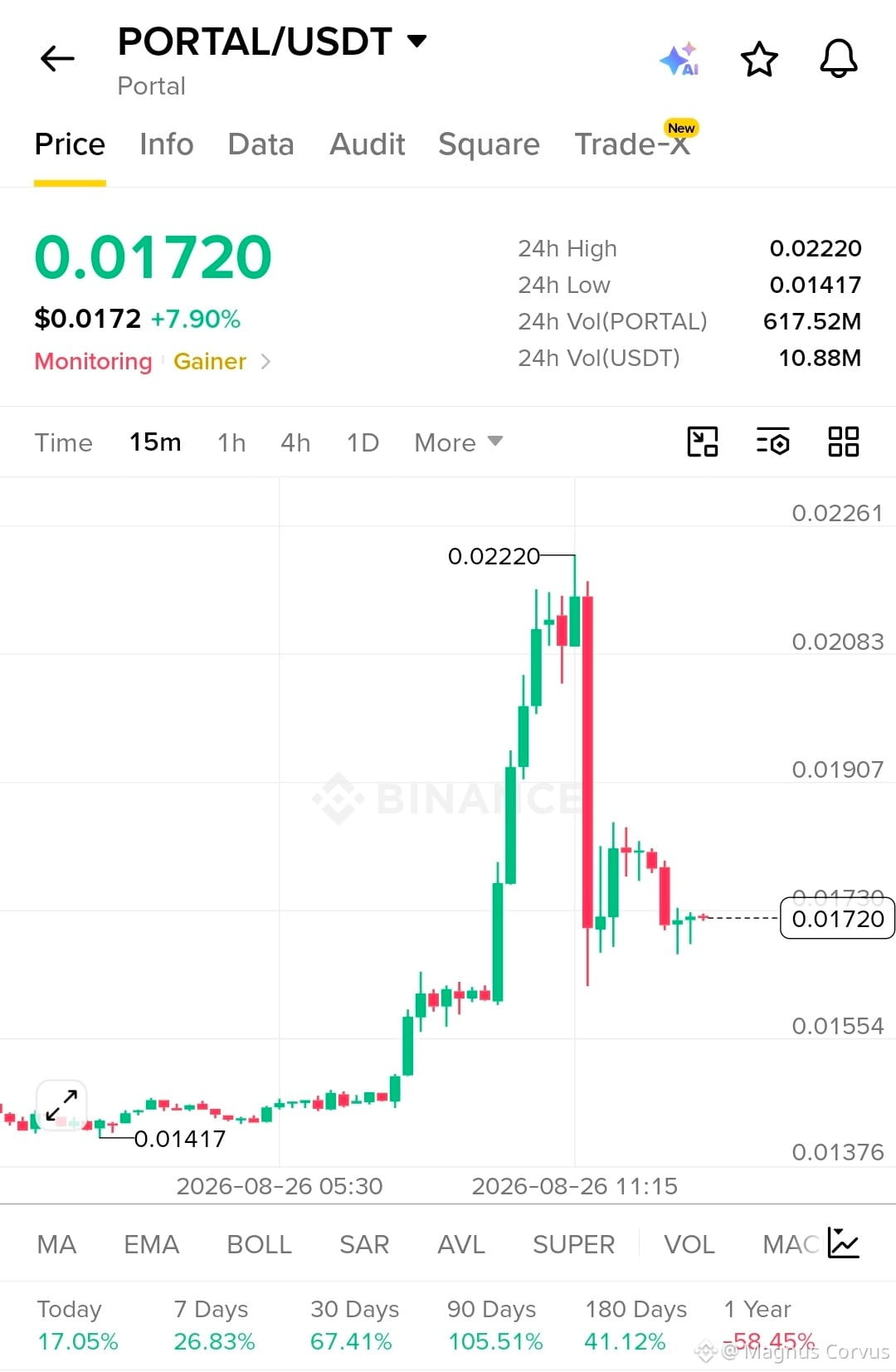
$PORTAL está mostrando forte impulso após uma expansão acentuada a partir das mínimas.
A estrutura confirma que os compradores ainda estão defendendo o controle acima de um suporte-chave.
Zona de Entrada: 0.01680 - 0.01725
Stop Loss: 0.01550
Alvo 1: 0.01850
Alvo 2: 0.02080
Alvo 3: 0.02220
A liquidez foi varrida perto das máximas, seguida por uma reação brusca em direção ao suporte. O PORTAL agora está estabilizando na zona de entrada e, mantendo esta estrutura, pode disparar mais um impulso de liquidez em direção aos níveis superiores.
Vamos lá e opere agora $PORTAL
$PORTAL está mostrando forte impulso após uma expansão acentuada a partir das mínimas.
A estrutura confirma que os compradores ainda estão defendendo o controle acima de um suporte-chave.
Zona de Entrada: 0.01680 - 0.01725
Stop Loss: 0.01550
Alvo 1: 0.01850
Alvo 2: 0.02080
Alvo 3: 0.02220
A liquidez foi varrida perto das máximas, seguida por uma reação brusca em direção ao suporte. O PORTAL agora está estabilizando na zona de entrada e, mantendo esta estrutura, pode disparar mais um impulso de liquidez em direção aos níveis superiores.
Vamos lá e opere agora $PORTAL
A estrutura confirma que os compradores ainda estão defendendo o controle acima de um suporte-chave.
Zona de Entrada: 0.01680 - 0.01725
Stop Loss: 0.01550
Alvo 1: 0.01850
Alvo 2: 0.02080
Alvo 3: 0.02220
A liquidez foi varrida perto das máximas, seguida por uma reação brusca em direção ao suporte. O PORTAL agora está estabilizando na zona de entrada e, mantendo esta estrutura, pode disparar mais um impulso de liquidez em direção aos níveis superiores.
Vamos lá e opere agora $PORTAL
149
·
--
Em Alta
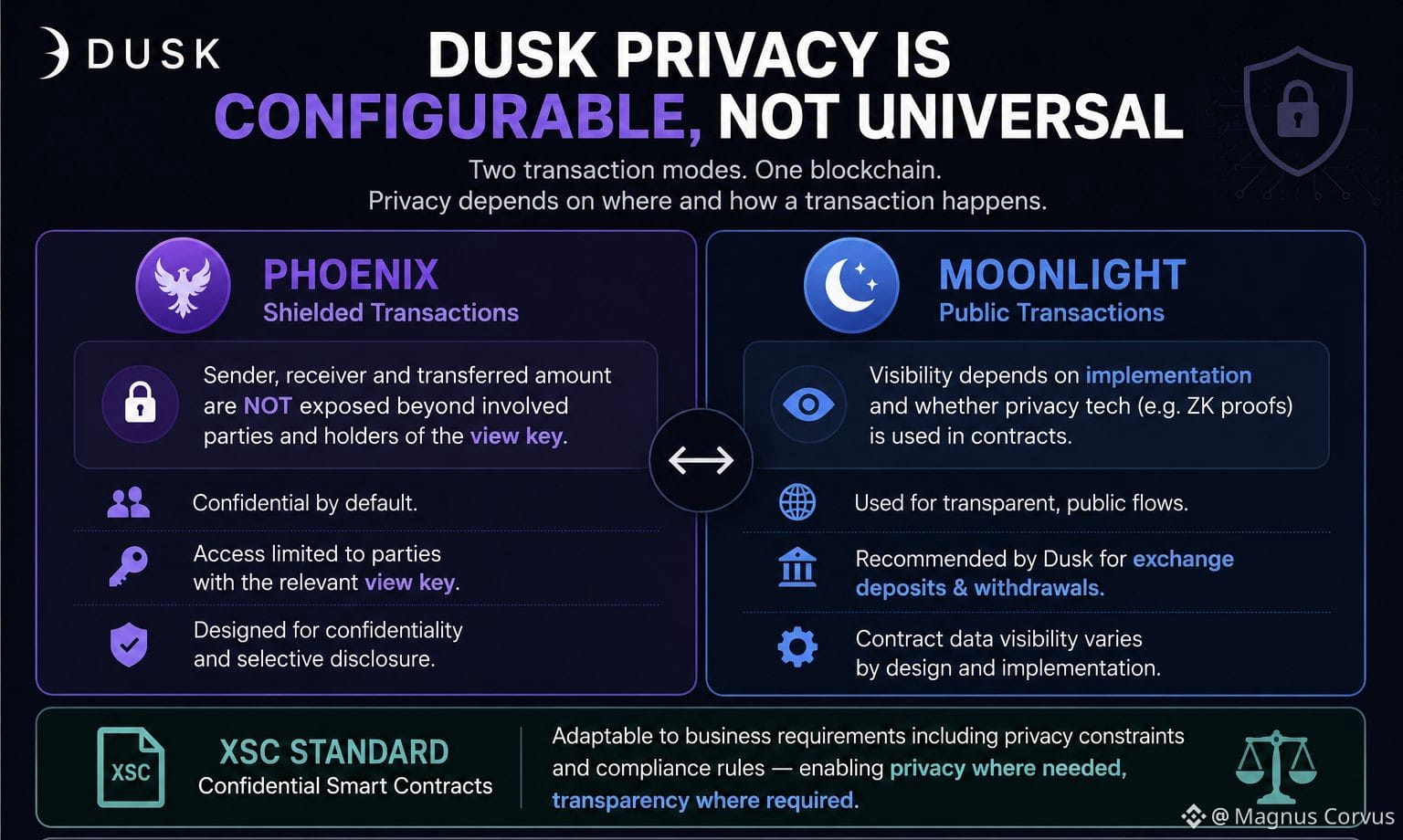
A etiqueta de “blockchain de privacidade” da Dusk esconde um detalhe mais útil: a privacidade na Dusk não é um único modo universal de transação.
A documentação atual separa as atividades entre Moonlight (pública) e Phoenix (protegida).
Para transações do Phoenix, a Dusk afirma que o remetente, o destinatário e o valor transferido não são expostos além das partes envolvidas e dos detentores da chave de visualização.
Mas, para transações do Moonlight — e outras interações com contratos — a visibilidade depende da implementação e de se a tecnologia de privacidade, como provas de zero conhecimento, é usada.
Essa distinção mudou a forma como eu li a história do XSC.
O glossário descreve o XSC como um padrão confidencial de smart contract adaptável às necessidades do negócio, incluindo restrições de privacidade e regras de conformidade.
Assim, a arquitetura não é simplesmente “esconder tudo”.
Ela pode oferecer privacidade onde a confidencialidade importa, mantendo fluxos transparentes quando os requisitos operacionais exigem.
Há uma pista prática: o próprio guia de integração com bolsas da Dusk recomenda o Moonlight para depósitos e saques na bolsa, enquanto o Phoenix exige um modelo diferente de custódia e varredura.
Para aplicações financeiras, essa flexibilidade pode ser mais importante do que a privacidade máxima por padrão.
O que estou observando é como as implementações do XSC expõem essa escolha na prática: quais dados permanecem protegidos, quais se tornam auditáveis e quem controla esse limite.
@Dusk_Foundation $DUSK #dusk
A etiqueta de “blockchain de privacidade” da Dusk esconde um detalhe mais útil: a privacidade na Dusk não é um único modo universal de transação.
A documentação atual separa as atividades entre Moonlight (pública) e Phoenix (protegida).
Para transações do Phoenix, a Dusk afirma que o remetente, o destinatário e o valor transferido não são expostos além das partes envolvidas e dos detentores da chave de visualização.
Mas, para transações do Moonlight — e outras interações com contratos — a visibilidade depende da implementação e de se a tecnologia de privacidade, como provas de zero conhecimento, é usada.
Essa distinção mudou a forma como eu li a história do XSC.
O glossário descreve o XSC como um padrão confidencial de smart contract adaptável às necessidades do negócio, incluindo restrições de privacidade e regras de conformidade.
Assim, a arquitetura não é simplesmente “esconder tudo”.
Ela pode oferecer privacidade onde a confidencialidade importa, mantendo fluxos transparentes quando os requisitos operacionais exigem.
Há uma pista prática: o próprio guia de integração com bolsas da Dusk recomenda o Moonlight para depósitos e saques na bolsa, enquanto o Phoenix exige um modelo diferente de custódia e varredura.
Para aplicações financeiras, essa flexibilidade pode ser mais importante do que a privacidade máxima por padrão.
O que estou observando é como as implementações do XSC expõem essa escolha na prática: quais dados permanecem protegidos, quais se tornam auditáveis e quem controla esse limite.
@Dusk $DUSK #dusk
A documentação atual separa as atividades entre Moonlight (pública) e Phoenix (protegida).
Para transações do Phoenix, a Dusk afirma que o remetente, o destinatário e o valor transferido não são expostos além das partes envolvidas e dos detentores da chave de visualização.
Mas, para transações do Moonlight — e outras interações com contratos — a visibilidade depende da implementação e de se a tecnologia de privacidade, como provas de zero conhecimento, é usada.
Essa distinção mudou a forma como eu li a história do XSC.
O glossário descreve o XSC como um padrão confidencial de smart contract adaptável às necessidades do negócio, incluindo restrições de privacidade e regras de conformidade.
Assim, a arquitetura não é simplesmente “esconder tudo”.
Ela pode oferecer privacidade onde a confidencialidade importa, mantendo fluxos transparentes quando os requisitos operacionais exigem.
Há uma pista prática: o próprio guia de integração com bolsas da Dusk recomenda o Moonlight para depósitos e saques na bolsa, enquanto o Phoenix exige um modelo diferente de custódia e varredura.
Para aplicações financeiras, essa flexibilidade pode ser mais importante do que a privacidade máxima por padrão.
O que estou observando é como as implementações do XSC expõem essa escolha na prática: quais dados permanecem protegidos, quais se tornam auditáveis e quem controla esse limite.
@Dusk $DUSK #dusk
172
·
--
Em Alta
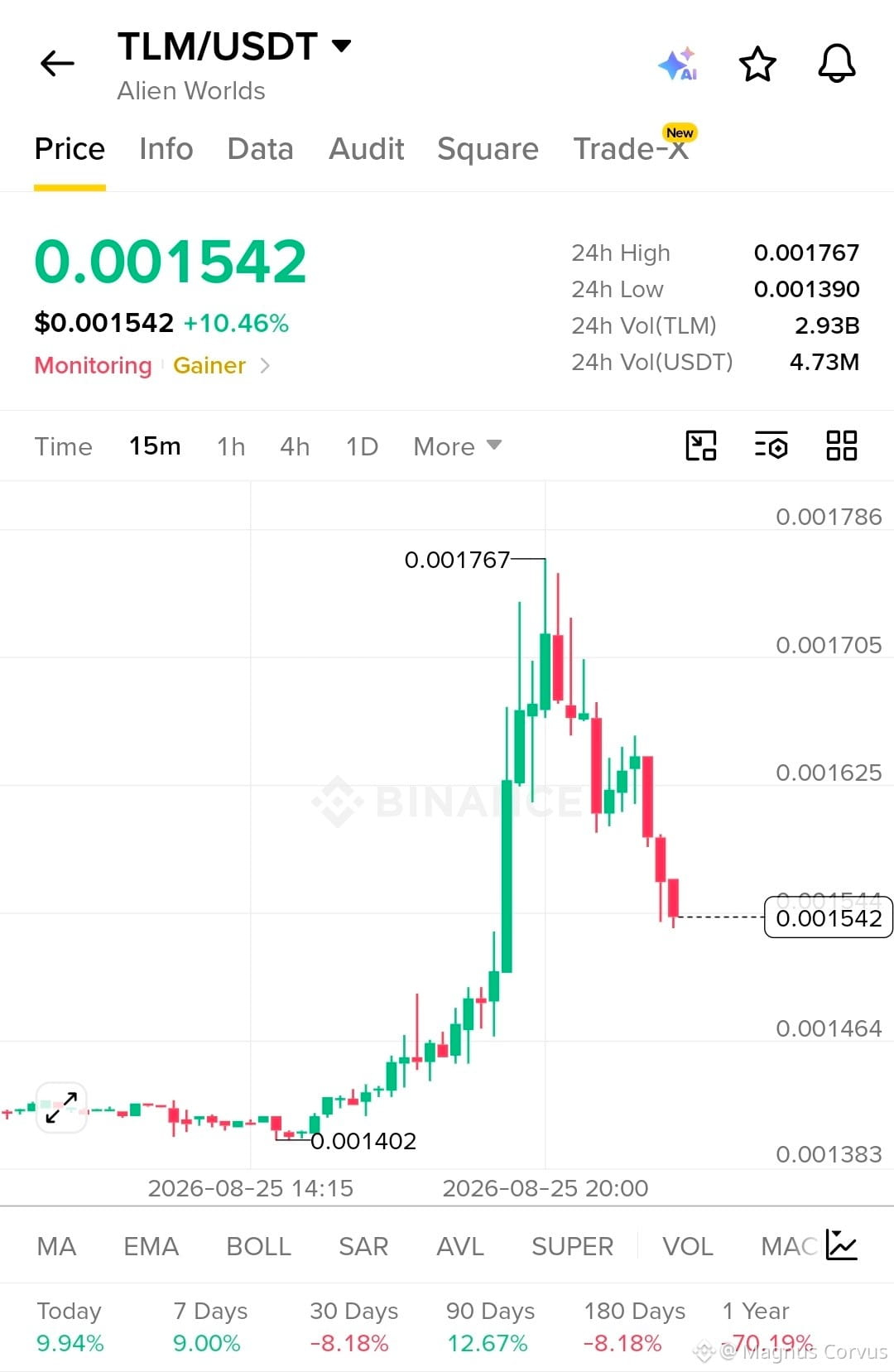
$TLM está mostrando forte momentum após uma expansão acentuada a partir das mínimas.
Os compradores ainda mantêm a estrutura mais ampla apesar da retração.
Zona de Entrada: 0.001520 - 0.001550
Stop Loss: 0.001460
Alvo 1: 0.001625
Alvo 2: 0.001705
Alvo 3: 0.001767
Foi capturada liquidez perto da máxima local, seguida por uma reação controlada em direção à estrutura de rompimento. Manter a zona de entrada mantém os compradores no controle e abre espaço para mais um avanço em direção à liquidez superior.
Vamos lá e Operar agora $TLM
$TLM está mostrando forte momentum após uma expansão acentuada a partir das mínimas.
Os compradores ainda mantêm a estrutura mais ampla apesar da retração.
Zona de Entrada: 0.001520 - 0.001550
Stop Loss: 0.001460
Alvo 1: 0.001625
Alvo 2: 0.001705
Alvo 3: 0.001767
Foi capturada liquidez perto da máxima local, seguida por uma reação controlada em direção à estrutura de rompimento. Manter a zona de entrada mantém os compradores no controle e abre espaço para mais um avanço em direção à liquidez superior.
Vamos lá e Operar agora $TLM
Os compradores ainda mantêm a estrutura mais ampla apesar da retração.
Zona de Entrada: 0.001520 - 0.001550
Stop Loss: 0.001460
Alvo 1: 0.001625
Alvo 2: 0.001705
Alvo 3: 0.001767
Foi capturada liquidez perto da máxima local, seguida por uma reação controlada em direção à estrutura de rompimento. Manter a zona de entrada mantém os compradores no controle e abre espaço para mais um avanço em direção à liquidez superior.
Vamos lá e Operar agora $TLM
182
·
--
Em Alta
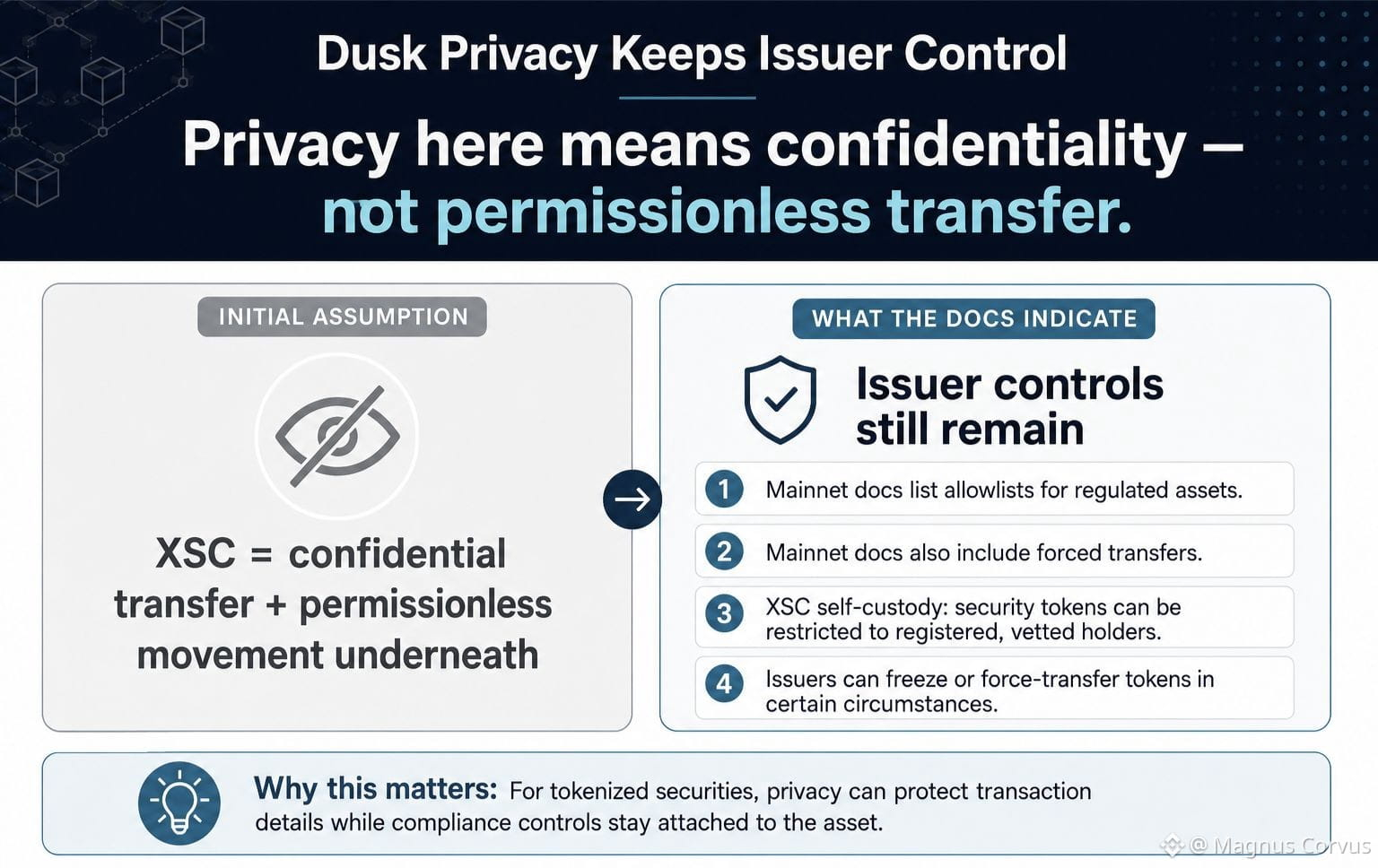
A coisa mais importante que encontrei sobre o modelo de privacidade da Dusk é que ele não remove o controle do emissor. A documentação atual da rede principal da Dusk lista explicitamente controles de acesso como allowlists (listas de permissões), além de transferências forçadas para ativos regulamentados.
Eu inicialmente assumi que o XSC significava confidencialidade em primeiro lugar e transferência permissionless por baixo.
O próprio material de auto custódia em XSC da Dusk diz o contrário: tokens de segurança podem ser restringidos a detentores registrados e verificados, enquanto emissores podem congelar ou forçar a transferência de tokens em certas circunstâncias.
Isso muda a interpretação. A privacidade aqui é principalmente sobre limitar quem pode ver informações sensíveis de transações; não significa remover da própria asset a autoridade de conformidade.
Para títulos tokenizados, essa distinção importa. Requisitos de elegibilidade, recuperação de ativos e outras obrigações legais podem exigir controles que a cripto comum ao estilo “ao portador” não exige.
O detalhe que eu observaria agora é onde a Dusk traça o limite entre controles padronizados pelo protocolo e regras configuráveis pelo emissor, especialmente à medida que a documentação atual descreve Hedger como a evolução de Zedger. Esse limite pode determinar o que, na prática, significa “títulos confidenciais”.
@Dusk_Foundation $DUSK #dusk
A coisa mais importante que encontrei sobre o modelo de privacidade da Dusk é que ele não remove o controle do emissor. A documentação atual da rede principal da Dusk lista explicitamente controles de acesso como allowlists (listas de permissões), além de transferências forçadas para ativos regulamentados.
Eu inicialmente assumi que o XSC significava confidencialidade em primeiro lugar e transferência permissionless por baixo.
O próprio material de auto custódia em XSC da Dusk diz o contrário: tokens de segurança podem ser restringidos a detentores registrados e verificados, enquanto emissores podem congelar ou forçar a transferência de tokens em certas circunstâncias.
Isso muda a interpretação. A privacidade aqui é principalmente sobre limitar quem pode ver informações sensíveis de transações; não significa remover da própria asset a autoridade de conformidade.
Para títulos tokenizados, essa distinção importa. Requisitos de elegibilidade, recuperação de ativos e outras obrigações legais podem exigir controles que a cripto comum ao estilo “ao portador” não exige.
O detalhe que eu observaria agora é onde a Dusk traça o limite entre controles padronizados pelo protocolo e regras configuráveis pelo emissor, especialmente à medida que a documentação atual descreve Hedger como a evolução de Zedger. Esse limite pode determinar o que, na prática, significa “títulos confidenciais”.
@Dusk $DUSK #dusk
Eu inicialmente assumi que o XSC significava confidencialidade em primeiro lugar e transferência permissionless por baixo.
O próprio material de auto custódia em XSC da Dusk diz o contrário: tokens de segurança podem ser restringidos a detentores registrados e verificados, enquanto emissores podem congelar ou forçar a transferência de tokens em certas circunstâncias.
Isso muda a interpretação. A privacidade aqui é principalmente sobre limitar quem pode ver informações sensíveis de transações; não significa remover da própria asset a autoridade de conformidade.
Para títulos tokenizados, essa distinção importa. Requisitos de elegibilidade, recuperação de ativos e outras obrigações legais podem exigir controles que a cripto comum ao estilo “ao portador” não exige.
O detalhe que eu observaria agora é onde a Dusk traça o limite entre controles padronizados pelo protocolo e regras configuráveis pelo emissor, especialmente à medida que a documentação atual descreve Hedger como a evolução de Zedger. Esse limite pode determinar o que, na prática, significa “títulos confidenciais”.
@Dusk $DUSK #dusk
99
·
--
Em Alta
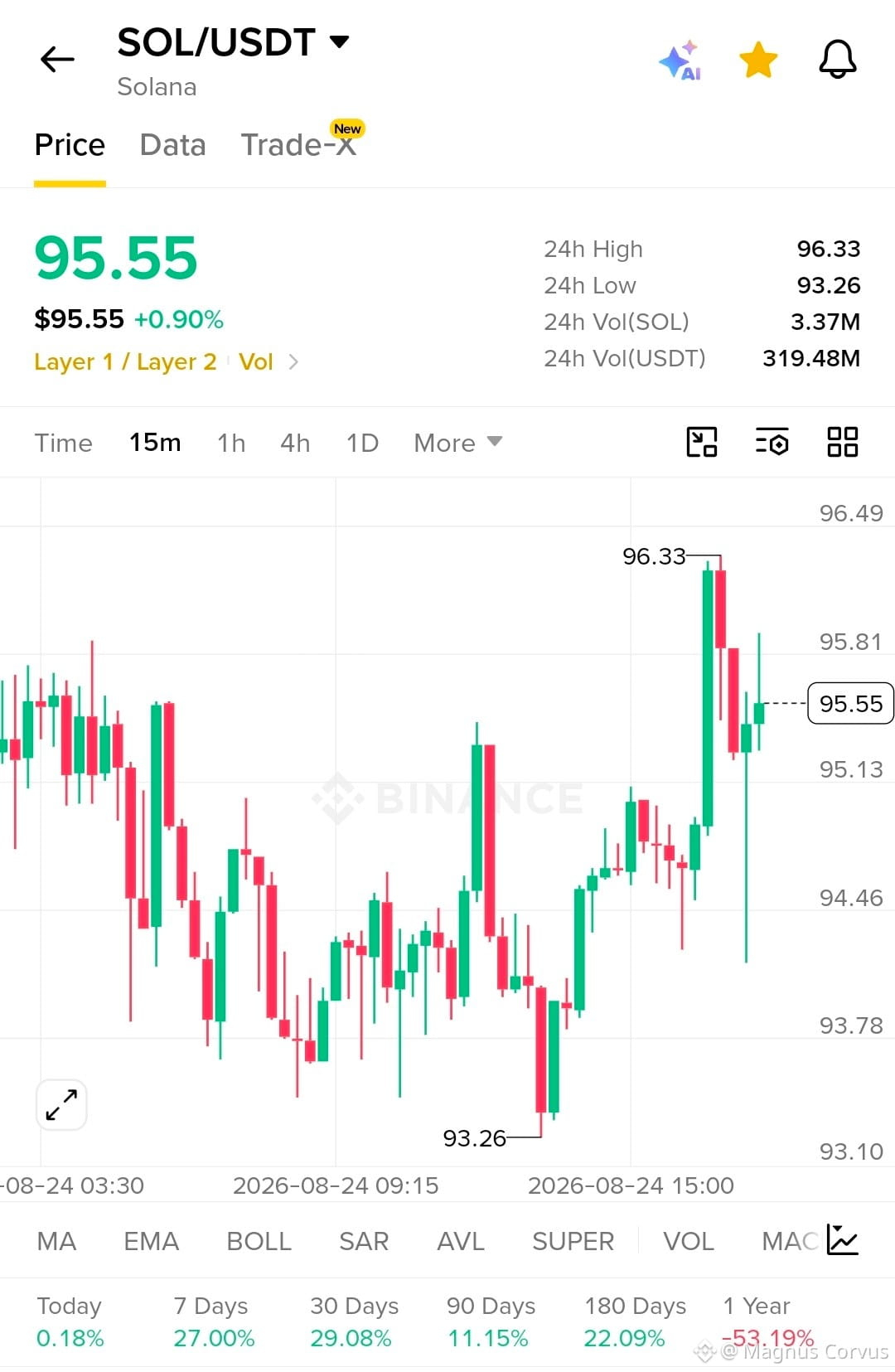
$SOL está mostrando forte força de recuperação acima da recente varredura de liquidez.
A estrutura de alta continua no controle enquanto o preço se mantiver acima do suporte recuperado.
Zona de Entrada: 95,13 - 95,55
Stop Loss: 94,46
Alvo 1: 95,81
Alvo 2: 96,33
Alvo 3: 96,49
A liquidez abaixo foi reagida com força, com compradores recuperando a estrutura e empurrando o preço de volta em direção à resistência. Manter a zona de 95,13 preserva a reação de alta e abre espaço para continuação em direção a níveis mais altos de liquidez.
Vamos lá e Trade agora $SOL
$SOL está mostrando forte força de recuperação acima da recente varredura de liquidez.
A estrutura de alta continua no controle enquanto o preço se mantiver acima do suporte recuperado.
Zona de Entrada: 95,13 - 95,55
Stop Loss: 94,46
Alvo 1: 95,81
Alvo 2: 96,33
Alvo 3: 96,49
A liquidez abaixo foi reagida com força, com compradores recuperando a estrutura e empurrando o preço de volta em direção à resistência. Manter a zona de 95,13 preserva a reação de alta e abre espaço para continuação em direção a níveis mais altos de liquidez.
Vamos lá e Trade agora $SOL
A estrutura de alta continua no controle enquanto o preço se mantiver acima do suporte recuperado.
Zona de Entrada: 95,13 - 95,55
Stop Loss: 94,46
Alvo 1: 95,81
Alvo 2: 96,33
Alvo 3: 96,49
A liquidez abaixo foi reagida com força, com compradores recuperando a estrutura e empurrando o preço de volta em direção à resistência. Manter a zona de 95,13 preserva a reação de alta e abre espaço para continuação em direção a níveis mais altos de liquidez.
Vamos lá e Trade agora $SOL
111
·
--
Em Alta
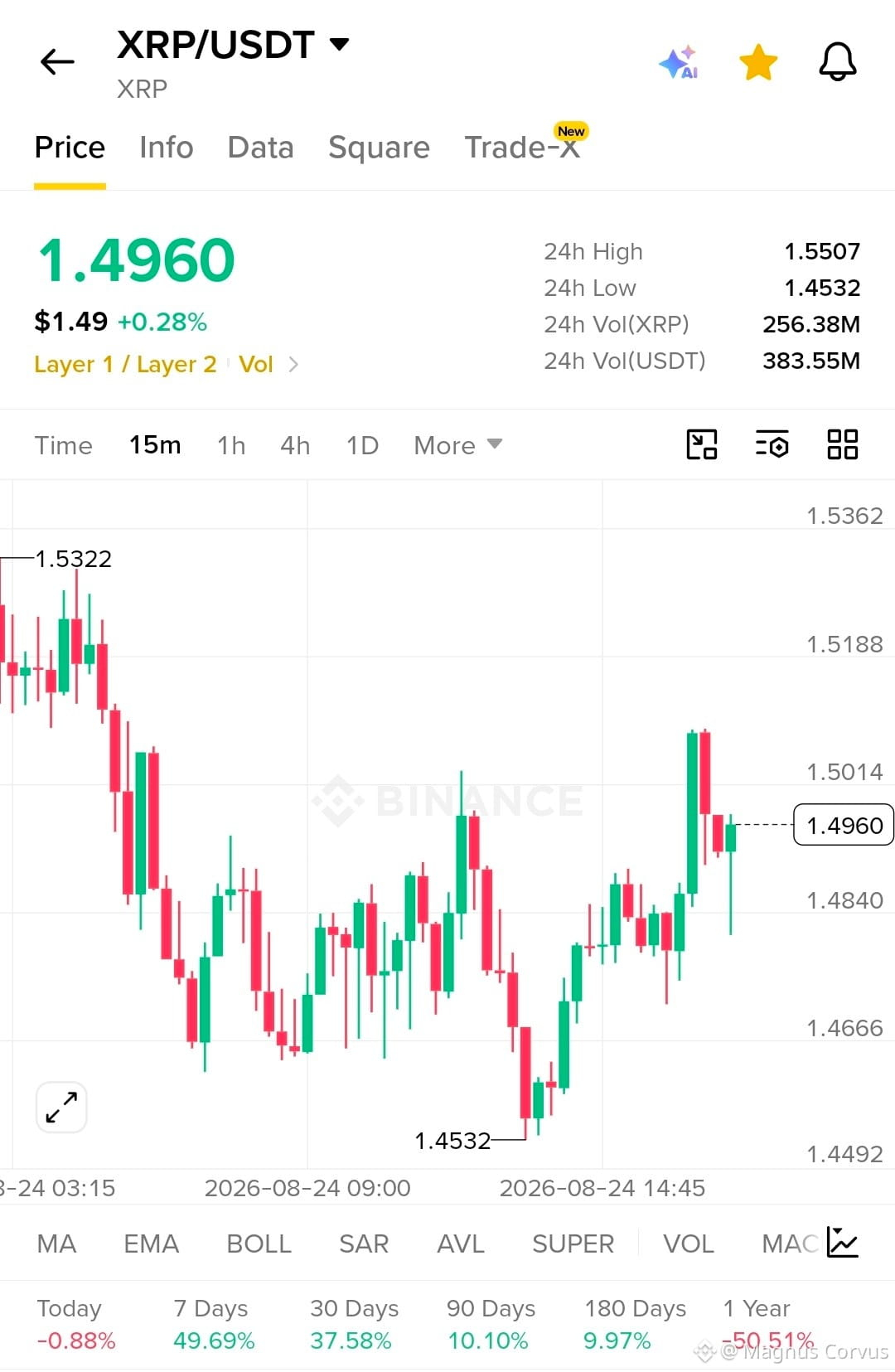
$XRP está mostrando forte força de recuperação acima da recente varredura de liquidez.
A estrutura de alta permanece no controle enquanto o preço se mantiver acima do suporte recuperado.
Zona de Entrada: 1.4840 - 1.4960
Stop Loss: 1.4720
Alvo 1: 1.5014
Alvo 2: 1.5188
Alvo 3: 1.5322
A liquidez abaixo foi reagida com força, com compradores recuperando a estrutura e empurrando o preço de volta em direção à resistência. Manter a zona de 1.4840 preserva a reação de alta e abre espaço para continuação em direção a níveis de liquidez mais altos.
Vamos lá e opere agora $XRP
$XRP está mostrando forte força de recuperação acima da recente varredura de liquidez.
A estrutura de alta permanece no controle enquanto o preço se mantiver acima do suporte recuperado.
Zona de Entrada: 1.4840 - 1.4960
Stop Loss: 1.4720
Alvo 1: 1.5014
Alvo 2: 1.5188
Alvo 3: 1.5322
A liquidez abaixo foi reagida com força, com compradores recuperando a estrutura e empurrando o preço de volta em direção à resistência. Manter a zona de 1.4840 preserva a reação de alta e abre espaço para continuação em direção a níveis de liquidez mais altos.
Vamos lá e opere agora $XRP
A estrutura de alta permanece no controle enquanto o preço se mantiver acima do suporte recuperado.
Zona de Entrada: 1.4840 - 1.4960
Stop Loss: 1.4720
Alvo 1: 1.5014
Alvo 2: 1.5188
Alvo 3: 1.5322
A liquidez abaixo foi reagida com força, com compradores recuperando a estrutura e empurrando o preço de volta em direção à resistência. Manter a zona de 1.4840 preserva a reação de alta e abre espaço para continuação em direção a níveis de liquidez mais altos.
Vamos lá e opere agora $XRP
136
Inicia sessão para explorar mais conteúdos
Junta-te a utilizadores de criptomoedas de todo o mundo na Binance Square
⚡️ Obtém informações úteis e recentes sobre criptomoedas.
💬 Com a confiança da maior exchange de criptomoedas do mundo.
👍 Descobre perspetivas reais de criadores verificados.
E-mail/Número de telefone
Tópicos em Tendência
CryptoLiquidations$674MIn24H
1,408 visualizações
31 a discutir
#CryptoLiquidations$674MIn24H
A onda de liquidações de US$ 674 milhões da cripto atingiu os dois lados da negociação.
Um relatório de 12 de setembro do ChainCatcher, citando a CoinGlass, colocou as liquidações em aproximadamente US$ 674 milhões nas 24 horas anteriores:
Posições vendidas (short): cerca de US$ 381 milhões.
Posições compradas (long): cerca de US$ 292 milhões.
Shorts de Ethereum responderam por cerca de US$ 215 milhões, tornando-se uma parte relevante desse panorama.
Liquidações em short podem adicionar pressão de compra à medida que posições de baixa são encerradas à força. Liquidações em long podem adicionar pressão de venda. Esses mecanismos podem ampliar movimentos de preço em ambas as direções.
Minha leitura: o próximo movimento precisa de confirmação da demanda à vista (spot).
Com liquidações substanciais dos dois lados, eu seria cauteloso ao tratar um salto repentino de preço como prova de que os compradores assumiram o controle.
O que importa para mim é se os compradores continuam sustentando o mercado após o ritmo do fechamento forçado de shorts desacelerar. Uma recuperação que mantém seus ganhos, atrai atividade spot sustentada e evita uma reconstrução agressiva de alavancagem fortaleceria minha confiança.
Se o open interest aumentar rapidamente enquanto o preço luta para avançar, eu ficaria mais cauteloso sobre outra reversão.
O número de liquidações nos diz quanto de posicionamento foi encerrado à força nessa janela. Para avaliar o risco remanescente, é preciso olhar também o posicionamento atual.
Quais você está acompanhando com mais atenção agora: compras à vista, taxas de funding ou open interest?
#CryptoLiquidations #bitcoin #Ethereum #CryptoMarket
$LSK $VTHO $ETHFI
溪月 Xīyuè
·2 gostos
·225 visualizações
TokenizedStockHoldersUp619.1%
0 visualizações
0 a discutir
RevolutConfirmsFakeGovEmailDataBreach
9,425 visualizações
297 a discutir