
crypto_kir
64 Publicações

crypto_kir
Denunciar
Bloquear Utilizador
20 A seguir
30 Seguidores
143 Gostaram
Publicações
Tudo
Cotações
PINNED
·
--
Ver tradução
#openledger $OPEN
The future of AI should not be controlled only by centralized companies, and that is why @Openledger is becoming an interesting project in Web3. OpenLedger focuses on decentralized AI infrastructure where contributors, developers, and communities can participate in building AI ecosystems more transparently. As blockchain and AI continue to grow together, projects creating real utility and contributor-driven networks may become very important in the next phase of crypto innovation. Looking forward to seeing how the $OPEN ecosystem evolves over time. #OpenLedger
#openledger $OPEN
The future of AI should not be controlled only by centralized companies, and that is why @OpenLedger is becoming an interesting project in Web3. OpenLedger focuses on decentralized AI infrastructure where contributors, developers, and communities can participate in building AI ecosystems more transparently. As blockchain and AI continue to grow together, projects creating real utility and contributor-driven networks may become very important in the next phase of crypto innovation. Looking forward to seeing how the $OPEN ecosystem evolves over time. #OpenLedger
The future of AI should not be controlled only by centralized companies, and that is why @OpenLedger is becoming an interesting project in Web3. OpenLedger focuses on decentralized AI infrastructure where contributors, developers, and communities can participate in building AI ecosystems more transparently. As blockchain and AI continue to grow together, projects creating real utility and contributor-driven networks may become very important in the next phase of crypto innovation. Looking forward to seeing how the $OPEN ecosystem evolves over time. #OpenLedger
3
72
PINNED
·
--
Ver tradução
How @OpenLedger Is Connecting Blockchain Technology With the Future of AIArtificial Intelligence is rapidly becoming one of the most important technologies in the world, but the current AI ecosystem is still dominated by centralized companies that control data, infrastructure, and model development. This creates concerns around transparency, ownership, contributor rewards, and accessibility. @Openledger is trying to solve some of these challenges by building decentralized AI infrastructure powered by blockchain technology.
The main idea behind OpenLedger is to create a more open ecosystem where contributors can actively participate in AI development instead of relying completely on centralized systems. AI models require massive amounts of data and computational resources, but in traditional systems, contributors often receive little recognition or value for their participation. OpenLedger aims to create a network where participation and contributions can become more transparent and incentivized.
One of the strongest narratives in crypto today is the integration of blockchain and AI. Blockchain technology can provide transparency, verifiable records, and decentralized coordination, while AI continues to transform industries through automation and intelligent systems. OpenLedger appears to position itself at the intersection of these two growing sectors by focusing on decentralized infrastructure that could support future AI applications and ecosystems.
Another important aspect is the role of the $OPEN token within the ecosystem. In many decentralized platforms, tokens are used to support participation, governance, and network utility. As the OpenLedger ecosystem expands, the token could become an important part of platform activity and community engagement.
What makes OpenLedger interesting is not only the technology narrative but also the broader vision of making AI ecosystems more accessible and community-driven. Decentralization may help reduce dependence on a few major corporations while allowing developers and contributors from different regions to participate in innovation more openly.
The crypto industry is increasingly shifting toward projects with long-term utility instead of short-term hype. If decentralized AI becomes a major trend in Web3, infrastructure-focused projects like @Openledger could attract significant attention in the future. Of course, adoption and execution will determine long-term success, but the project’s focus on decentralized AI infrastructure makes it a promising ecosystem to watch closely.
$OPEN #OpenLedger
How @OpenLedger Is Connecting Blockchain Technology With the Future of AI
Artificial Intelligence is rapidly becoming one of the most important technologies in the world, but the current AI ecosystem is still dominated by centralized companies that control data, infrastructure, and model development. This creates concerns around transparency, ownership, contributor rewards, and accessibility. @OpenLedger is trying to solve some of these challenges by building decentralized AI infrastructure powered by blockchain technology.
The main idea behind OpenLedger is to create a more open ecosystem where contributors can actively participate in AI development instead of relying completely on centralized systems. AI models require massive amounts of data and computational resources, but in traditional systems, contributors often receive little recognition or value for their participation. OpenLedger aims to create a network where participation and contributions can become more transparent and incentivized.
One of the strongest narratives in crypto today is the integration of blockchain and AI. Blockchain technology can provide transparency, verifiable records, and decentralized coordination, while AI continues to transform industries through automation and intelligent systems. OpenLedger appears to position itself at the intersection of these two growing sectors by focusing on decentralized infrastructure that could support future AI applications and ecosystems.
Another important aspect is the role of the $OPEN token within the ecosystem. In many decentralized platforms, tokens are used to support participation, governance, and network utility. As the OpenLedger ecosystem expands, the token could become an important part of platform activity and community engagement.
What makes OpenLedger interesting is not only the technology narrative but also the broader vision of making AI ecosystems more accessible and community-driven. Decentralization may help reduce dependence on a few major corporations while allowing developers and contributors from different regions to participate in innovation more openly.
The crypto industry is increasingly shifting toward projects with long-term utility instead of short-term hype. If decentralized AI becomes a major trend in Web3, infrastructure-focused projects like @OpenLedger could attract significant attention in the future. Of course, adoption and execution will determine long-term success, but the project’s focus on decentralized AI infrastructure makes it a promising ecosystem to watch closely.
$OPEN #OpenLedger
The main idea behind OpenLedger is to create a more open ecosystem where contributors can actively participate in AI development instead of relying completely on centralized systems. AI models require massive amounts of data and computational resources, but in traditional systems, contributors often receive little recognition or value for their participation. OpenLedger aims to create a network where participation and contributions can become more transparent and incentivized.
One of the strongest narratives in crypto today is the integration of blockchain and AI. Blockchain technology can provide transparency, verifiable records, and decentralized coordination, while AI continues to transform industries through automation and intelligent systems. OpenLedger appears to position itself at the intersection of these two growing sectors by focusing on decentralized infrastructure that could support future AI applications and ecosystems.
Another important aspect is the role of the $OPEN token within the ecosystem. In many decentralized platforms, tokens are used to support participation, governance, and network utility. As the OpenLedger ecosystem expands, the token could become an important part of platform activity and community engagement.
What makes OpenLedger interesting is not only the technology narrative but also the broader vision of making AI ecosystems more accessible and community-driven. Decentralization may help reduce dependence on a few major corporations while allowing developers and contributors from different regions to participate in innovation more openly.
The crypto industry is increasingly shifting toward projects with long-term utility instead of short-term hype. If decentralized AI becomes a major trend in Web3, infrastructure-focused projects like @OpenLedger could attract significant attention in the future. Of course, adoption and execution will determine long-term success, but the project’s focus on decentralized AI infrastructure makes it a promising ecosystem to watch closely.
$OPEN #OpenLedger
3
64
·
--
Ver tradução
Why OpenLedger Could Become a Key Infrastructure Layer for Decentralized AIWhy @Openledger Could Become a Key Infrastructure Layer for Decentralized AI
Artificial Intelligence is growing at an incredible pace, but most AI systems today are still controlled by centralized companies. Data, computing power, and AI models are often owned by a few large organizations, which creates concerns around transparency, accessibility, and fair rewards for contributors. This is where @Openledger enters the conversation with a vision that combines blockchain technology and decentralized AI infrastructure.
OpenLedger aims to build an ecosystem where AI development becomes more open, transparent, and community-driven. Instead of depending entirely on centralized platforms, OpenLedger focuses on decentralized participation where developers, data providers, and contributors can all play an active role in the network. This concept is important because AI systems rely heavily on quality data and computing resources, yet contributors are rarely rewarded fairly in traditional systems.
One of the most interesting aspects of OpenLedger is the idea of creating value around AI contributions using blockchain technology. With decentralization, contributors can potentially receive transparent incentives while maintaining trust within the ecosystem. This approach could encourage more innovation and broader participation in AI development across the Web3 space.
The $OPEN token is expected to play a significant role within the ecosystem by supporting network activity, participation, and future utility inside the platform. As the AI narrative continues to grow in crypto, projects that focus on real infrastructure rather than hype may attract stronger long-term attention.
Another reason OpenLedger stands out is its positioning within two of the biggest technological trends today: AI and blockchain. AI requires scalable and trustworthy systems, while blockchain provides transparency and decentralized coordination. Combining these technologies could create a future where AI development is more accessible and less dependent on centralized control.
The crypto industry is moving beyond simple speculation and increasingly focusing on utility-driven ecosystems. OpenLedger appears to be building toward that direction by creating infrastructure that supports decentralized AI applications and contributor participation. If adoption of decentralized AI continues to increase, projects like OpenLedger could become highly relevant in the next phase of Web3 innovation.
As always, every crypto project carries risks, and long-term success depends on execution, adoption, and community growth. However, the vision behind @Openledger presents an interesting perspective on how blockchain technology can support the future of AI in a decentralized and transparent way.
$OPEN #OpenLedger
Why OpenLedger Could Become a Key Infrastructure Layer for Decentralized AI
Why @OpenLedger Could Become a Key Infrastructure Layer for Decentralized AI
Artificial Intelligence is growing at an incredible pace, but most AI systems today are still controlled by centralized companies. Data, computing power, and AI models are often owned by a few large organizations, which creates concerns around transparency, accessibility, and fair rewards for contributors. This is where @OpenLedger enters the conversation with a vision that combines blockchain technology and decentralized AI infrastructure.
OpenLedger aims to build an ecosystem where AI development becomes more open, transparent, and community-driven. Instead of depending entirely on centralized platforms, OpenLedger focuses on decentralized participation where developers, data providers, and contributors can all play an active role in the network. This concept is important because AI systems rely heavily on quality data and computing resources, yet contributors are rarely rewarded fairly in traditional systems.
One of the most interesting aspects of OpenLedger is the idea of creating value around AI contributions using blockchain technology. With decentralization, contributors can potentially receive transparent incentives while maintaining trust within the ecosystem. This approach could encourage more innovation and broader participation in AI development across the Web3 space.
The $OPEN token is expected to play a significant role within the ecosystem by supporting network activity, participation, and future utility inside the platform. As the AI narrative continues to grow in crypto, projects that focus on real infrastructure rather than hype may attract stronger long-term attention.
Another reason OpenLedger stands out is its positioning within two of the biggest technological trends today: AI and blockchain. AI requires scalable and trustworthy systems, while blockchain provides transparency and decentralized coordination. Combining these technologies could create a future where AI development is more accessible and less dependent on centralized control.
The crypto industry is moving beyond simple speculation and increasingly focusing on utility-driven ecosystems. OpenLedger appears to be building toward that direction by creating infrastructure that supports decentralized AI applications and contributor participation. If adoption of decentralized AI continues to increase, projects like OpenLedger could become highly relevant in the next phase of Web3 innovation.
As always, every crypto project carries risks, and long-term success depends on execution, adoption, and community growth. However, the vision behind @OpenLedger presents an interesting perspective on how blockchain technology can support the future of AI in a decentralized and transparent way.
$OPEN #OpenLedger
Artificial Intelligence is growing at an incredible pace, but most AI systems today are still controlled by centralized companies. Data, computing power, and AI models are often owned by a few large organizations, which creates concerns around transparency, accessibility, and fair rewards for contributors. This is where @OpenLedger enters the conversation with a vision that combines blockchain technology and decentralized AI infrastructure.
OpenLedger aims to build an ecosystem where AI development becomes more open, transparent, and community-driven. Instead of depending entirely on centralized platforms, OpenLedger focuses on decentralized participation where developers, data providers, and contributors can all play an active role in the network. This concept is important because AI systems rely heavily on quality data and computing resources, yet contributors are rarely rewarded fairly in traditional systems.
One of the most interesting aspects of OpenLedger is the idea of creating value around AI contributions using blockchain technology. With decentralization, contributors can potentially receive transparent incentives while maintaining trust within the ecosystem. This approach could encourage more innovation and broader participation in AI development across the Web3 space.
The $OPEN token is expected to play a significant role within the ecosystem by supporting network activity, participation, and future utility inside the platform. As the AI narrative continues to grow in crypto, projects that focus on real infrastructure rather than hype may attract stronger long-term attention.
Another reason OpenLedger stands out is its positioning within two of the biggest technological trends today: AI and blockchain. AI requires scalable and trustworthy systems, while blockchain provides transparency and decentralized coordination. Combining these technologies could create a future where AI development is more accessible and less dependent on centralized control.
The crypto industry is moving beyond simple speculation and increasingly focusing on utility-driven ecosystems. OpenLedger appears to be building toward that direction by creating infrastructure that supports decentralized AI applications and contributor participation. If adoption of decentralized AI continues to increase, projects like OpenLedger could become highly relevant in the next phase of Web3 innovation.
As always, every crypto project carries risks, and long-term success depends on execution, adoption, and community growth. However, the vision behind @OpenLedger presents an interesting perspective on how blockchain technology can support the future of AI in a decentralized and transparent way.
$OPEN #OpenLedger
3
59
·
--
Ver tradução
#openledger $OPEN
@Openledger is building an interesting foundation for decentralized AI by combining blockchain transparency with data contribution incentives. In the future, AI models will need trusted and permissionless data networks, and OpenLedger could play a major role in enabling that ecosystem. The idea of rewarding contributors while supporting AI innovation makes this project worth watching closely. $OPEN #OpenLedger
#openledger $OPEN
@OpenLedger is building an interesting foundation for decentralized AI by combining blockchain transparency with data contribution incentives. In the future, AI models will need trusted and permissionless data networks, and OpenLedger could play a major role in enabling that ecosystem. The idea of rewarding contributors while supporting AI innovation makes this project worth watching closely. $OPEN #OpenLedger
@OpenLedger is building an interesting foundation for decentralized AI by combining blockchain transparency with data contribution incentives. In the future, AI models will need trusted and permissionless data networks, and OpenLedger could play a major role in enabling that ecosystem. The idea of rewarding contributors while supporting AI innovation makes this project worth watching closely. $OPEN #OpenLedger
3
68
·
--
Ver tradução
#pixel $PIXEL @pixels
At first, I thought @pixels was just another farming game. Simple loop—play, earn, progress. That’s it. But after spending some time, it started to feel like something more… not just a game anymore.
I went in with basic expectations—earn rewards, move forward. But then I noticed something small: decisions started to matter. Claiming $PIXEL , choosing whether to pay fees or use vPIXEL in-game… these don’t feel like random actions. They feel like small mindset shifts.
And slowly, a pattern shows up. Earlier, it was all about earning. Now it’s about optimizing. People are thinking—where to stake, which pool performs better, what’s the smarter move.
The loop is changing. From grinding… to thinking.
Sometimes it doesn’t feel like a game. It feels like an ecosystem where player behavior decides what grows and what fades. Even something like auto-staking vs manual staking feels different. One is passive, the other feels like participation.
And with the upcoming Ronin Network migration, things might evolve further. Maybe smoother experience, maybe new opportunities—we’ll see.
I’m not fully convinced yet though. When everyone starts optimizing, systems can become predictable. But if competition stays healthy, it could push innovation forward.
Right now, @pixels feels like it’s in transition—from a game… to something bigger.
The real question is—are we just earning rewards, or slowly becoming part of a system we don’t fully see yet?
Maybe this is just the beginning 🚀
#pixel $PIXEL @Pixels
At first, I thought @Pixels was just another farming game. Simple loop—play, earn, progress. That’s it. But after spending some time, it started to feel like something more… not just a game anymore.
I went in with basic expectations—earn rewards, move forward. But then I noticed something small: decisions started to matter. Claiming $PIXEL , choosing whether to pay fees or use vPIXEL in-game… these don’t feel like random actions. They feel like small mindset shifts.
And slowly, a pattern shows up. Earlier, it was all about earning. Now it’s about optimizing. People are thinking—where to stake, which pool performs better, what’s the smarter move.
The loop is changing. From grinding… to thinking.
Sometimes it doesn’t feel like a game. It feels like an ecosystem where player behavior decides what grows and what fades. Even something like auto-staking vs manual staking feels different. One is passive, the other feels like participation.
And with the upcoming Ronin Network migration, things might evolve further. Maybe smoother experience, maybe new opportunities—we’ll see.
I’m not fully convinced yet though. When everyone starts optimizing, systems can become predictable. But if competition stays healthy, it could push innovation forward.
Right now, @Pixels feels like it’s in transition—from a game… to something bigger.
The real question is—are we just earning rewards, or slowly becoming part of a system we don’t fully see yet?
Maybe this is just the beginning 🚀
At first, I thought @Pixels was just another farming game. Simple loop—play, earn, progress. That’s it. But after spending some time, it started to feel like something more… not just a game anymore.
I went in with basic expectations—earn rewards, move forward. But then I noticed something small: decisions started to matter. Claiming $PIXEL , choosing whether to pay fees or use vPIXEL in-game… these don’t feel like random actions. They feel like small mindset shifts.
And slowly, a pattern shows up. Earlier, it was all about earning. Now it’s about optimizing. People are thinking—where to stake, which pool performs better, what’s the smarter move.
The loop is changing. From grinding… to thinking.
Sometimes it doesn’t feel like a game. It feels like an ecosystem where player behavior decides what grows and what fades. Even something like auto-staking vs manual staking feels different. One is passive, the other feels like participation.
And with the upcoming Ronin Network migration, things might evolve further. Maybe smoother experience, maybe new opportunities—we’ll see.
I’m not fully convinced yet though. When everyone starts optimizing, systems can become predictable. But if competition stays healthy, it could push innovation forward.
Right now, @Pixels feels like it’s in transition—from a game… to something bigger.
The real question is—are we just earning rewards, or slowly becoming part of a system we don’t fully see yet?
Maybe this is just the beginning 🚀
3
55
·
--
JOGAR-PARA-GANHAR ERA SIMPLES… PIXELS ESTÁ TREINANDO SILENCIOSAMENTE COMO AS PESSOAS DECIDEM 🧠Quando eu conheci @Pixels pela primeira vez, não pensei muito sobre isso. Parecia familiar—loops de farming, gerenciamento de recursos, uma economia de token ligada à atividade. Estrutura clássica de GameFi. Você joga, você ganha, você avança.
Mas quanto mais eu observava como as pessoas realmente interagiam com isso, mais difícil se tornava explicar de forma tão simples.
Porque o que está acontecendo aqui não parece mais apenas um jogo. Parece um sistema que lentamente molda como as pessoas decidem.
Na superfície, tudo parece limpo. Stake para votar, recompensas diárias, incentivos estruturados. Você stake $PIXEL, apoia um jogo e recebe recompensas com base na participação. Parece justo, quase como um sistema de votação descentralizado.
JOGAR-PARA-GANHAR ERA SIMPLES… PIXELS ESTÁ TREINANDO SILENCIOSAMENTE COMO AS PESSOAS DECIDEM 🧠
Quando eu conheci @Pixels pela primeira vez, não pensei muito sobre isso. Parecia familiar—loops de farming, gerenciamento de recursos, uma economia de token ligada à atividade. Estrutura clássica de GameFi. Você joga, você ganha, você avança.
Mas quanto mais eu observava como as pessoas realmente interagiam com isso, mais difícil se tornava explicar de forma tão simples.
Porque o que está acontecendo aqui não parece mais apenas um jogo. Parece um sistema que lentamente molda como as pessoas decidem.
Na superfície, tudo parece limpo. Stake para votar, recompensas diárias, incentivos estruturados. Você stake $PIXEL , apoia um jogo e recebe recompensas com base na participação. Parece justo, quase como um sistema de votação descentralizado.
Mas quanto mais eu observava como as pessoas realmente interagiam com isso, mais difícil se tornava explicar de forma tão simples.
Porque o que está acontecendo aqui não parece mais apenas um jogo. Parece um sistema que lentamente molda como as pessoas decidem.
Na superfície, tudo parece limpo. Stake para votar, recompensas diárias, incentivos estruturados. Você stake $PIXEL , apoia um jogo e recebe recompensas com base na participação. Parece justo, quase como um sistema de votação descentralizado.
3
80
·
--
Ver tradução
#pixel $PIXEL
I used to think @Pixels was built around progression like most GameFi projects. Grind, upgrade, earn. That’s the usual loop. But the more I observe it, the less it feels like progress is the core driver.
What stands out is how often the game introduces small moments of friction. Not enough to frustrate, but enough to make you pause. Energy runs out. Timers slow things down. Tasks repeat just enough to feel slightly inefficient.
And that’s where $PIXEL shows up. Not as something you plan to use—but something you end up using.
It doesn’t feel like a goal. It feels like a response.
You don’t wake up thinking “I’ll spend Pixel today.” You hit a delay, a slowdown, a small inconvenience… and then you decide. Skip or wait. That’s the loop.
Which makes me think the real question isn’t how many players join—but how often players reach that decision point. Because if those moments keep happening naturally, demand repeats. If they fade or feel forced, players adapt or walk away.
So I’m not really watching hype or price here. I’m watching behavior.
Do players keep choosing speed over waiting… or do they start ignoring the friction altogether?
That answer probably matters more than anything else.
#pixel $PIXEL @pixels
#pixel $PIXEL
I used to think @Pixels was built around progression like most GameFi projects. Grind, upgrade, earn. That’s the usual loop. But the more I observe it, the less it feels like progress is the core driver.
What stands out is how often the game introduces small moments of friction. Not enough to frustrate, but enough to make you pause. Energy runs out. Timers slow things down. Tasks repeat just enough to feel slightly inefficient.
And that’s where $PIXEL shows up. Not as something you plan to use—but something you end up using.
It doesn’t feel like a goal. It feels like a response.
You don’t wake up thinking “I’ll spend Pixel today.” You hit a delay, a slowdown, a small inconvenience… and then you decide. Skip or wait. That’s the loop.
Which makes me think the real question isn’t how many players join—but how often players reach that decision point. Because if those moments keep happening naturally, demand repeats. If they fade or feel forced, players adapt or walk away.
So I’m not really watching hype or price here. I’m watching behavior.
Do players keep choosing speed over waiting… or do they start ignoring the friction altogether?
That answer probably matters more than anything else.
#pixel $PIXEL @Pixels
I used to think @Pixels was built around progression like most GameFi projects. Grind, upgrade, earn. That’s the usual loop. But the more I observe it, the less it feels like progress is the core driver.
What stands out is how often the game introduces small moments of friction. Not enough to frustrate, but enough to make you pause. Energy runs out. Timers slow things down. Tasks repeat just enough to feel slightly inefficient.
And that’s where $PIXEL shows up. Not as something you plan to use—but something you end up using.
It doesn’t feel like a goal. It feels like a response.
You don’t wake up thinking “I’ll spend Pixel today.” You hit a delay, a slowdown, a small inconvenience… and then you decide. Skip or wait. That’s the loop.
Which makes me think the real question isn’t how many players join—but how often players reach that decision point. Because if those moments keep happening naturally, demand repeats. If they fade or feel forced, players adapt or walk away.
So I’m not really watching hype or price here. I’m watching behavior.
Do players keep choosing speed over waiting… or do they start ignoring the friction altogether?
That answer probably matters more than anything else.
#pixel $PIXEL @Pixels
2
42
·
--

Artigo
Pixels Não É Apenas um Jogo… É Silenciosamente Sobre Como Você Sente o Tempo ⏳Eu não pensei muito sobre @pixels no início. Parecia apenas mais um loop de GameFi estilo farming—plante, aguarde, colha, repita. Relaxante, previsível, nada surpreendente. Já vi o suficiente desses para assumir que sei como eles funcionam e como geralmente terminam.
Mas depois de realmente observar como as pessoas jogam (incluindo eu mesmo), algo parecia um pouco diferente. Não era óbvio. Apenas... sutil.
Não se trata realmente do que você ganha. É sobre quanto tempo tudo leva.
E isso parece simples, mas muda tudo.
Pixels Não É Apenas um Jogo… É Silenciosamente Sobre Como Você Sente o Tempo ⏳
Eu não pensei muito sobre @Pixels no início. Parecia apenas mais um loop de GameFi estilo farming—plante, aguarde, colha, repita. Relaxante, previsível, nada surpreendente. Já vi o suficiente desses para assumir que sei como eles funcionam e como geralmente terminam.
Mas depois de realmente observar como as pessoas jogam (incluindo eu mesmo), algo parecia um pouco diferente. Não era óbvio. Apenas... sutil.
Não se trata realmente do que você ganha. É sobre quanto tempo tudo leva.
E isso parece simples, mas muda tudo.
Mas depois de realmente observar como as pessoas jogam (incluindo eu mesmo), algo parecia um pouco diferente. Não era óbvio. Apenas... sutil.
Não se trata realmente do que você ganha. É sobre quanto tempo tudo leva.
E isso parece simples, mas muda tudo.
2
63
·
--
Ver tradução
#pixel $PIXEL
@pixels is changing the GameFi narrative by introducing Stacked, a smarter reward system that focuses on real player behavior instead of farming. By aligning incentives with engagement, the ecosystem becomes more sustainable over time. With $PIXEL expanding as a cross-game rewards token, this could be a strong step toward long-term Web3 gaming growth. #pixel
#pixel $PIXEL
@Pixels is changing the GameFi narrative by introducing Stacked, a smarter reward system that focuses on real player behavior instead of farming. By aligning incentives with engagement, the ecosystem becomes more sustainable over time. With $PIXEL expanding as a cross-game rewards token, this could be a strong step toward long-term Web3 gaming growth. #pixel
@Pixels is changing the GameFi narrative by introducing Stacked, a smarter reward system that focuses on real player behavior instead of farming. By aligning incentives with engagement, the ecosystem becomes more sustainable over time. With $PIXEL expanding as a cross-game rewards token, this could be a strong step toward long-term Web3 gaming growth. #pixel
2
21
·
--
Ver tradução
@Pixels & Stacked: Turning Player Activity into Real Value in GameFiThe biggest challenge in GameFi has always been sustainability. Many projects attracted users with rewards but failed to maintain long-term economies. @pixels is approaching this differently by building a system where rewards are tied to real engagement rather than passive activity.
At the center of this evolution is Stacked, a reward engine that changes how incentives are distributed. Instead of rewarding everyone equally, it focuses on identifying meaningful player behavior and allocating rewards strategically. This makes the system more efficient and reduces issues like bot farming and reward draining.
What makes this approach interesting is that it’s already tested in a live environment. The ecosystem has handled large-scale reward distribution while maintaining economic balance. This shows that the model is not theoretical—it’s already working in practice.
$PIXEL plays a key role in this ecosystem as it continues to expand beyond a single game into a broader reward layer. As more integrations happen, its utility grows along with the ecosystem itself.
Overall, @pixels is shifting GameFi from short-term incentives to long-term value creation. Instead of chasing hype, it focuses on building a system where both players and developers benefit sustainably.
#pixel $PIXEL
@Pixels & Stacked: Turning Player Activity into Real Value in GameFi
The biggest challenge in GameFi has always been sustainability. Many projects attracted users with rewards but failed to maintain long-term economies. @Pixels is approaching this differently by building a system where rewards are tied to real engagement rather than passive activity.
At the center of this evolution is Stacked, a reward engine that changes how incentives are distributed. Instead of rewarding everyone equally, it focuses on identifying meaningful player behavior and allocating rewards strategically. This makes the system more efficient and reduces issues like bot farming and reward draining.
What makes this approach interesting is that it’s already tested in a live environment. The ecosystem has handled large-scale reward distribution while maintaining economic balance. This shows that the model is not theoretical—it’s already working in practice.
$PIXEL plays a key role in this ecosystem as it continues to expand beyond a single game into a broader reward layer. As more integrations happen, its utility grows along with the ecosystem itself.
Overall, @Pixels is shifting GameFi from short-term incentives to long-term value creation. Instead of chasing hype, it focuses on building a system where both players and developers benefit sustainably.
#pixel $PIXEL
At the center of this evolution is Stacked, a reward engine that changes how incentives are distributed. Instead of rewarding everyone equally, it focuses on identifying meaningful player behavior and allocating rewards strategically. This makes the system more efficient and reduces issues like bot farming and reward draining.
What makes this approach interesting is that it’s already tested in a live environment. The ecosystem has handled large-scale reward distribution while maintaining economic balance. This shows that the model is not theoretical—it’s already working in practice.
$PIXEL plays a key role in this ecosystem as it continues to expand beyond a single game into a broader reward layer. As more integrations happen, its utility grows along with the ecosystem itself.
Overall, @Pixels is shifting GameFi from short-term incentives to long-term value creation. Instead of chasing hype, it focuses on building a system where both players and developers benefit sustainably.
#pixel $PIXEL
2
37
·
--
Ver tradução
How @Pixels and Stacked Are Redefining GameFi with Real Rewards and Sustainable Economies 🚀The GameFi space has long struggled with one major issue—sustainability. Many play-to-earn models initially attract users with rewards, but over time they collapse due to bot farming, poor reward distribution, and lack of real economic balance. This is exactly the problem that @pixels is solving through its innovative Stacked ecosystem.
Built on Ronin Network, Pixels has evolved from a simple farming game into a fully functional digital economy. But the real breakthrough comes with Stacked App, which acts as a rewarded LiveOps engine designed to optimize how incentives are distributed across players. Instead of blindly giving rewards, Stacked focuses on delivering the right reward to the right player at the right time.
What makes Stacked unique is its AI-driven game economist. This system analyzes player behavior, identifies patterns such as churn or retention gaps, and suggests reward strategies that improve long-term engagement. For example, it can detect when players are likely to stop playing and trigger targeted incentives to retain them. This transforms rewards from a cost into a strategic investment.
Another important aspect is that Stacked is not just a concept—it has already been tested at scale within the Pixels ecosystem. With millions of players and hundreds of millions of rewards processed, the system has proven its ability to support a real, functioning economy. This also contributed significantly to the platform’s revenue, showing that sustainable GameFi is achievable.
The role of $PIXEL is also expanding. It is no longer limited to a single game but is gradually becoming a cross-ecosystem rewards currency. As more games and experiences integrate with Stacked, the demand and utility of $PIXEL are expected to grow, making it a key component of the broader ecosystem.
One of the most powerful ideas behind Stacked is the redirection of traditional gaming marketing budgets. Instead of spending heavily on ads, studios can now allocate those funds directly to players as rewards. This creates a win-win situation—players earn real value, and developers gain measurable engagement and retention.
In conclusion, @pixels is not just building a game but creating infrastructure for the future of Web3 gaming. With Stacked, the focus shifts from short-term hype to long-term sustainability, combining real rewards, intelligent systems, and a growing ecosystem powered by $PIXEL XEL. #pixel 🚀
How @Pixels and Stacked Are Redefining GameFi with Real Rewards and Sustainable Economies 🚀
The GameFi space has long struggled with one major issue—sustainability. Many play-to-earn models initially attract users with rewards, but over time they collapse due to bot farming, poor reward distribution, and lack of real economic balance. This is exactly the problem that @Pixels is solving through its innovative Stacked ecosystem.
Built on Ronin Network, Pixels has evolved from a simple farming game into a fully functional digital economy. But the real breakthrough comes with Stacked App, which acts as a rewarded LiveOps engine designed to optimize how incentives are distributed across players. Instead of blindly giving rewards, Stacked focuses on delivering the right reward to the right player at the right time.
What makes Stacked unique is its AI-driven game economist. This system analyzes player behavior, identifies patterns such as churn or retention gaps, and suggests reward strategies that improve long-term engagement. For example, it can detect when players are likely to stop playing and trigger targeted incentives to retain them. This transforms rewards from a cost into a strategic investment.
Another important aspect is that Stacked is not just a concept—it has already been tested at scale within the Pixels ecosystem. With millions of players and hundreds of millions of rewards processed, the system has proven its ability to support a real, functioning economy. This also contributed significantly to the platform’s revenue, showing that sustainable GameFi is achievable.
The role of $PIXEL is also expanding. It is no longer limited to a single game but is gradually becoming a cross-ecosystem rewards currency. As more games and experiences integrate with Stacked, the demand and utility of $PIXEL are expected to grow, making it a key component of the broader ecosystem.
One of the most powerful ideas behind Stacked is the redirection of traditional gaming marketing budgets. Instead of spending heavily on ads, studios can now allocate those funds directly to players as rewards. This creates a win-win situation—players earn real value, and developers gain measurable engagement and retention.
In conclusion, @Pixels is not just building a game but creating infrastructure for the future of Web3 gaming. With Stacked, the focus shifts from short-term hype to long-term sustainability, combining real rewards, intelligent systems, and a growing ecosystem powered by $PIXEL XEL. #pixel 🚀
Built on Ronin Network, Pixels has evolved from a simple farming game into a fully functional digital economy. But the real breakthrough comes with Stacked App, which acts as a rewarded LiveOps engine designed to optimize how incentives are distributed across players. Instead of blindly giving rewards, Stacked focuses on delivering the right reward to the right player at the right time.
What makes Stacked unique is its AI-driven game economist. This system analyzes player behavior, identifies patterns such as churn or retention gaps, and suggests reward strategies that improve long-term engagement. For example, it can detect when players are likely to stop playing and trigger targeted incentives to retain them. This transforms rewards from a cost into a strategic investment.
Another important aspect is that Stacked is not just a concept—it has already been tested at scale within the Pixels ecosystem. With millions of players and hundreds of millions of rewards processed, the system has proven its ability to support a real, functioning economy. This also contributed significantly to the platform’s revenue, showing that sustainable GameFi is achievable.
The role of $PIXEL is also expanding. It is no longer limited to a single game but is gradually becoming a cross-ecosystem rewards currency. As more games and experiences integrate with Stacked, the demand and utility of $PIXEL are expected to grow, making it a key component of the broader ecosystem.
One of the most powerful ideas behind Stacked is the redirection of traditional gaming marketing budgets. Instead of spending heavily on ads, studios can now allocate those funds directly to players as rewards. This creates a win-win situation—players earn real value, and developers gain measurable engagement and retention.
In conclusion, @Pixels is not just building a game but creating infrastructure for the future of Web3 gaming. With Stacked, the focus shifts from short-term hype to long-term sustainability, combining real rewards, intelligent systems, and a growing ecosystem powered by $PIXEL XEL. #pixel 🚀
2
17
·
--
Ver tradução
#pixel $PIXEL
@pixels is redefining GameFi with its Stacked ecosystem, where rewards are smarter and more sustainable. Instead of rewarding spam activity, the system focuses on real player engagement and long-term value. With $PIXEL evolving into a cross-game rewards currency, the ecosystem is growing beyond just one game into a scalable Web3 economy. #pixel
#pixel $PIXEL
@Pixels is redefining GameFi with its Stacked ecosystem, where rewards are smarter and more sustainable. Instead of rewarding spam activity, the system focuses on real player engagement and long-term value. With $PIXEL evolving into a cross-game rewards currency, the ecosystem is growing beyond just one game into a scalable Web3 economy. #pixel
@Pixels is redefining GameFi with its Stacked ecosystem, where rewards are smarter and more sustainable. Instead of rewarding spam activity, the system focuses on real player engagement and long-term value. With $PIXEL evolving into a cross-game rewards currency, the ecosystem is growing beyond just one game into a scalable Web3 economy. #pixel
2
11
·
--
Ver tradução
Pixels & $PIXEL: Building a Sustainable Play-to-Earn Economy with Stacked 🚀The evolution of play-to-earn is finally taking a meaningful turn with @pixels , and it’s clear the project is aiming far beyond the typical GameFi model. Built on Ronin Network, Pixels is not just another farming simulator—it’s becoming a full-scale digital economy where player effort directly translates into value.
The recent updates, including Tier 5 expansion, introduce deeper crafting systems, new industries, and more complex resource management. This shows a clear shift toward long-term engagement rather than short-term rewards. What makes this even more interesting is the integration of Stacked App, which allows players to earn additional rewards based on gameplay, progression, and even content creation.
This combination creates a loop where players are incentivized not just to play, but to participate in the ecosystem actively. With $PIXEL acting as a core part of this economy, the project is gradually building a sustainable reward structure rather than relying on hype alone.
As GameFi continues to evolve, @pixels stands out by focusing on utility, scalability, and real player ownership. Definitely a project worth watching closely. #PİXEL 🚀
$PIXEL
Pixels & $PIXEL: Building a Sustainable Play-to-Earn Economy with Stacked 🚀
The evolution of play-to-earn is finally taking a meaningful turn with @Pixels , and it’s clear the project is aiming far beyond the typical GameFi model. Built on Ronin Network, Pixels is not just another farming simulator—it’s becoming a full-scale digital economy where player effort directly translates into value.
The recent updates, including Tier 5 expansion, introduce deeper crafting systems, new industries, and more complex resource management. This shows a clear shift toward long-term engagement rather than short-term rewards. What makes this even more interesting is the integration of Stacked App, which allows players to earn additional rewards based on gameplay, progression, and even content creation.
This combination creates a loop where players are incentivized not just to play, but to participate in the ecosystem actively. With $PIXEL acting as a core part of this economy, the project is gradually building a sustainable reward structure rather than relying on hype alone.
As GameFi continues to evolve, @Pixels stands out by focusing on utility, scalability, and real player ownership. Definitely a project worth watching closely. #PİXEL 🚀
$PIXEL
The recent updates, including Tier 5 expansion, introduce deeper crafting systems, new industries, and more complex resource management. This shows a clear shift toward long-term engagement rather than short-term rewards. What makes this even more interesting is the integration of Stacked App, which allows players to earn additional rewards based on gameplay, progression, and even content creation.
This combination creates a loop where players are incentivized not just to play, but to participate in the ecosystem actively. With $PIXEL acting as a core part of this economy, the project is gradually building a sustainable reward structure rather than relying on hype alone.
As GameFi continues to evolve, @Pixels stands out by focusing on utility, scalability, and real player ownership. Definitely a project worth watching closely. #PİXEL 🚀
$PIXEL
2
14
·
--
Ver tradução
Pixels & $PIXEL: Building a Sustainable Play-to-Earn Economy with Stacked 🚀The evolution of play-to-earn is finally taking a meaningful turn with @pixels , and it’s clear the project is aiming far beyond the typical GameFi model. Built on Ronin Network, Pixels is not just another farming simulator—it’s becoming a full-scale digital economy where player effort directly translates into value.
The recent updates, including Tier 5 expansion, introduce deeper crafting systems, new industries, and more complex resource management. This shows a clear shift toward long-term engagement rather than short-term rewards. What makes this even more interesting is the integration of Stacked App, which allows players to earn additional rewards based on gameplay, progression, and even content creation.
This combination creates a loop where players are incentivized not just to play, but to participate in the ecosystem actively. With $PIXEL acting as a core part of this economy, the project is gradually building a sustainable reward structure rather than relying on hype alone.
As GameFi continues to evolve, @pixels stands out by focusing on utility, scalability, and real player ownership. Definitely a project worth watching closely. #PİXEL 🚀
$PIXEL
Pixels & $PIXEL: Building a Sustainable Play-to-Earn Economy with Stacked 🚀
The evolution of play-to-earn is finally taking a meaningful turn with @Pixels , and it’s clear the project is aiming far beyond the typical GameFi model. Built on Ronin Network, Pixels is not just another farming simulator—it’s becoming a full-scale digital economy where player effort directly translates into value.
The recent updates, including Tier 5 expansion, introduce deeper crafting systems, new industries, and more complex resource management. This shows a clear shift toward long-term engagement rather than short-term rewards. What makes this even more interesting is the integration of Stacked App, which allows players to earn additional rewards based on gameplay, progression, and even content creation.
This combination creates a loop where players are incentivized not just to play, but to participate in the ecosystem actively. With $PIXEL acting as a core part of this economy, the project is gradually building a sustainable reward structure rather than relying on hype alone.
As GameFi continues to evolve, @Pixels stands out by focusing on utility, scalability, and real player ownership. Definitely a project worth watching closely. #PİXEL 🚀
$PIXEL
The recent updates, including Tier 5 expansion, introduce deeper crafting systems, new industries, and more complex resource management. This shows a clear shift toward long-term engagement rather than short-term rewards. What makes this even more interesting is the integration of Stacked App, which allows players to earn additional rewards based on gameplay, progression, and even content creation.
This combination creates a loop where players are incentivized not just to play, but to participate in the ecosystem actively. With $PIXEL acting as a core part of this economy, the project is gradually building a sustainable reward structure rather than relying on hype alone.
As GameFi continues to evolve, @Pixels stands out by focusing on utility, scalability, and real player ownership. Definitely a project worth watching closely. #PİXEL 🚀
$PIXEL
1
98
·
--
Ver tradução
#pixel $PIXEL
Pixels on Ronin Network continues to expand its play-to-earn ecosystem with exciting new updates. The recent Tier 5 expansion introduces new industries, resources, and over 100+ crafting recipes, pushing gameplay to a whole new level.
With Stacked App, players can now earn additional rewards from their in-game progress, content, and activity with instant payouts. This shift shows how Pixels is moving beyond just a farming game into a full Web3 economy.
As adoption grows, Pixels is proving that sustainable play-to-earn is possible—combining fun gameplay with real earning potential. Definitely a project to watch in the GameFi space. 🚀
#pixel $PIXEL
Pixels on Ronin Network continues to expand its play-to-earn ecosystem with exciting new updates. The recent Tier 5 expansion introduces new industries, resources, and over 100+ crafting recipes, pushing gameplay to a whole new level.
With Stacked App, players can now earn additional rewards from their in-game progress, content, and activity with instant payouts. This shift shows how Pixels is moving beyond just a farming game into a full Web3 economy.
As adoption grows, Pixels is proving that sustainable play-to-earn is possible—combining fun gameplay with real earning potential. Definitely a project to watch in the GameFi space. 🚀
Pixels on Ronin Network continues to expand its play-to-earn ecosystem with exciting new updates. The recent Tier 5 expansion introduces new industries, resources, and over 100+ crafting recipes, pushing gameplay to a whole new level.
With Stacked App, players can now earn additional rewards from their in-game progress, content, and activity with instant payouts. This shift shows how Pixels is moving beyond just a farming game into a full Web3 economy.
As adoption grows, Pixels is proving that sustainable play-to-earn is possible—combining fun gameplay with real earning potential. Definitely a project to watch in the GameFi space. 🚀
1
87
·
--
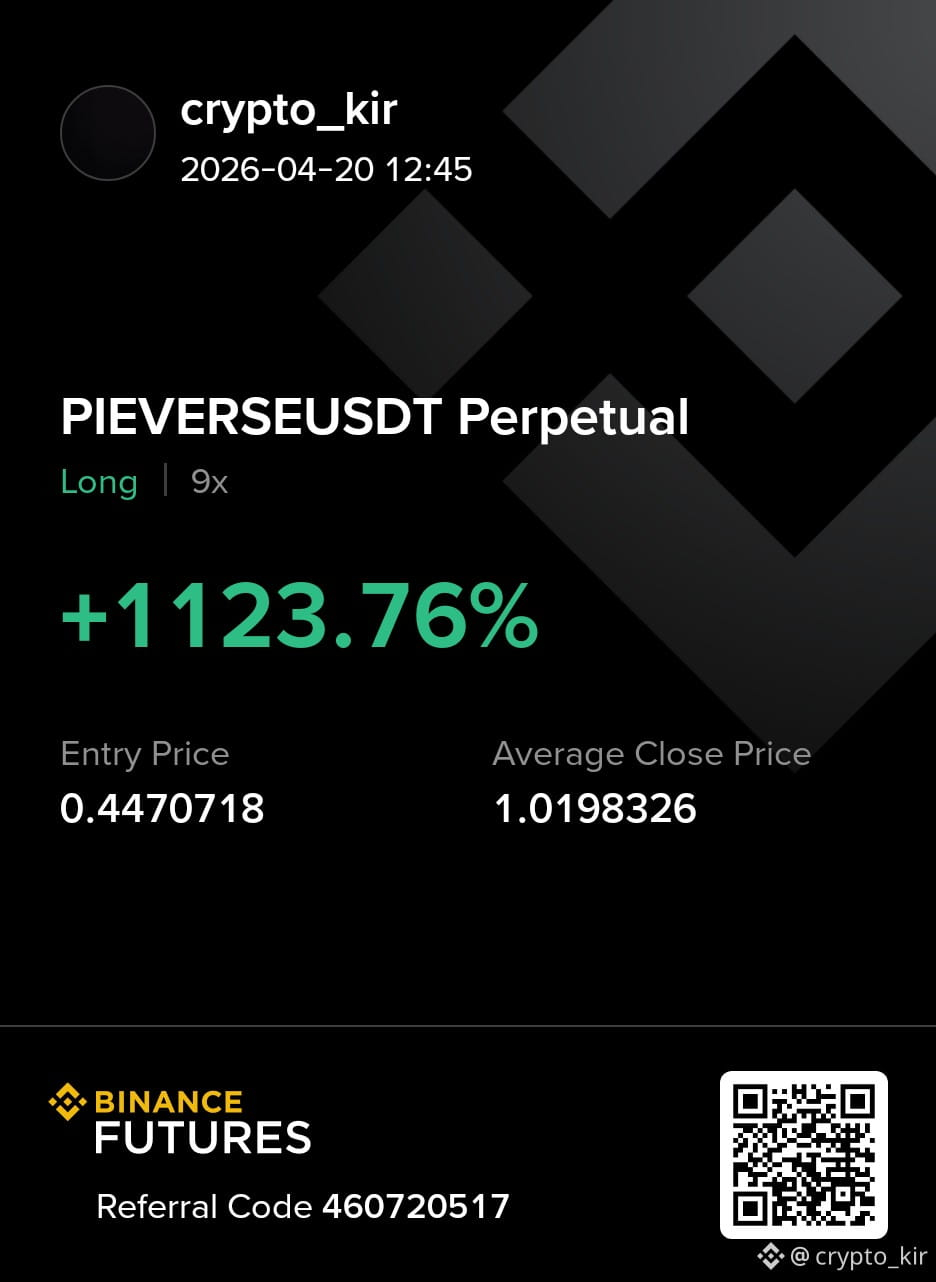
Em Alta
Pegou o movimento. Garantiu os ganhos.
Negociação encerrada com lucro — vamos para a próxima. 🚀
$PIEVERSE
Pegou o movimento. Garantiu os ganhos.
Negociação encerrada com lucro — vamos para a próxima. 🚀
$PIEVERSE
Negociação encerrada com lucro — vamos para a próxima. 🚀
$PIEVERSE
1
282
·
--
[collect red packet](https://app.binance.com/uni-qr/6kA4cMRc?utm_medium=web_share_copy)
coletar $A2Z 100 mais restantes
collect red packet
coletar $A2Z 100 mais restantes
coletar $A2Z 100 mais restantes
1
2
·
--
Em Alta
$RVV é um bom projeto, só questão de tempo.
2026 trata-se de alinhamento, não de ruído.
Astra Nova está reunindo algumas das comunidades e IPs mais fortes da Web3: Shiba Inu, Shifu, Imaginary Ones, Simon's Cat e mais, sob um ecossistema em expansão.🔥
Diferentes forças. Uma visão compartilhada.
Desenvolvedores, criadores e comunidades trabalhando em sintonia para moldar o futuro do entretenimento digital.
Trata-se de reunir as forças certas para construir algo maior do que qualquer marca individual. 💪
O ecossistema Astra Nova está crescendo e em 2026 entraremos em alta velocidade. ⚡️
$RVV é um bom projeto, só questão de tempo.
2026 trata-se de alinhamento, não de ruído.
Astra Nova está reunindo algumas das comunidades e IPs mais fortes da Web3: Shiba Inu, Shifu, Imaginary Ones, Simon's Cat e mais, sob um ecossistema em expansão.🔥
Diferentes forças. Uma visão compartilhada.
Desenvolvedores, criadores e comunidades trabalhando em sintonia para moldar o futuro do entretenimento digital.
Trata-se de reunir as forças certas para construir algo maior do que qualquer marca individual. 💪
O ecossistema Astra Nova está crescendo e em 2026 entraremos em alta velocidade. ⚡️
2026 trata-se de alinhamento, não de ruído.
Astra Nova está reunindo algumas das comunidades e IPs mais fortes da Web3: Shiba Inu, Shifu, Imaginary Ones, Simon's Cat e mais, sob um ecossistema em expansão.🔥
Diferentes forças. Uma visão compartilhada.
Desenvolvedores, criadores e comunidades trabalhando em sintonia para moldar o futuro do entretenimento digital.
Trata-se de reunir as forças certas para construir algo maior do que qualquer marca individual. 💪
O ecossistema Astra Nova está crescendo e em 2026 entraremos em alta velocidade. ⚡️
2
259
·
--
Abriu uma operação longa em Piverse agora mesmo.
🎯 Meta: 0,63
Abriu uma operação longa em Piverse agora mesmo.
🎯 Meta: 0,63
🎯 Meta: 0,63
2
6
·
--
Em Alta
{future}(RVVUSDT)
$RVV
Astra Nova x Nebulai 🤝
Notícias empolgantes! 🔥 Anunciamos com entusiasmo nossa parceria com o Nebulai, uma plataforma onde desenvolvedores e usuários constroem, compartilham e inovam soluções de agentes de IA juntos.
O Nebulai está moldando o futuro da IA por meio de um mercado descentralizado que permite que agentes de IA colaborem, aumentando a eficiência e produtividade humana em larga escala. ⚡️🤖
Estamos ansiosos para explorar como essa colaboração abre novas possibilidades para experiências impulsione por agentes e ecossistemas nativos de IA.
Fique atento para mais atualizações da Astra Nova e do Nebulai 👀
$RVV
Astra Nova x Nebulai 🤝
Notícias empolgantes! 🔥 Anunciamos com entusiasmo nossa parceria com o Nebulai, uma plataforma onde desenvolvedores e usuários constroem, compartilham e inovam soluções de agentes de IA juntos.
O Nebulai está moldando o futuro da IA por meio de um mercado descentralizado que permite que agentes de IA colaborem, aumentando a eficiência e produtividade humana em larga escala. ⚡️🤖
Estamos ansiosos para explorar como essa colaboração abre novas possibilidades para experiências impulsione por agentes e ecossistemas nativos de IA.
Fique atento para mais atualizações da Astra Nova e do Nebulai 👀
Astra Nova x Nebulai 🤝
Notícias empolgantes! 🔥 Anunciamos com entusiasmo nossa parceria com o Nebulai, uma plataforma onde desenvolvedores e usuários constroem, compartilham e inovam soluções de agentes de IA juntos.
O Nebulai está moldando o futuro da IA por meio de um mercado descentralizado que permite que agentes de IA colaborem, aumentando a eficiência e produtividade humana em larga escala. ⚡️🤖
Estamos ansiosos para explorar como essa colaboração abre novas possibilidades para experiências impulsione por agentes e ecossistemas nativos de IA.
Fique atento para mais atualizações da Astra Nova e do Nebulai 👀
2
335
Inicia sessão para explorar mais conteúdos
Junta-te a utilizadores de criptomoedas de todo o mundo na Binance Square
⚡️ Obtém informações úteis e recentes sobre criptomoedas.
💬 Com a confiança da maior exchange de criptomoedas do mundo.
👍 Descobre perspetivas reais de criadores verificados.
E-mail/Número de telefone
Tópicos em Tendência
SECReceivesGrayscaleLitecoinTrustETFFiling
14,777 visualizações
322 a discutir
💎 A atenção institucional alcança a Litecoin
O pedido de ETF da Grayscale colocou o $LTC em uma conversa maior. Para traders à vista, acontecimentos como este são um lembrete para estudar ativos fortes antes de fazer qualquer entrada.
#secreceivesgrayscalelitecointrustetffiling
CryptoMahibaloch
·1 gostos
·937 visualizações
ClarityActFacesProceduralVoteSept15
112,296 visualizações
1,306 a discutir
US10YearTreasuryYieldNears5%
38,768 visualizações
671 a discutir