
Burt Hacke li8I
4 Publicações

Burt Hacke li8I
Denunciar
Bloquear Utilizador
0 A seguir
1 Seguidores
0 Gostaram
Publicações
Artigo
Ver tradução
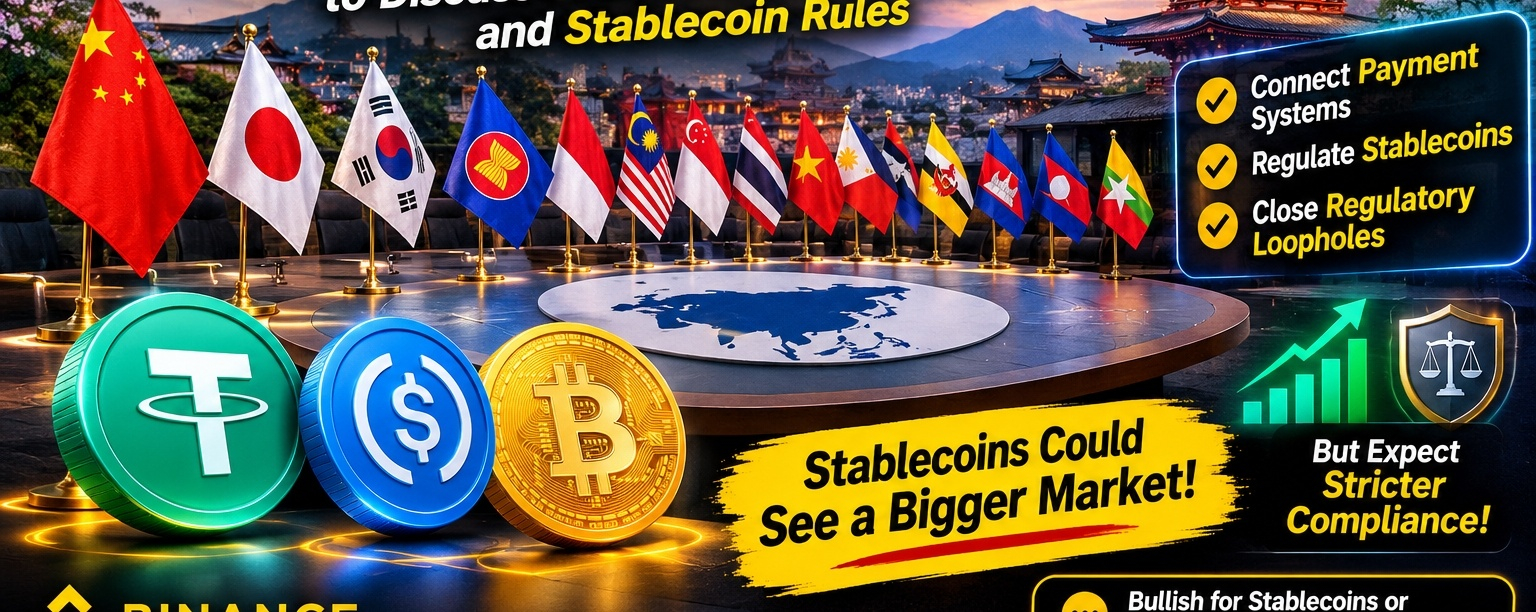
🌏 Asia Could Be Moving Toward a More Connected Crypto Regulatory Framework!A major discussion involving China, Japan, South Korea, and ASEAN nations is drawing attention to the future of digital finance in Asia.
Reports suggest that regional discussions in Kyoto focused on cross-border digital payments and better coordination around digital asset regulations.
The goal? Explore ways to make international payment systems more compatible, while addressing regulatory challenges surrounding stablecoins and cross-border crypto transactions.
Stablecoins like USDT and USDC could be among the biggest beneficiaries if regional payment infrastructure becomes more interconnected. Faster settlements, international transfers, and trade payments may create new opportunities for digital currencies.
But greater cooperation could also mean tighter compliance standards, stronger monitoring, and less room for regulatory loopholes.
Does this mean crypto is being banned? Not at all. Discussions about coordination don't automatically translate into a ban or a unified crypto law. The details will matter as these countries move forward.
Asia's approach to digital assets could become an important development for the global crypto market. 🌐
What’s your take — bullish for stablecoins or a step toward tighter crypto control?
#Crypto #Bitcoin #Ethereum #Stablecoins #USDT #USDC #Binance #CryptoNews #Blockchain #Asia#besttimeofinvestment $BTC $ETH
🌏 Asia Could Be Moving Toward a More Connected Crypto Regulatory Framework!
A major discussion involving China, Japan, South Korea, and ASEAN nations is drawing attention to the future of digital finance in Asia.
Reports suggest that regional discussions in Kyoto focused on cross-border digital payments and better coordination around digital asset regulations.
The goal? Explore ways to make international payment systems more compatible, while addressing regulatory challenges surrounding stablecoins and cross-border crypto transactions.
Stablecoins like USDT and USDC could be among the biggest beneficiaries if regional payment infrastructure becomes more interconnected. Faster settlements, international transfers, and trade payments may create new opportunities for digital currencies.
But greater cooperation could also mean tighter compliance standards, stronger monitoring, and less room for regulatory loopholes.
Does this mean crypto is being banned? Not at all. Discussions about coordination don't automatically translate into a ban or a unified crypto law. The details will matter as these countries move forward.
Asia's approach to digital assets could become an important development for the global crypto market. 🌐
What’s your take — bullish for stablecoins or a step toward tighter crypto control?
#Crypto #Bitcoin #Ethereum #Stablecoins #USDT #USDC #Binance #CryptoNews #Blockchain #Asia#besttimeofinvestment $BTC $ETH
41
Ver tradução
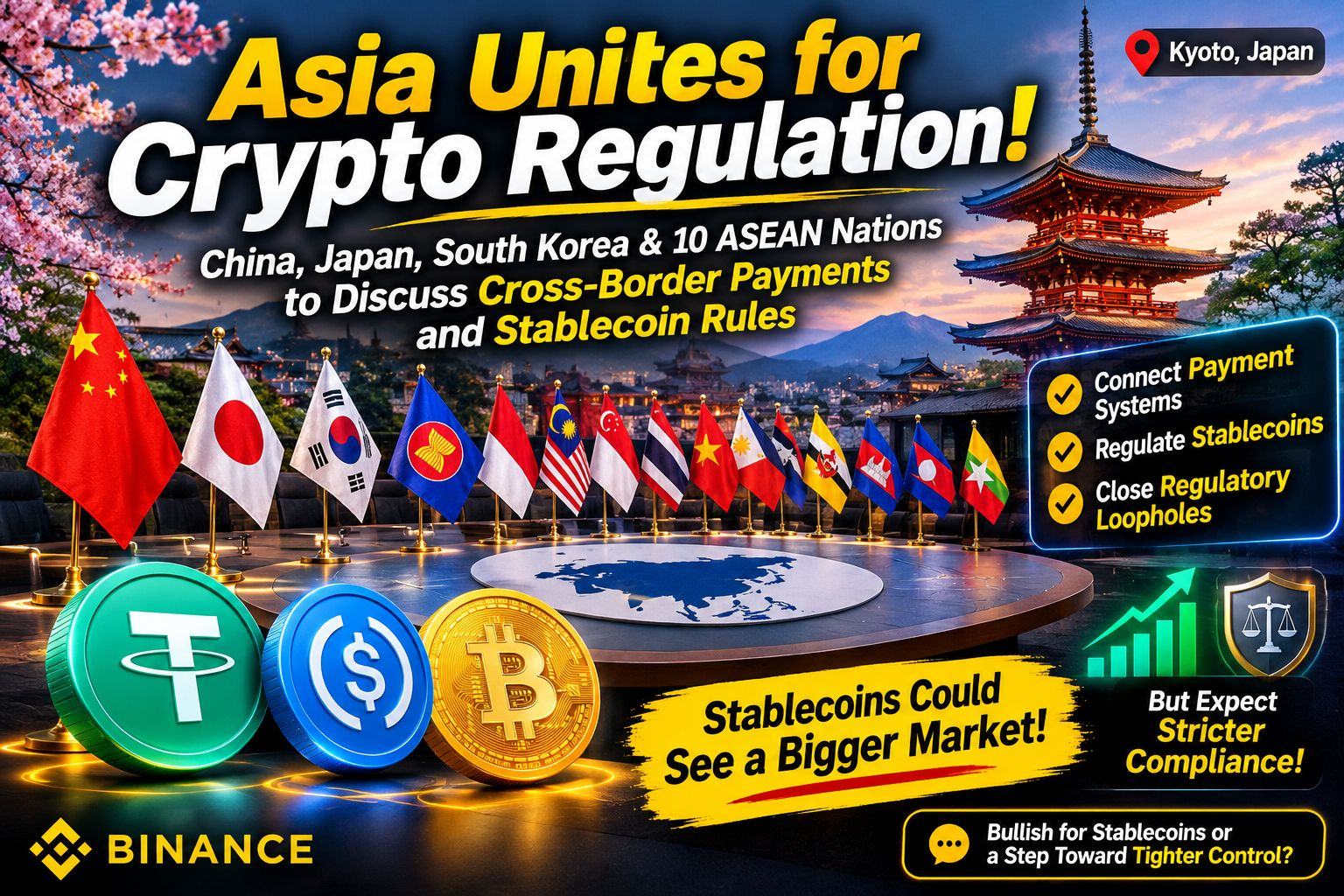
🌏 Asia Could Be Moving Toward a More Connected Crypto Regulatory Framework!
A major discussion involving China, Japan, South Korea, and ASEAN nations is drawing attention to the future of digital finance in Asia.
Reports suggest that regional discussions in Kyoto focused on cross-border digital payments and better coordination around digital asset regulations.
The goal? Explore ways to make international payment systems more compatible, while addressing regulatory challenges surrounding stablecoins and cross-border crypto transactions.
Stablecoins like USDT and USDC could be among the biggest beneficiaries if regional payment infrastructure becomes more interconnected. Faster settlements, international transfers, and trade payments may create new opportunities for digital currencies.
But greater cooperation could also mean tighter compliance standards, stronger monitoring, and less room for regulatory loopholes.
<bold>Does this mean crypto is being banned? Not at all.</bold> Discussions about coordination don't automatically translate into a ban or a unified crypto law. The details will matter as these countries move forward.
Asia's approach to digital assets could become an important development for the global crypto market. 🌐
What’s your take — bullish for stablecoins or a step toward tighter crypto control?
#Crypto #Bitcoin #Ethereum #Stablecoins #USDT #USDC #Binance #CryptoNews #Blockchain #AsianMarketWatch
50
A Ásia🌏 Pode Estar Caminhando para um Marco Regulatório de Cripto Mais Conectado!
Uma importante discussão envolvendo China, Japão, Coreia do Sul e países da ASEAN está atraindo atenção para o futuro das finanças digitais na Ásia.
Relatos sugerem que as discussões regionais em Kyoto se concentraram em pagamentos digitais transfronteiriços e em uma melhor coordenação das regulamentações de ativos digitais.
O objetivo? Explorar maneiras de tornar os sistemas de pagamento internacionais mais compatíveis, ao mesmo tempo que se enfrentam os desafios regulatórios relacionados às stablecoins e às transações cripto transfronteiriças.
Stablecoins como USDT e USDC podem estar entre as maiores beneficiadas se a infraestrutura regional de pagamentos se tornar mais interconectada. Liquidações mais rápidas, transferências internacionais e pagamentos comerciais podem criar novas oportunidades para moedas digitais.
A Ásia🌏 Pode Estar Caminhando para um Marco Regulatório de Cripto Mais Conectado!
Uma importante discussão envolvendo China, Japão, Coreia do Sul e países da ASEAN está atraindo atenção para o futuro das finanças digitais na Ásia.
Relatos sugerem que as discussões regionais em Kyoto se concentraram em pagamentos digitais transfronteiriços e em uma melhor coordenação das regulamentações de ativos digitais.
O objetivo? Explorar maneiras de tornar os sistemas de pagamento internacionais mais compatíveis, ao mesmo tempo que se enfrentam os desafios regulatórios relacionados às stablecoins e às transações cripto transfronteiriças.
Stablecoins como USDT e USDC podem estar entre as maiores beneficiadas se a infraestrutura regional de pagamentos se tornar mais interconectada. Liquidações mais rápidas, transferências internacionais e pagamentos comerciais podem criar novas oportunidades para moedas digitais.
101
·
--
Em Alta
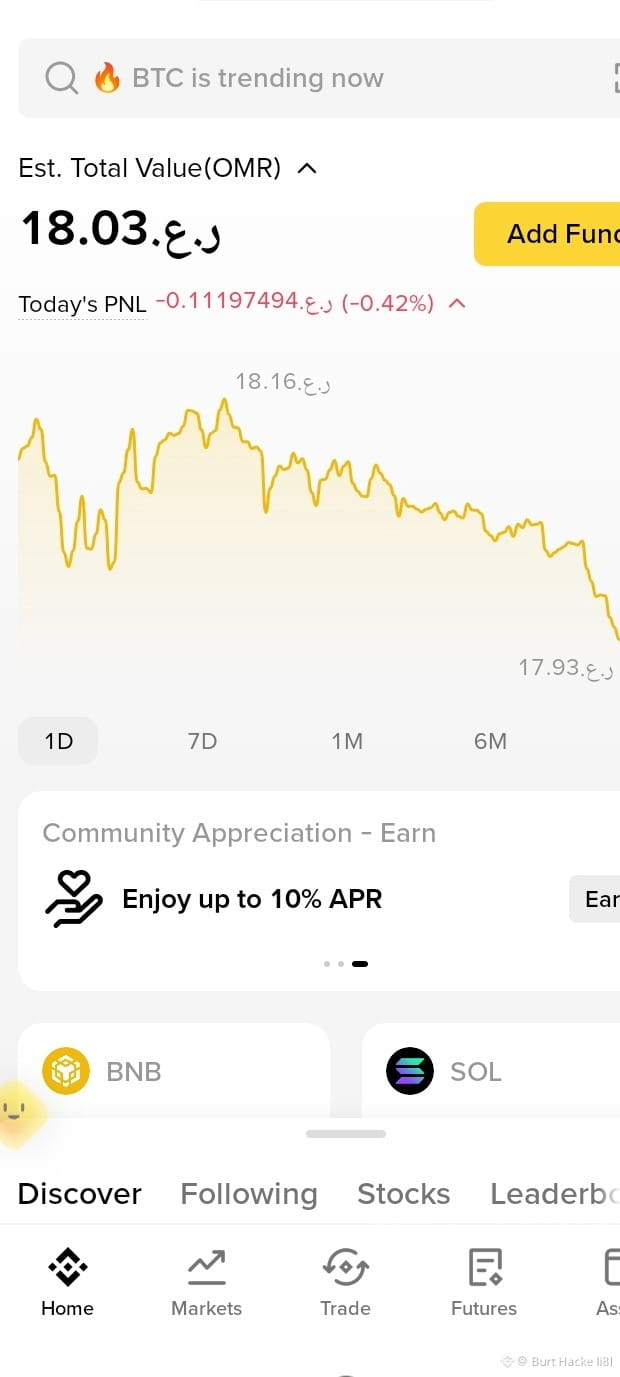
Sou novo por aqui e não entendo de trading. Vou dar o meu melhor. .#WhoWillSucceedJensenHuangatNvidia? #WhatWillDriveCryptoandStocks’NextRebound?
Sou novo por aqui e não entendo de trading. Vou dar o meu melhor. .#WhoWillSucceedJensenHuangatNvidia? #WhatWillDriveCryptoandStocks’NextRebound?
267
Inicia sessão para explorar mais conteúdos
Junta-te a utilizadores de criptomoedas de todo o mundo na Binance Square
⚡️ Obtém informações úteis e recentes sobre criptomoedas.
💬 Com a confiança da maior exchange de criptomoedas do mundo.
👍 Descobre perspetivas reais de criadores verificados.
E-mail/Número de telefone
Tópicos em Tendência
EvolveAtBinanceBlockchainWeek
2.3M visualizações
20,015 a discutir
A Binance Blockchain Week começou oficialmente! 🌍
Nos dias 28 e 29 de novembro, esteja você em Bangkok ou acompanhando de longe, assista às transmissões ao vivo e participe da conversa na Binance Square!
Veja o que vem por aí 👇
📺 Assista ao main stage live
Acompanhe os dois dias enquanto palestrantes do setor compartilham suas perspectivas sobre o tema deste ano, “Evoluir”. Da inovação tecnológica às aplicações no mundo real, descubra o que vem por aí no universo cripto.
⚔️ Assista a duas competições de trading
O Aster Open Qualifier e o Binance Trading Master Tournament serão transmitidos ao vivo. Acompanhe os traders em ação.
🏆 Assista ao Blockchain 100 Awards Ceremony
A lista Blockchain 100 foi escolhida pela comunidade. Junte-se a nós para celebrar os criadores e as ideias que compartilham!
💬 Participe da conversa com a comunidade
Use #EvolveAtBinanceBlockchainWeek em uma publicação com uma foto para compartilhar o que você está esperando, suas opiniões sobre o setor ou seus momentos favoritos do evento.
O event page já está no ar! Inscreva-se em todas as transmissões ao vivo com um clique para não perder nenhum momento 👏
Binance Blockchain Week
·595 gostos
·913k visualizações
WorldLibertyActsToCutLiquidationRisk
16,263 visualizações
191 a discutir
LiquidHackerMoves598BTC
14,565 visualizações
134 a discutir