
Noël2nd
5 Publicações

Noël2nd
Denunciar
Bloquear Utilizador
Kite-895675
1 A seguir
6 Seguidores
7 Gostaram
Publicações
Tudo
Vídeos
·
--

Artigo
Ver tradução
And what if your next customers were no longer humans, but AI agents?In its recent article on the B2A (Business-to-Agent) economy, a16z highlights a transformation that could profoundly reshape the relationship between businesses and their customers.
Until now, the Internet has primarily been designed for human users.
We visit websites, compare offers, fill out forms and make payments.
But imagine a shift: instead of doing all of this ourselves, we simply give a mission to an AI agent.
It handles the rest.
An agent could search for the best provider, compare several services, check the terms, choose an offer and complete a purchase.
For a business, this means a new type of actor could soon be making purchasing decisions on its behalf.
The commercial relationship would no longer be limited to human interactions.
This is where the concept of B2A makes complete sense.
Businesses will no longer only need to think about attracting human visitors.
They will also need to make their services accessible to agents, facilitate their interactions and enable automated transactions.
The next distribution challenge could be becoming an agent's choice.
But this evolution raises an essential question:
How do you allow agents to carry out transactions at scale without losing control over their actions and spending?
Because finding a service is one thing.
Being able to access it, pay and act in a reliable and secure way is another.
This is precisely one of the challenges Kite is addressing.
With $Kite Agent Passport, the ambition is to provide agents with infrastructure that allows them to interact with services and carry out economic operations within a controlled framework.
It is no longer just about the ability to execute instructions, but about the ability to genuinely participate in a digital economy.
The next generation of digital commerce may be built around this transition.
And Kite is positioning itself on one of its essential layers.
Bullish on @GoKiteAI 🪁
And what if your next customers were no longer humans, but AI agents?
In its recent article on the B2A (Business-to-Agent) economy, a16z highlights a transformation that could profoundly reshape the relationship between businesses and their customers.
Until now, the Internet has primarily been designed for human users.
We visit websites, compare offers, fill out forms and make payments.
But imagine a shift: instead of doing all of this ourselves, we simply give a mission to an AI agent.
It handles the rest.
An agent could search for the best provider, compare several services, check the terms, choose an offer and complete a purchase.
For a business, this means a new type of actor could soon be making purchasing decisions on its behalf.
The commercial relationship would no longer be limited to human interactions.
This is where the concept of B2A makes complete sense.
Businesses will no longer only need to think about attracting human visitors.
They will also need to make their services accessible to agents, facilitate their interactions and enable automated transactions.
The next distribution challenge could be becoming an agent's choice.
But this evolution raises an essential question:
How do you allow agents to carry out transactions at scale without losing control over their actions and spending?
Because finding a service is one thing.
Being able to access it, pay and act in a reliable and secure way is another.
This is precisely one of the challenges Kite is addressing.
With $Kite Agent Passport, the ambition is to provide agents with infrastructure that allows them to interact with services and carry out economic operations within a controlled framework.
It is no longer just about the ability to execute instructions, but about the ability to genuinely participate in a digital economy.
The next generation of digital commerce may be built around this transition.
And Kite is positioning itself on one of its essential layers.
Bullish on @KITE AI 中文 🪁
119
·
--
Artigo
Ver tradução
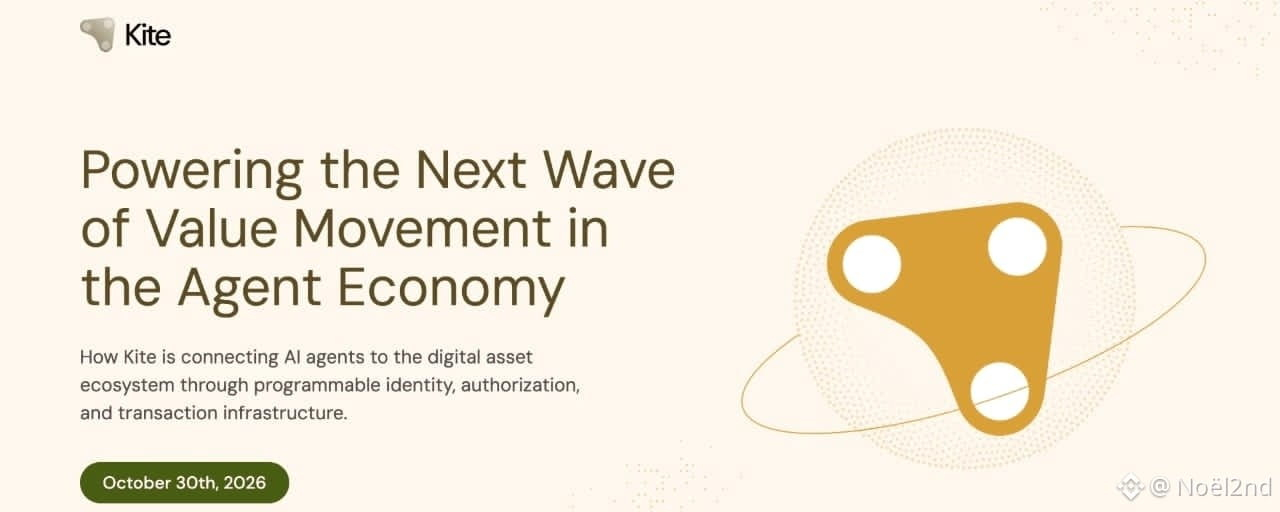
12 More Months.
A Decision Worth Paying Attention To 🪁On October 30, 2026, Kite's team and investors made an important decision: to extend their token lock-up periods by an additional 12 months.
Here's what you need to know: the team's and investors' allocations represent 32% of the total supply combined: 20% for the team, advisors and early contributors, and 12% for investors.
These tokens were originally scheduled to start unlocking in November 2026. Now, the first unlocks will only begin in November 2027.
In my opinion, this has two direct implications:
\- Less potential selling pressure from these allocations over the next 12 months.
\- A sign of long-term alignment: the team and investors are willing to delay access to their liquidity.
This is a strong signal of confidence in the project and alignment with its long-term ambitions.
It also gives Kite more time for the token's utility to grow alongside the ecosystem.
Because KITE shouldn't just be an asset people hold while waiting for its price to go up.
Its role extends to several aspects of the network's economy:
* Staking to secure the network and participate in its different roles.
* Liquidity requirements for modules.
* Access to the ecosystem for developers and service providers.
* Fees from AI service transactions, with a planned mechanism to convert a portion into $KITE.
Ultimately, delaying the unlocks gives Kite more time.
But that time should be used to build something more important: an economy where real network usage creates genuine demand for its token.
A vesting schedule can push potential selling pressure further down the road.
But only adoption can build lasting demand.
Bullish on Agentic Economy.
Bullish on @GoKiteAI 🪁
12 More Months. A Decision Worth Paying Attention To 🪁
On October 30, 2026, Kite's team and investors made an important decision: to extend their token lock-up periods by an additional 12 months.
Here's what you need to know: the team's and investors' allocations represent 32% of the total supply combined: 20% for the team, advisors and early contributors, and 12% for investors.
These tokens were originally scheduled to start unlocking in November 2026. Now, the first unlocks will only begin in November 2027.
In my opinion, this has two direct implications:
\- Less potential selling pressure from these allocations over the next 12 months.
\- A sign of long-term alignment: the team and investors are willing to delay access to their liquidity.
This is a strong signal of confidence in the project and alignment with its long-term ambitions.
It also gives Kite more time for the token's utility to grow alongside the ecosystem.
Because KITE shouldn't just be an asset people hold while waiting for its price to go up.
Its role extends to several aspects of the network's economy:
* Staking to secure the network and participate in its different roles.
* Liquidity requirements for modules.
* Access to the ecosystem for developers and service providers.
* Fees from AI service transactions, with a planned mechanism to convert a portion into $KITE.
Ultimately, delaying the unlocks gives Kite more time.
But that time should be used to build something more important: an economy where real network usage creates genuine demand for its token.
A vesting schedule can push potential selling pressure further down the road.
But only adoption can build lasting demand.
Bullish on Agentic Economy.
Bullish on @KITE AI 中文 🪁
11
·
--
Gkiters 🌍
Lembram-se do vídeo que partilhei em 2025, anunciando a minha chegada à Terra?
Estou de volta com uma pergunta:
E se os agentes de IA pudessem fazer muito mais do que simplesmente ajudar-vos?
Esta revolução já está a acontecer.
Hoje, o meu agente tem identidade própria. Opera com permissões predefinidas, respeita um orçamento e as suas transações podem ser rastreadas on-chain através da $Kite Chain.
Já não se trata apenas de gerar respostas, mas de agir com confiança e controlo.
Sou o Poki, e o melhor ainda está para vir.
@GoKiteAI
Gkiters 🌍
Lembram-se do vídeo que partilhei em 2025, anunciando a minha chegada à Terra?
Estou de volta com uma pergunta:
E se os agentes de IA pudessem fazer muito mais do que simplesmente ajudar-vos?
Esta revolução já está a acontecer.
Hoje, o meu agente tem identidade própria. Opera com permissões predefinidas, respeita um orçamento e as suas transações podem ser rastreadas on-chain através da $Kite Chain.
Já não se trata apenas de gerar respostas, mas de agir com confiança e controlo.
Sou o Poki, e o melhor ainda está para vir.
@KITE AI 中文
294
·
--
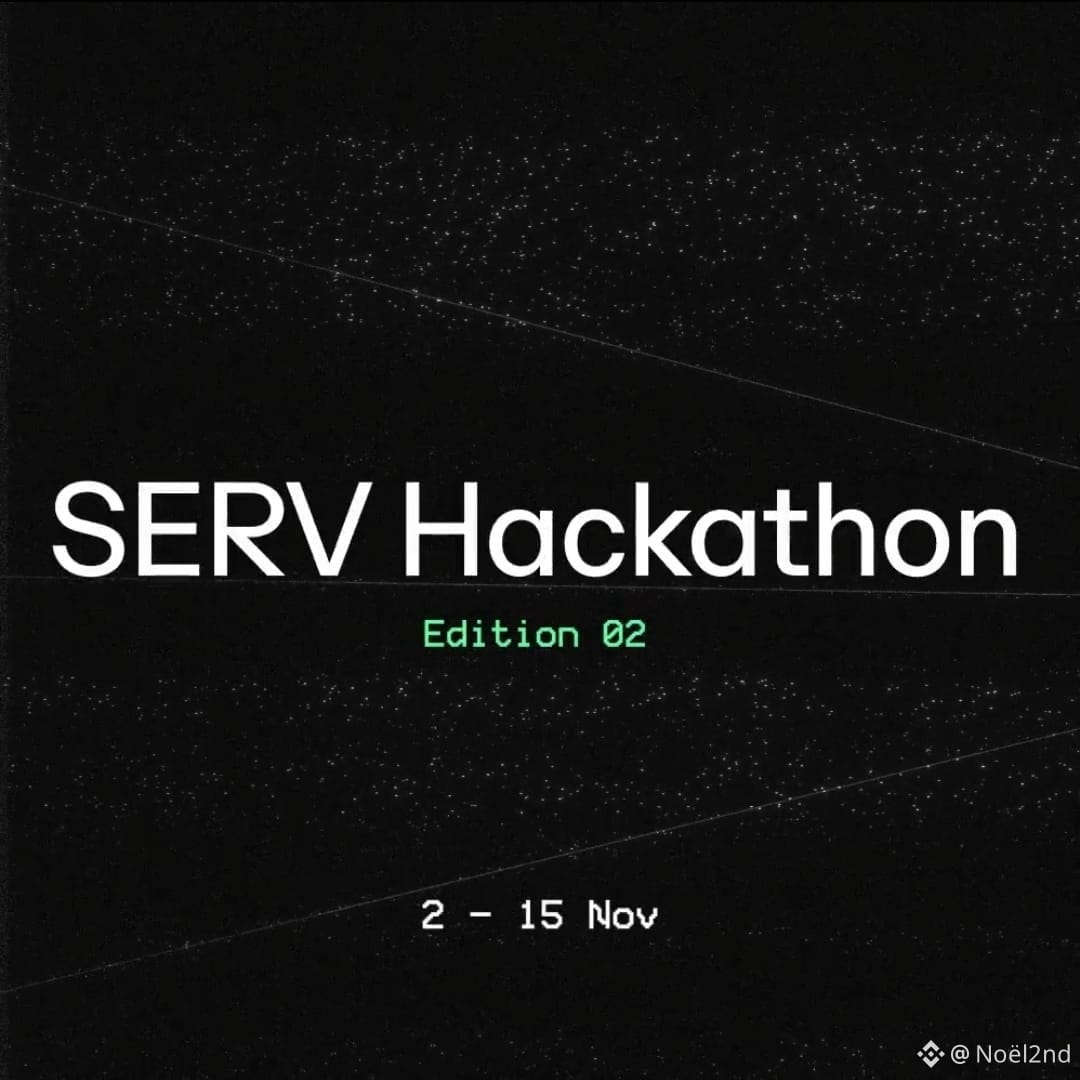
O SERV Hackathon 02 está oficialmente no ar, e @GoKiteAI está bem no centro de tudo.
O objetivo é simples: criar um agente capaz de comprar, reservar e pagar de forma independente por meio do Kite Agent Passport.
A infraestrutura já está pronta. Só falta construir sobre ela.
Então, se você sabe construir, este é o seu momento.
Há US$ 5.000 em jogo!
openserv.ai/hackathon-2
O SERV Hackathon 02 está oficialmente no ar, e @KITE AI 中文 está bem no centro de tudo.
O objetivo é simples: criar um agente capaz de comprar, reservar e pagar de forma independente por meio do Kite Agent Passport.
A infraestrutura já está pronta. Só falta construir sobre ela.
Então, se você sabe construir, este é o seu momento.
Há US$ 5.000 em jogo!
openserv.ai/hackathon-2
O objetivo é simples: criar um agente capaz de comprar, reservar e pagar de forma independente por meio do Kite Agent Passport.
A infraestrutura já está pronta. Só falta construir sobre ela.
Então, se você sabe construir, este é o seu momento.
Há US$ 5.000 em jogo!
openserv.ai/hackathon-2
166
·
--
Artigo
Uma nova era de trocas está a ganhar forma. Vamos analisá-la mais de perto.1. Da troca direta ao dinheiro
Desde as primeiras civilizações, as trocas estiveram sempre no centro do desenvolvimento económico.
No início, as pessoas trocavam bens e serviços diretamente. A troca direta ajudava a satisfazer as necessidades das pessoas, mas tinha uma grande limitação: era preciso encontrar alguém que tivesse o que procurava e quisesse exatamente aquilo que tinha para oferecer.
Depois surgiu o dinheiro, que mudou fundamentalmente esta dinâmica.
O dinheiro introduziu um meio de troca comum, facilitando as transações, atribuindo valor aos bens e serviços e permitindo que o comércio ultrapassasse as limitações das trocas diretas.
Uma nova era de trocas está a ganhar forma. Vamos analisá-la mais de perto.
1. Da troca direta ao dinheiro
Desde as primeiras civilizações, as trocas estiveram sempre no centro do desenvolvimento económico.
No início, as pessoas trocavam bens e serviços diretamente. A troca direta ajudava a satisfazer as necessidades das pessoas, mas tinha uma grande limitação: era preciso encontrar alguém que tivesse o que procurava e quisesse exatamente aquilo que tinha para oferecer.
Depois surgiu o dinheiro, que mudou fundamentalmente esta dinâmica.
O dinheiro introduziu um meio de troca comum, facilitando as transações, atribuindo valor aos bens e serviços e permitindo que o comércio ultrapassasse as limitações das trocas diretas.
3
2
7
283
Inicia sessão para explorar mais conteúdos
Junta-te a utilizadores de criptomoedas de todo o mundo na Binance Square
⚡️ Obtém informações úteis e recentes sobre criptomoedas.
💬 Com a confiança da maior exchange de criptomoedas do mundo.
👍 Descobre perspetivas reais de criadores verificados.
E-mail/Número de telefone
Tópicos em Tendência
WhoWillSucceedJensenHuangatNvidia?
160,105 visualizações
1,604 a discutir
Nvidia afirma que não há conversas sobre o cargo de CEO enquanto petição "Apoie Jensen" ultrapassa 77.900 assinaturas
Binance News
·33 gostos
·59.8k visualizações
WhatWillDriveCryptoandStocks’NextRebound?
560,338 visualizações
3,443 a discutir
BitcoinActiveSupplyInProfitDropsBelow45%
70,548 visualizações
683 a discutir